Turn a Cheap Cymbal Into a Shining Prize
198 Views, 2 Favorites, 0 Comments
Turn a Cheap Cymbal Into a Shining Prize
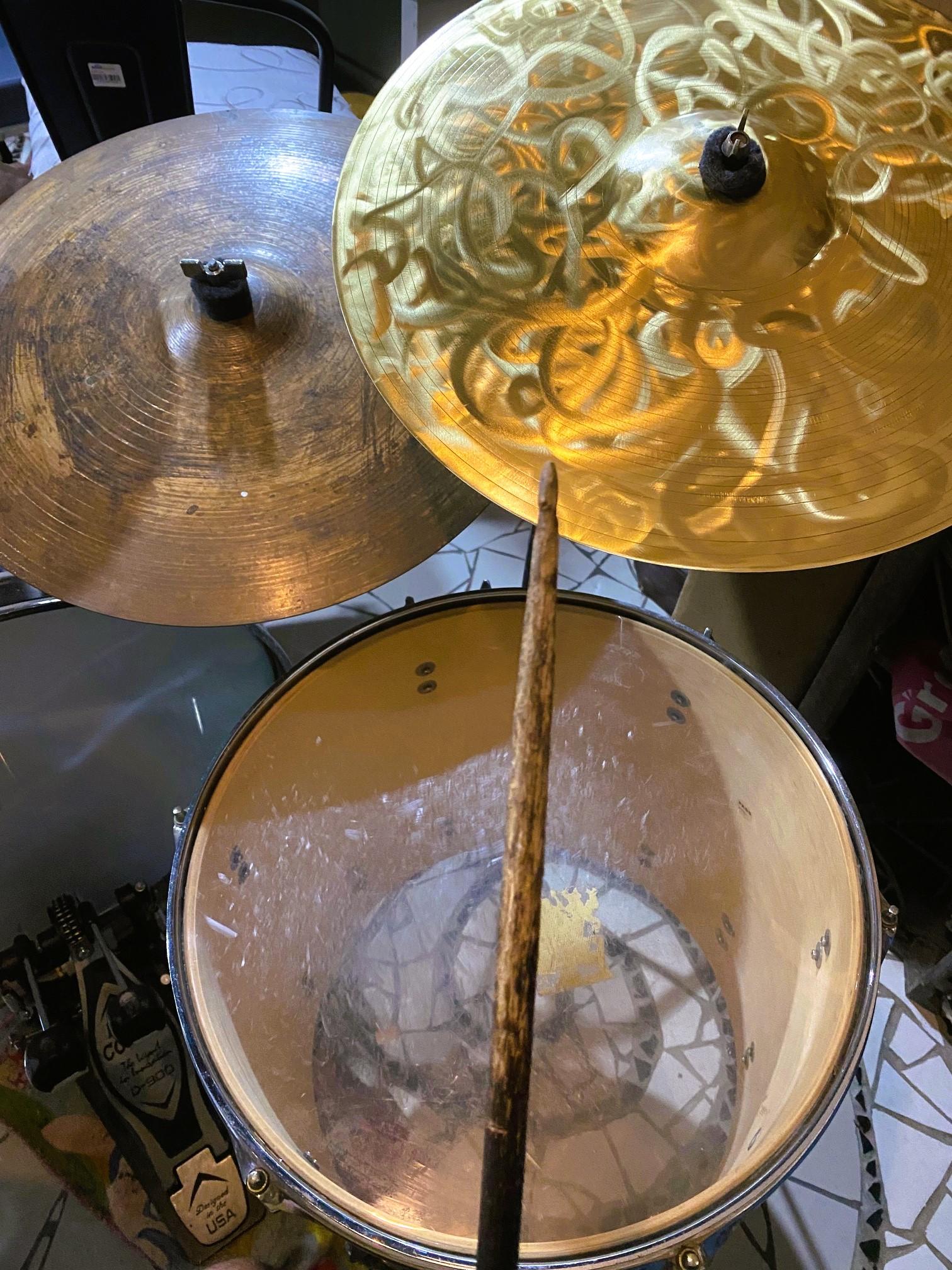
I found a cheap cymbal at a second-hand store. It looked and sounded awful, but I thought it might just be a diamond in the rough…
Here’s how I turned this $10 score into a pretty platter that sounds like a $100 dollar cymbal:
Supplies
Supplies
-one crappy cymbal
Tools and Materials
-angle grinder with sandpaper flap discs
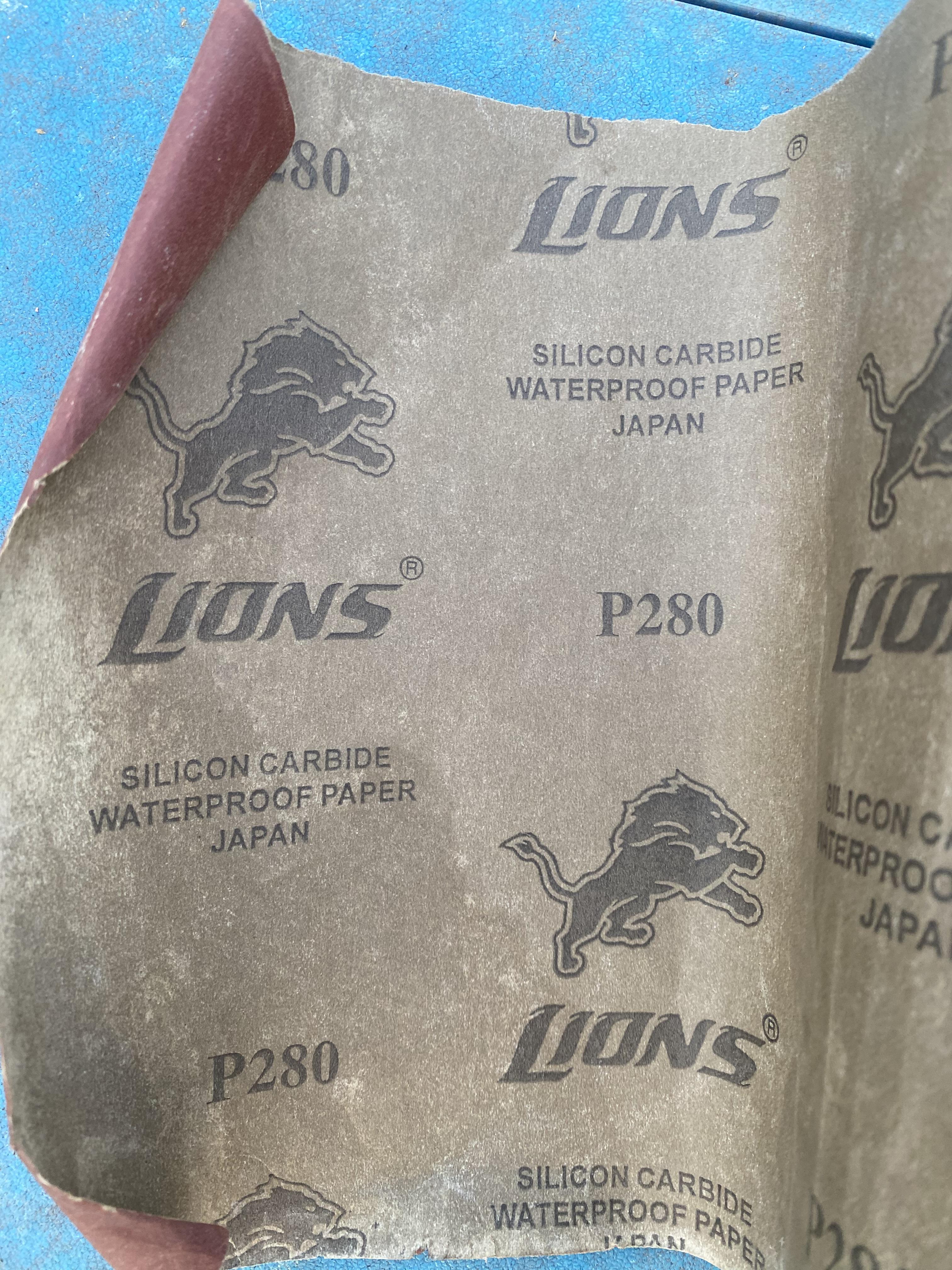
-sandpaper (I used 280 grit)
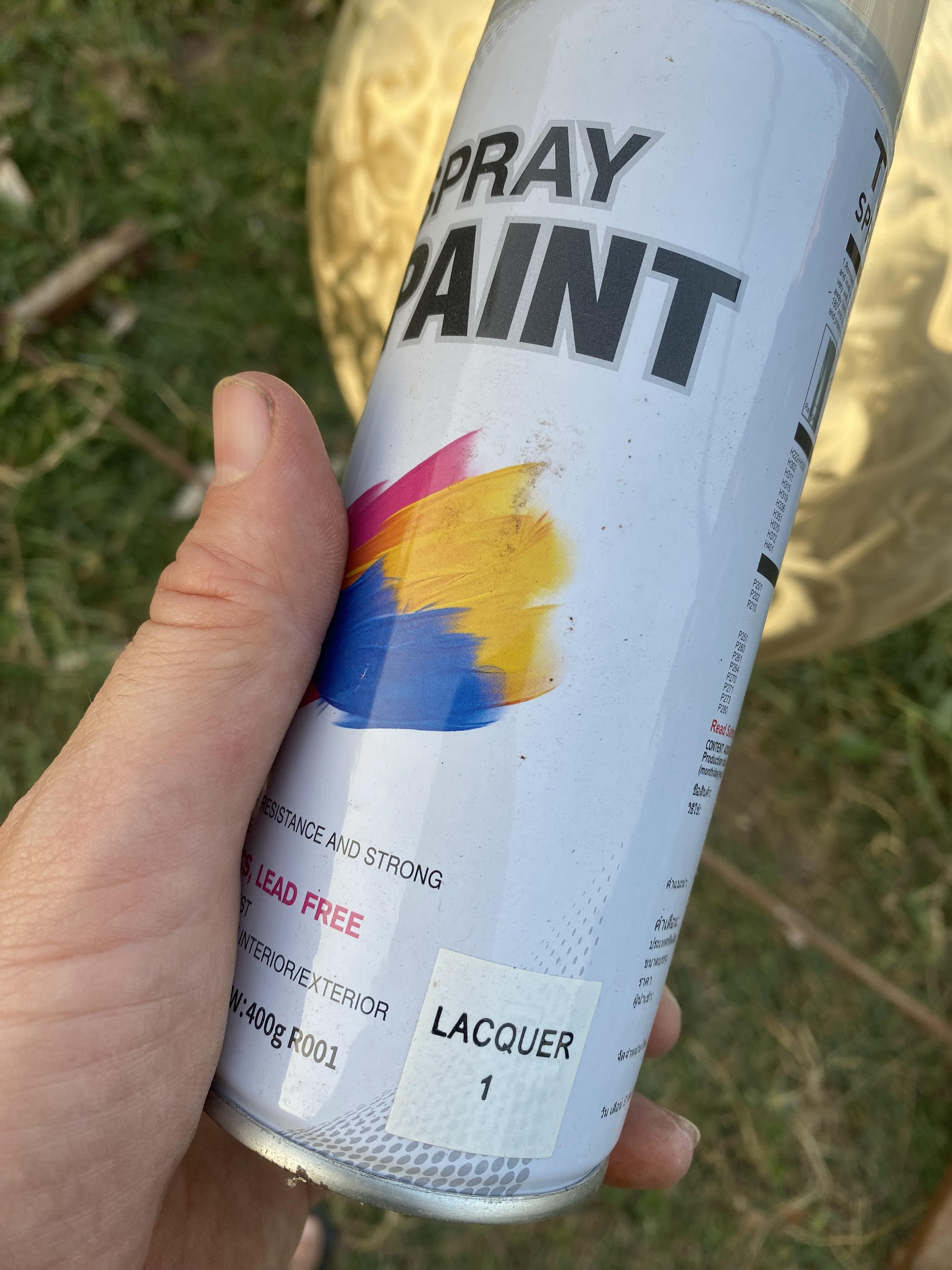
-lacquer spray paint
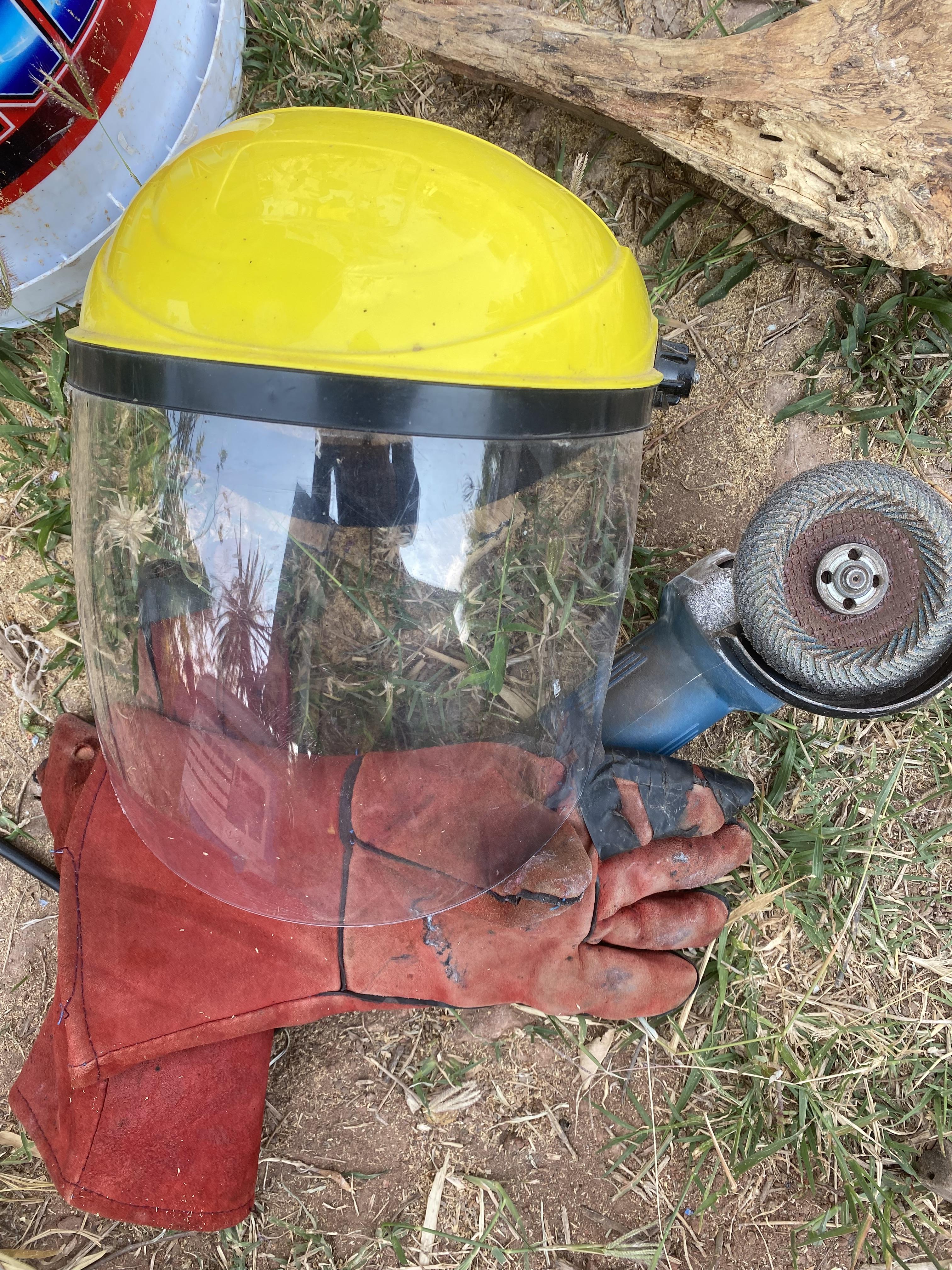
Safety Equipment
-gloves
-goggles or face shield
-dust mask
Sand, Baby, Sand
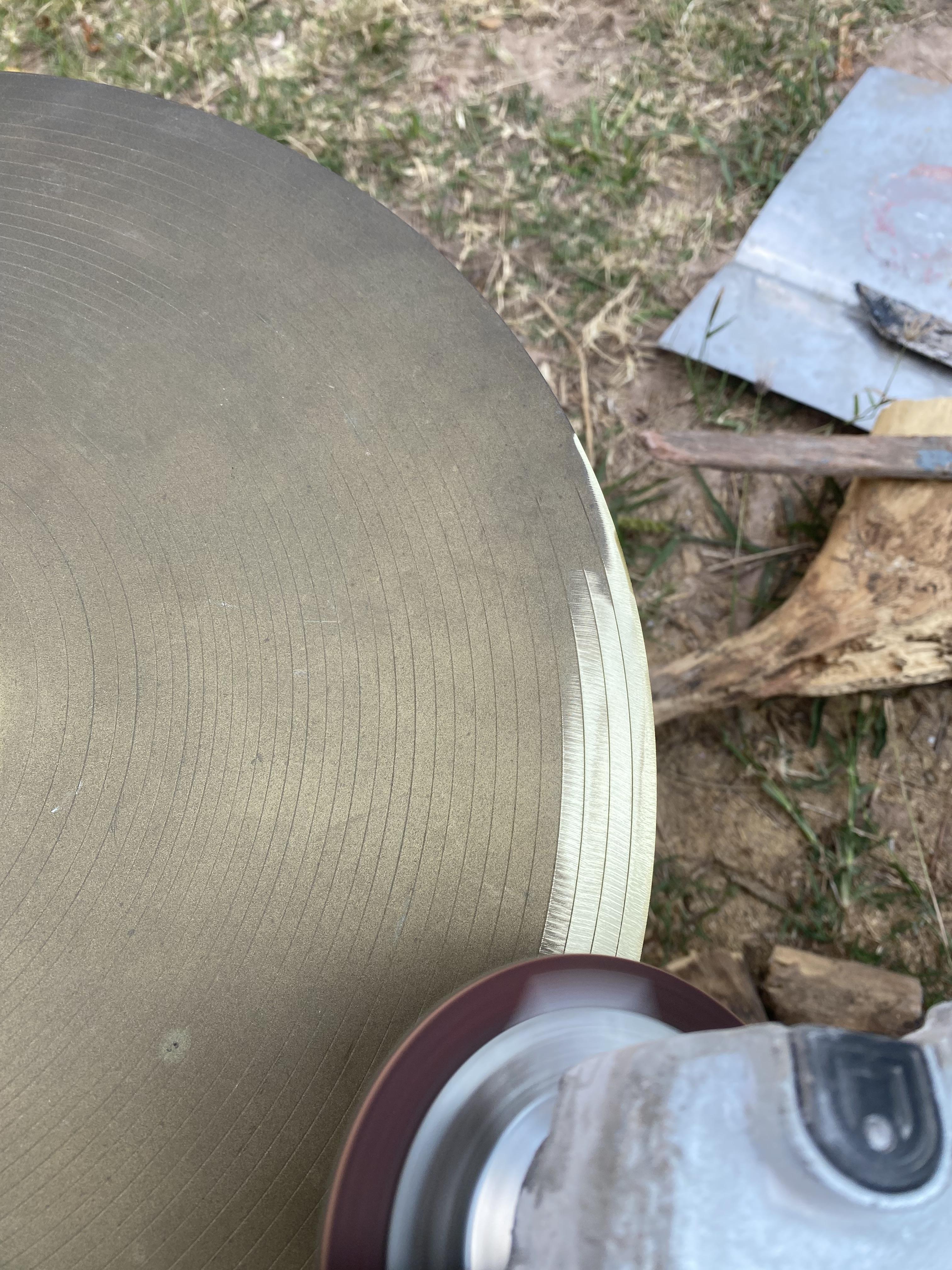
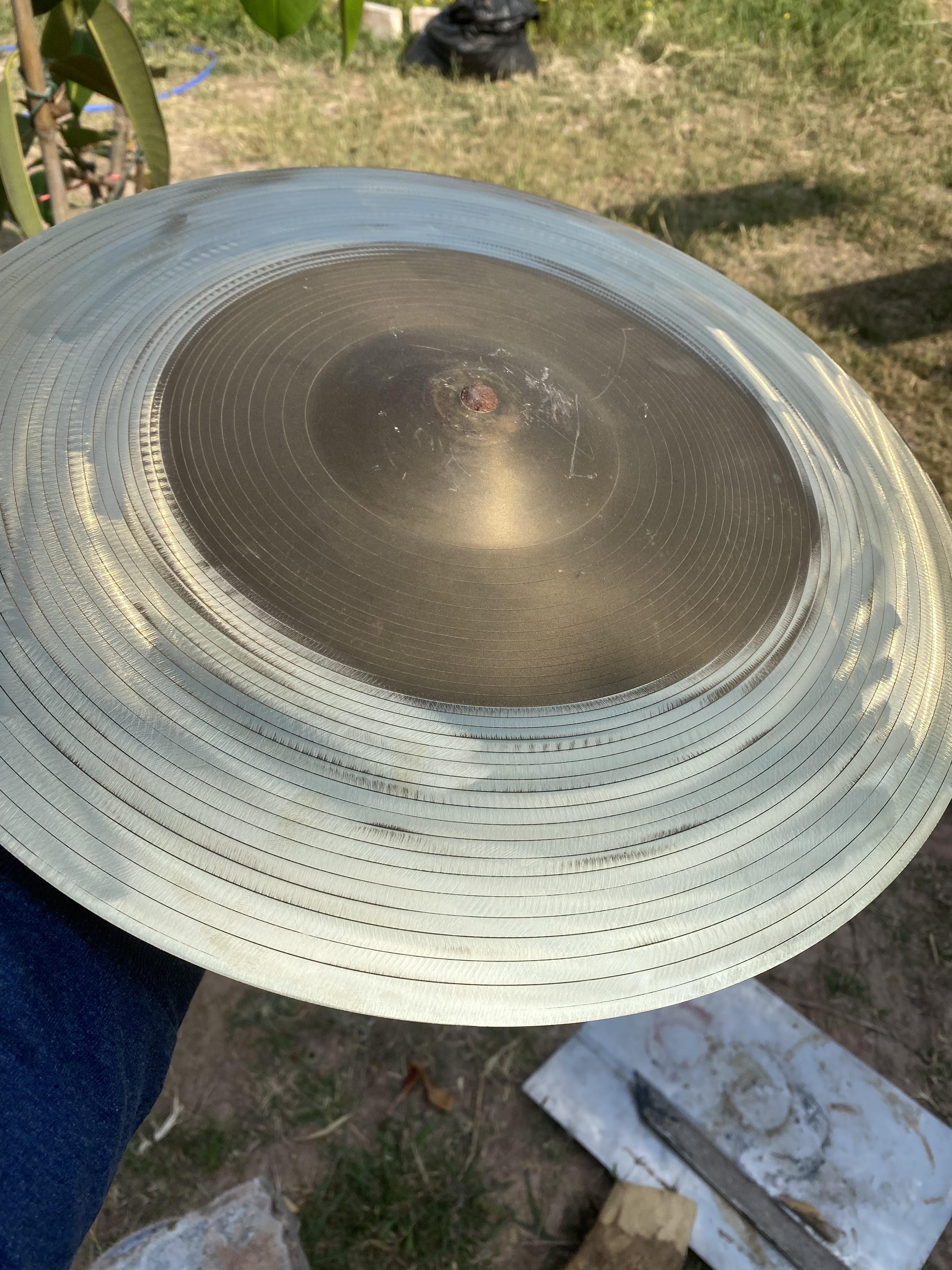
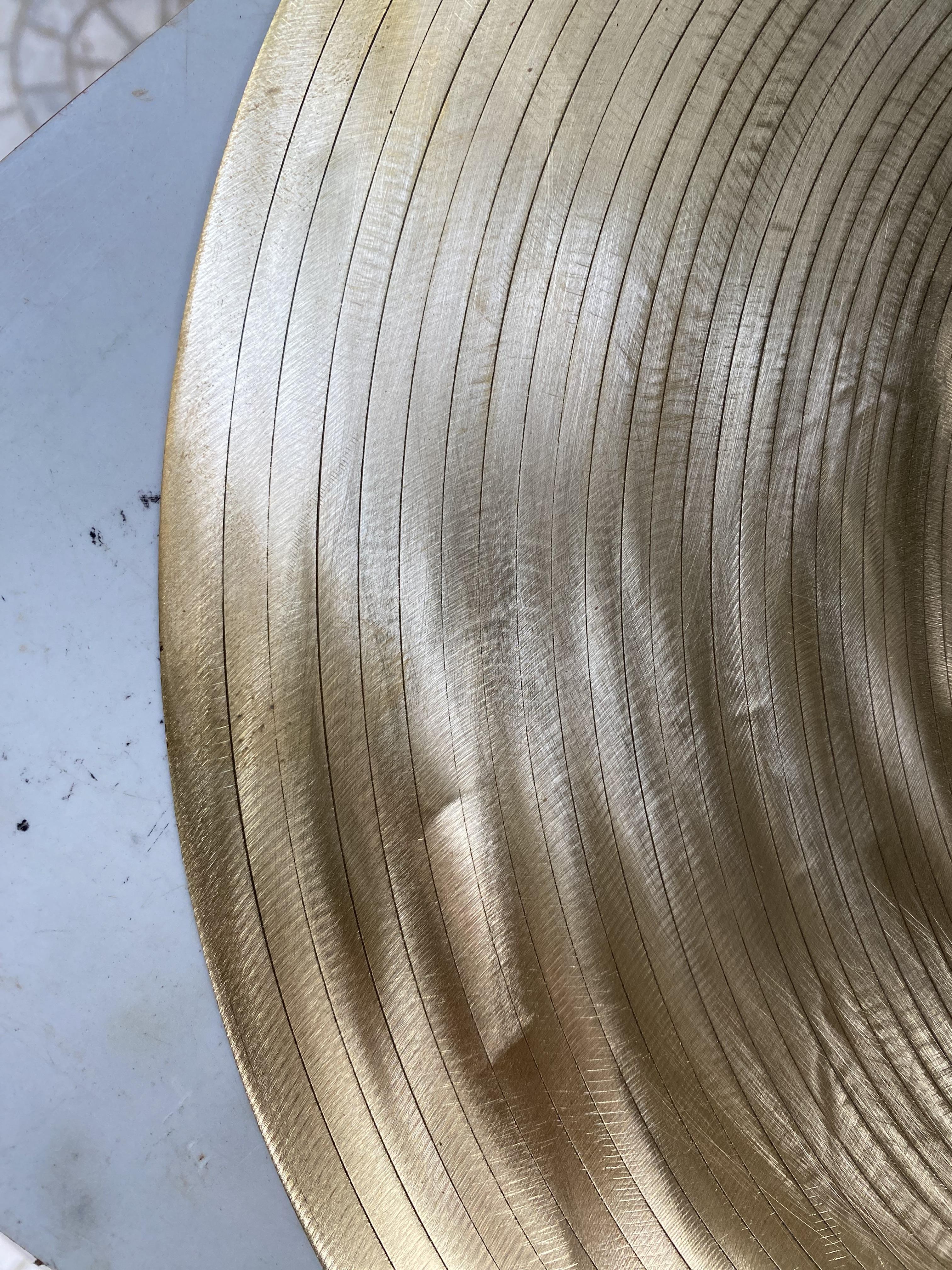
Wear your safety gear!!
Most bronze cymbals start to sound dull and dark once they’ve been around a long time and have thoroughly oxidized.
Many cheap cymbals are also made quite thick for durability, but this also makes them not only sound bad, but also resonate too long.
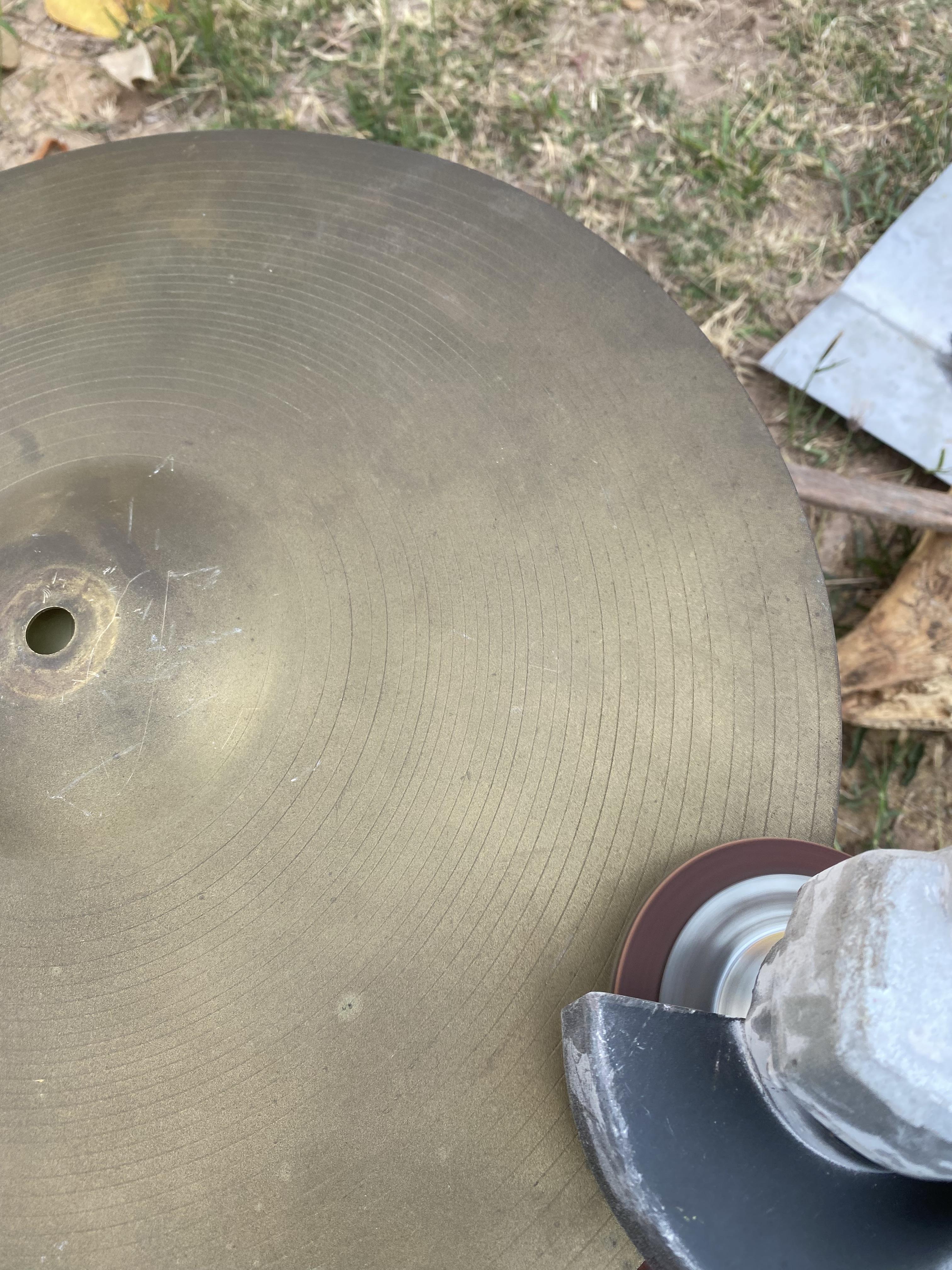
The solution to both these problems is to remove surface material. Unless you have a lathe setup at home, grinding is probably the easiest way to do this.
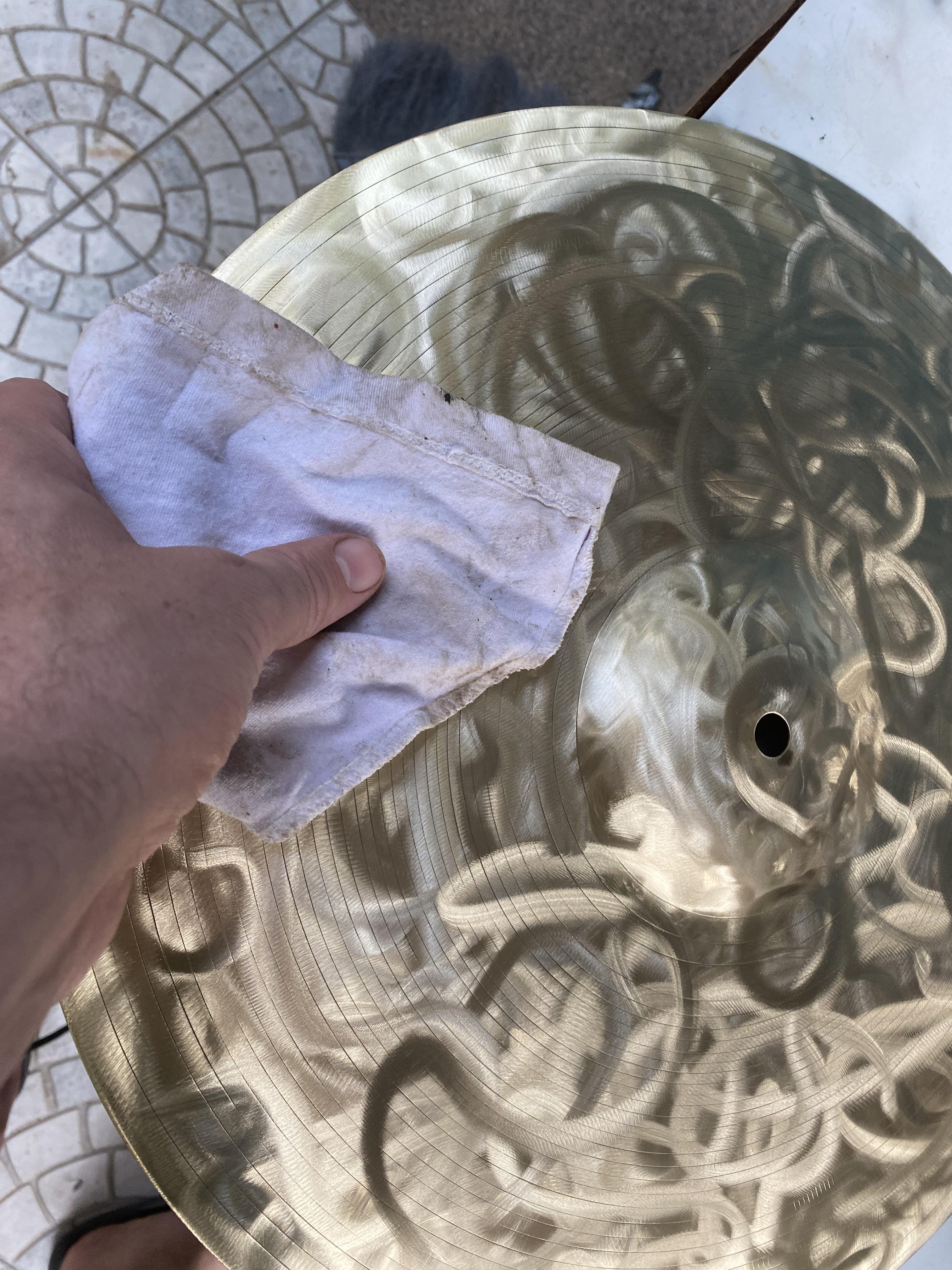
I simply set the cymbal on a secure platform, put a flap disc on my angle grinder, and went at it. I tried to go around the cymbal in concentric circles and sanded off about 100g of material.
Once this was done, I decided it might look cool to add curling, swerving lines all over, so I did that, too.
Sand the Rim
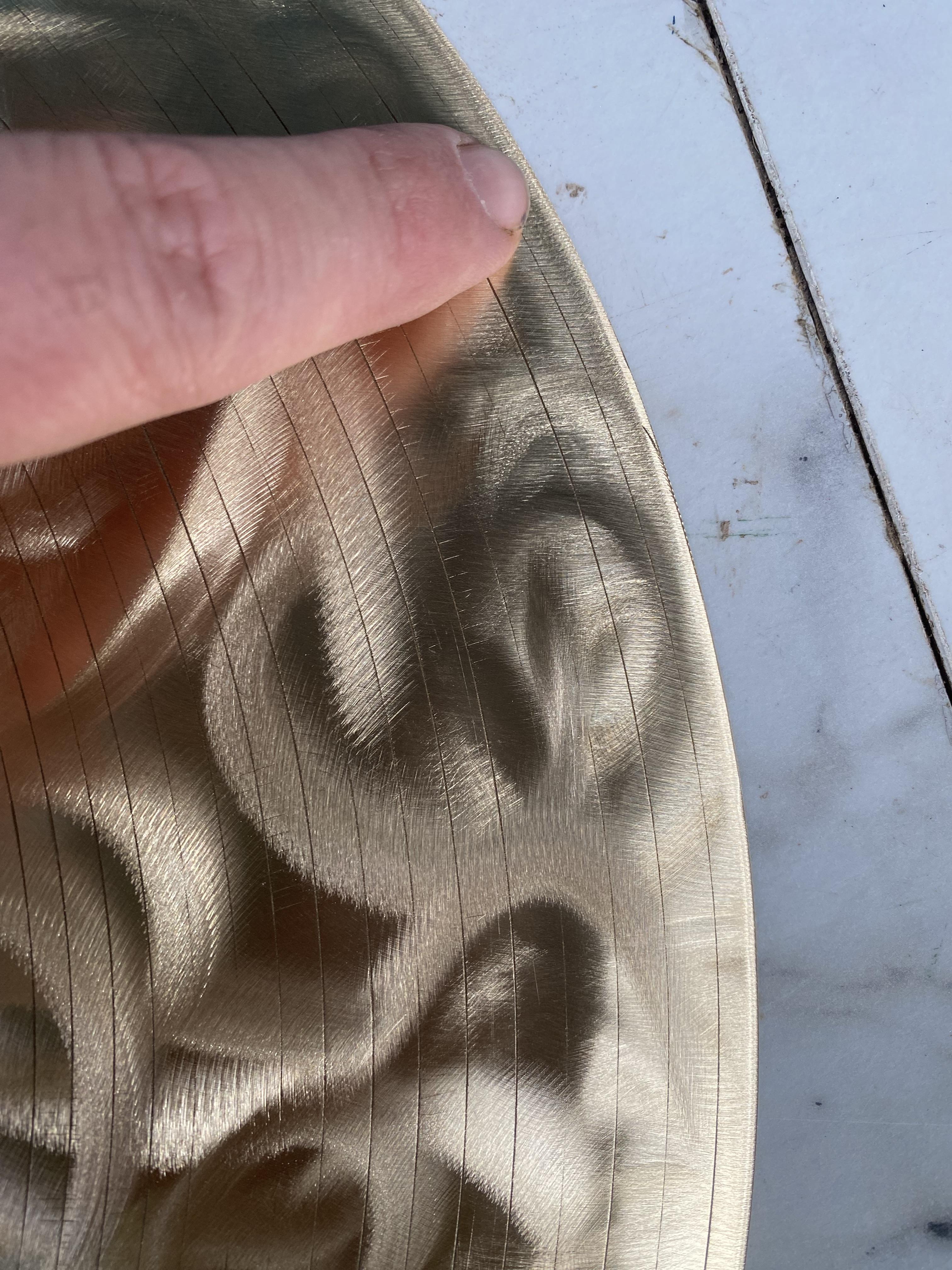
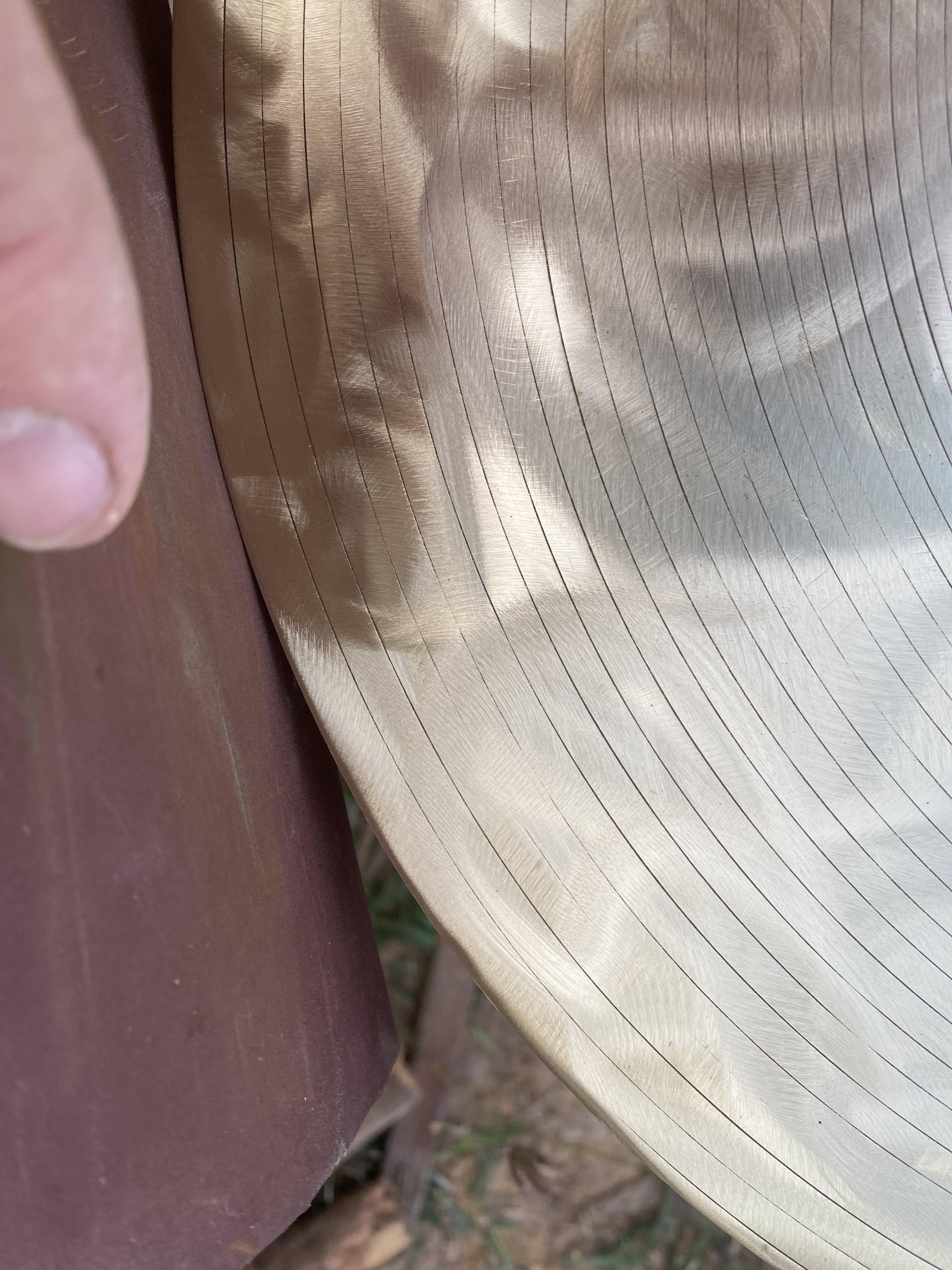
Once the overall sanding was done, I went back and sanded the rim of the cymbal all the way around, first with the angle grinder, and then by hand.
It’s really important to do this so that the sound comes cleanly off the edge of the cymbal, and so you don’t inadvertently leave any sharp areas that might bite you later!
Wipe and Spray
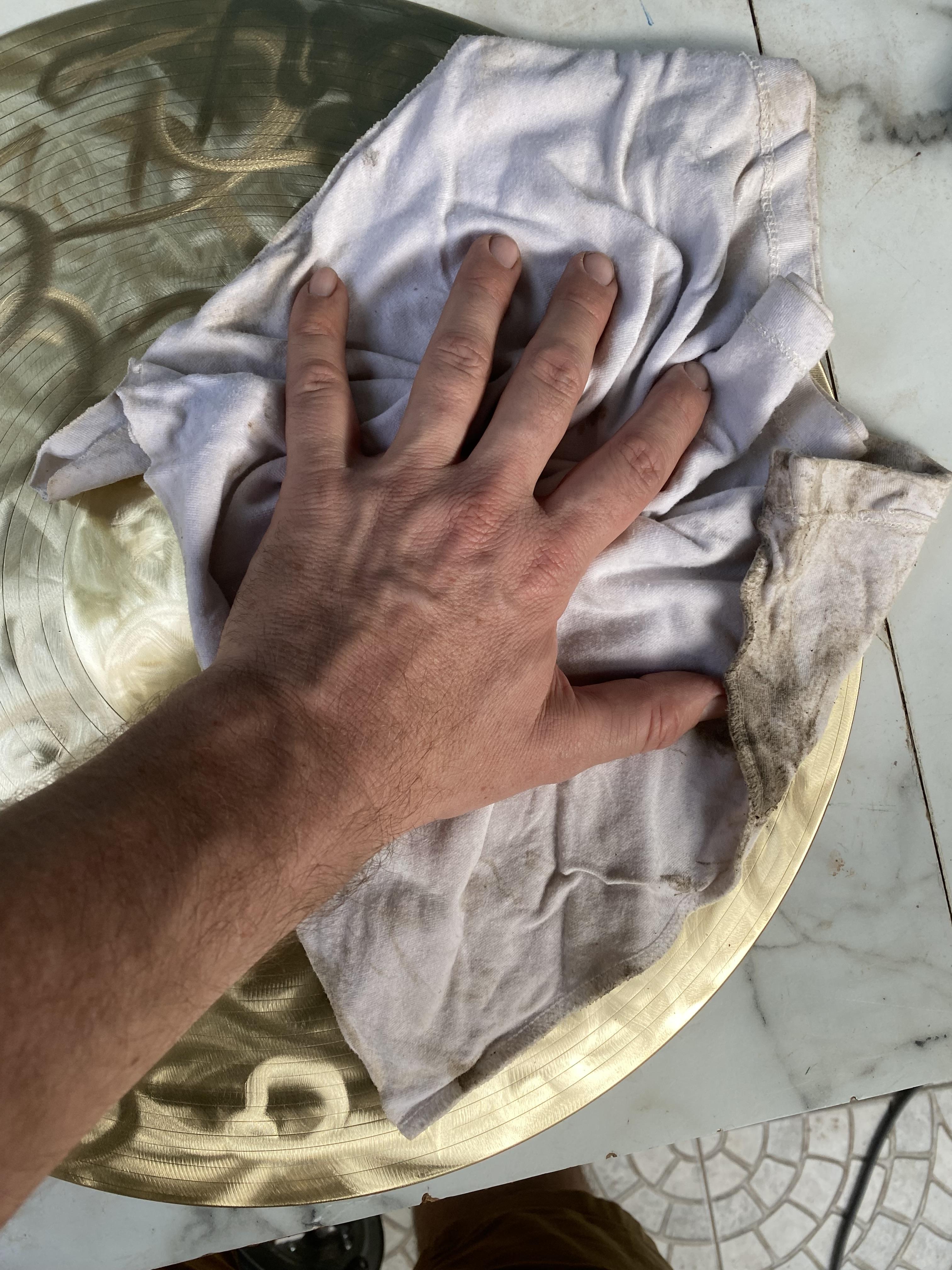
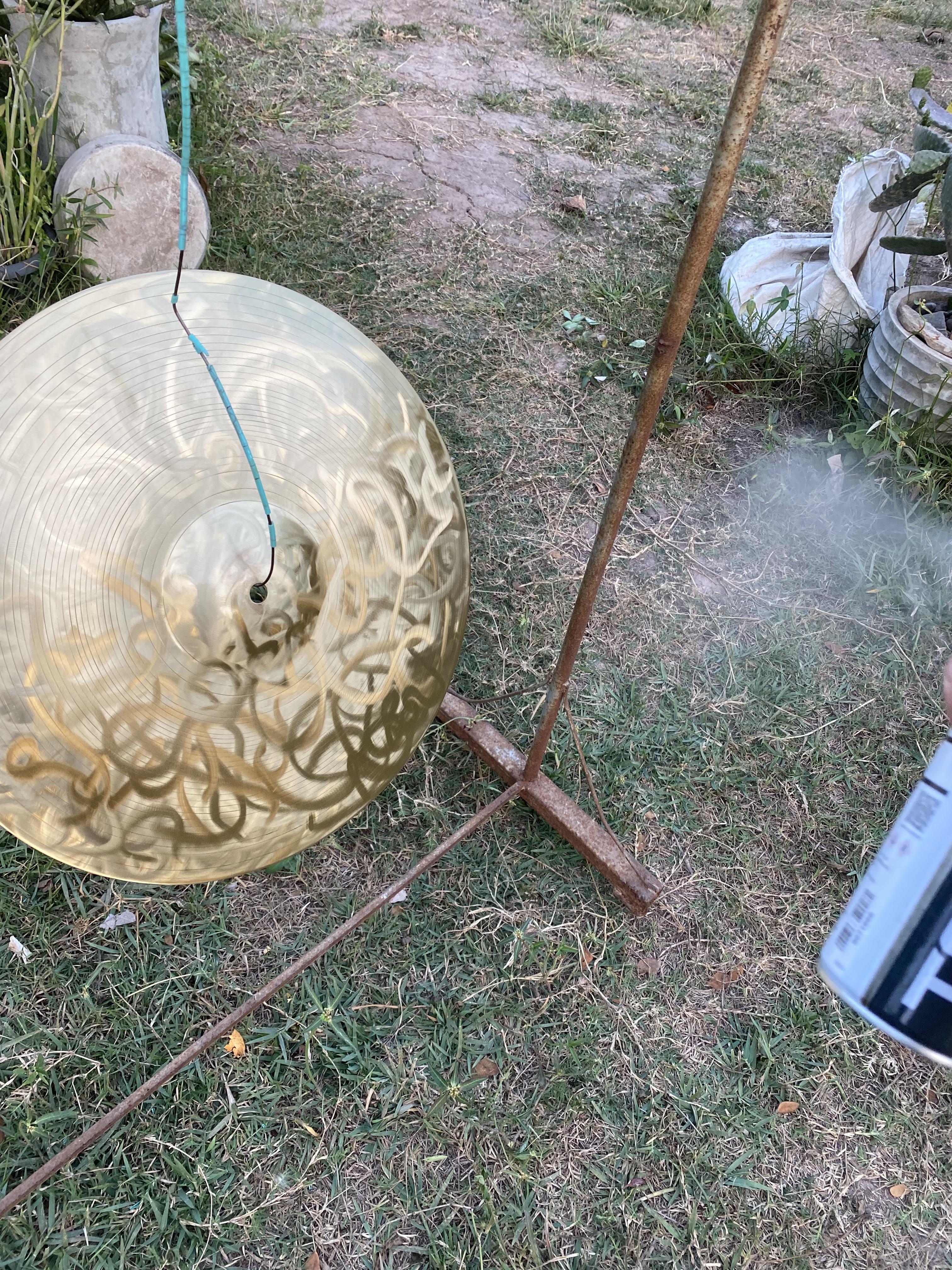
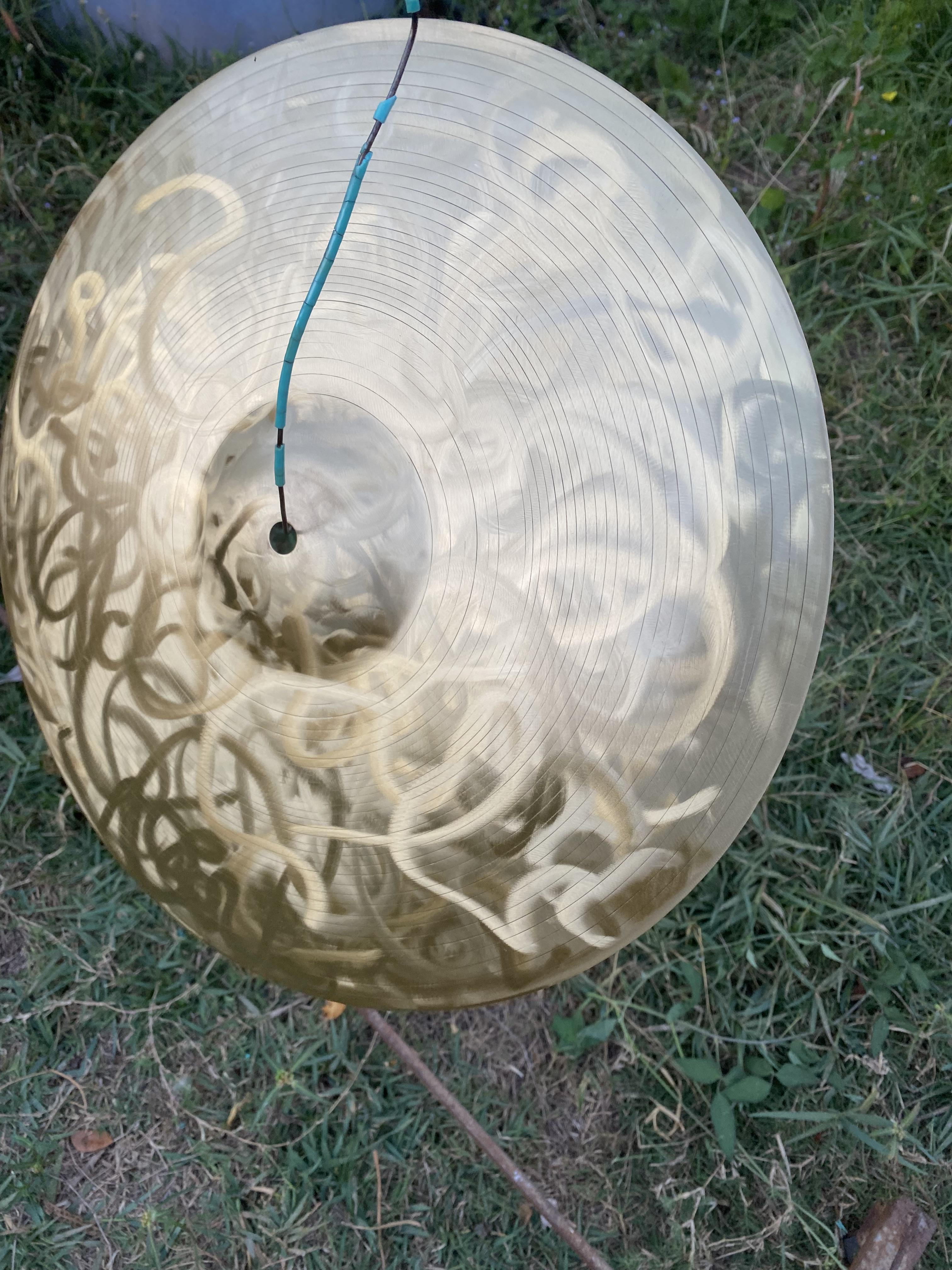
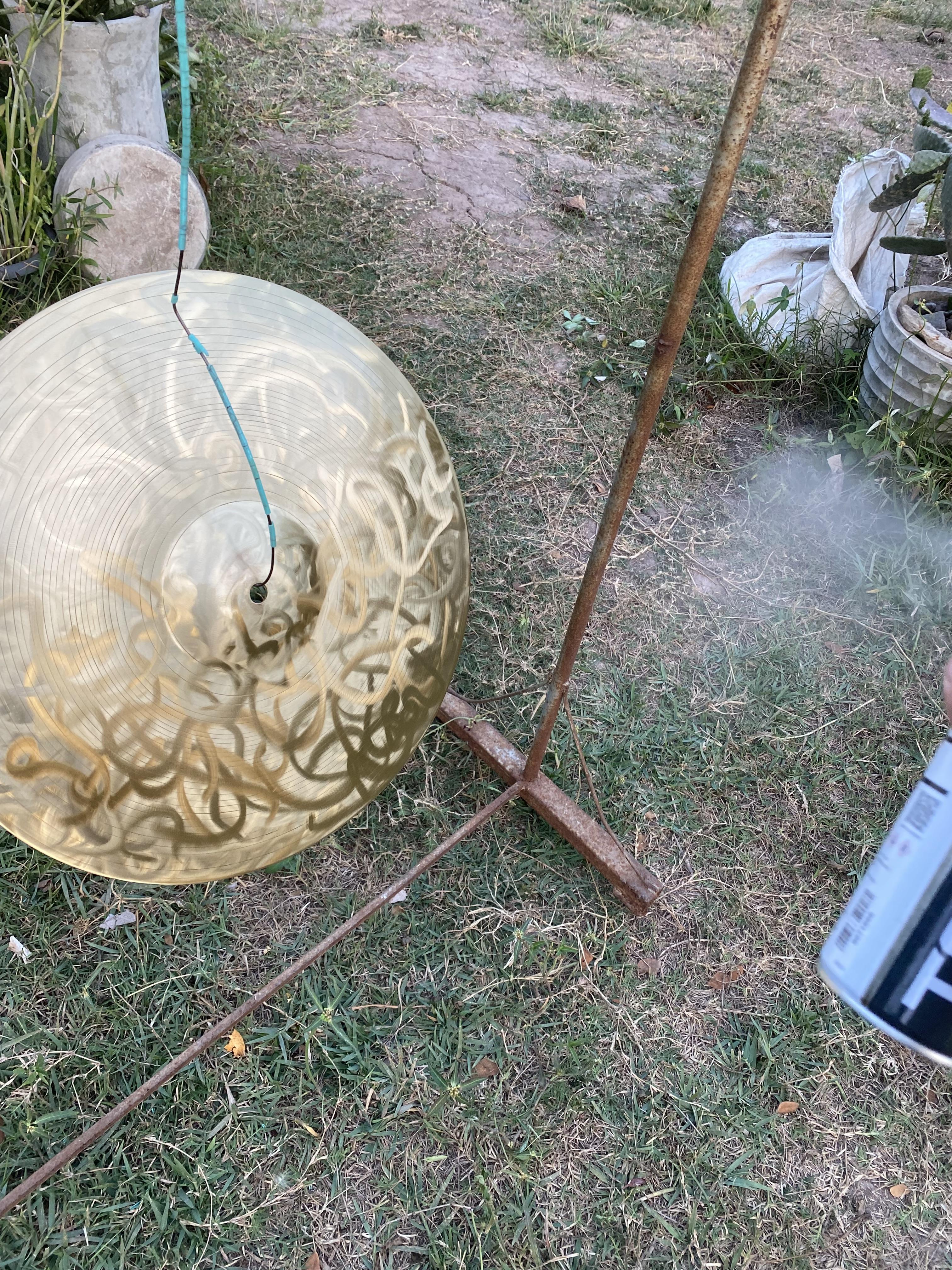
The oils on your skin can cause spotting on the newly exposed bronze, so it’s best to wear gloves when handling the cymbal.
if, like me, you forgot and picked it up with bare hands, make sure you clean off your prints. You can use any sort of detergent for this, just be sure to rinse and dry it off quickly.
Wipe all dust off the cymbal, then hang it from a string or wire in a place you can spray paint. Most commercial cymbals are lacquered, but this does dull the sound a bit, so it’s your choice.
Follow the manufacturer’s instructions for the lacquer but be sure to put on only a thin coat, or you’ll end up with a dull sound.
PLAY!
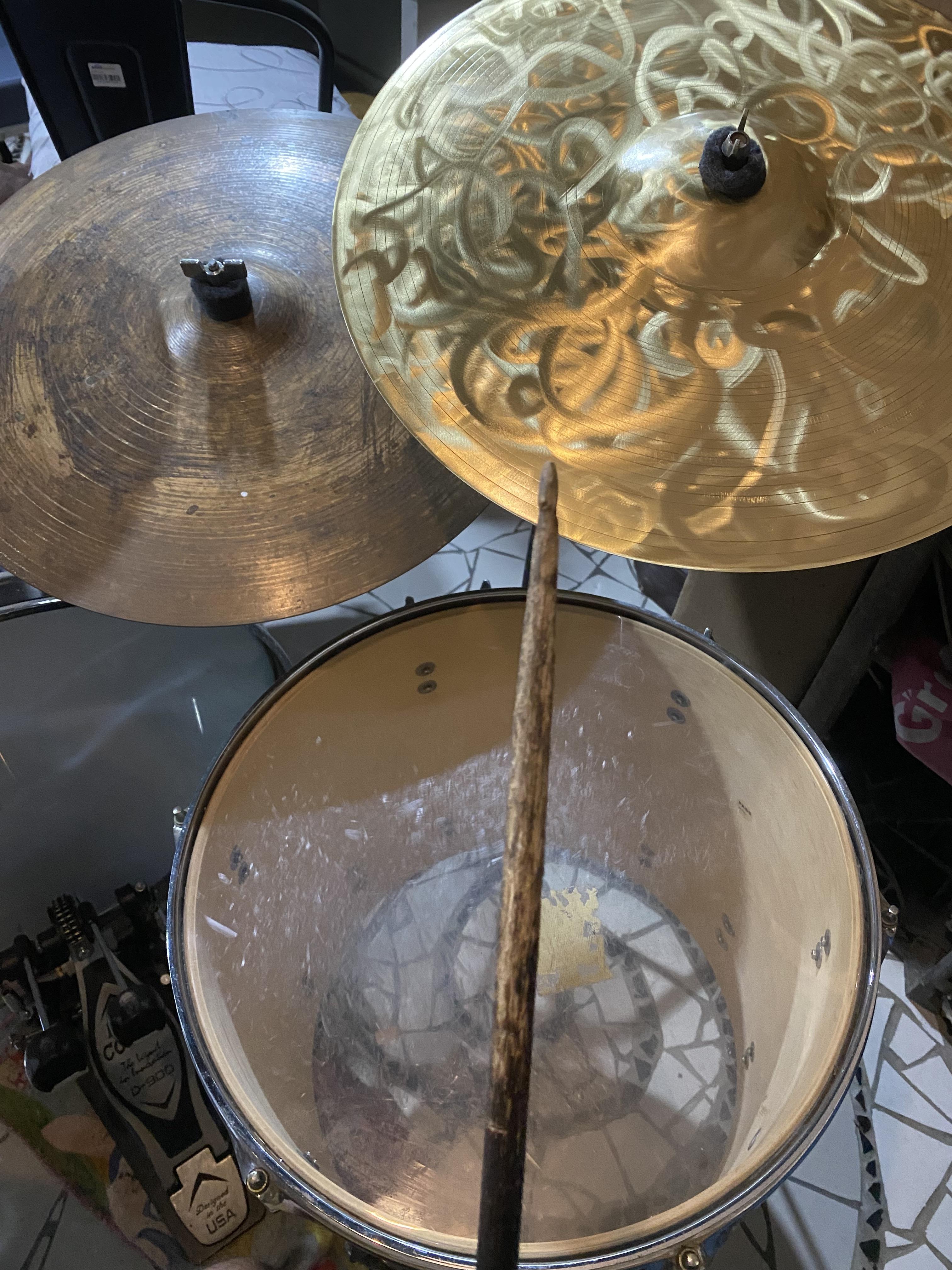
When your lacquer is completely dry and cured (give it a good 24 hours), start smashing that new cymbal like the beast that you are!