Timber Stool
.jpg)
In this step-by-step guide, I document how I built a solid timber stool from Australian native Cypress pine, using professional workshop tools.
Supplies
Power Tools:
- Biscuit Cutter
- Random orbital sander
- Professional panel saw
Material List:
- Australian native Cypress pine, rough sawn, 90 × 90 mm sections, slightly over 2.5 m length
- Wood glue
- Clamps (for even pressure on angled assemblies)
- Measuring tape
- Combination square
- Marking gauge
- Pencil
- Sandpaper (progressive grits)
- Woodfiller
- Bee-Wax finish
- Clean lint-free cloths
- Disposable Glove
- Safety Glasses
- Enclosed shoes
- Respirator Dust Mask
Software:
- Tinkercad
- Twinmotion
Timber Selection and Preparation
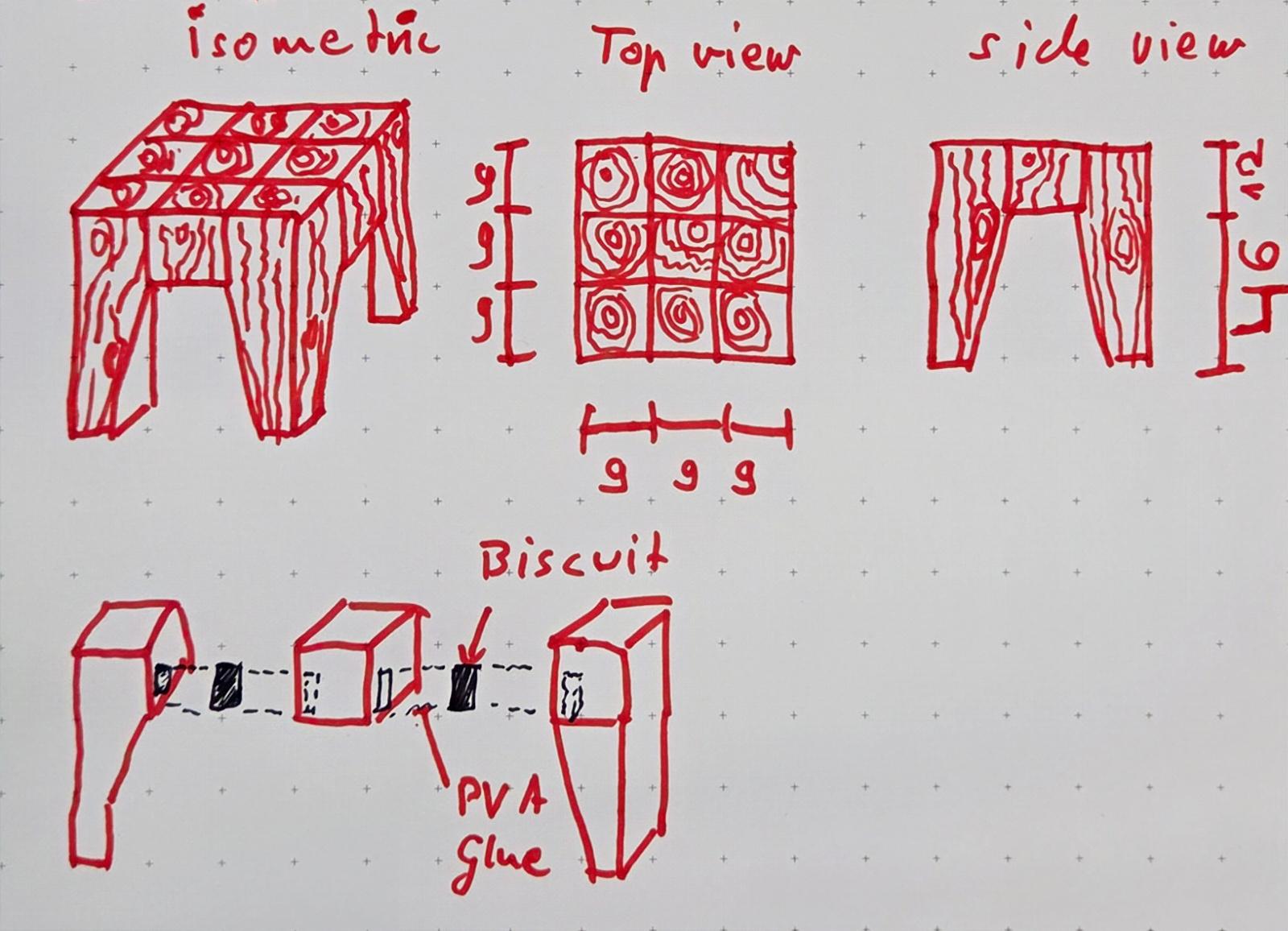
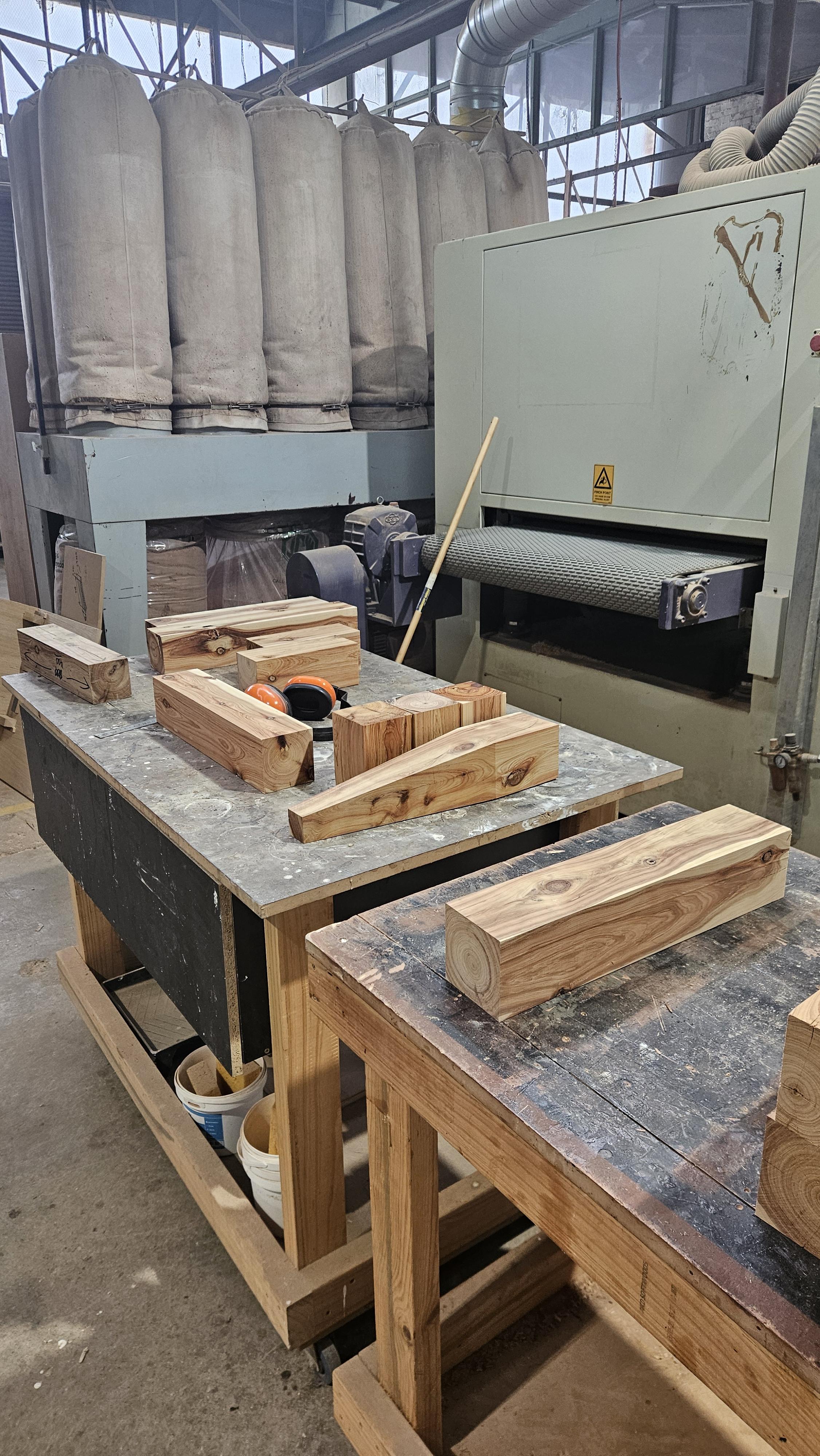
I selected Australian native Cypress pine for its durability, distinctive grain, and natural termite resistance. The raw stock consisted of 90 × 90 mm sections (9 × 9 cm) measuring slightly over 2.5 metres in length. I jointed and thicknessed the rough-sawn timber to create flat, square, and dimensionally stable components. All pieces were milled to a consistent thickness before layout and cutting commenced.
Component Cutting and Angle Precision
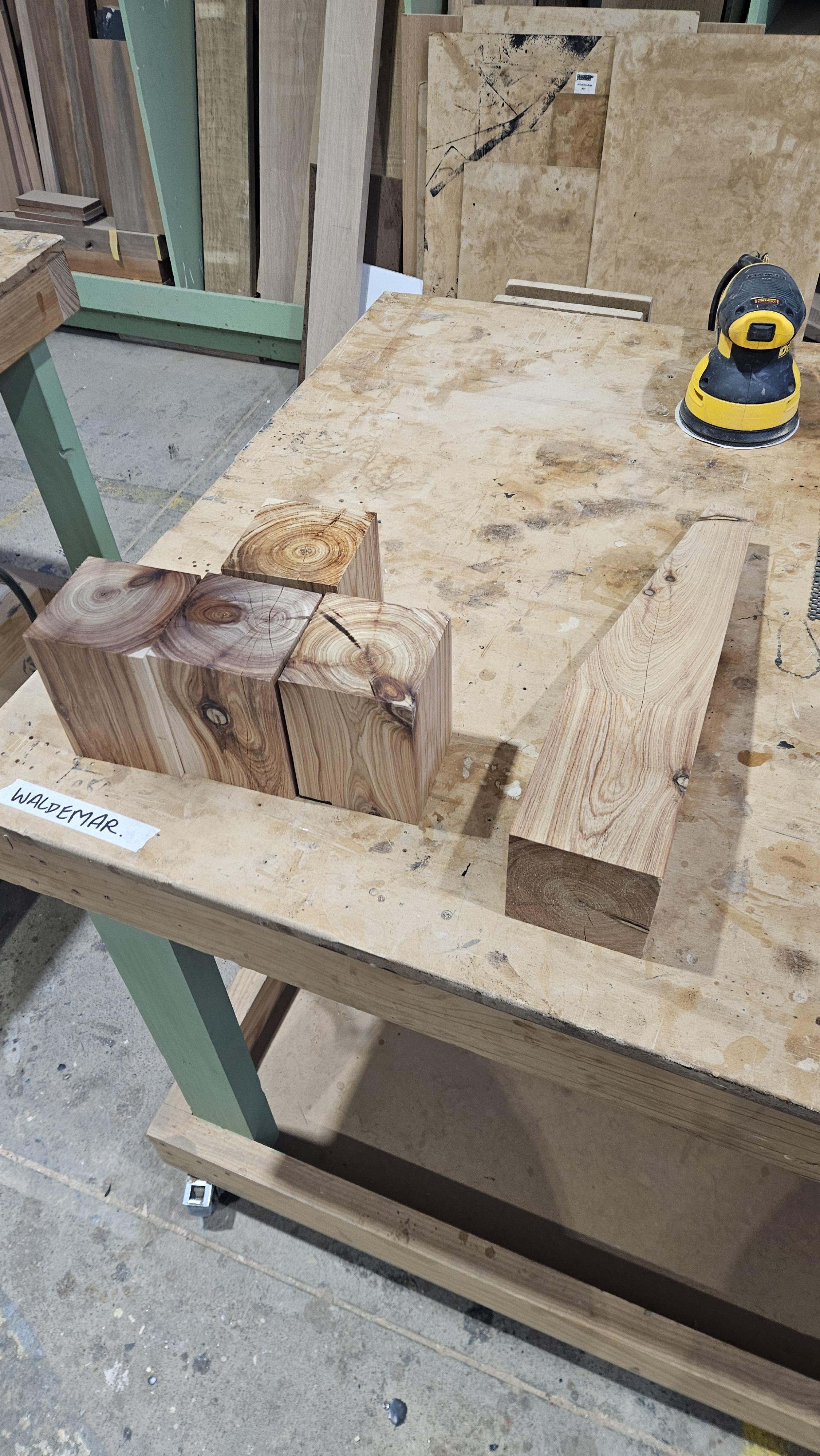
I marked out all components, including the seat and legs, using accurate reference lines. The leg angles were cut on a professional panel saw to ensure precision, repeatability, and structural alignment. Each leg was checked for symmetry to guarantee a stable base and clean geometry.

Joinery Preparation
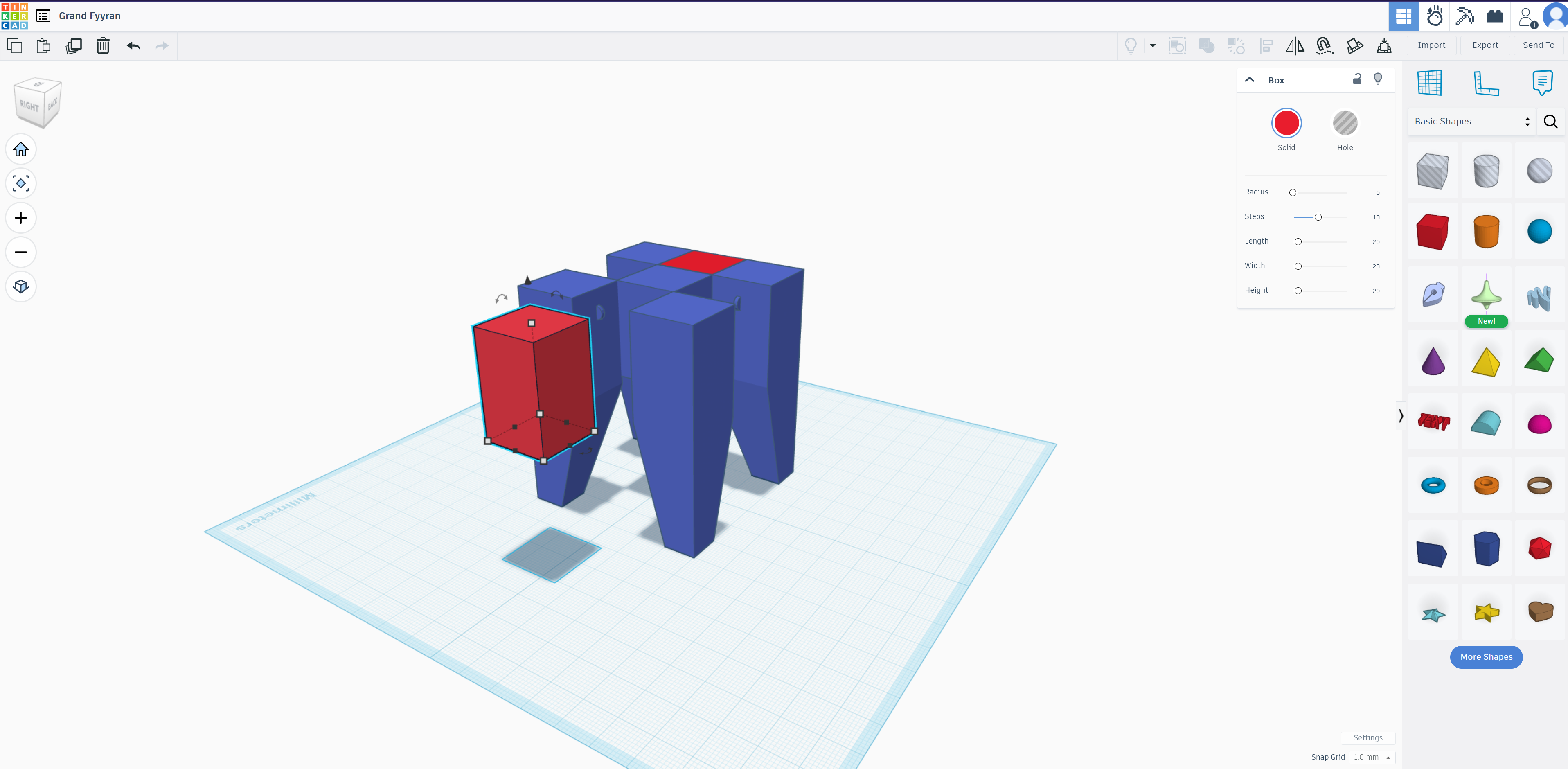
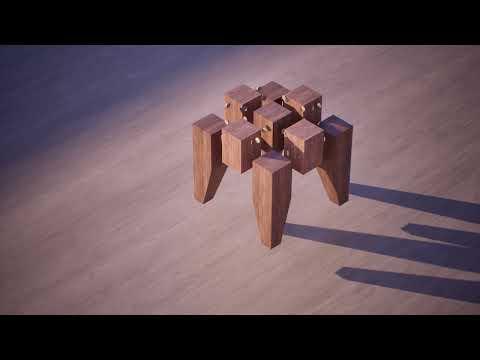
For the joinery, I used biscuit joints to align and reinforce the connections between components. I marked and cut the biscuit slots to ensure accurate positioning. To understand the assembly process better, I created a small assembly animation to visualise the sequence and confirm that all parts would fit together efficiently before glue-up. I dry-fitted all components to verify tolerances and overall integrity. Prior to assembly, I sanded all individual components progressively through increasing grits to remove machining marks and prepare the surfaces for finishing.
Downloads
Assembly and Clamping
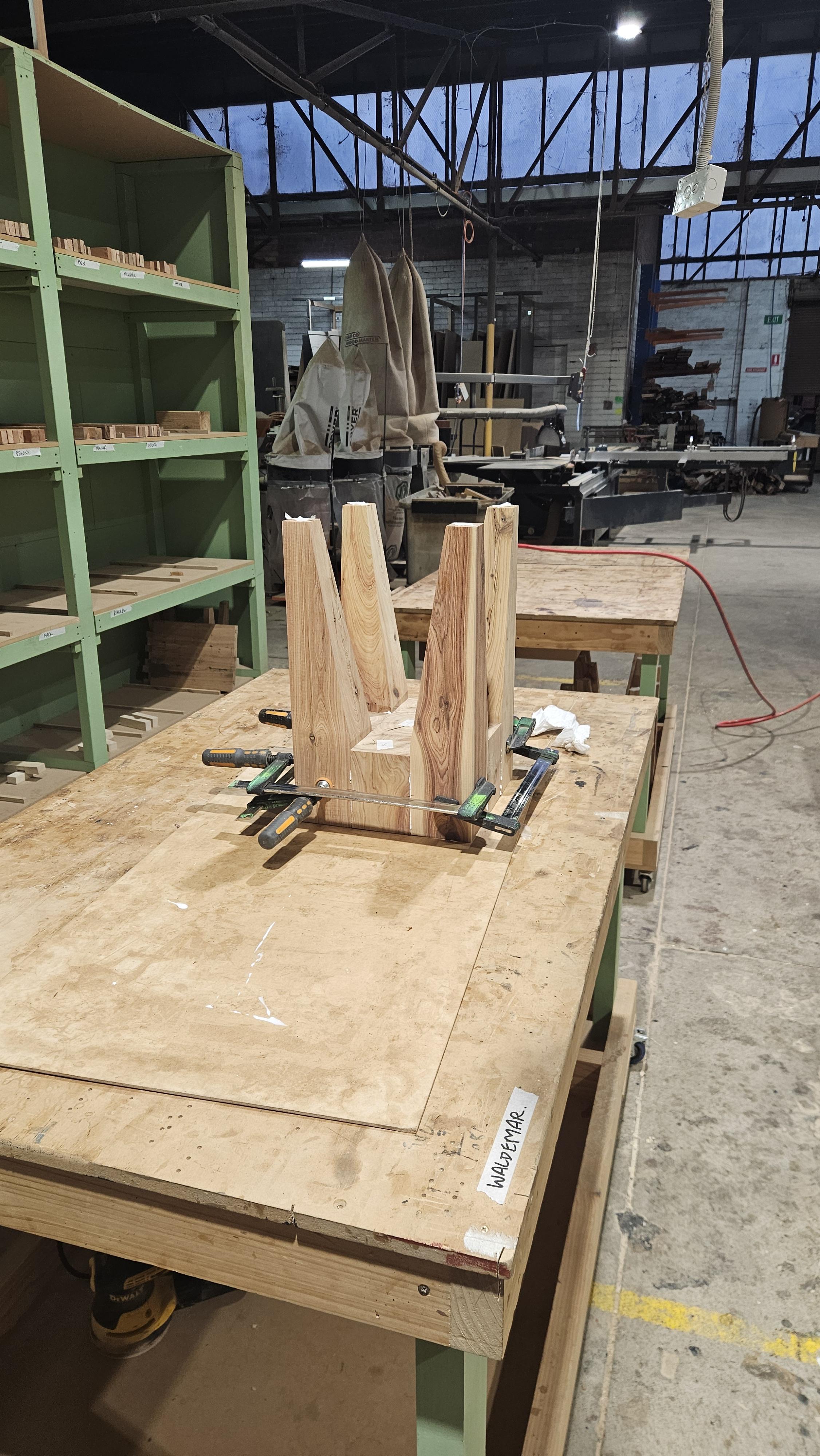
I applied PVA glue to all joinery surfaces before assembling the stool with careful alignment. I used clamps to apply even pressure across the angled joints, ensuring tight glue lines and structural cohesion. The assembly was left undisturbed to allow the glue to cure fully.
Surface Correction
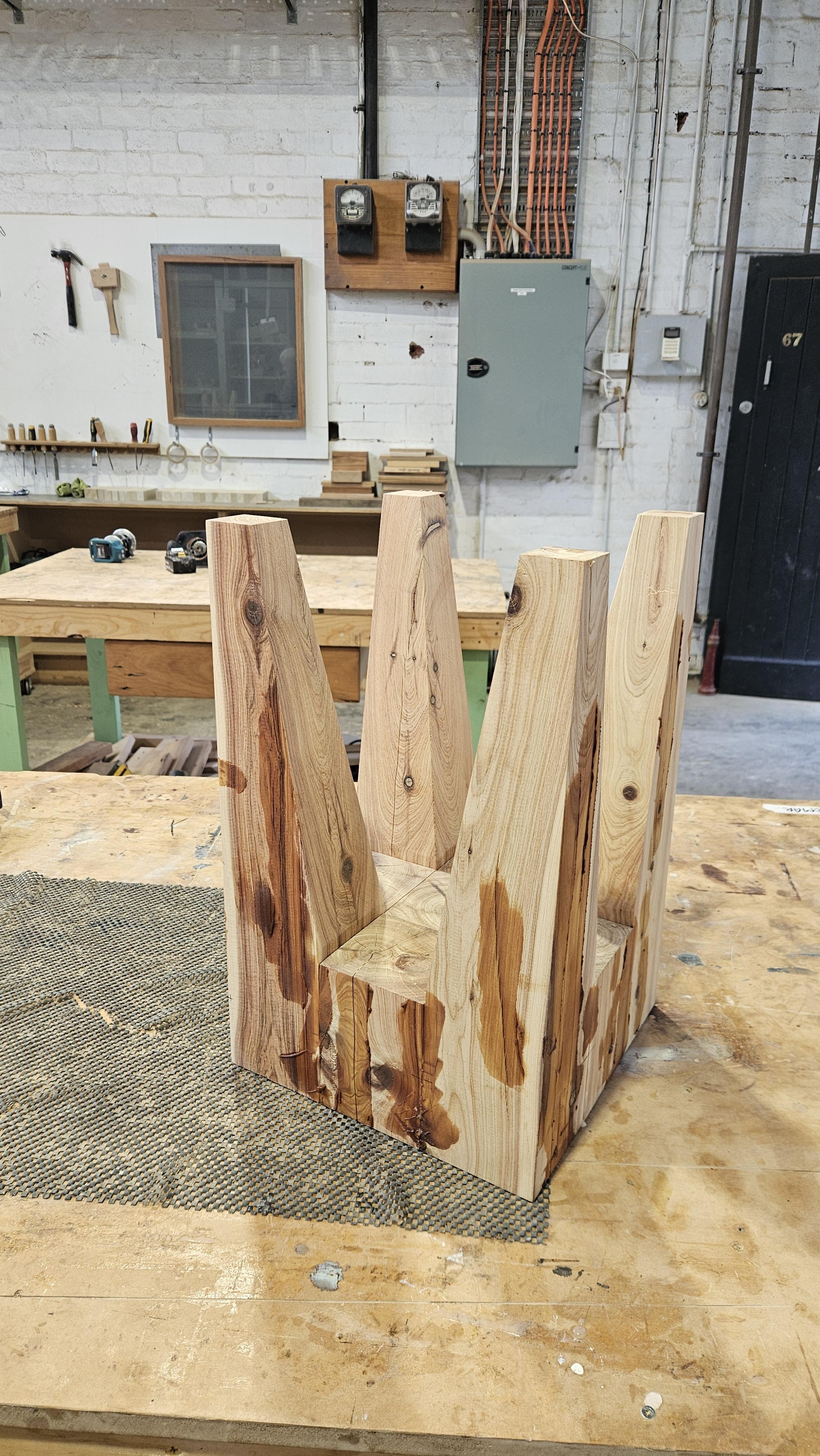
After the glue had completely dried, I inspected the stool for minor imperfections. Small gaps and surface irregularities were filled with wood filler.
Sanding
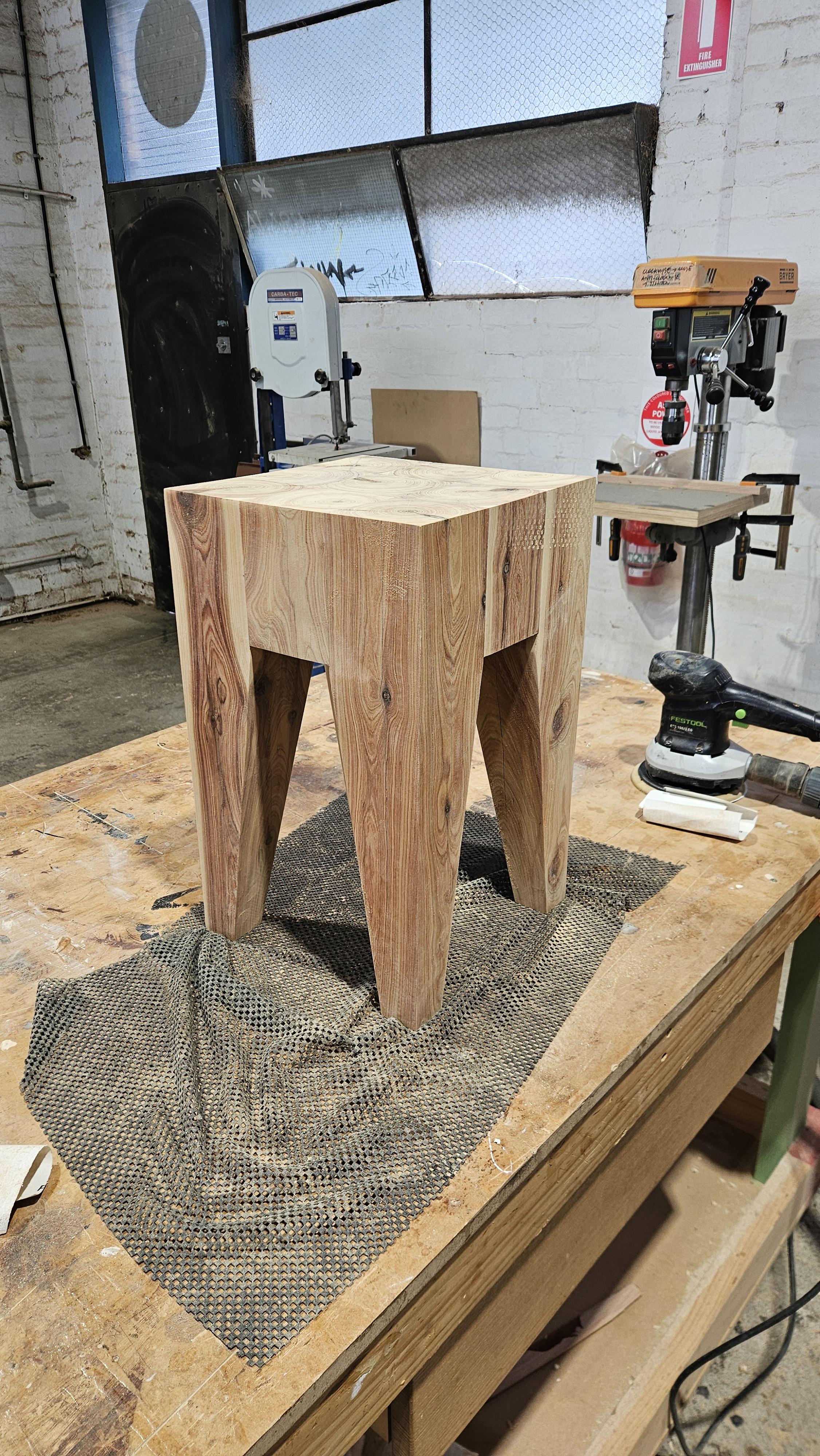
Once the filler had cured, I used a random orbital sander for the main surfaces and hand sanding for detailed edges and corners. I lightly eased edges to improve tactile quality while maintaining a crisp design language. The sanding process progressed from 120 grit to remove excess filler and level the surface, to 180 grit for refinement, and finally to 240 grit to achieve a smooth finish ready for applying the beeswax.
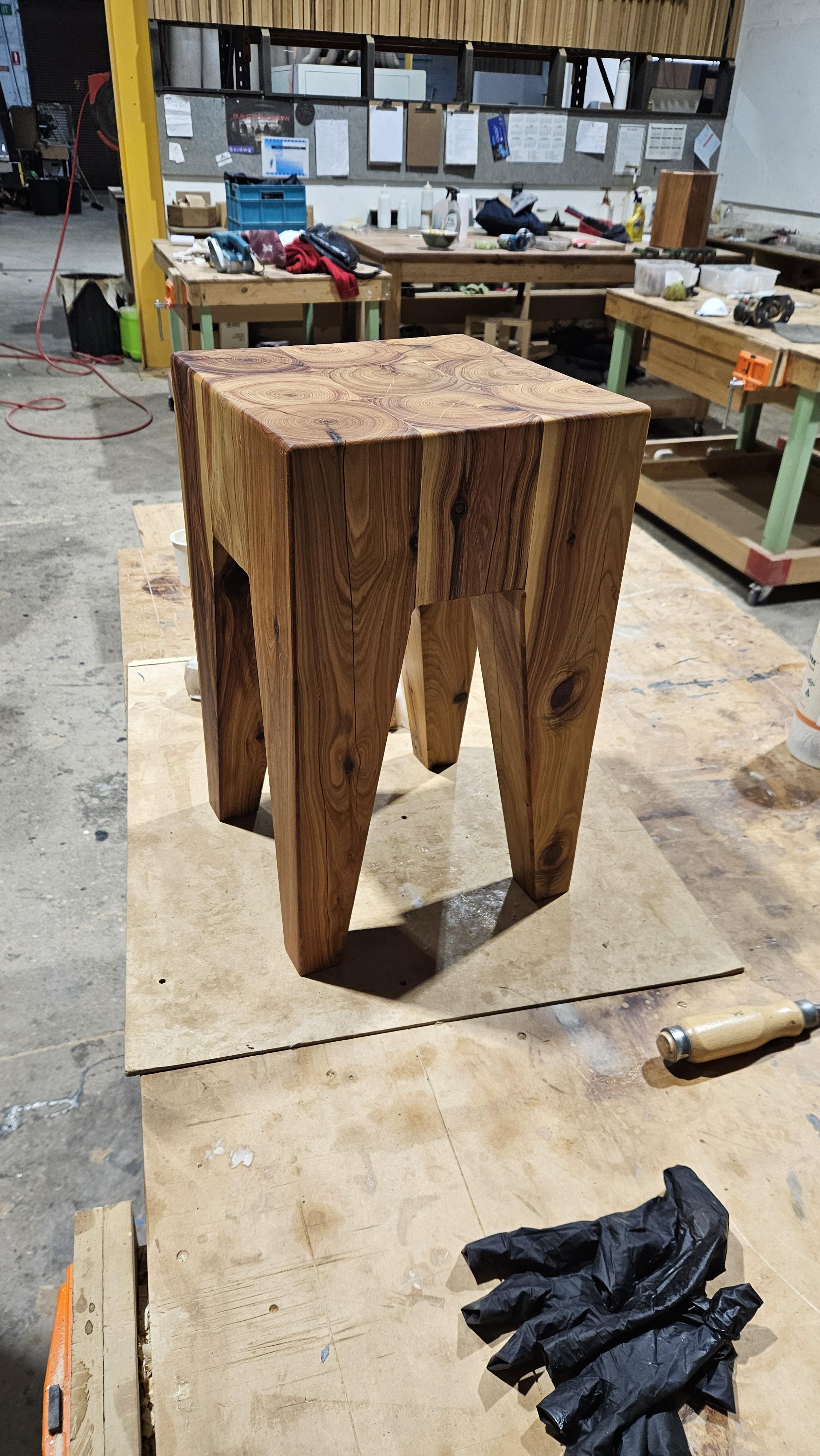
The piece was completed with a wax finish, providing a protective layer and a refined, tactile surface.