The Citadel - 2021 Baja SAE Build Instructions
251 Views, 3 Favorites, 0 Comments
The Citadel - 2021 Baja SAE Build Instructions
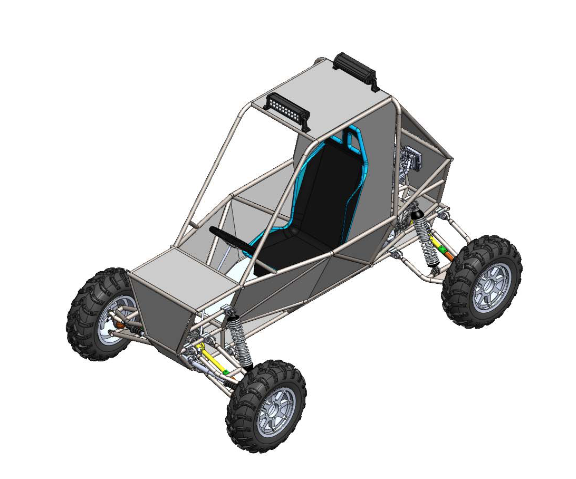
This procedure documents the full assembly instructions for The Citadel Baja SAE vehicle.
Frame and Roll Cage Construction
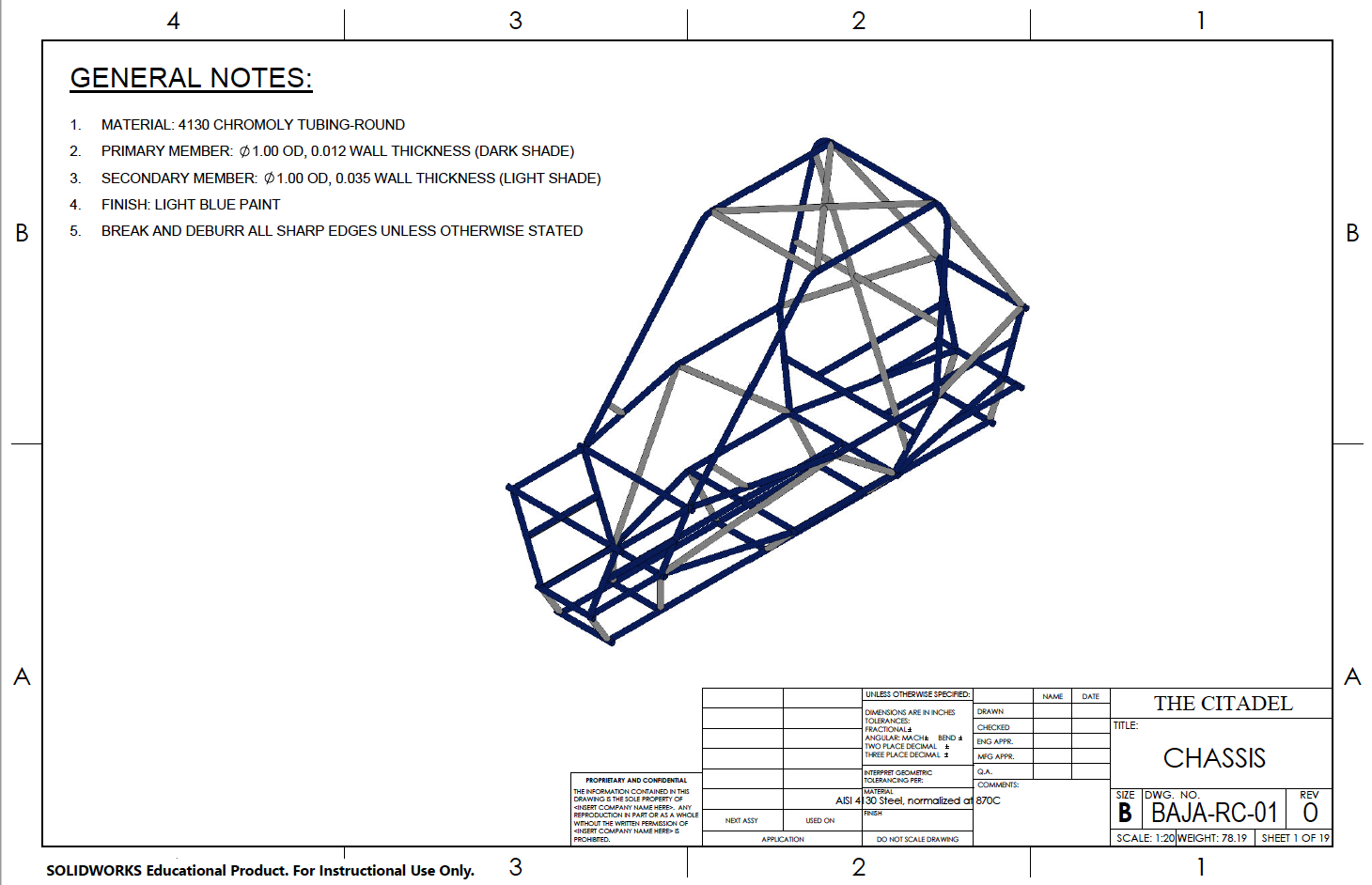

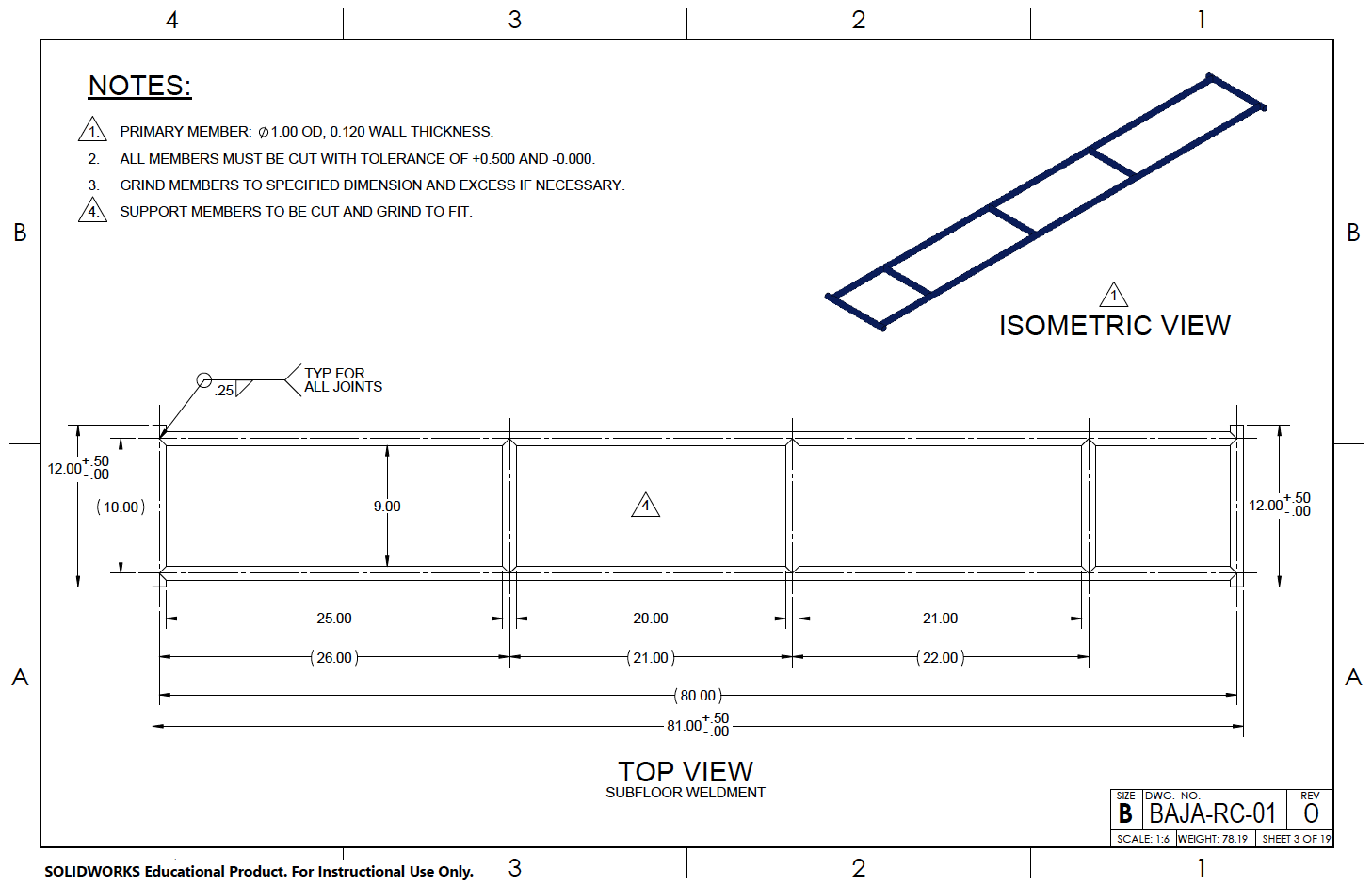

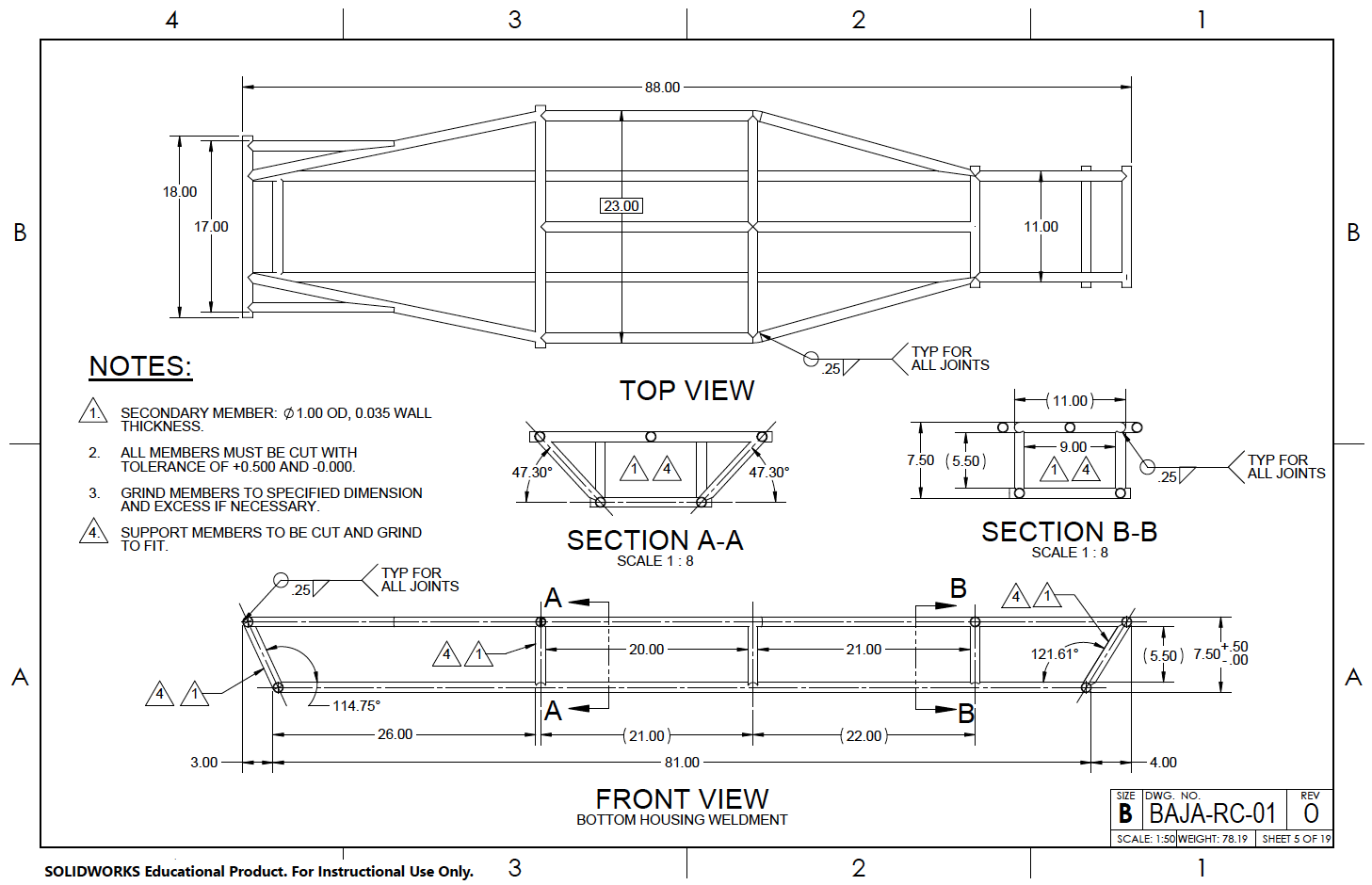
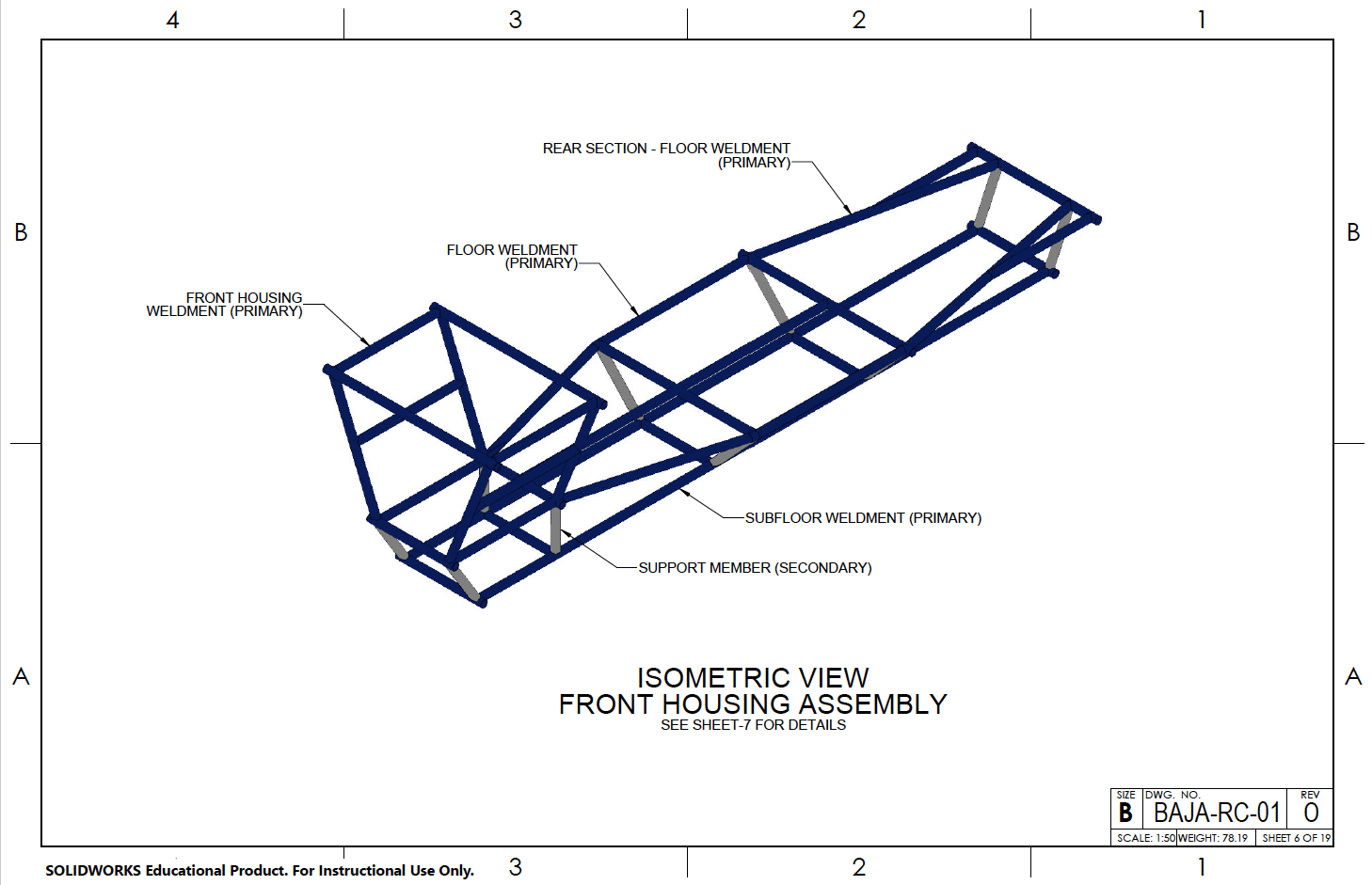
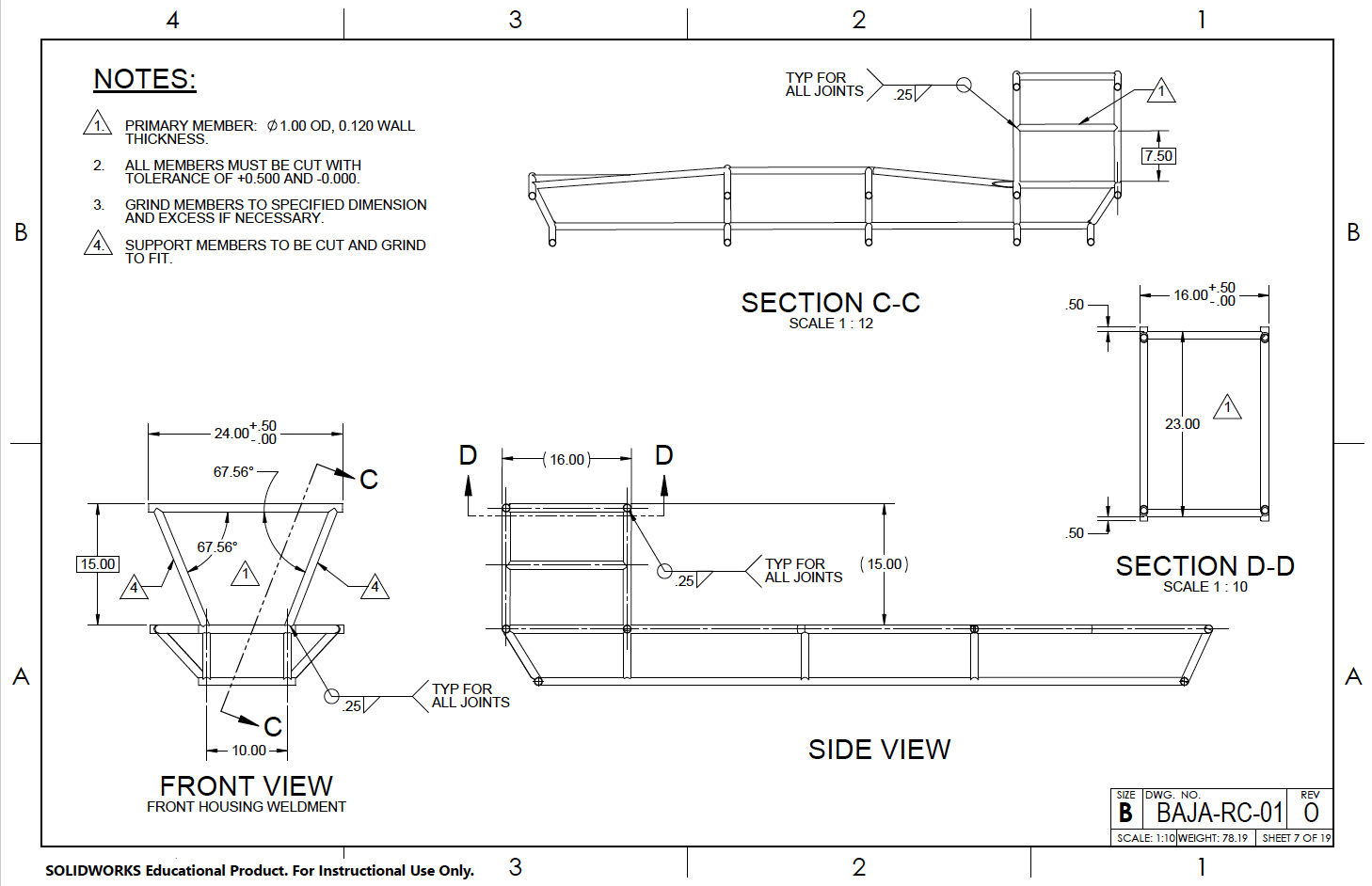


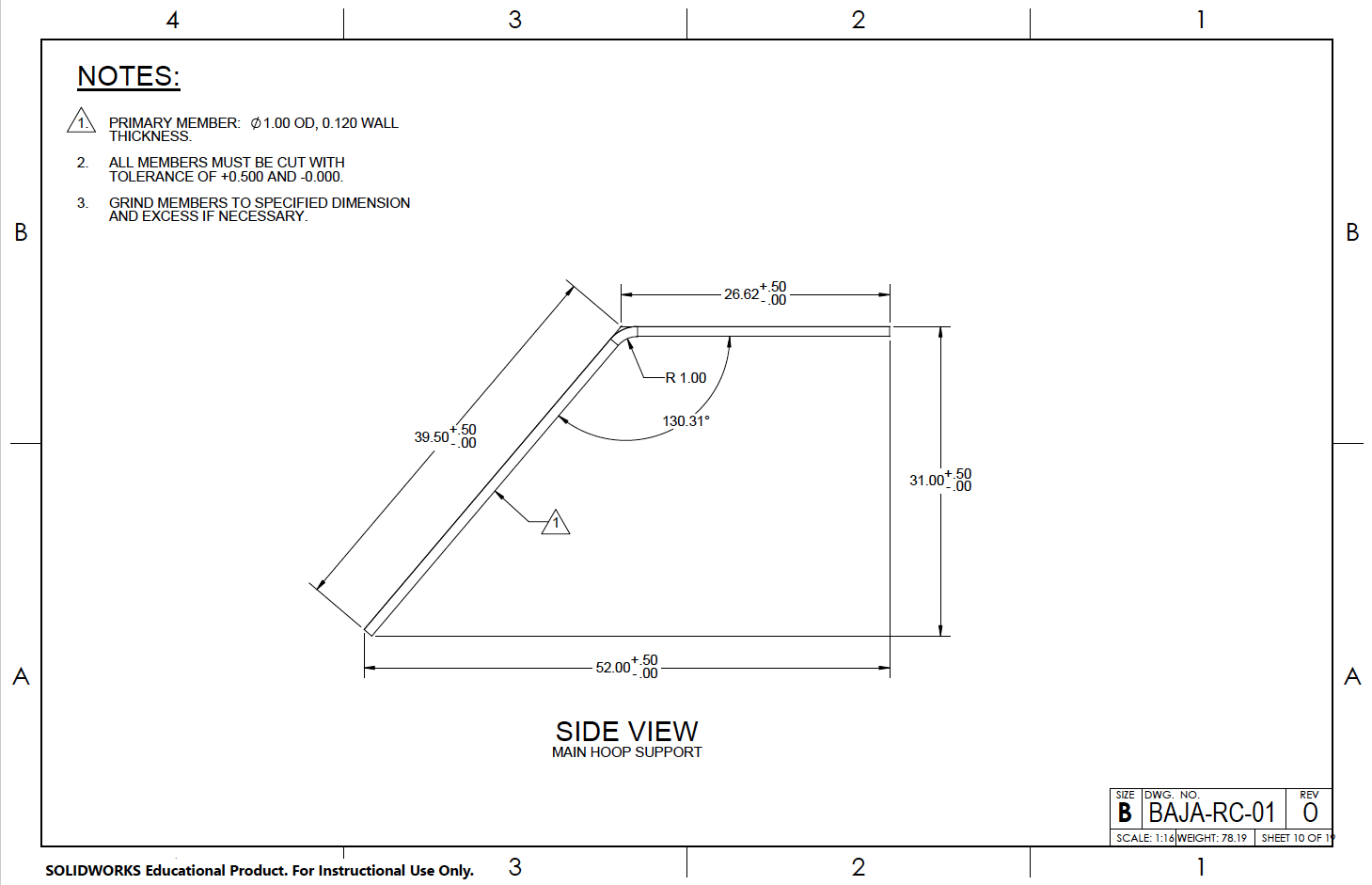
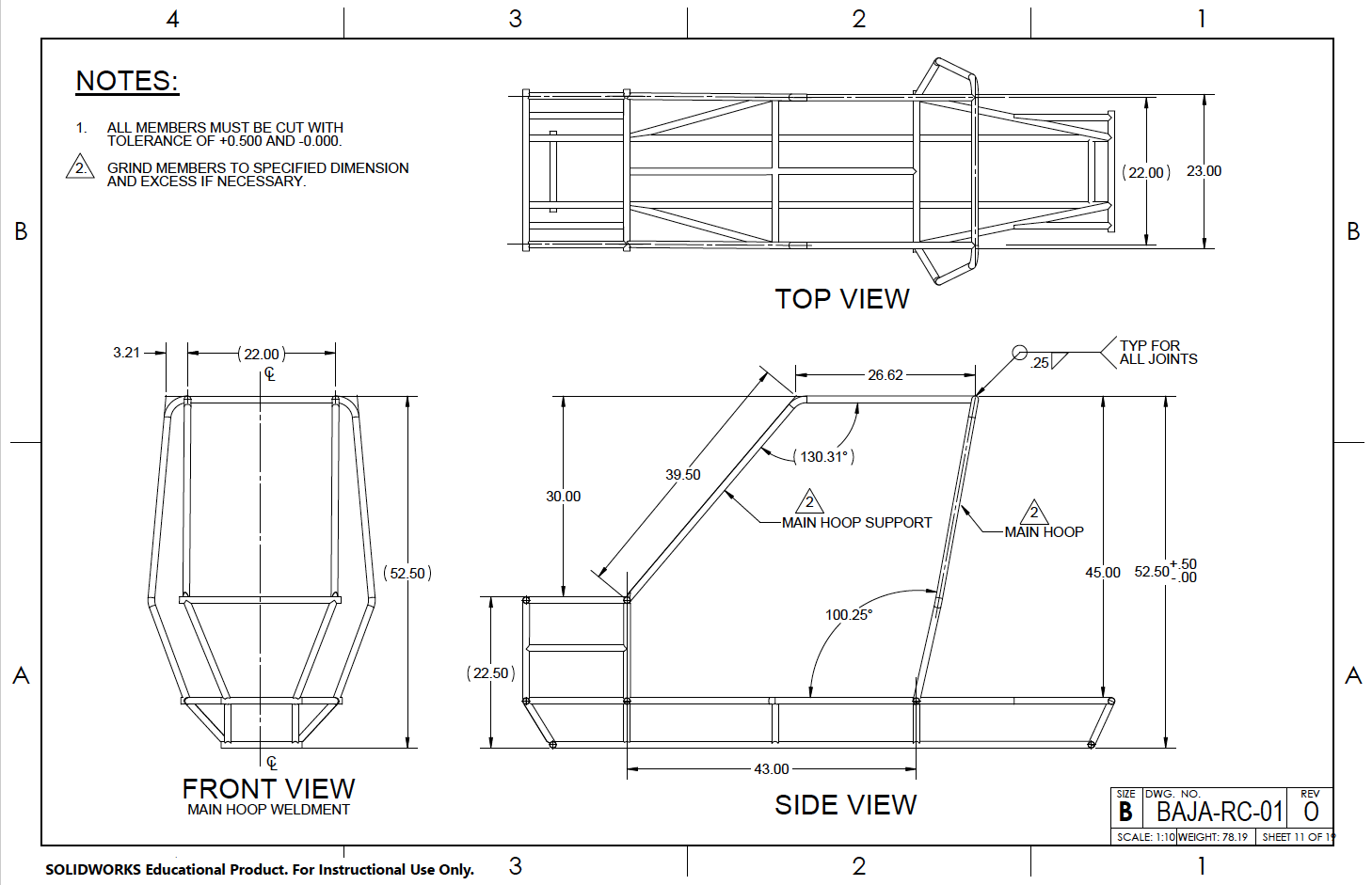
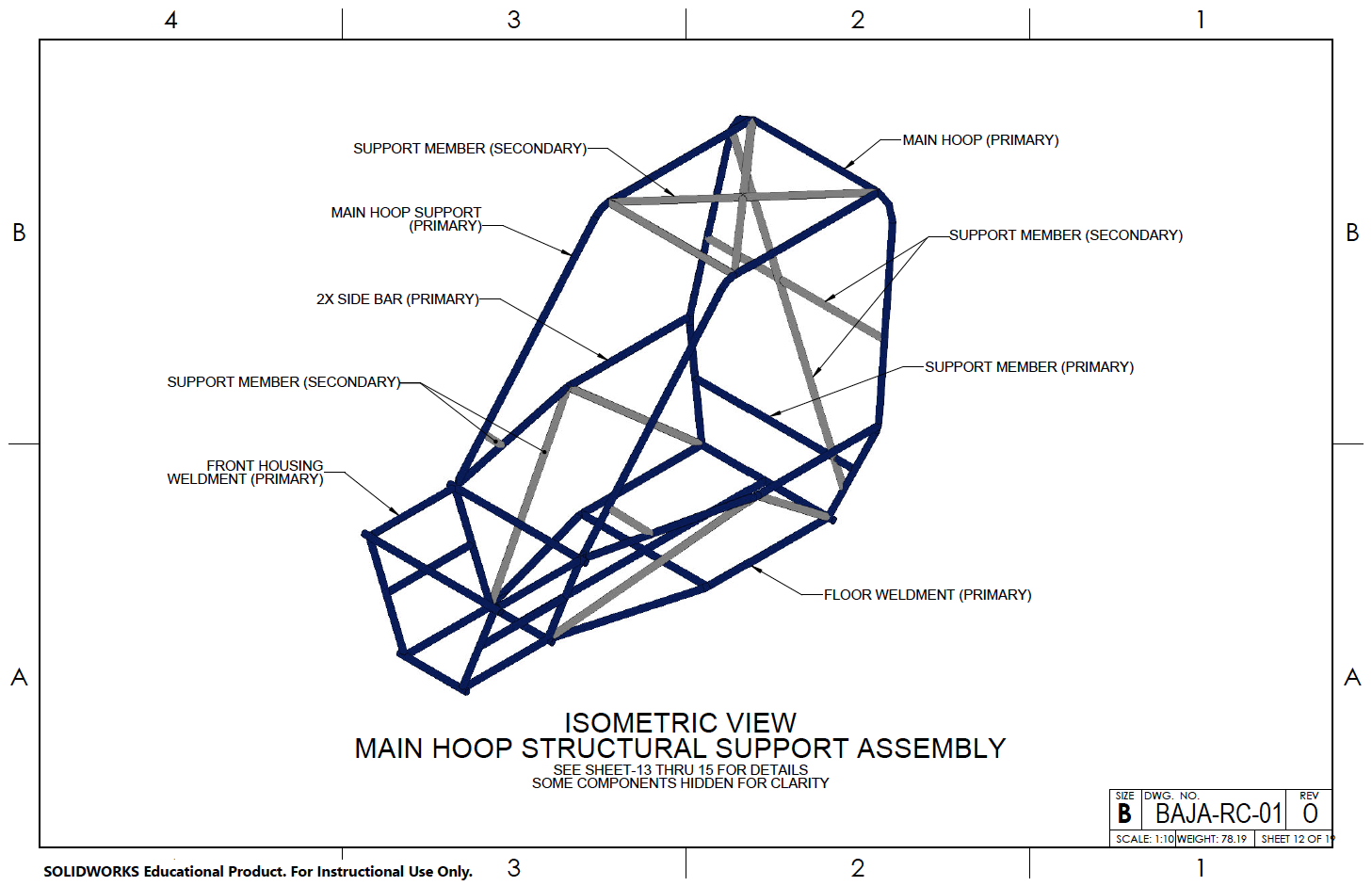
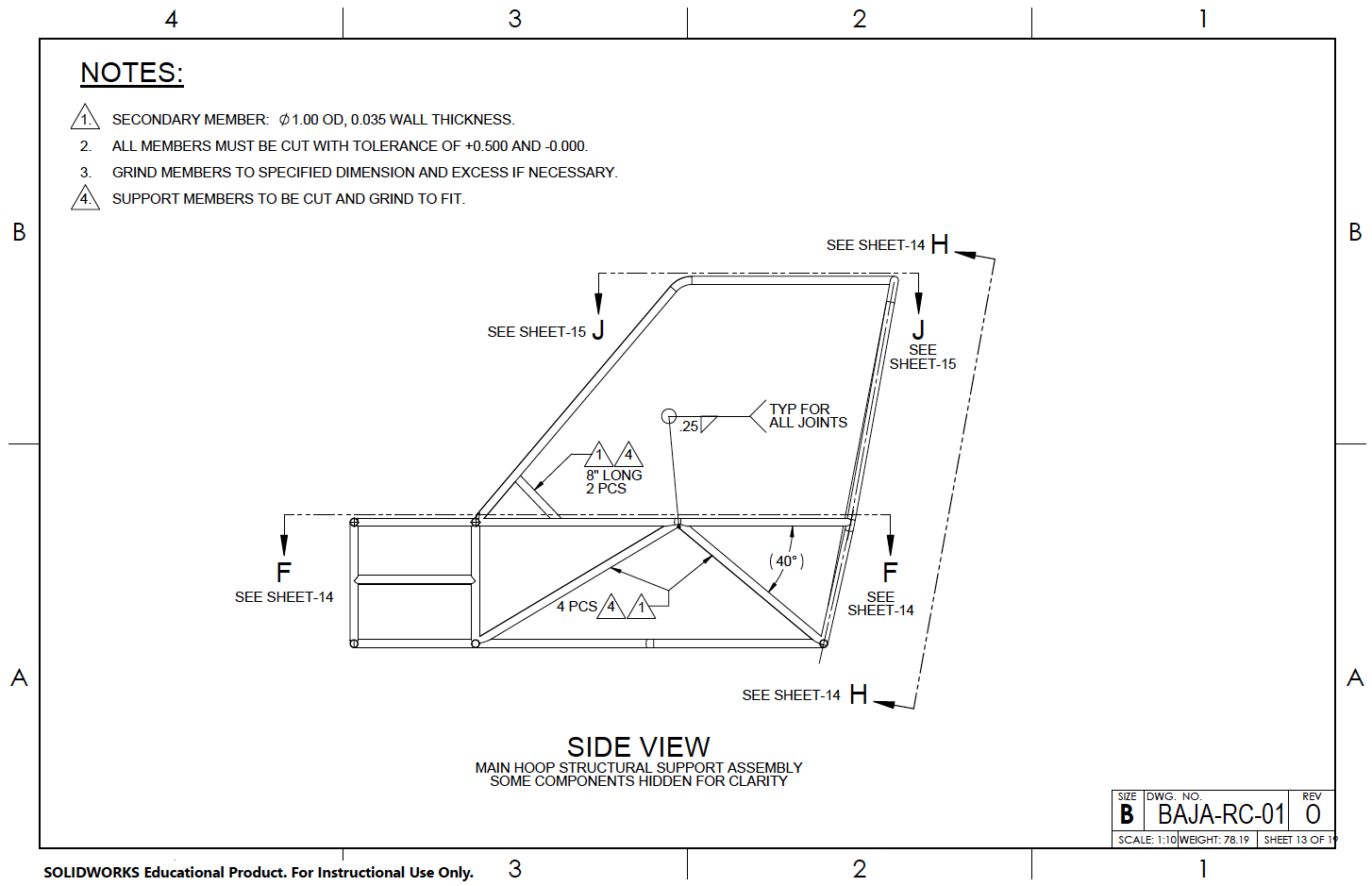
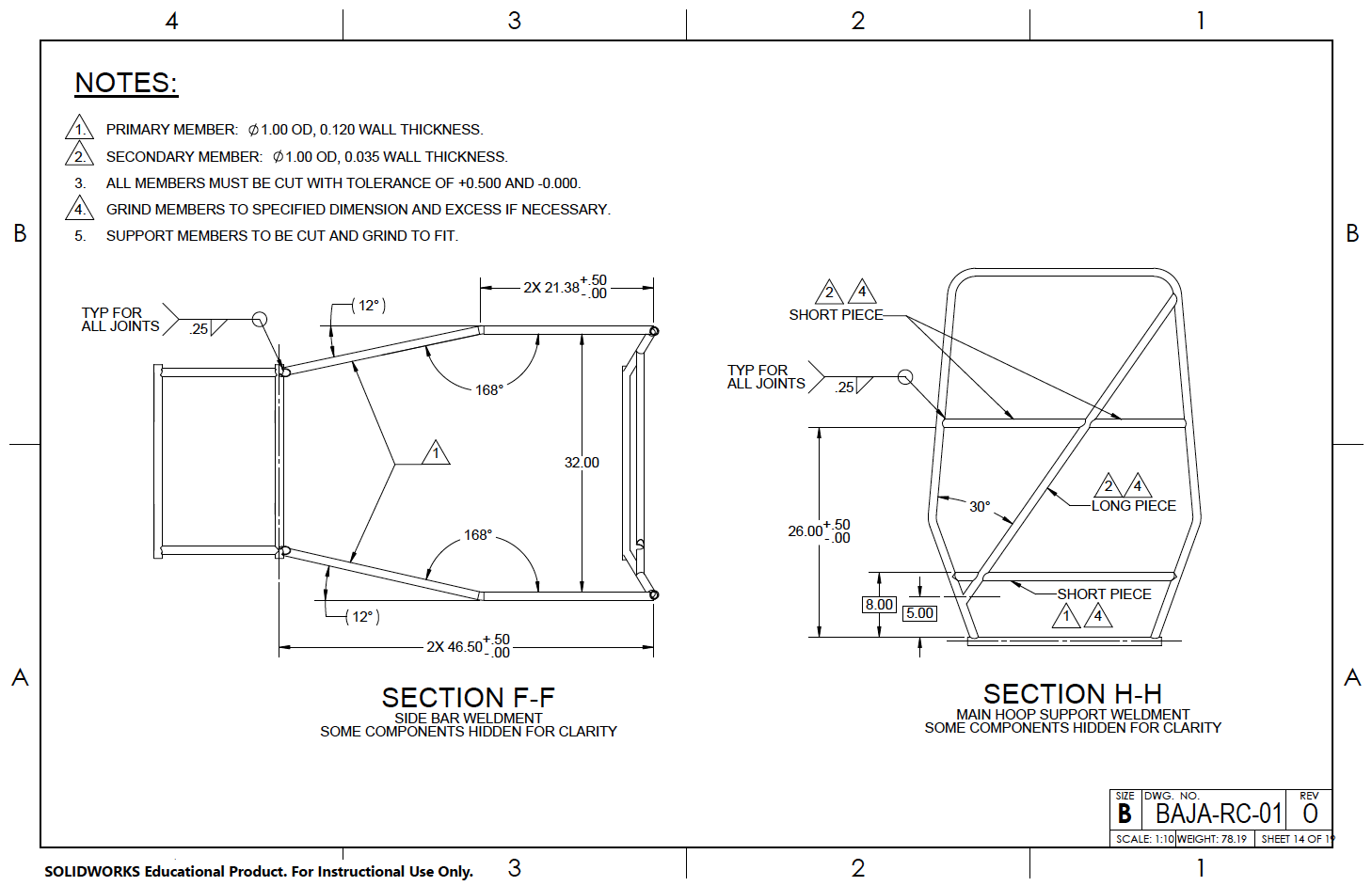
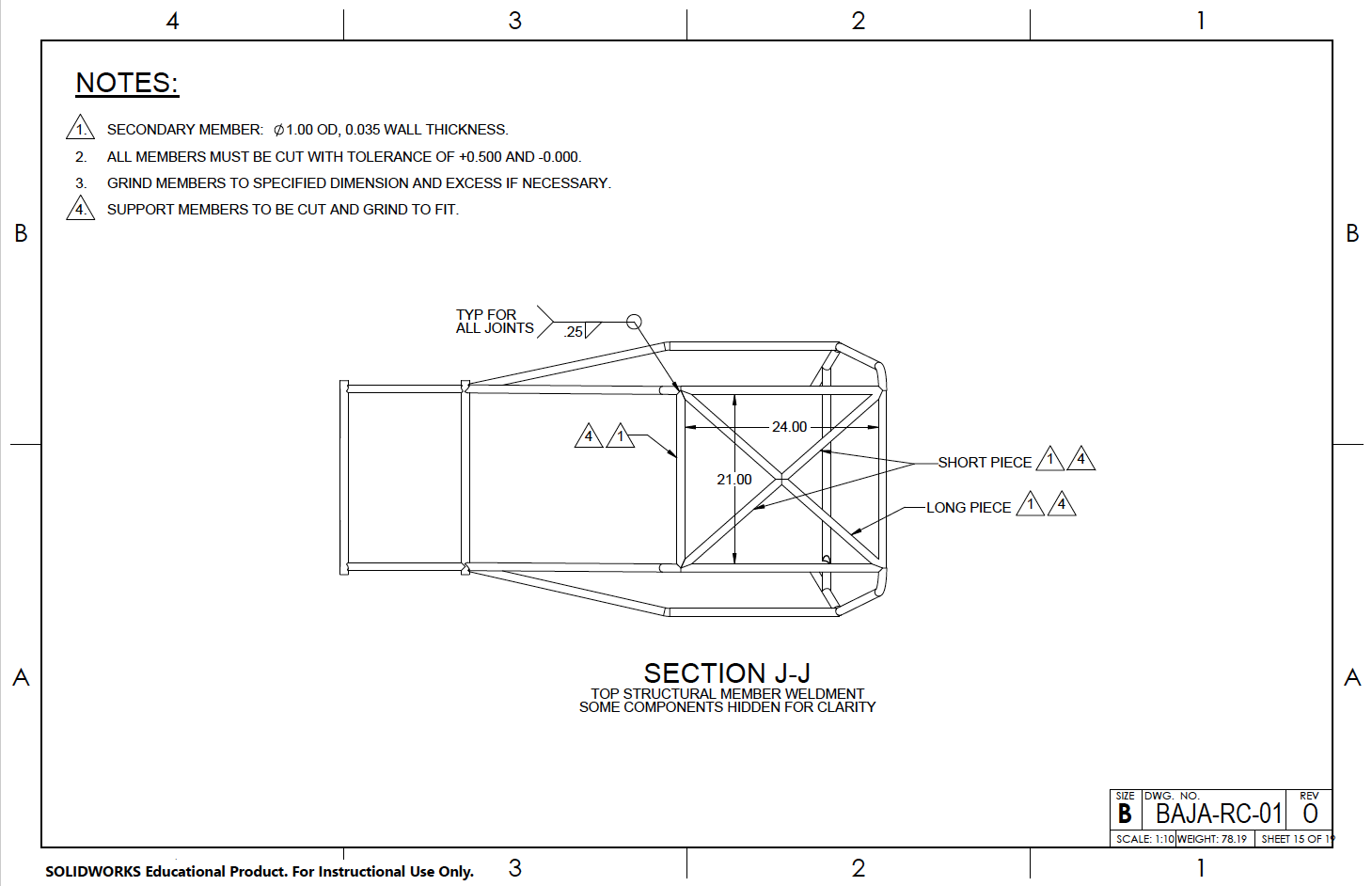
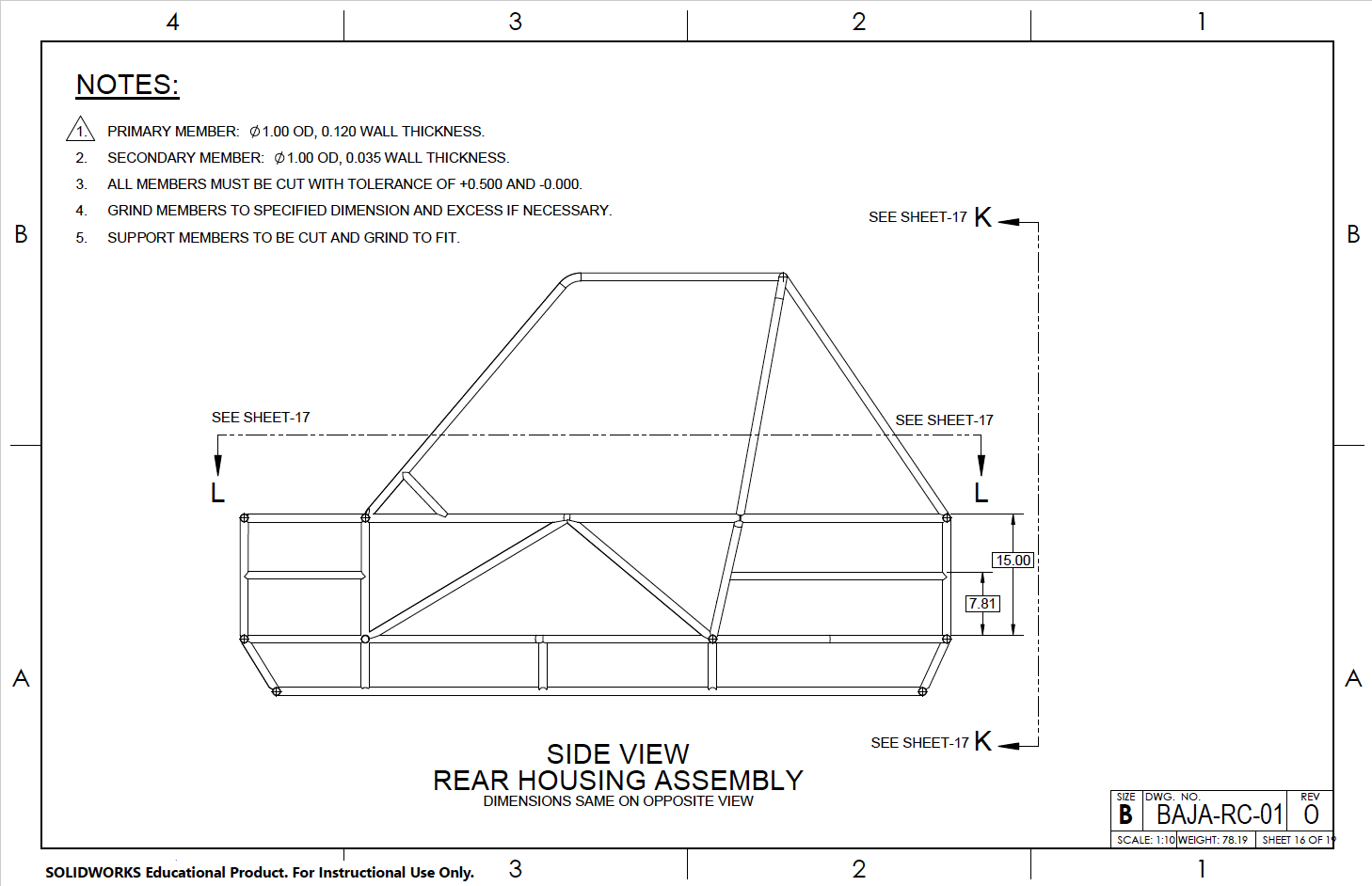
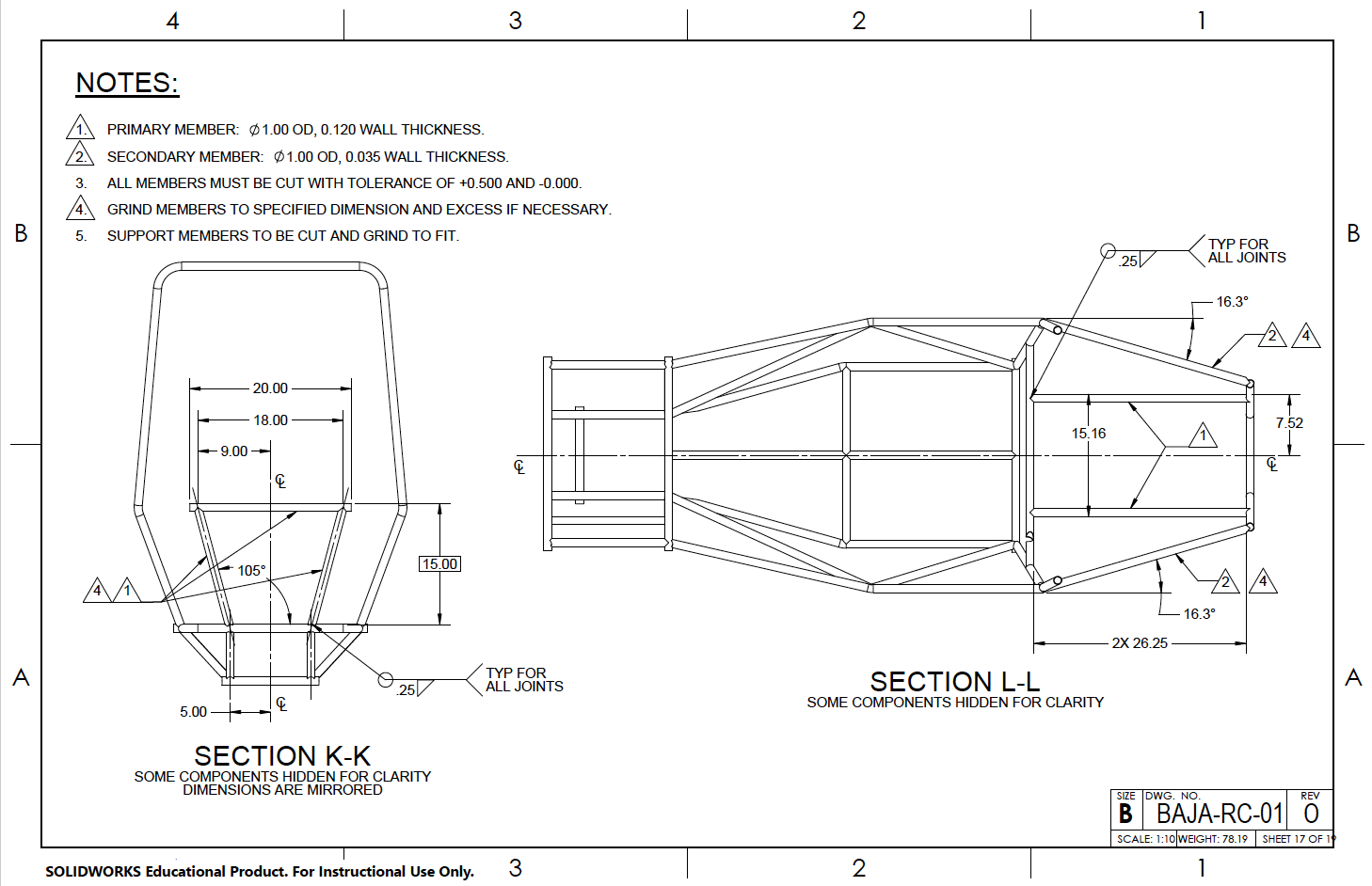
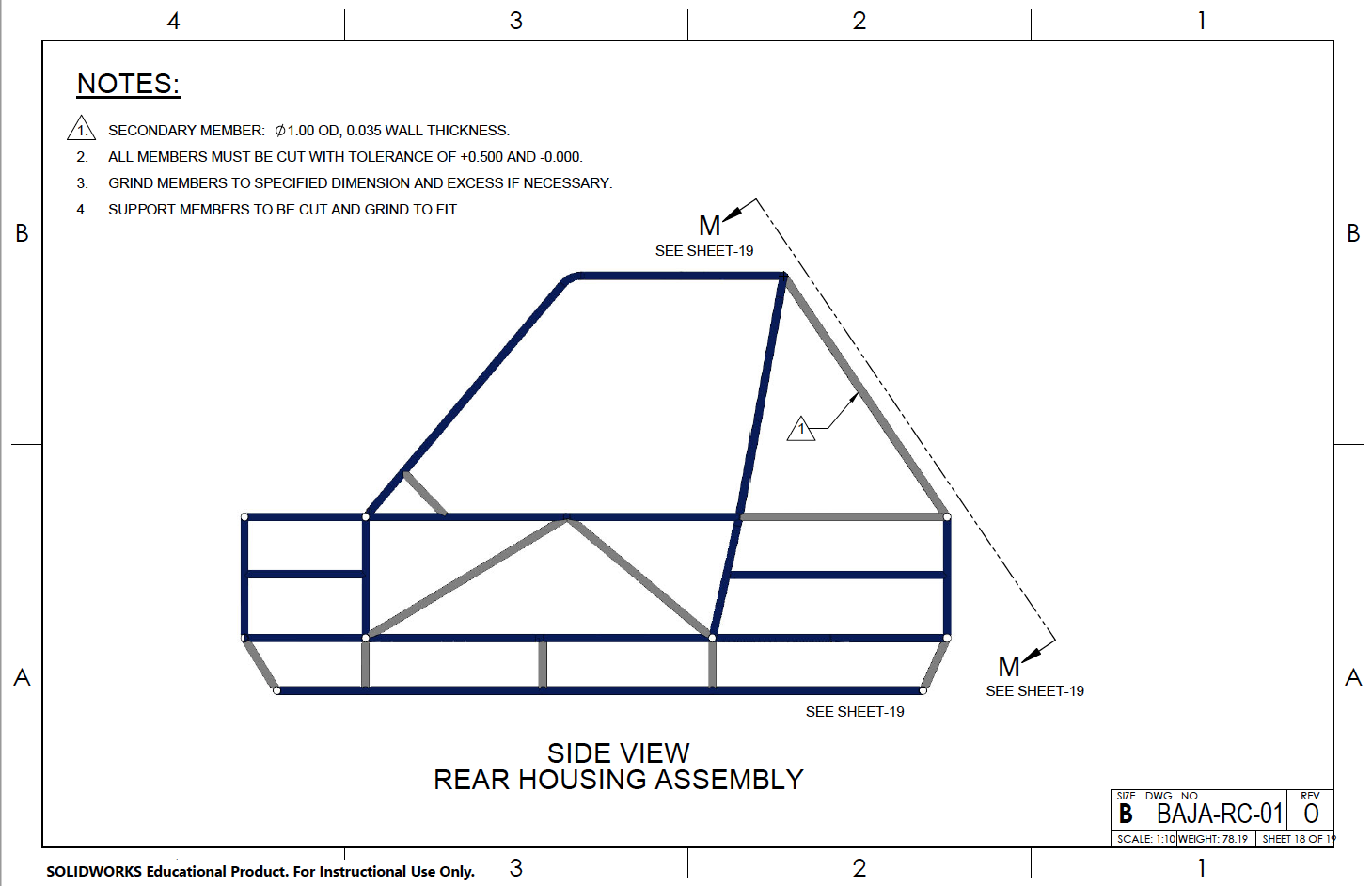
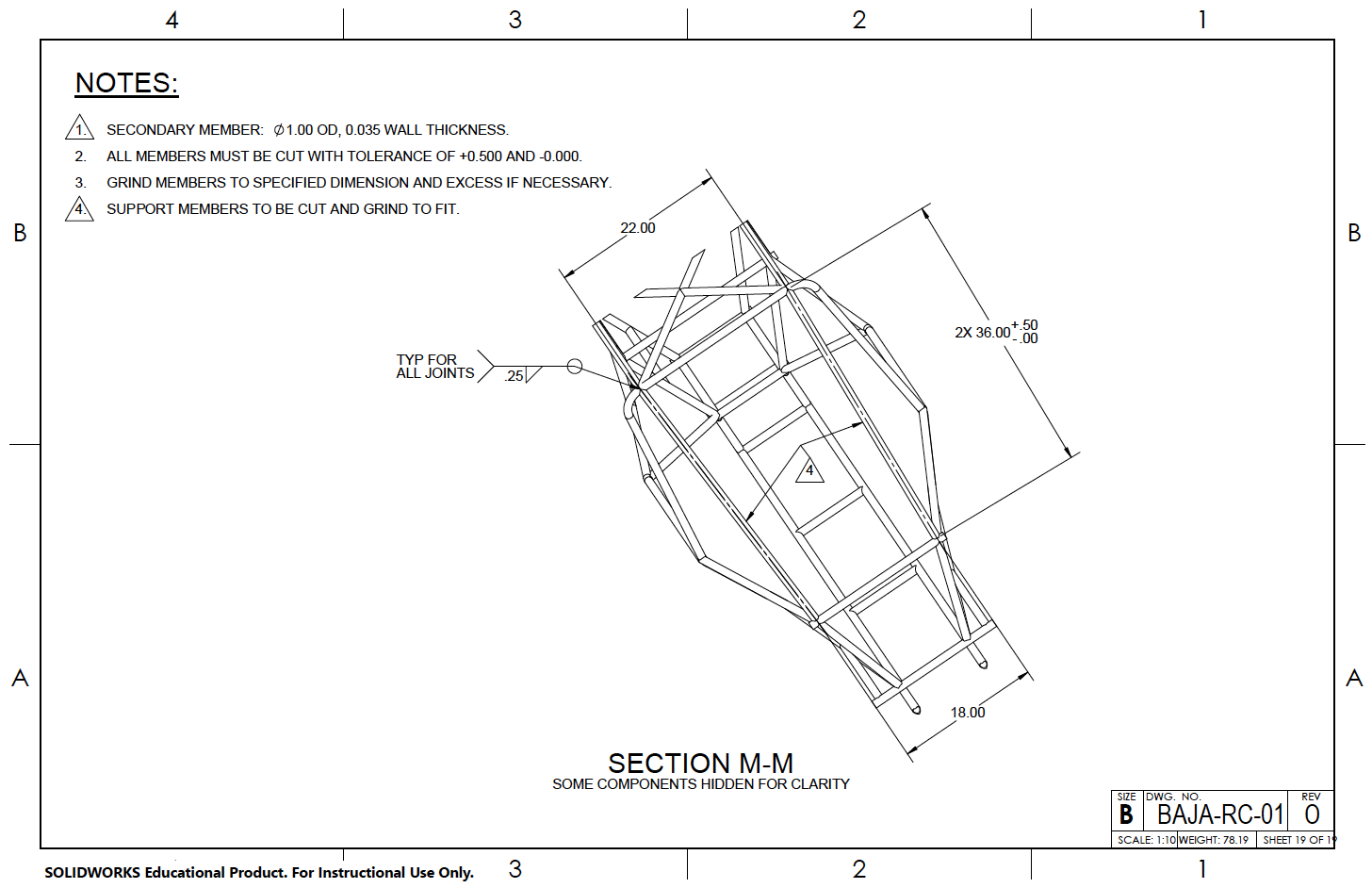
Construct the frame and roll cage to the dimensions and specifications shown in the drawings above.
Required materials:
- 4130 Chromoly steel tube - 1" O.D., 0.12" thickness
- 4130 Chromoly steel tube- 1" O.D., 0.035" thickness
- Measuring Tape
- Protractor
- Band saw
- TIG welding machine
- Grinder
- Notcher
Suspension A-Arms Construction


Construct the A-arms to the dimensions specified in the drawings above.
Engine & Fuel Tank Mounting - Materials
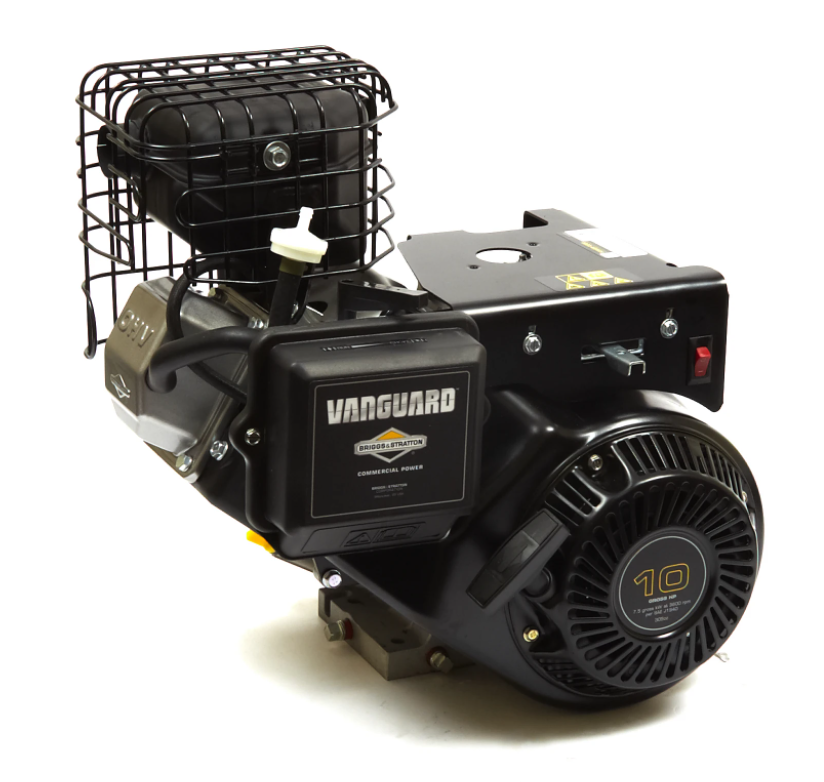
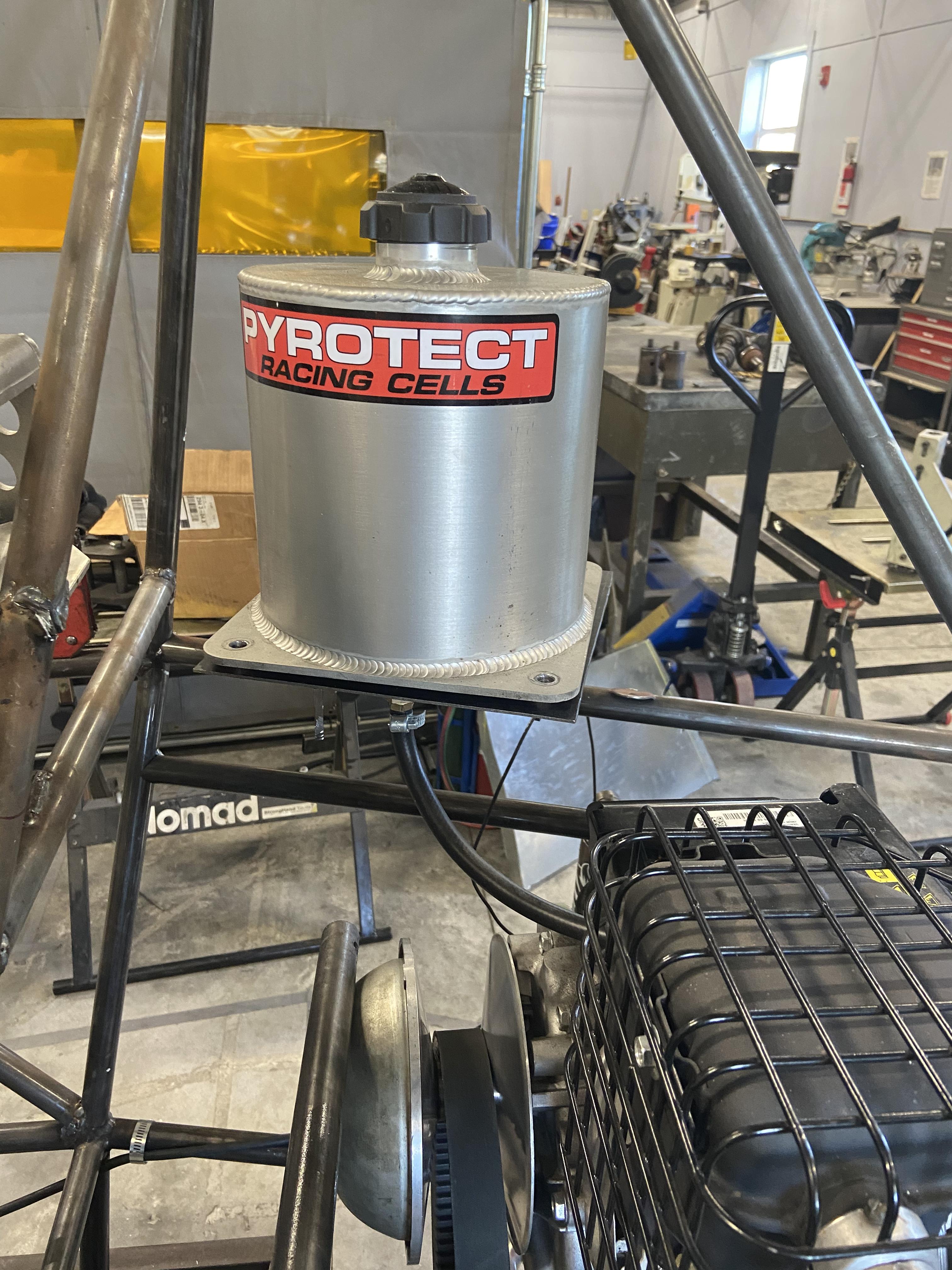
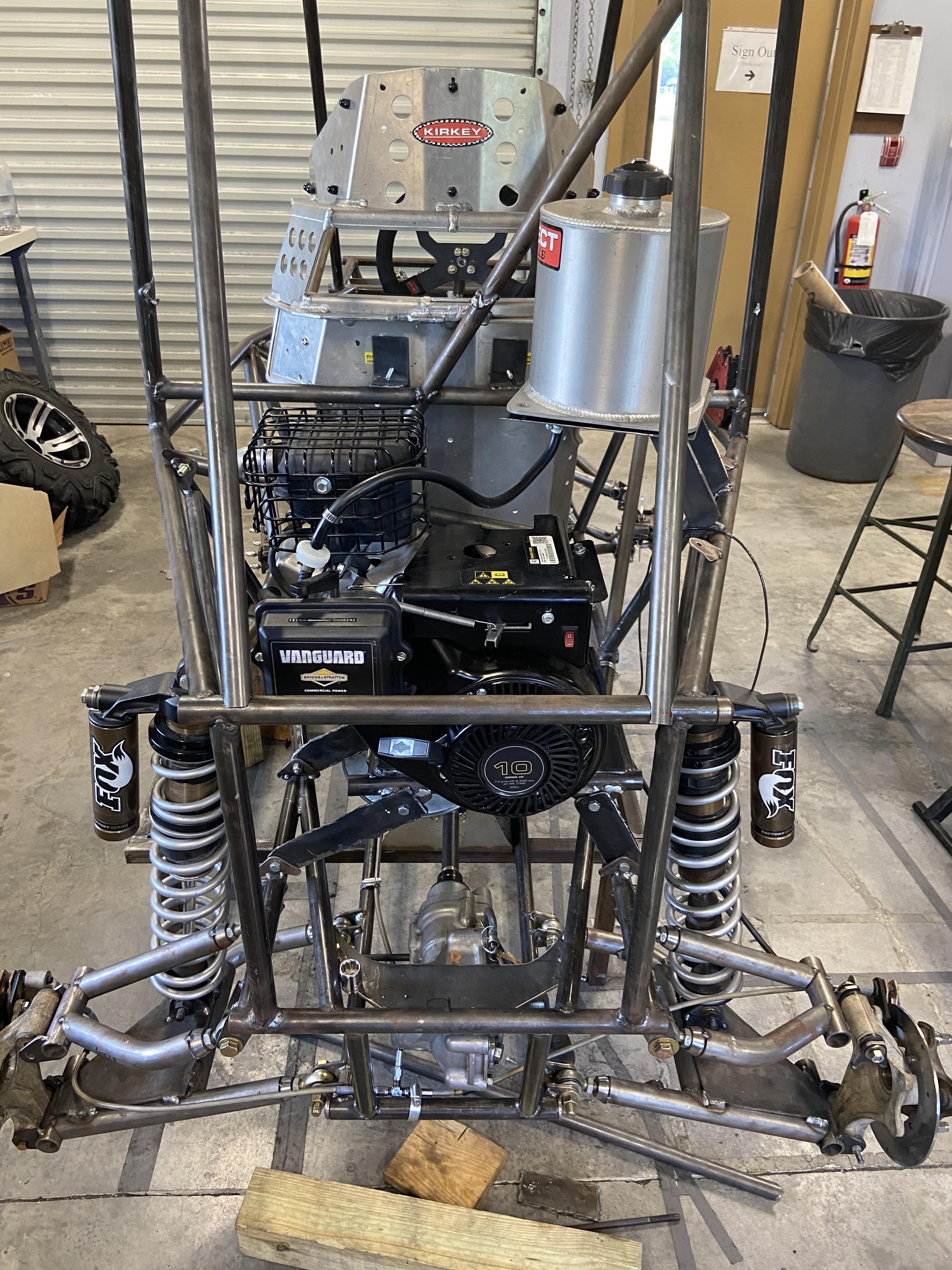
Required Materials:
- Brigs and Stratton 10-hp engine
- Fuel Tank (Pyrotect SFC1000)
- Fuel Line
- Grade 5 bolts (4)
- Nuts (4)
- Metal washers (8)
- Rubber Washers (McMaster Carr P/N 94733A723) (8)
- Mounting bar
- Hose clamp
- Splash shield
Engine & Fuel Tank Mounting - Connection
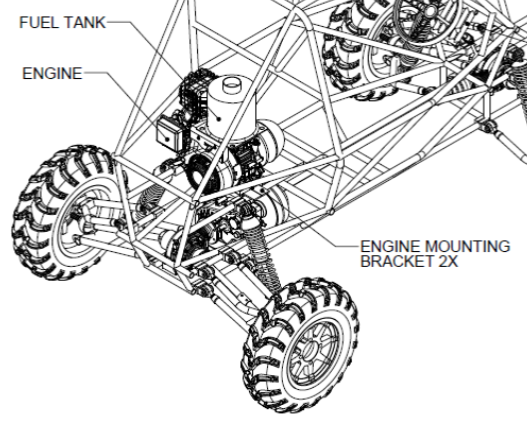

Locate the mounting points on the frame. Using the provided hardware, attach the engine. Torque all bolts to the specified torque value.
Mount the fuel tank to the specified mounting points. Ensure that the connection for the fuel line is accessible. Attach the fuel tank to the frame using the supplied hardware following the stack up shown in the photo above.
Attach the splash shield to the 3 mounting tabs using nuts and bolts
Insert the mounting bar through the grommeted hole in the splash shield and attach to the left side frame and bottom of the fuel tank mounting plate using nuts and bolts
Engine & Fuel Tank Mounting - Fuel Line
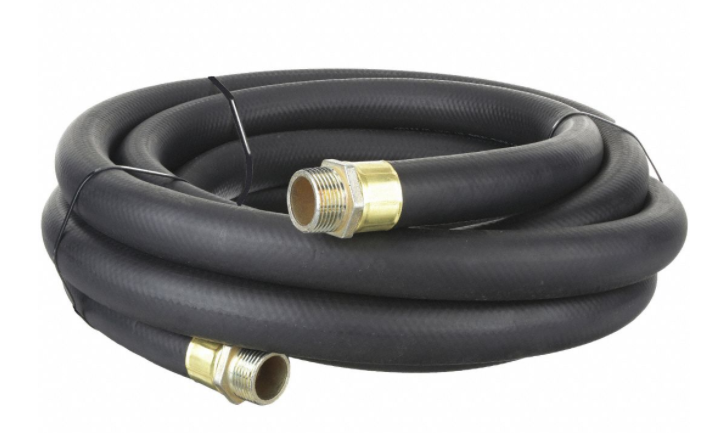
WARNING: Failure to properly seat and tighten the fuel line can result in risk of serious injury or death.
Connect the fuel line from the fuel tank to the engine. Ensure that all connections are tight to prevent leaks.
Driveline Assembly
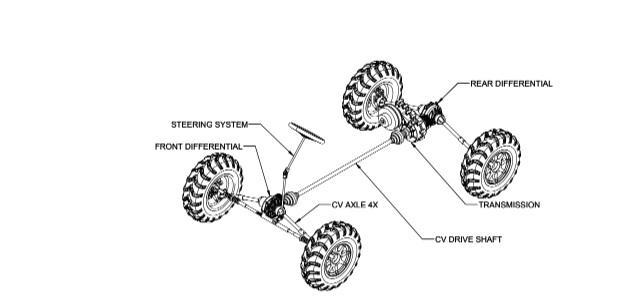
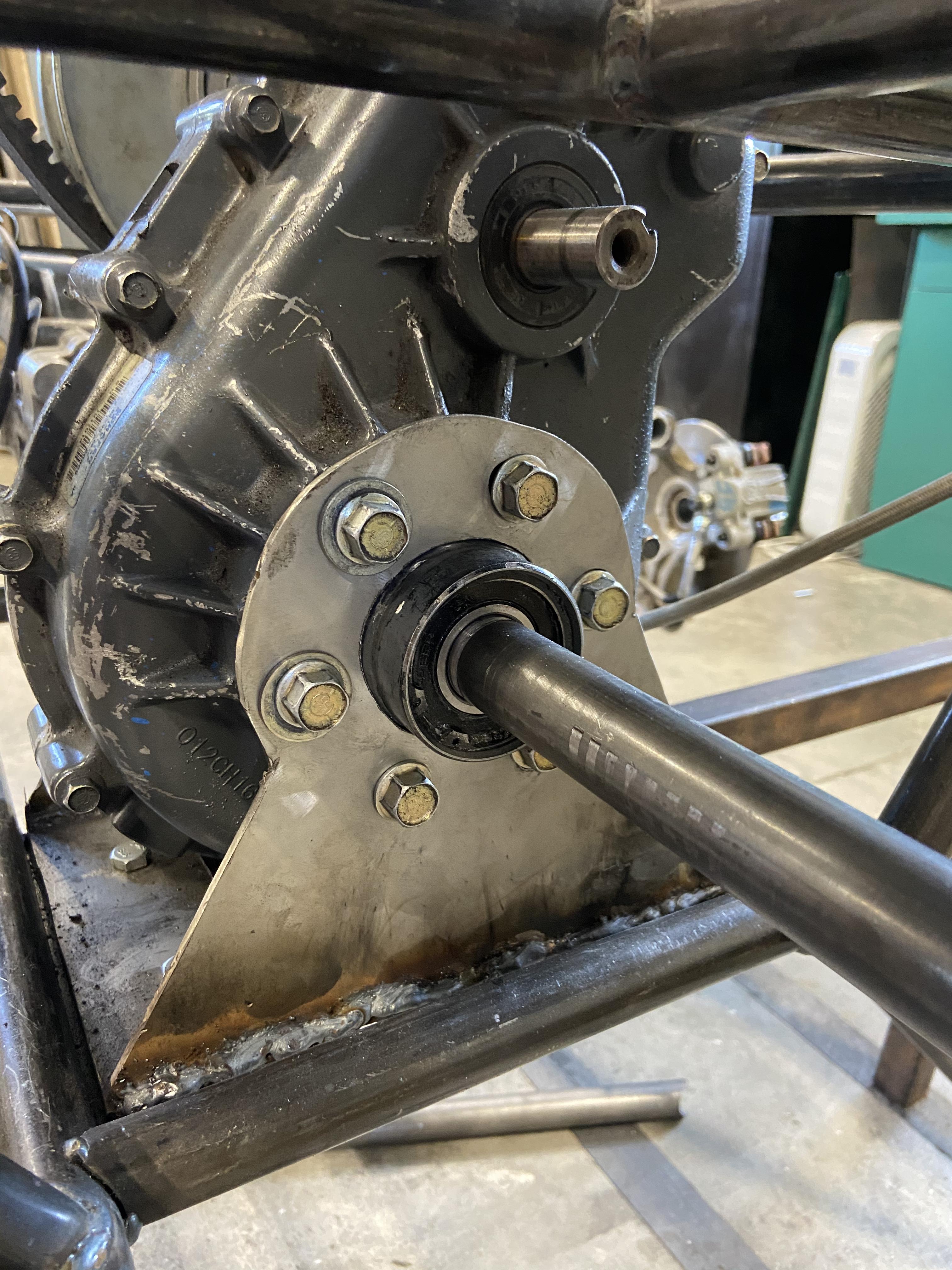
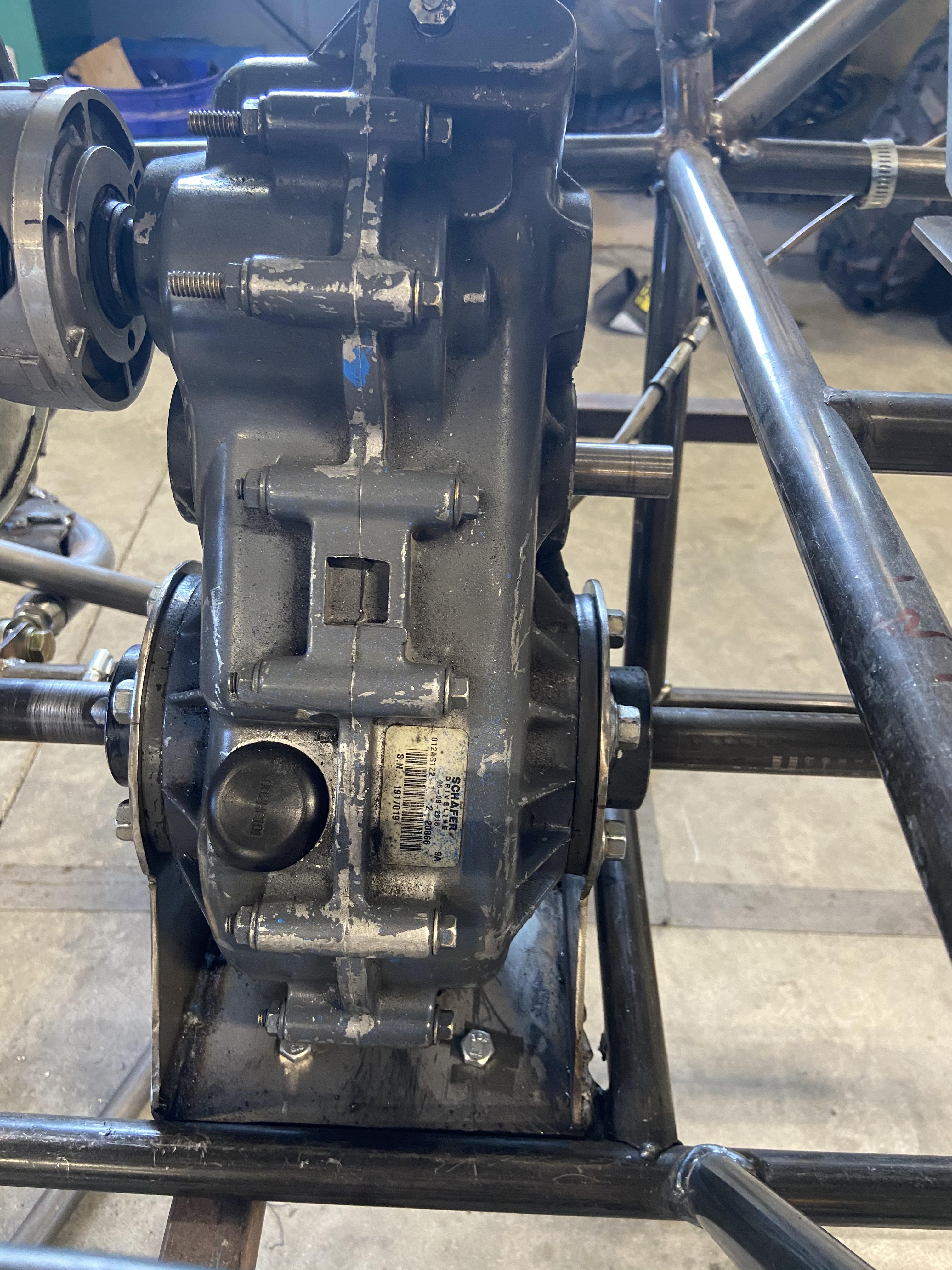
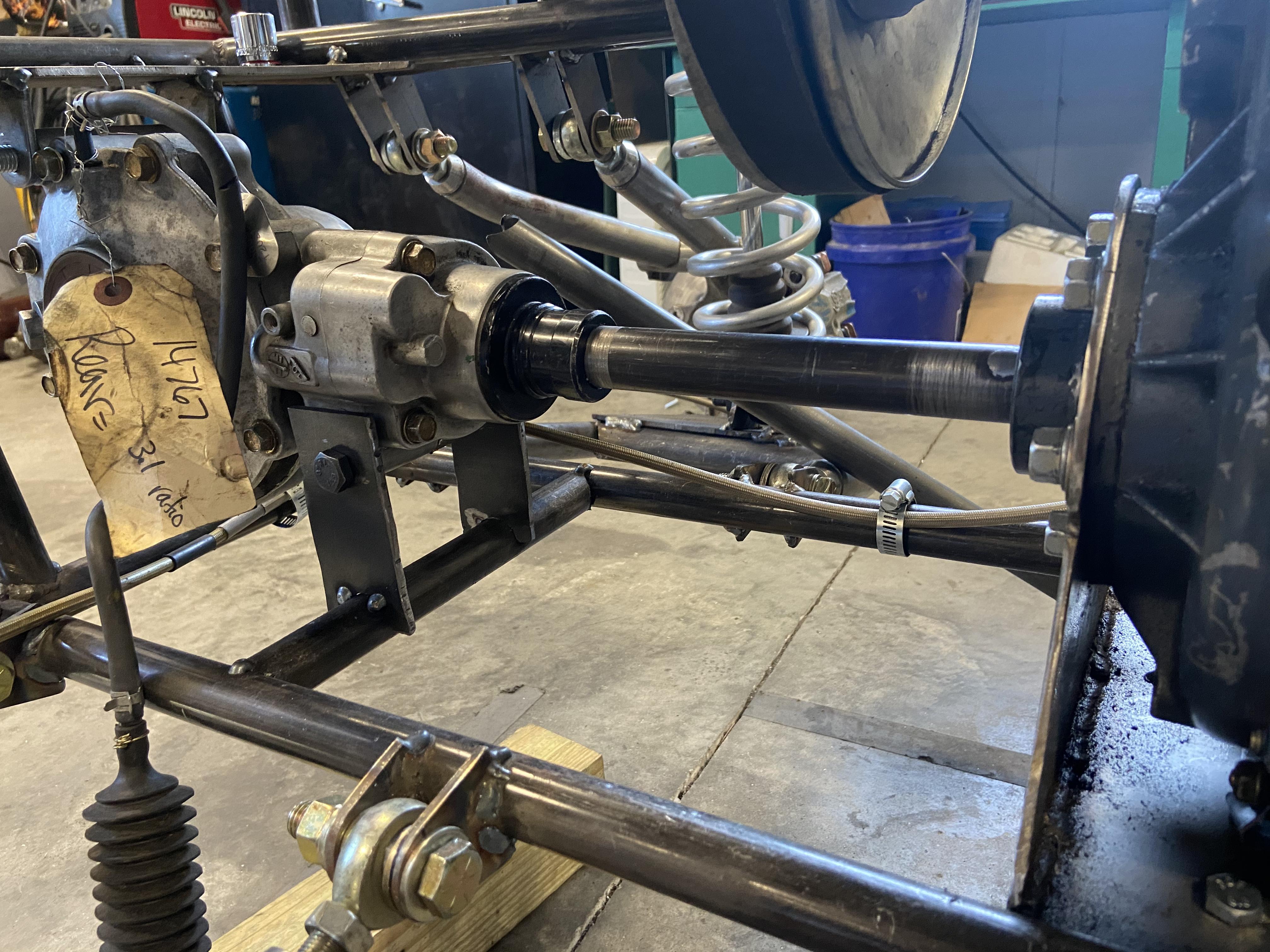
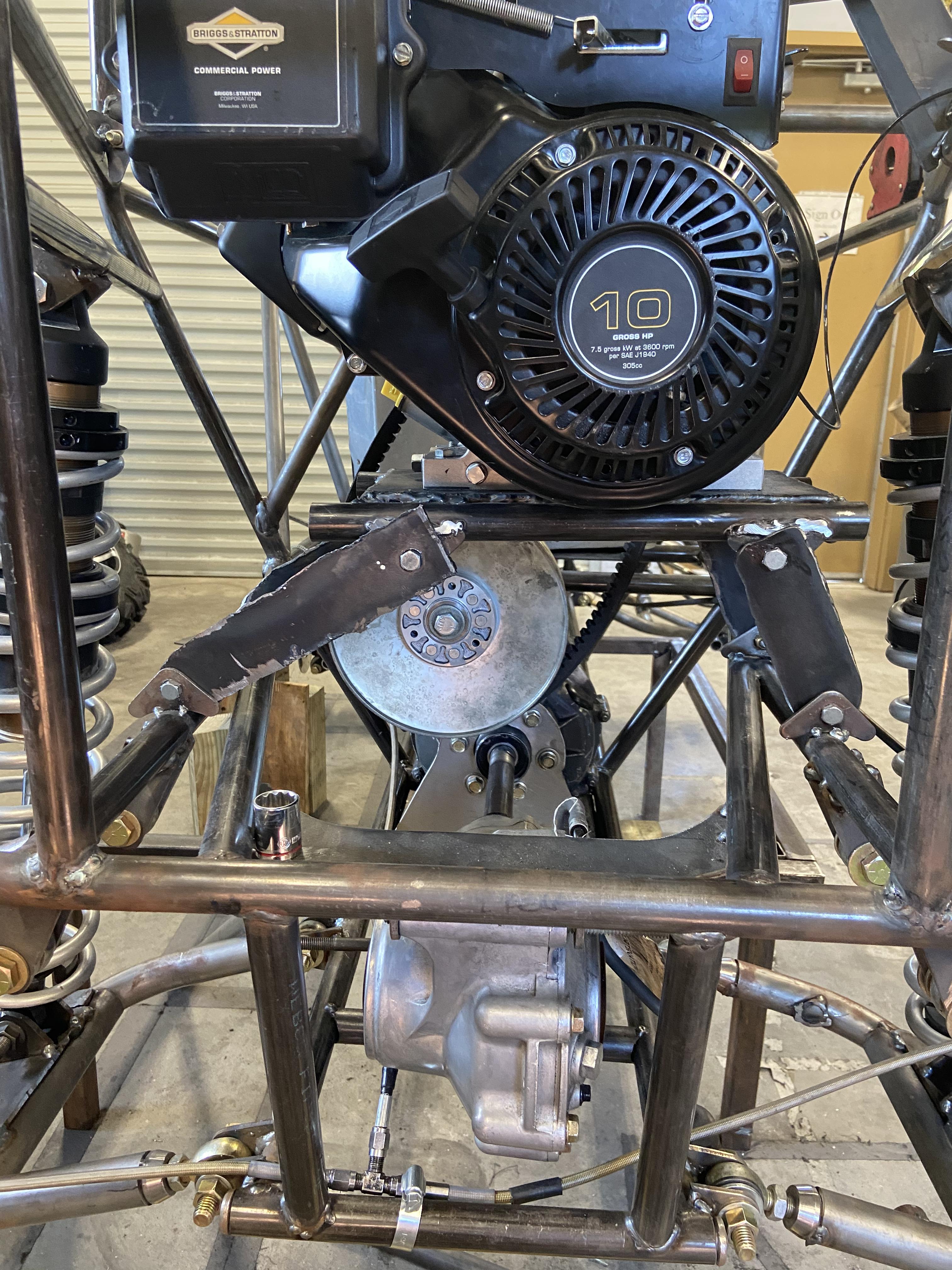
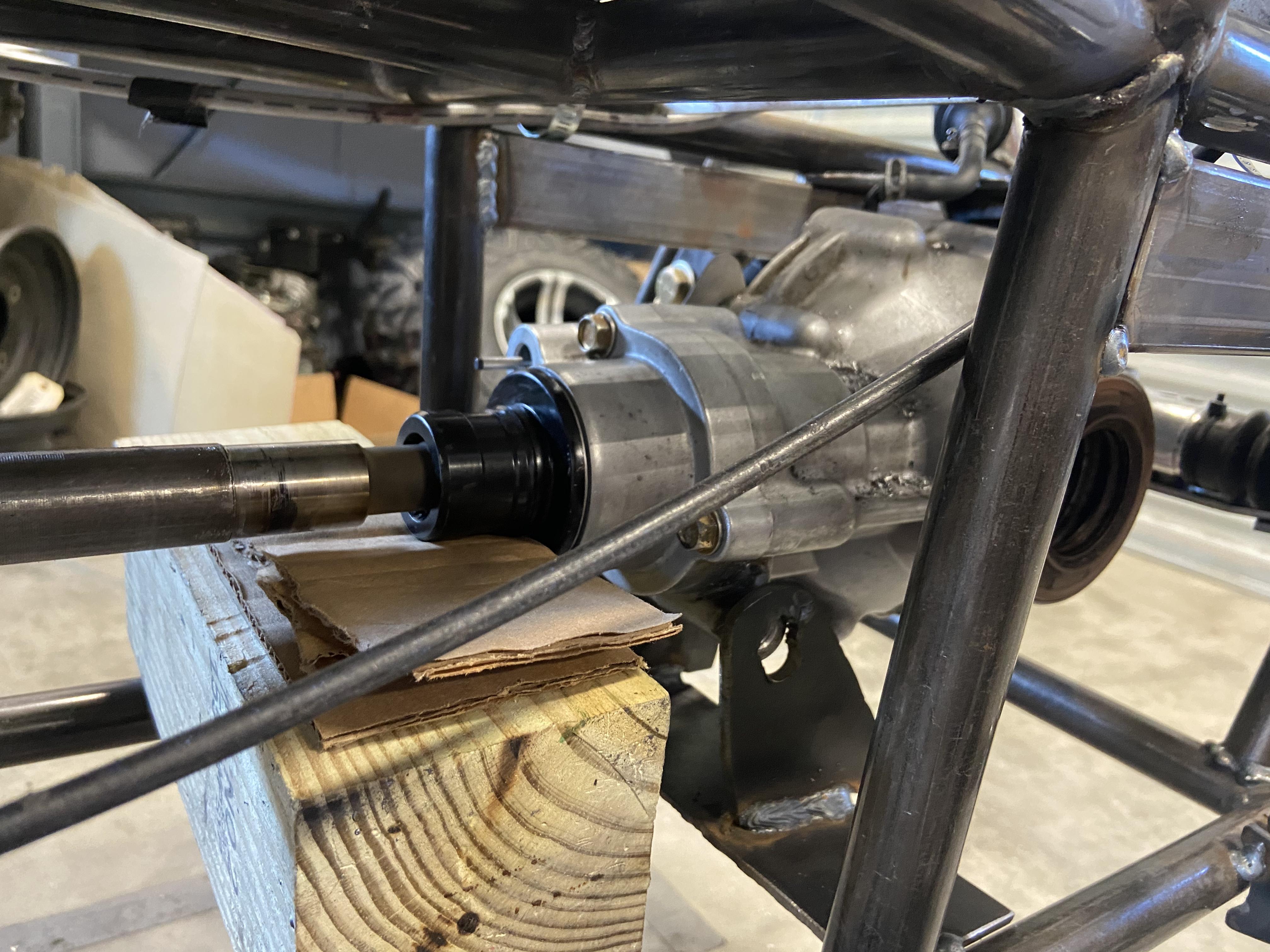
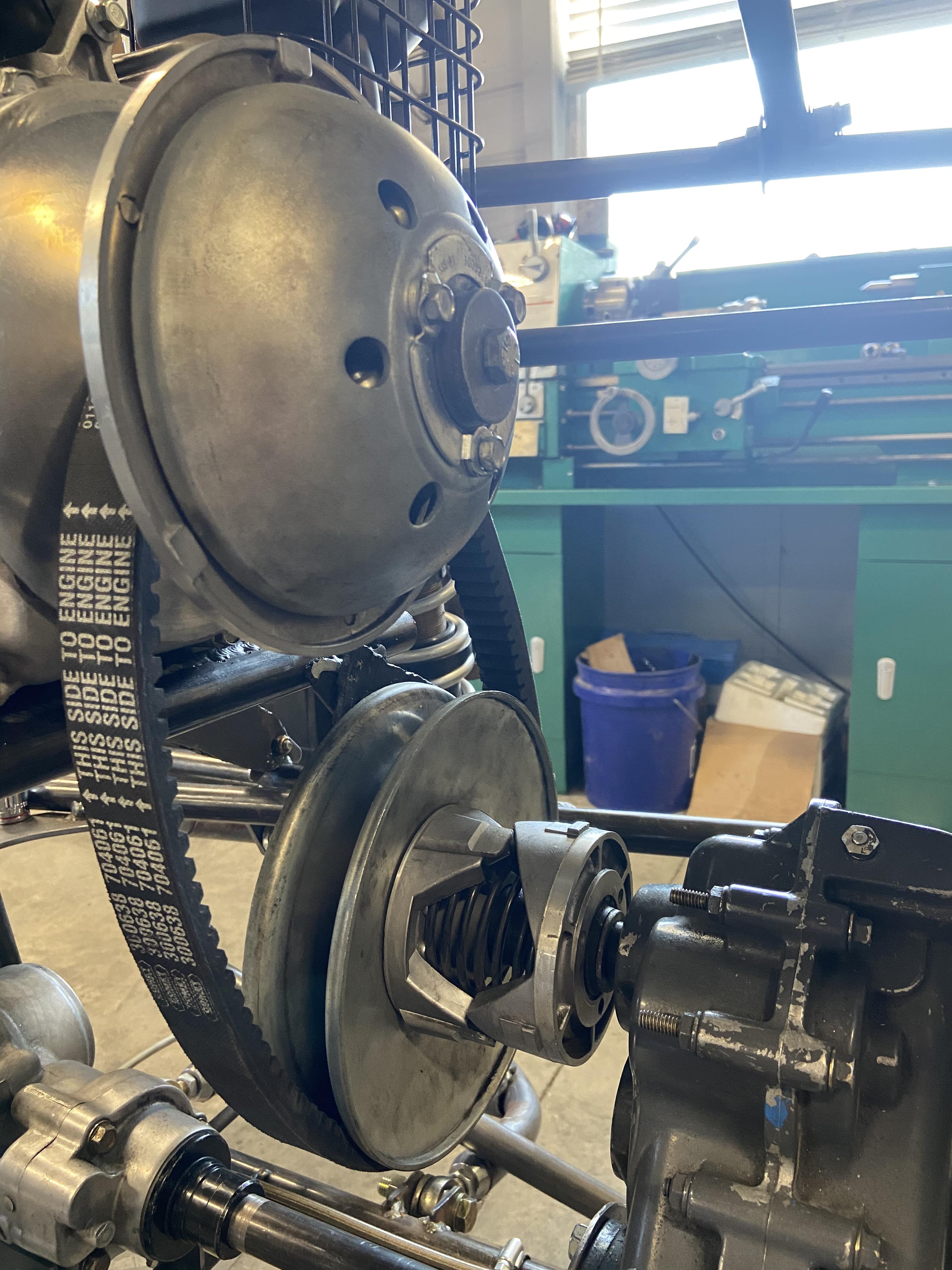
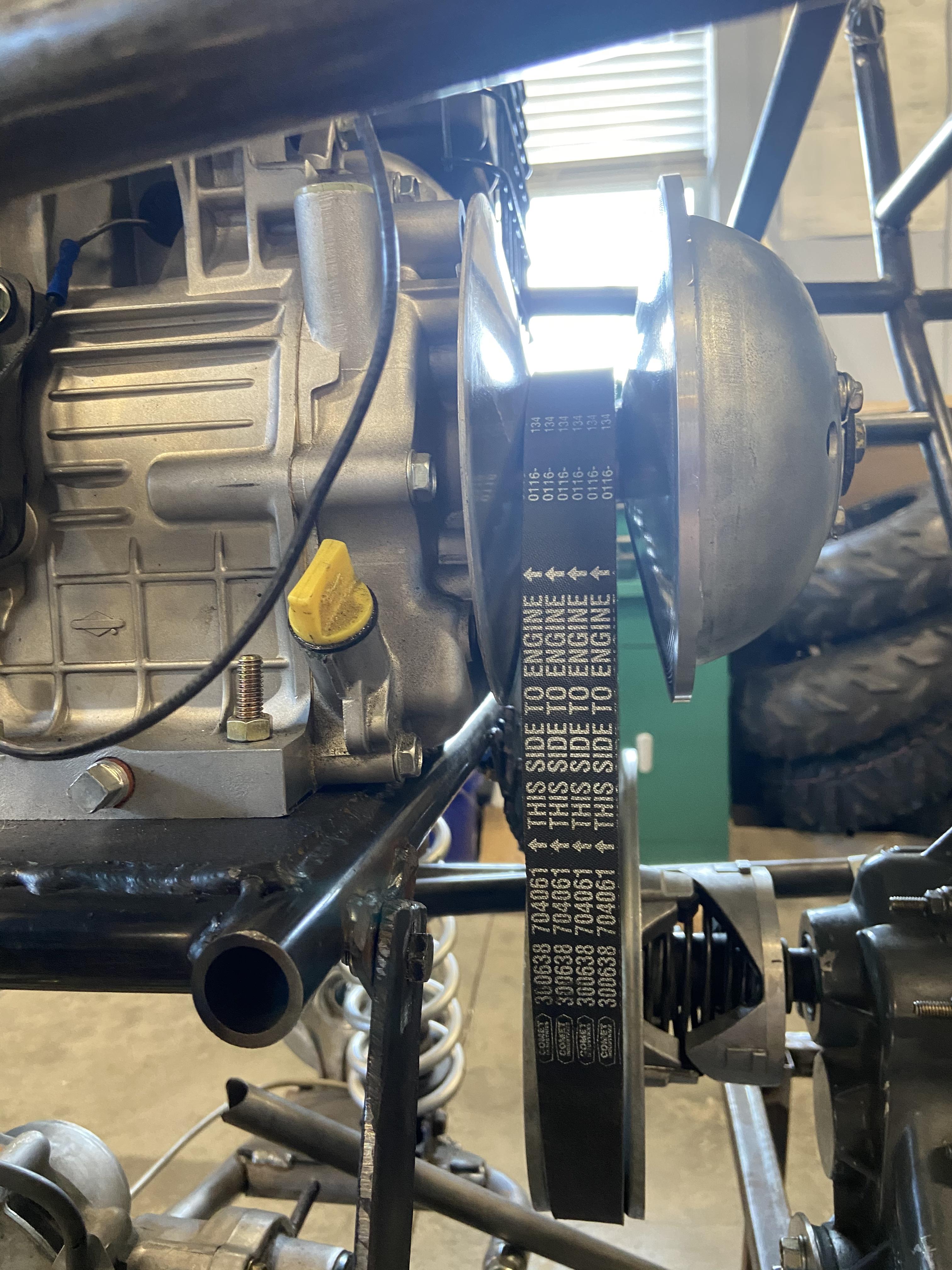
Materials:
- Transfer case (Dana Spicer H-12)
- Transfer case mounting box
- Rear Differential
- Front Differential
- Rear Driveshaft
- Front Driveshaft
- CV axles (4)
Procedure:
- Install the transfer case into the transfer case mounting box.
- Tighten all bolts to prevent fluid from leaking out of the transfer case
- Place the transfer case assembly in the mounting tabs and secure using 4 sets of bolts, nuts, and washers
- Insert rear driveshaft fully into transfer case
- Slide rear differential onto the rear driveshaft, taking care not to bend the driveshaft or angle to differential as it is inserted
- Secure the rear differential to the frame using two sets of through bolts, washers, and nuts
- Insert the front driveshaft into the transfer case
- With the steering gear and steering gear mounting bracket removed, slide the front differential onto the front driveshaft taking care not to bend the driveshaft or angle the differential as it is inserted
- Secure the front differential to the frame using 2 1/2" bolts for the top mounting and 1 through bolt, washer, and nut set for the bottom mount
- Install the CV axles into the front and rear differentials
- Fill differentials and transfer case with appropriate fluid for lubrication
- Place transfer case in "Forward" and rotate CVT to verify that all 4 CV axles are spinning in the same direction
- Attach V-belt between the CVT and the engine output
Suspension Assembly - Frame Connection
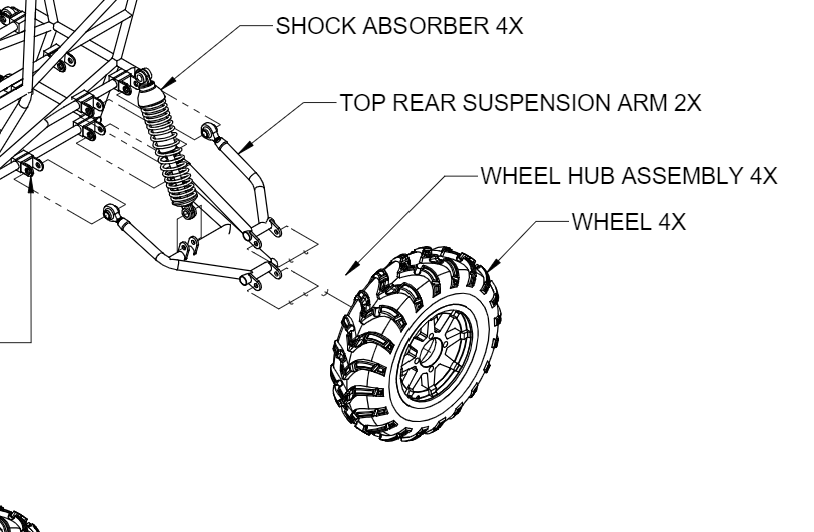
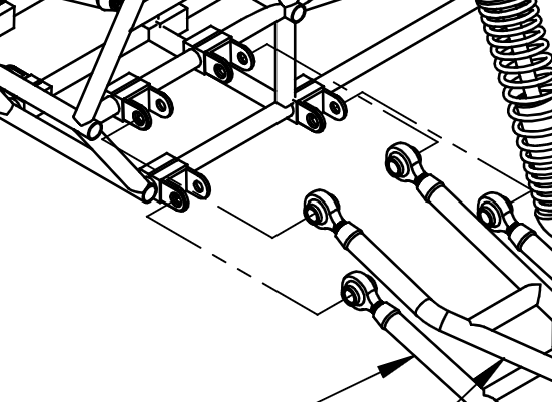
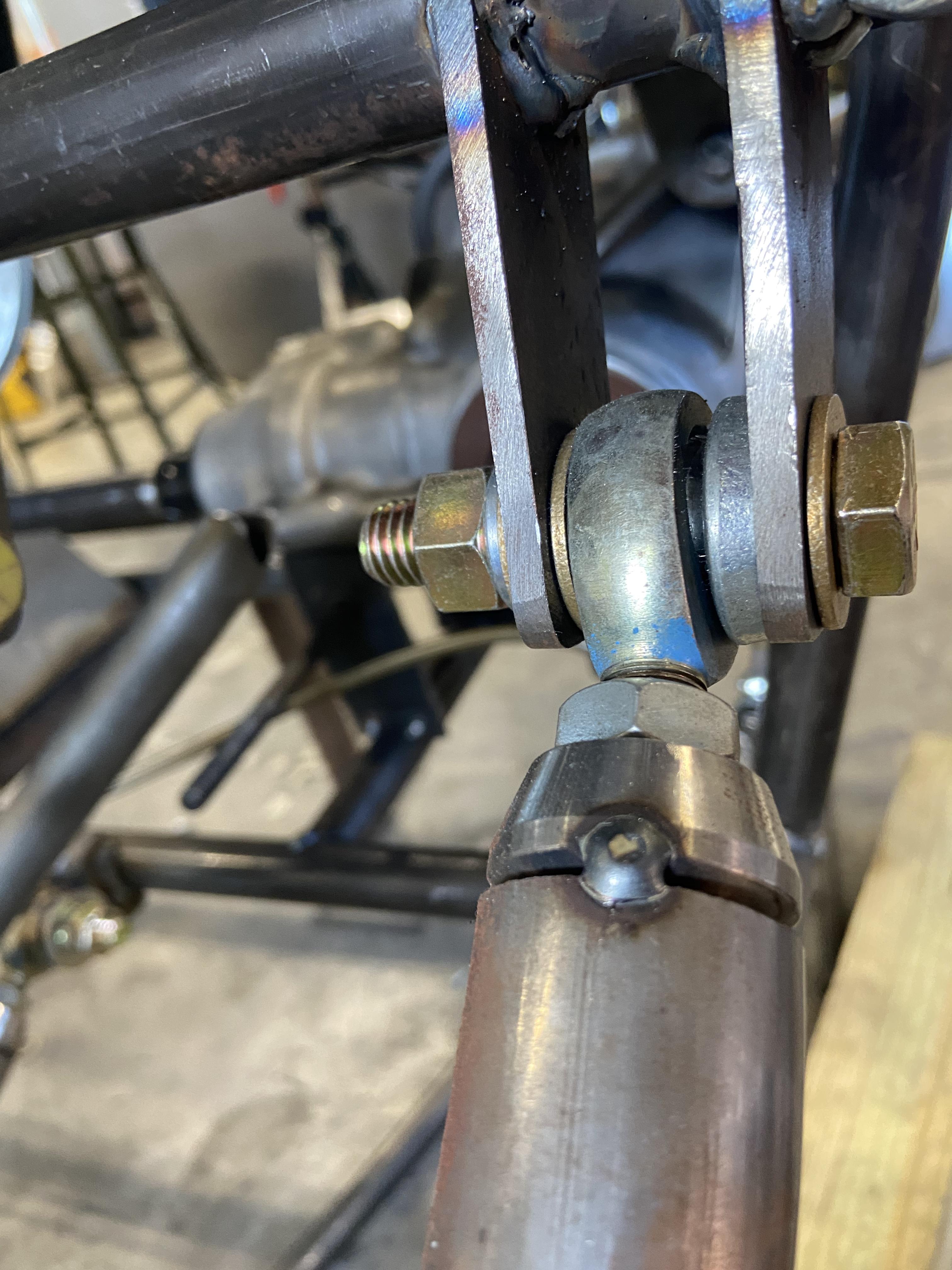
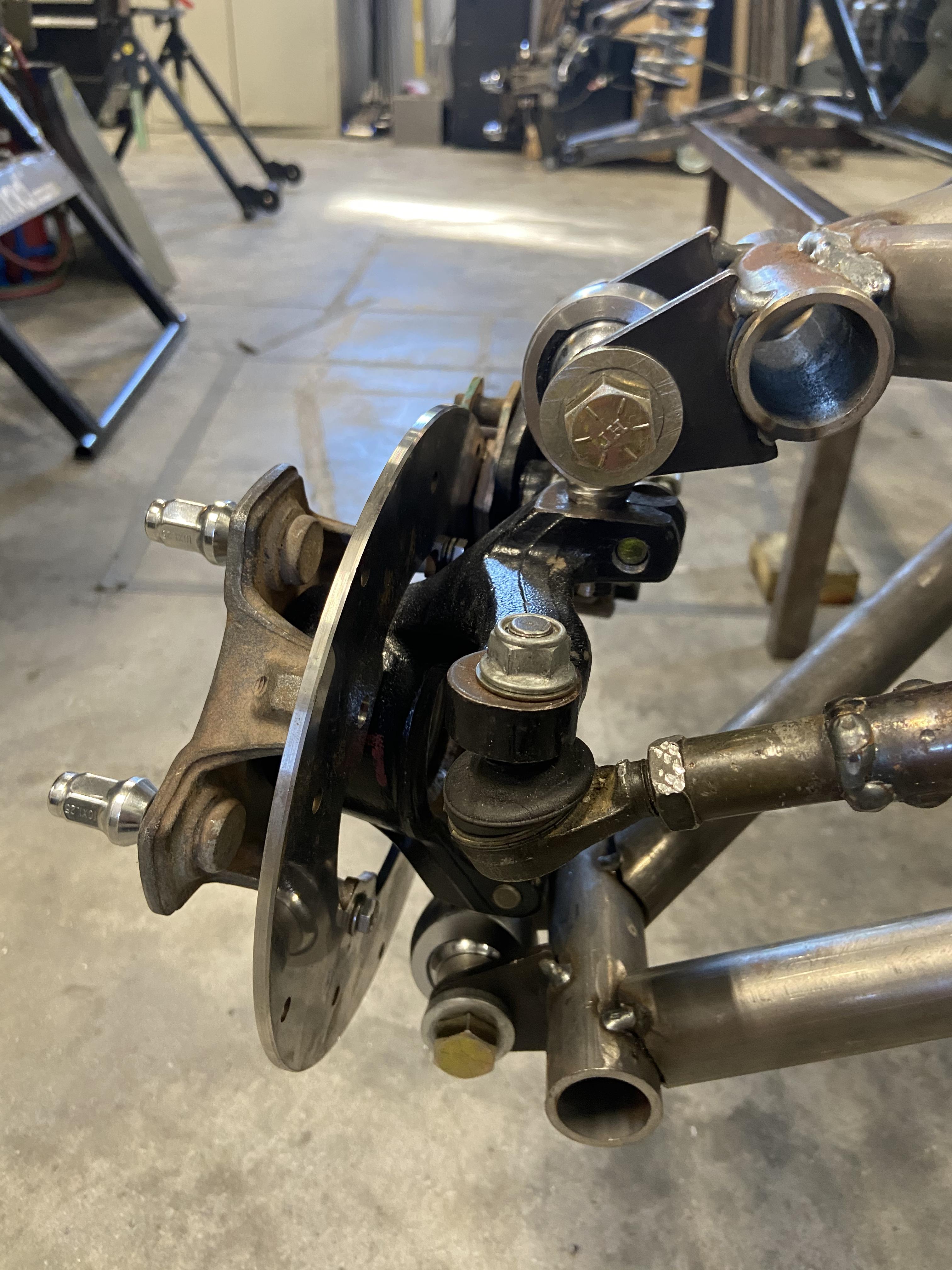
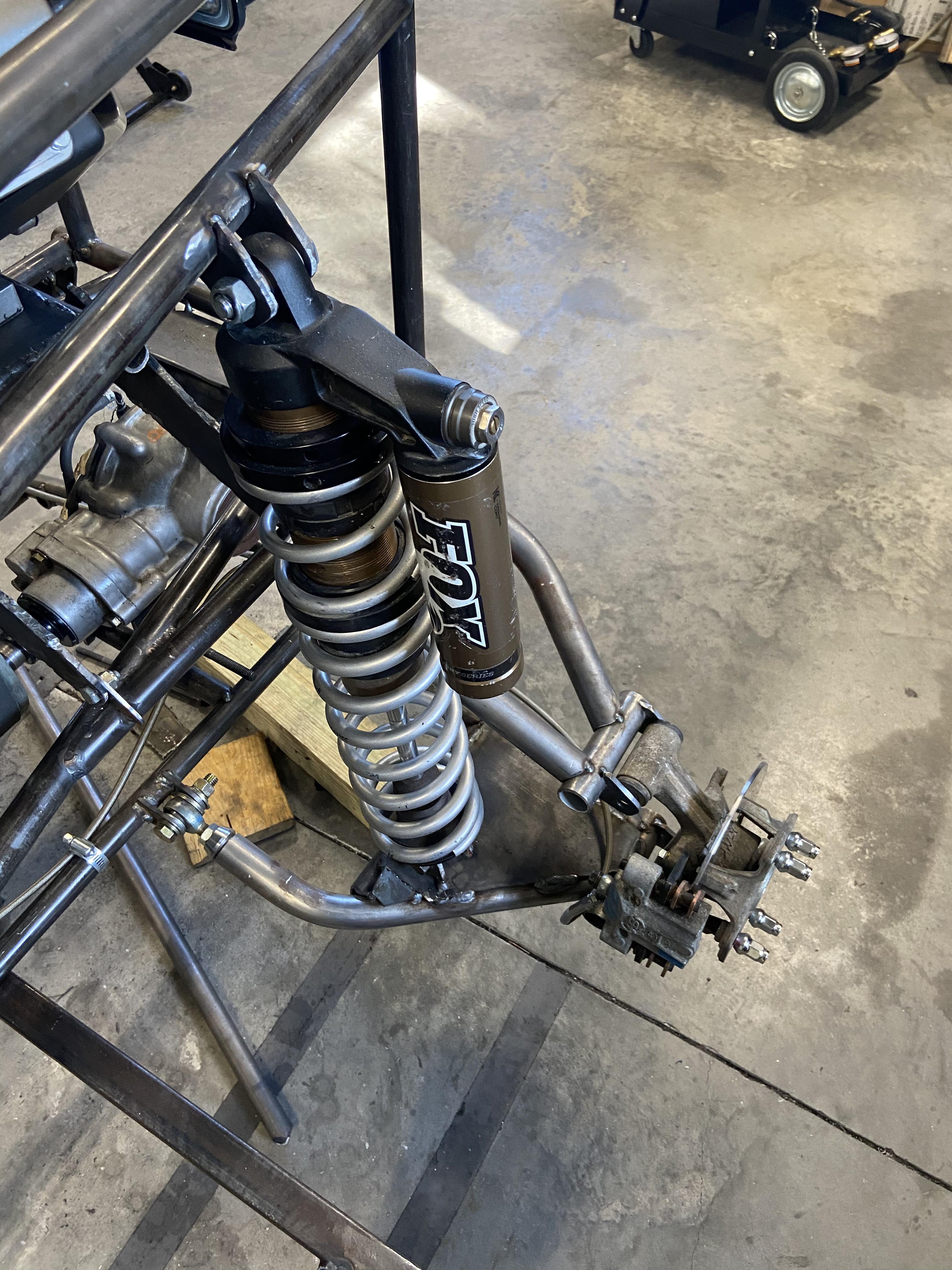
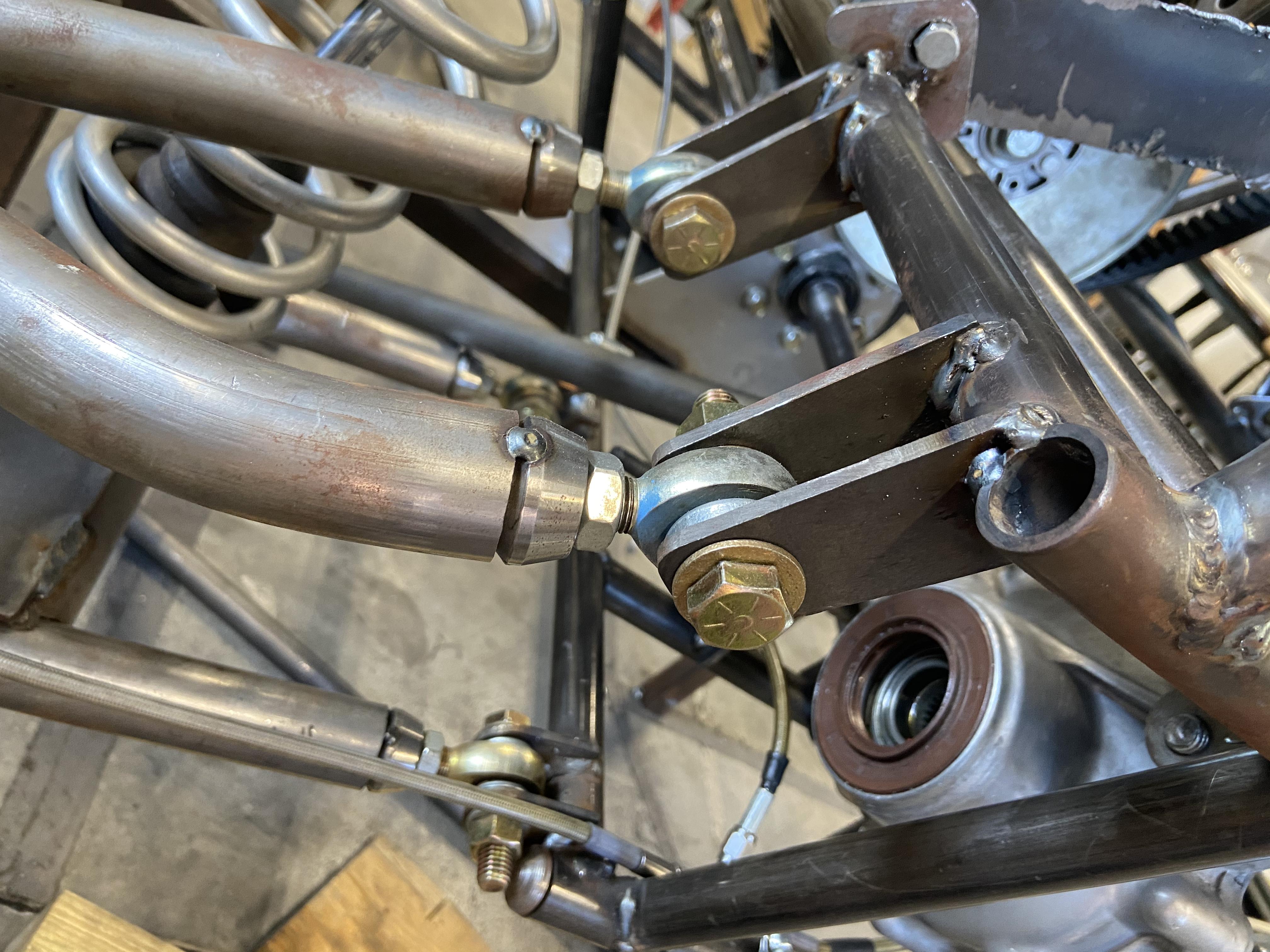
The first step is to take the upper and lower swing arms and attach them to the frame using the designated fasteners. Before tightening, ensure that they are properly oriented to the kart.
WARNING: Do not apply torque in excess of the design specification as this will strip the fasteners.
Once orientated, torque the fasteners to specification.
Suspension Assembly - Wheel Connection
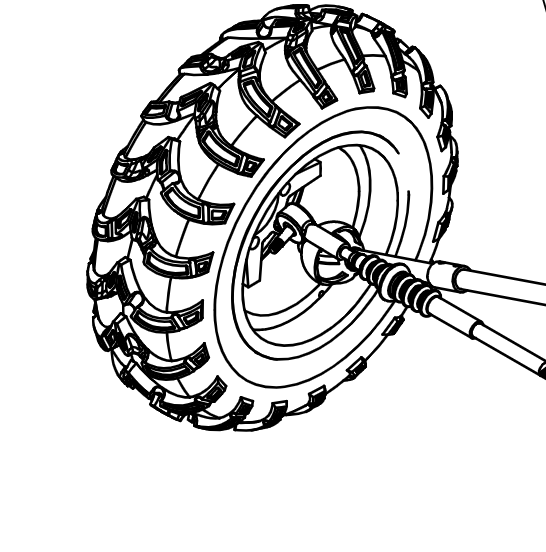
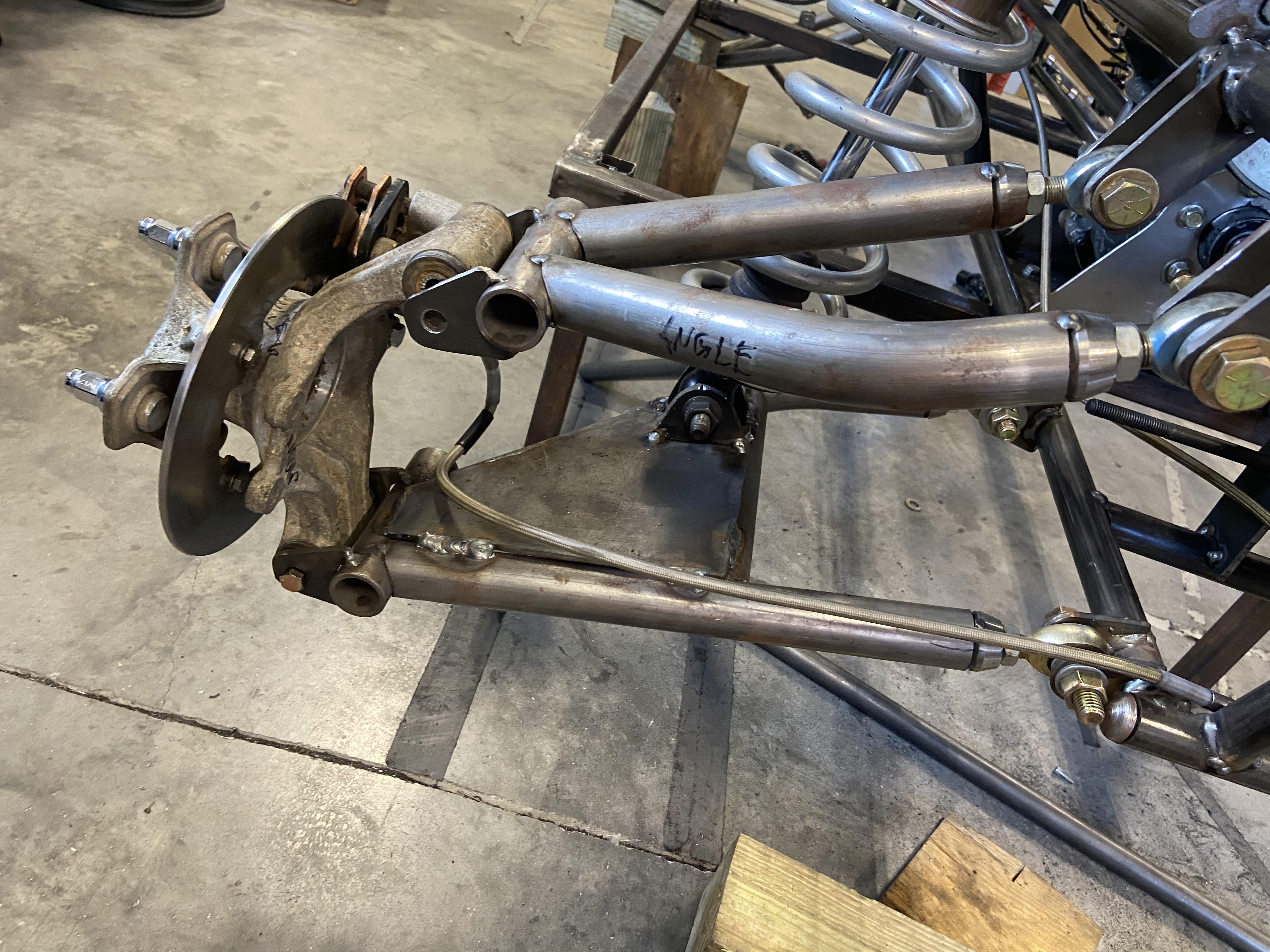
Next, begin the hub assembly, (hub, brake rotor and brake caliper), of the wheel. Using the appropriate bolts, attach the hub assembly to both swing arms. Begin with tightening, but not torquing, the hub assembly to the upper control arm. When this is sufficiently tight, begin tightening, but not torquing, the hub assembly to the lower control arm. Continue this pattern until they cannot be tightened anymore. Check the orientation of the hub at this time to ensure it is properly aligned between the upper and lower control arms.
WARNING: Do not apply torque in excess of the design specification as this will strip the fasteners.
If the alignment is acceptable, torque the hub assembly to specification starting with the upper control arm and moving to the lower control arm.
Verify suspension system moves in the correct manner. Once the suspension connection is verified, install the wheels and tires. Following a star pattern for tightening, tighten the lug bolts until they become wrench tight.
WARNING: Do not apply torque in excess of the design specification as this will strip the fasteners.
Once tight, follow the same pattern and begin torquing the lug bolts to specification.
Suspension Assembly - Coilover and Shock Installation

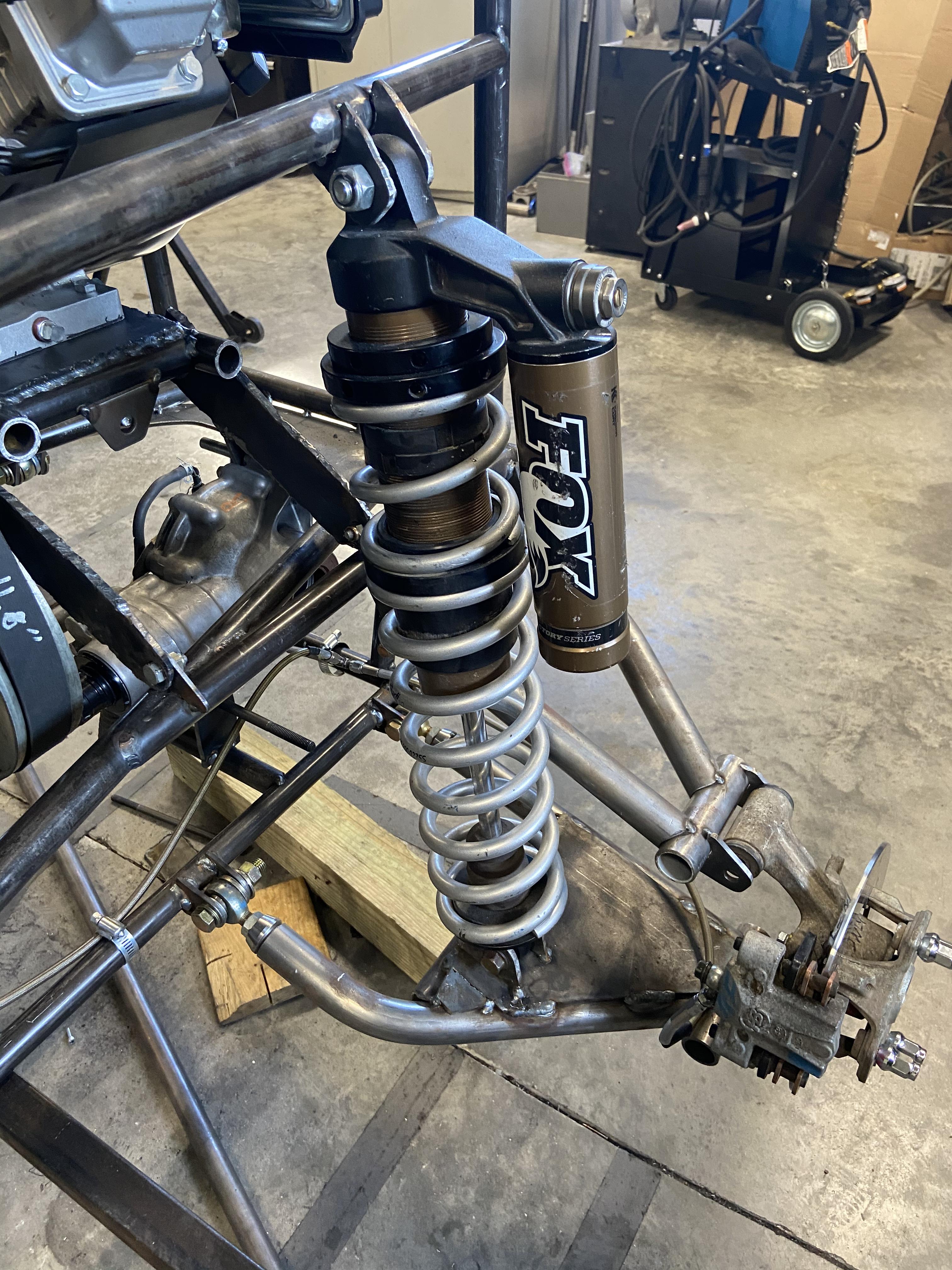
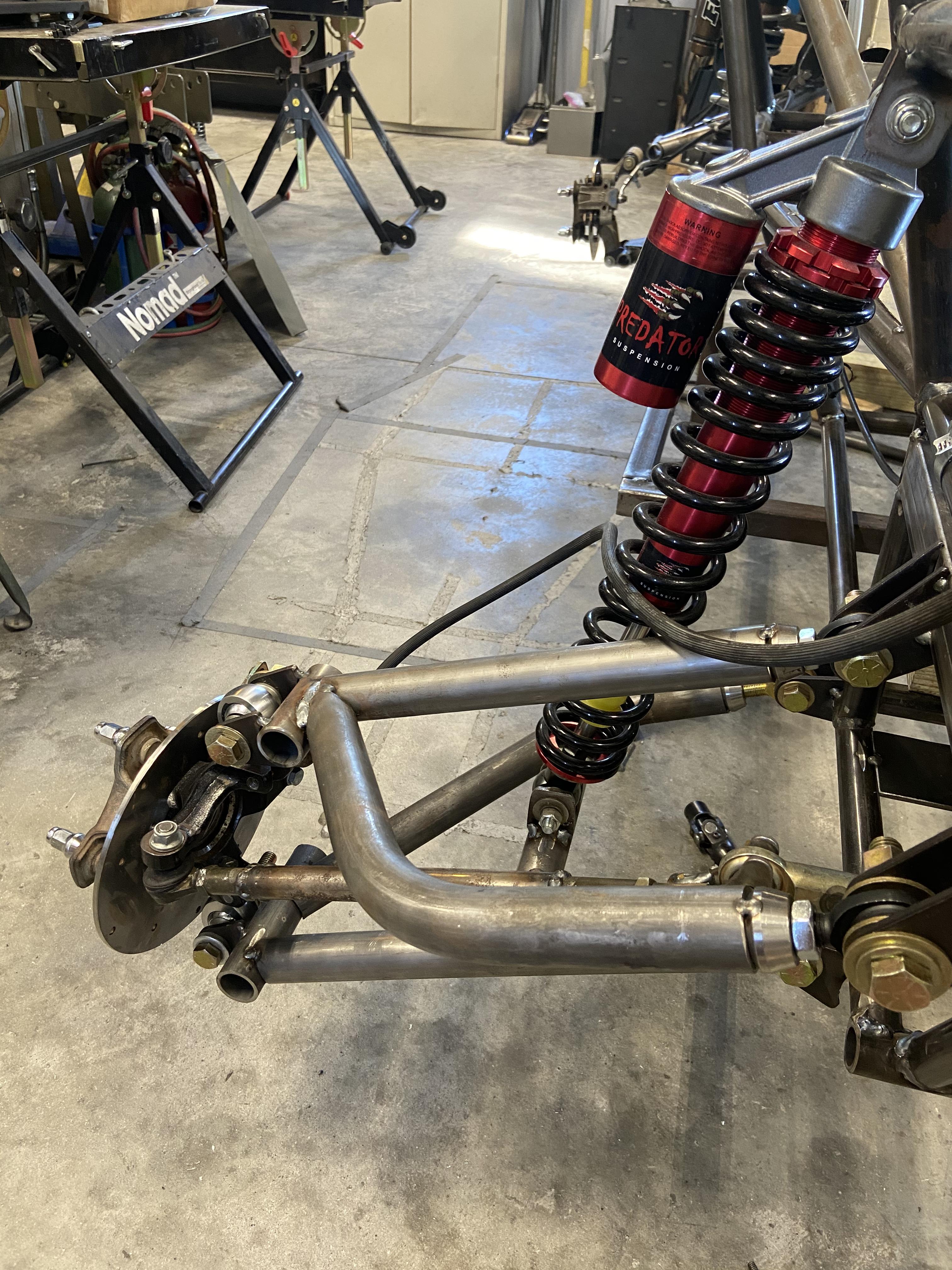
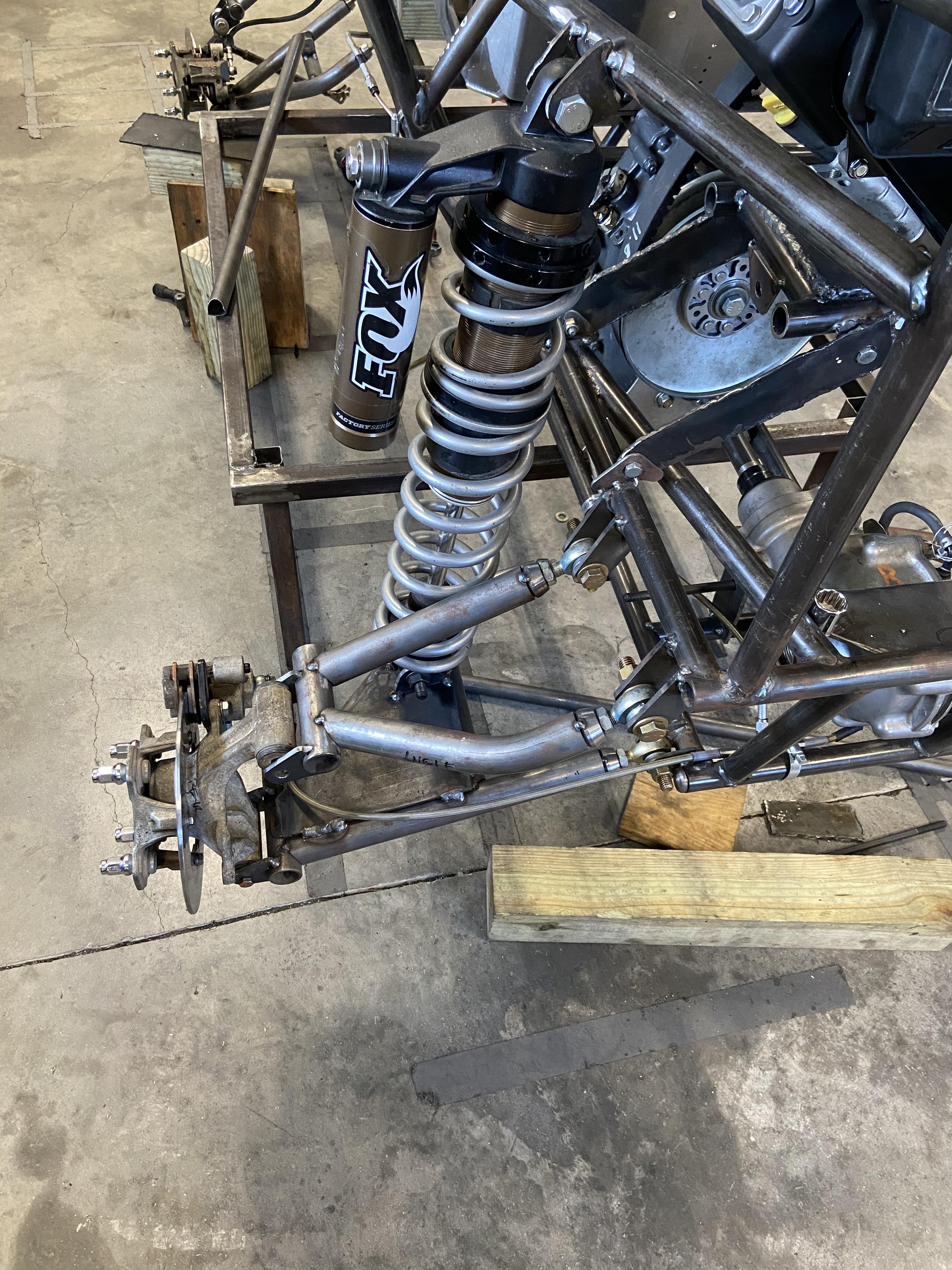
The last component that must be added are the coilovers. Maintain the factory preload of the coilovers. Identify the top and the bottom of the coilover. Align the bottom of the coilover with the mounting point on the lower control arm. Insert the appropriate fasteners and hand tighten to secure the coilover to the control arm. After tightening, the coilover should be able to move freely. Next, align the top of the coilover with the designated mounting point on the frame. Hand tighten the fasteners to attach the coilover to the frame. Begin tightening the coilover on both the top and bottom simultaneously while maintaining the alignment of the coilover. If the alignment of the coilover is acceptable, torque the coilover to specification.
Finally, test the suspension components by adding weight to the cart. The suspension components should allow the kart to move and return to the neutral position without making excessive noise or binding. If there is play in the suspension components, ensure that every fastener has been torqued to specification. If the kart performs optimally, the user may continue to the next assembly step.
Steering System - Steering Column
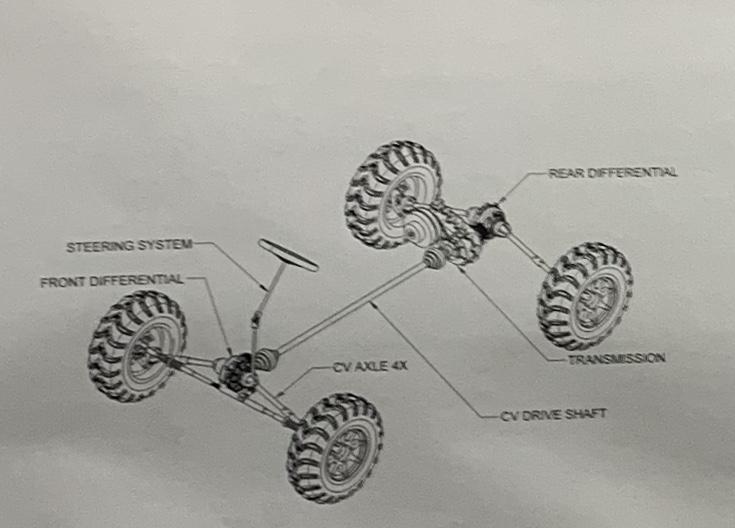
The first step is to cut two members that will make up the upper and lower components of the steering column.
A universal joint will connect the upper and lower members. At the top of the steering column the steering wheel will be mounted by bolting it to a plate connected to the column.
Steering System - Steering Gear
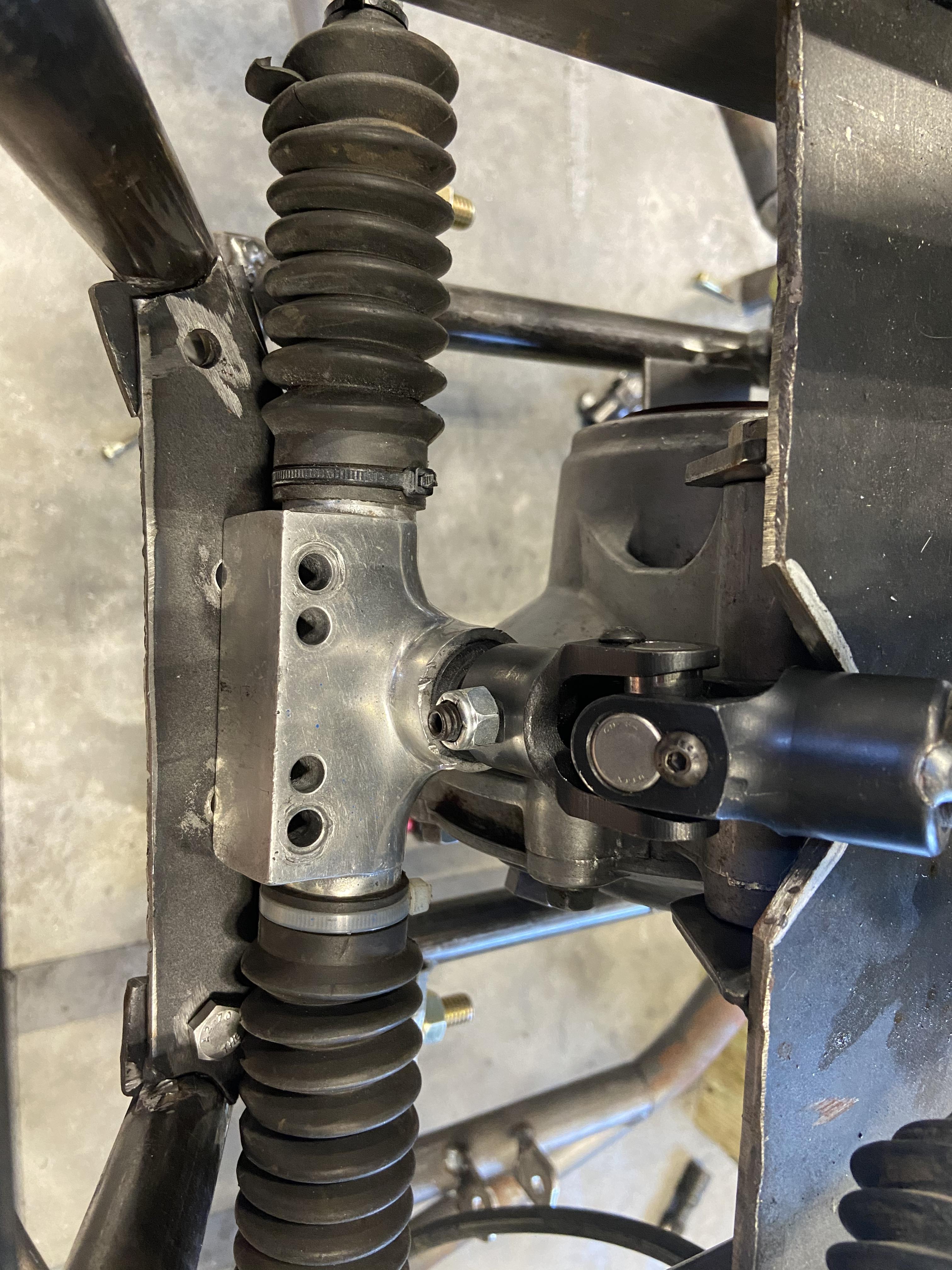
The steering gear is used to transfer the turn of the steering wheel to the tie rods. The steering gear will be connected to the base of the lower member in the steering column and have a Pitman connected to either side. The steering gear is bolted to the two tabs located on the front end of the vehicle.
Steering System - Pitman Arm
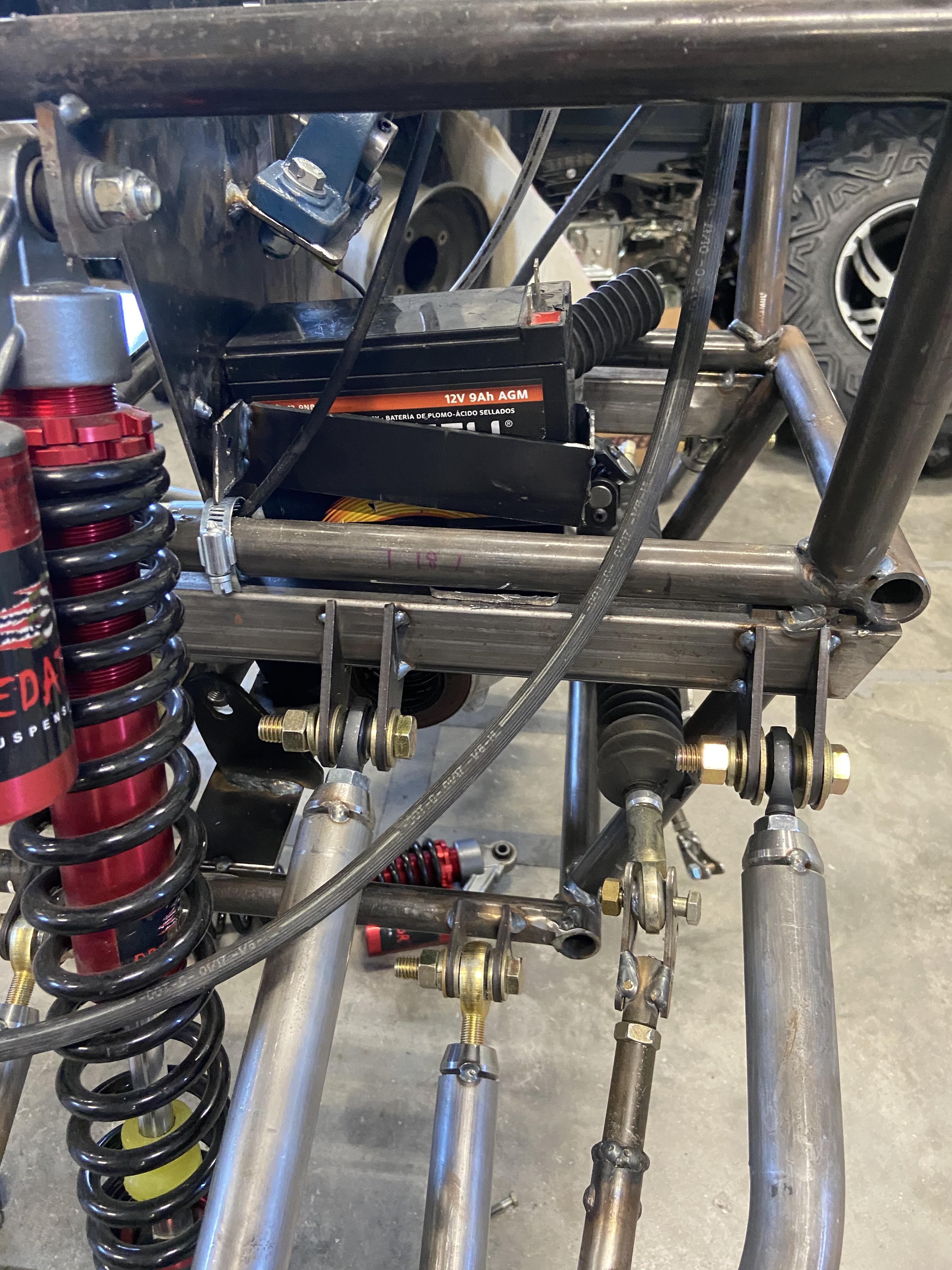
The pitman connects the steering gear to the tie rods. These are metal members that will be attached to the gear by a bracket and bolted on either side.
Steering System - Tie Rods
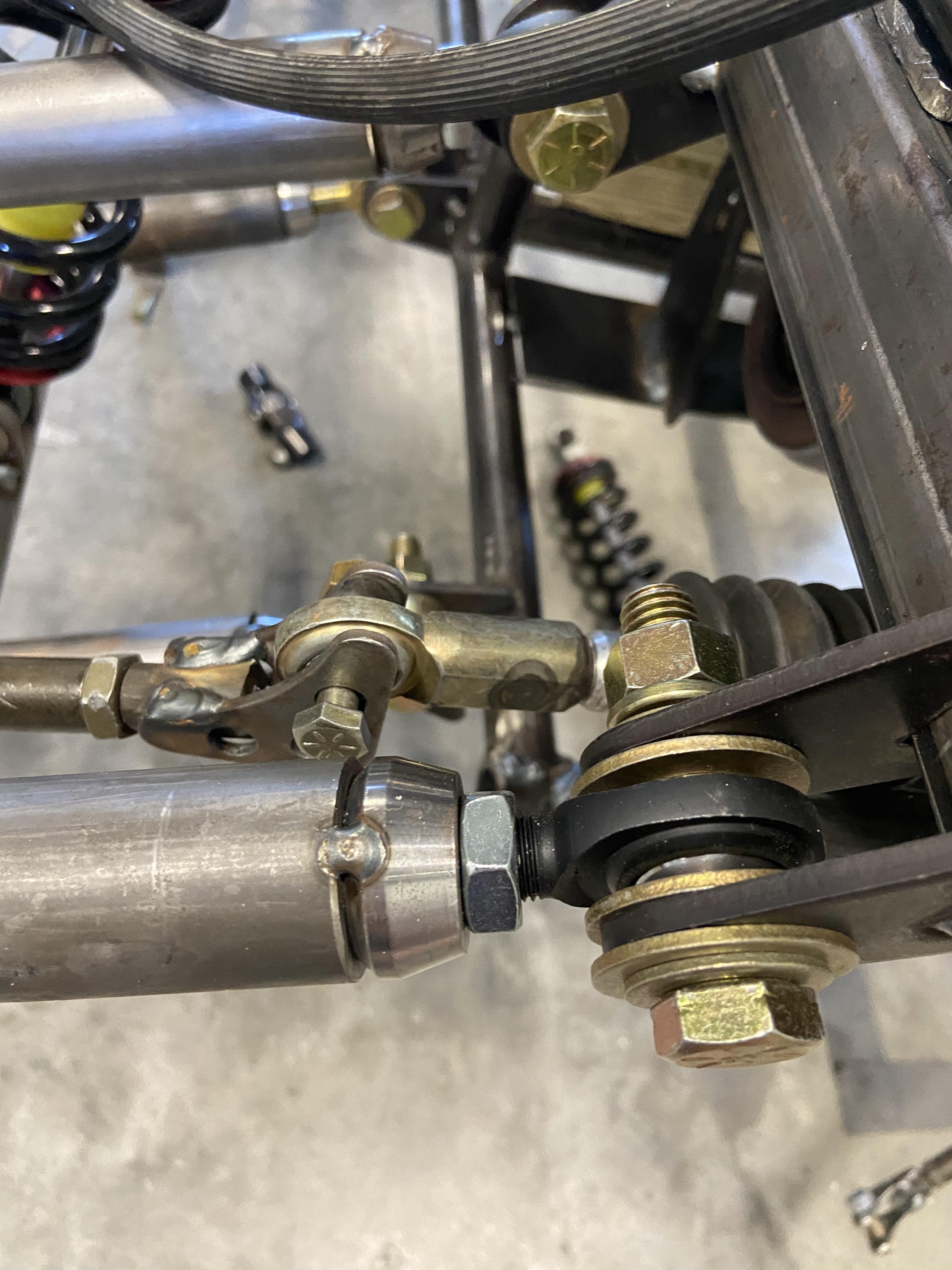
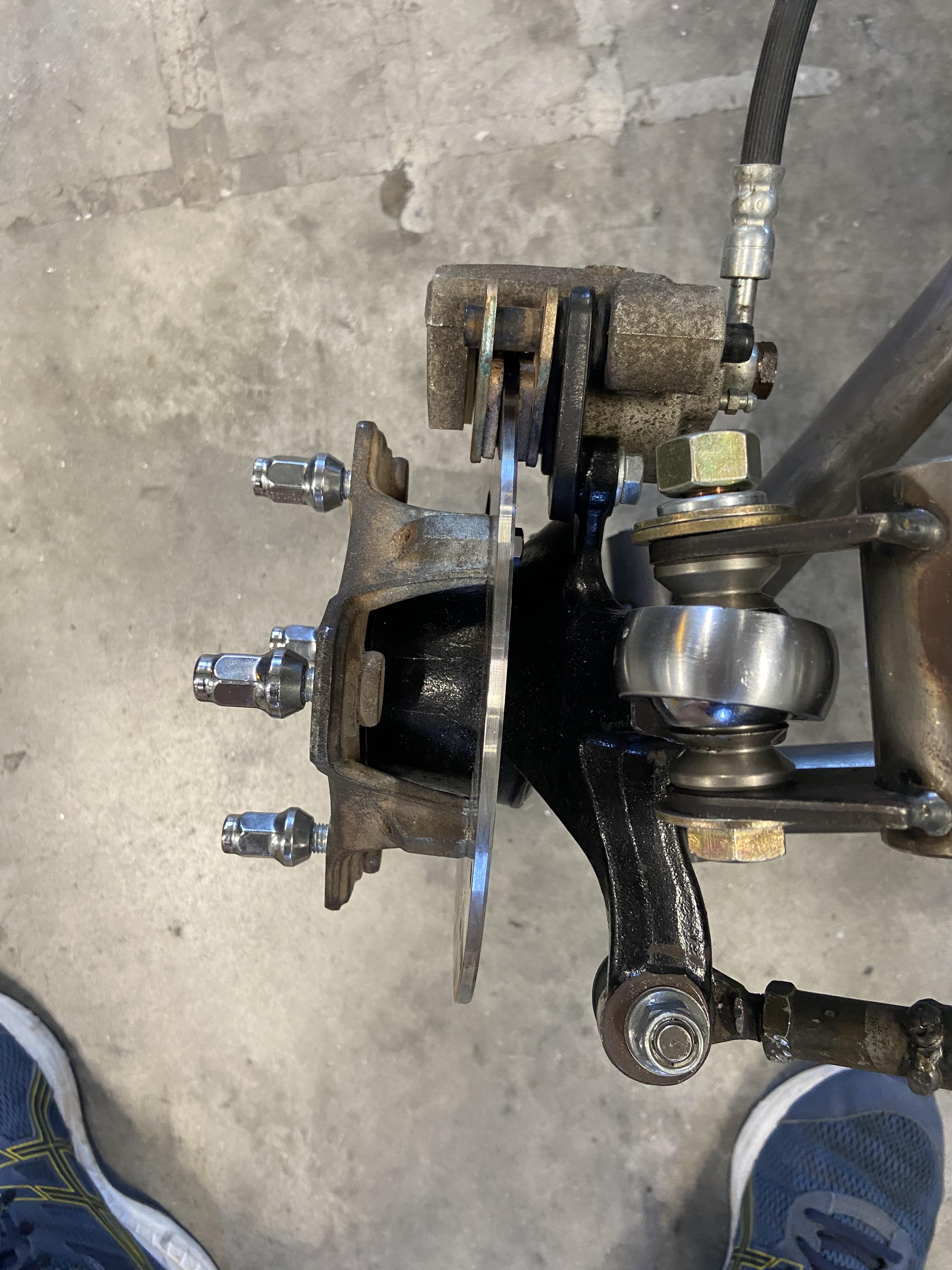
Tie rods are the connection between the pitman and the wheels. The tie rods are cut to length necessary between the pitman and wheels. The tie rods are then connected to the wheels using a special bolt encased by washers.
Wheel Assembly - Front Tire Materials
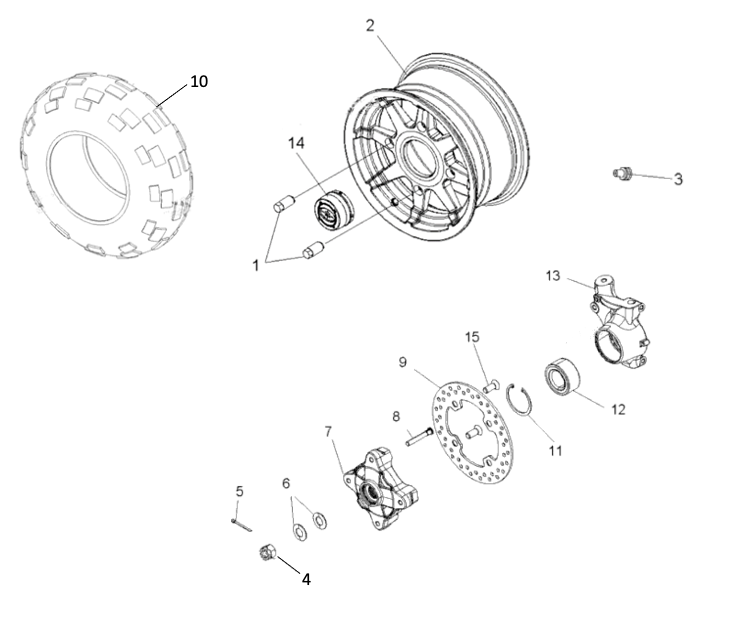
Item numbers refer to the exploded view drawing with the quantity required in parentheses.
-
3/8-24 HEX NUT - WHEEL (8)
-
RIM-FRONT, 12X8, CAST, 50.1MM (2)
-
VALVE, RIM (2)
-
M18X1.5 NUT, CASTLE (2)
-
PIN, COTTER (2)
-
WASHER, CONE (4)
-
HUB-WHEEL, FRONT (2)
-
3/8-24X1.73 STUD, PRESS-FIT (8)
-
DISC-BRAKE, FRONT (2)
-
TIRE-FRONT, 27X9R12 (2)
-
RING, RETAINING (2)
-
BEARING-BALL, WHEEL, RH & LH (2)
-
CARRIER-BEARING, WHEEL, RH/LH (1)/(1)
-
CENTER CAP, EMBOSSED STAR LOGO (2)
-
SCR-M10x1.5x20, 8.8 TXCS FL (8)
Wheel Assembly - Rear Tire Materials
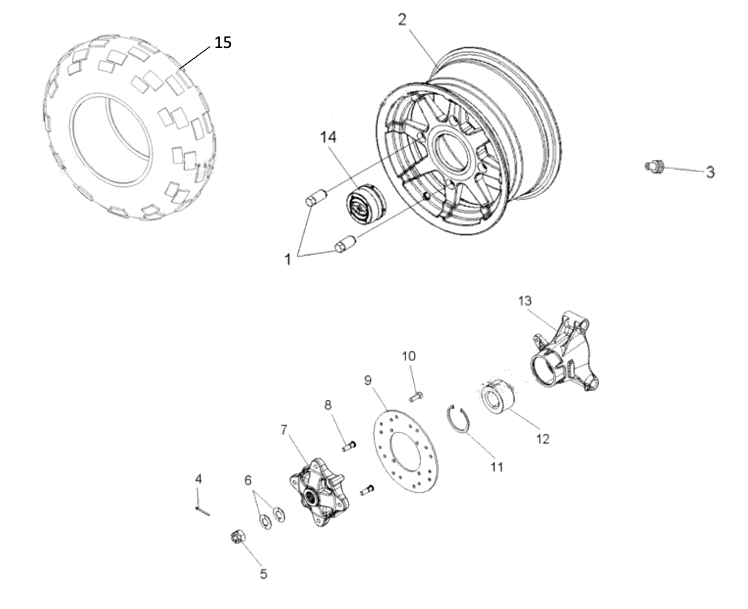
Item numbers refer to the exploded view drawing with the quantity required in parentheses.
-
3/8-24 HEX NUT - WHEEL (8)
-
RIM-REAR, 12X8, CAST, 50.1MM (2)
-
VALVE, RIM (2)
-
M18X1.5 NUT, CASTLE PIN, COTTER (2)
-
M18X1.5 NUT, CASTLE (2)
-
WASHER, CONE (4)
-
HUB-WHEEL, REAR (2)
-
3/8-24X1.73 STUD, PRESS-FIT (8)
-
DISC-BRAKE, REAR (2)
-
3/8-16X.75 BOLT, HEX CAP (2)
-
RING, RETAINING (2)
-
BEARING-BALL, WHEEL, RH & LH (2)
-
CARRIER-BEARING, WHEEL, RH/LH (1)/(1)
-
CENTER CAP, EMBOSSED STAR LOGO (2)
-
TIRE-REAR, 27X9R12 (2)
Wheel Assembly - Tire Mounting - Lubrication
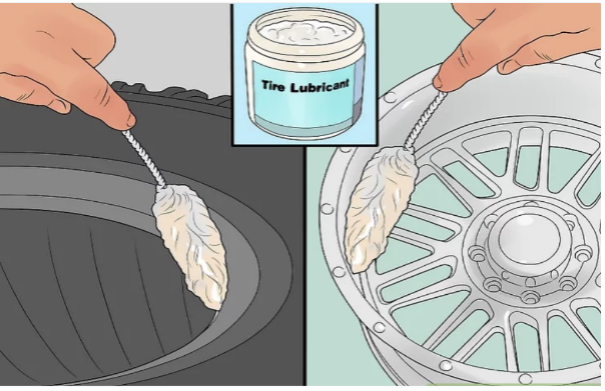
Spray the lubricant or apply lubricant by hand to the interior bead of the tire and the outer edge of the rim.
Wheel Assembly - Tire Mounting - Seating Bottom Bead
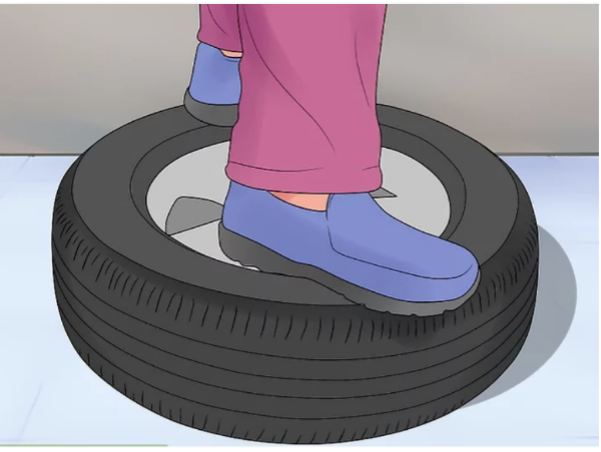
Ensure that work area has stable, even and flat flooring. Lay the rim flat on the ground and place the tire on top of it. Ensure the tire sits on top of the rim, with its bottom bead meeting the rim’s upper lip.
WARNING: The following steps must be accomplished with two people present to prevent personnel safety hazards.
Step on the tire with both feet to press the lower lip onto the rim. Have a team member lend a hand to balance as you step up onto the tire on one side. Then bring your other foot up and apply pressure to the other side and force the bottom bead of the tire down over the top lip of the rim.
Wheel Assembly - Tire Mounting - Lubrication
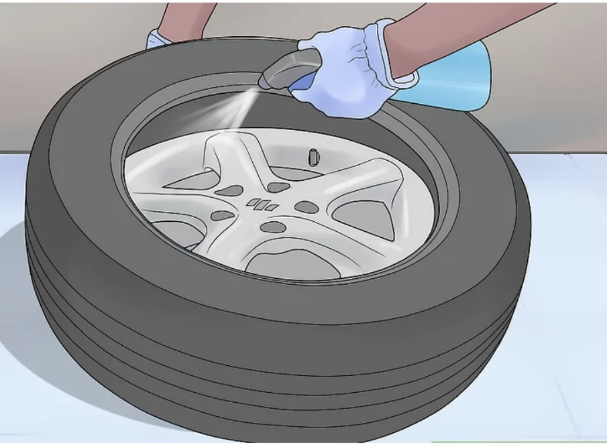
Add lubricant to the upper bead on the tire as well as the rim. Apply lubricant as needed to help force the rubber down over the metal of the rim. The bottom bead will not require more lubricant.
NOTE: With the lower bead seated, it will be a challenge to get the upper one to follow suit.
Wheel Assembly - Tire Mounting - Upper Bead
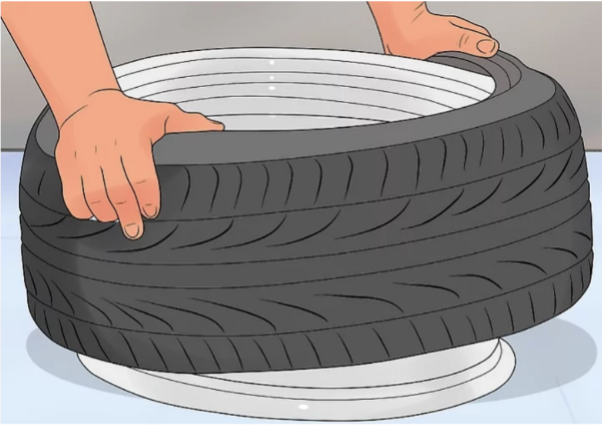
Press the upper lip of the tire down onto the rim on one side. Angle the tire so that one part of the upper bed is down below the rim’s edge. Enough space must be created between the upper bead of the tire and the upper lip of the rim to slide a pry bar into the gap. Use a pry bar to create the gap and keep in place once you are done.
Wheel Assembly - Tire Mounting - Full Seating
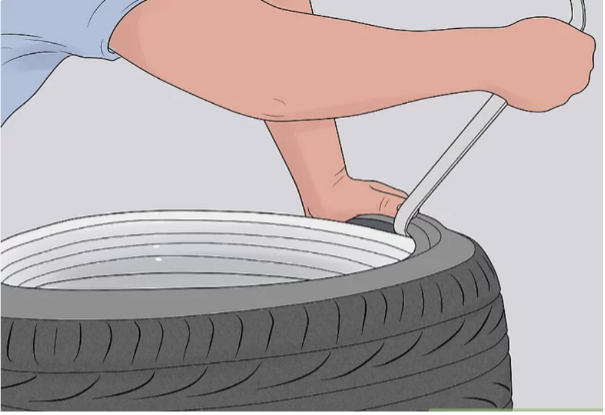
Use a pry bar to force the tire’s lip over the rest of the rim. Move the wheel around, pressing down onto the tire with your hands and prying its bead over the upper lip of the rim. To avoid scratching the rim, press the pry bar into the bottom side of the rim’s upper lip. Both the tire’s upper and lower beads should be completely past the rim’s lip.
Seat and Safety Harness - General and Materials
WARNING: FAILURE TO COMPLY WITH THESE INSTRUCTIONS MAY CAUSE SERIOUS INJURY OR DEATH
These components, when installed correctly, are designed to reduce injury-producing movement of the upper body and head during a racing impact, but no device or component can prevent all injuries that may occur in auto racing.
Please read instructions before you start assembling seat.
Supplies:
Material list with quantity required listed in parentheses:
- Kirkey Standard 20-Degree Layback Road Race Containment Seat 16" Hip Width Part Number: 570-71500 (1)
- seat side mount part number 99204 (2)
- 3/16” x ½” bolts (8)
- 3/16 lock nuts (8)
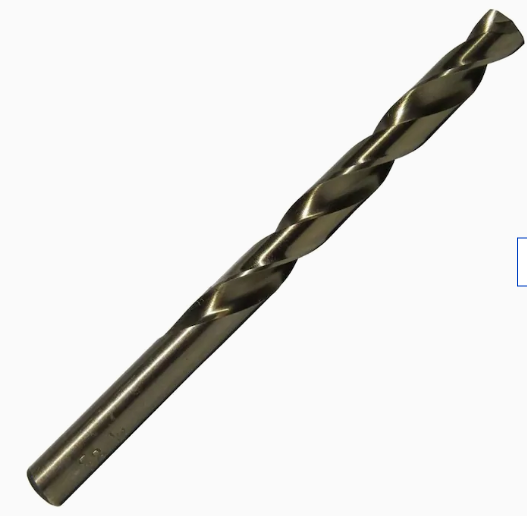
- 13/32" drill bit (1)
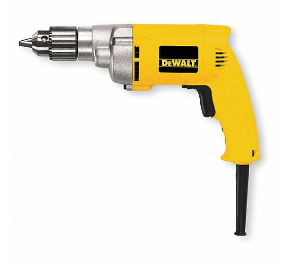
- drill (1)
- 5/16” x 1" bolts (4)
- 5/16” lock nuts (4)
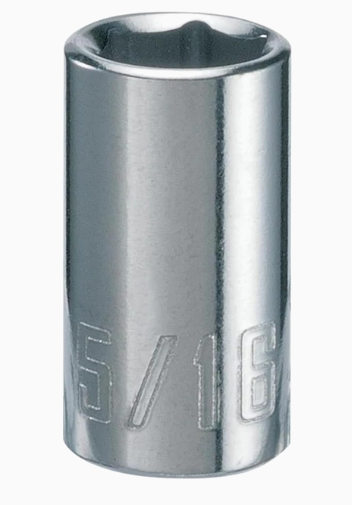
- 3/16" socket (1)
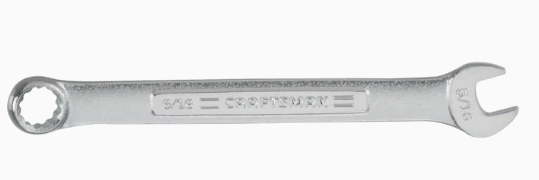
- 3/16" open end wrench (1)
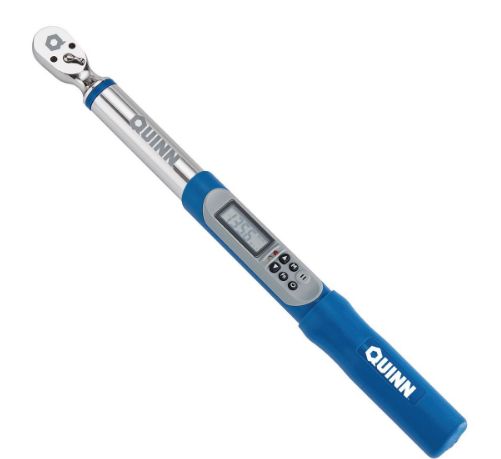
- 3/8" Torque Wrench (1)
- 1/2" Socket (1)
- 1/2" Wrench (1)
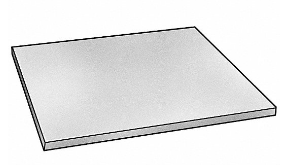
- 22" x 21" x 1/8" 4130 plate (1)
- Black Cam Lock Ultra Series Harness 5-Point Design Part Number: 555-70091 (1)
- 90 degree Seat Belt Mounting Bracket [2 in. Wide x 1.3125 in. Deep] (3)
- Safety Harness Mounting Tab & Bolt Kit Part Number: 555-70042 (1)
Seat and Safety Harness - Seat Assembly
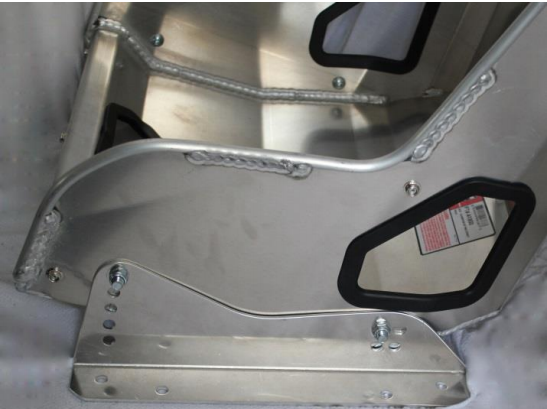

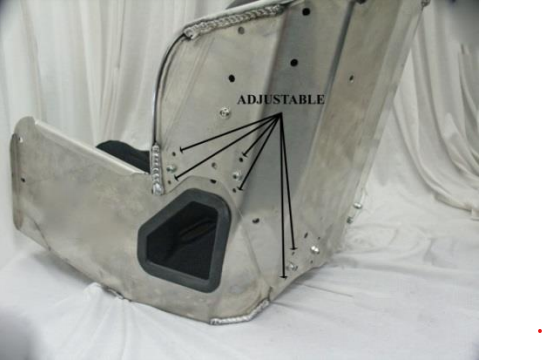
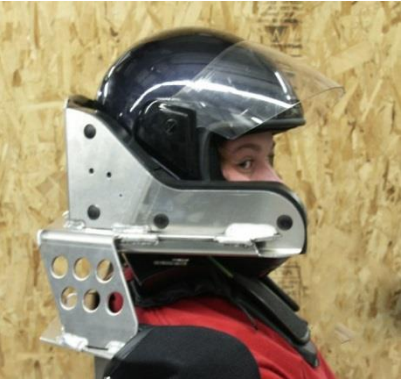
You have the choice of three different positions that you can set the height of the head and shoulder restraints, (see photo #1). Ideally, you want the head restraint positioned level with the driver’s cheekbone (see photo #2). Have the driver look to the left and to the right to ensure that their peripheral vision is not obstructed. If peripheral vision is obstructed, adjust accordingly. With the restraint at the proper height, fasten the back of the seat to the bottom using the pre-punched holes and eight (8) of the 3/16” x ½” bolts provided. Use either a 3/16" socket or 3/16" wrench to tighten. To make alignment easier, do not tighten bolts until they are all in place.
WARNING: DO NOT OVERTIGHTEN
Using a 3/8" toque wrench, torque to specification (8 ft-lbs).
Seat and Safety Harness - Seat Mounting
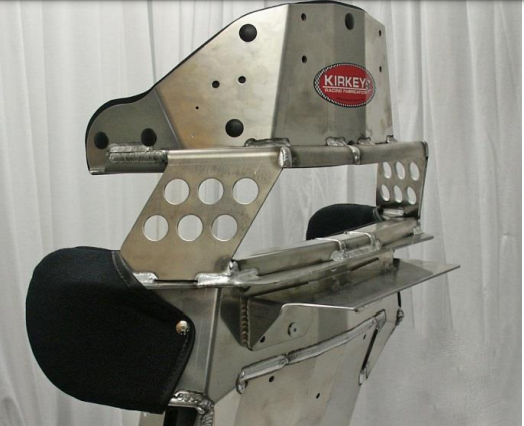
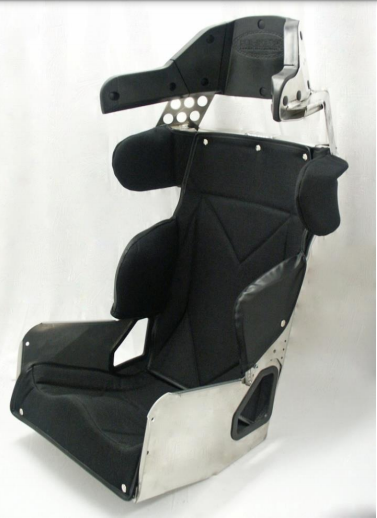
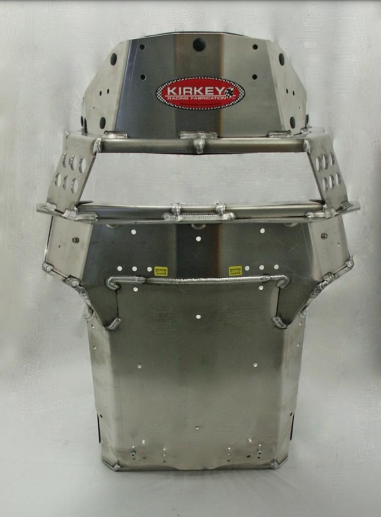
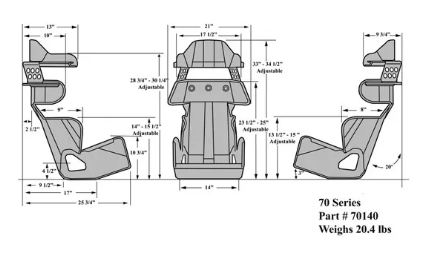
SEAT MOUNTING INSTRUCTIONS
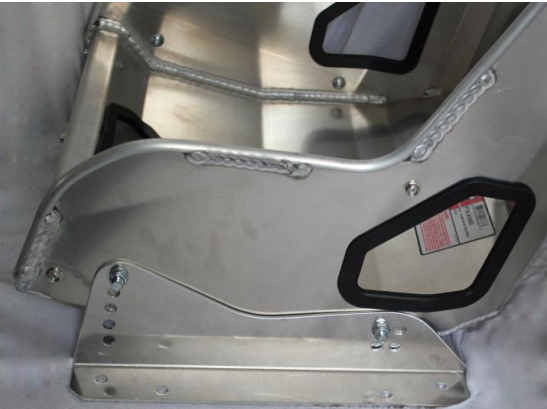
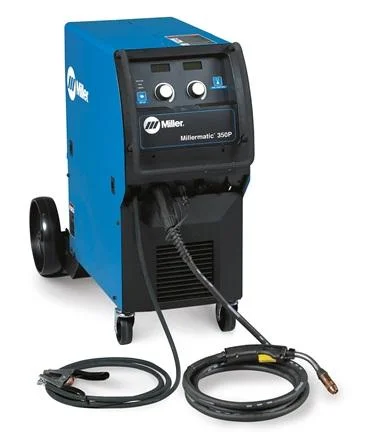
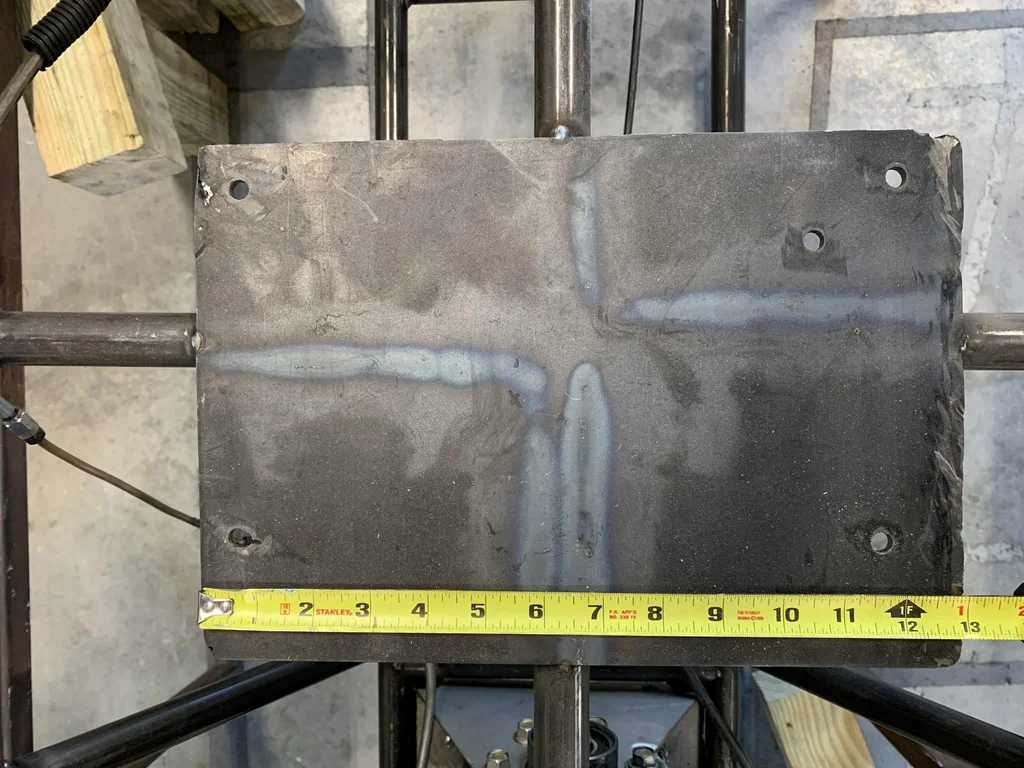
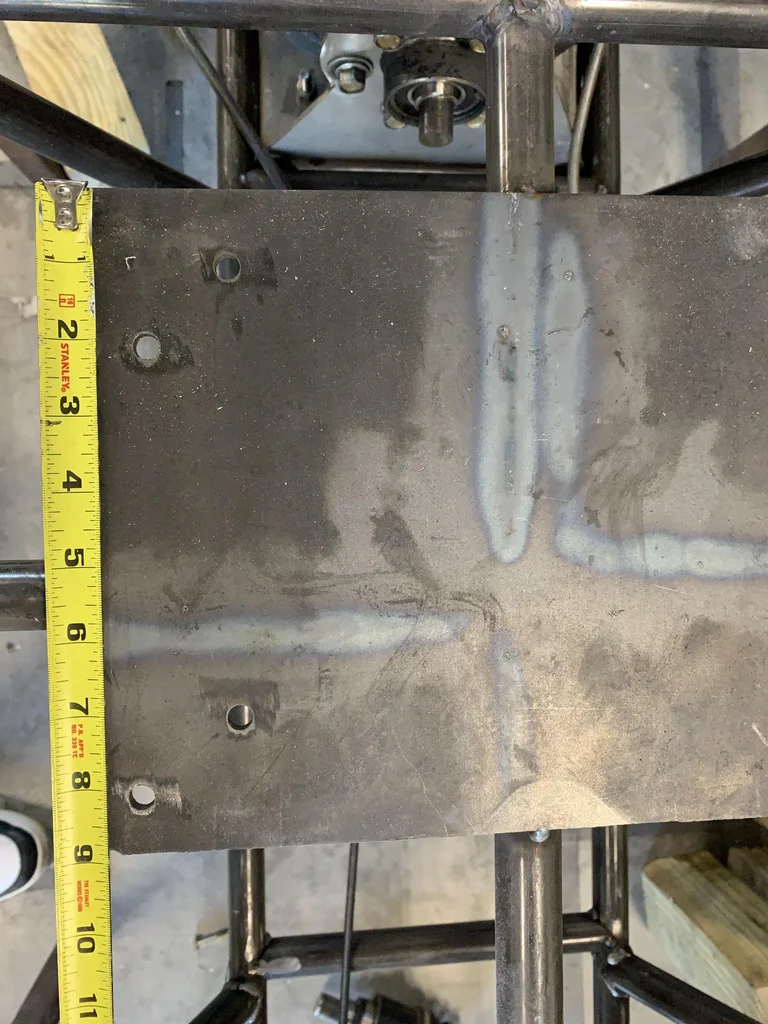
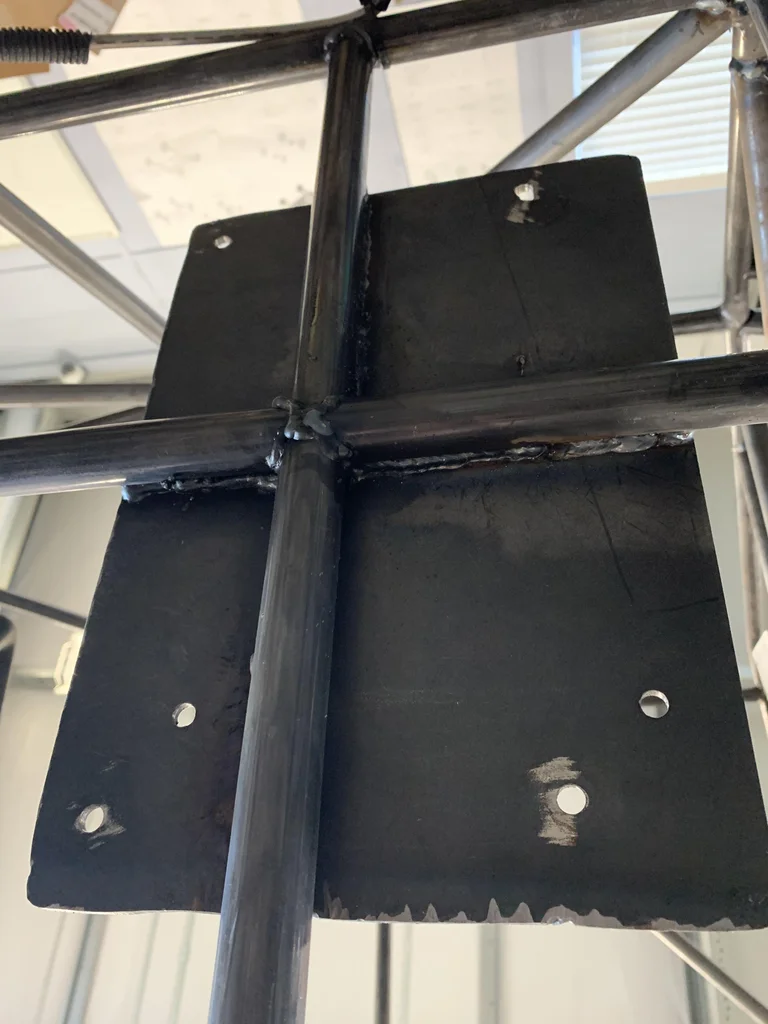
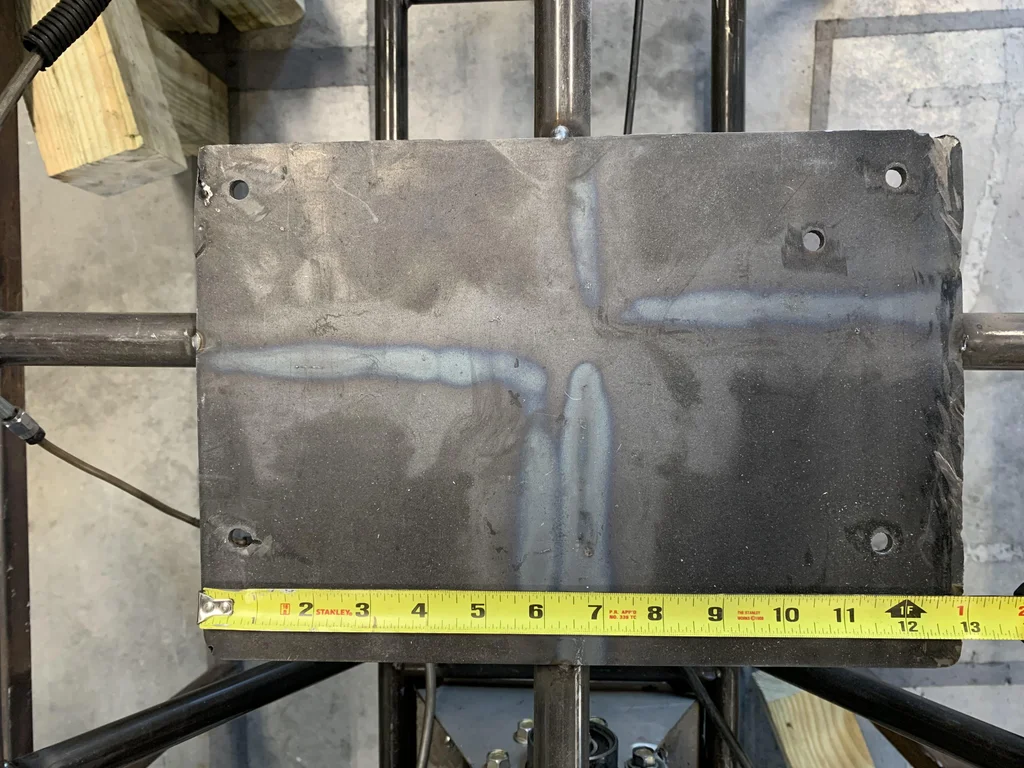
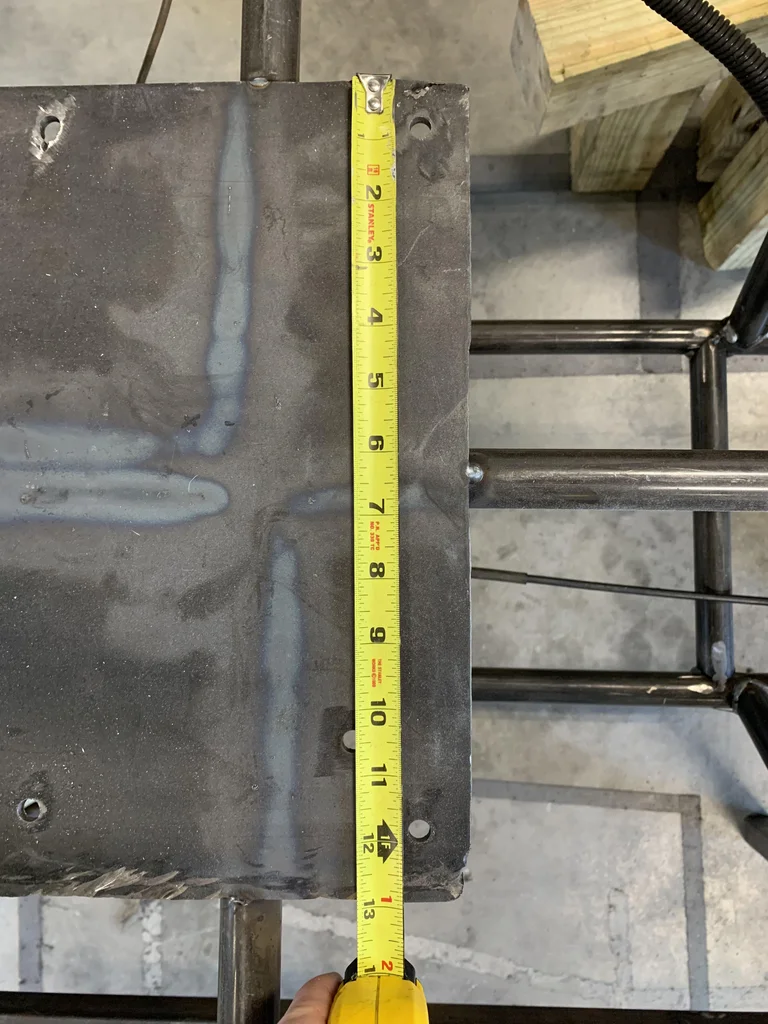
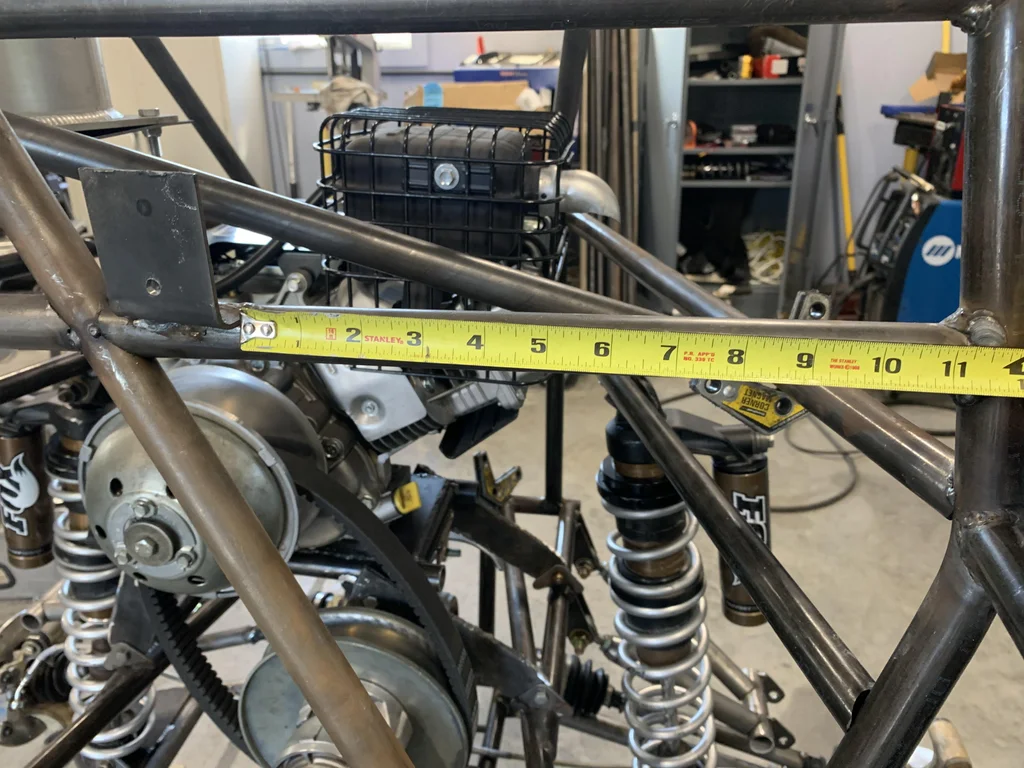
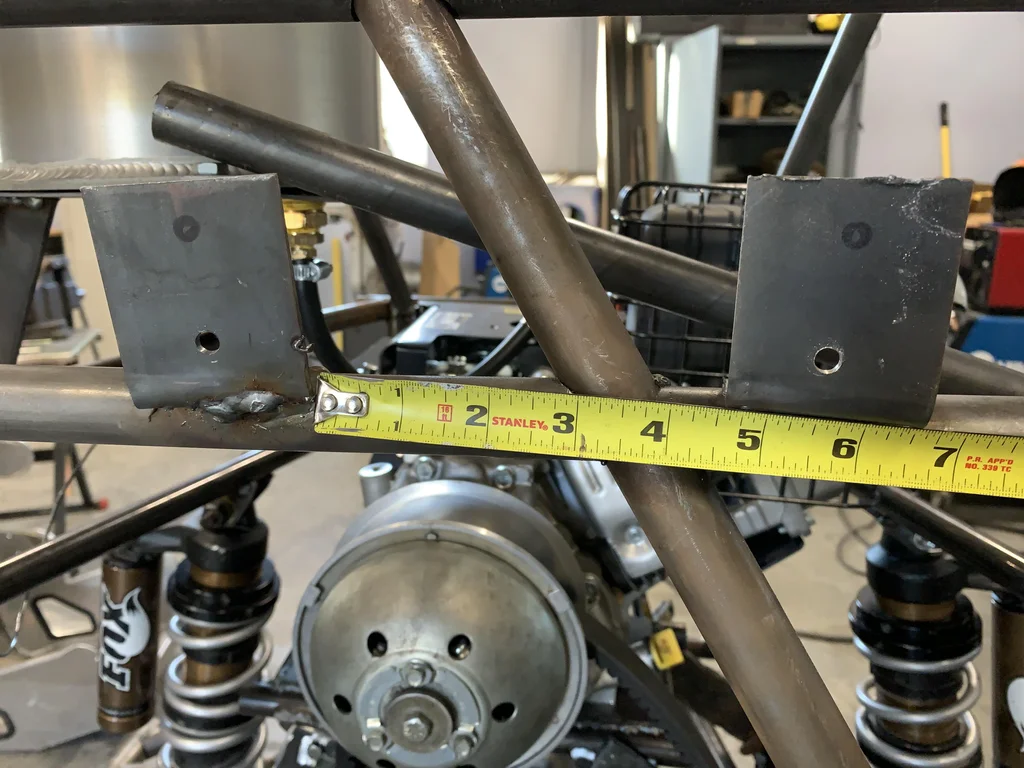
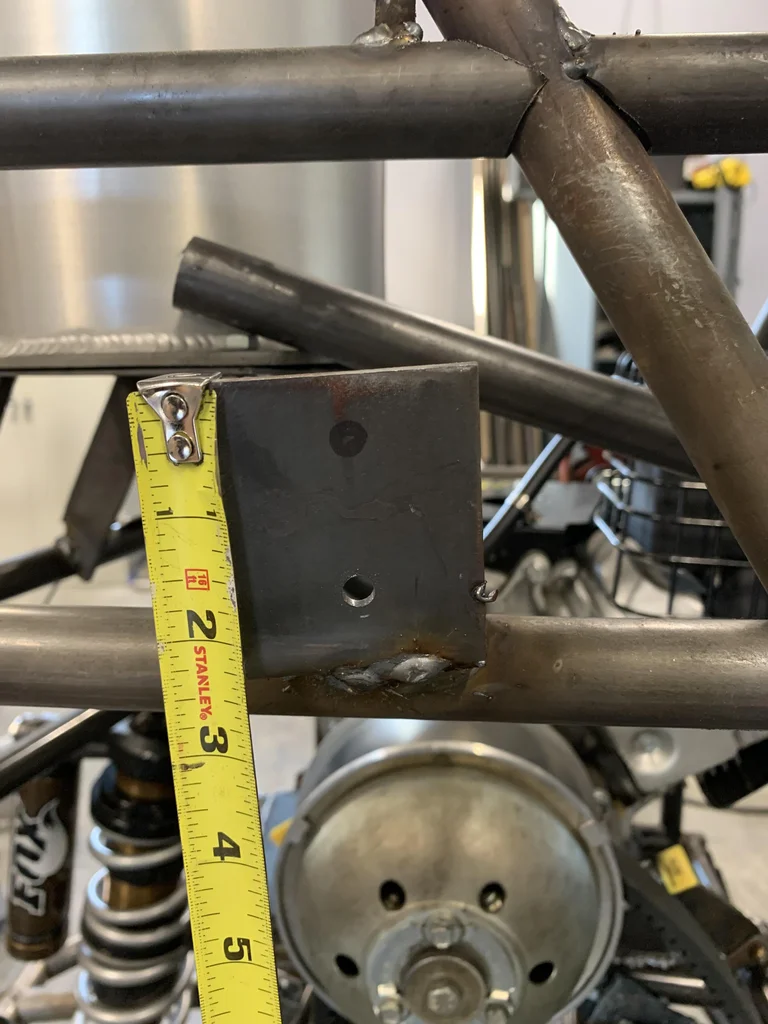
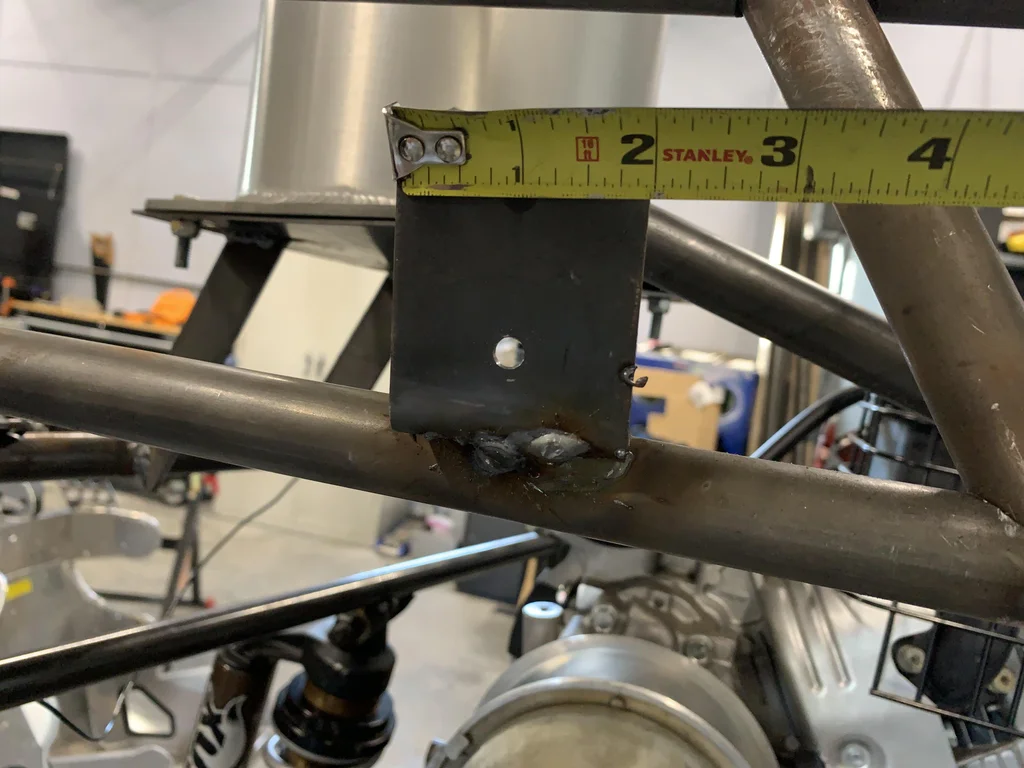
For the bottom of the seat there are two ways that you can mount this seat. You can use four bolts (min. 5/16”/8mm) directly through the bottom of the seat to the frame or roll cage (spread the bolts out as far as possible to distribute the load). Or you can do a side mount using part number 99204, (see photo #1, 2, 6). The seat will be mounted to a 13" X 9" X 1/8" of 4130 plate (photo #13). Place the plate on the chassis' tube frame floor section in the 22" X 21" arear. Measure 4.5" in from the left and right side of the 21" side section of the frame and place a mark. Place the plate at the measured lengths so that the 13" long section of the plate meets those two measured marks. Center the 9" section of the plate at 5-3/8" to the center of the 1" chassis tube along the 22" width (photo #16). Once the plate is measured into position, weld the plate to the chassis floor from underneath the plate with a MIG welder (photo #14 & 17). From the rear of the plate, starting at the left edge, measure in 3/4" & 11-5/8" and mark (photo #18). Make these measurements and markings along the 13" edge of the top and bottom plate. Now from the right rear, facing forward, along the 9" edge of the base plate, measure to 2-1/8" & 8-1/8" and mark (photo #19). Make the same measurements and markings of the left side, facing forward. Connect each vertical and horizontal marking with a marker. At each corner of the plate the lines will intersect and at those points, using a 11/32" drill bit (photo #12) with an electric drill (photo #11) ,drill four holes through the base plate. Two seat back mounting tabs, measuring 2" X 2-1/4", will be welded to the cross bar of the main roll-over hoop. The first tab from the rear left, facing forward, will be welded with a MIG welder 11" inward on the crossbar (photo #20). The second tab will be welded 4-1/2" to the right of the first mounting tab (photo #21). Measure and mark each mount tab from the top edge down to 1-5/8" (photo #22). Measure and mark each mount tab from the right, facing forward, edge 1" so that it intersects the previous marked measurement (photo #23). The lines will intersect on each mount tab and at those points, use a 11/32" drill bit (photo #12) with an electric drill (photo #11) and drill a hole through the mounting tab. Align the seat on the base plate and the two seat back mounting tabs with the seat mounting holes lining up with the seat base plate and rear mount tab's mounting holes that were drilled and place a 5/16" bolt (photo #27) through each mount hole. From underneath of the seat base and behind the rear seat back, thread a 5/16" lock nut (photo #28) counter clockwise to all 6 bolts and torque to 26ft-lbs with 3/8" torque wrench (photo #26). NEVER mount brackets to sheet metal. If you are not qualified to perform such fabrication have the installation done by an expert familiar with the requirements of such installation.
Seat and Safety Harness - Harness Mounting
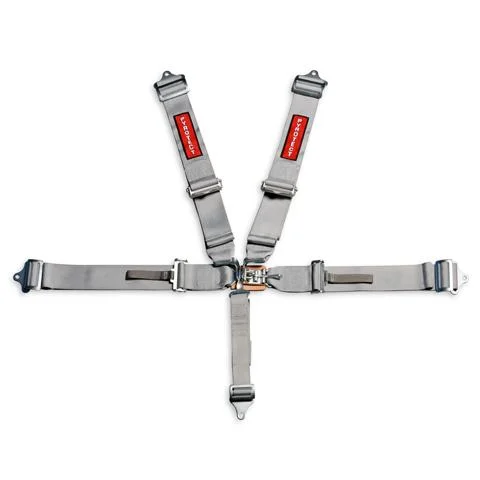
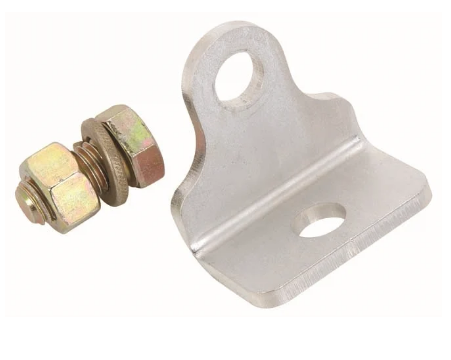
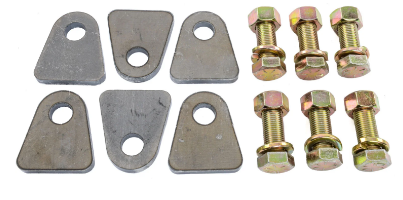
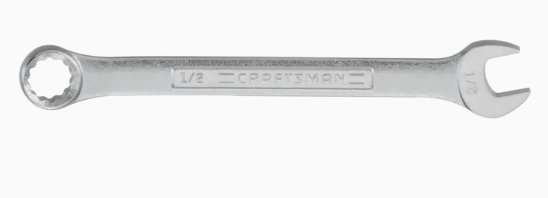
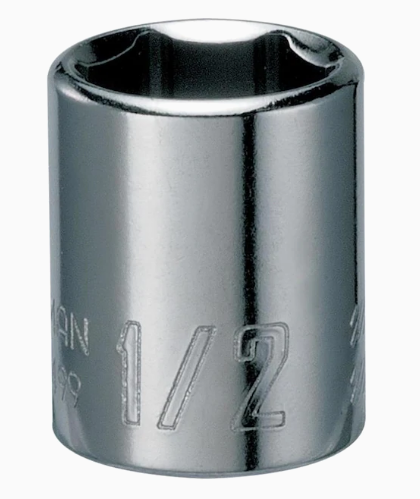
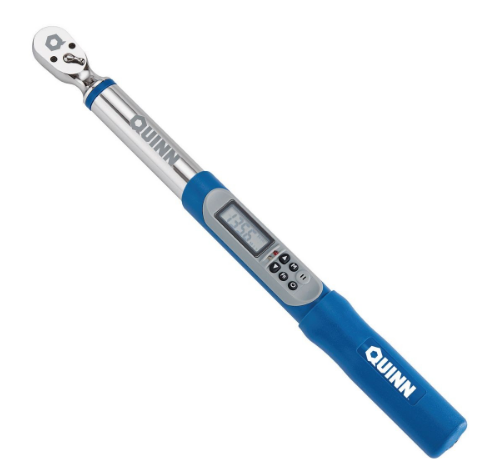
The 3x 90 degree Seat Belt Mounting Bracket (photo #30) can either be welded to the flor plate or attached by drilling a 5/8" hole to attach them with a 1/2" bolt and a 1/2" lock nut. These tabs will be welded to the floor plate for extra strength. One will be placed at the front center location of the seat base and welded with a MIG welder. The other two mounting tabs will be placed left and right of the rear section and welded with a MIG welder. Two tabs from the safety harness mounting tab & bolt kit (photo #31) will be welded with a MIG welder to the main roll hoops cross bar located behind the seat at shoulders height. Locate the 5-Point harness's (photo #29) groin strap (shortest length) and feed it through the Kirkey's seat lower center slot and bolt to the mount tab using a 1/2" bolt and 1/2" lock nut with a 1/2" wrench and socket on a 3/8" torque wrench (photo #32, 33, 34). Torque to 16ft-lbs. Moving up from the groin belt strap, take the left and right lap straps and feed them through the seat's side slots and bolt them to the left and right mount tabs using a 1/2" bolt and 1/2" lock nut with a 1/2" wrench and socket on a 3/8" torque wrench (photo #32, 33, 34). Torque to 16ft-lbs. Moving upward from the lap straps, take the left and right shoulder straps and feed them through the opening below the seat's head rest and bolt them to the mount tabs on the roll hoop's cross bar using a 1/2" bolt and 1/2" lock nut with a 1/2" wrench and socket on a 3/8" torque wrench (photo #32, 33, 34). Torque to 16ft-lbs.
Electrical - Battery
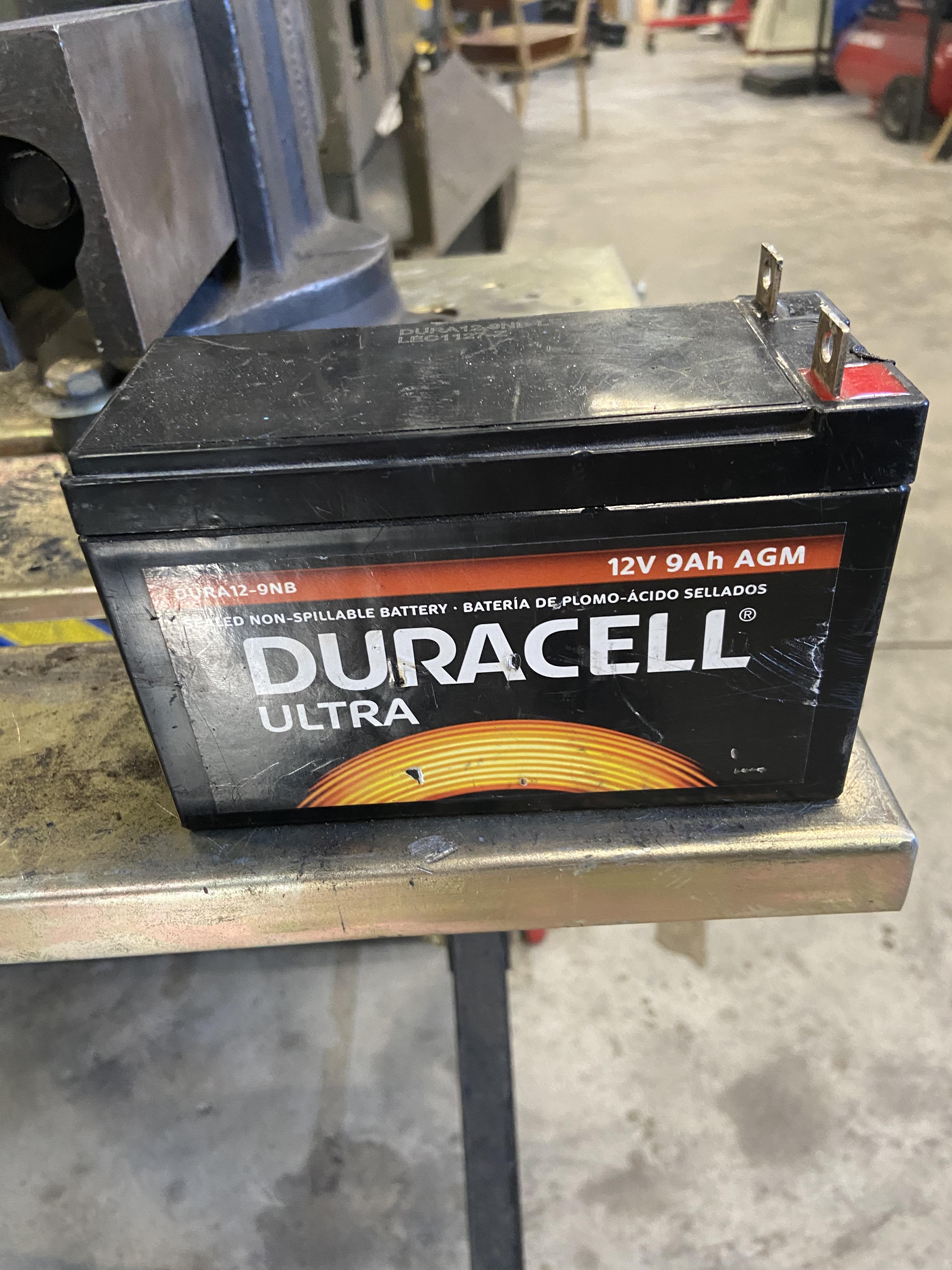
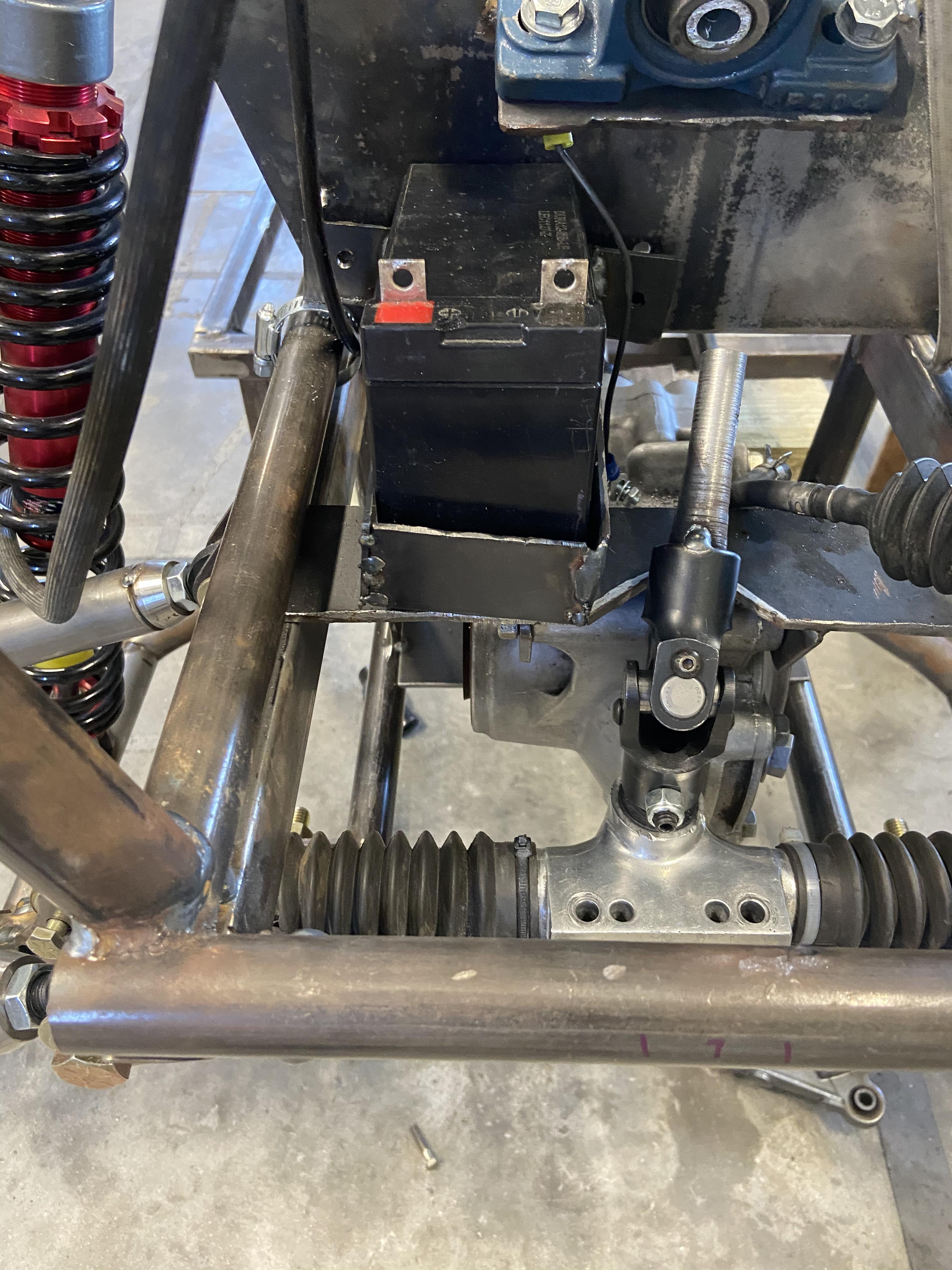
Materials:
- 12V battery
- Battery mounting bracket
- 1" 1/4"-20 bolt (2)
- 1/4"-20 nut (2)
- Lock washer (2)
- Flat washer (4)
Procedure:
- Place battery at mounting location
- Slide mounting bracket around battery
- Attach bolts, nuts, and washers as shown in the above stack-up picture
- Tighten until lock washer is just fully compressed
Electrical - Wiring
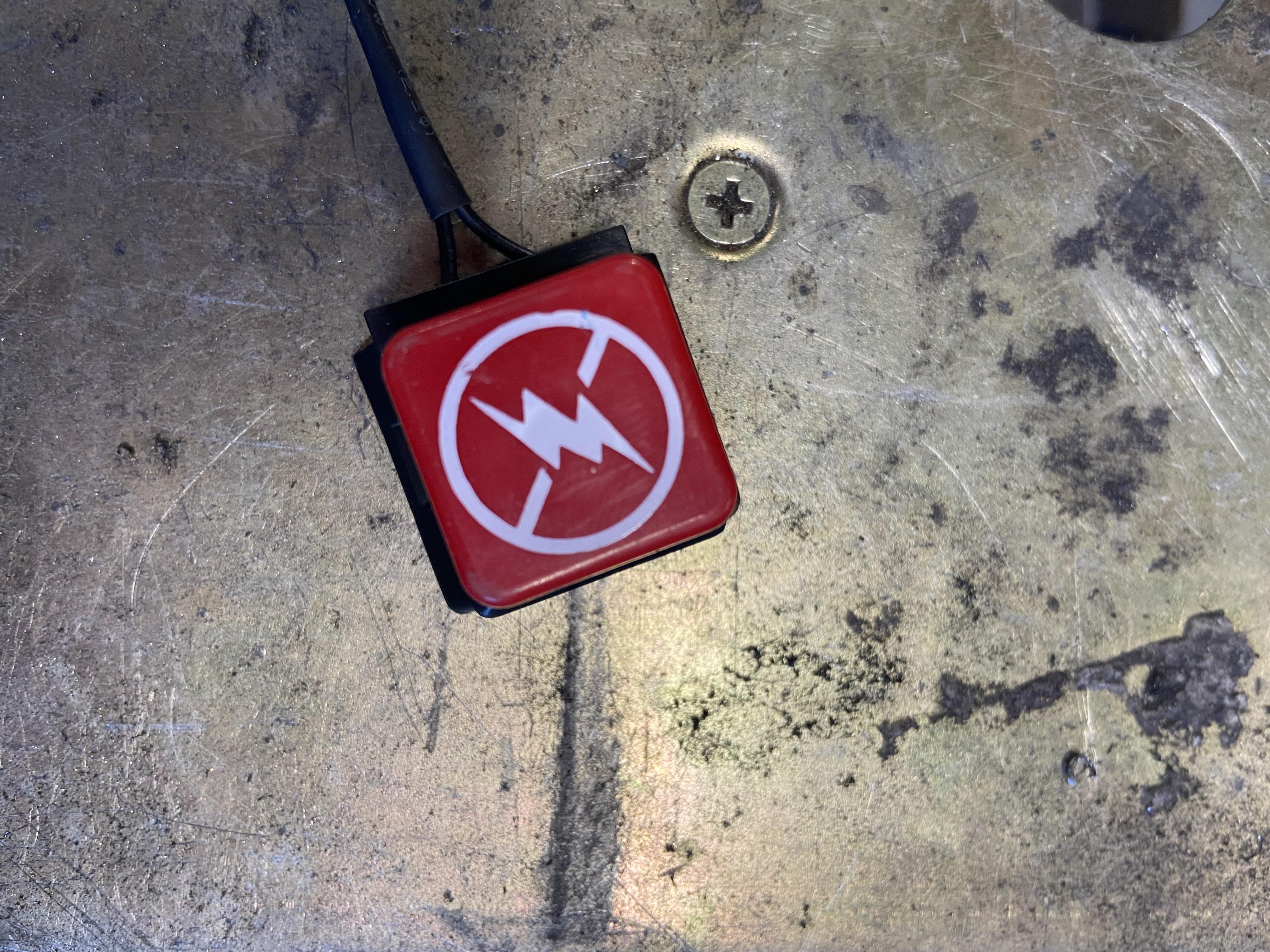
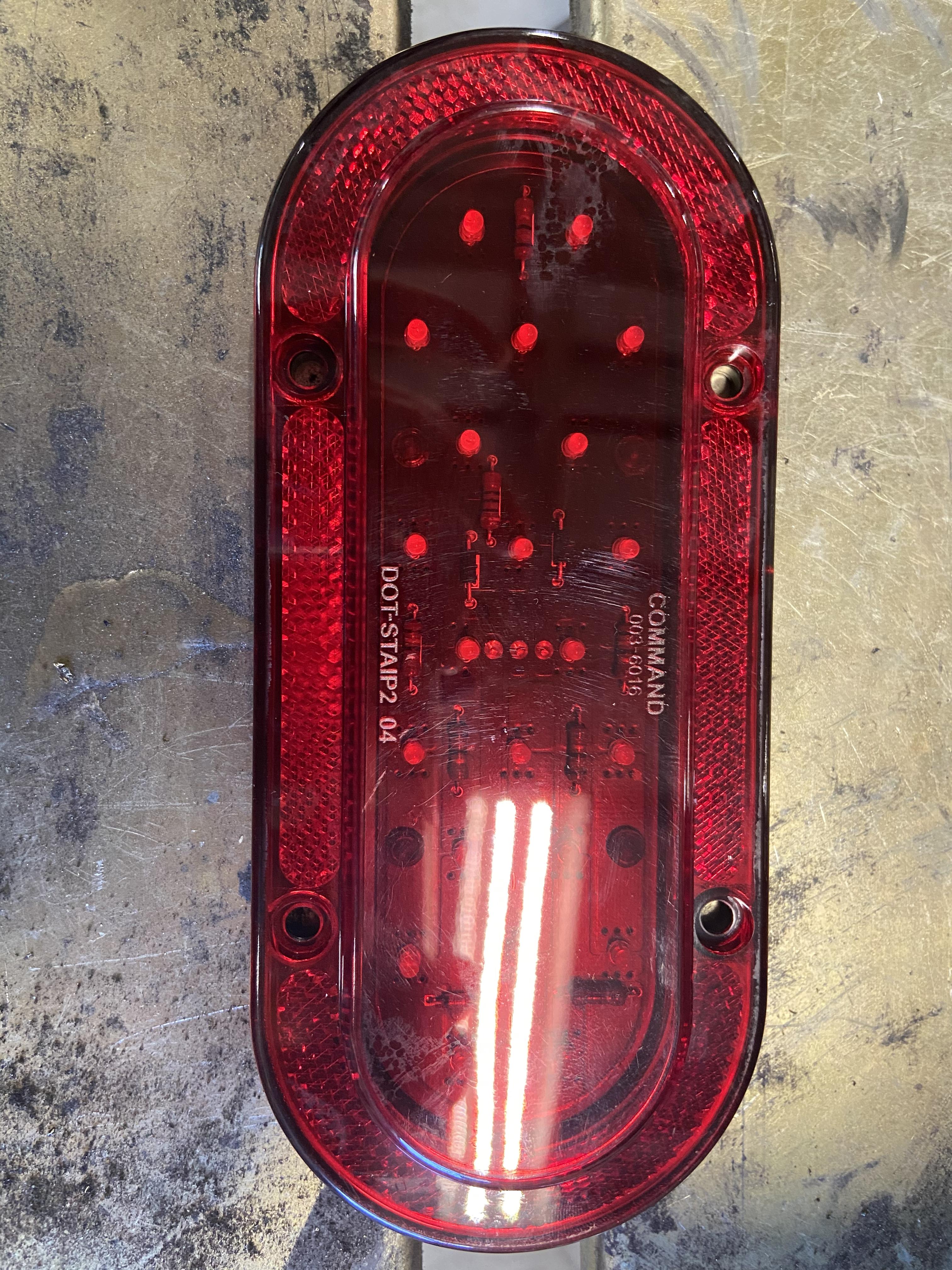
Materials:
- Kill Switch (P/N Ski-Doo Part 01-171) (2)
- Kill switch wiring harness
- Brake Light (Command Electronics Part # 003-6018R)
- Brake light wiring harness
- Hose clamps (As required for keeping wiring tied away from moving parts)
CAUTION: Ensure that all wiring is placed in an area so as to protect it from damage when driving
- Mount kill switches at required locations (1 in cockpit to the left of the driver, 1 in upper right, rear area of vehicle)
- Run supplied wires from the engine to each kill switch
- Attach ground wire at the cockpit kill switch to a chassis ground
- Run wires from battery to the pressure switches on the brake cylinders
- Using hose clamps, attach wiring to the frame to keep it from contacting moving parts
Hydraulics - Brake Lines
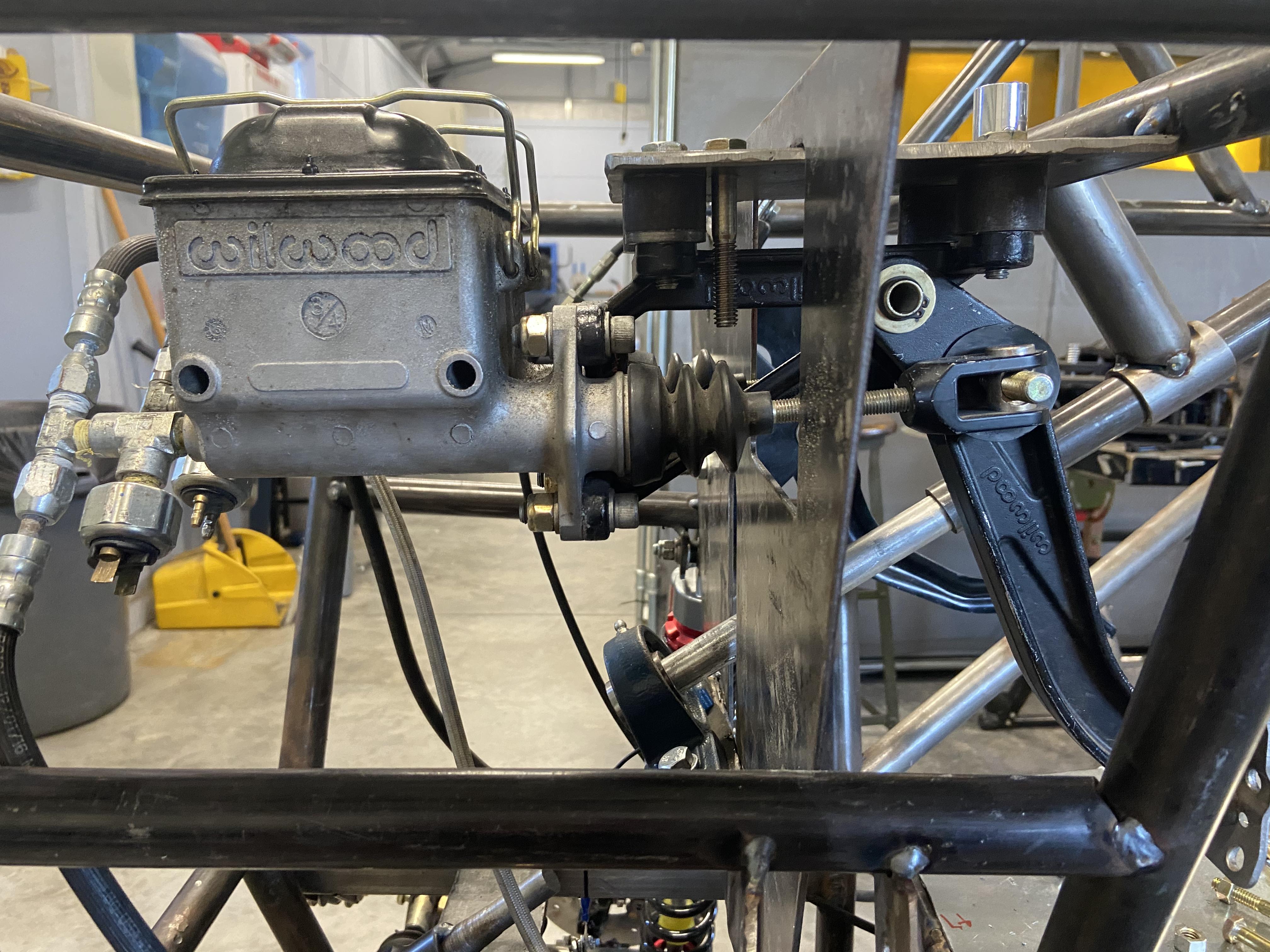
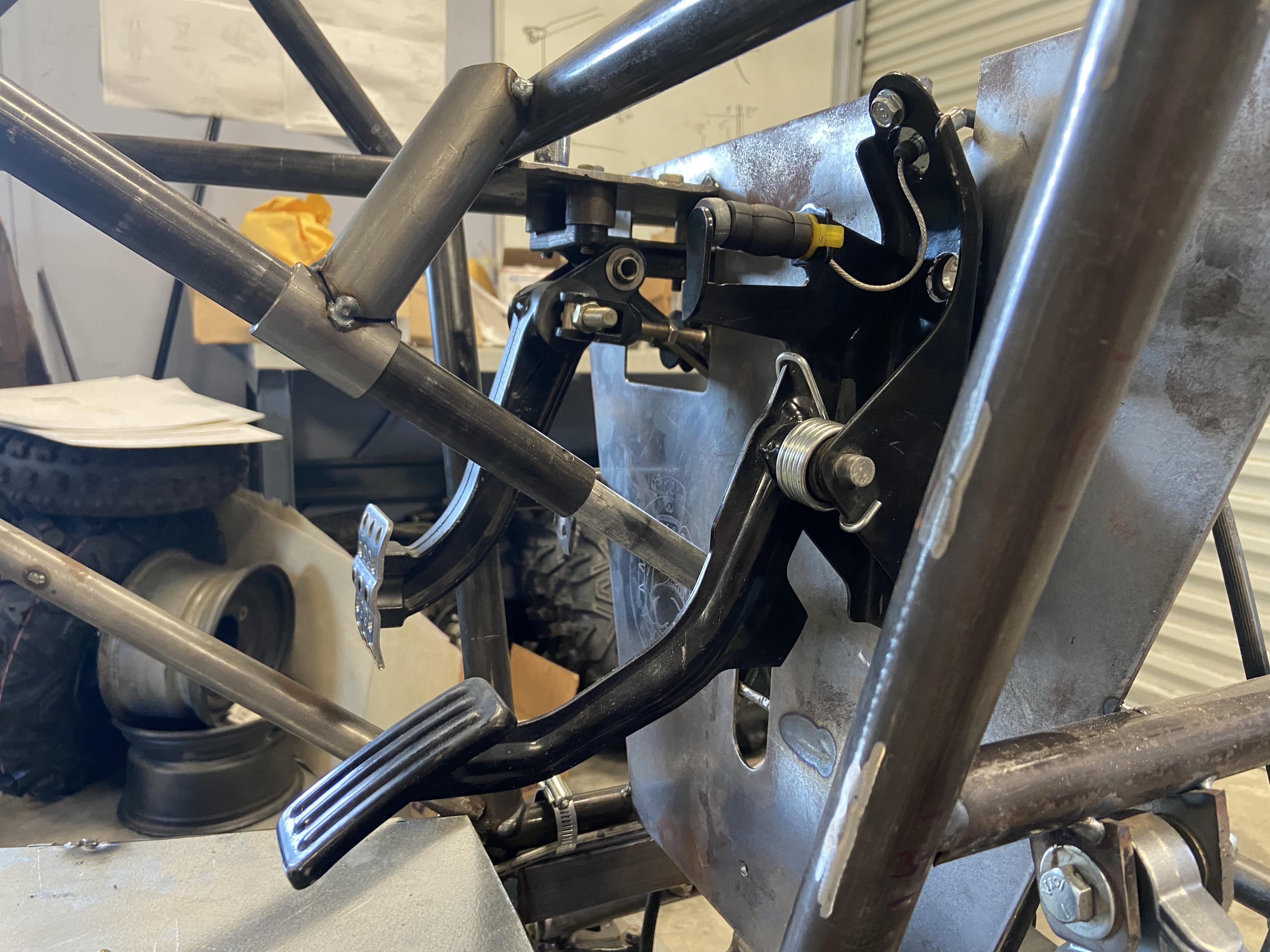
Brake lines must be run from the master cylinder to each caliper. The front and rear brakes must be supplied from independent sources within the master cylinder. The brake pedal connects via two independent means to the master cylinder.
Route brake lines within the volume of the frame to protect from impact with other objects. Brake lines shall be attached to the frame to not allow any drooping that could cause unnecessary vibration and damage to the lines.
Brakes - Installation
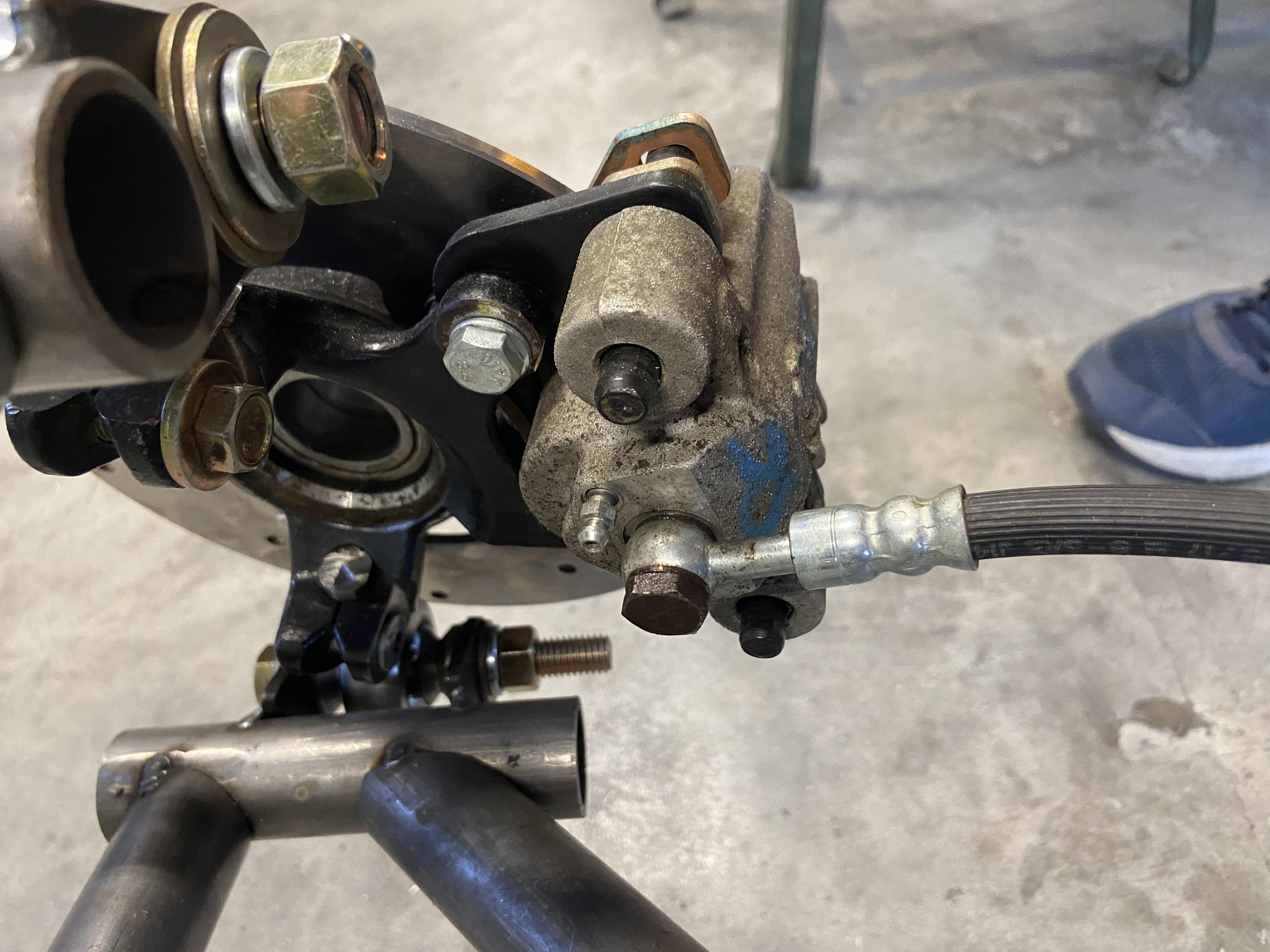
With the wheel removed, install the rotor on the axle assembly. Mount the caliper with installed brake pads on the rotor. Connect the brake hydraulic line to the caliper. Fill the brake fluid system. Bleed brake lines to ensure that all air is removed. Failing to properly bleed the brake system will result in reduced braking performance and could result in serious property damage and bodily harm.
Body Paneling
Materials:
- Precut fiberglass body panels
- Plastic clips (50)
Procedure:
- Attach plastic clips to precut fiberglass drilled holes
- Place fiberglass onto the kart and attach the plastic clips to the mounting tabs
- Verify no greater than 1/4" gaps exist anywhere between the fiberglass points and the cockpit