Target Design in Solar Heat Concentrators for Dehydration of Fruit, Steaming Soil
by gaiatechnician in Outside > Backyard
40 Views, 0 Favorites, 0 Comments
Target Design in Solar Heat Concentrators for Dehydration of Fruit, Steaming Soil
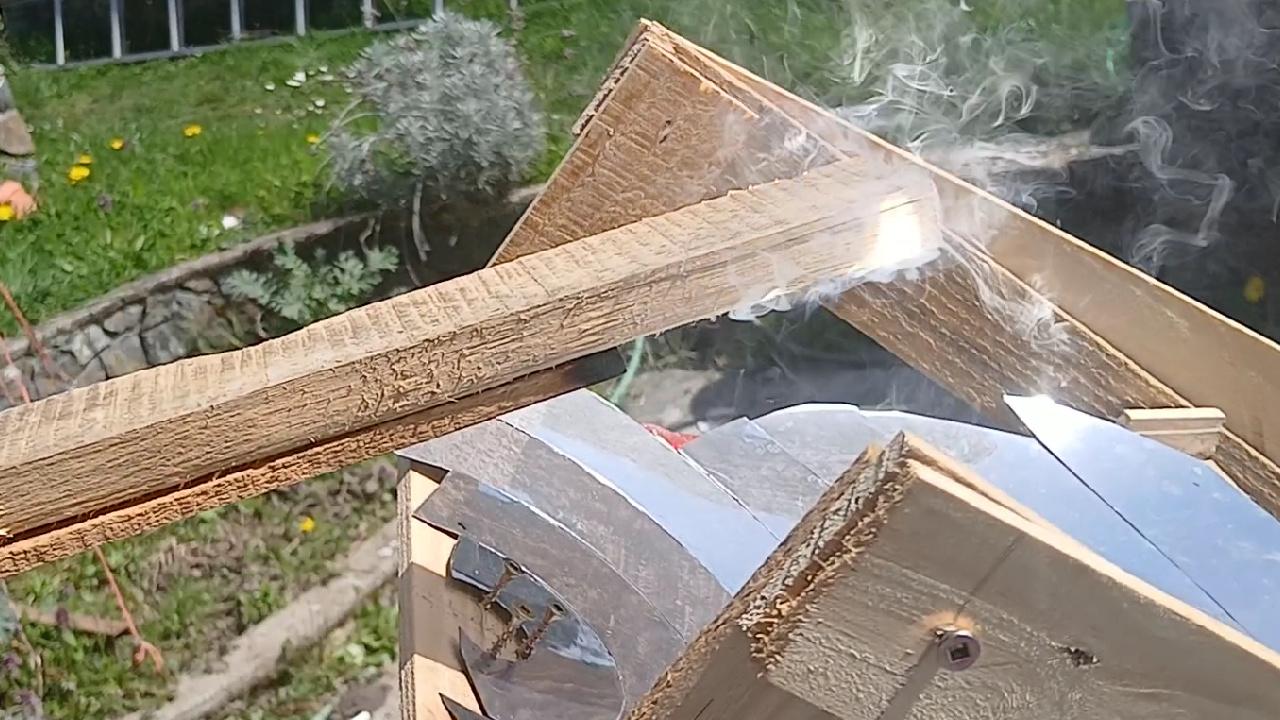
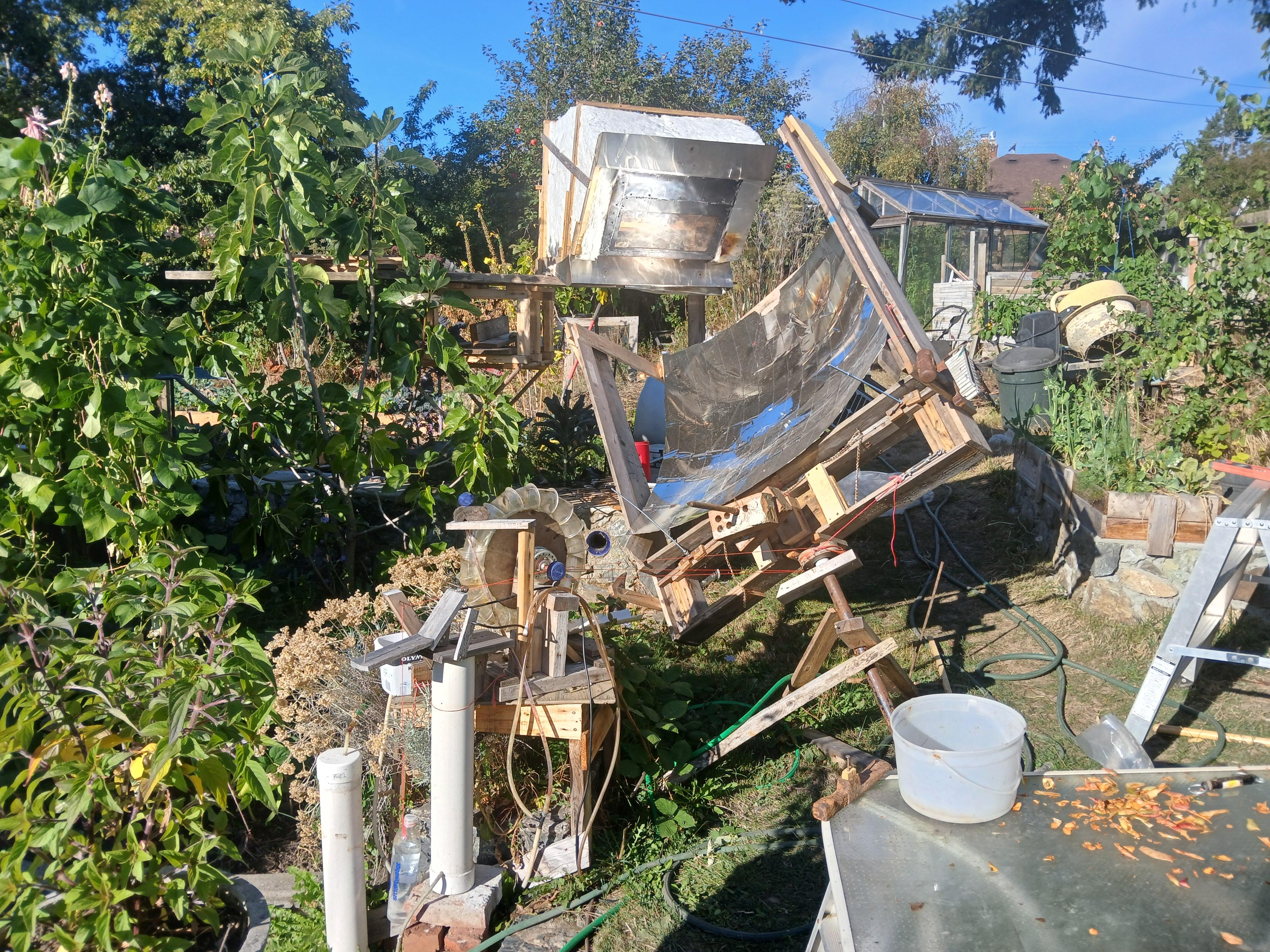
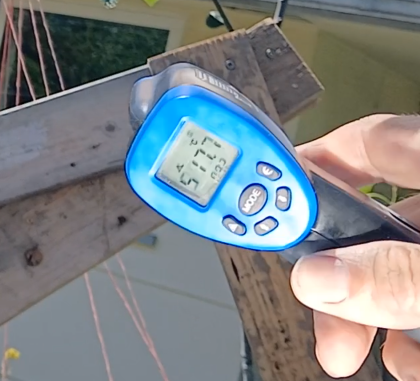
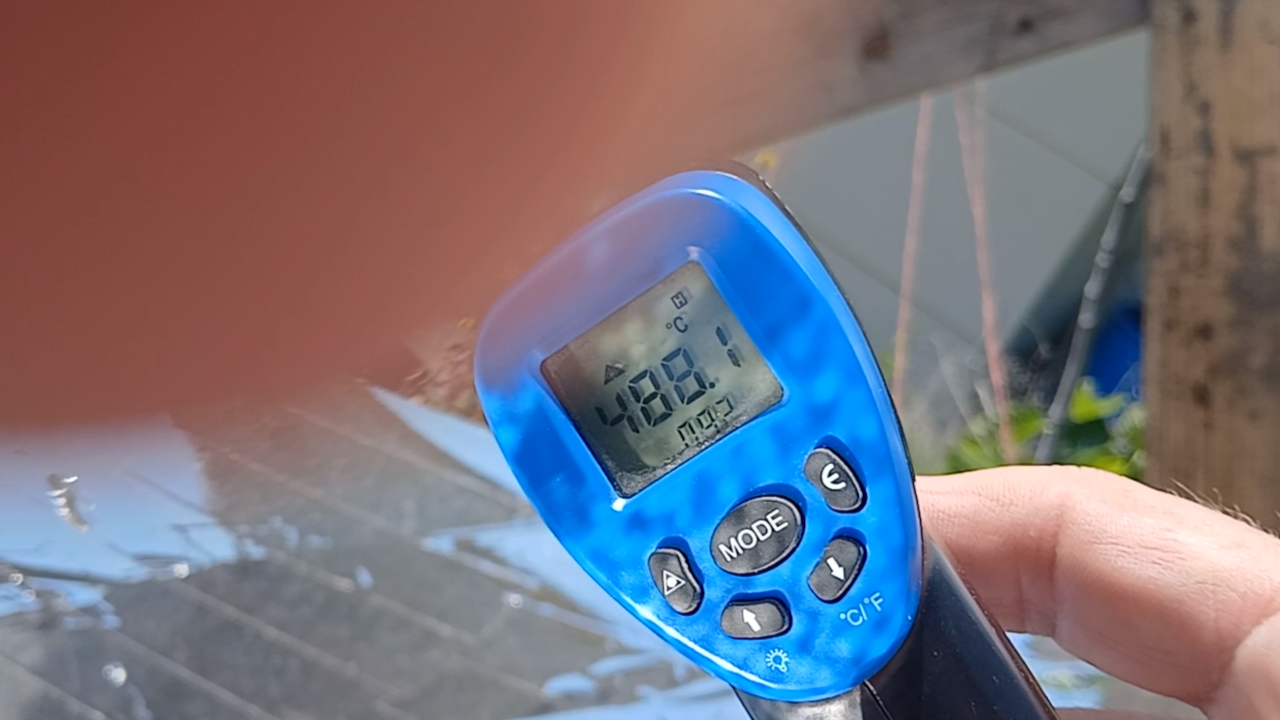
My solar concentrator produces 600 Watts of power! The thermometer under a pot of steaming soil shows 517 centigrade, and that works out to 962 Fahrenheit. Water boils at 100 C and when I test the temperature of the pot filled with water, it is just 110 C. That shows that the heat is not getting in to the soil very quickly, not only that, heat is radiating away very fast too. This is called "black body radiation". The cooler the body, the slower the radiation. So we need to design an absorber so that the soil gets steamed and not burnt.
When you use a tracking solar concentrator, a lot of heat is focused in one place. This is good, because that heat can quickly flow to do the required task. But sometimes the heat is just too much or it flows unevenly, or if it is heating air, the air does not have the capacity to absorb and move all the heat. We need to have a system to move heat efficiently. I have come some distance along in solving these problems and have plans to improve the solutions in the near future.
Supplies
Snips, angle grinder, Pencil, paper, wood, sheet metal, fiberglass batts, oven thermometer and laser thermometer.
Problems Show Up
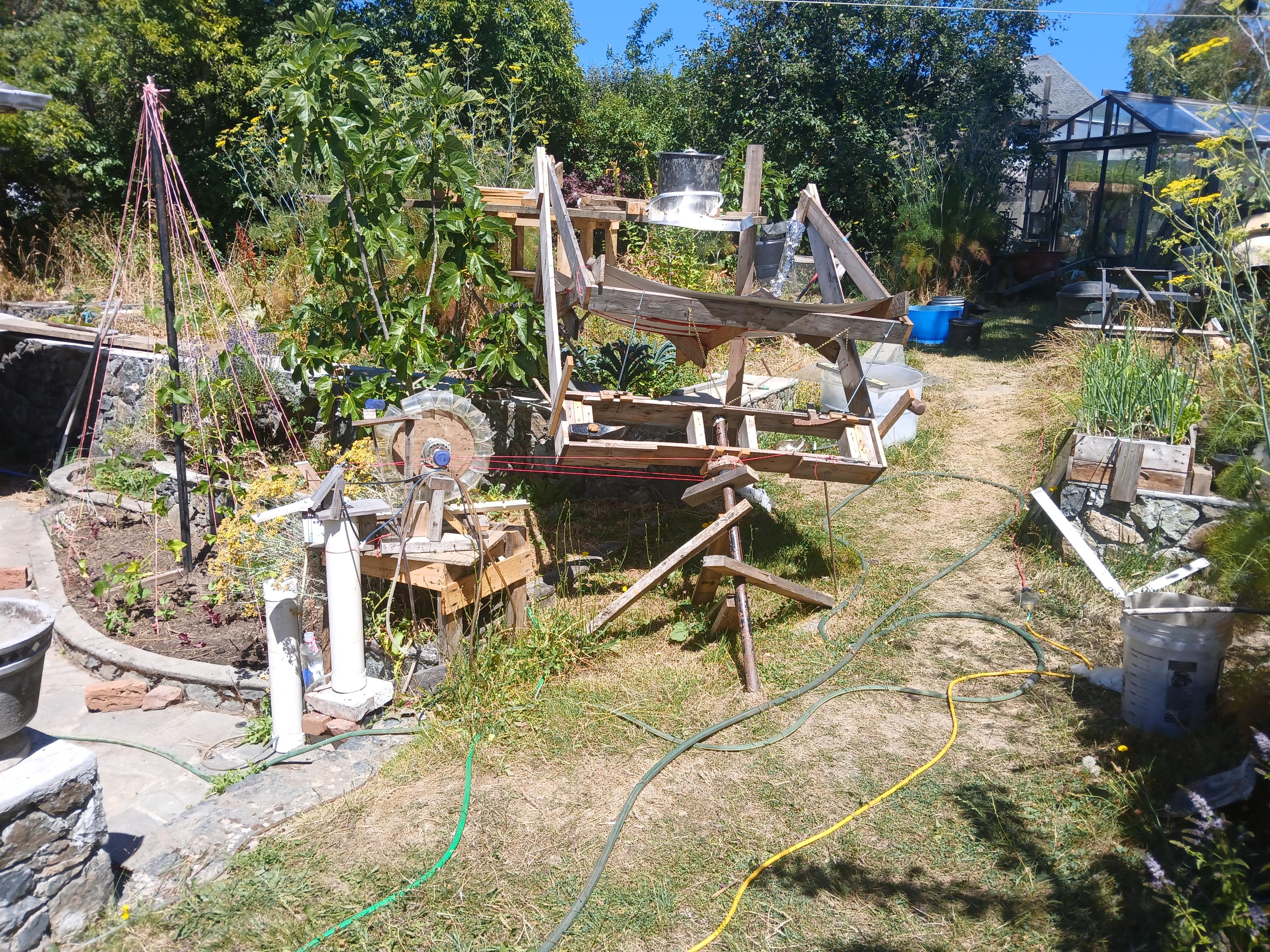
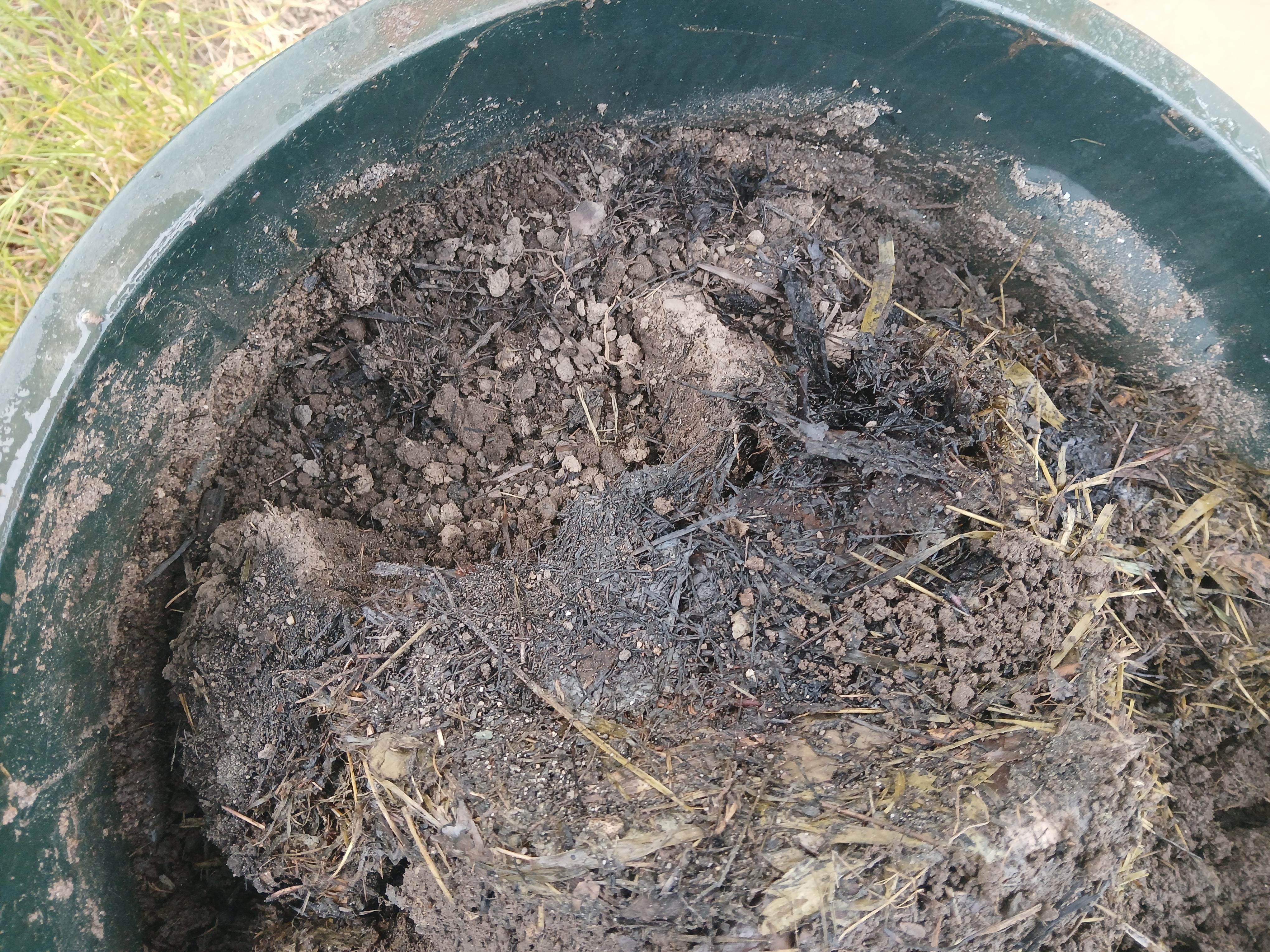
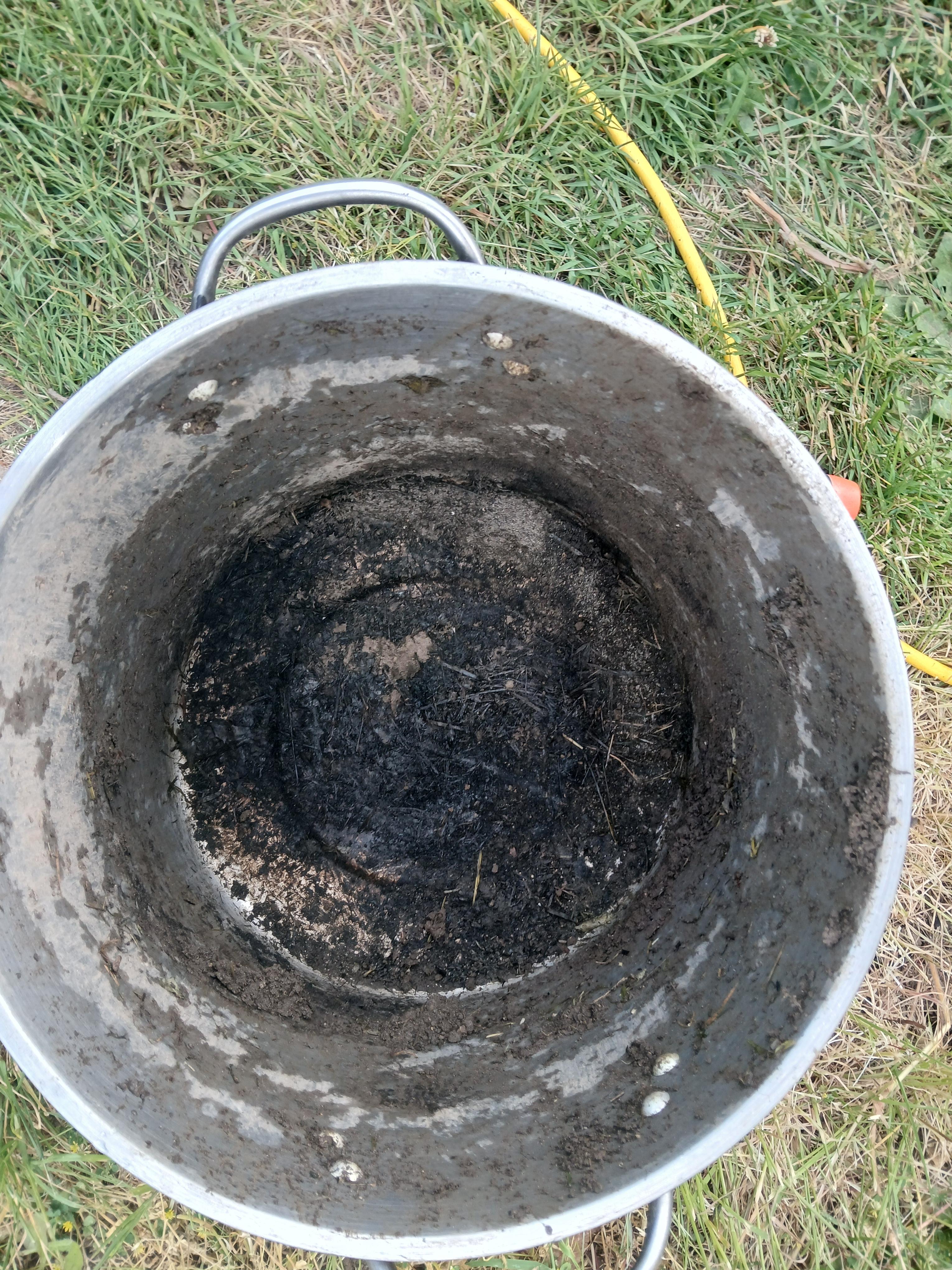
The first step is to define your focal area. In my case, the focal area should be a ball around 15 cm (6 inches) in diameter. But due to inaccuracies, it was probably more like 30 cm (12 inches). The ideal heat receiver should be of that size to capture the maximum energy. In this case, it is just a large pot. I had damp soil in the pot, and the idea was to heat it enough to turn the moisture into steam. There was a problem, there was just too much heat at the bottom and the soil tended to burn at the bottom and at one side. This might be "biochar" but it is not what I want.
Solving the Burning Problem


I tried adding more water first, but that made for bubbling and splattering on the reflector and the soil still tended to burn. I decided to put a chamber of water under the soil. This worked far better. As long as I didn't leave it too long, the soil got nicely steamed, and the water didn't completely boil off.
Dehydrating Attachment Not Perfect

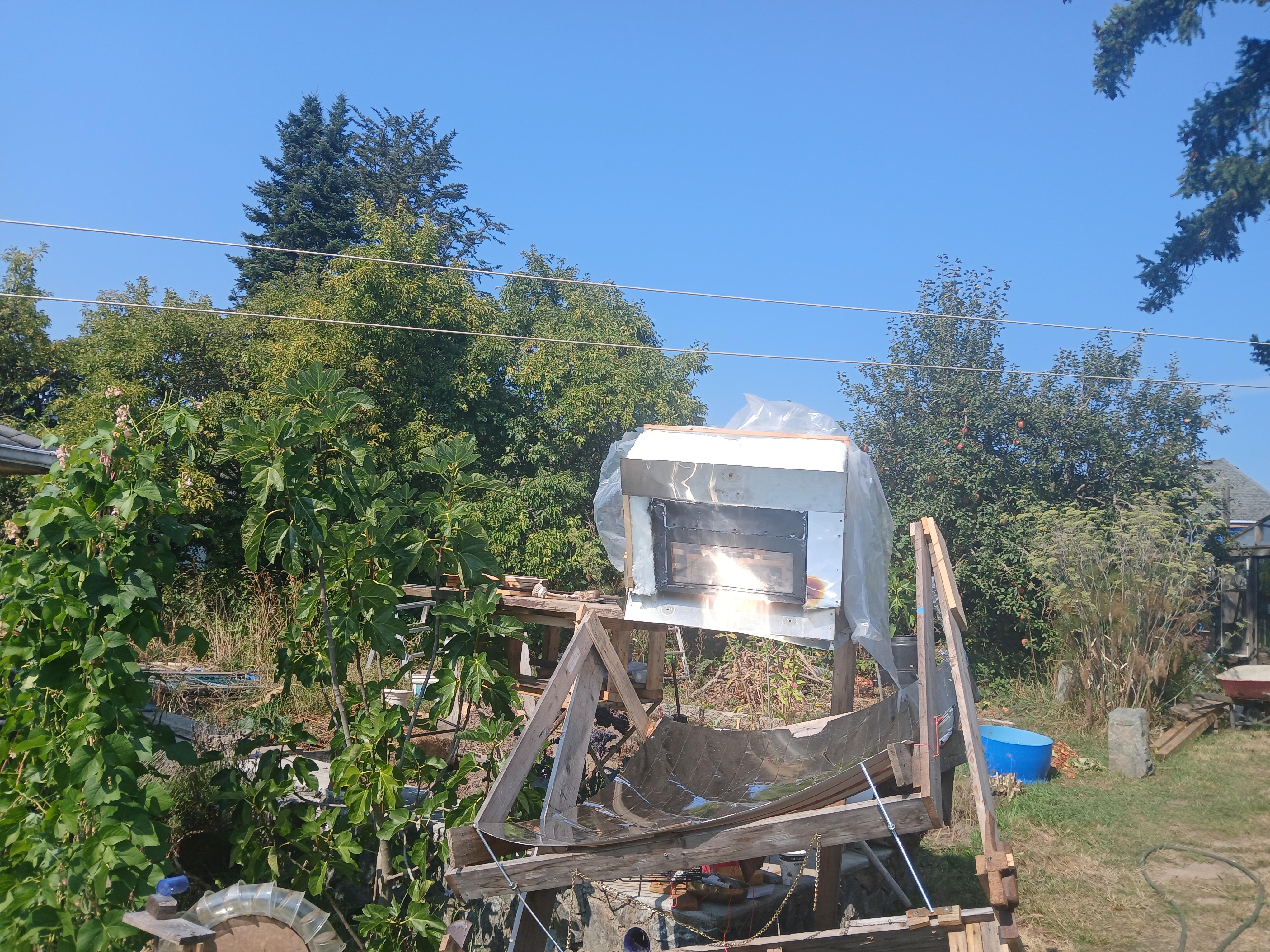
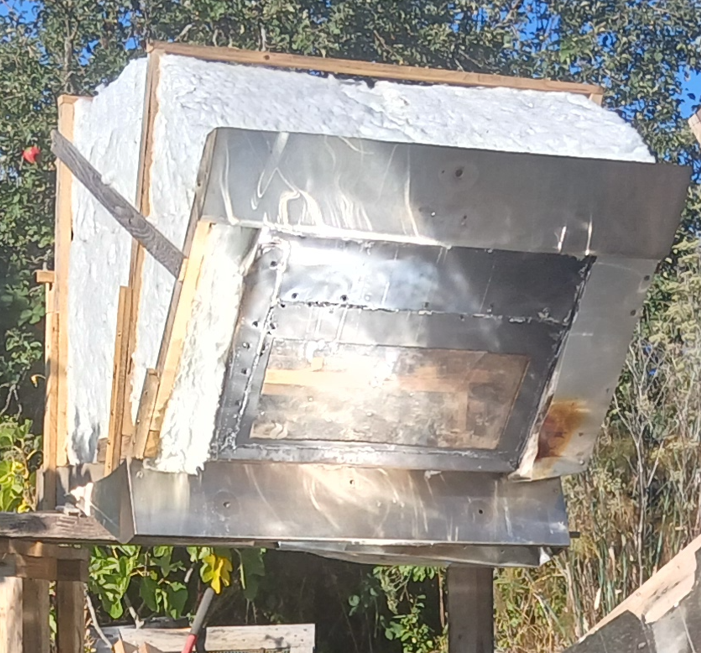
When August came around, I had lots of soil steamed and my apples and plums were ripening. So it was time to start dehydrating. I made a dehydrator "attachment" . One issue was that there is insulation all round, so I had to lower the supports by about 3.5 inches. At one point they touched the rotating reflector supports. Another was about weight, I had to push it far forward, and it was nearly off the supports. I had to tie it down at the back. Another was the angle at the front, It would have been a lot easier if I had just made a round absorber. The window is from an old fireplace. I debated getting a round pot and filling it with steel wool, then discovered that steel wool can catch fire when hot.
List of Problems
It soon became apparent that the dehydrator had some issues. I expected the air and sheet iron inside to heat up and distribute heat fairly evenly. But the bottom fruit stayed much cooler than the top fruit. Also, the light streaming in often hit the top fruit directly and crisped or burned them while the bottom fruit remained soft and damp.
Dehydrator Solutions and Pending Solutions
I got a cookie sheet, painted it flat black and put it where the light comes in. That helps a lot with burning fruit, but the lower fruit still stays too soft. I need a fan.
Pending Solutions for Steaming Soil
I have bought augers, motors and thermostats to turn the steaming of soil into an automatic process.