Tangram Puzzle – Only 7 Pieces, But 300+ Solutions!
by Piffpaffpoltrie in Living > Toys & Games
221 Views, 0 Favorites, 0 Comments
Tangram Puzzle – Only 7 Pieces, But 300+ Solutions!
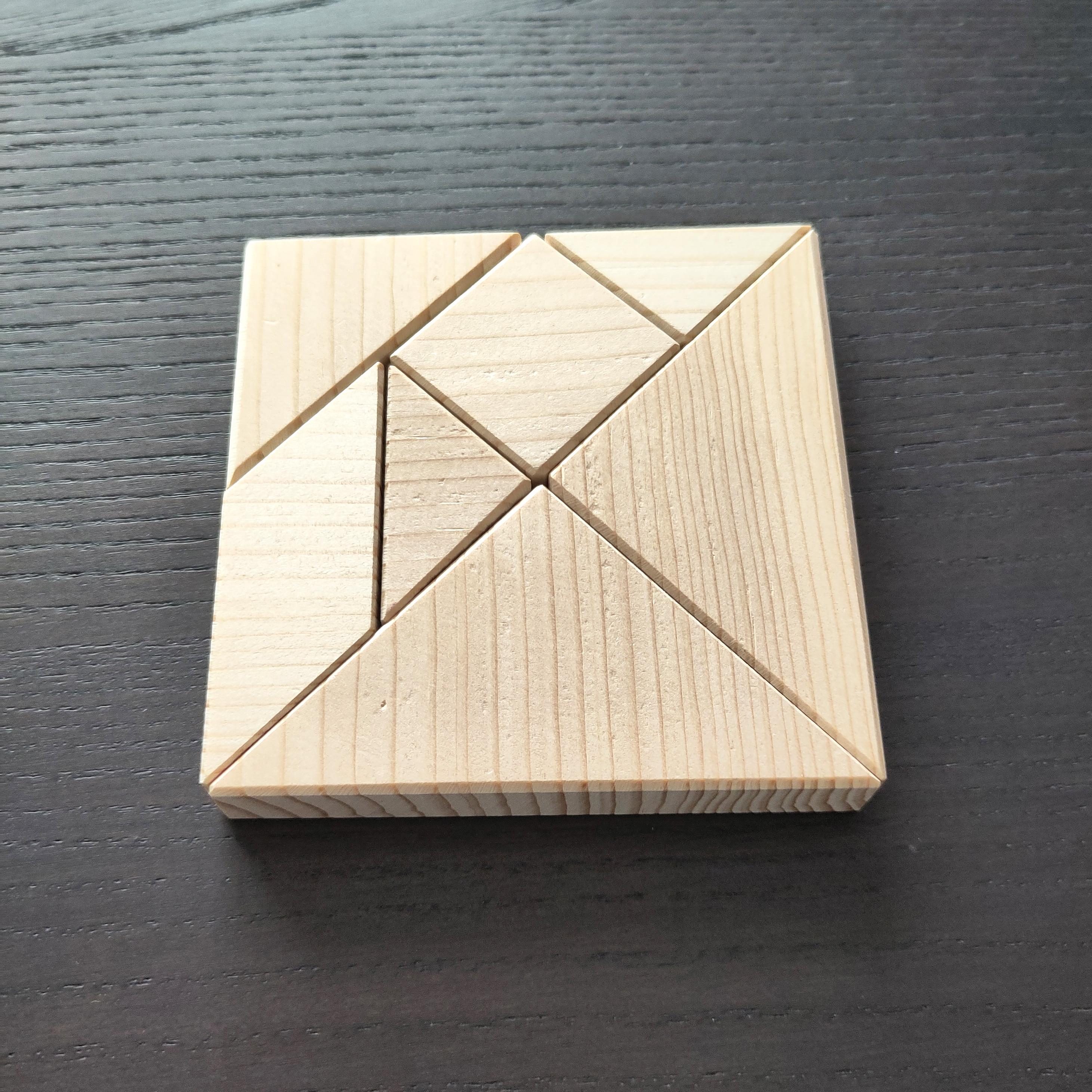
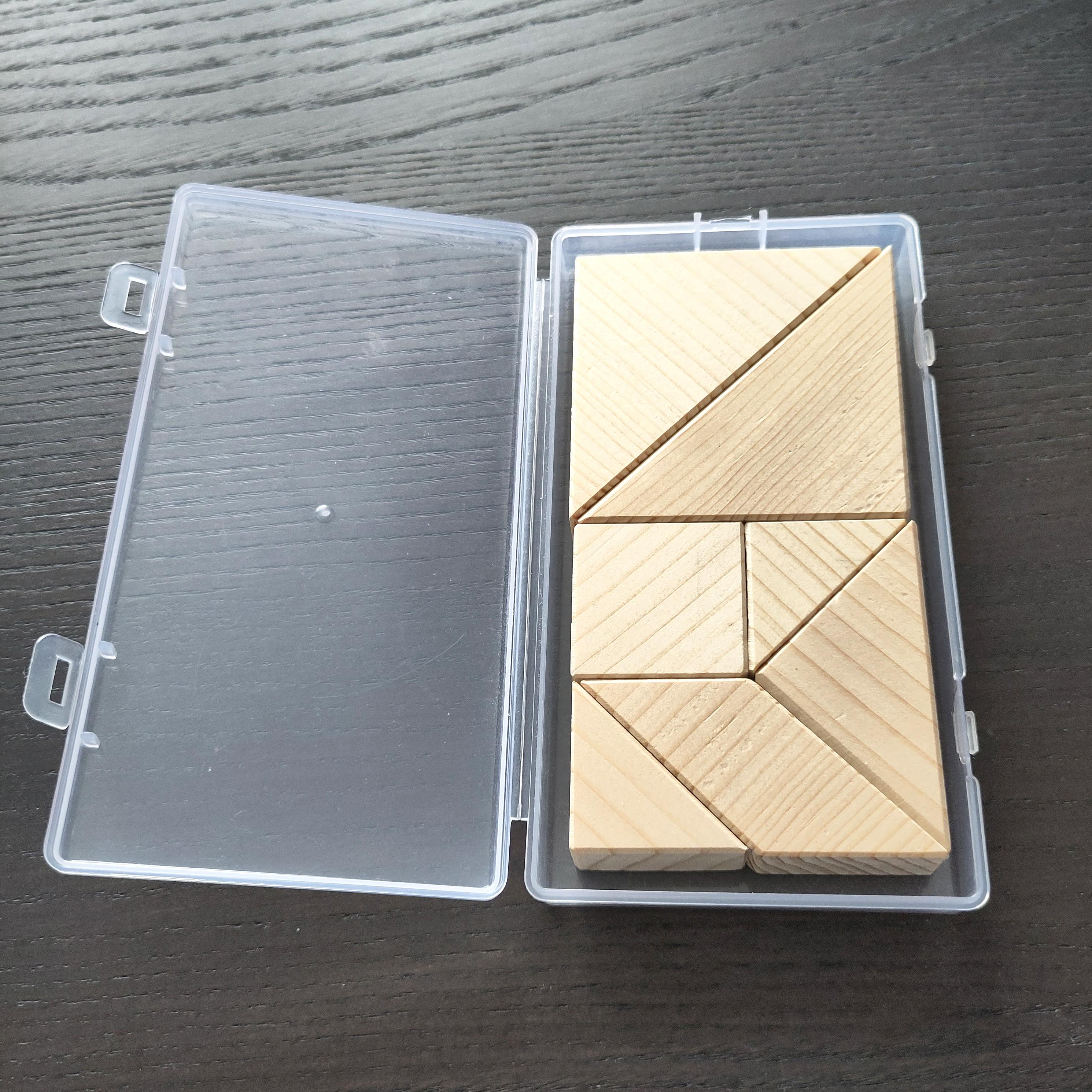
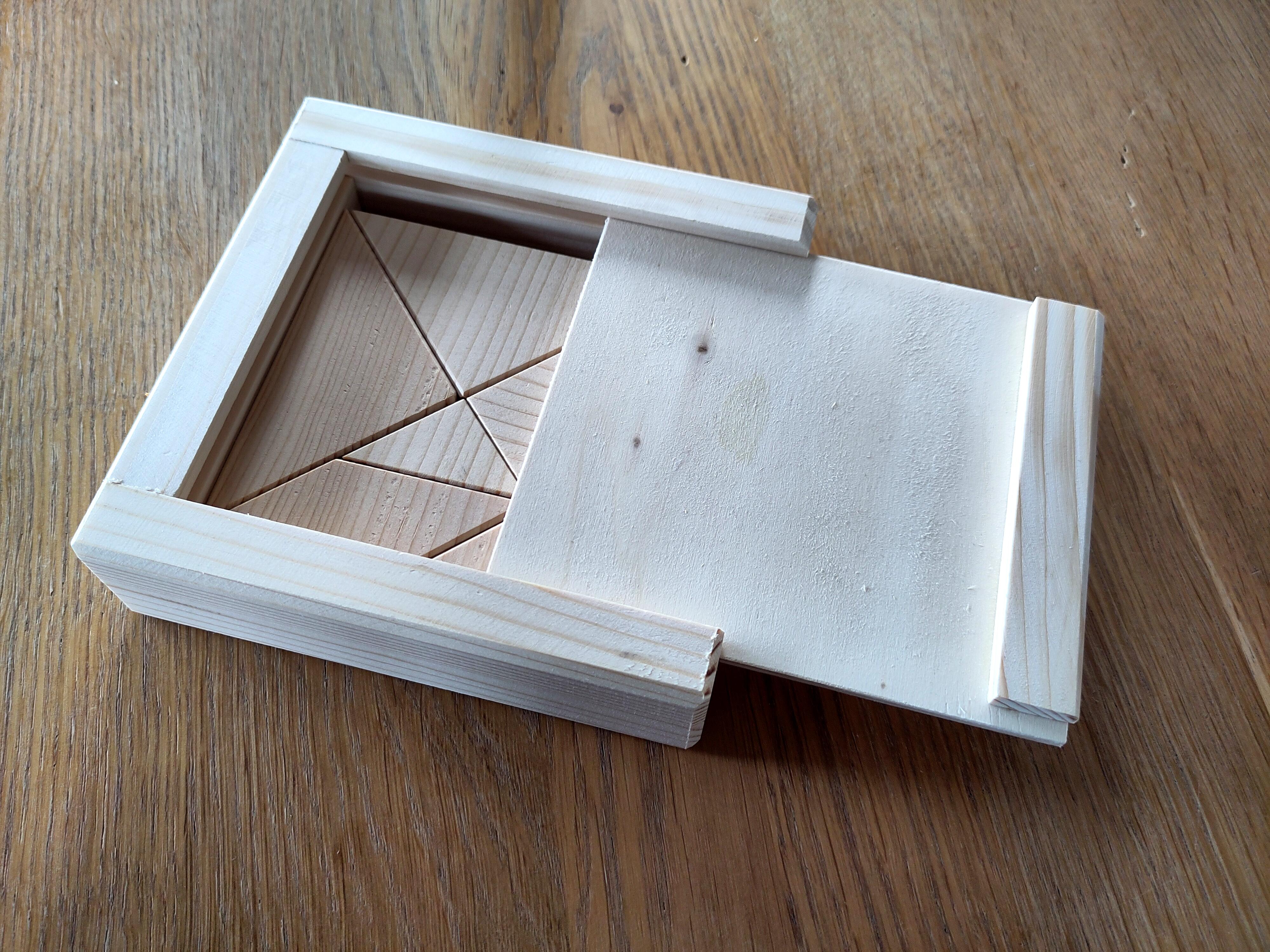
It is said that the puzzle called 'Tangram' was invented in China about 2500 years ago. It consists of only seven simple geometric forms and allows assembling a great many different figures.
When I was a kid I had one, too, the pieces of which were made from some thin wood. It came with a few pattern suggestions, but without helpful hints. The suggestion pictures were in black only, and very small at that. So I quickly got frustrated and lost interest, and this wonderful puzzle soon landed in the darkest corner of my room.
Recently I came across a free Tangram smartphone app called ‘Tangram-Meister’. And despite my early frustration my interest in this puzzle was rekindled, still more so because this app contains almost 400 pattern suggestions, ranging from 'classic' Chinese patterns over animals, people, and objects, to even the full alphabet, including the numerals 0 to 9. I admit that I am fascinated by the sheer number of different patterns that are easily identifiable, and I’m sure that the inventors of the game invested a lot of time, creativity, and much attention to detail when creating them.
There are several other Tangram puzzle Instructables available here. All of them, I think, are either missing clear patterns and/or offering only very few of them. For allowing the kids easy access to the game, it's important that the patterns match the real size of the puzzle pieces, so that they can be placed directly upon the patterns.
My granddaughters love puzzles. When I asked them whether they prefer a jigsaw puzzle with 400 pieces and one solution only, or one consisting of no more than seven pieces but having almost 400 different solutions, they both were on fire for the latter right away.
So I went to the workshop and looked for a nice piece of scrap wood that could be used, then marked the pieces. I used a small band saw to cut the pieces and smoothed them with a disc-type sander. As you can see from the photographs above, they aren't really perfect, it's obvious that I am neither a carpenter nor a cabinetmaker, but just dabbling in the workshop – which the kids don't mind, fortunately :-)
Up to this point, this was the easy part, see the pictures above and Step 1 below.
But afterwards, drawing all the patterns, one single hint per pattern, and the solutions in my vector graphics application required many (very many!) evening and night hours, together with lots of patience – even if I didn’t have to create the patterns from scratch but could steal them from the app instead.
Supplies
Materials
- A piece of scrap wood (plywood, solid wood, MDF, or whatever). If you want the pieces to match the patterns I provide here, it has to be at least 10 cm × 10 cm. The thickness is less important and may depend on what piece of scrap wood you can locate; mine is about 16 mm thick.
- Some more scrap wood for making a nice box. This was the second iteration for me (3rd picture in the Intro section). Before that I used a plastic box that was lying around into which the Tangram parts fit, more or less (2nd picture in the Intro section).
- One (or more) loose-leaf binder(s)
- A lot of blank DIN A4 (or letter size) paper – 80 g/m2 is ok
- A lot of transparent envelopes (in German-speaking countries known as ‘Zeigetaschen’ or ‘Klarsichthüllen’)
- A lot of time. If none available, feel free to profit from the downloadable patterns I already made (see Step 2)
Tools
- Set square (a.k.a. protractor triangle)
- Ruler
- Pencil
- Eraser
- Band saw (you might, of course, also cut the pieces carefully by hand with a handsaw)
- Disc-type sander (you might, of course, also sand the pieces by hand)
- Sanding block and not-too-coarse sandpaper if sanding manually
- PC running a PDF viewer such as 'Adobe Acrobat Reader'
- Laser or Inkjet printer
The Seven Puzzle Pieces
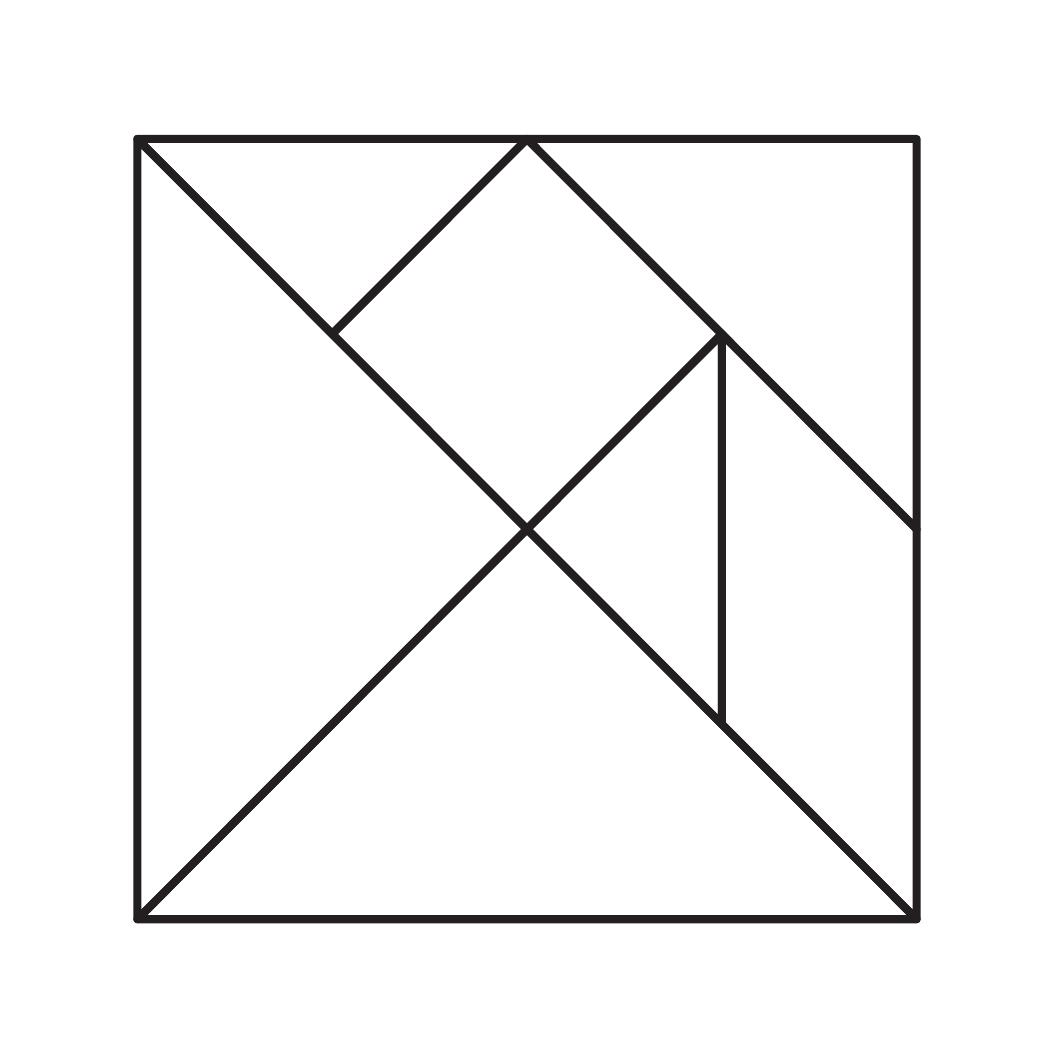
Drawing them is neither rocket science nor witchcraft. You can draw them by yourself if you know how to operate pencil and eraser, a set square, and a ruler. You need to draw a square of 96 mm × 96 mm and divide it according to the picture above – only diagonals and angles of 45° and 90° are required. The dimensions given here and in the ‘Supplies’ section are optimised for patterns printed on DIN A4 (or letter size) paper.
Alternatively, you can download the PDF pattern at the end of this step and use it as a guideline. When printing it, make sure to select ‘Page Scaling – None’ (or similar, depending on which PDF viewer you are using) for a full-size print. If you desire to use larger or smaller dimensions, you can enter your zoom factor in the printer dialog. However, I don’t recommend printing much larger, because some of the patterns you’ll find in step 2 might then exceed the page margins.
Once you have transferred the outline of the puzzle pieces to your piece of wood, carefully cut them with a band (or hand) saw, followed by smoothing the edges with either a disc-type sander if available, or manually, using a sanding block wrapped in sandpaper.
Don’t worry if a piece gets out of shape. Relax and simply make a next one – which happened to me, too, by the way.
Once finished, you can leave the pieces as they are (as did I), or treat them with wood oil or wood wax. You could as well stain them and varnish with clear lacquer, paint them in colour, or let the kids themselves paint them. But in any case make sure that the product you use is free from harmful substances.
There will for sure be readers who prefer using a 3-D printer to produce the parts. However I feel that such a sophisticated tool is totally underchallenged with producing plain, flat objects. I think that clean and smooth wooden pieces are much more beautiful and more friendly to the touch than 3-D printed ones. Apart from that there is too much plastic in the kids’ room anyway. If you want to 3-D print nevertheless, please create the required files by yourself.
The Patterns
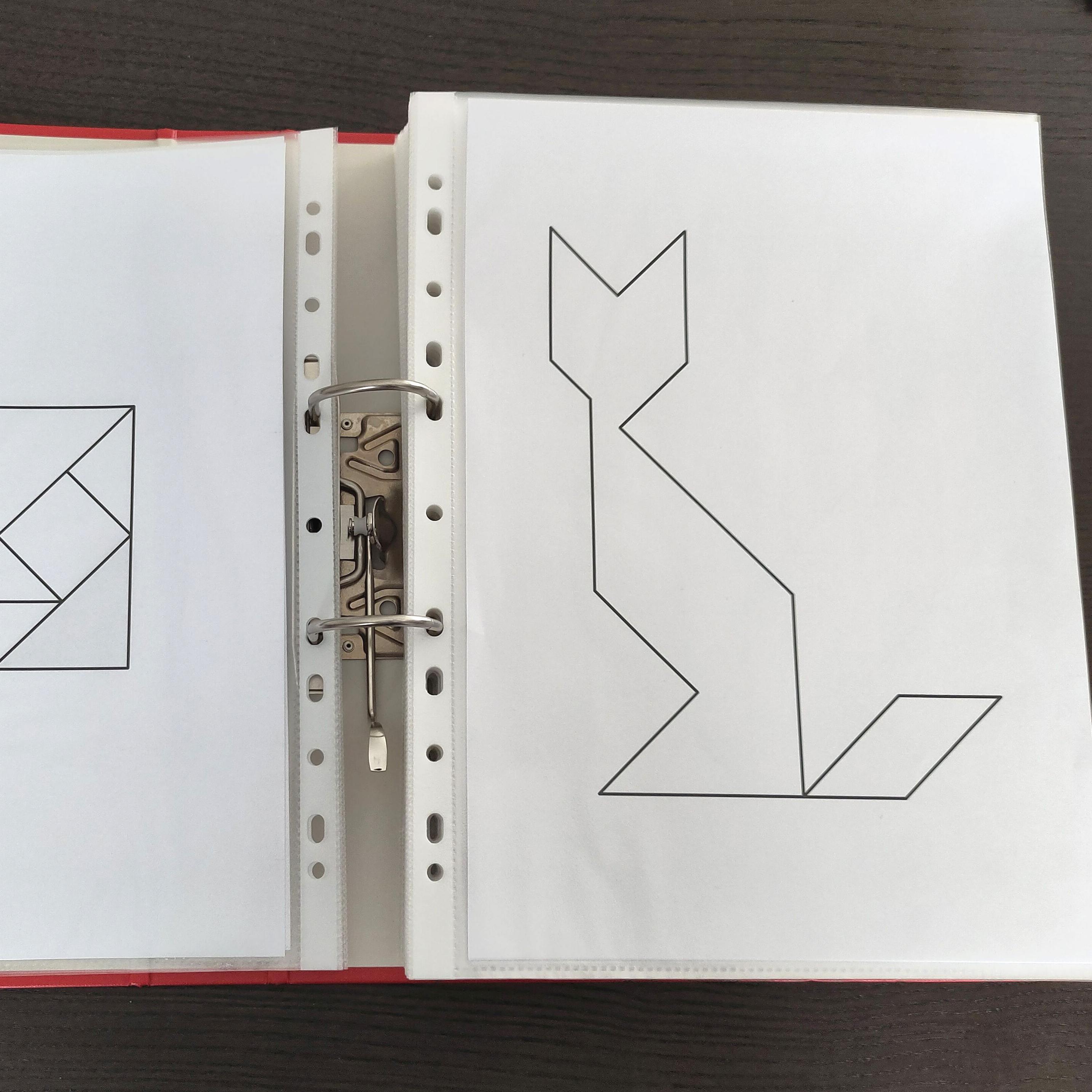
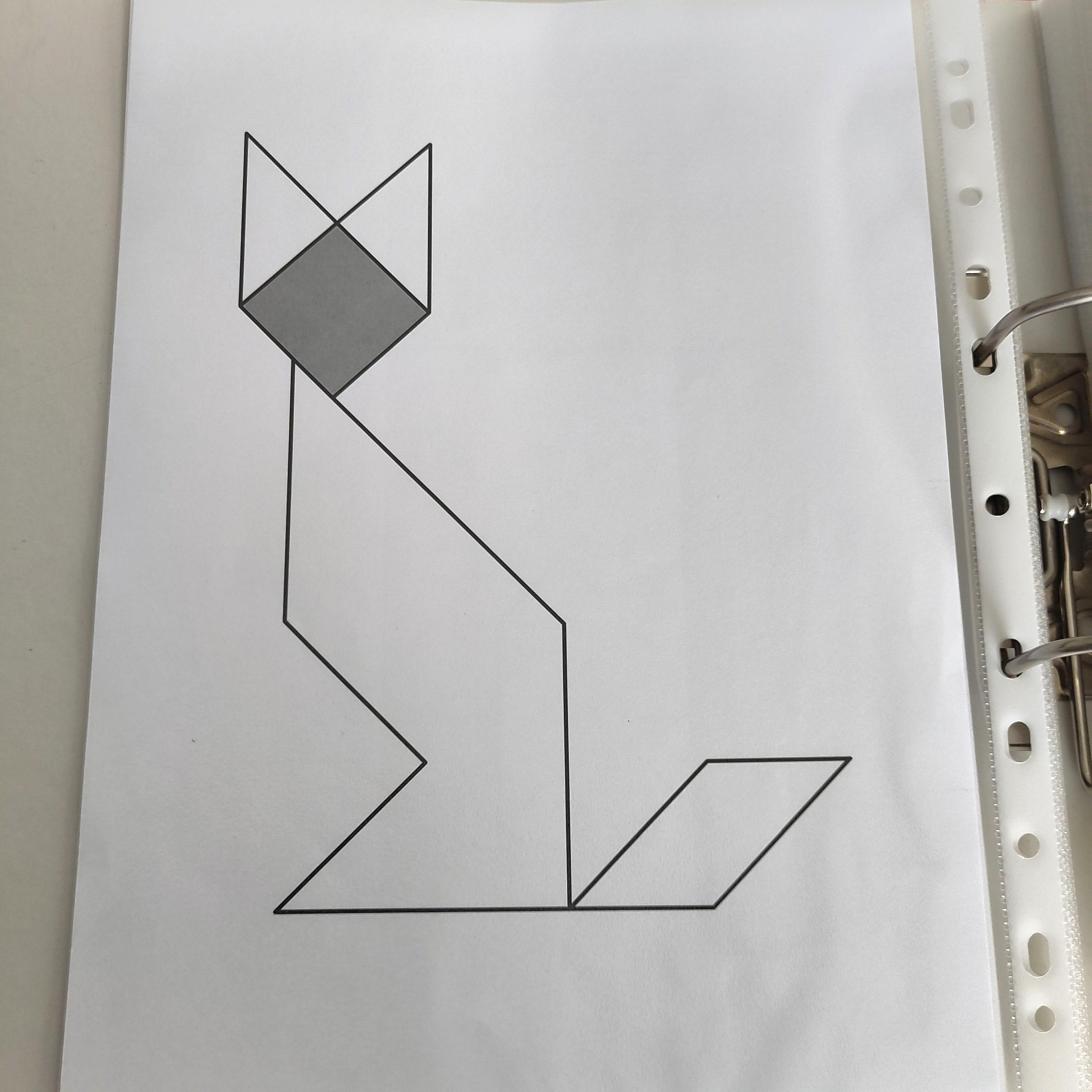
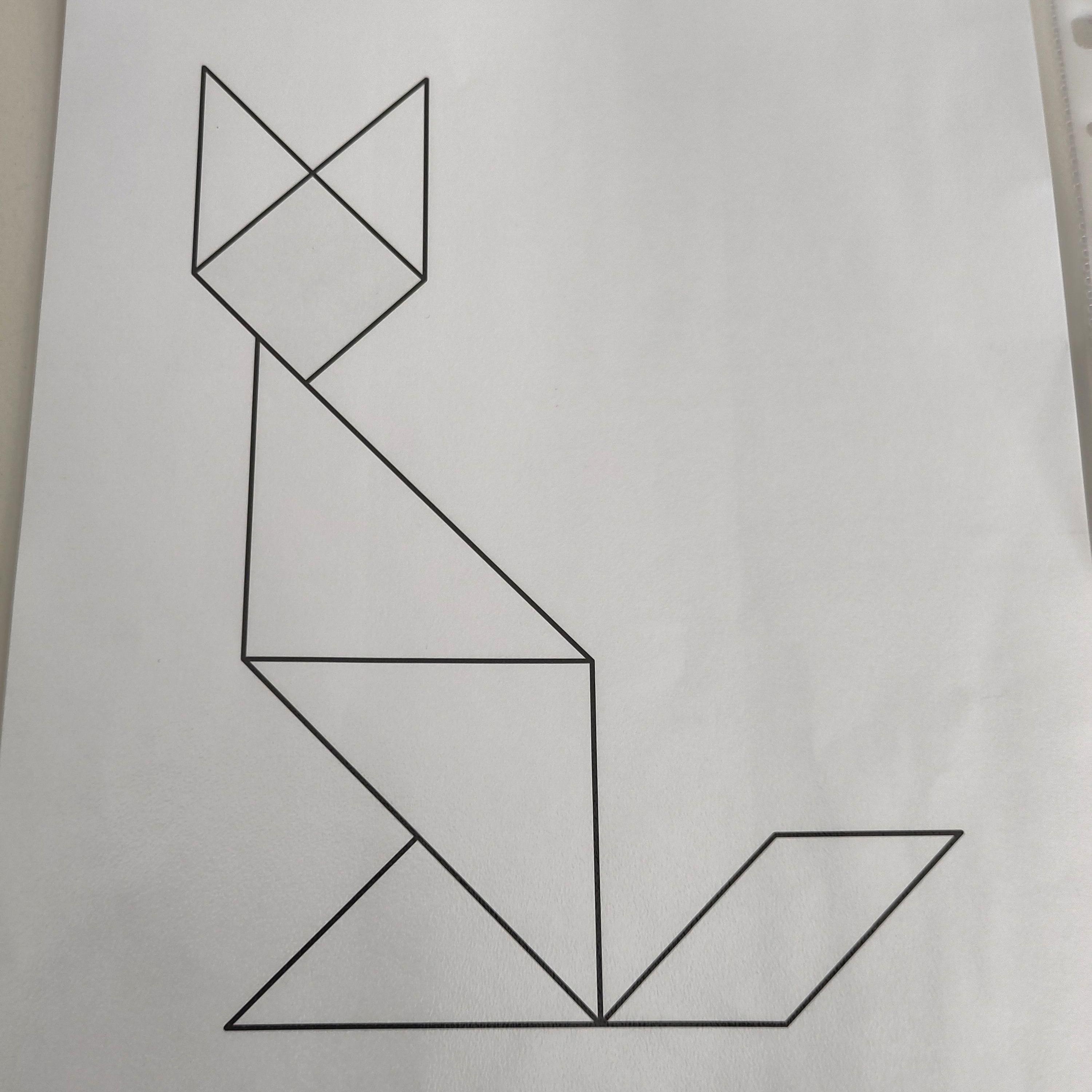
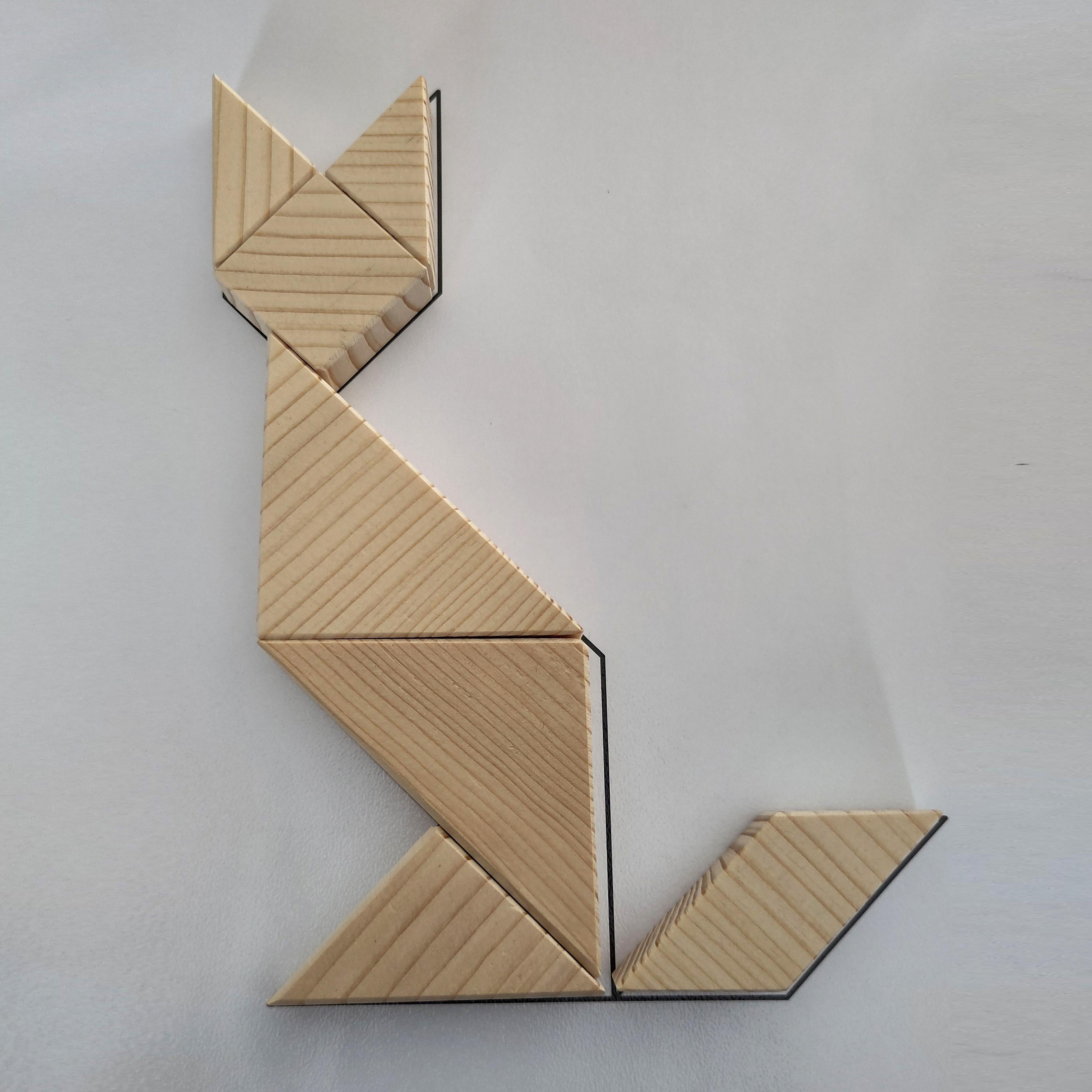
Few words need be lost about the patterns. I provided several pdf files for the different chapters. Each of the '...-All' files contains several sets of the empty, outline-only pattern first, then the same with one, sometimes two or three pieces placed in gray colour as a helpful hint, followed by the fully detailed solution. Such a set from the 'Cats & Dogs' chapter is shown in the pictures above. Due to file size restrictions, some of these chapters had to be divided in two or three parts. The '...-Patterns only' files contain, you guessed it, nothing but the outline-only patterns, without any hints or solutions. It's up to you to decide what to print, depending on how much paper you have available and how much information you or your kids will need. Consider that printing everything will require more than 1000 (!) sheets of paper, or over 500 sheets when printing double-sided. Fortunately, most drawings require only a small amount of toner or ink.
I did my drawings for printing on DIN A4-size format, but I assume that letter-size sheets will not pose any problems. When printing, make sure to select ‘Page Scaling – None’ (or similar, depending on which PDF viewer you are using) for a full-size print, matching the dimensions of your wood pieces. If you made them larger or smaller, enter your zoom factor in the printer dialog box. However, I don’t recommend printing much larger, because some of the patterns might then exceed the page margins.
I recommend to place the printouts in transparent envelopes to increase their longevity.
For a start I gave the kids only the ‘Cats & Dogs’ chapter. I printed it in such a way that the outline-only pattern is on the front of the first page, and the drawing with the hint on its rear side. The front of the next page is left blank, and on the rear of this page follows the full solution – an arrangement that makes cheating a little difficult. Anyway, my eight-year-old granddaughter quickly solved all the ‘Cats & Dogs’ patterns, mostly without any help of a hint or the solution, and she soon asked for more :-) . The almost-six-year-old (she says: 'a quarter to six') needed a little assistance, by granddad either grumbling or confirming with 'uh-huh' when placing a part - which is a lovely occasion to spend some quality time.
I assume that the full-size drawings are rather helpful for kids.
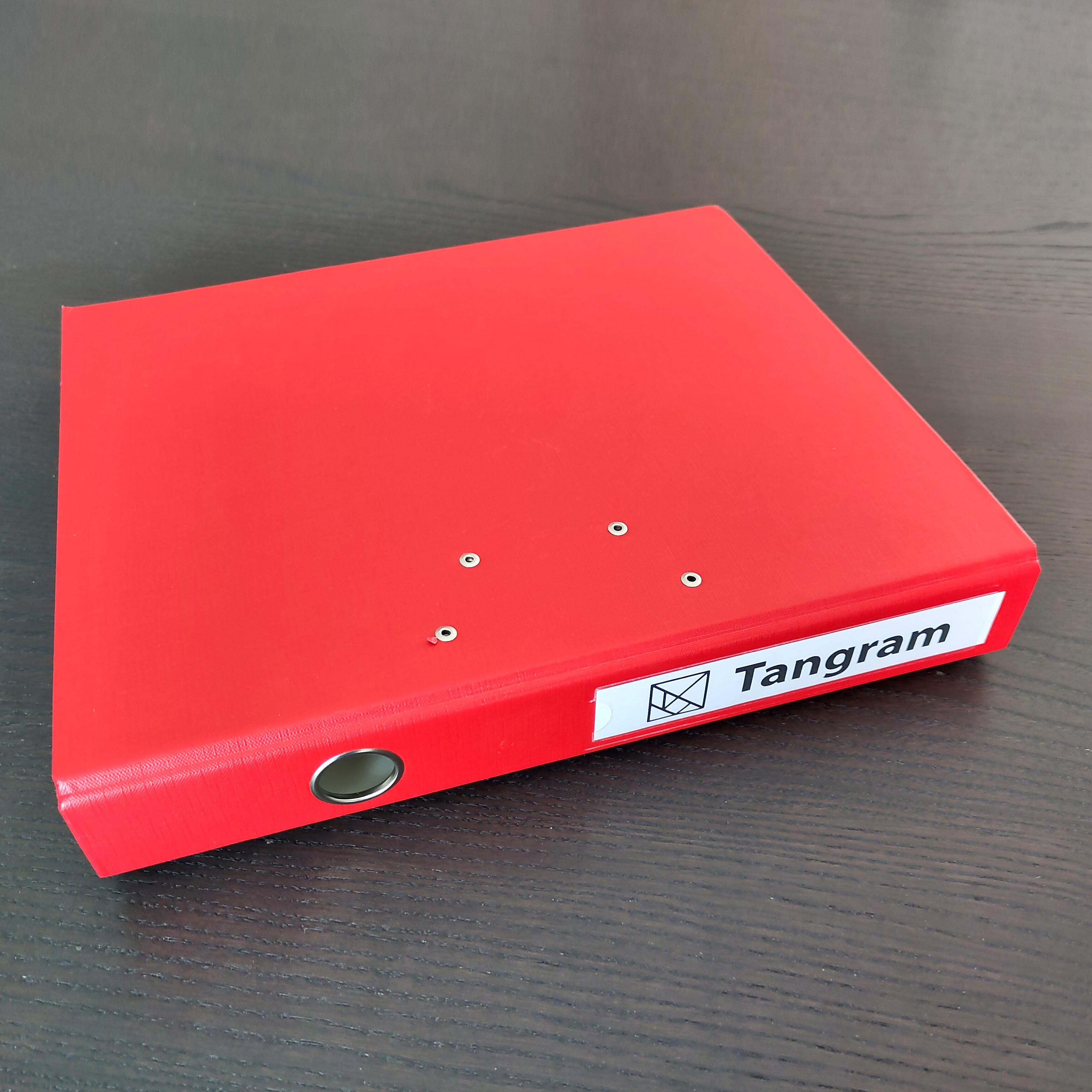
For the remaining chapters I only printed the outline-only patterns, saving paper, toner, and space in the loose-leaf binders (the first one is quite full with the ‘Cats & Dogs’ and the ‘Animals’ chapters only, see above). I recommend to start with one of the chapters only rather than printing them all in one go; you will quickly find out whether your kids like the puzzle and insist on additional input.