TAM335 Lab 1 Partial Report - Elementary Lab Procedures
by cms32 in Workshop > Hydroponics
4 Views, 0 Favorites, 0 Comments
TAM335 Lab 1 Partial Report - Elementary Lab Procedures
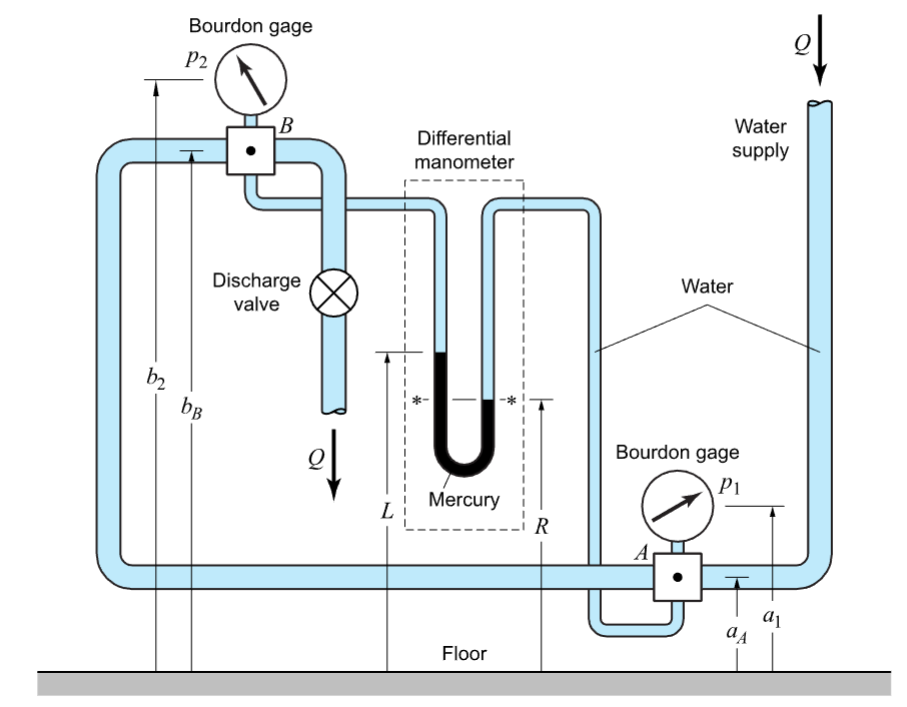
The purpose of this report is to provide the mathematical background, procedures, supply list, and expected results for the following objectives:
- Taking a flow-rate measurement using a timing device and a weighing reservoir
- Measure the pressure difference in a pipe using Bourdon pressure gages and a differential manometer
Supplies
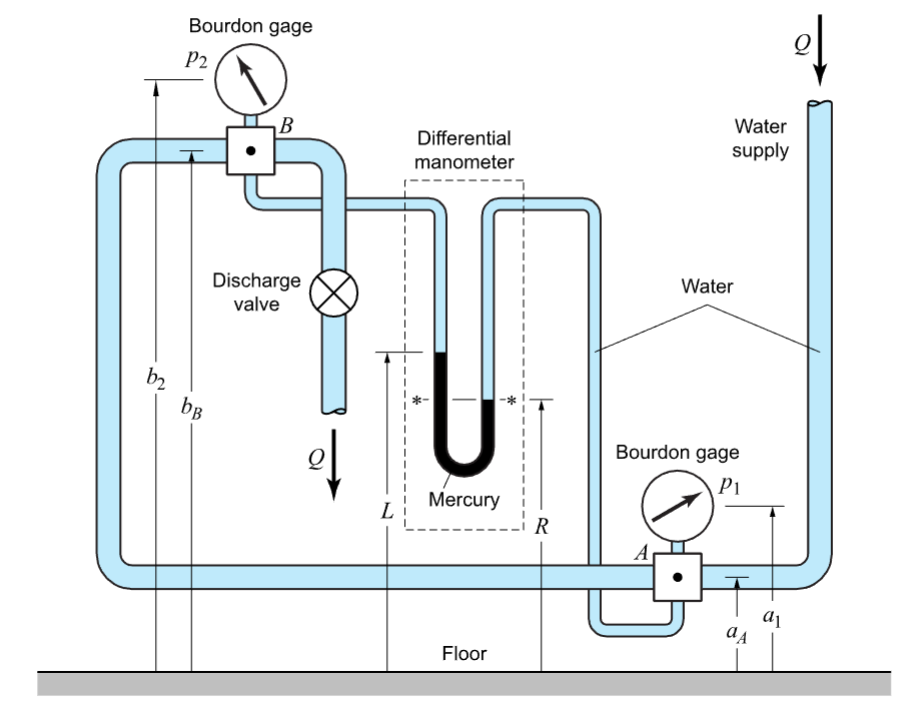
The supplies required for the objectives listed are:
- Weighing reservoir with drain and valve
- Timing device
- Beam balance scale with cursor and weight markers
- Water supply and connected pipes
- Discharge control valve
- Two Bourdon pressure gages
- Differential mercury manometer
- Ruler or known heights of pipes and gauges in the apparatus
- Data tracking sheet
Ensuring Proper Flow
A steady and unbroken flow of water through the piping apparatus and into the reservoir must be established. Adjusting the the discharge valve and keeping the drain valve open will allow the flow to stabilize. A constant flow is crucial as the weighing-timing method assumes a constant rate of flow.
Measuring Weigh-time Flow Rate
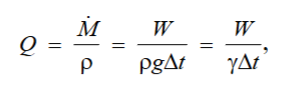
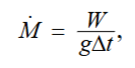
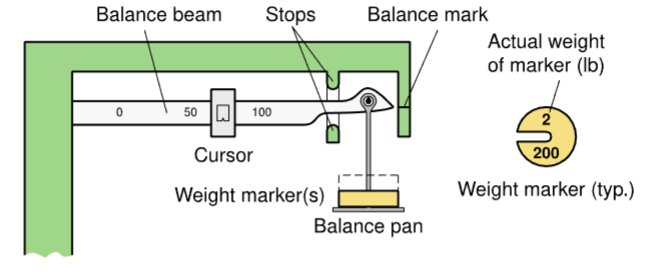
Reset the timing device to 0. Overbalance the scale until the beam sits on the bottom metal piece. Close the reservoir drain, and allow water to fill the tub. Start timing and add the selected weight to the balance pan. The water accumulated will have a weight corresponding to this selection. When the beam rises and hits the end of its rotation zone, stop timing and record elapsed time. Divide the mass flow rate you now have by the density of water to get the volumetric flow rate.
Measuring Pressure Differences Using Bourdon Gages


When the flow rate stabilizes during each trial, take pressure readings from each of the Bourdon gages. Take into account the elevation differences between the gages and account for it in calculations, finding the true pressures at each location. Then subtract the pressure at the high gage from the lower to find the pressure difference.
Manometer Based Pressure-Difference Measuring
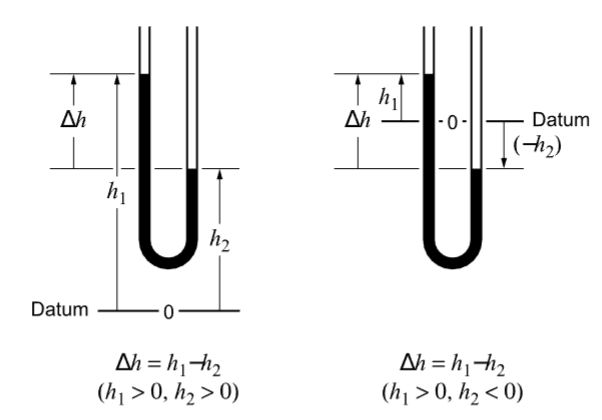

To measure the pressures at points A and B using the manometer, pay attention to the heights of the left and right columns in the manometer relative to the datum. The pressure difference between the two locations measured is calculated using the differences in the heights of the columns and the differing specific weights of mercury and water.
Repeating Trials
The flow rate is successively reduced as trials continue, and the pressure differences between points A and B are re-measured using both methods.
Record Data

Shown is a sample data set.
Lab Manual Q1
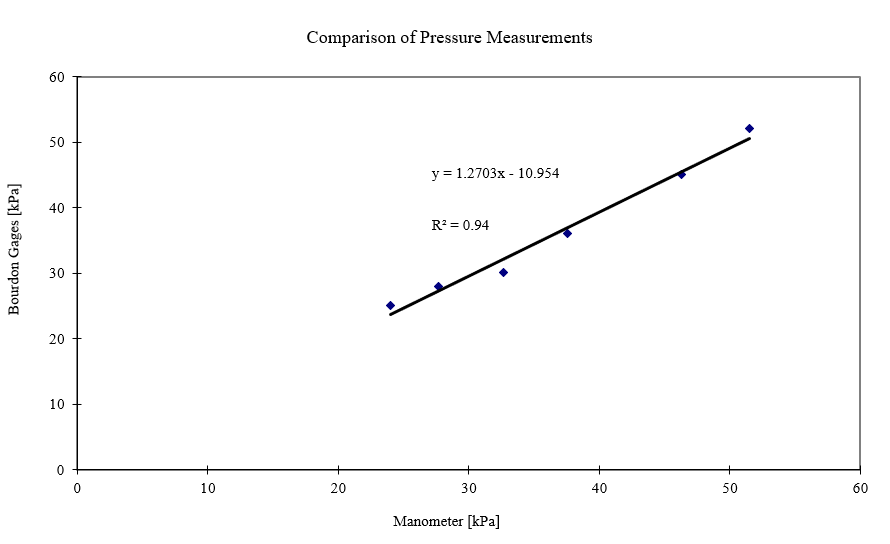
Lab Manual Q2
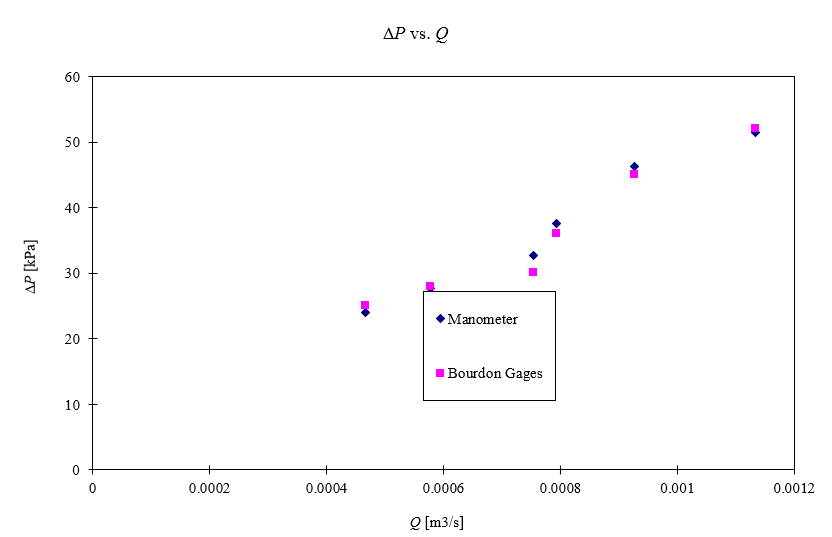
The manometer is a more reliable method to measure pressure differences because it functions solely on hydrostatic forces, and has a higher resolution of measurement.
At low flow rates and low differences in pressure, the manometer is less reliable than the gages. However, at moderate and high flow rates and differences in pressure, the gages show more scatter, making the manometer more accurate.
Both methods differ in many ways. If improperly calibrated, the gages can display inaccuracies, and suffer from low resolution on the dials. While it is still difficult to read small height differences on the manometer, they are more fine.
Lab Manual Q3
Q = W / (9810*t)
a) Q = .0011 m^3 / sec
b) Q = .0004 m^3 / sec
c) e = 93%
d) Typical of engineering calculations.