Steps to Make a Leheriya Saree
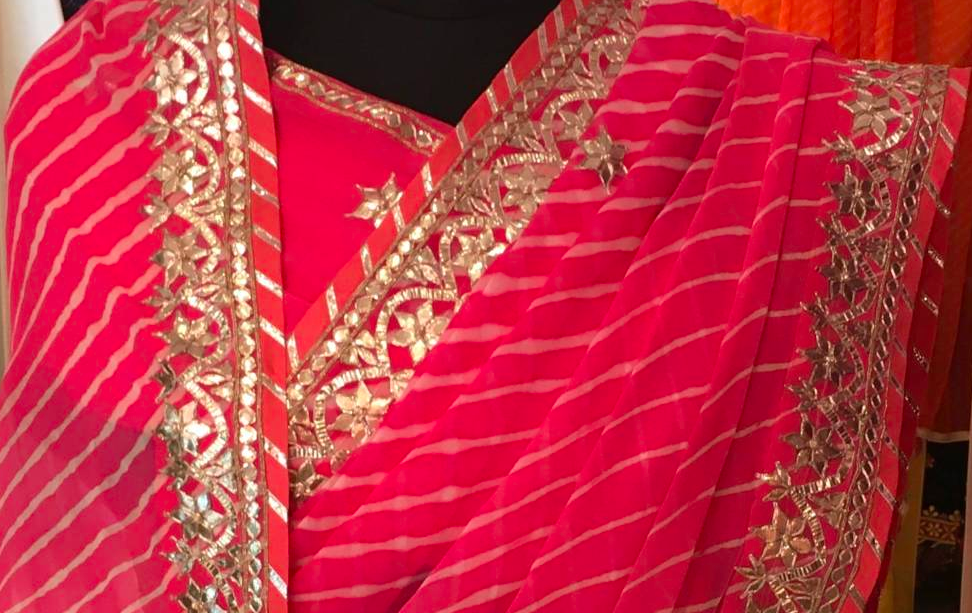
Leheriya sarees are timeless classics that are created using the traditional tie and dye techniques by talented artisans. Originated from Rajasthan, Leheriya pattern sarees are quite popular as they are a perfect blend of vibrant colors and ethnicity.
Often known as Leheriya or Leharia, is one of the most traditional art form practices of how artisans create distinctive wave patterns on the saree fabric. It is designed using the traditional tie and dye process using vibrant, mesmerizing color combinations. The fabrics used in the making are often light-weighted so that they add more flare to the saree when it’s draped.
As the term “Lehariya” is derived from “Leher”, you will often notice coastal feels and calmness on these patterns, imitating water-centric designs.
Create Solution
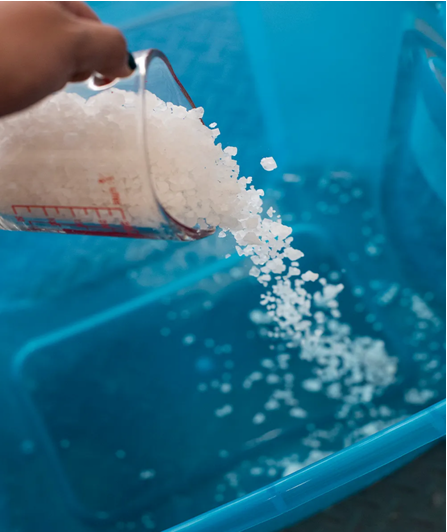
First, a solution is created in which the fabric is soaked overnight. The artisans even boil the solution, if required and this is done in order to remove the impurities and starch from the fabric.
Rolling the Fabric
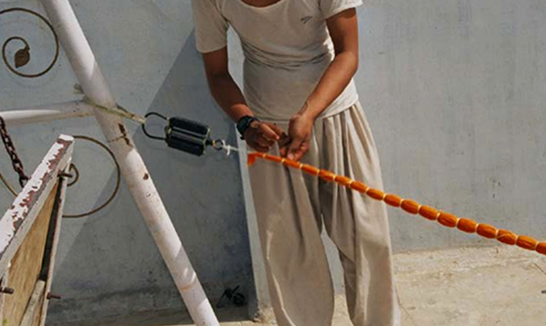
The next step involves rolling the fabric uniquely that creates beautiful wave-like patterns in a distinctive design. The extreme ends of the fabric are tied at opposite ends. The entire length of the fabric is tightly tucked to one end on a point, known as “Khoota”. Now begins the rolling process. After the fabric is tightly stuck on the “Khoota”, the fabric is rolled in a fan-like structure and folded several times.
Tie
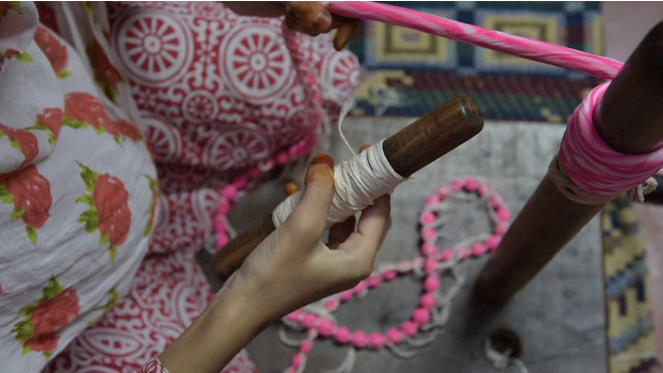
Now the artisans pull the other end of it towards the opposite side, and then it is rolled 3-4 times in the anti-clockwise direction. Now, this process goes on repeat until the whole length of the fabric is properly rolled. Artisans even use a wooden stand to tie the rolled fabric, if required.
Bandhere
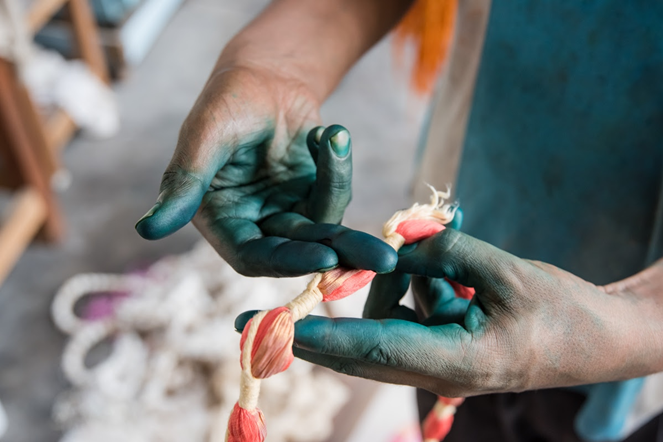
Here comes the most interesting part of the process. When the fabric from one end to the other is completely rolled, the artisans now tightly tie pieces of cloth or a rope on it at regular intervals, known as “Bandhere”. (Like knots)
Dye
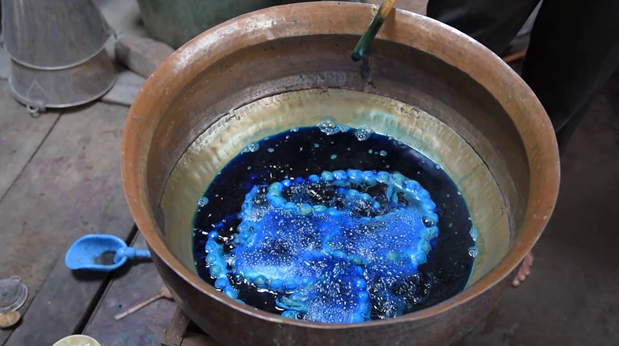
The next step is to dye the fabric in desirable, vibrant colors. The fabric is then left to get dry for about 1-1.5 hours till the color blends well inside the fabric. In ancient times, a copper vessel was used for the dyeing process. Artisans even add a pinch of salt to fix the color of the fabric.
Discharge
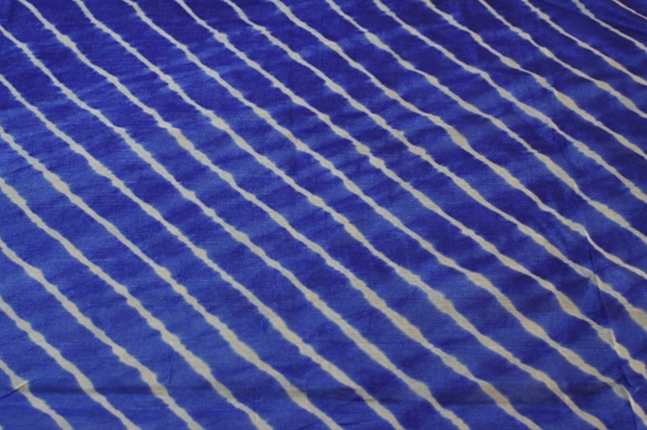
Once the color sleeps in the fabric, it is washed several times in water and hydro powder to discharge the extra color.
Dry
When the fabric is completely dried, the ties (bandhere) are removed finally revealing beautiful, mesmerizing Leheriya patterns all over the fabric.
We hope all your doubts concerning how to make a Leheriya saree have now been cleared. Isn’t this process highly artistic and fascinating? Also, what traditional saree art form do you usually prefer, Leharia or Bandhani? Feel free to share your thoughts with our readers!