Scrap Metal Candle Heater: a Simple Radiant Heat Build
by dalegribble in Workshop > Home Improvement
415 Views, 6 Favorites, 0 Comments
Scrap Metal Candle Heater: a Simple Radiant Heat Build
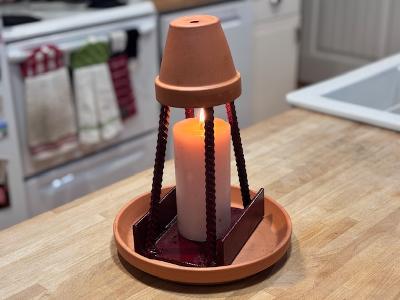
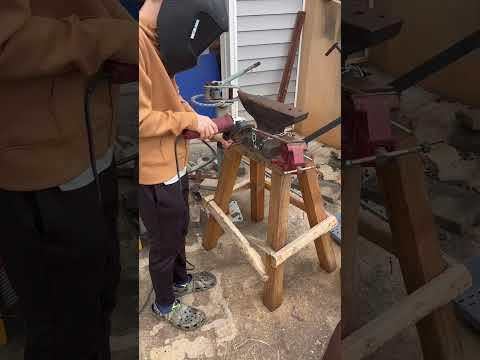
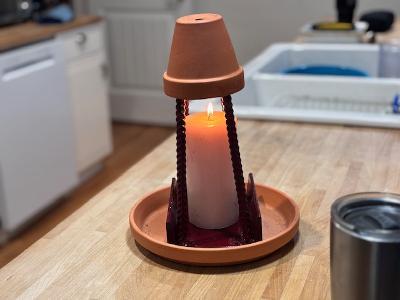

Build a safer candle-powered radiant heater to keep a small space cozy during winter outages — simple, inexpensive, and resilient enough for overnight use.
We decided to kill some time by building a safer, more effective candle-powered radiant heater while preparing for an “ice‑mageddon” here in the Deep South. We’ve already prepped a generator and a homemade 100 Wh power station (ask in the comments if you want an instructable on that), but it’d be great to unplug everything for a few hours at night and get some quiet sleep — hence this radiant heater. We’ve tried makeshift candle heaters before, but I never felt safe leaving one burning overnight. This quick project aims to be simple, safer, and reliable. Sit back and enjoy — if you listen closely you might hear my kids rolling their eyes when I hand them a tool.
Supplies
![IMG_8376[1].PNG](/proxy/?url=https://content.instructables.com/FY2/7GLX/MKRYQNAK/FY27GLXMKRYQNAK.png&filename=IMG_8376[1].PNG)
![IMG_8374[1].PNG](/proxy/?url=https://content.instructables.com/F4N/F0LL/MKRYQNB0/F4NF0LLMKRYQNB0.png&filename=IMG_8374[1].PNG)
![IMG_8370[1].PNG](/proxy/?url=https://content.instructables.com/FDE/U2ZB/MKRYQNBG/FDEU2ZBMKRYQNBG.png&filename=IMG_8370[1].PNG)
The supplies and tools we used were based purely on convenience.
My kids have watched me build and tinker for years, and they’ve picked up a working knowledge of the shop along the way. When I said, “Hey, cut that rebar into four 11-inch pieces,” they knew exactly what to do.
That said, this project could absolutely be built with fewer tools, different tools, better tools, more precision — you name it. This is just what we had on hand, and it worked.
Tools We Used
- Portaband
- Angle grinder
- Arc welder
Supplies
- Spray paint (any color will do)
- #4 rebar
- 6" C-channel
![IMG_8371[1].PNG](/proxy/?url=https://content.instructables.com/FM7/A4OK/MKRYQNBW/FM7A4OKMKRYQNBW.png&filename=IMG_8371[1].PNG)
Step 1: Cut the Parts
This project uses very few parts.
We cut four pieces of #4 rebar to 11 inches each, and one piece of C-channel to 8 inches.
![IMG_8374[1].PNG](/proxy/?url=https://content.instructables.com/F2H/CGFK/MKRYQNCH/F2HCGFKMKRYQNCH.png&filename=IMG_8374[1].PNG)
![IMG_8372[1].PNG](/proxy/?url=https://content.instructables.com/FWF/MOXZ/MKRYQND1/FWFMOXZMKRYQND1.png&filename=IMG_8372[1].PNG)
Step 2: Prep the Weld Areas
Grind the ends of the rebar where they will be welded, and grind the areas on the C-channel where the rebar will attach. This removes mill scale and helps ensure clean, strong welds.
![IMG_8370[1].PNG](/proxy/?url=https://content.instructables.com/F26/DOL1/MKRYQNDM/F26DOL1MKRYQNDM.png&filename=IMG_8370[1].PNG)
![IMG_8369[1].PNG](/proxy/?url=https://content.instructables.com/FPR/FCNA/MKRYQNE9/FPRFCNAMKRYQNE9.png&filename=IMG_8369[1].PNG)
Step 3: Position and Weld the Rebar
Position the rebar evenly along the C-channel and weld each piece in place. Take your time to keep everything square and stable before fully welding.
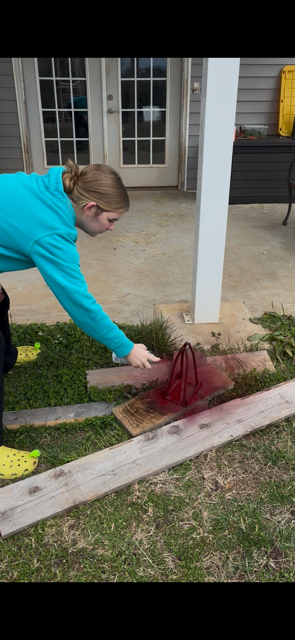
Step 4: Finish It Up
Brush off any slag, dust, or debris from the welds and surfaces. Once clean, apply spray paint for a finished look and added corrosion protection.
![IMG_E8361[1].JPG](/proxy/?url=https://content.instructables.com/FH8/ZM6M/MKRYQNHC/FH8ZM6MMKRYQNHC.jpg&filename=IMG_E8361[1].JPG)
Finale:
Place the heater on a ceramic plant pot saucer. Set a ceramic pot over the top to act as a simple heat exchanger. Light the candle underneath and let the ceramic absorb and radiate the heat.
Simple, effective, and made from what we had on hand.
Voilà
Safety Notes
This project involves open flame and hot metal. Adult supervision is required at all times.
Use this heater only on a non-combustible surface, away from flammable materials, pets, and children. Never leave it unattended while a candle is lit. This is not a primary heat source and should only be used as a temporary, supplemental heat experiment.
Common sense applies — if something feels unsafe, it probably is.