Renovating a 1950s Atom Smasher: Part I
by brazilero2008 in Workshop > Science
806 Views, 5 Favorites, 0 Comments
Renovating a 1950s Atom Smasher: Part I
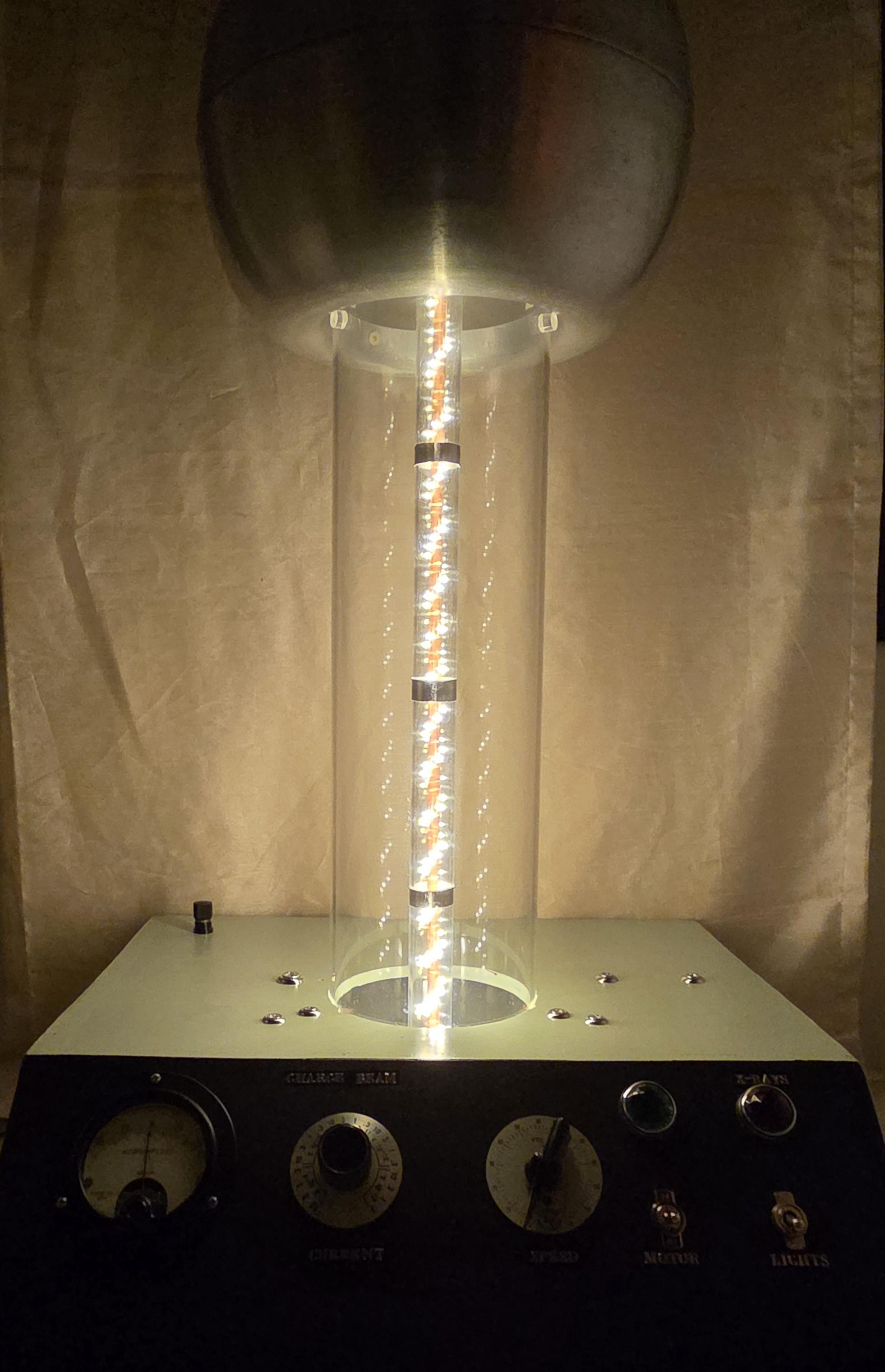
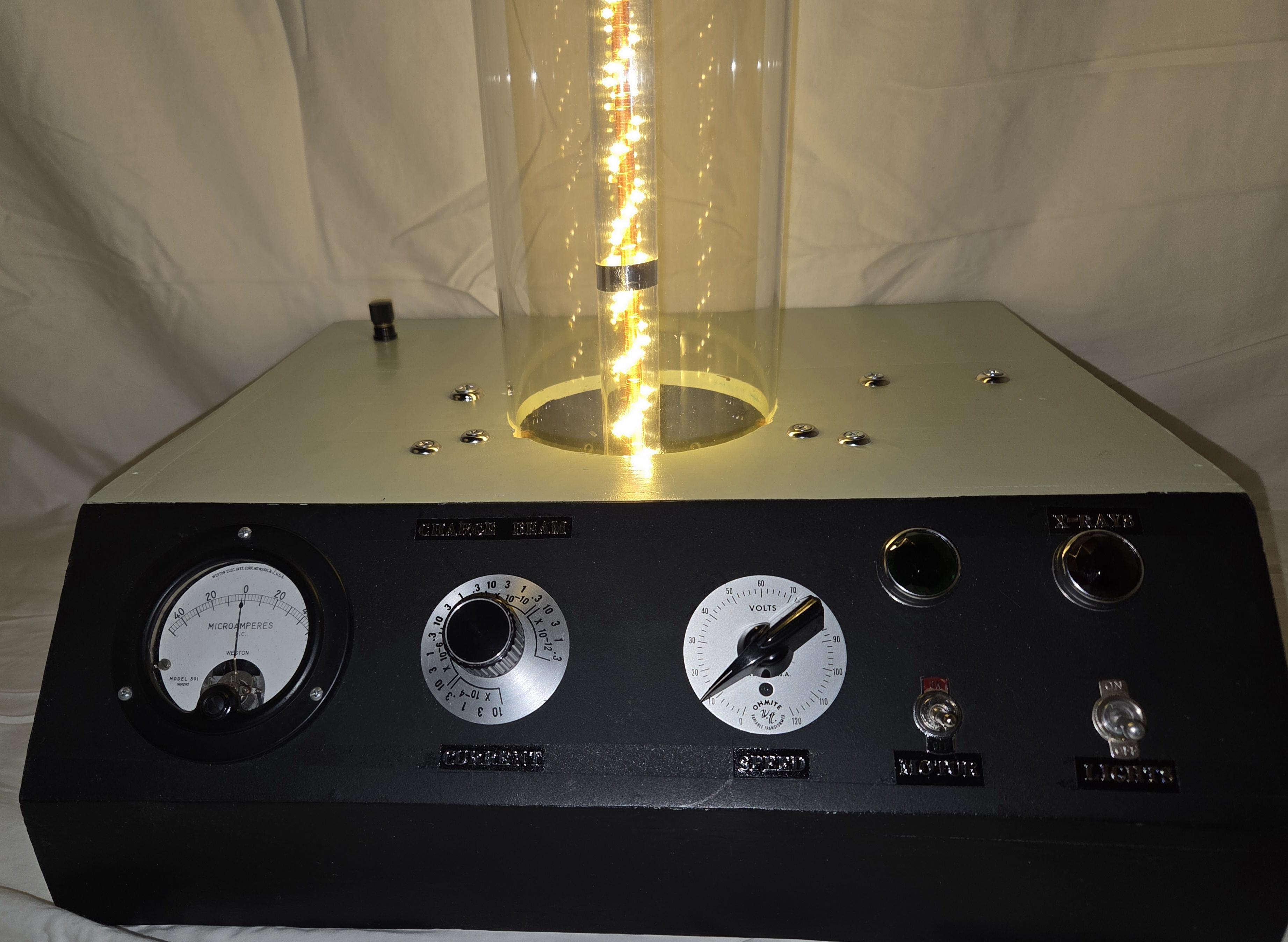
In 1956, the Rayotron was the first commercially available atom smasher marketed for research and teaching purposes. The unit consisted of an electrostatic generator combined with an acceleration tube designed to smash subatomic particles into a target. The initial part of this two-part instructable describes the teardown and renovation of a vintage source of low-risk, static electricity. The renovation features a safe particle beam tube made from USB-powered fairy lights that create multiple reflections along the length of a clear plastic tube. The tube provides ambient room lighting with a retro-futurist vibe. (Spoiler alert: This project does not actually split atoms!)
Part II prepares for the final reveal with the installation of additional lighting; the inclusion of a bluetooth-enabled sound source; and the completion of internal wiring. Your renovated Rayotron is guaranteed to enhance conversations at any Oppenheimer or The Big Bang Theory watch party! 😄
Check the informative auction sites at Worthpoint.com and Bentleysauction.com if you're interested in obtaining a Rayotron to renovate. Also, downsizing physics departments in high schools or colleges may have non-working units to give away.
Supplies
Mechanicals
- 5 cm x 5 cm medium corner braces from Reliabilt (4)
- 1.25 cm x 1.25 cm small corner braces from Hillman (4)
- 10 cm wide, latex resistance band from Theraband (1)
- 5 cm length x 3 cm dia thread spools (3)
- ~50 cm length x 2.5 cm O.D. dia, acrylic tube from toy lightsaber (1)
- ~50 cm length x 0.63 cm dia, acrylic or wood rod (1)
- Aluminum foil tape
- Misc fasteners & finishing washers (metal & nylon)
- Radiation hazard signs (reduce size from internet images, then print)
- Wool strip for lower roller
- Yoga mat strip
Electricals
- AC power cord (1)
- AC power inlet, 3-terminal from Digikey (1)
- AC DPDT toggle switch (1)
- 2.5 amp variable AC transformer (1); or use original power resistor
- 12 VDC, DIY or commencial power supply (1)
- 12 VDC, 6 W vintage-style, filament bulb w/candelabra base from Feit Electric (2)
- 5 VDC string of ~100 fairy lights
- 12 VDC to 5 VDC USB phone charger (1)
- DC microammeter from 50s-era lab equipment (1)
- DC power jack & plug (1)
- Color-coded binding posts (2 red; 2 blk)
- Low voltage circuit wire & heat shrink tubing
- Volt meter for circuit testing
Tools
- Alcohol wipes
- Electric drill & assorted bits
- Electric belt sander & sanding sponges
- Glue: Carpenter's Wood Glue & cyanoacrylate (CA) glue
- Hobby saw or file
- Masking tape
- Needle-nose pliers
- Penetrating oil, 3-in-One
- Pot scrubber & dish soap
- Primer, paint, & clear polyurethane
- Protractor
- Rub-On Letters
- Screwdrivers
- Soldering iron
- Wire snips
- Wood putty, KwikWood putty
Operation
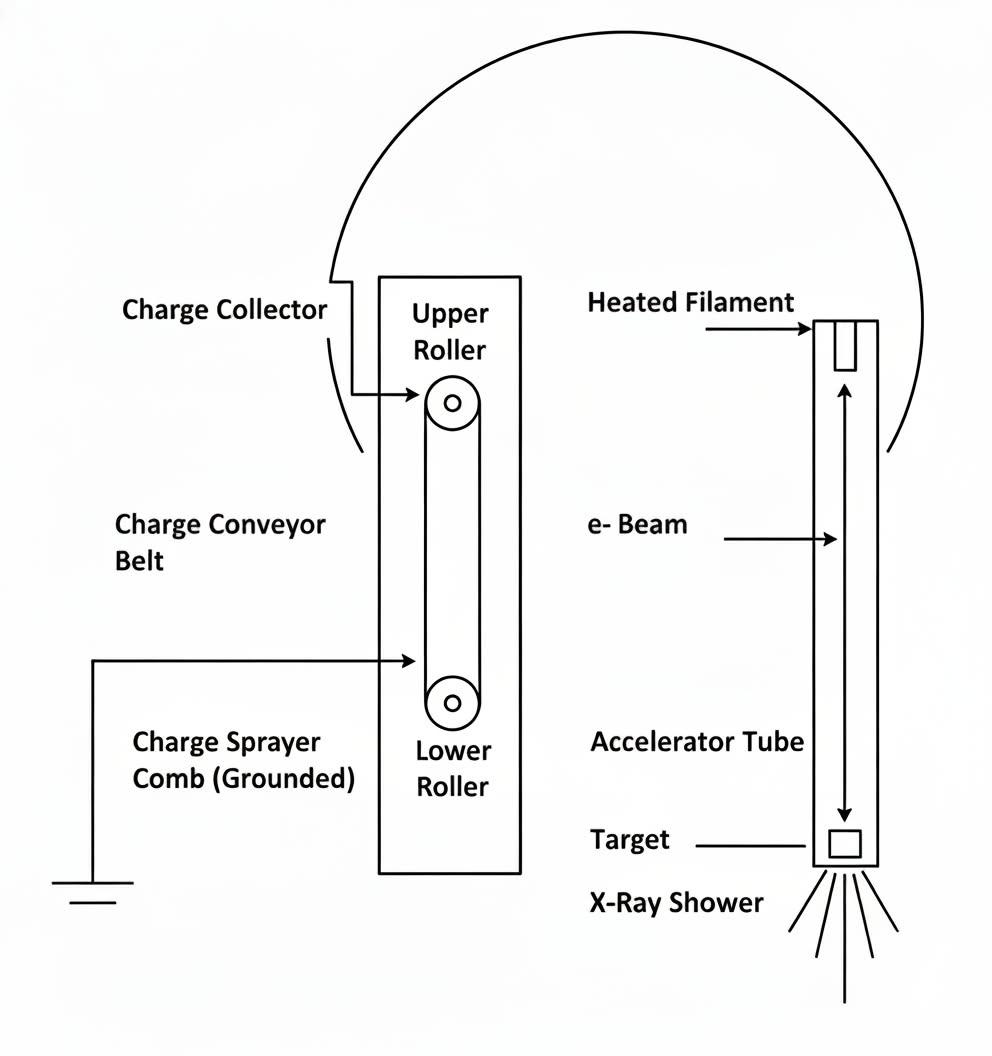
The Rayotron included a VdG generator that is better known for producing hair-raising demos of static electricity in science classrooms. A variable-speed, AC motor mounted in a plywood console turned a lower roller that drove a rubber conveyor belt. A comb-shaped sprayer, also in the console, pulled electric charges from ground and deposited them on the belt's outer surface for transport to an upper roller supported by an acrylic column. Charges pulled off the belt by a comb-shaped, collector were conducted to the surface of a metal discharge terminal insulated from ground by the support column. A more detailed discussion the charge collection and transfer mechanisms appears in The Physics Teacher.
Because like charges repel, the Rayotron relied on the negatively charged terminal to repel negatively charged electrons through a high vacuum in the accelerator tube. A heated metal filament molded into the front end of the tube introduced electrons through thermionic emission. For the physicists and engineers, the purpose of the metal gradient rings spaced at regular intervals along the tube is better explained here. Energized particles would crash into a metal target in the tube's base. The braking effect caused by particles hitting the target released a shower of X-rays.
Although a VdG generator is essentially an electromechanical version of dragging one's shoes across a carpet and then touching a metal surface to produce a spark, it's important to be mindful of safety issues when working around this equipment. (Warning! The beam tube that shipped with the original Rayotron is not safe to use and should not be connected to the VdG!)
Exterior Inspection of Console
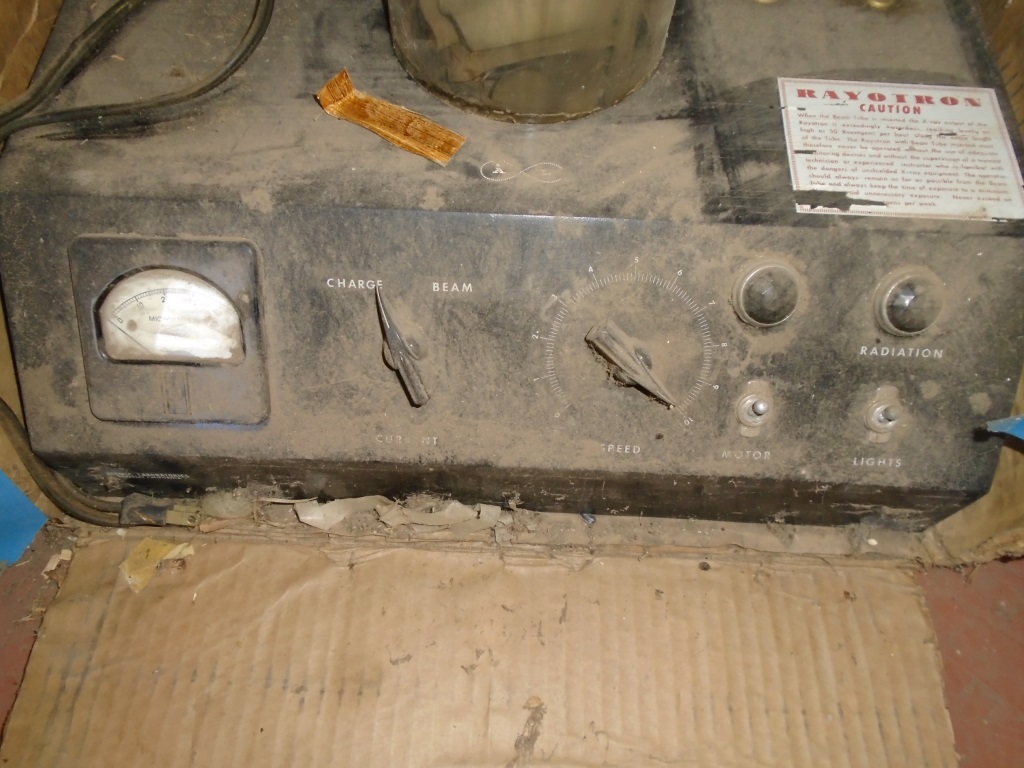
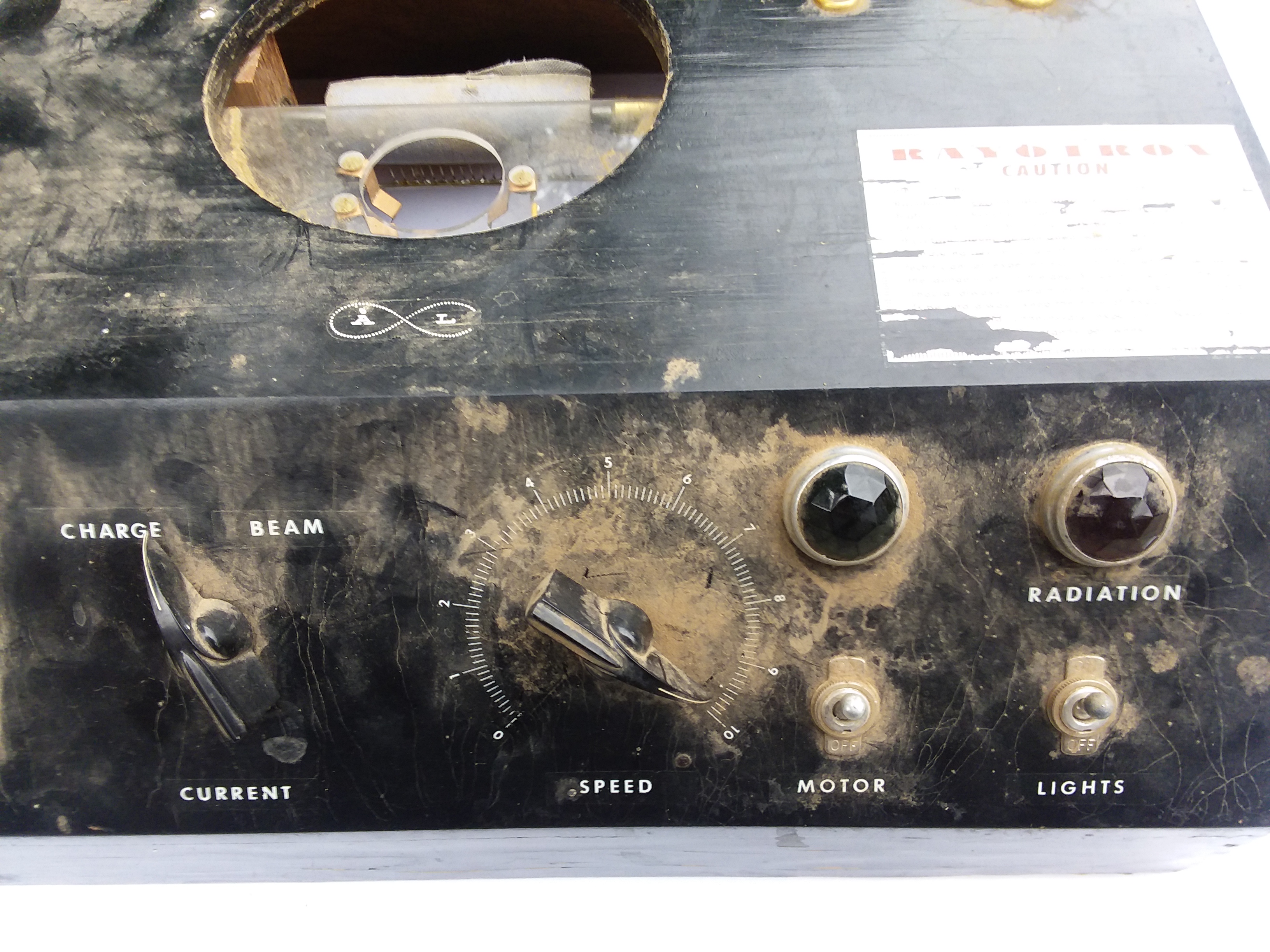
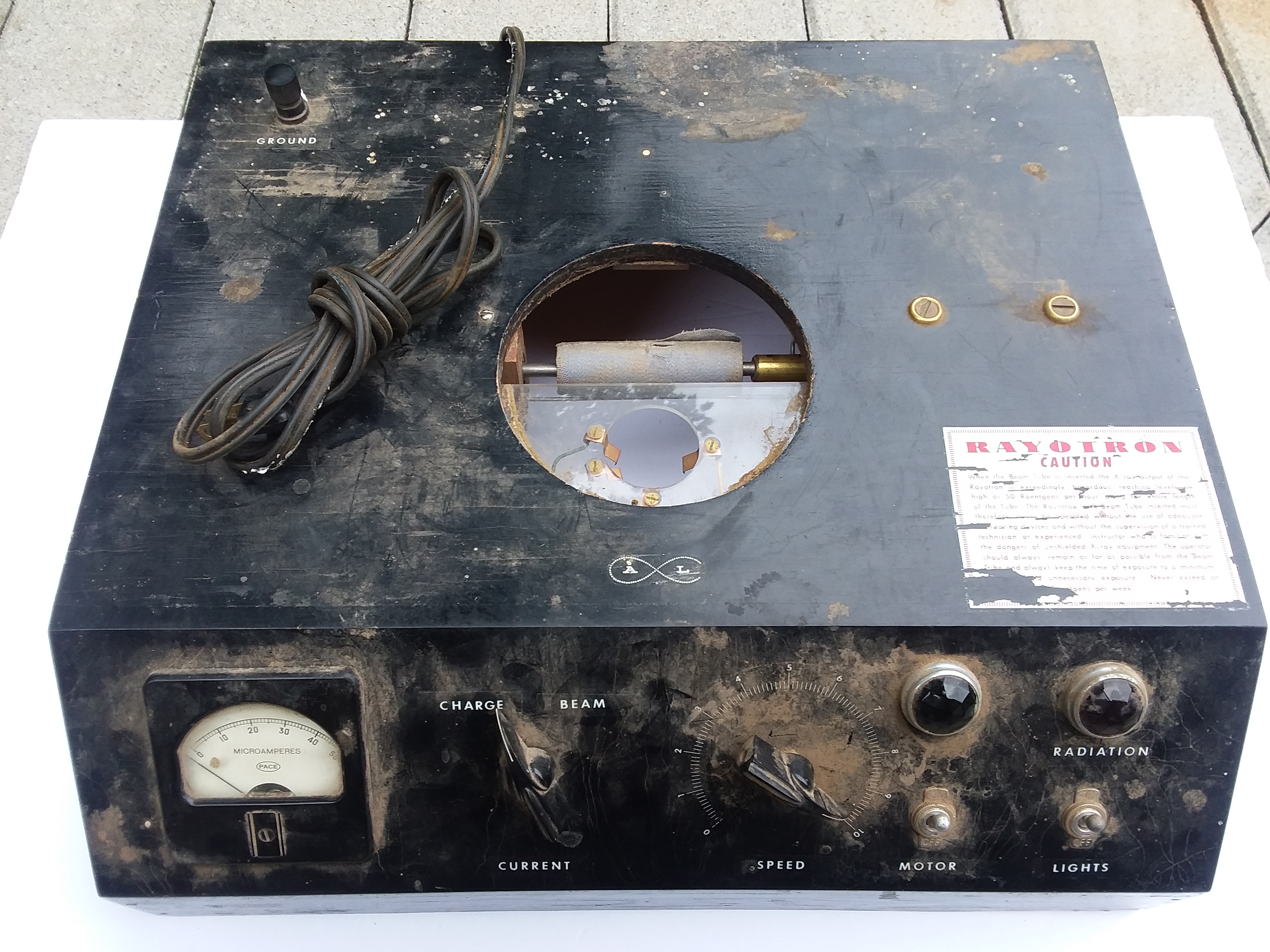
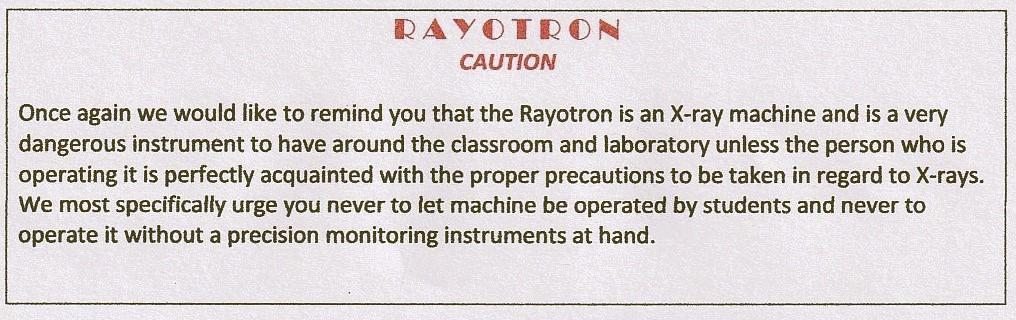

The plain black exterior suggested the unit was an early version from the production run. The console was caked in grimy gunk due to age and poor storage conditions. Surface cleaning with alcohol wipes revealed the controls and indicator lights on the instrument panel were intact. The microammeter measured the electron beam current. The function switch allowed users to select either dome charging or beam tube activation. The variable-resistor controlled motor speed. Lastly, two toggle switches, with their corresponding indicator lights, activated the drive motor and the highly visible X-ray warning light. The neon-red caution label on the top of the console warned operators of radiation exposure when the unit was in operation. The rear panel of the base featured two fuse holders (one for each wire of a non-polarized, AC power cord) and an exit hole for the cord.
Interior Inspection of Console
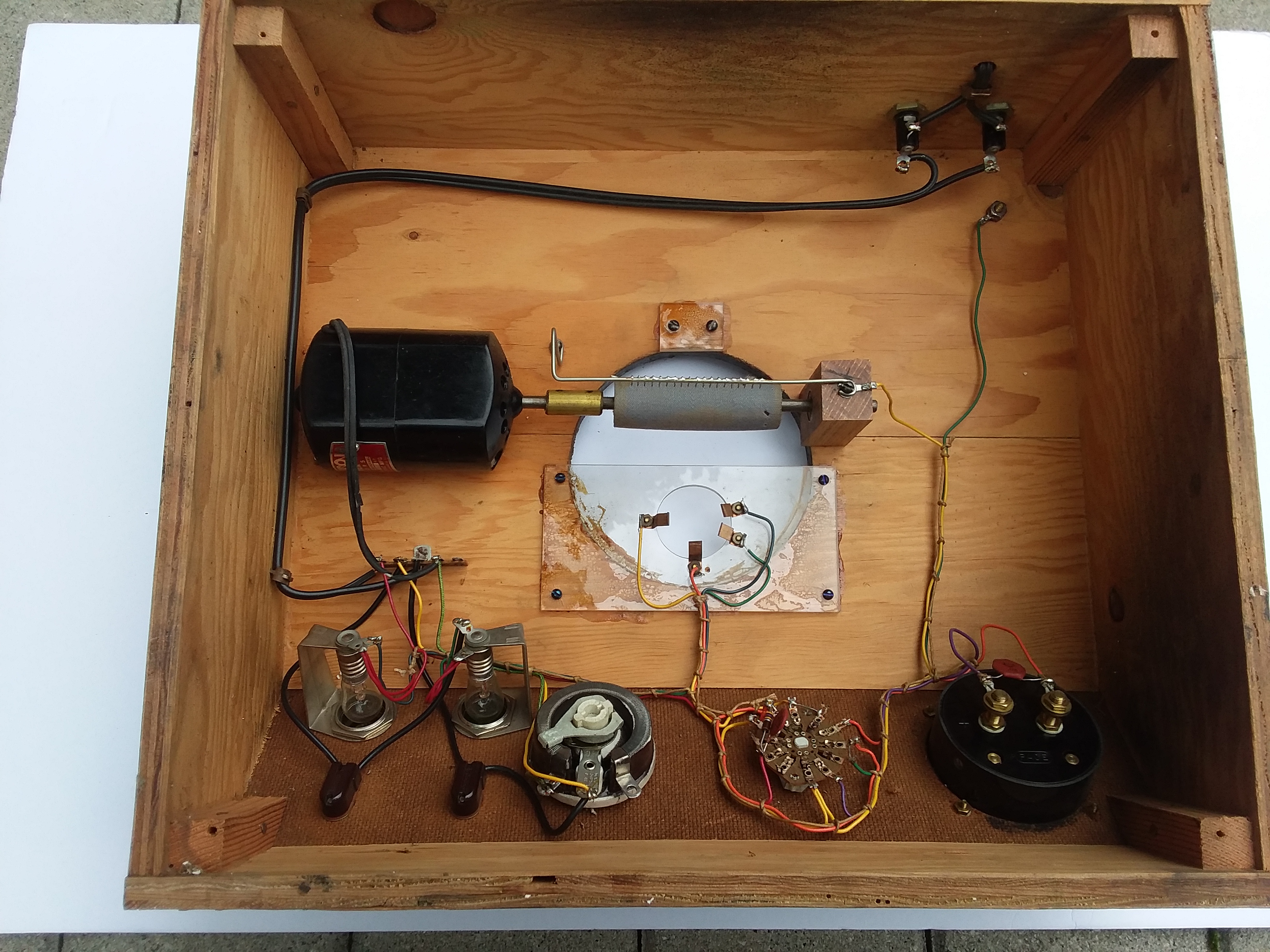
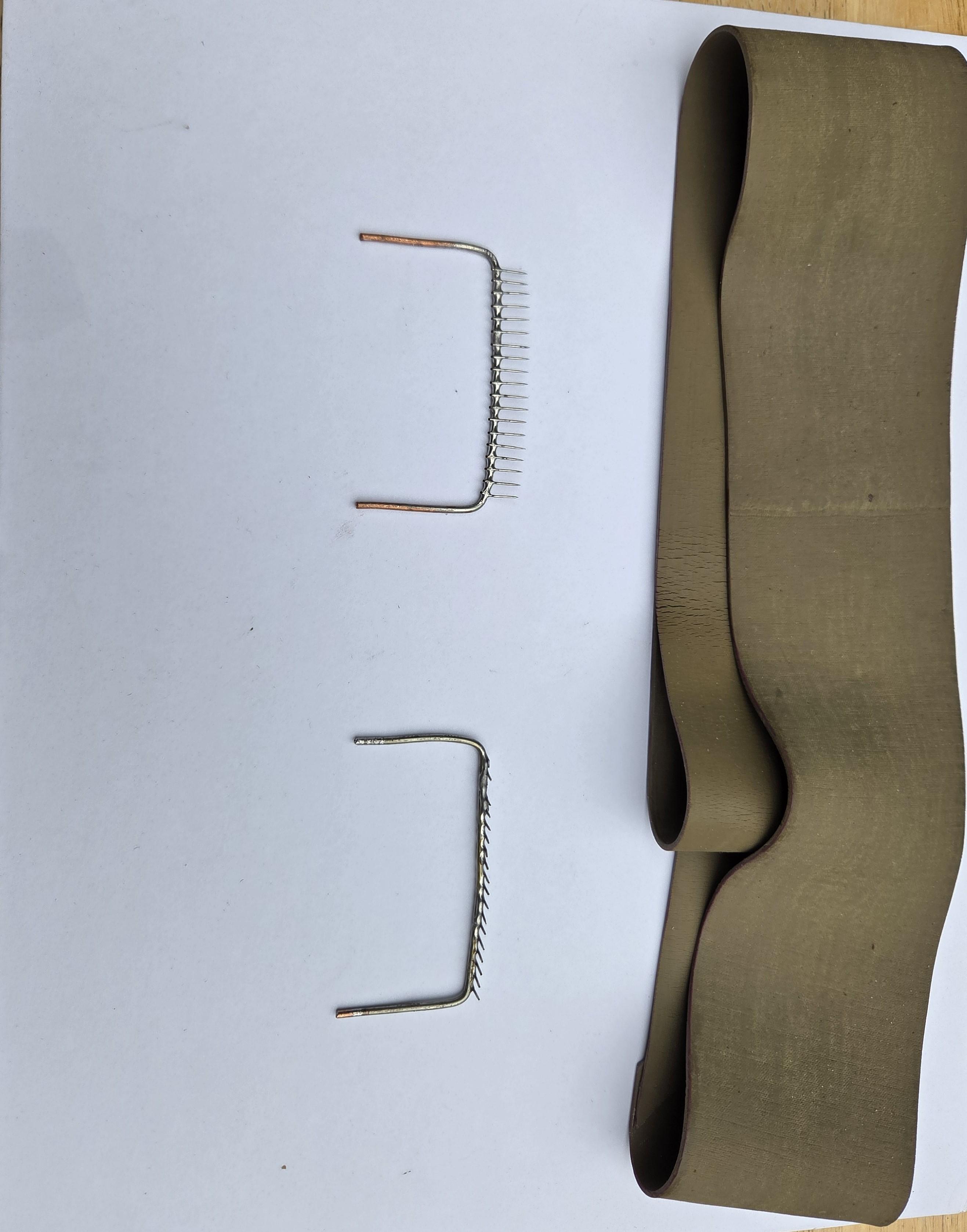
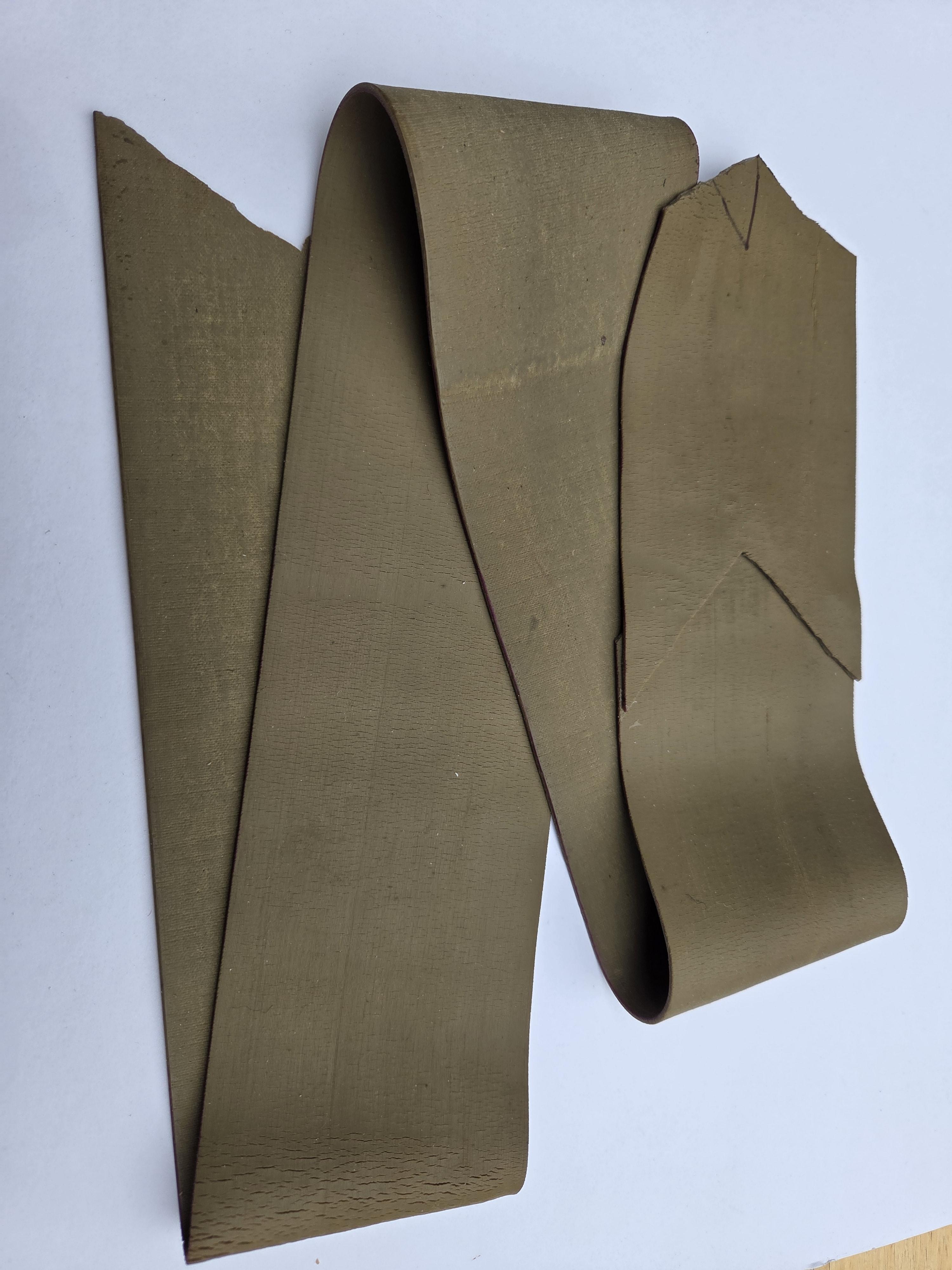
The soft wood of the unfinished interior splintered and dented easily. The belt had been repaired several times; the motor screeched; and the indicator bulbs were toast. Several exposed metal components were connected to the live AC line. 😮 However, the discharge terminal, charge sprayer, and charge collector were in good shape. Clearly, this unit needed some work to address these issues.
Teardown & Prep
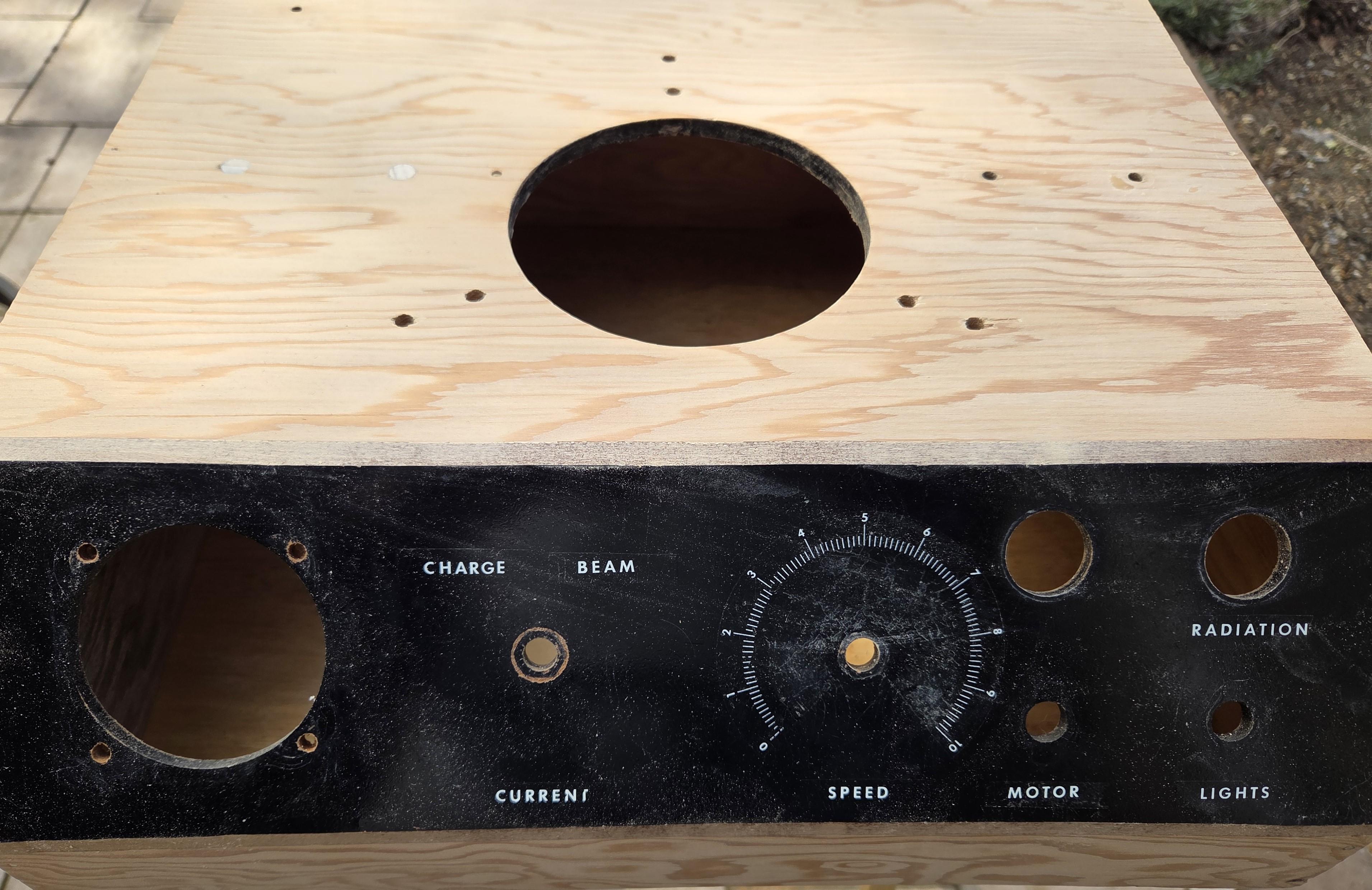
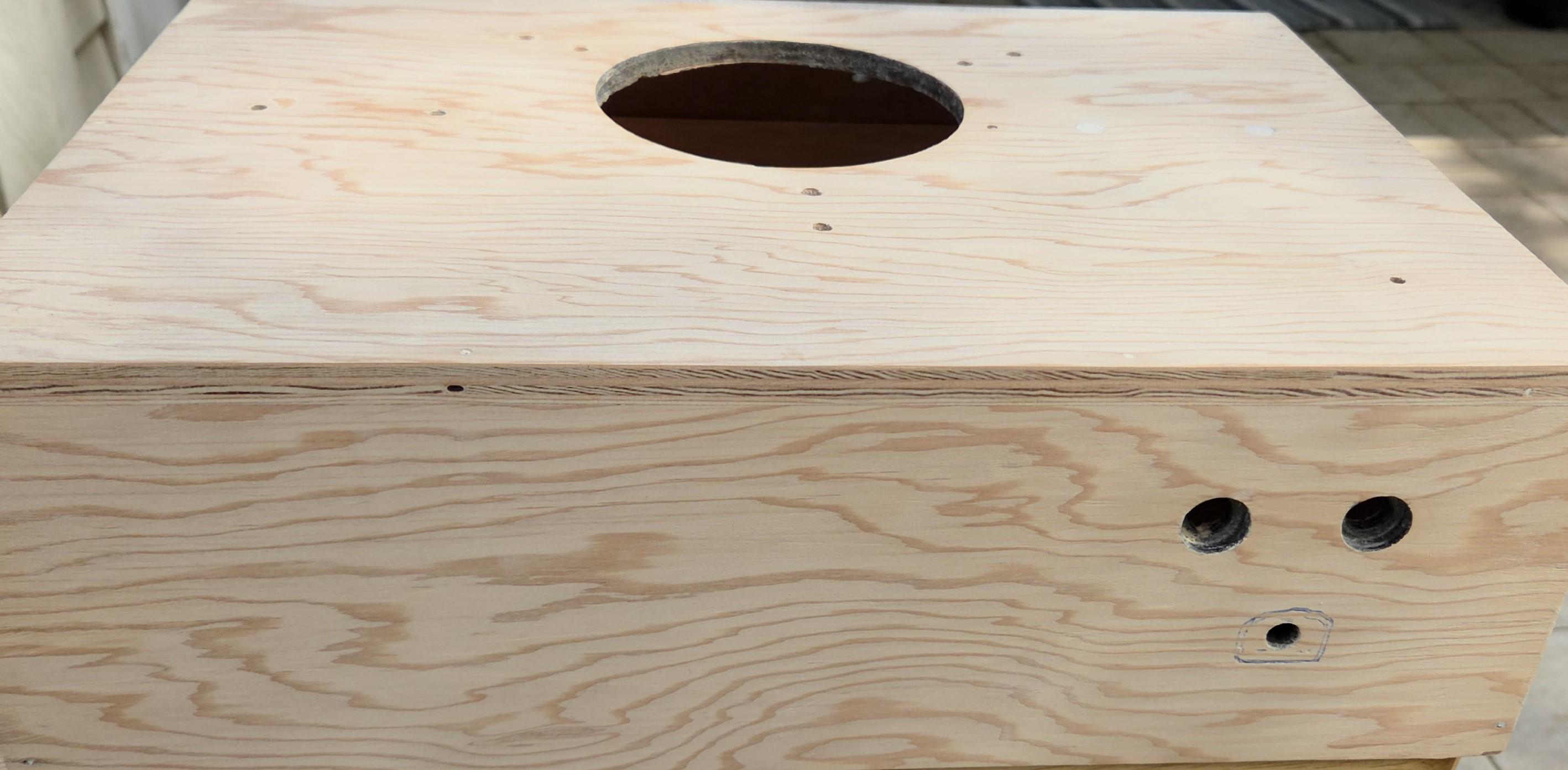
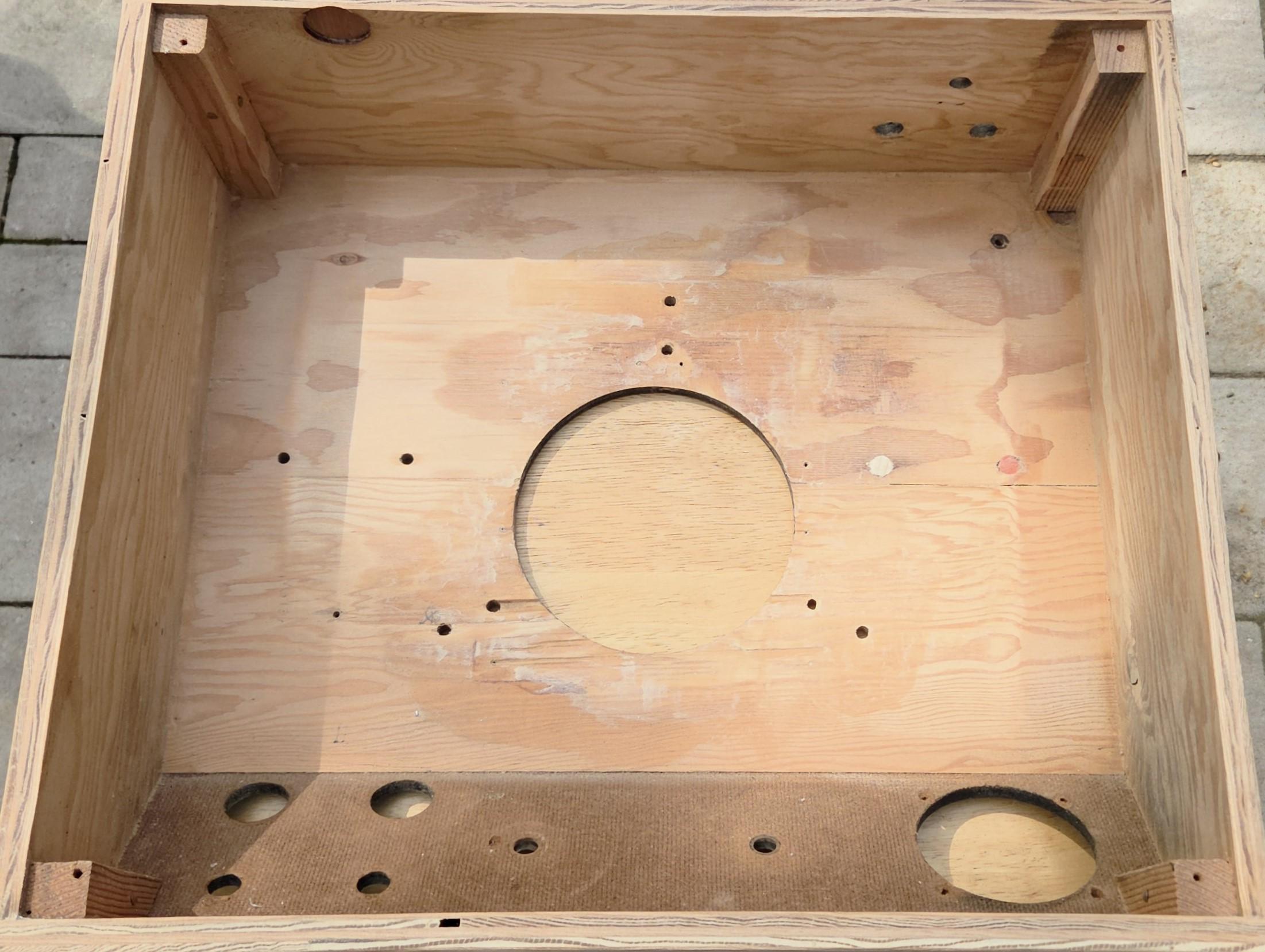
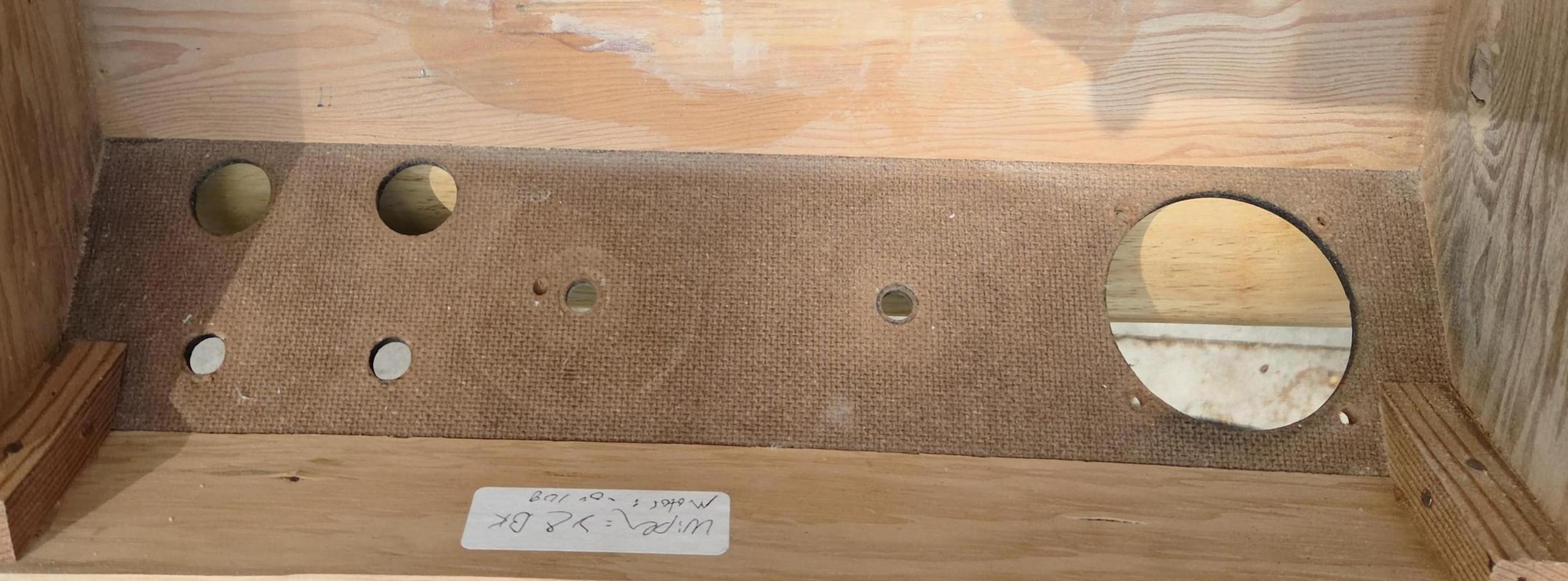
Several drops of oil on the screw threads released the corroded nuts that secured the front panel components. I removed the exterior paint using an electric sander with 80-grit paper followed by 120-grit paper, but temporarily left the original paint and identifying labels on the instrument panel. Wood putty worked as a filler for surface dings and holes in the wood. A thin layer of wood glue smeared around the splintered interior was followed by hand sanding with 120-grit paper. (Caution: Use a mask and sand outdoors because paint may be leaded.)
Next, I traced an outline of the hole for the support column on paper, located the center, and then marked 120-degree sections around the circumference with a protractor to make a template for the corner braces. The template guided the drilling for a pair of holes at each of the three locations for the braces.
Deep Cleaning
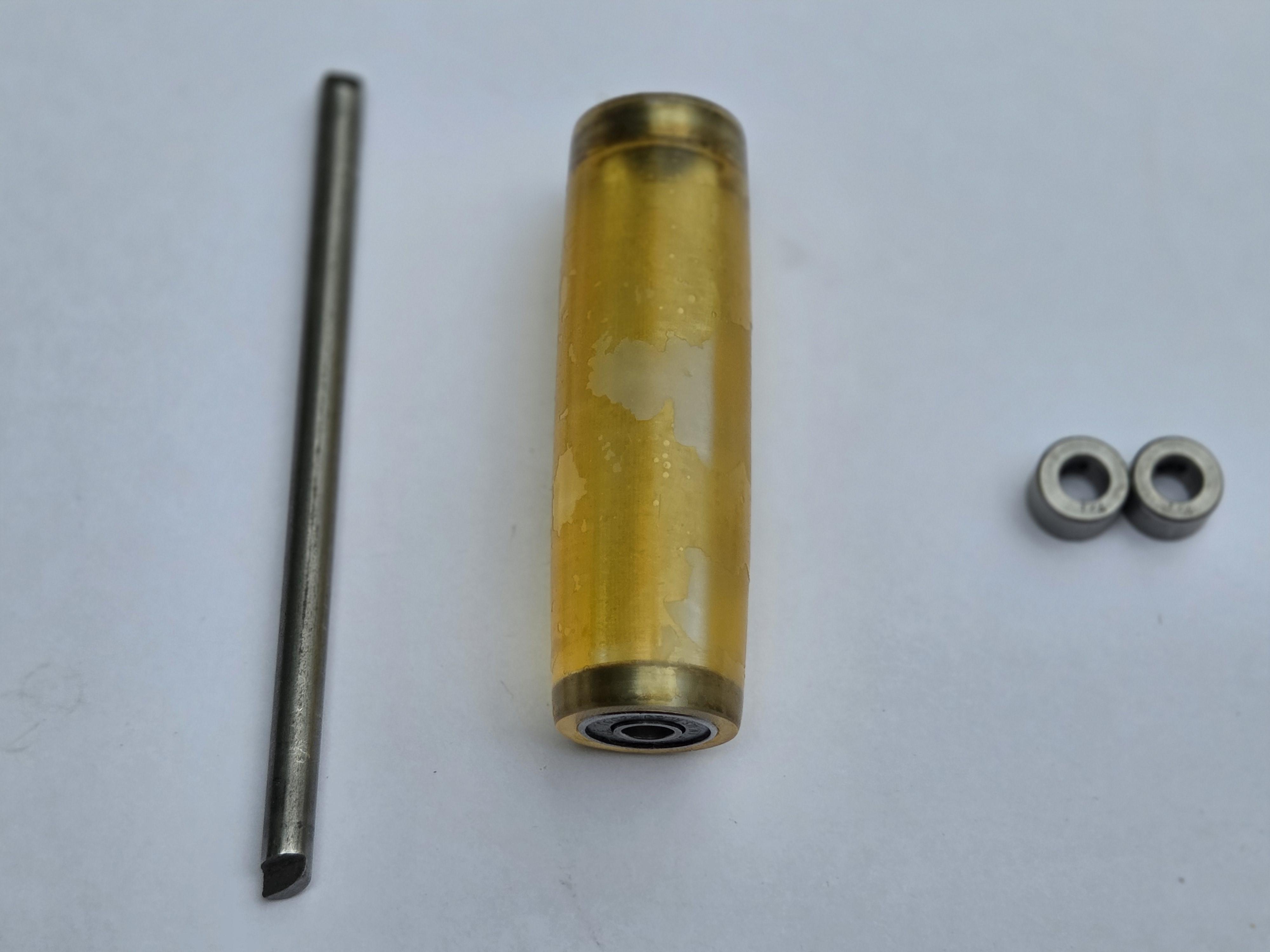
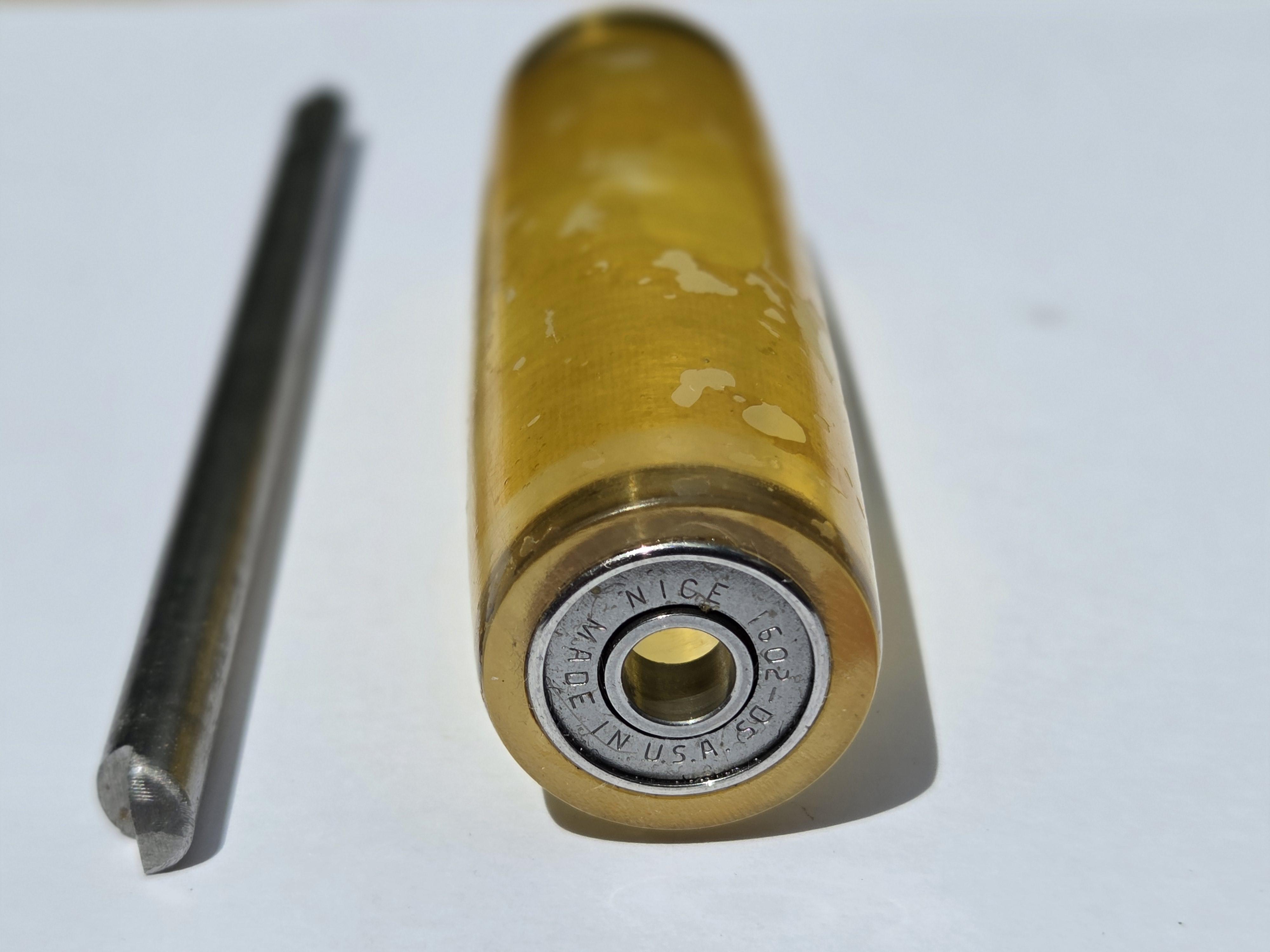
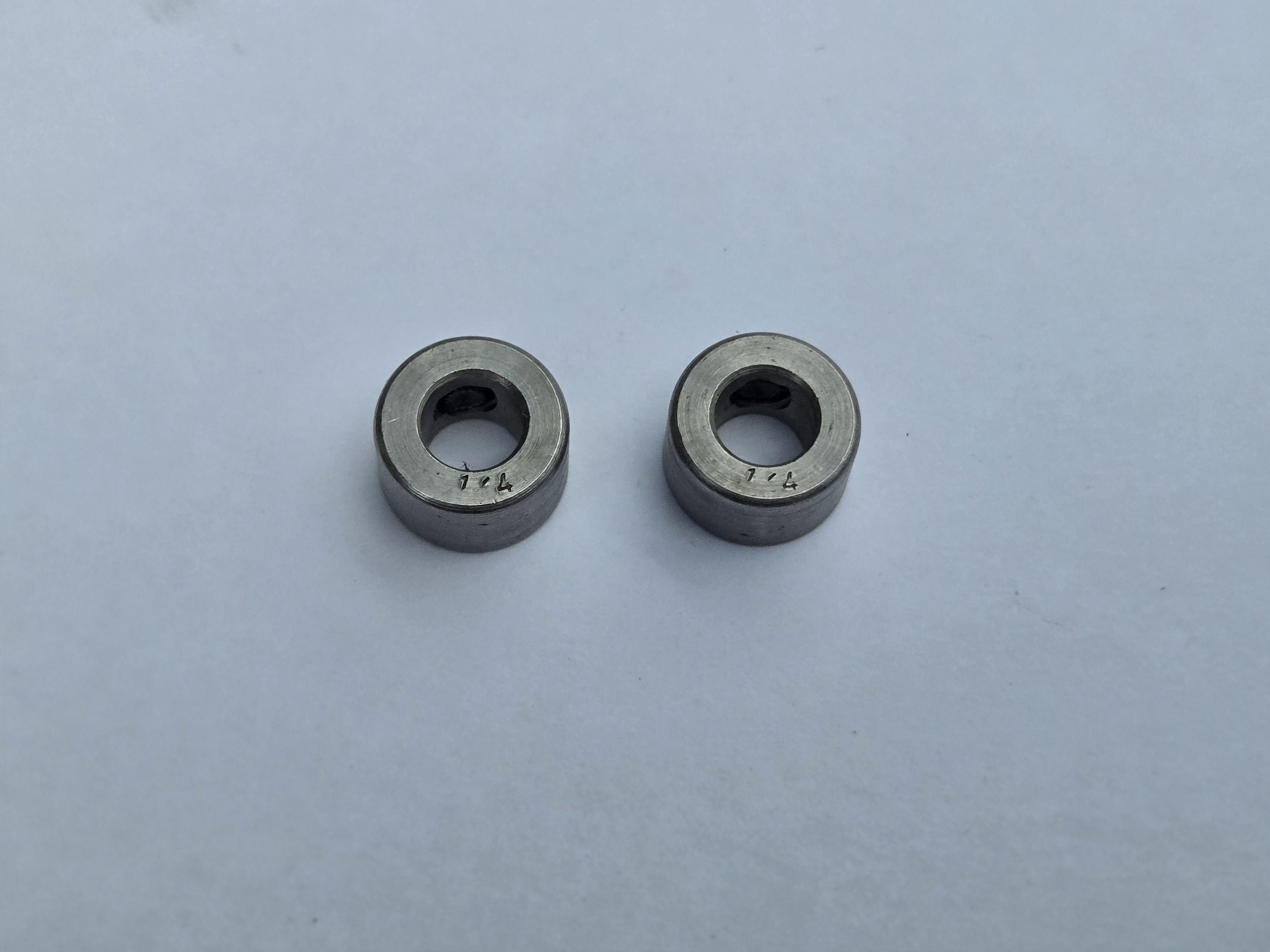

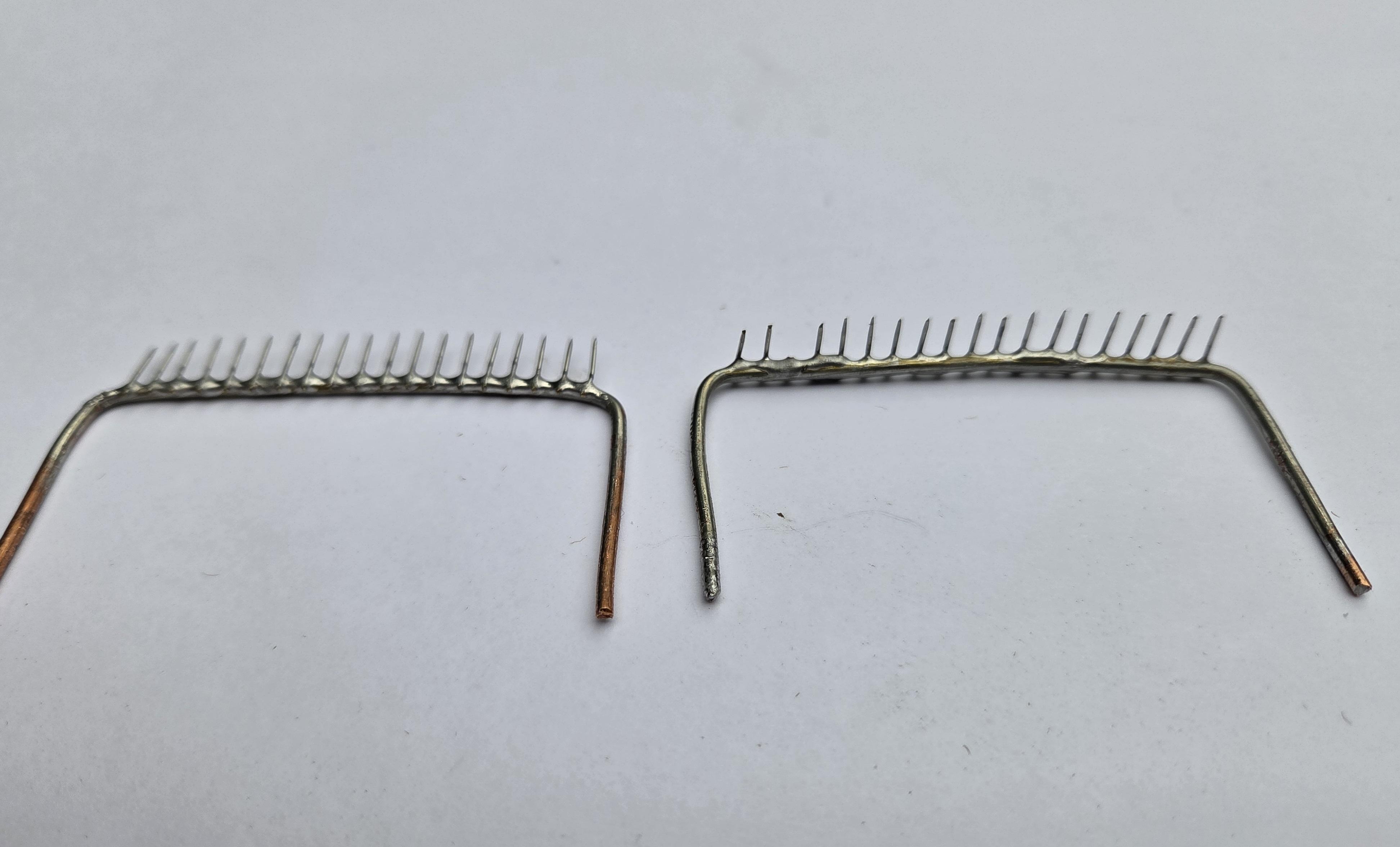
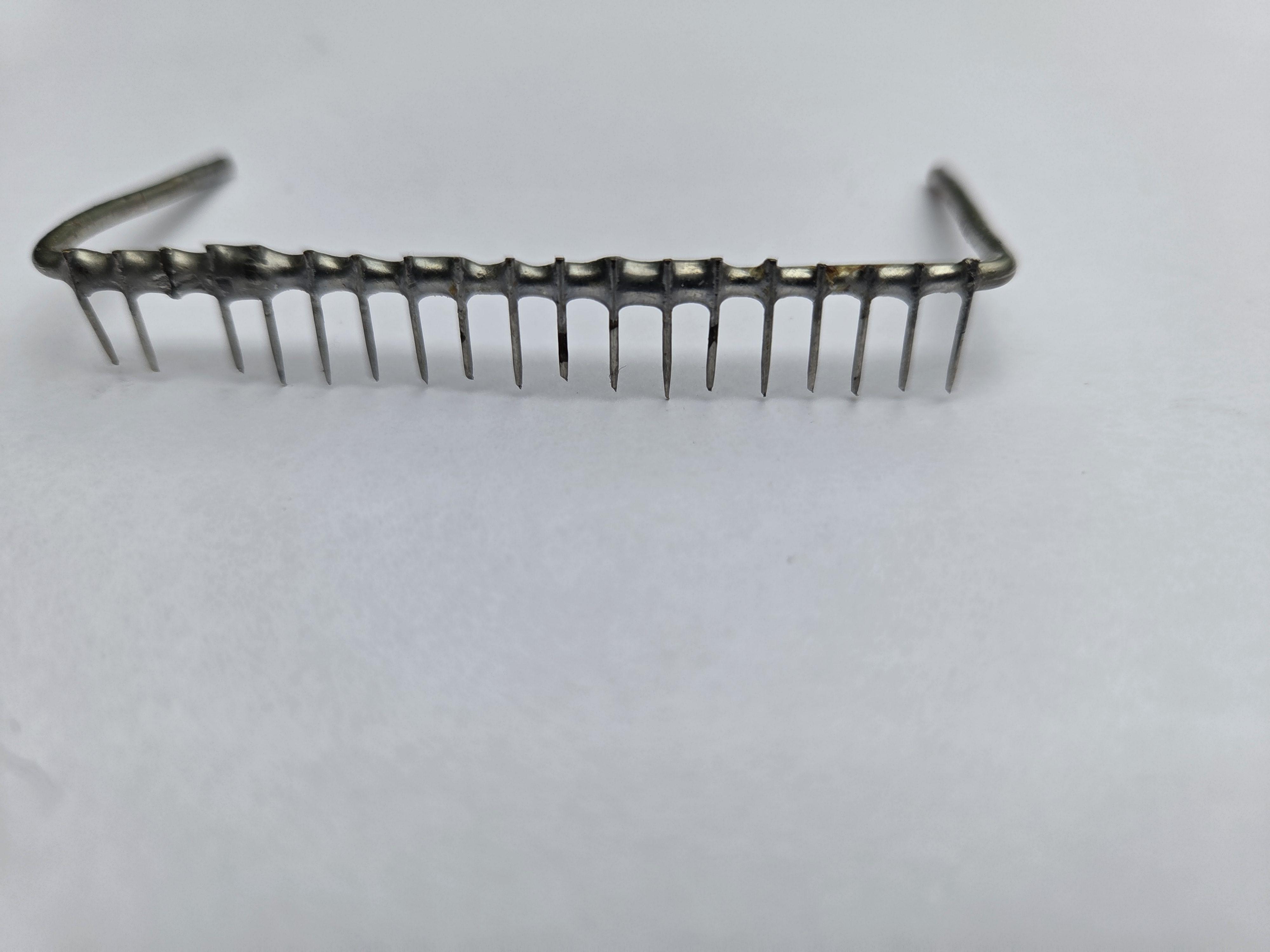
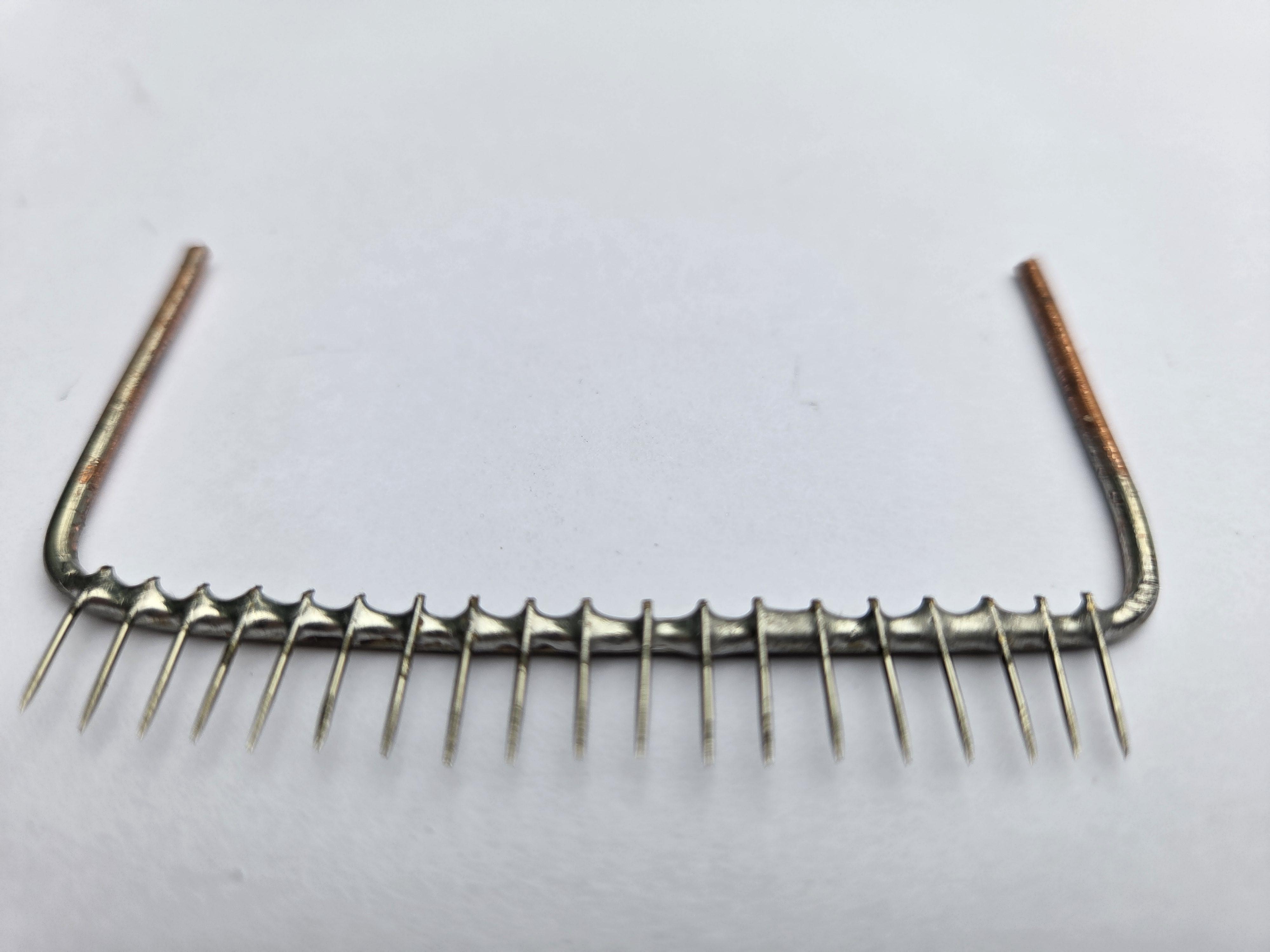
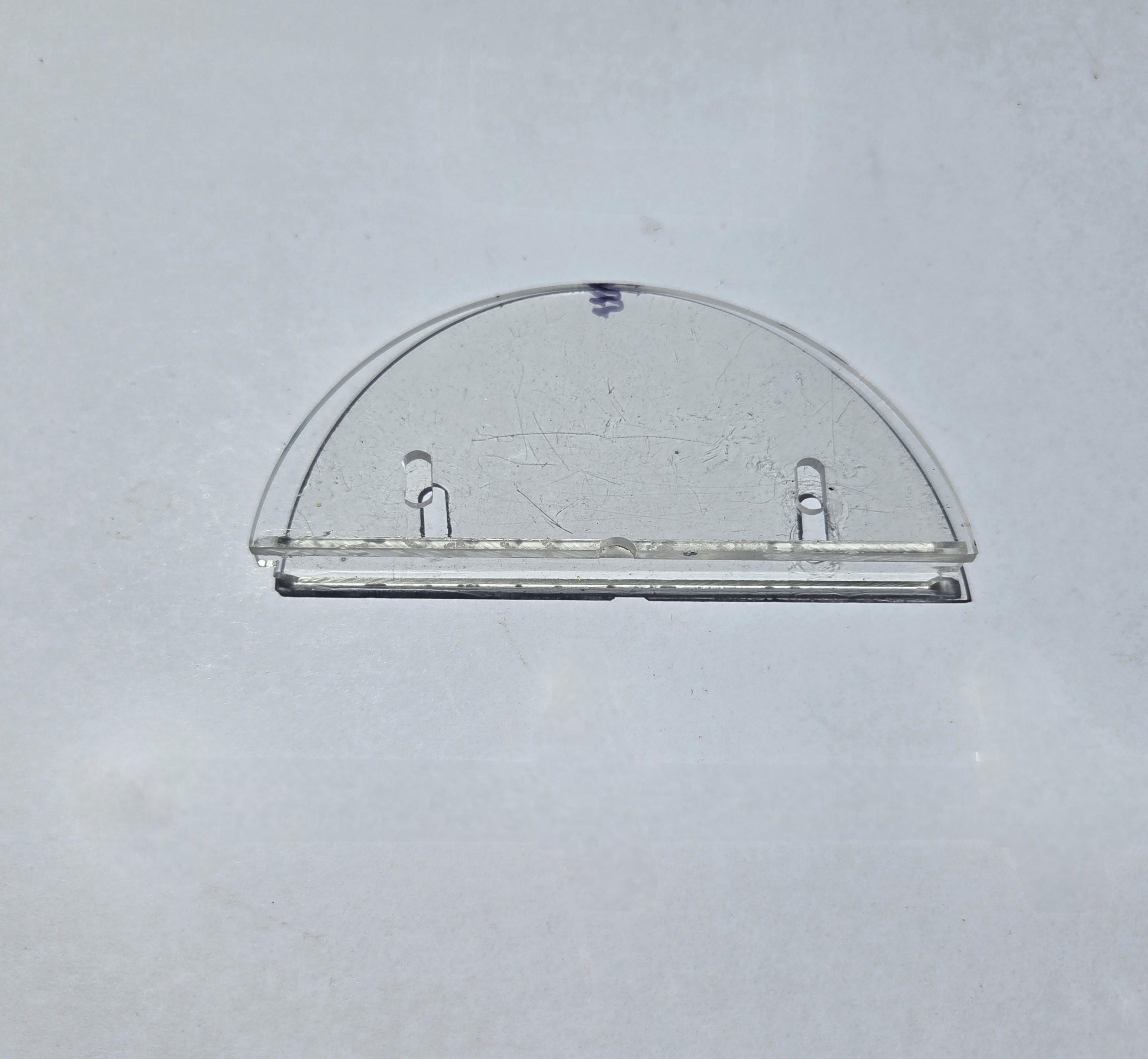

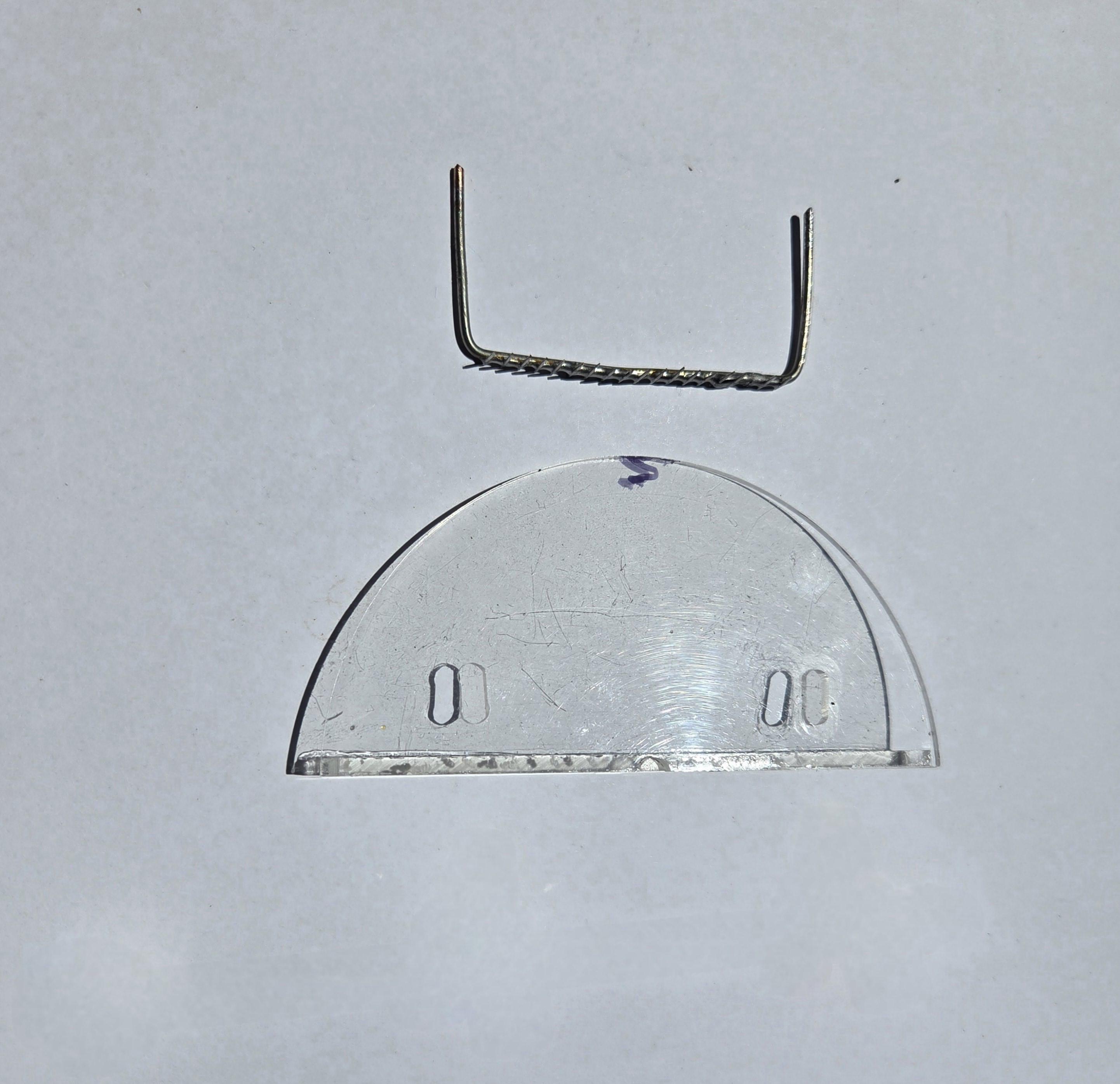
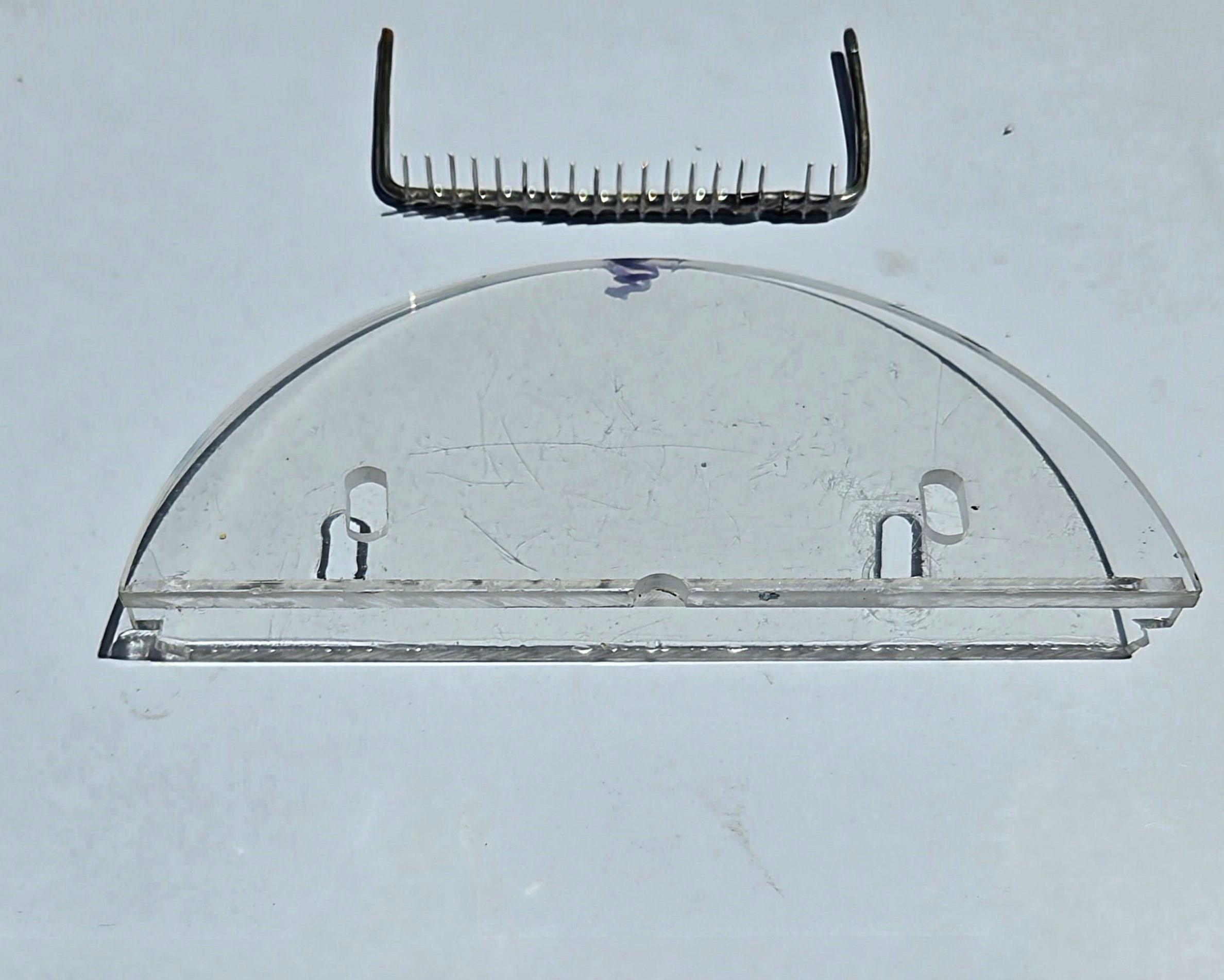
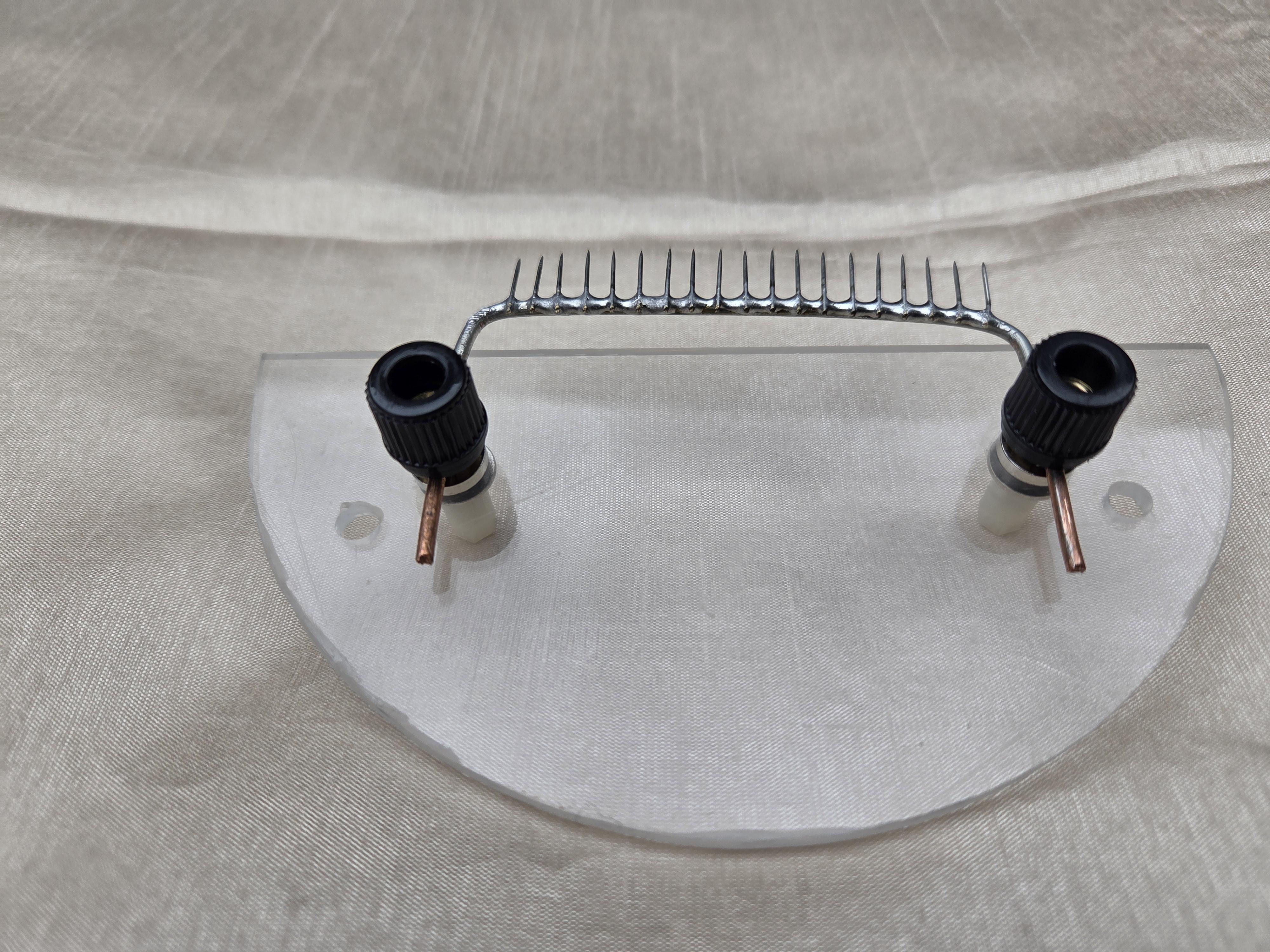
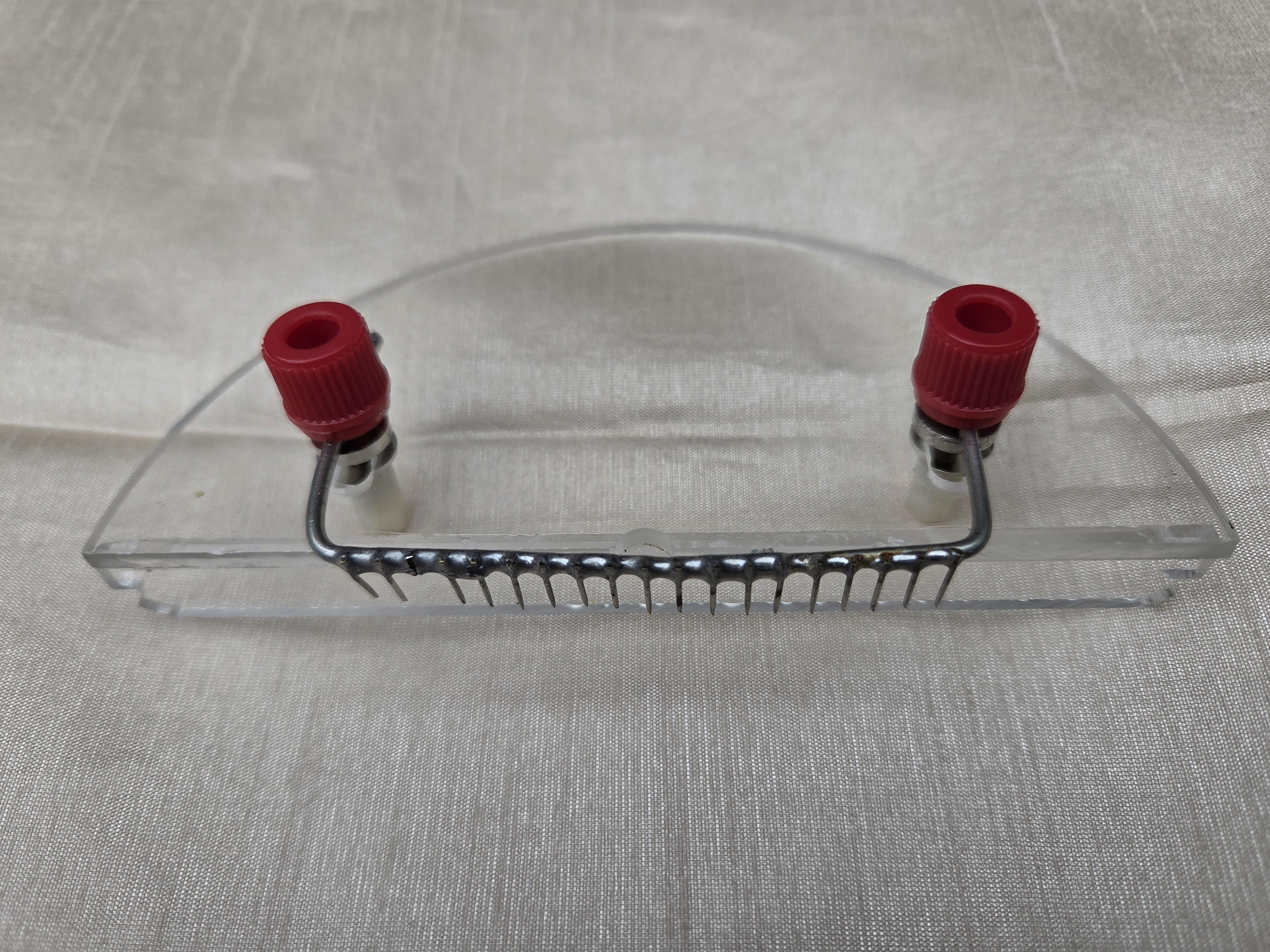
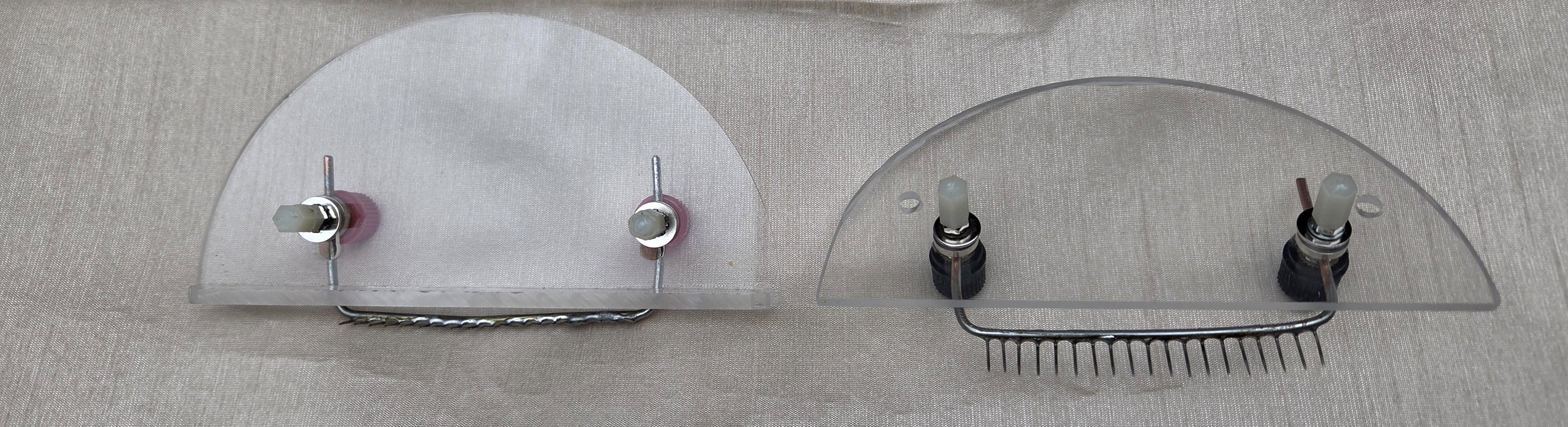

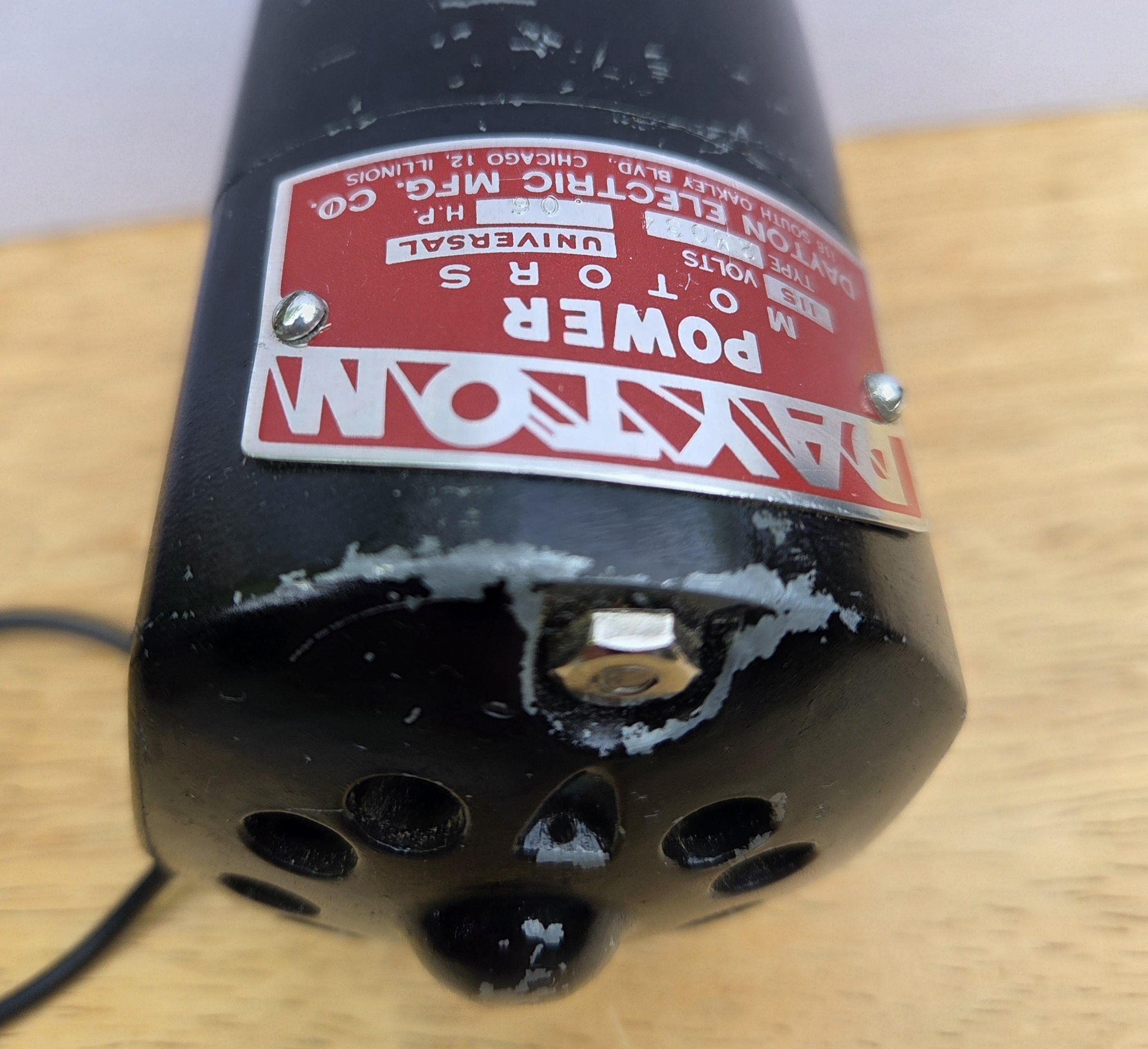

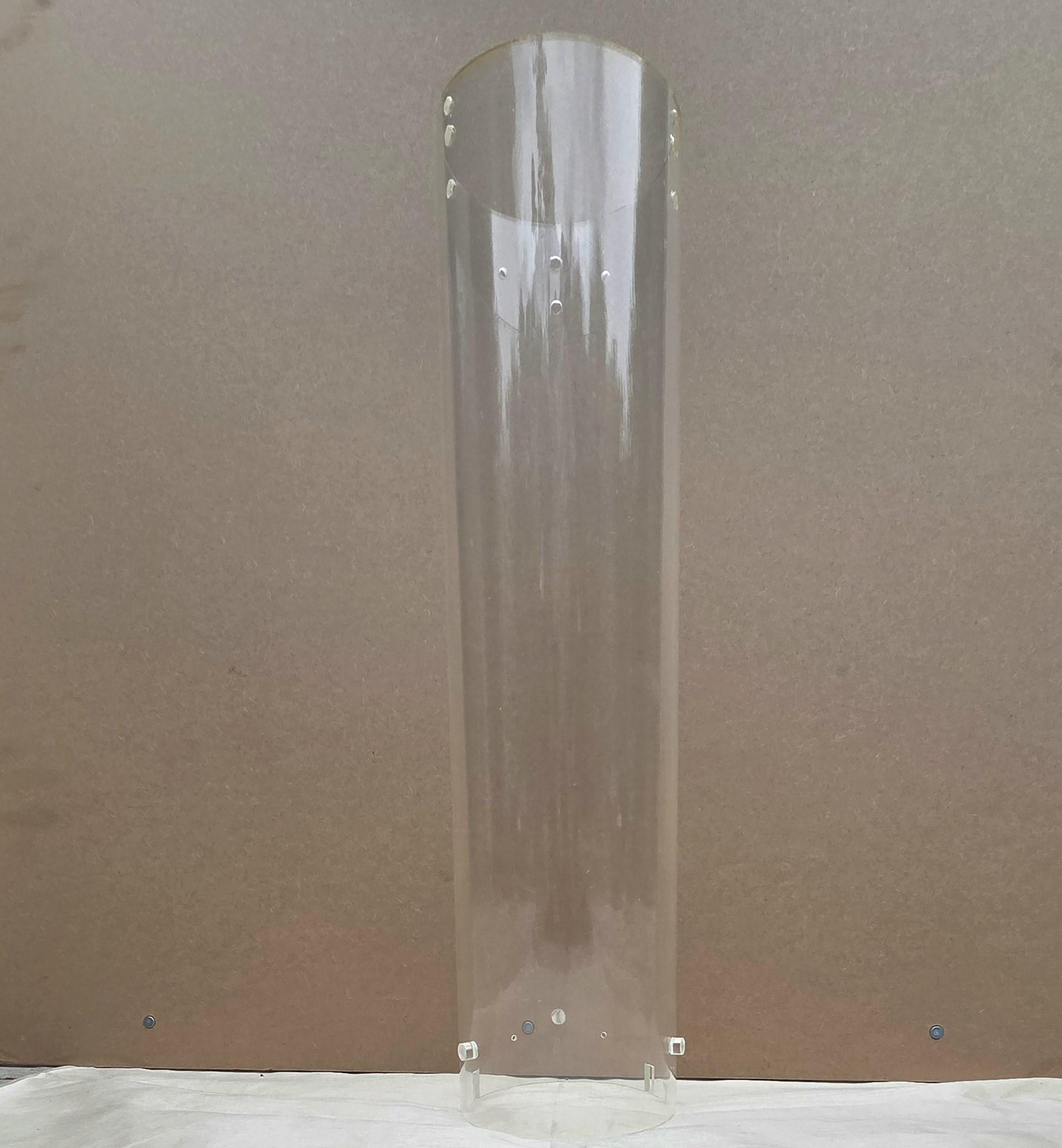
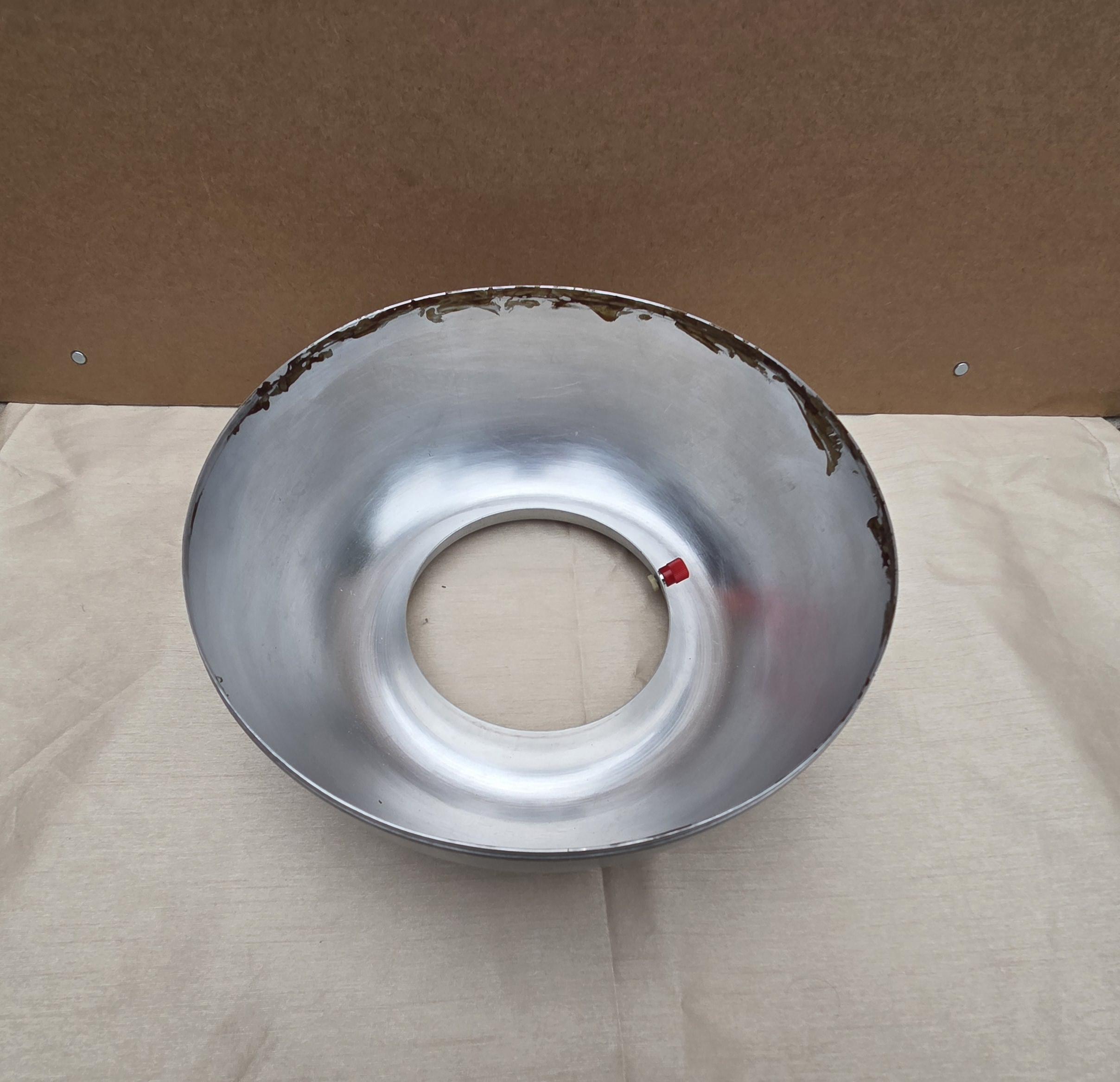
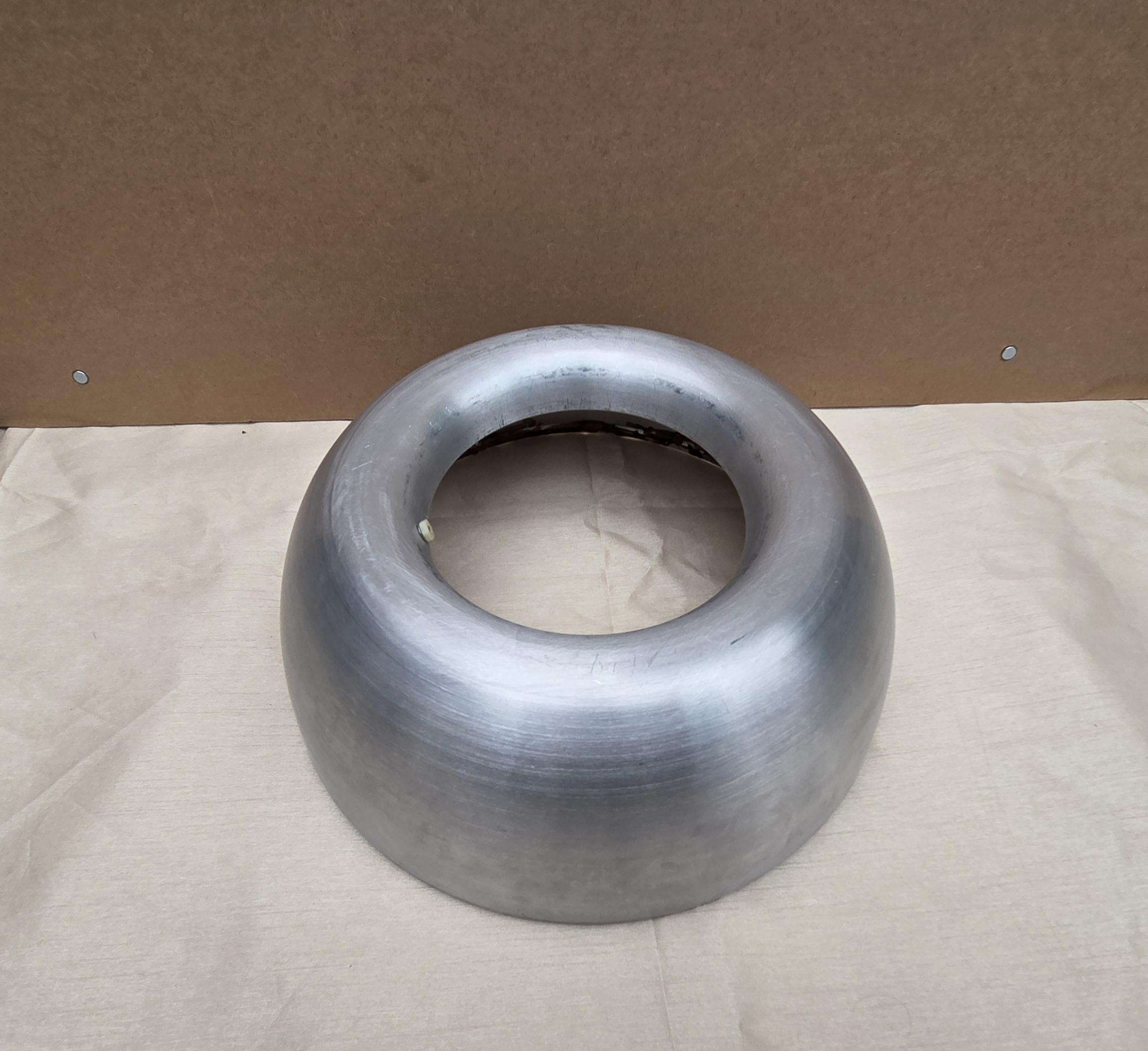
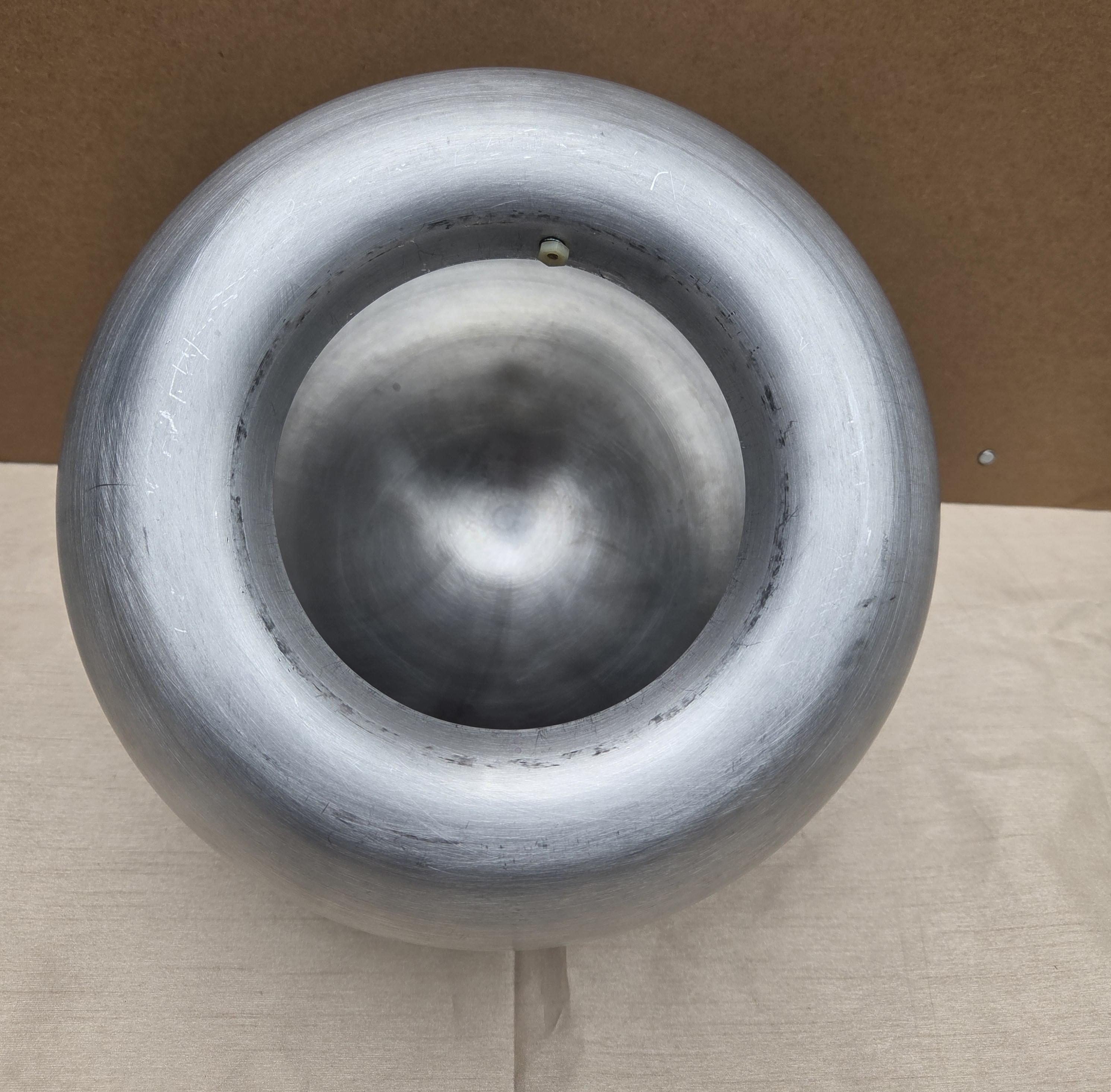
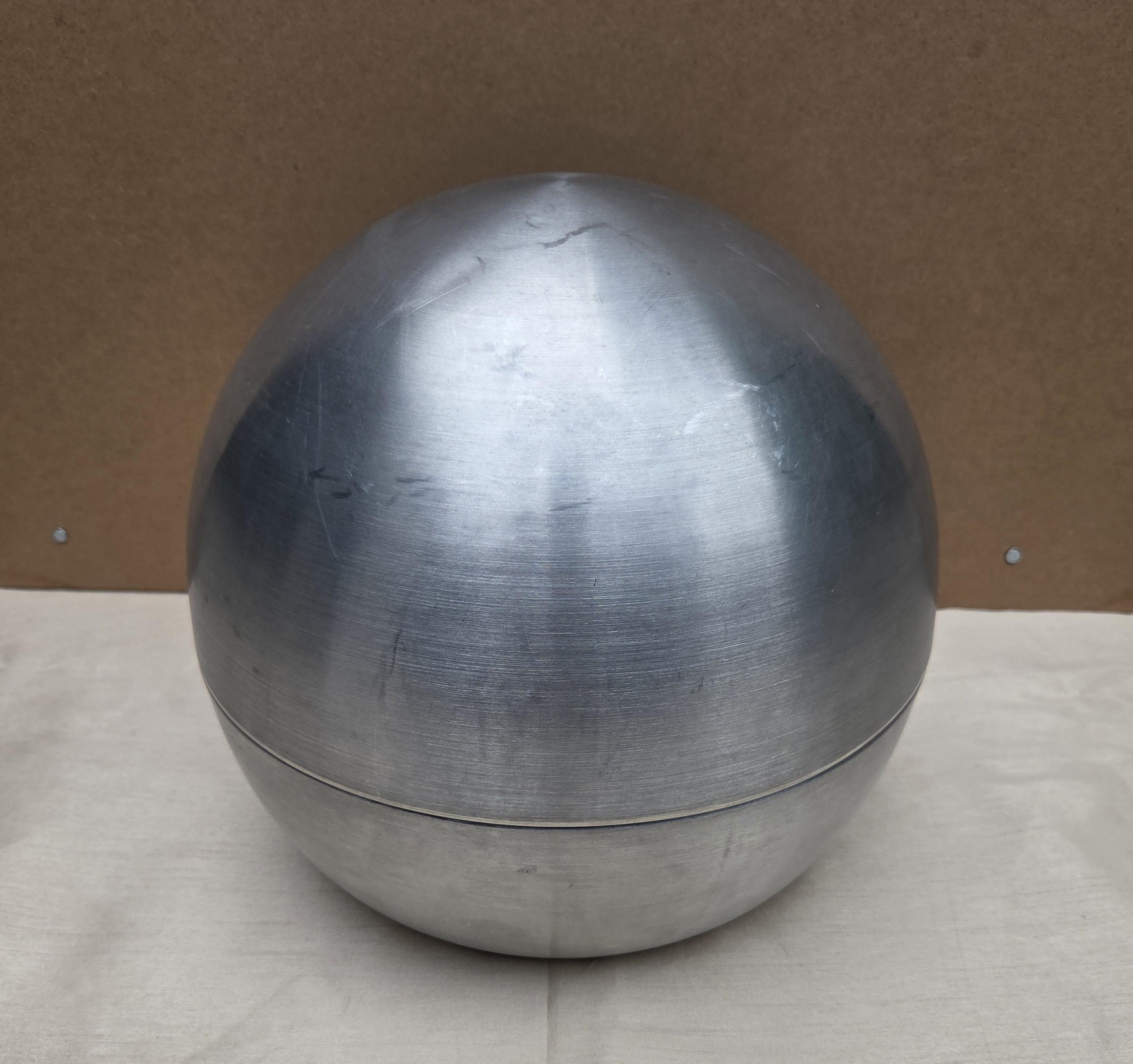
Alcohol wipes removed grime from the upper roller, shaft collars, and bearings. The lower roller needed a new covering of wool that I cut from a old jacket pocket. I used color-coded binding posts to identify the sprayer (black) and collector (red) combs. Wipes also worked well on the acrylic platforms that supported these components in the column. I replaced the motor's lead wires because of cracked insulation. A drop of 3-in-One in the front and rear oil holes allowed the motor shaft to turn freely.
I thought of replacing the 1/8" thick column with a sturdier 1/4" column of the same length and outside diameter; however, the cost was excessive. The original column had yellowed with age, but nothing a non-abrasive pot scrubber and mild dish soap followed by brisk rubbing with alcohol wipes couldn't handle. I cleaned the discharge terminal the same way, but some stubborn residue remained on the inside lip.
Planned Renovations
Here's a list of renovations described in the following steps:
- install 3-terminal, AC power inlet at the rear of the console (original model lacked an equipment ground);
- install three, undermounted corner braces to secure support column to console;
- replace or upgrade console components as needed;
- model particle accelerator assembly from a clear acrylic tube using USB-powered lighting and install in support column;
- swap out 12 VDC power supply from Rayotron tribute project, wire in a 5 VDC USB car adapter, then mount assembly in console.
AC Inlet & Corner Brace Install

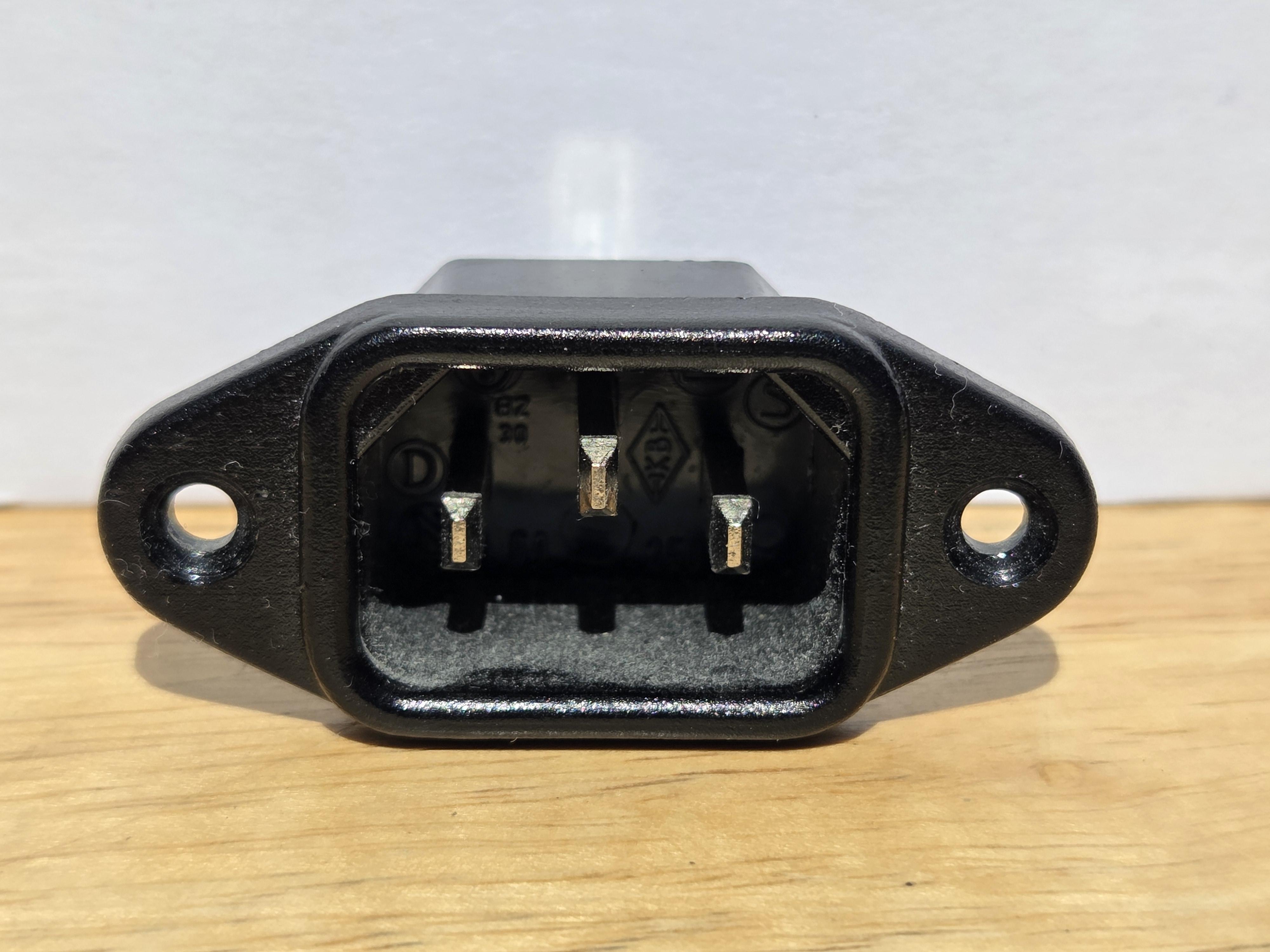
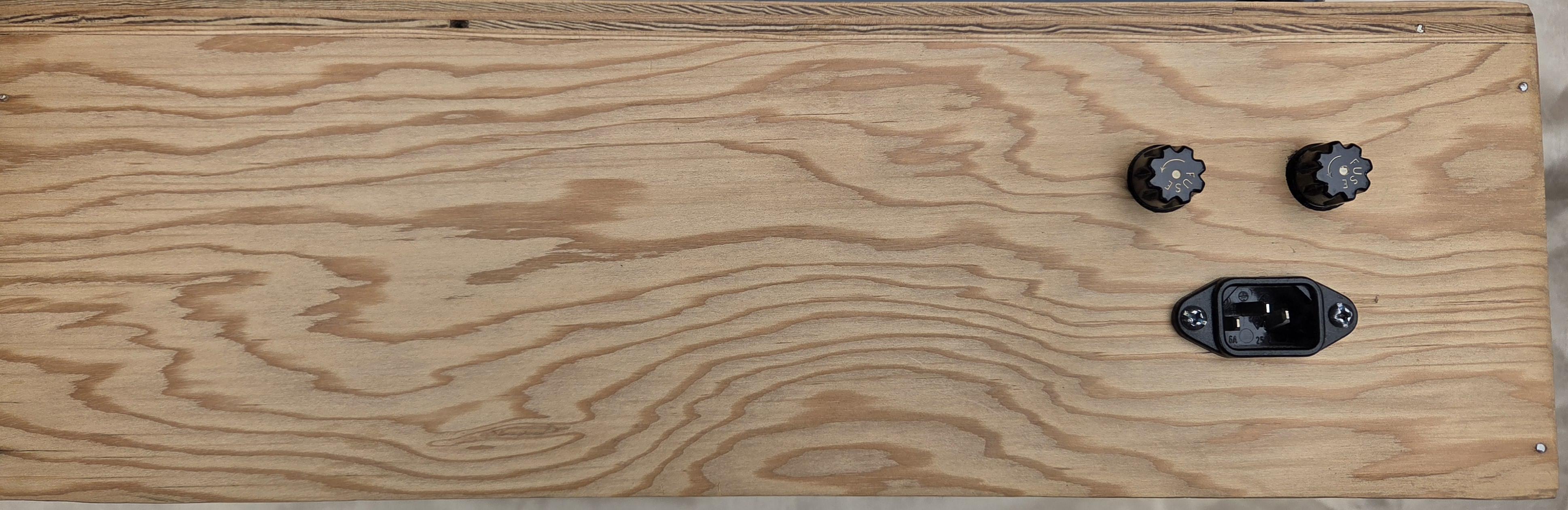
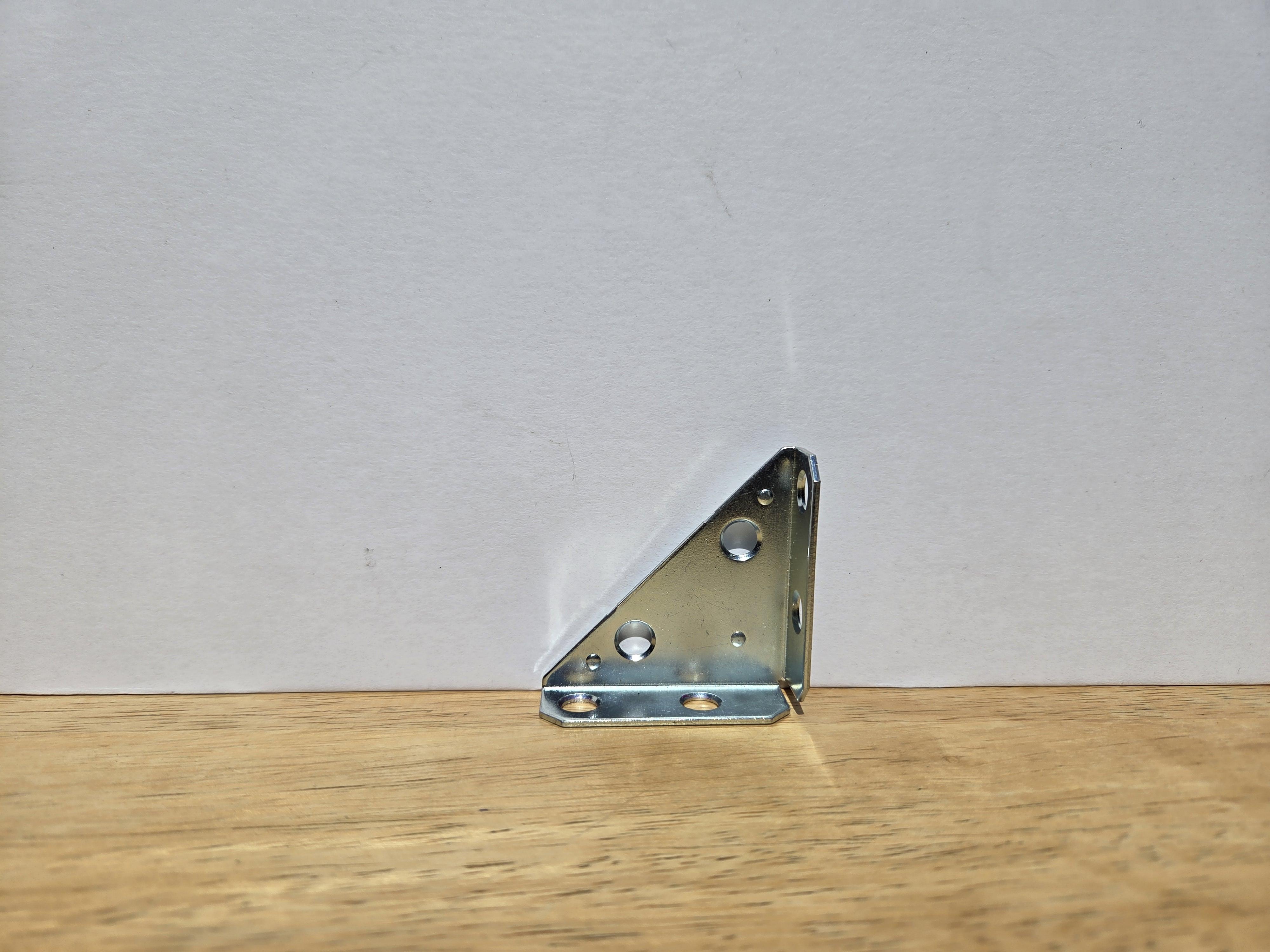
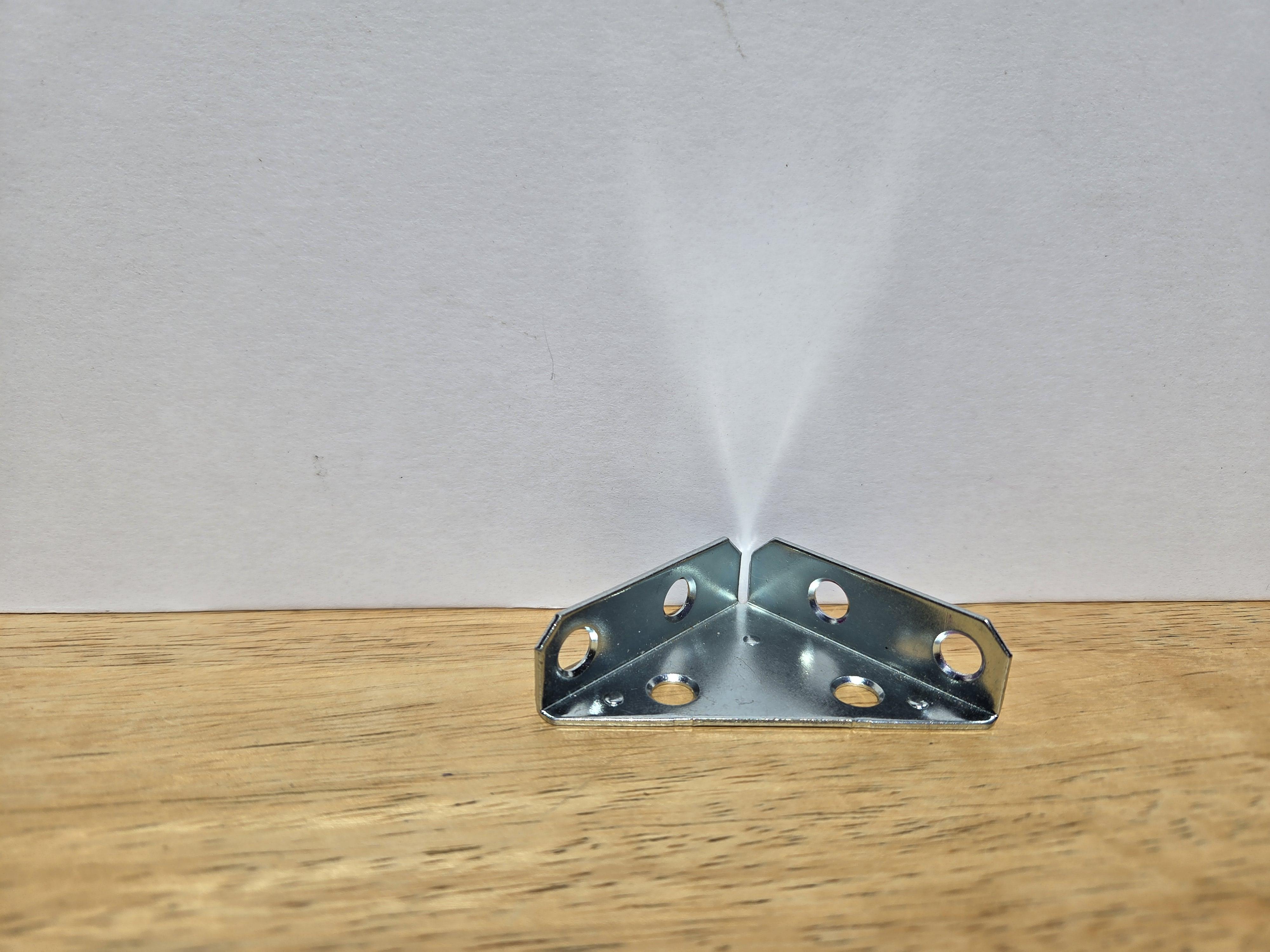


I used a hobby saw to enlarge the exit hole for the power cord and then filed the opening until I could press fit the AC inlet in place. Flat head machine screws with finishing washers anchored the braces under console so they were out of sight.
Component Replacement
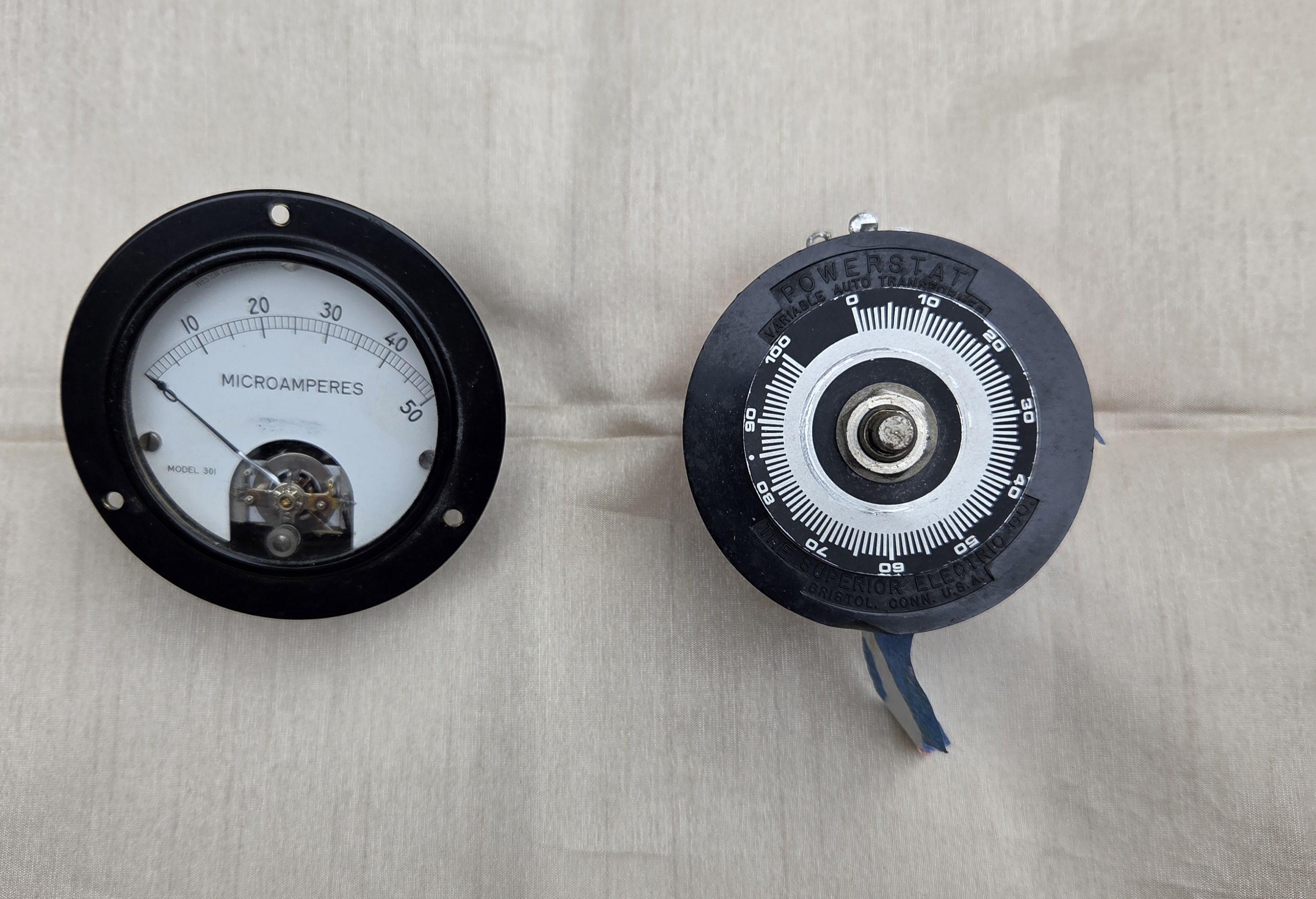

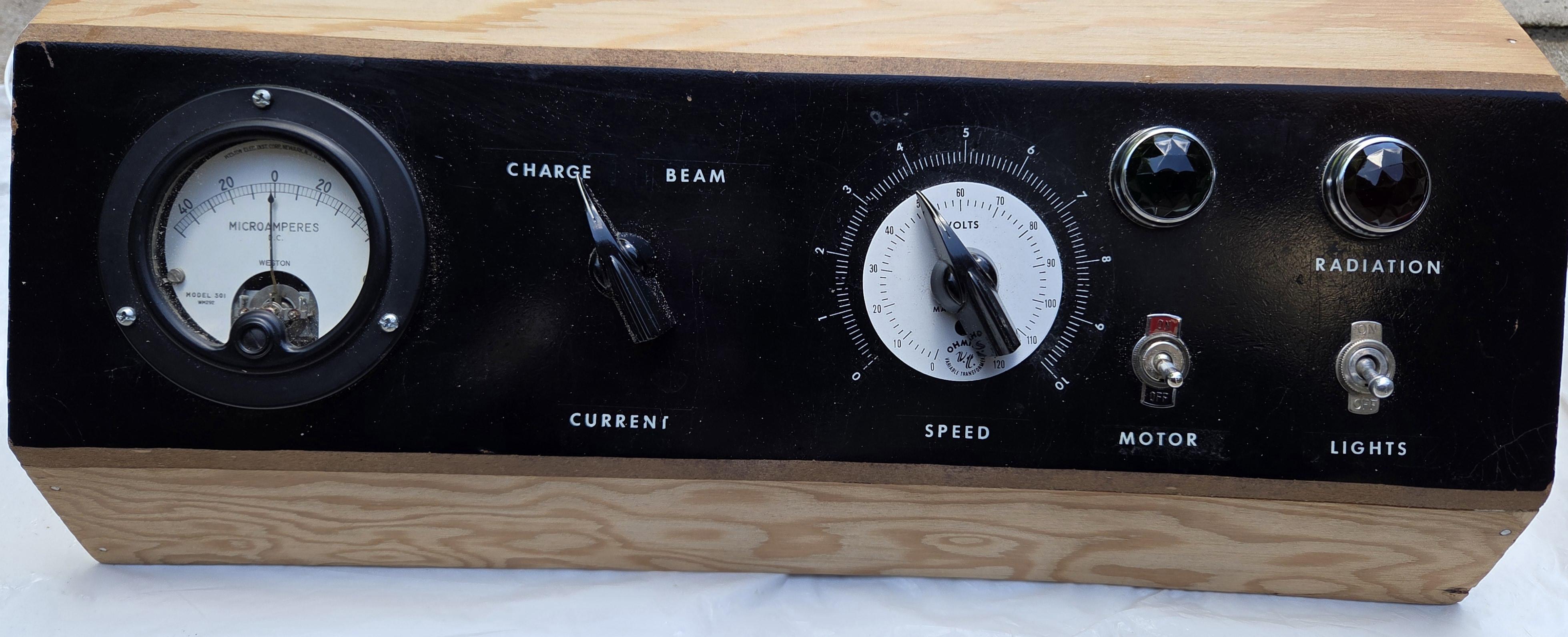
I replaced the original rectangular microammeter with this example of a round one from the same time period to preserve the circular theme of the instrument panel's lights and controls. Although the power resistor controlling motor speed might have worked after removing rust, I exchanged it with a new variable AC transformer and dial plate. I replaced both filament bulbs.
Design Ideas for Beam Tube
Designing lighting effects for beam tube was challenging. I relied on helpful images from Lampes & Tubes for ideas. The first option incorporated the electroluminescent sheet that generated visual effects in the blade of a toy lightsaber. Unfortunately, that option vaporized in a puff of smoke when the output from a DIY driver circuit exceeded the operating specs of the sheet. The next option was a string of flashing LEDs. These lights I had required 120 VAC and I planned to limit the use of line-powered components in the console for safety reasons.
Beam Tube & Light Rod Construction
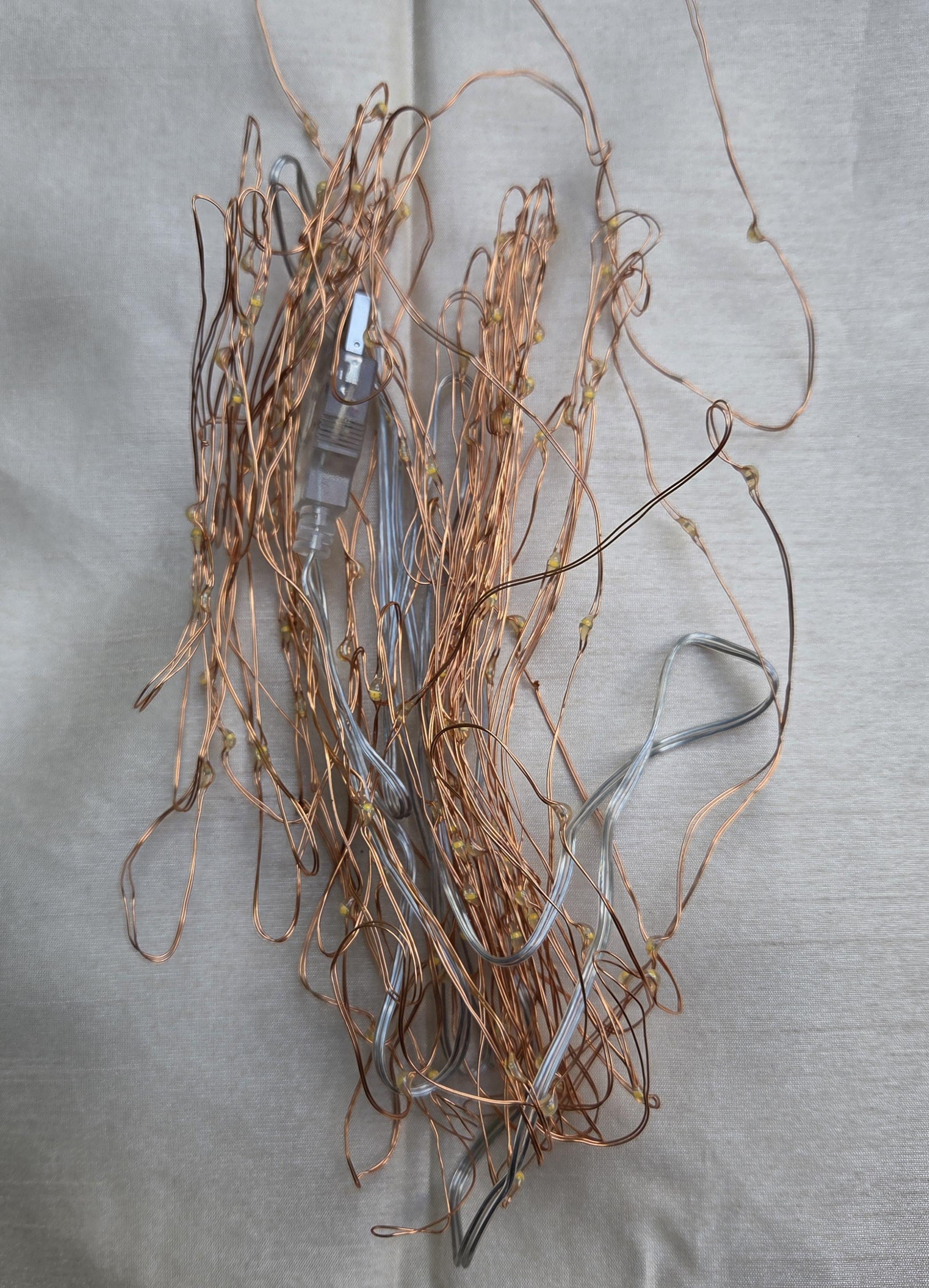
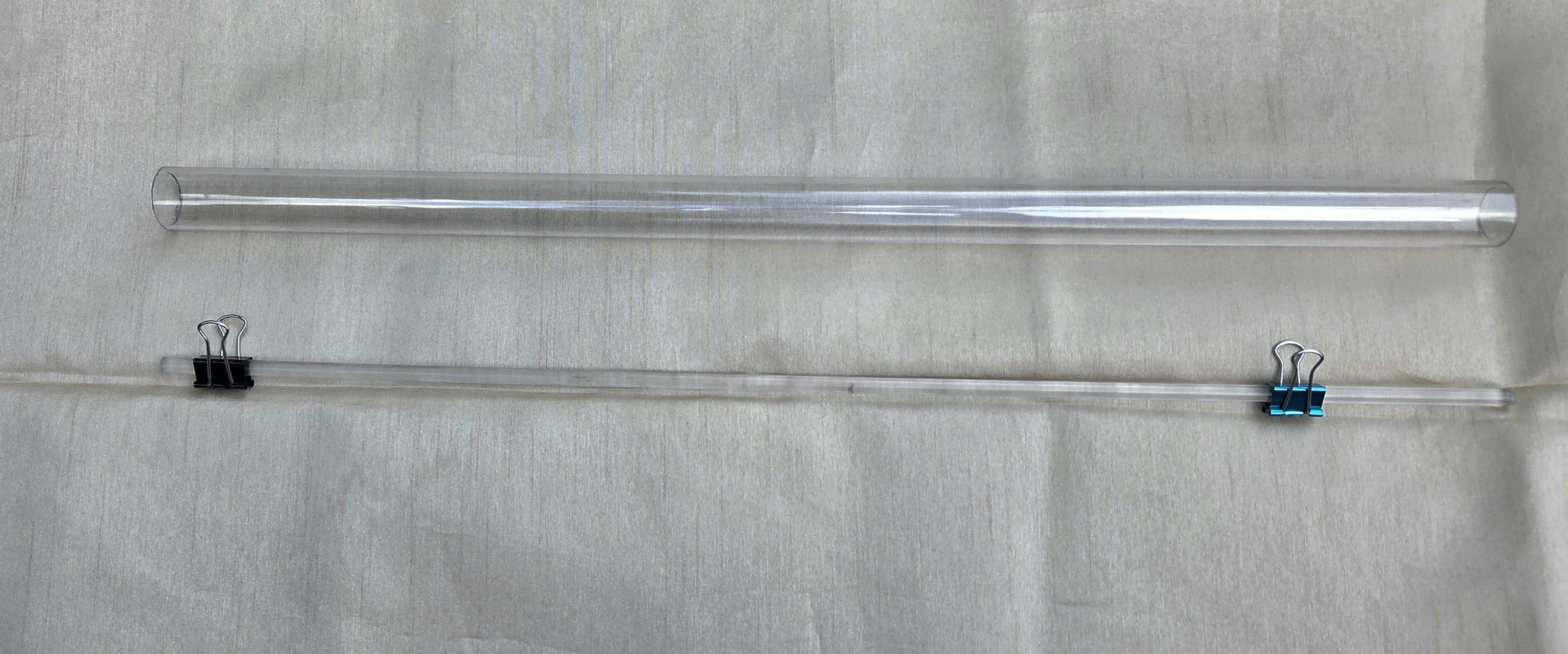
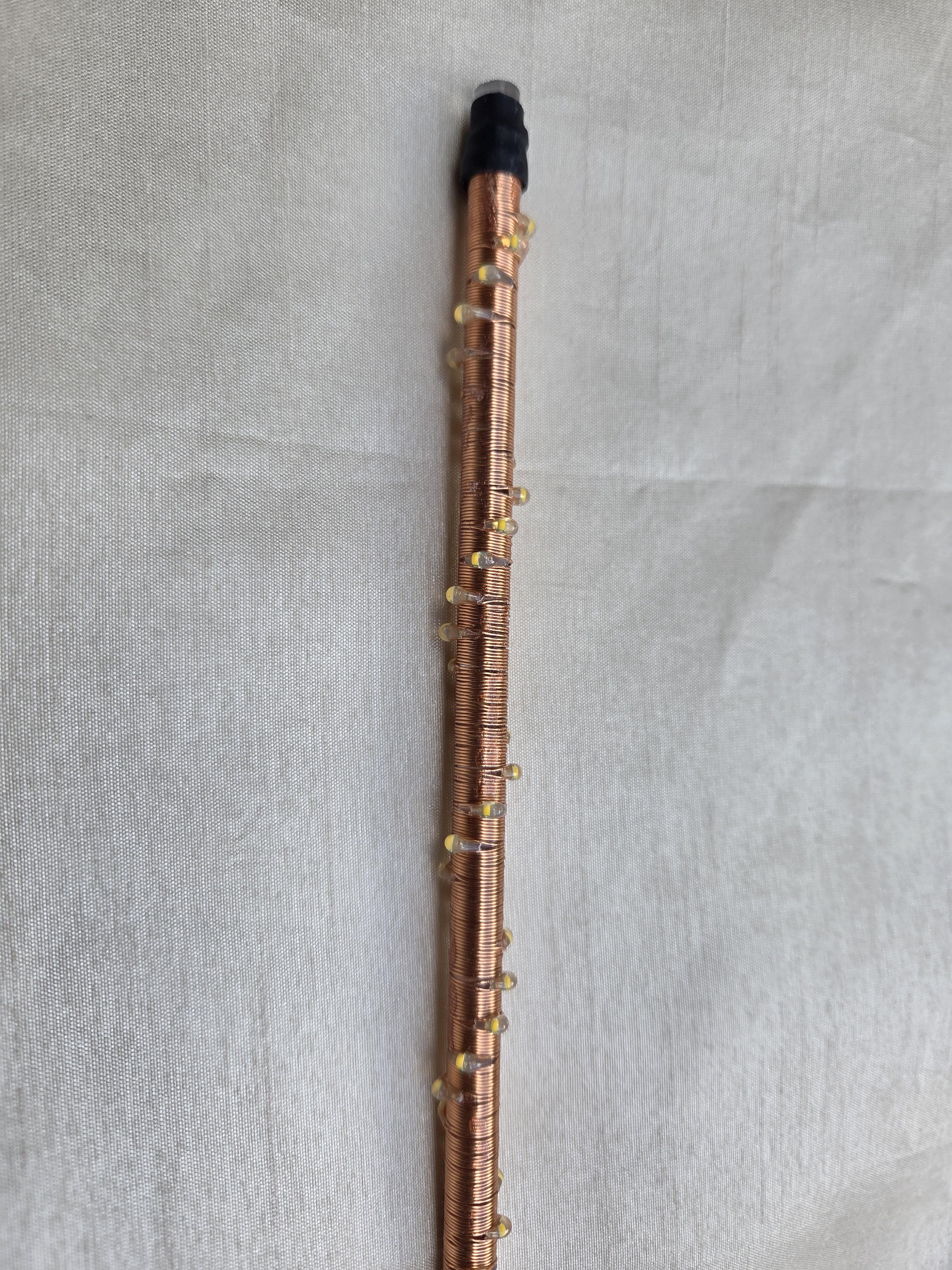
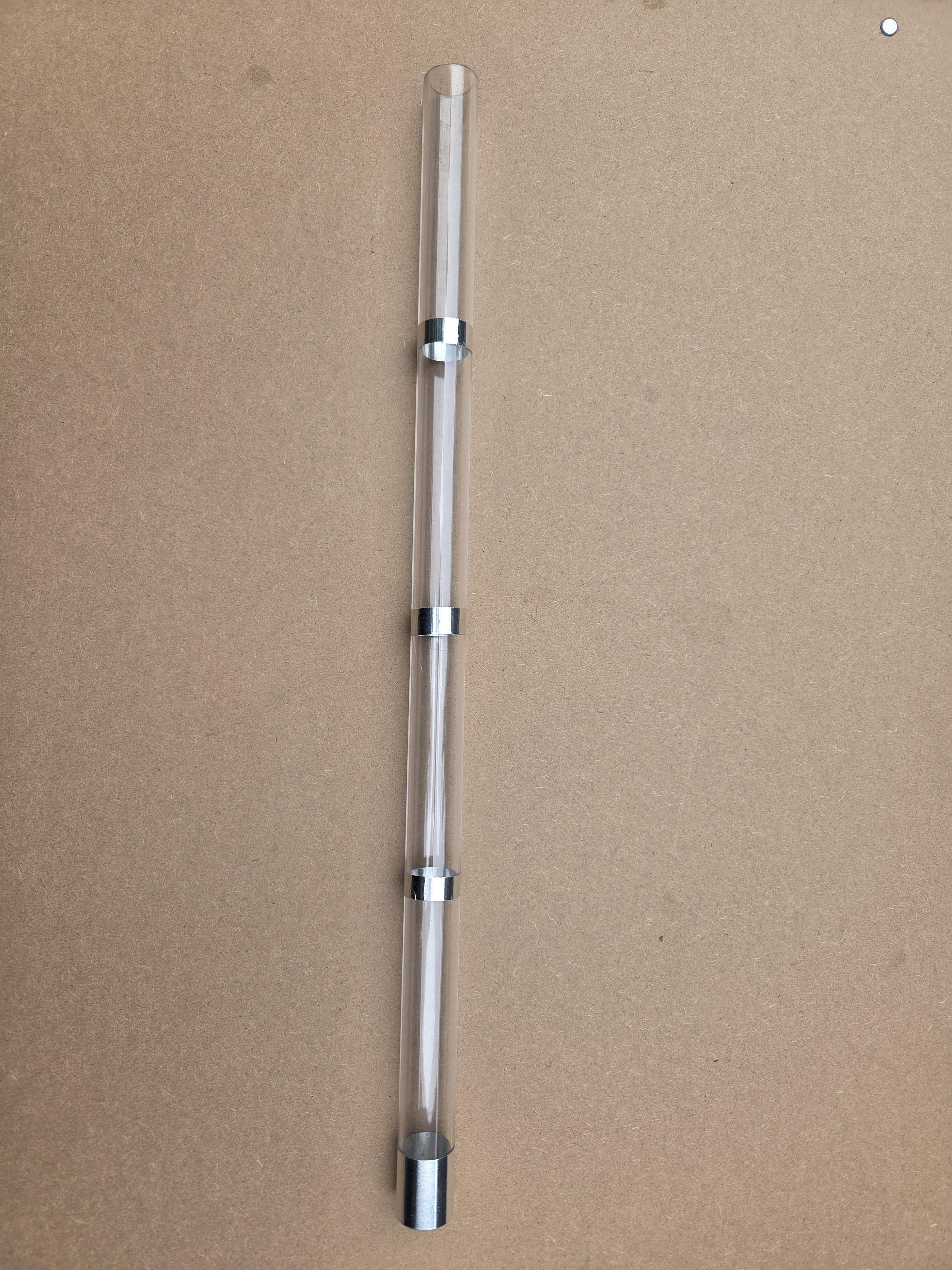

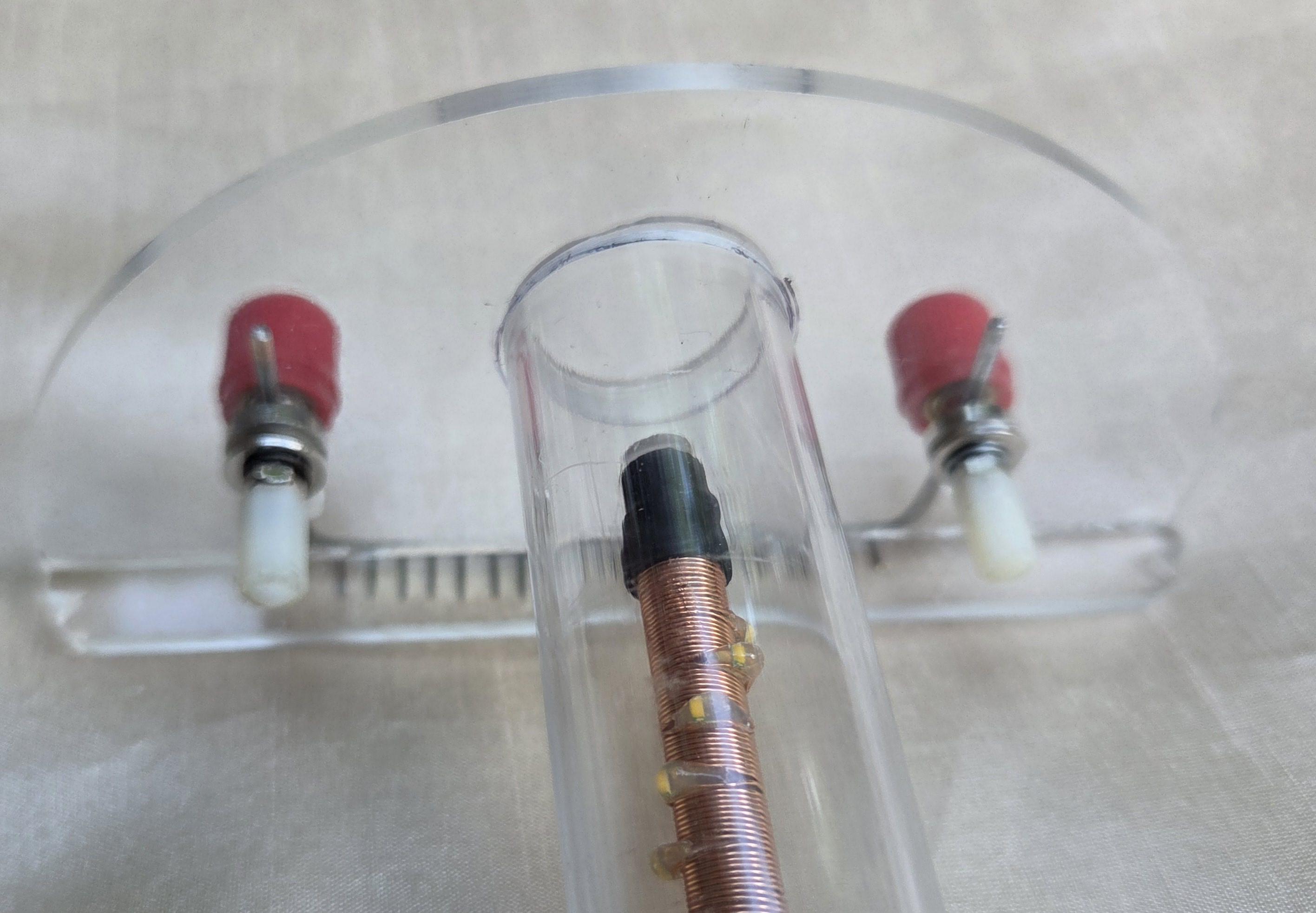
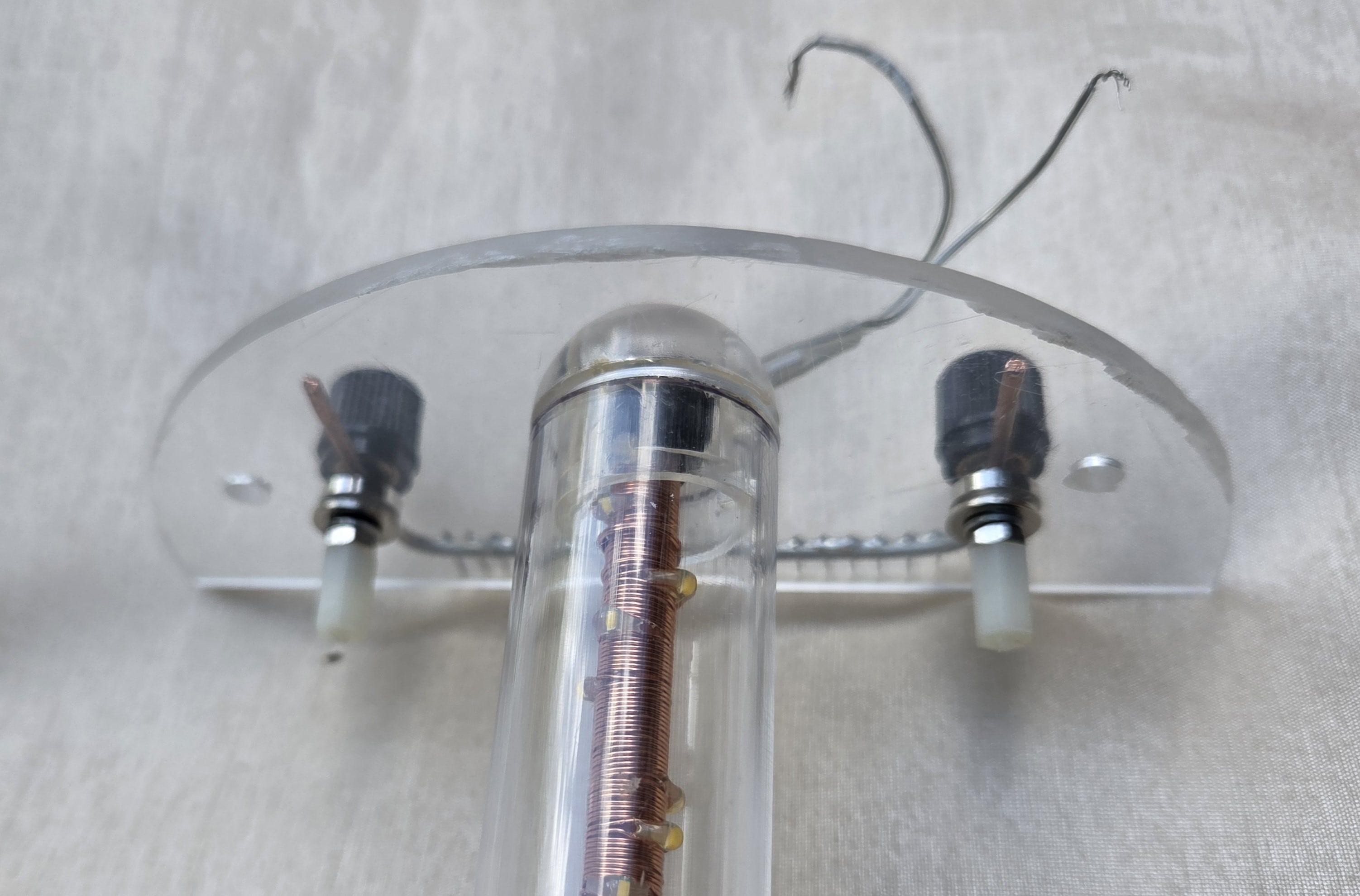
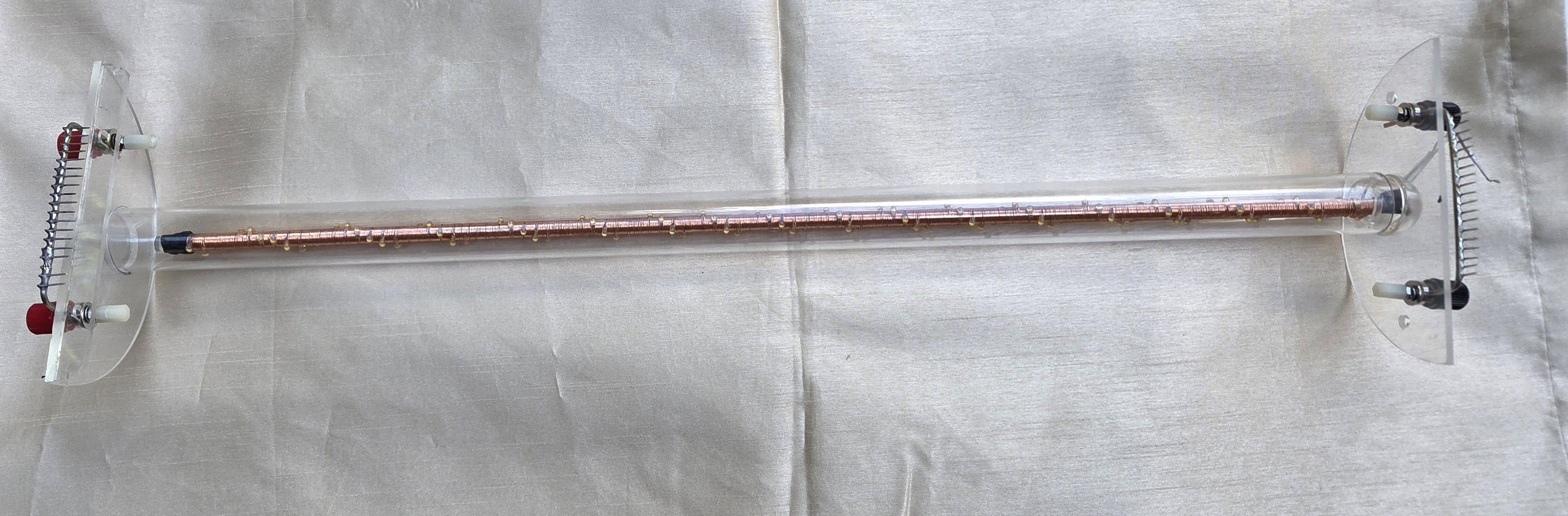
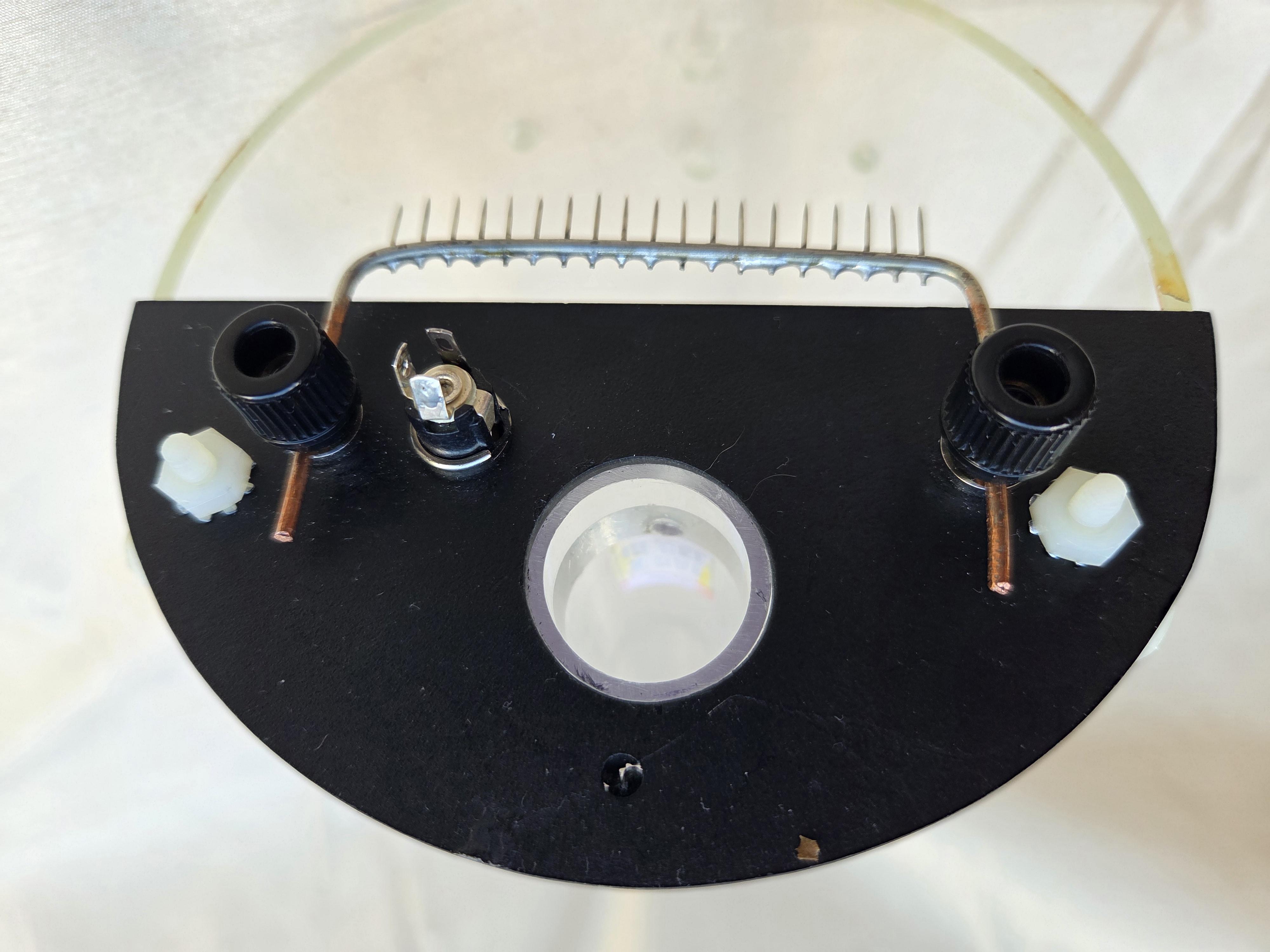
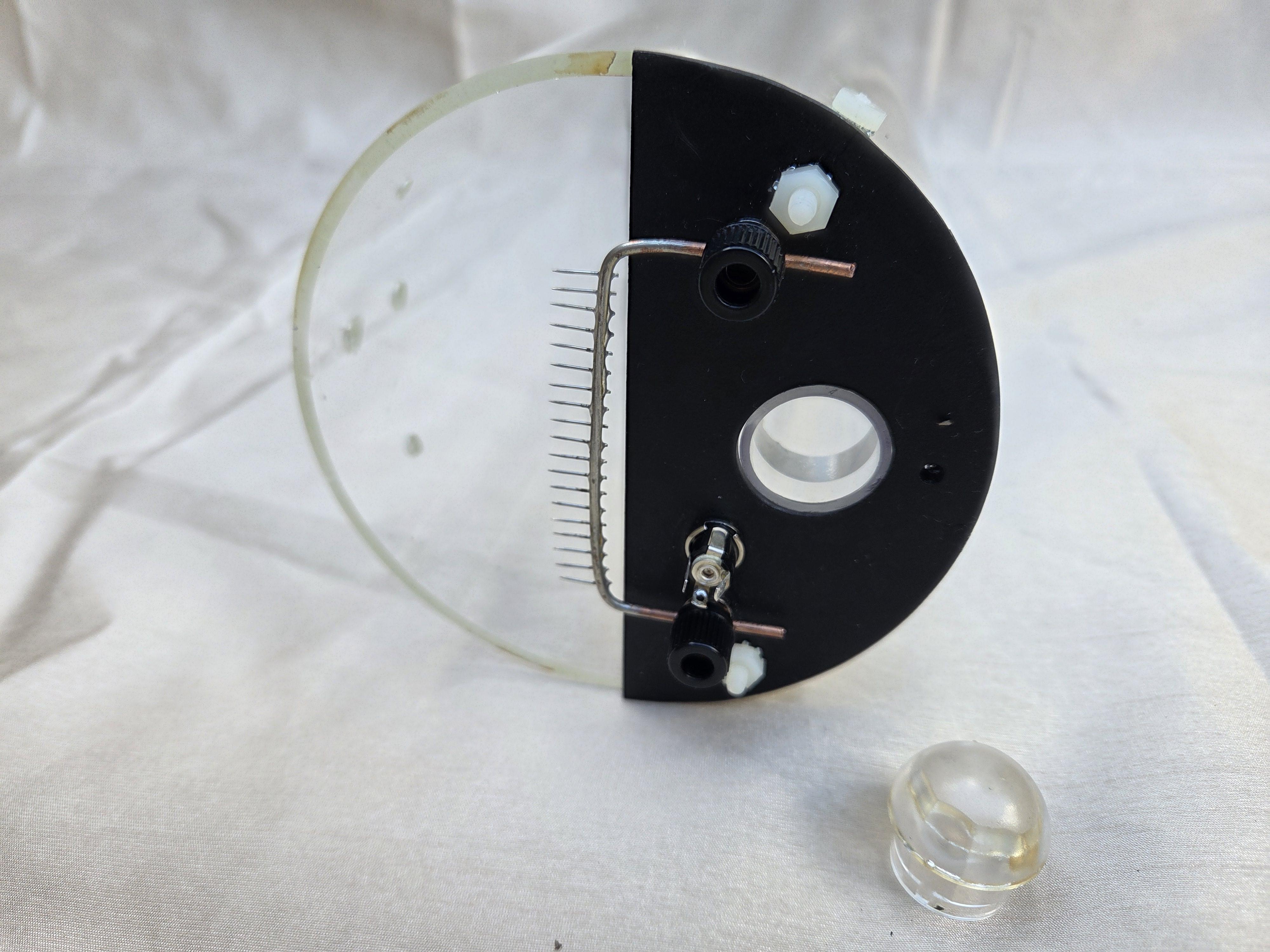
Light Rod: A tangled mess of USB-powered fairy lights was the fallback plan for illuminating the tube. I spent several evenings untangling and hand-winding a single layer with about 600 tight turns of 100 lights along the length of the support rod using a spring clamp to anchor the end attached to the USB plug (Construction tip: use a DIY coil winder for faster results!). When I reached the end of the rod, I clamped the opposite end. Several drops of CA followed by a section of heat shrink tubing secured the wire ends.
Tube Accessorizing: Initially, I planned to represent the gradient rings on the original beam tube by winding turns of wire along the tube's length. This was a non-starter after the challenges of the previous step. An better idea was to wrap strips of aluminum foil tape around the tube, then smooth the tape by rolling it on a hard surface. The strip at the end identified the tube's base and represented the e-beam's target where the magic of subatomic collisions occurred.
Platform Modifications: I drilled a 2.5 cm hole in the center of the sprayer and collector platforms to accept the lightsaber tube; 5 mm mounting holes drilled at the left and right edges of the sprayer platform accommodated two small corner braces that secured the platform to the base of the support column with nylon screws.
Initially, I cut the USB power cable, then slid the light rod into the lightsaber tube and threaded the wire leads through a 5 mm hole in the endcap. In an improved version of the tube, I drilled a hole through the base of the tube and soldered the threaded wires to a DC power jack mounted on the sprayer platform. When the platform cracked during drilling, I used CA for repairs and spray painted the piece black to hide the damage.
Install & Test Light Rod
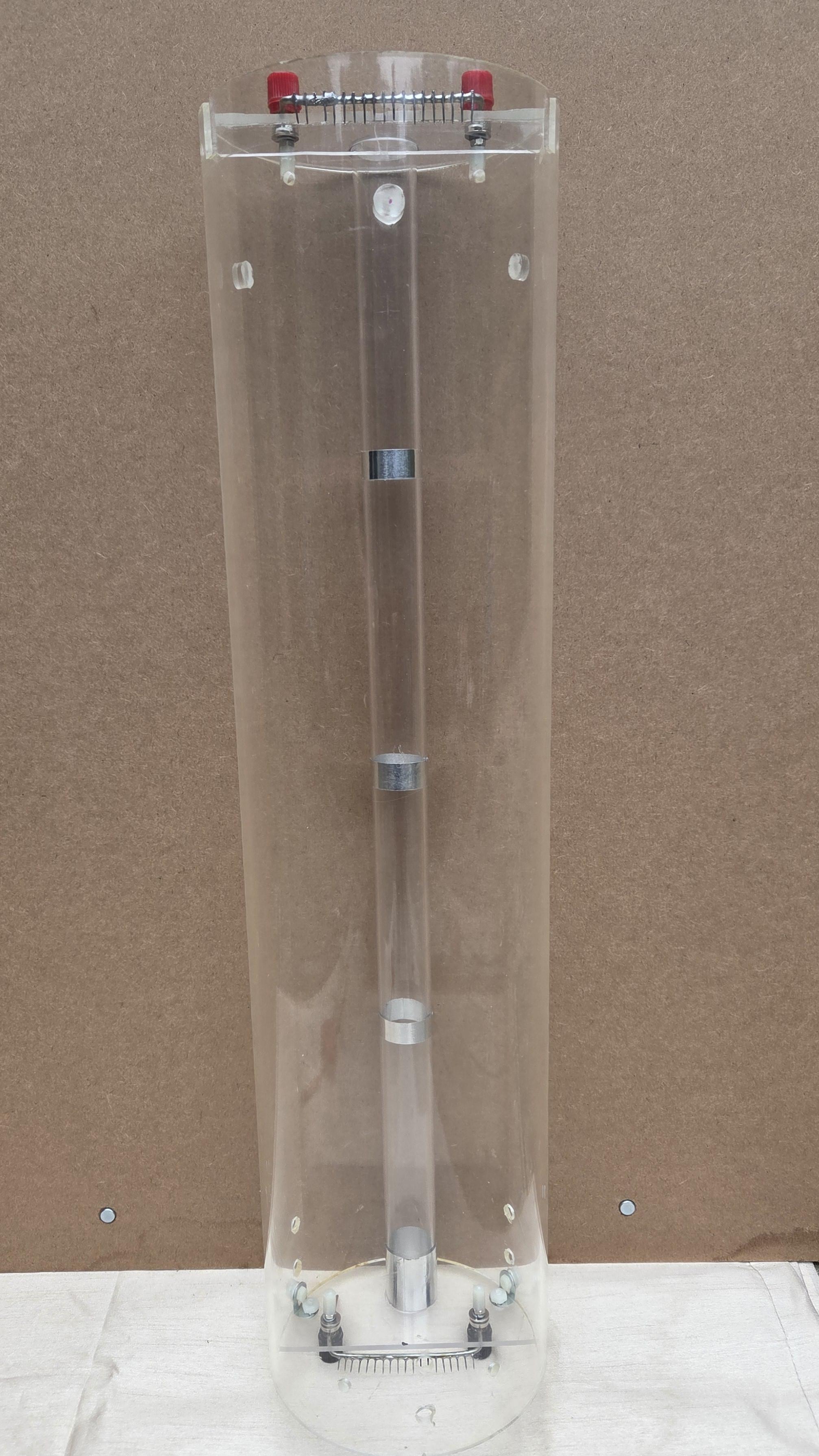
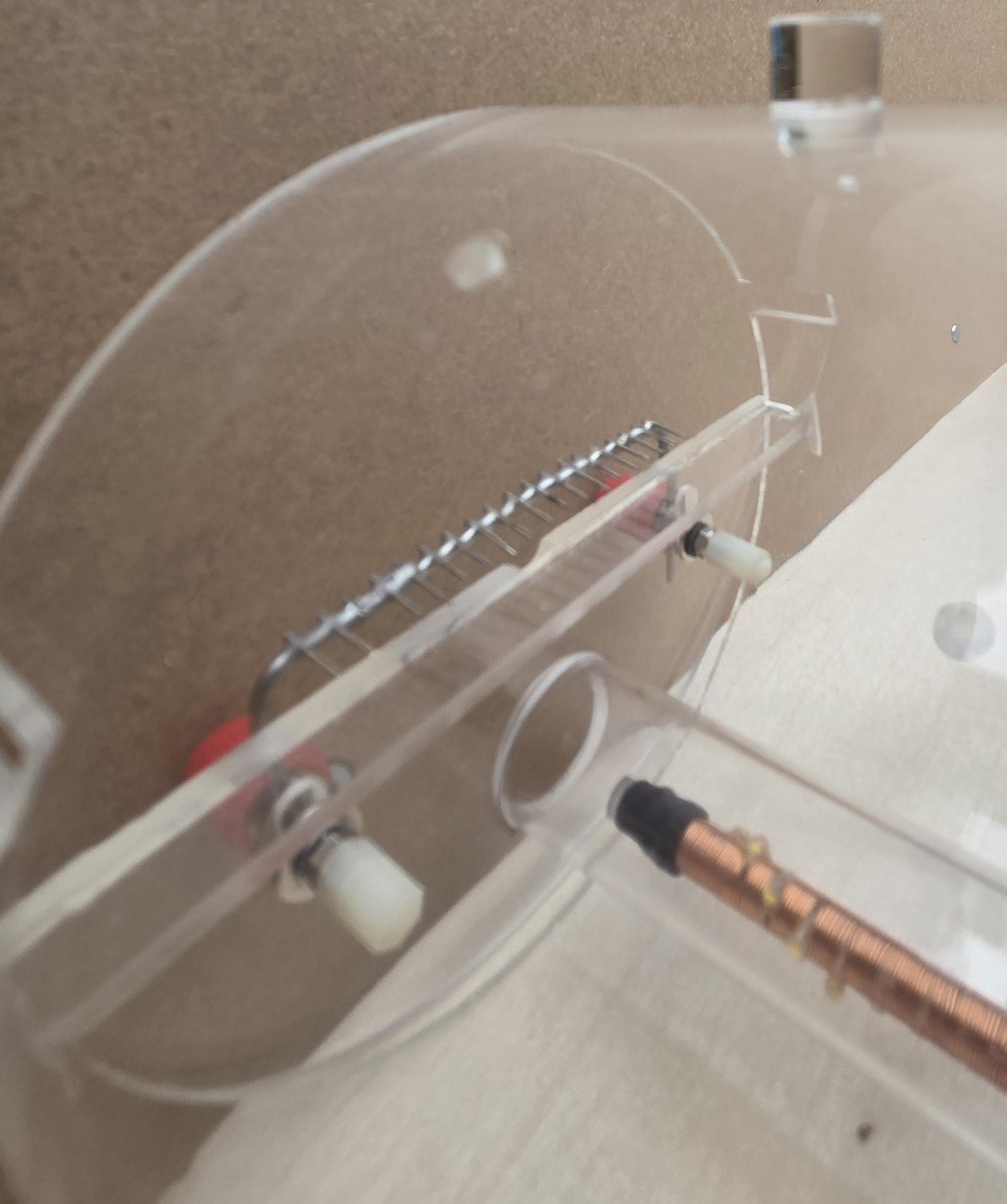
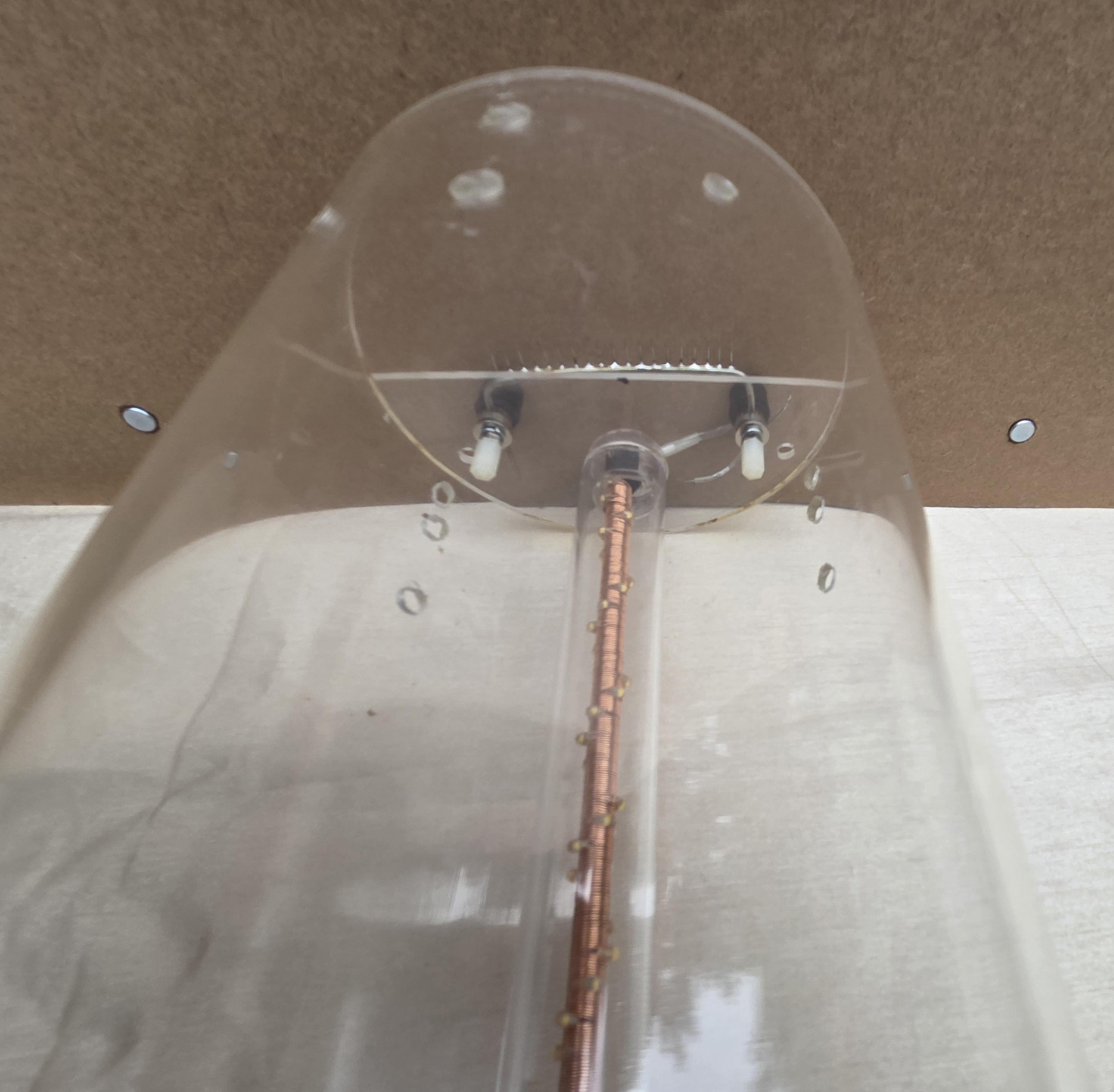
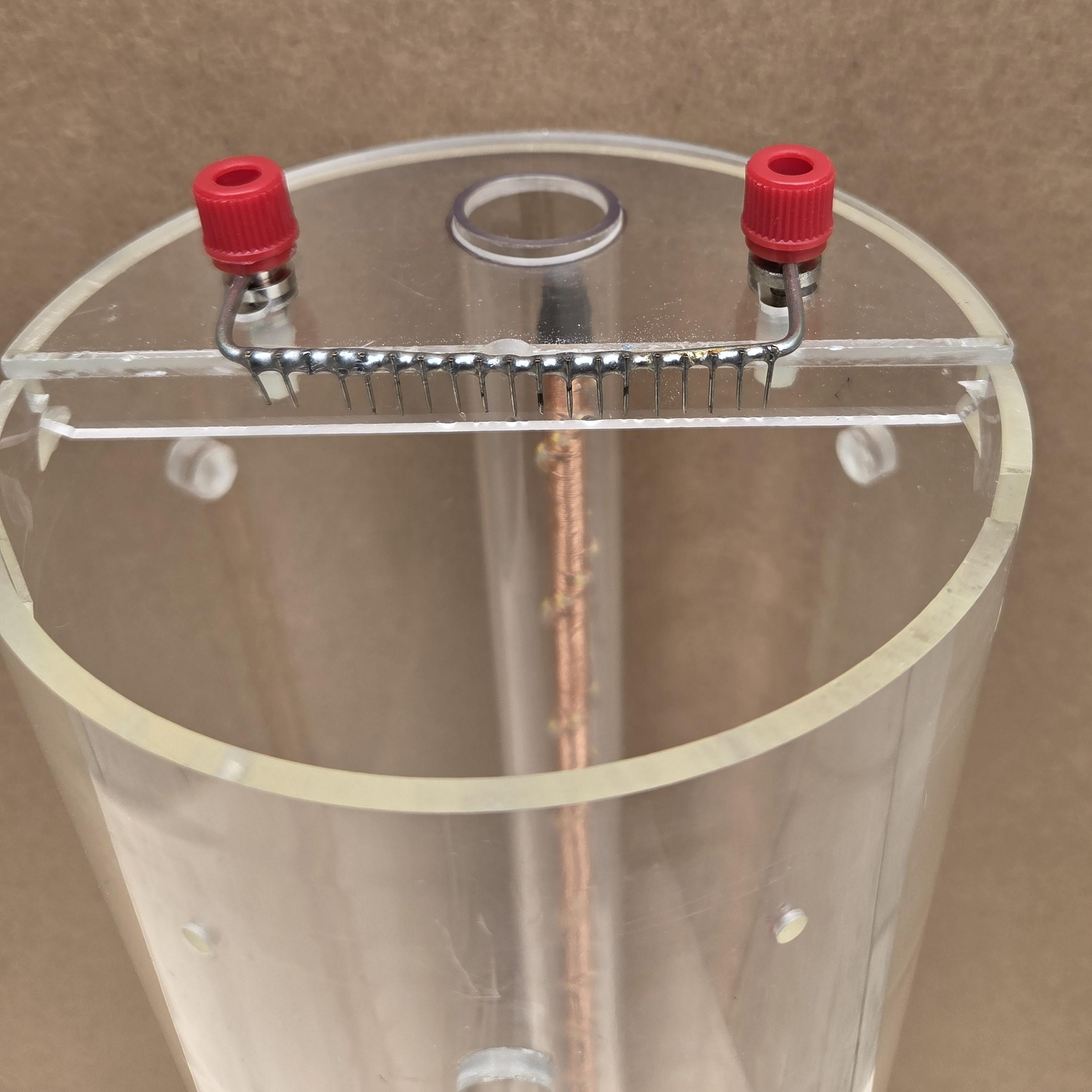
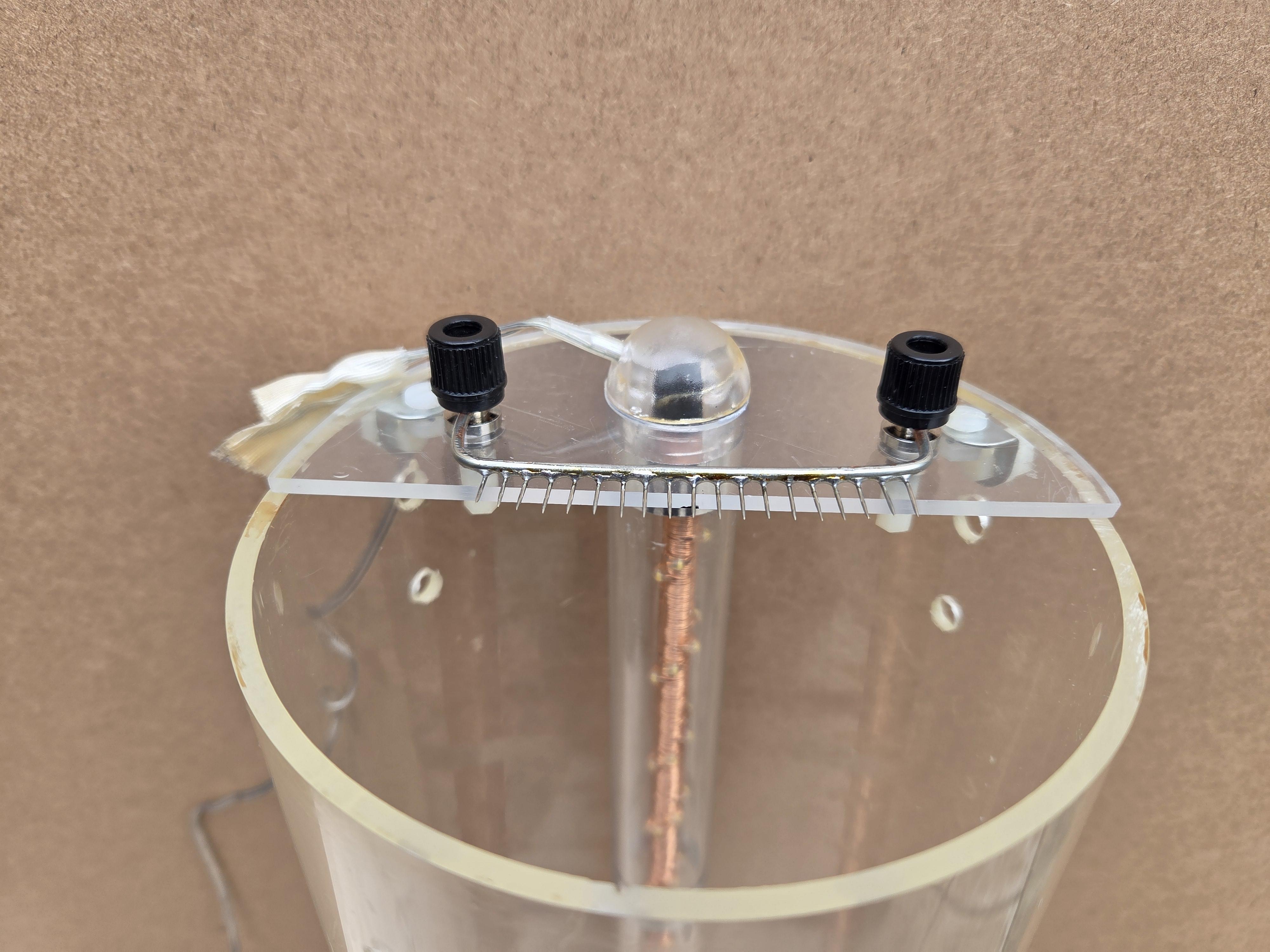
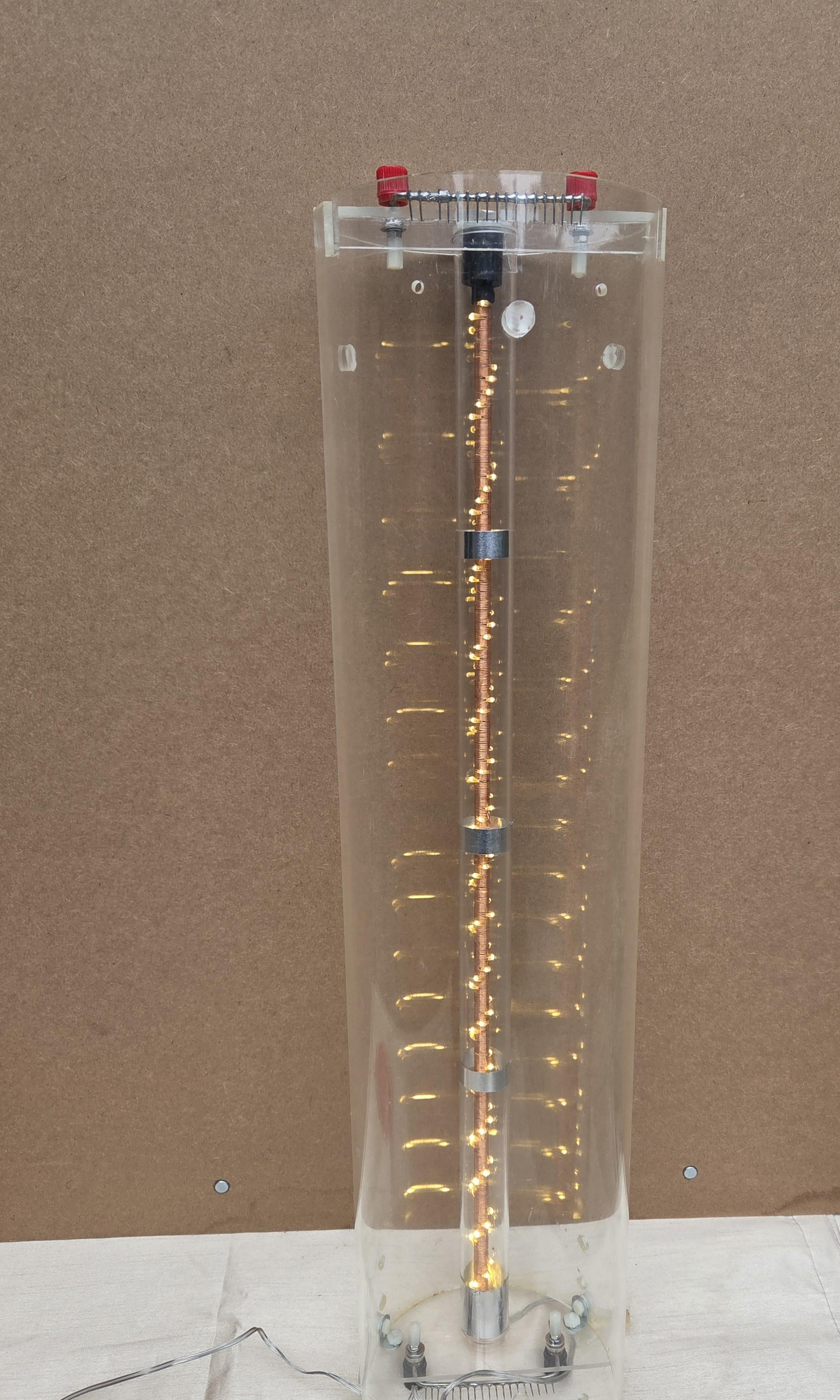
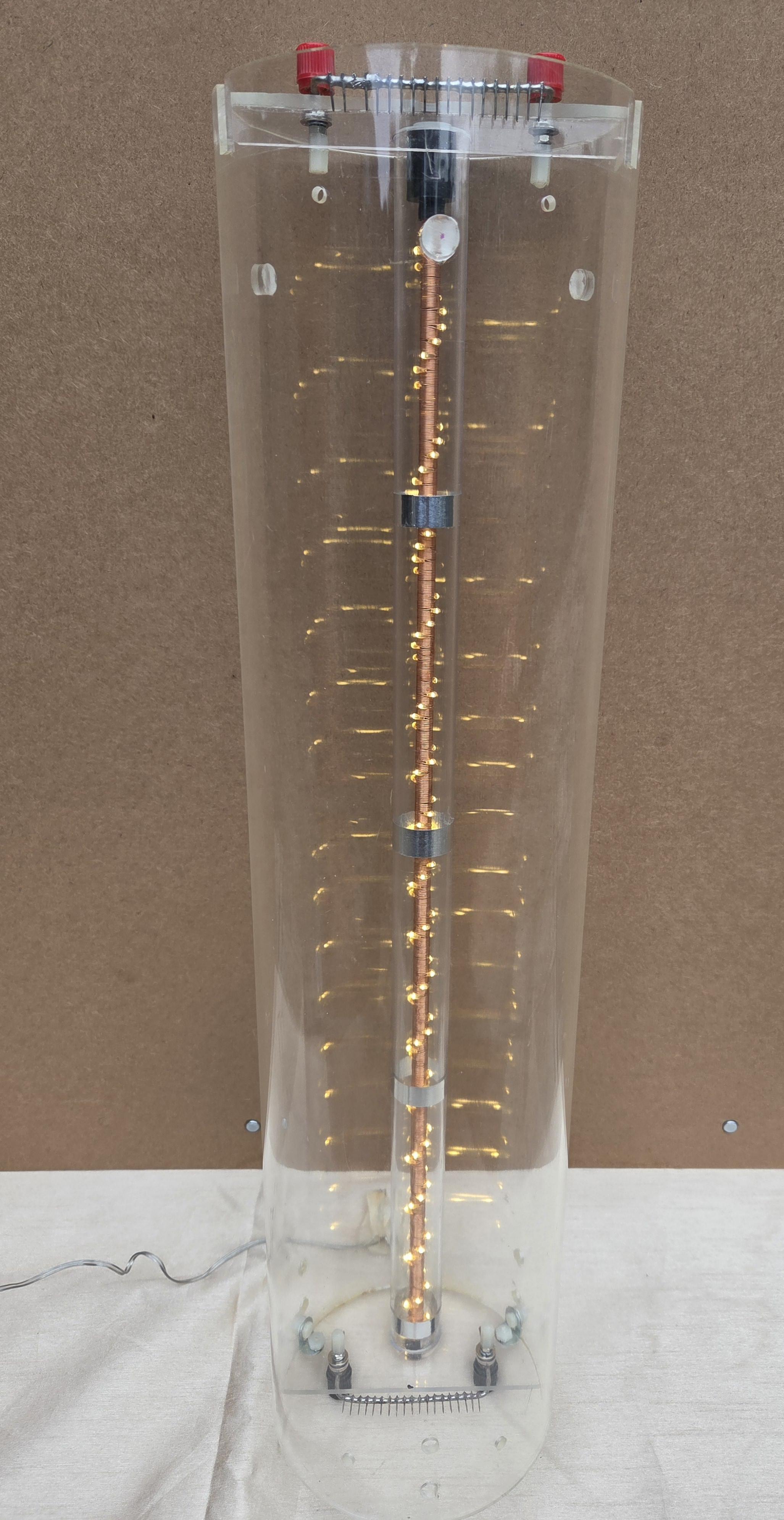


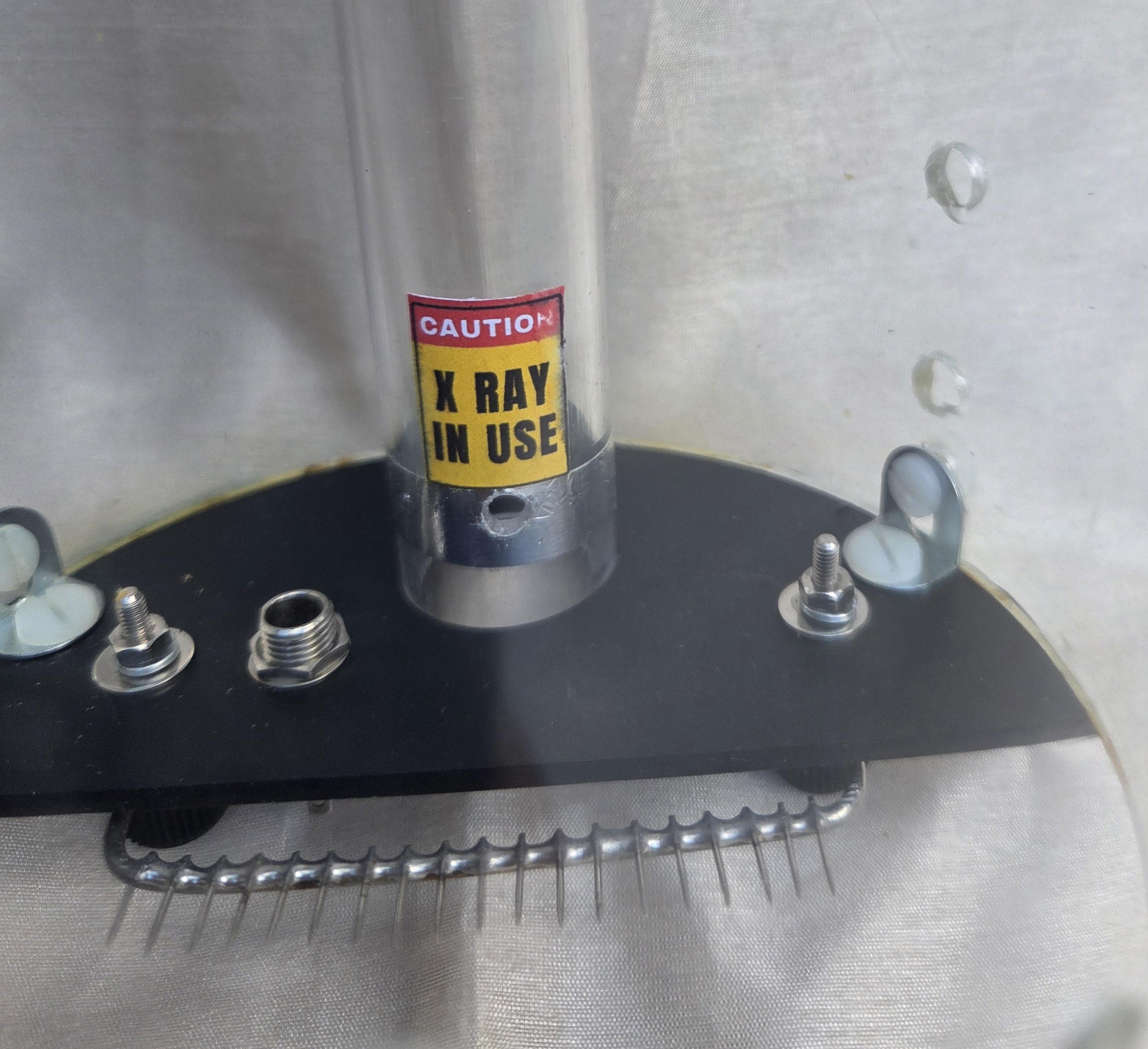
The sprayer and collector platforms suported the light rod in the lightsaber tube. (Note: collector platform press fits on top of support column; sprayer platform is secured to base with pan head, nylon screws). I printed out a radiation warning sign from the internet and glued it to the tube's base for added realism. When tested with a 5 VDC wall adapter, the fairy lights illuminated the beam tube with unexpected, multiple reflections.
I wrapped silver tape around the sleeve of the endcap for a friction fit in the lightsaber's base, then glued the collector platform to the upper end of the lightsaber tube. (Note: Do not glue lightsaber base to sprayer platform!) When power cable is unpluged, beam tube and light rod assembly separate from support column by grasping collector platform and pulling it through column.
DC Power Supply Construction
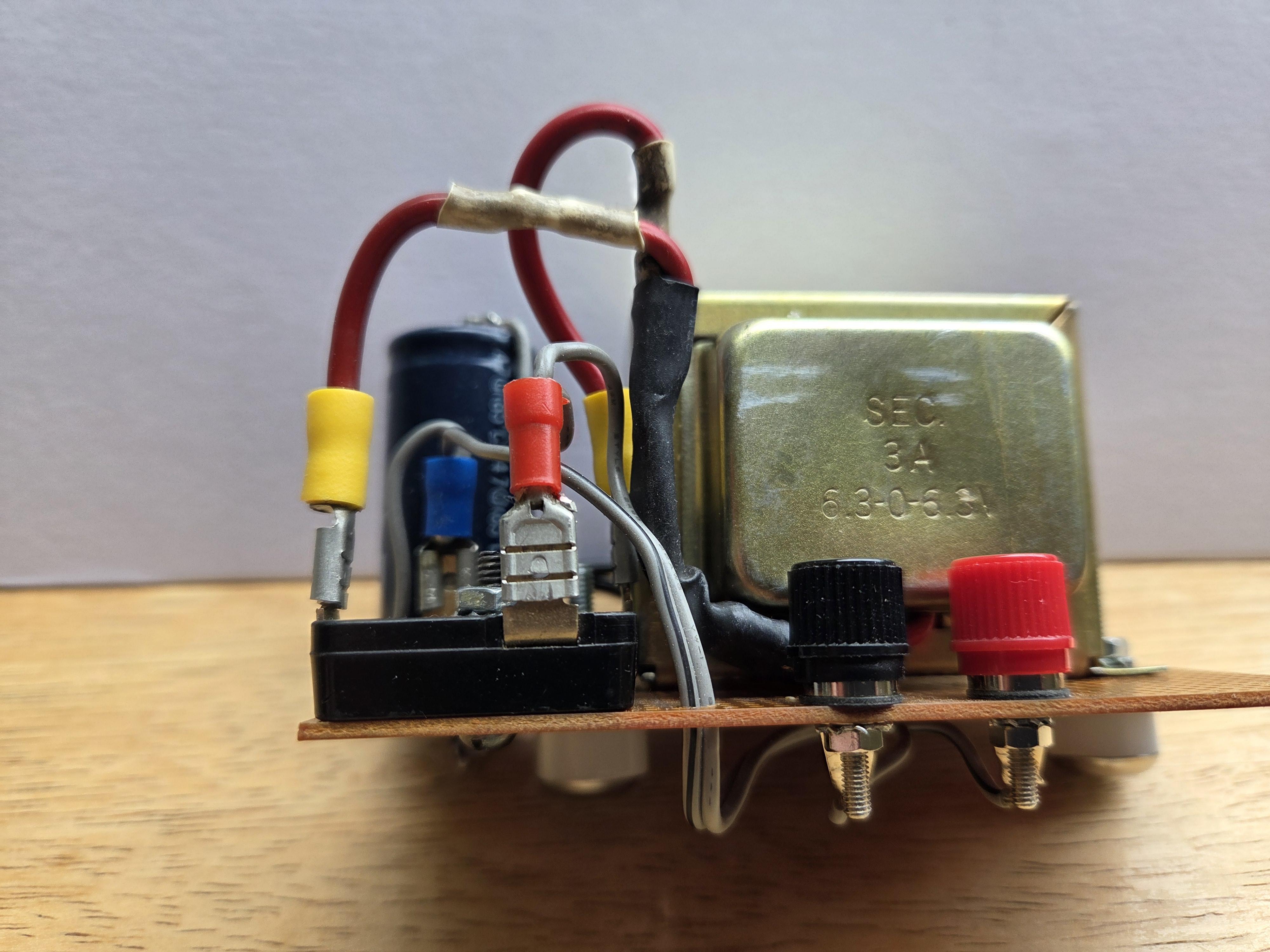
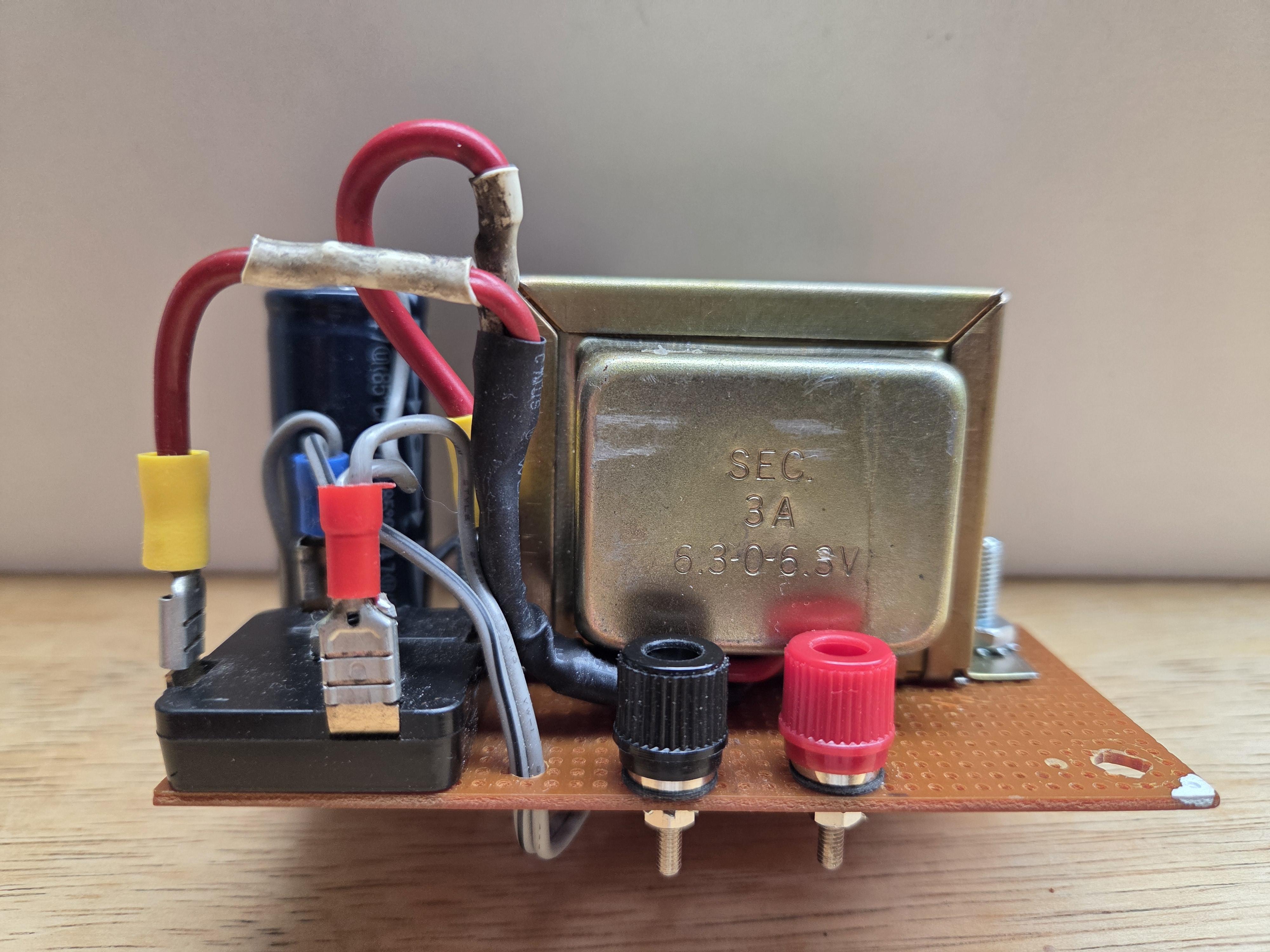
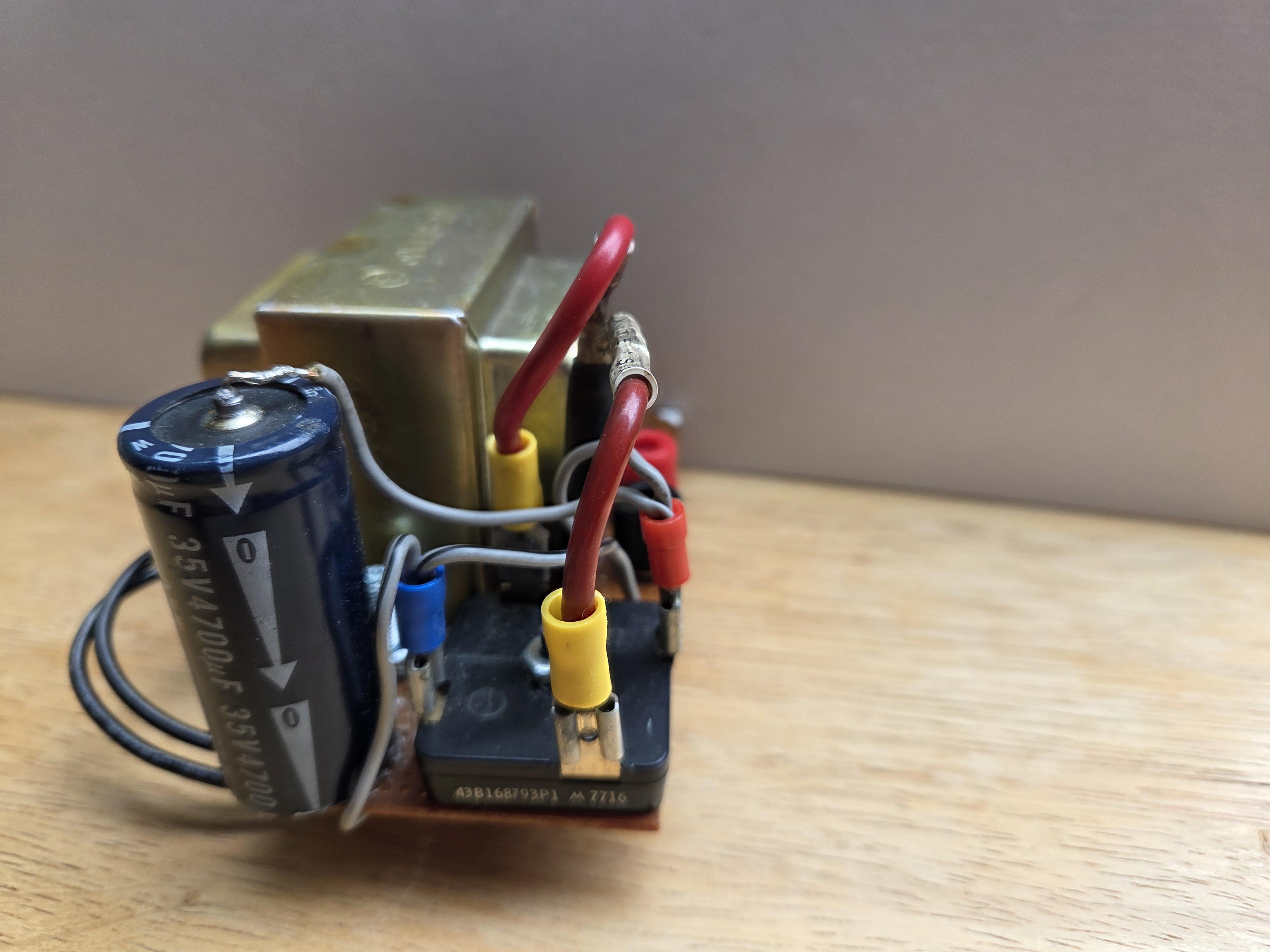
The indicator bulbs on the console required 12 VDC, but the light rod required 5 VDC from a USB port. I pulled the no-frills power supply build from my Rayotron tribute project, which consisted of a: 120 VAC to 12 VAC transformer rated at 3 amps; full-wave bridge rectifier; smoothing capacitor; and color-coded binding posts. The wiring diagram is available here under the heading Full Wave Rectifier with Smoothing Capacitor. (A commercial 120 VAC with an adjustable DC output would have worked, but I wanted to recycle this power supply).
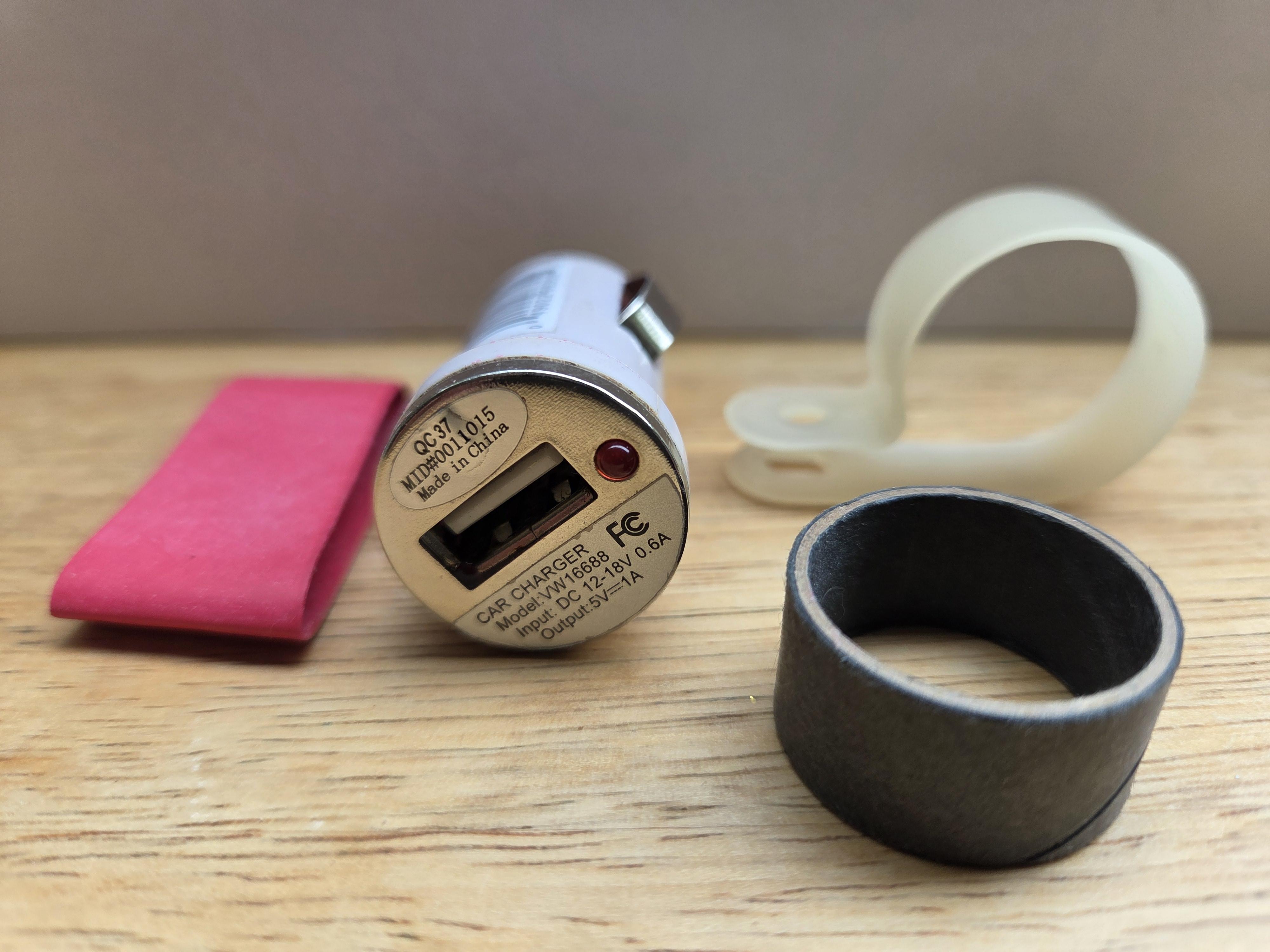
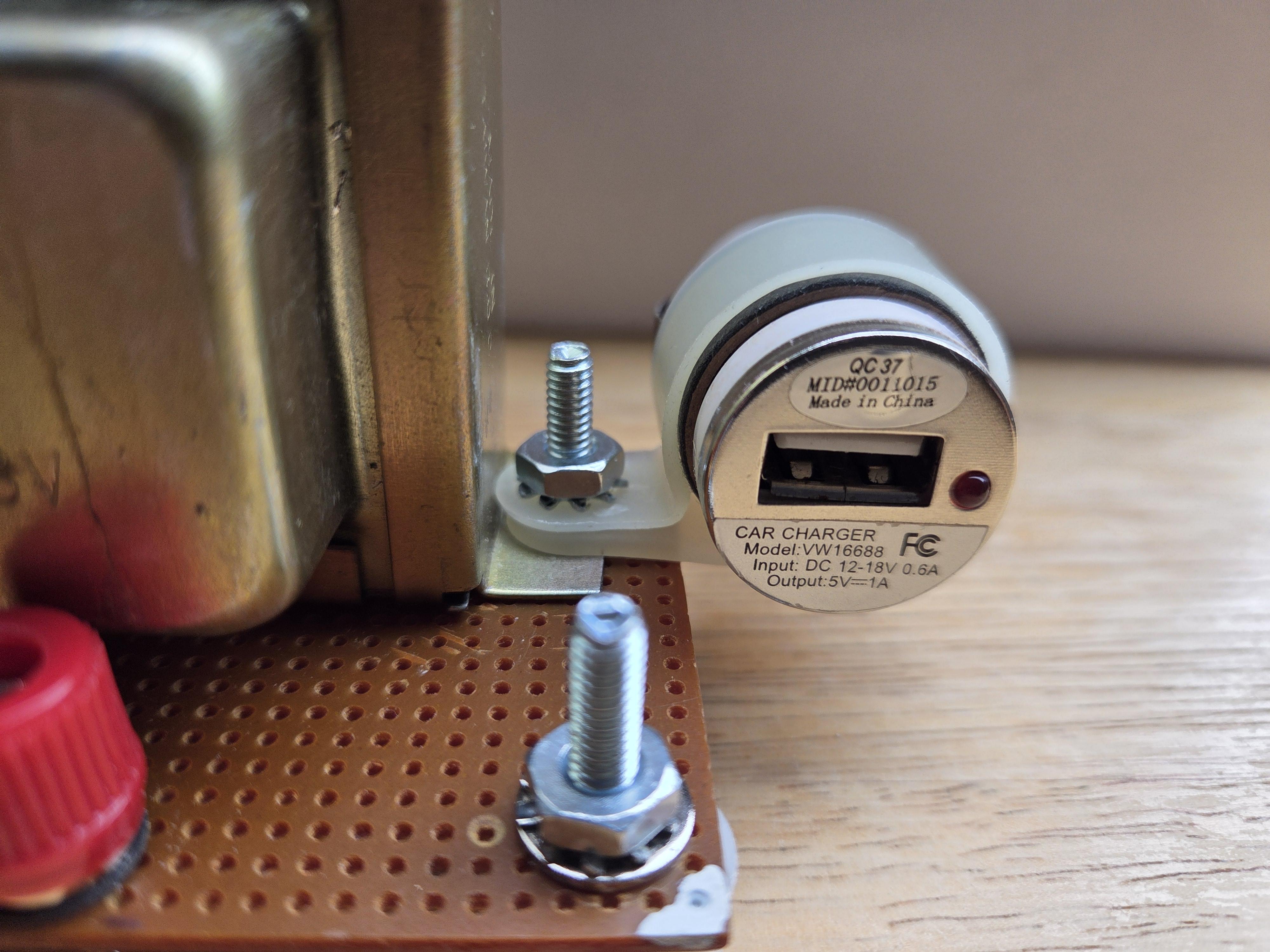
I slipped heat shrink tubing, followed by a cardboard spacer ring over a USB car adapter, then secured this assembly to the power supply's circuit board with two nylon cable clamps. The car adapter's input was wired to the red binding post (+V) of the DC power supply. (Note: current return for the car adapter is not the black binding post.) The return connection for the rectifier in the DC circuit becomes the common circuit ground or 0 V, as shown in this circuit diagram. The result was this assembly that fit comfortably in the base and served as a counterweight to the clunky drive motor.
Prepping & Painting Console
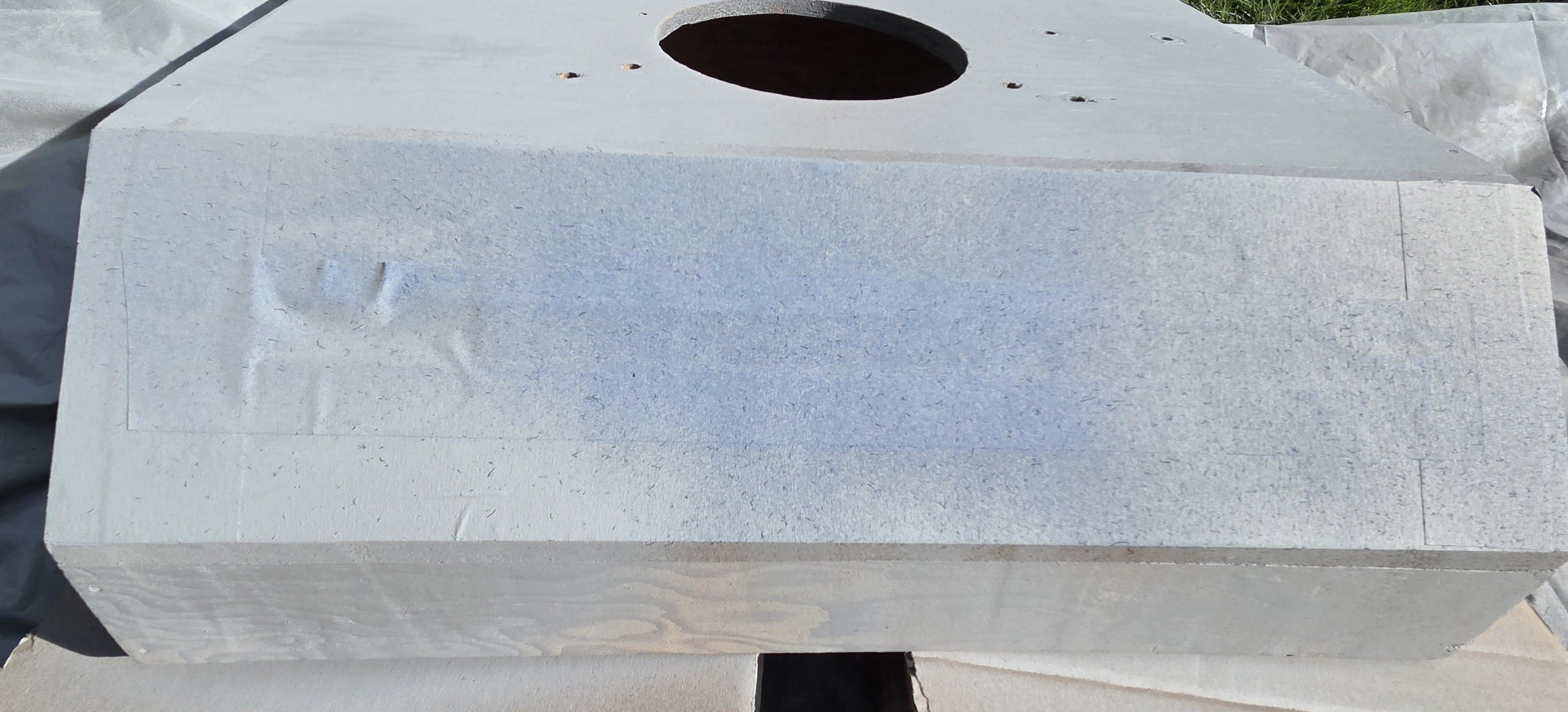
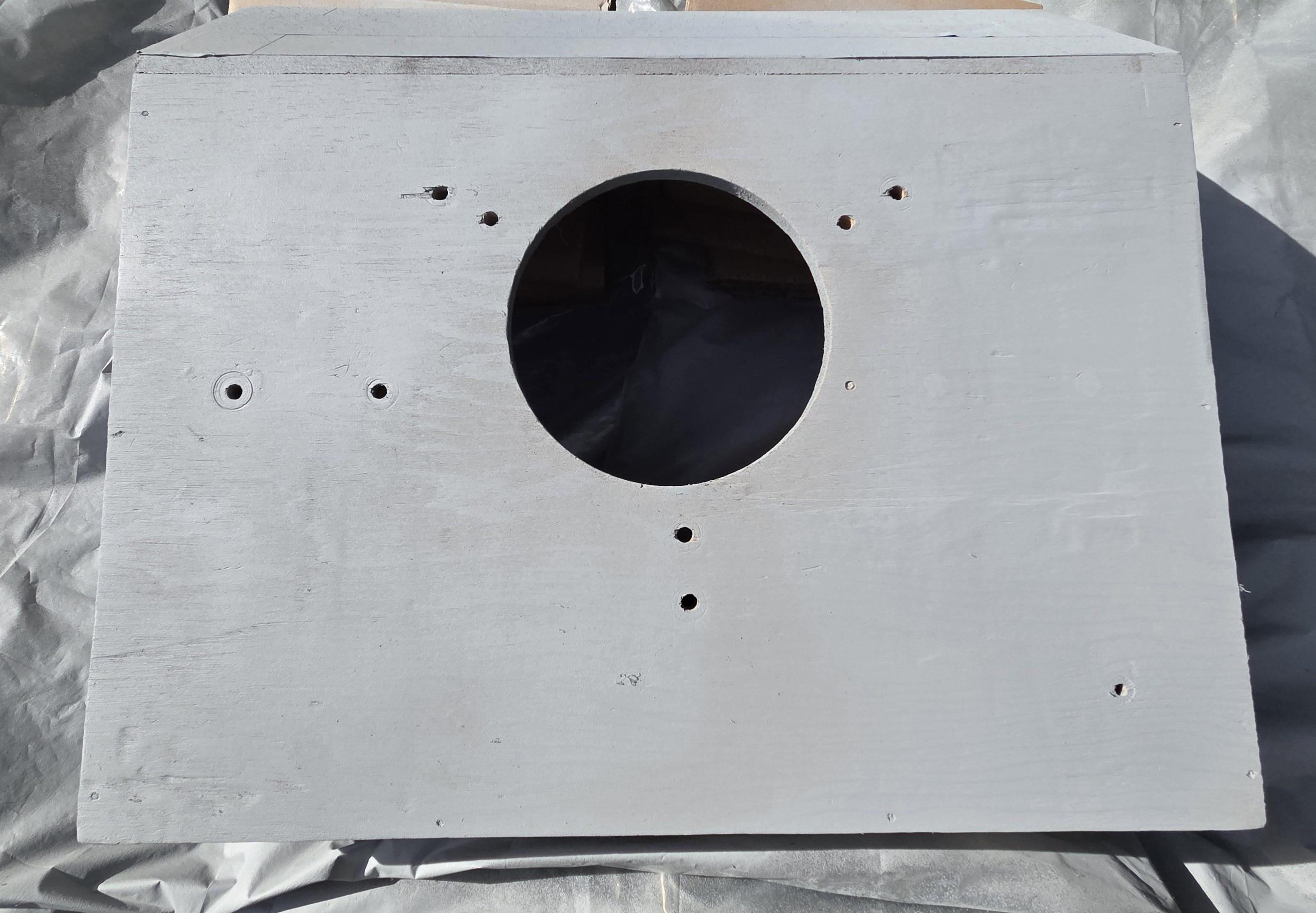
I prepped the console for spray painting by masking the instrument panel and applying bonding primer. After priming, some dings and chips were still visible. I filled these with putty before sanding the entire console with a fine-grade sponge and applied another coat of primer. 😣
Console Lettering
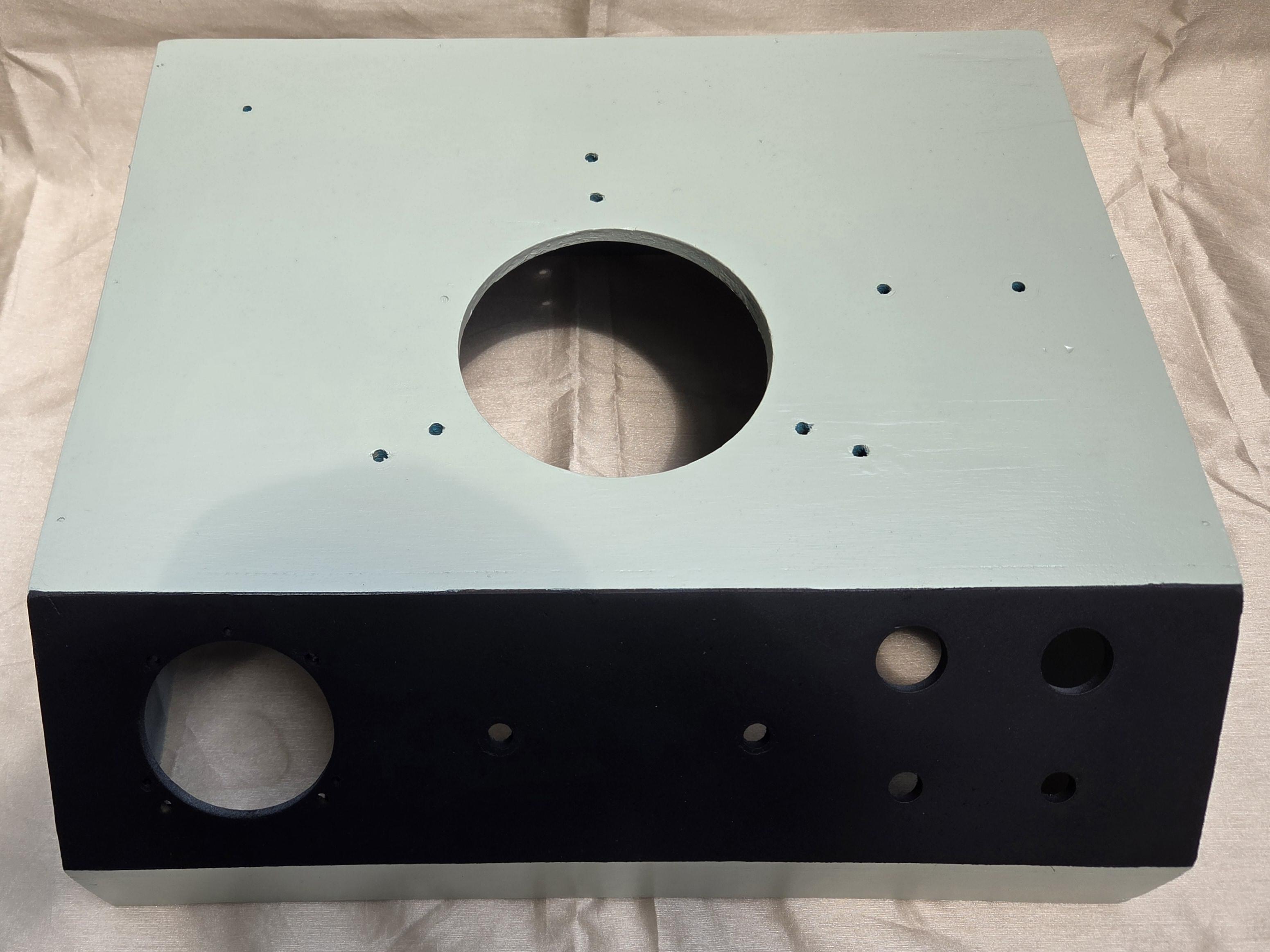
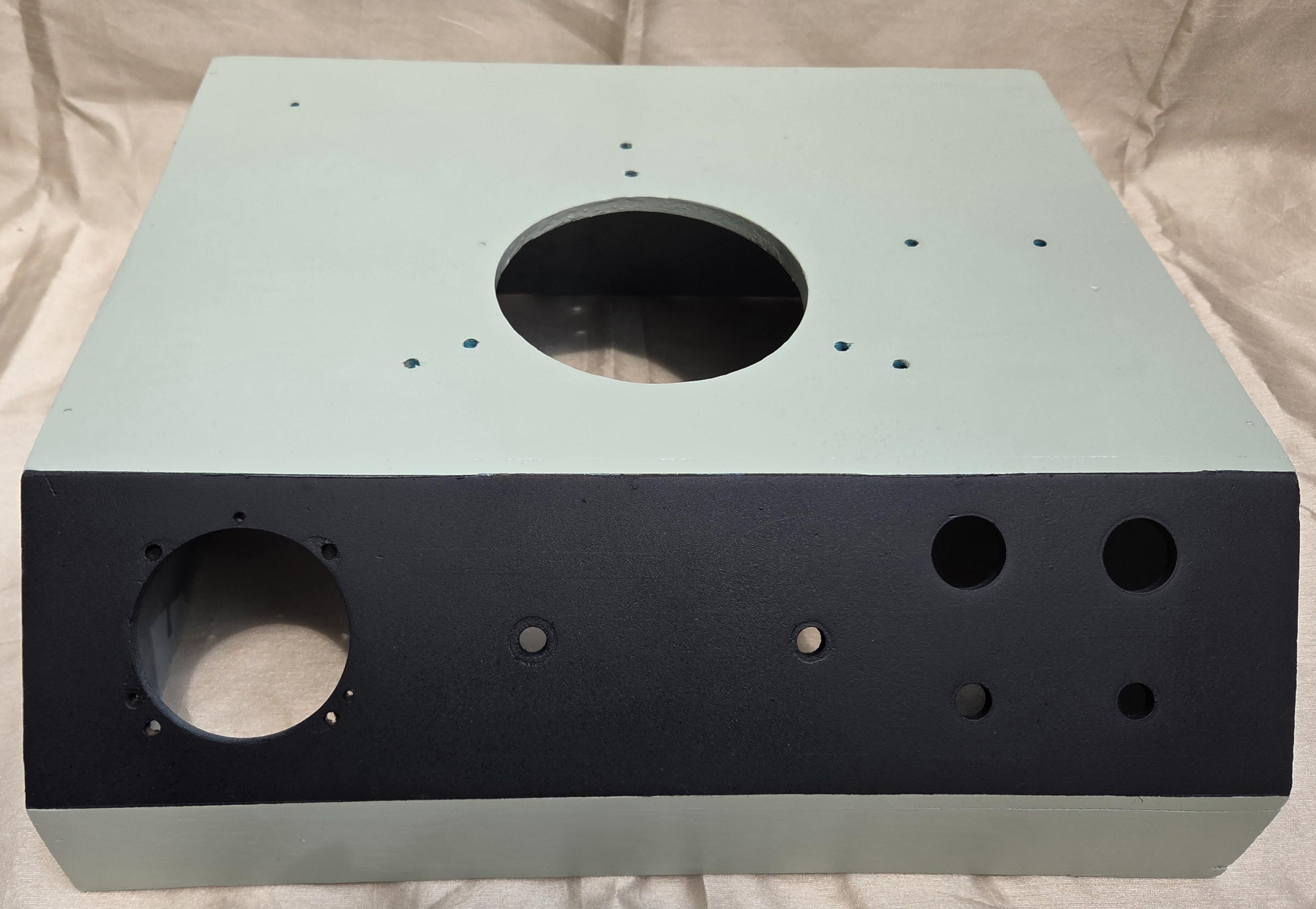
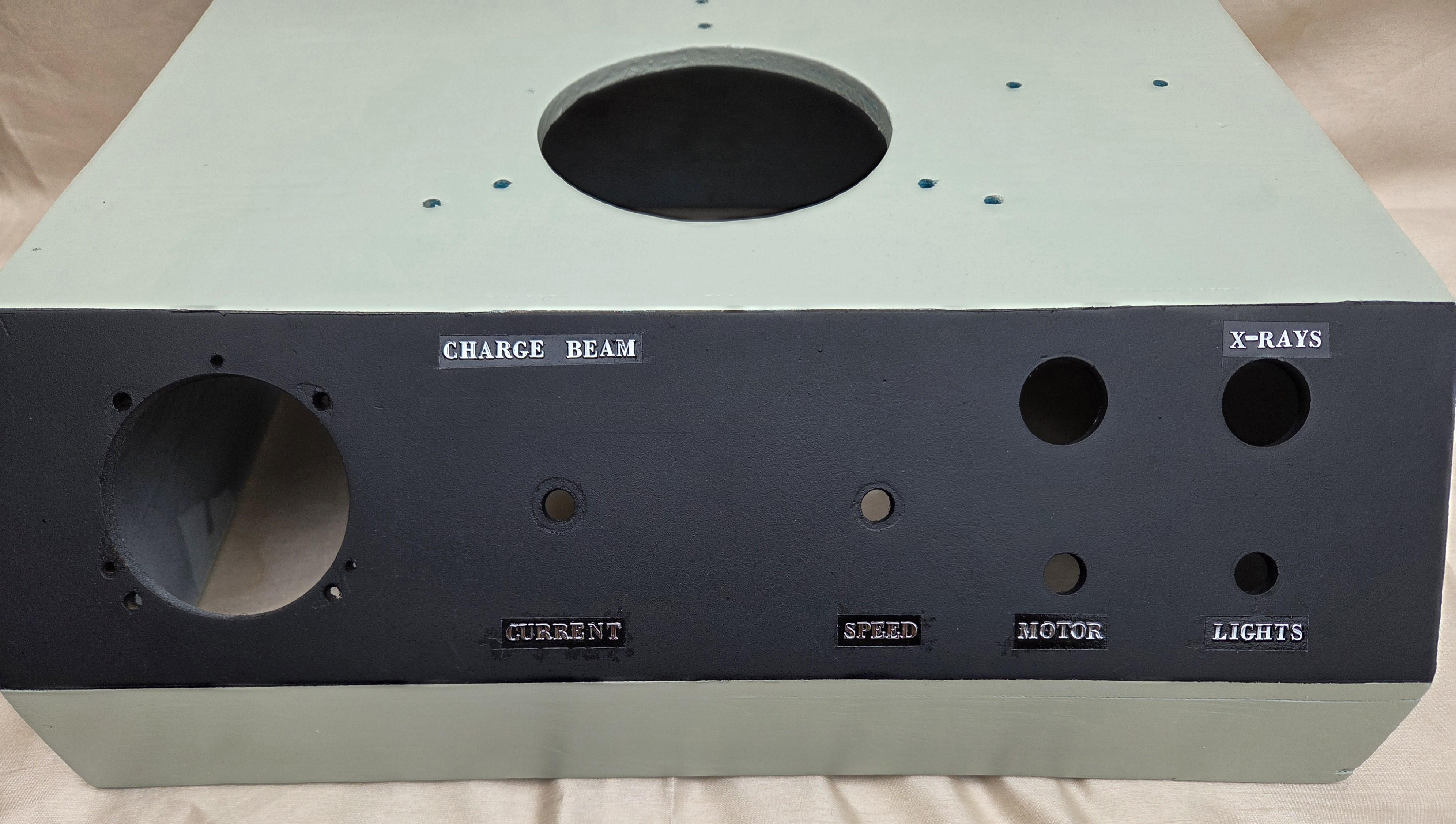
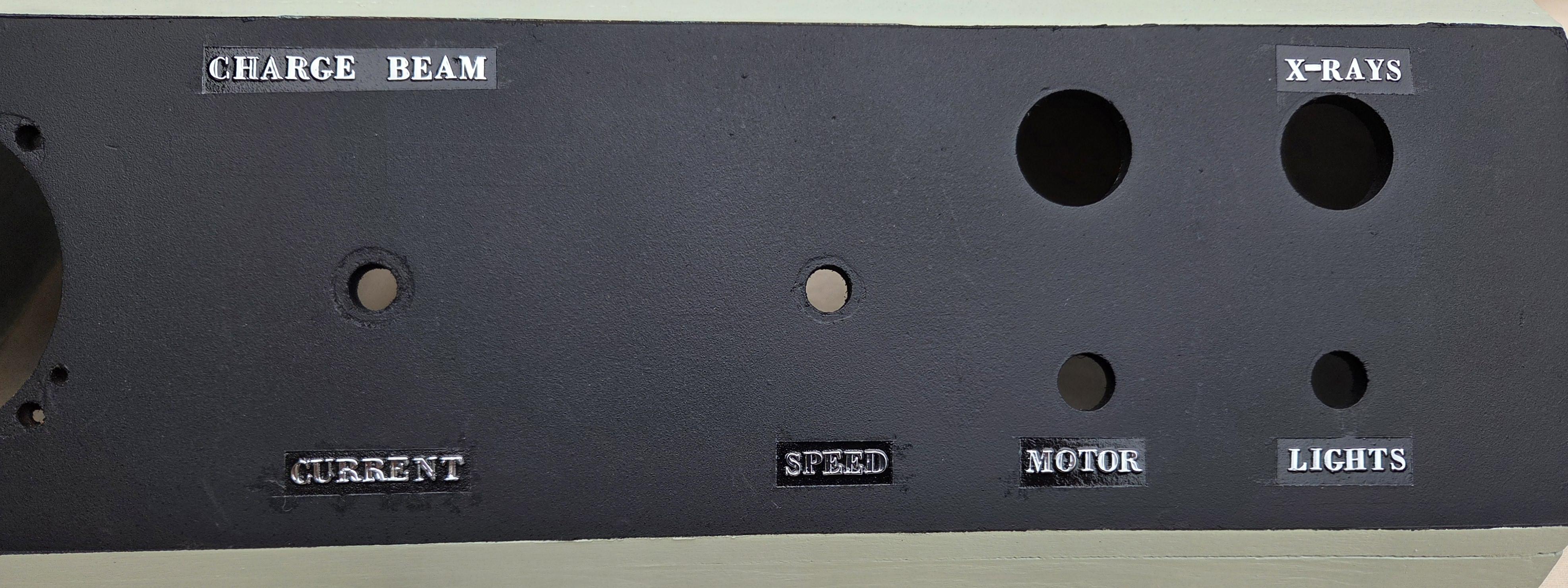
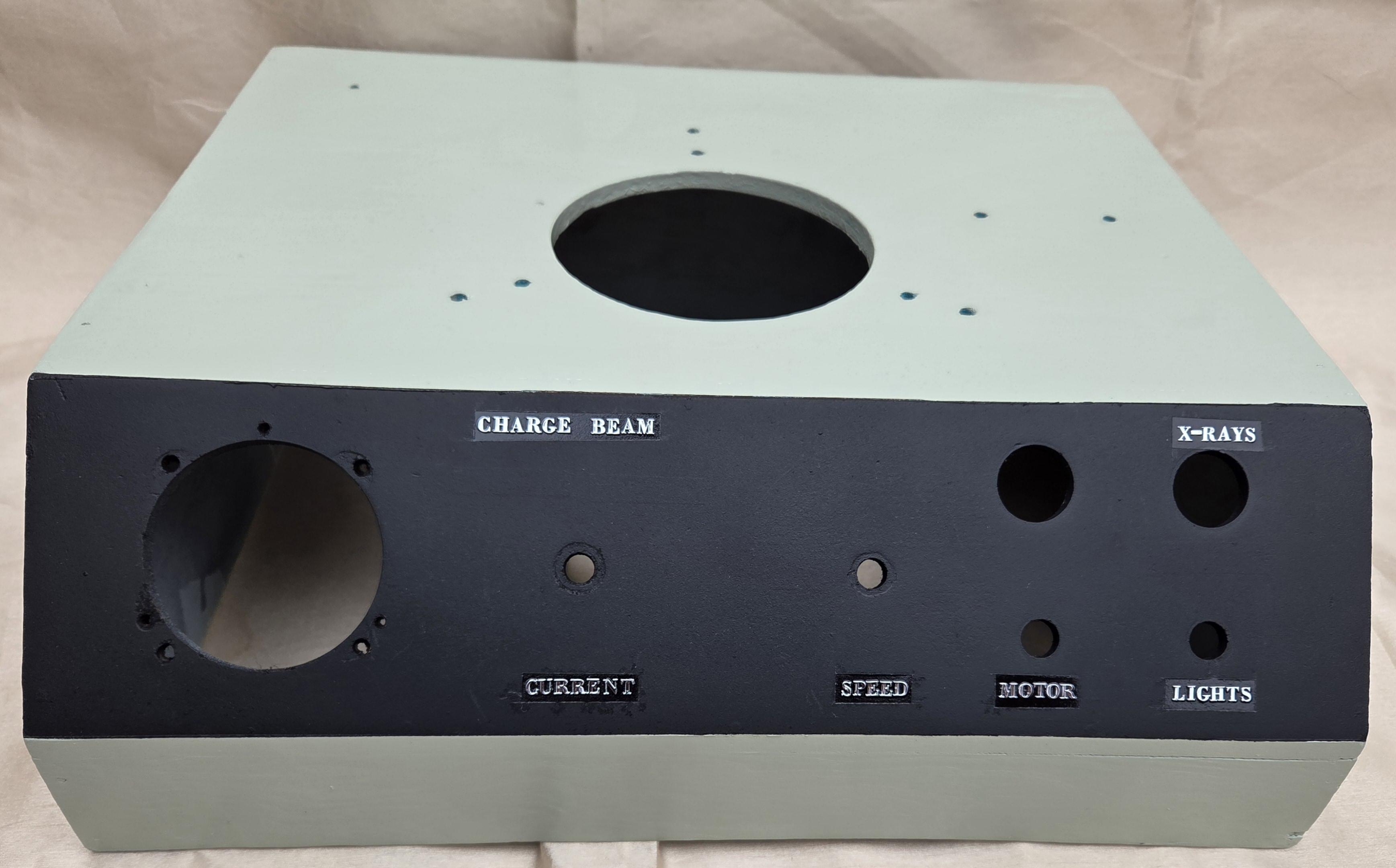
A Sales Associate at a Lowe's Home Furnishings Department suggested applying interior paint for refacing kitchen cabinets, which would produce a durable and better-quality look. I picked Aganthus Green from Benjamin Moore for a cool, muted vibe. Although black wasn't listed as an appropriate coordinating color on the company's website, I rolled the dice by spraying the instrument panel matte black. I used silver, rub-on letters to relabel the controls, then masked a rectangular area around each word. I brush painted the new labels with clear polyurethane for protection and used a finishing coat of black paint for touch-ups.
Console Reassembly
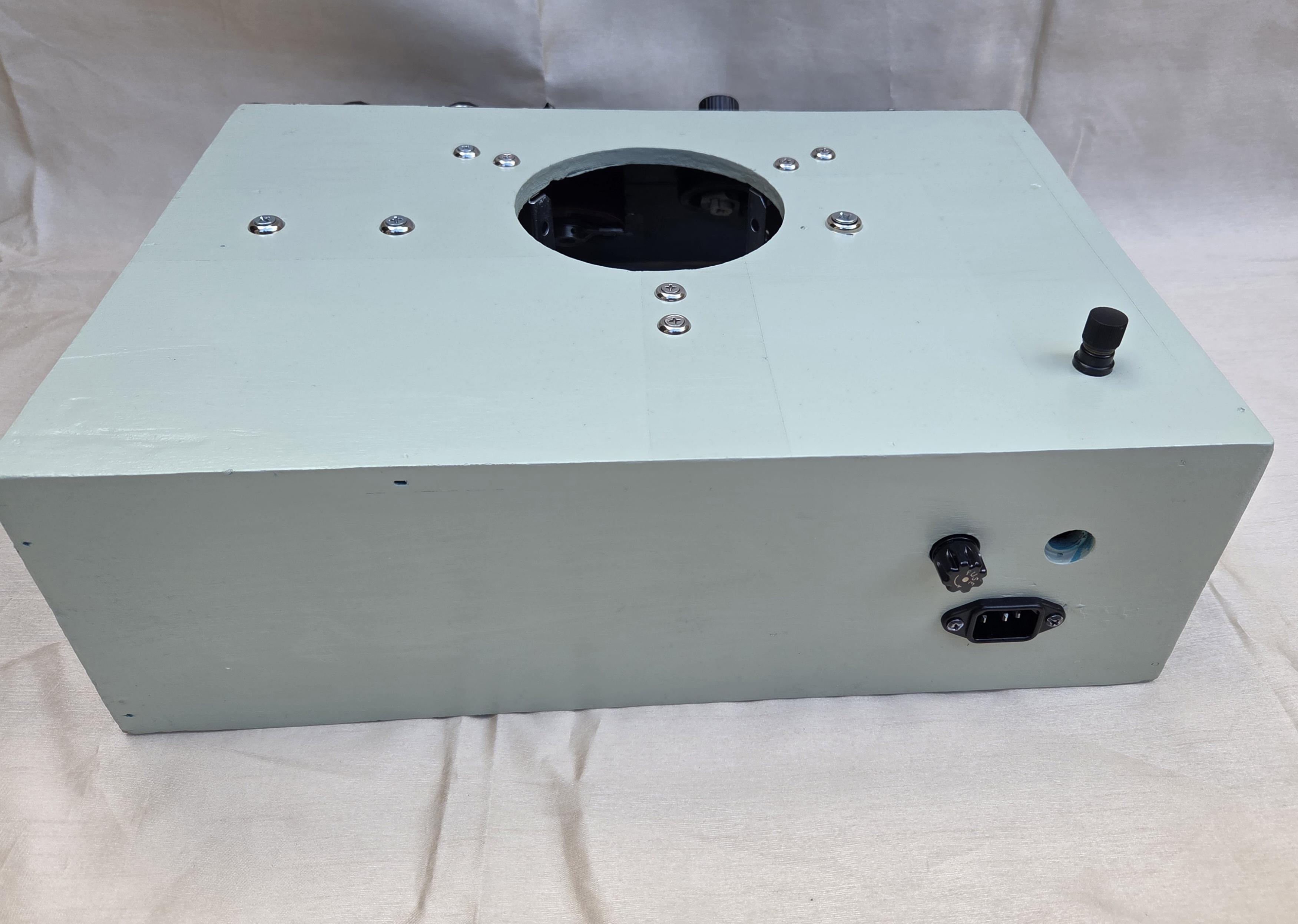
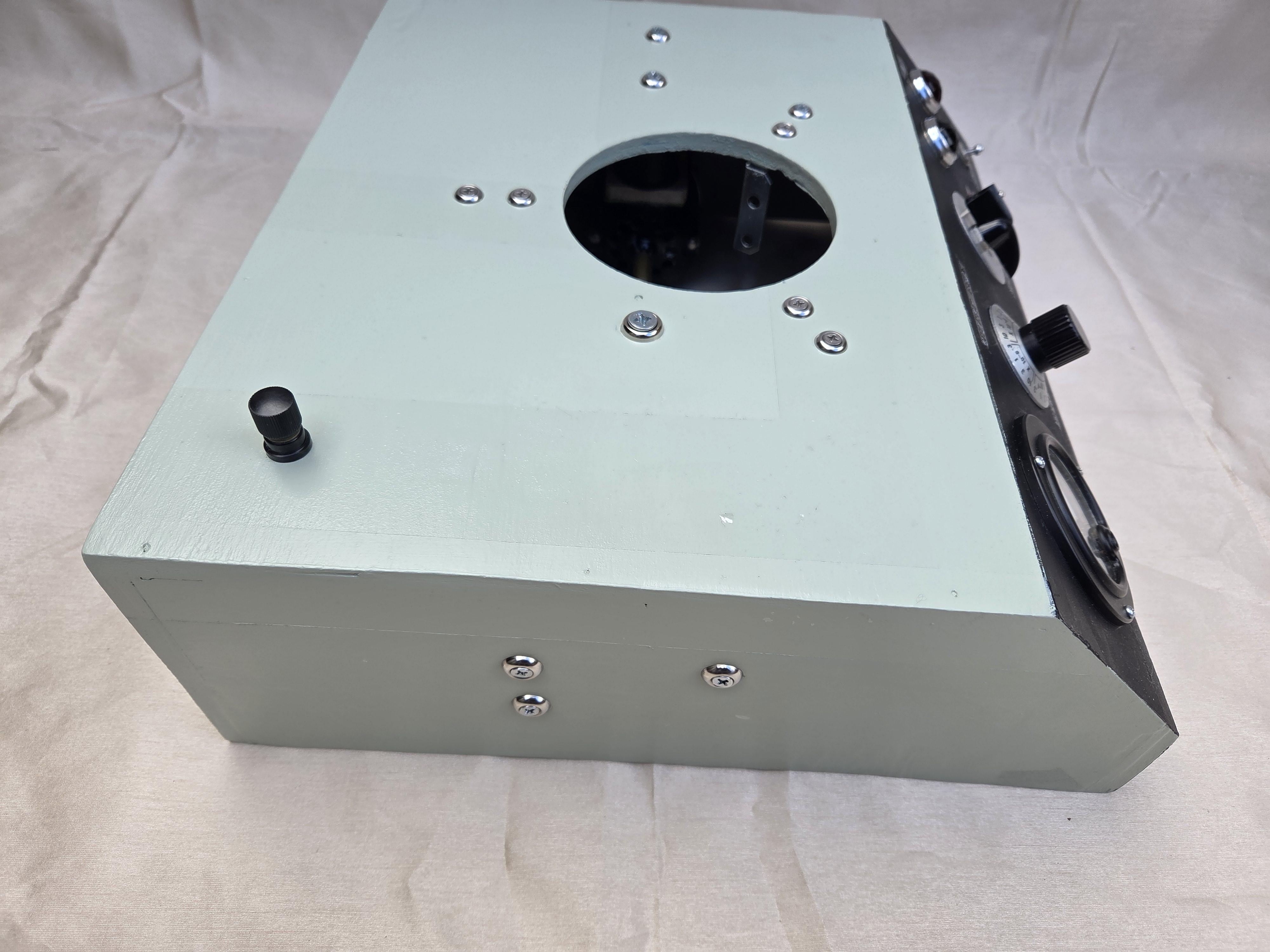
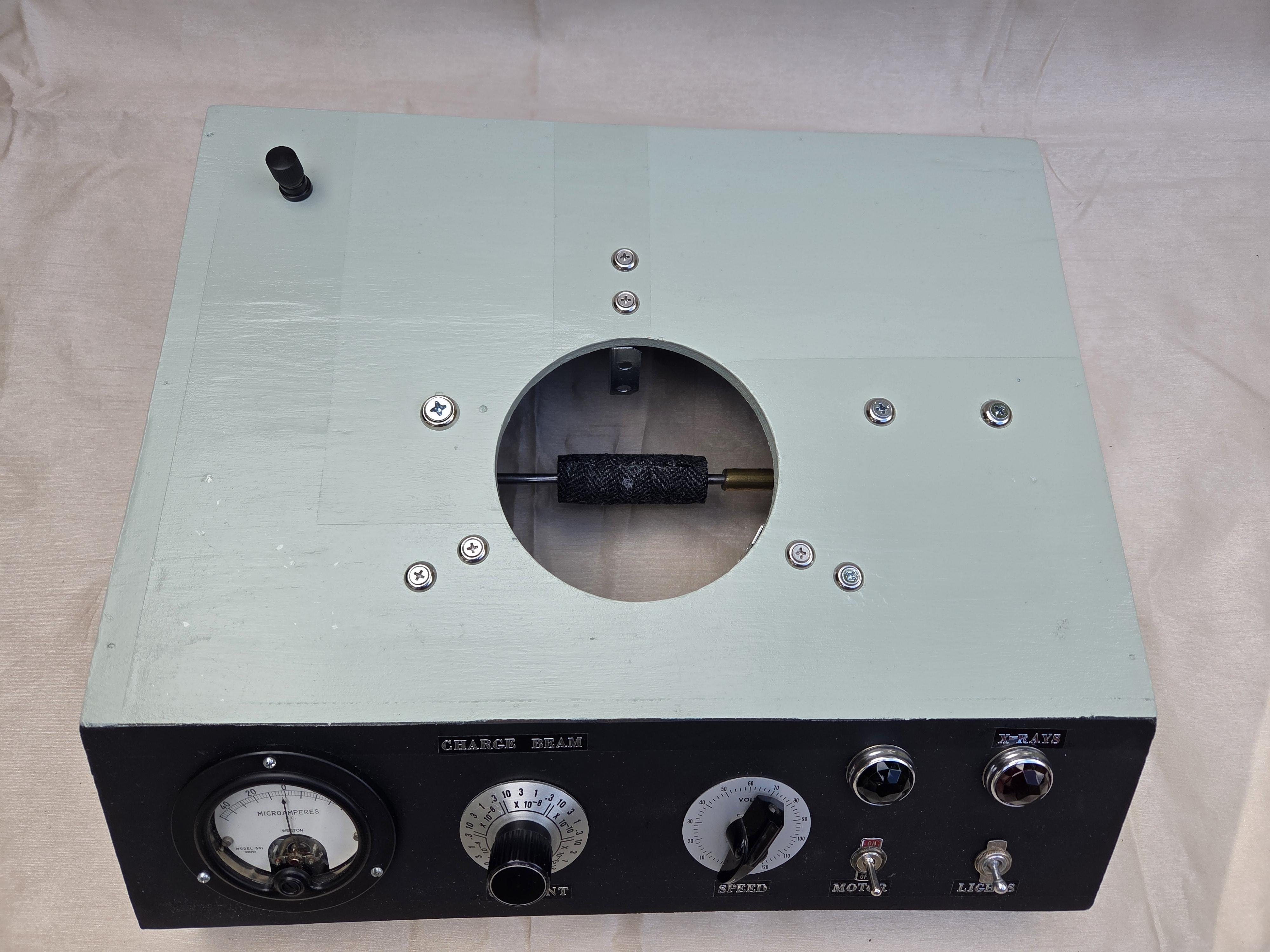
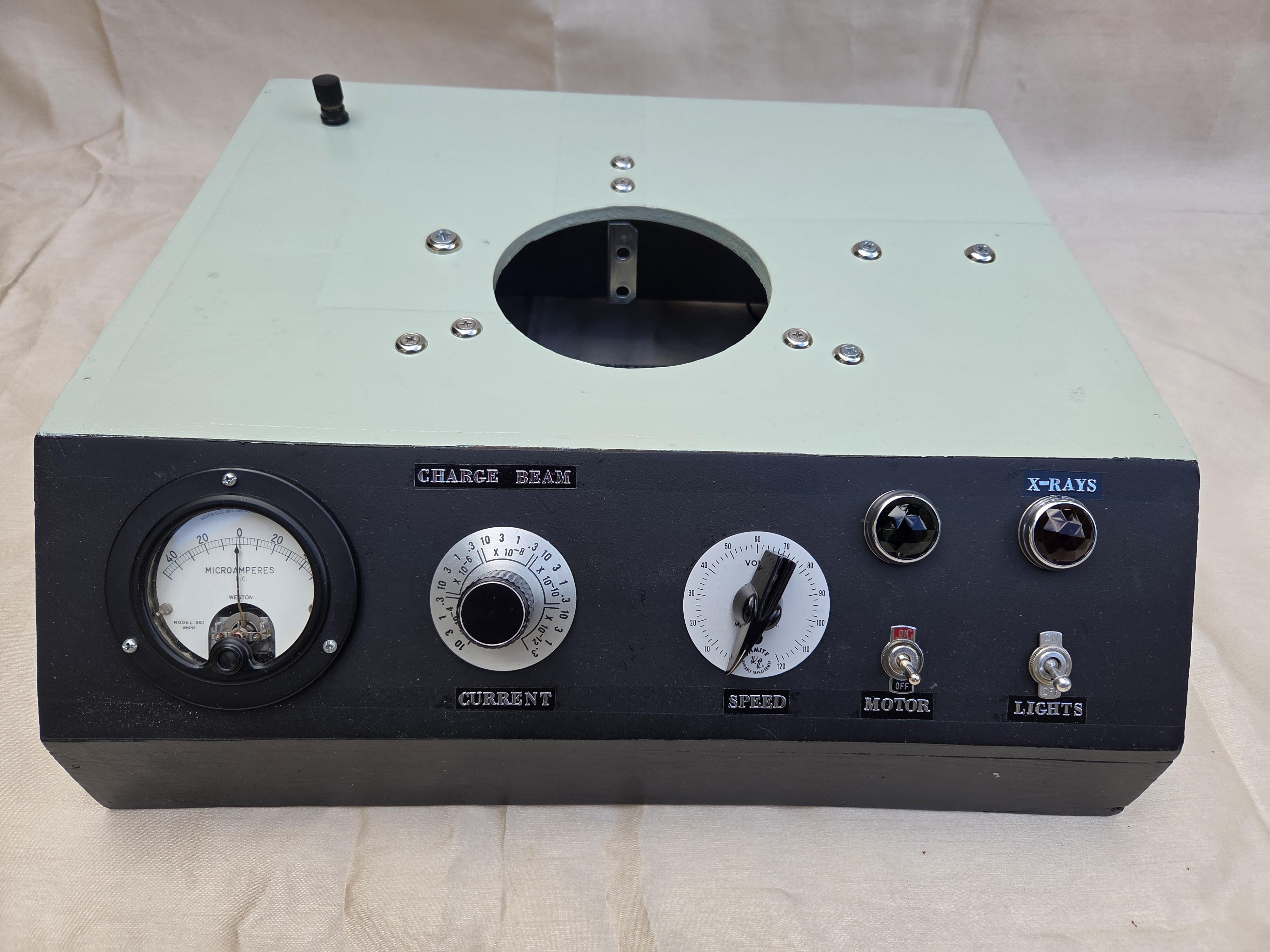
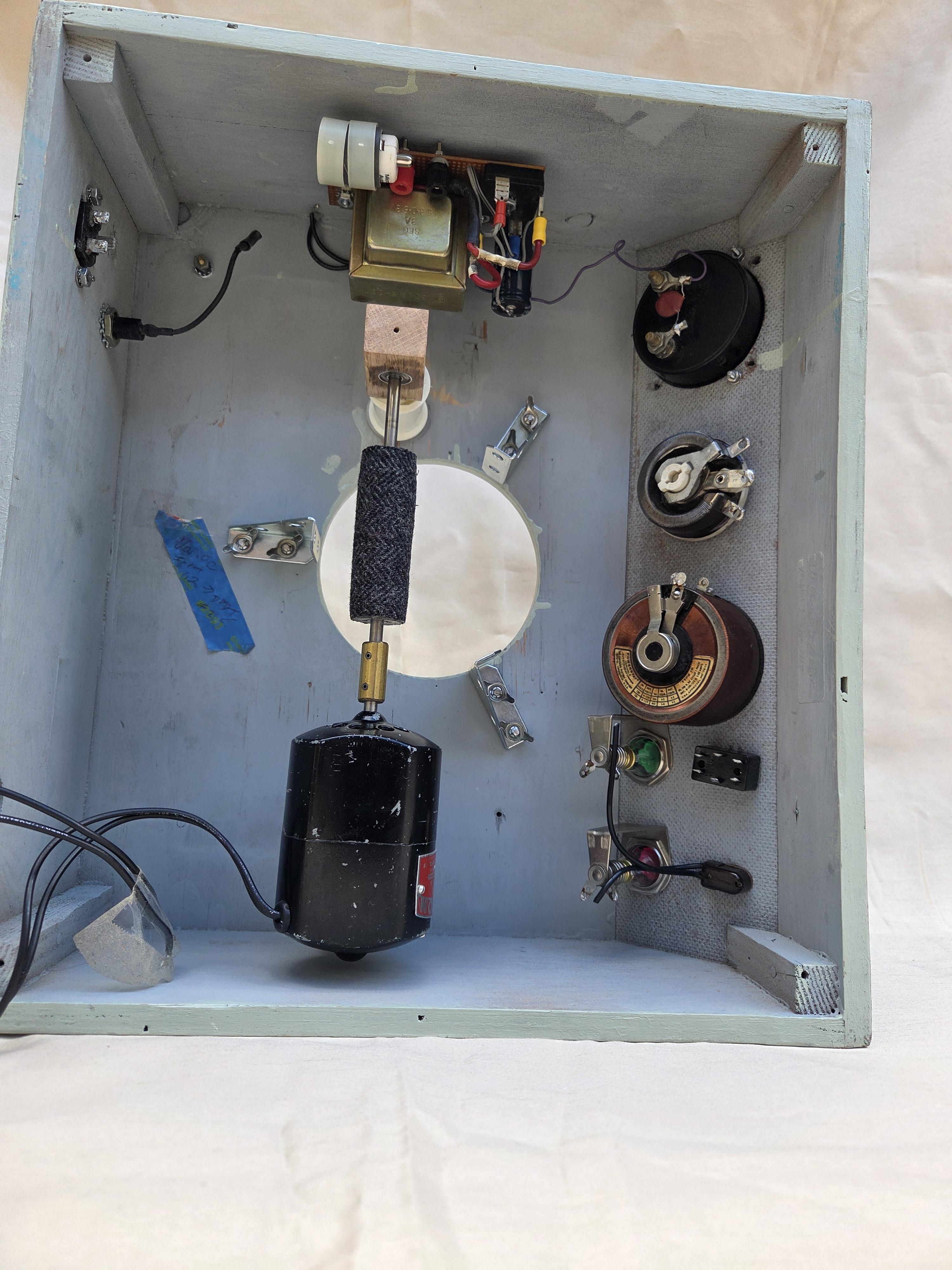
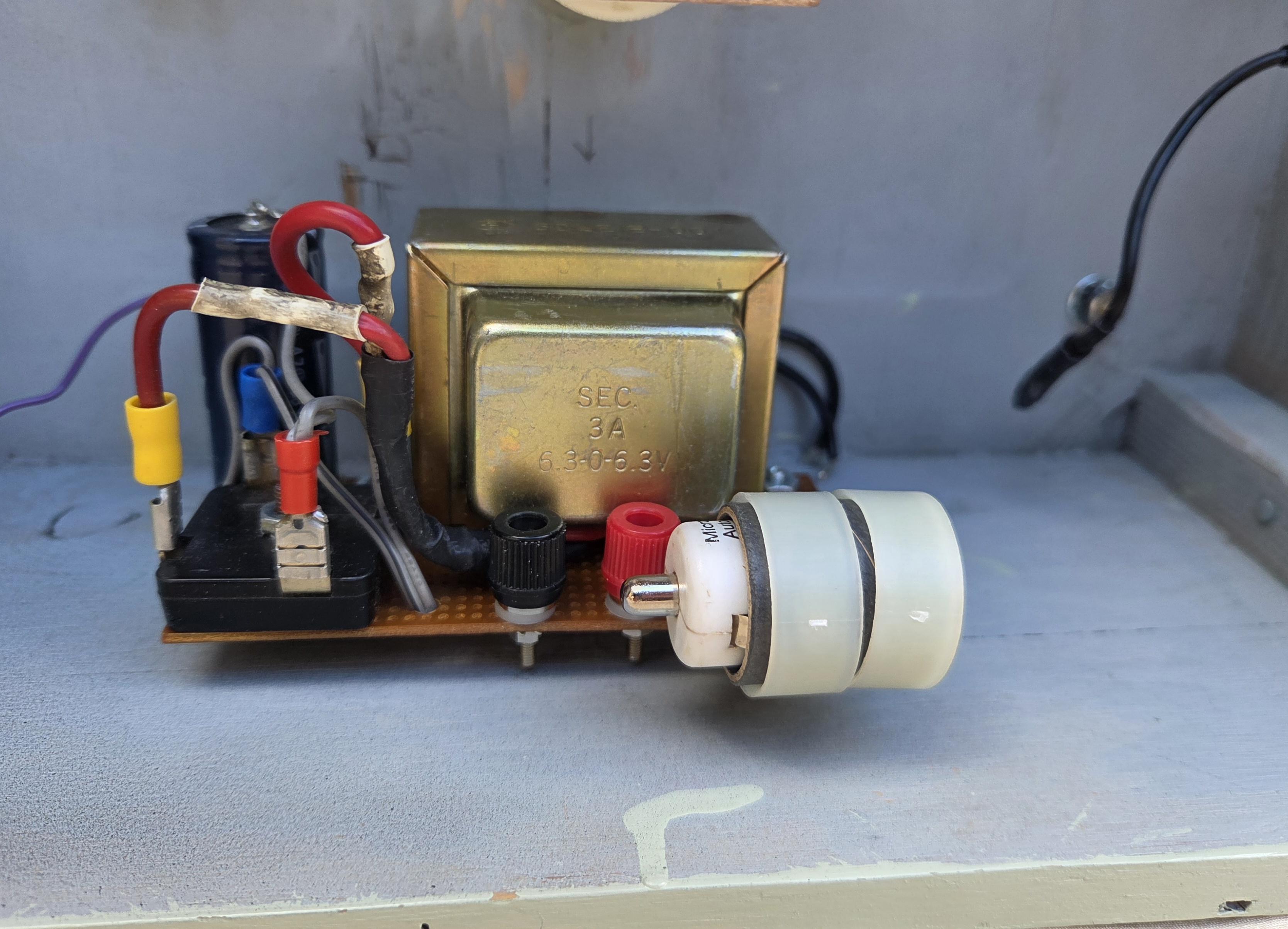
I mounted the panel components, fuse holder, AC inlet, and power supply. I added a dial plate for the Charge/Beam function switch salvaged from a junked piece of vintage test equipment. The dial settings were meaningless for this project, but it provided artistic balance for the instrument panel.
Two thread spools served as stand-offs for the motor mounting. I made an optional cushion for placement under the motor from scrap wood and a piece from a rubber yoga mat to reduce mechanical vibrations. Another thread spool inserted under the wood block and bearing assembly from the original unit supported the lower roller shaft. The shaft was connected to the drive motor using the original brass coupling (pictured in Step 3).
Support Tube & Accelerator Assembly
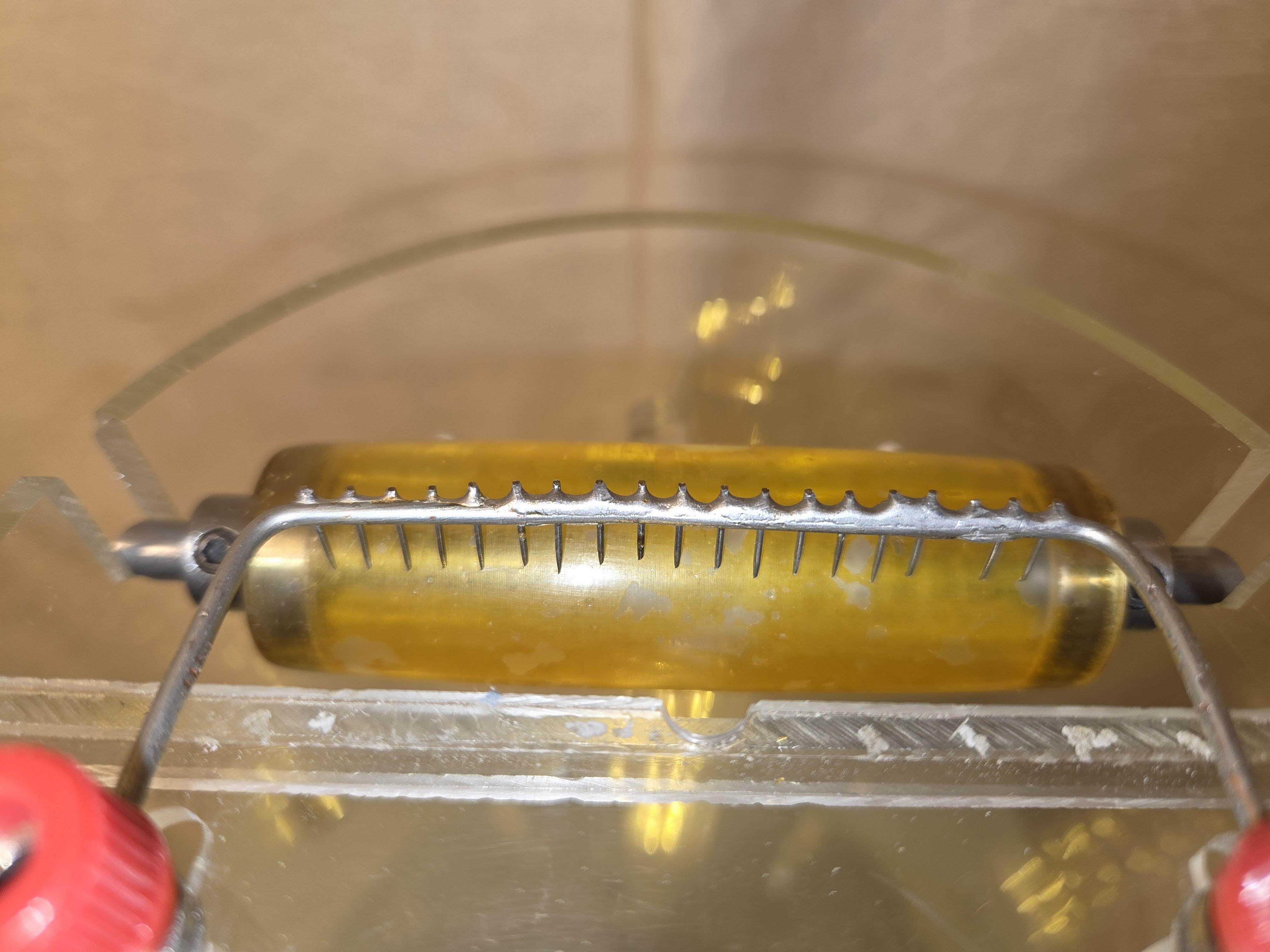
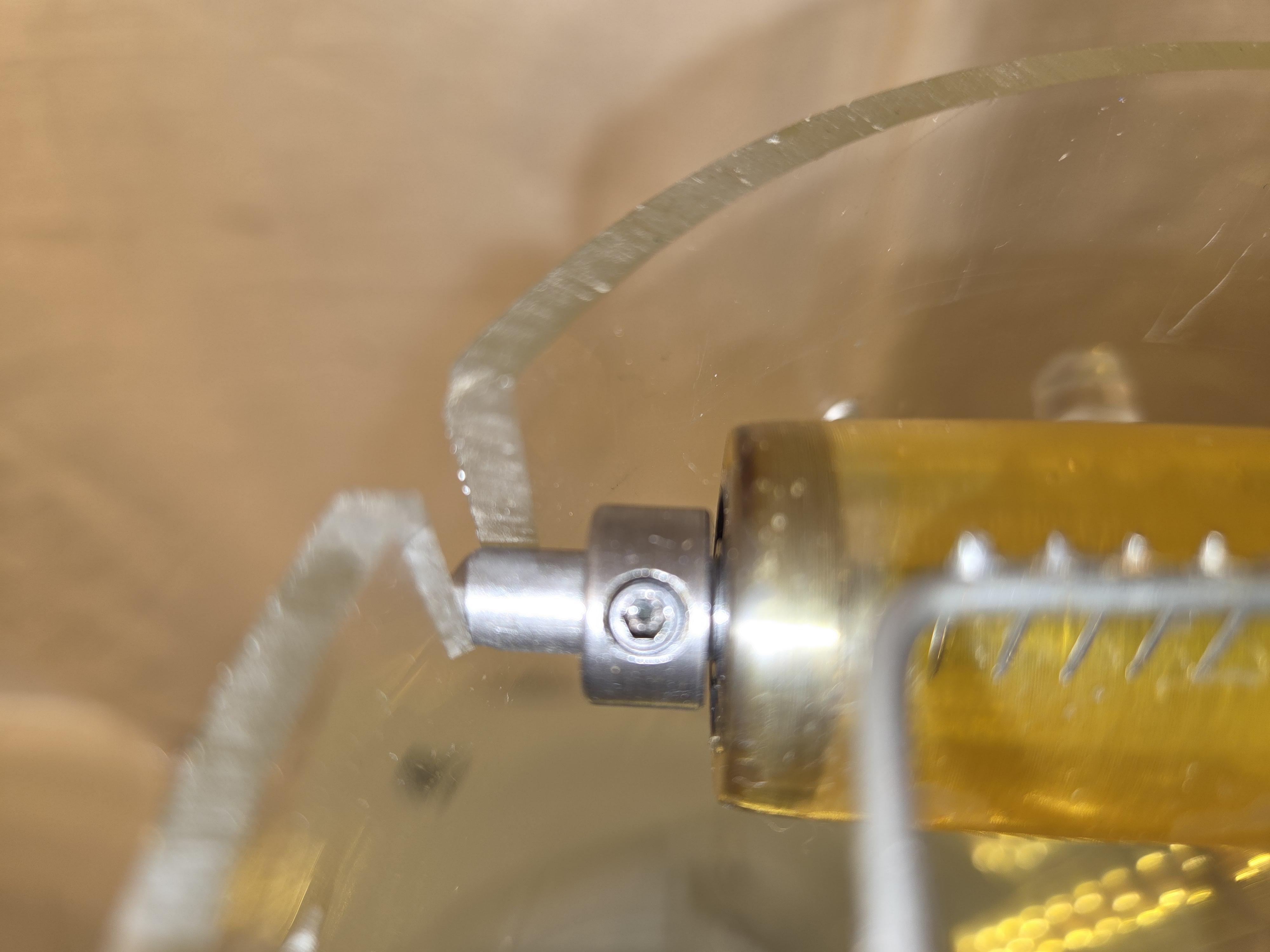
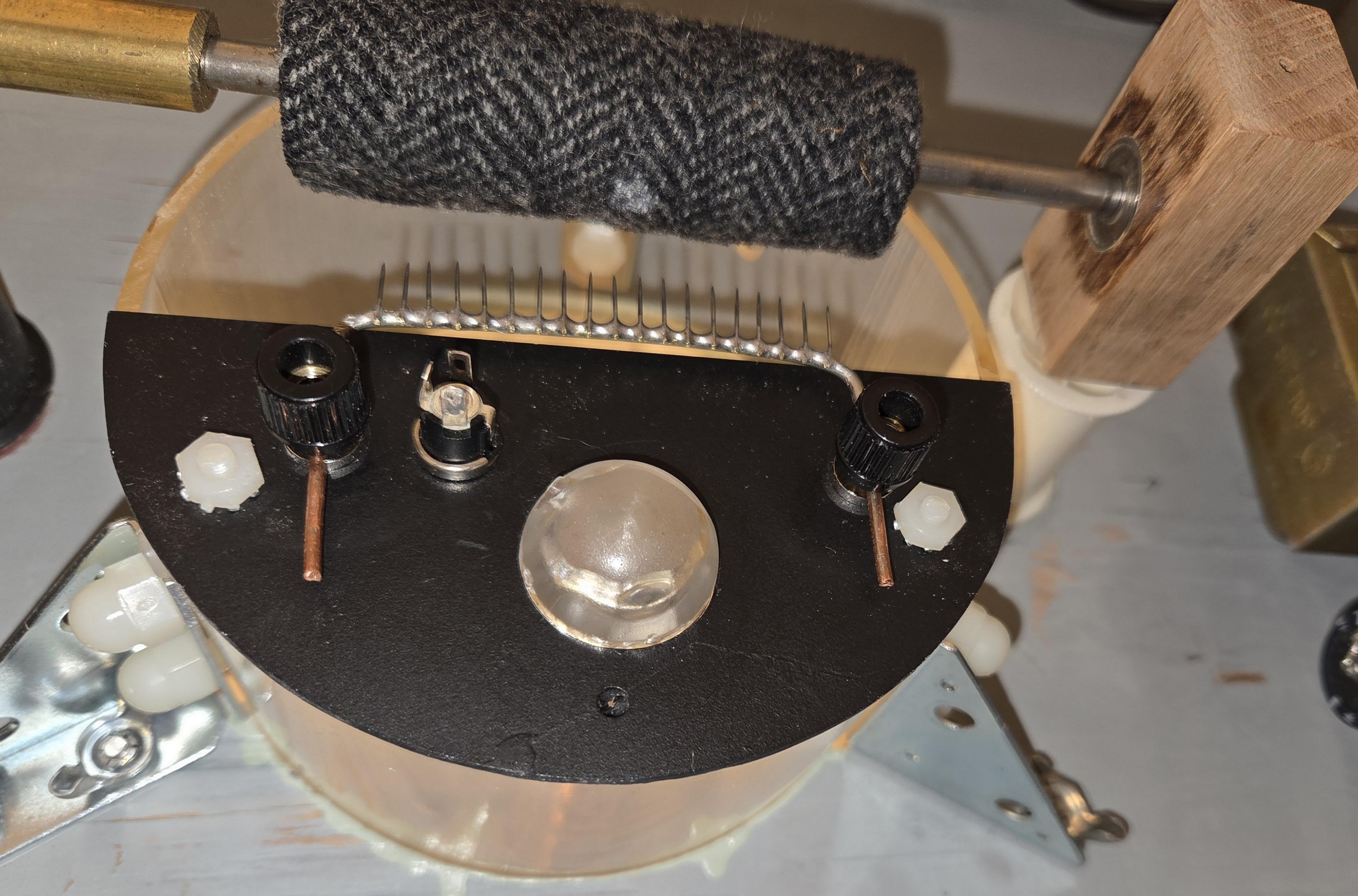
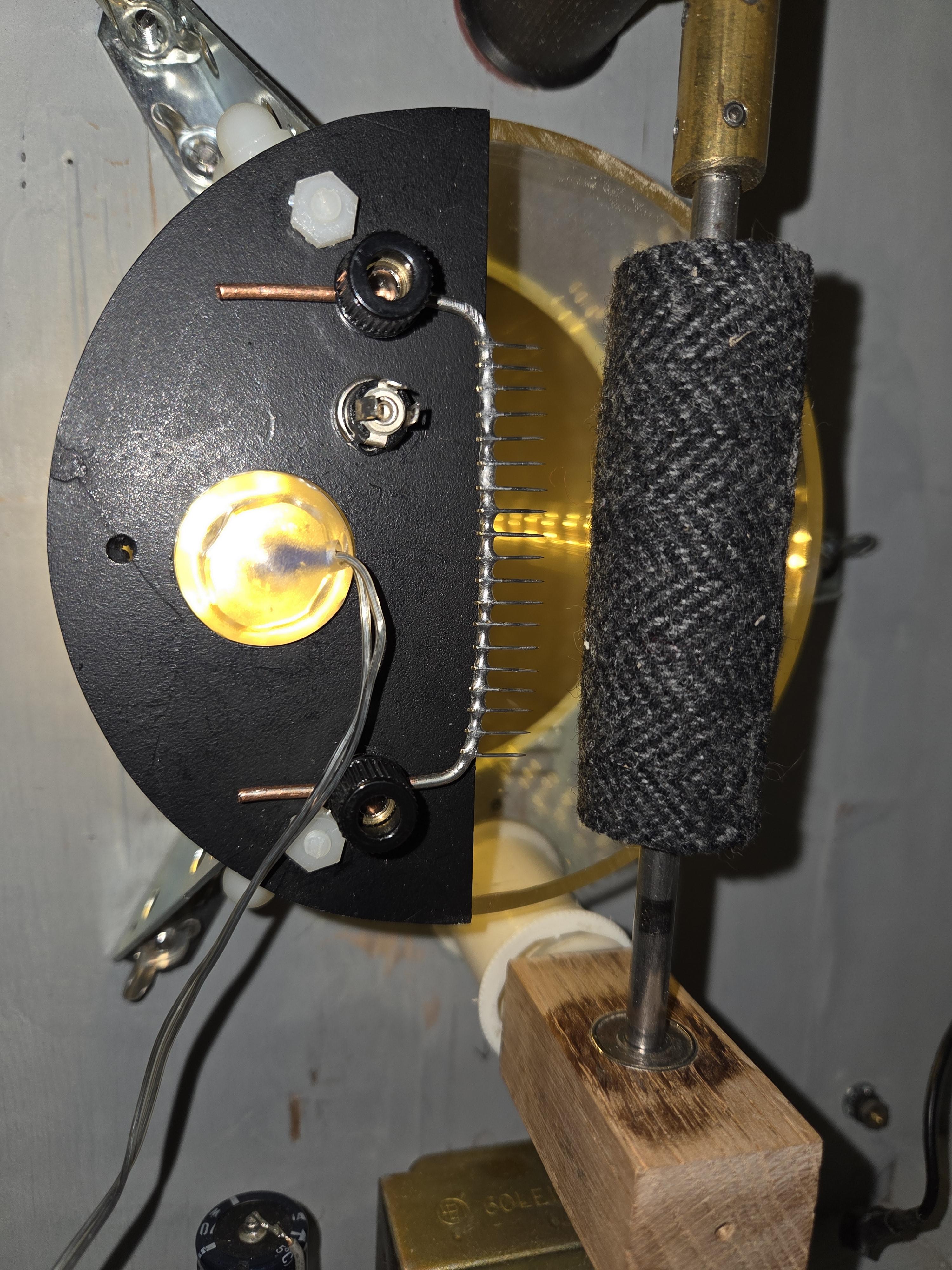
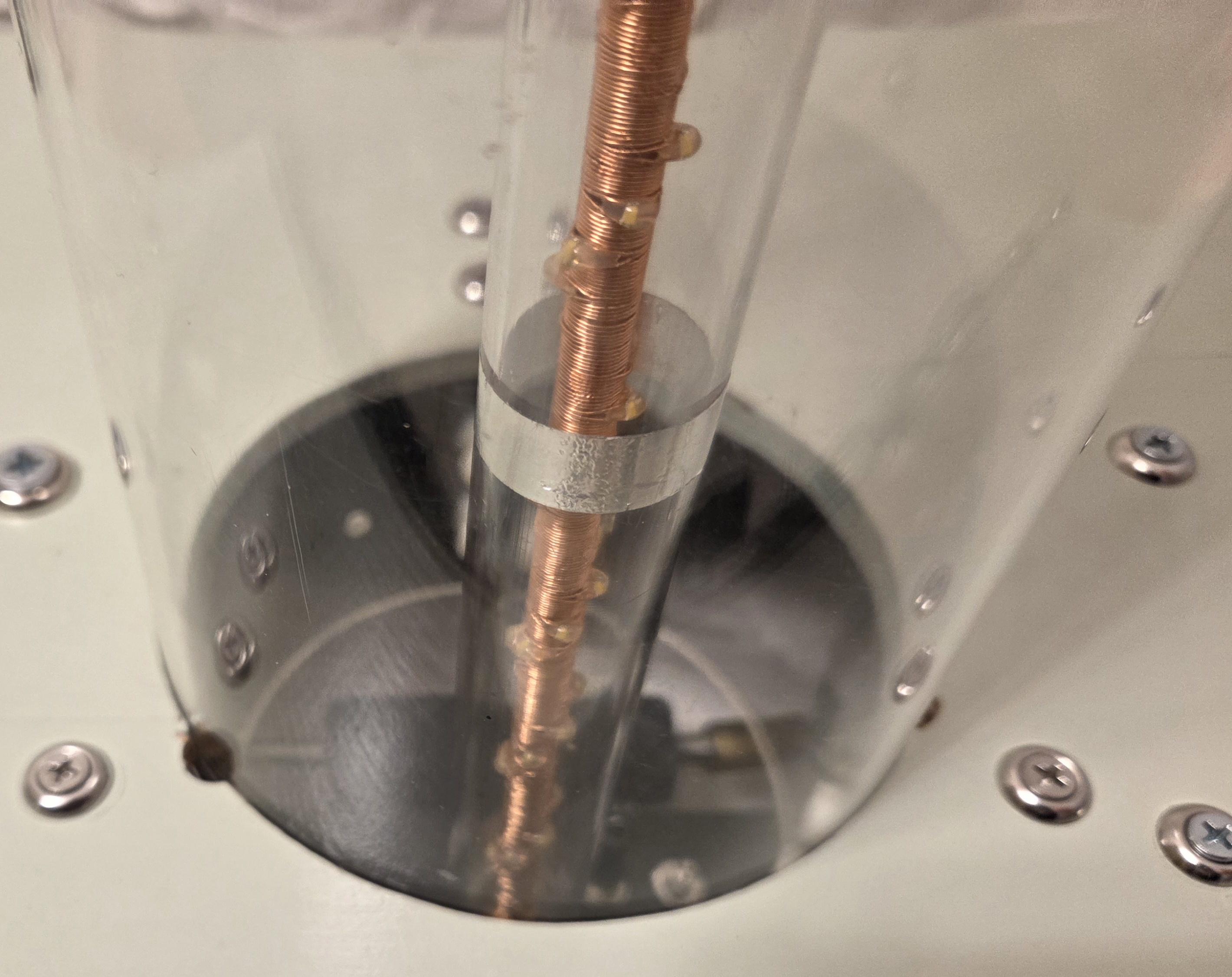
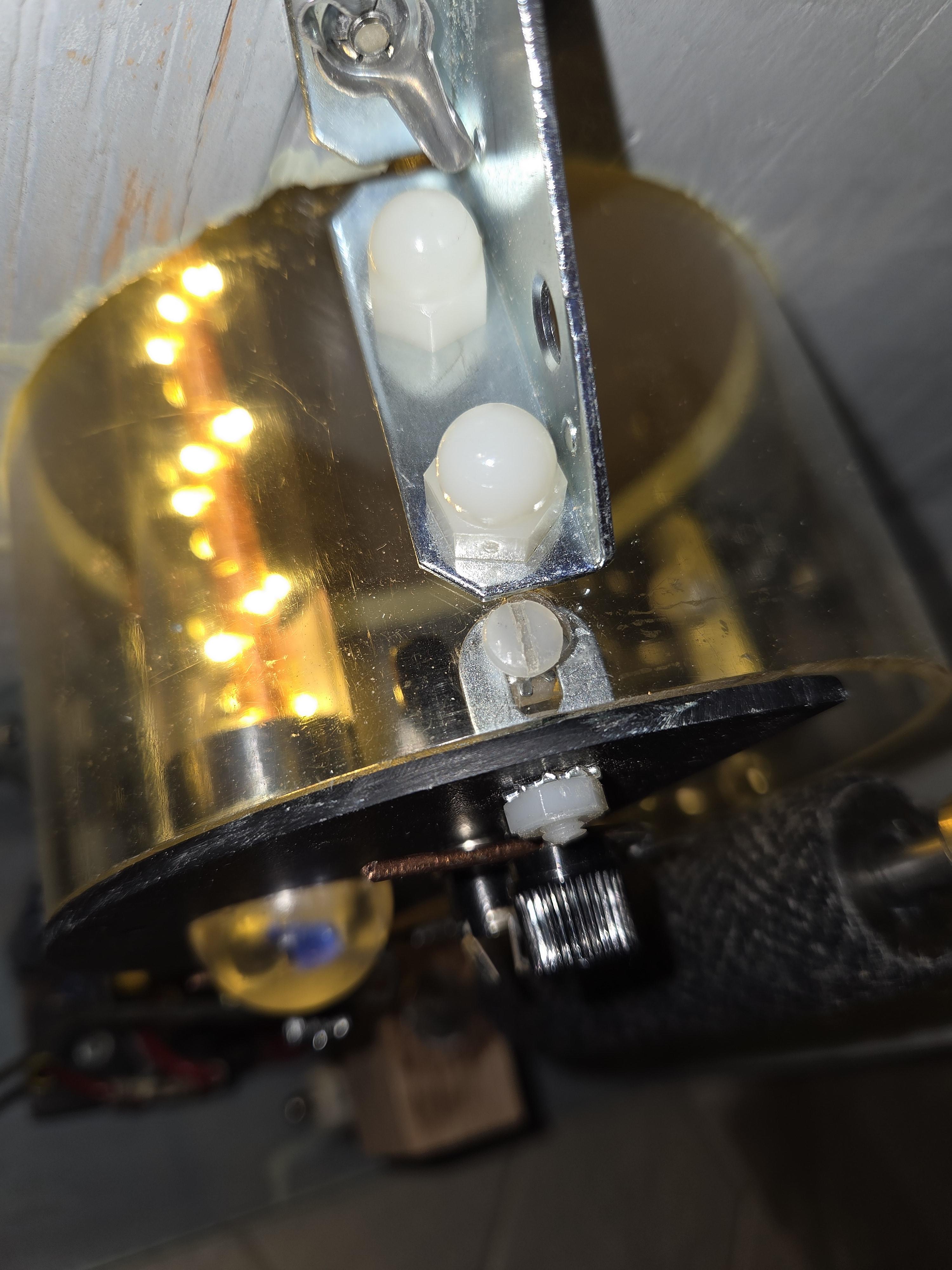
I attached the support column with the upper and lower combs and the light rod to the corner braces in the console with nylon machine screws. These screws reduced mechanical stress on the vintage acrylic. The upper roller shaft fit neatly in the manufacturer's pre-cut slots located at the top of the support tube.
Preliminary Test
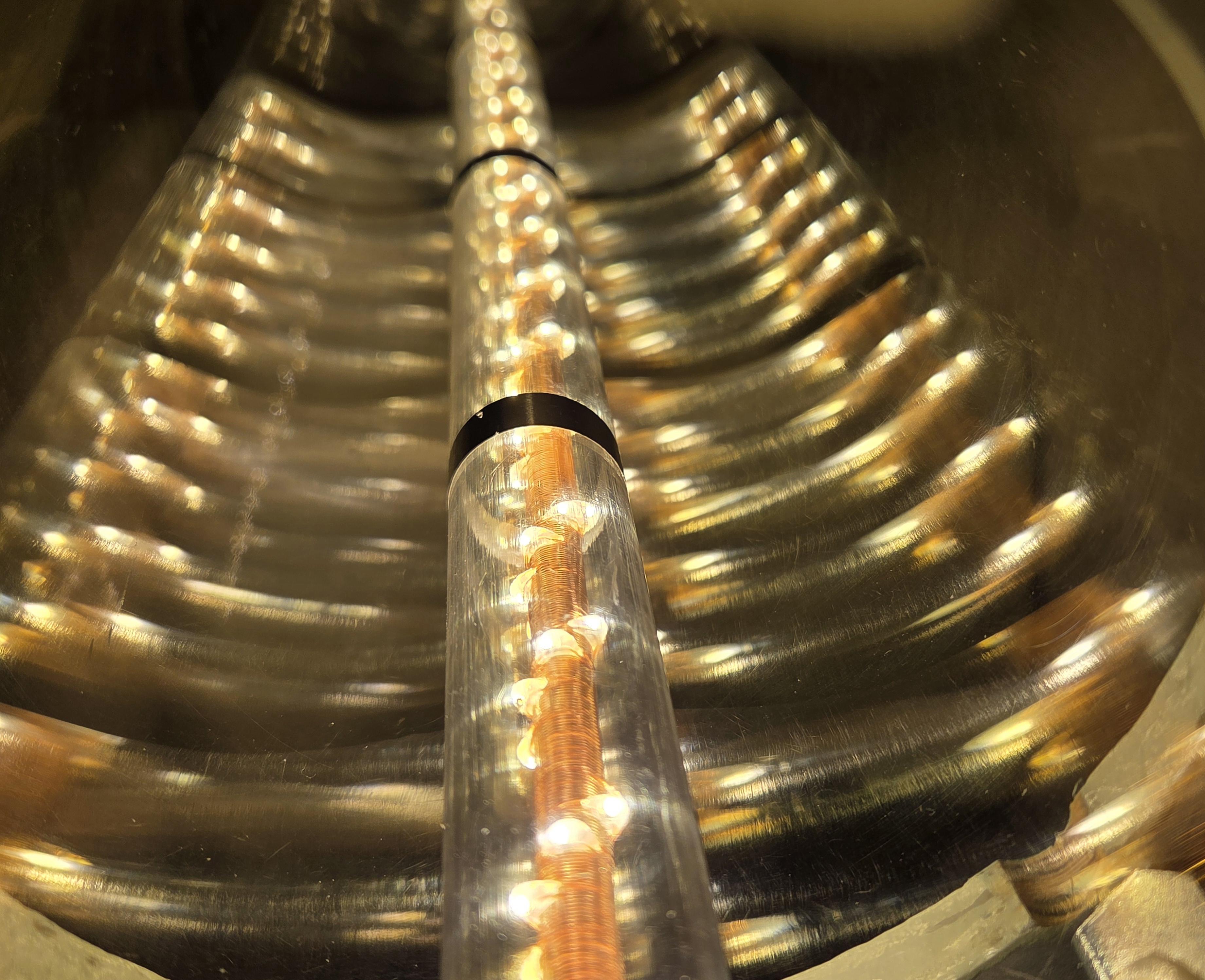
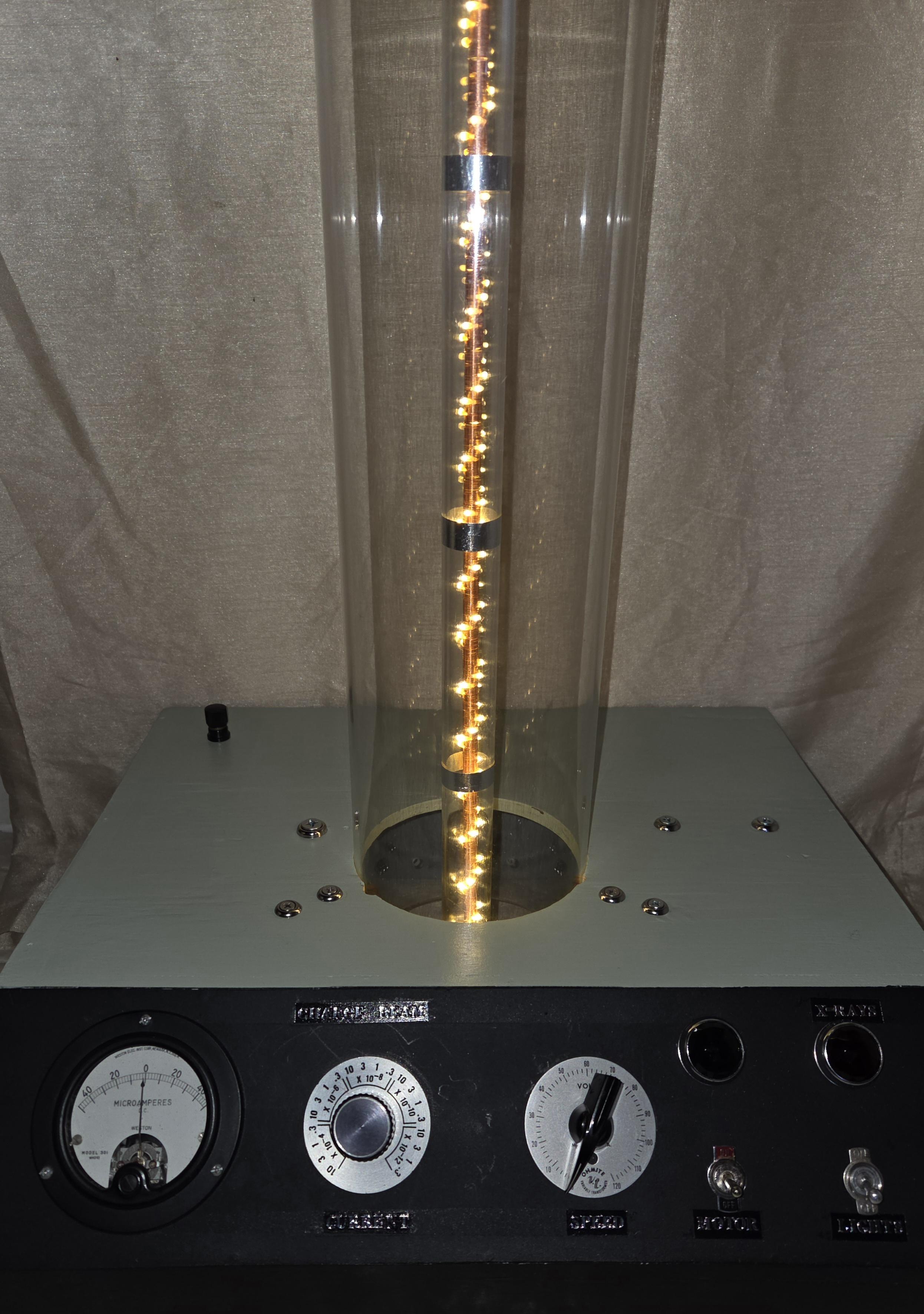
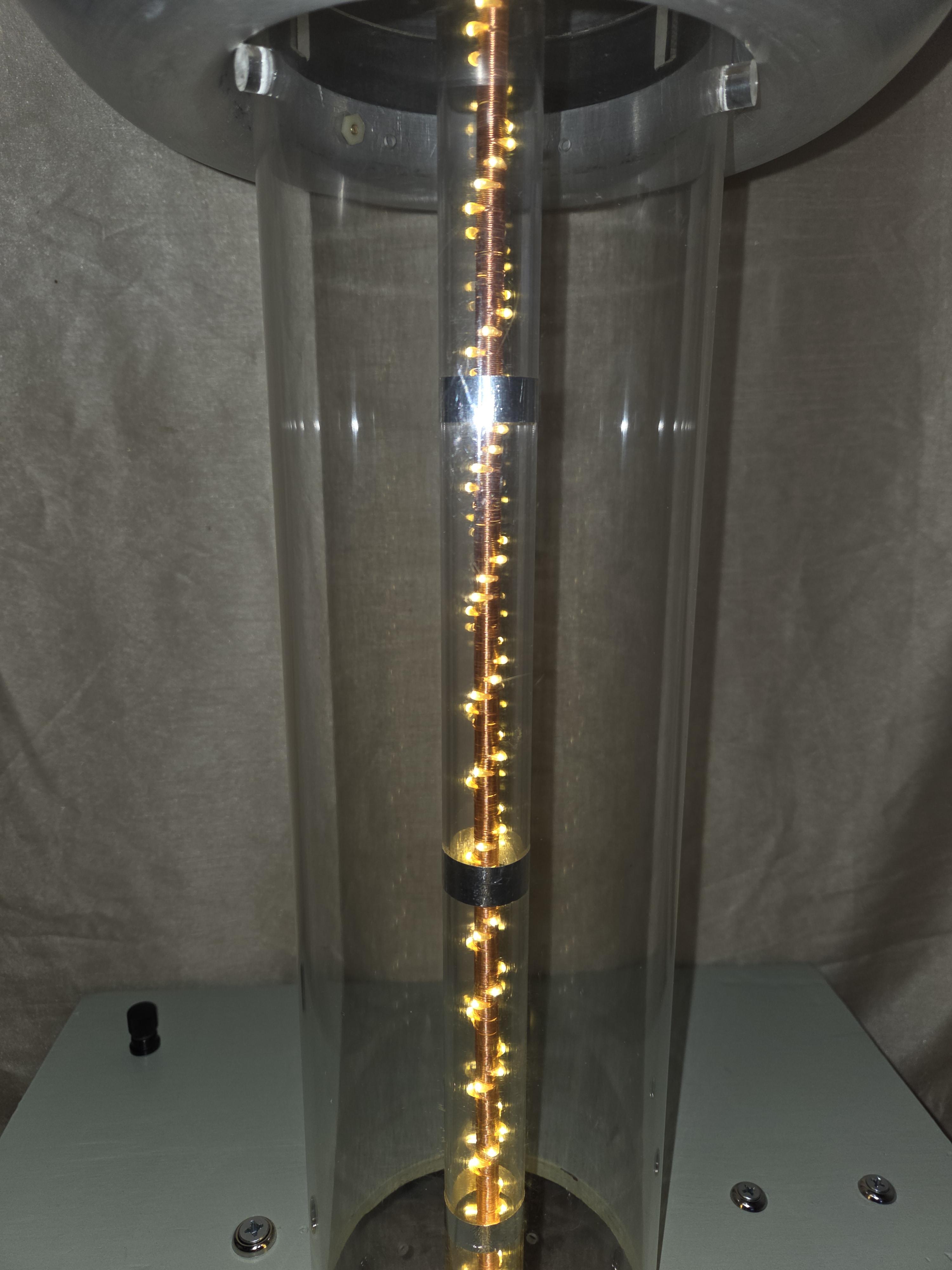
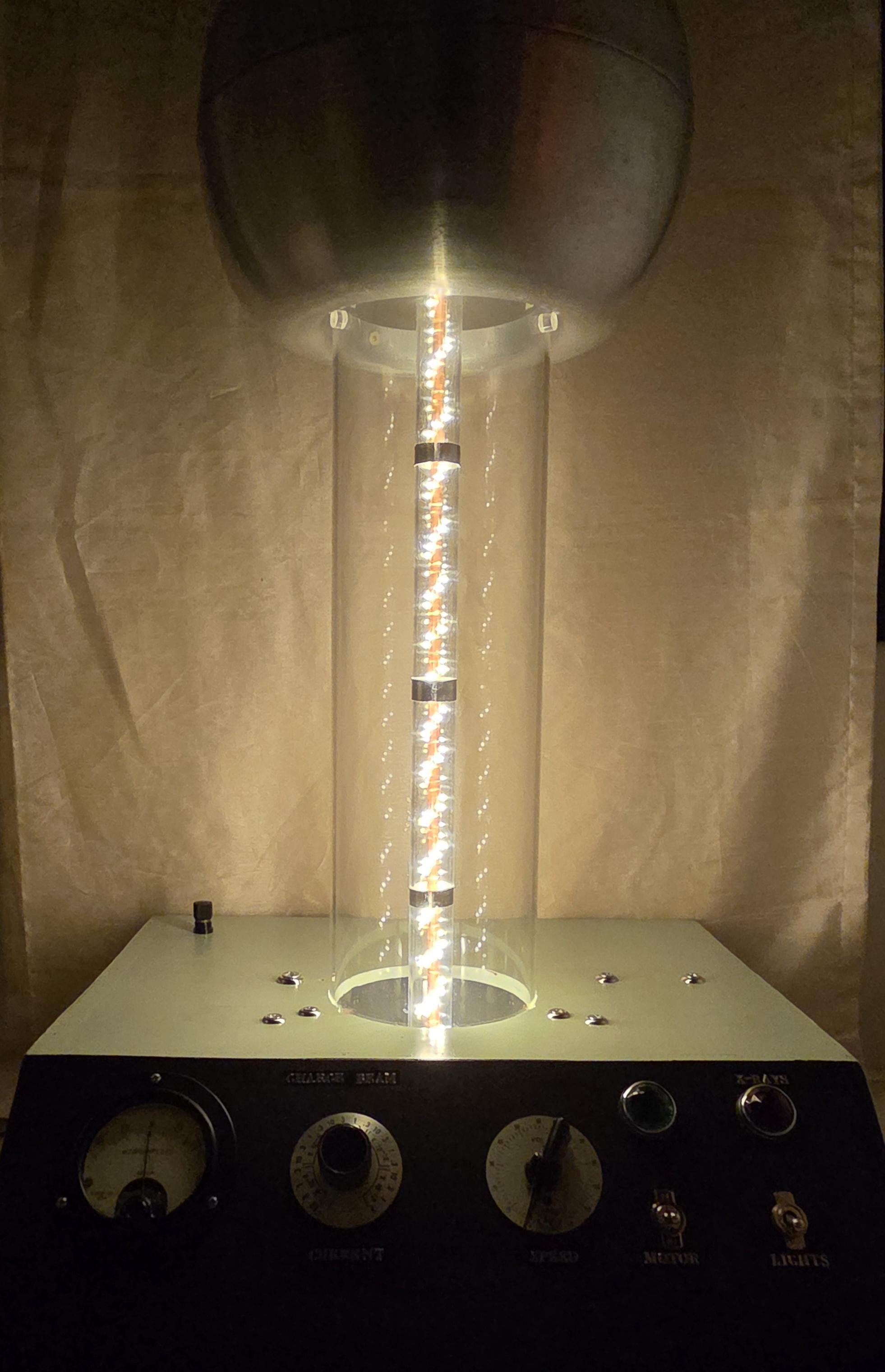
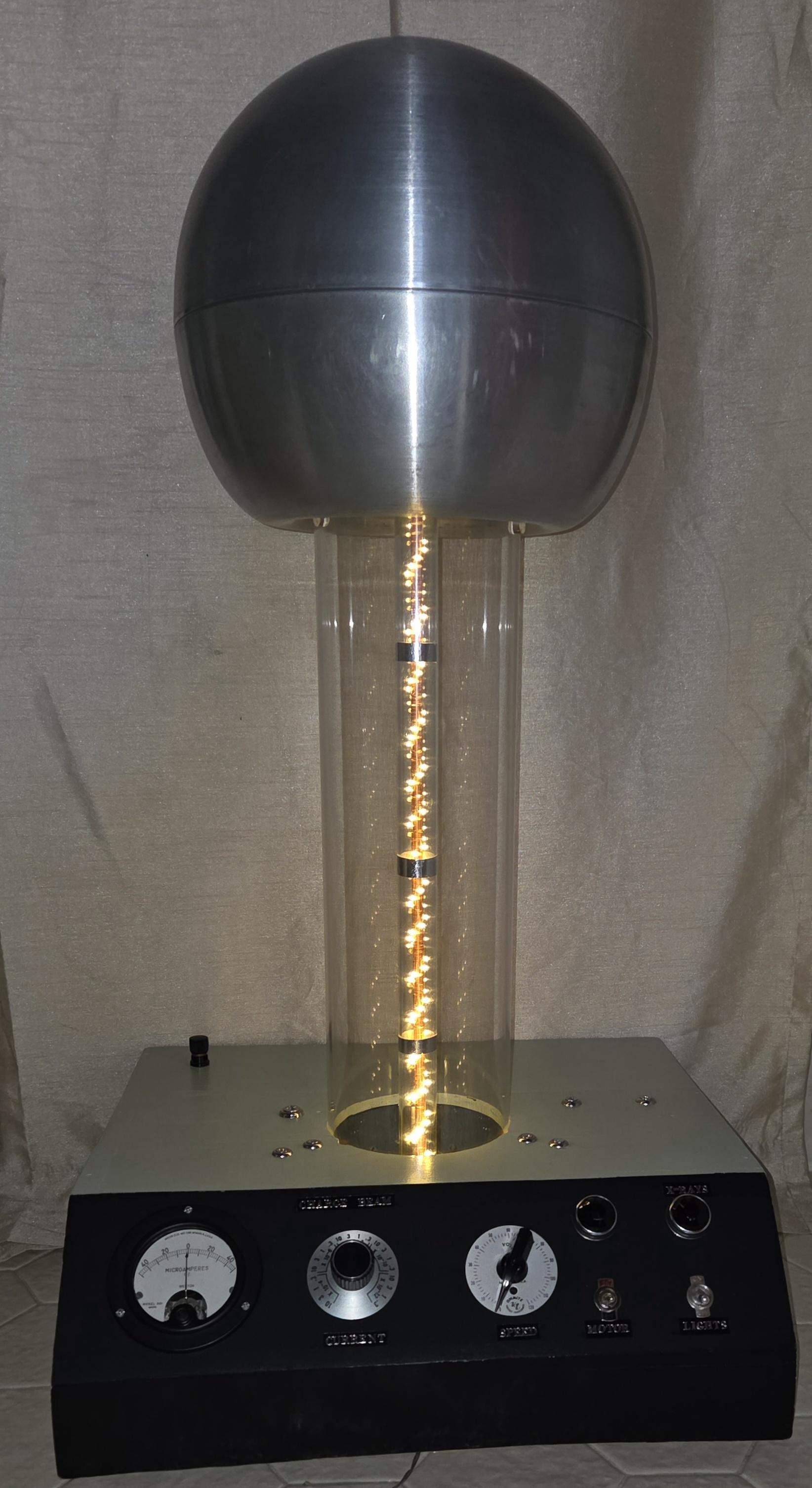
The light rod lit up the acceleration tube when powered by an external USB port.
That's all for now until the next installment drops...