Pumpkin Basket Flasher Circuit
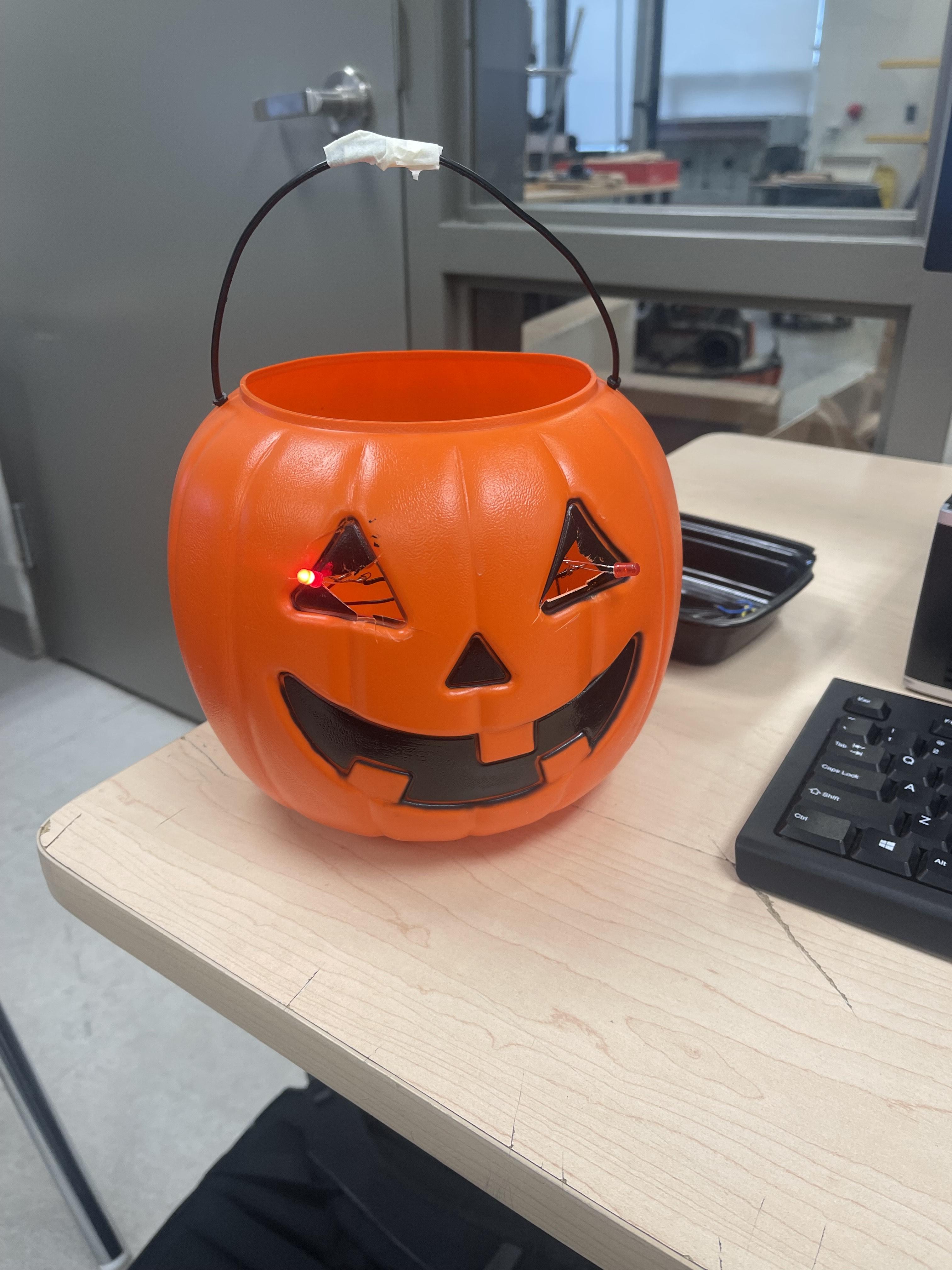
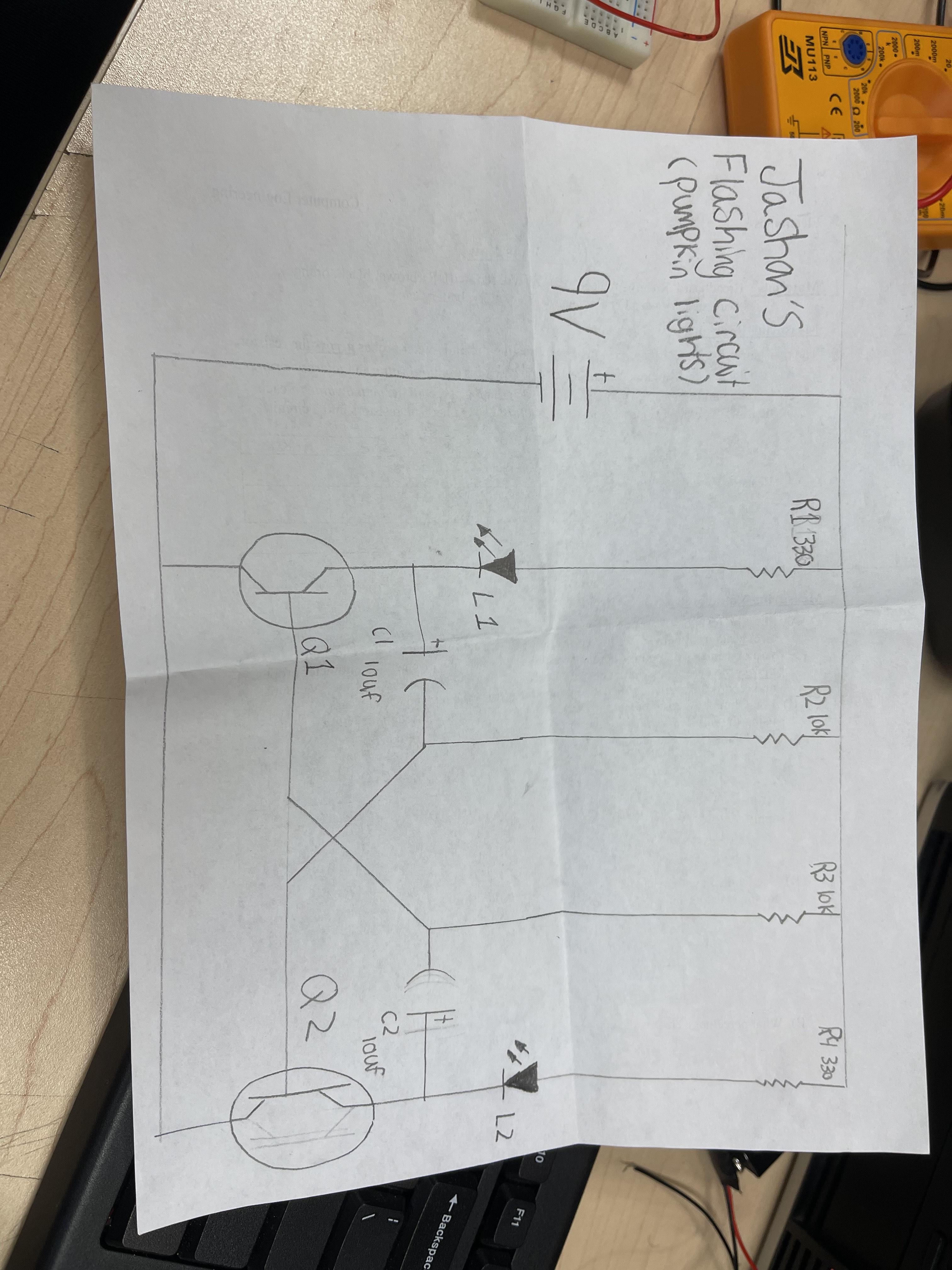
This is a flashing circuit where once you have fully connected everything your circuit should be flashing from one led to another. This gives a cool sort of police sirens feel to this circuit.
Supplies
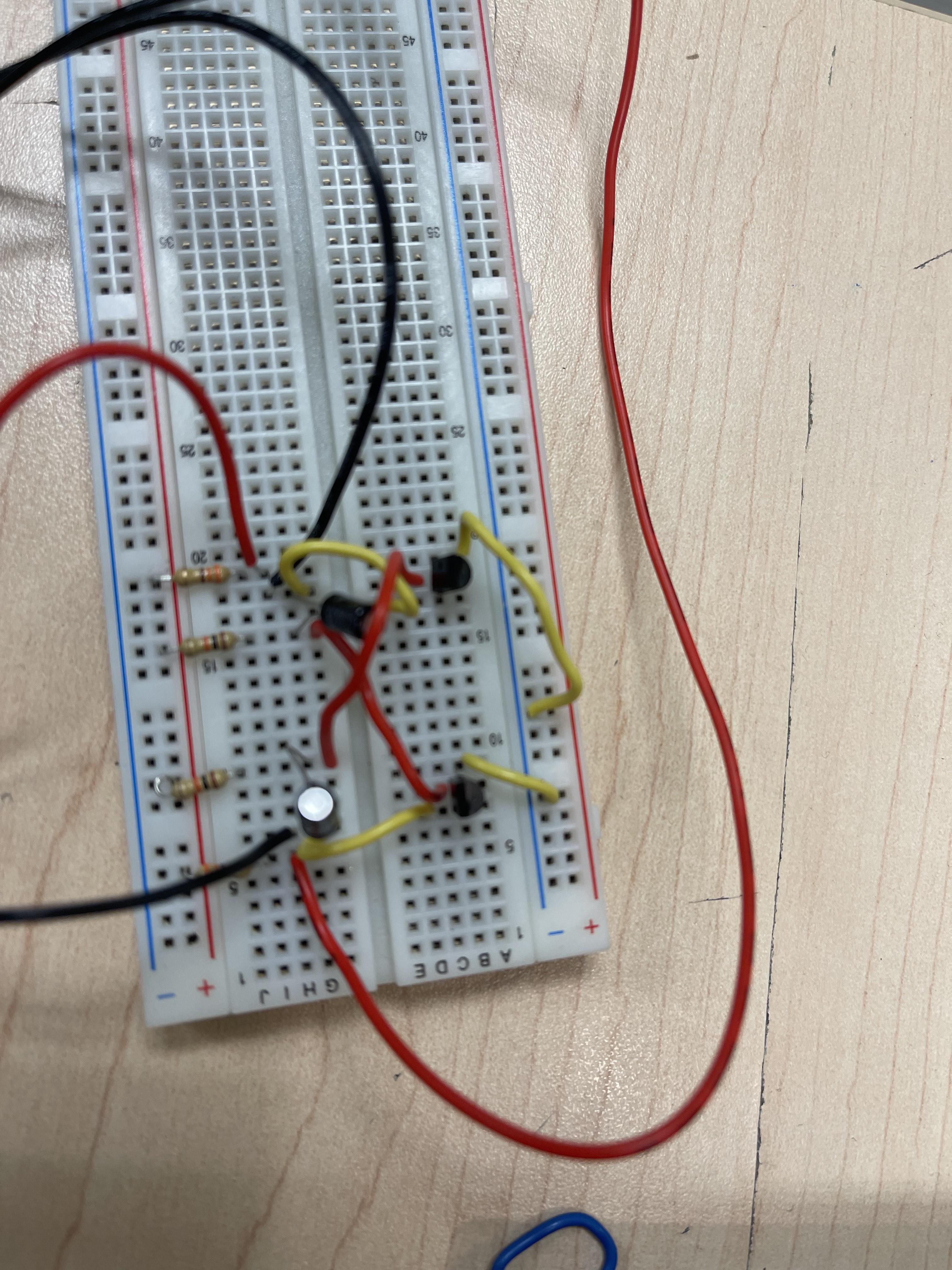
(Everything you should have before starting)
Solderless breadboard (small/half-size is fine)
9 V battery and snap connector (or 5–12 V DC supply)
2 × NPN transistors (2N3904, BC547, or similar)
2 × 10uf Capacitors
4 × resistors for the transistor network:
2 × 10 kΩ (collector resistors)
2 × 100 kΩ (base bias resistors) — (I give alternatives below)
2 × current-limiting resistors for the LEDs, 330 Ohms Resistor and 2 10k ohms resistor
2 × LEDs (any color)
Several jumper wires (male–male) — assorted colors for clarity
Wire stripper/cutters (if you need to strip wires from battery snap)
Multimeter (helpful for debugging)Place your breadboard on the table oriented with the long power rails (+ red and − blue) on the top and bottom (as in your photo).
Add the 9v Connection
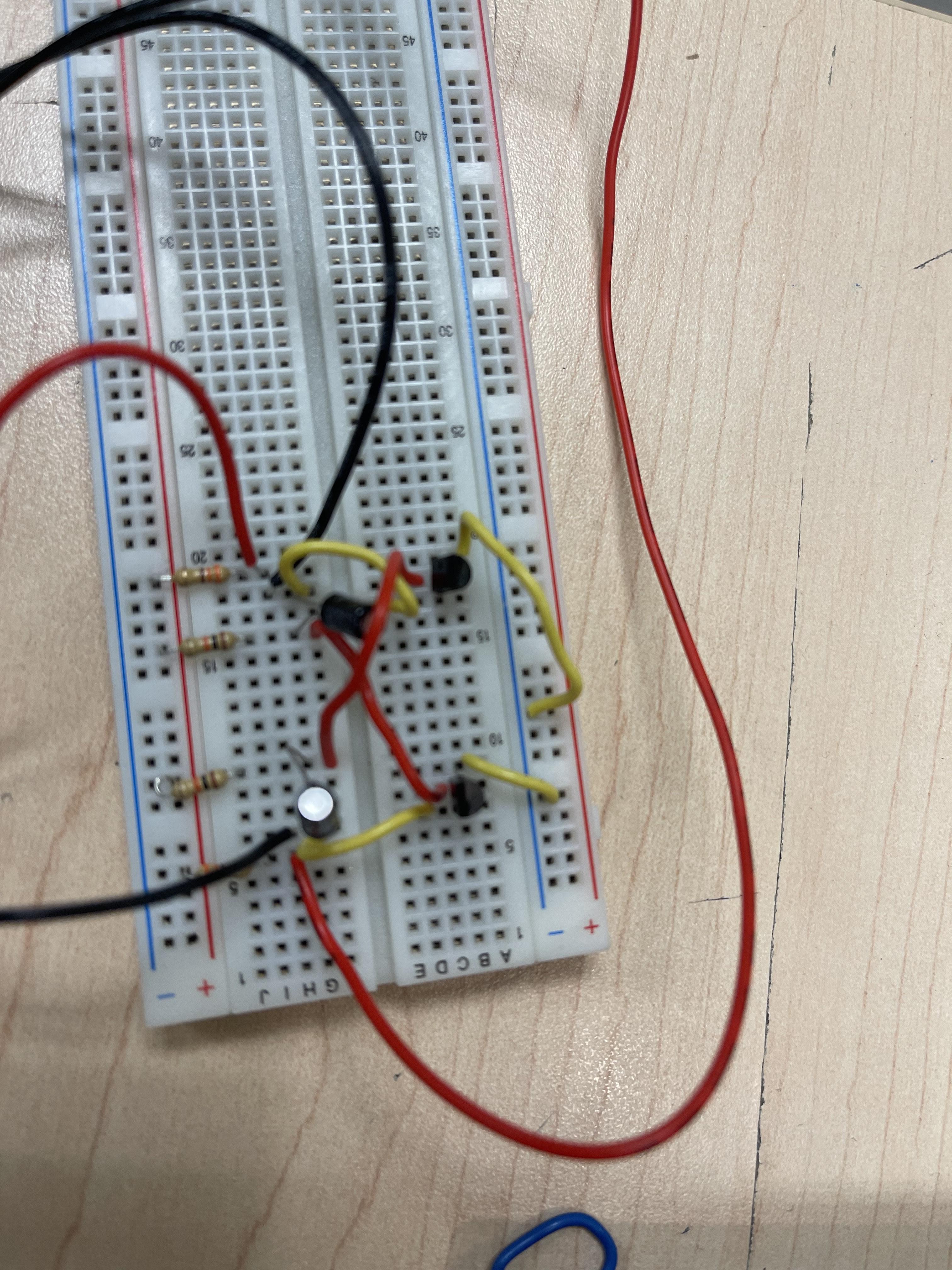
Attach the 9 V snap connector to the battery and verify polarity with a multimeter: red lead = +9 V, black lead = 0 V (ground)
Add Wires to Ground
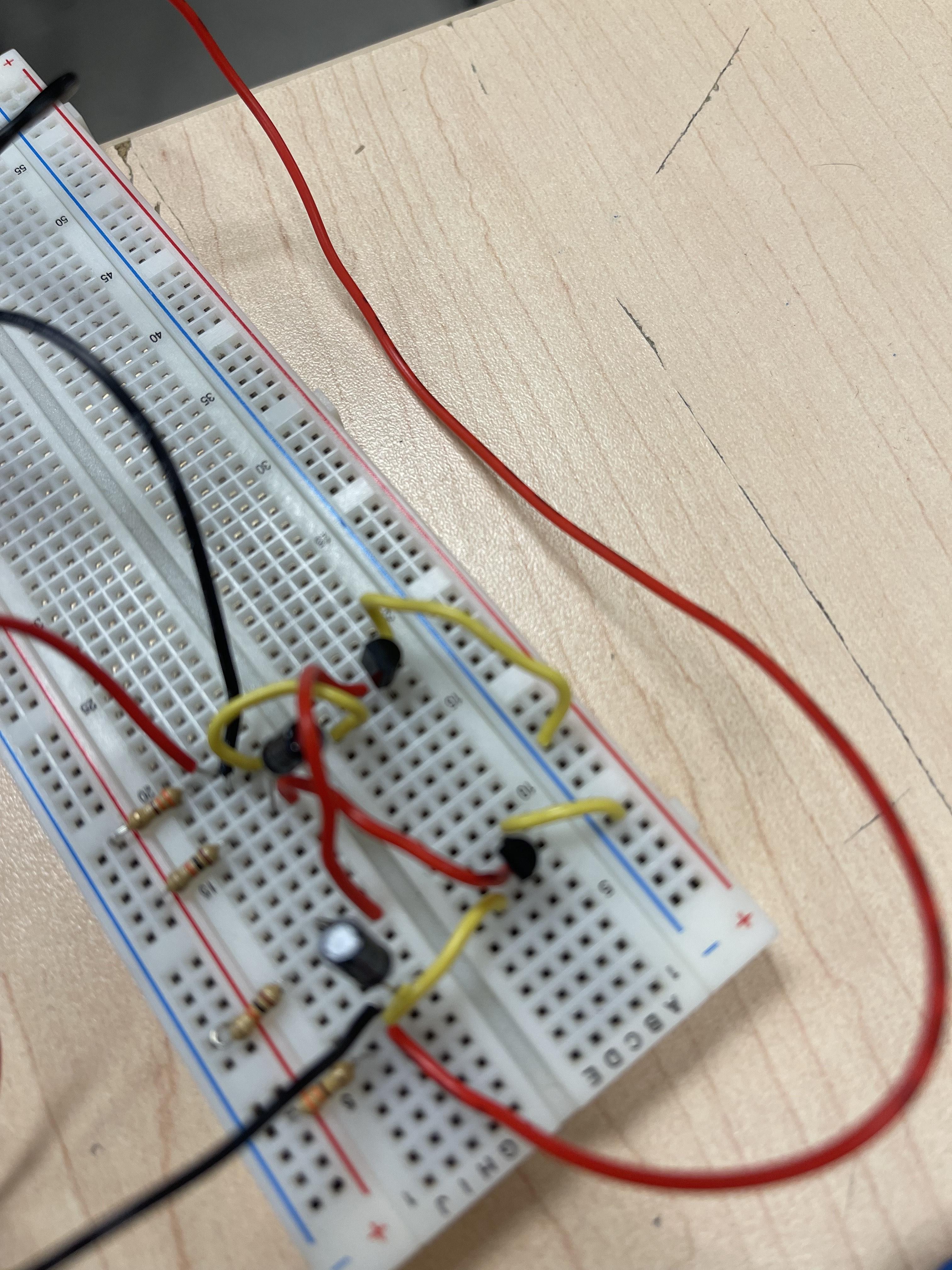
insert the wires which will eventually go to the npn transistors:
- Put the red (positive) wire into the red + power rail.
- Put the black (negative) wire into the blue - (ground) rail.
- Make sure rails are powered and that rail continuity is correct.
Place Your NPN Transistors
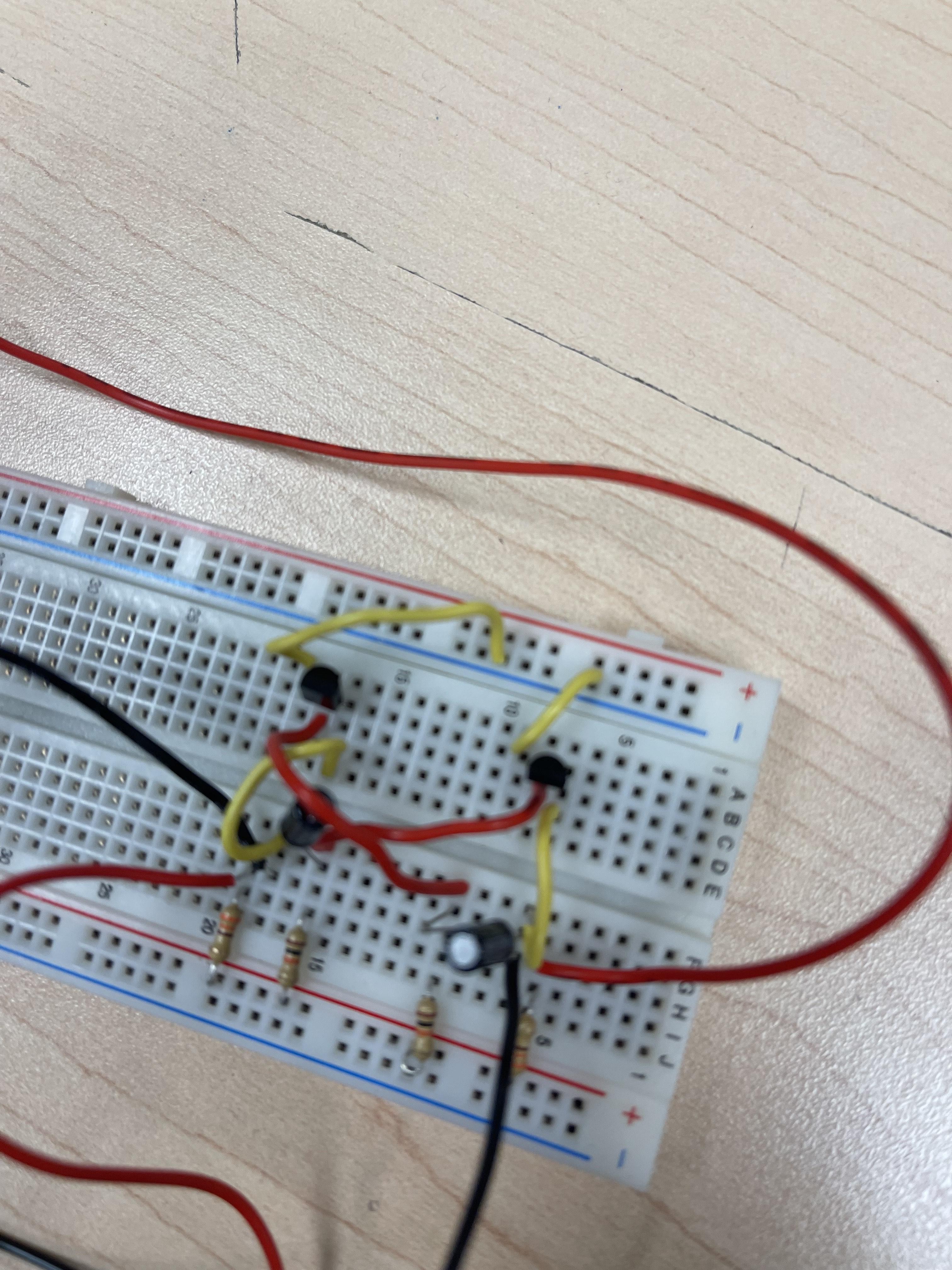
Place the two NPN transistors on the breadboard so they sit across the center gap (each transistor spanning the middle channel) with space between them. Orientation (typical for 2N3904): pins left→right = Emitter, Base, Collector (but check your transistor datasheet). For clarity we’ll call them Q1 (left) and Q2 (right)
Connect the Transistors to Original Wires
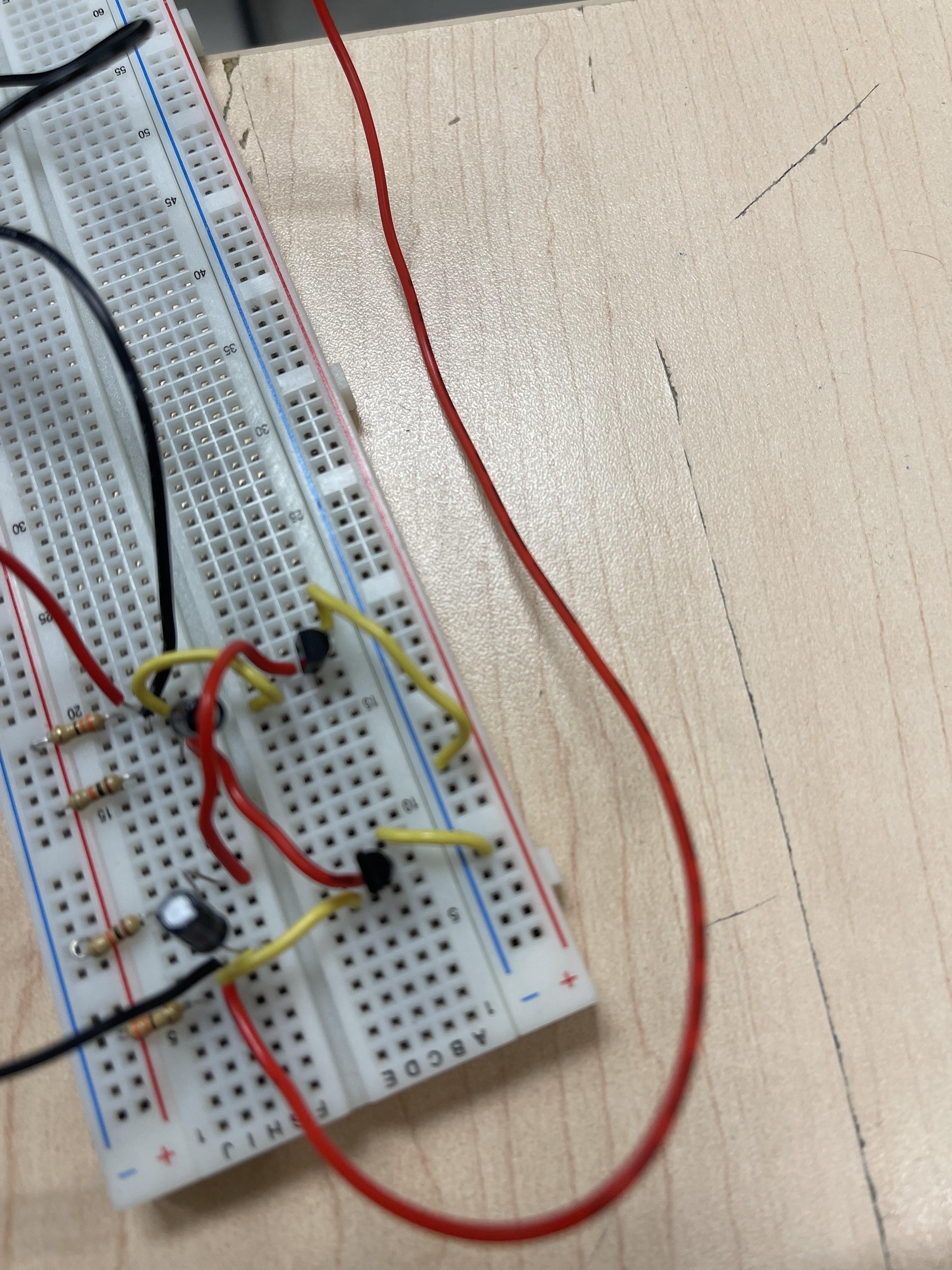
Connect both transistor emitters to ground:
- Use a short jumper from the emitter pin of Q1 to the negative power rail.
- Repeat for Q2 emitter. (Both emitters go to the same ground rail.)
Add the Resistors
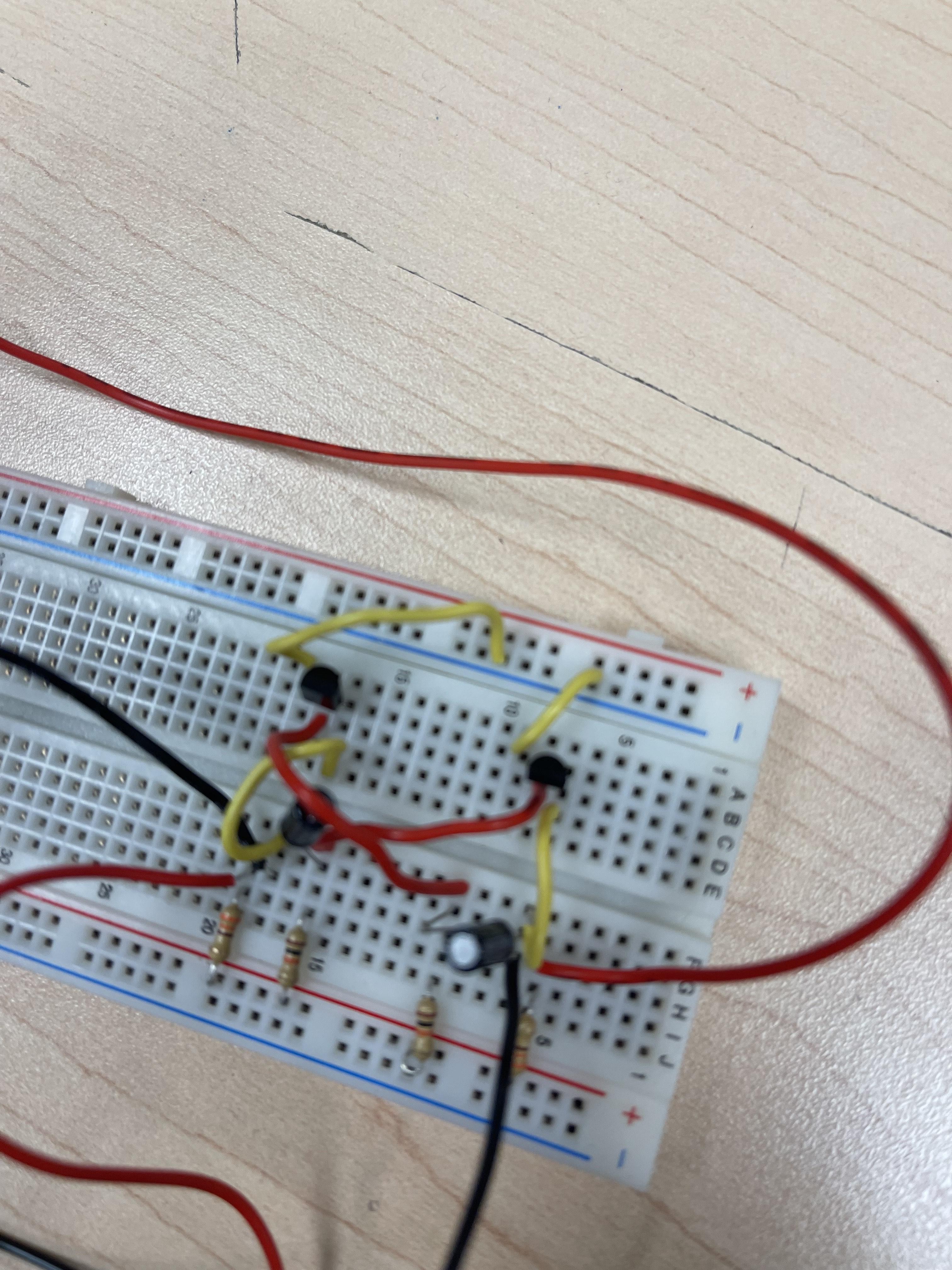
Add the collector resistors (2 × 10 kΩ):
- Insert one 10 kΩ resistor from the positive power rail (+) to the collector pin of Q1.
Insert the second 10 kΩ resistor from + to the collector pin of Q2.
These resistors limit the collector current and, with the transistor switching, will determine LED brightness/current.
Connect Leds
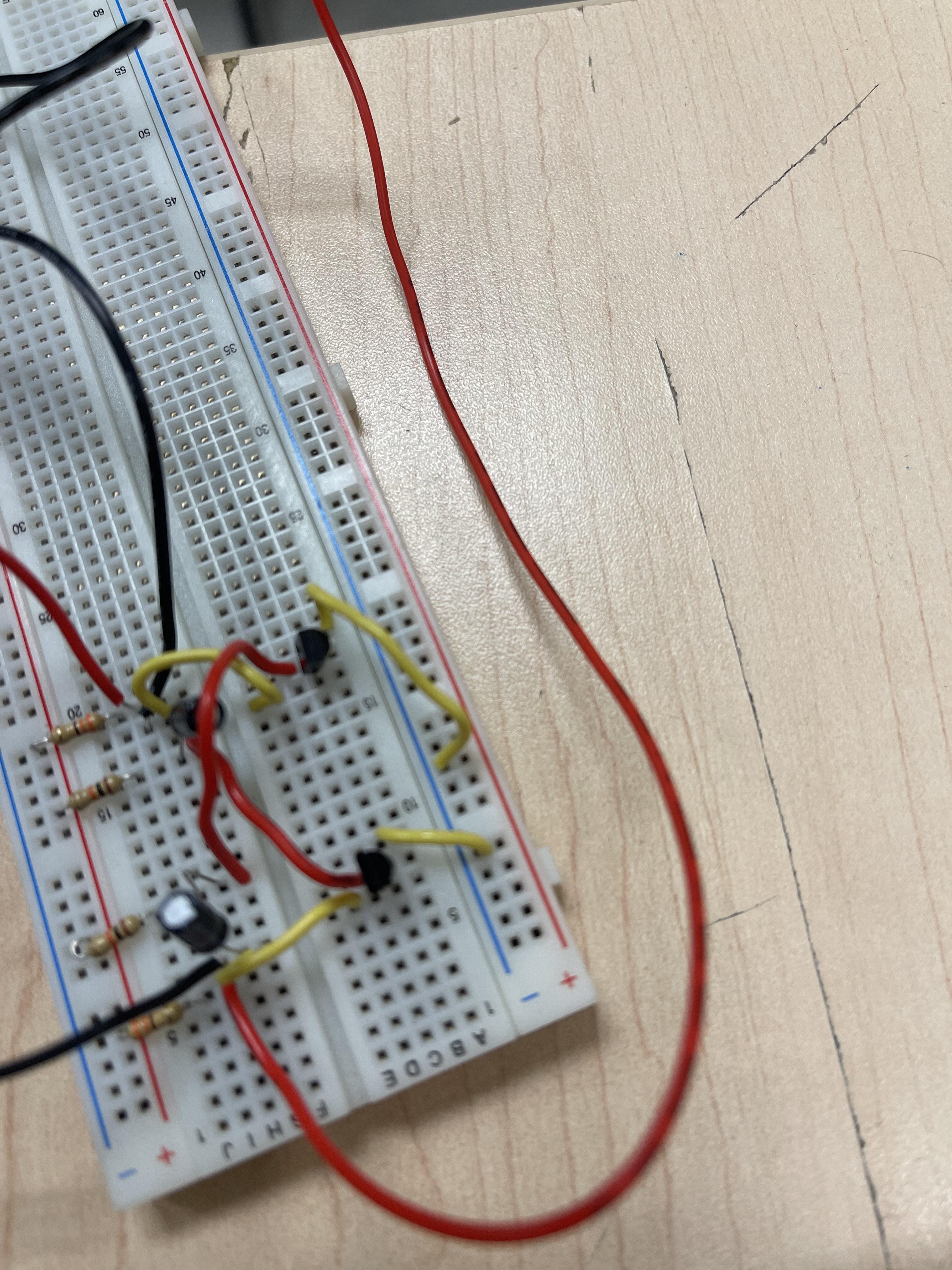
Connect the LEDs with series resistors:
- For Q1: Place the LED so its longer lead (anode) goes to the + rail through the 330 Ω resistor (i.e., one end of 330 Ω into the + rail, other end into the LED anode). The LED cathode (short lead) goes to the collector of Q1.
- For Q2: same arrangement: + to 470 Ω to LED anode; LED cathode to collector of Q2.
Add 2 Base Resistors
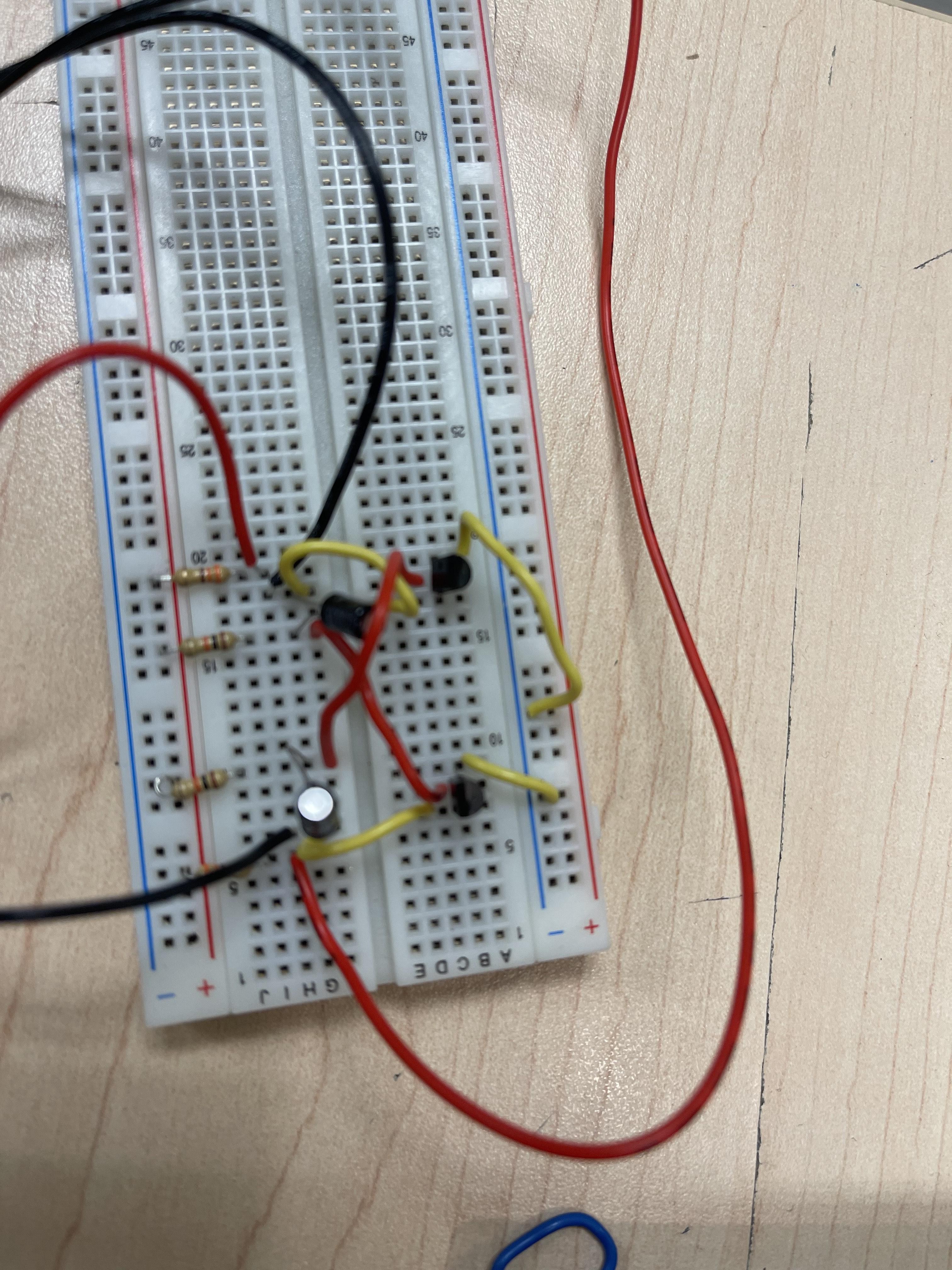
Add the base bias resistors (2 × 10 kΩ):
- Put one 10 kΩ resistor from the collector of Q2 to the base of Q1.
- Put the other 10 kΩ resistor from the collector of Q1 to the base of Q2.
Add Capacitors
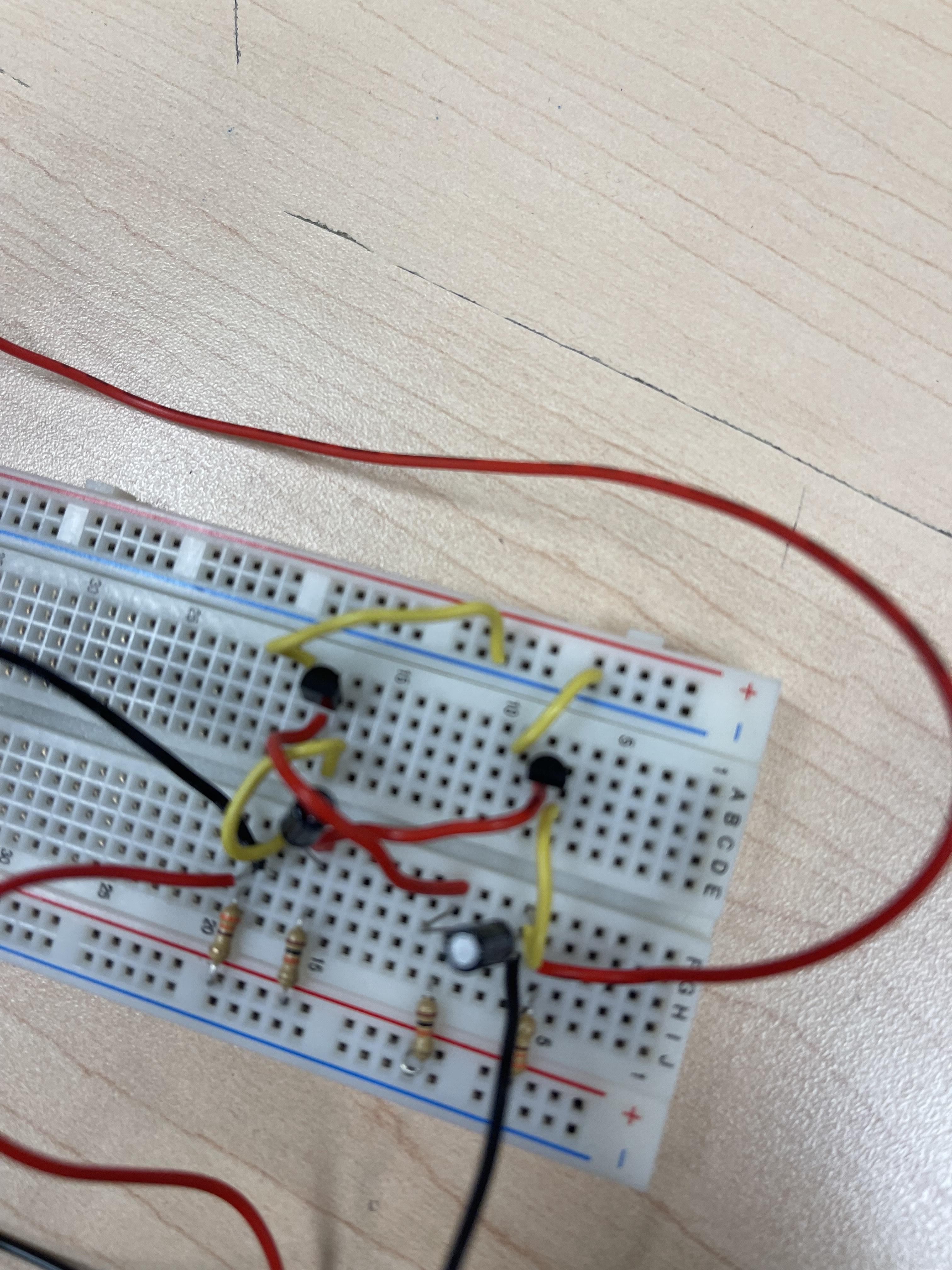
Add the timing capacitors (2 × 10 µF electrolytic):
- Connect the negative lead (shorter) of the left capacitor to the base of Q1, and the positive lead (longer) to the collector of Q2.
Connect the negative lead of the right capacitor to the base of Q2, and the positive lead to the collector of Q1.
Double Check Every Connection
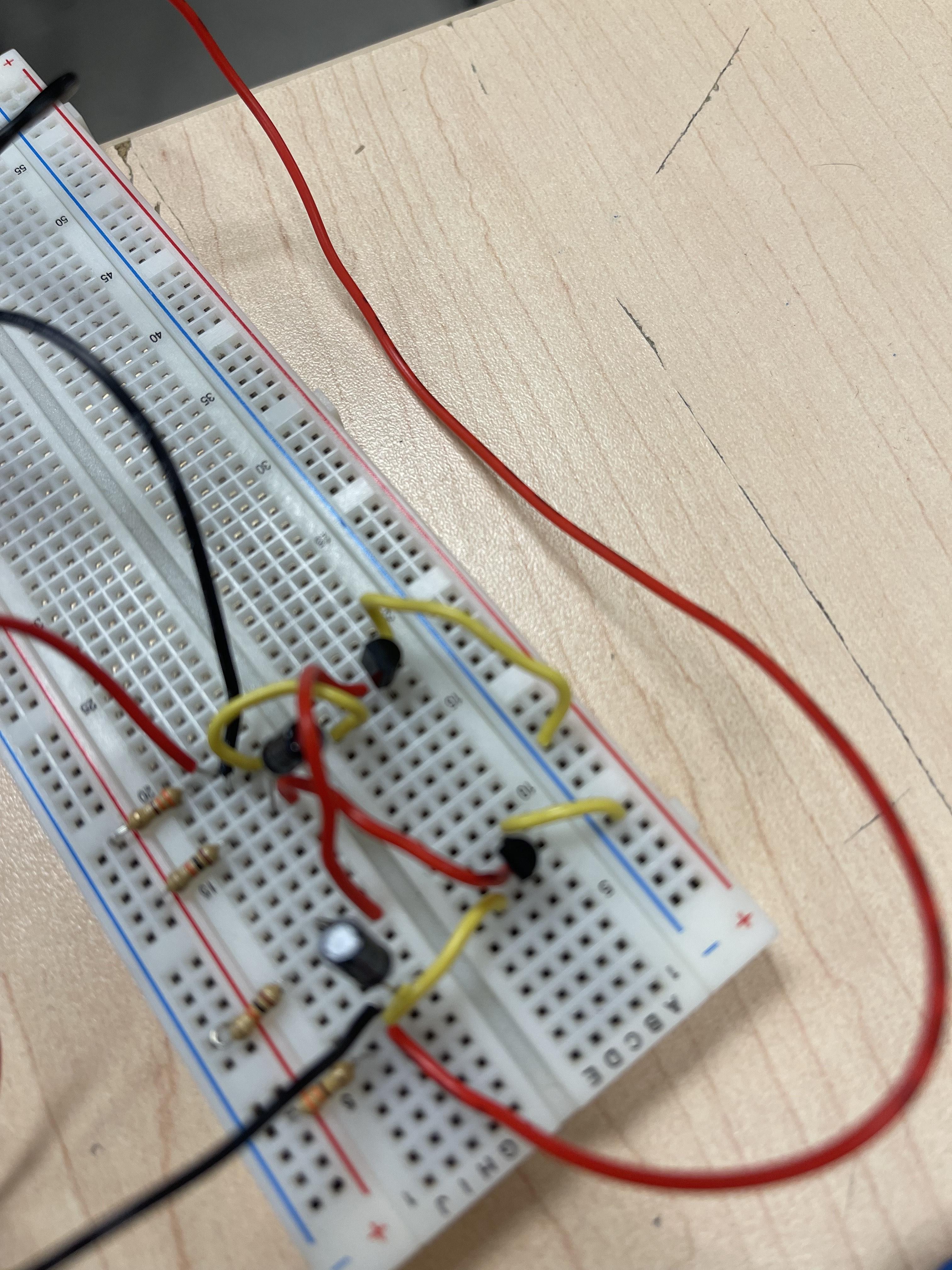
Double-check every connection:
Both emitters → ground.
Each collector → 10 kΩ → +. Also each collector → LED cathode.
LED anode → resistor → +.
Collector of Q1 → 100 kΩ → base of Q2.
Collector of Q2 → 100 kΩ → base of Q1.
Collector of Q1 → positive side of cap → negative side of cap → base of Q2.
Collector of Q2 → positive side of cap → negative side of cap → base of Q1.
Power It Up
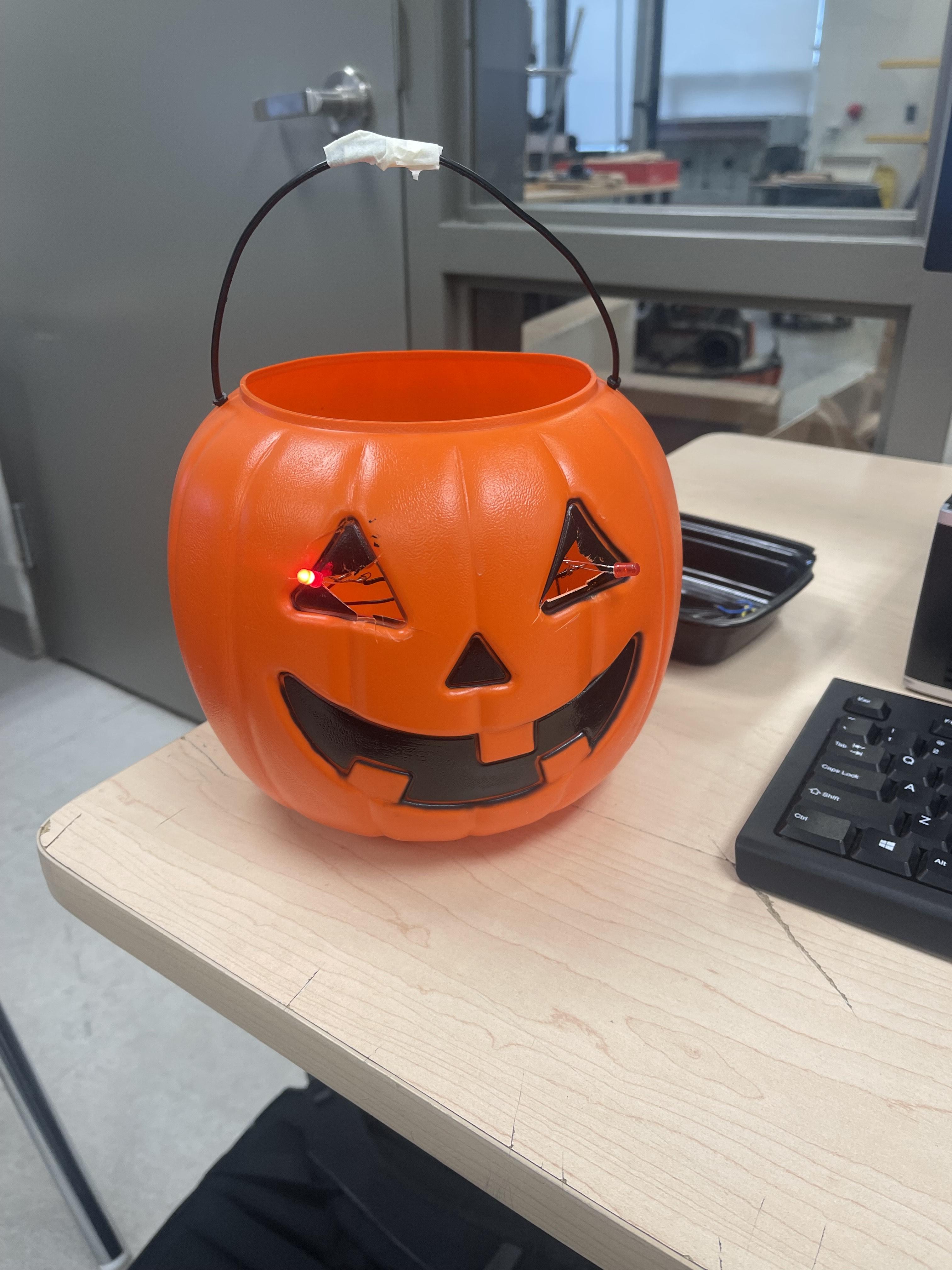
Power it up: connect the battery. One LED should light briefly and then they will alternate blinking. If nothing happens, remove power and go to the troubleshooting section below.
Conclusion
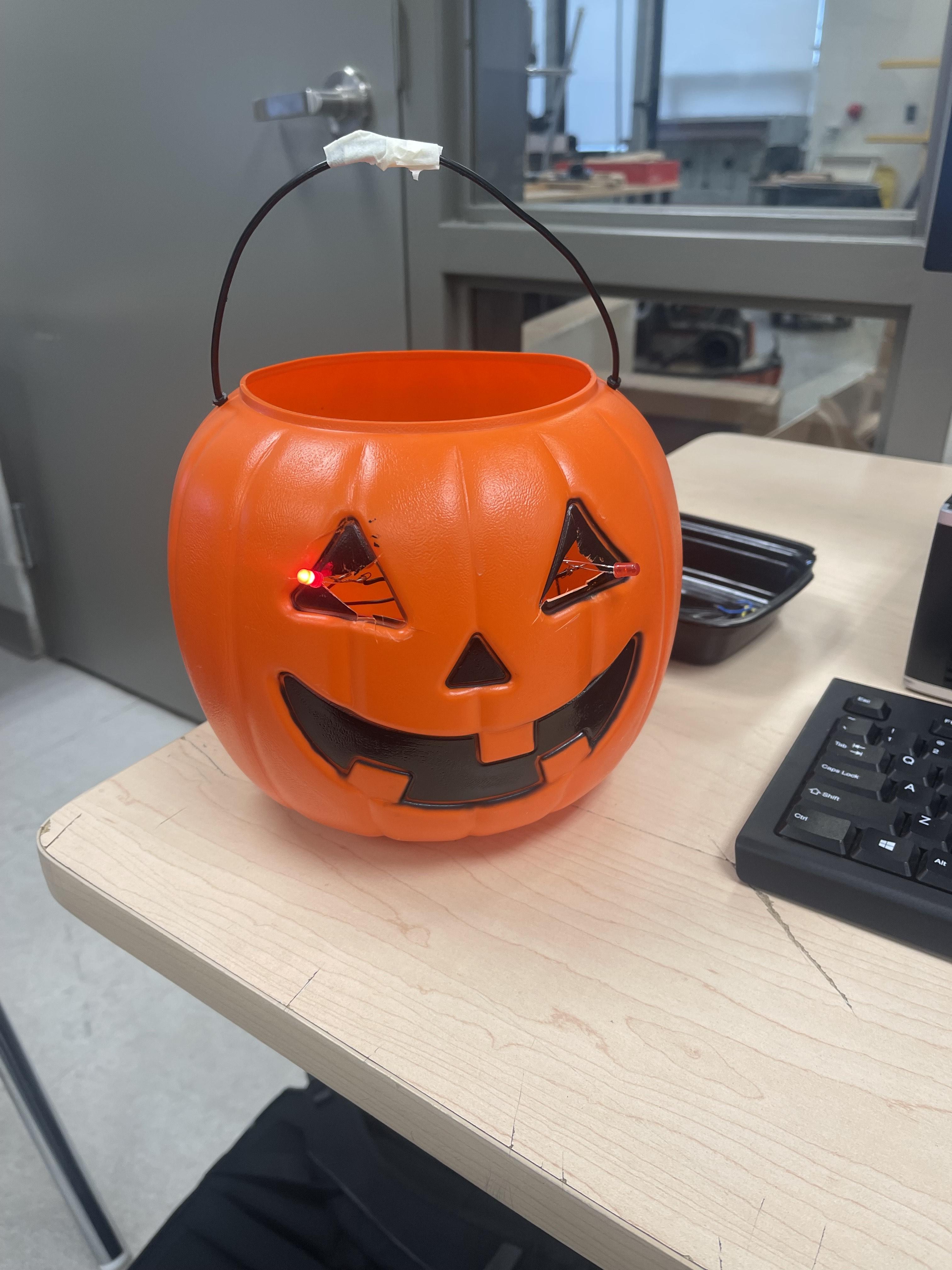
Now your circuit should be flashing and both led’s should be flashing with eachother . If your circuit is not working make sure everything is fully connected and no wire is miss connected. Make sure all of the needed components are put in the correct position on the breadboard. Check with a multimeter to make sure there is voltage flowing across the components . This can help you take out any flawed components with brand new working ones.