Making Time
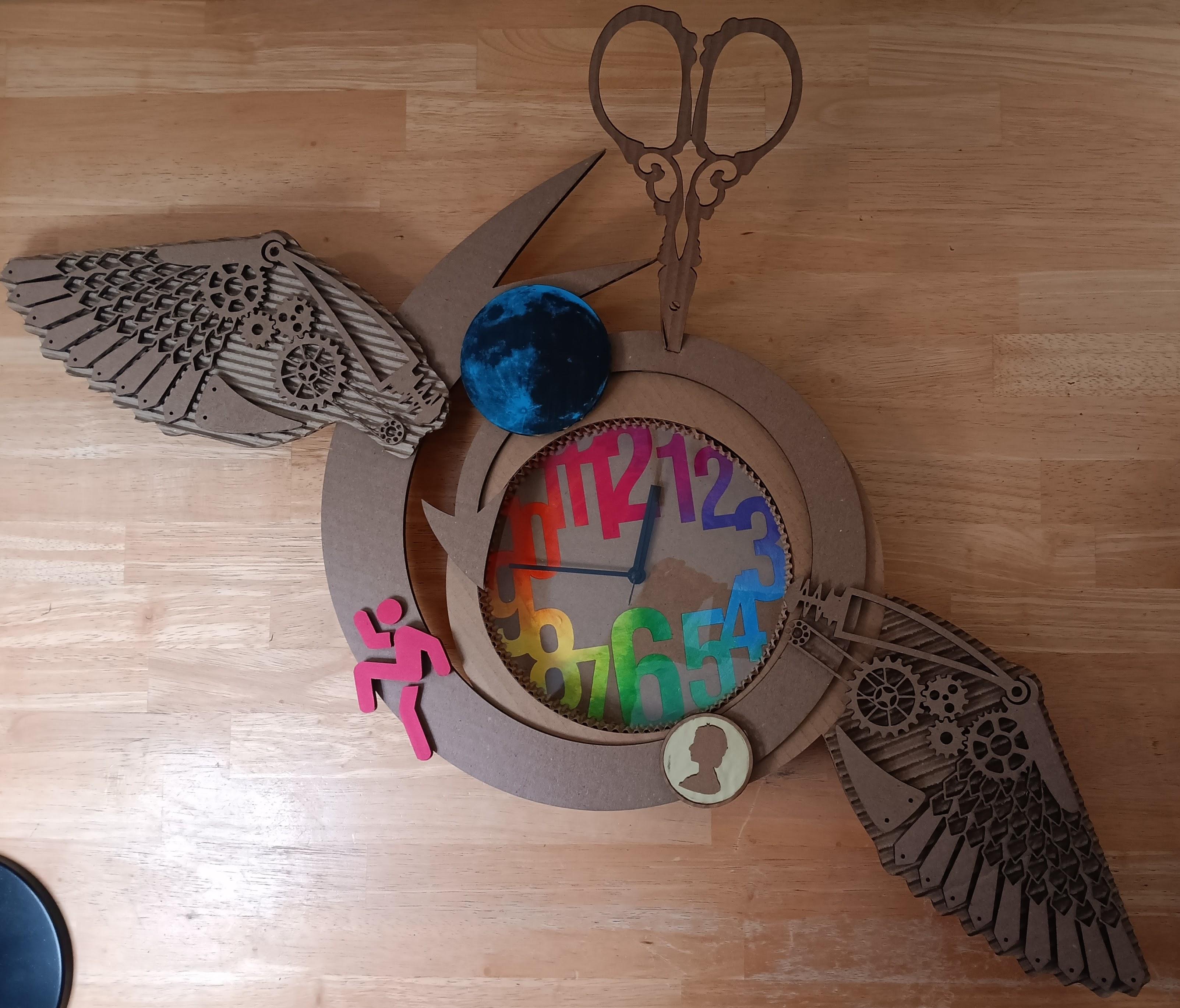
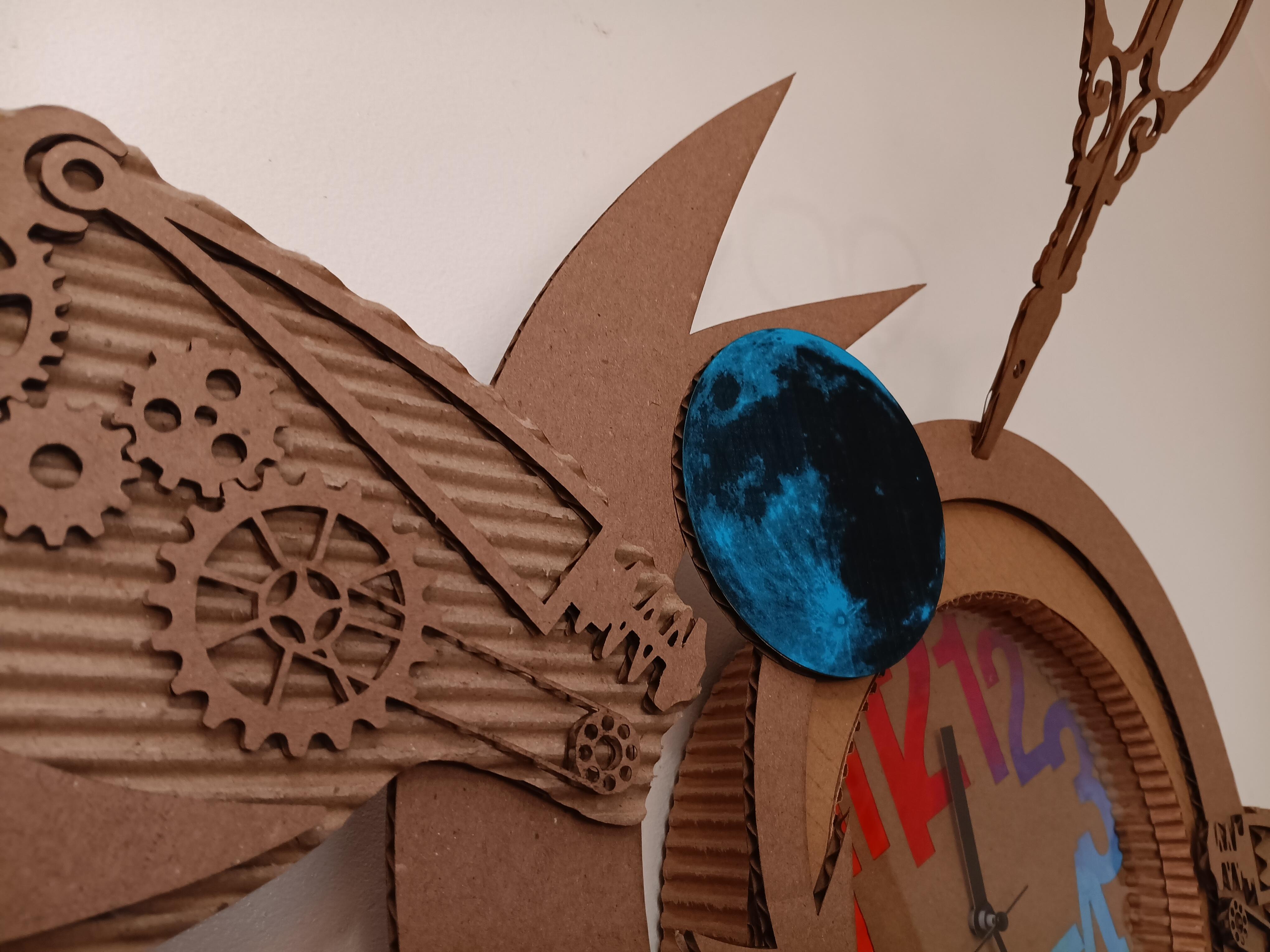


Here is a clock where you can read more than the time. There are six time related expressions embedded in this cardboard clad clock, can you find them?
This Instructable explores several techniques for the use of cardboard and paper that can be used to decorate a clock or something else. Use them to make the project your own.
Supplies
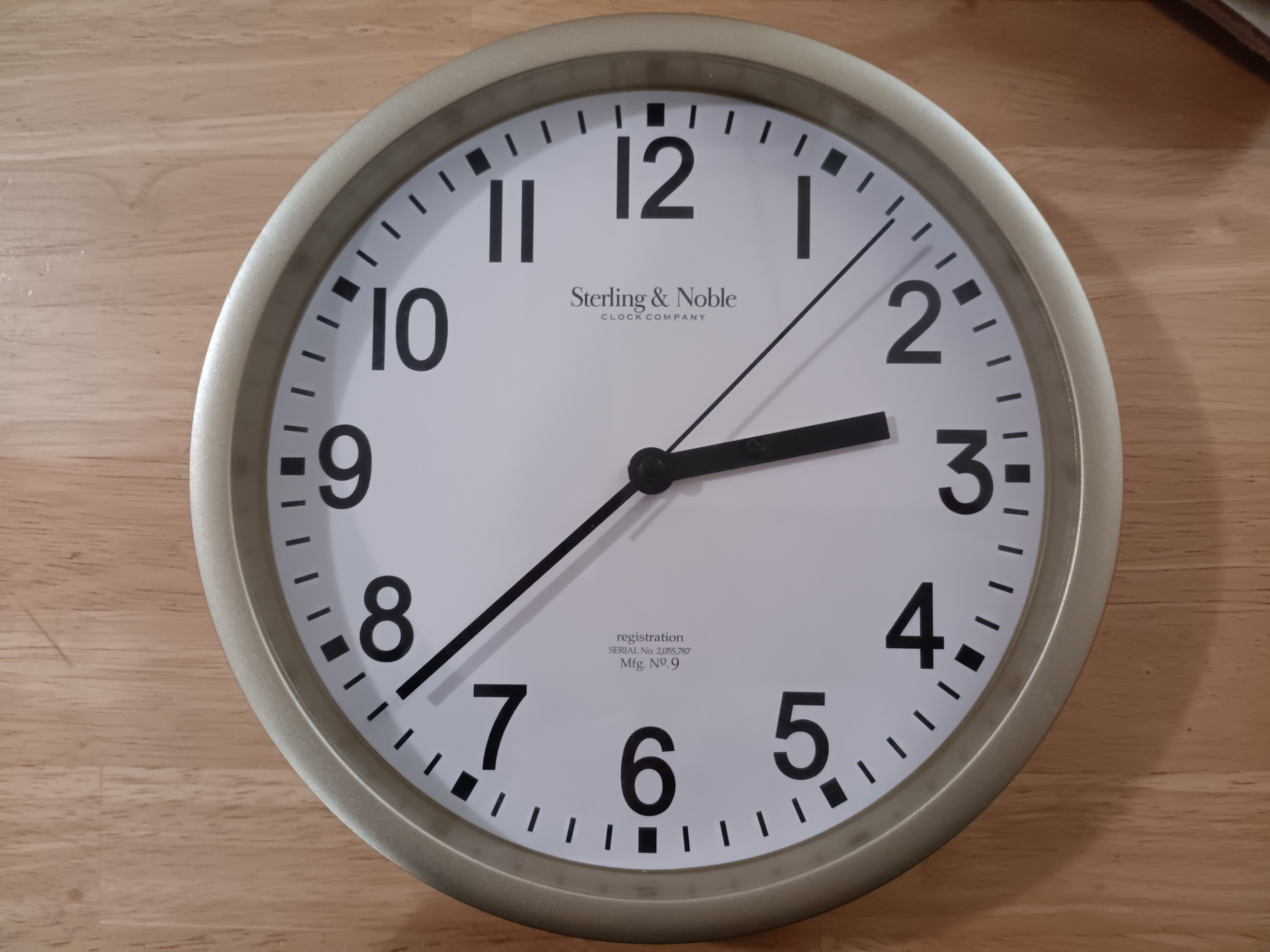
- Round wall clock (Target, Walmart or thrift shop suggested)
- Corrugated cardboard
- Brown paper
- Color cardstock
- Shinny paper
- 1 bamboo skewer
- PVA Glue (wood glue works better than white glue)
- Scissors
Cutting the Pieces
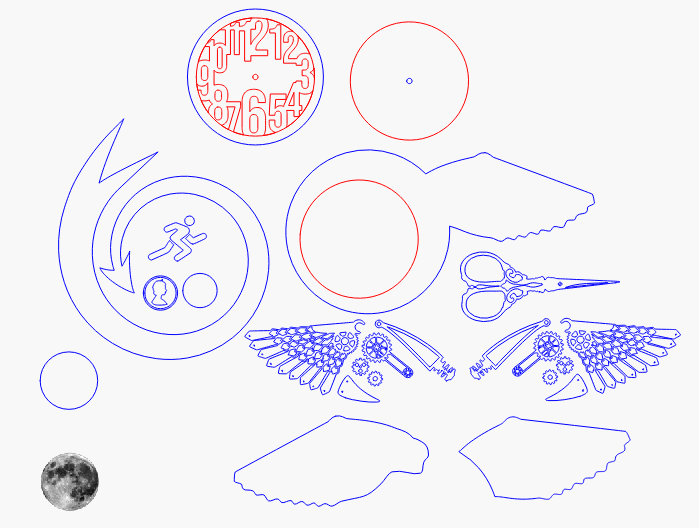
I am attaching an SVG file with the shapes I used. I cut the pieces for this clock with a laser cutter. They fit a 9 in clock (face 7.87 inches in diameter). If your clock is slightly different, you only need to resize the red circles.
Cutting with scissors, an X-Acto knife or simply ripping by hand are other possibilities that will each result in their own look.
Downloads

A Note About the Materials

The numbers for the face are cut from brown paper and the background of the face from white cardstock.
All other pieces are made from corrugated cardboard. This type of cardboard features fluted (wavy) layers sandwiched between flat linerboards. The most common (what I used) contains one fluted layer in between flat linerboards on top and bottom.
I used the cardboard mostly as it is. For a few pieces I peeled off one of the flatliners. For some cardboards, it is just a matter of pulling the layers in opposite directions. Others are well attached so the help of a blade and patience will be needed.
Preparing the Clock
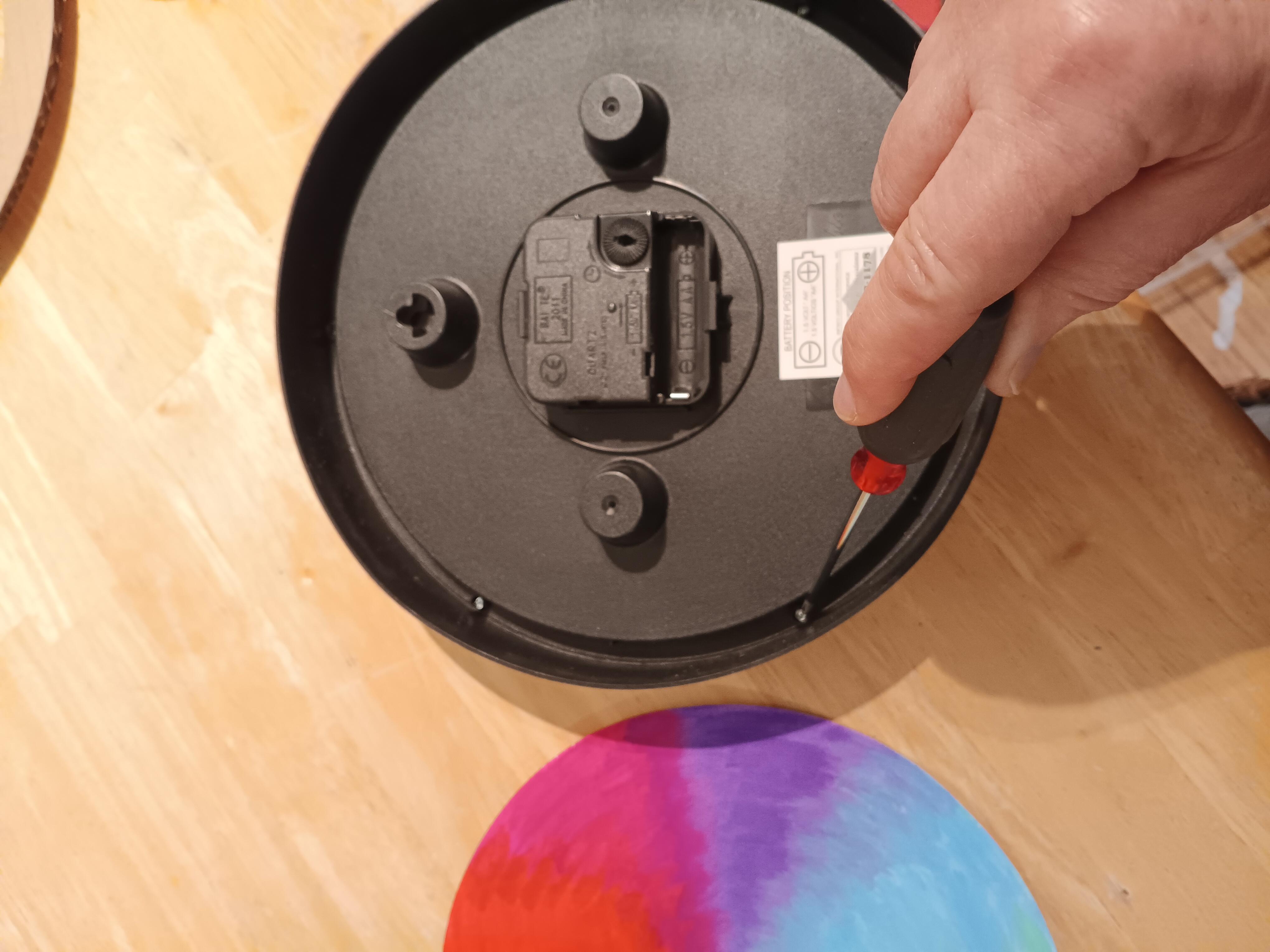
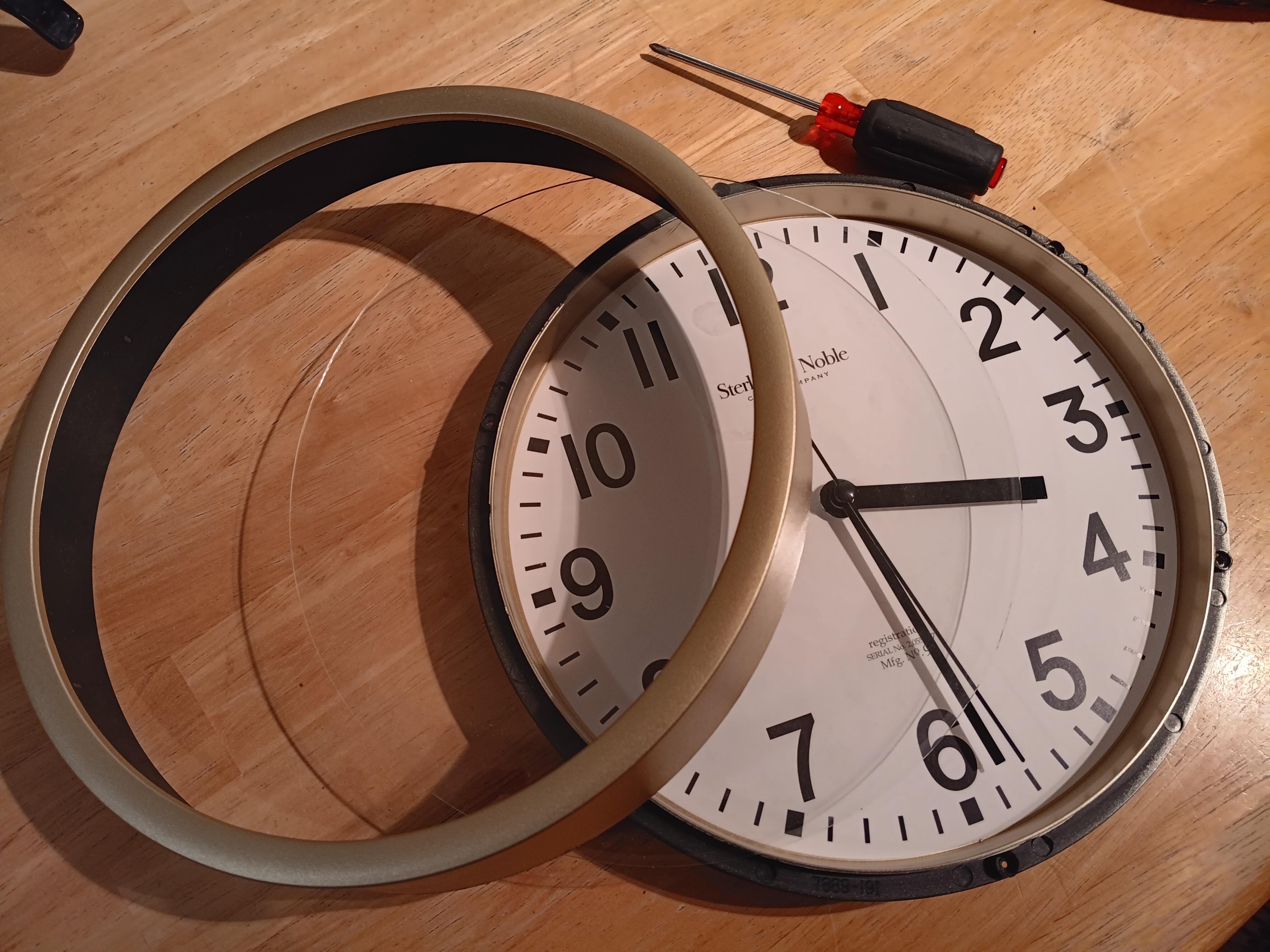
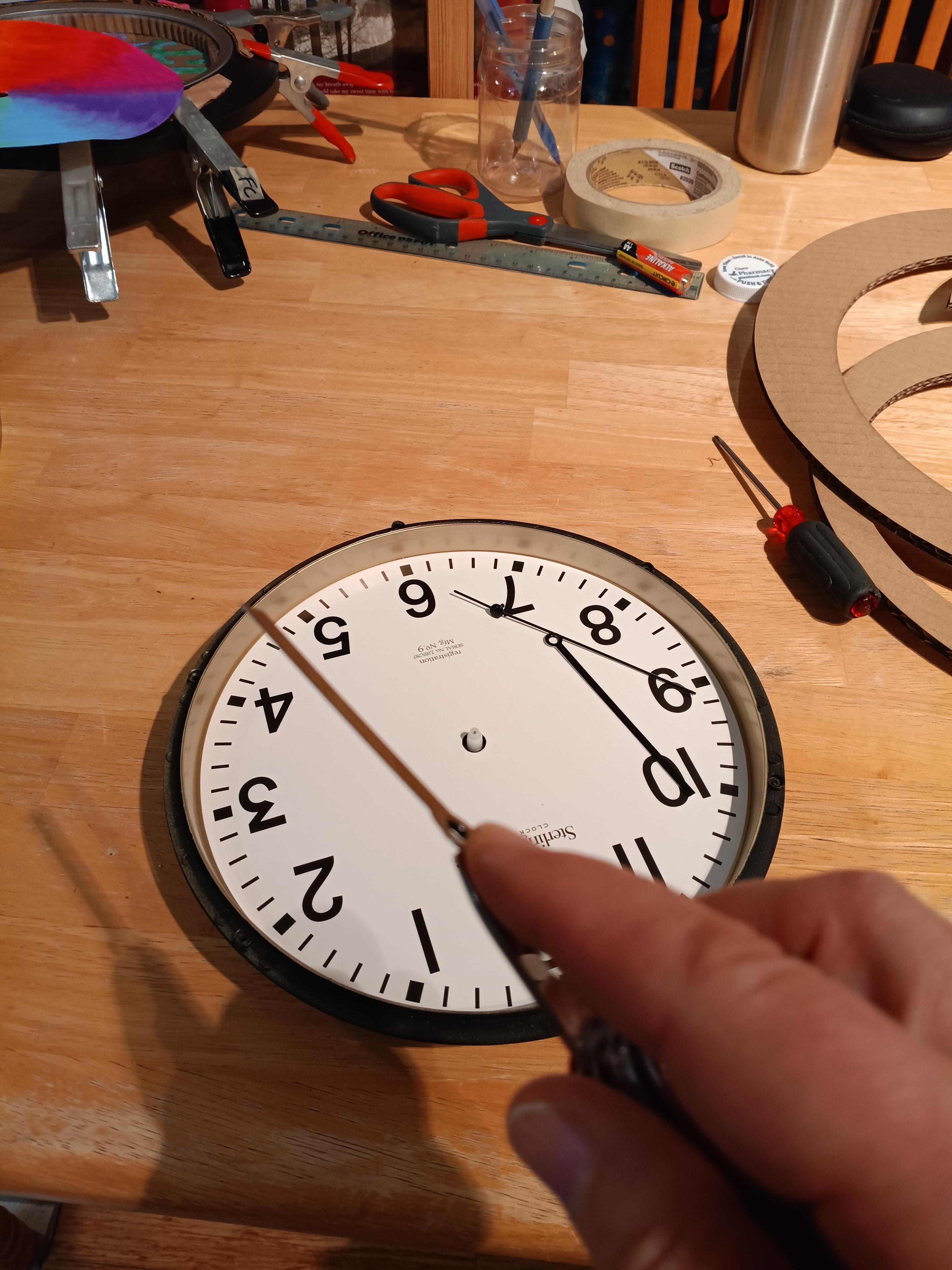
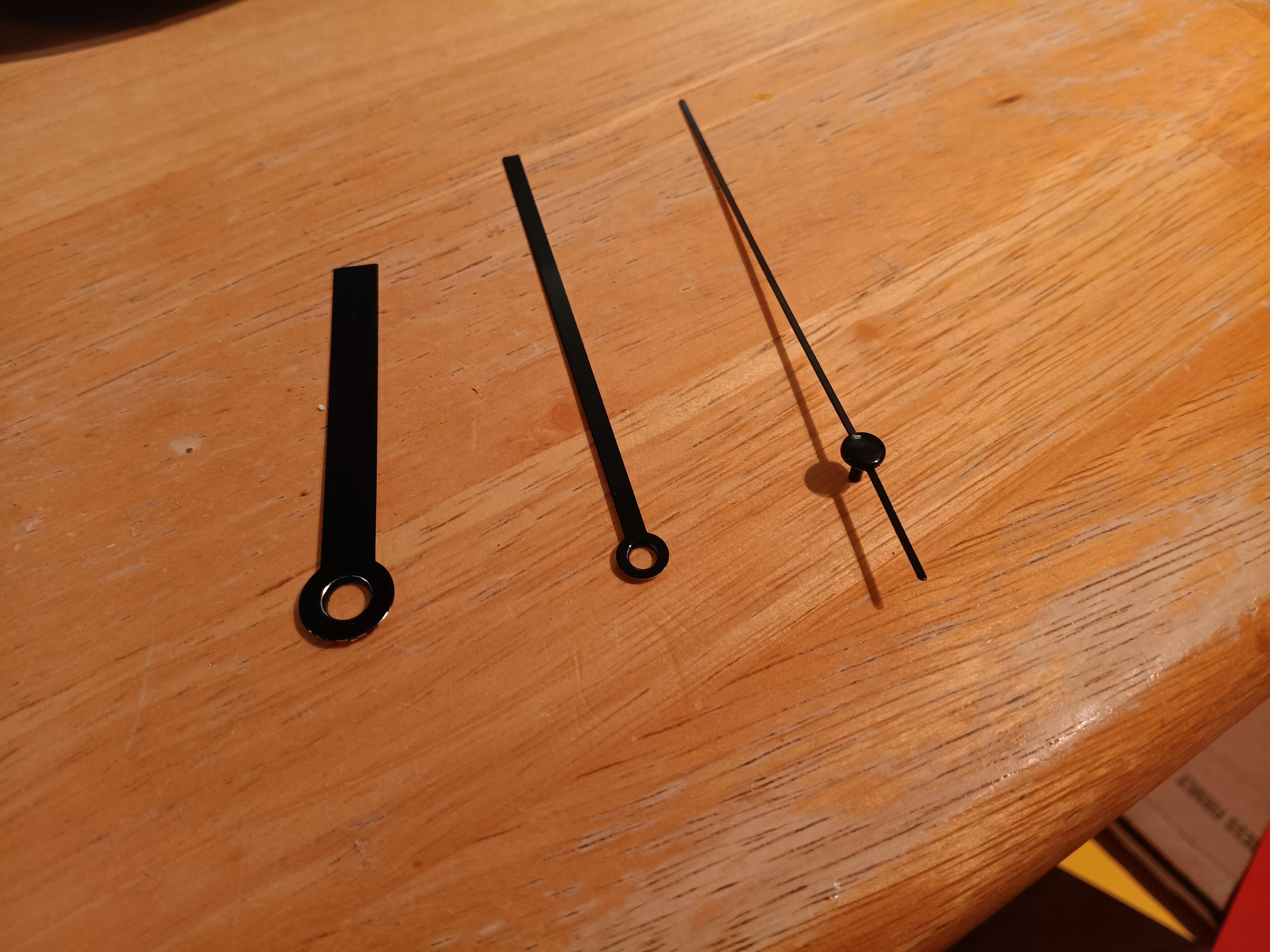
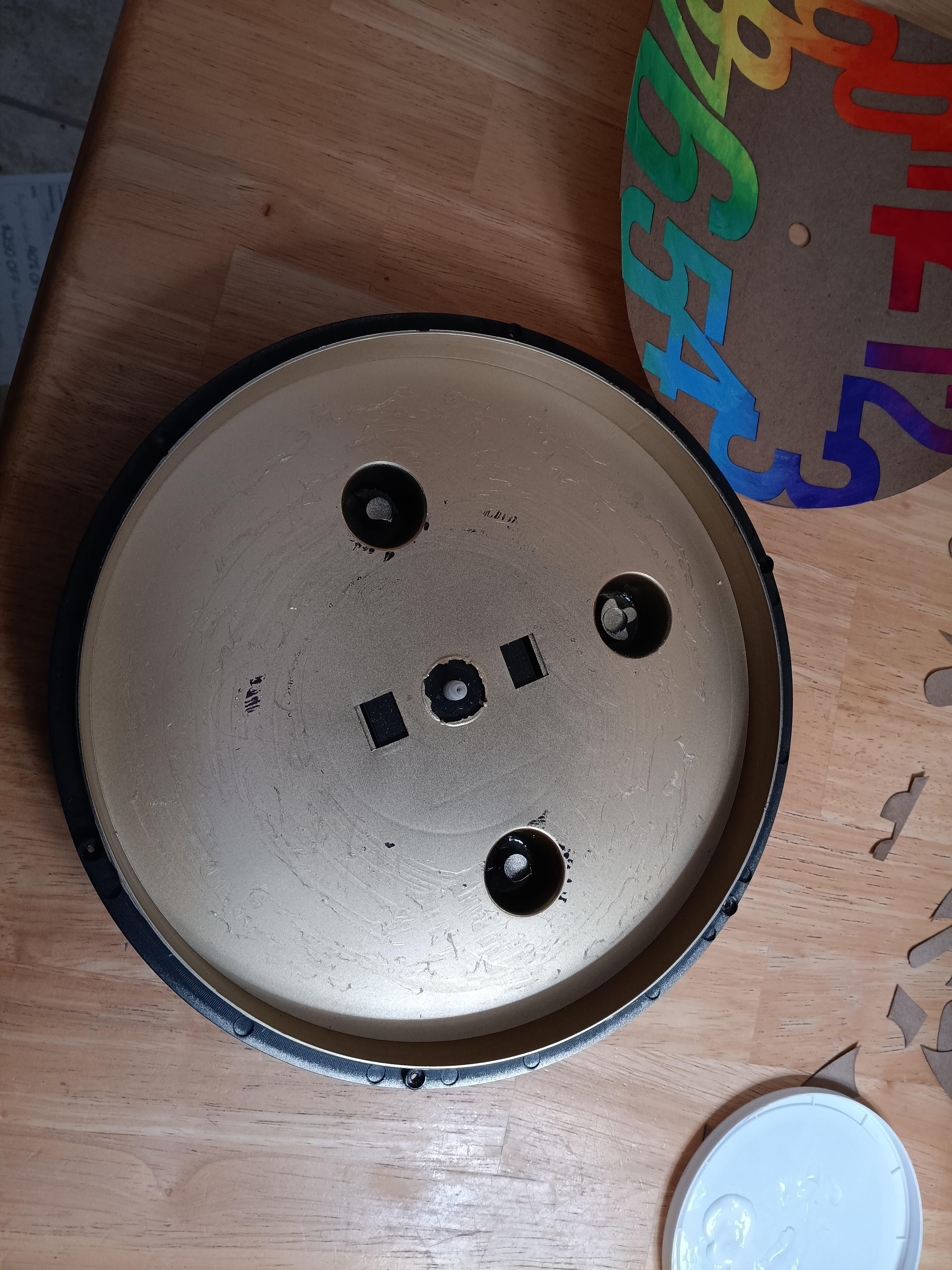
Remove the battery and the screws on the back of the clock. Turn it over and carefully remove the glass and the hands. Pinch them with your fingers or needle nose pliers close to the center of the clock since they are thin and easy to damage. Notice their order so you can put them back together properly. Set the screws, glass and hands aside.
You can remove the old face or simply glue the new one on top of the old one.
Creating the Face

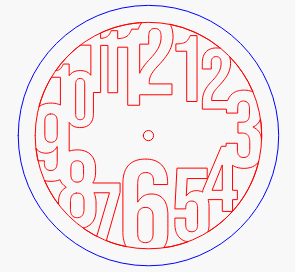
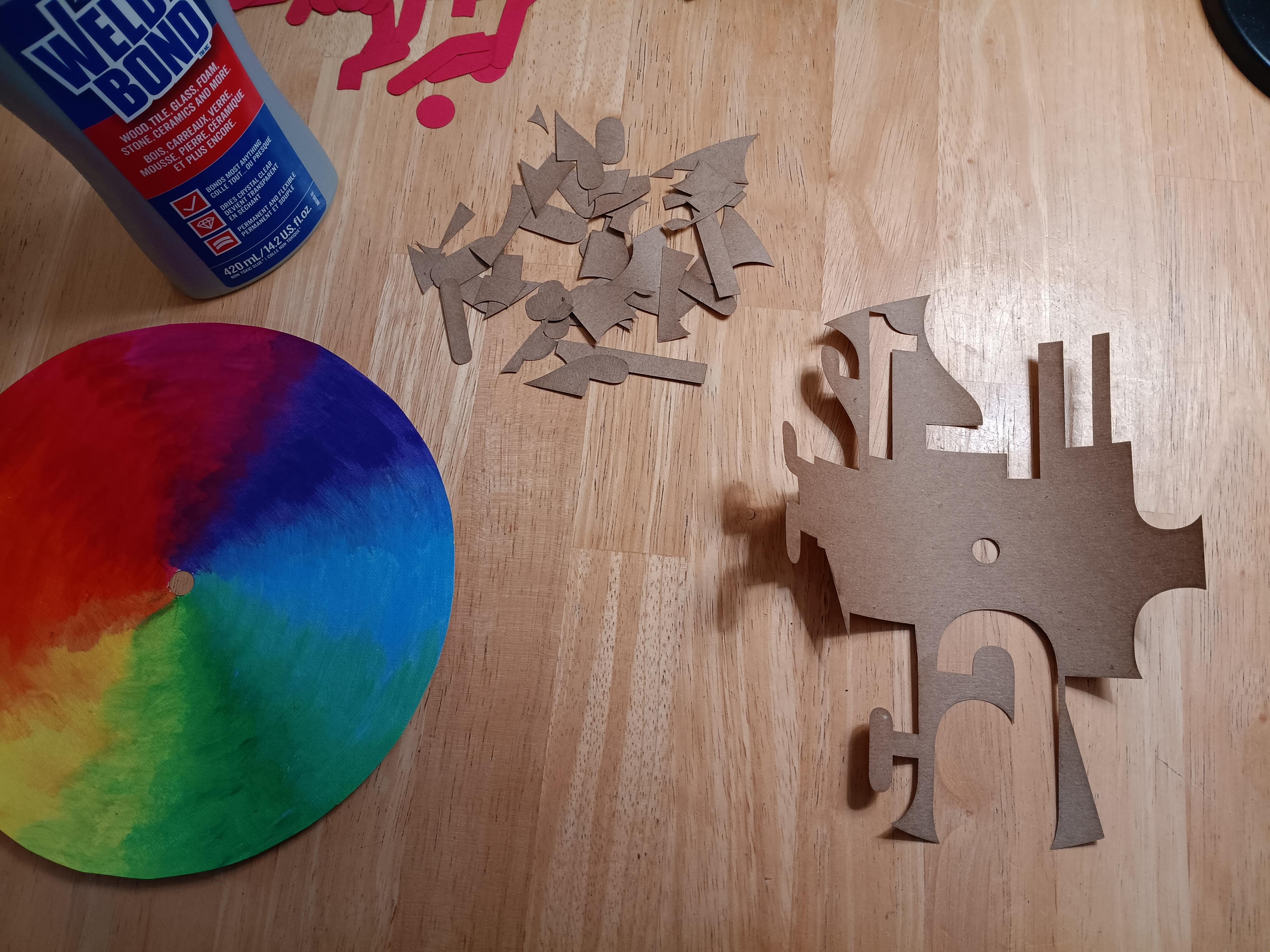
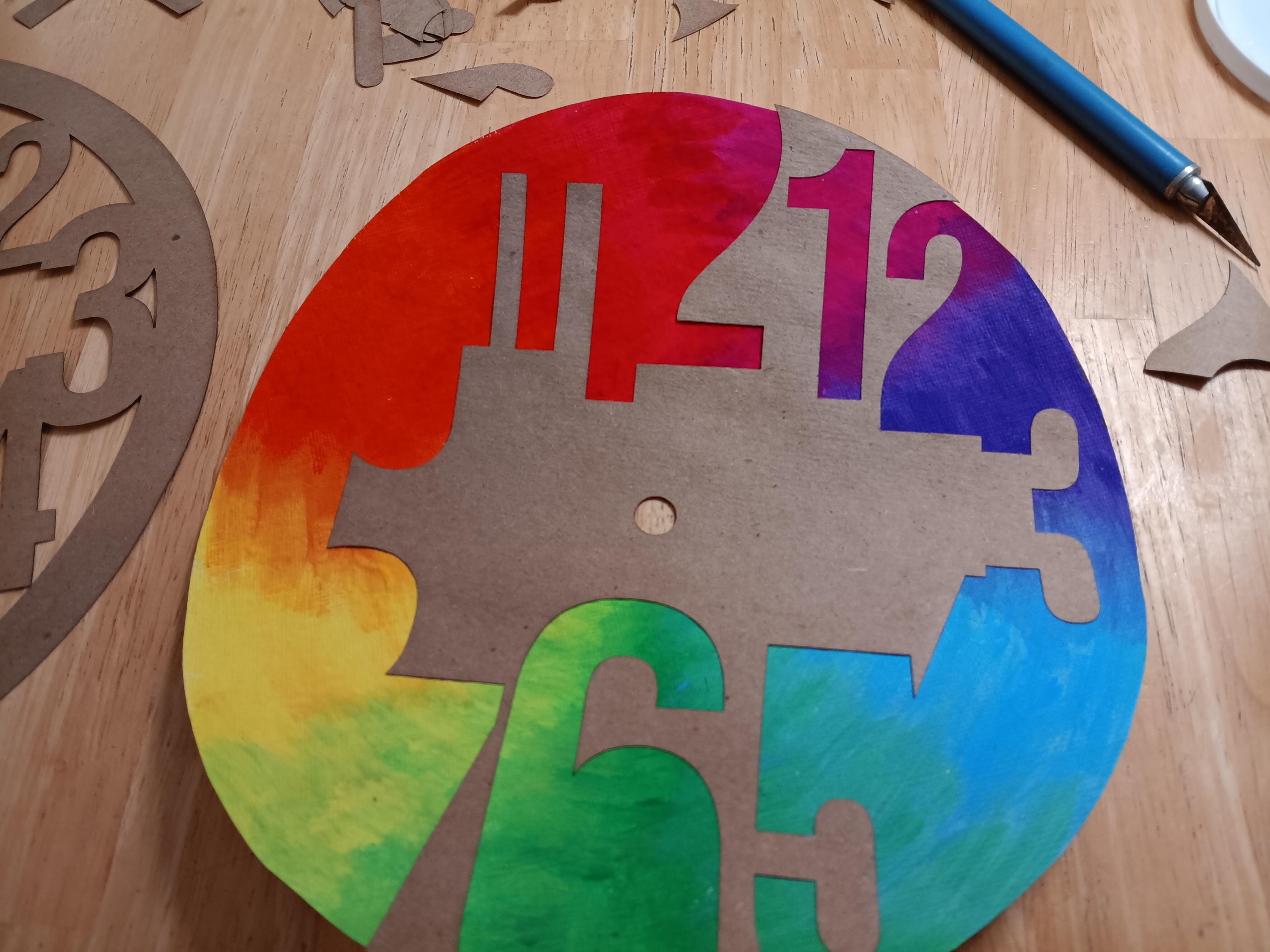
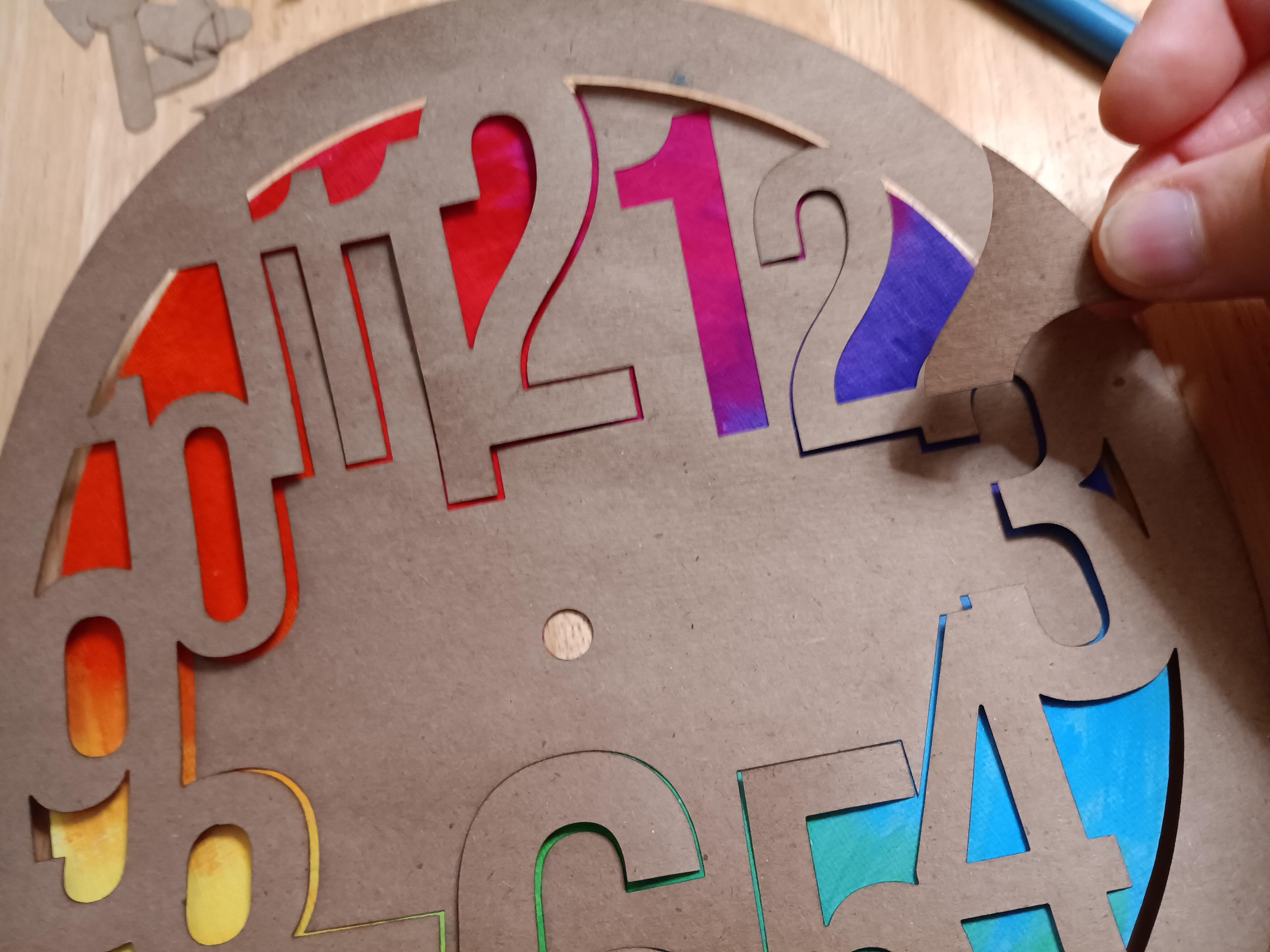
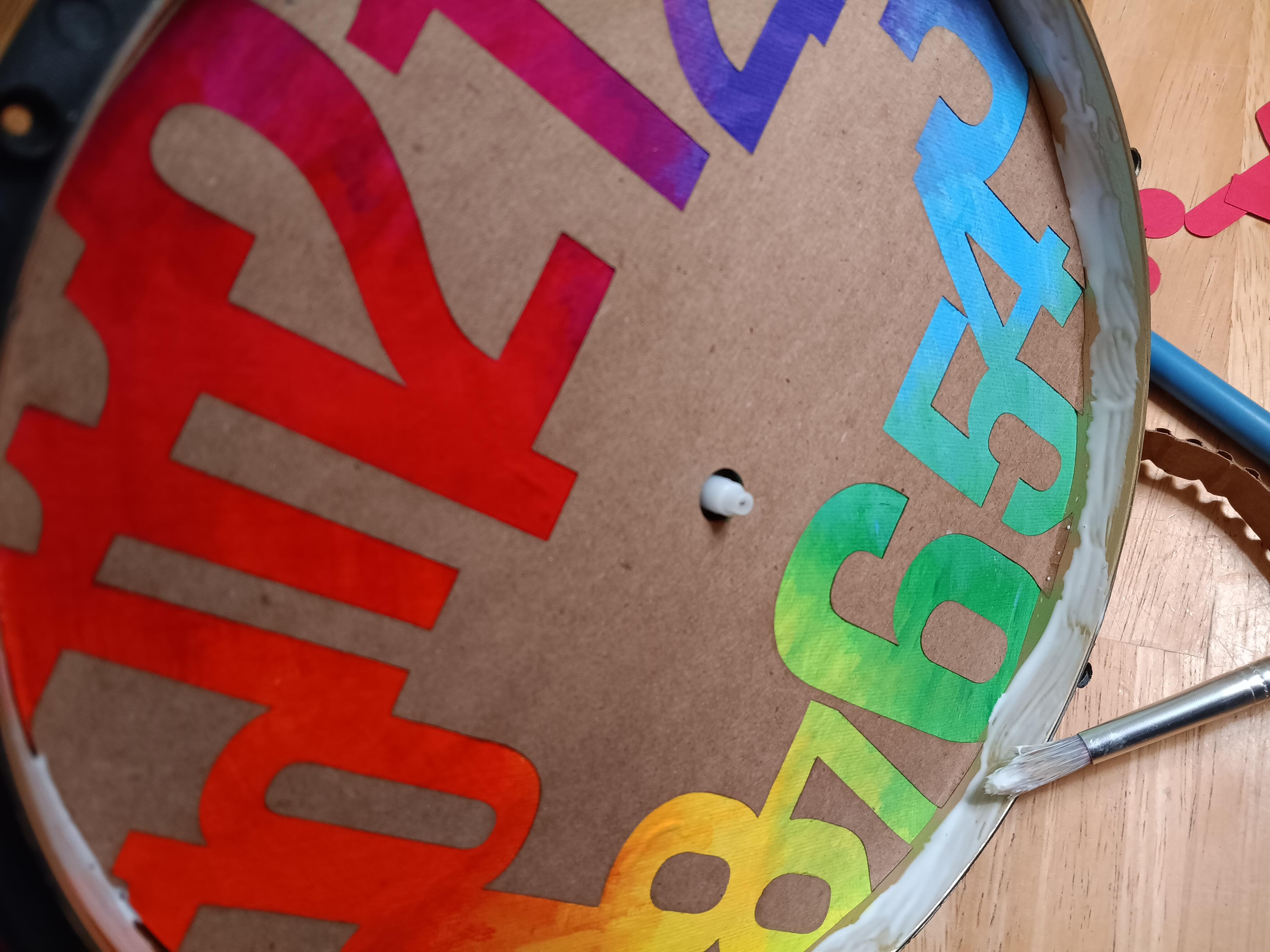
The background of the new face is a white circle of the same diameter as the old face with a hole in the center. Paint the circle in a way that will contrast with the brown paper. Then glue the numbers. In this case, we are gluing on the negative space of the cutting. The positive part can be used to position the pieces.
Place the new face under a flat heavy object to dry (a coffee table book, for example).
Attaching the New Face

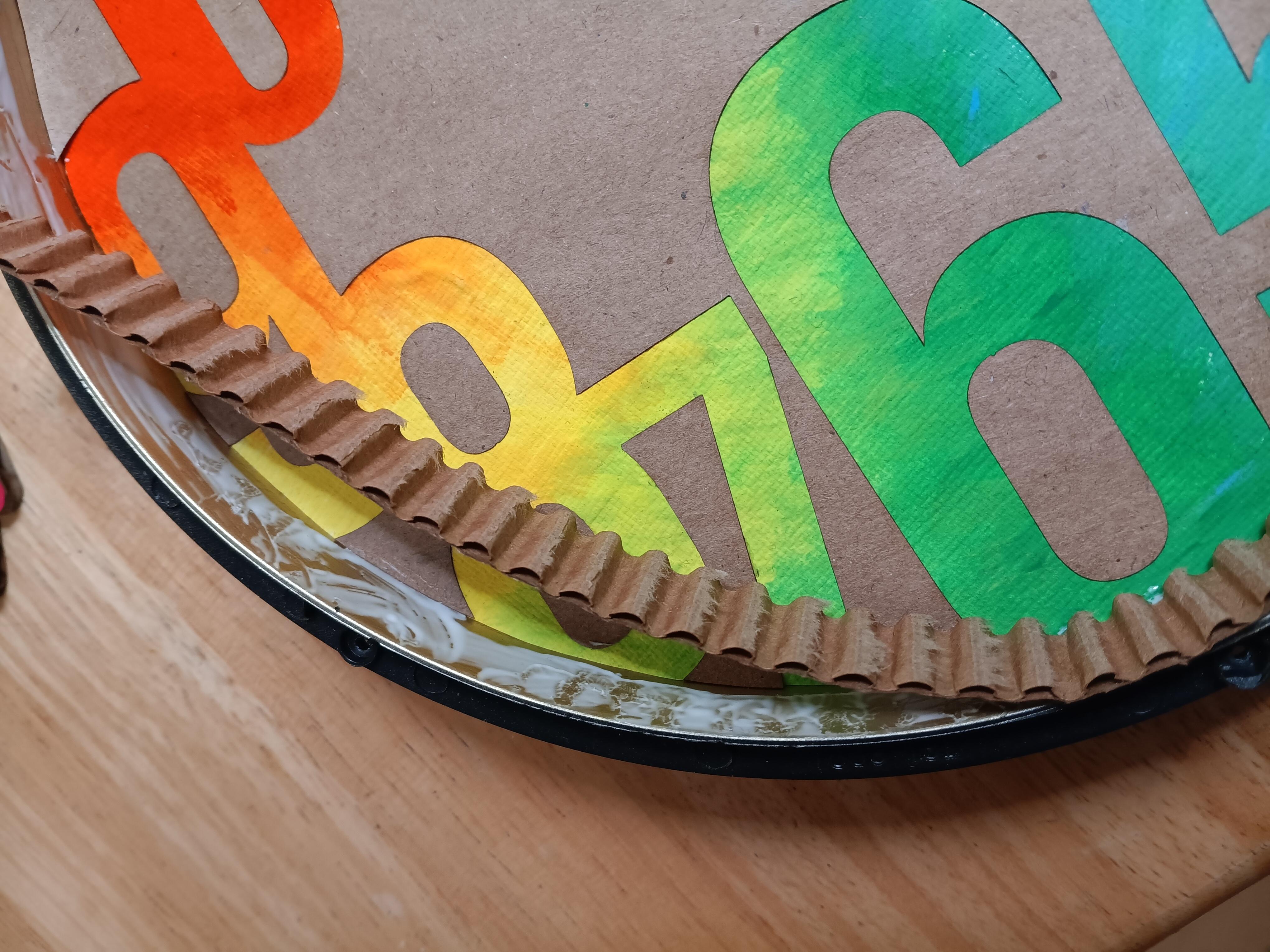
When dry, glue the new face onto the clock. Make sure the number 12 in the face is up by aligning it with the mounting slot on the back. It is good to have a cardboard circle that can be used to help the new face dry flat.
To cover the inside lip of the clock, I used a strip of cardboard with one of the flatliners removed.
Once the face is ready, the hands can be put back in place. Insert a battery and check that the clock is working correctly before replacing the glass and closing the clock with the screws on the back.
Next we will work on the individual pieces.
The Blue Moon
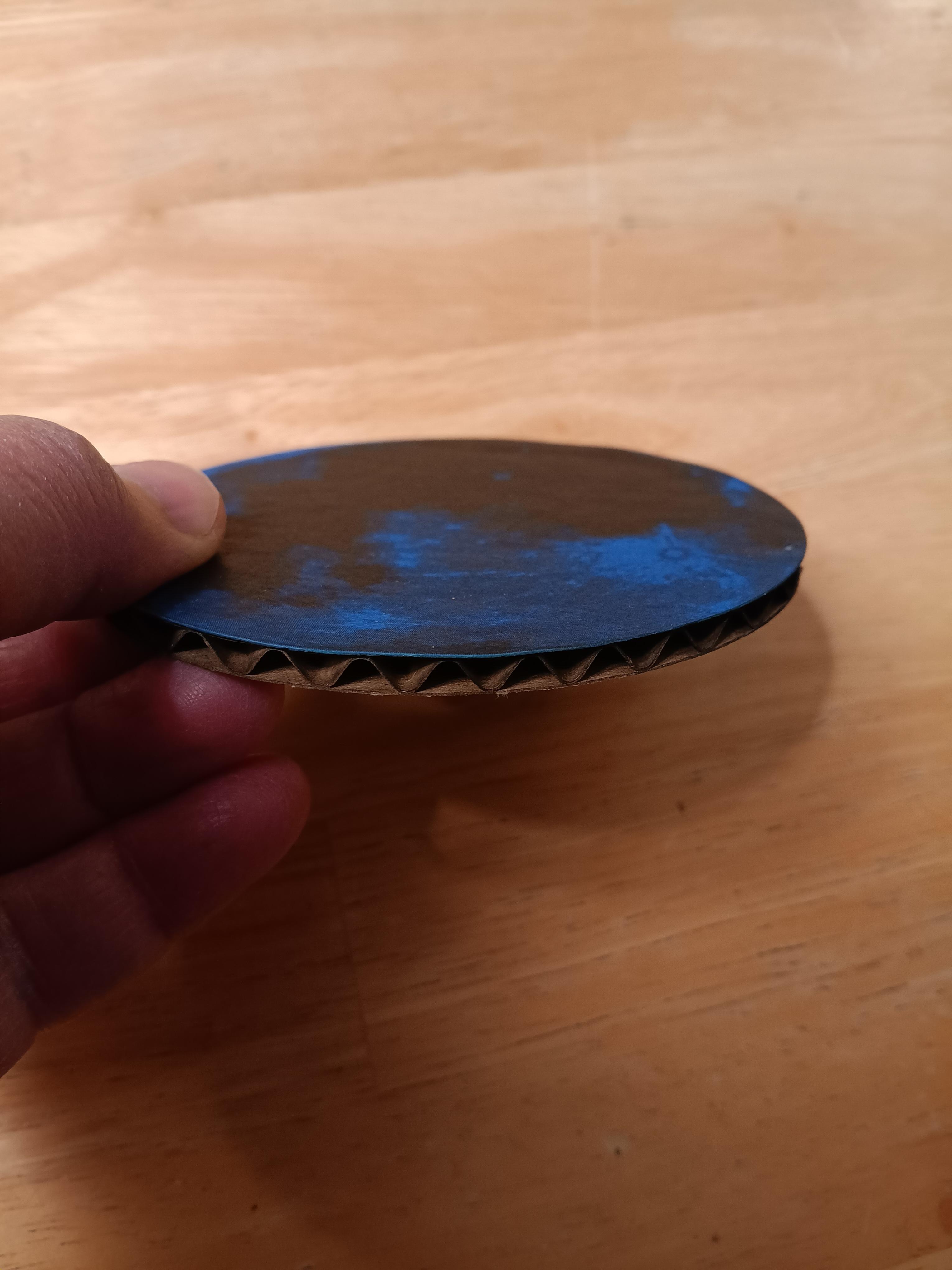
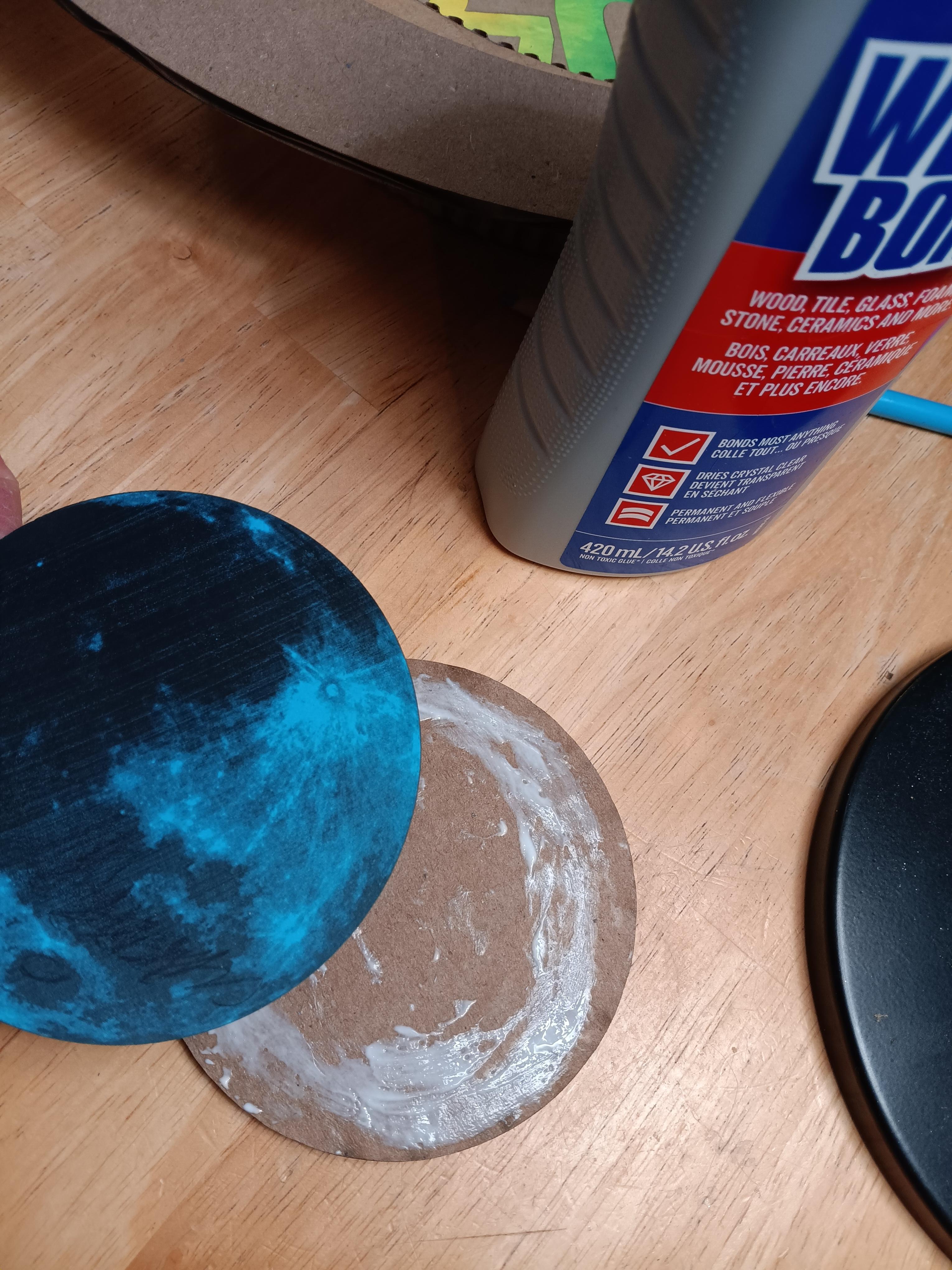
To create the moon, print the moon image included on blue cardstock and cut. Then glue on a cardboard circle. Alternatively, you can draw and paint the moon on white cardstock.
The Running Person and the Coin
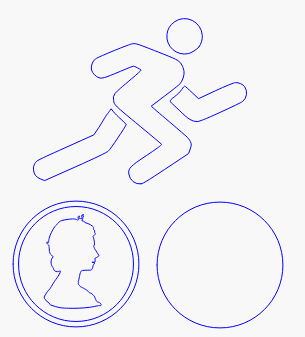
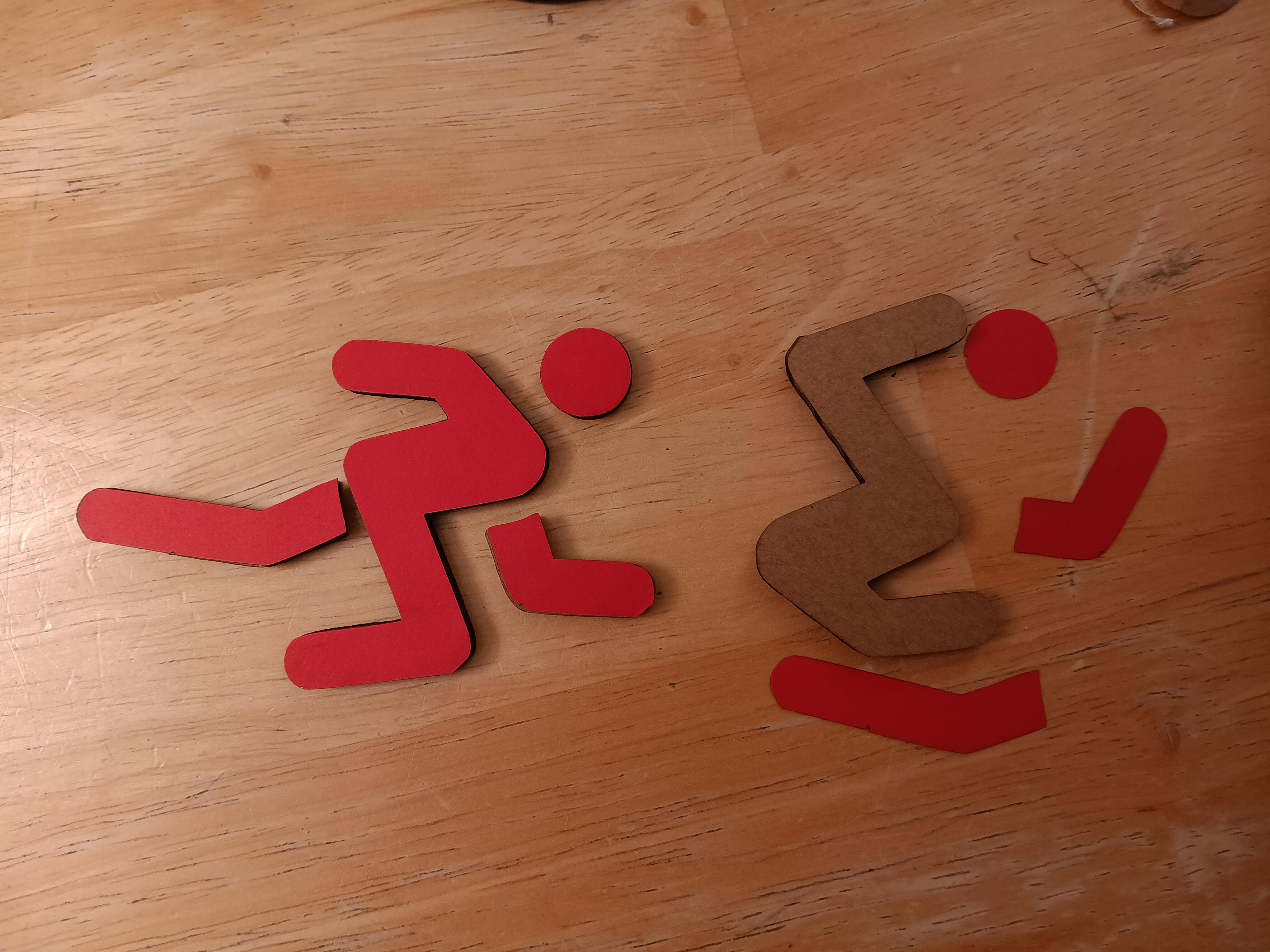
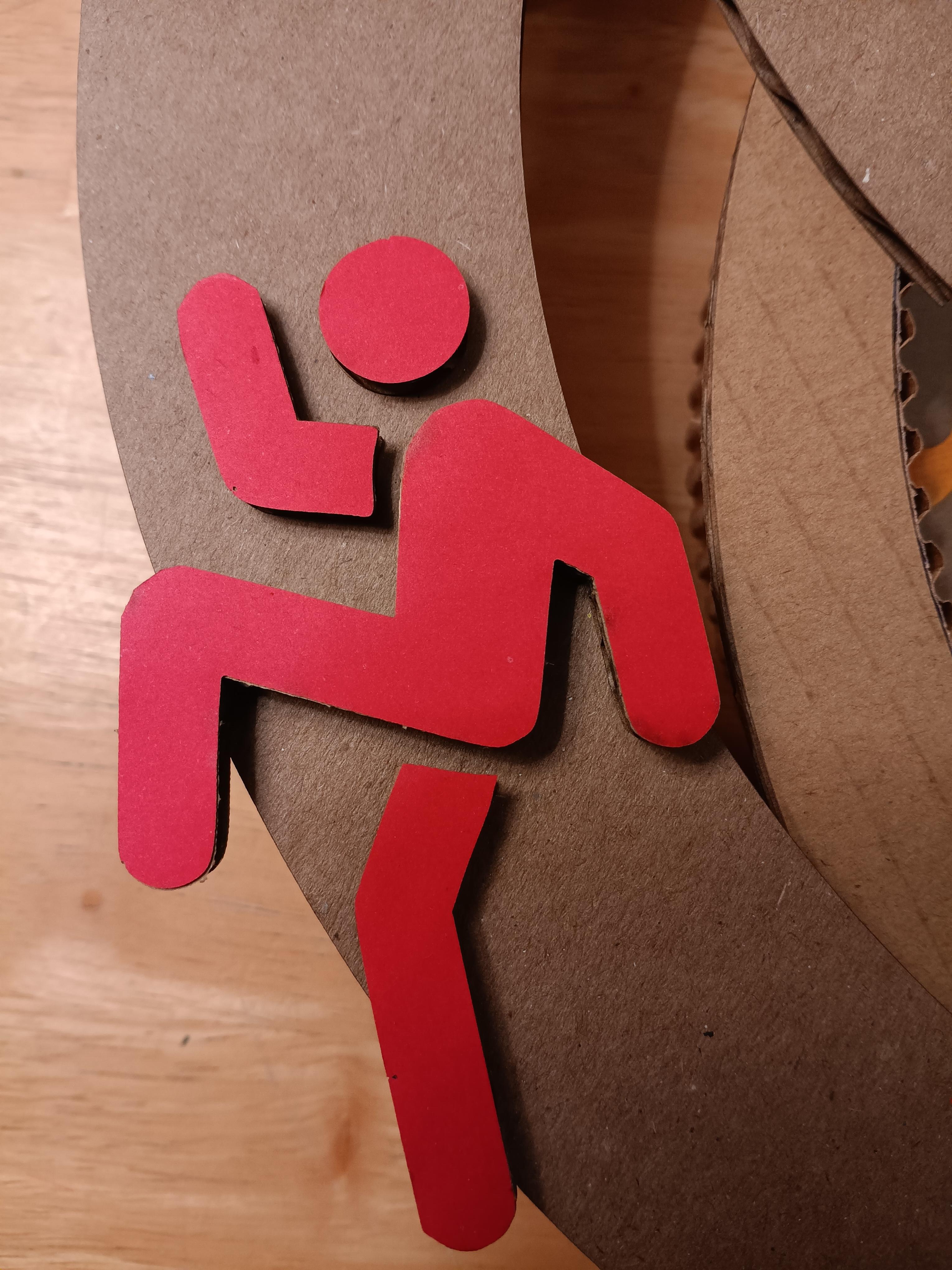
The running person includes both a layer of red cardstock and cardboard.
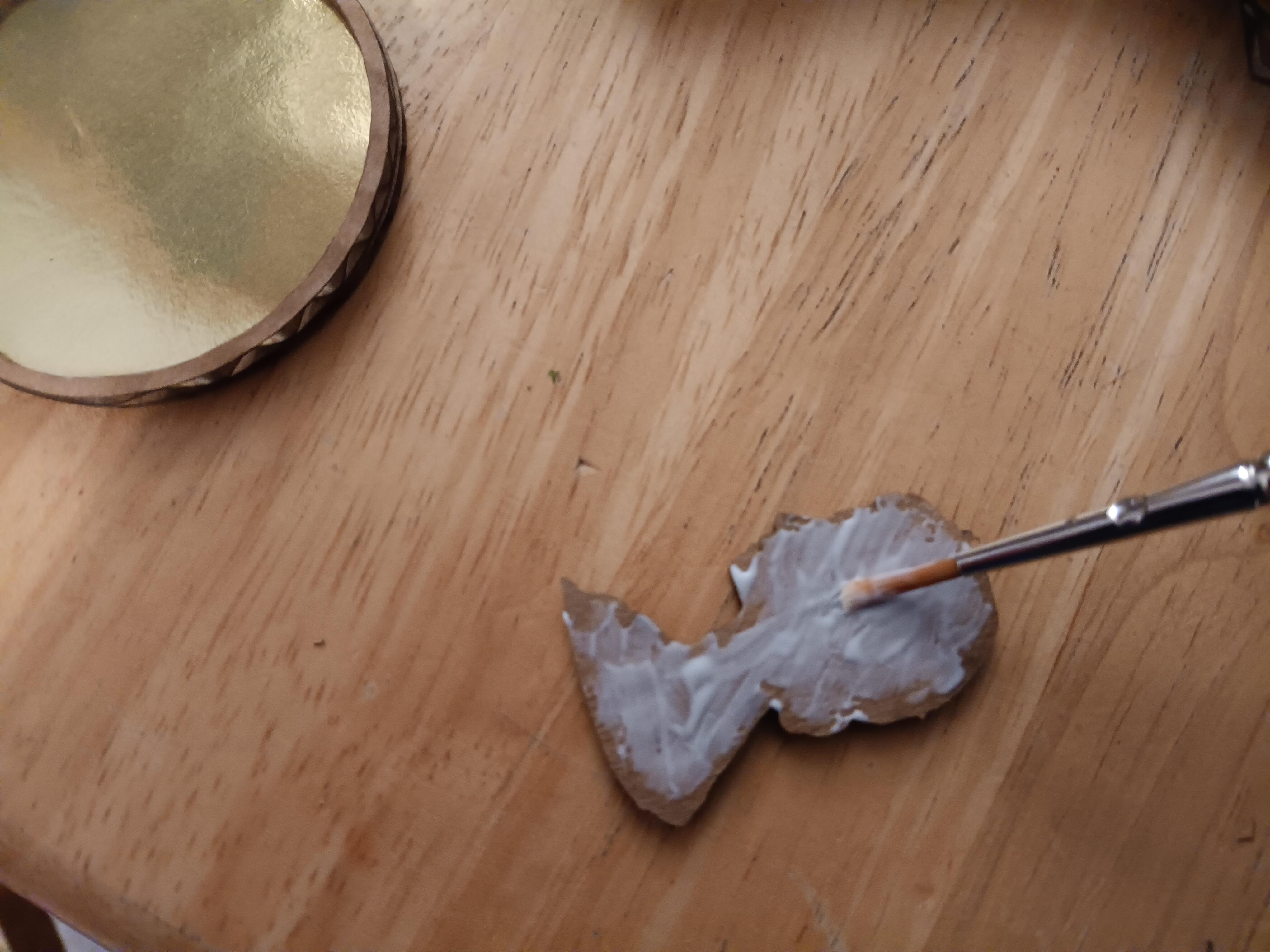
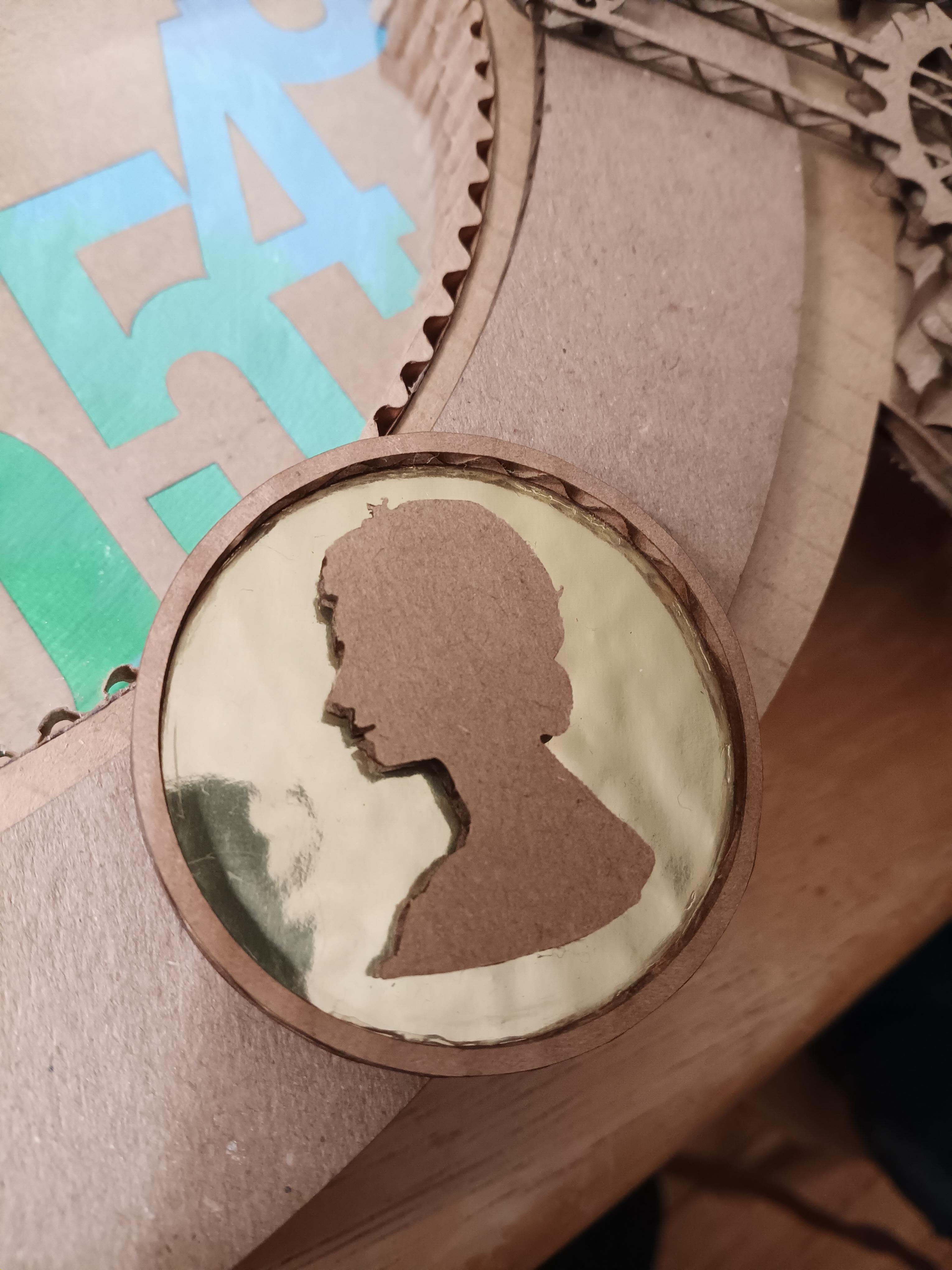
The coin has three parts: a base circle, a silhouette and a ring. Cover the base circle with shiny paper or color cardstock and then glue the other two parts.
The Scissors on the Arrow
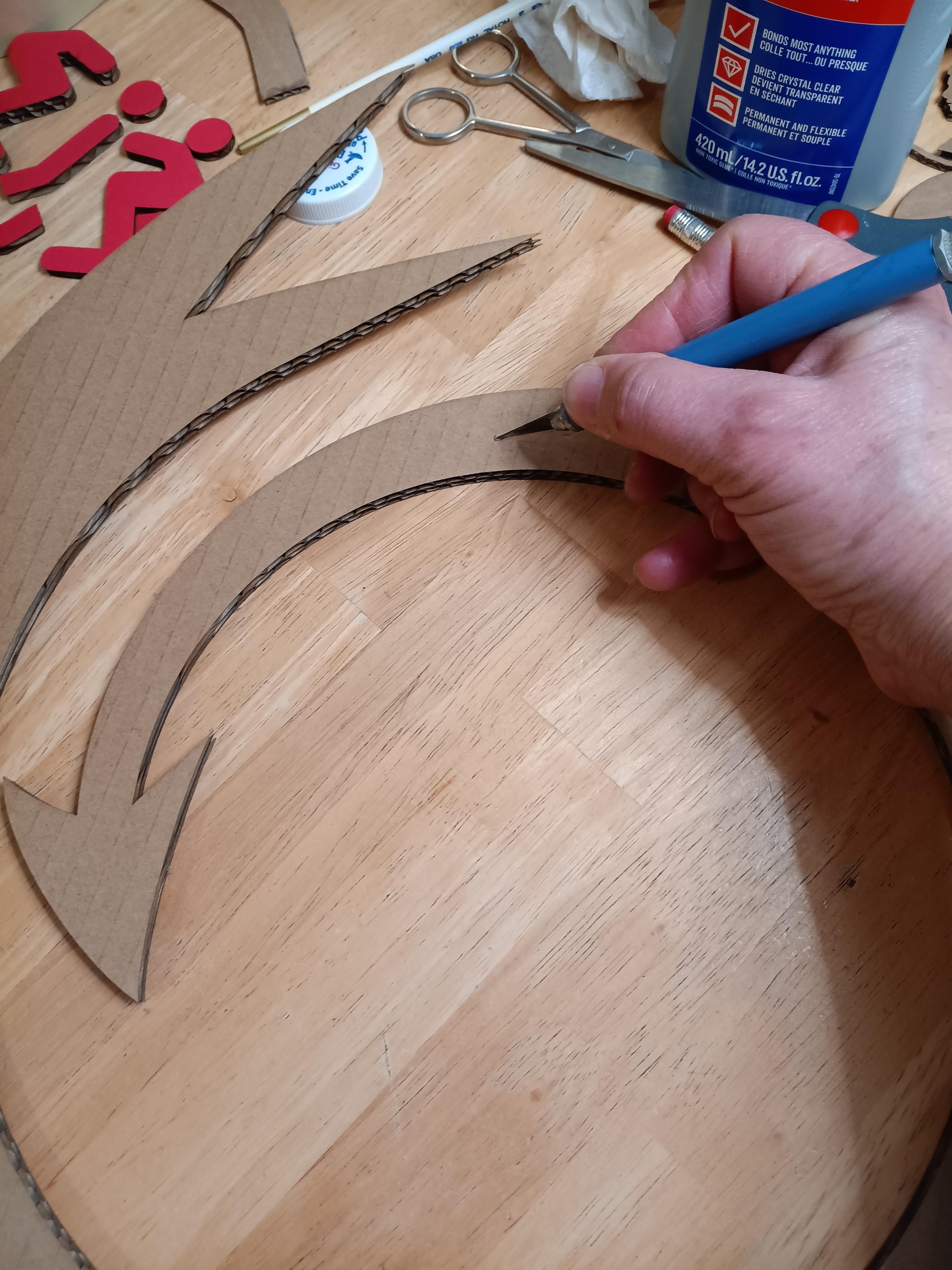
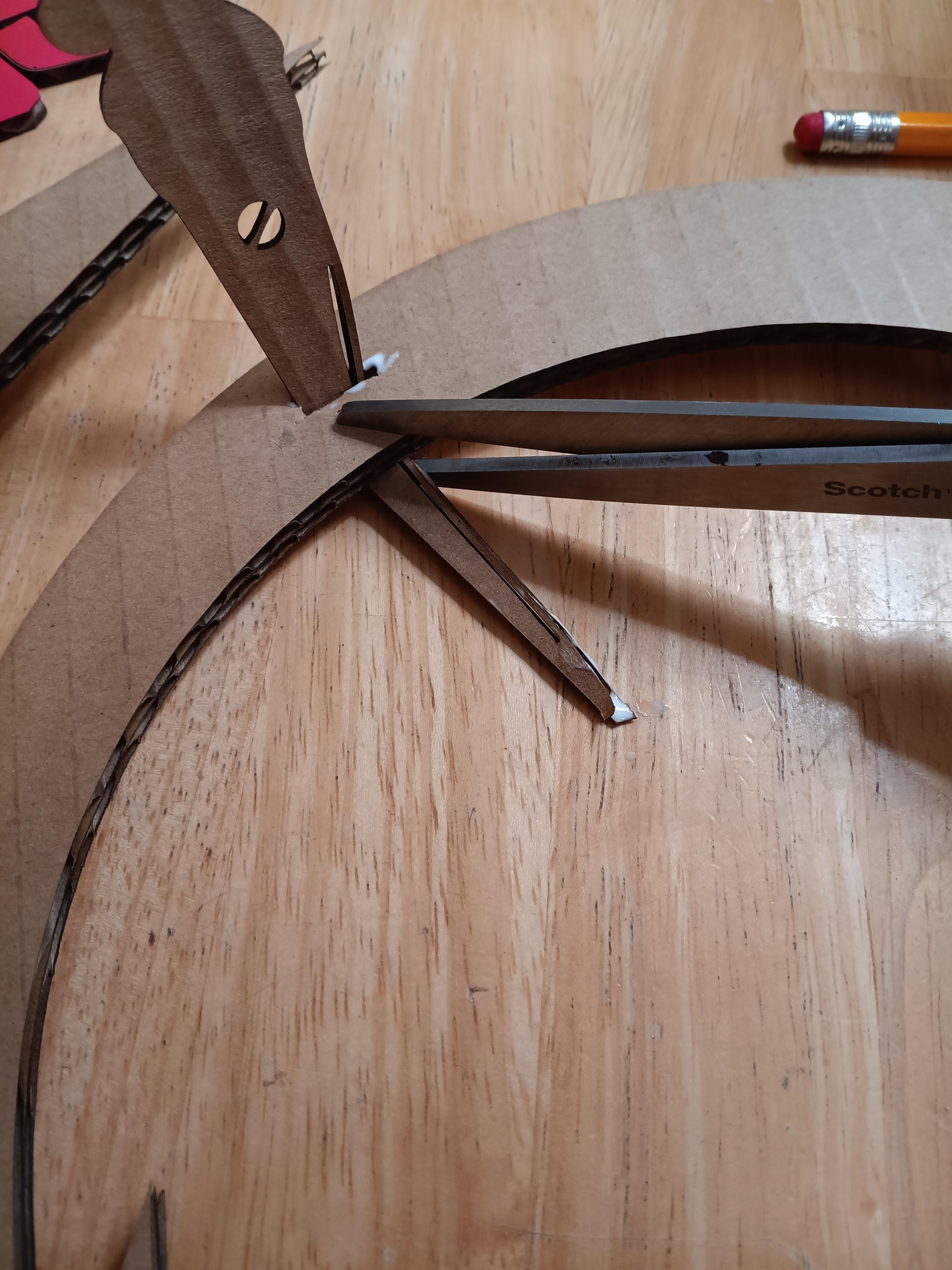
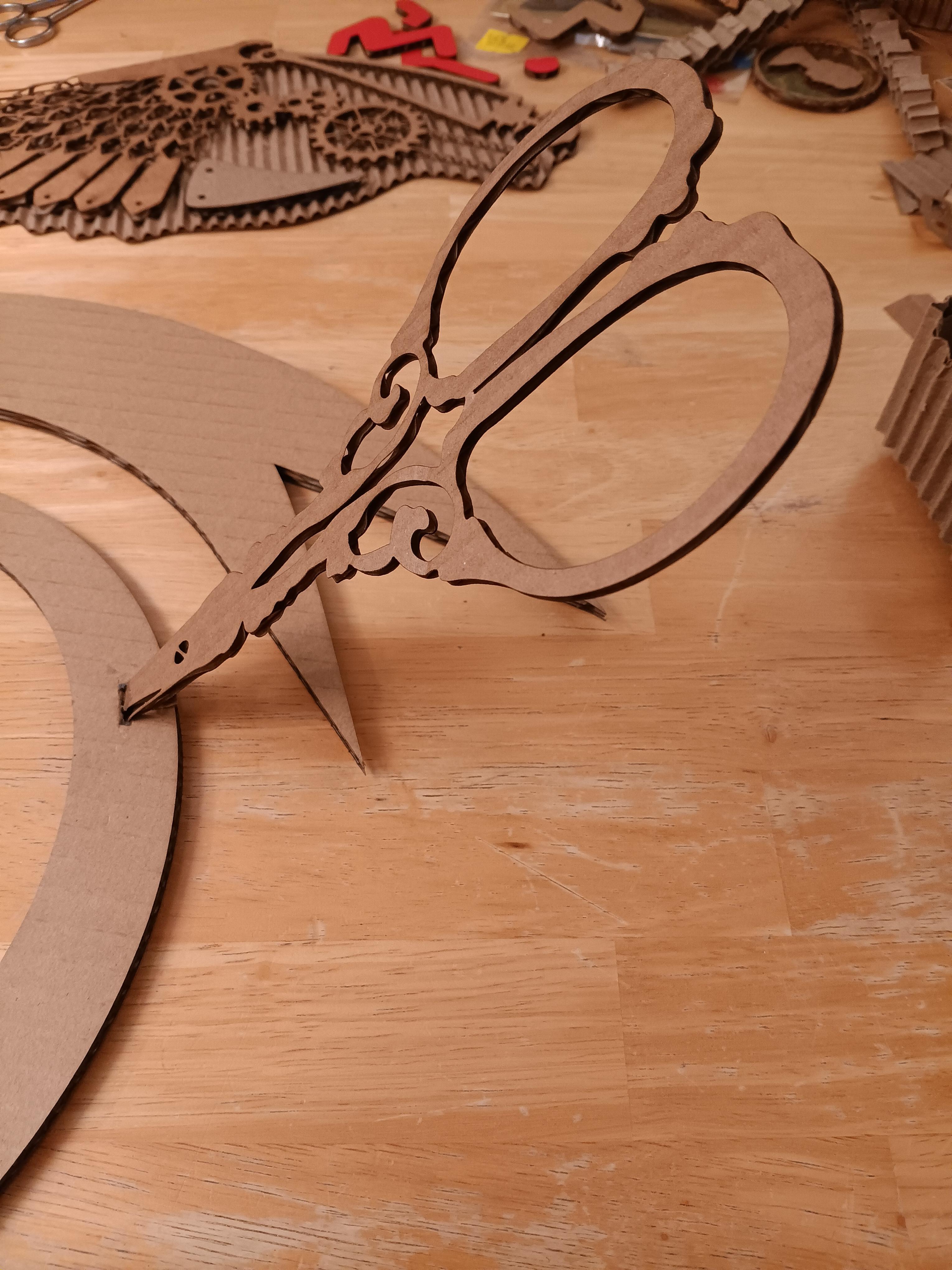
Make a small rectangular incision on the top part of the arrow and pass the lower half of the scissors through. Fold the lower part of the scissors (on the back of the arrow) and glue. Cut any part of the scissors that can be seen from the front.
The Wings
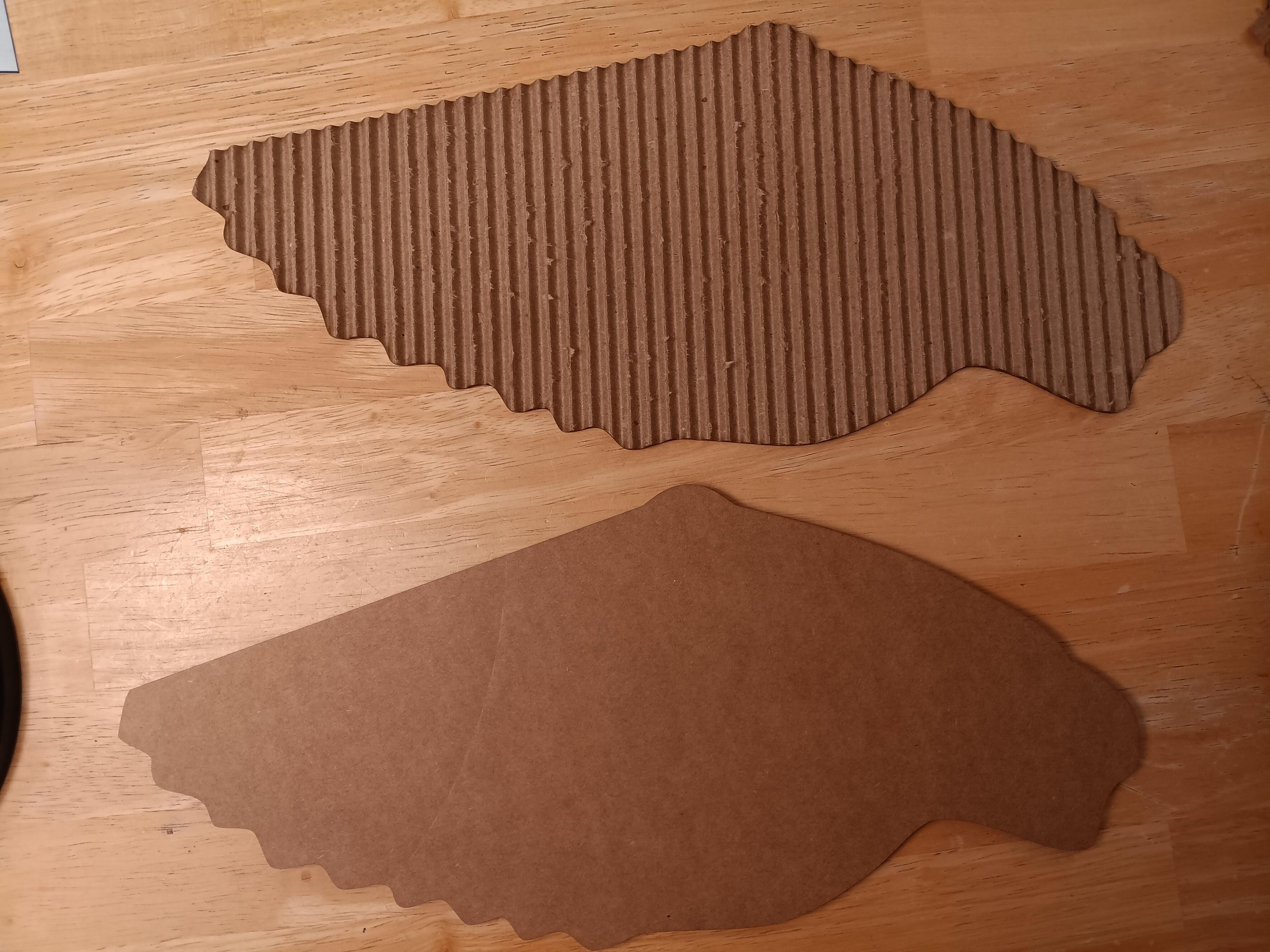
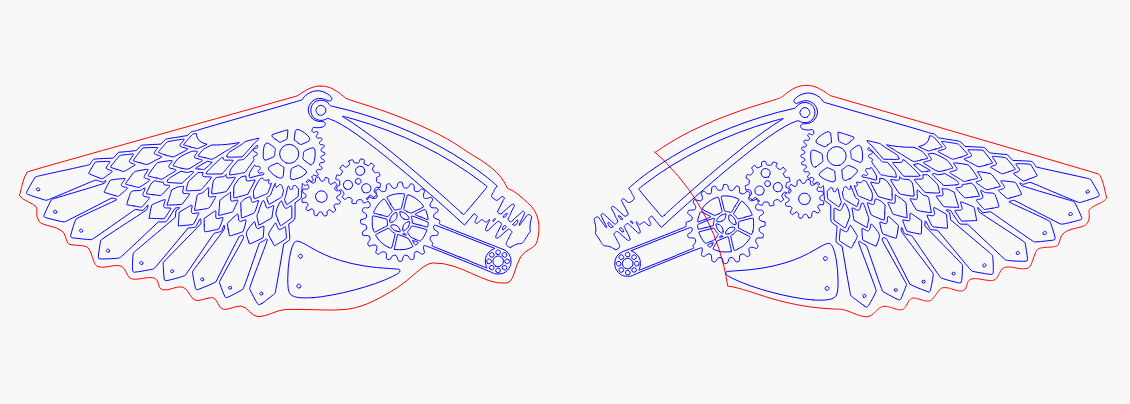
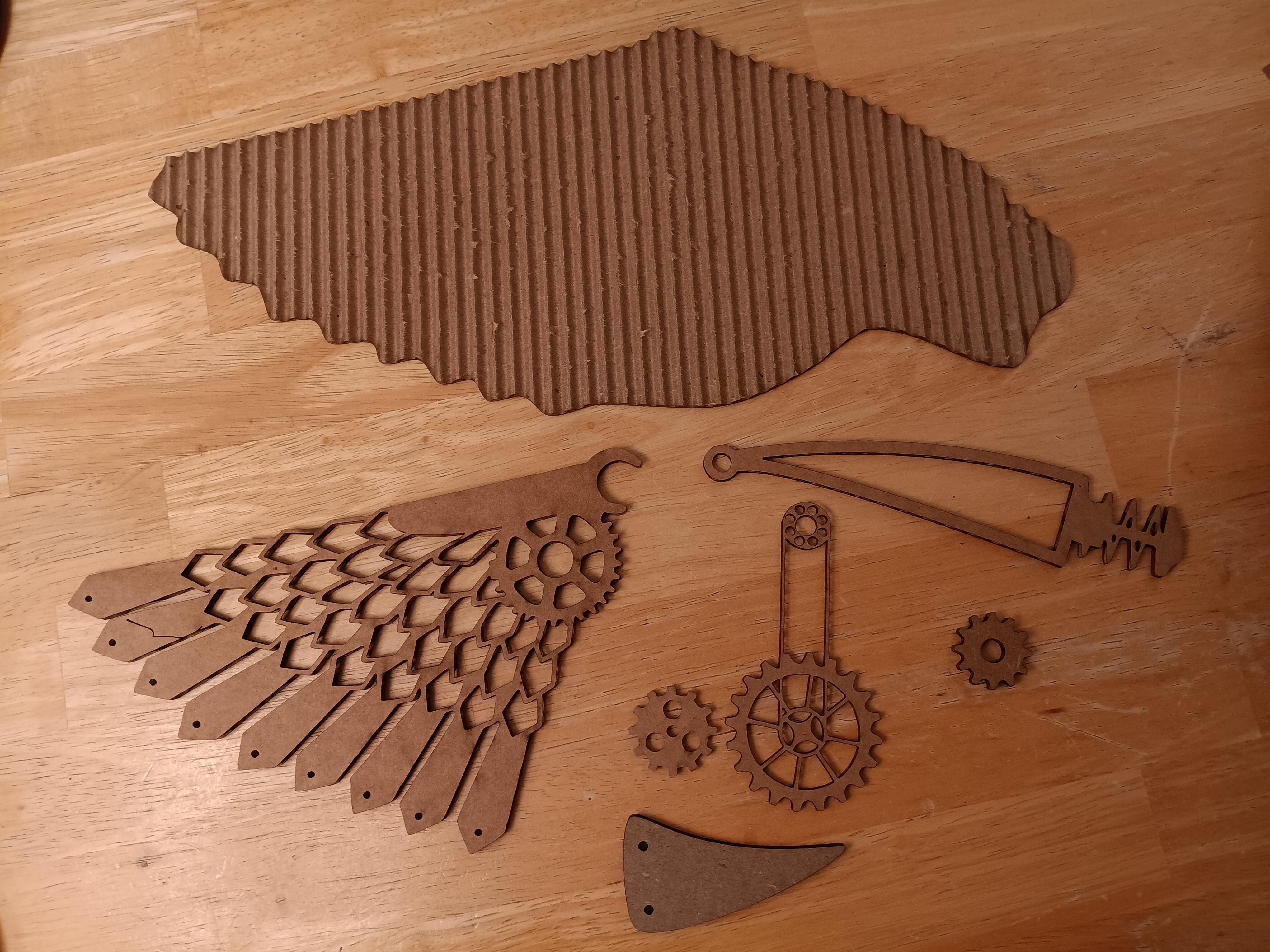
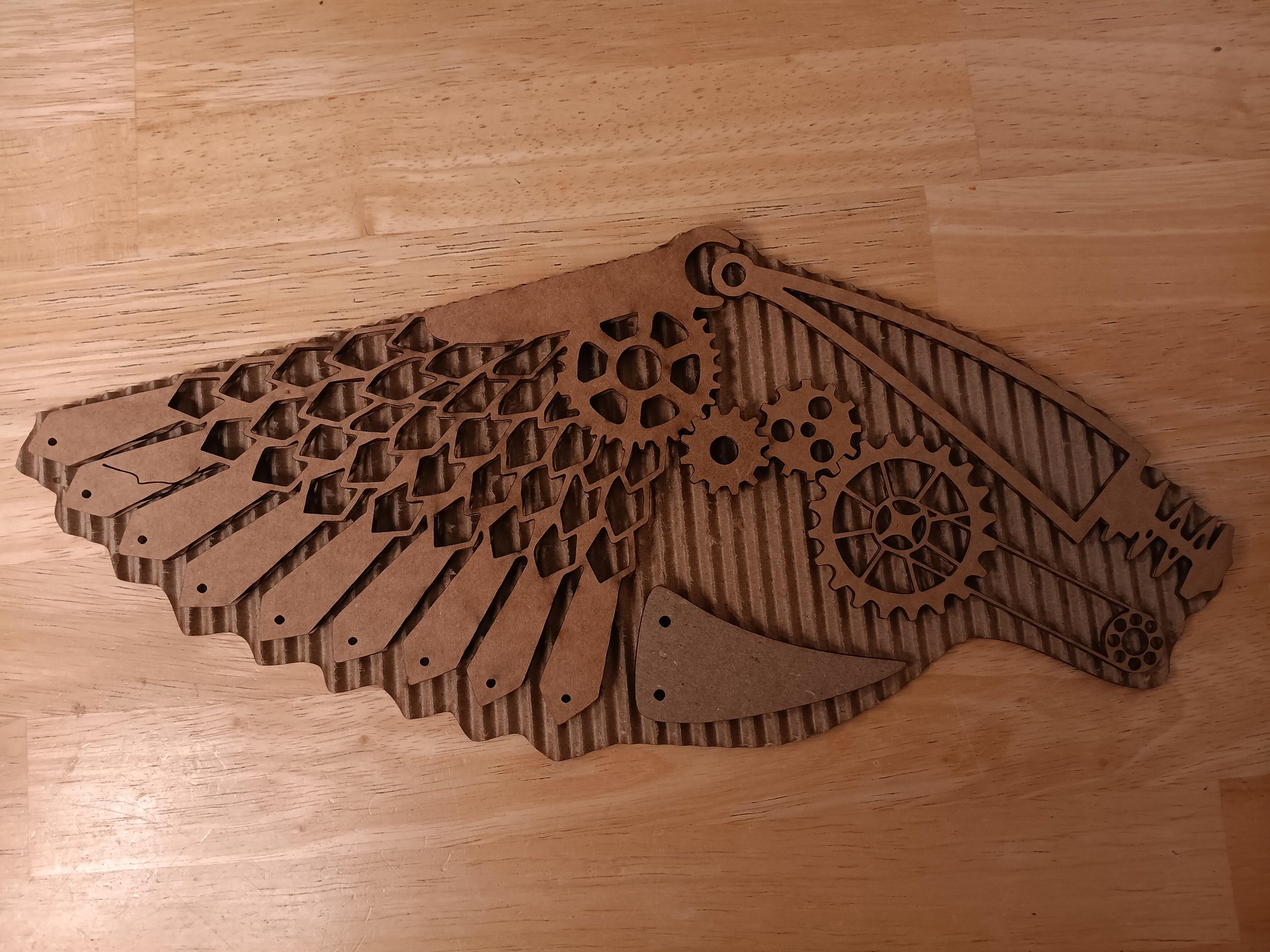
I peeled one of the flatliners on the base of the wings because I like the look, but the wings can be used as they were cut. The other wing pieces are then glued on the bases following the diagram. Notice that the two bases are not equal and the two sets of wing pieces mirror each other.
Putting All Together
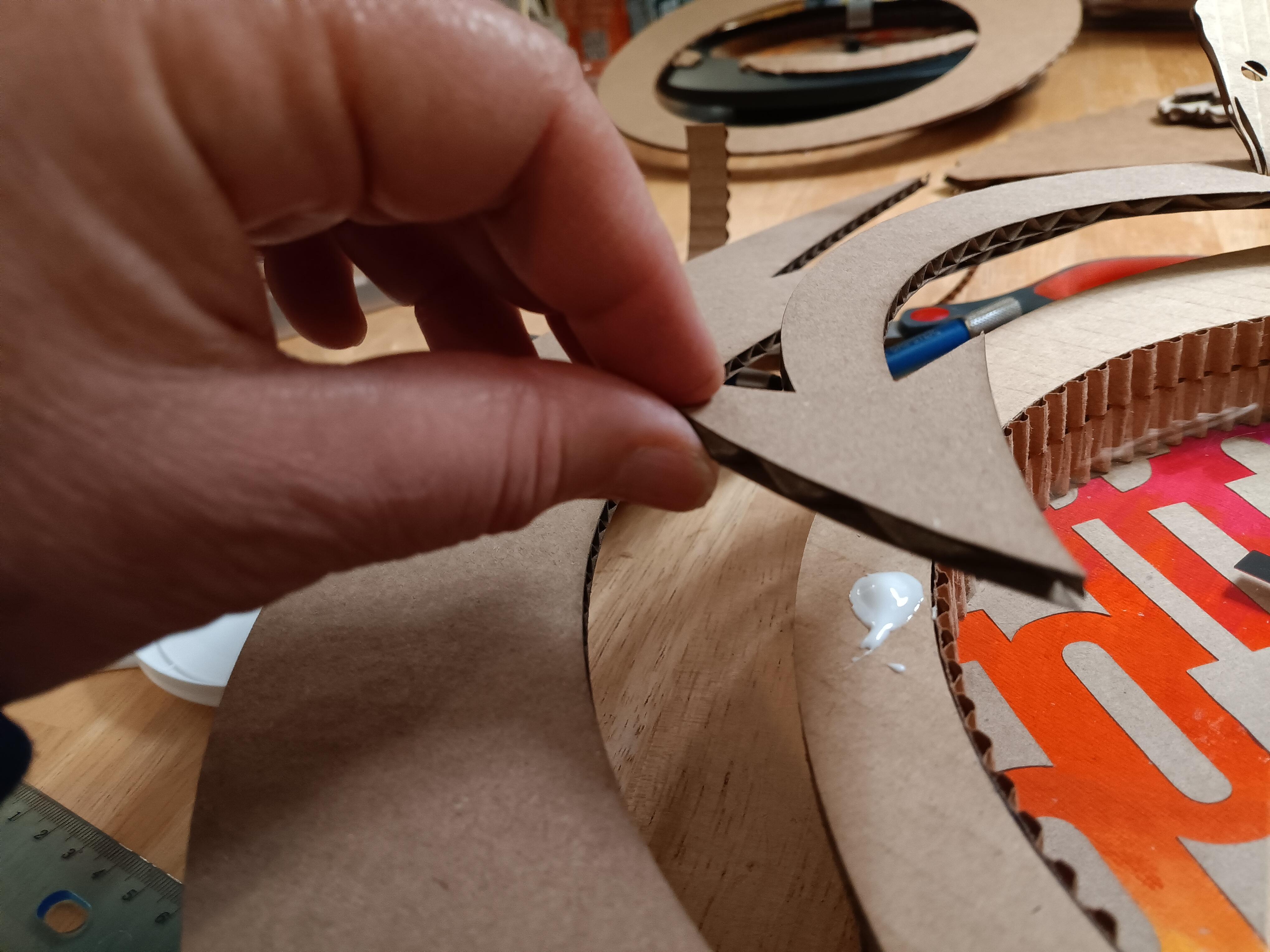
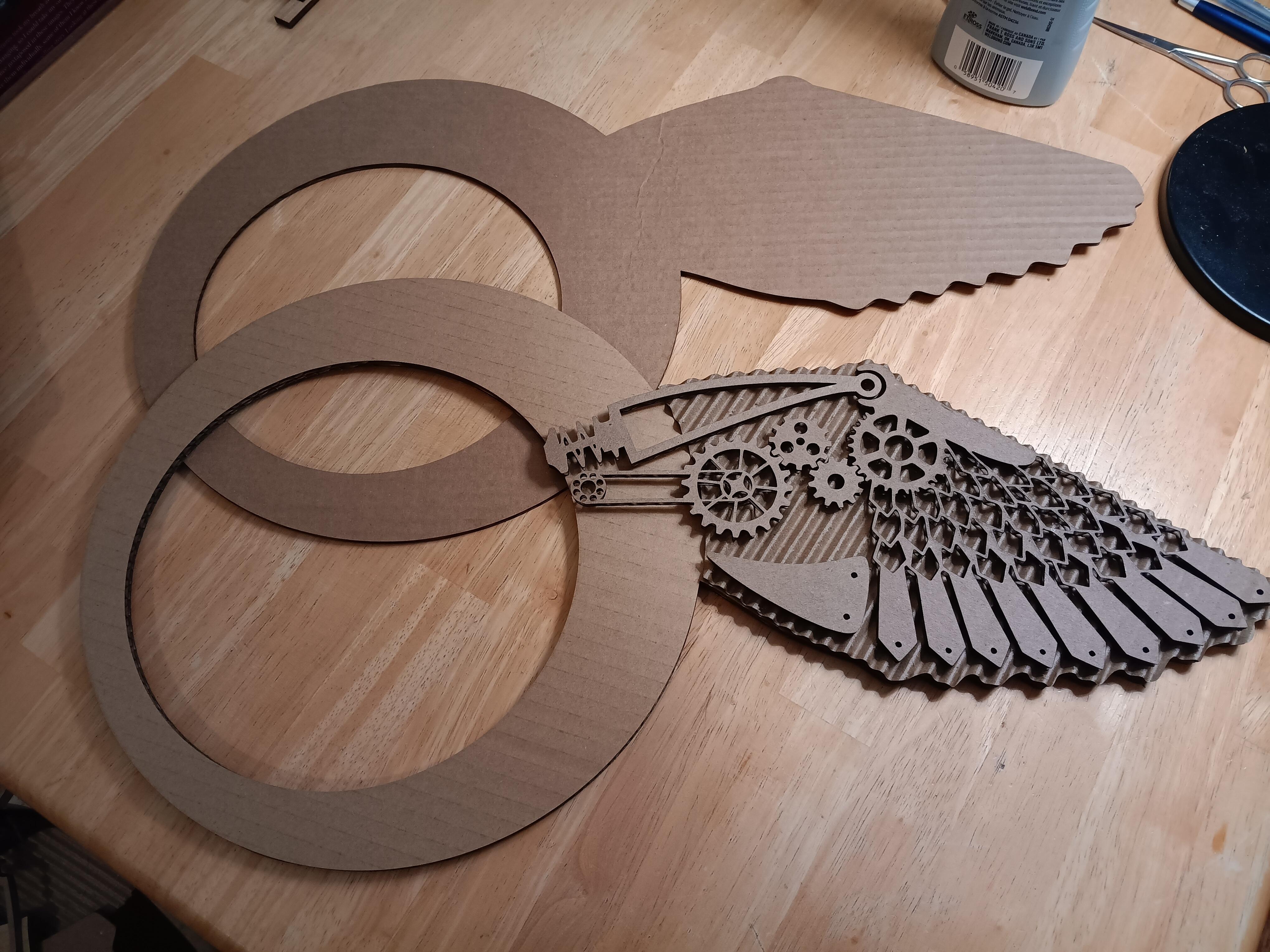
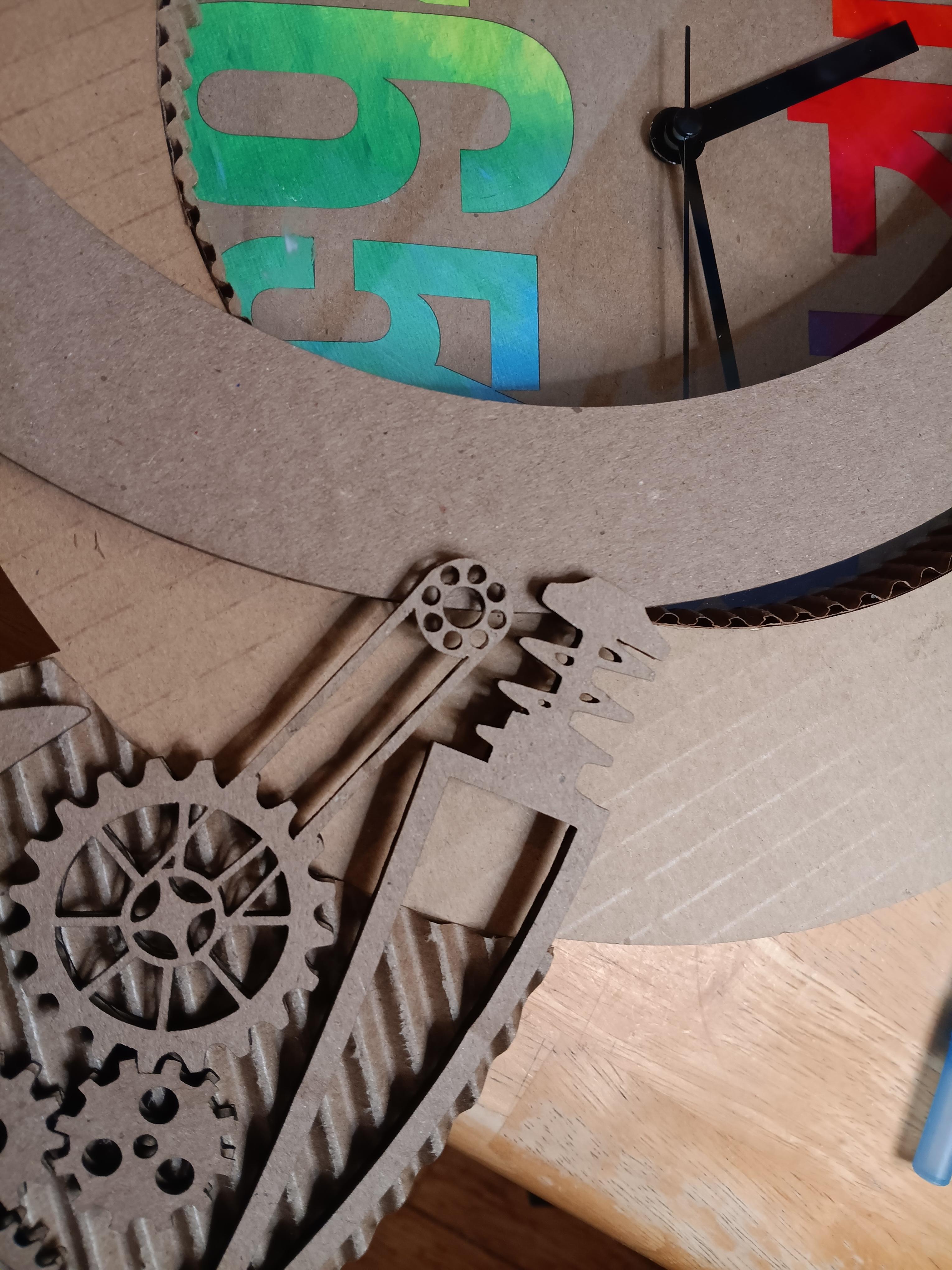
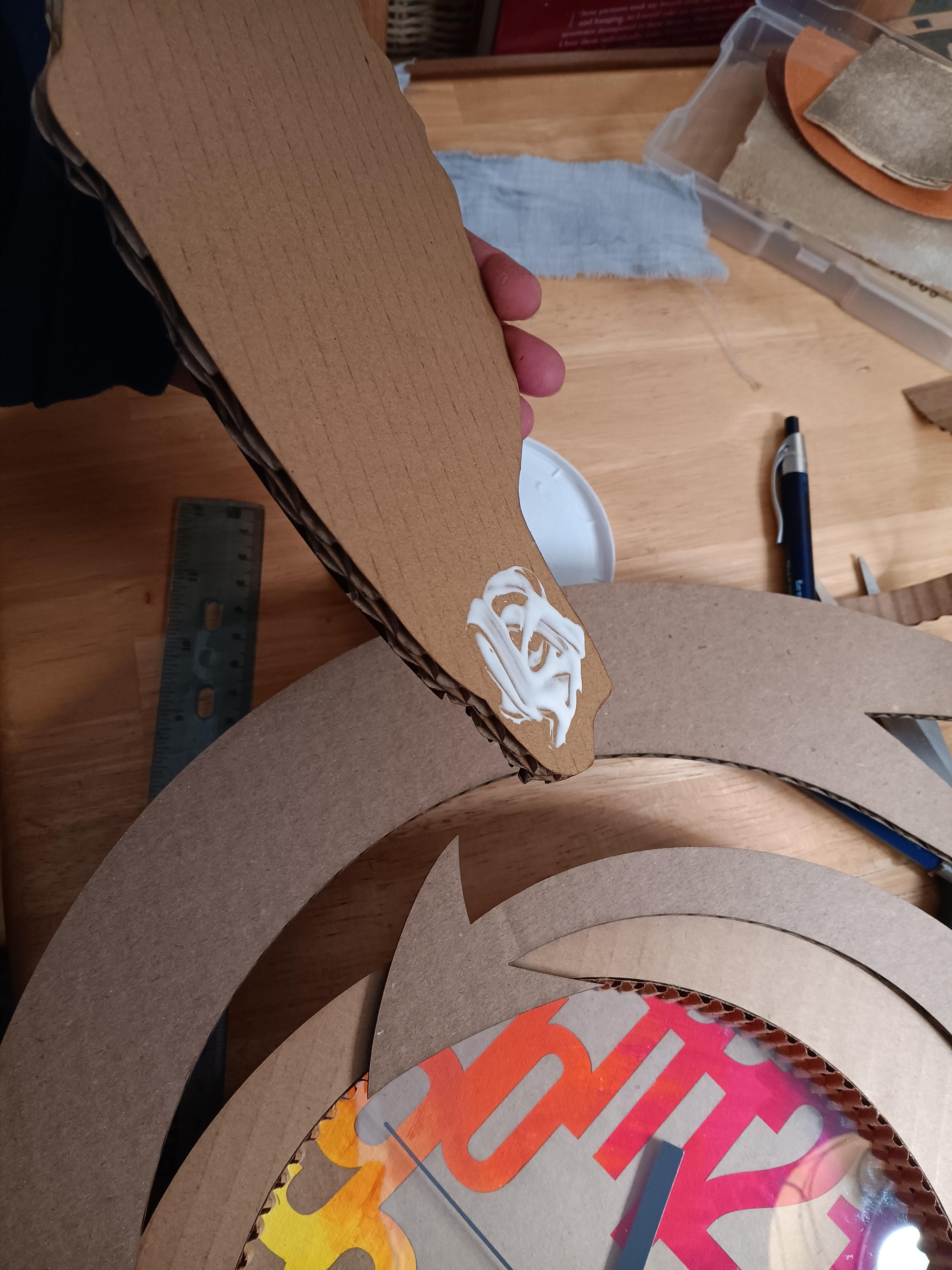
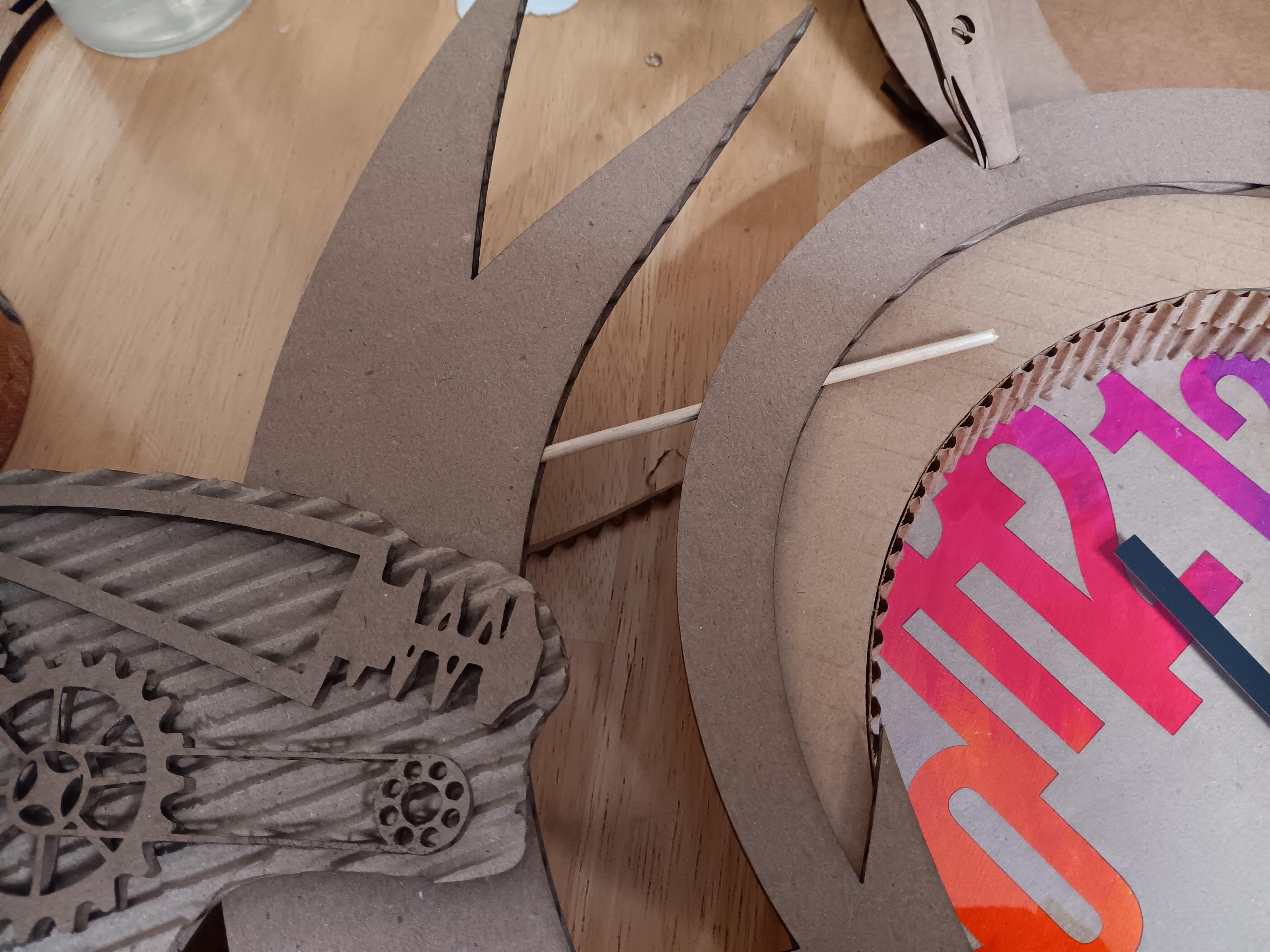
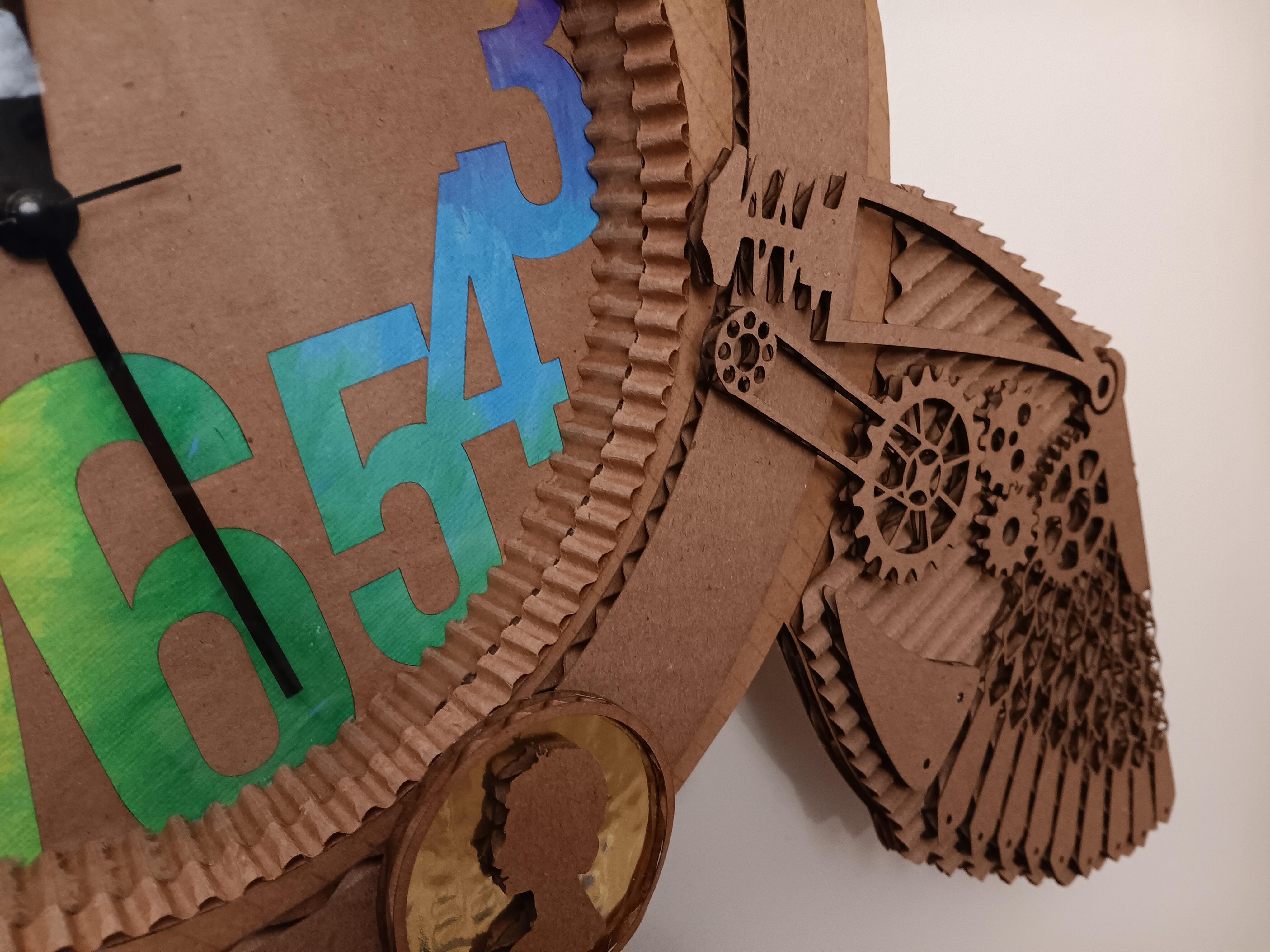

The rest of the process is simply placing the pieces and gluing them. It is better to let one piece dry before gluing the next one.
Before gluing the moon, insert a 4 inches segment of a bamboo skewer to prevent the tail of the arrow from bending.
To Finish
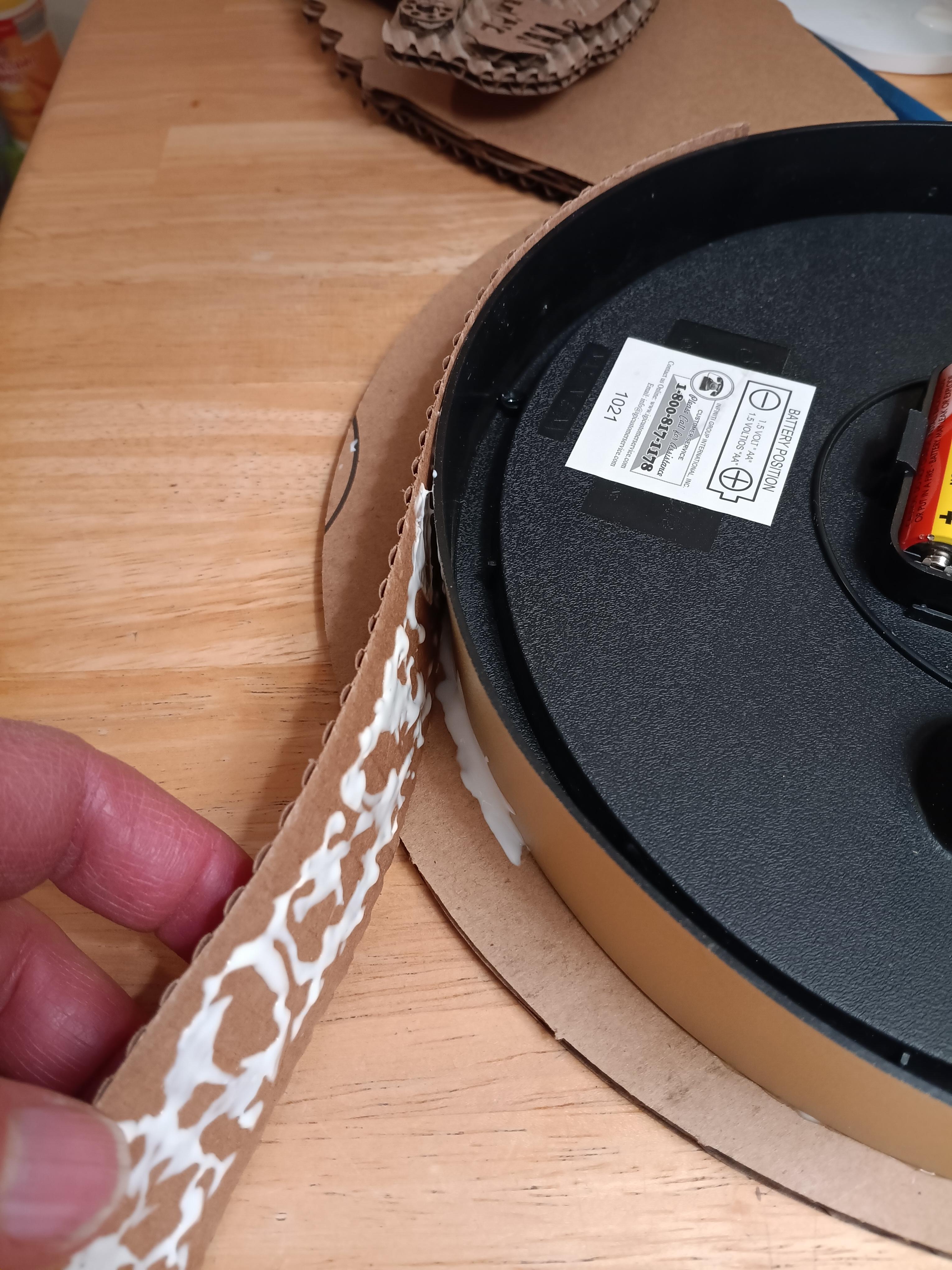
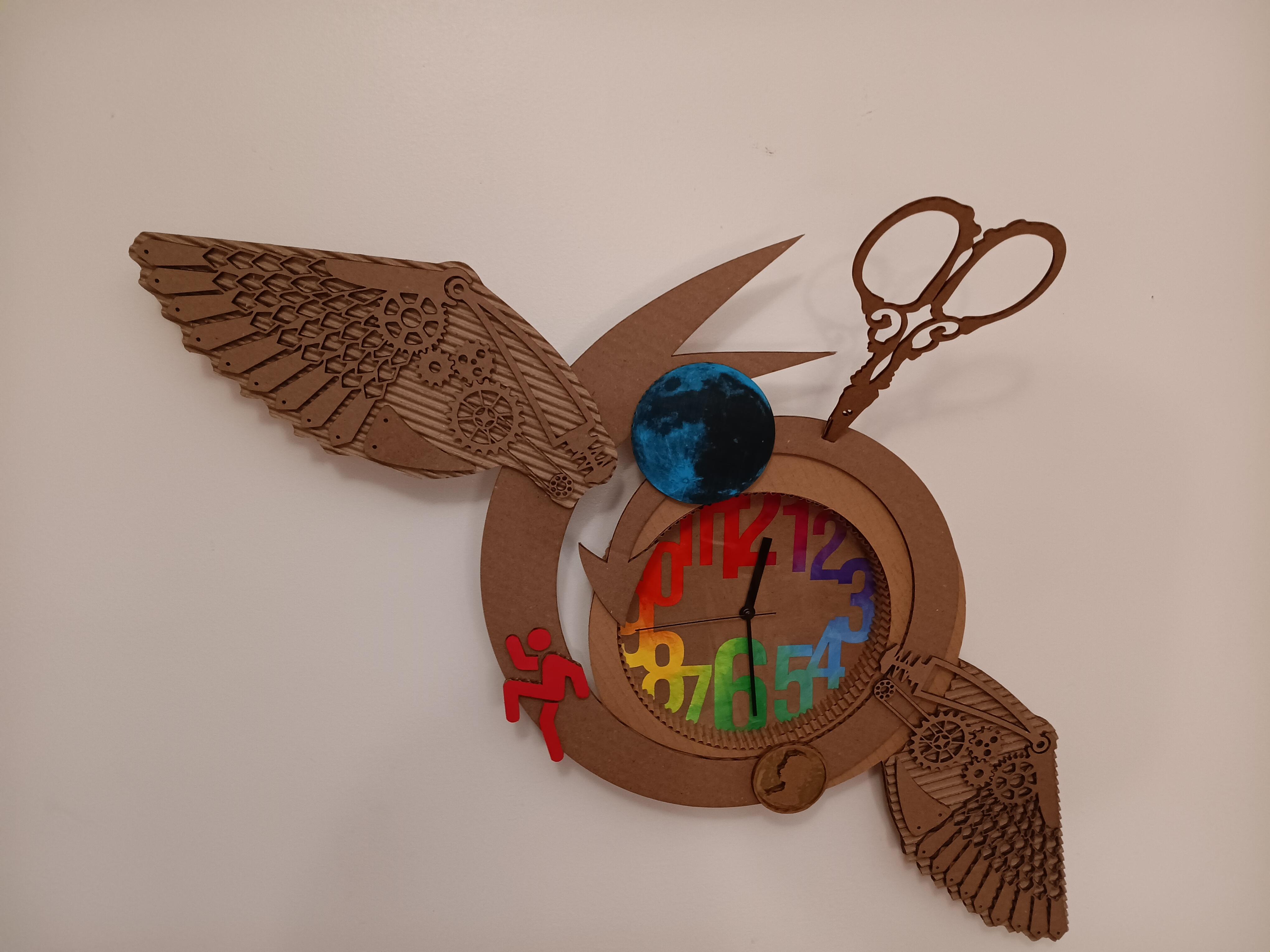
I added a strip of cardboard with only one flatliner to cover the plastic shell of the clock.
And we have run out of time.