How to Test a Relay?
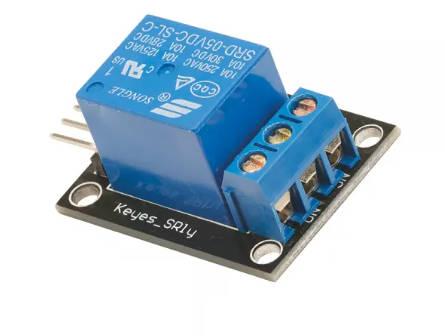

What is a Relay?
A relay is an electrical switch that regulates the opening and shutting of its contacts using an electromagnet. The armature of the electromagnet moves and closes or opens the contacts as a result of the magnetic field produced when a current flows through the coil of the electromagnet. Low-power signals are frequently employed to regulate high-power circuits, enabling the isolation and security of delicate components.
For handling high-power circuits or separating low-power circuits from high-power circuits, relays are frequently used in a variety of applications. They provide a way to control electrical loads with a lower power control signal, either a digital signal or a switch.
Relays are frequently employed in a variety of applications to isolate low-power circuits from high-power circuits or to control high-power circuits. By using a switch or other low-power control signal, such as a digital signal, they offer a method for controlling electrical loads.
There are numerous varieties of relays, including thermal, reed, solid-state, electromagnetic, and solid-state relays. Based on elements including switching speed, current rating, voltage rating, contact materials, and environmental conditions, each kind has unique features and is ideal for particular applications.
Supplies
How does a relay work?
An electromagnet controls the position of a relay's contacts, which is how it operates. The normally open (NO) position of the contacts is changed to the usually closed (NC) position, or vice versa, when current runs through the relay's coil, which in turn attracts the armature. Depending on the condition of the coil, this enables the relay to alternate between two separate circuits, one with the contacts closed and one with the connections open. Relays can be set up to switch a variety of loads, including motors, lights, and other electrical devices. They can be made to run on AC or DC voltage.
The relay can efficiently switch high-power circuits or isolate low-power circuits by managing the current through the coil. As a result, relays can be employed in a variety of situations where high-power switching, electrical isolation, or management of many circuits are necessary.
How to Test a Relay With a Multimeter

Examining the continuity or resistance of the relay's coil and contacts is a simple step in the process of testing a relay with a multimeter. An instruction manual for using a multimeter to test a relay is provided below:
Safety must always come first, therefore before starting any testing, make sure the relay is unplugged from any power sources or circuits. Taking this step helps keep testers safe from any potential electrical risks.
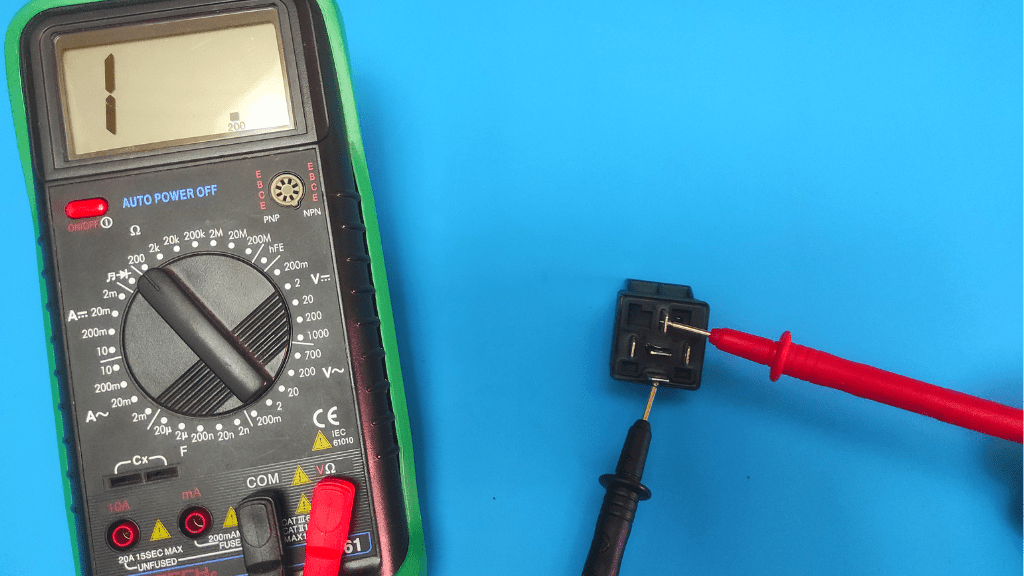
Next, select the proper mode on your multimeter—either resistance or continuity. Choose the mode and range for the test on your digital multimeter if you have one. Identify the relay's numerous pins. Relays often have coil pins, which are frequently marked "+" and "-," and contact pins, which include COM, NO, and NC.
Put the multimeter probes on the coil pins to test the relay's coil. The negative probe should be attached to the negative coil pin, and the positive probe to the positive coil pin. If the coil is in good condition, the continuity mode should provide a beep or continuity indicator. In the resistance mode, a coil that is operating properly is indicated by a low resistance measurement that is near the manufacturer's recommended coil resistance. On the other hand, a faulty coil is implied by a lack of continuity or a high resistance value.
Connect the multimeter probes to the common (COM) and normally open (NO) pins of the relay before checking the contacts. The contacts are often open when the device is in its resting state (not powered), as evidenced by the absence of continuity or a high resistance measurement between the COM and NO pins.
Apply power to the relay's coil by connecting it to a power source or giving the necessary control signal to test the contacts' behavior when the coil is powered. Recheck the resistance or continuity between the COM and NO pins after the coil has been powered up. Continuity or a low resistance value should be shown at this point, indicating that the contacts have closed successfully.
By attaching the multimeter probes to the common (COM) and normally closed (NC) pins, you can also carry out the procedure once again. Continuity or a low resistance value should be visible in the resting condition. The contacts should have opened properly if there is no continuity or a high resistance reading between COM and NC when the coil is activated.
If you want to learn more detailed information about how to test a relay, you can see this article: How to test a relay to get familiar with it.