Grounding Stone - a Physical Aid to Help Anchor People in the Present
by Banhammer in Workshop > Furniture
58 Views, 0 Favorites, 0 Comments
Grounding Stone - a Physical Aid to Help Anchor People in the Present

NOTE: THIS IS NOT A REPLACEMENT FOR PROFESSIONAL HELP.
My daughter has always struggled with being anxious and says she is scared all the time. This project was a great opportunity and prompt to make a simple tool. This "stone" is something that she or others can hold in their hand and it can guide them through the 5 steps for grounding.
Those steps include naming:
- 5 things you can see
- 4 things you can feel
- 3 things you can hear
- 2 things you can smell and
- 1 thing you can taste
Some of the instructions will be generalised, this is because you can customise your shape to your user. You could sculpt it or 3d print it.
Supplies
- A piece of wood roughly palm sized and a few centimeters (1 inch) thick
- Cutting tools (bandsaw, hand saw, chisel)
- A drill (hand or drill press)
- Clamp (to hold while drilling)
- Sand paper (belt sander, orbital sander or basic sheet and elbow grease)
- Finishing oil or paint
- 5 ball bearings and a drill bit the same diameter
- A hollow punch and a drill bit the same diameter
- 4 textured materials (e.g. velcro, fluffy material, super glue + bicarb and a lego stud)
- A piece of dowel (a few mm) and a matching drill bit
- Super glue
- Rotary tool (could be useful)
Making the Stone

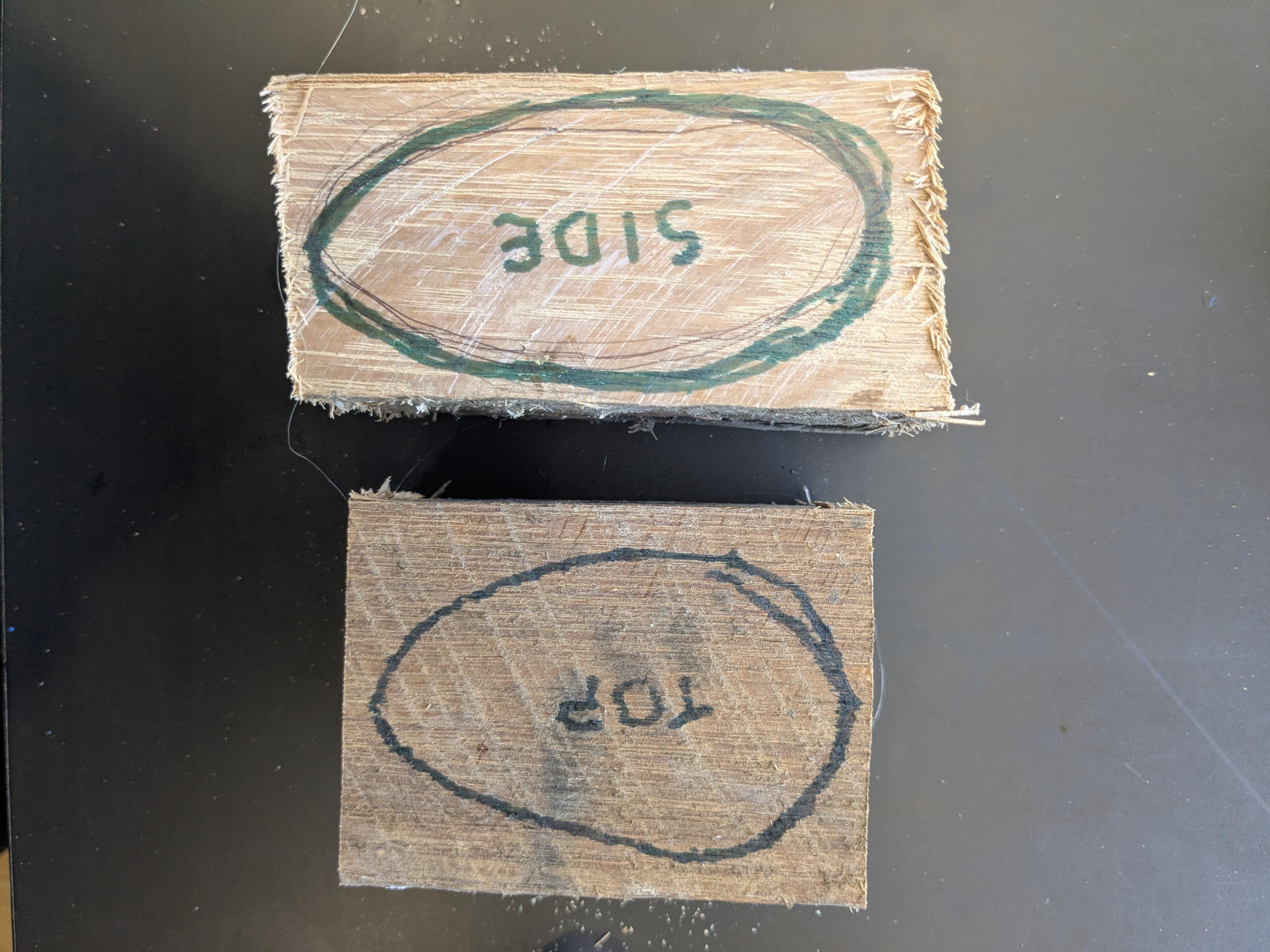
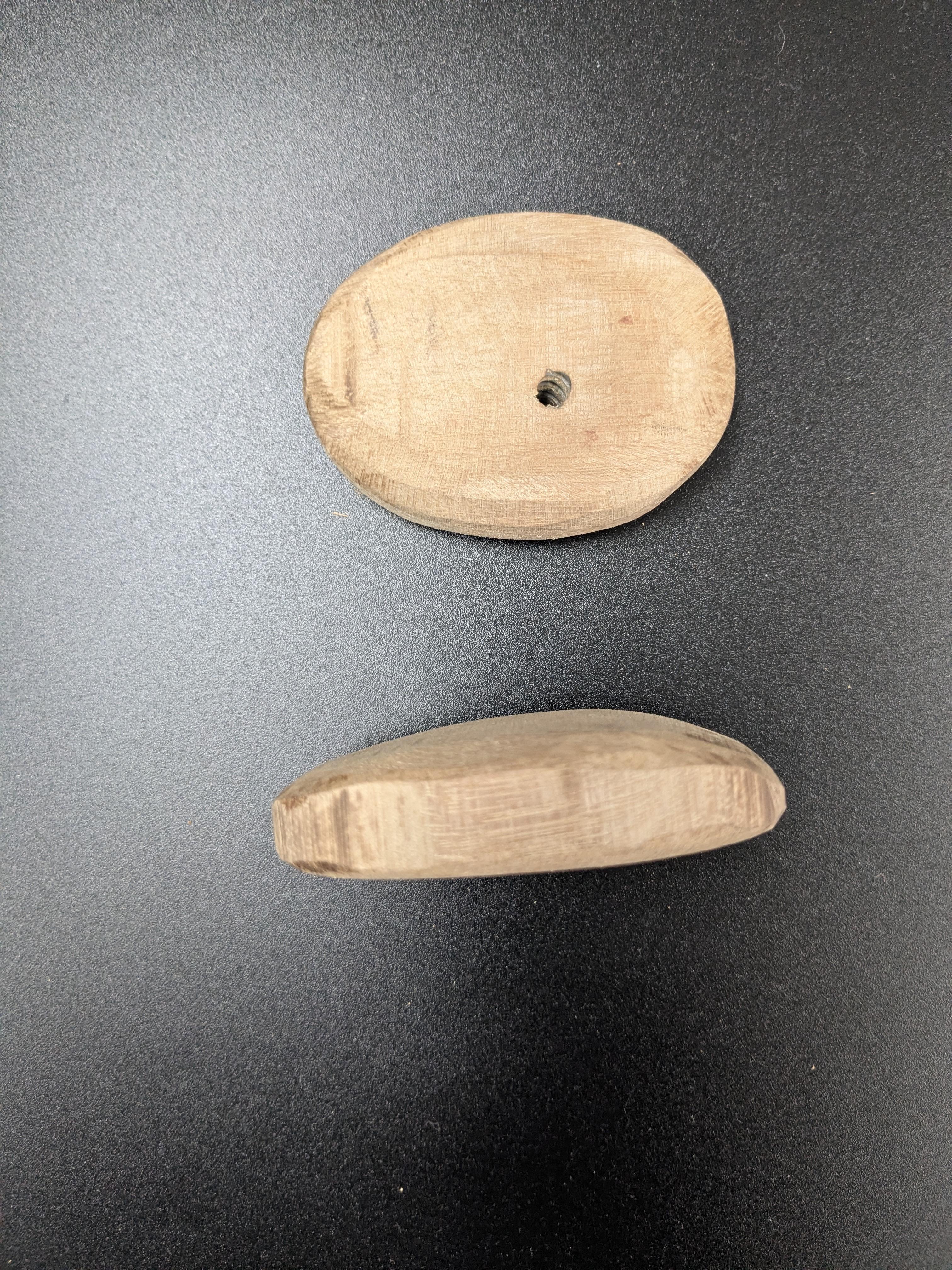

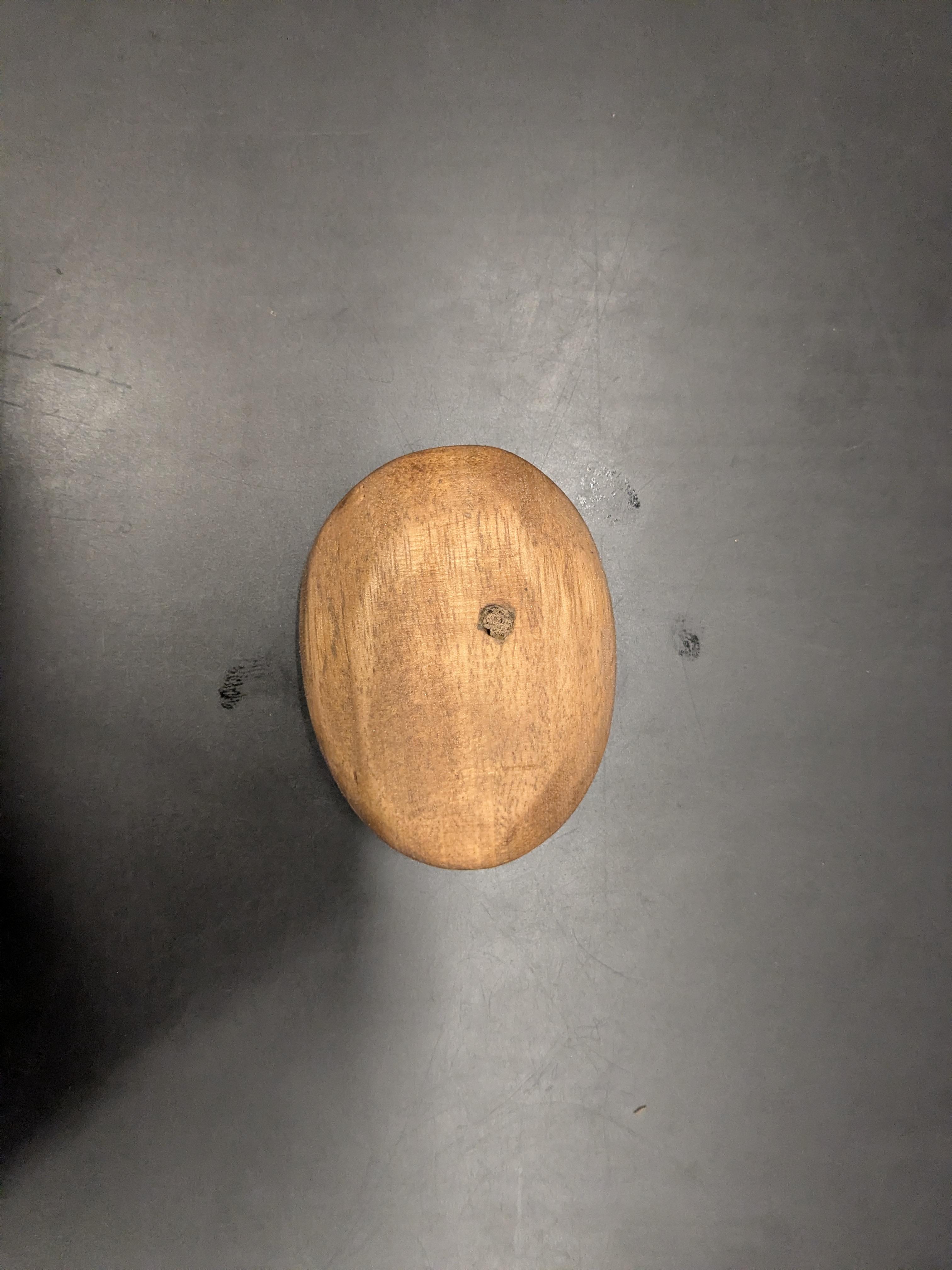
You will quickly find out that I am not a great craftman. Ideally things would be lined up or nicely in grids. Please take the ideas I give you and modify it to your situation.
To create the stone,
- section a piece of wood. This one was cut from some scrap material.
- The dimensions need to be larger then the final product. I cut roughly 90mm in length
- From there, sketch the rough outline of the shape you would like
- Using a saw (or bandsaw) cut the wood to the correct shape. Cutting the side projection and then cut the top projection. N.B. My piece ended up being too large and I cut it in half to make my 2 stones.
- Using a belt sander or hand sand, sand down the shape until the desired shape is achieved
- This example was sanded to 200 grit but 120 would be enough
Things You Can See


For the things you can see.
- On the front face, a 7.5mm hole was drilled and then the 8mm ball bearing was gently hammered into the hole
- Repeat this 5 times, one for each for each of the things you need to see
- The friction fit is enough to hold it, 2 part epoxy could be used if you were concerned about them falling out
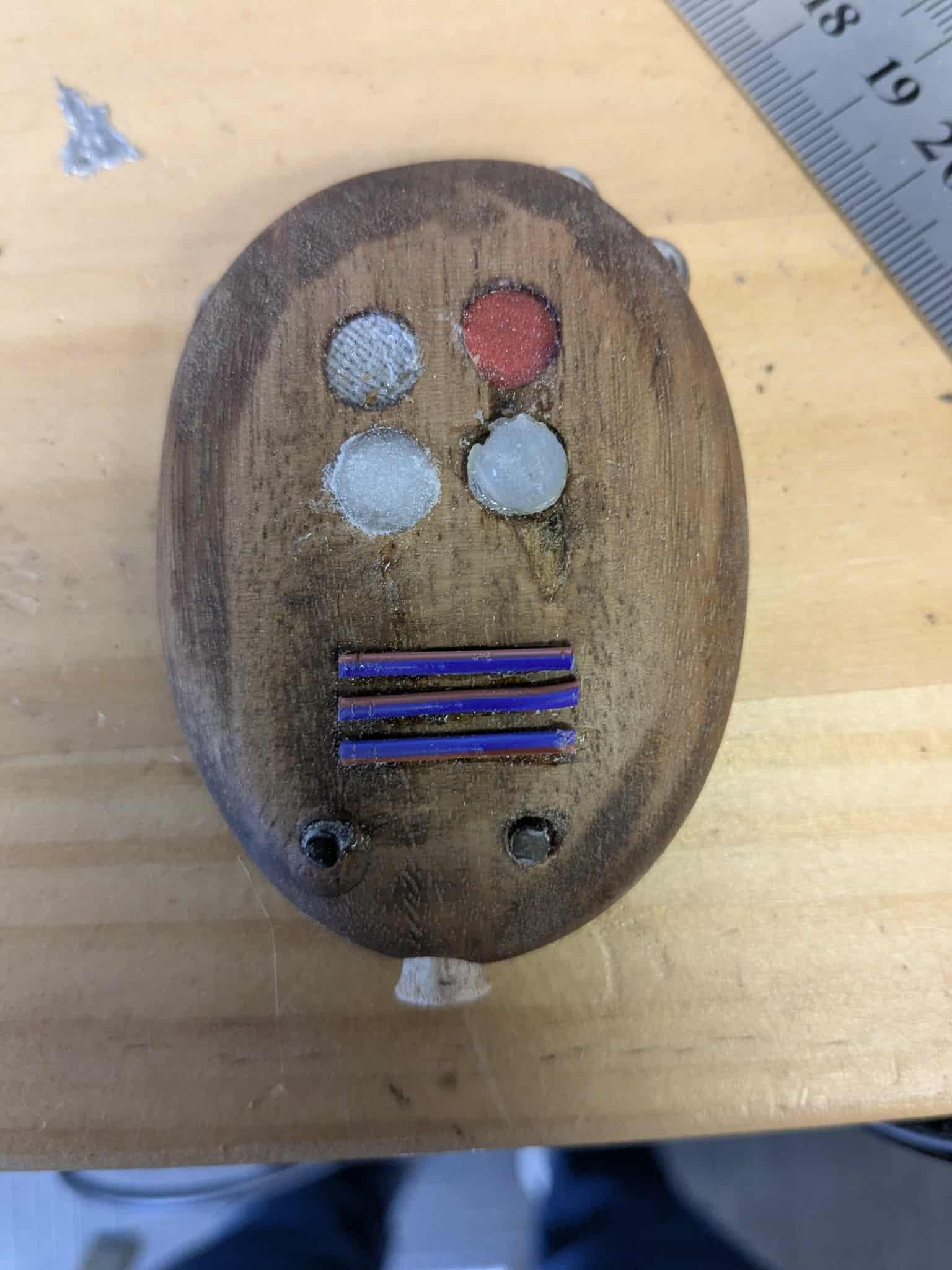
Things You Can Feel
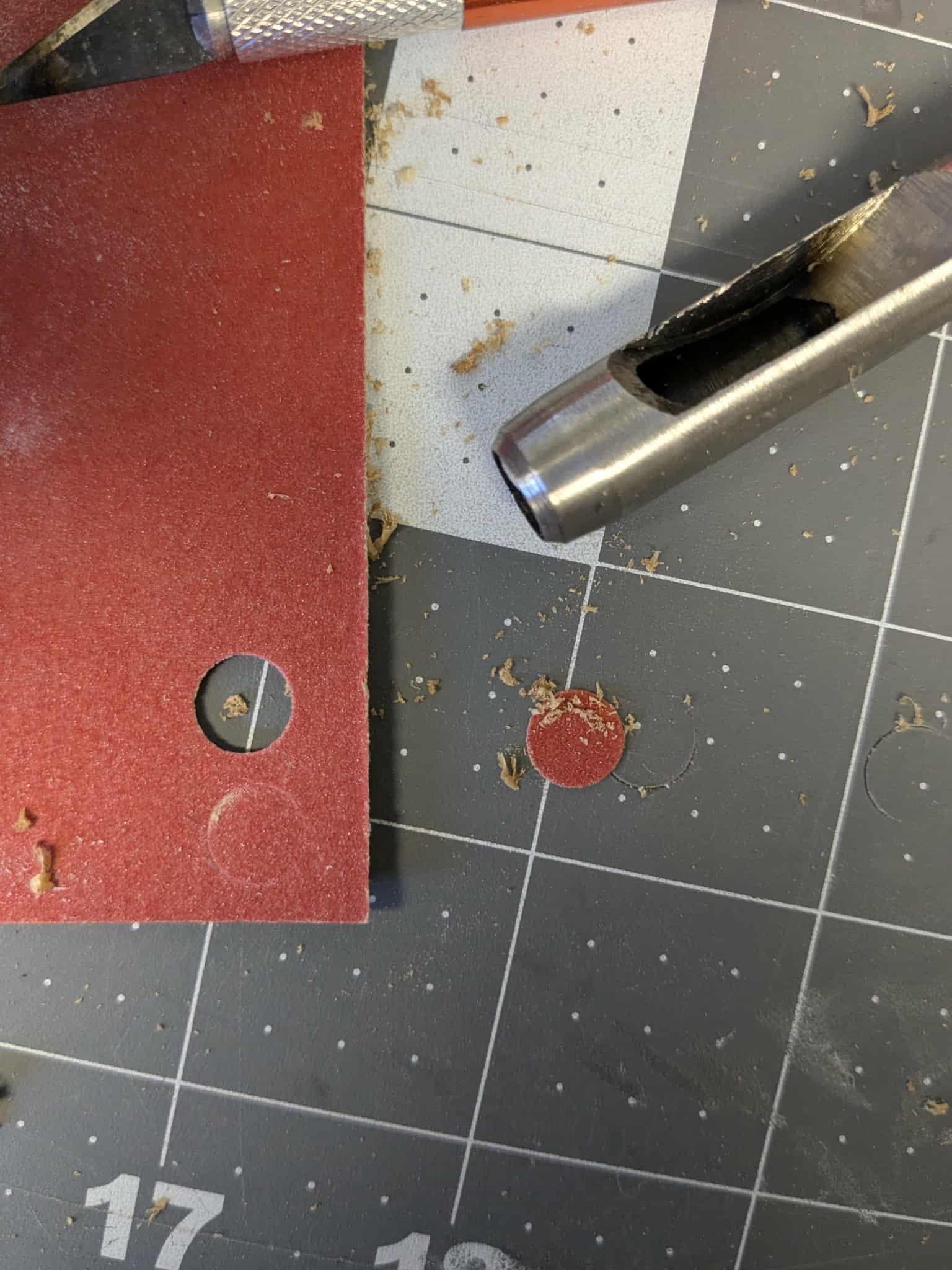
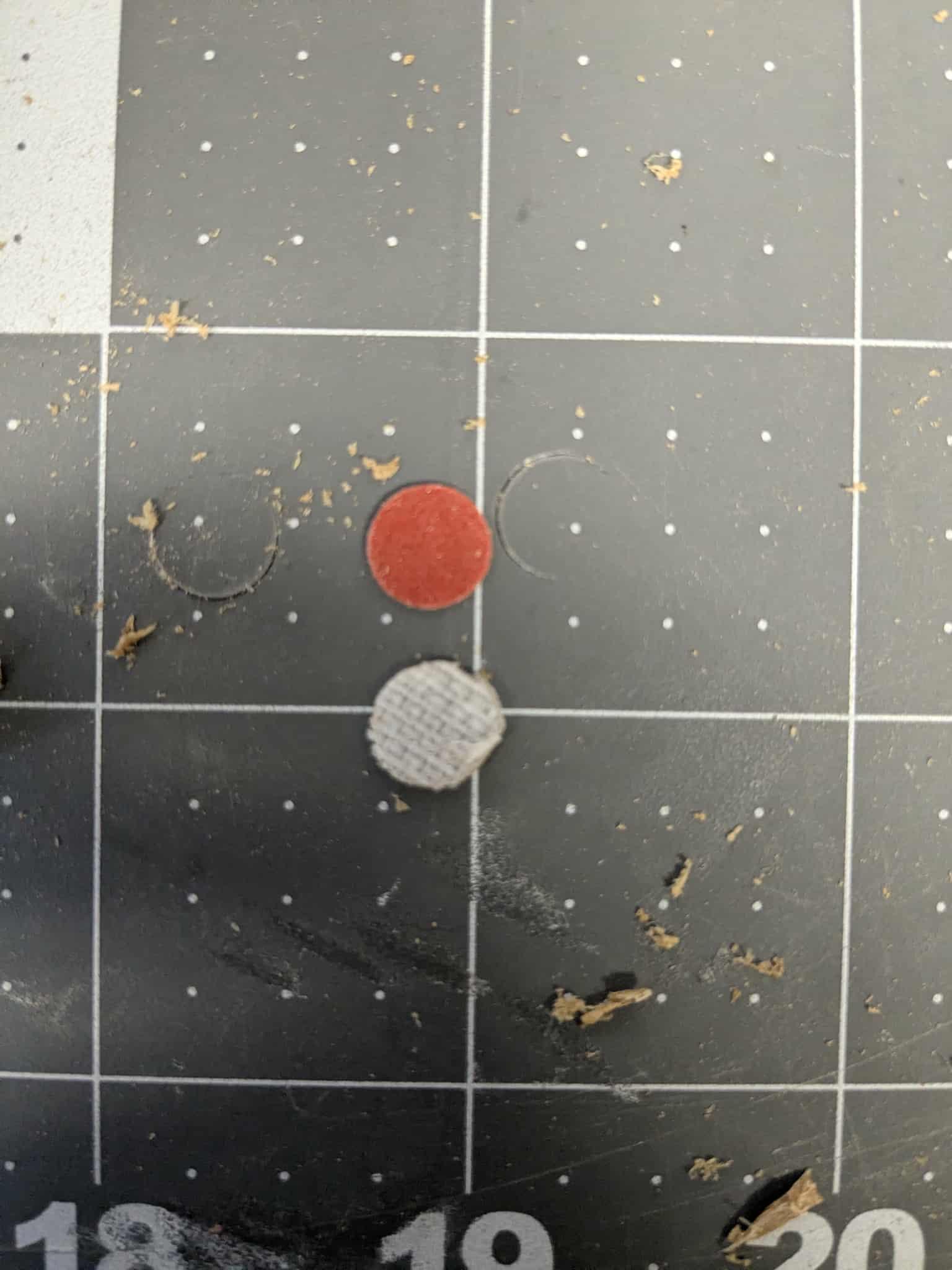
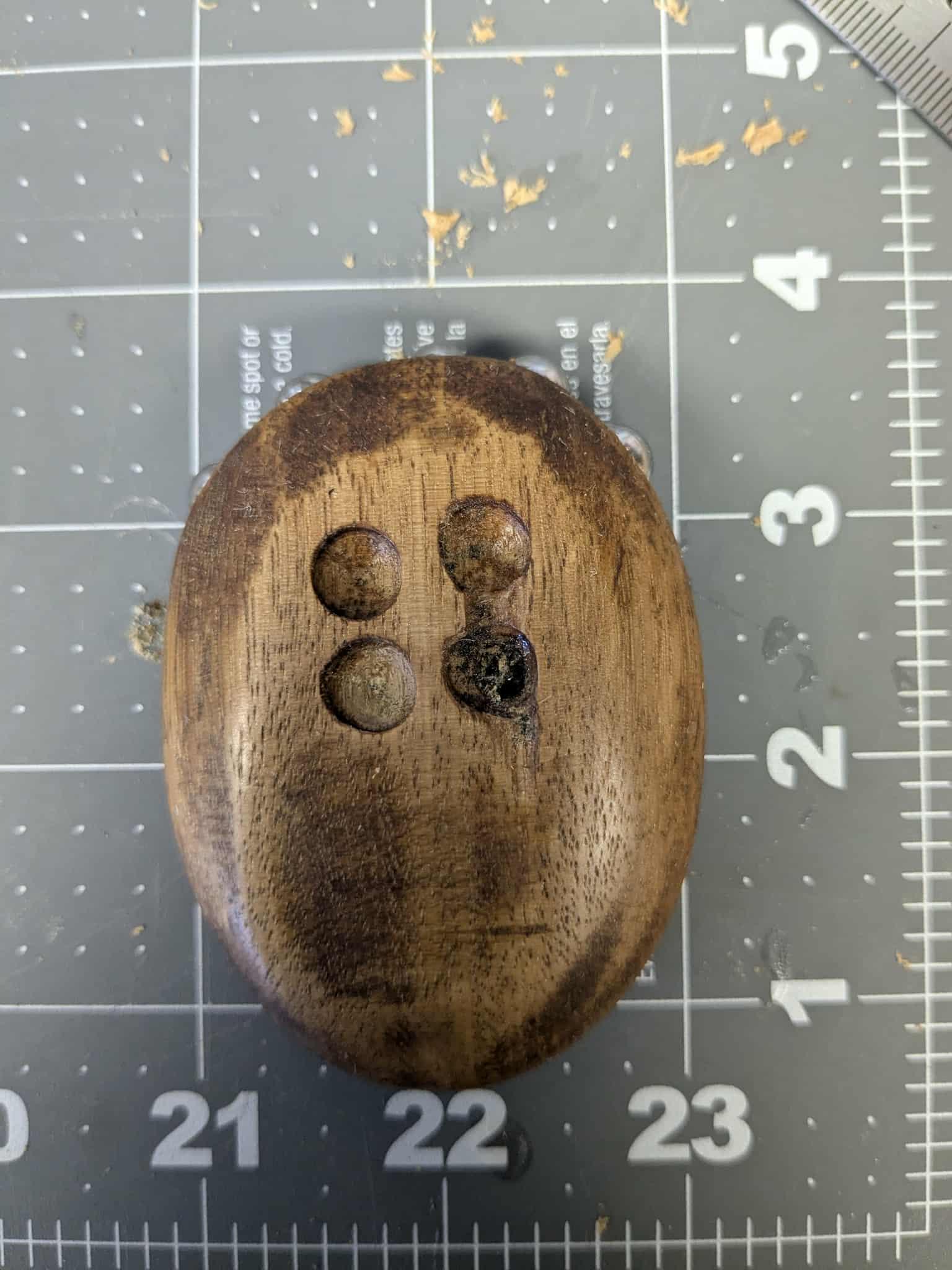

This example is using an 8mm drill bit and an 8mm hollow punch
- Select and measure out the location for the 4 shallow holes
- Drill out each hole to a depth of about 3 to 4mm
- Using the hollow punch, punch out the material you are going to use. Here a piece of sand paper, velcro, bicarb + super glue and a drop of hot glue (for the rubbery texture)
- Using super glue to stick the 4 touch prompts
Things You Can Hear
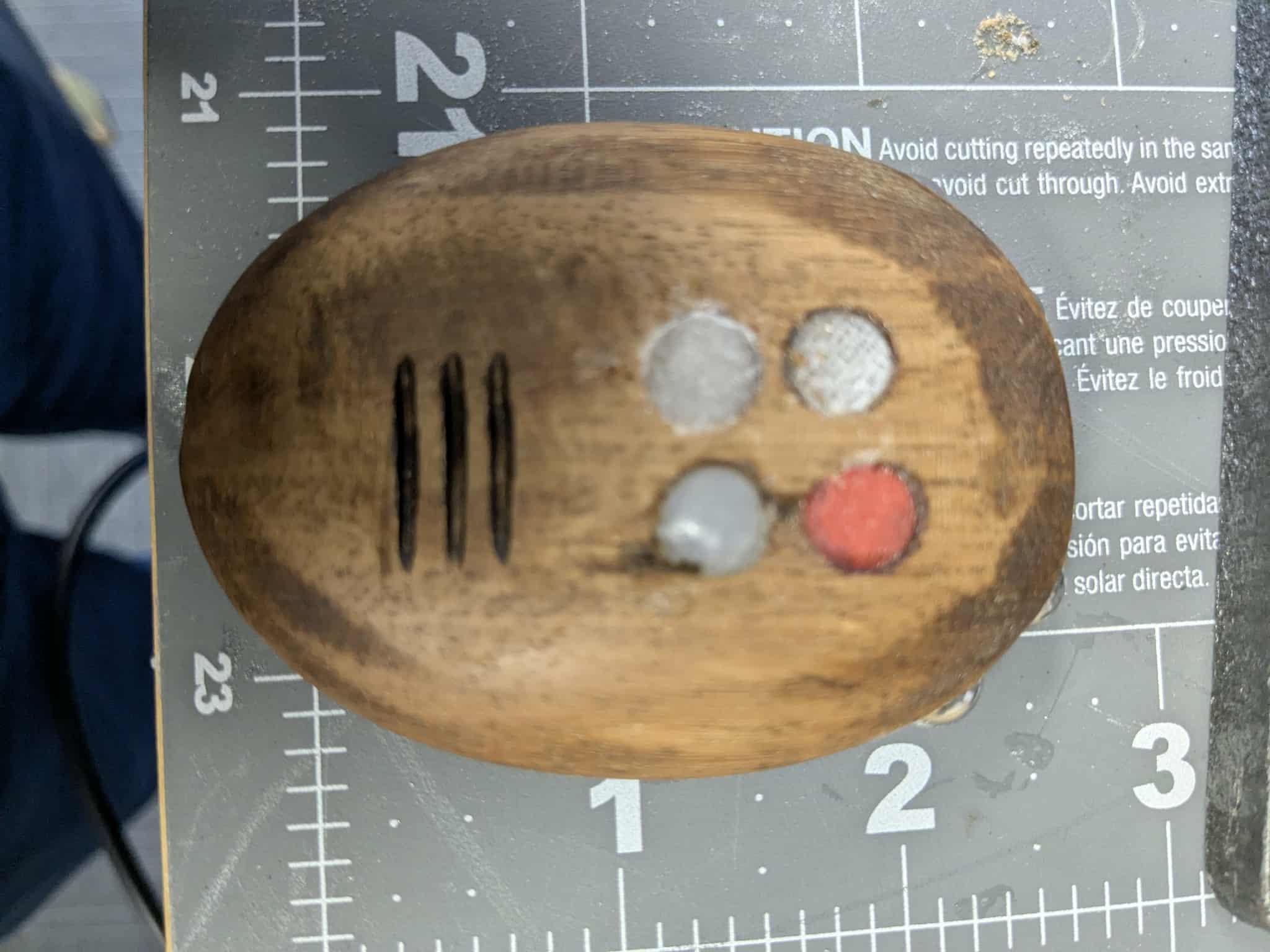
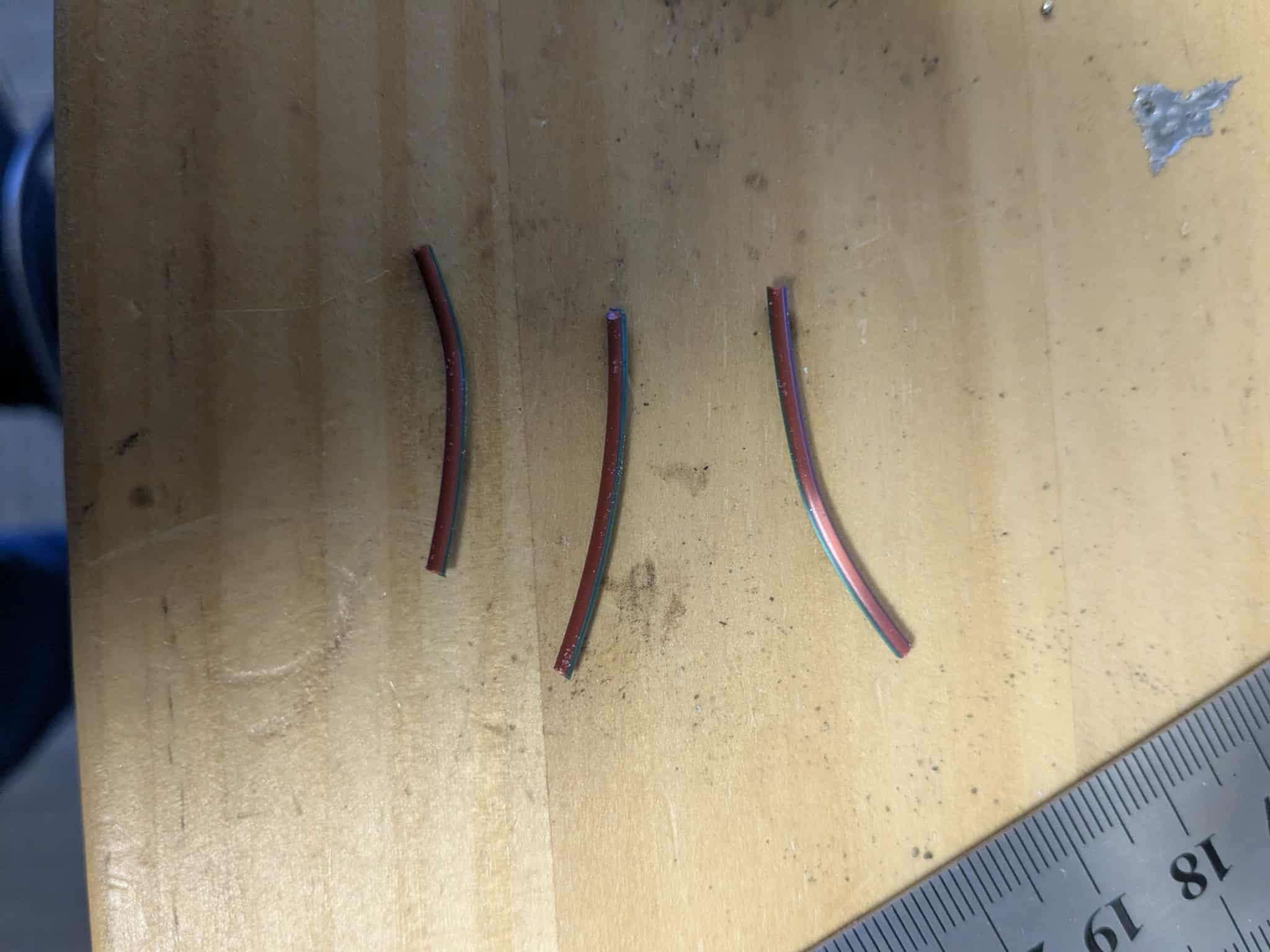

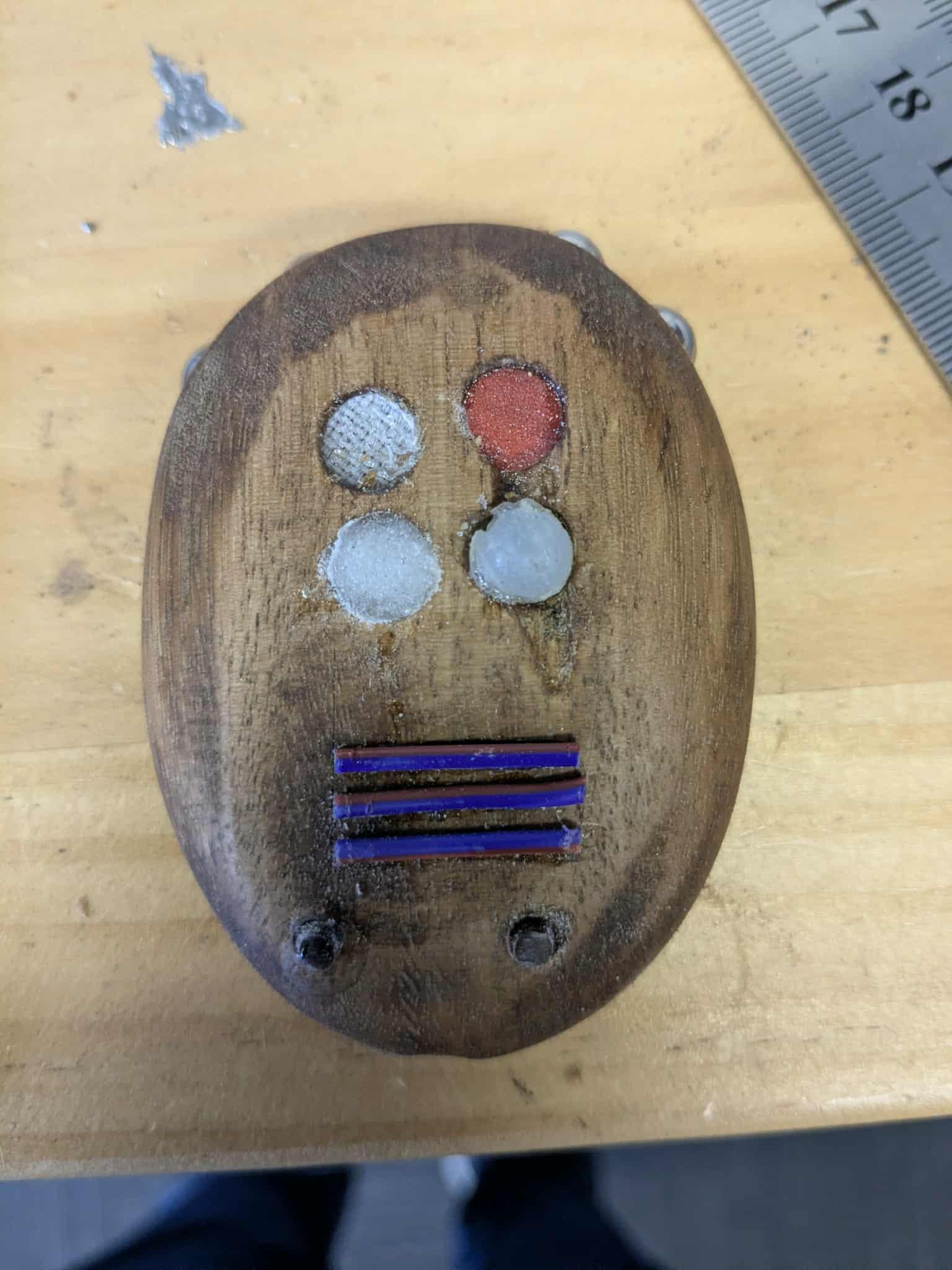
This example used 3 short sections of PLA plastic, if this is not available string could be a cheaper alternative.
- These 3 lines are not prescribed as the best practice
- Using a dremel, 3 grooves were scored to a depth of 1 mm
- The 3 pieces of PLA plastic were superglued in place and held with a piece of sticky tape
- Once dried, the 3 pieces were trimmed to the desired length
Things You Can Smell
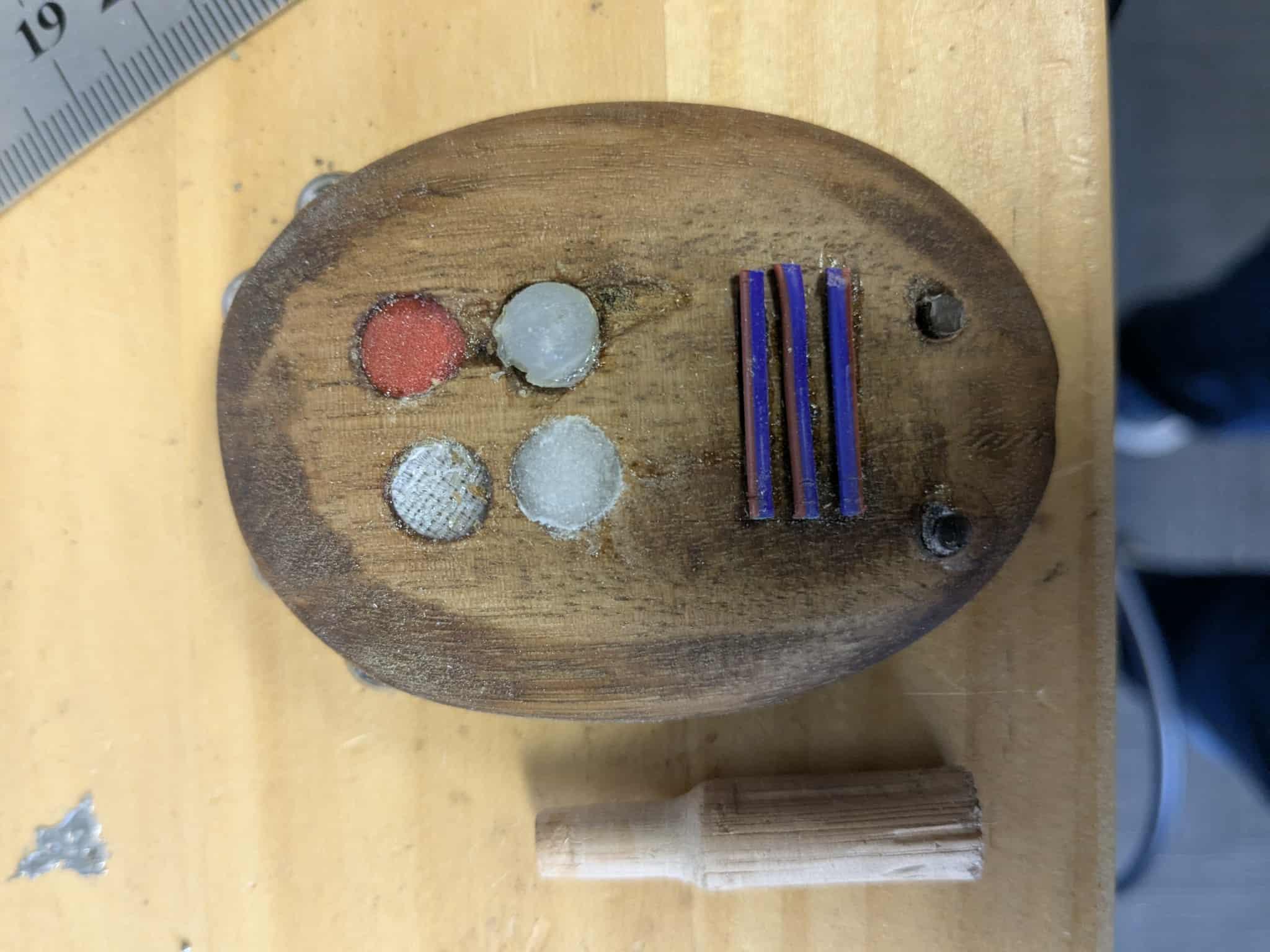
- 2 holes were drilled at the bottom and 2 pieces of perspex rod were stuck in
- This was lightly sanded down so they were still poking above the 'stone's' surface
Things You Can Taste
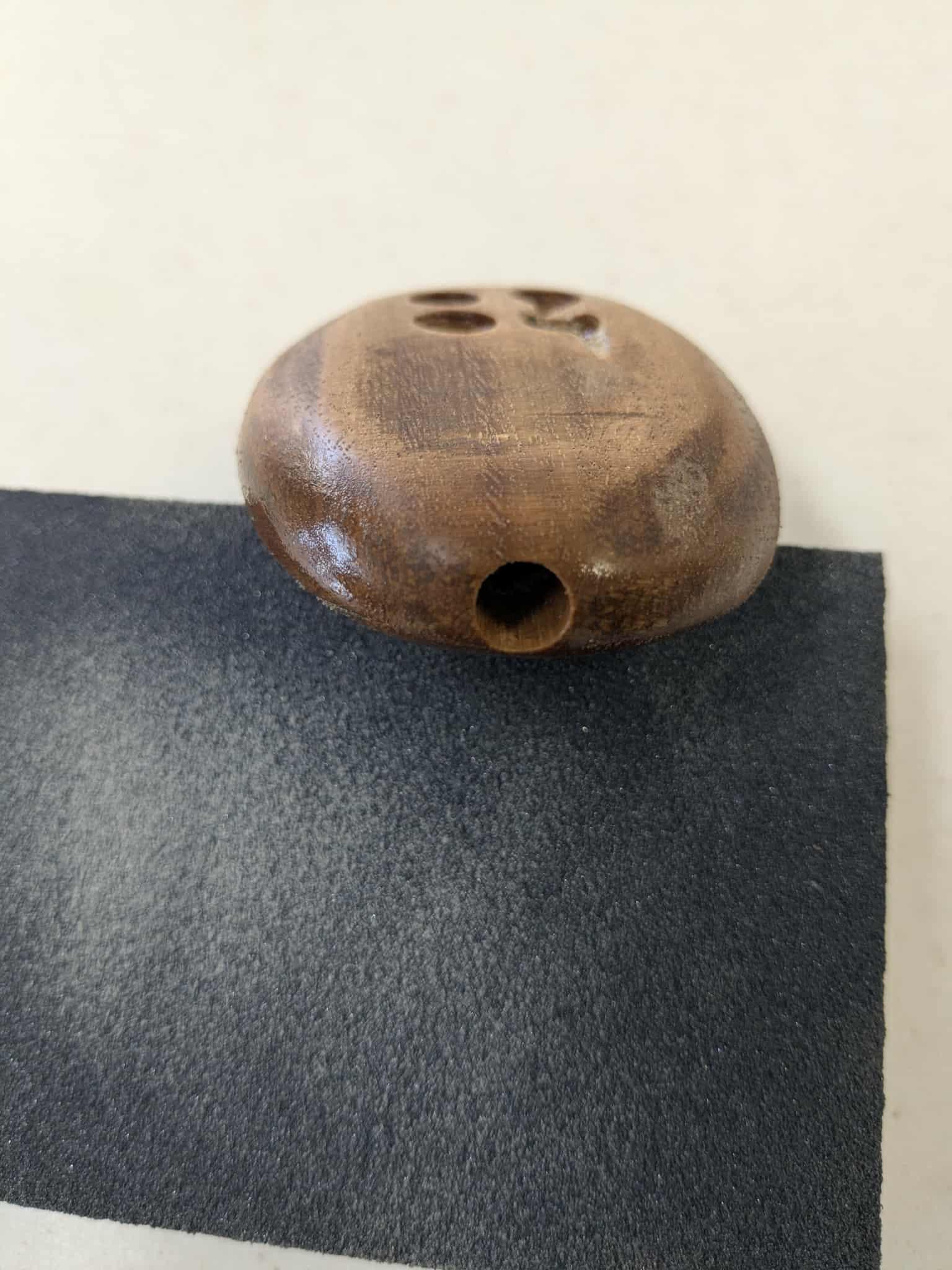
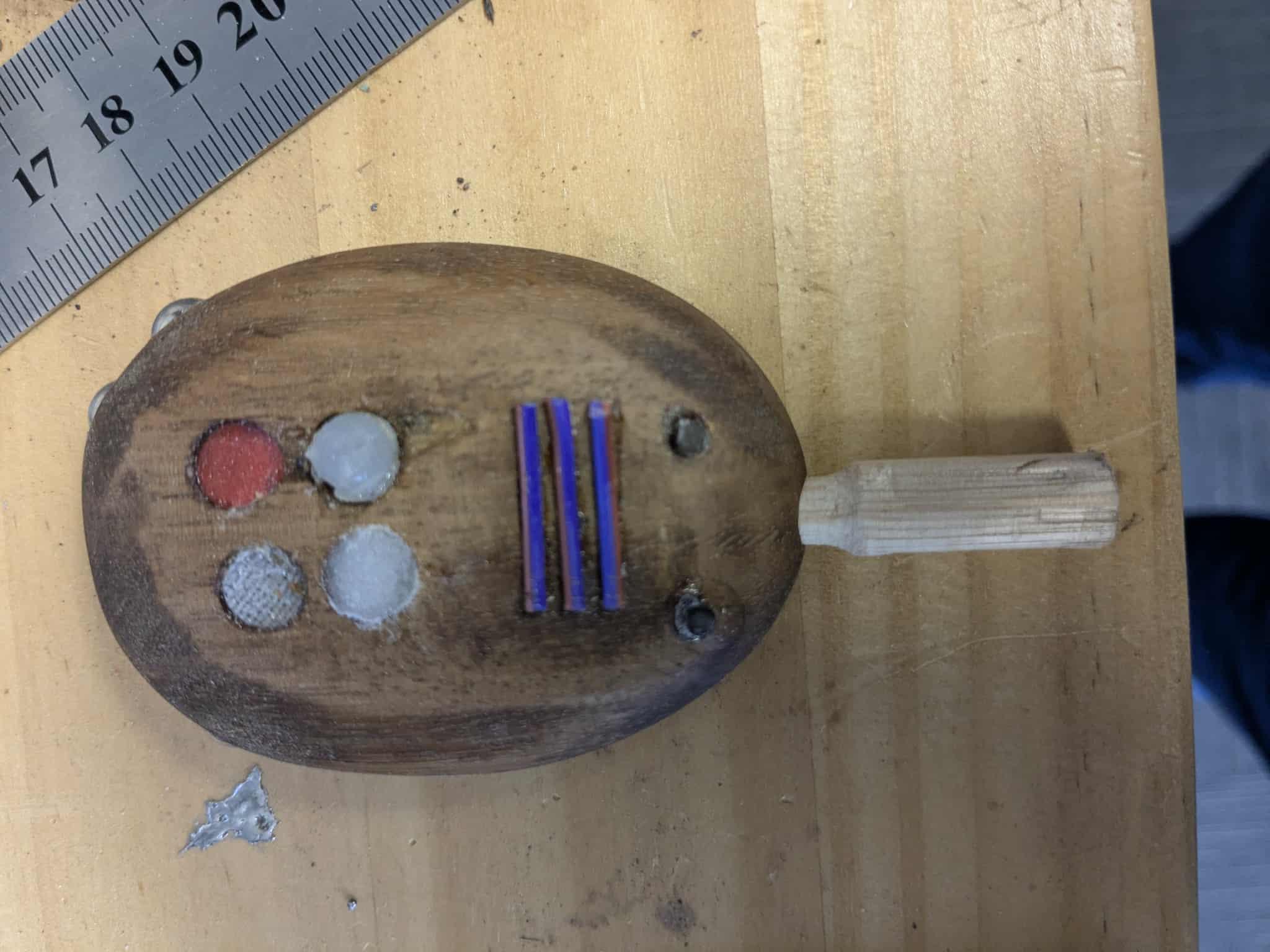
We are going to make a space to store the "taste", this will be in the form of tictacs
- Clamping the piece with the ball bearing end down, drill a hole in the centre at least 4mm in diameter, see the picture to show how. This is going to create the cavity to store some (probably just a few, tictacs)
- Now drill out the hole with a slighly larger drill bit but only to a depth of 5 to 10 mm. This will ensure that our stopper doesn't get pushed too far down.
- If your dowel is slightly to large for the hole, place the dowel into a drill and while running the drill, sand it down until it is the correct dimension.
- Trim off the wooden stopper so it pokes out 2 to 3 mm. Enough that you can grab it and pull it back out without too much issue.
In Closing
At some stage you may wish to oil or paint the 'stone'. This is ideally done after all the holes are drilled but before the components are assembled
This project is a working prototype, I recognise that there are significant improvements. My daughter loves it and is excited that it can help her face her fears.