Flamingo Stool
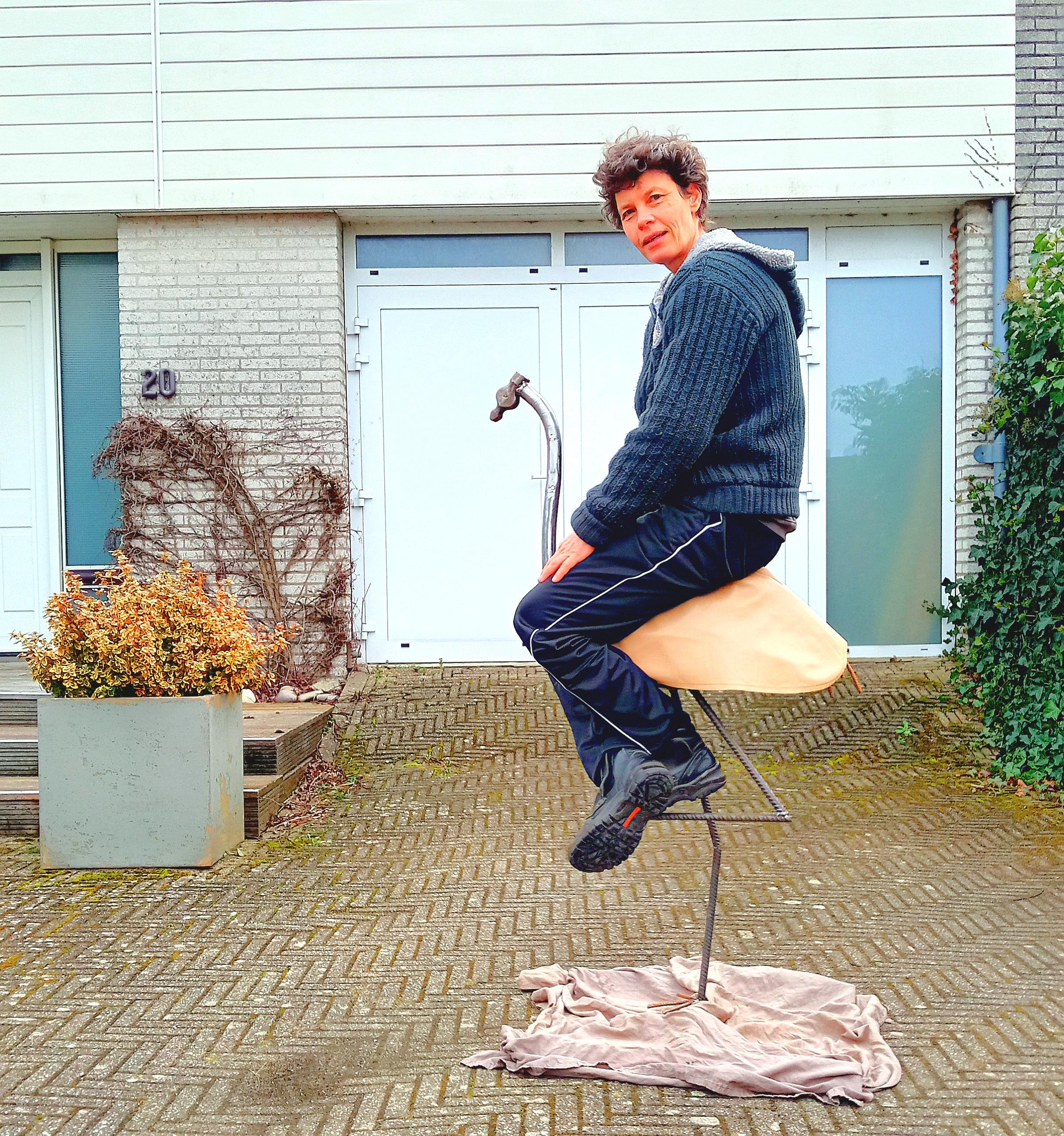
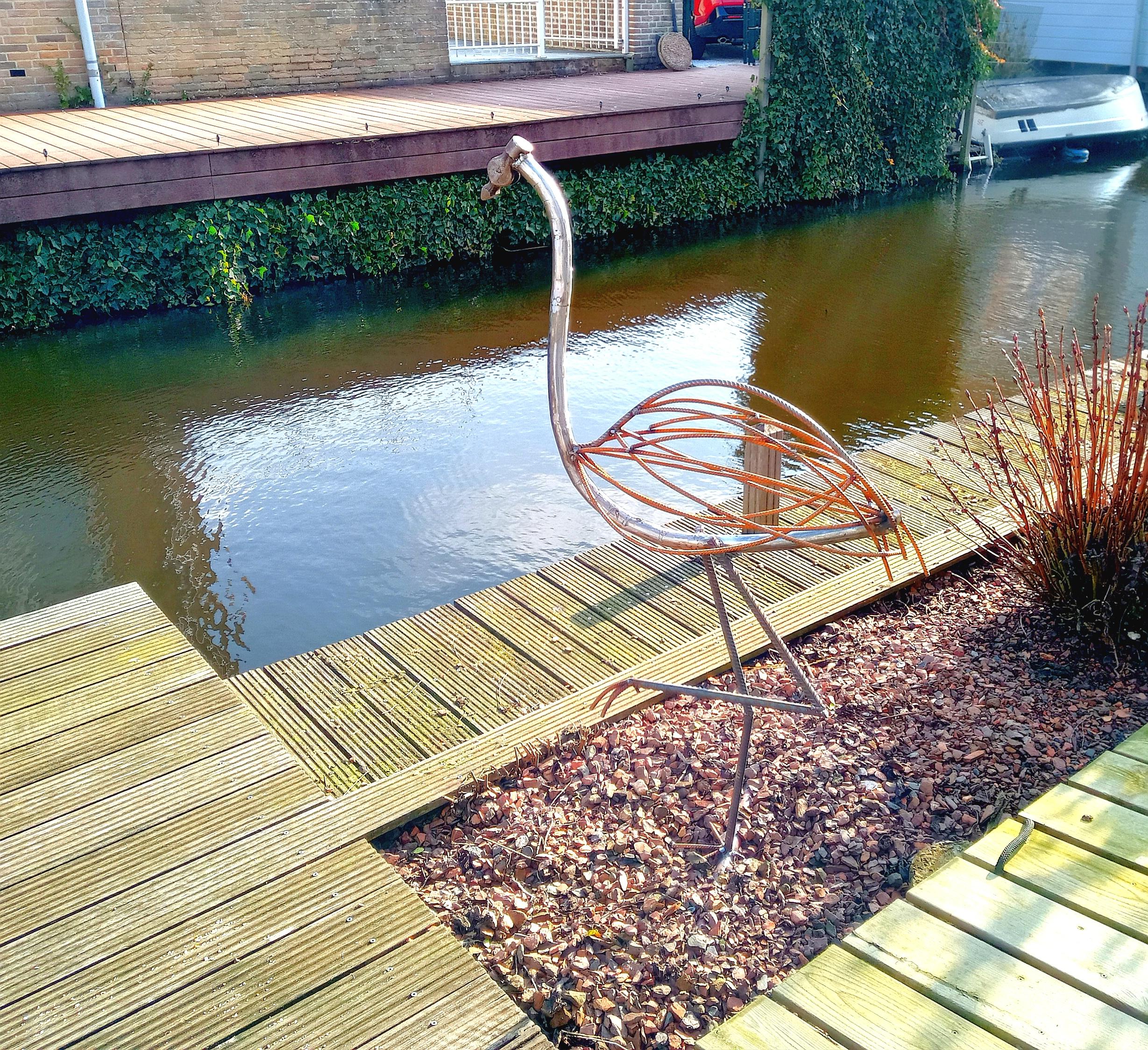
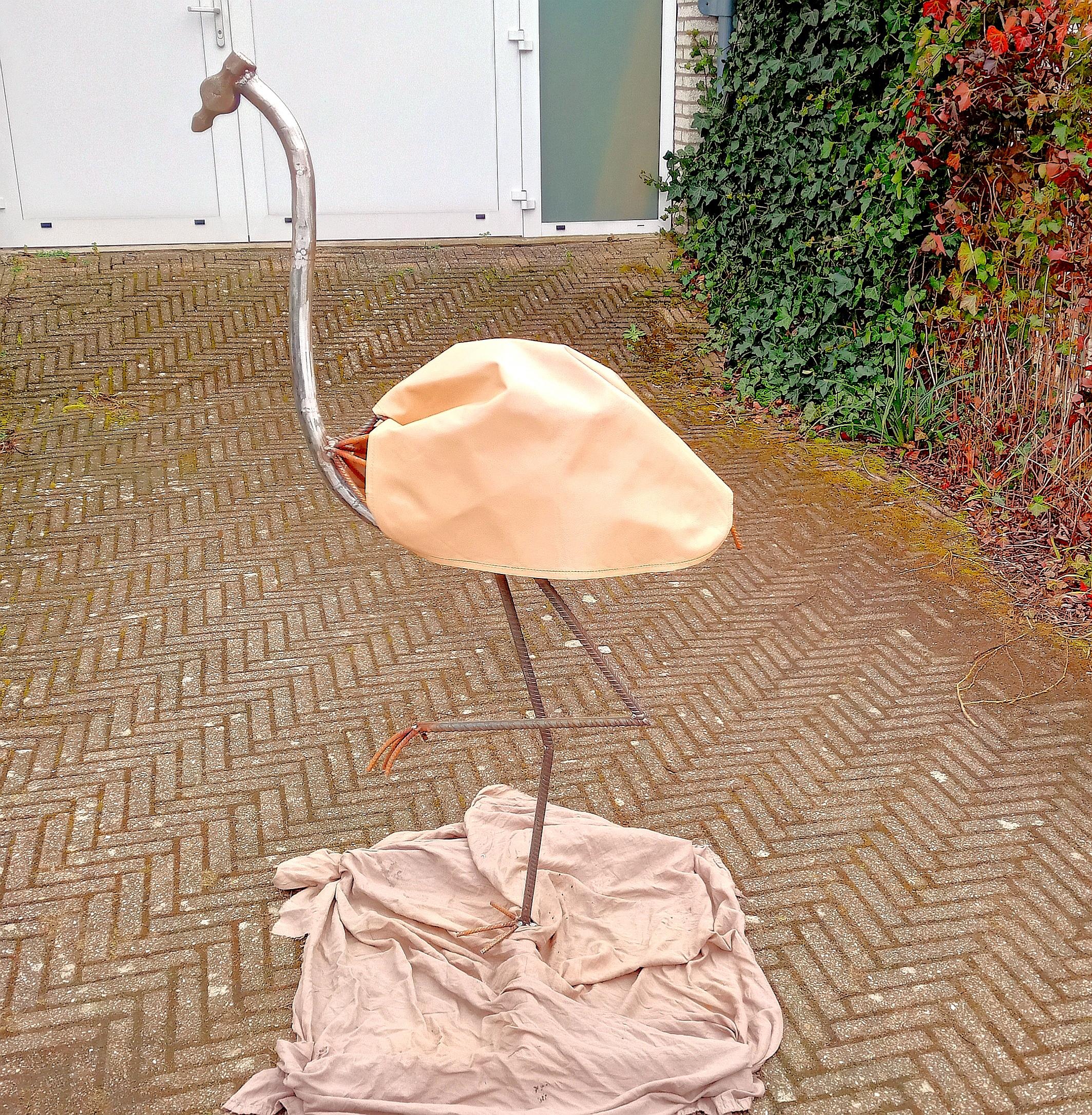
The Instructables Chair Contest was looking for creative seating solutions that support the weight of a human (even briefly).
The description also mentioned "outdoor perches", which made me think that usually birds sit on perches, but maybe I could sit on a bird. Of course a real bird would not like it if I would sit on her, so I decided to make a stool that looked like a bird and that could support my weight.
Supplies
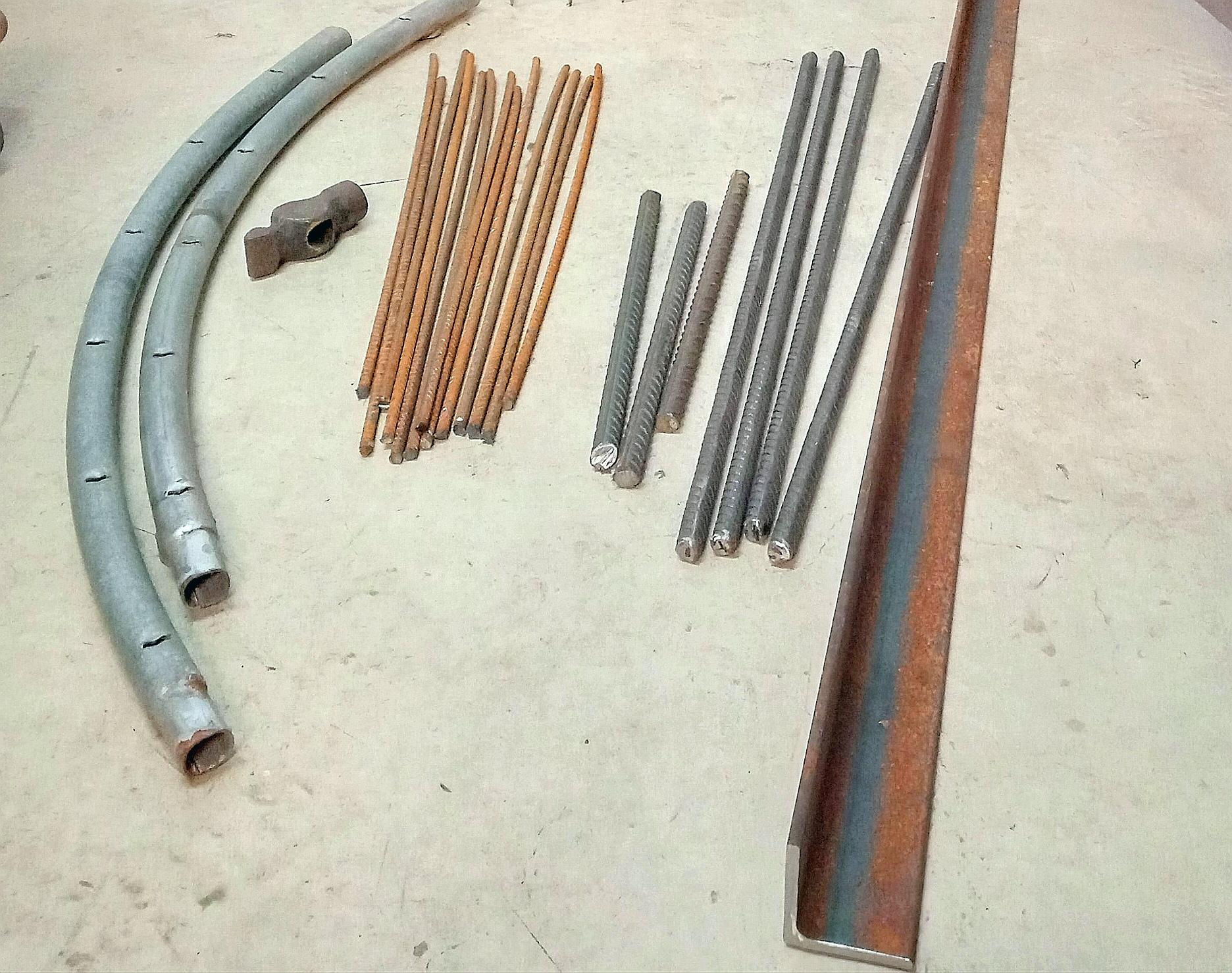
I often collect scrap materials even when I still have no idea what I am going to make. So in my collection I had two pieces of an old trampoline, the head of a hammer, several short pieces of rebar and an piece of angle bar. I also used a short piece of pipe.
The Design
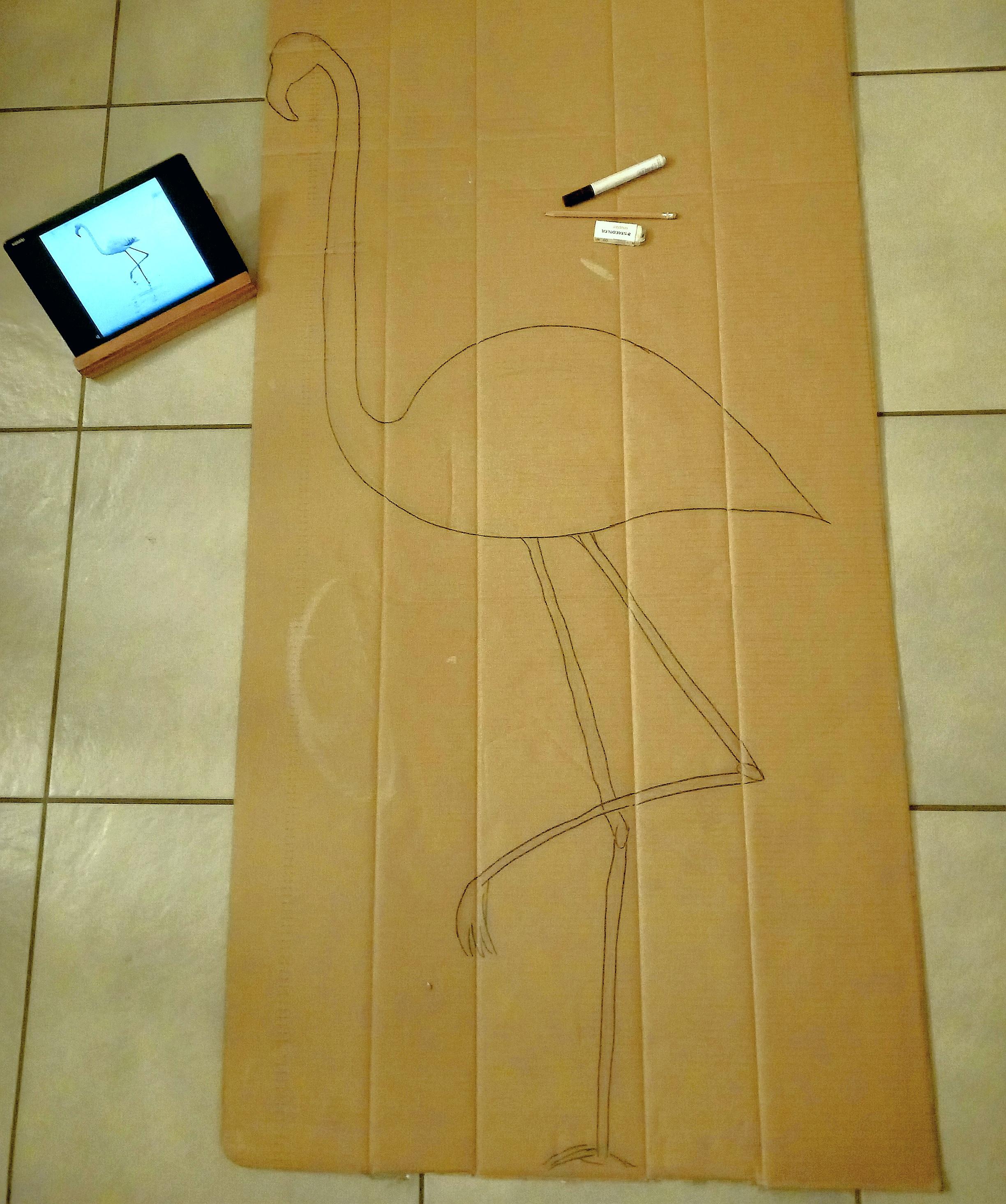
I looked on the internet for pictures of birds and I liked the picture of a flamingo. I had that displayed on my tablet and made a drawing on a large piece of cardboard that looked like the bird on the photo.
Build the Perch
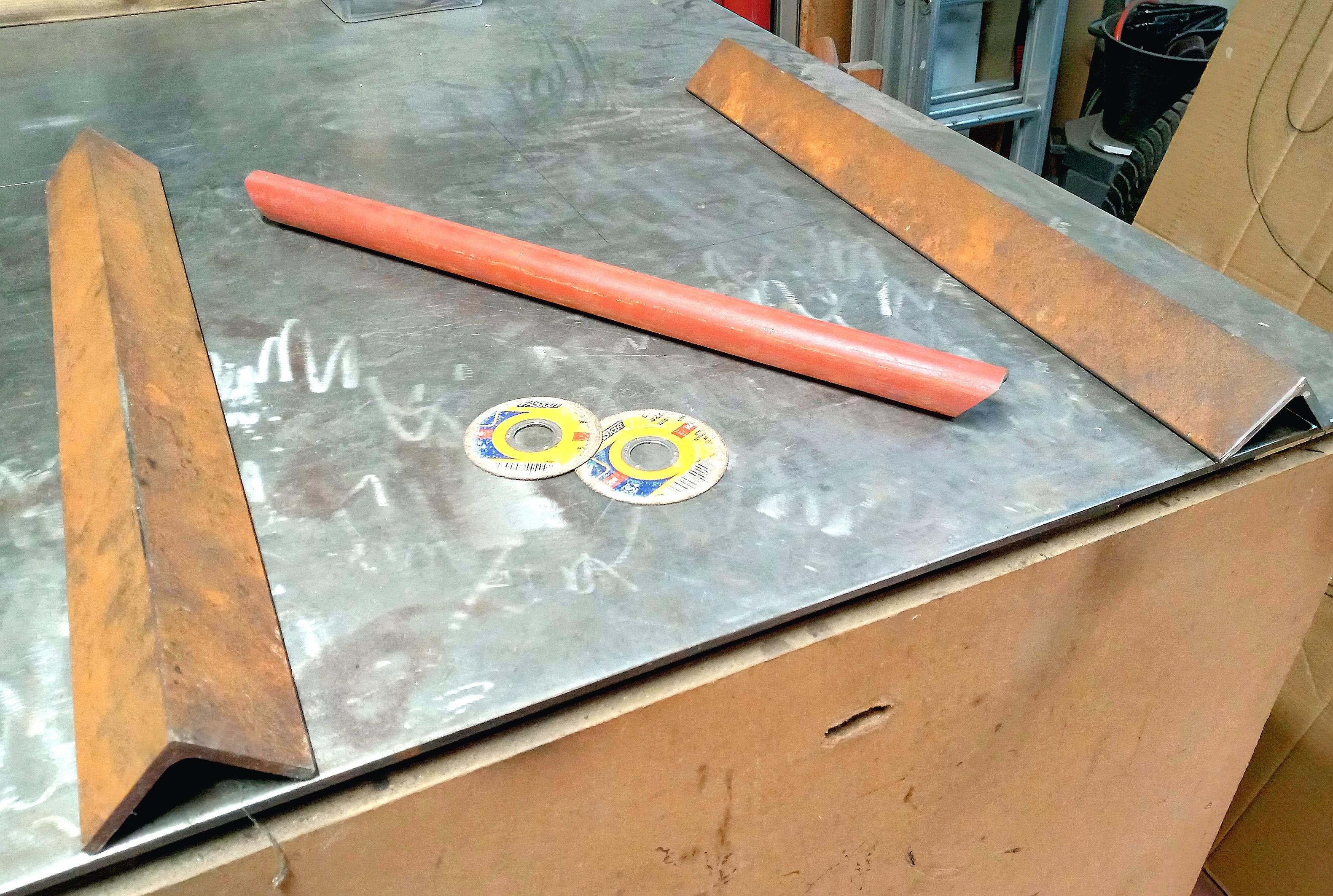
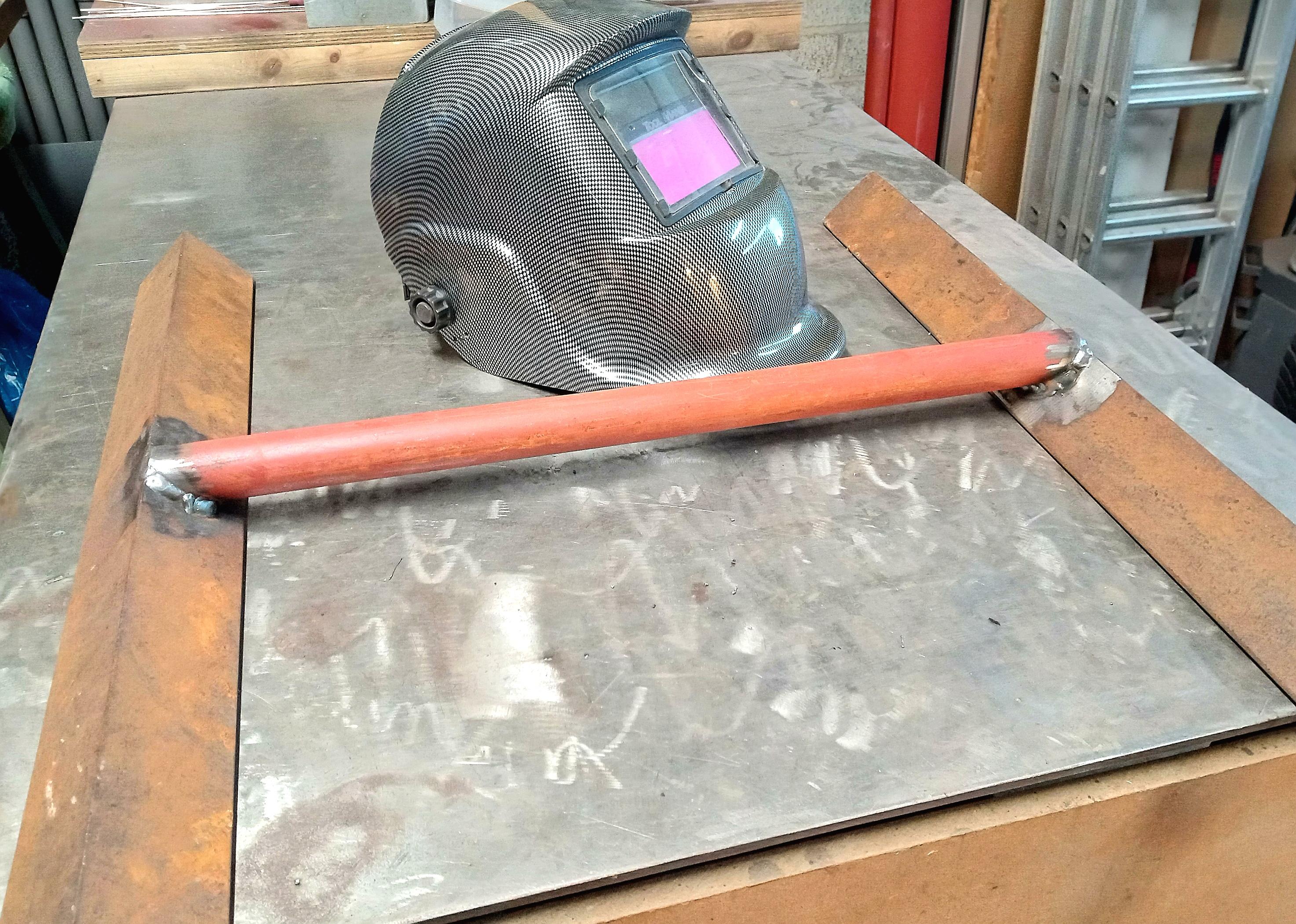
I cut my rusty piece of angle bar in half with an angle grinder and I also cut both ends of a pipe to approximately a 45 degree angle so the pipe could be welded to the angle bar.
I used a MIG welder to weld the pieces together to make a strong base that could act as the perch for my bird.
Make the Legs
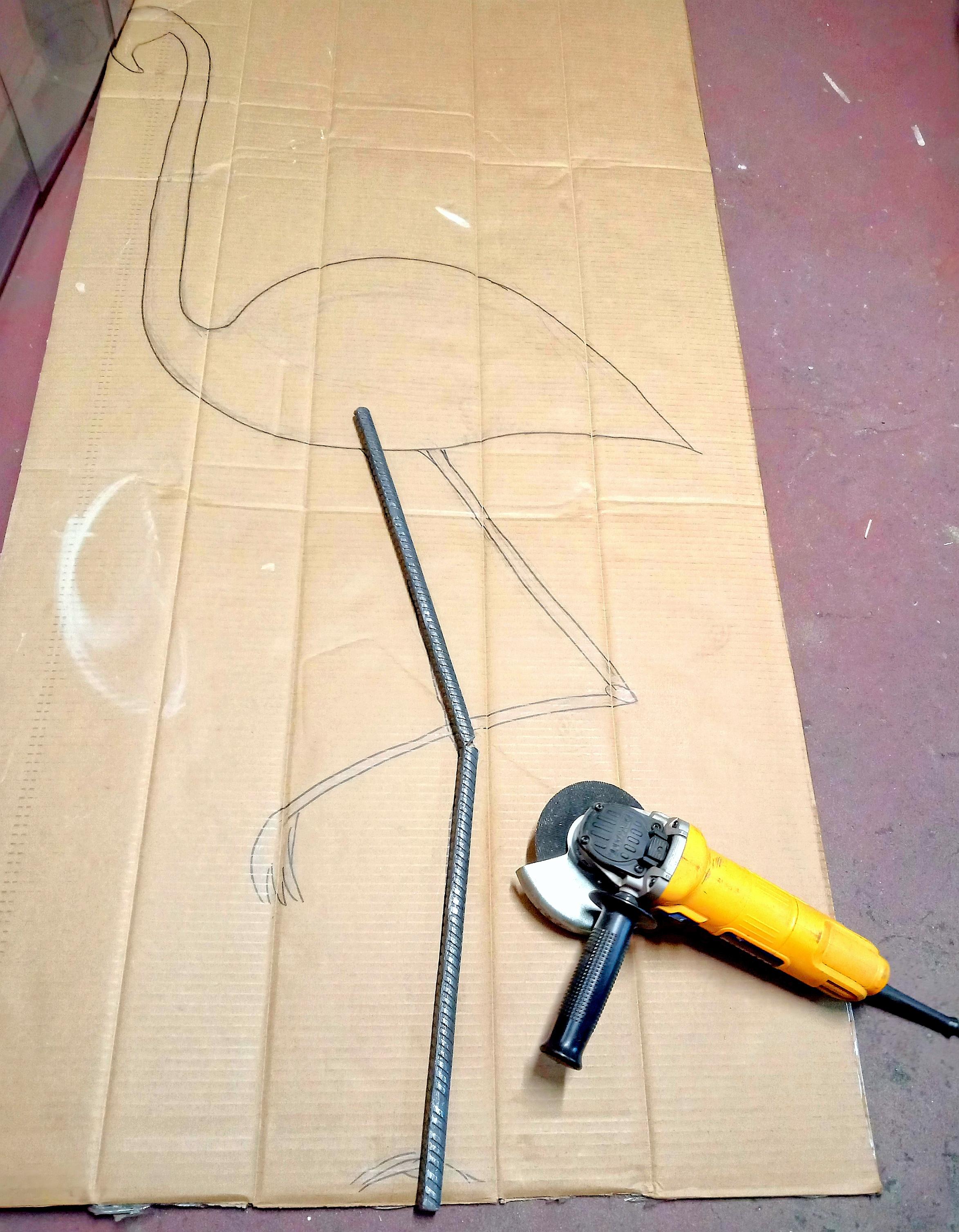
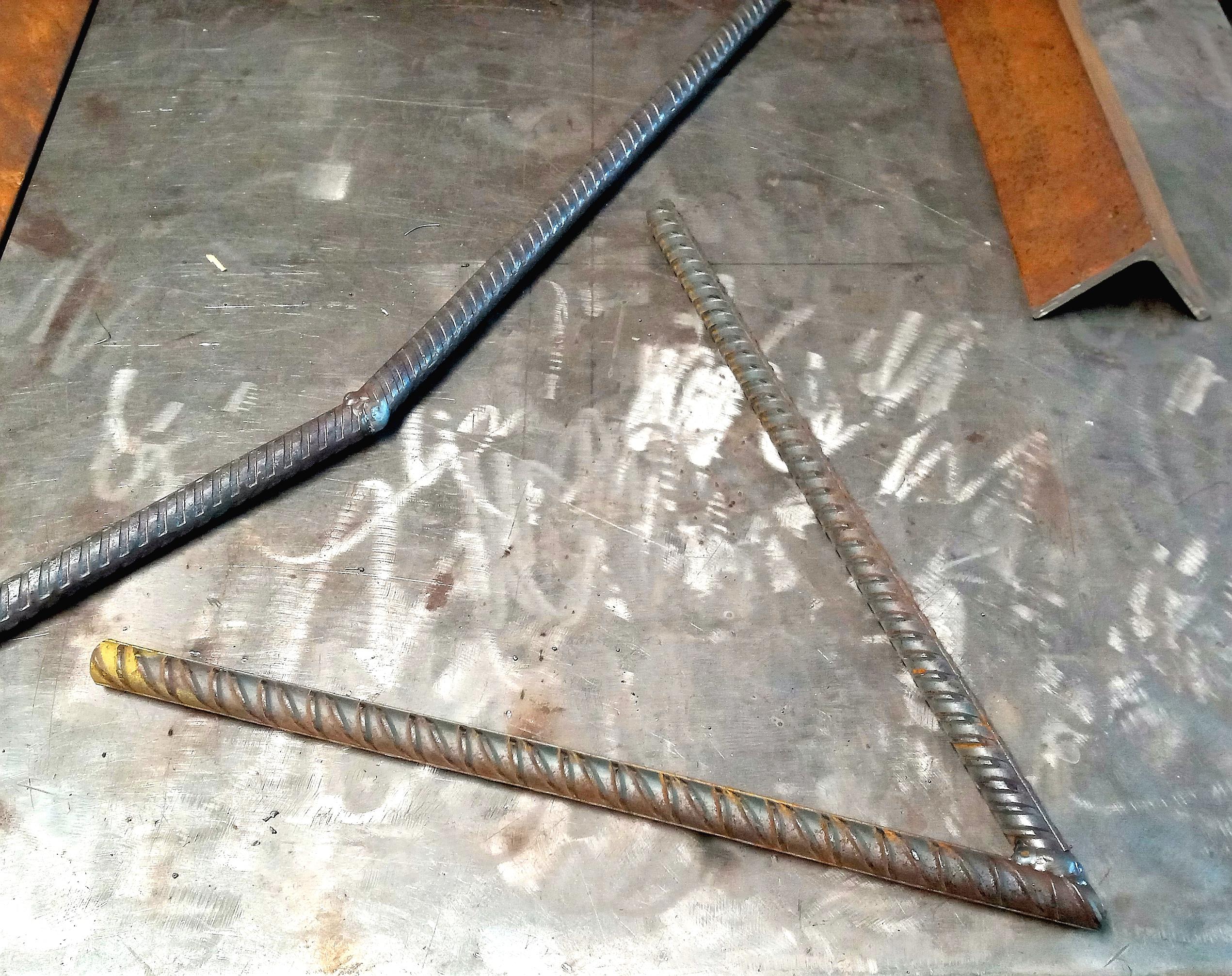
I used the thickest pieces of rebar that I had and used the grinder to cut the rebar to the length of the upper and lower legs of the bird. I checked that by putting the pieces on my cardboard template. Then I welded the upper leg to the lower leg.
Weld the Leg to the Perch
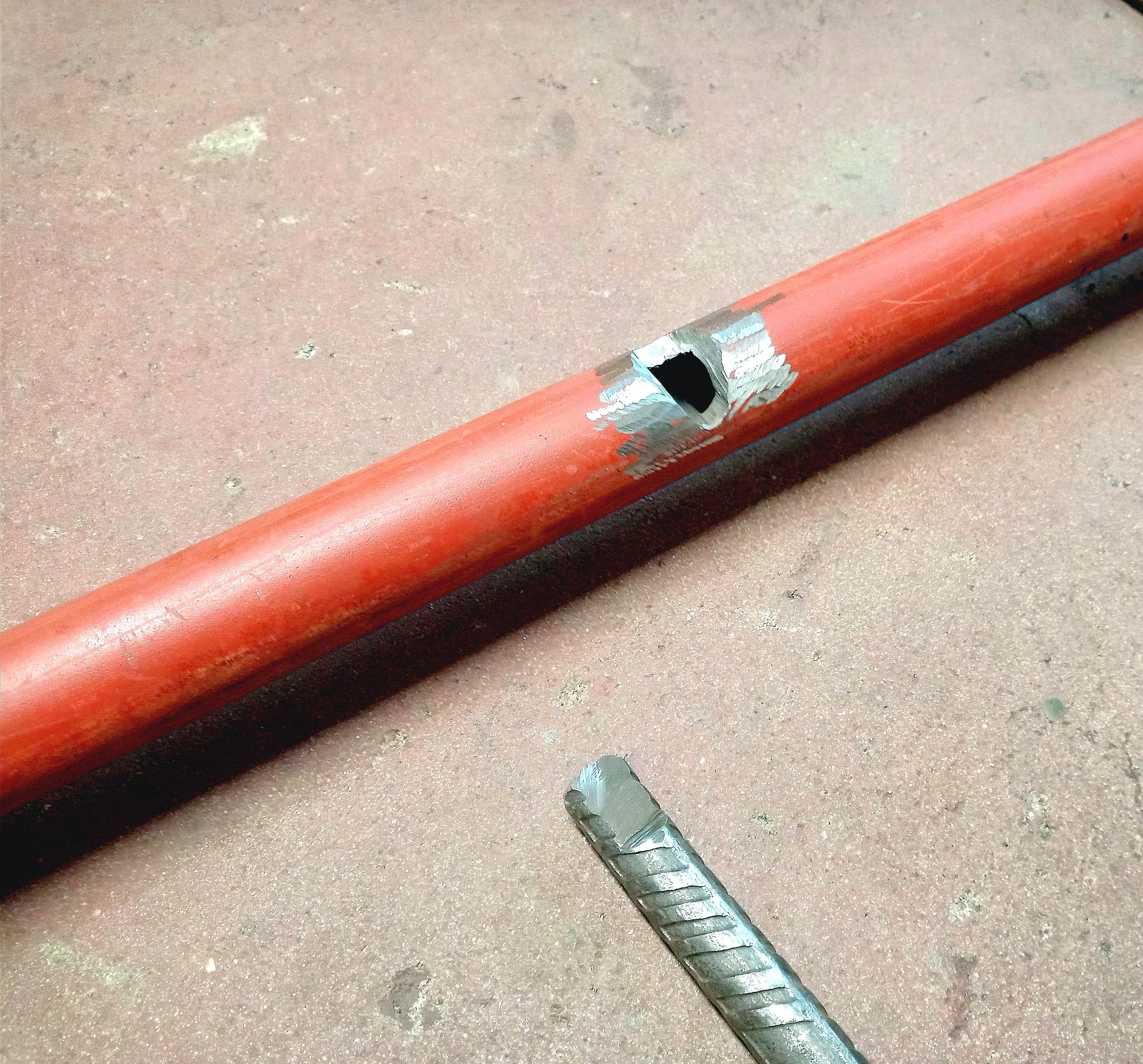
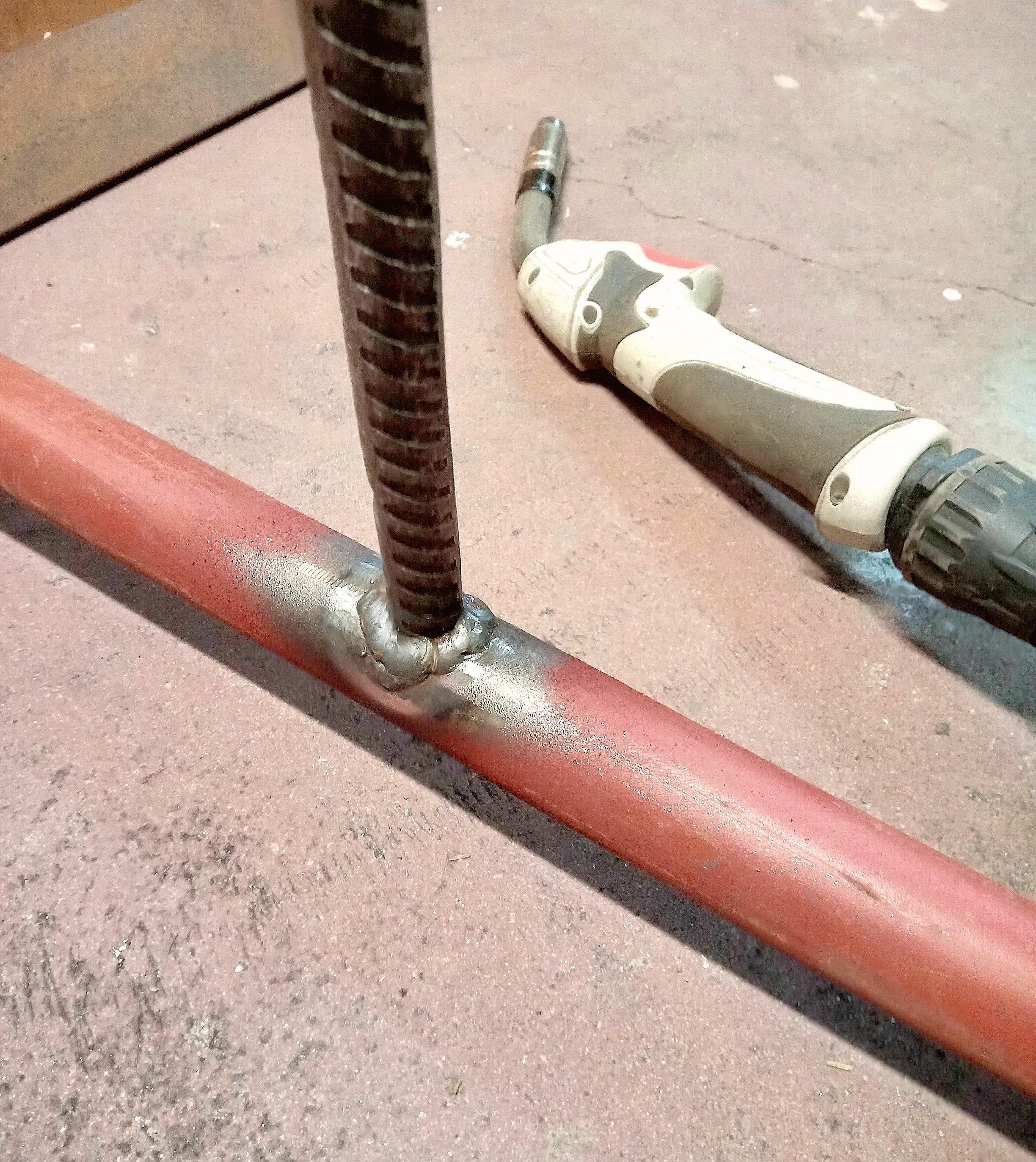
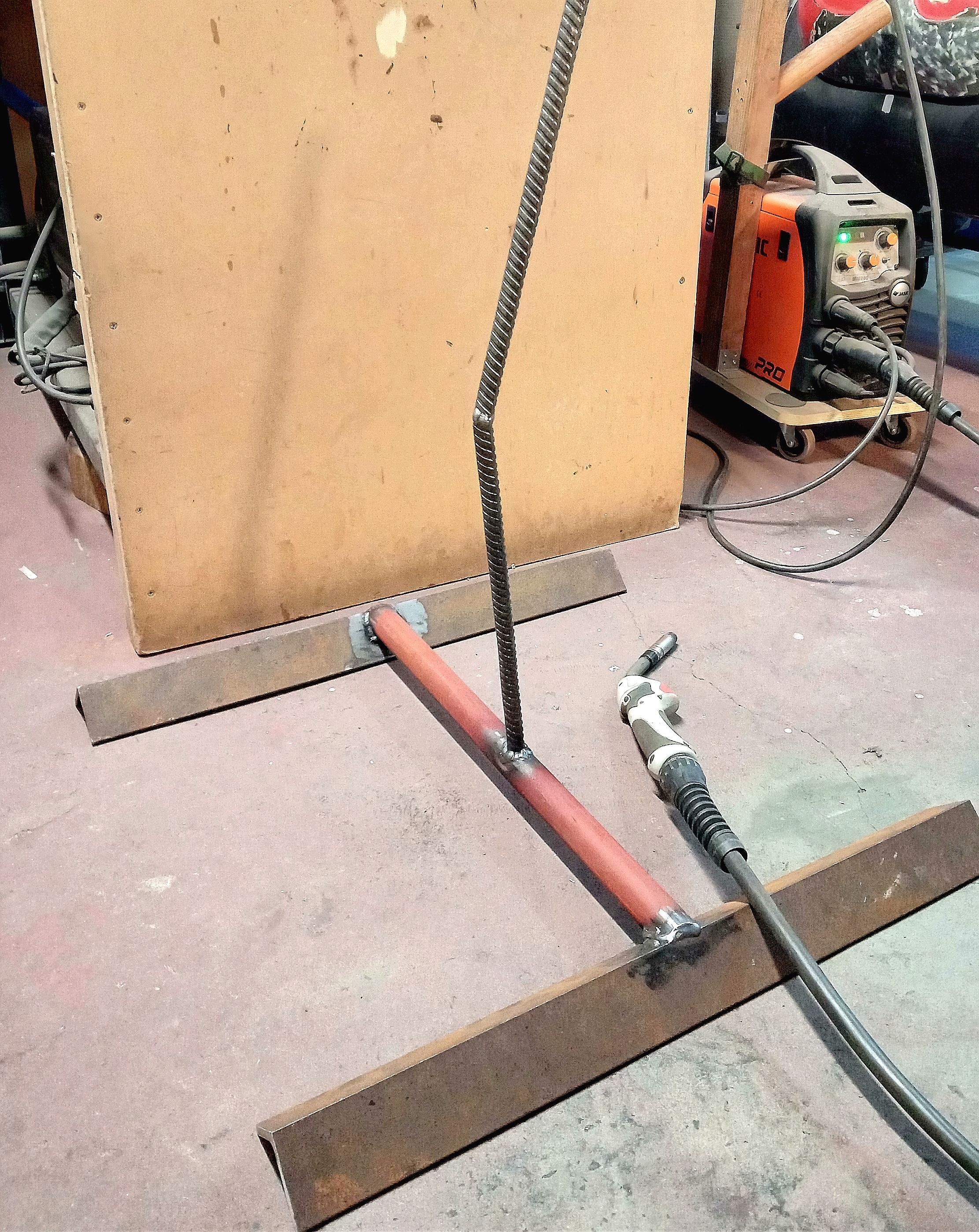
The bird will be standing on just one leg, so that leg needs to be strongly fitted to the perch. I cut a hole in the pipe and placed the rebar of the leg into that hole and then welded it fully together.
Test the Strenght
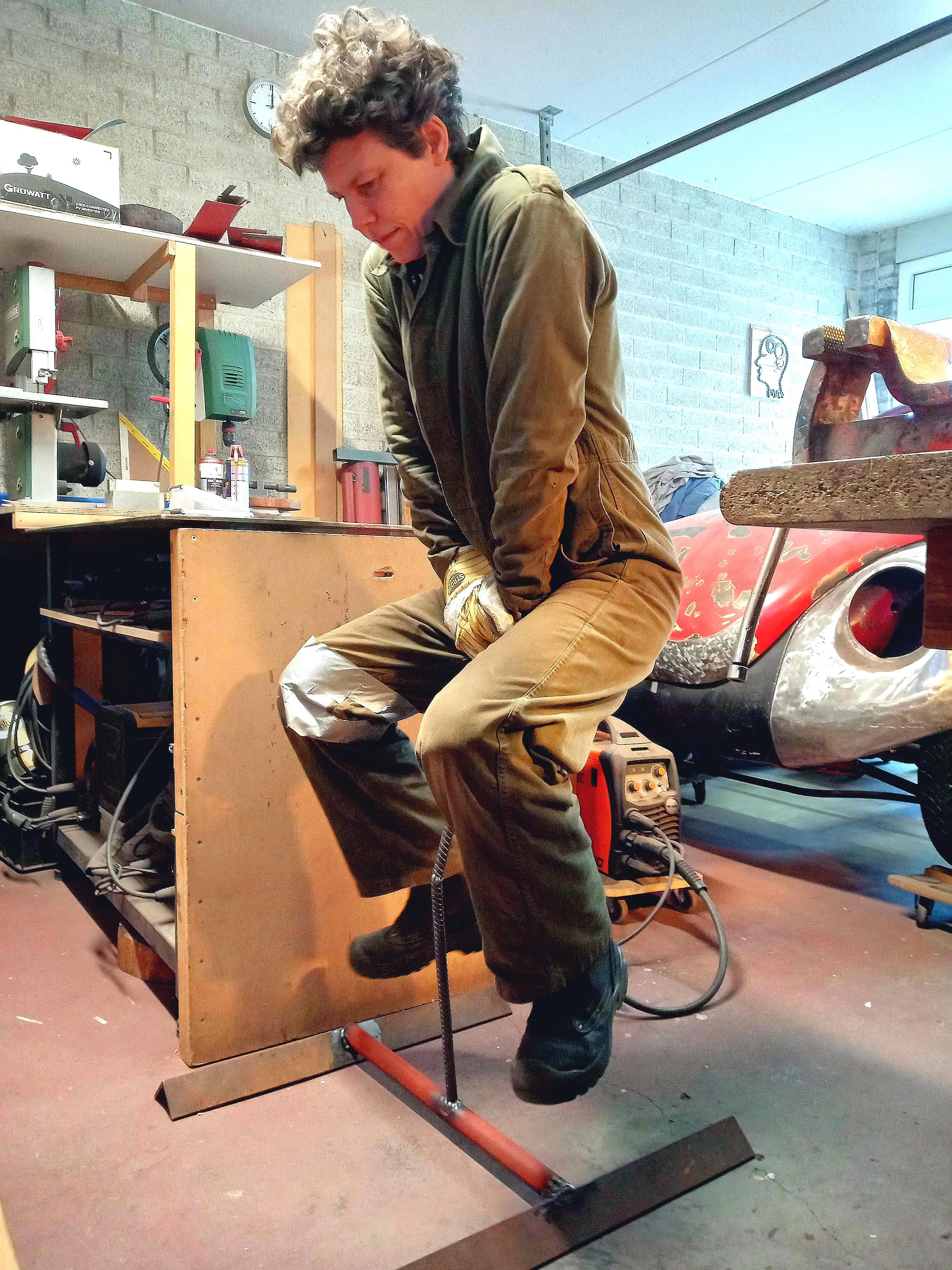
I wanted to confirm that this construction could support my weight, but the top of the leg is quite small so it would hurt a lot if I tried to sit on that point. Therefore I placed a small metal cup over the top end of the leg and put my hands on the cup and lifted my legs of the floor while balancing on my hands. It worked!
From Trampoline to Bird
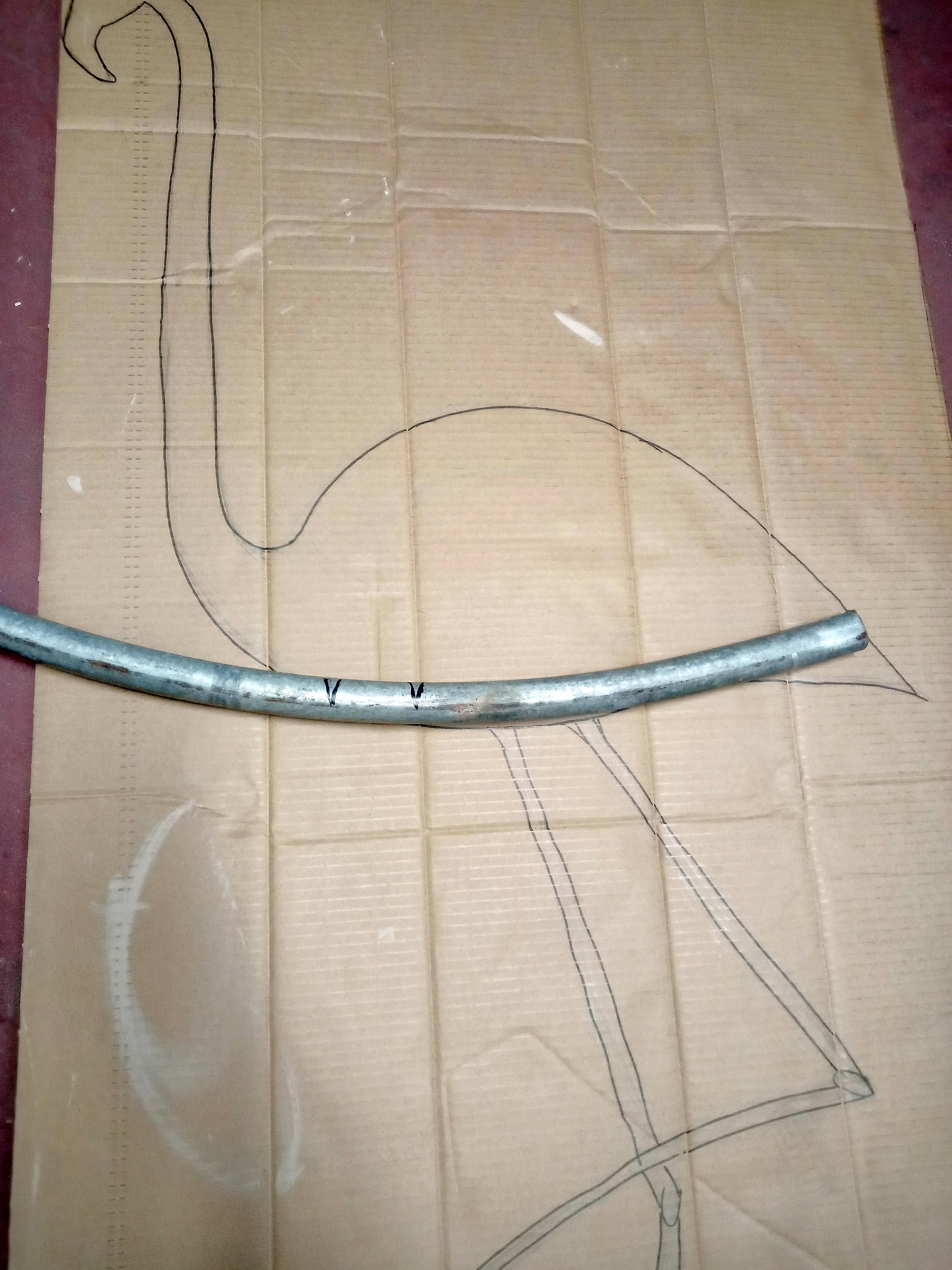
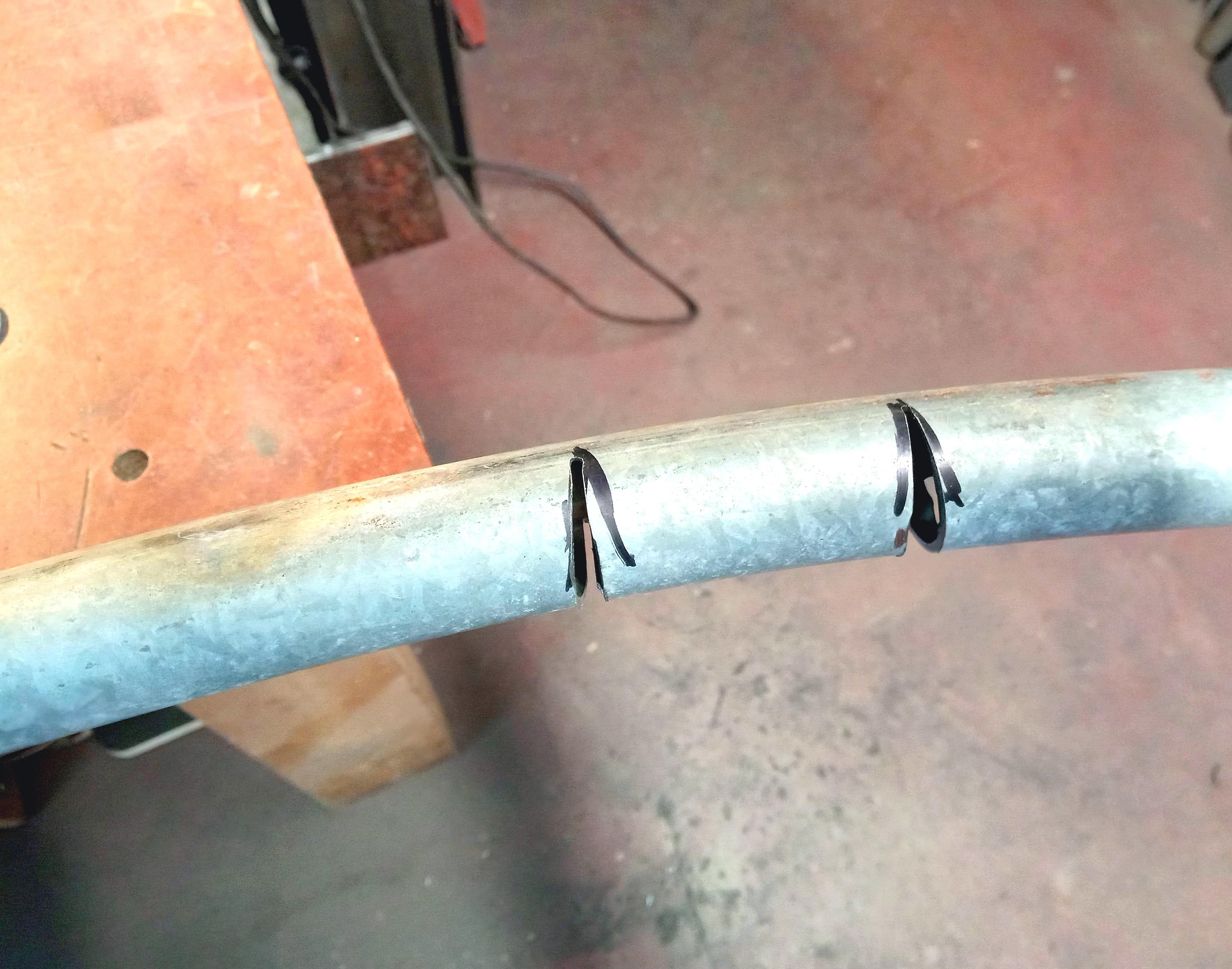

The two pieces from an old trampoline are basically a piece of pipe that is already bent. But I needed it to bend more to follow the body and neck of the bird. I made several pie-cuts to remove some metal and that allowed me to bend these pieces further. Make just one or two cuts at the same time and check the result against the cardboard template. It does not have to be exact as long as it keeps looking like a bird.
Weld the Pie Cuts Up Again
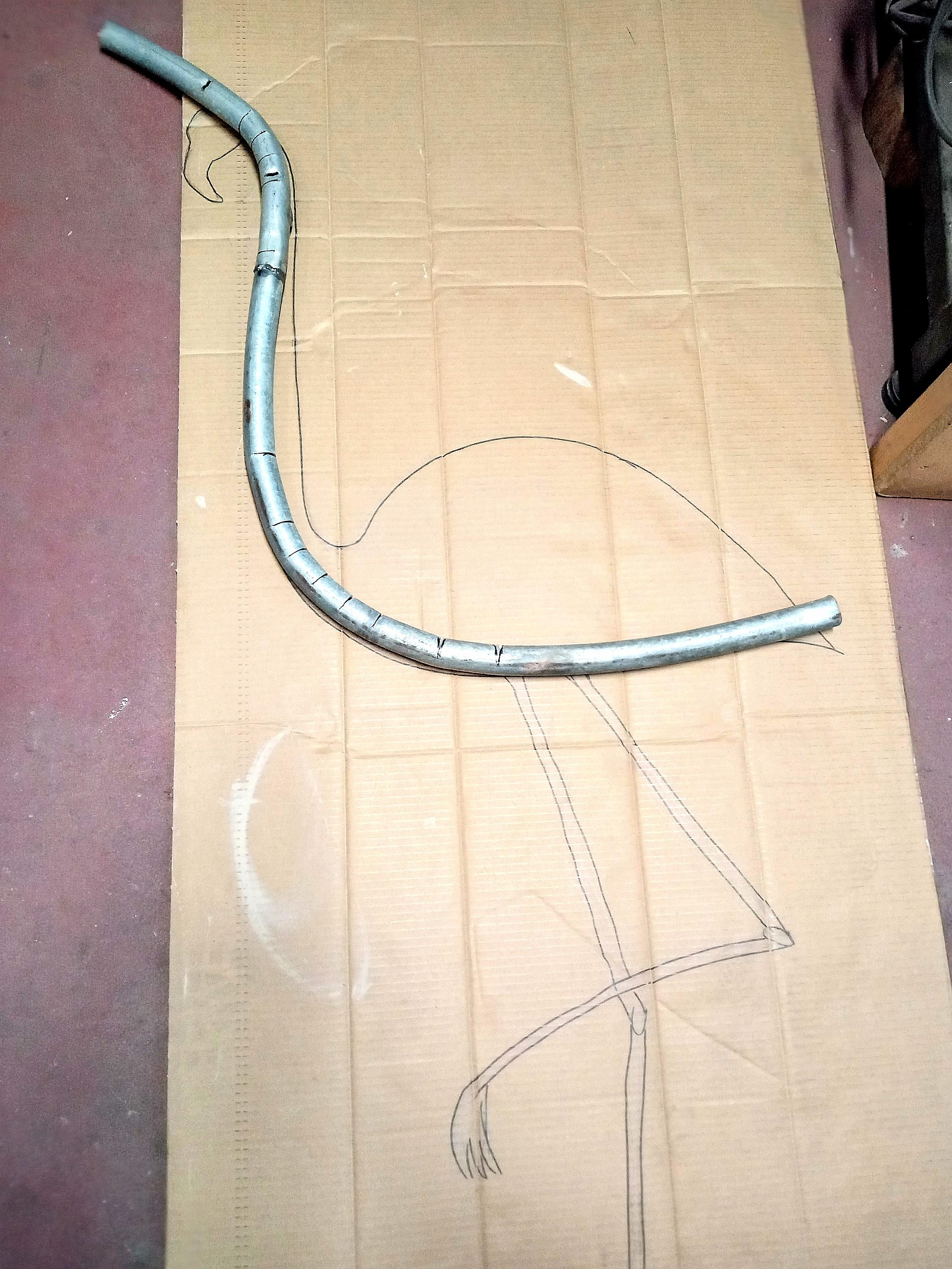
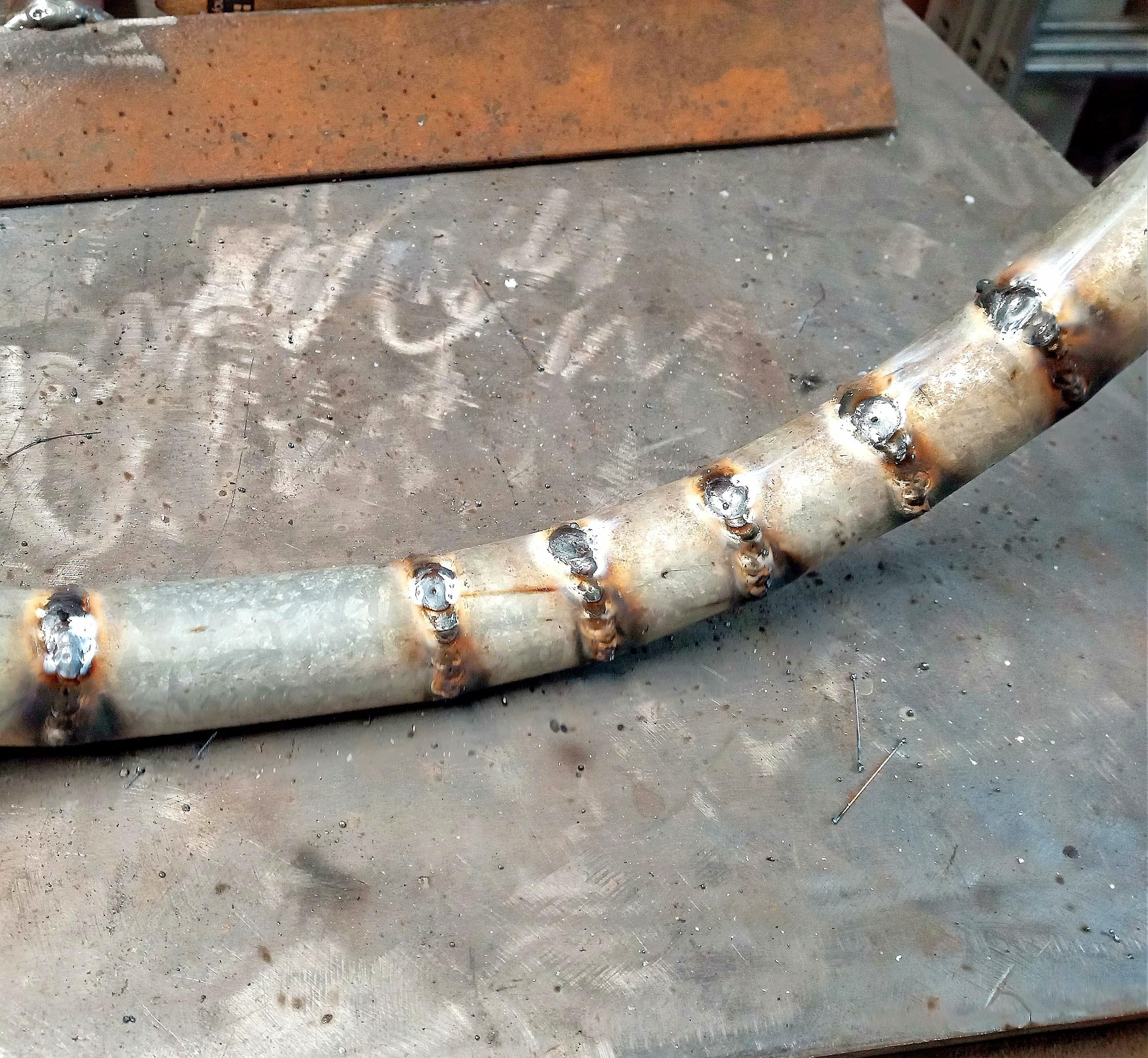
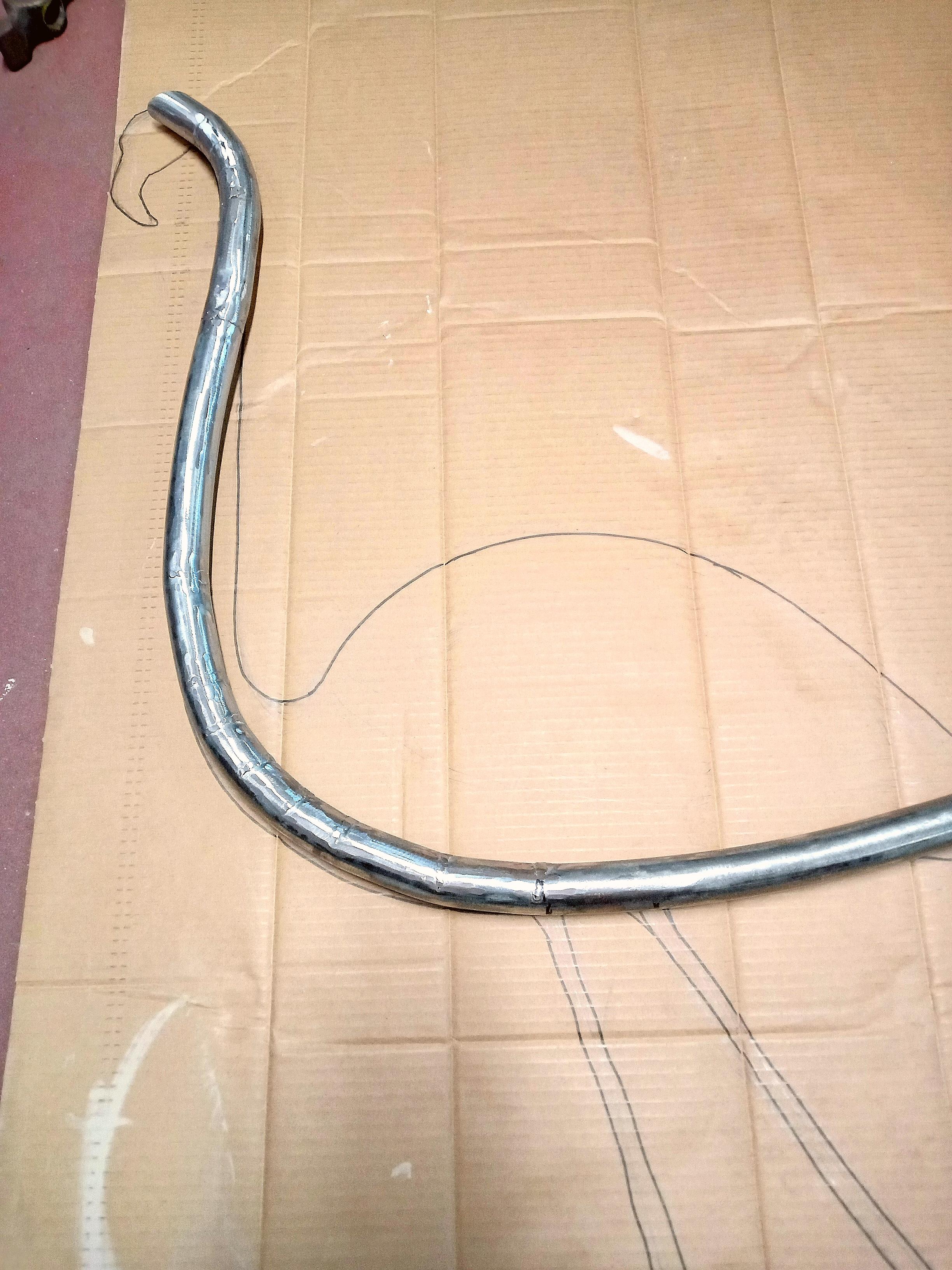
When I was happy with the shape I used the MIG welder to weld up all the cuts that I made and also the gaps for the springs of the trampoline that were there already. After welding I used a grinder to make the pipe clean and smooth. (I also removed the galvanised layer from the pipe in the process, so I can let it rust in the near future.)
Weld the Body to the Leg
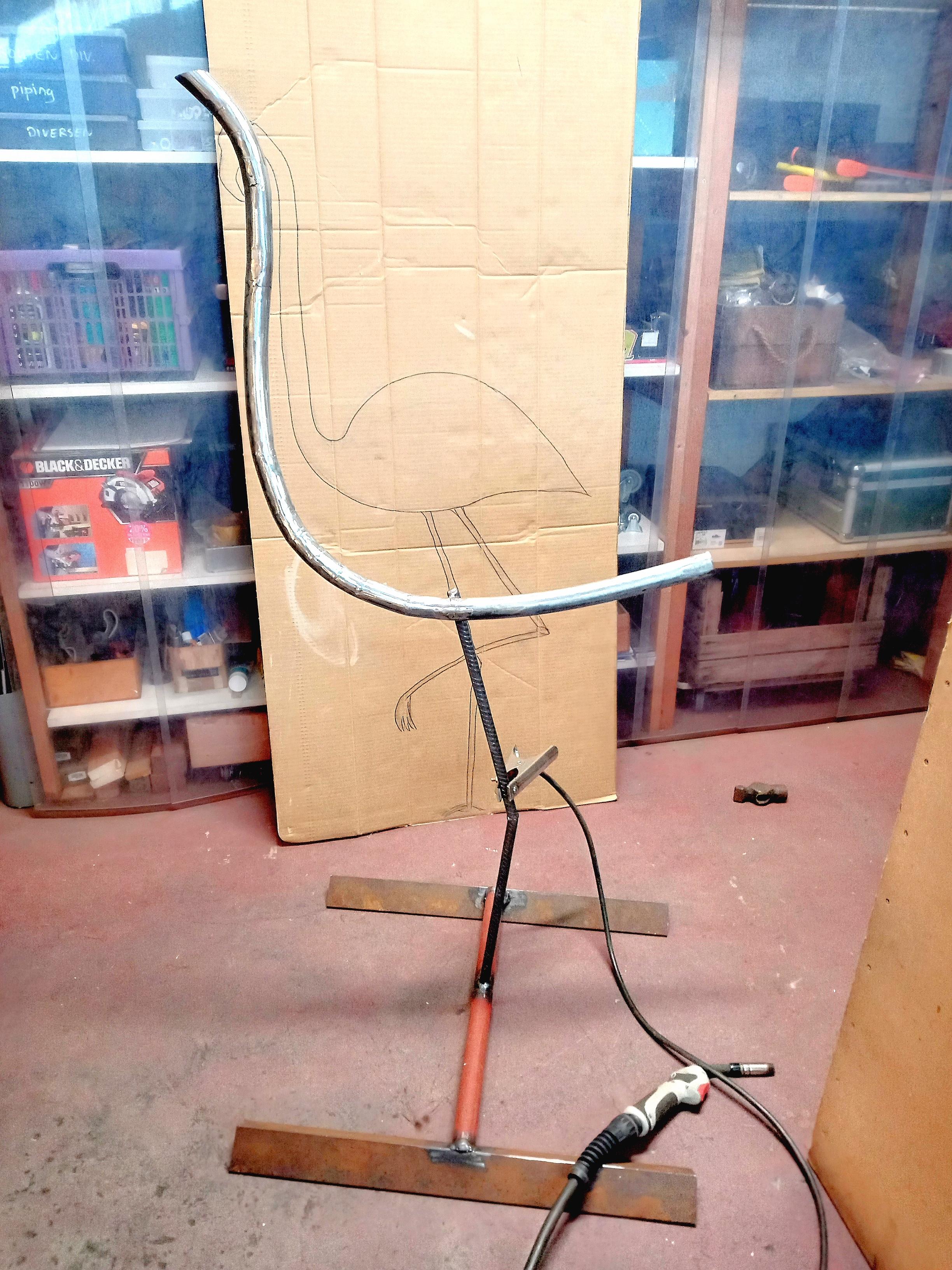
I welded the body to the leg of the bird at the position as indicated on my cardboard template.
Safety remark: This weld should be strong enough to support my weight when I am sitting on the bird. If this weld would suddenly rupture while I am sitting on the bird, I would fall down and worst case the leg would pierce me. I therefore made sure that this weld was done properly and I will only sit on the bird with a sort of saddle as protection against this risk.
Making Feathers and Toes
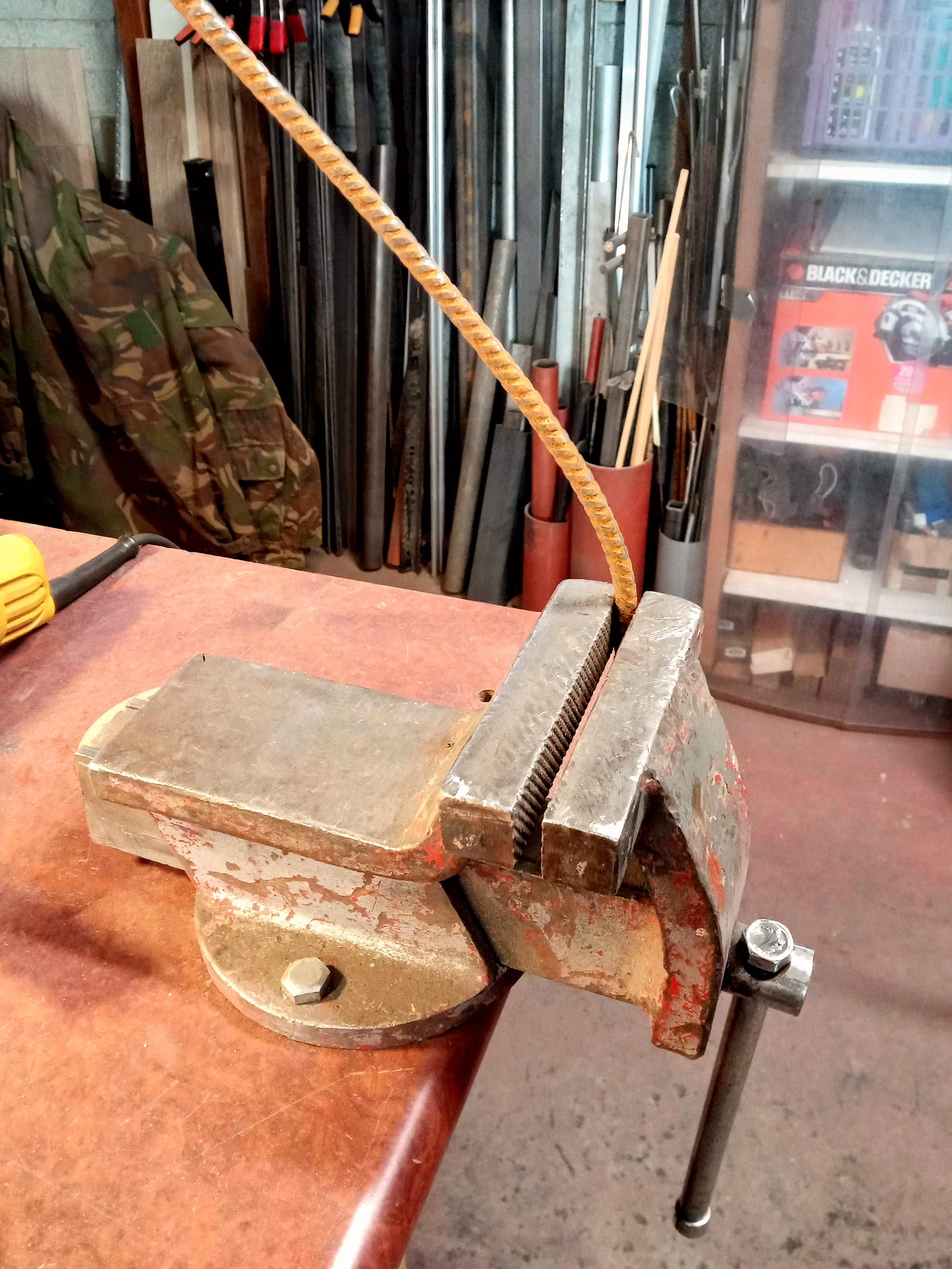


I bent the thin pieces of rebar by clamping one end in the vise and just using my hands to bend the other end over. Then I cut some pieces short that would form the toes of the bird and the other pieces I left longer so they could act as feathers.
Adding the Toes and Feathers
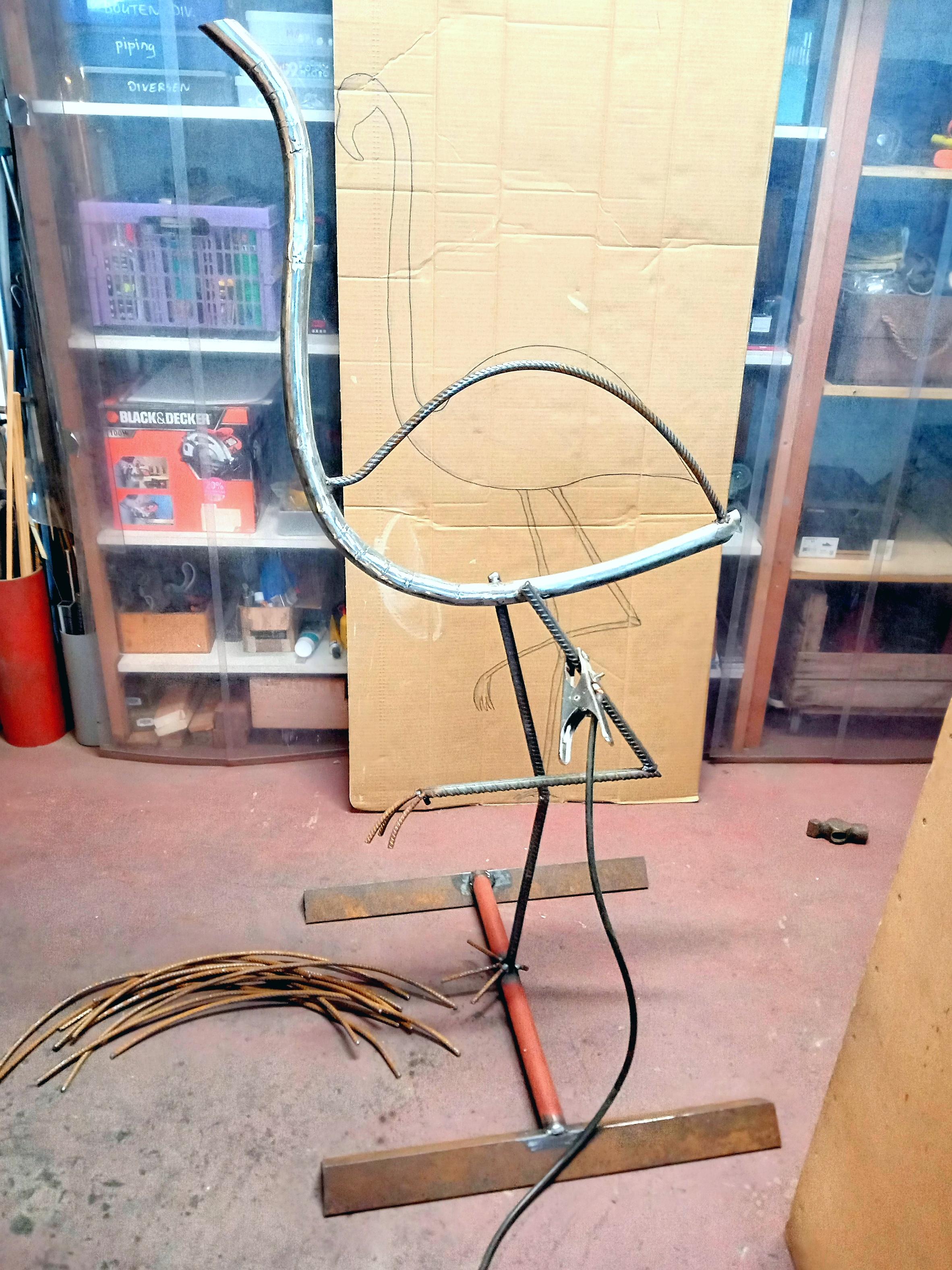
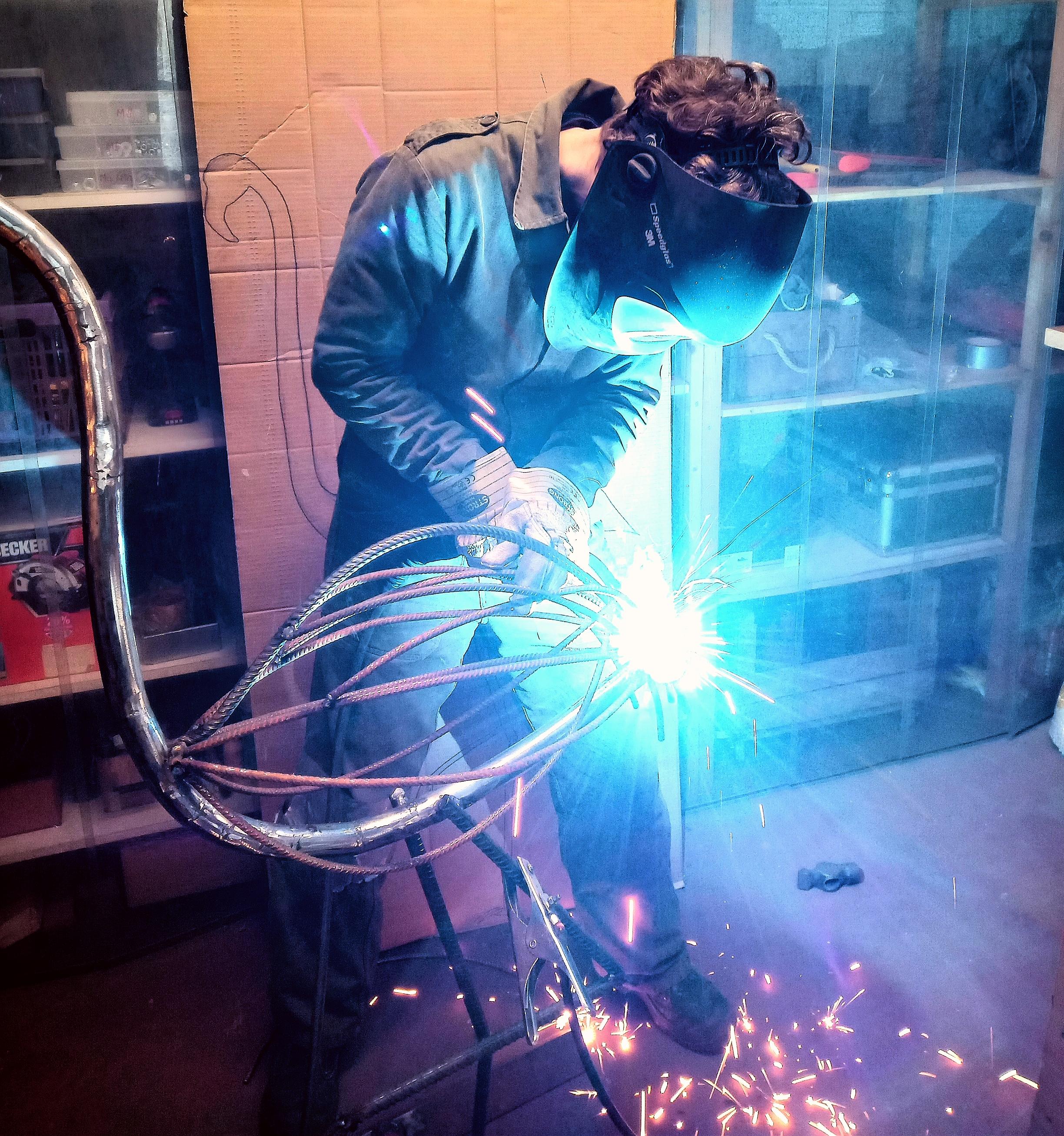
I welded the bent pieces of rebar to the bird, just one at a time while checking if it still looked like a bird.
Adding the Head
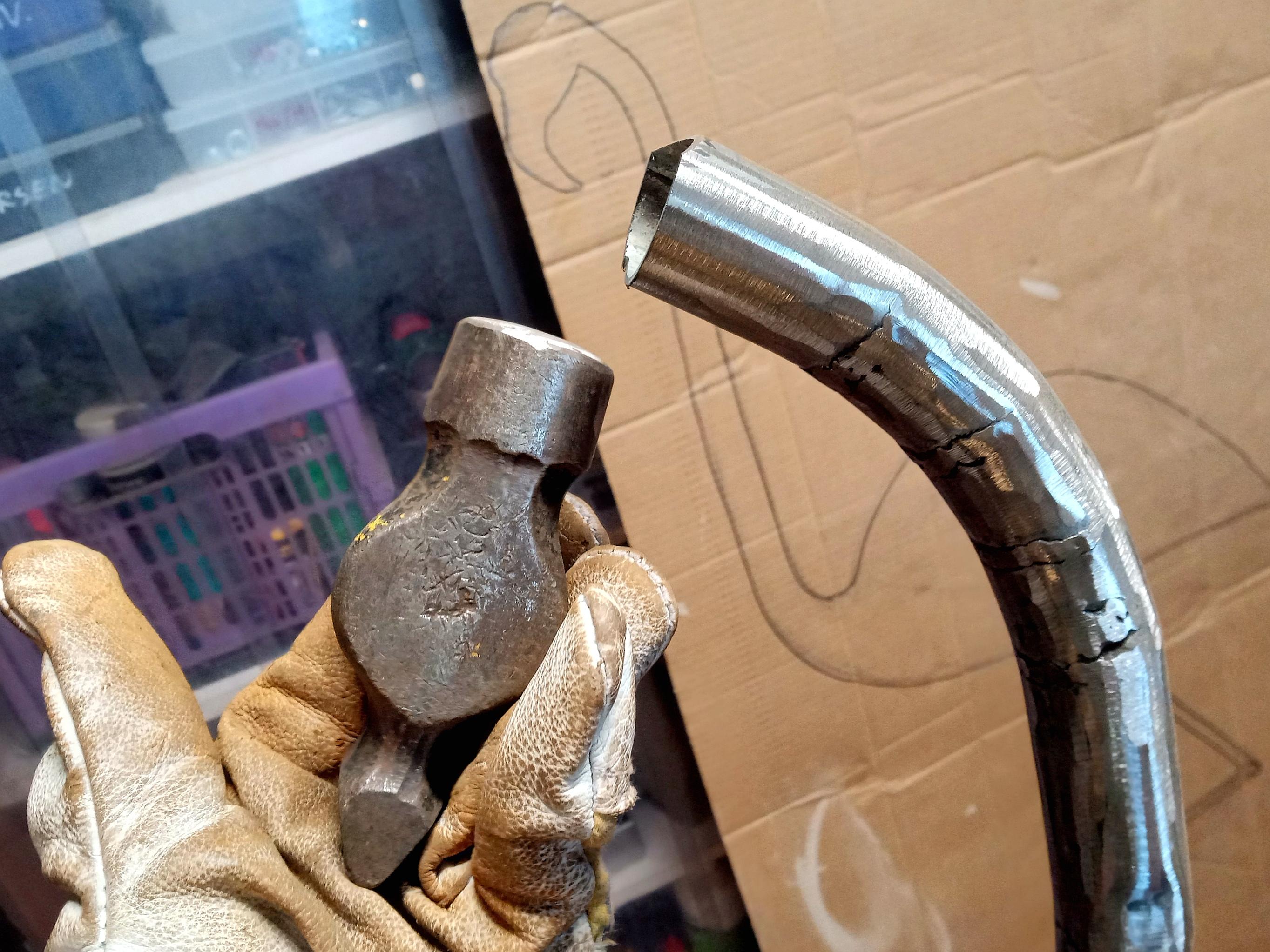
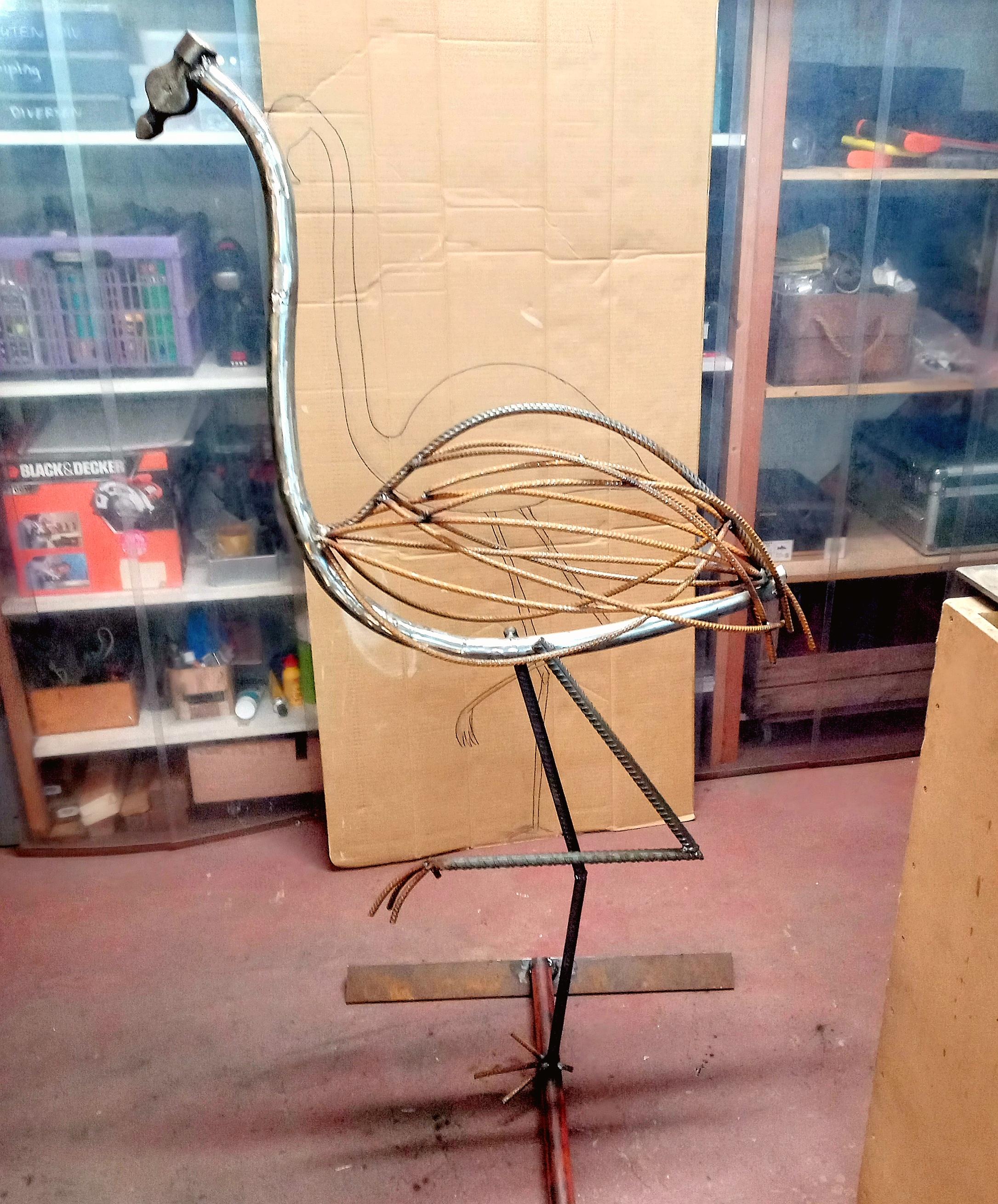
The old hammer head looks a bit like the head of a bird, so I just welded that piece in place and I am quite happy with the result.
From close up you can see marks of the welds from the pie cuts. I could have spent a lot of time trying to get that perfectly smooth, but since I want the metal to rust anyway, it does not have to be perfect.
Moving Her Outside
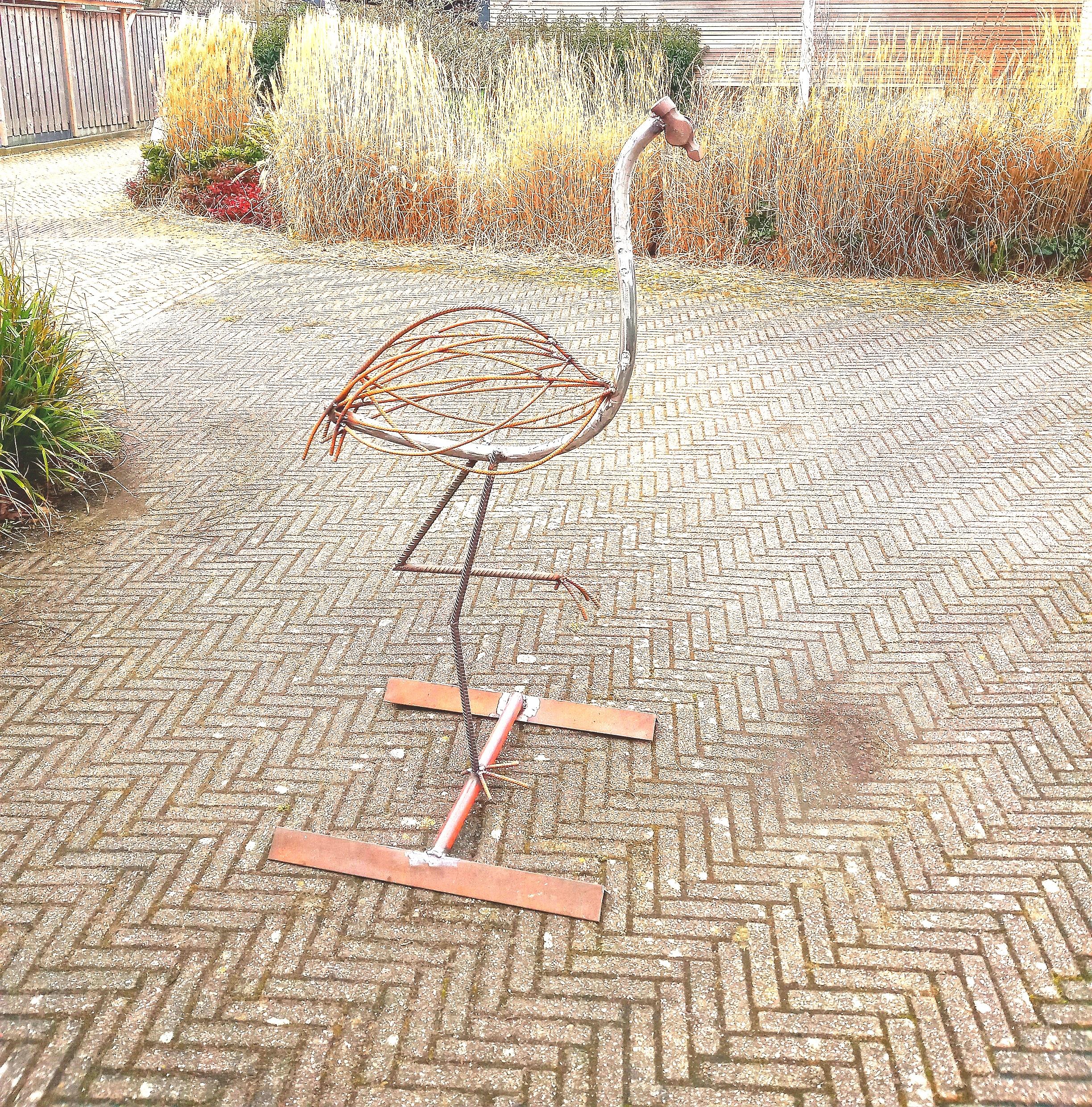
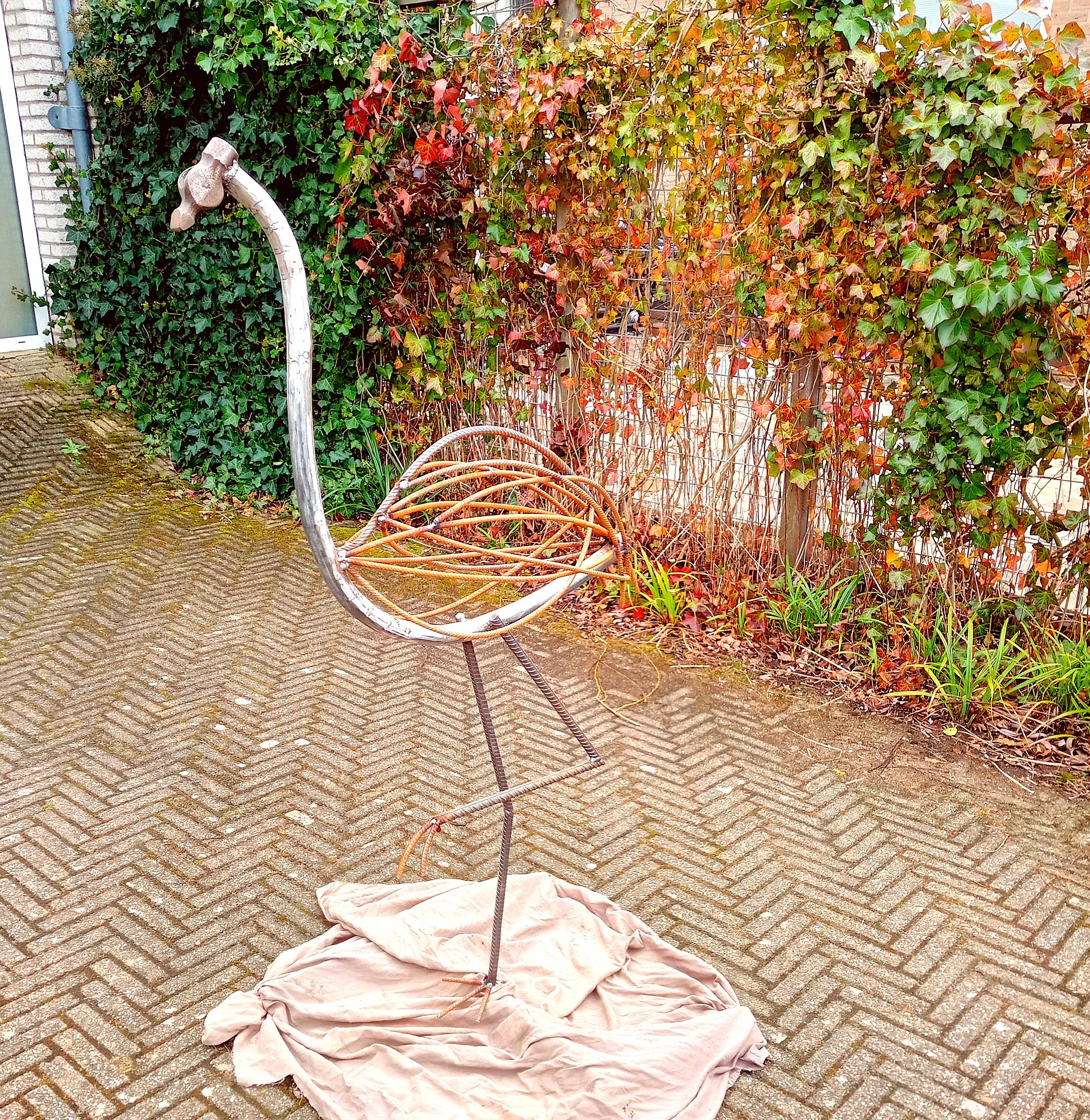
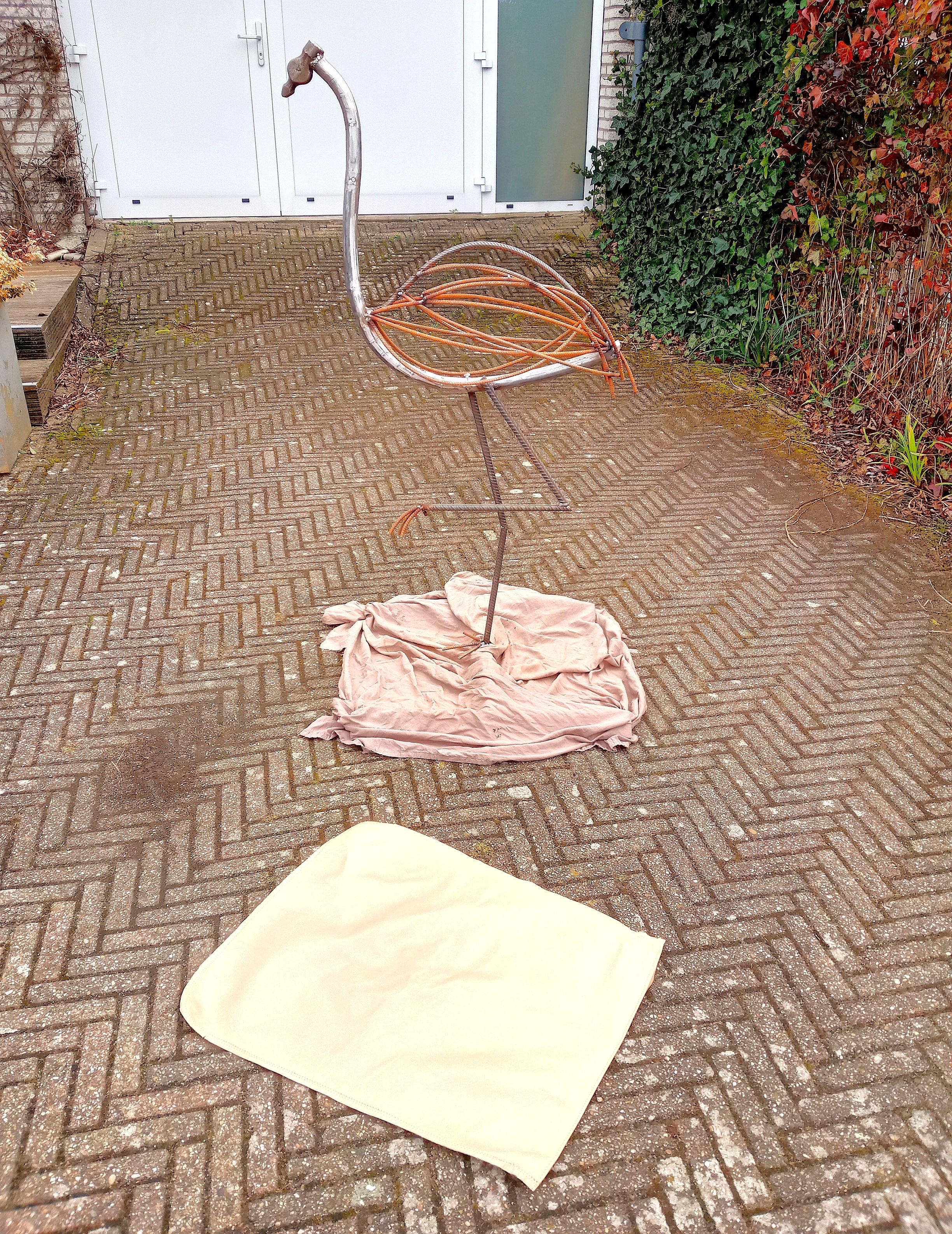
Now that the welding was done, I move the bird outside and covered the perch with some old rags so it looks more like she is free standing.
Then I remembered that I had an old piece of leather (from an old chair) and I decided to see if I could make some kind of saddle from it.
Saddling Her Up
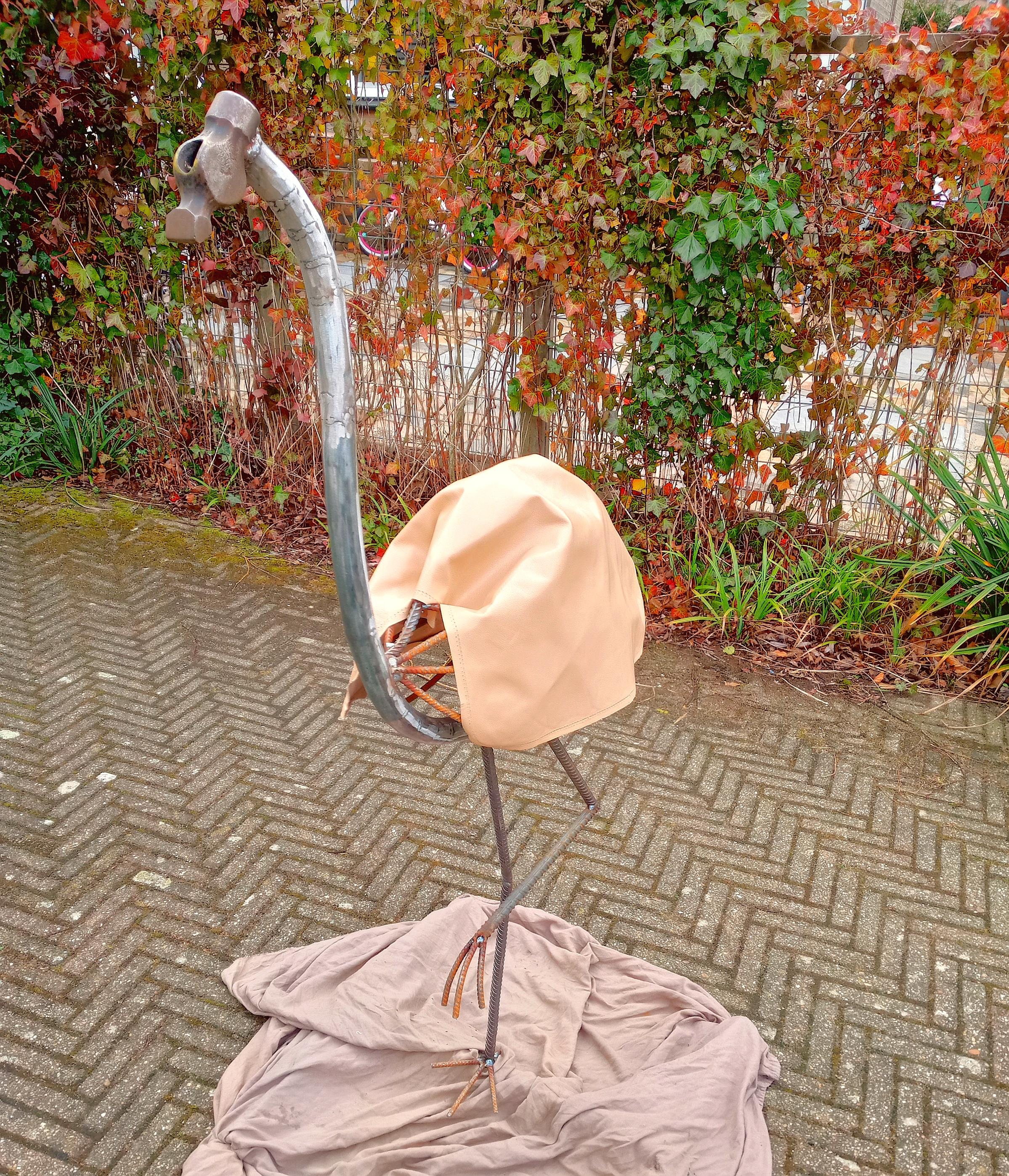
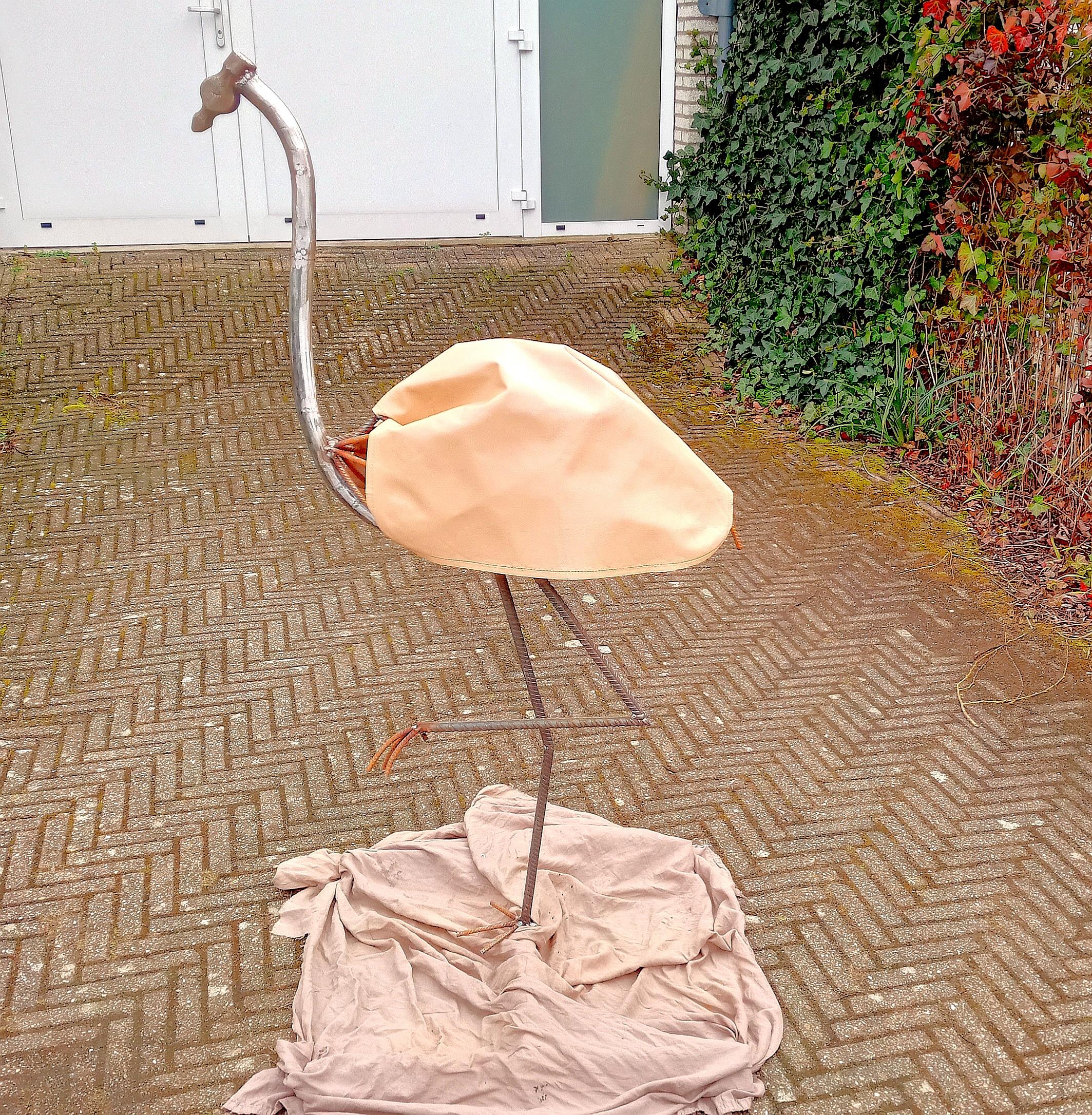
To my big surprise the leather from the old chair fit quite well without any cutting or sewing. I just pushed a bit of the leather inwards between the rebar and the saddle stays in place by itself.
Sit on the Bird
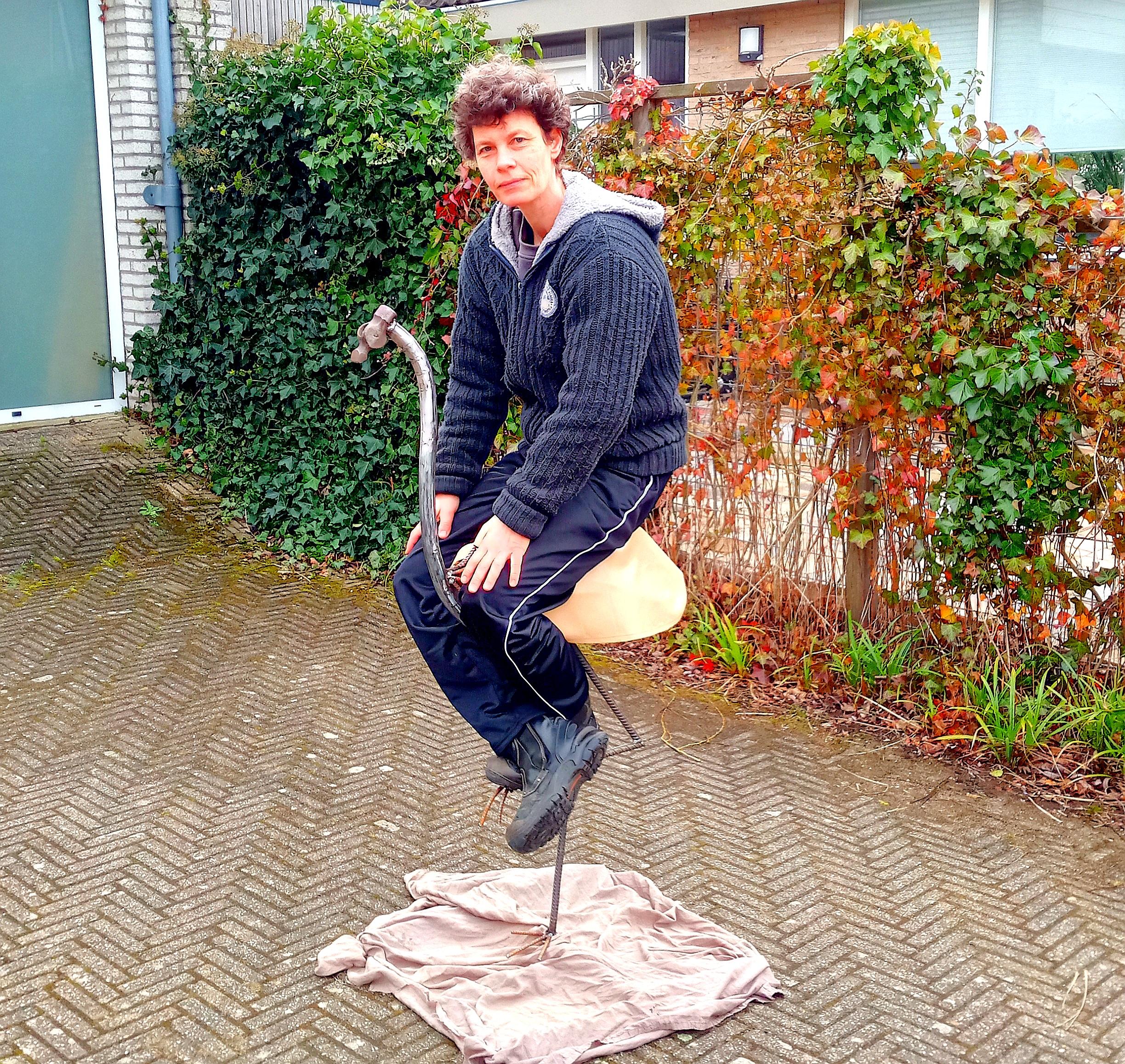

With the saddle in place partly for comfort and partly for safety (see remarks at step 8), I climbed on the flamingo. It can easily support my weight and the one bent leg of the bird acts as support for my legs, so I can definitely sit on this stool.
It is not very comfortable without a cushion, but it is also not as bad as you would expect.
Letting Her Rust
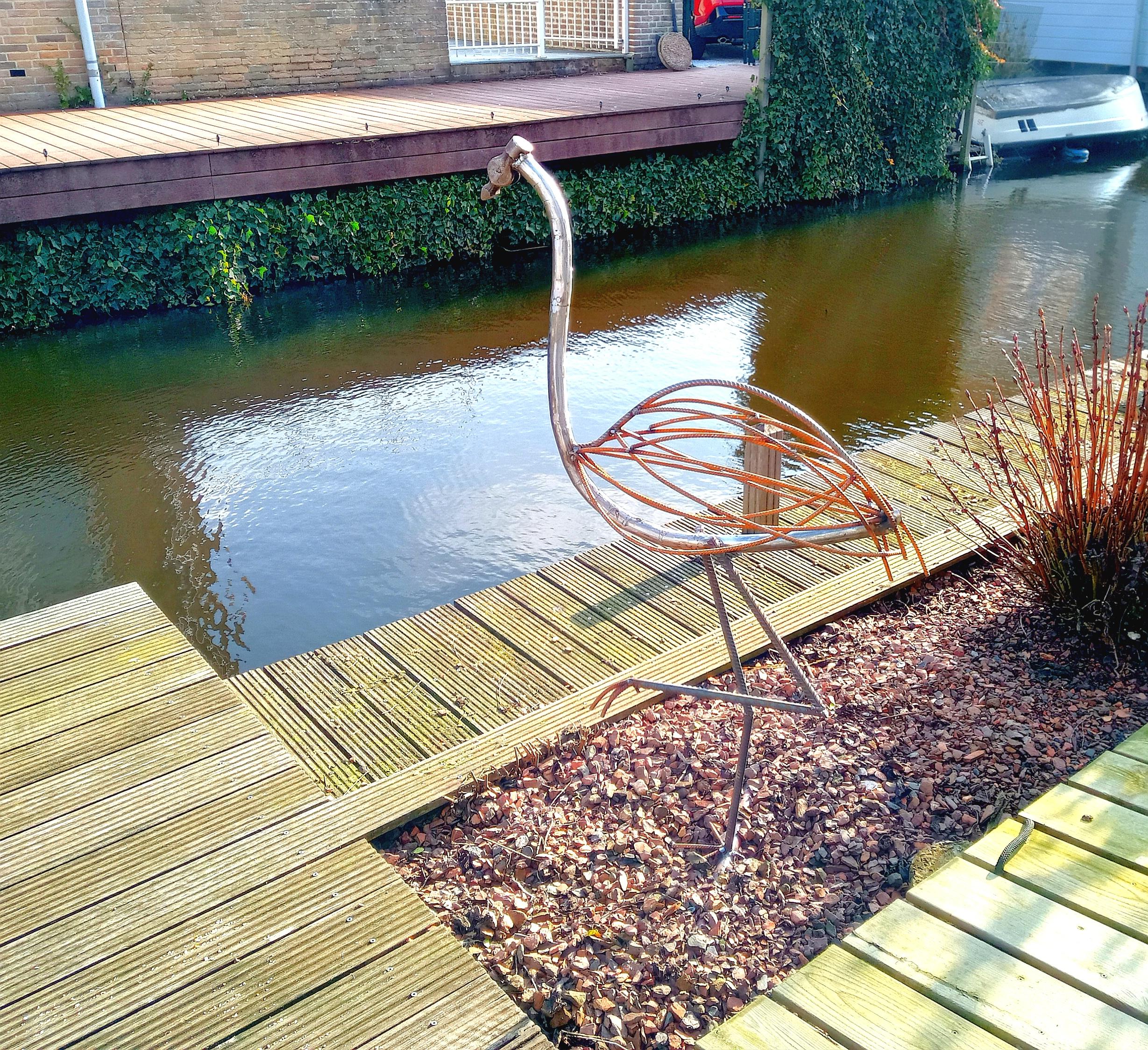
I moved the flamingo to my back yard and placed her outside in the weather. This way the shiny metal will soon start to rust and blend in with the parts that were already rusty.
If I want to use her as a stool during a nice summer day, I can just move the bird to any location where I want to use it. The total weight is probably around 15 kg (30 pounds) so it is not too difficult to move around while it is still stable enough to keep standing even in conditions with strong winds.