Elevate a Plain Cement Foundation With Faux Cobblestones
by eyewalk in Outside > Backyard
1854 Views, 18 Favorites, 0 Comments
Elevate a Plain Cement Foundation With Faux Cobblestones
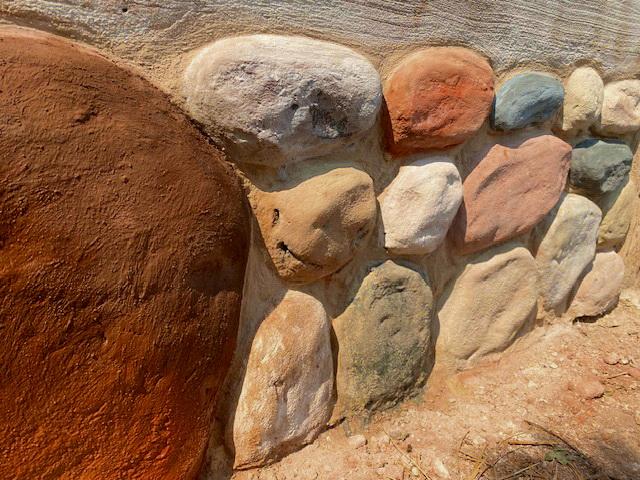
Cement is an amazing material, but sometimes a flat cement plaster finish just doesn't cut the mustard. If you're looking for a new look, but one that's classic at the same time, try faux cobblestones on:
-the foundation / parging / wainscotting of your home or another building (preferably yours or one you're allowed to work on)
-your front stoop
-a chimney
-etc.
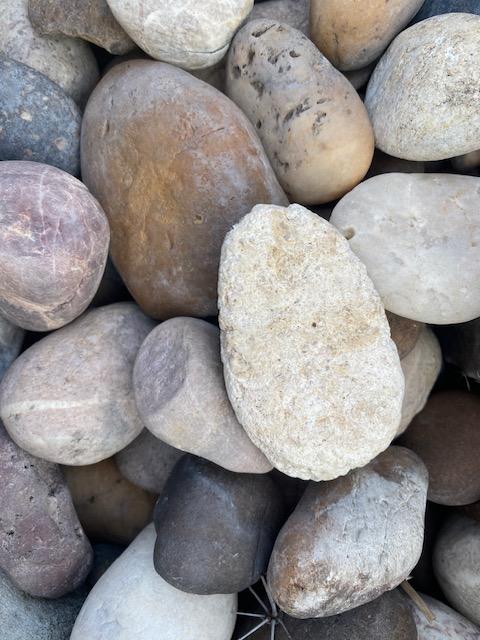
While it can take some time, this project is easy for even complete beginners to handle because a) we all know what rocks look like, and b) rough and random makes it turn out best.
I've broken things down into 4 main stages, but there are a ton of possibilities for shapes and finishes, so have fun and explore!
Supplies
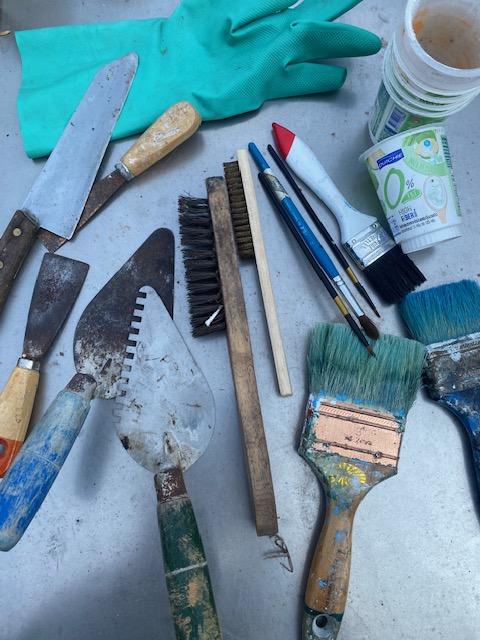
Here's what you may need...
Tools
a bucket or larger mixing vessel
a trowel, shovel, or hoe, depending on how much mix you'll make
an old, crusty knife / putty knives
wire brushes
paint brushes of various sizes (though apparently you shouldn't use your wife's good oil painting brushes!)
small cups or containers (yogurt cups work well)
mixing sticks (I used old bamboo chopsticks)
a water bottle with a hole poked in the lid
a mister / spray bottle
Materials
cement and fine sand (alternatively, you may be able to buy ready-mix for cement plastering, but I couldn't)
mineral pigments of various colours
hydrated lime plaster
clean water
PPE (Safety Gear)
thick rubber gloves (cement is caustic, and mineral pigments stain, so best not to get them on your skin)
eye protection (optional, or just be a hero and get sand in your eye like I did)
dust mask (cement, dust, and mineral pigments don't taste nice and probably shouldn't go into your lungs, not that I'm a doctor or anything)
Mix Your Material
Choose an area that has been finished with a cement-based mortar/plaster/render that you want to make look like it's made out of cobblestones. I'll assume you have the perfect place in mind, so let's get started.
Warning: If you've never worked with cement before, it's amazing, but it is a basic (alkaline) chemical with a pH of somewhere between 12 and 14, which is about the same as Drano. And you wouldn't put your bare hands in Drano, would you?
It will (chemically) burn your skin, but not right away, so you might think "I'm a tough cookie. I don't need to wear gloves!", only to find your skin coming off later in the day. Please be safe and don't touch it. If you don't want to wear gloves, fine, but only touch your cement mixture with your tools.
If you do get cement on your skin, you'll be OK. Wash it off promptly with lots of running water. If you feel like you got a long exposure, you can use a lemon or vinegar to wash it first, the acid help to neutralize the basic cement, but also use tons of water.
Mix Your Material
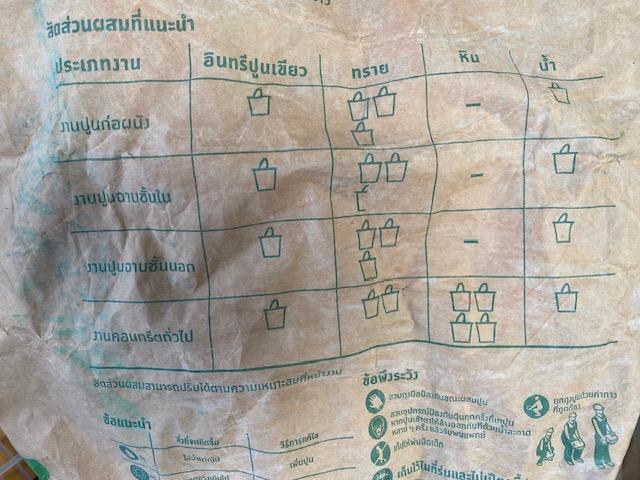
Call me a nerd if you like, but I always read the bag of cement I'm using and follow the mix it recommends. My cement is an all-purpose type commonly used for plastering brick and cement walls. For the plastering base layer, it says to mix:
1 part cement : 2.5 parts fine sand : 1 part water
Your product may differ.
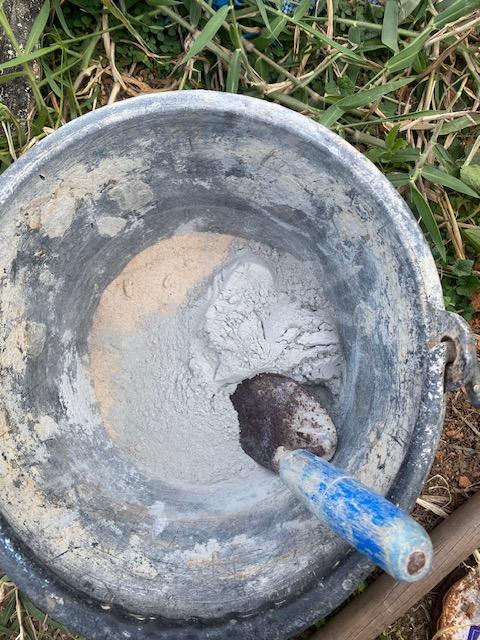
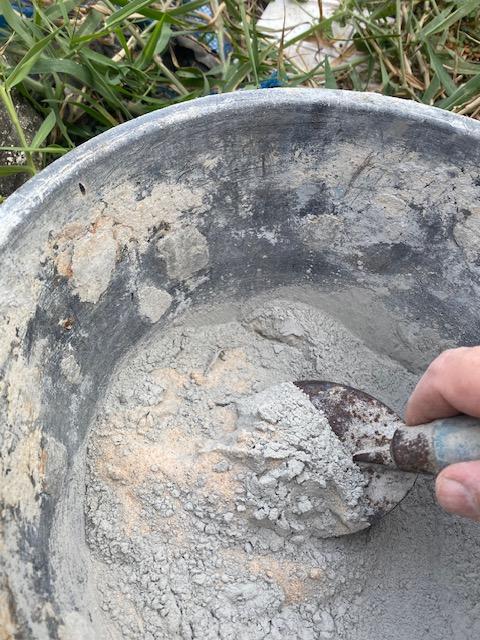
So, first measure your dry ingredients and mix them together in your bucket or larger container, like making a cake.
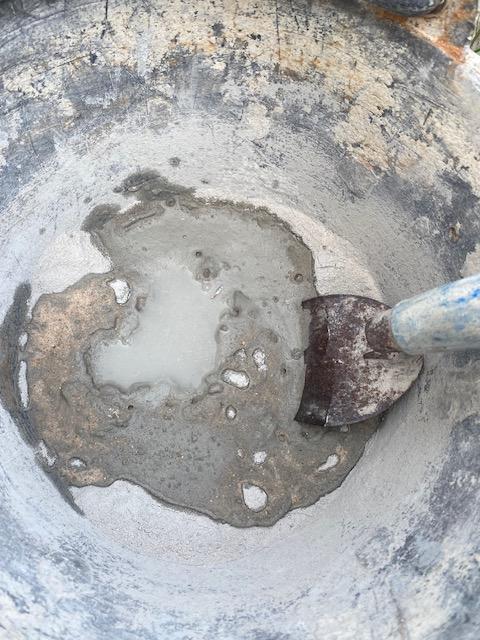
Then add the water, BUT not the whole amount. Hold back just a bit because, like salt (in a cake?!), you can always add more, but it's pretty hard to take some away.
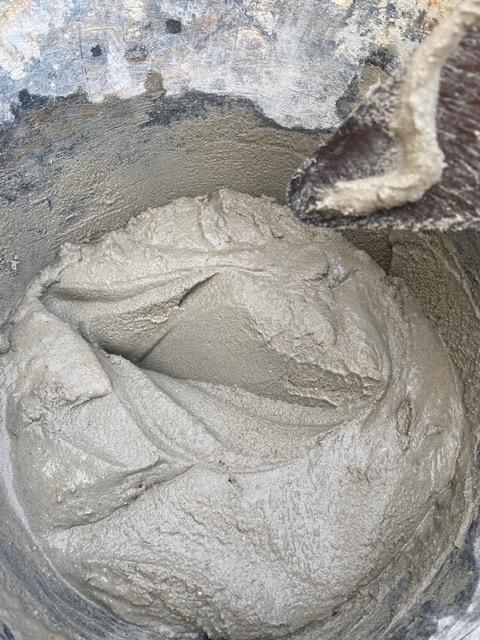
You want your mix to be moderately stiff, not sloppy and wet like macaroni in a pot <ahem>. It should be easy to shape and move, but you should also be able to pile it up without it slumping. Your trowel should leave marks in the wet mix like mine did (see pics).
Congrats, you just made mortar or cement plaster!
Apply Material to the Wall
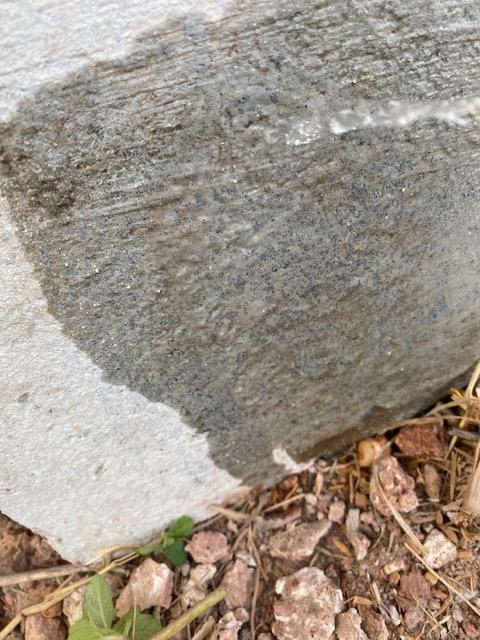
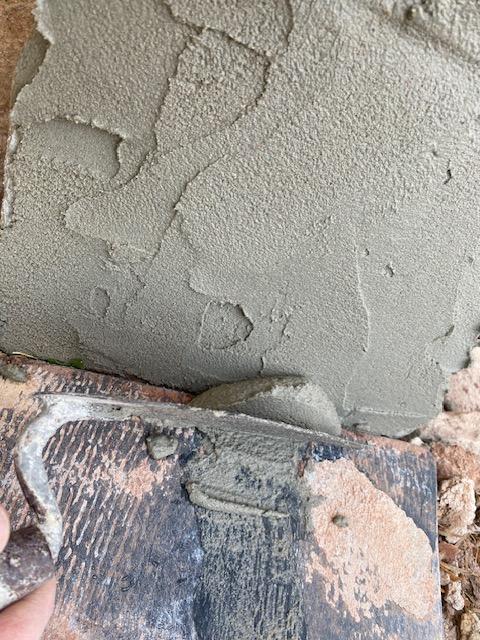
Here's the most important thing to know about working with cement for this project:
WET CEMENT WON'T STICK TO DRY CEMENT!!
So you'll need to wet your wall before applying your mixed material. You can do this with a spray bottle (easy for small areas) or your squirt bottle (bottle with a hole or two poked in the lid - easy for larger areas).
However, just wet a small area like 2 square feet at a time. Otherwise, the water will soak in before you get to it, and you'll need to re-wet it.
There are different ways to get the material on the wall:
-use a hopper and a float to smear it on
-use a trowel to smear or even flick it on
-use a GLOVED hand to press and smear it on
Choose what works for you to build up a coating of your material on the wall of roughly 1cm or a little less than half an inch. Don't worry about this layer being perfect, as you're immediately going to cover it.
Add Lumps
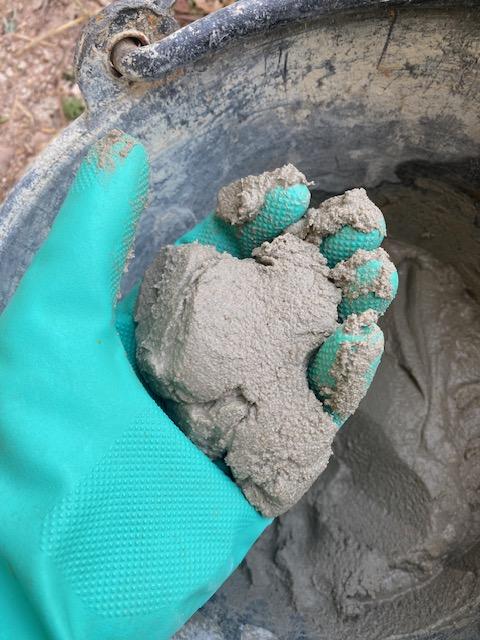
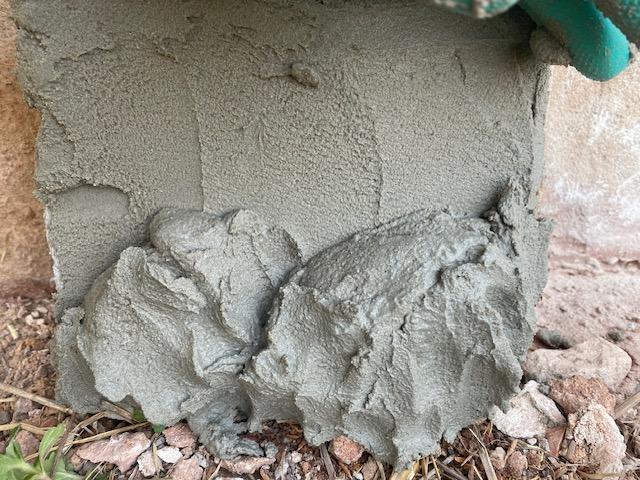
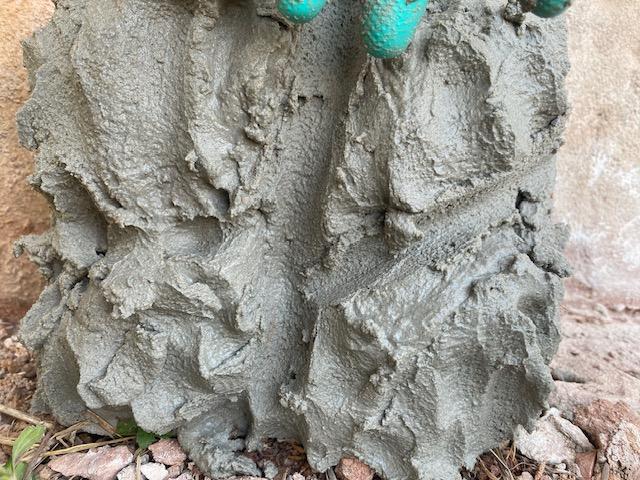
Now the real fun begins.
Using your gloved hands, grab balls of your cement mixture and slap them onto the wet cement layer you just made. You can be really random here with different sizes and shapes, but think about how a cobblestone wall looks. Some stones will be rounder, some more angled. Some will stick out more. Some won't be perfect.
At this stage, just throw your lumps on and give trace a finger around them to make sure they stick. You'll shape them later.
Now, leave those lumps for some time, usually at least an hour, to set up. If you're doing a big area, move on, but make sure to leave yourself time to wait an hour for the last lumps to firm up so you can shape them.
Shape Your Stones
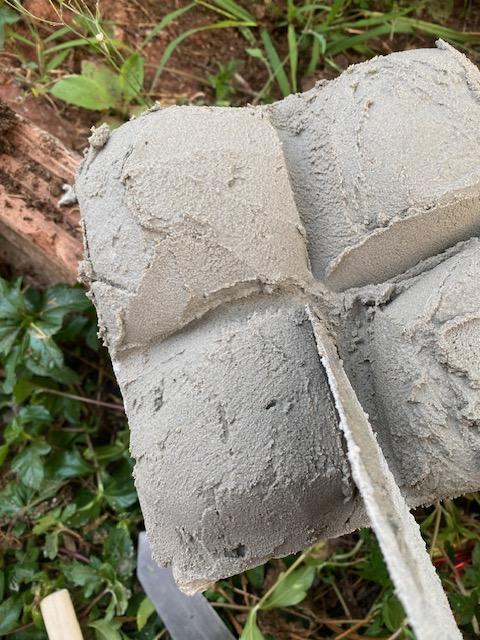
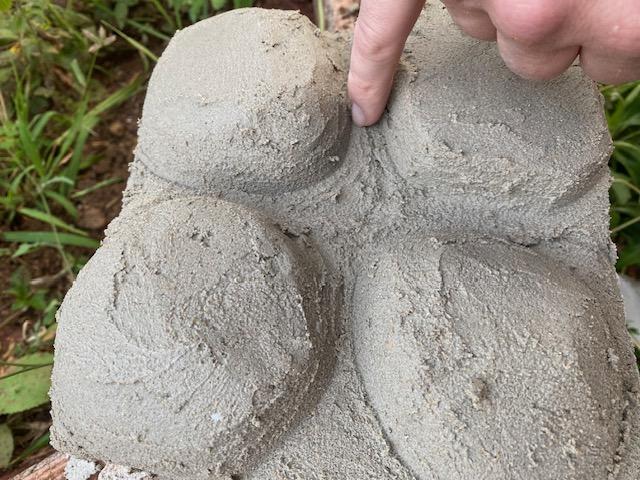
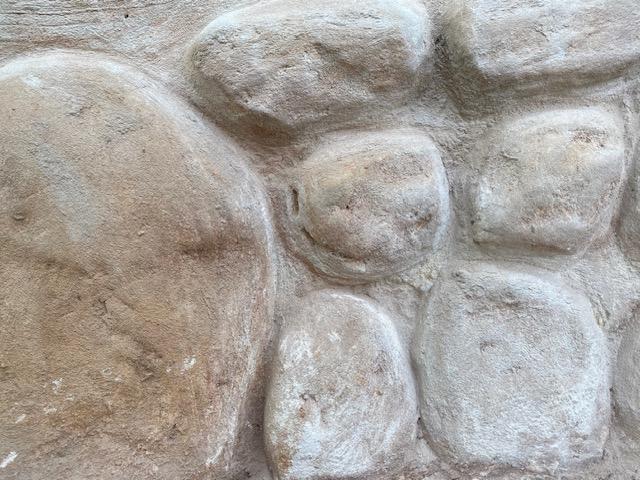
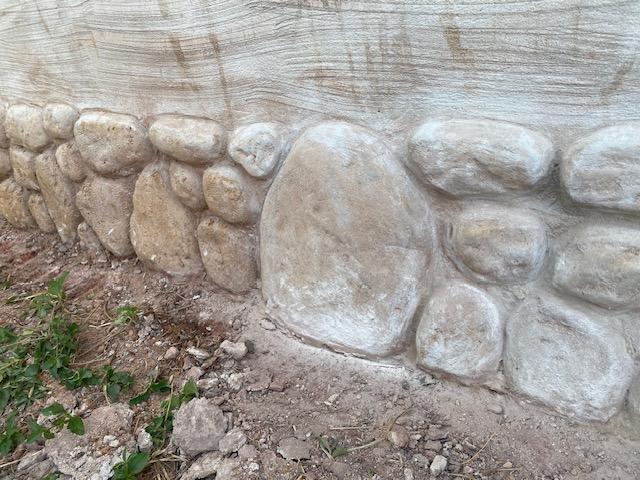
Full disclosure?
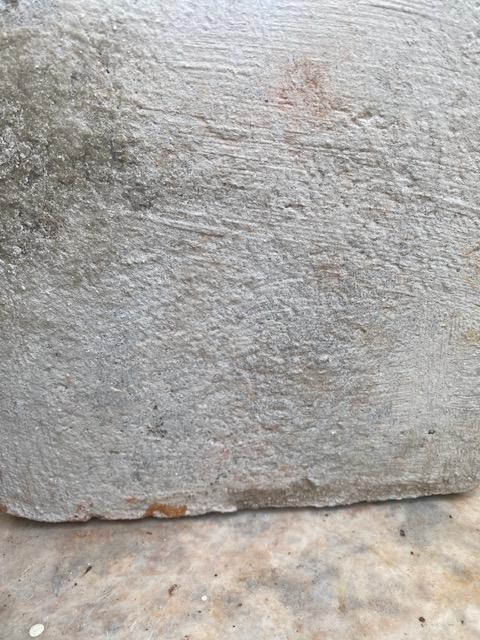
I didn't think about making this into an instructable until I was already at the painting stage, so I've gone back and made a little example panel on the back of a cement block to show you through these steps. I was going to just zoom in and pretend this was a part of my larger wall, but then I thought, "<highly esteemed reader> is no slouch. They'll certainly realize I'm trying to pull the wool over their eyes."
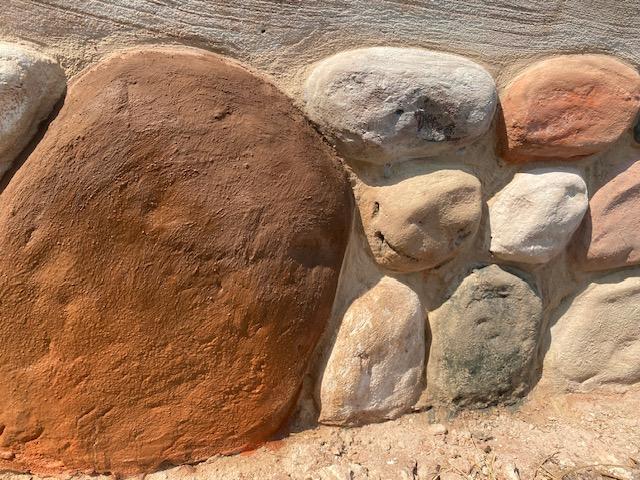
Therefore, I've decided to show both the sample and my whole foundation wall. Sorry for even thinking about trying to deceive you.
OK, so once you've let your cement set up for a while, you can come back with your shaping tools and start to define it into distinct cobblestones.
Make them varied in size and shape to add realism. Make a few of them really big if you like.
Once you're happy with the shapes, use a tool or gloved finger to define the space between them where the mortar in a real rock wall would go.
Wait until these guys are getting pretty darned firm and come back to give the texture if you like. A wire brush is a great tool for this, but sculpt with anything you like.
When you're done, go have a lemonade and chill. You deserve it. And anyway, you won't want to paint your masterpiece until at least tomorrow, or even a few days hence.
Inspect Your Work Site

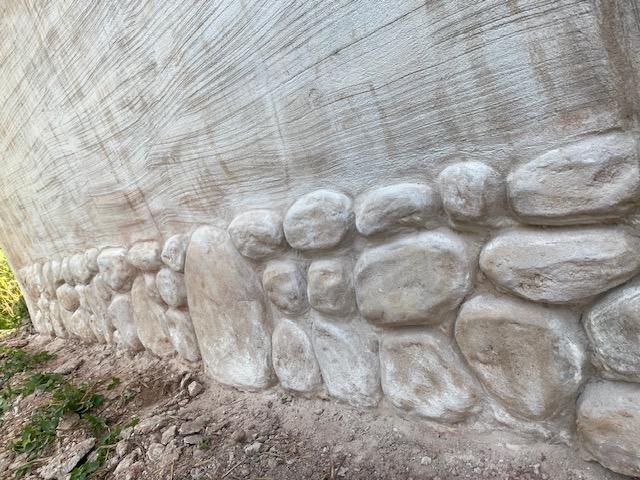

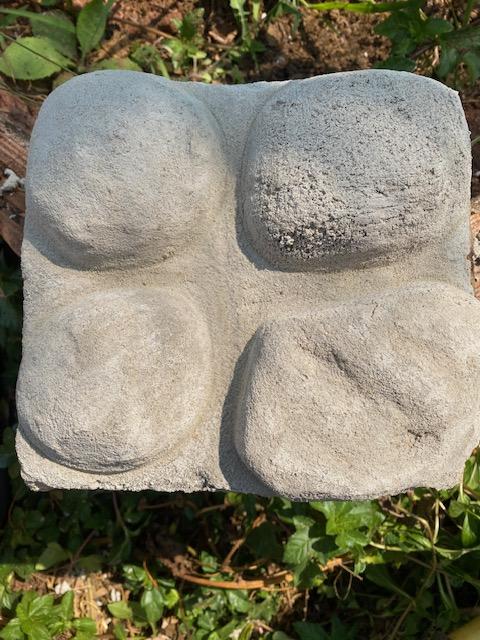
Once you've made sure there are no more white-lipped pit vipers in the general vicinity, take a peek at what you accomplished yesterday.
Looks pretty nifty, right?
Of course, there's that one lumpy bit there, and that stone looks weird now for some reason.
If you're not completely happy, guess what?
Your cement is still pretty soft, and you can either a) add new material using the same technique as before (remember to wet first) or b) scrape or cut pieces away using steel tools. See the sample panel for an example of how easy it is to clean things up.
Make yourself happy, but remember that paint covers most blemishes.
Mix Paints
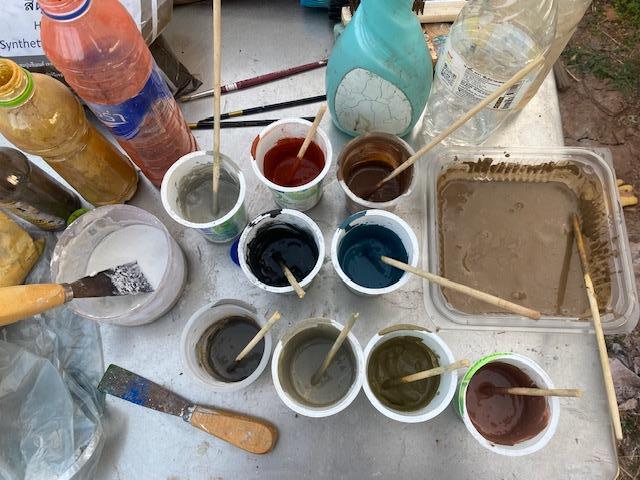
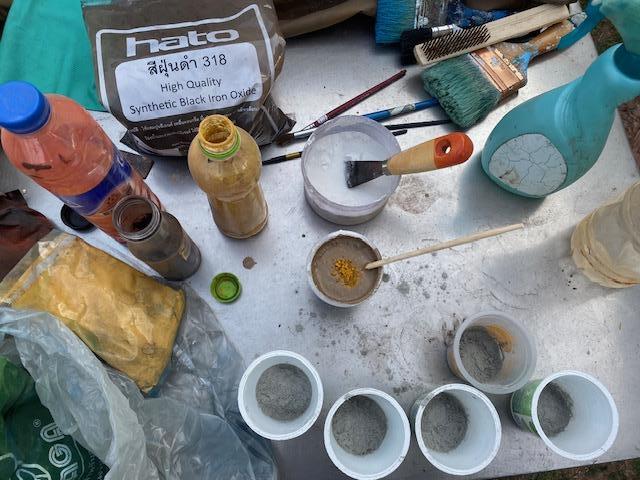
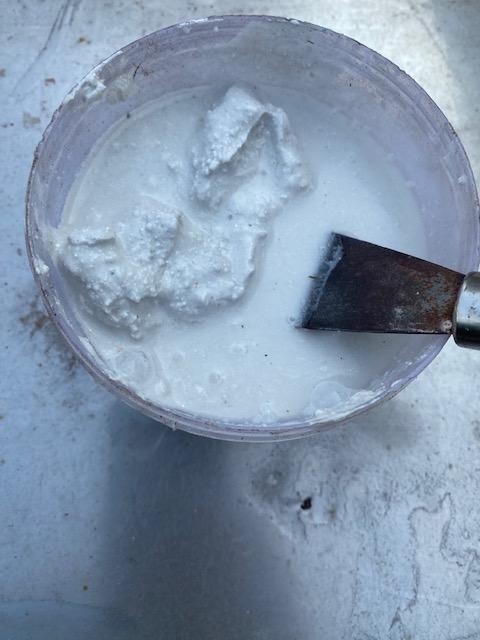

Get yourself a clear workspace and lay out your materials and the mixing cups you prepared.
Now it's time to get creative, and the more colours you make, the more depth and realism you can achieve.
I've heard this type of paint called "cement paint" before, but Wolfgang, the crusty old German fella who taught me to make it, called it schlemmer, which I much prefer.
To make regular schlemmer, which will be cement-coloured, just mix dry cement with enough water to make it paintable.
To make other colours, add varying amounts of pigments until you're satisfied.
Keep in mind, though, that all of your colours will dry SIGNIFICANTLY lighter than their wet colours, and if you mix in hydrated lime plaster, they'll lighten up TONS!! (see attached picture for the amount of difference)
Hot Tip #1: It's a good idea to measure the amount of pigment and cement you put in each cup and write this down in case you want to make the same colour again.
Hot Tip #2: It's also a good idea to mix up a lot more than you think you'll need, especially for the "mortar" colour that will go between all of your stones.
Paint
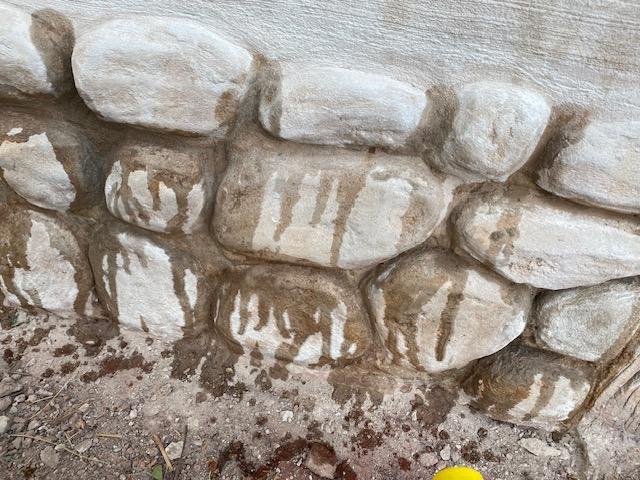
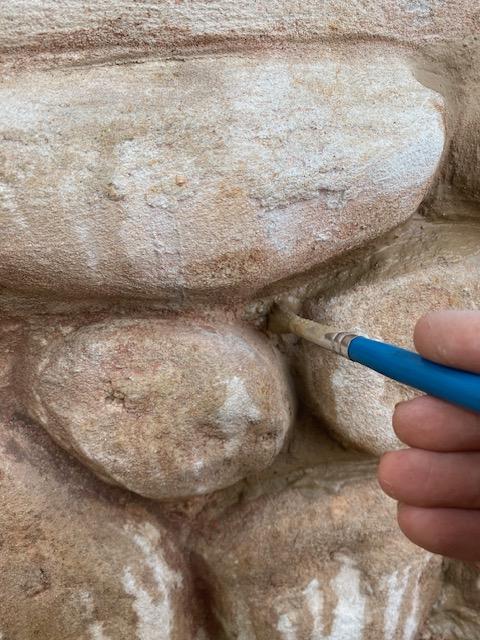
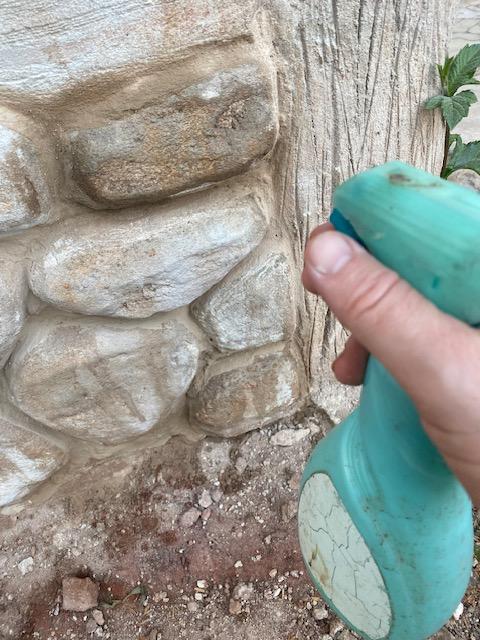
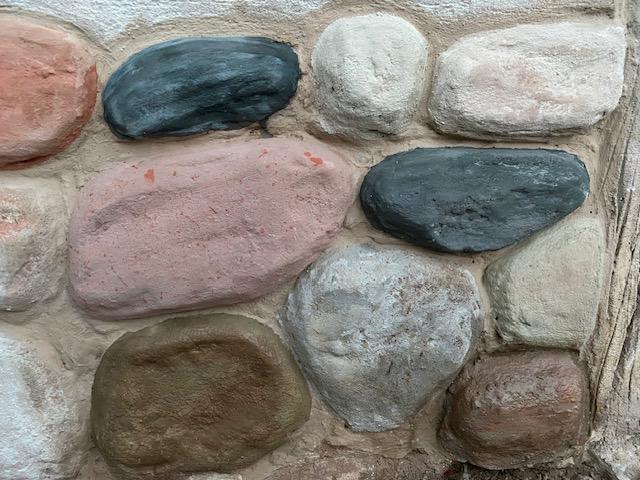
Schlemmer is cement-based paint, so guess what?
Yep, it wants to stick to a wet wall, not a dry one. Here, I used a squirt bottle to wet the mortar lines and then a spray bottle to wet each stone as I painted them one at a time.
Here's the process I followed:
- Wet the mortar lines.
- Paint all of the mortar lines.
- Spray a stone and then paint it, working from the top down so you don't get drips on the stones below.
- Touch up the mortar colour anywhere you may have gotten it dirty with other colours.
Techniques?
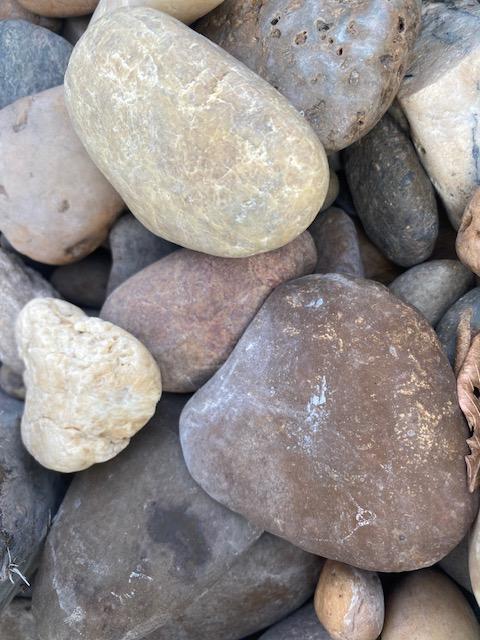
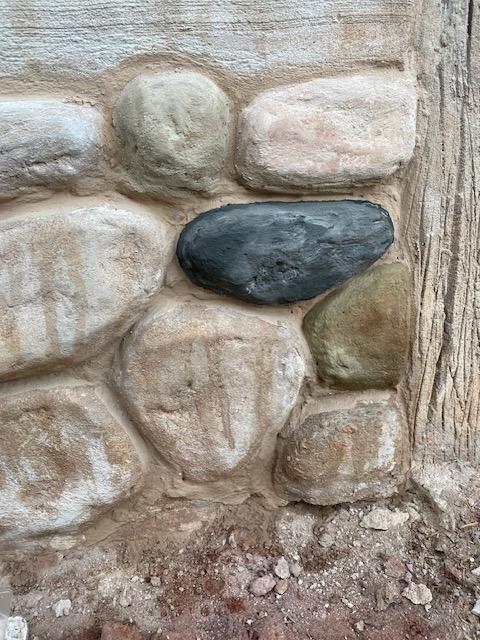
I generally applied dark coloured patches, then went over with a few lighter colours, misting them and blending them together.
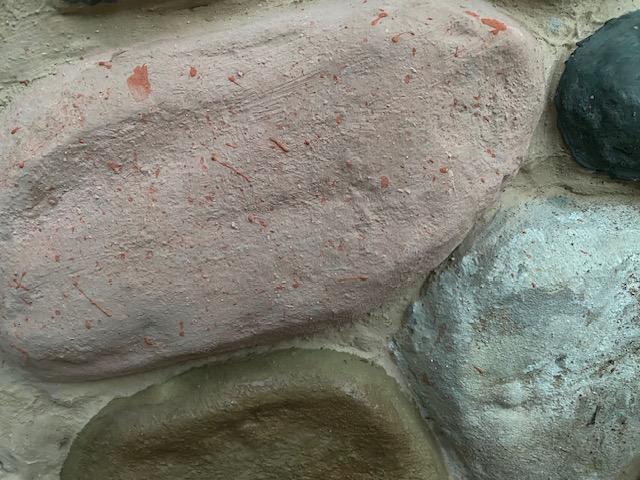
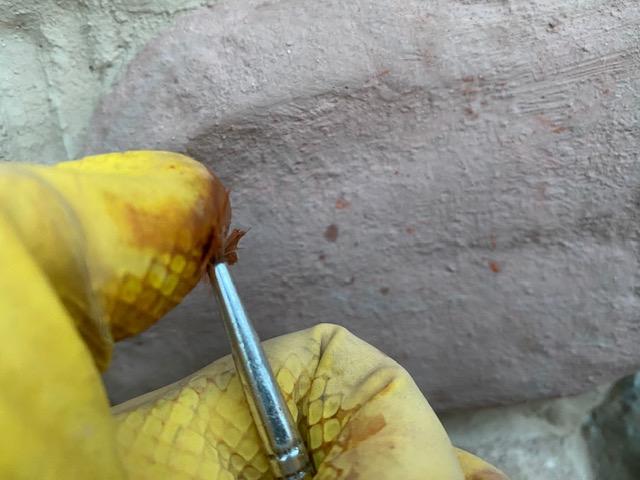
I also tried stippling - dip your little brush into a colour and use your finger to flick it so you get little flecks on the target stone.
Basically, have a great time and remember to always work wet.
When you're done, mist each stone a few times, and don't let them dry in direct sunlight - cover your work area so it dries and cures slowly.
Shinier Options
The schlemmer (cement and mineral pigment) paint I used is ultra-matte, and you may not like that.
I admit, some stones are shiny, and some aren't, so you might want to try one of these other options:
Option 1: Use a clear, glossy concrete sealer (or ever polyurethane) to shiny-up some or all of your cobblestones.
Option 2: Use acrylic paints instead. You'll need to first let your cement material cure completely (7 days at least), then use an alkaline-resistant primer to cover it. You can then mix a wide range of acrylic colours and apply them for a glossier look. This instructable gives a really good example of how to do this!
Hope you enjoy this project and it inspires you to pretty up dull spaces everywhere!