DIY Rollable Wooden Chair
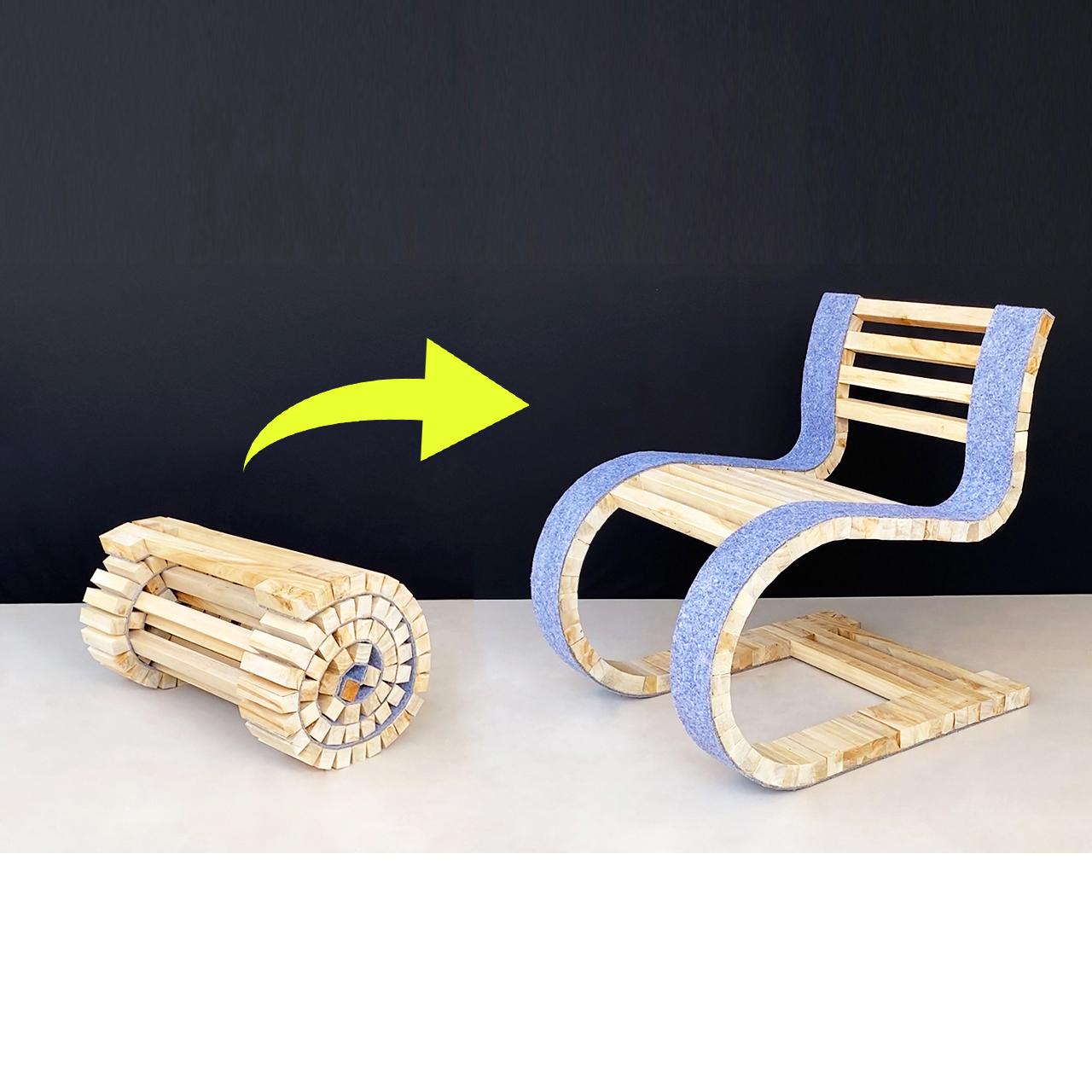

What if a comfortable lounge chair could roll up like a yoga mat and fit into a small corner?
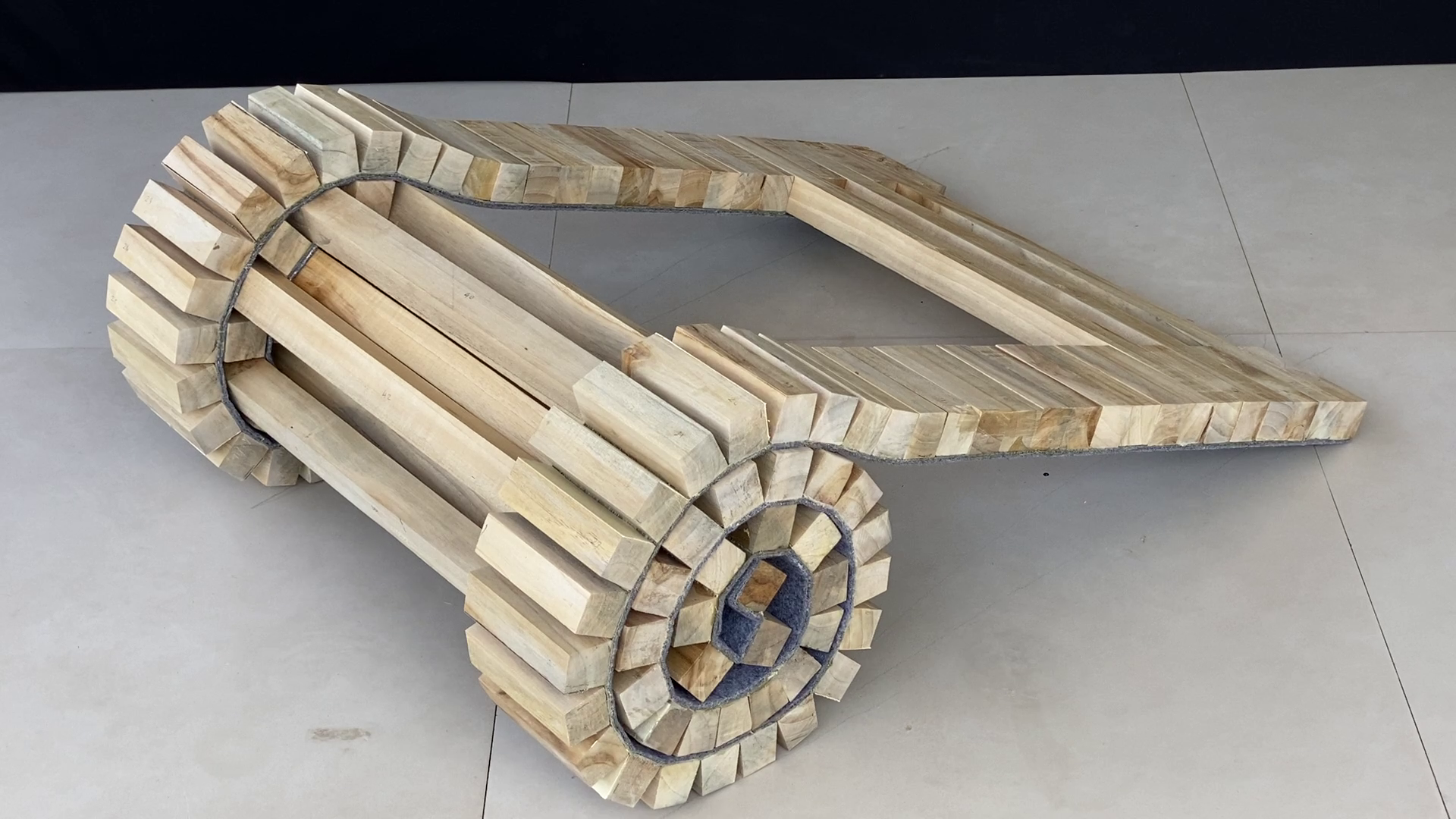
In this project, I built a fully functional wooden chair that rolls into a compact bundle for easy storage and transport. Using simple wooden slats connected using Carpet and break wire, the chair bends smoothly to form an ergonomic seat and backrest — and when not in use, it rolls up neatly in seconds.
Supplies
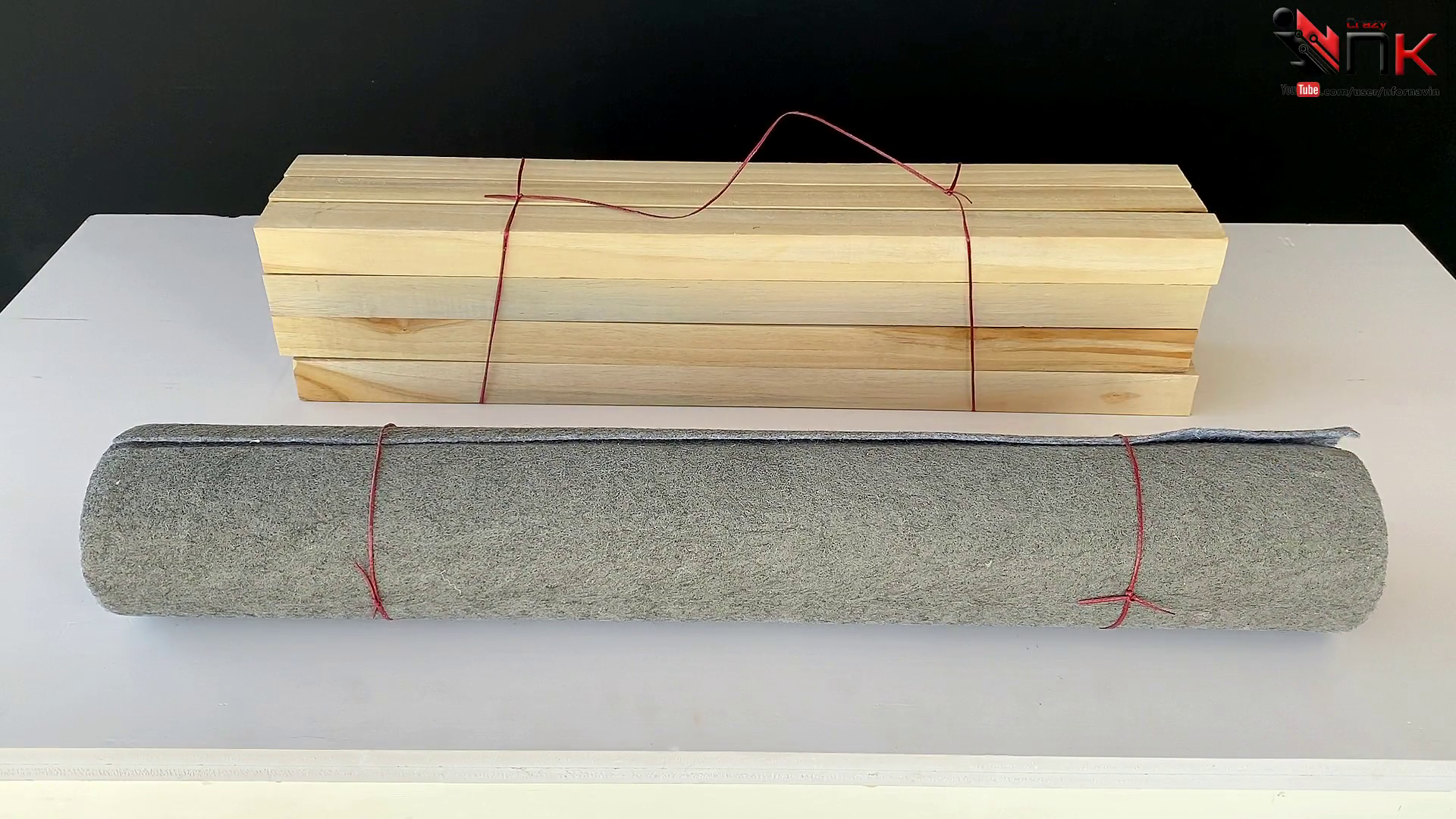
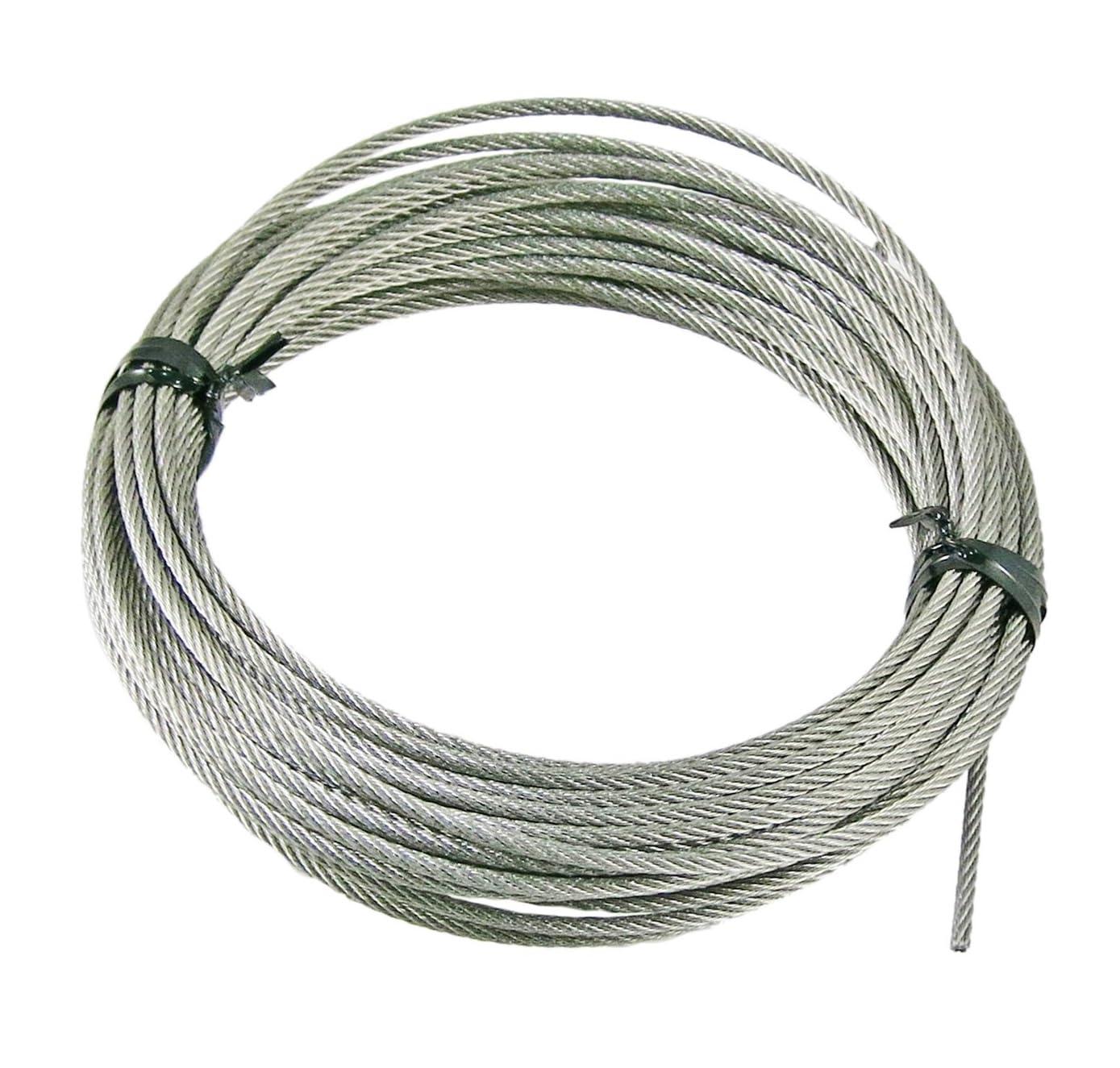
Wood Parts
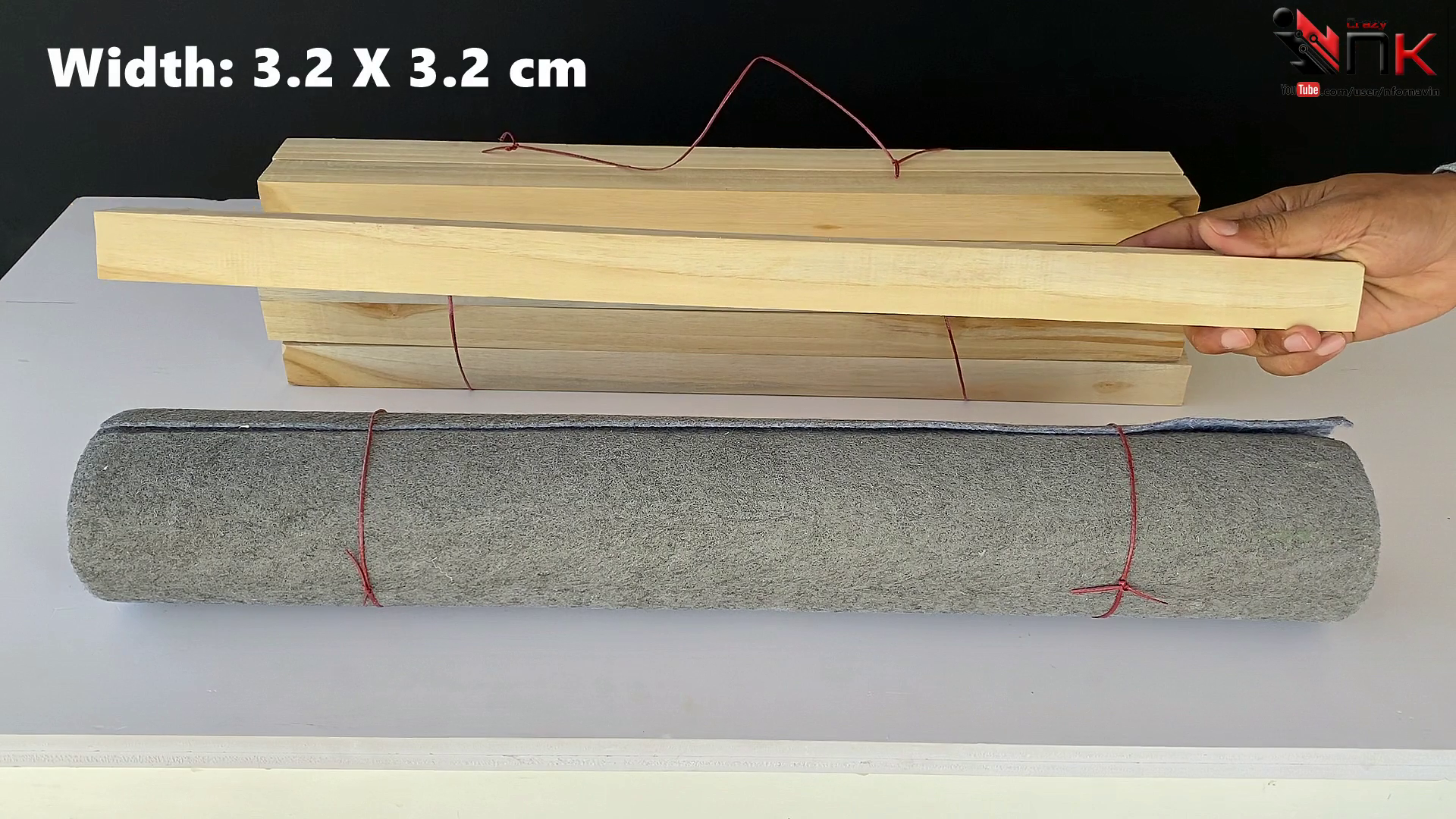
- Wooden slats/strips
- Size: 3.2 cm × 3.2 cm
- Length: 40–45 cm (or your desired chair width)
- Quantity: 40–60 pieces
✔ All pieces must be identical for smooth rolling
Flexible Layer (Hinge System)
- Carpet and Break Wire
- Length = full chair length
- Width = 2 side strips (8–10 cm each)
This layer allows the chair to bend and roll smoothly.
Prepare and Cut the Wooden Pieces
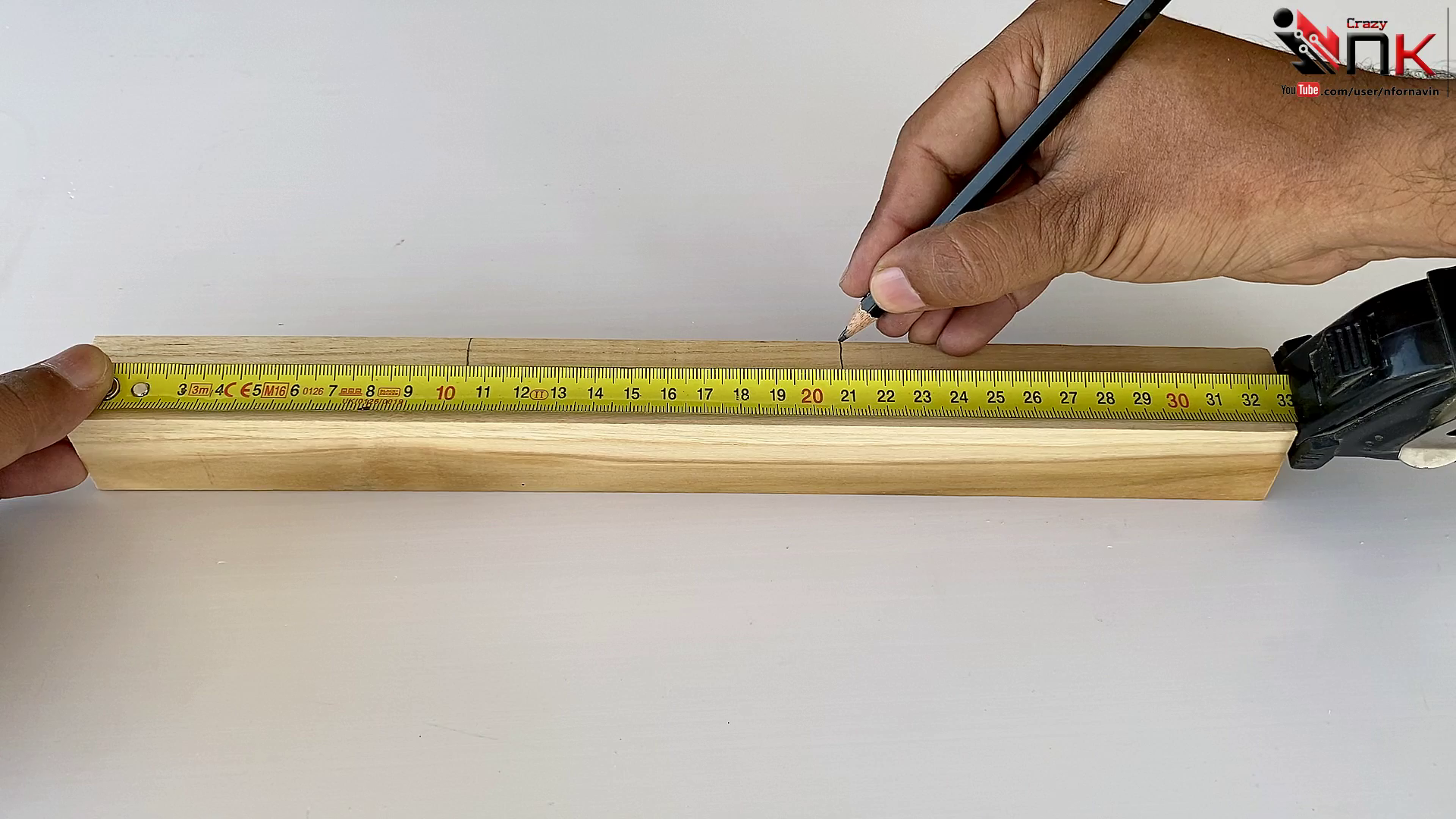


Measure the 3.2 × 3.2 cm wooden sticks and mark one piece at 58 cm and three pieces at 10.5 cm.
Cut all pieces carefully using a saw for straight, clean edges.
Approx. 15 long piece (58 cm) and Approx. 50 small blocks (10.5 cm each)
Mark and Draw the Side Shape of Chair
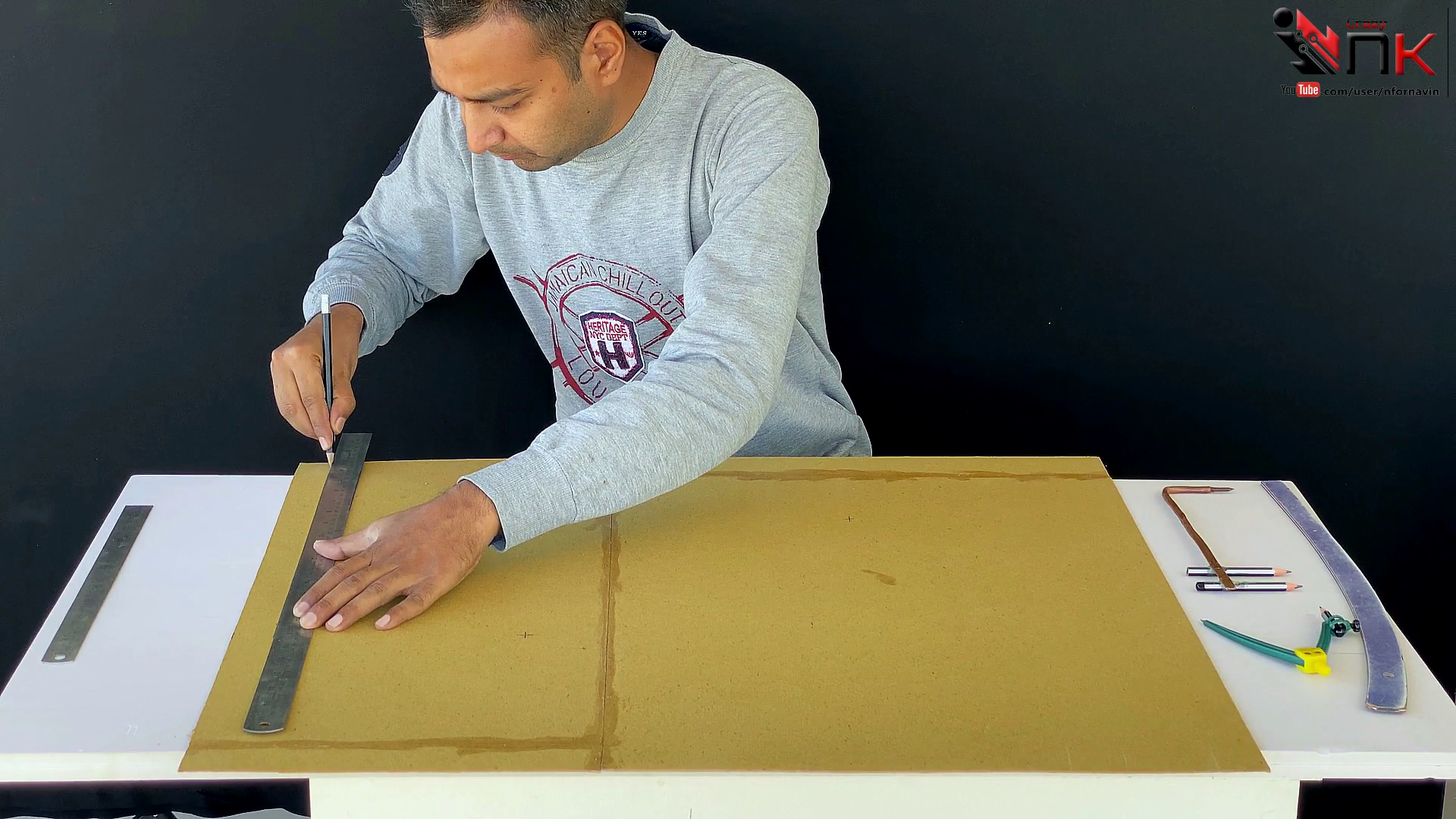

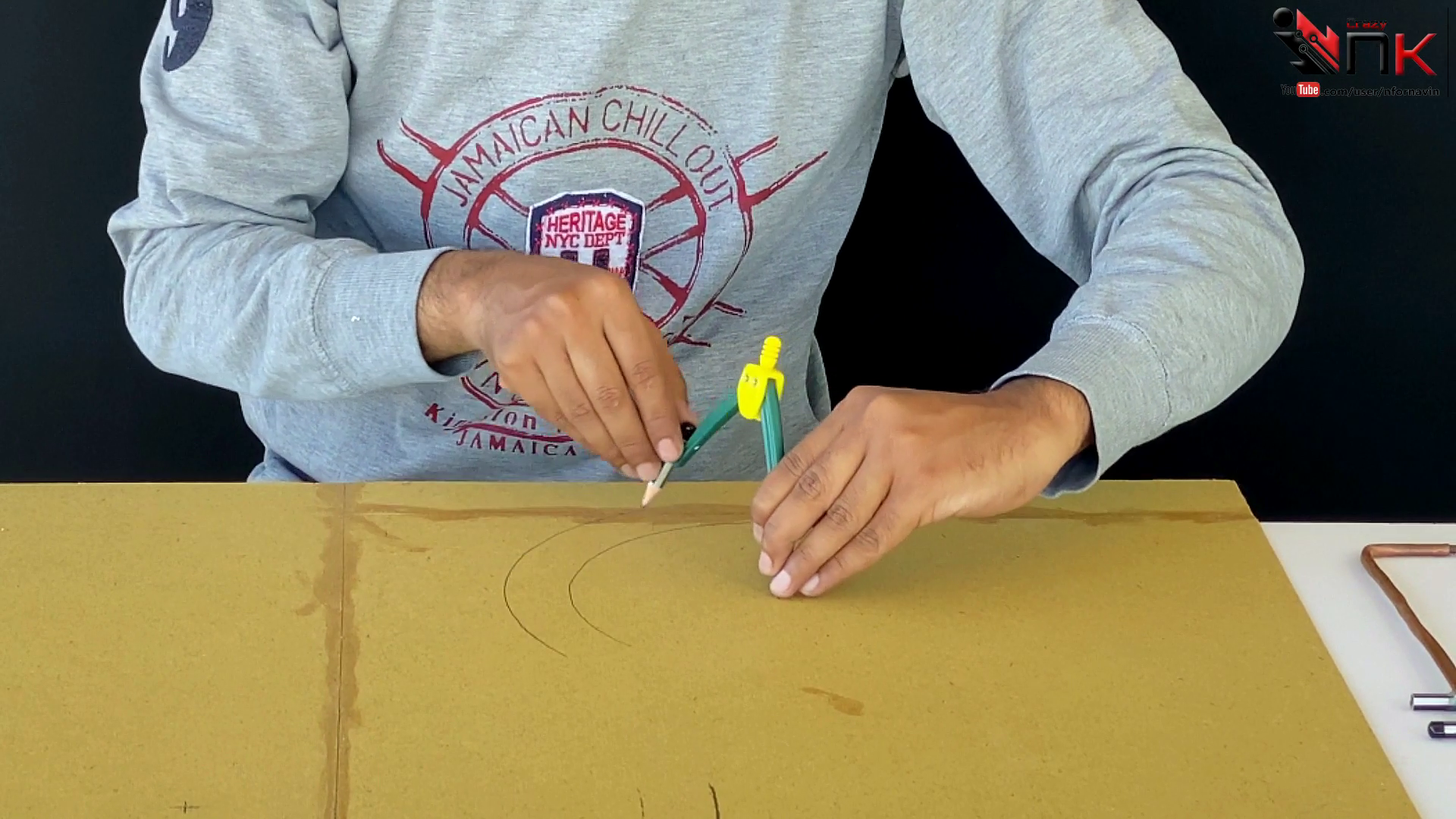
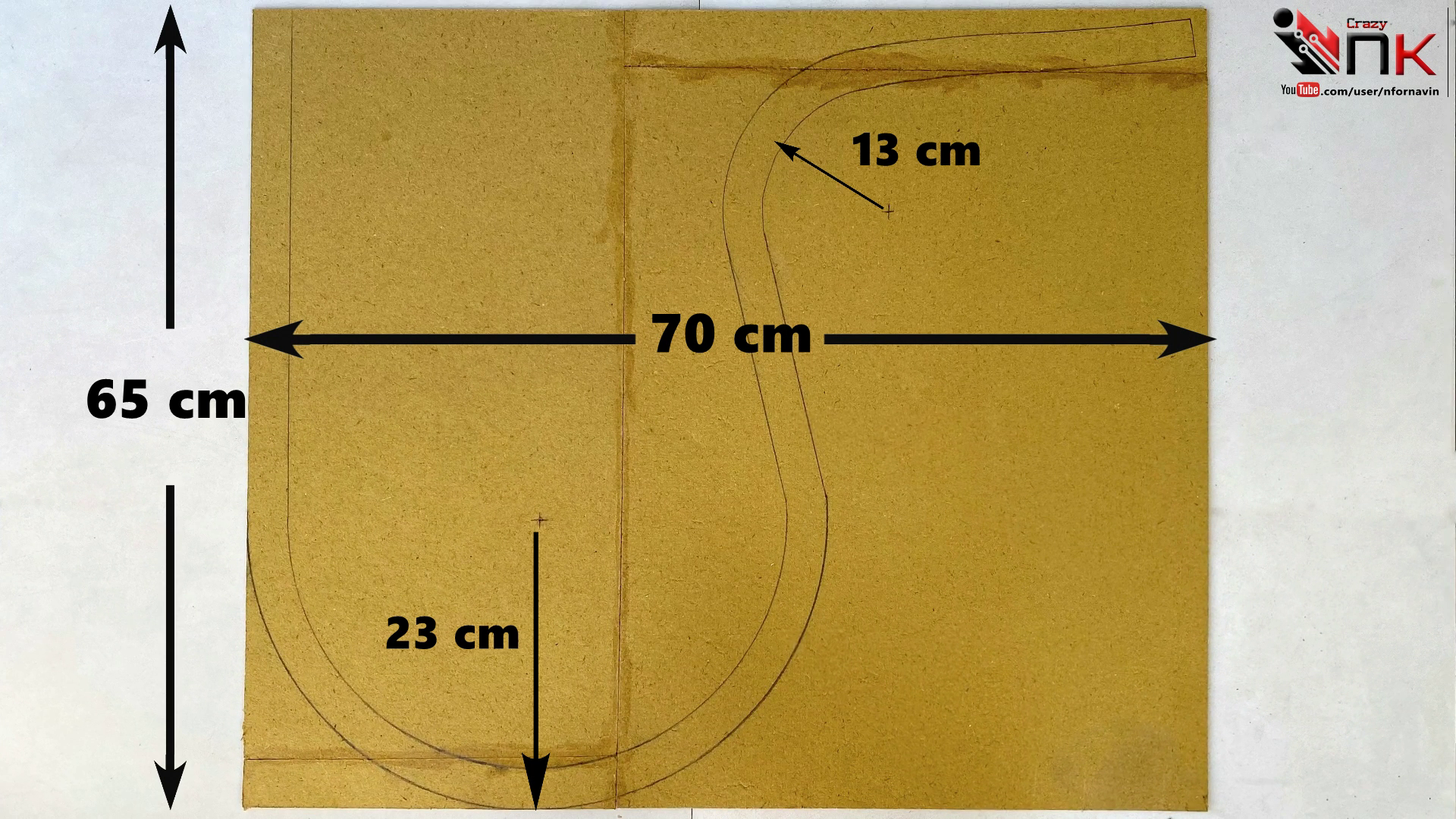
- Place the Cardboard flat and mark the outer size 70 cm (length) and 65 cm (height).
- Use a ruler to draw straight reference lines and divide the board properly.
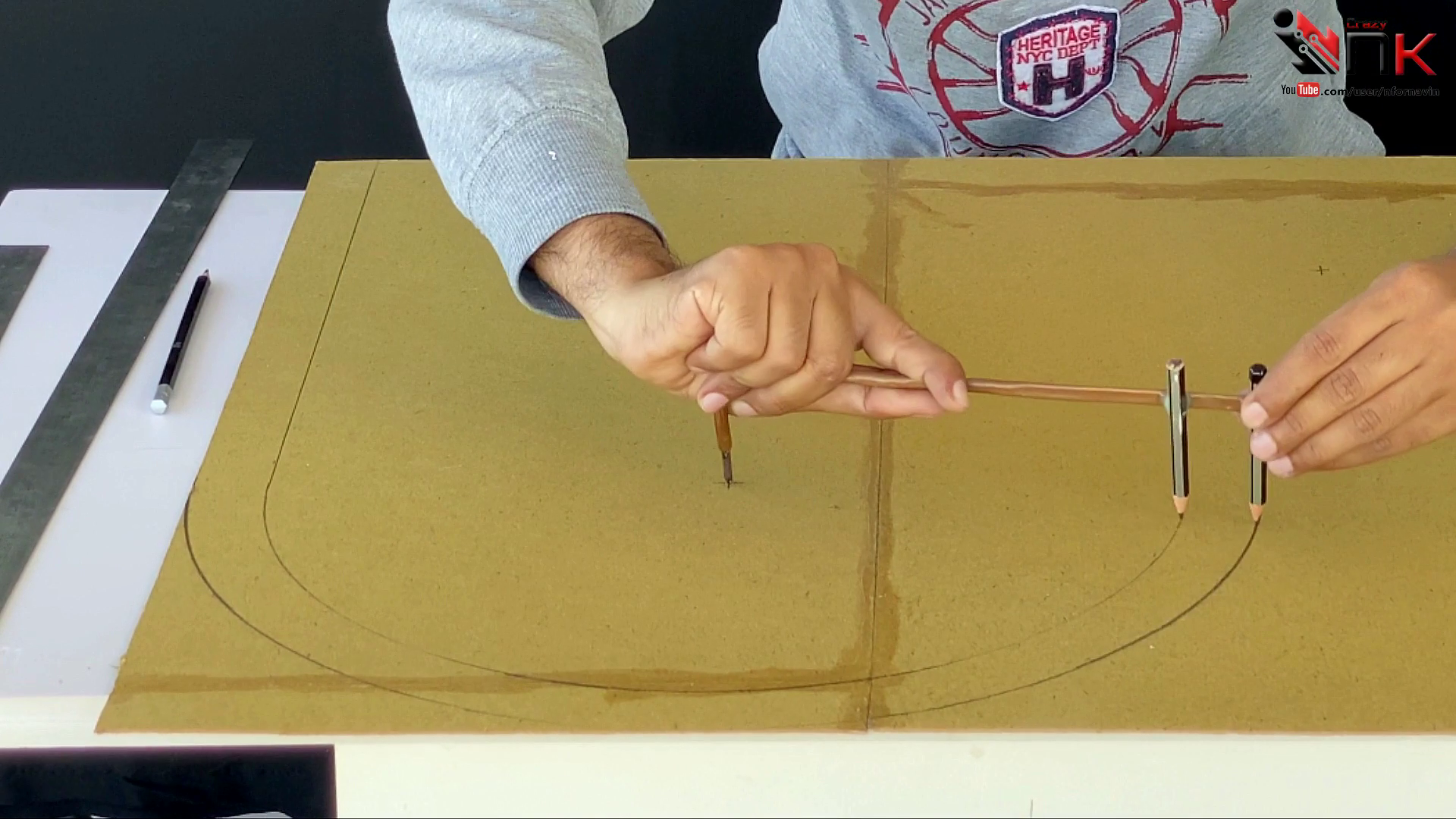
- Measure and mark two curvature one with radius of 23 cm and another with radius of 13 cm.
- Use a compass or flexible strip to draw smooth curved lines for the chair profile.
After completing all the above steps, you will obtain the finished side cross-section profile of the chair.
Find the Angles Using Paper Pieces

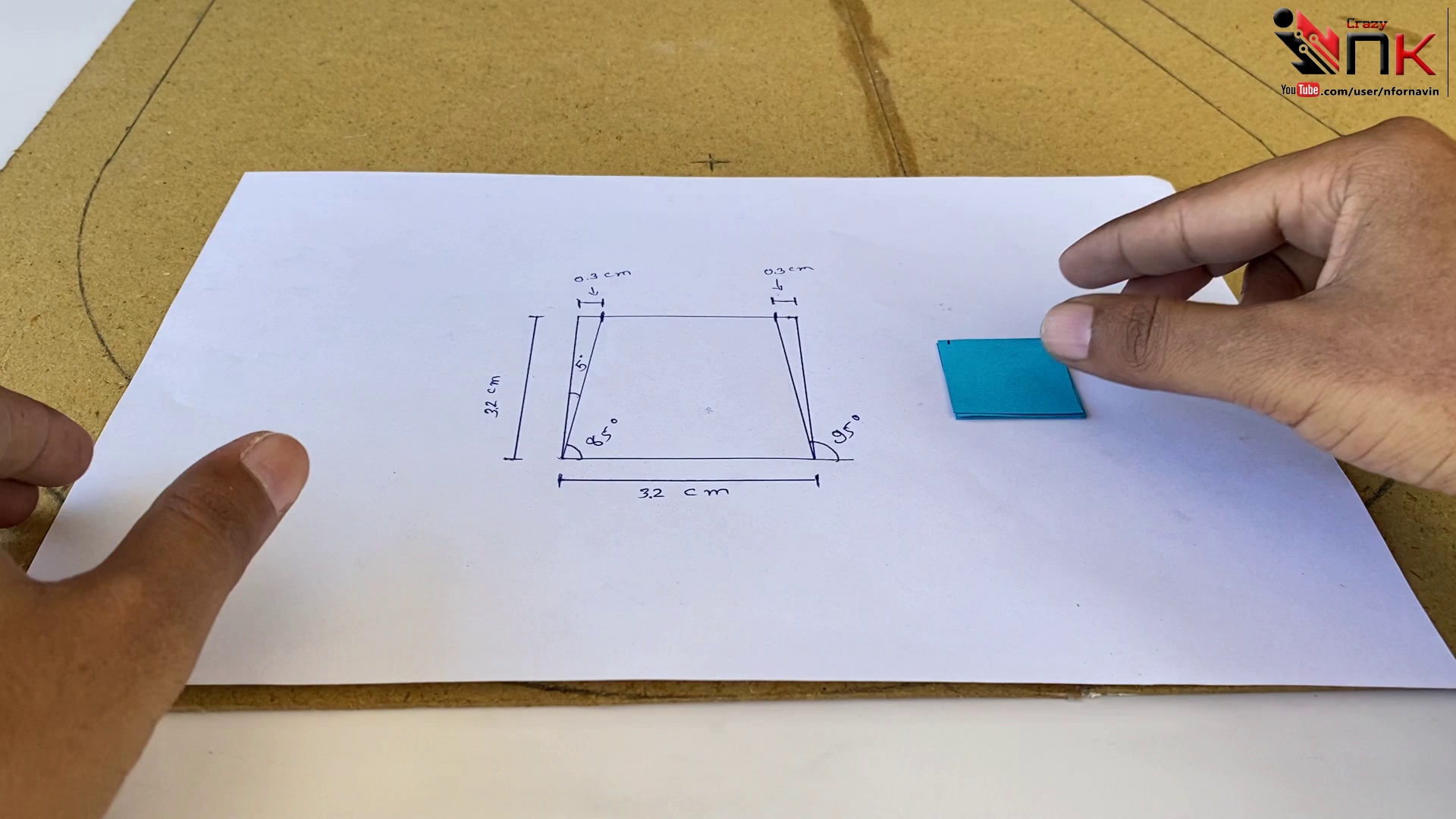

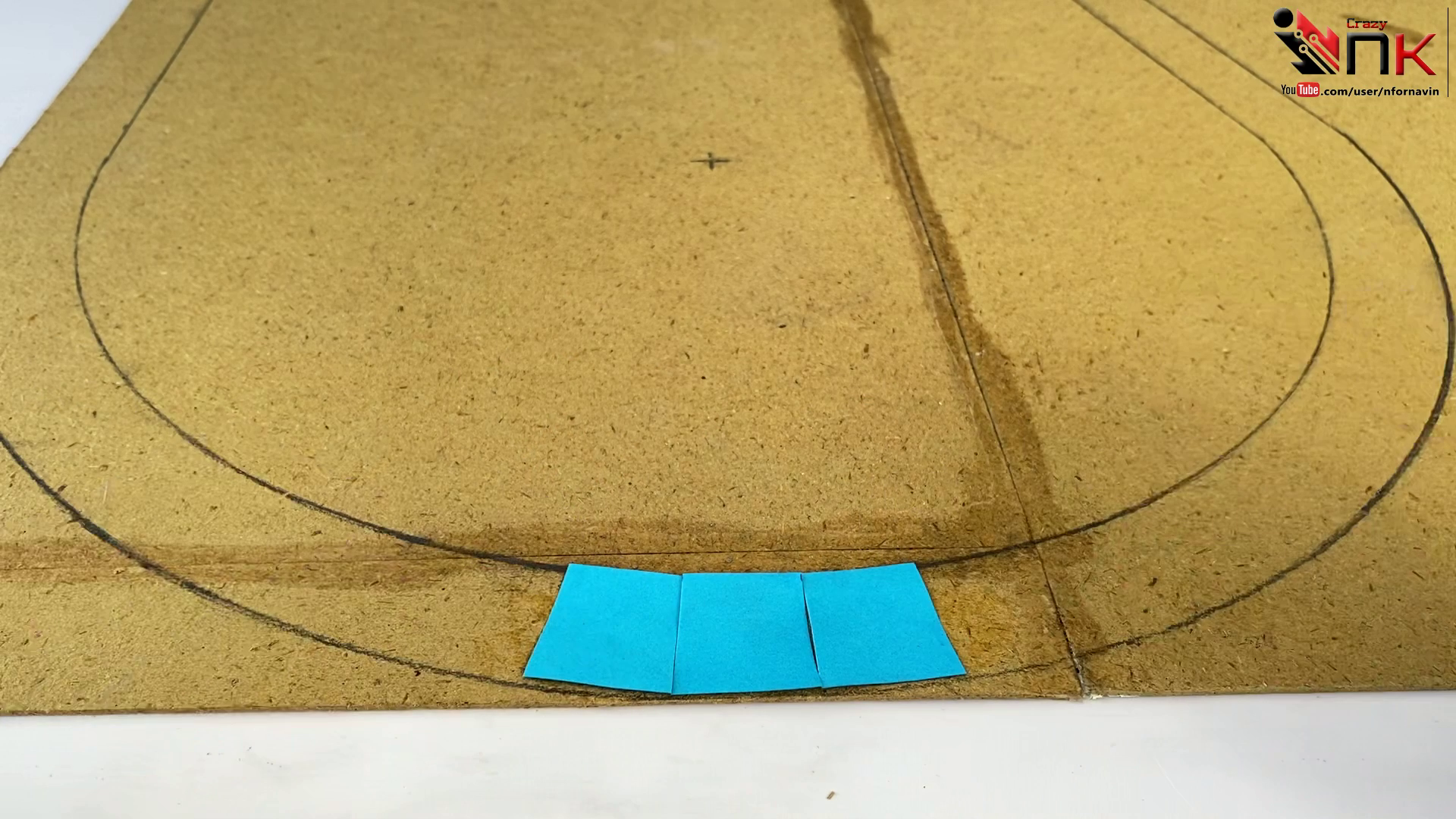

Place small rectangular paper pieces along the curved side profile drawn on the cardboard in Step 2, adjusting each piece so its edges follow the curve smoothly.
Mark the touching edges and trace the exact tilt of every section, then sketch these shapes on paper to measure the angles — approximately 88° for the back section, 85° for the front section, and 82° for the middle section as shown.
Cut the paper to match these marked angles and test-fit them again on the curve to ensure accuracy.
Finally, use these paper templates as guides to cut the wooden pieces prepared in Step 1 at the same angles for a perfect chair side shape fit.
Cut the Wooden Pieces Using the Angle Templates
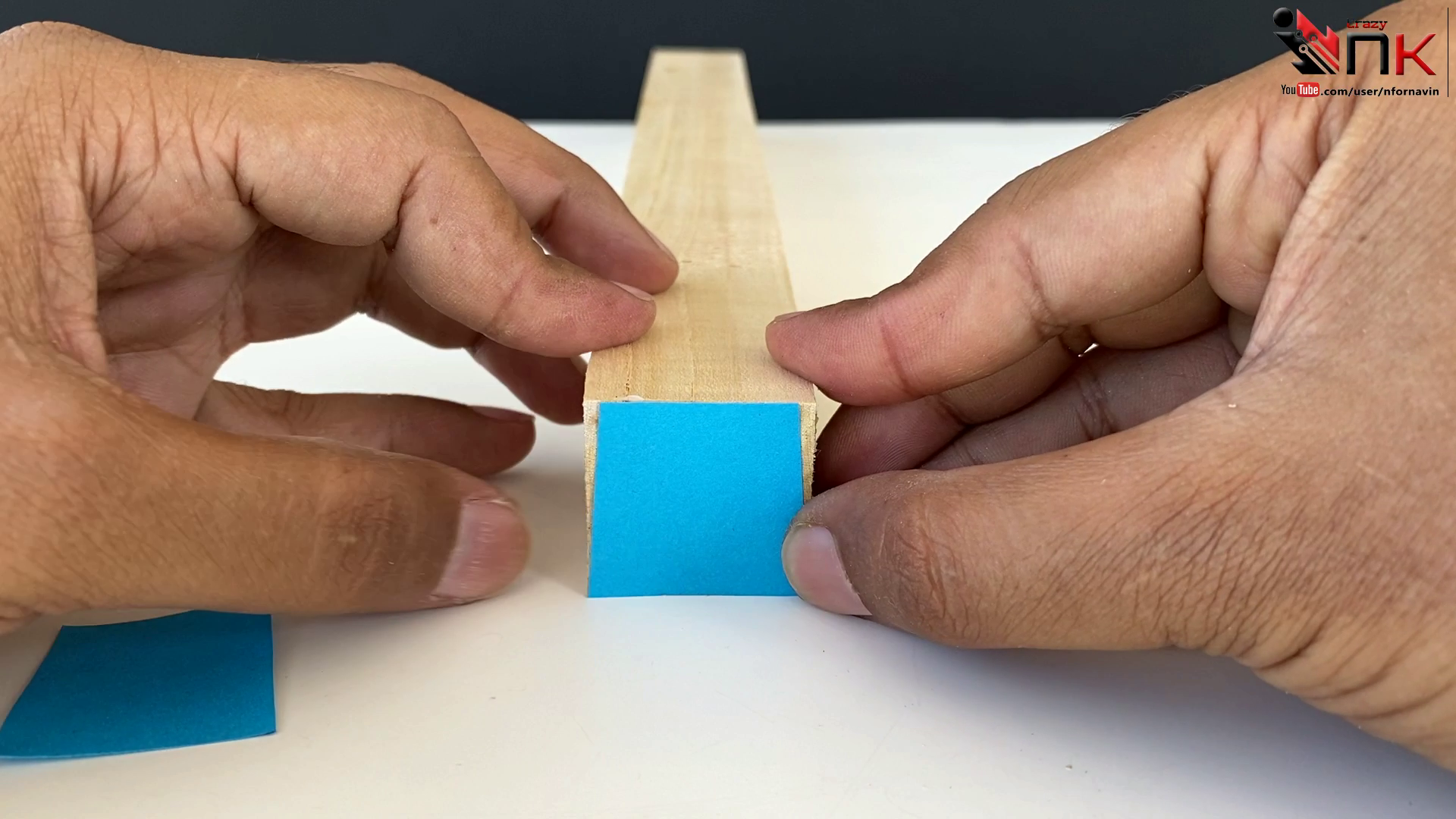
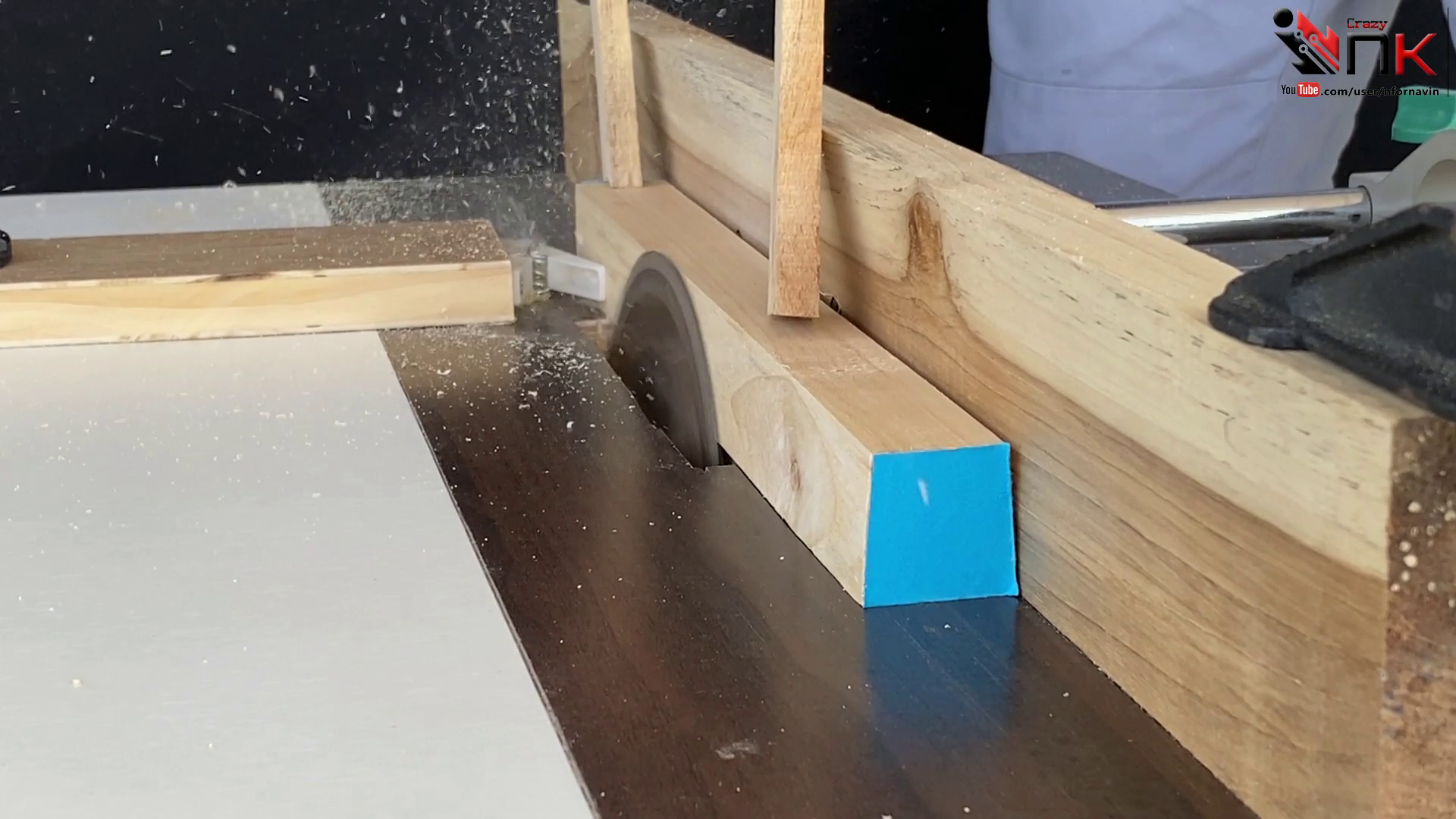
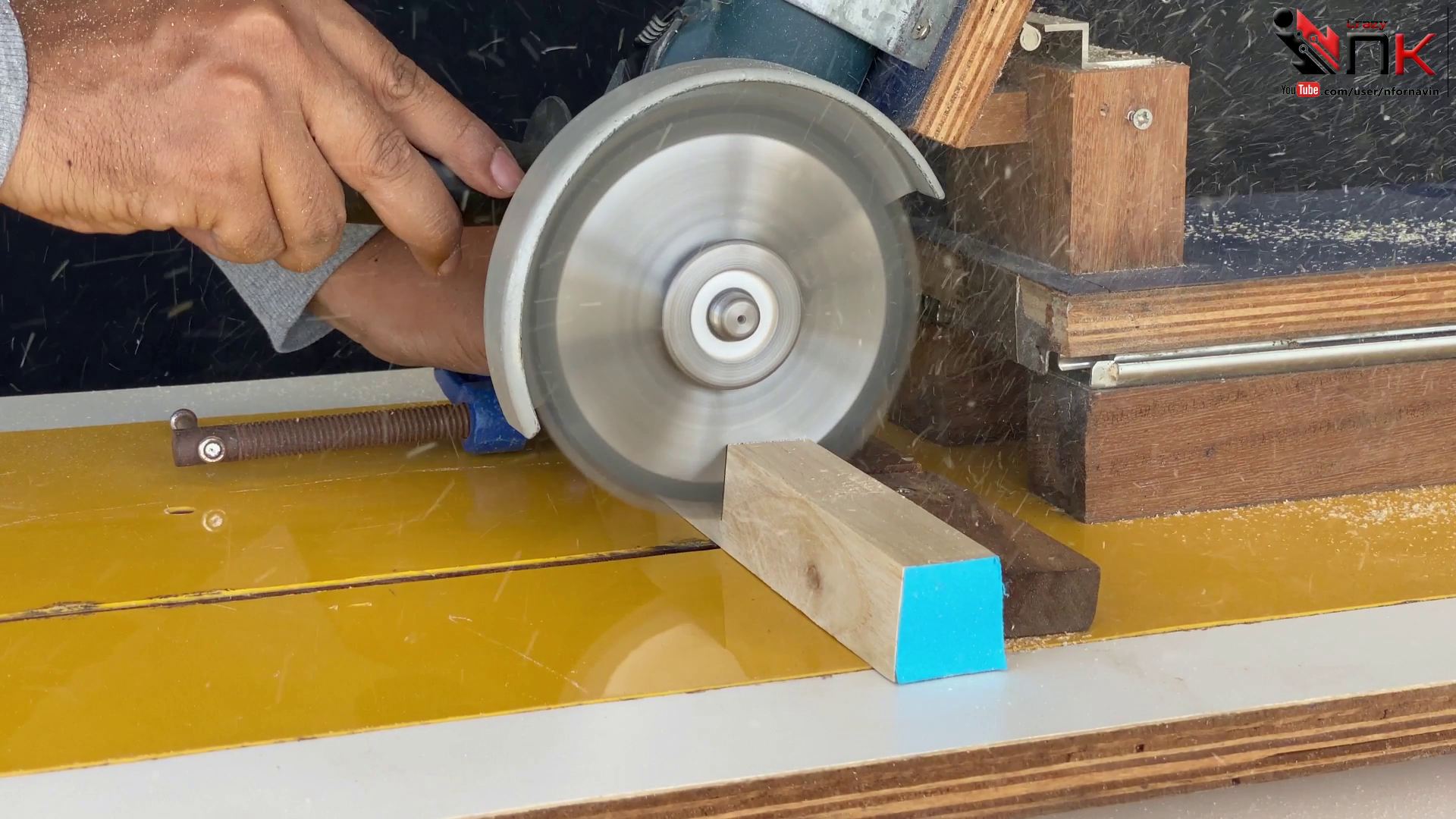
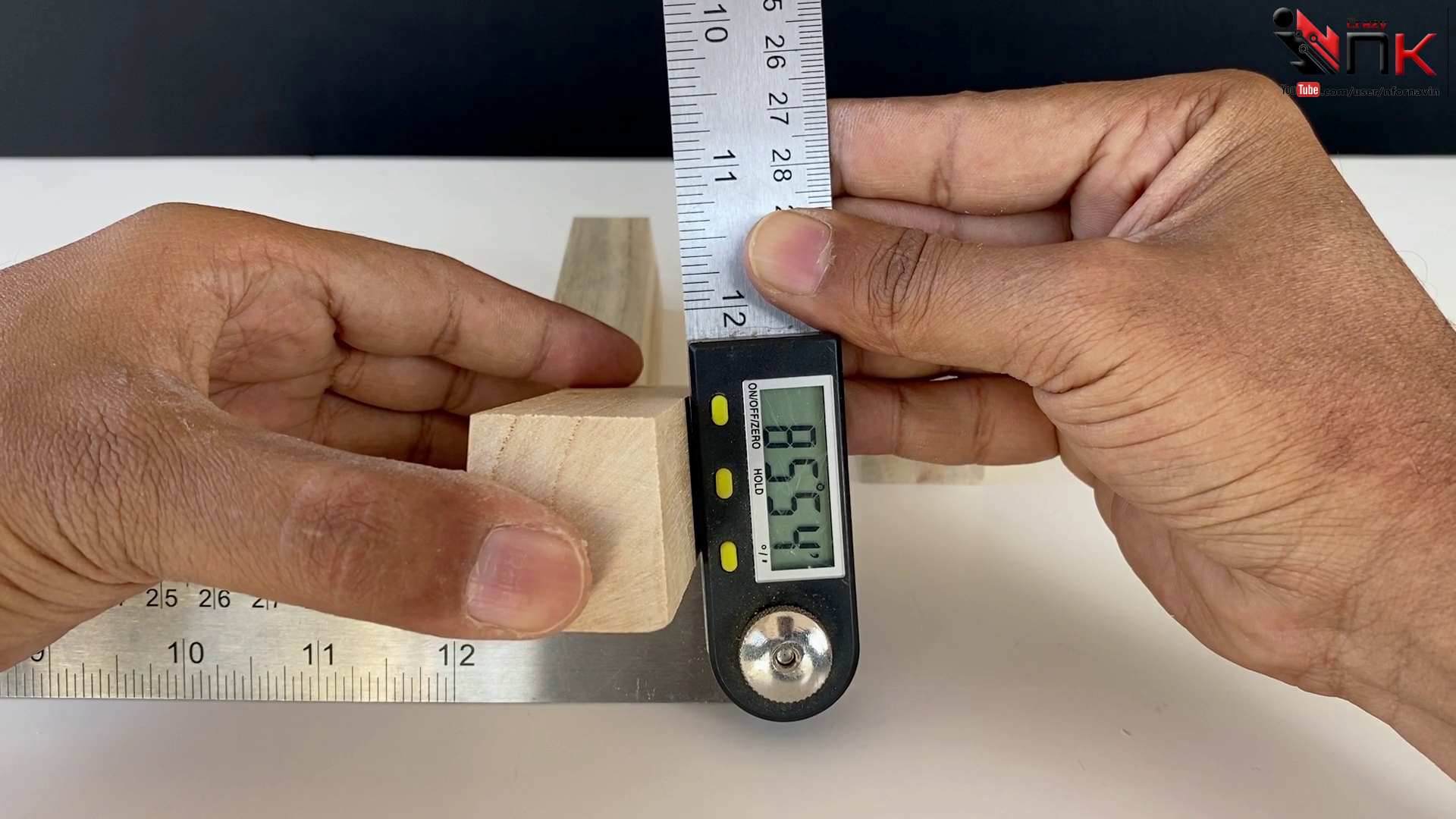


Take each wooden block and place the prepared paper template on the end face to match the required angle.
Cut the block carefully using a table saw or circular saw, keeping the blade aligned with the marked line for an accurate bevel cut.
Check every piece with a digital angle gauge or protractor (82°, 85°, 88°, and 90° as required) and fine-tune if needed.
Repeat this process for all pieces.
Prepare Carpet Strips and Add Brake Wires

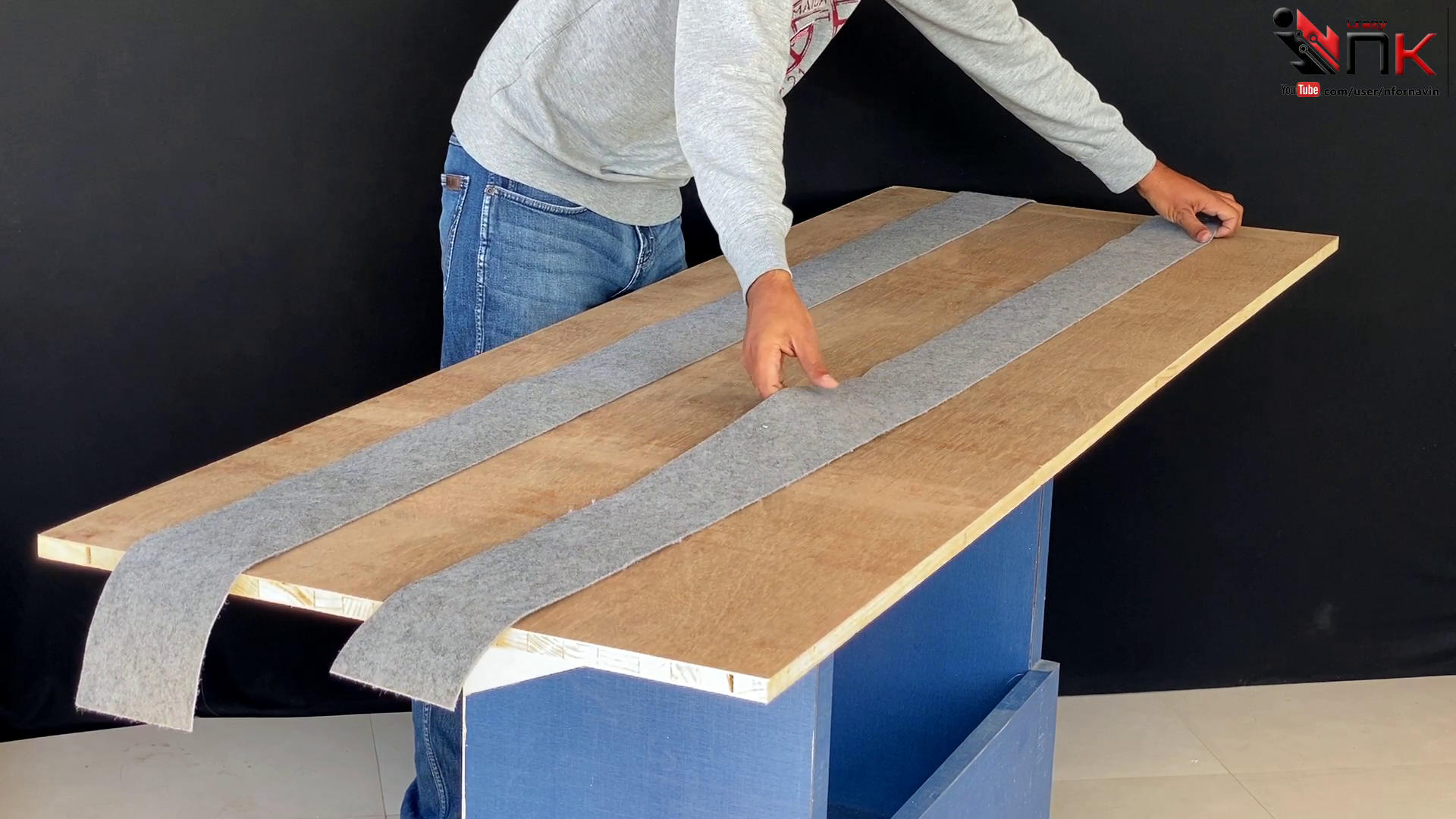

Measure and mark two long strips on the carpet/felt sheet according to the chair’s rolling path width.
Cut both strips cleanly using sharp scissors so the edges remain straight and smooth.
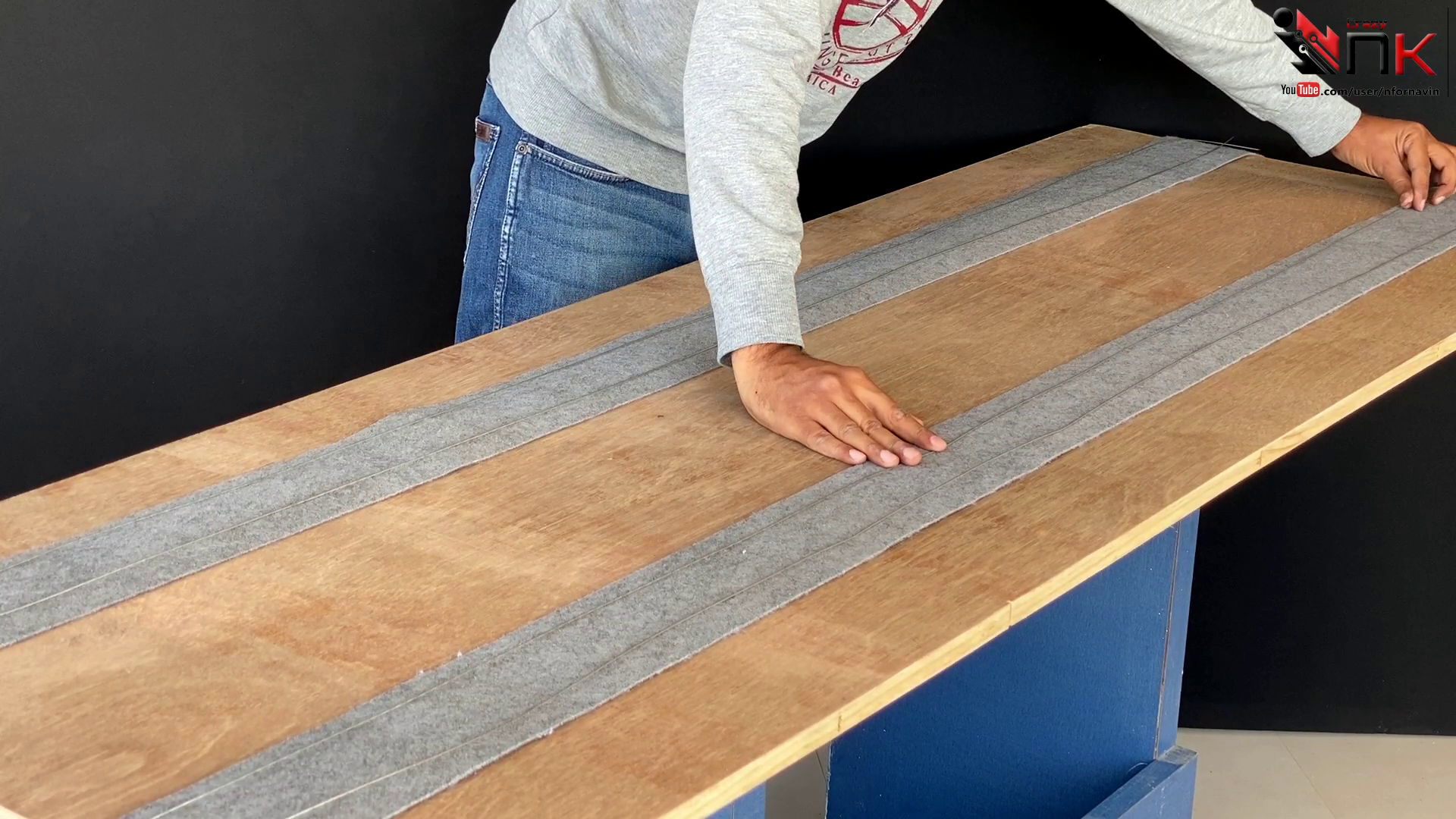
Place the two strips parallel on the wooden board and check that they cover the full contact area of the chair base.
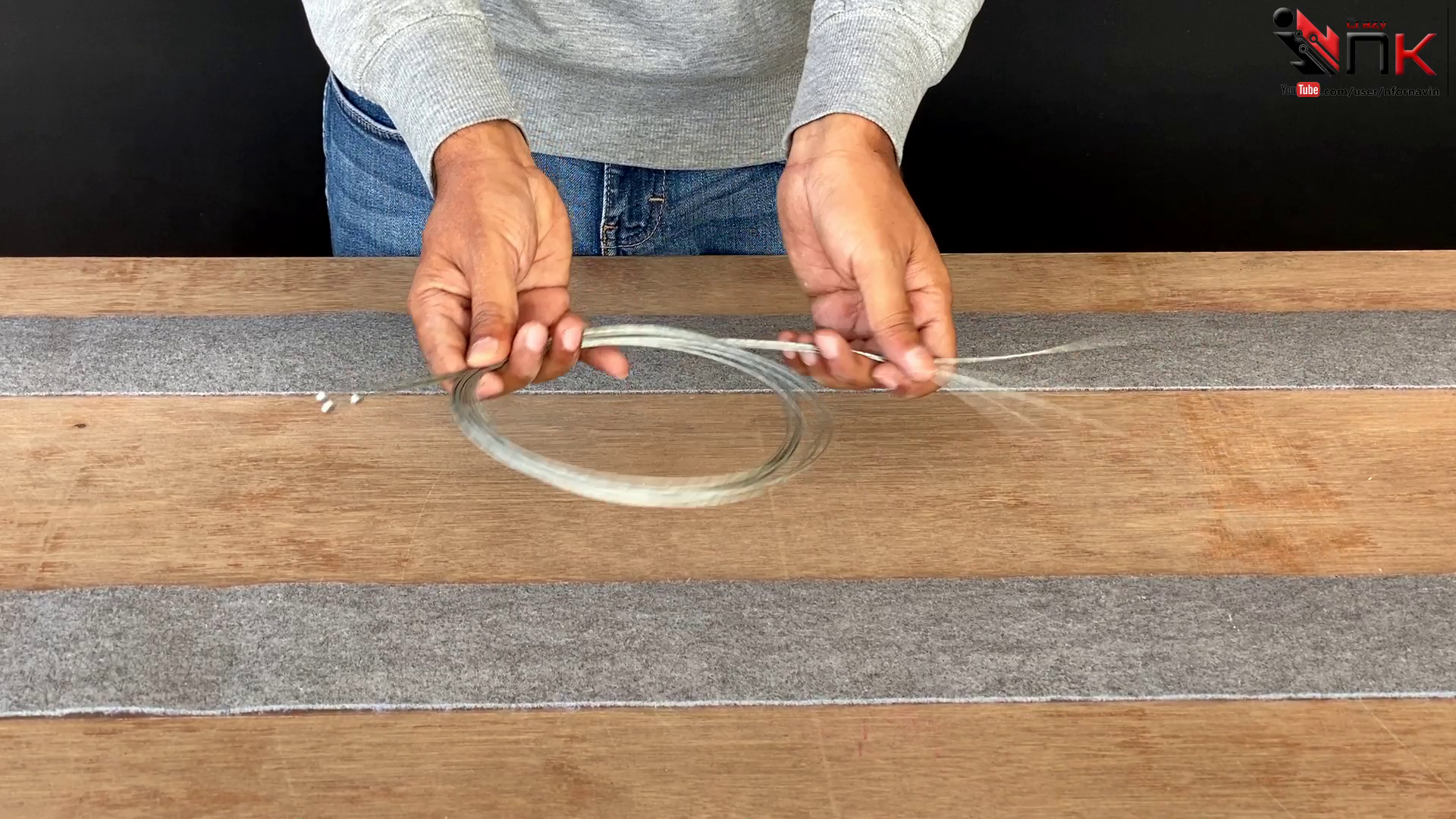
Attach two pairs of brake wires along the length of each strip to add grip and control movement.
Sticking the Wooden Pieces One by One Onto the Carpet
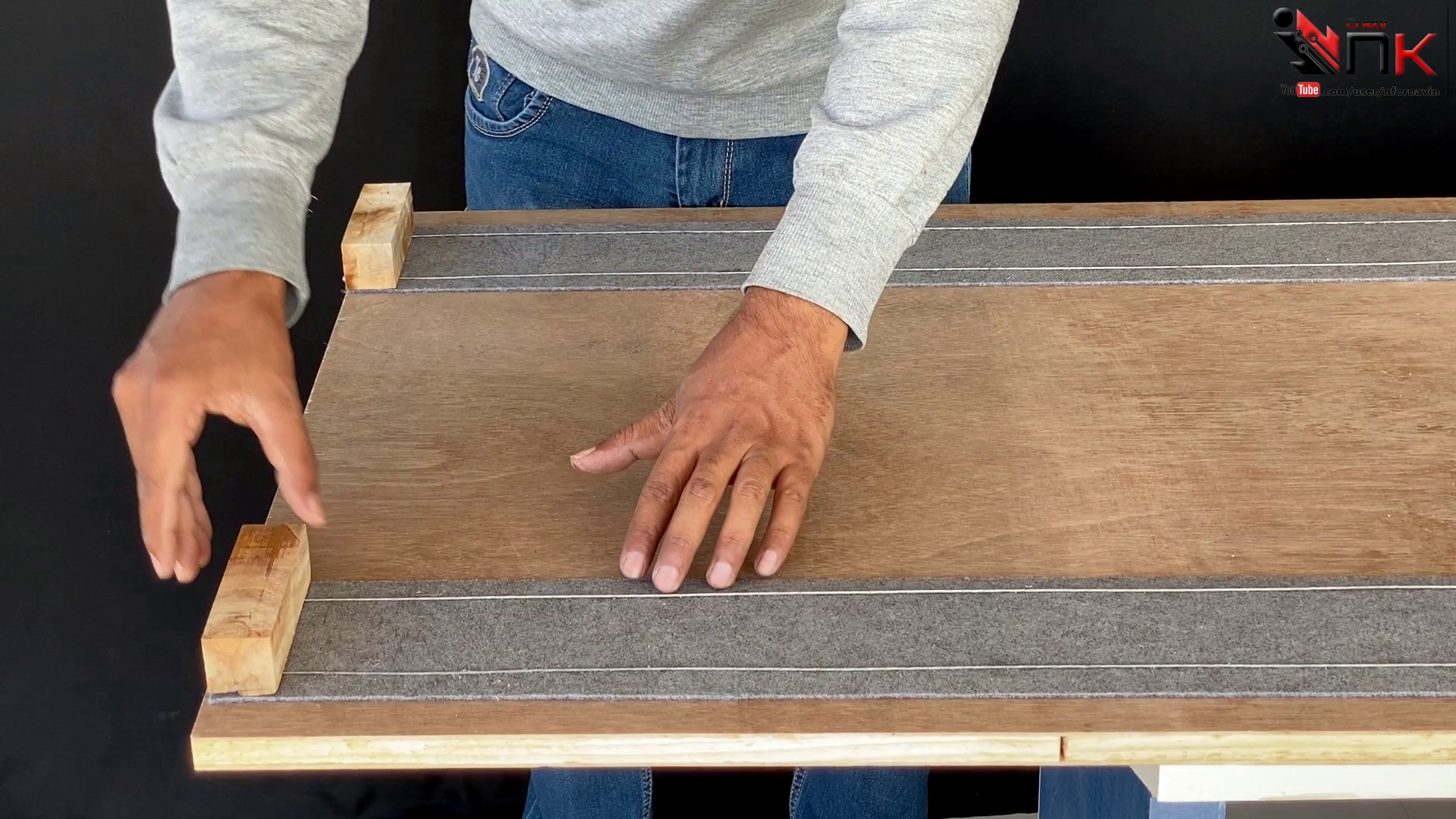
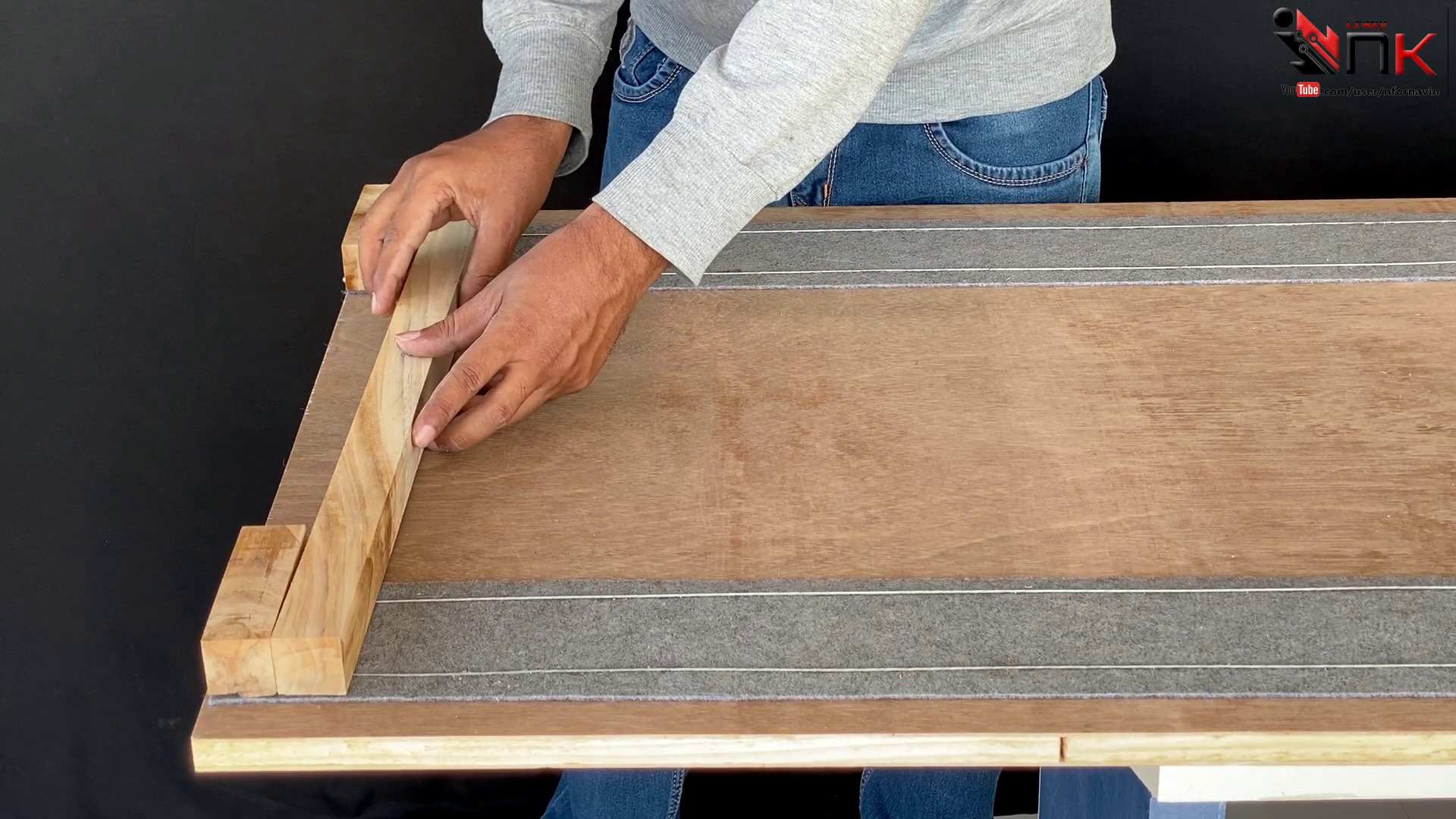


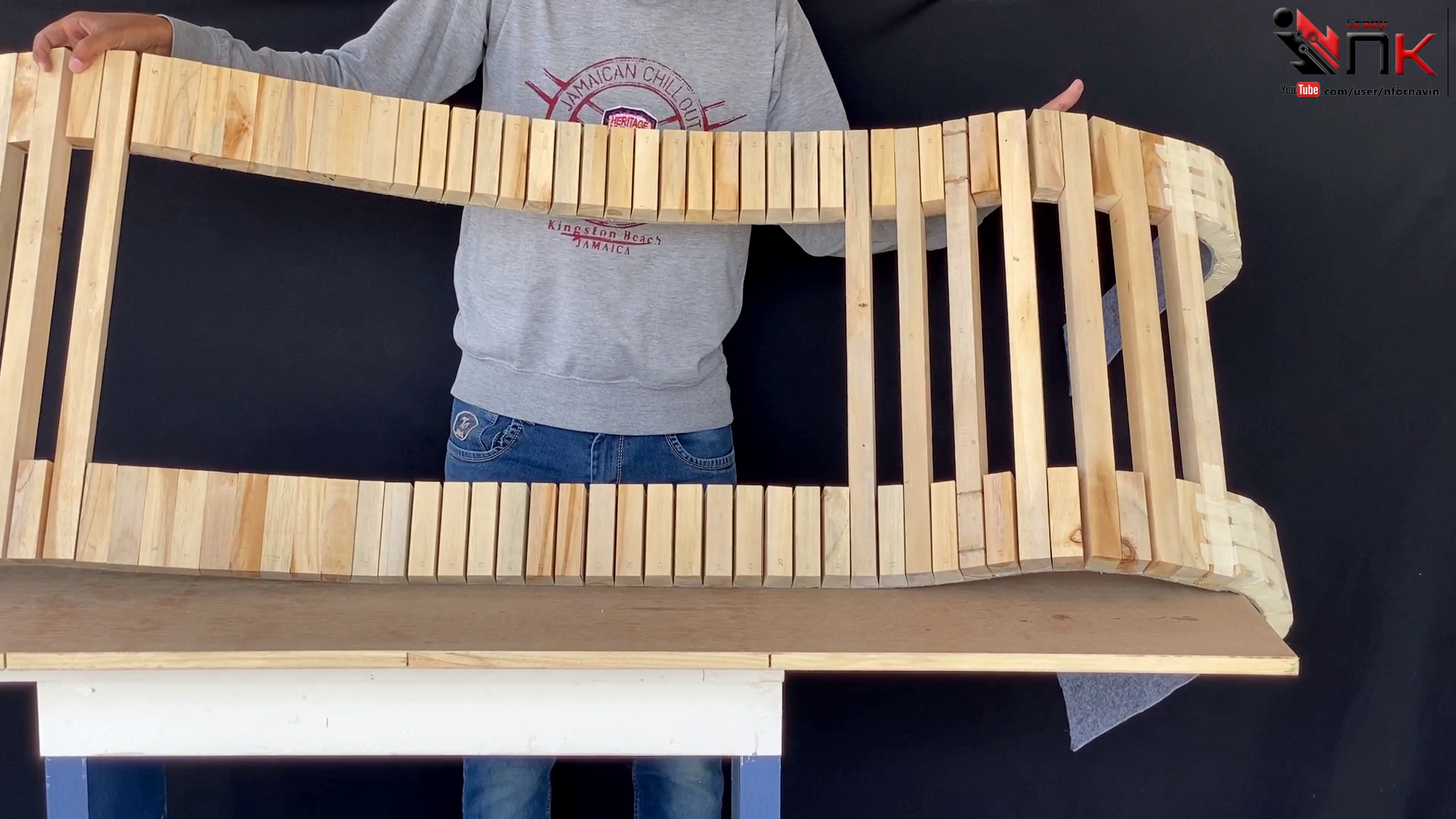

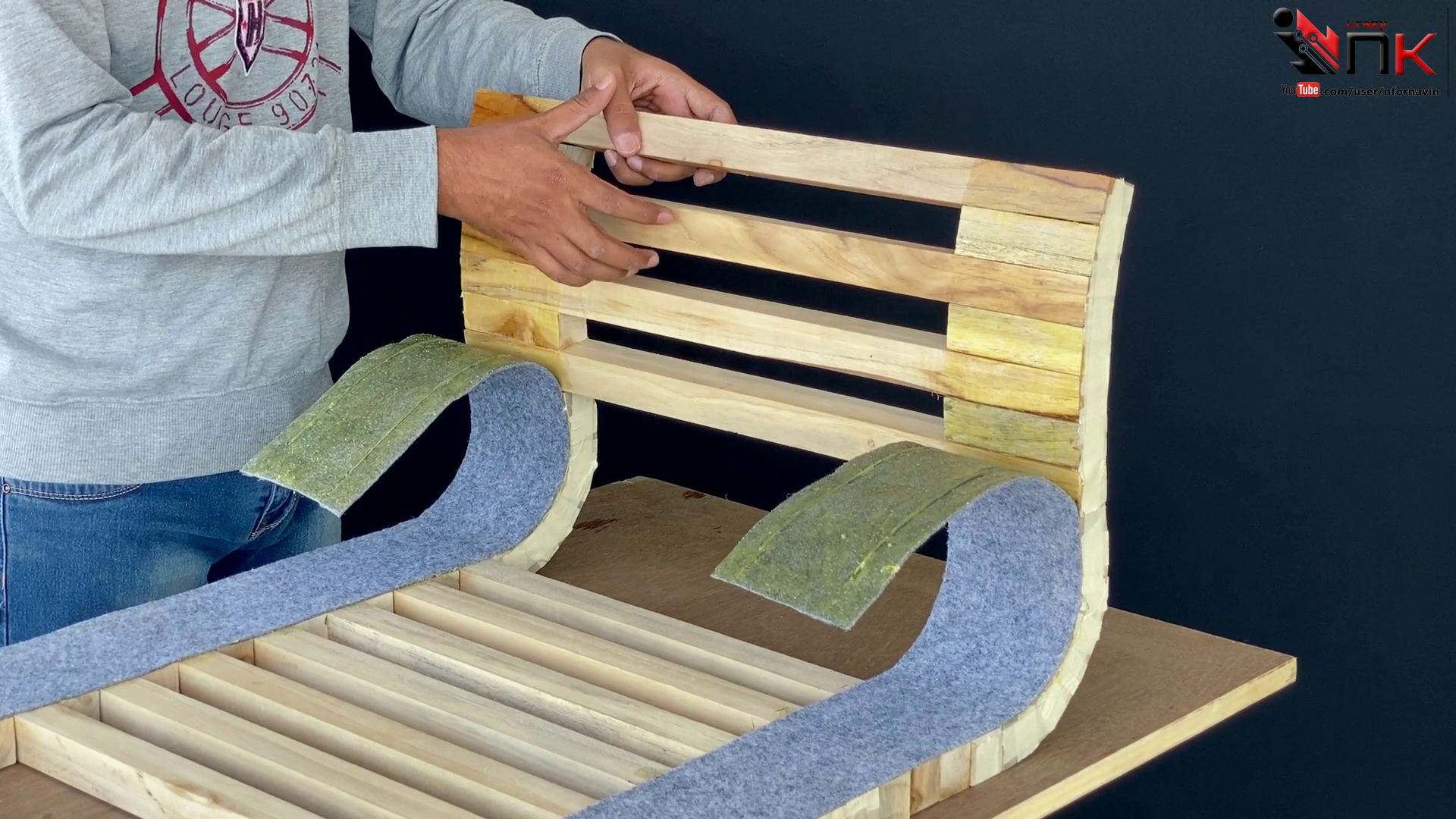

Place the carpet on a flat surface and position the template securely underneath or beside it for accurate alignment.
Start sticking the wooden pieces one by one onto the carpet using strong adhesive.
Carefully align each angled wooden piece according to the template (step 3) to maintain the correct curve and shape.
Press each piece firmly in place to ensure proper bonding and avoid gaps between blocks.
Continue arranging and sticking all pieces sequentially until the full frame structure is completed.
Allow sufficient drying time before moving or bending the assembled structure.
Chair Is Ready to Roll
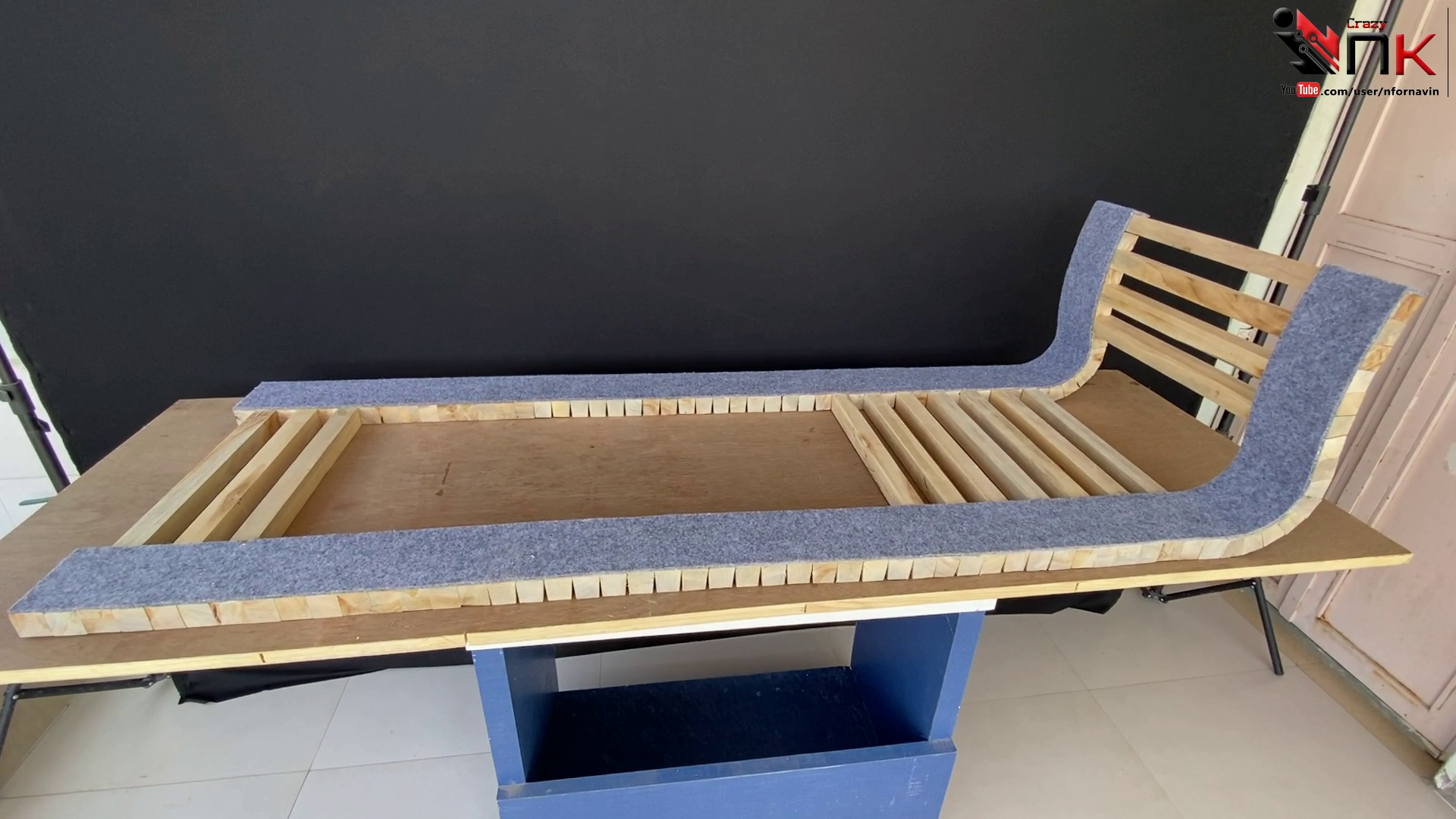


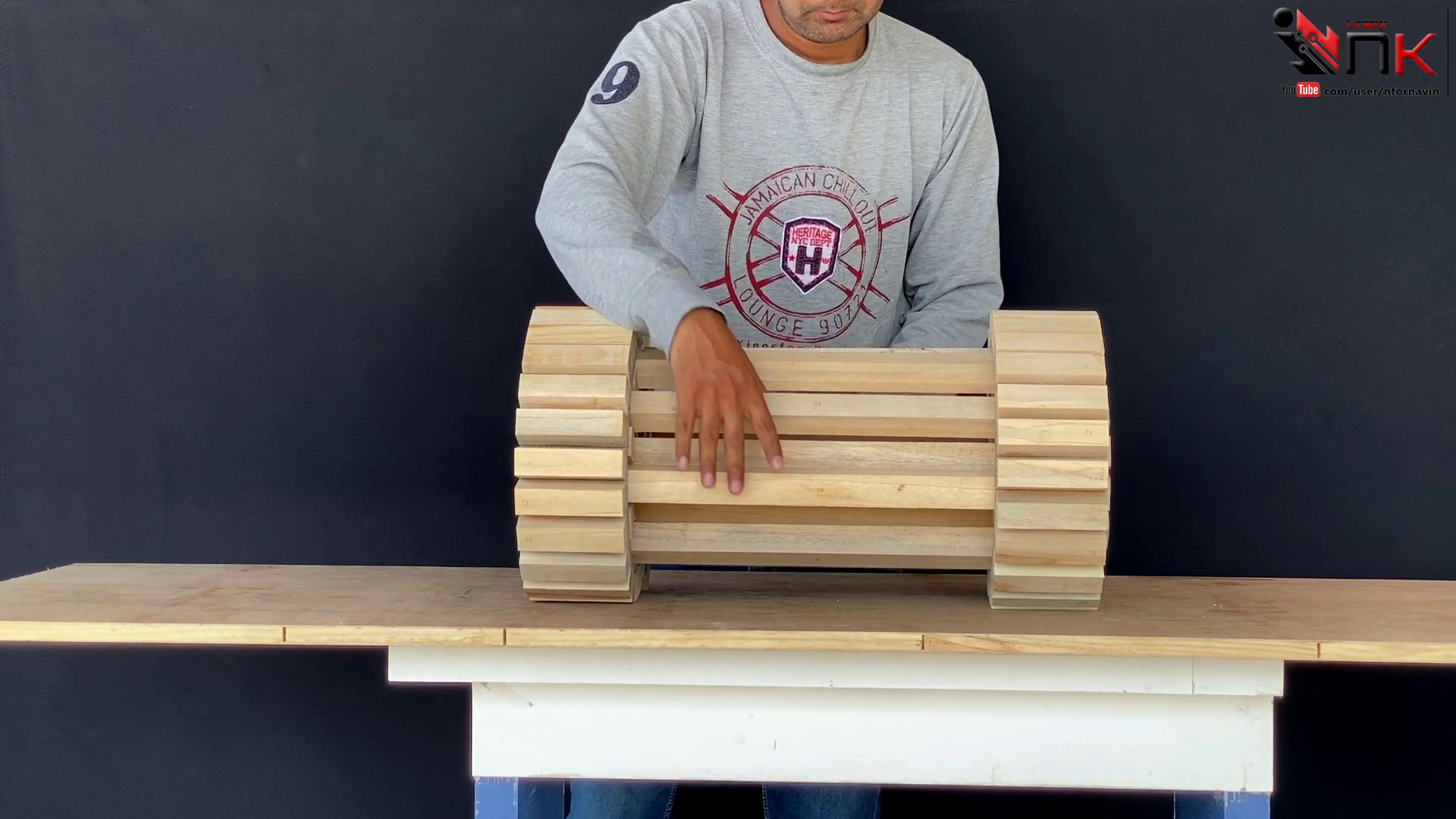
After Attaching the strips securely to the base — now the chair is ready to roll smoothly and safely.
Unroll and Set Up the Foldable Rolling Chair

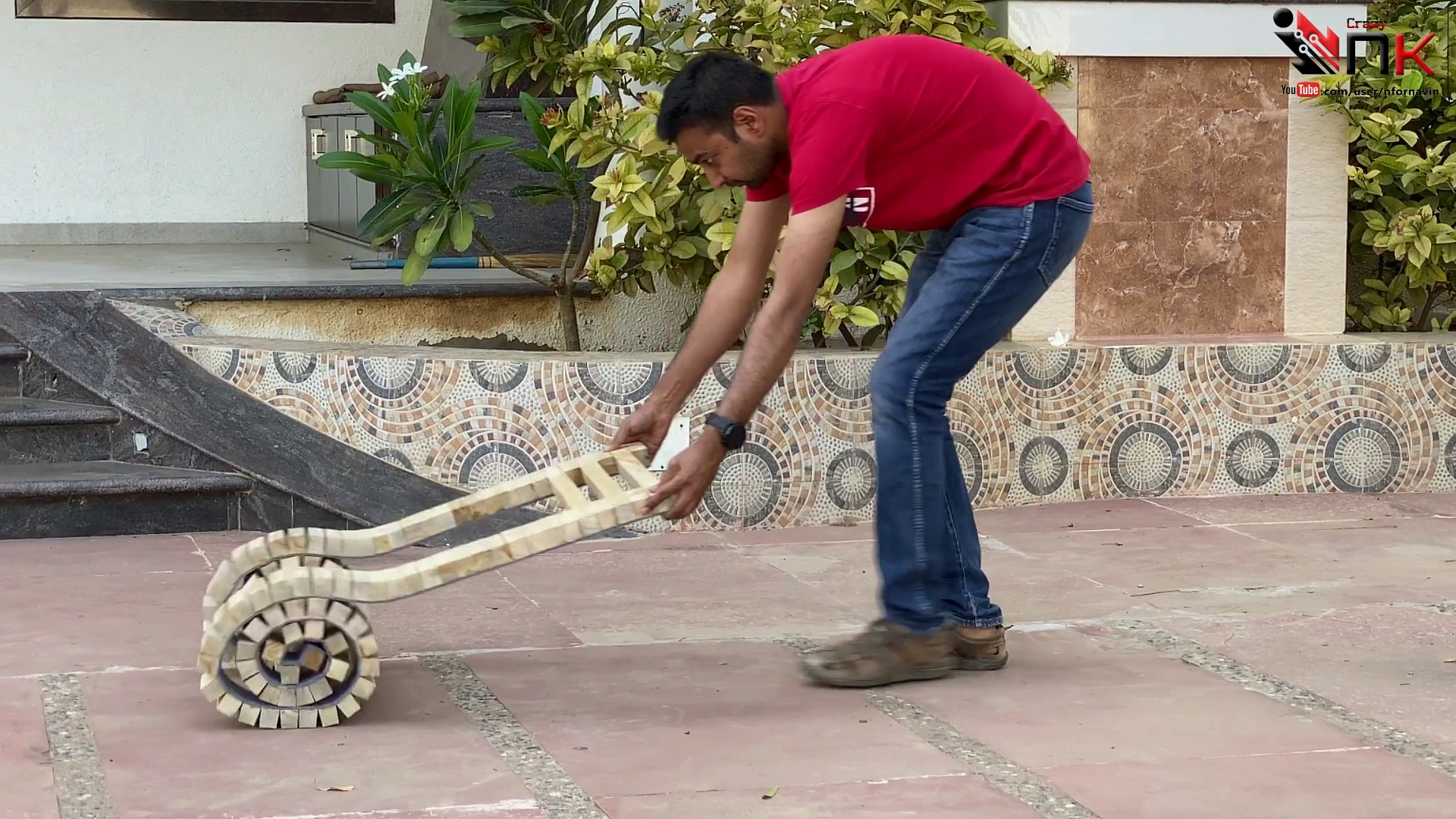

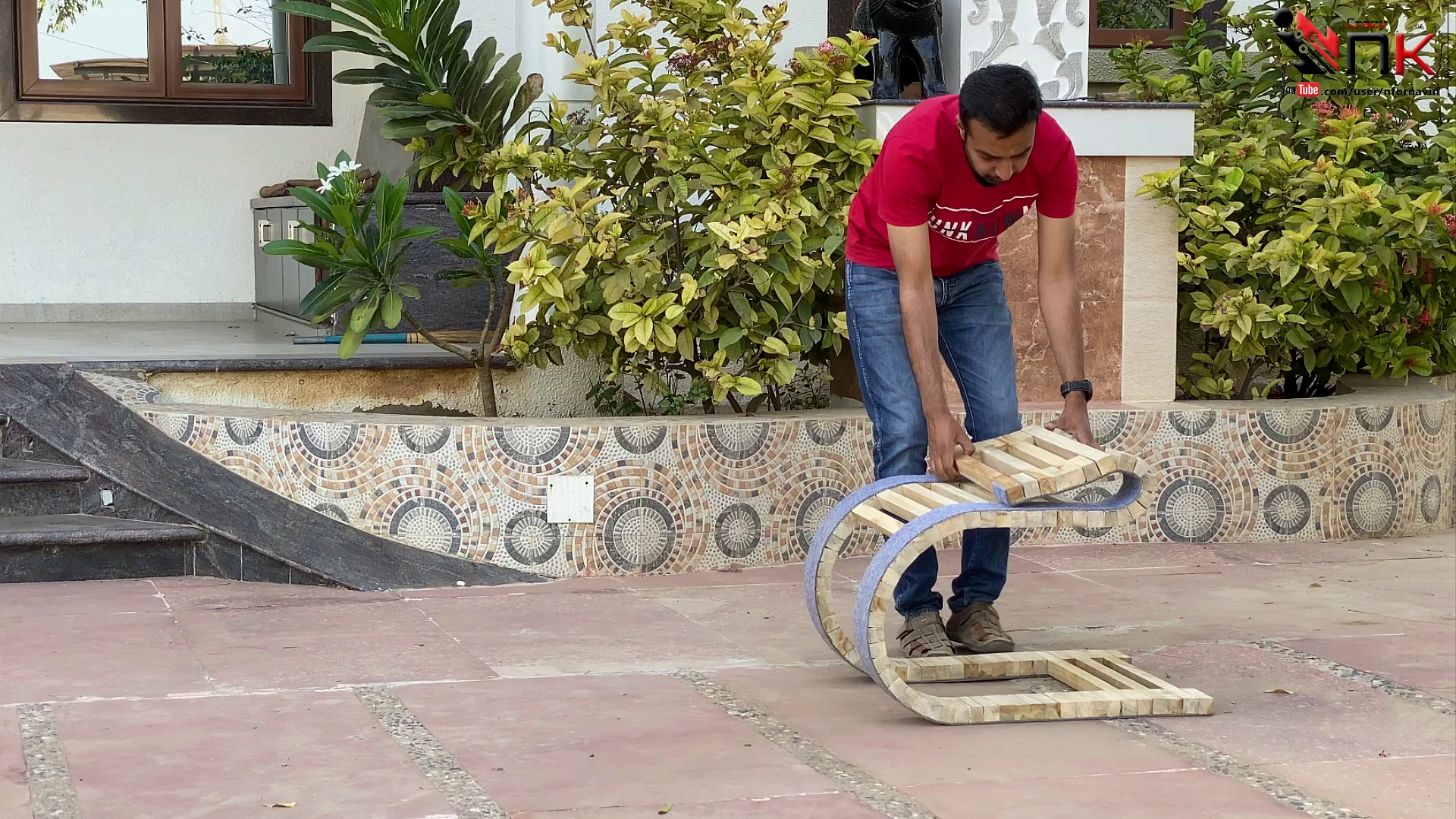

Place the folded wheel-shaped chair on the ground and hold both ends firmly.
Gently pull and unroll the frame outward until it fully opens into the chair shape and rests stable on the floor.
Final Step – Testing & Strength Improvement
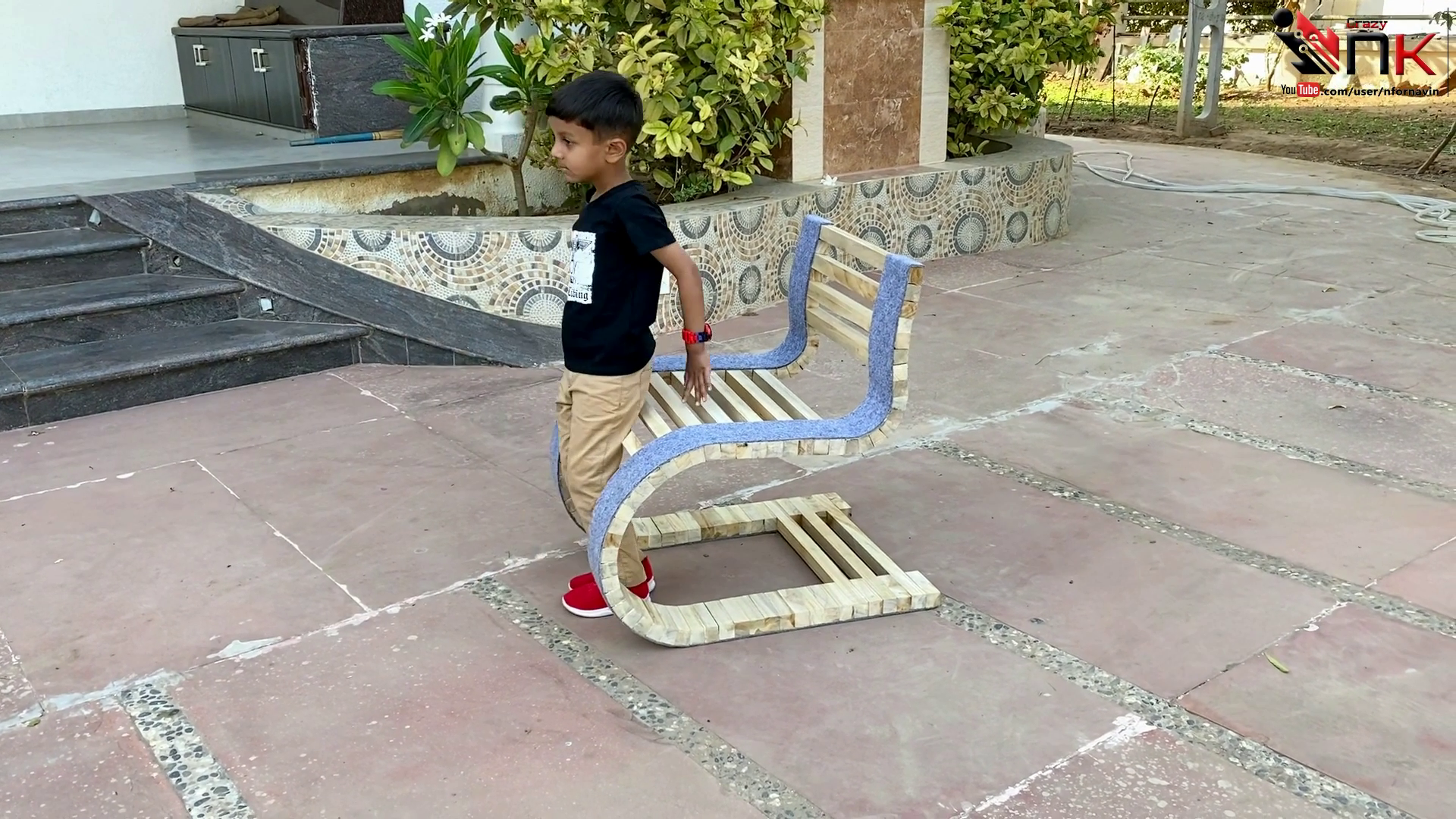
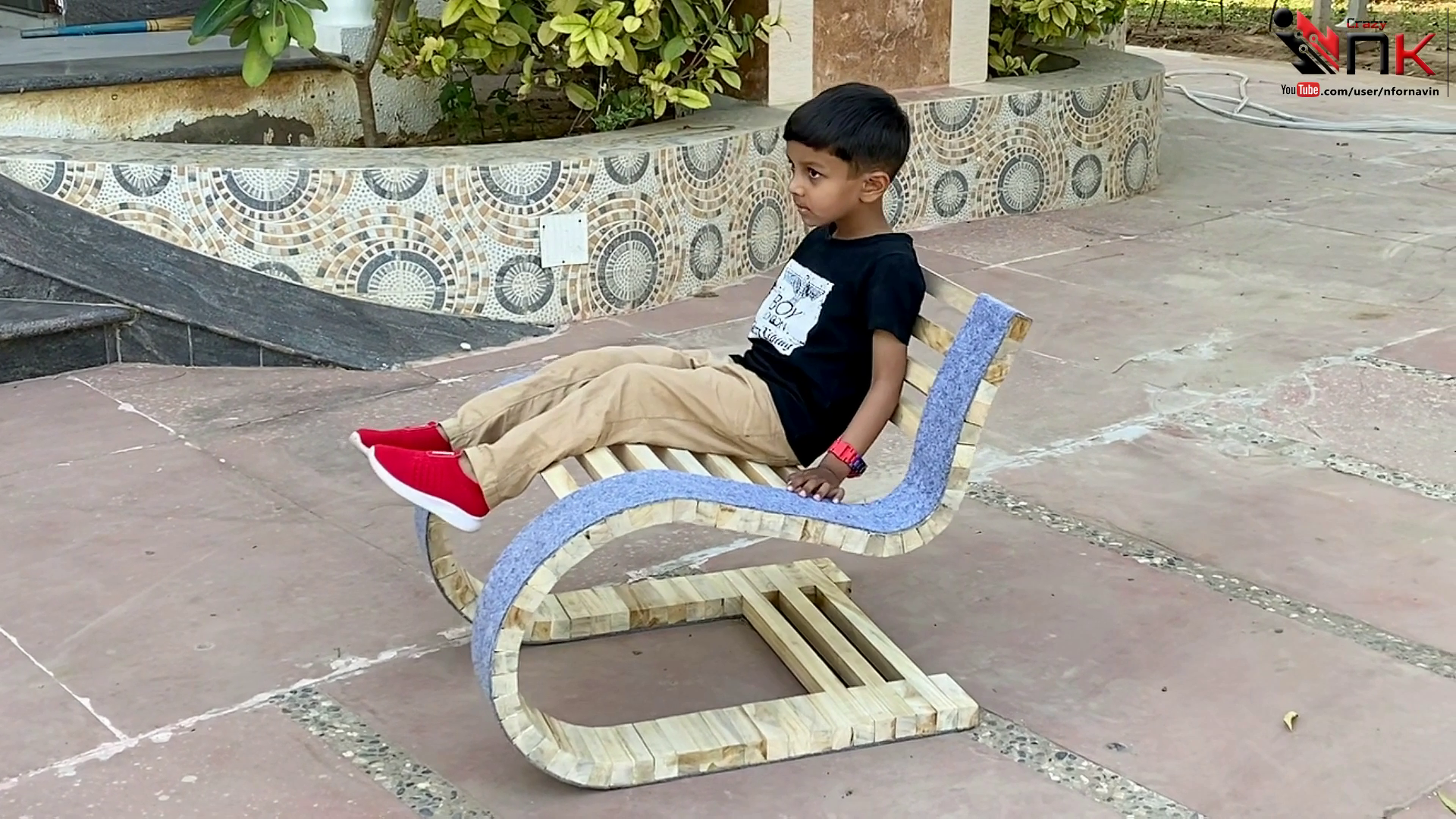
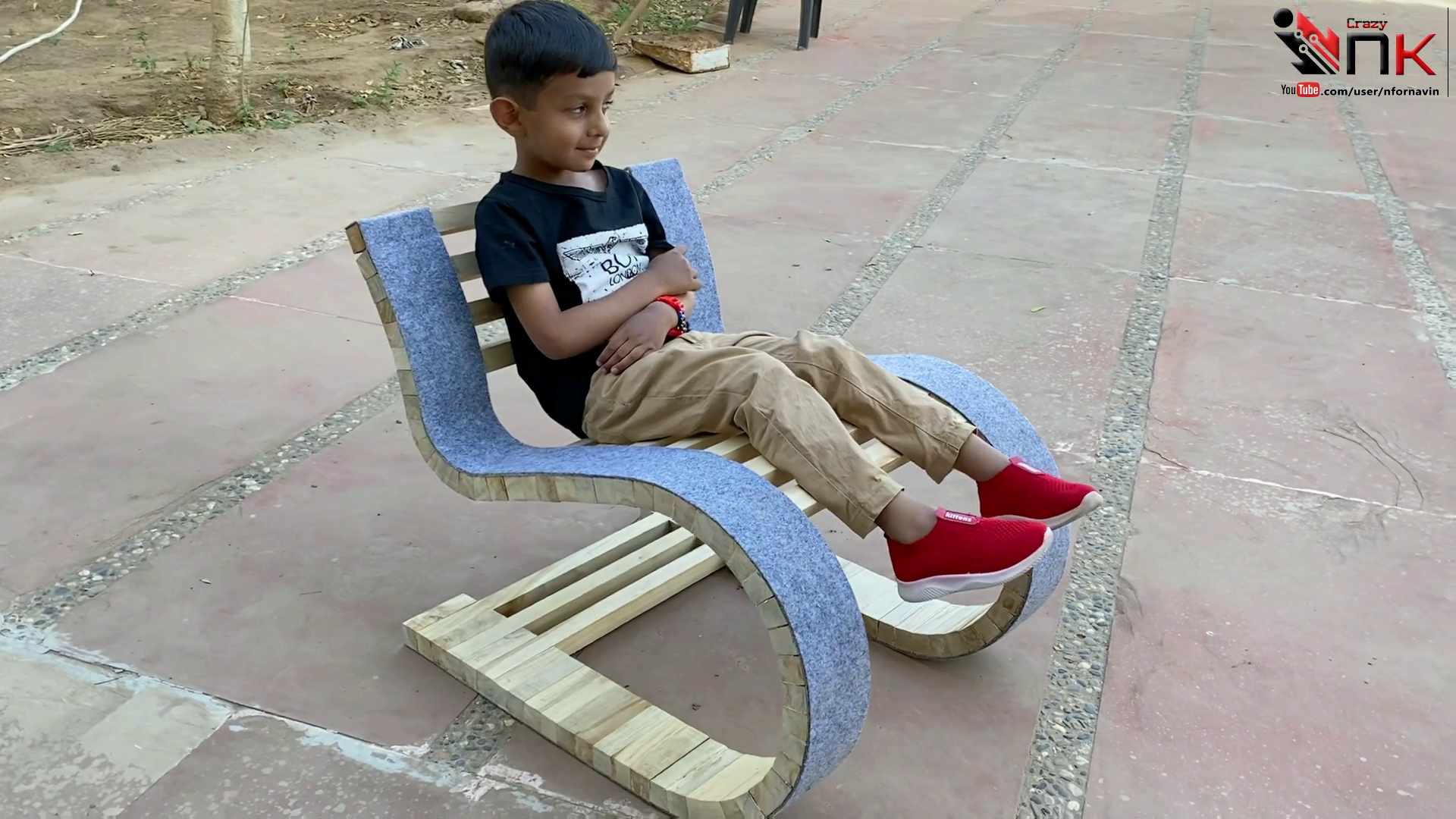
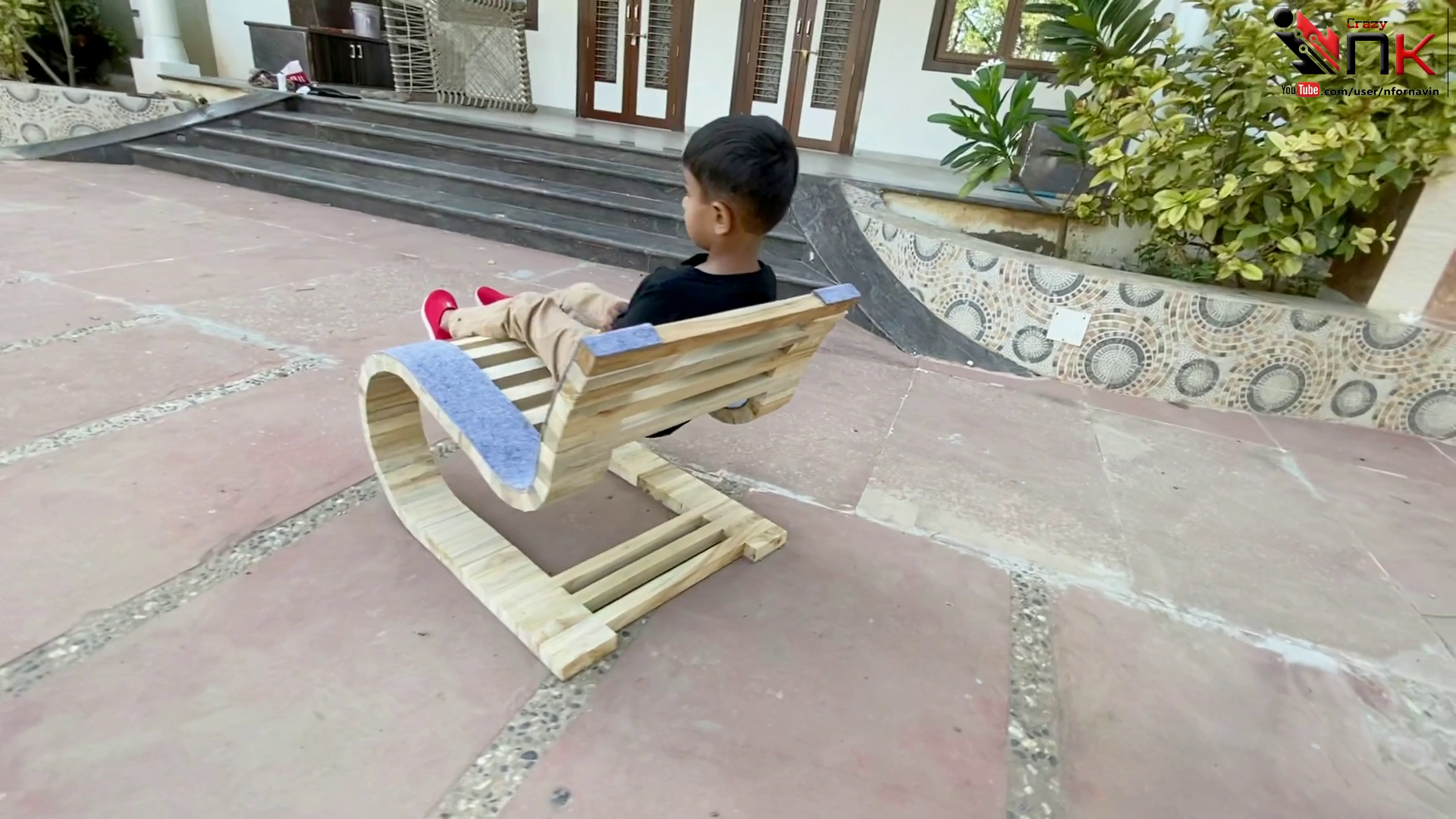
Now place the chair on a flat surface and carefully sit on it to test balance and stability.
For extra strength, you can increase the number of brake wires used inside the structure. Also, make sure brake wires is properly fixed at every wooden piece using strong adhesive and secure them tightly with stapler pins (or similar fasteners) to make the chair more durable and long-lasting.