DIY How to Repair a Recliner Chair or Sofa Various Issues
by sosclosetsandfurniture in Workshop > Furniture
92 Views, 0 Favorites, 0 Comments
DIY How to Repair a Recliner Chair or Sofa Various Issues
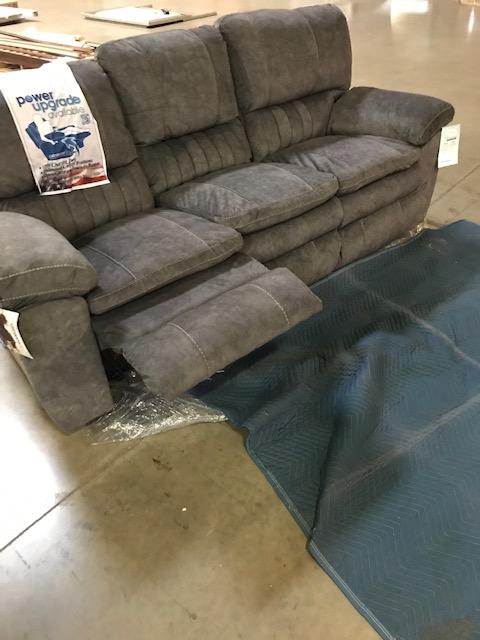
This is a DIY How to repair various common issues with a recliner chair or sofa. Most people with a recliner will at some point face one of these common, easy to repair issues.
Supplies
Most of the issues discussed here are concerning damaged or nonfunctional reclining mechanisms. The tools needed are fairly basic. Most of the supplies needed are available through Amazon. You may be able to contact the manufacturer for a replacement part.
Please note I am an Amazon affiliate. Any links are Amazon links.
pliers wire cutters and wrench combo set
Safety first! Always wear safety glasses, a dust mask or respirator, hearing protection and gloves as needed.
What to Do When the Recliner Won't Recline
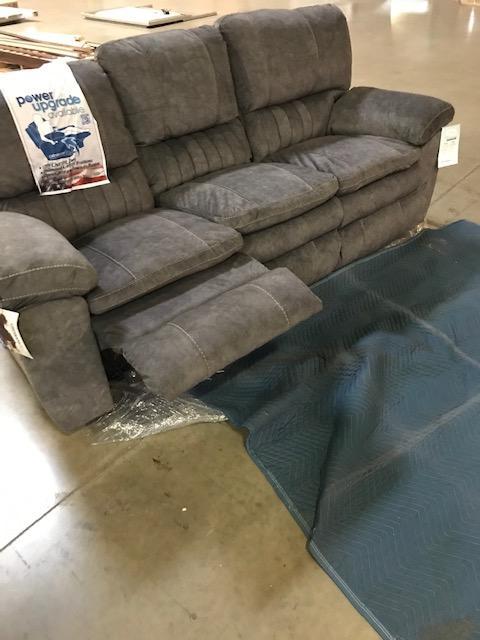
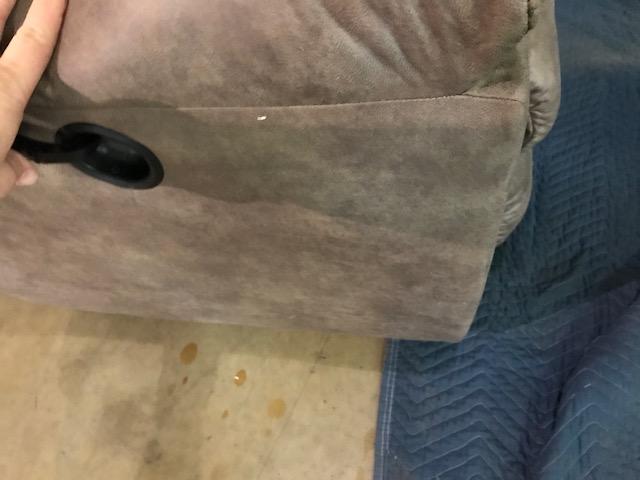
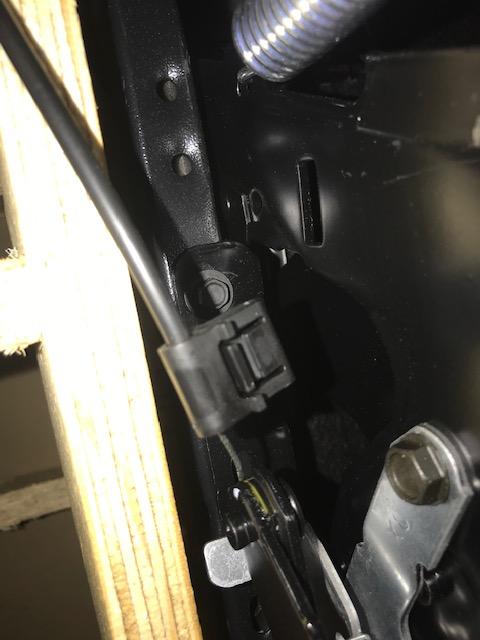
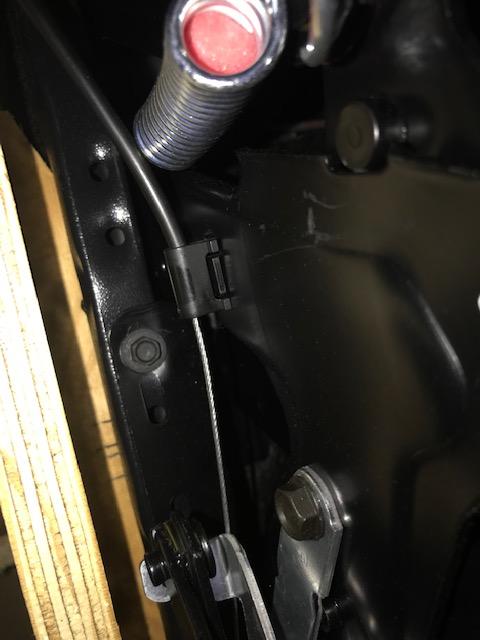
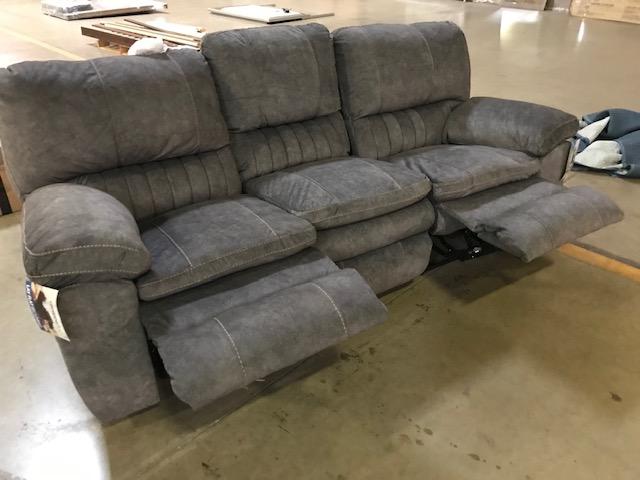

A very common issue happens when you pull the lever and the chair or sofa fails to recline.
Test the handle. If you pull the handle and it is snug, don't force it. Forcing the handle can damage it or the cable. Place a blanket in front of your recliner and roll it forward till the backrest touches the floor. Examine the cable where it passes through the side to the mechanism. Sometimes the plastic clip that anchors the cable has not been attached properly and has come loose. When this has happens you can snap it back in place. The slot in the metal frame is apparent and it just snaps in. Test it again and it should recline. As a rule while the sofa is upside down and open I like to go ahead and spray some silicone lubricant on the mechanisms and springs to help them work smoothly. Keep a rag handy to avoid drips. Be careful not to breath the fumes.
The Cable Can Become Unhooked
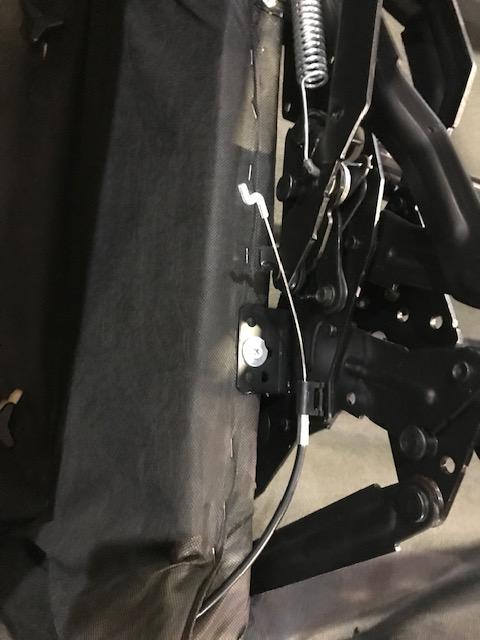
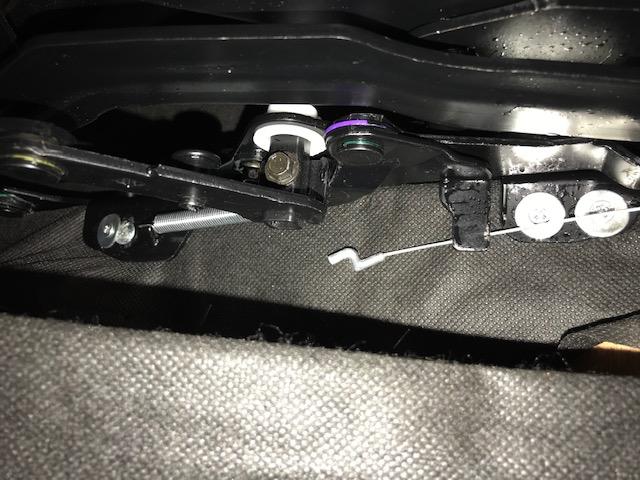
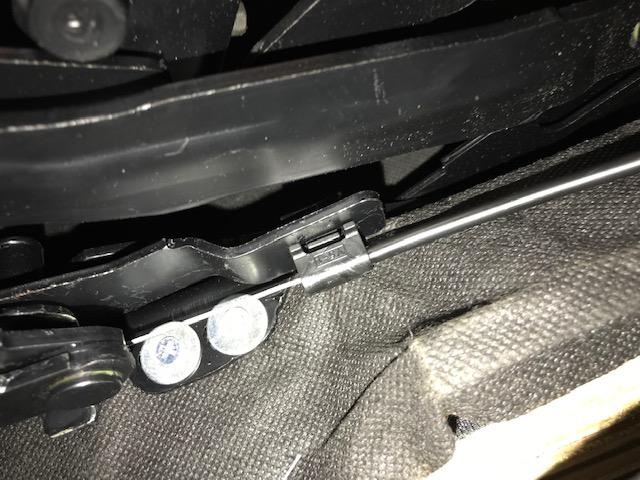
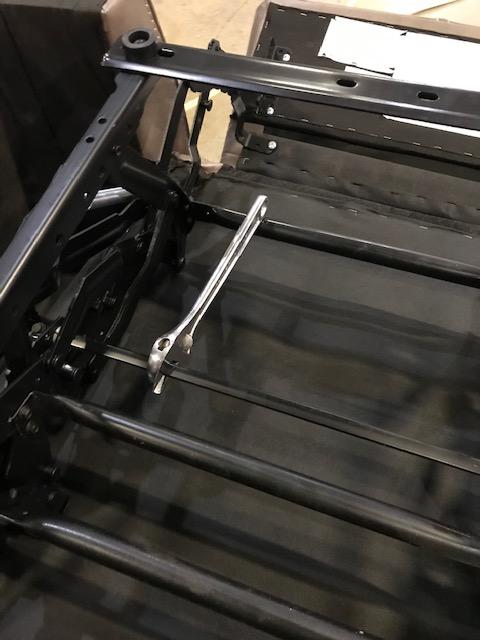
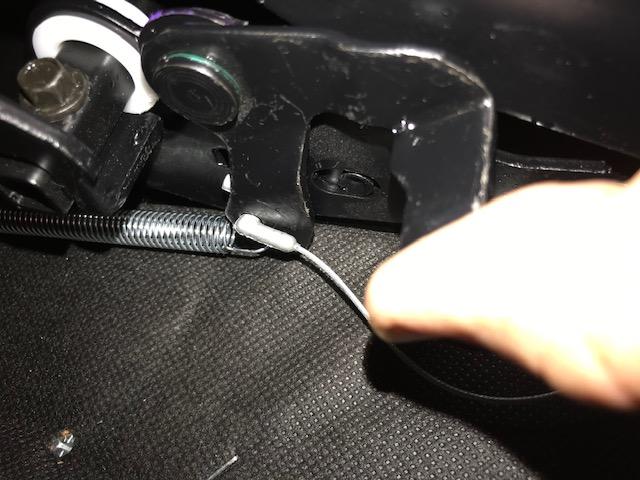
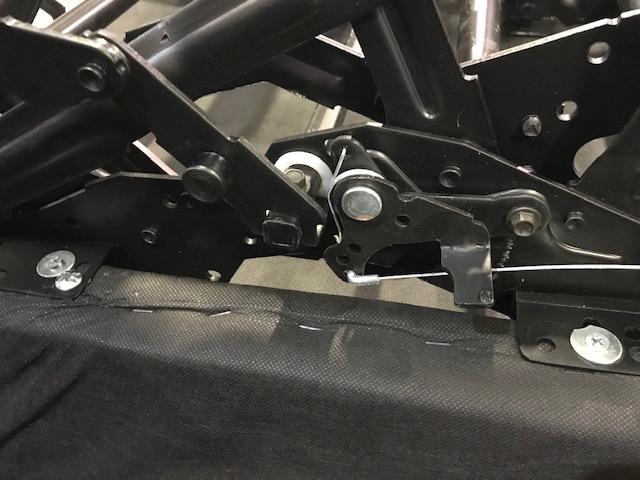
Now sometimes when you test the handle it is soft and springs open easily. That means it is loose or possibly broken. Upon examination you may find the clip is on but the hook is loose that attaches the end of the cable to the release mechanism. To address this you must use a wrench on the center square post and use it to slowly release tension on the footrest and open the recliner. Control the motion or the wrench will get away from you. Once it is open the cable will now have slack and allow you to reset it in the hole. Sometimes there is more then one hole so go with the first one and test it to see if it has enough tension to open it. If it is a sofa, check the opposite recliner and see what position that cable is set in.
The Release Cable Can Become Trapped
.jpg)
.jpg)
.jpg)

The cable can become trapped. If the handle feels locked, don't force it. Roll the recliner over to examine it. The cable can become trapped on top of the release lever blocking it from opening. Open the recliner with a wrench as described before to release tension. You should be able to now slip the cable into the proper position. If needed you can unhook it first and then hook it back. Sometimes this can cause the cable to become stretched or damaged. It would be necessary to replace the whole cable. Recliner handles are easy to replace, fairly inexpensive and readily available on Amazon in different styles.
Replacing a Handle
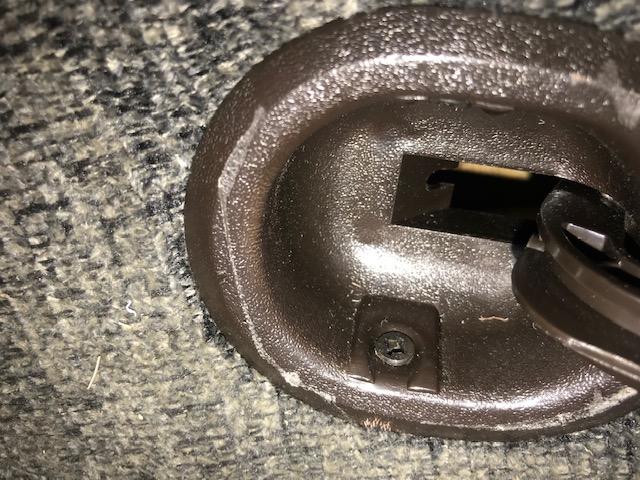
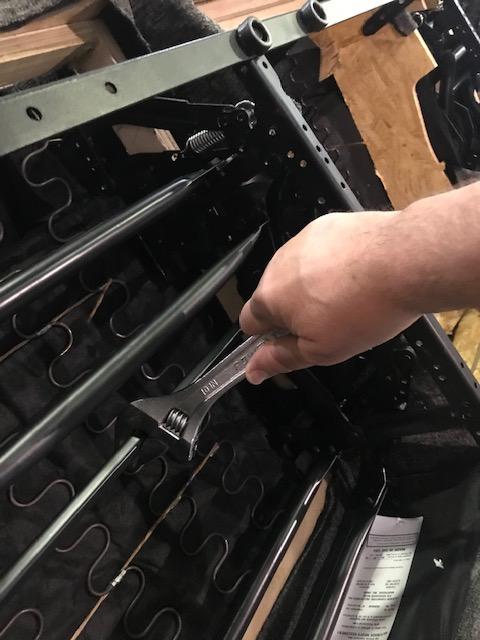
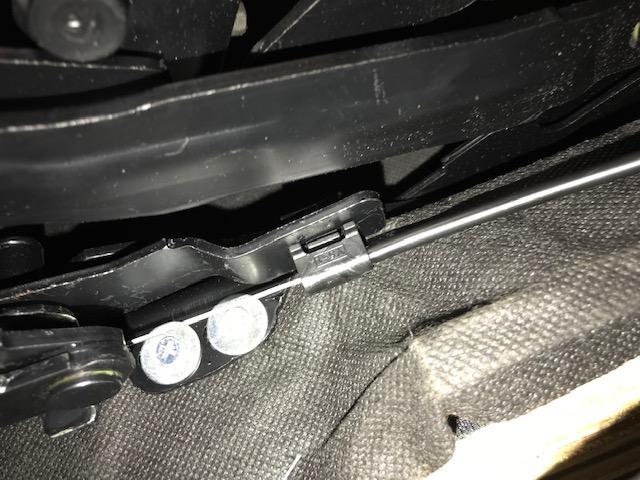
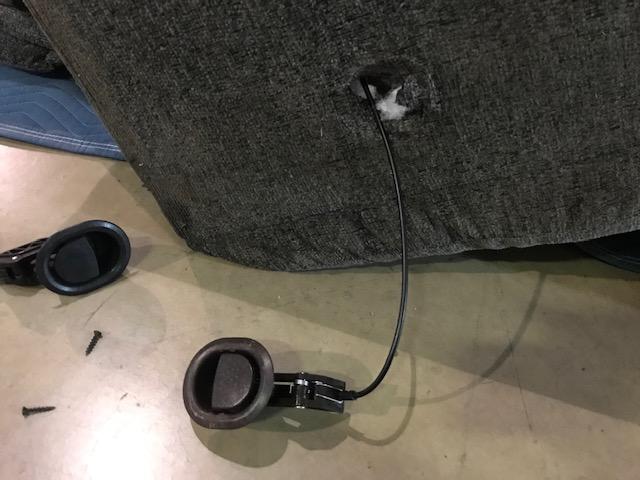
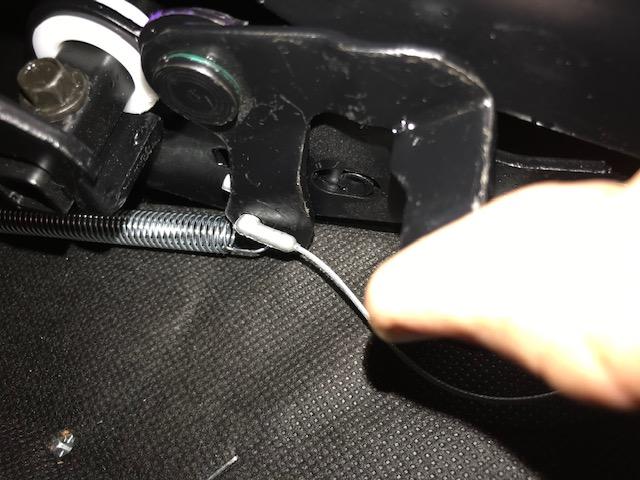
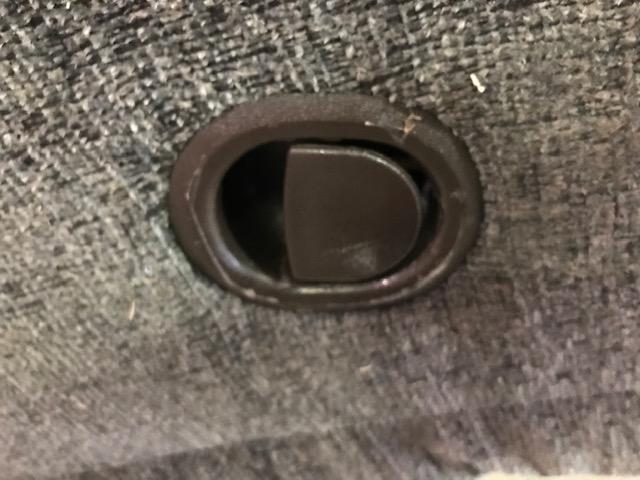
If it is necessary to swap a handle, pull the lever open to reveal the anchor screws. Inside the cup where the handle lever sits are two anchor screws on top and on bottom. Hold the lever open and unscrew the bottom one. Roll the recliner chair or sofa over and then repeat the steps holding the lever open to expose the top screw. Save the screws. At this point you will possibly need to open up the dust cover to expose the cable inside the arm rest. Use a staple puller and pliers to remove the staples exposing the cable. I can never unclip the plastic cable bracket without damaging it. Use pliers to snap it off and make sure there is nothing stuck in the mounting hole. Unhook the cable hook. Go ahead and open the recliner with a wrench. You will need slack in order to hook a new cable in place. Feed the cable out the armrest hole.
Take your new cable and slide it through the hole on the side of the armrest. Fish the cable through the arm rest following the path you took the old one out of. Go ahead and place the screws back in the new lever repeating the steps from before. Once that is done, hook the cable hook in place and snap the bracket into the slot. Test the unit. Once it is good to go reattach the dust cover with a staple gun. If the dust cover was torn the fabric is inexpensive and can be found at Hobby Lobby or on Amazon.
Replace a Leg Insert
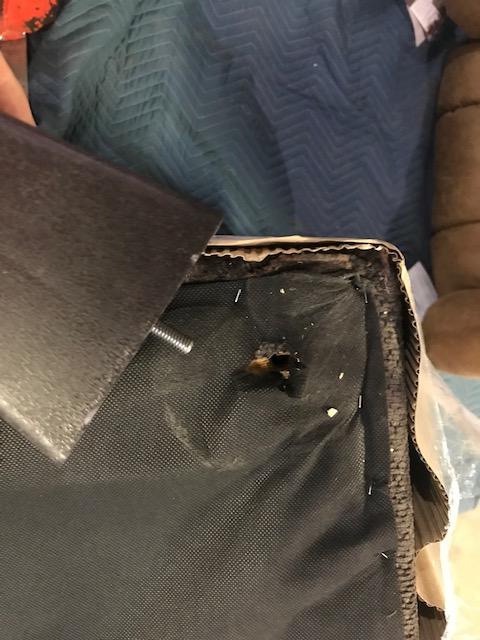
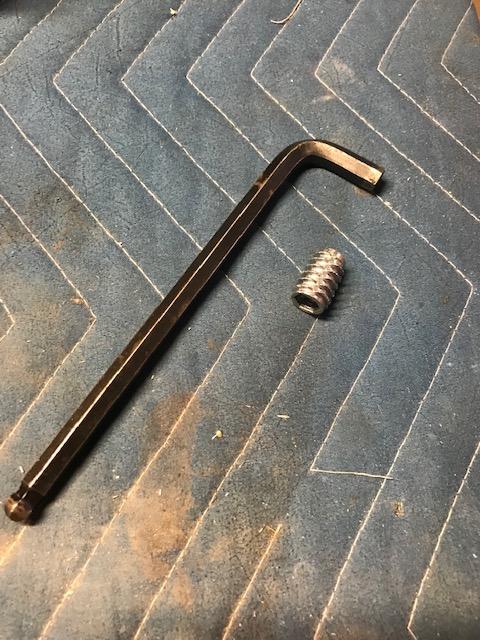
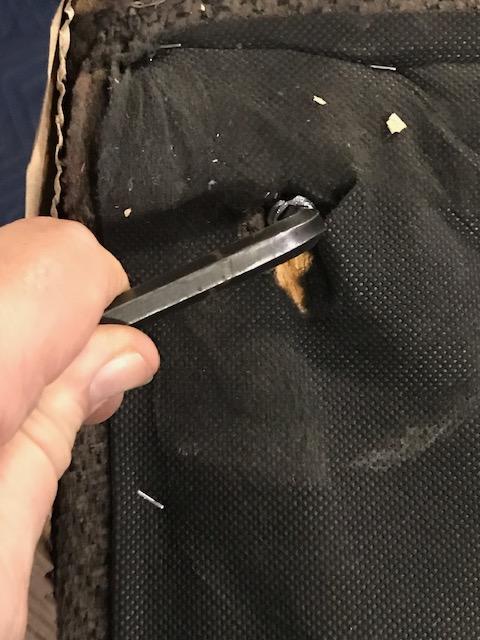
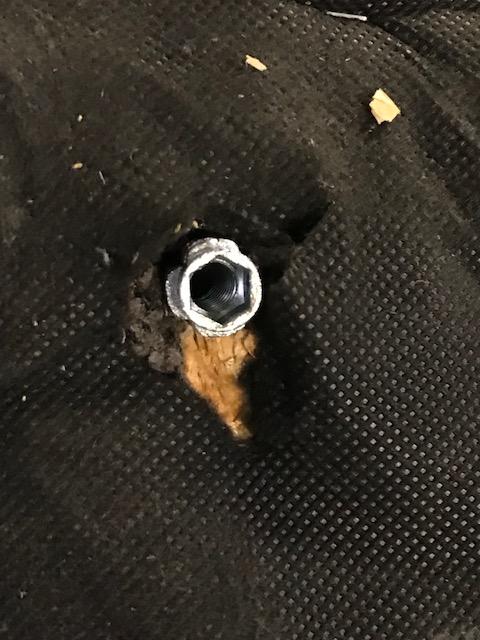
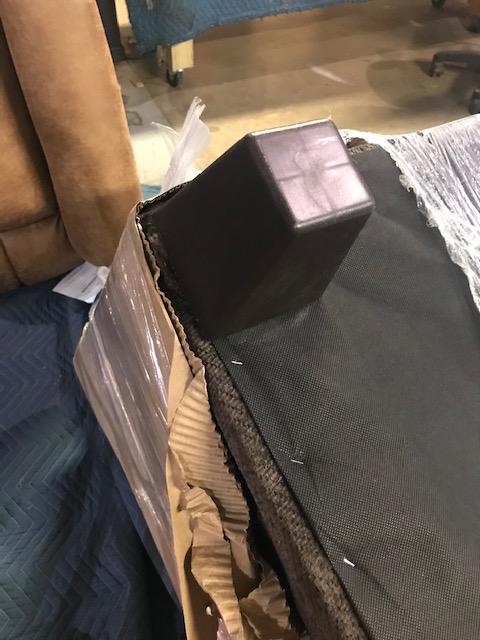
Upholstered furniture often come with the legs unattached as they can be easily damaged in shipping. Sometimes the new chair or sofa arrives without a threaded insert for the leg to be screwed into. They can become loose from use and over time the leg will come out or might become bent damaging the threaded insert. Adding or replacing an insert is very easy.
If the insert is missing, check what size the threading on the leg is in order to acquire a new one. Sometimes you can test it with a nut. Most of the time the threading is 5/16" . Sometimes they are 1/4". Occasionally they are metric. If the hole is there, use an allen wrench to screw the new insert in place. You may need to cut away some of the dust cover to expose the hole.
If there is no hole present, refer to the opposite corner of the furniture and measure the location of that leg to find your mark. Drill a hole slightly smaller then your insert. Again, remove the dust cover in that location if needed in order to work. Twist the new insert into the hole and attach the leg. If none of the holes have been drilled, measure the edge of the leg to determine the distance from the edge of the furniture where to drill.
Scuff or Tear Along the Bottom Edge of the Chair or Sofa
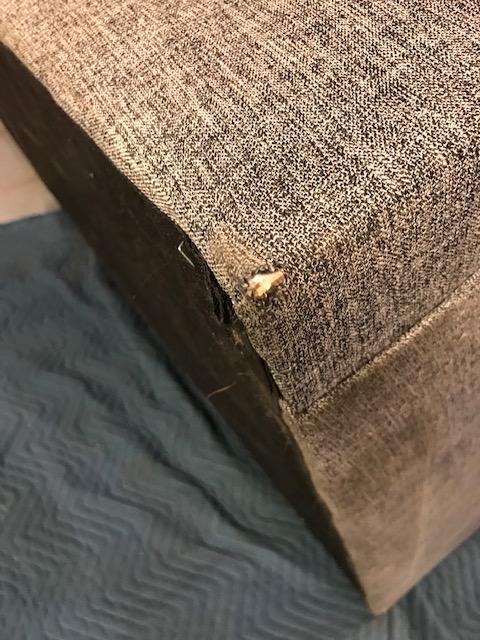
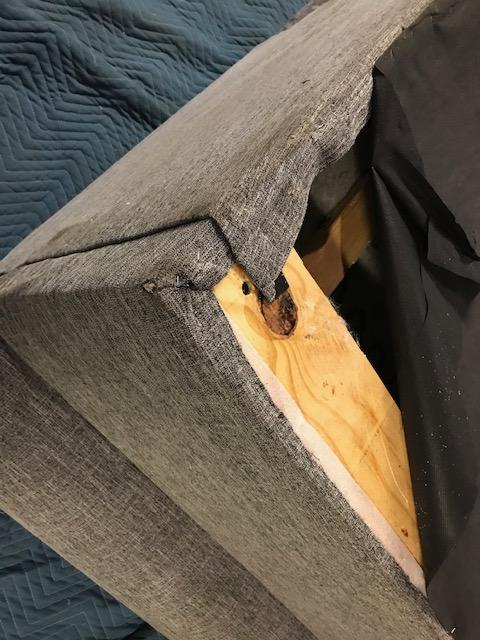
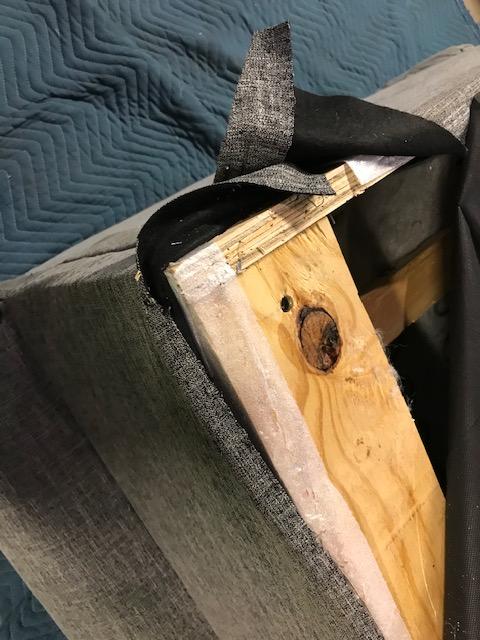
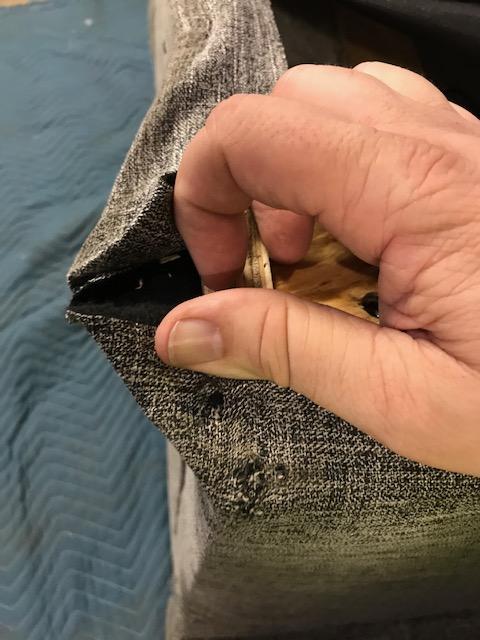
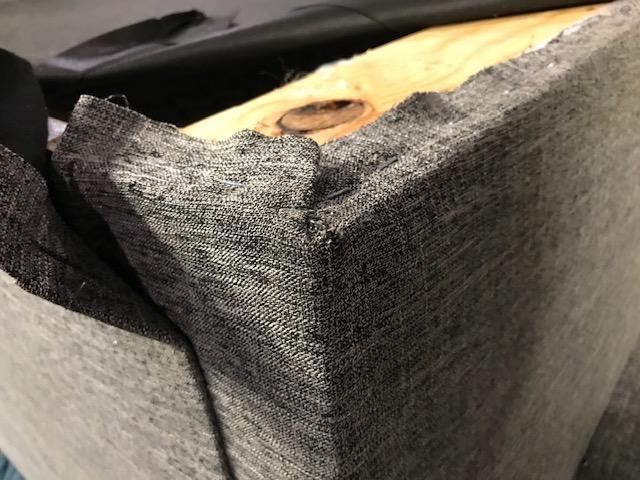
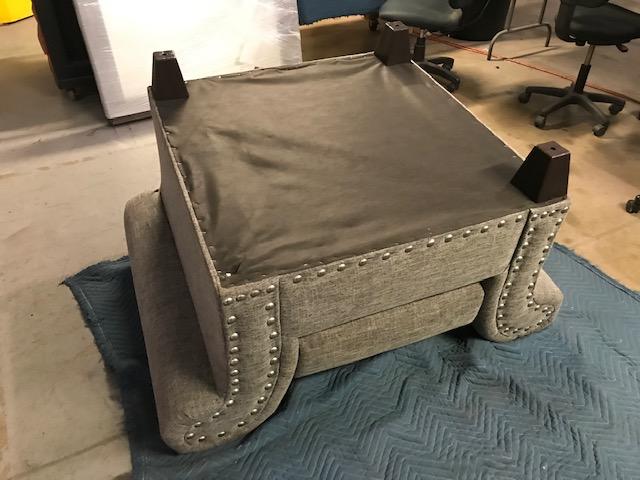
Your upholstered chair can get frayed or worn along the bottom edge. In this case a small hole has formed on the bottom corner. An easy solution is to stretch the fabric around the edge and reattach it with staples hiding the damage behind the dust cover.
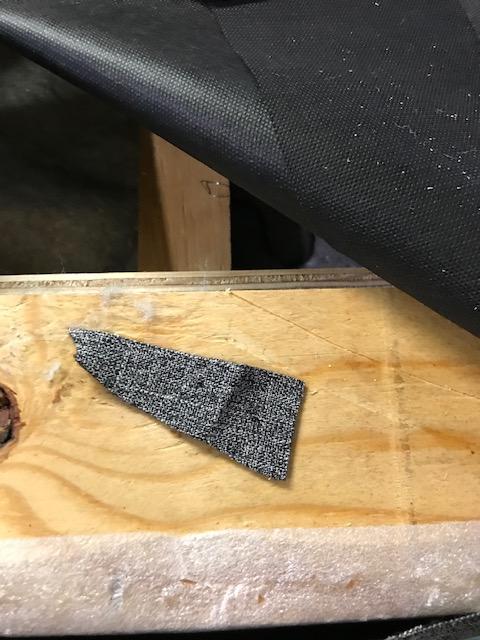
I removed the staples from the corner of the dust cover to expose the upholstery. Extra fabric is often hidden by the dust cover. Since this chair had a hole right on the corner, I was fearful stretching the fabric might enlarge the hole. This fabric, unlike vinyl, wasn't very flexible. I chose to harvest a piece of fabric from the fabric hidden by the dust cover.
I placed the small piece of fabric under the upholstery behind the hole. It would help support the fabric and camouflage the hole if it grew larger. I then stretched the fabric around the edge as much as I could without distorting the pattern and securely stapled it into place. I finished up the edges around it with more staples and then replaced the dust cover.
Replace a Motor
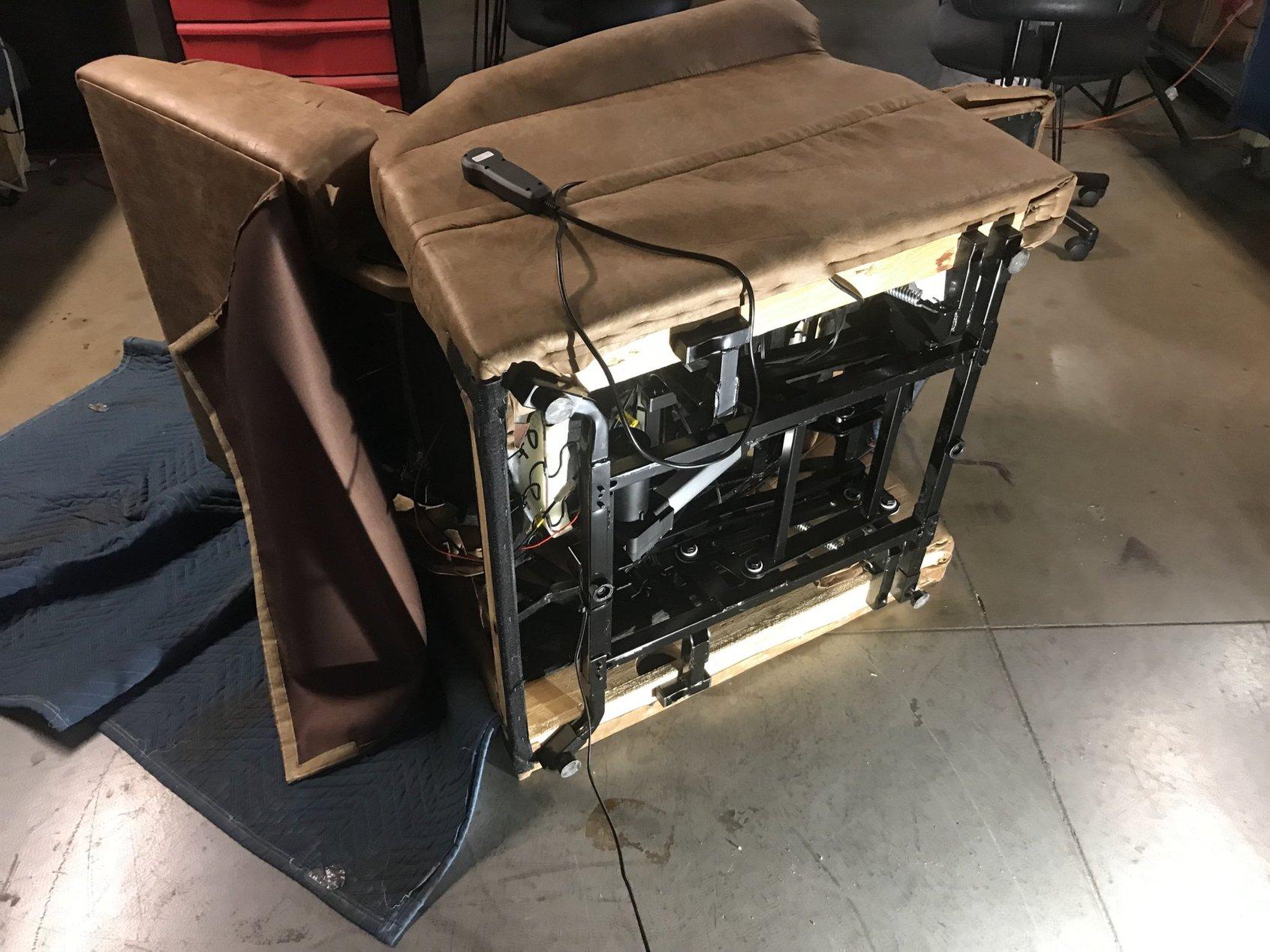
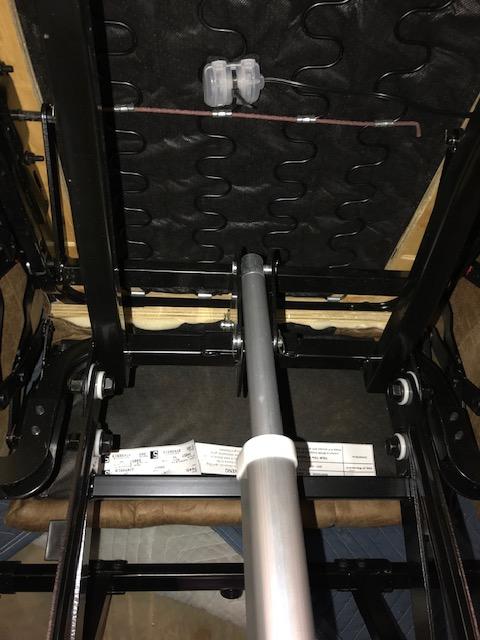
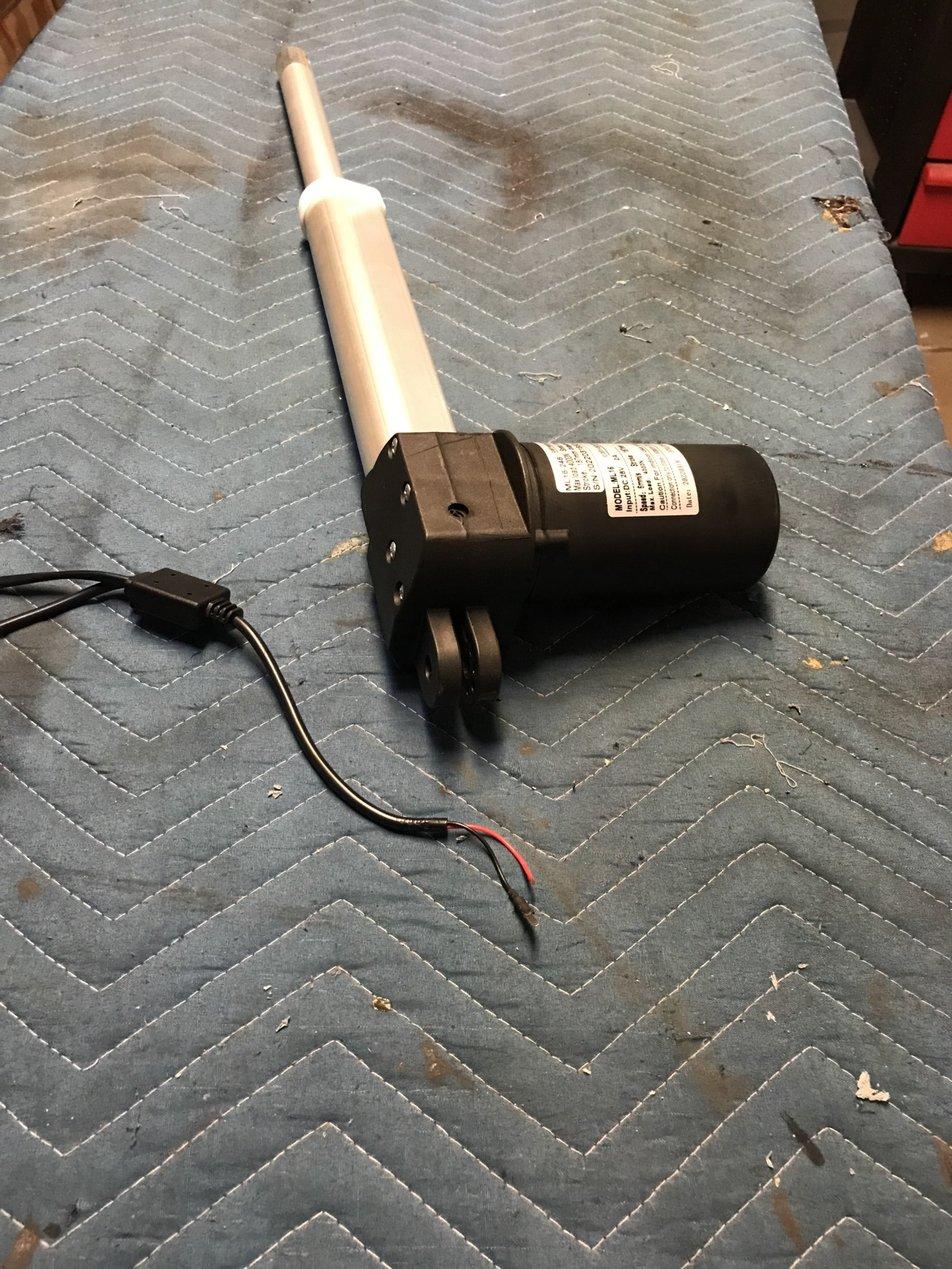
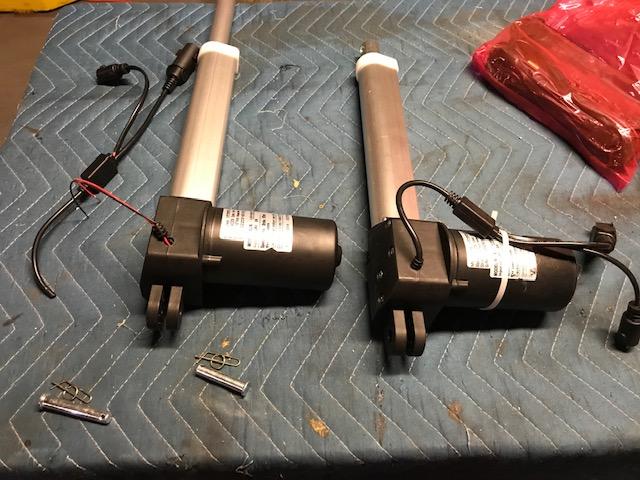
Sometimes your powered recliner stops functioning. If there is no visible damage , test each step. Is it on? Do you see a light on the remote control? The power supply has a light. Is it on? Both of these items have cords that can become easily damaged by the recliner mechanism itself, a vacuum cleaner, a pet, any number of ways. Can you hear a buzzing? Simple tests will help you isolate the issue. If you have another remote you can try plugging it into the motor to test it. Try the same with a power supply. (check the supply list above for common power supply replacements and cords) All these parts are common to purchase online. Purchase a replacement of each and test the unit from underneath. You do not have to disconnect everything just to test it. By trial and error you can diagnose the issue.
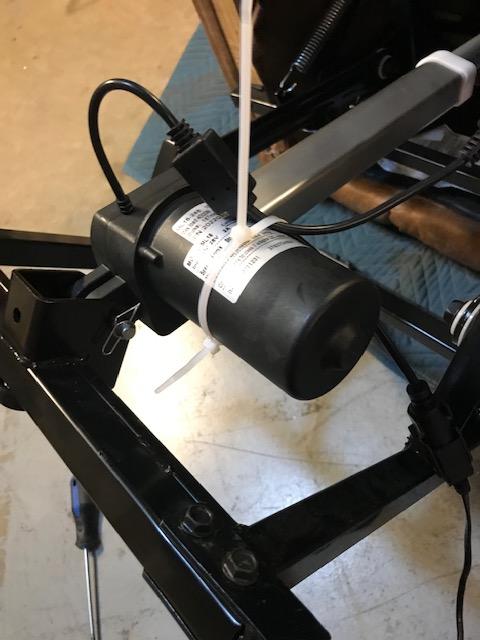
The motor on your recliner chair or sofa can become damaged. Often the wiring gets frayed. The motor itself can wear out. In this particular case in the photos, when the recliner would extend the loose wiring would become trapped in the mechanism causing the motor to pull its own wiring out. The chair would become locked in the open position.
Motors vary in size and in the way they are mounted. Sometimes they are bolted into place. This motor was very easy to swap. It was only held in place with metal pins. Always start by taking a photo of the motor area to use as reference for installing the new one. Make sure the recliner is not plugged in. Unplug the wiring from the power supply and switch. Remove the pins, saving them for reuse. To prevent this from re-occurring I placed a zip tie around the motor to anchor the wiring in place. Once I installed the new motor I also added a zip tie inside the recliner frame to keep the wiring from being tangled again. Motors are labeled and are available in all sizes from Amazon or elsewhere on the web.
I hope you found this tutorial helpful. Please take a moment to view some of my other Instructables.
I can also be found in the Robot Lounge on Substack featuring my original stories, art, travel, sci fi, collectibles and more .
If you have questions or suggests about this tutorial please leave them in the comments. Thanks!