DIY "Clash Royale" King Costume
by gilt in Craft > Costumes & Cosplay
35 Views, 0 Favorites, 0 Comments
DIY "Clash Royale" King Costume
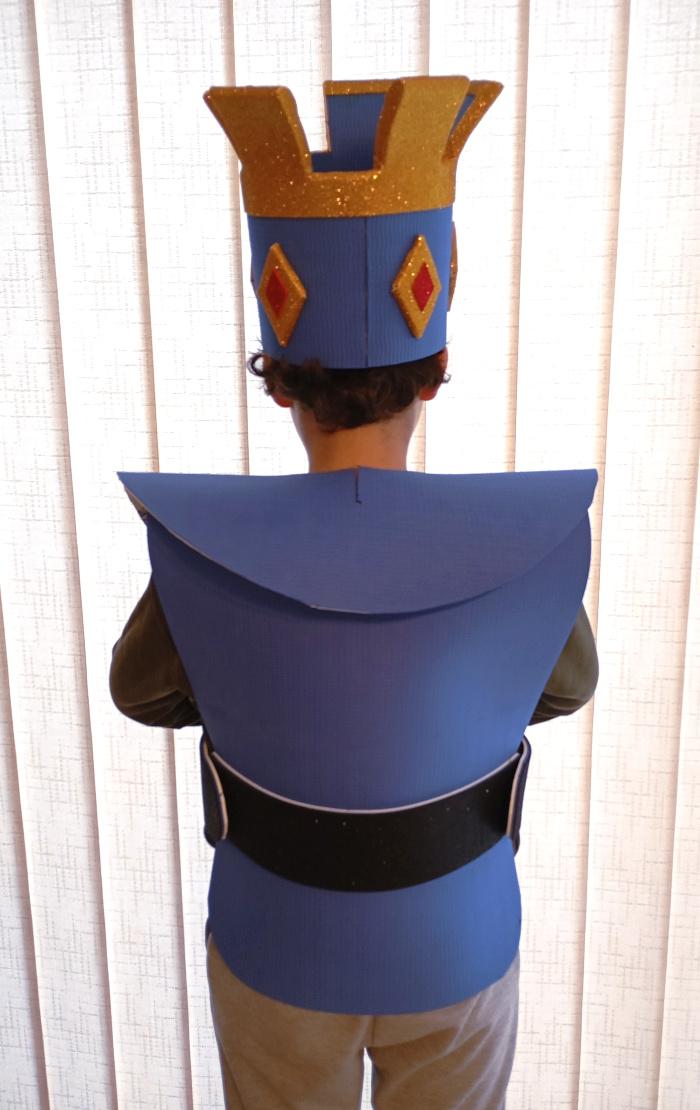
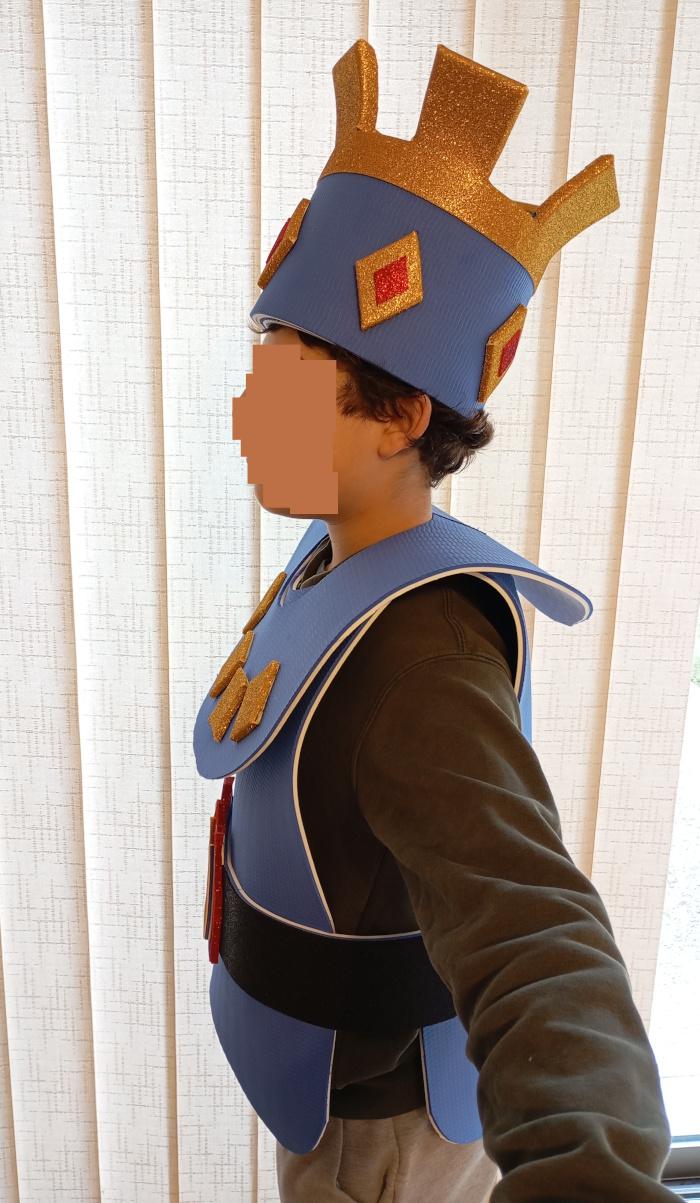
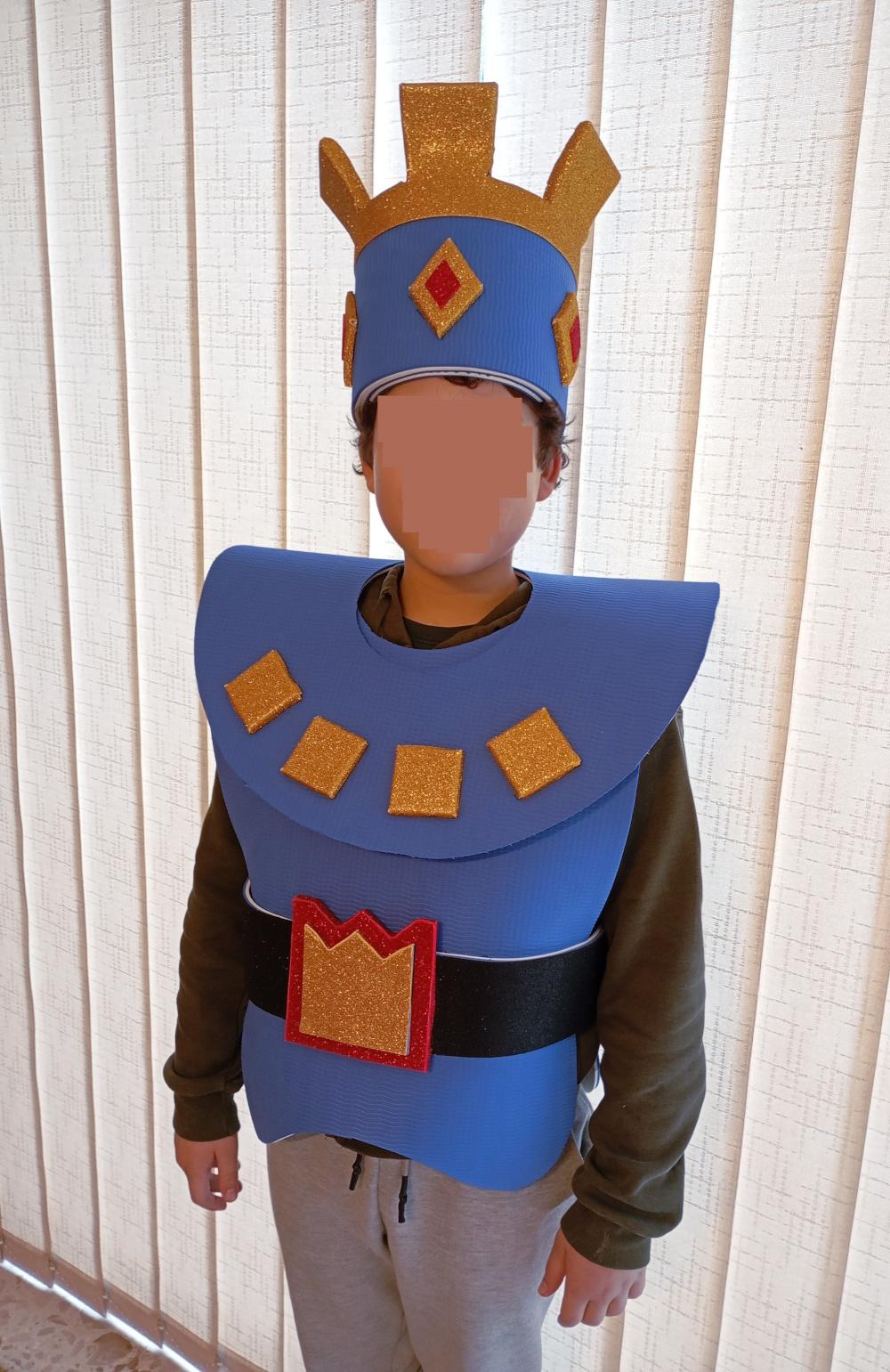
A durable, high-impact King’s costume designed for a 12-year-old. It utilizes the unique texture of a blue yoga mat to simulate royal armor. This build features a "power-buckle" belt, flared "3D" crown peaks, and a structured neck mantle.
Supplies
Materials:
- 1 Light Blue Yoga Mat: A flexible yoga mat (Approx. 6mm thick, 610mm x 1830mm). One side of the mat should be light blue – the color of Clash Royale King’s armor/gown. Ideally with a wavy texture on the blue side and a flat pattern on the other.
- Glitter Sticker Sheets with a sponge/PET backing layer.
- At least 3A size with gold glitter. Additional black glitter and Imperial-Purple glitter stickers.
- Gold for the crown, crown and neck stones, belt buckle.
- Black for the belt. Imperial-purple for the crown stones and belt buckle.
- Adhesives: High-quality Contact Cement (Contact Glue).
- Hardware: 2 Velcro stickers, (6cm x 4cm).
Tools:
- Cutting: Sharp Utility Knife/Box Cutter, sharp heavy-duty scissors.
- Measuring: Metal ruler (long), measuring tape, marker/pen.
- Shaping: Hairdryer, for heat-forming the yoga mat shape (not a must).
Measurements and Cuts of the Yoga Mat
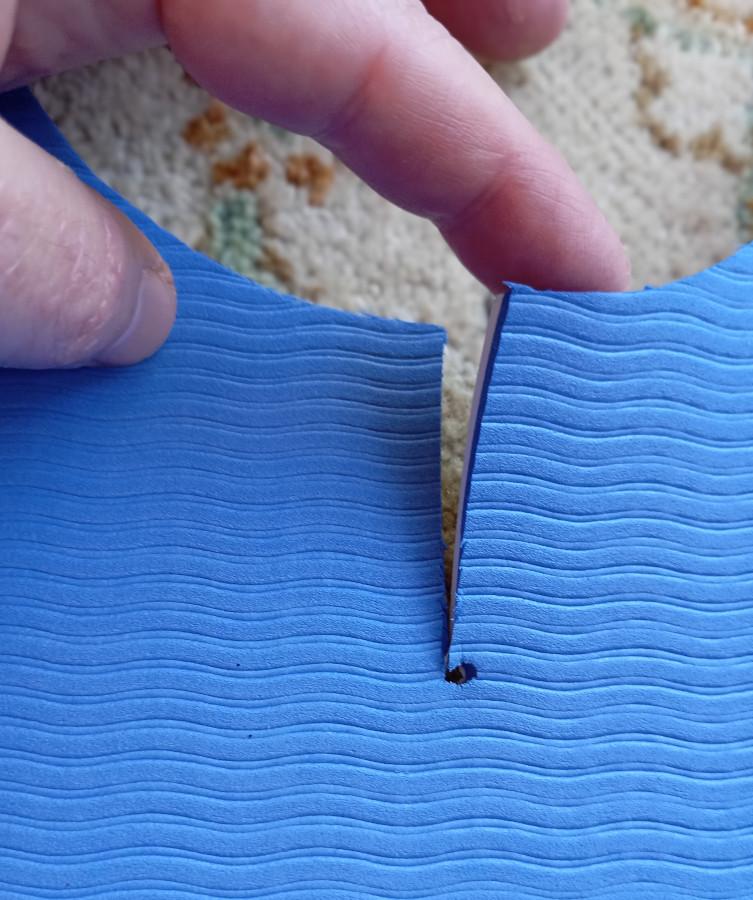
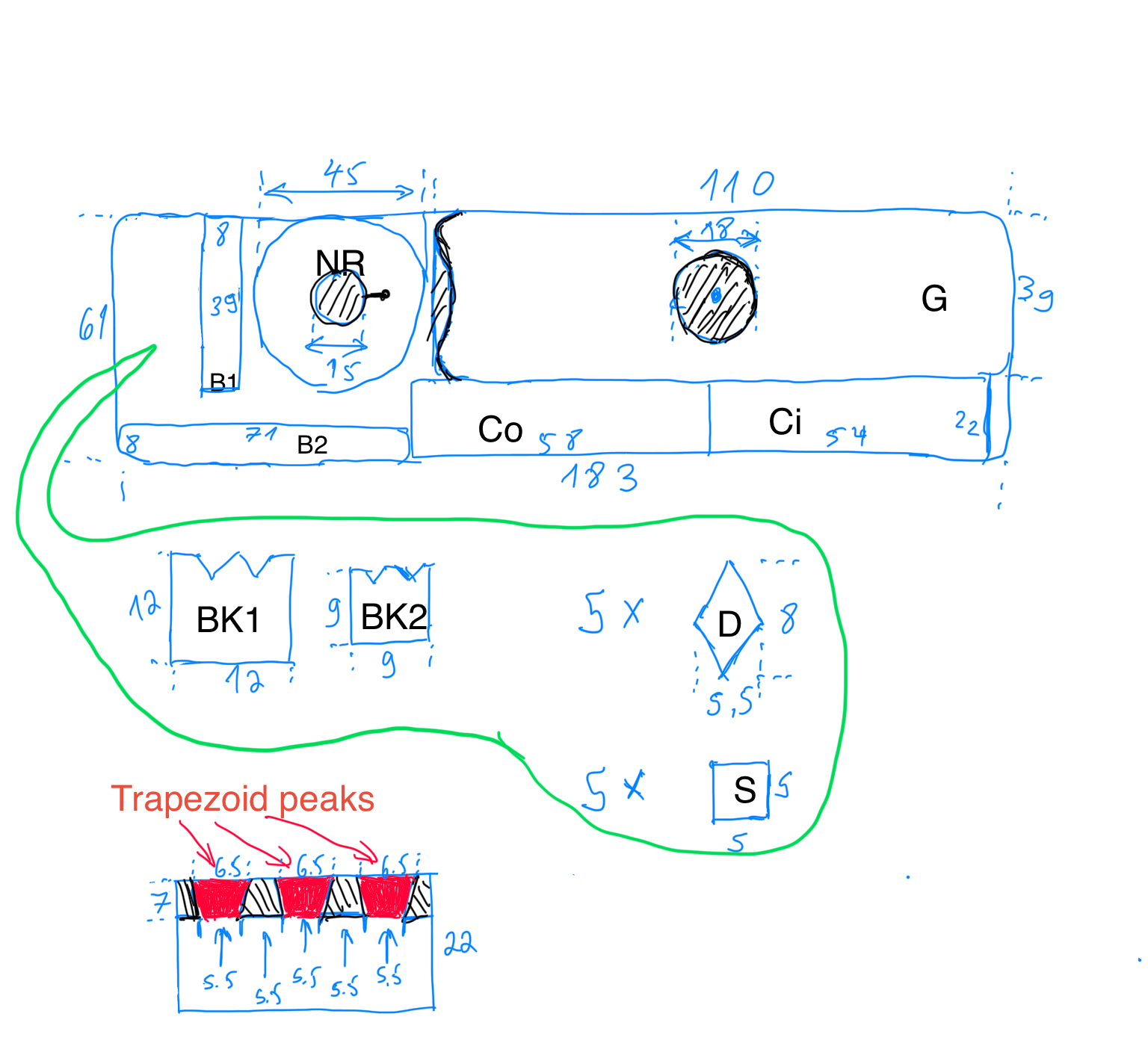
Refer to the drawing for the letter codes in brackets, e.g. [G].
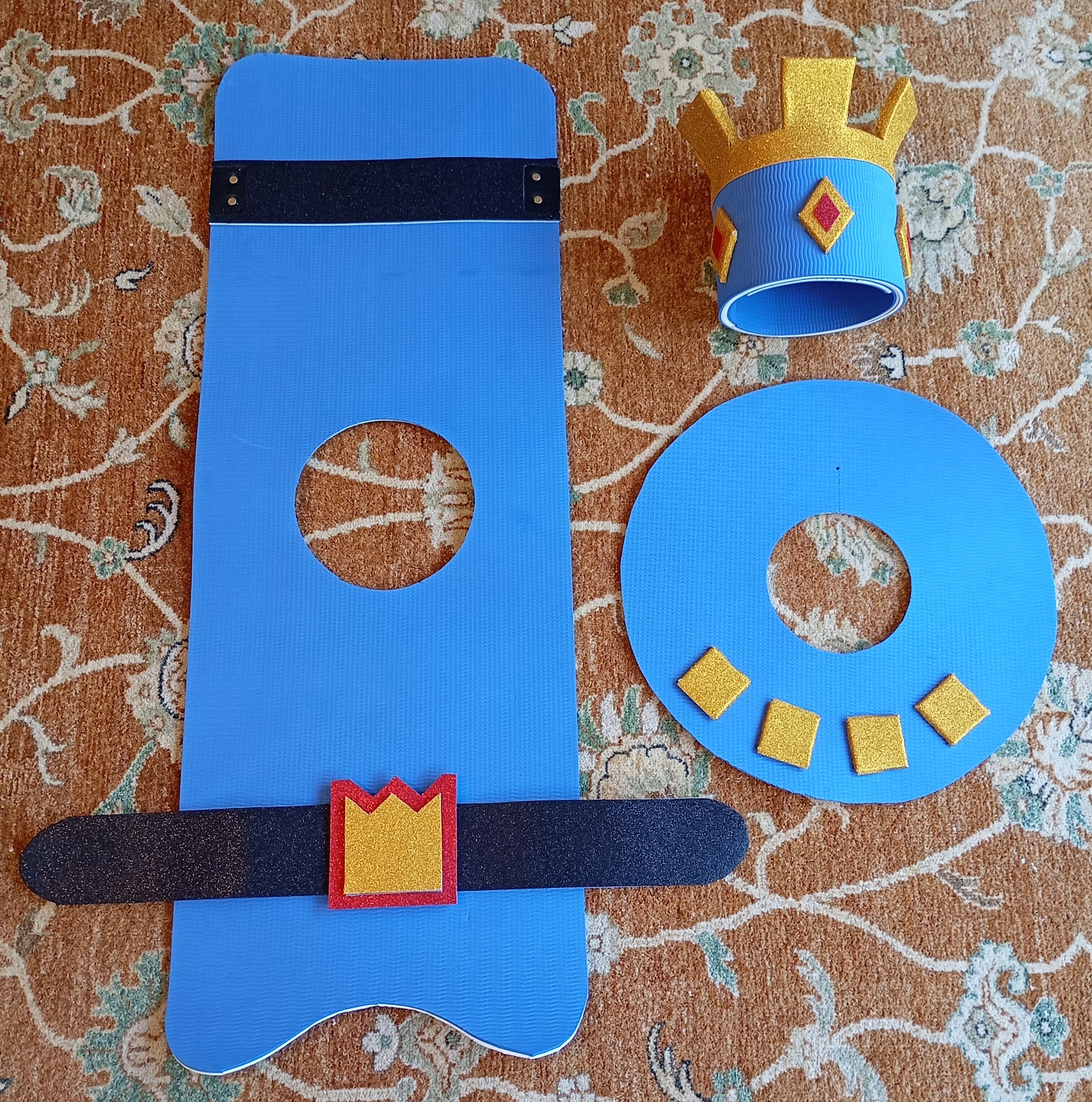
- Gown (Armour) [G]: One large "poncho" panel 110cm x 39cm. Cut an 18cm diameter neck hole in the center (center of hole at 55cm and 19.5cm from the panel edges) . Round the 4 corners of gown (a quarter of a circle of about 5cm radius). At the bottom front (one of the 39cm edges), cut a shallow 6.5cm-deep 26cm long wave shaped notch.
- Neck Ring [NR]: 45cm outer circle with a 15cm diameter concentric inner hole. Include a 5cm slit going from the inner hole ending in a small "stop-hole" to prevent tearing. This will ease getting the head through the hole. If needed make the slit a bit longer after trying to get the child’s head through the neck ring.
- Crown [Ci] & [Co]: The crown is made of 2 stripes of the mat material [Ci] and [Co] glued as 2 layers, to form a 12mm thick cylinder shape. Measure the child’s head circumference and add 2cms for the inner stripe [Ci]. To that add 4cm for the outer stripe [Co].
In my case, the child’s head circumference is 52cm. I used 54cm inner stripe [Ci] and 58cm for the outer stripe [Co]. The stripes’ widths (height of the crown) are 22cm.(So, 54x22cm and 58x22cm stripes).
- Belt [B1] & [B2]: one strap (8cm x 71cm) [B2] for the front belt, and one strap (8cm x 39cm) [B1] that matches the gown width, for the back belt.
- Buckle [BK1] & [BK2]: Cut 12x12cm [BK1] and 9x9cm [BK2] squares. Cut crown-shaped "v" notches into the top of both, to form a crown shape on both.
- Stones [D] & [S]: Cut 5 diamond shapes for the crown [D] (8cm high, 5.5cm wide) and 4 squares 5x5cm for the neck ring [S] (5cm×5cm).
Gluing the Crown
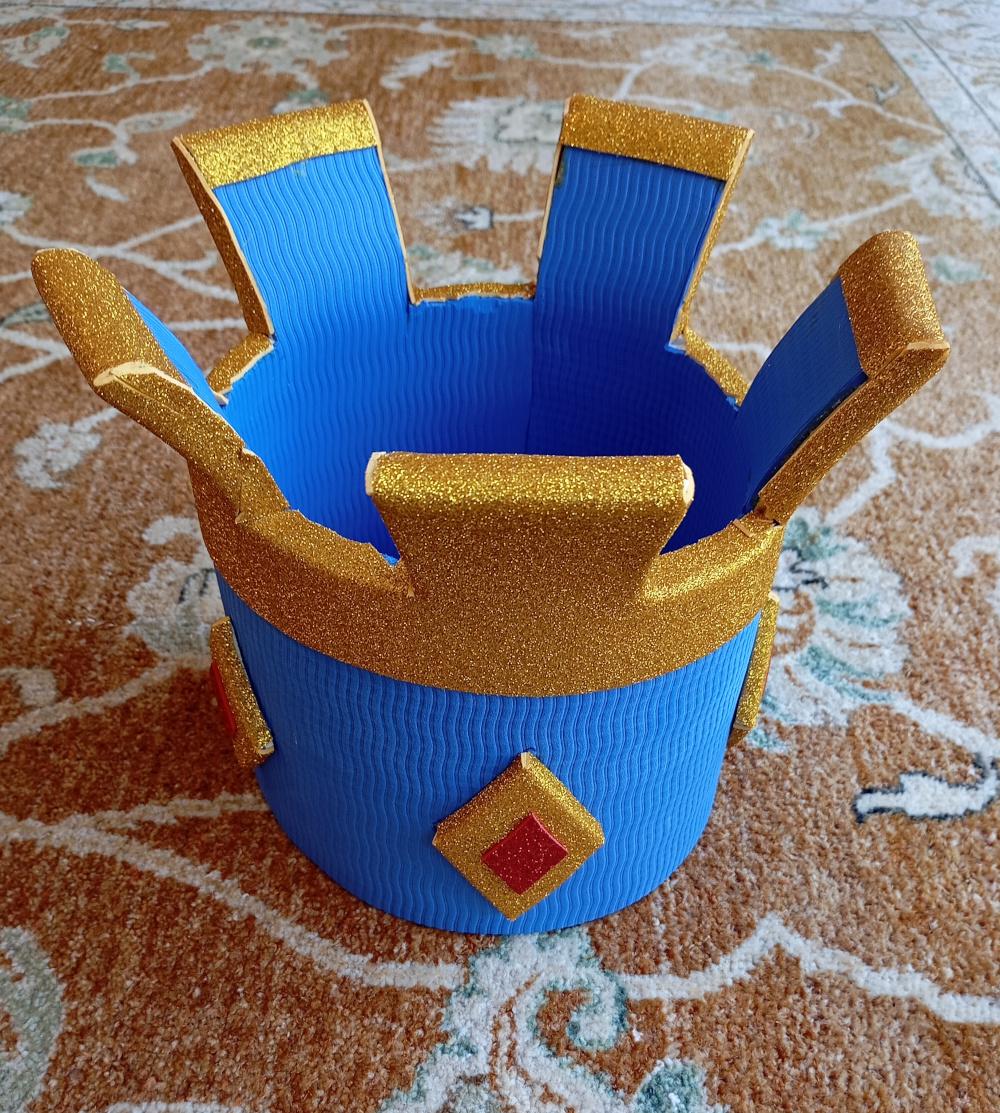
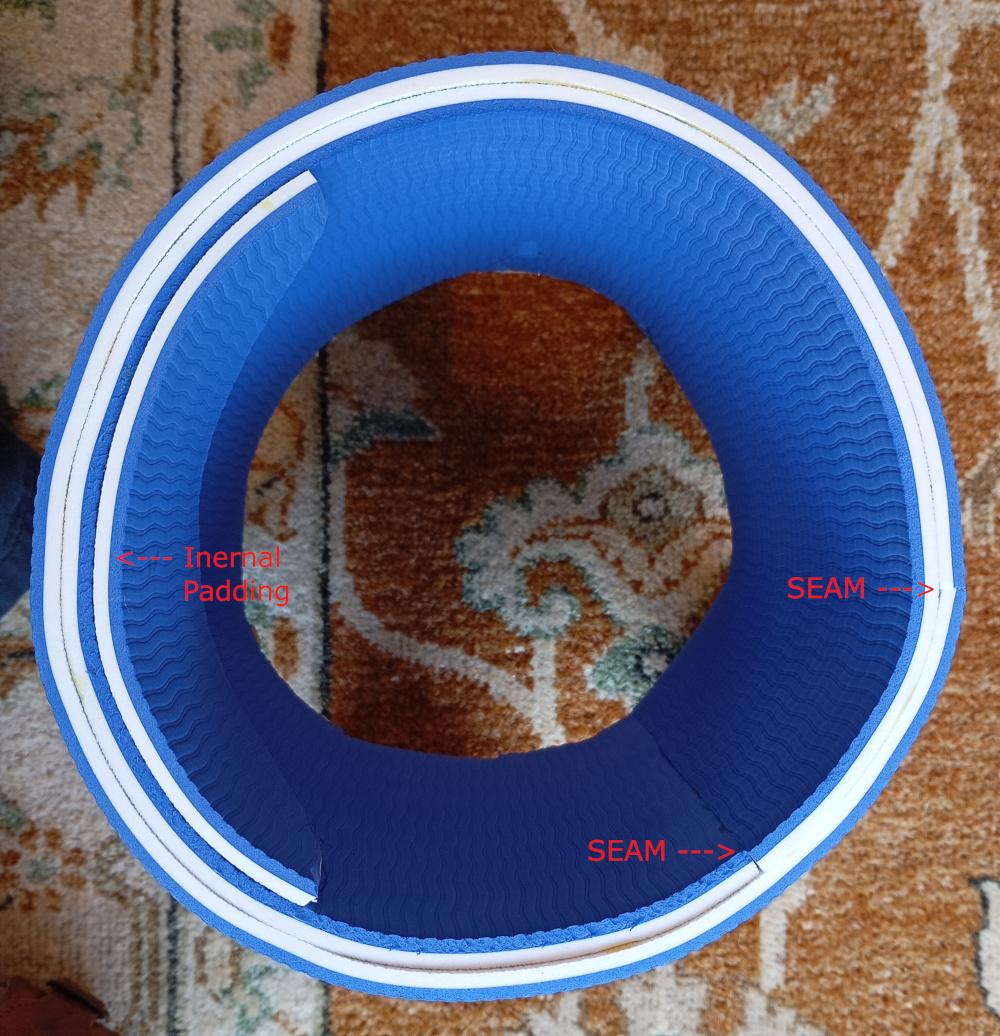
- Glue the two crown stripes [Ci] and [Co], using contact cement. The blue sides of the stripes (with the wavy pattern) are on the inner and outer side of the crowns cylinder, and the glue is applied on the non-blue sided of the stripes.
- Apply contact cement layer of 10~12cm widths along the length of each stripe, on the non-blue sides.
- This would be the bottom side of the crown. A ~10cm wide area along the top of the crown, where the crown peaks will be formed, should be left unglued.
- Wait for the glue to get tacky. Start bonding the 2 plies (back-to-back , glue on non-blue sides) with a gap of ~10cm at one side (so they do not end at the same point, so at the end there will be one seam on the outer side and one seam on the inner side, but they will be ~10cm apart).
- Start bonding at one side and curl the 2 stripes as you continue bonding them. It may be helpful to initially wrap the inner stripe around a cylindrical object of similar diameter of ~54cm, like a pot, and only then bond the 2 stripes and curling the outer stripe as you go around. Remember that bonding them curled is what makes the cylindrical shape hold (do not bond them flat!).
- The Flare & Curl: Along the top of the crown, where we left the 2 stripes unglued, cut 5 peaks for the crown, in trapezoid shapes(wider at the top):
- For a ~54cm inner circumference you should have 5 peaks evenly spread - Each peak is a trapezoid of ~5.5cm bottom length and a ~6.5cm top length, with height of 7cm [see drawing].
- Cut out the 5 “valleys” and 5 "peaks". The valleys’ lengths are ~5.5cm each. Make sure that all the valleys are level and are 7cm from the top of the crown. It extremely important to plan the places of the valleys and peaks so that the seams (the edges of the 2 stripes [Ci] & [Co]) are not where a peak should be formed! Since we glued the 2 stripe with a 10cm gap between their edges, a single peak should be placed centered along this 10cm gap.
- Glue the peaks – put wedges deep into the peaks, between the 2 plies and apply contact cement to the peaks (the protruding trapezoids) along their 7cm length, on both internal sides. Wait for the glue to dry. When the glue is dry enough, bond each peak one at a time: take the wedge out, curl the outer ply out so that it is sticking about ~1.5cm outwards. Then, bond on top of it the inner ply starting at its bottom and curling it on the outer ply. At the top there will be a gap between where the outer ply and the inner ply end. This is what’s holding the “flare” effect of the peaks. If you do not curl the peaks while boning them, they remain pointing straight up (boring!).
Covering the Crown With Gold

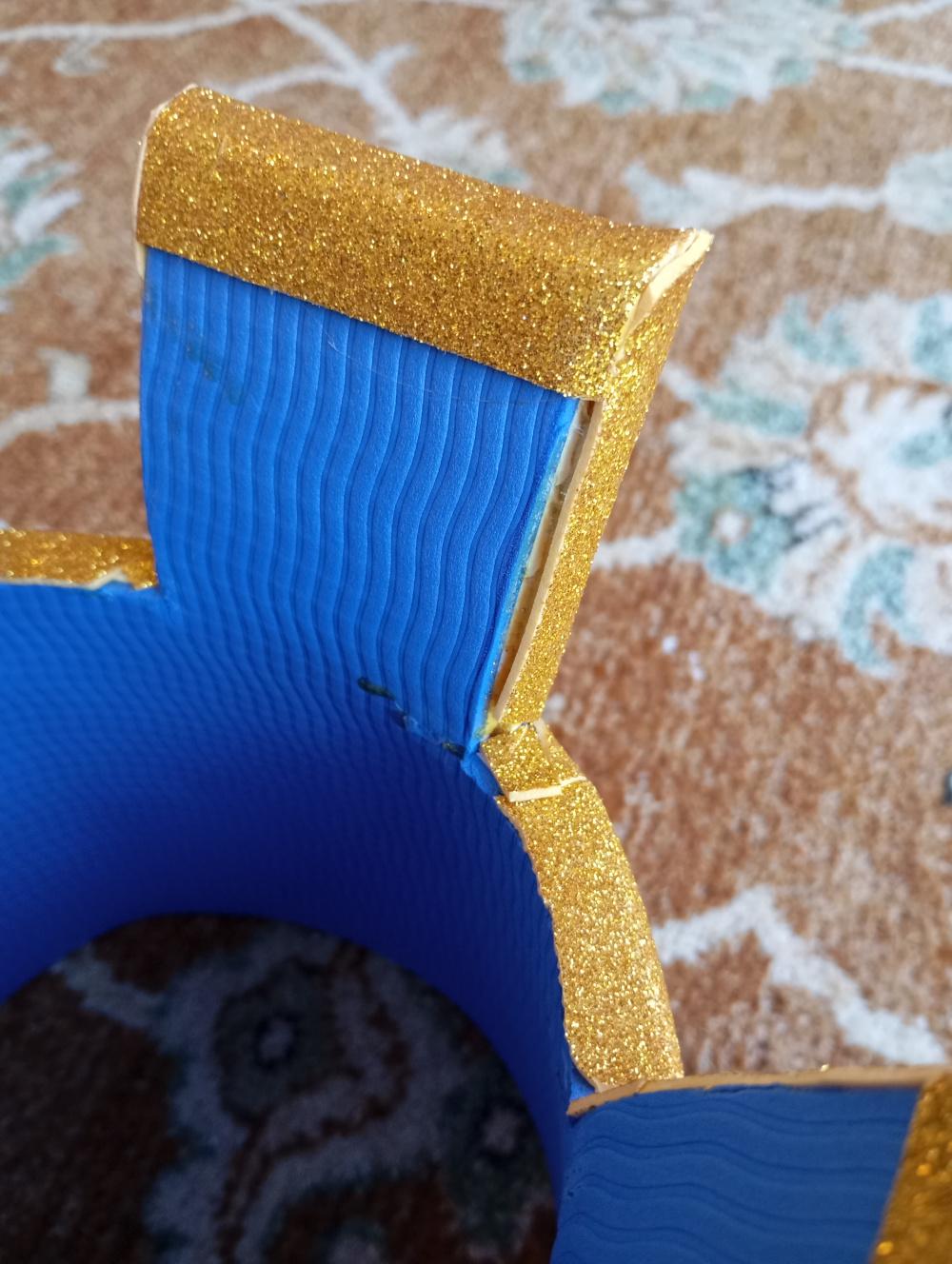
- Preparing the gold stickers: Out of the A3 gold sticker, cut 2 rectangles of 12cm height, and lengths of 33cm and 26cm. We are going to use these gold stickers to cover the top part of the crown – a 3cm wide gold band, that is 12cm above the crown base and then the crown peaks.
Mark a 3cm band below the crowns’ valleys (which should be 12cm above the crown’s base). You can do it by sticking a (weak) duct tape – putting it around the crown as you measure 12cm from the base of the crown (or 3cm below the valleys).
Choose the peak that is the farthest from the seams on the outer side of the crown – this will be the front (forehead) of the crown. Use the 33cm gold rectangle so that its middle is where the middle of that front peak is. The other rectangle (26cm long) will be used at the back side.
On the 2 rectangles, measure and mark (on their back side, on the paper that you will later peel to expose the sticker), a 3 cm band. Now the tricky part - mark roughly where the centers of the valleys are, along the 3cm line that you marked. Before marking these centers, make sure again that the sides of this 33cm rectangle are placed at the centers of valleys.
(along the 33cm there would be 3 peaks, 2 valleys in between them ( ~27.5cm) and 2 half-valleys at the side (~5.5cm): 27.5 + 2.75 + 2.75 = 33cm.)
- Apply gold to the crown top: Since the peaks are flared out, applying the gold sticker is not easy. On the gold rectangles, mark and an upside-down Y shapes from the top, going 6cm vertically (the Y's leg) towards the 3cm band line, and then diagonals (the Y's hands) that end are exactly(!) at the points where the peak trapezoids and the valleys meet. With these cuts it would be easier to apply the stickers on the flared peaks.
Spread contact cement on the outer side of the crown, above the duct tape, along the peaks, and at top of the peaks (where the is a gap between the 2 plies). Wait for the glue to dry, expose the sticker side, and carefully bond the sticker. Make sure that the bottom side of the sticker is level exactly with the duct tape. Bond the sticker to each peak from bottom to top. Make sure you do not change the “flare” of the peaks – just stick the sticker along each peak.
At the top of each peak, pull the sticker over so that it goes over the ends of the 2 plies and reaches the blue side of the inner ply.
Do the same with the smaller rectangle gold sticker. The 26cm will have 2 peaks with a valley between them, and a half-valley at the sides (16.5 + 2.75cm +2.75 = 22cm). (We use a 26cm long rectangle, and not 22cm, to compensate for any error and to allow for nice seams between the 2 rectangle stickers). Make sure that when you bond it, it exactly touches the already bonded longer sticker to create a nice seam. Carefully cut with scissors any part of the 26cm rectangle that overlaps the 33cm rectangle, to form nice seams between the 2 rectangles.
- Cover the peaks sides with gold: Now we want to cover the sides of the peaks and the top sides of the valleys with gold.
Apply contact cement to the sides of the peaks, wait for it to dry, and the fold the sticker backwards on the sides of the peaks. With scissors cut any edges of the sticker to match the contour of the peaks, so now you have the peaks, their top and their sides covered with gold.
- Cover the valleys with gold: Similarly, put contact cement of the valleys, wait to dry and fold the sticker parts backwards on the valleys. With scissors cut any edges of the sticker to match the inner cylindrical contour of the crown at the valleys.
- Finishing: You may now have few spots that are not covered with gold, on the peaks’ side and on the valleys. Fix that by cutting small pieces from the gold sticker and glue them where needed using contact cement.
Making the Buckle
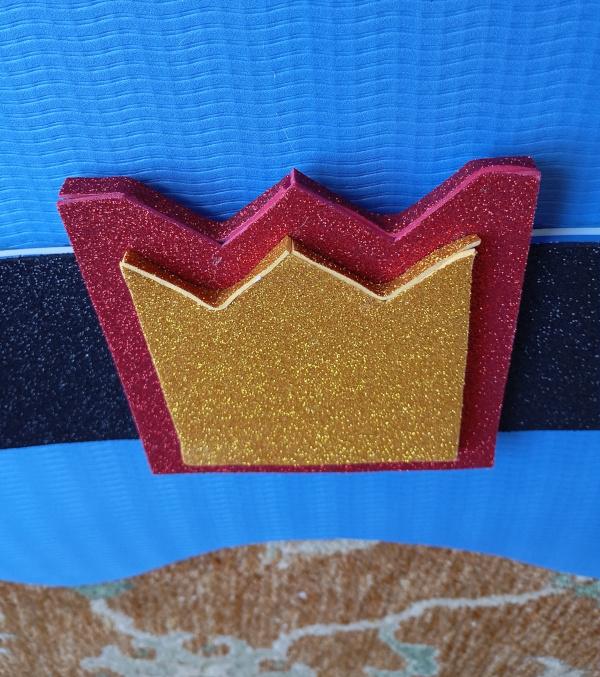
- Preparing stickers: Put the larger of the 2 squares that we cut for the buckle [BK1] (with the crown notches) on the back side of the imperial-purple sticker and trace the shape with a pen. Take the smaller square [BK2], center it with the already traced shape of the larger square, and trace it too. Cut the shape that is outlines by the traces we did. This will be the outer rim of the buckle.
- Trace the smaller shape [BK2] again on the back side of a gold sticker and cut it. This will be the middle part of the buckle.
- Assemble the buckle: Apply contact cement to both mat “square”s (with notches) of the buckle. Wait to dry and bond the 2 shapes (the smaller one centered on the larger one). Expose the imperial-purple sticker and bond it on the rim of the larger “square” [BK1], around the smaller “square” [BK2].
- Apply contact cement to the small “square”, wait to dry and bond the gold square sticker on it.
- For the extra-perfectionists: cut 5mm stripes of gold and imperial-purple stickers and glue them around the 2 “squares with notches” as appropriate, to cover the sides as well.
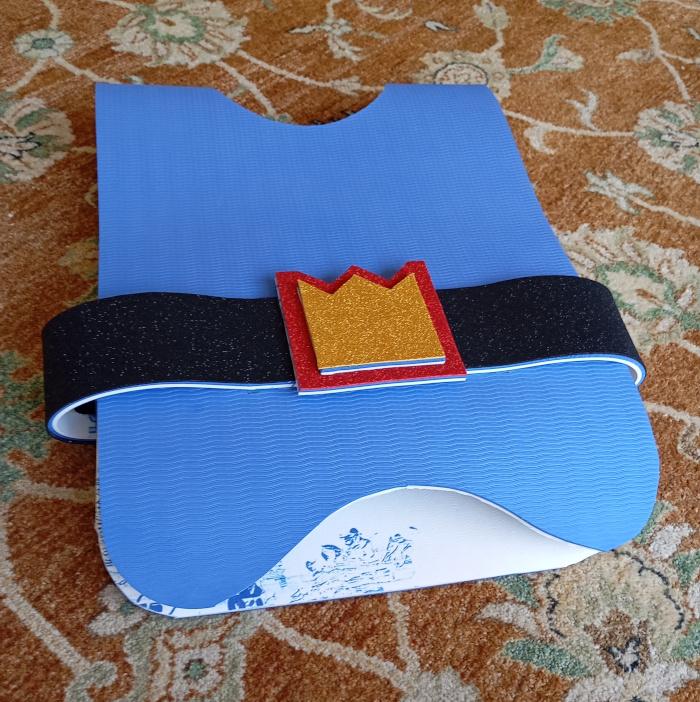
- Attach the Buckle to the front Belt: Center the 12cm buckle shape on the 8cm x 71cm front belt (on the blue side). Glue with contact cement only the center 8cm so 2cm remain overhanging above and below the belt.
Covering the Stones & Belt
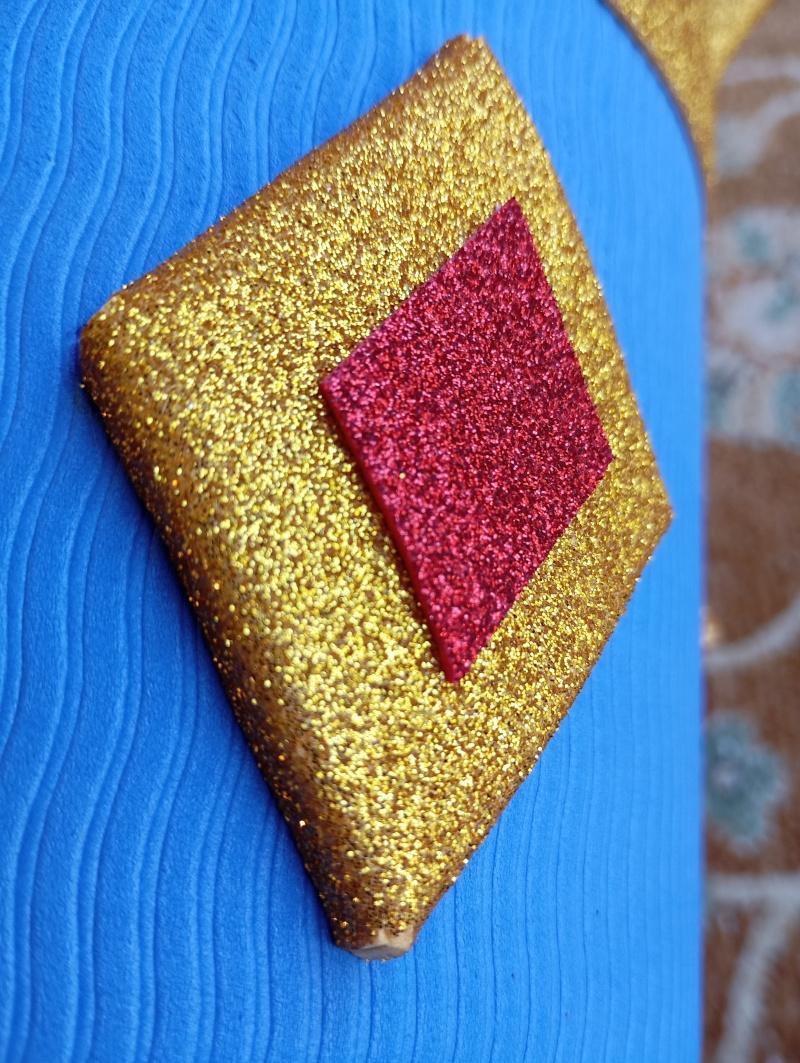
- Diamond stones for the crown: Cut 5 diamond shapes of gold sticker that are ~5mm wider than the diamond shapes that you cut from the mat material [D] (which are 8cm high and 5.5cm wide). Cut 5mm slits at the diamond side corner and cut out a 5mm triangle at the top and bottom corners of the diamonds. Put contact cement on the 5 diamond shapes (of the mat material [D]), on one side, and around them (on their 6mm width). When dry, expose the diamond shaped stickers, align them with the diamond shapes, bond them and push the extra 5mm along the sides.
To finish the diamonds, cut 5 small diamond shapes out of the imperial-purple sticker. They should be smaller than the gold diamonds. Glue these small diamonds in the middles of the gold diamonds – apply contact cement in the middle of each gold diamond, in the size of the small imperial-purple diamonds, wait to dry, expose the sticker of the small diamond shapes and bond the exactly in the middle of the gold diamonds.
- Square stones for the neck ring: Cut 4 squares of gold sticker 6cmx6cm. Cut out little 5mm squares at their cornets. Put contact cement on the 4 square shapes (of the mat material [[S]), on one side, and around them (on their 6mm width). When dry, expose the square shaped stickers, align it with the square shapes, bond them and push the extra 5mm along the sides.
- Belt: Cover the blue mat stripes (of size 8cm x 71cm and 8cm x 39cm) with black/brown glitter stickers: Cut one stripe of 8cm x39 and two stripes of 8cm x 30cm from the black/brown sticker. Apply contact cement to one side of the corresponding blue mat stripes [B1] & [B2], wait to dry and bond the sticker stripes. For the 71cm stripe (the front belt [B2]) we use the two 30cm sticker - one at each side of the buckle. Cut any extra sticker at the edges so it follows the contour of the front belt rounded edges.
Final Assembly
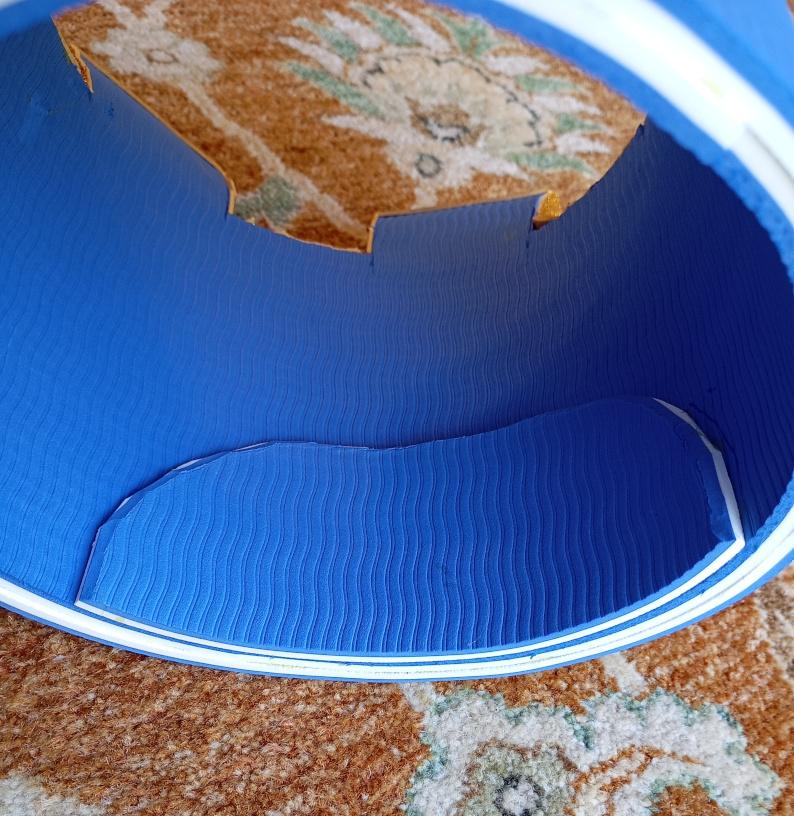
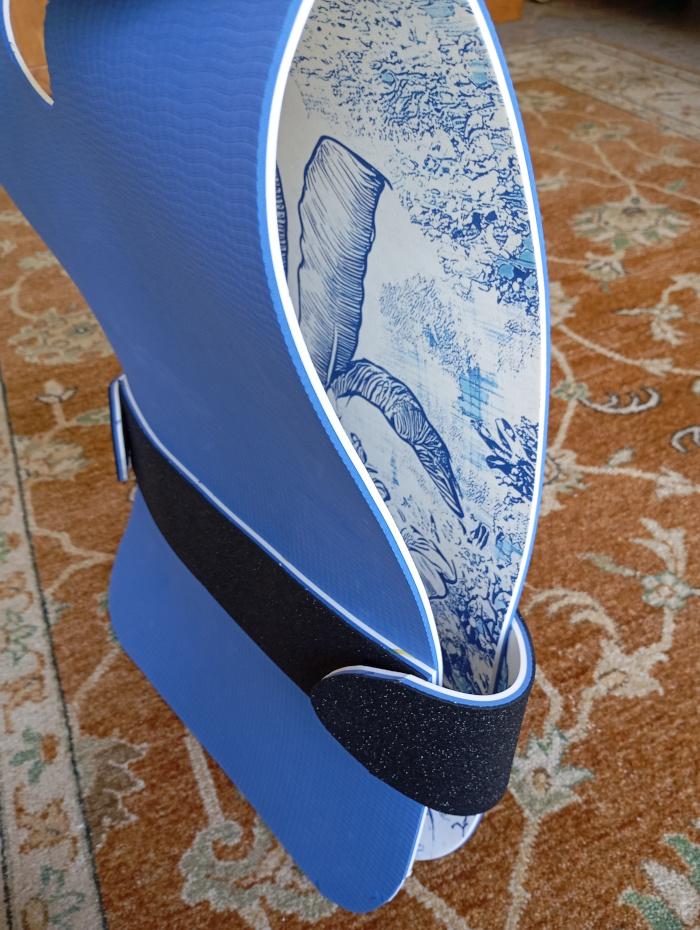

- Attaching the Crown Stones: Carefully (as invisible as you can) mark the places where the 5 diamond shaped stones will be glued on the crown – there should be one diamond shape under each of the crown peaks, placed in the middle between the crown base and the gold stripe. Use contact cement on the underside of the diamond shaped crown stones [D], and in the places that you marked on the crown. When applying the glue on the crown, be careful that the glue does not spill outside of the marked places – put a small amount of glue, spread it flat and even, and wait few seconds for it to dry a bit, before turning the crown around to the next marked place.
Wait to dry and bond the diamond shapes in their places.
- The Neck Rind stones: Place the 4 square stones [S] next to each other on the neck ring. In the front side (opposite to the slit). When satisfied with the placing, mark their places, apply contact cement to their places on the neck ring and to the underside of the squares, wait to dry and bond them.
- Belts:
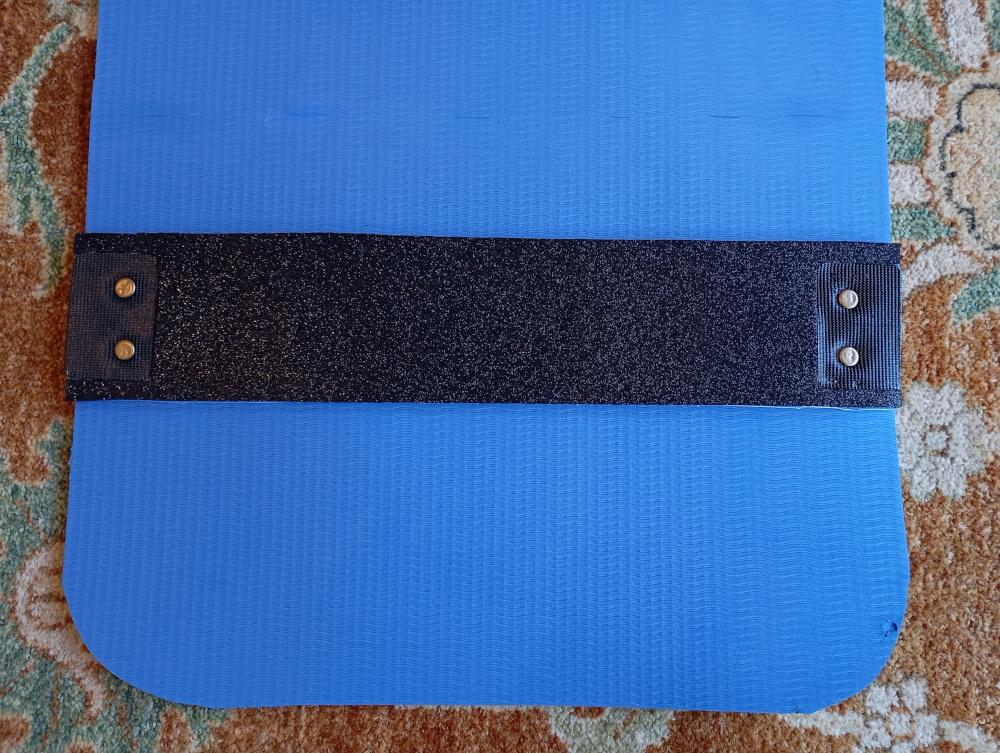
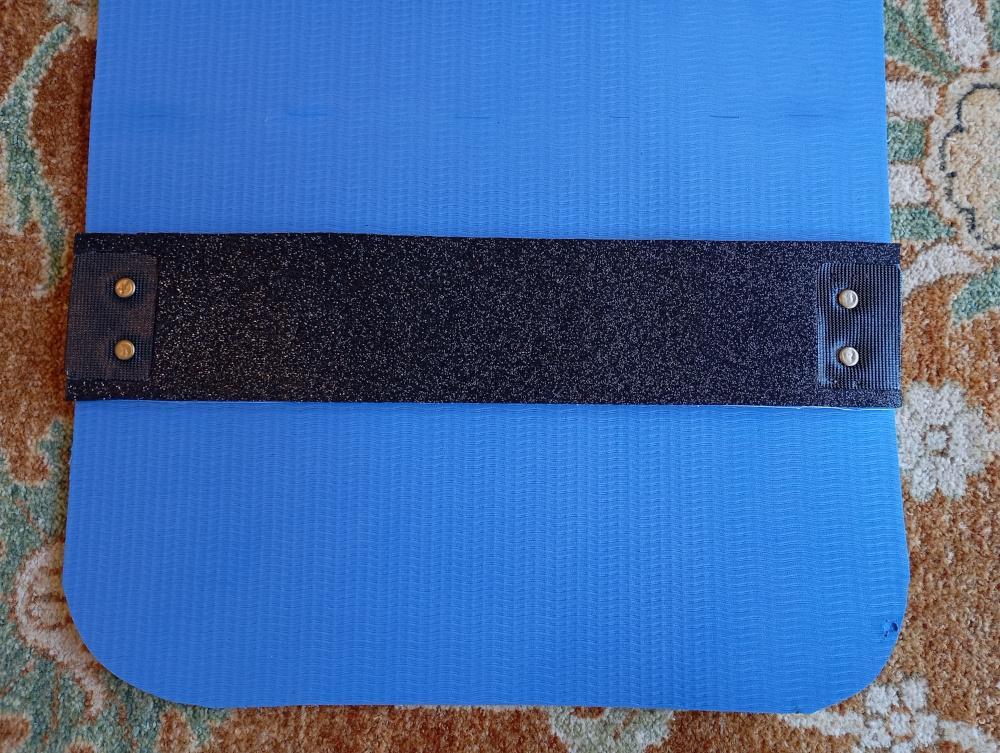
- Attach Velcro to the back belt - At the two edges of the 39cm stripe, prepare a place for two Velcro stickers (with the hooks side) - carefully cut and remove a 4cm x6xm portion of the brown/black sticker that we glued earlier. The Velcro sticker will be vertical (6cm along the edge of the belt). Apply contact cement to the now exposed mat material, in the two 4cm x 6cm rectangle. Wait to dry, expose the two Velcro stickers and bond them (Use the Velcro parts with the hooks – make sure these are the hooks sides, and you leave the loops sides for the front belt!).
For extra strength you may want to add 2 nits (those used in leather work) on the Velcro stickers (use some denim cloth on the opposite side of the nits for strength).
- Glue the back side belt to the back of the gown - The 8cm x39cm stripe [B1] should be glued to the backside of the gown (not the side with the wave shaped notch!), about 15cm above the bottom of the gown. You may want to decide on the exact height by having the child wear the gown and fining the most pleasing position.
After deciding on the position, apply contact cement to the underside of the belt and on the gown. Wait to dry and bond together. You may want to curl a bit the sides of the gown as you bond belt on it, to shape a curl on the gown sides.
- Glue the front side belt to the front side of the gown (the side with the wave shaped notch) – The 8cm x 71cm stripe [B2] (the one with the buckle) should not be glues all the way across the front side of the gown. You should leave ~10cm unglued on each side to allow for some flexibility of the belt. So, mark the position of this belt (same height that you decided for the back belt (e.g. 15cm)), apply glue just in the middle ~20cm, around the buckle, wait to dry and bond together.
- Attach Velcro to the front belt - at the two edges of the 71cm stripe, glue two Velcro stickers (with the loops side). These 4cm x 6cm stickers should be glues horizontally close to the edges of the 71cm belt [B2] underside. At this stage you may want to have another measurement of the gown on the child to determine if the front belt, which closes with the Velcros on the back belt, should be shortened, and/or to decide where to put the horizontal Velcro patches on the back of the front belt, to make the gown comfortable to wear and easy for the child to close and open.
Apply contact cement on the two 4cm x 6cm areas (one at each end of the front belt), where you decided to put the Velcro patches, wait to dry, expose the Velcro stickers and bond them (the Velcro parts with the loops).
- Internal Padding of the Crown: If the crown is slightly loose on the boy’s head, glue small "buffer" scrap of yoga mat material to the inside of the crown to customize the fit. The longer the piece, the tighter the crown will fit.