DIY Biomimicry Snake Classroom Activity (Less Fear, More Inspiration)
by M.C. Langer in Teachers > 8
67 Views, 0 Favorites, 0 Comments
DIY Biomimicry Snake Classroom Activity (Less Fear, More Inspiration)
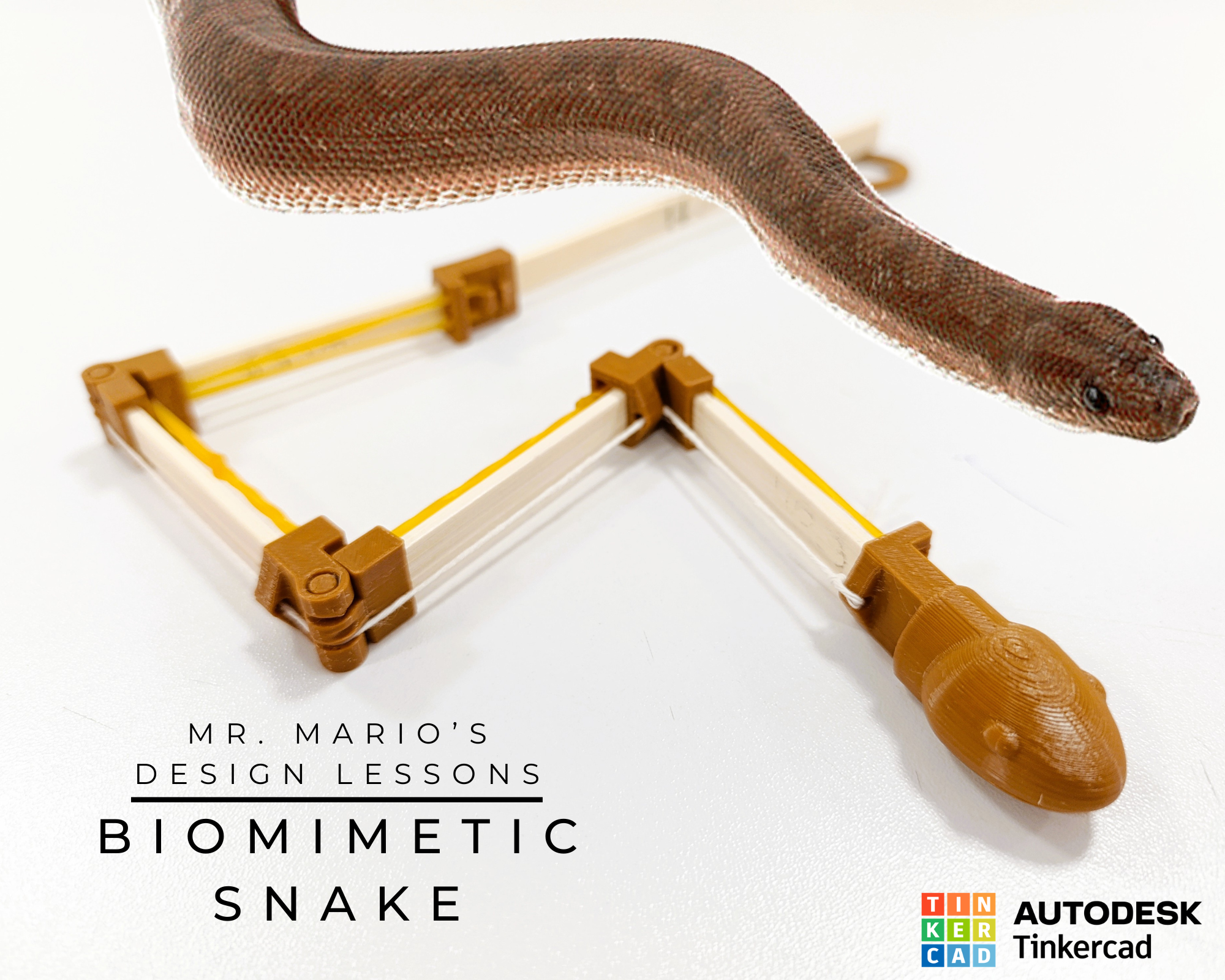
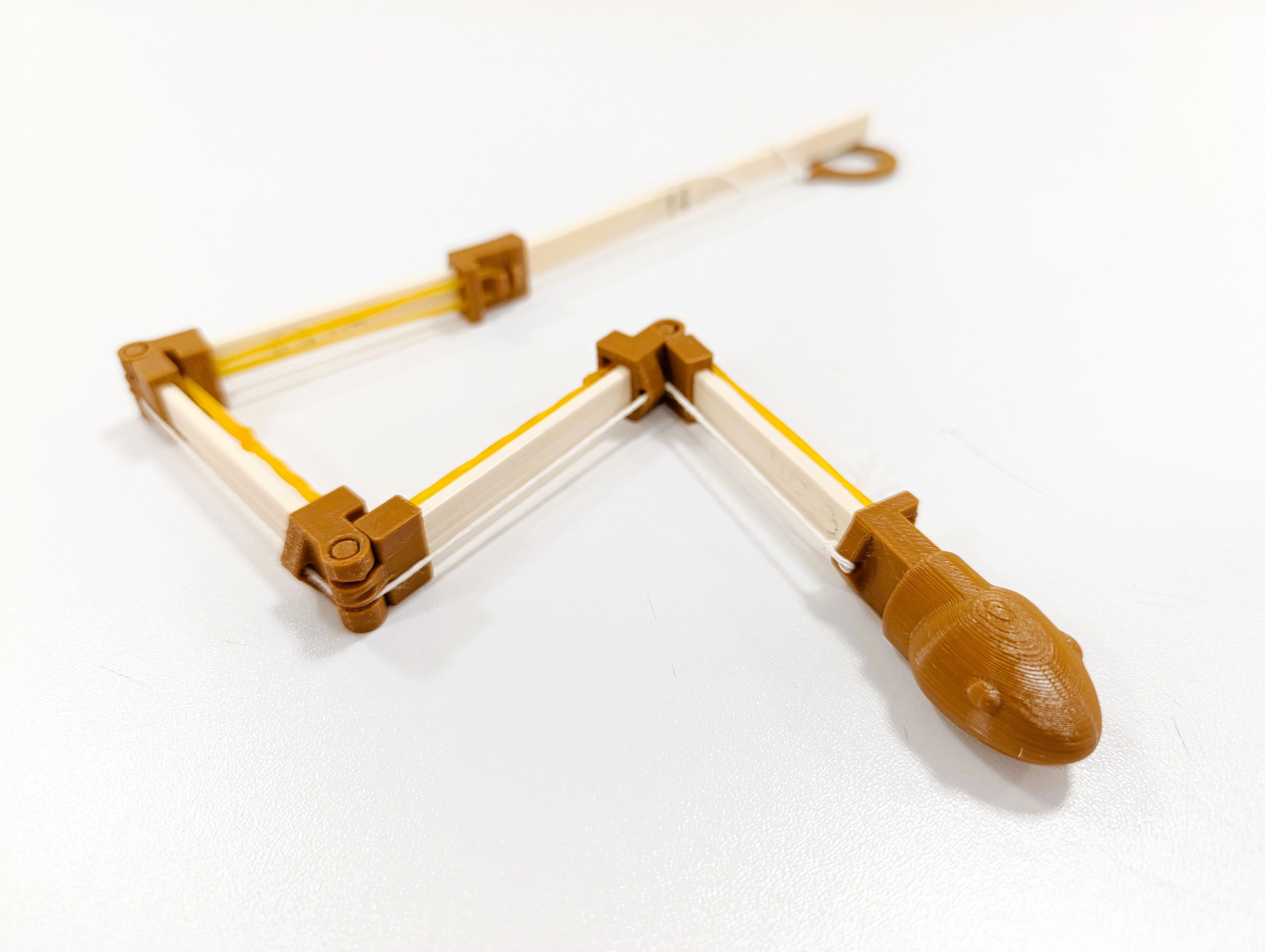


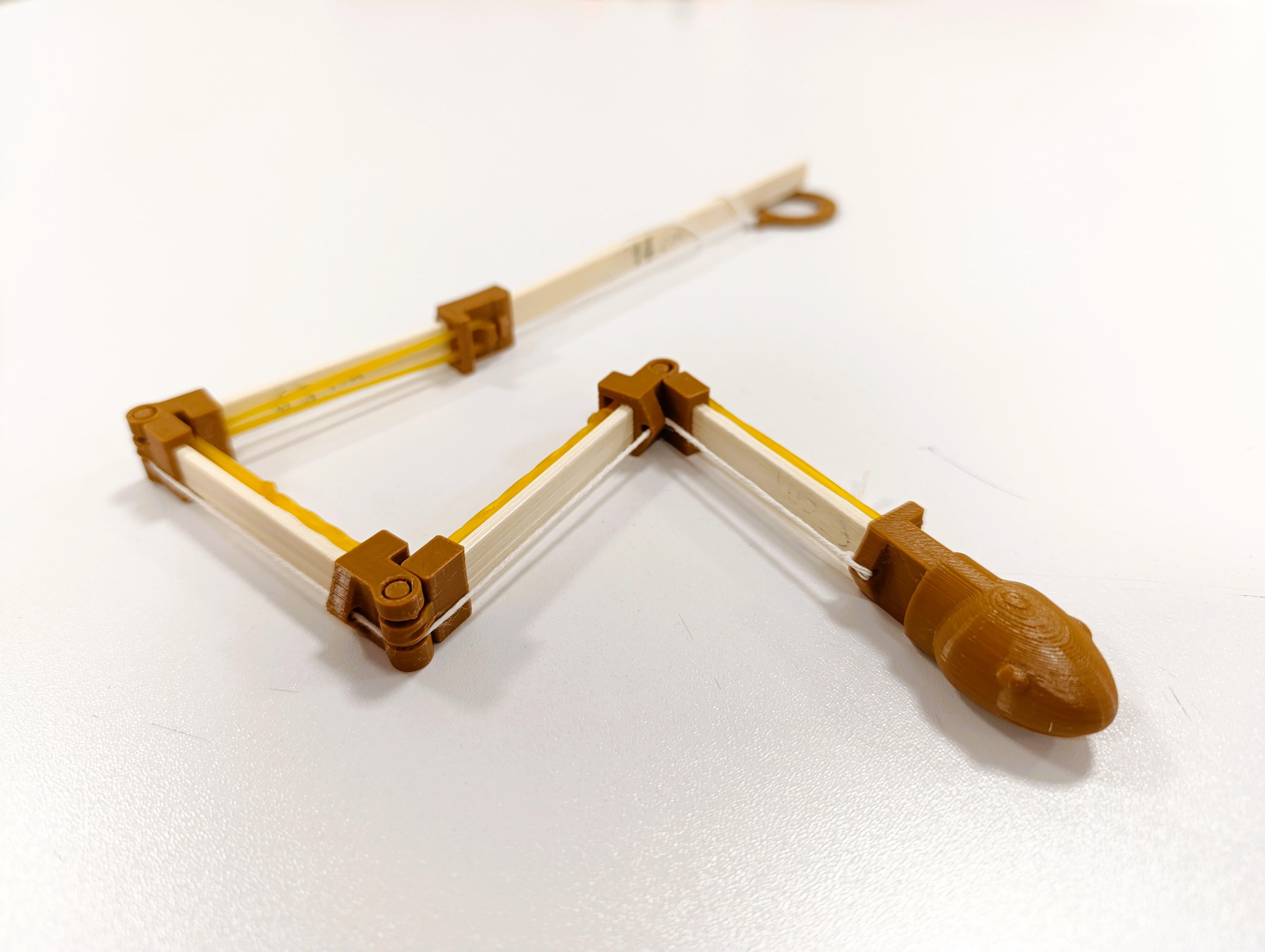

Snakes. Probably the most misunderstood animals ever. The Bible cursed them, Indiana Jones hates them, and the average person fears them. If a snake is your sigil in a movie or TV show, there is an 80% chance you are the bad guy (ask Cobra Commander, Miles Mayhem and Cobra Kai.)
During my MYP Design unit about biomimicry, I asked my students what we could learn from snakes. Most of the answers were "nothing" and "how to create a venom for military purposes." They were really thrilled when I showed them that engineers are creating robots inspired by snakes so they can creep inside collapsed buildings to search for and rescue survivors. Besides, snakes are master energy savers, being able to reduce their metabolism up to 72%, survive long periods of fasting, and become fully inactive during winter months to survive cold and scarcity.
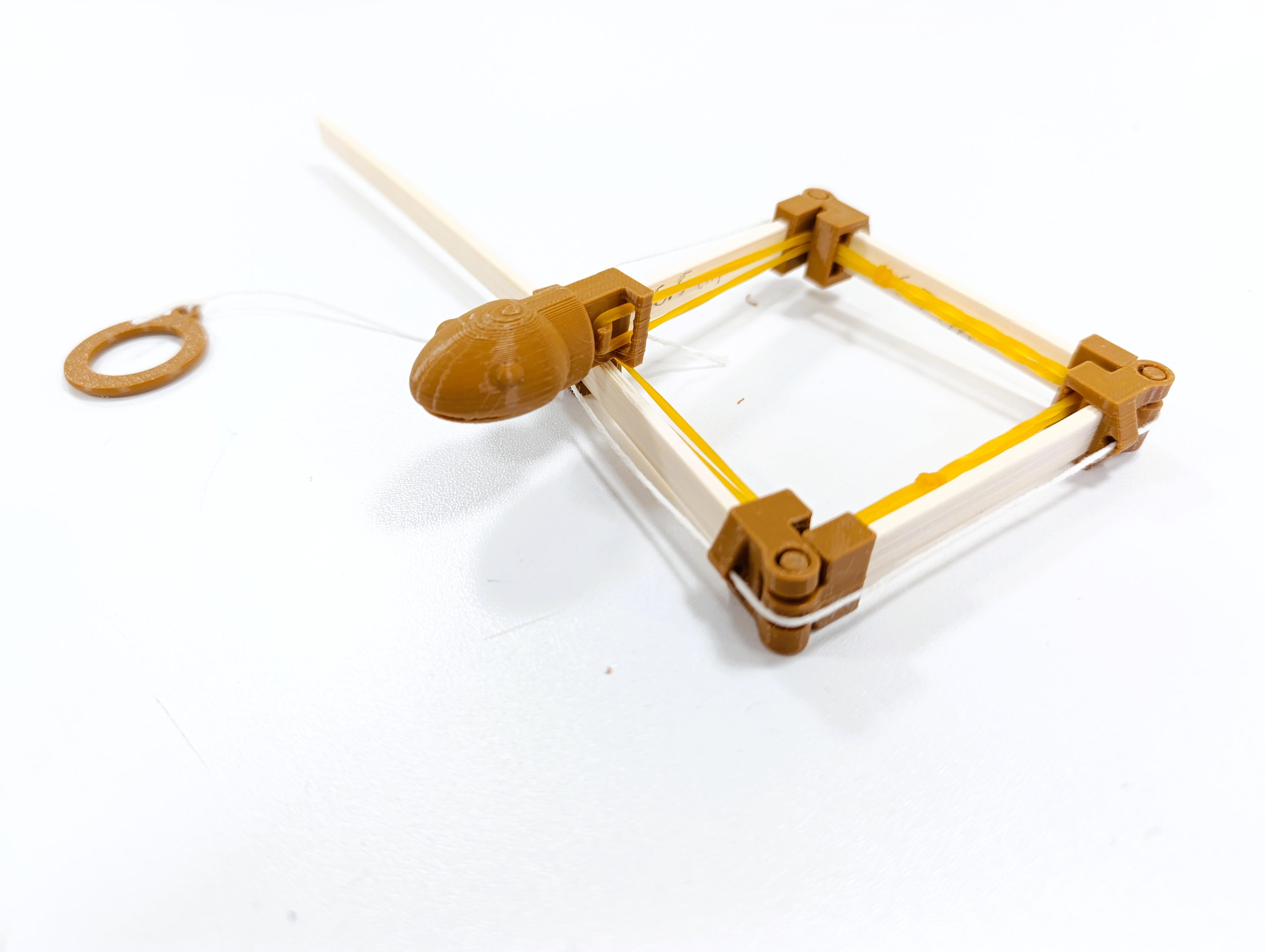
To create consciousness about how fascinating snakes are, I created a hybrid (half 3D printing, half crafting materials) DIY project, where students would create a simple model of a snake that works by pulling a string and is able to catch stuff like water bottles and cans.
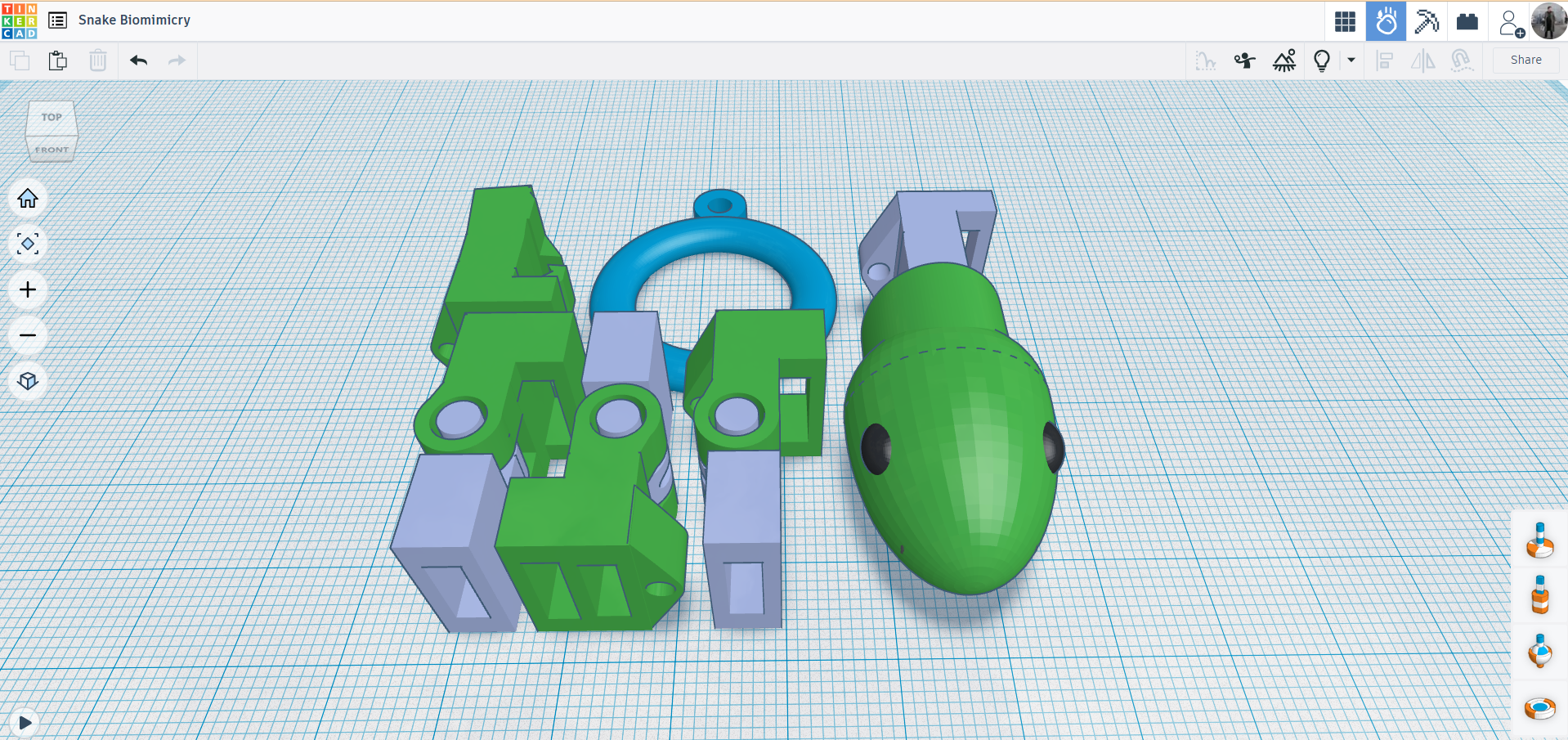
The 3D-printed parts were designed using Autodesk Tinkercad.
Welcome to the DIY Biomimicry Snake lesson!
Objective:
Students will create a simple physical prototype inspired by snake movement and explain how form, joints, and materials affect motion.
In this lesson, students will:
- Find out how movement works in nature using simple mechanisms.
- Explore how form, joints, and materials affect motion.
- Take action by building and testing a physical prototype inspired by a snake.
- Learn that snakes are awesome! (Anyway, proceed with caution when you meet one, and call Animal Services if needed.)
Supplies


You will need for each snake:
- Flat bamboo skewers for kebab (1.5 per snake)
- 3 rubberbands
- String
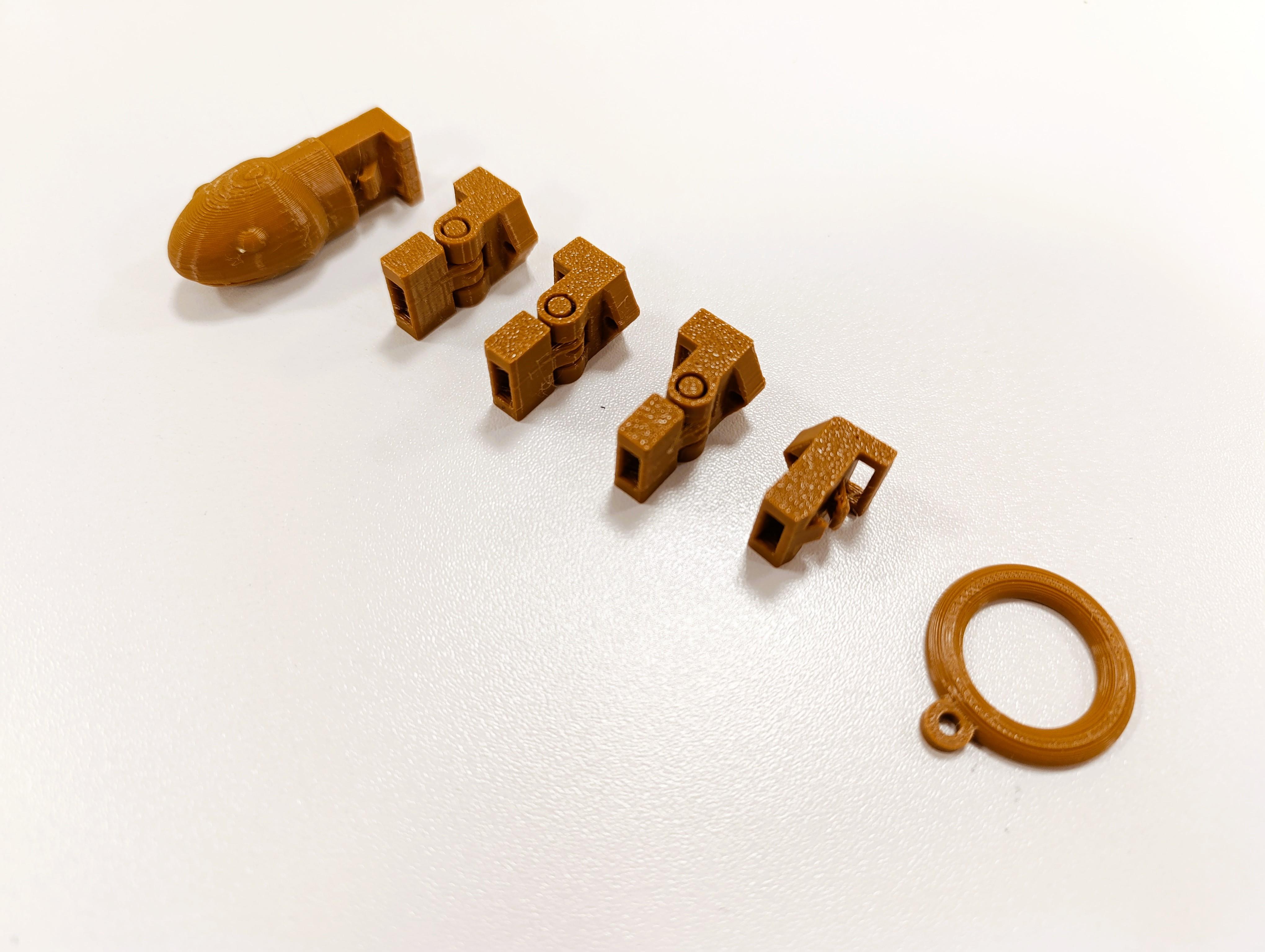
- 3D printed parts: 1 head, 3 articulations, 1 tail detail, and 1 ring. Basic parameters: PLA, standard quality, 15% infill, 3 wall loops, no supports or brim.
- Tools: ruler, scissors, pliers (or other appropriate tool to cut the skewers), and pencil.
Preparation
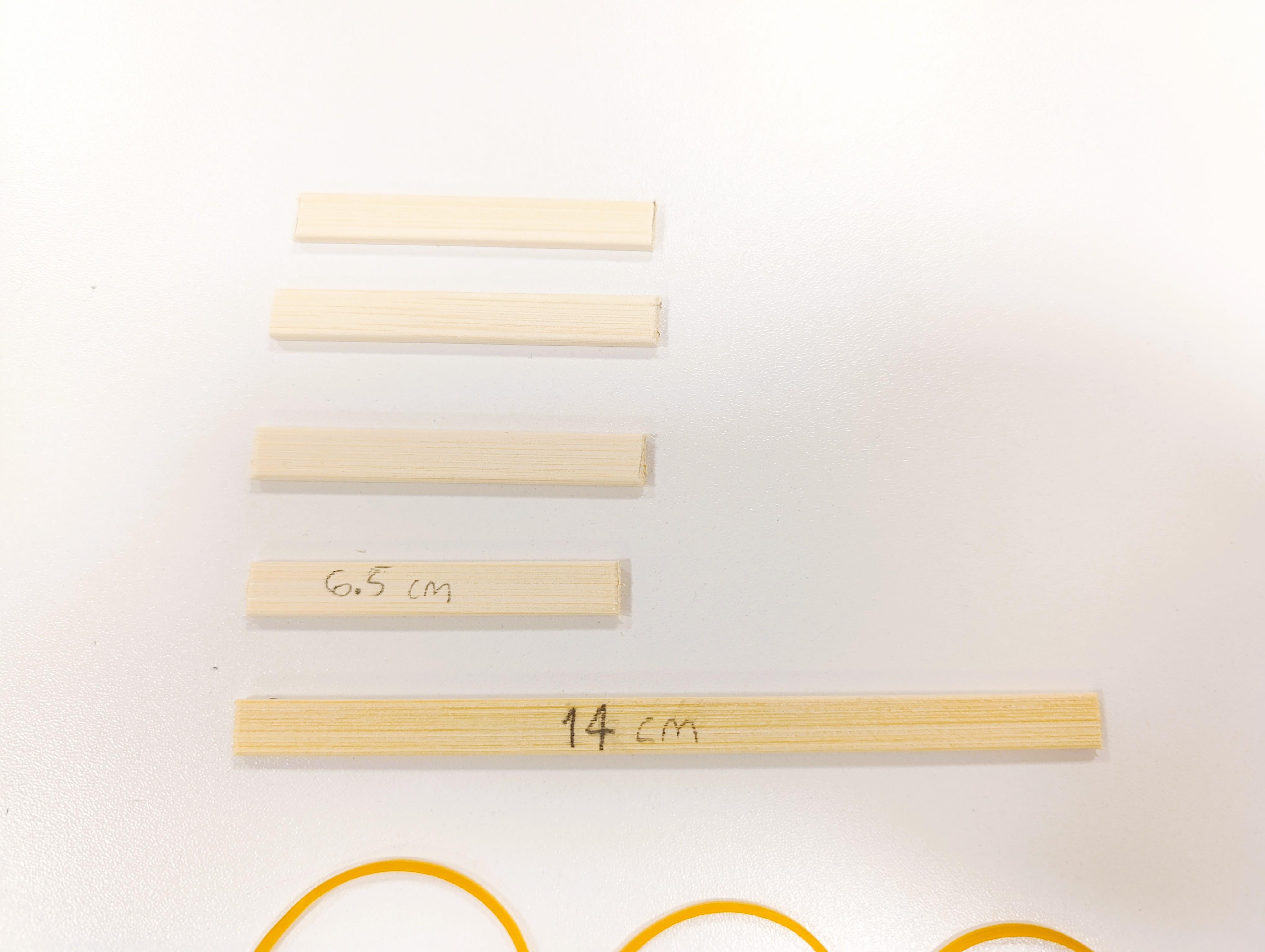
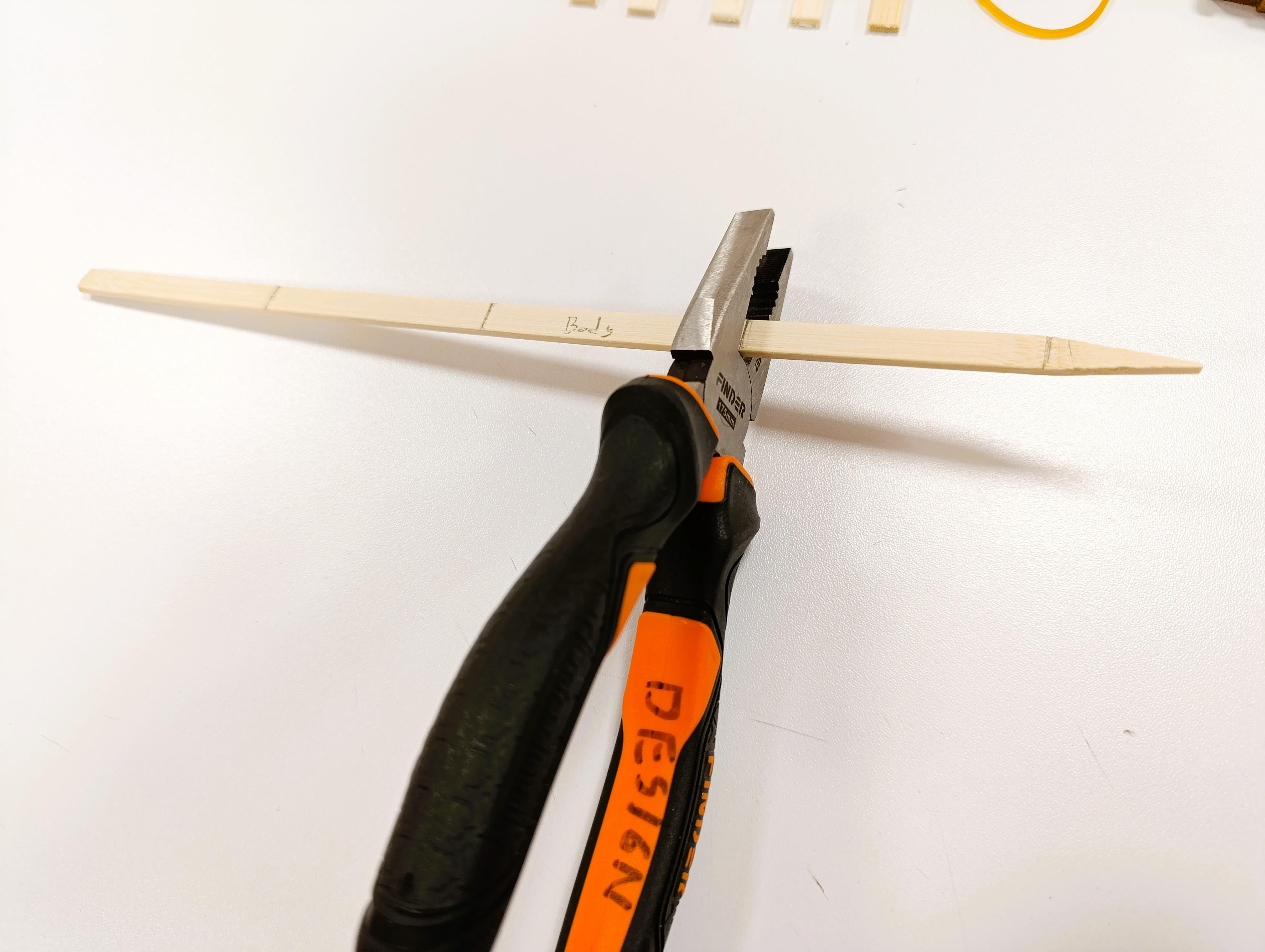



Before the lesson, cut the skewers into shorter sticks. You will require a long stick (14 cm) and four short sticks (6.5 cm)
Print the plastic pieces (1 head, 1 ring, 3 articulations, 1 tail detail.)
Remind your students to prepare the materials according to the graphic. Also, they need to consider that there are three main holes on each component, and they must be aligned between components:
- The small circular hole is for the string.
- The center rectangle hole (no exit) is for the sticks.
- The outer rectangle hole (with exit) is for the rubber bands.
First Segment
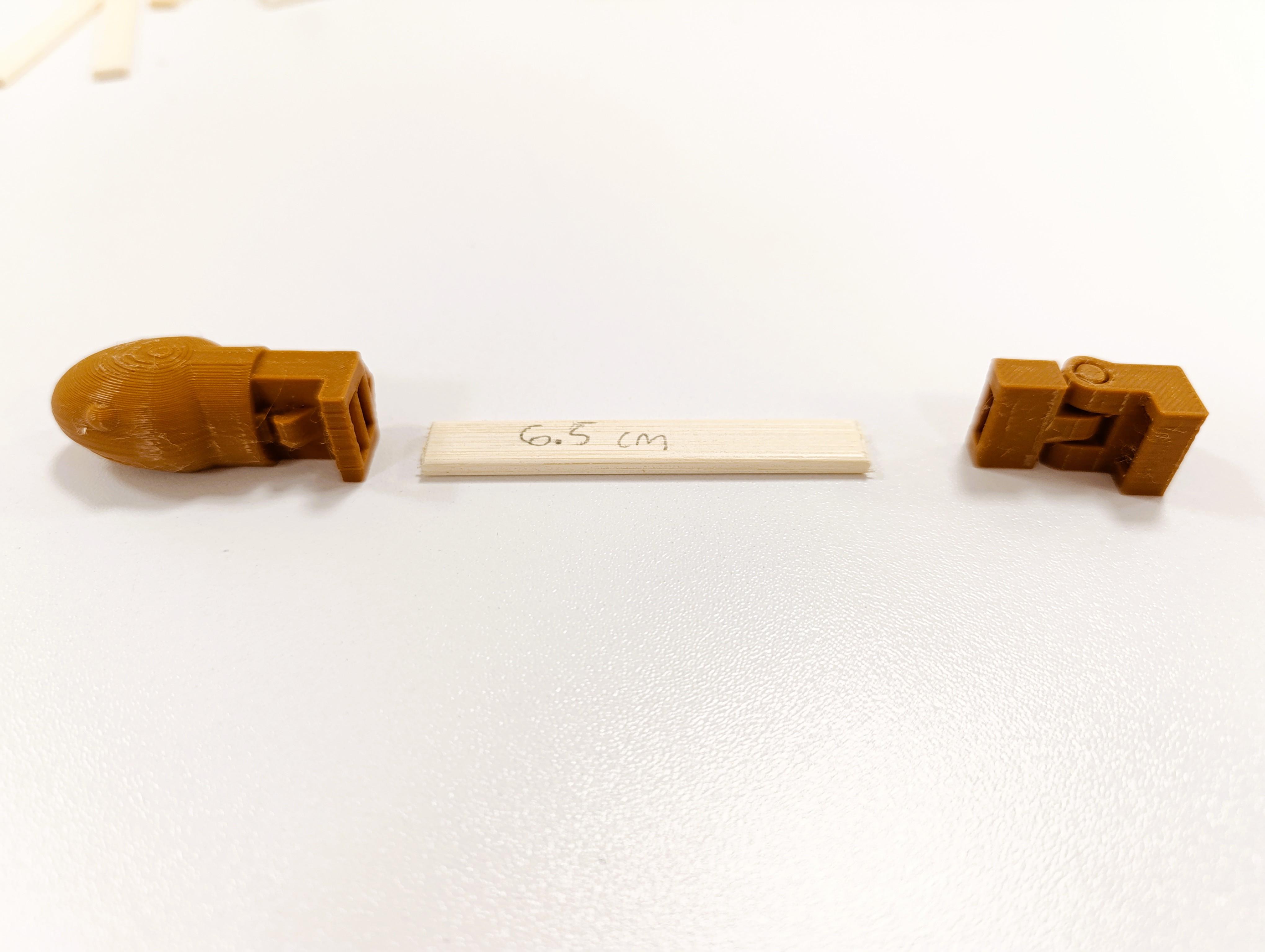
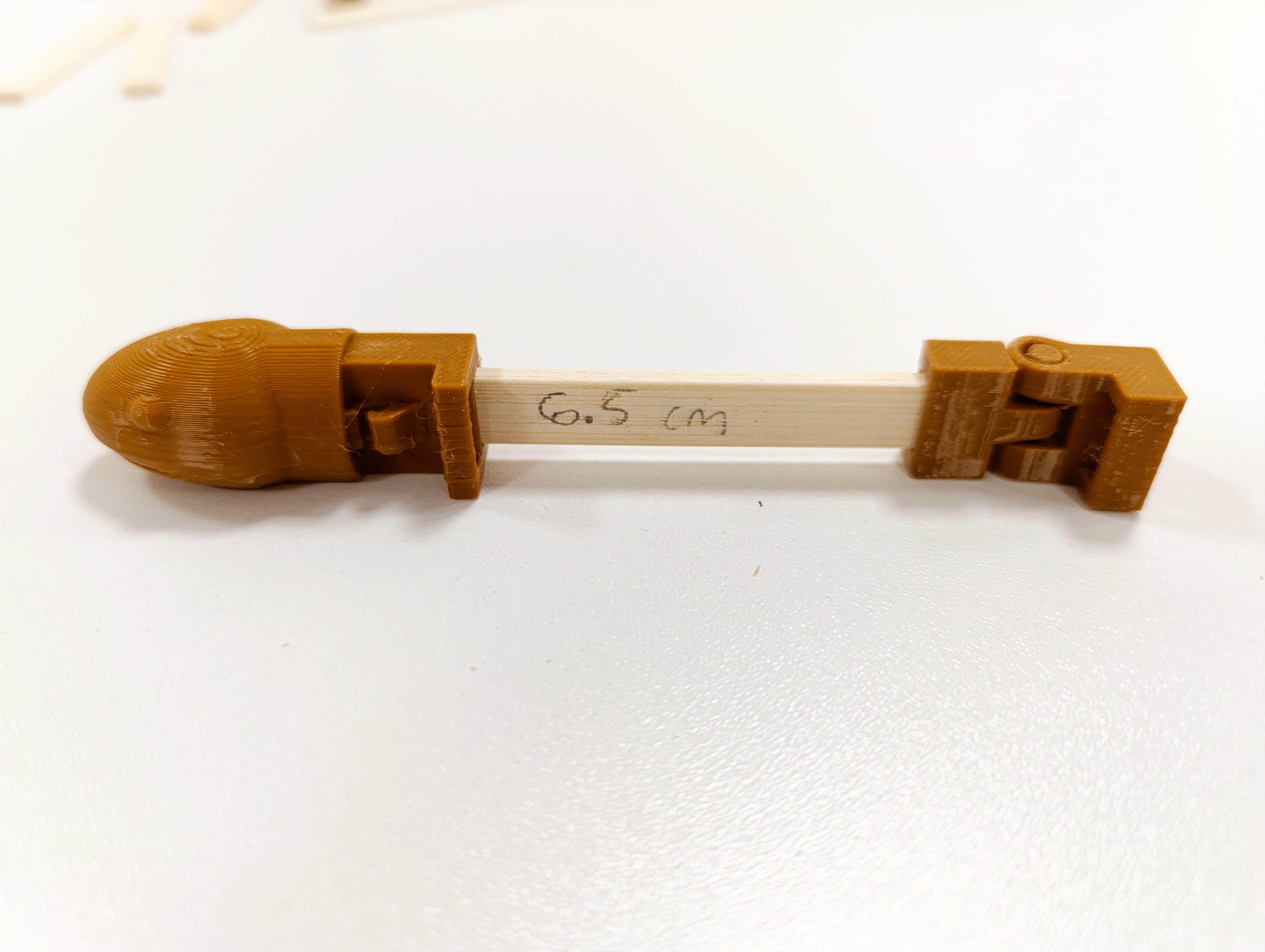
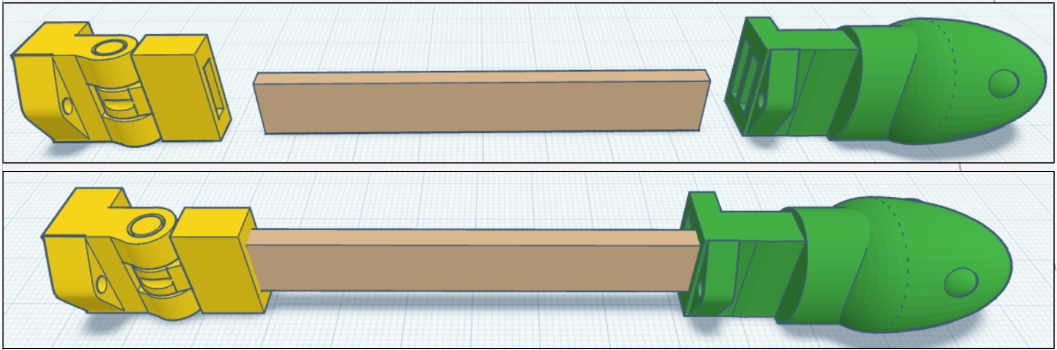
Take the head, a short stick, and a joint, and combine them. Check that the string hole (circular) of the joint is in the rear position and on the same side as the head’s string hole.
Second Segment
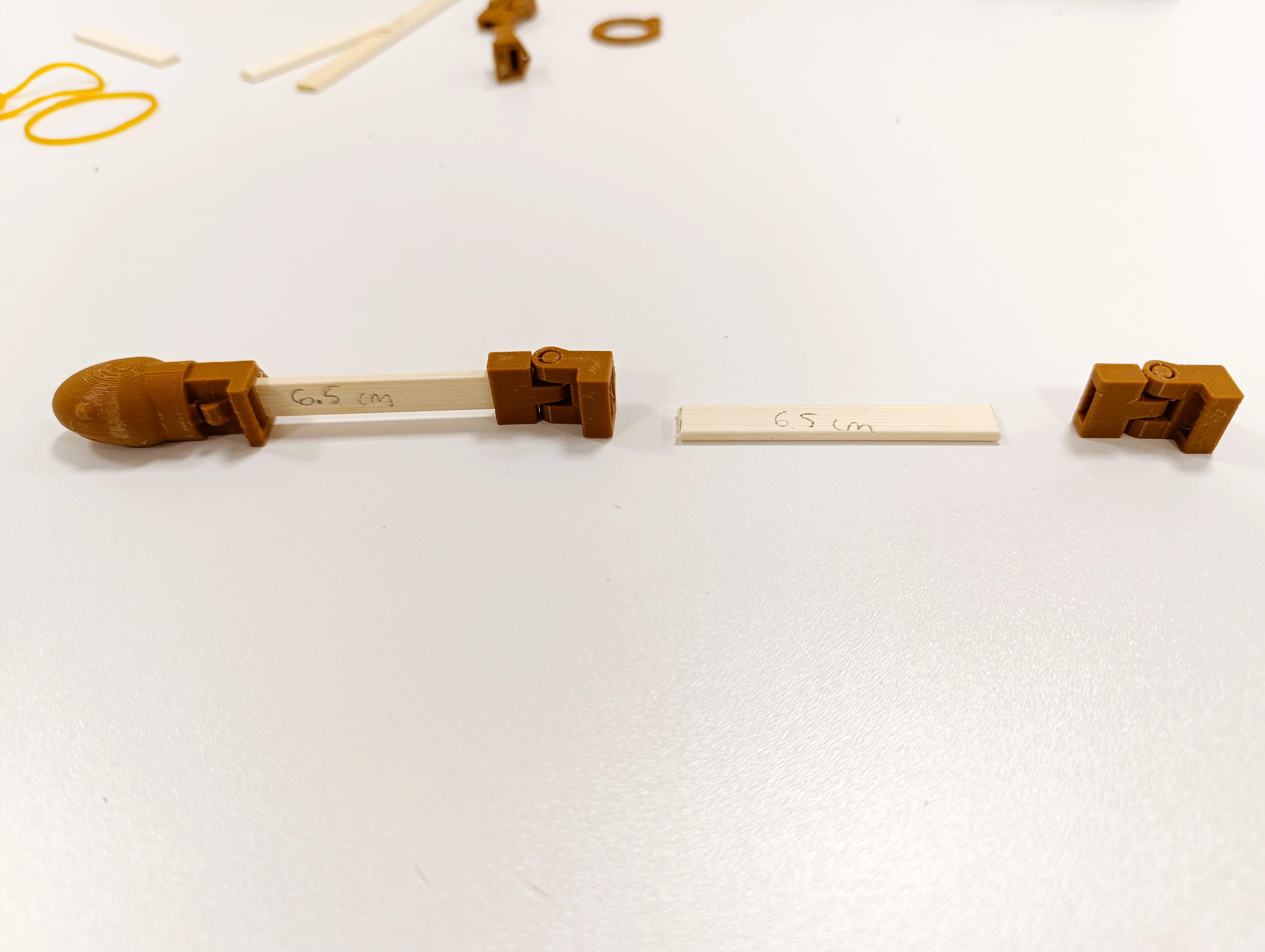

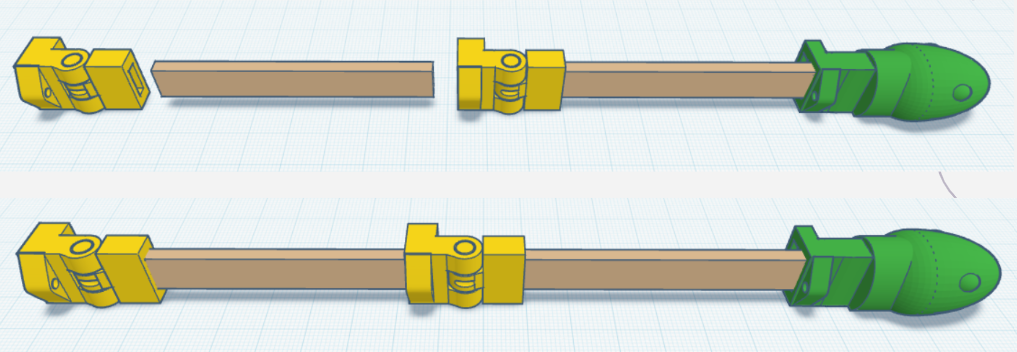
Take another short stick and a joint, and repeat the same operation. Check that the string hole (circular) of the joint is in the rear position and on the same side as the string holes of the previous details.
Third Segment
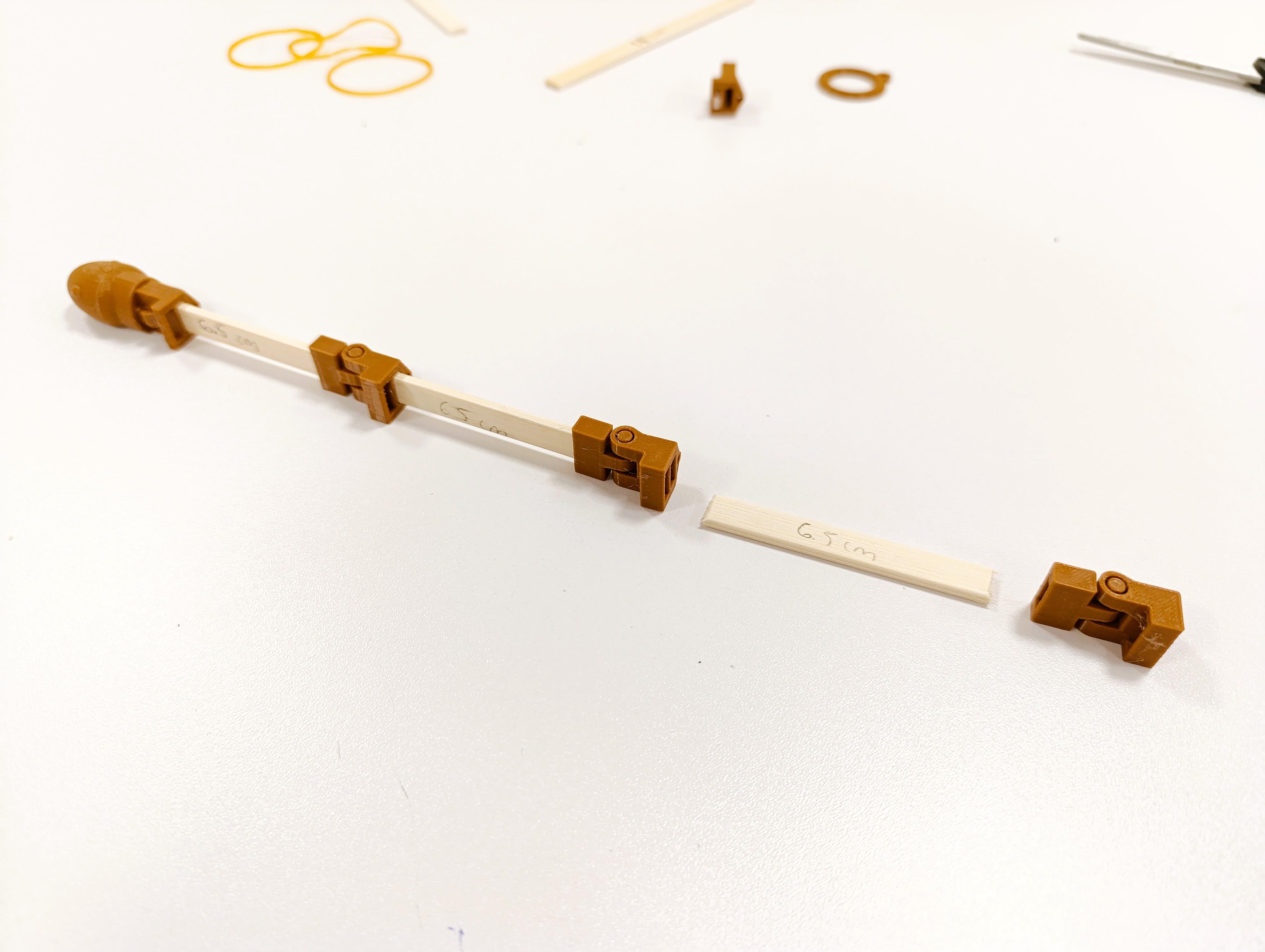

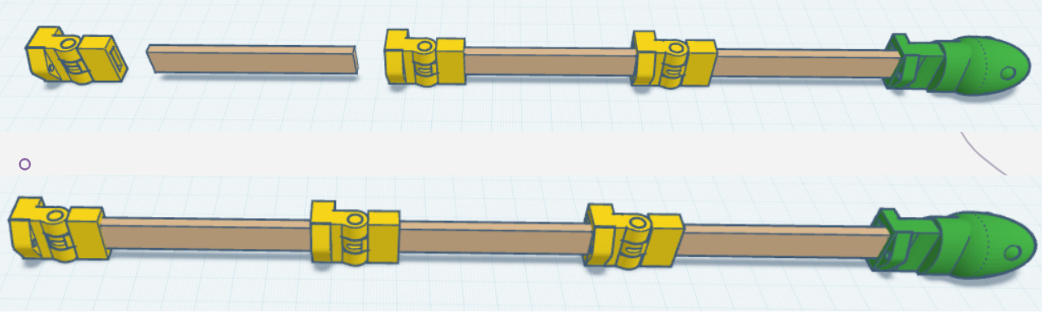
Take another short stick and a joint, and repeat the same operation. Check that the string hole (circular) of the joint is in the rear position and on the same side as the string holes of the previous details.
Fourth Segment and Tail
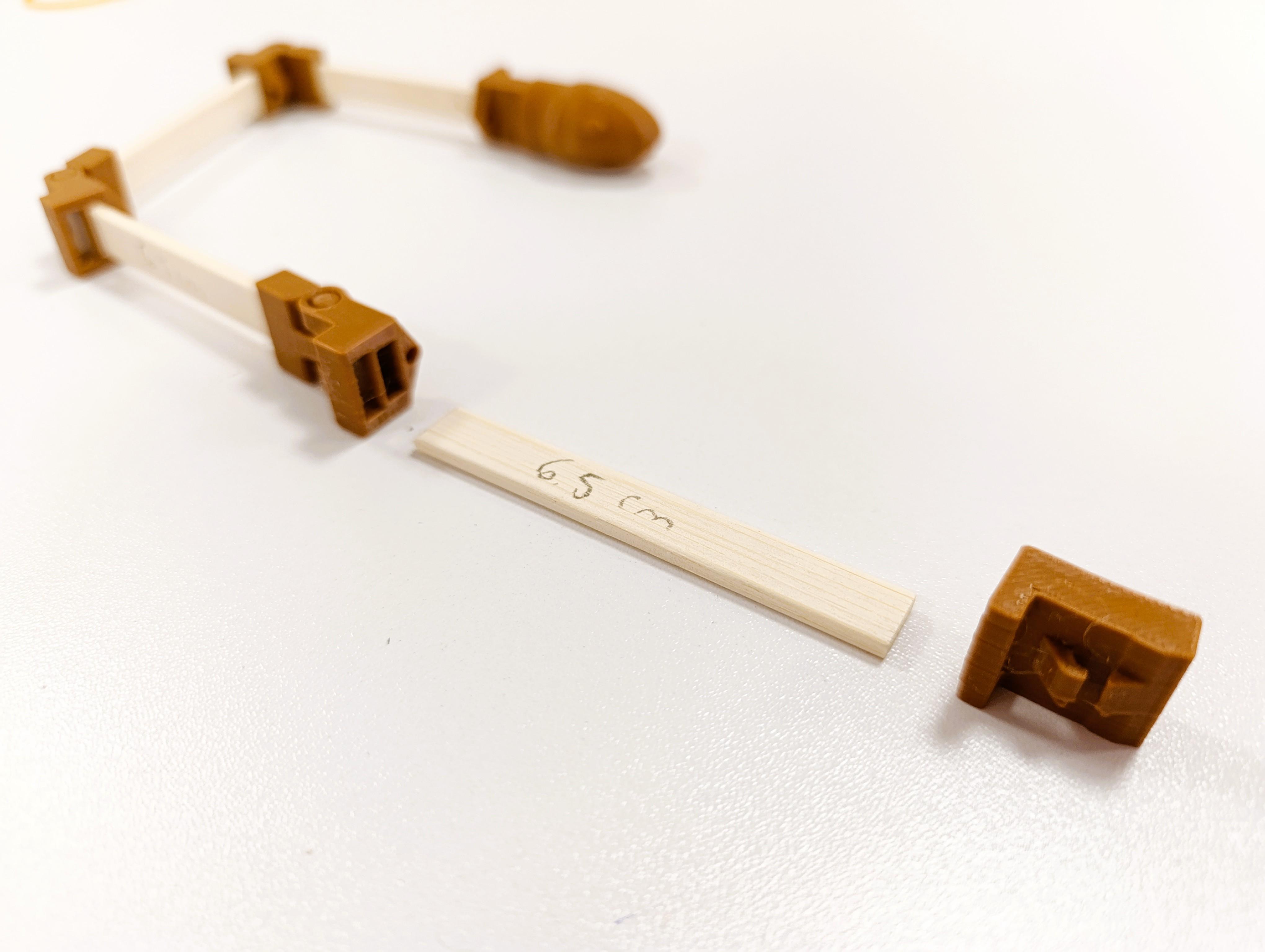

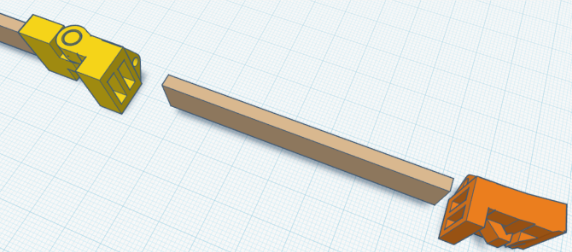

Bring the last short stick and the tail detail. Check that the string hole (circular) of the tail detail is in the front position (so the rubber band hook can catch the rubber band) and on the same side as the string holes of the previous details.
Handle

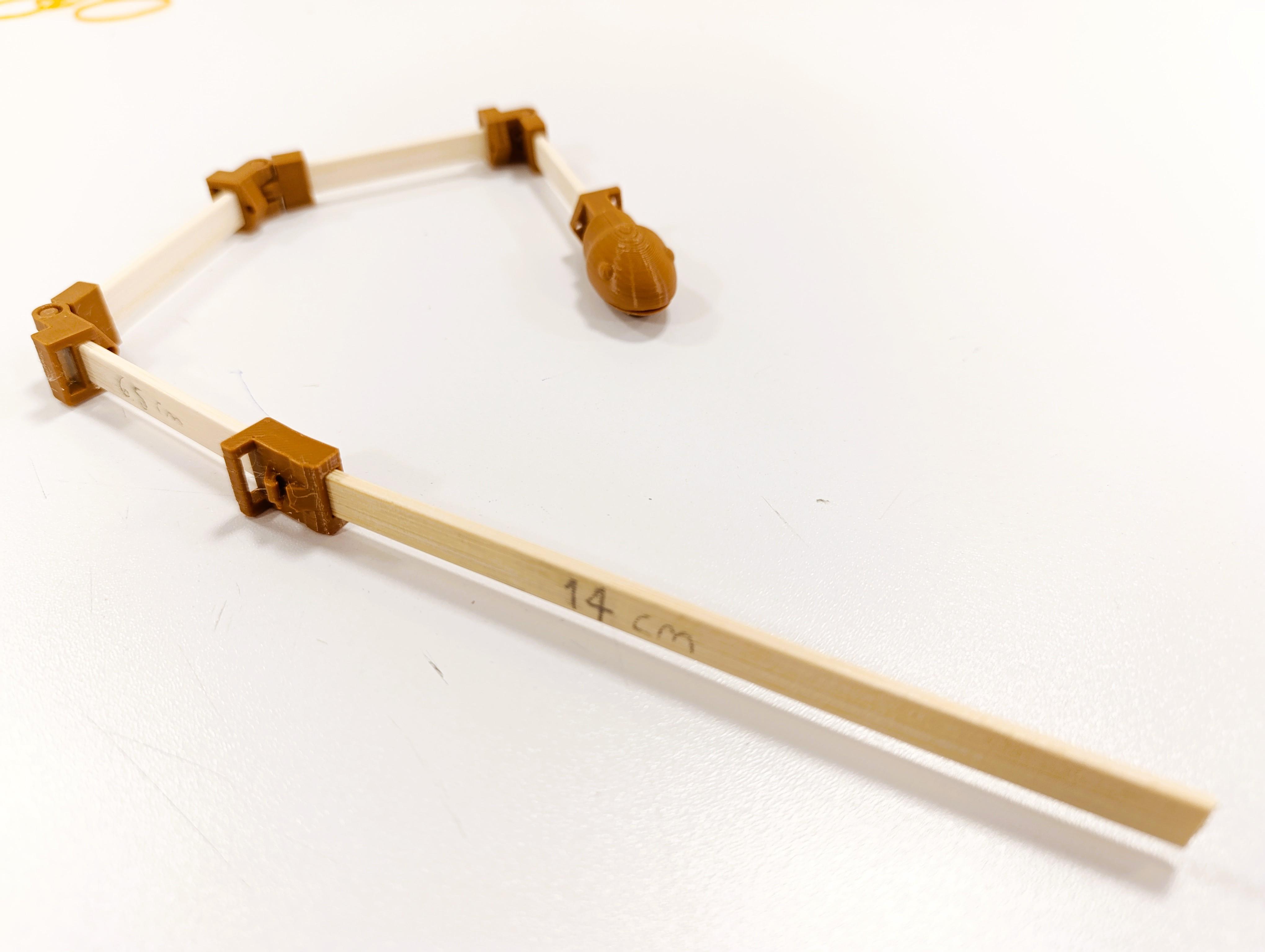
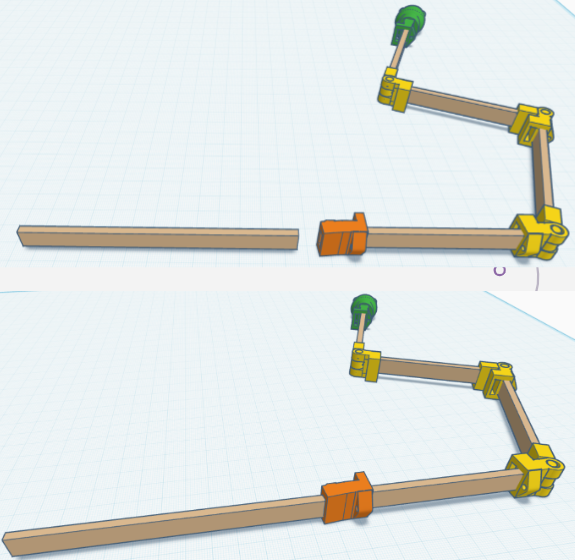
Bring the long stick and insert it into the tail detail.
Rubber Bands
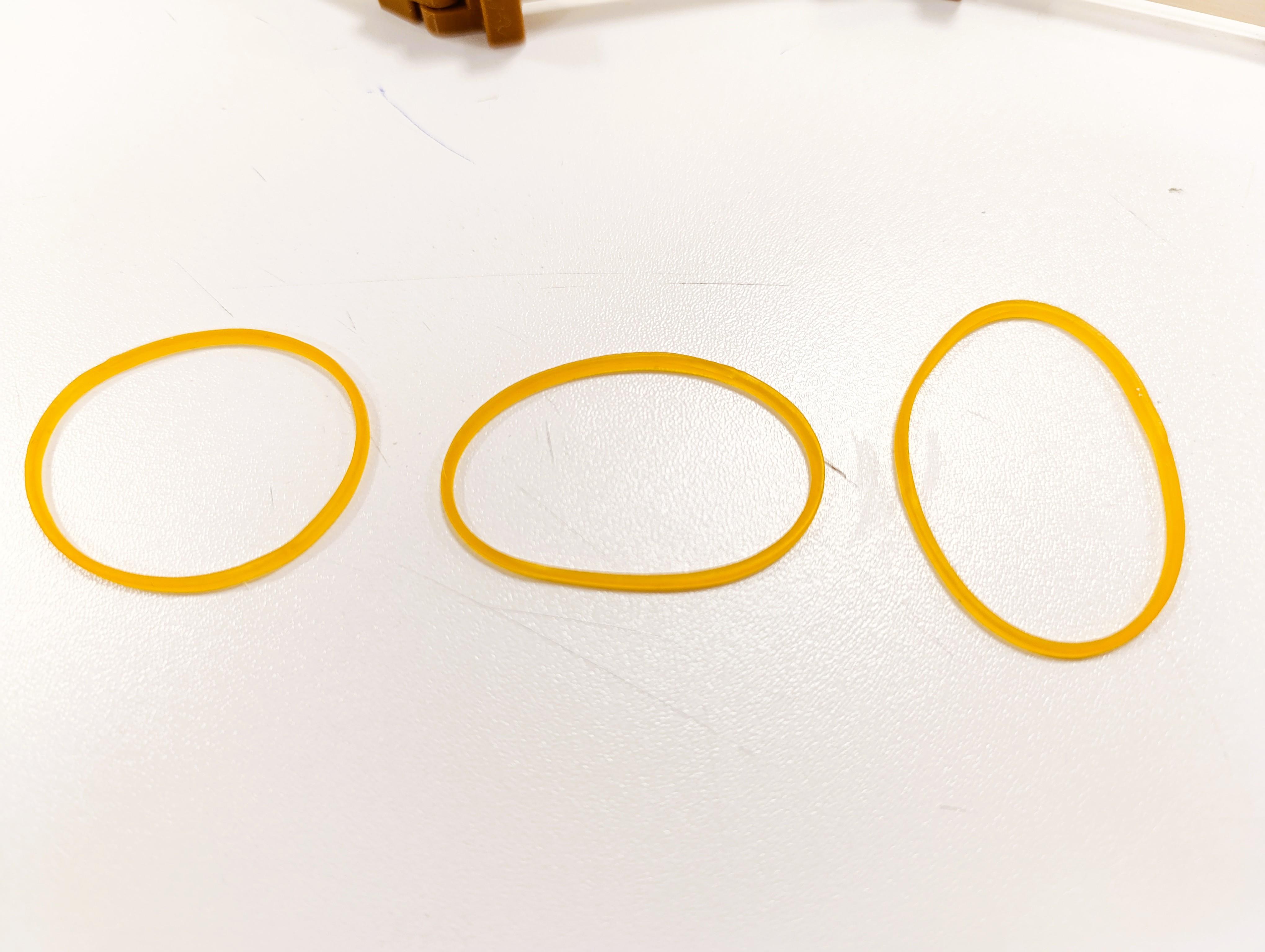


Tie the other rubber bands to create a long rubber band.
Inserting the Rubber Bands


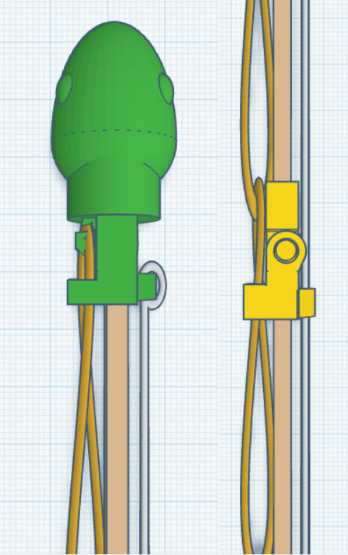
Grab the rubber band. Catch it with the hook and pass it through the other rubber band holes. Catch the other end of the rubber band using the hook.
String
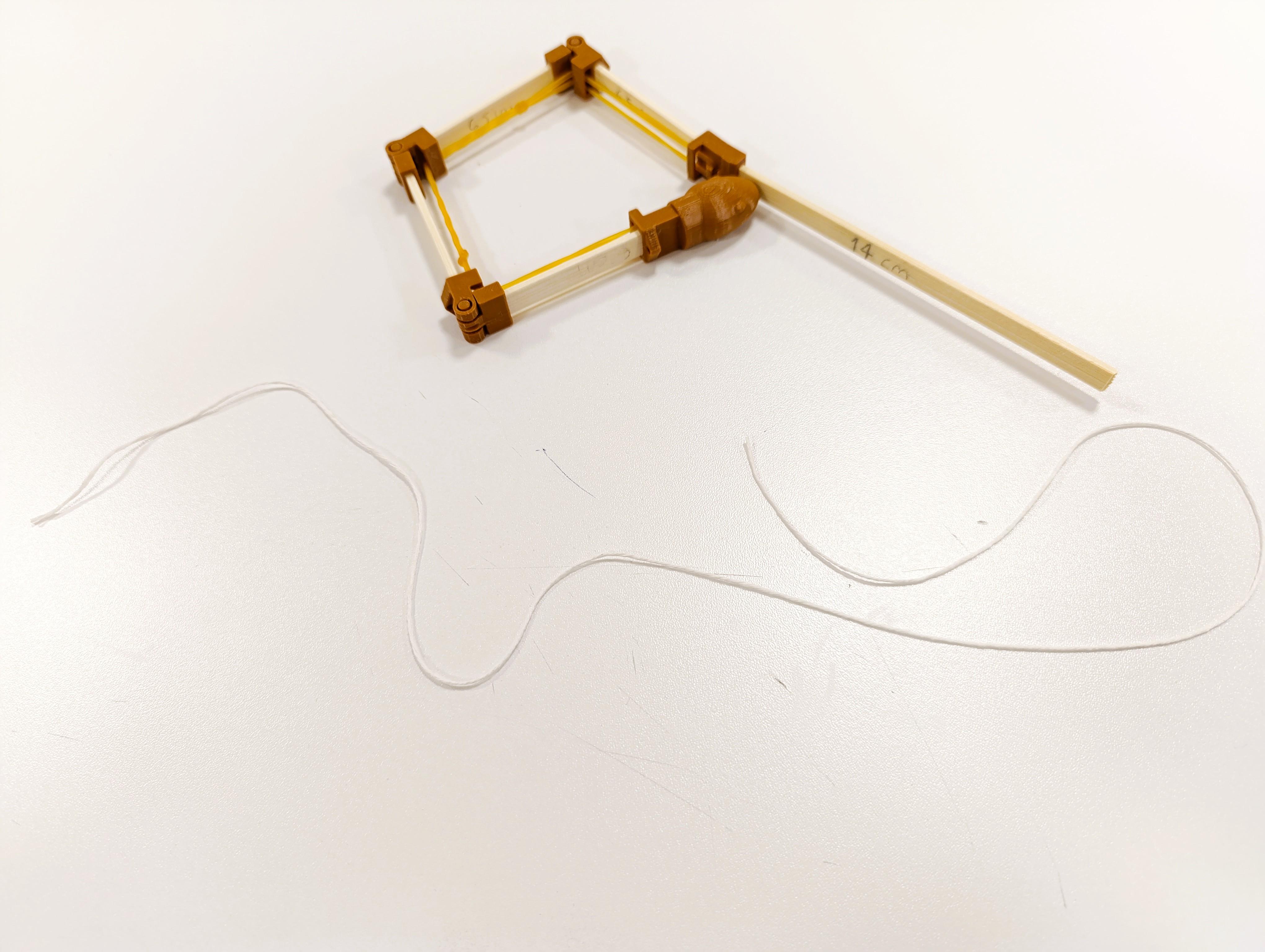
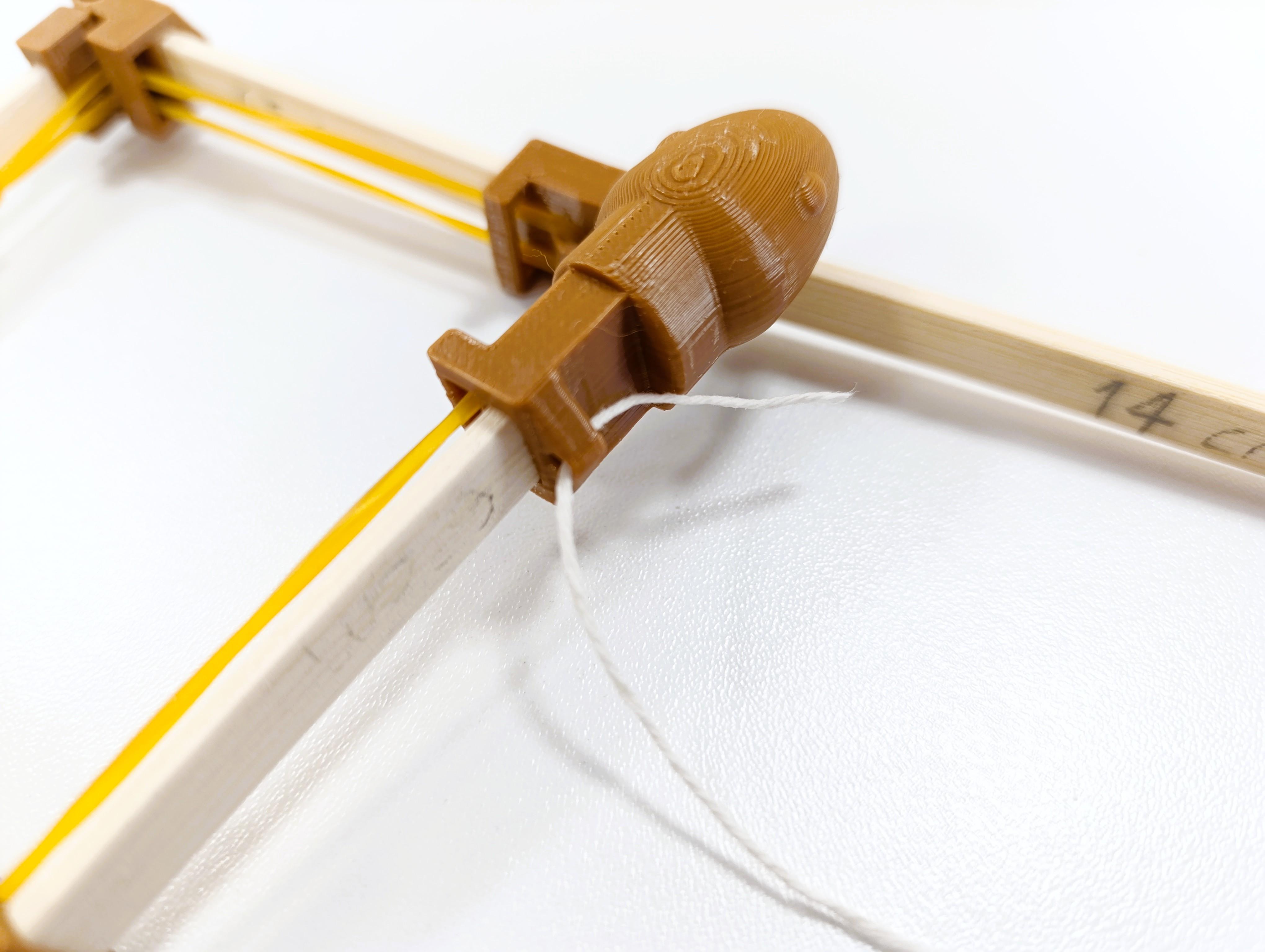

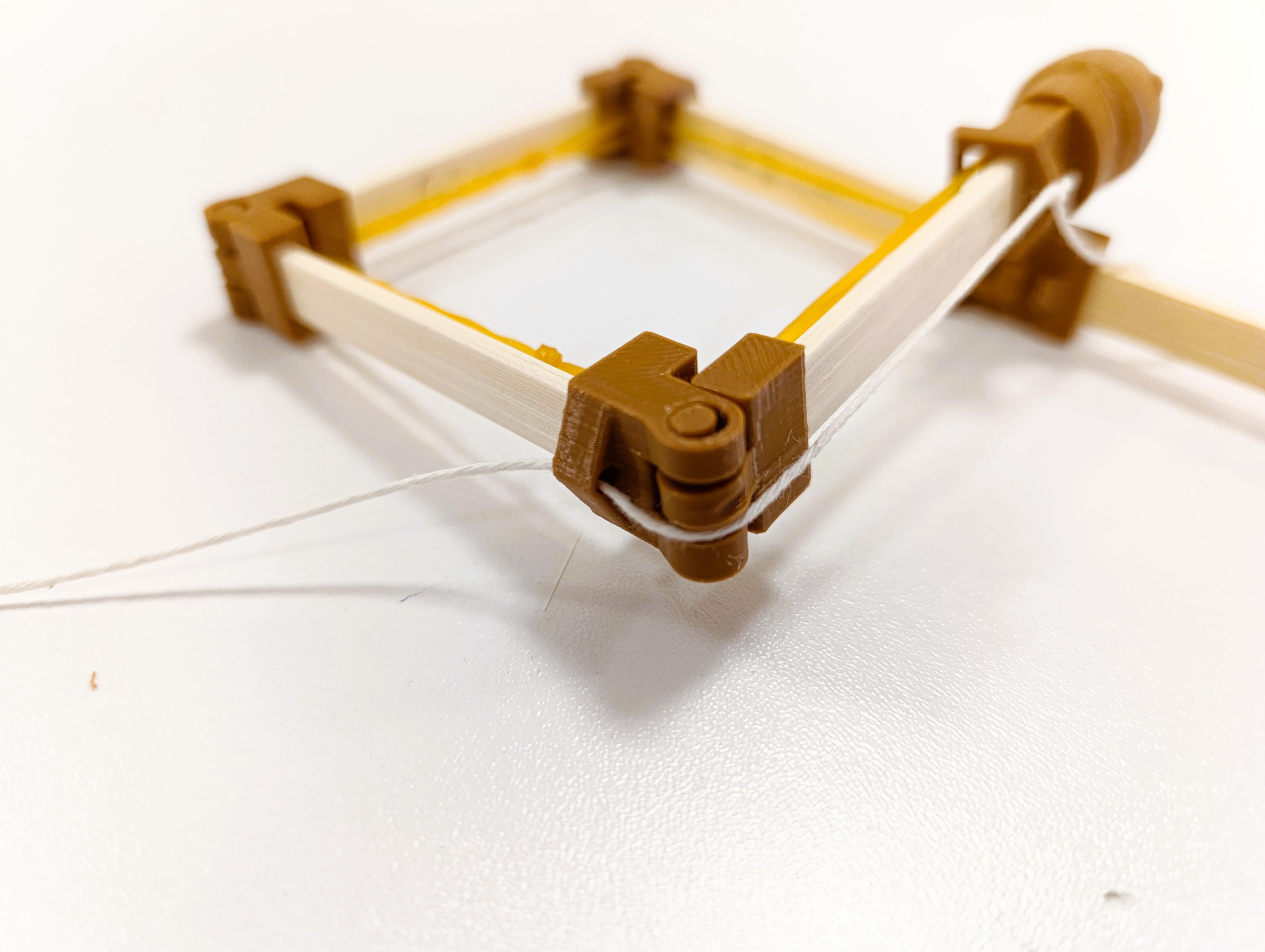
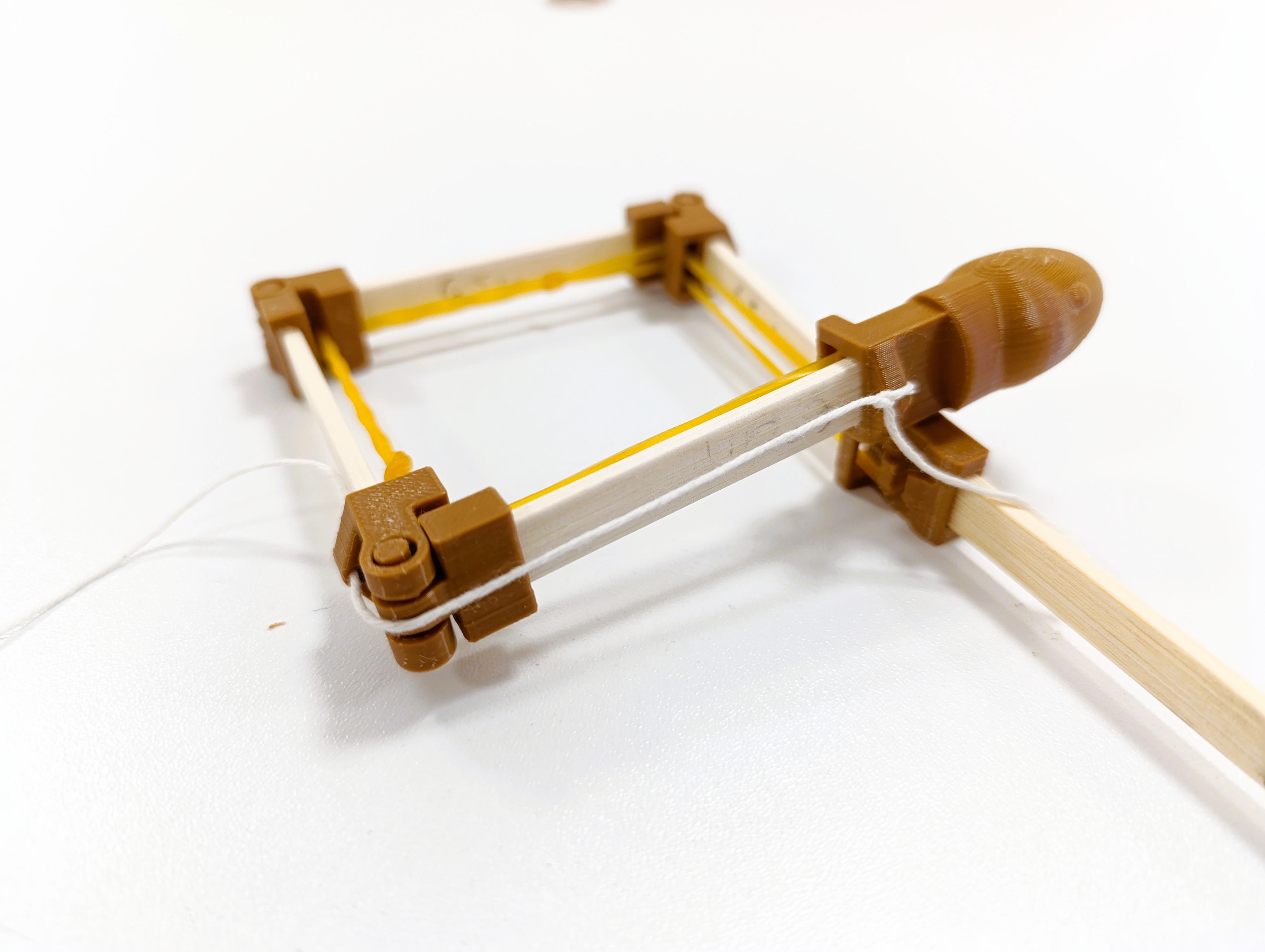
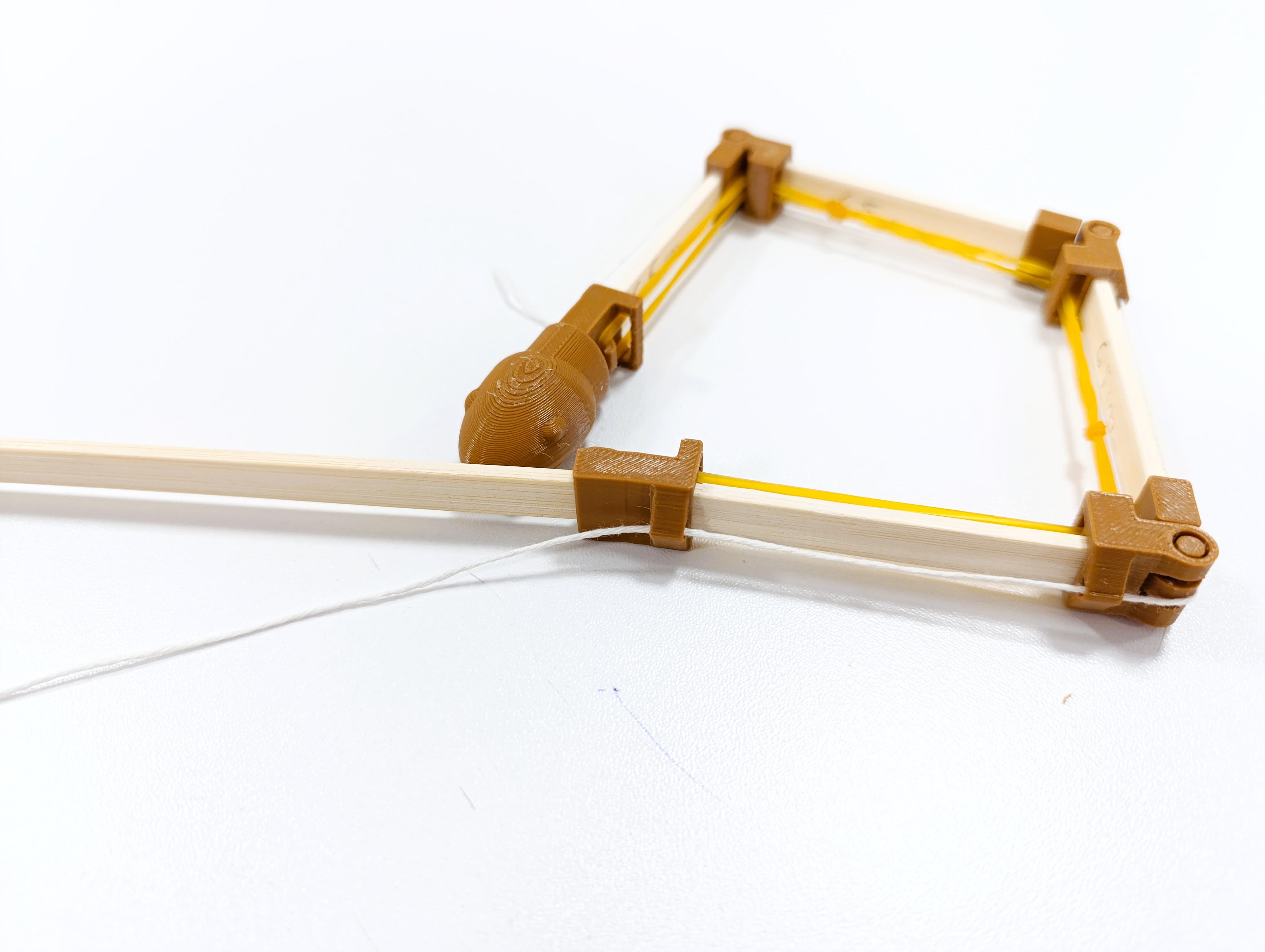
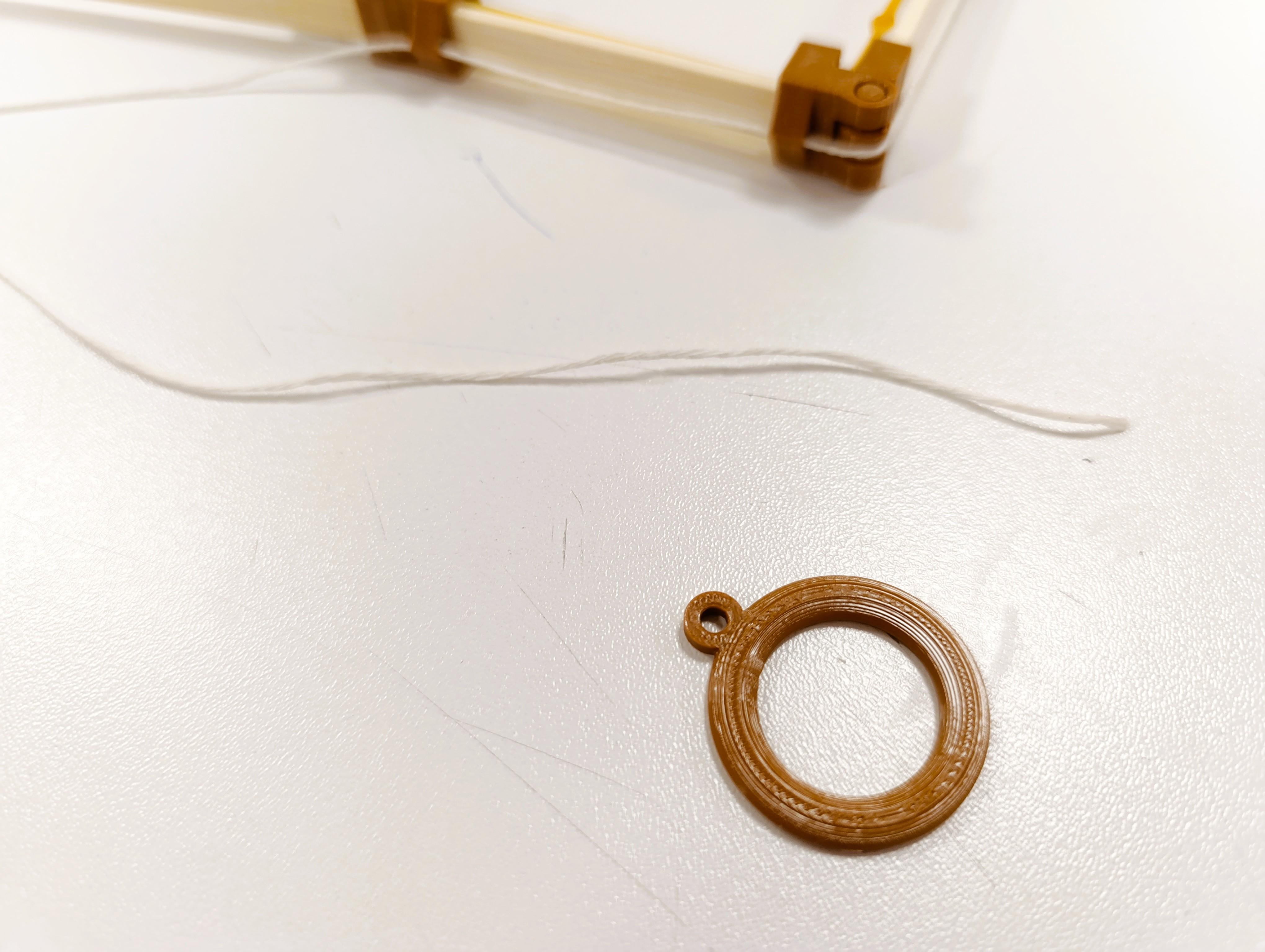


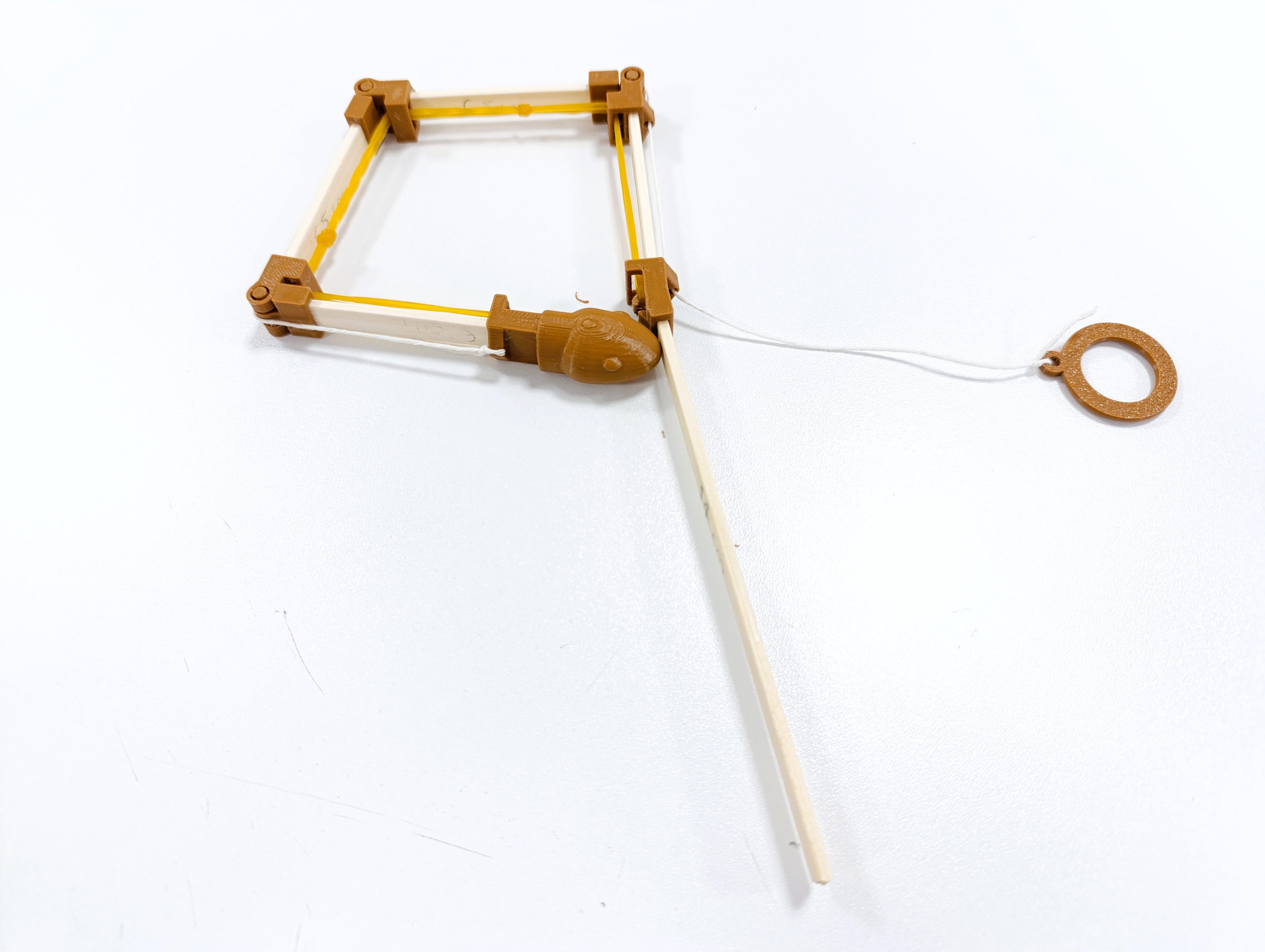
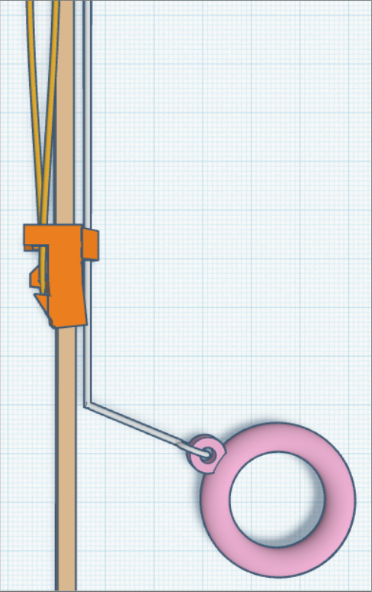
Go to the snake’s head. Tie the string to the string hole and pass it through the other string holes along the snake.
Go to the tail detail. Pass the string through the string hole and tie the end to the ring.
Now, test your snake!