Charging NiCd/NiMh Batteries With Power Supply
by sainisagar7294 in Circuits > Arduino
49 Views, 0 Favorites, 0 Comments
Charging NiCd/NiMh Batteries With Power Supply
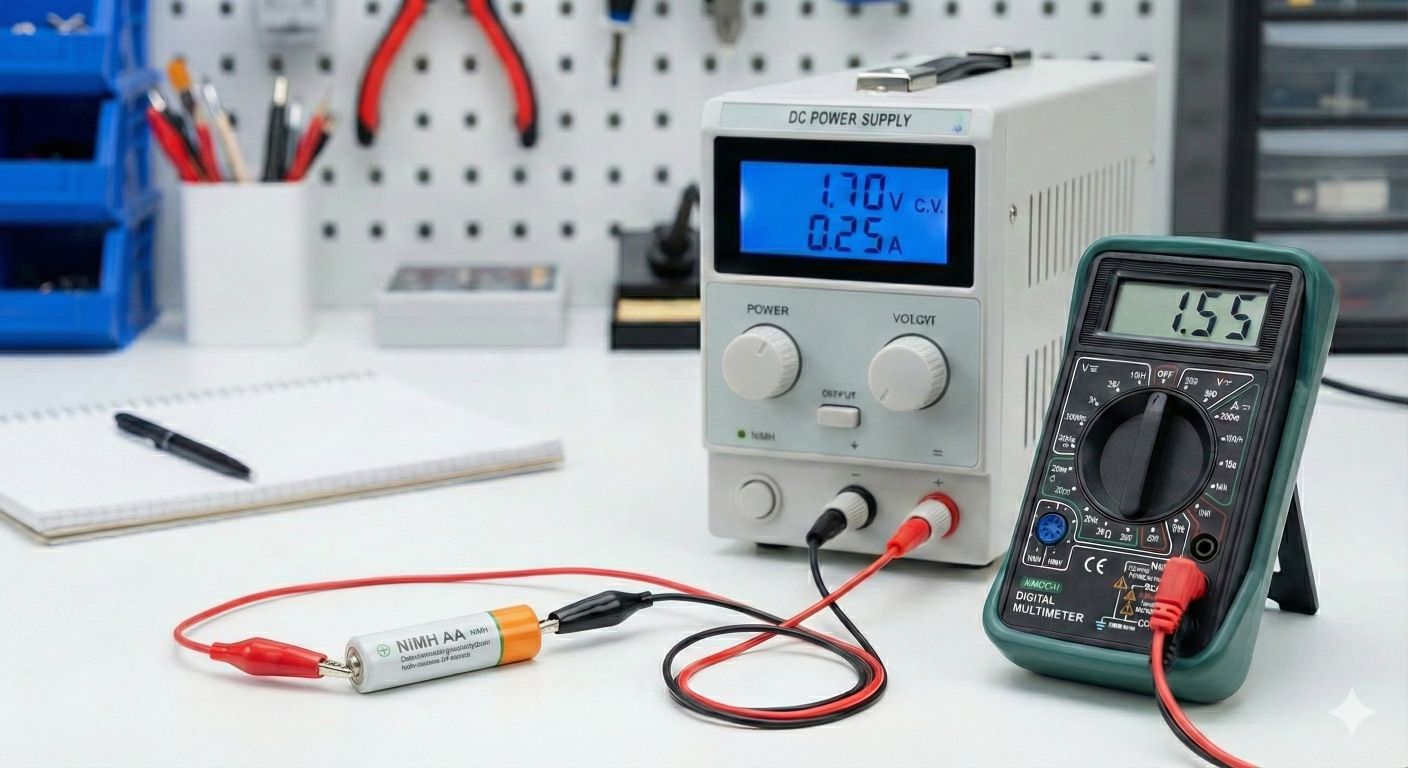
Charging without protection but with proper circuit and monitoring. Lets see how to charge these NICd and NiMh in a better way.
Supplies
Power supply CC/CV mode
Battery
Multimeter
Ammeter
Story:
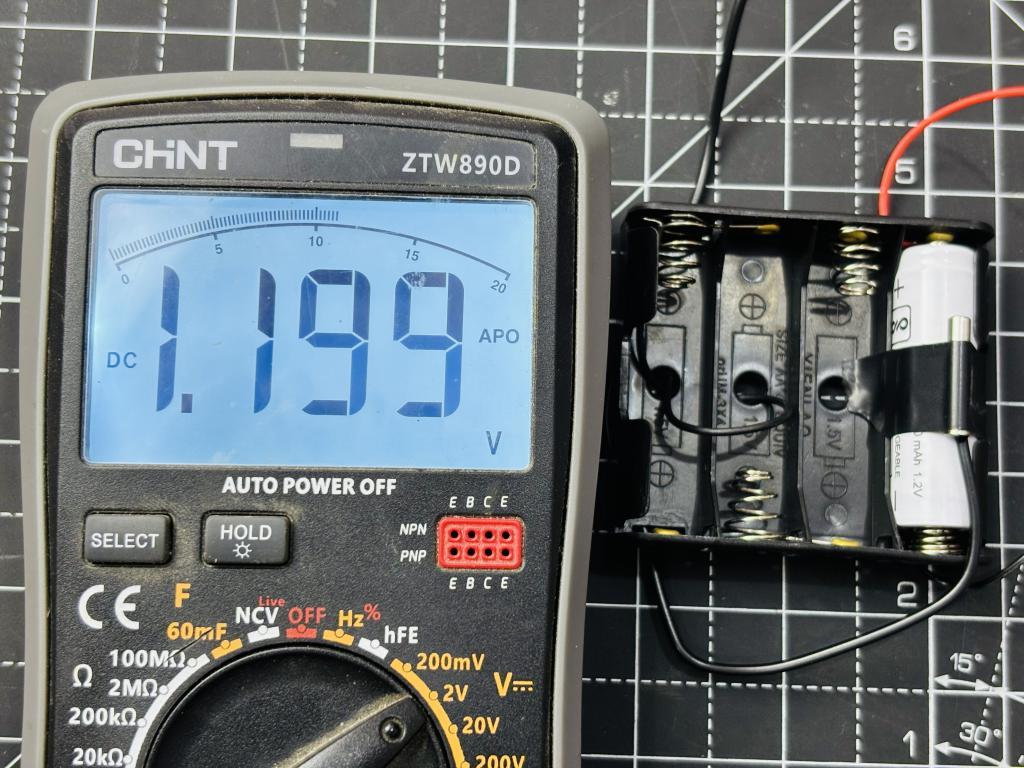
I have covered some battery chargers in past articles. Here is my new article on the topic of how to exactly charge NiMh or NiCd batteries without any protection circuitry. I will let you know the exact profile and charging mechanism in the CC/CV mode because the charging mechanism is a bit different. Usually, these batteries do not pose a risk of explosion or leakage due to their chemistry and potential. The batteries can be charged without protection in the slow charging mode at 0.1C for 10-12 hours. But it is way time-consuming, and we need something fast, that’s why I built a fast charger based on the CN3085 IC. This is a good fast charger that comes with built-in current monitoring and can charge the battery at a rate of 1A. But what if we say these batteries can be charged with a much simpler approach, just using a power supply that supports CC/CV mode? Here is the shot of a discharged board.
How the Battery Charging Module Works:
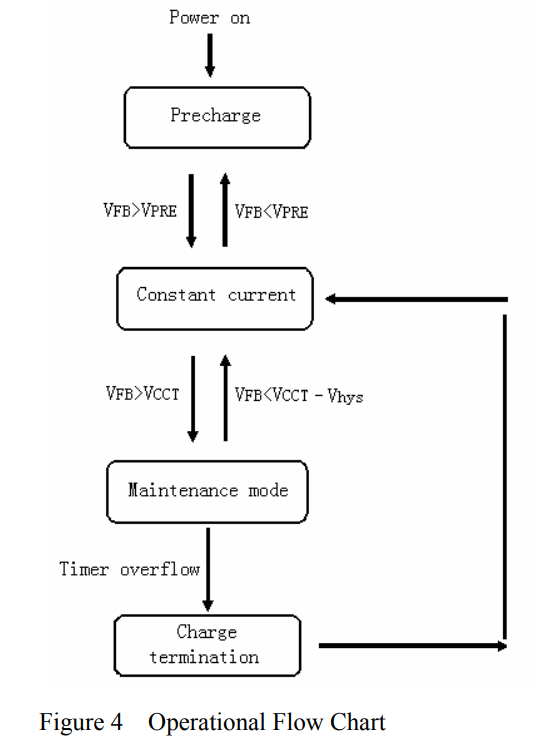
There will be two dominating modes: Constant current and constant voltage charging. These two modes are common for almost every kind of chemistry. CC is nothing but a limited-current mode, and similarly, CV is a limited-voltage mode. Either we can control voltage or current at a time, but not both simultaneously, unless limited by the power supply. First let's see the state of charge of a NiCd/NiMh battery.
- Precharge(Conditioning): If battery voltage is <1V, a low current trickle charge is applied. In this case, only 1/10th of the constant current is applied to the battery for safety purposes. So that battery can be pulled back to the state of charge.
- Constant Current (CC) Mode: When battery voltage rises above 1.2V, the programmed charge current is applied. Constant current mode is simply a current limiter; we limit the maximum charging current to the IC. It will be discussed further in more detail.
- Maintenance (CV) Mode: As the battery approaches 1.65V, the charging current tapers off. This is basically filling the battery from 90% to 100%. This is important for good battery health, but we can also plug out the battery after CC mode is done.
Say if a battery can charge at a max of 5A. The charger is connected with a constant voltage with no current limit. Then as the voltage increases, it drops the current to 5-4-3-2… down to 0A. This is a good method becasue here the current is not fixed 0.1C rating of battery. Bit this is also an old method and is not used much because it requires high currents, which can not be handled by small-scale integrated circuits. Instead of this, all the battery charge limits the current and charges as per the above-given profile.
Advance Method of Charging:
A discharged battery is charged in CC mode, it gets constant current, and the voltage starts increasing. As the voltage increases, the charging current decreases. Say if it is demanding a max of 5A, but we only provide a maximum of 1A. So it charges 5x slowly but at a constant rate of 1A. And when the charging current drops to 1A, it shifts from CC to CV mode.
In the constant current mode, the power supply voltage can be shifted to higher values, say 1.8 to 2V. It will not damage the battery because the voltage is not constant, hence it drops to the same potential as the battery as it gets connected. Once the CC mode is complete, decrease the power supply voltage to 1.6V and charge in CV mode. Now we can see the current going from 1A to 0A in a linear fashion.
So if we charge the battery in CV profile it will take large current and the old 0.1C charging is way slower method. If we know when to terminate the charge we can charge the batteries with CC mode with higher current than 0.1C.
How to Determine a Full Charge:

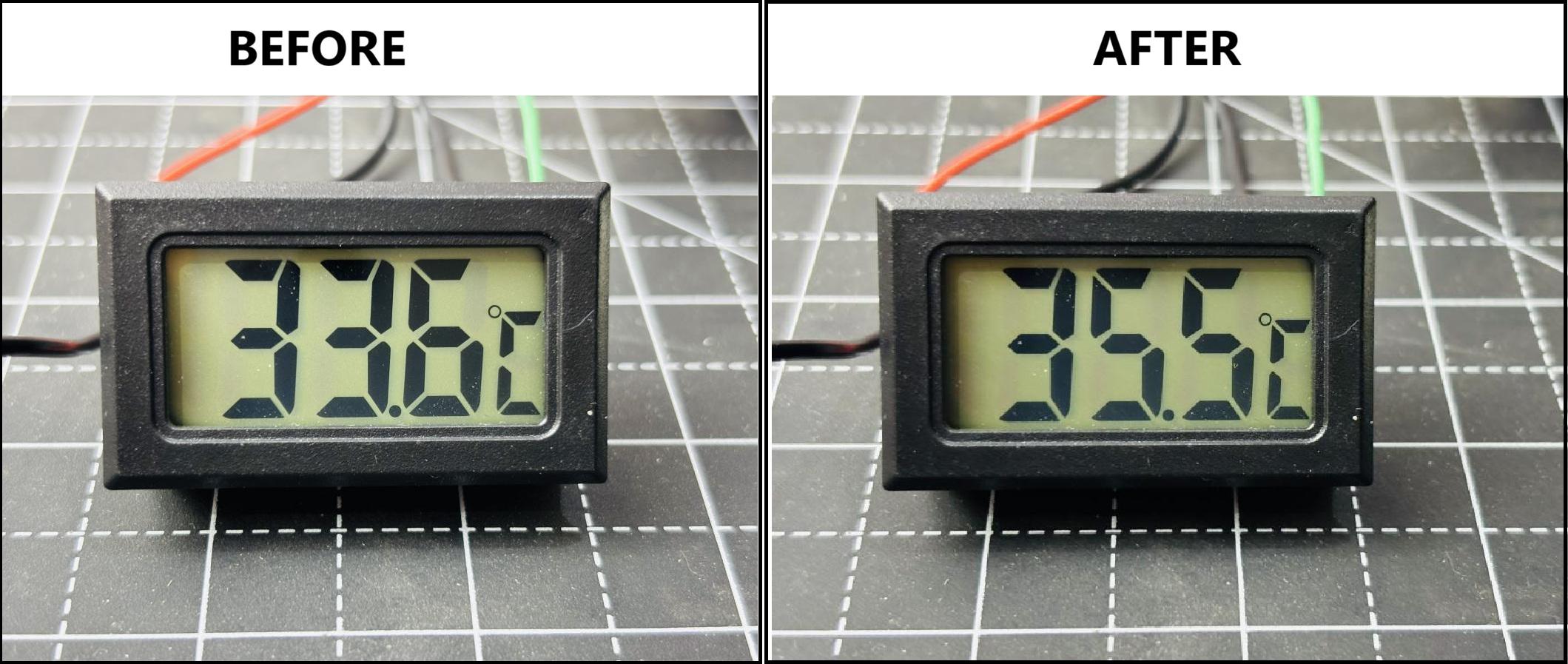
1. (ΔT/dt) Temperature Termination:
During charging, NiMH and NiCd batteries convert excess energy into heat once they approach full charge. This causes a rapid rise in temperature.
In rate-of-temperature-rise termination, the charger continuously monitors the battery temperature and stops charging when the temperature increases faster than a preset threshold (ΔT/dt).
- Typical trigger: 1–2 °C per minute
- Effective for both NiMH and NiCd
Requires a temperature sensor in close contact with the battery. This method is reliable because the sharp temperature rise is a clear indicator that the battery can no longer absorb charge efficiently.
2. Voltage Termination:
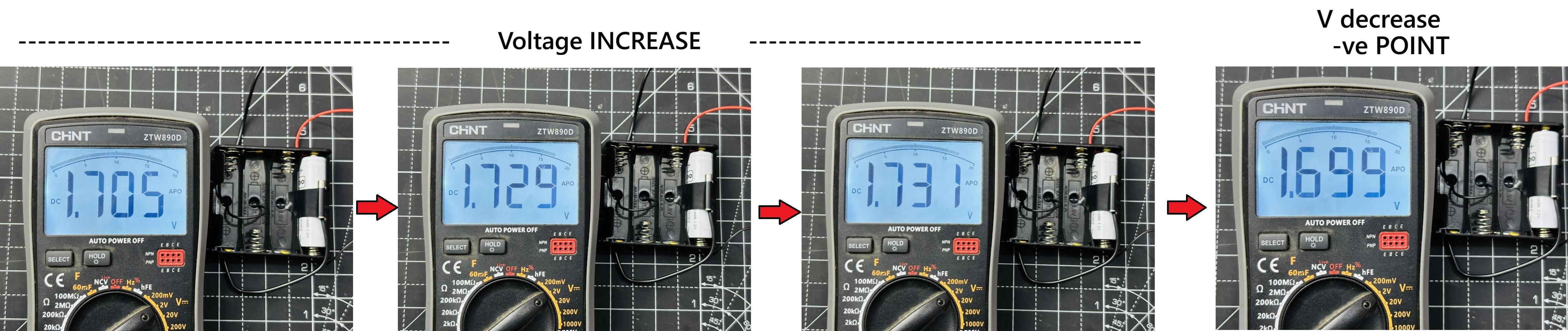
As NiMH and NiCd batteries reach full charge, their terminal voltage rises to a peak and then slightly drops. This drop is known as negative delta voltage (−ΔV).
- NiCd: −ΔV = 10–20 mV per cell
- NiMH: −ΔV = 5–10 mV per cell
Voltage termination is widely used because it does not require temperature sensors, but it is more sensitive to electrical noise and less pronounced in NiMH batteries compared to NiCd.
Both Ve temperature termination and voltage termination are effective methods for detecting full charge in NiMH and NiCd batteries. Ve termination offers higher reliability by directly responding to heat generation, while voltage termination is simpler and cost-effective, especially for NiCd cells. In practice, many smart chargers combine both methods to improve accuracy and prevent overcharging.
Taking the Project to the Next Level - With JUSTWAY


Electronics without proper housing and the audio circuit, they simply would not work. Yes! Because to keep the system available to us a proper 3D casing should be there. JUSTWAY assists you in turning your do it yourself project into a high-quality prototype that feels and looks like a genuine product that is ready for the market. What they do:
- Rapid Prototyping
- CNC Machining (Aluminum 6061 / Stainless Steel 304)
- Sheet Metal Fabrication
- Injection Molding
- Urethane Casting
- 3D Printing (SLA & HPA-PA12)
Upload your CAD files at JUSTWAY.com, Select the material & finish then preview your model in 3D and place your order.
Results: Set the Power Supply:
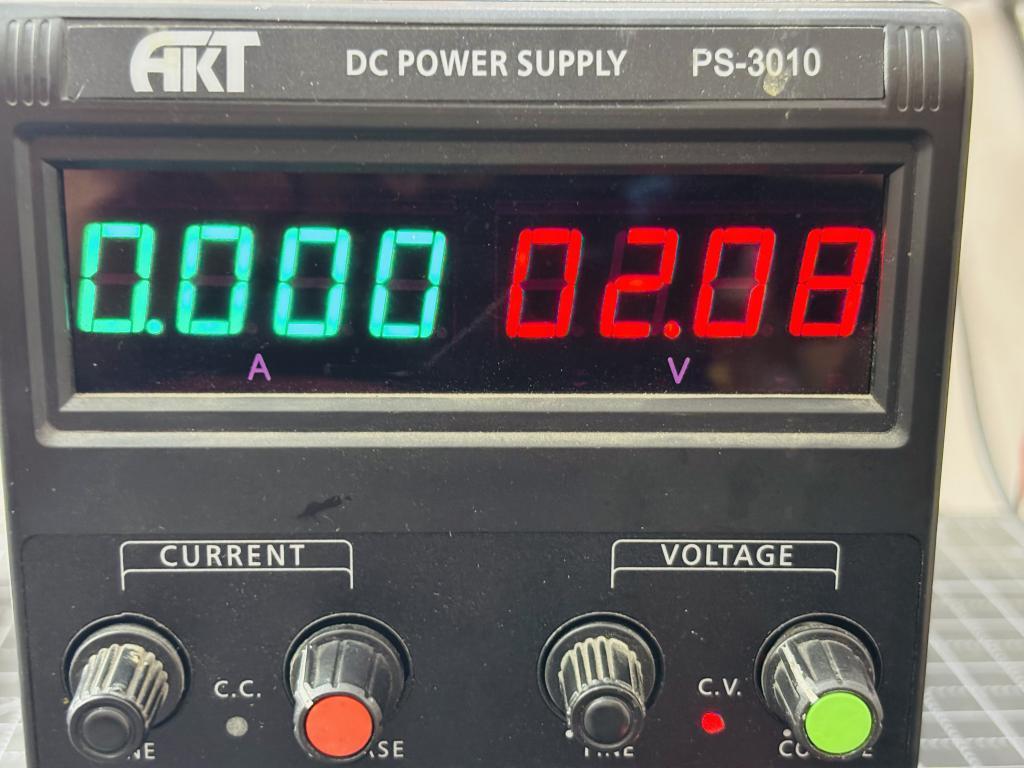
Set the power supply voltage near to 1.8-2.0 volts.
Results:

Set the maximum current output to 0.5A. This can be done by shorting the power supply pins and then turning the current control knob. If you don’t have this feature, use a multimeter and a low-resistance load to set the value to 0.5A. For this, your power supply must have a current controlling knob.
Results: Battery Selection and Connection:
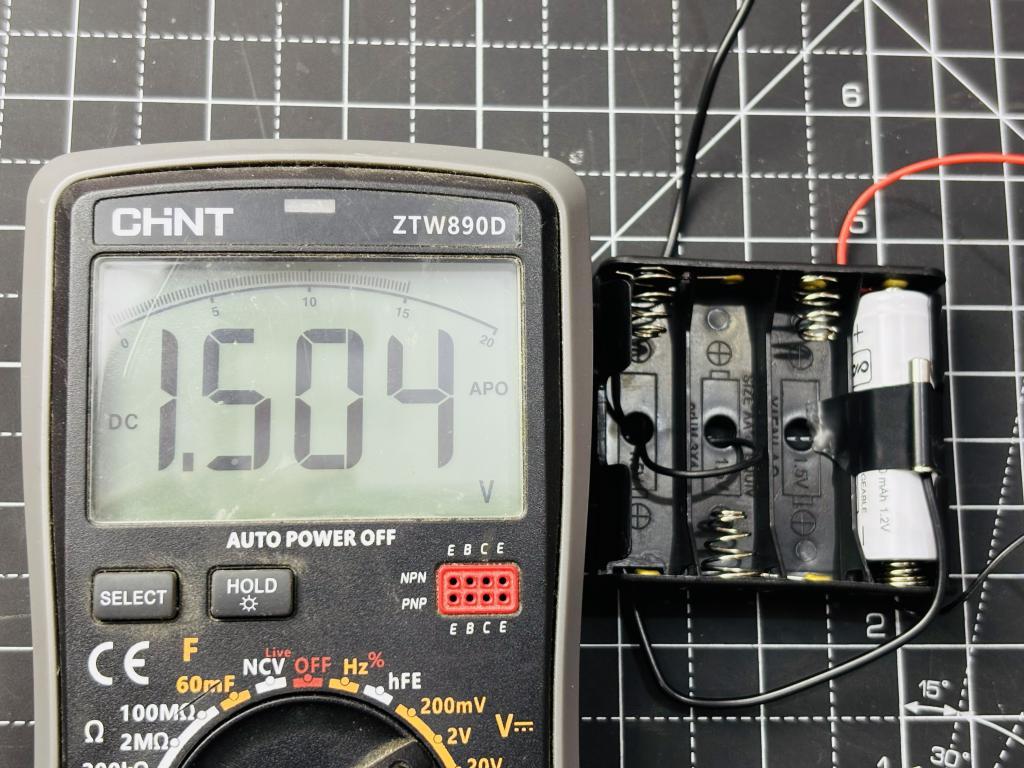
Now we have 1.8-2.0 V and an amax current limit of 0.5A. The battery I have here is rated 1C, 1200 mAh, with max discharge and charge currents of 1.2A. But I have limited the maximum charging current to 0.5A for safety and to avoid overheating.
Connect the battery to the power supply, and you will see the current limited to 0.5A. It will charge in CC mode; my battery can take a 1.2A charging current, so it charges roughly 2.4x slower. And the battery voltage start increasing from here.
CC TO CV Shift:
Monitor the battery voltage and current. As the battery voltage continues to increase, less current will be drawn. A point came when the battery drew exactly 0.5A of current not limited by circuit now. This is the point where battery charging shifts from CC to CV mode. And as said earlier, one thing is constant: either voltage or current.
Charge Completion:
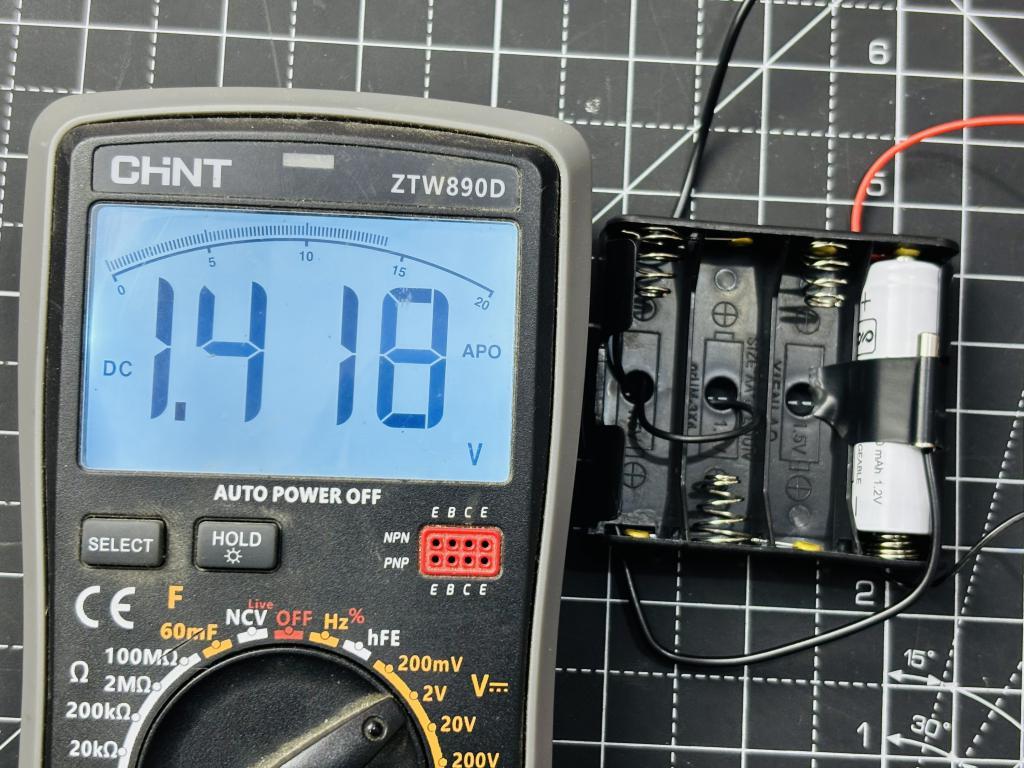
Now, in the CV, we have already set the max voltage to 1.70V. It can be set using a power supply or an external voltage regulator. So the battery voltage now ranges from 1.45 to 1.55, and charges in constant-voltage mode, where the current slowly drops from 0.5A to 0A. And 0A shows that the battery is fully charged.