A Quiet Bloom: Personalized 3D Quilling Home Decor
2099 Views, 28 Favorites, 0 Comments
A Quiet Bloom: Personalized 3D Quilling Home Decor
.jpg)
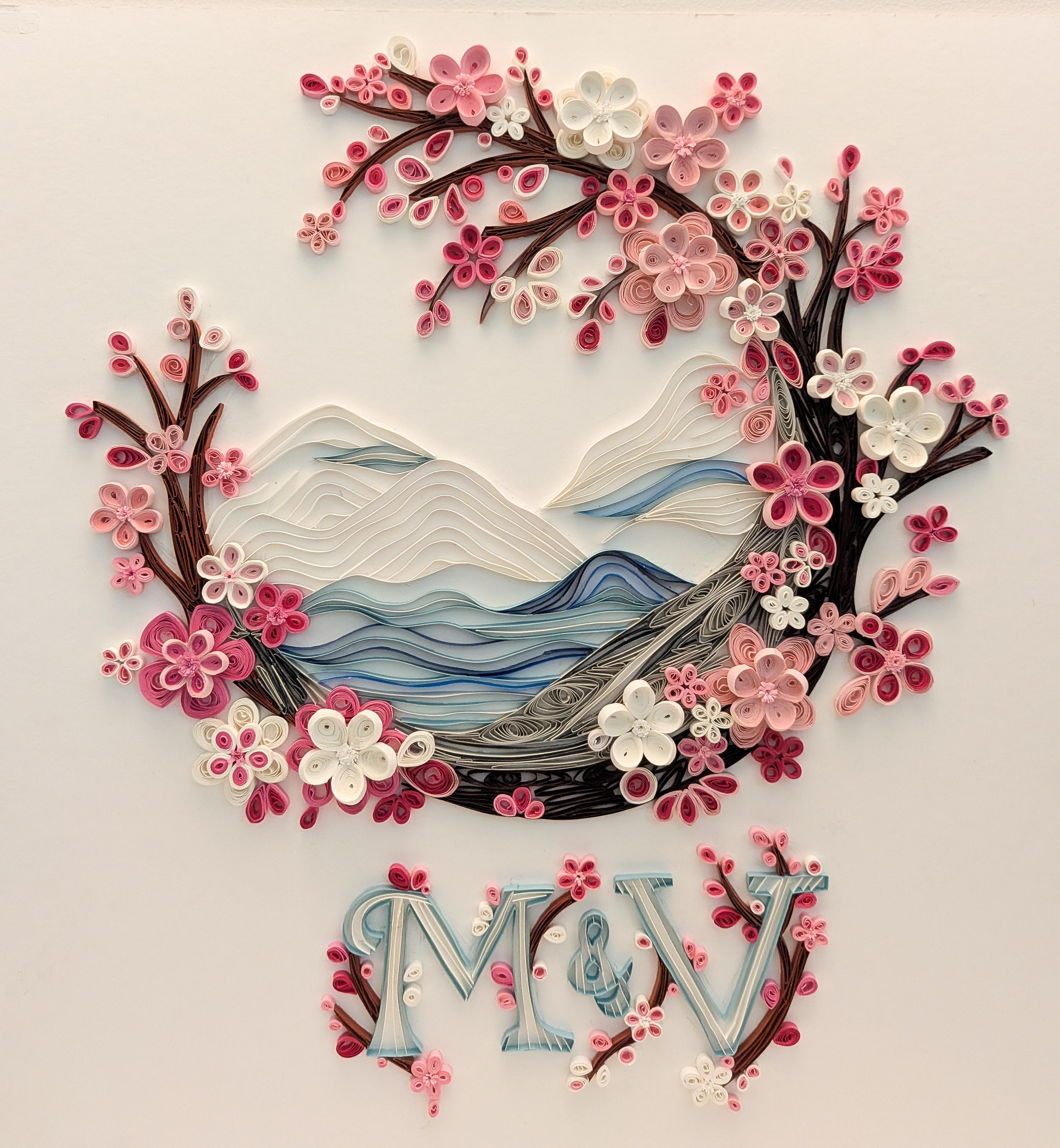
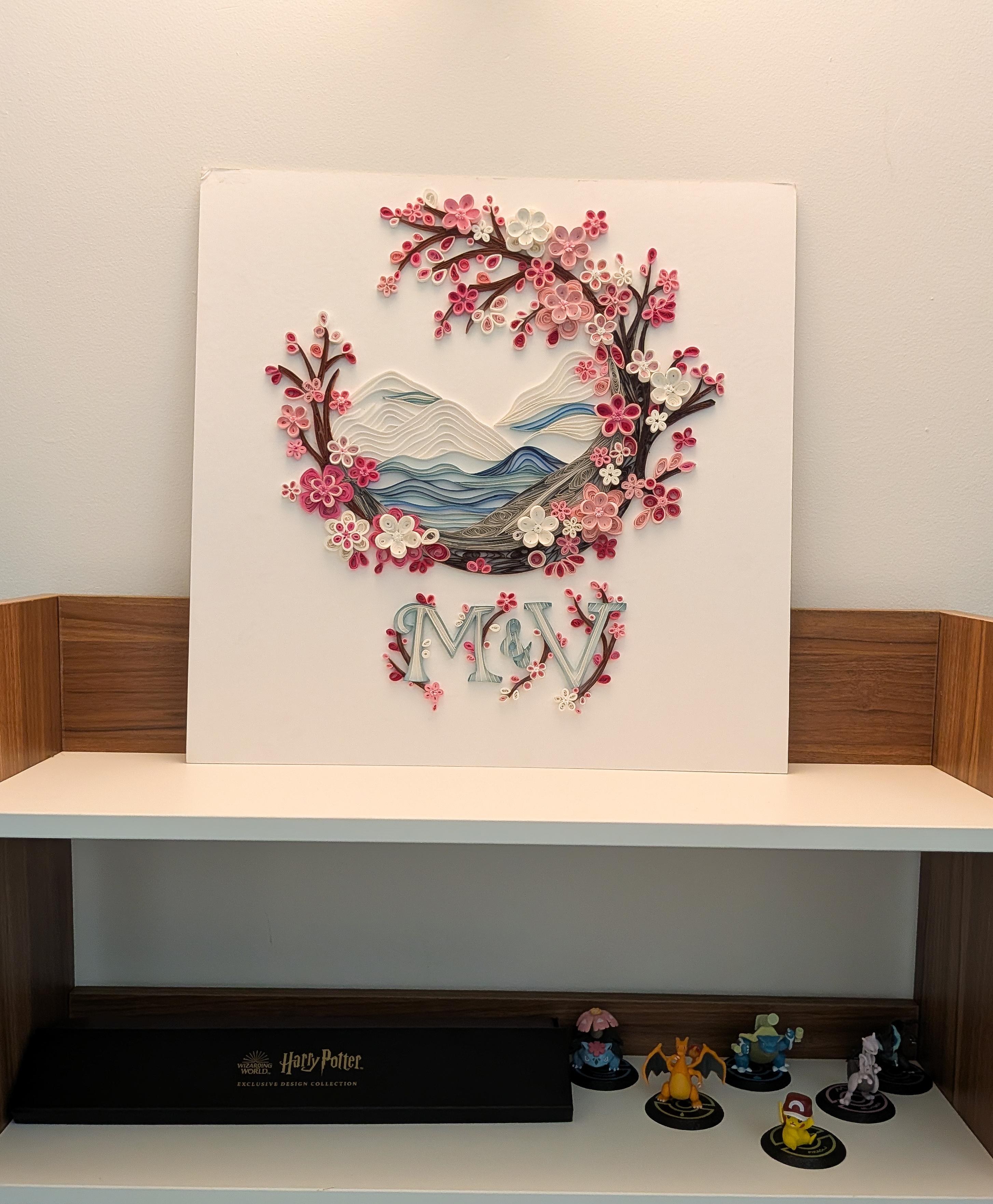

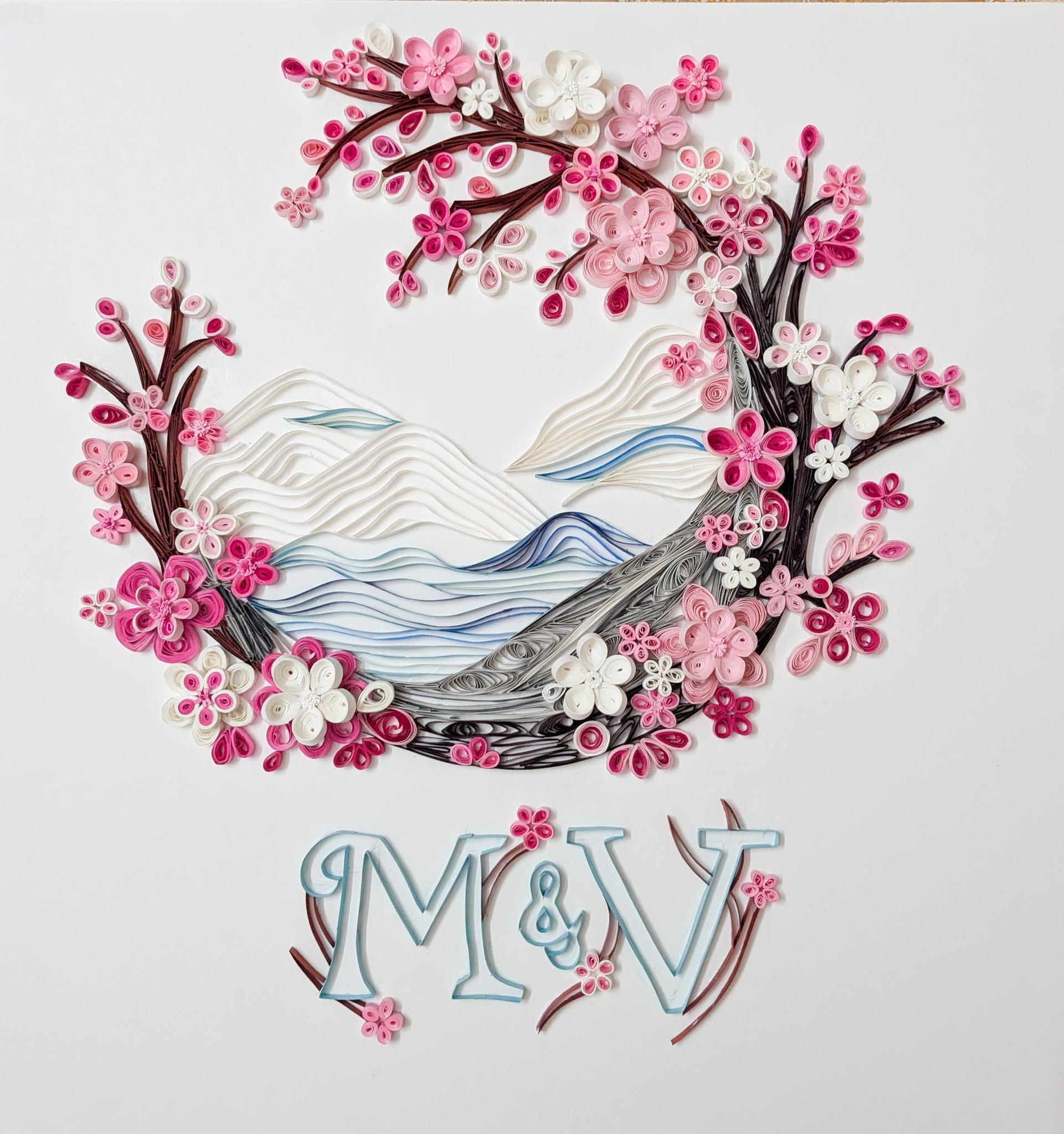
We wanted to quill something interesting to hang on our wall and started brainstorming. After playing with different ideas, we landed on an AI-generated image of cherry blossoms encircling Mount Fuji with a sea base—a perfect depiction of Sakura season.
This project combines traditional quilling techniques with a modern, personalized touch. While we customized ours with initials at the bottom, remember that
this is just a reference. Feel free to deviate from it as much as you like! The goal is to build a textured, 3D organic scene that brings a sense of calm and beauty to your space.Supplies

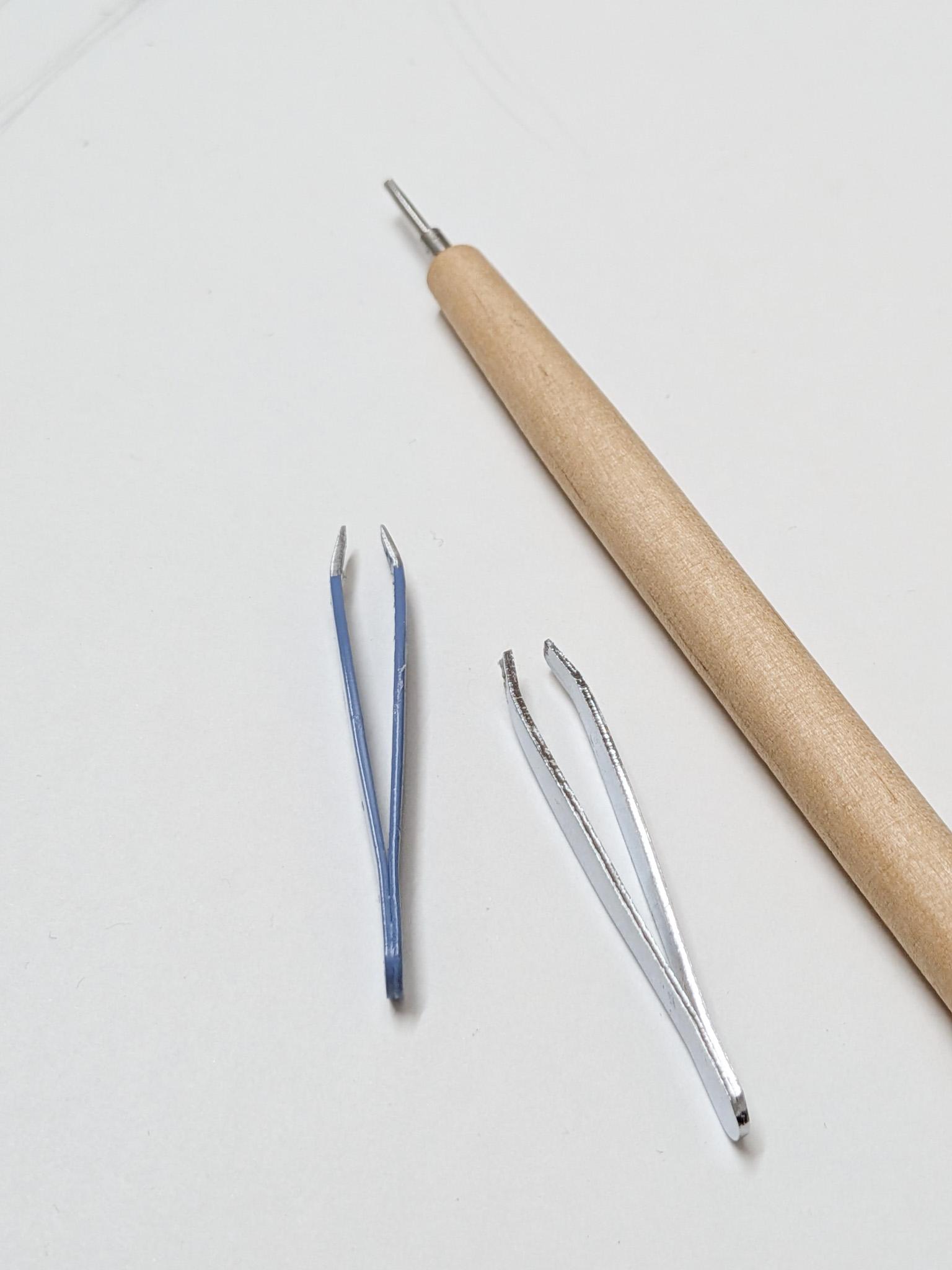
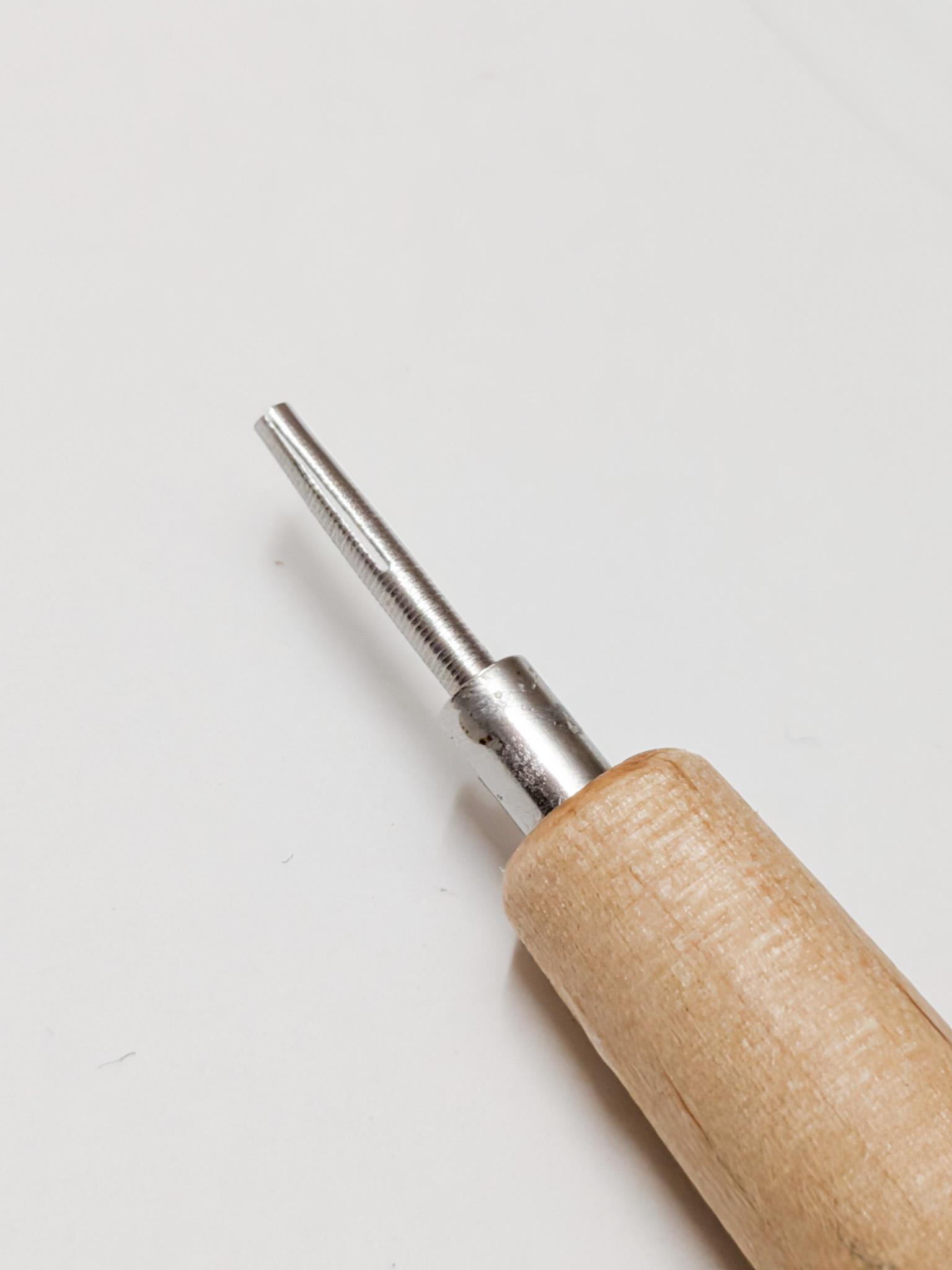
Before starting, gather the essential materials. Using consistent paper widths and high-quality glue makes a huge difference in the cleanliness of the final piece.
Essential Paper Materials
- 5mm Quilling Paper Strips: A consistent 5mm width is crucial for uniform 3D depth.
- Pinks and Off Whites: For the various styles of cherry blossoms.
- Dark and Light Brown: To build the intricate branch framework.
- Off White: For the snow-covered mountain peaks and typography.
- Blues and Greys: To represent the flowing water, sand and typography.
- White Cardboard: A sturdy, thick base is required to remain flat under the tension of the glued strips.
Tools of the Trade
- Slotted Quilling Tool: The primary tool for rolling tight coils and petals.
- Precision Tweezers: Indispensable for handling 5mm strips, tucking small parts into tight spaces.
- Clear-Drying PVA Glue: Use sparingly with a fine-tip applicator to ensure no visible residue.
- Pencil and Eraser: For sketching the master layout.
Sketching the Master Layout
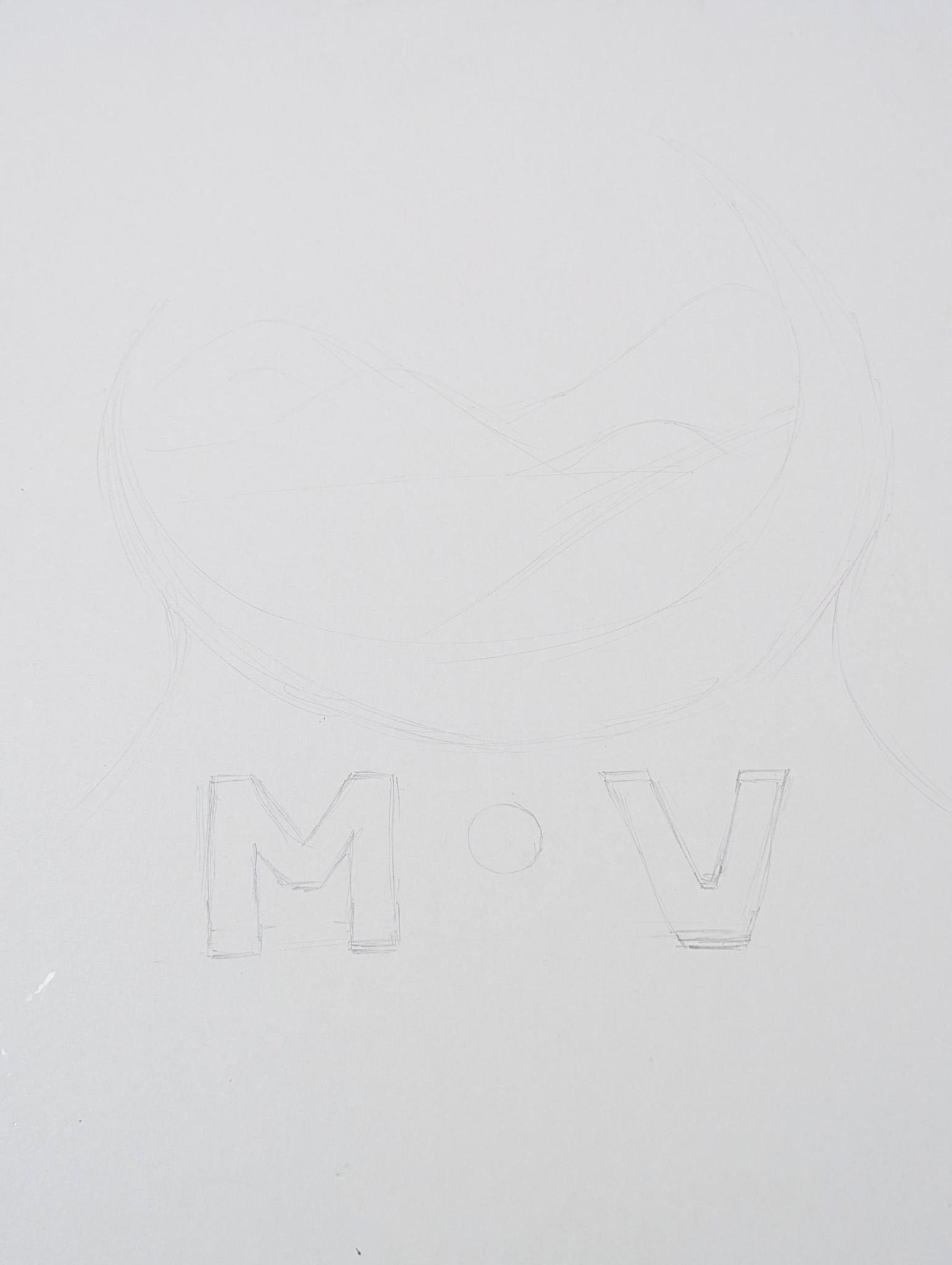
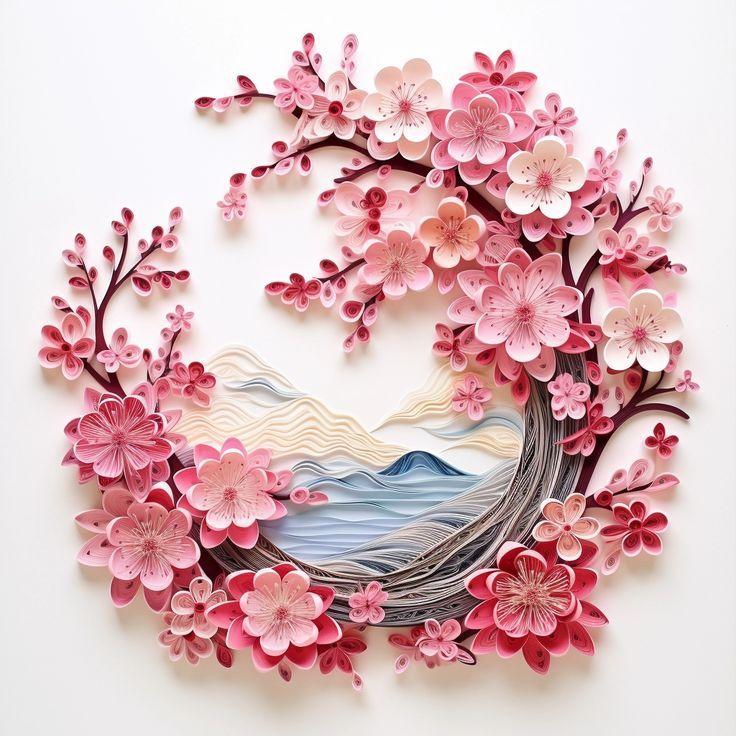
Before gluing anything, you need a roadmap.
The Concept
We used an image of cherry blossoms encircling Mount Fuji as our inspiration. We decided to customize it by adding our initials, "M" and "V" at the base in a similar style.
The Blueprint
- The Base: Take your white cardboard and lightly sketch the entire design.
- The Elements: Map out the central initials at the bottom, the mountain silhouettes in the center, and the wavy water lines underneath.
- The Frame: Finish by drawing a circular guide for the floral wreath that will frame the scene.
Crafting Small Flowers
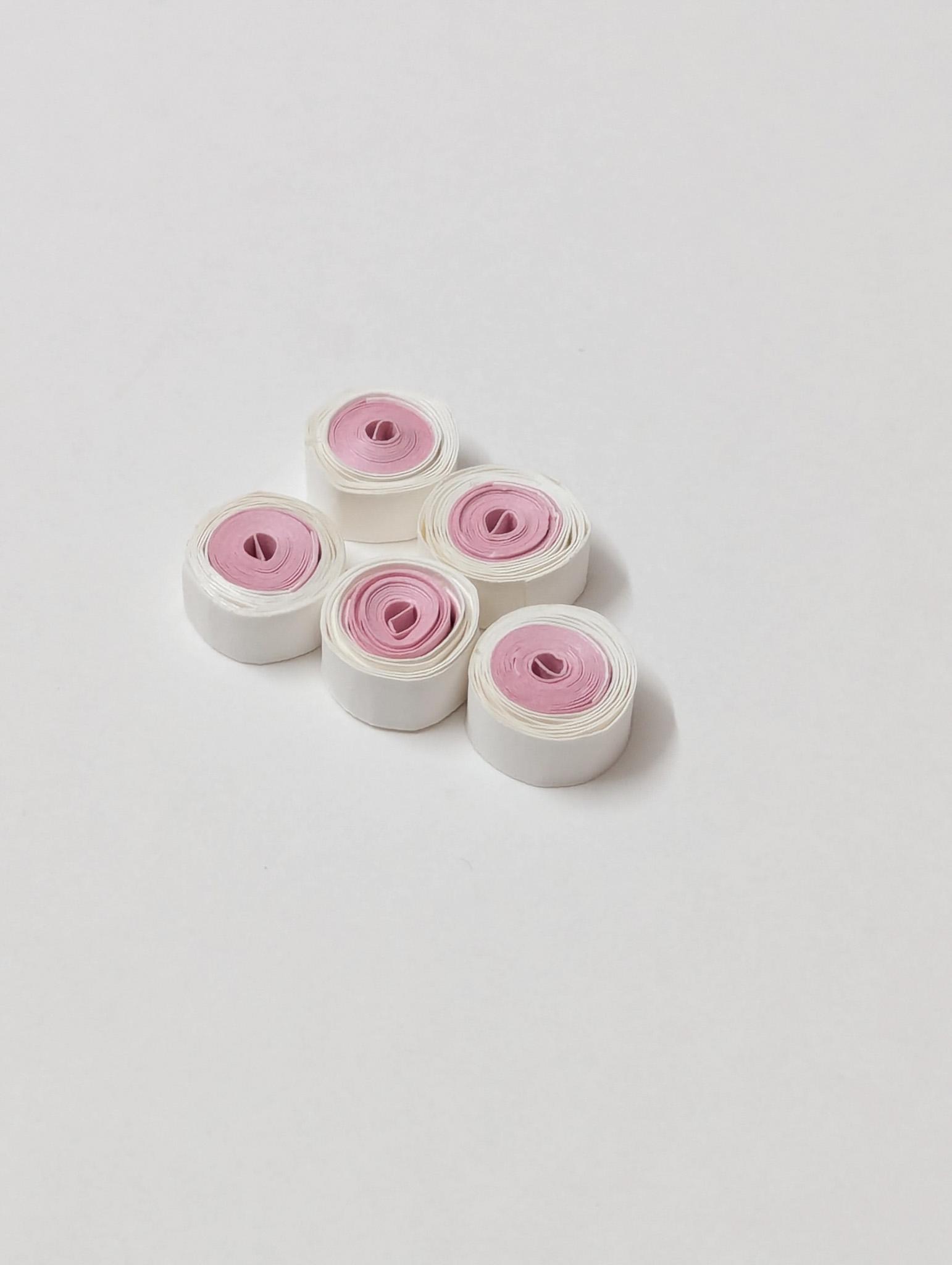
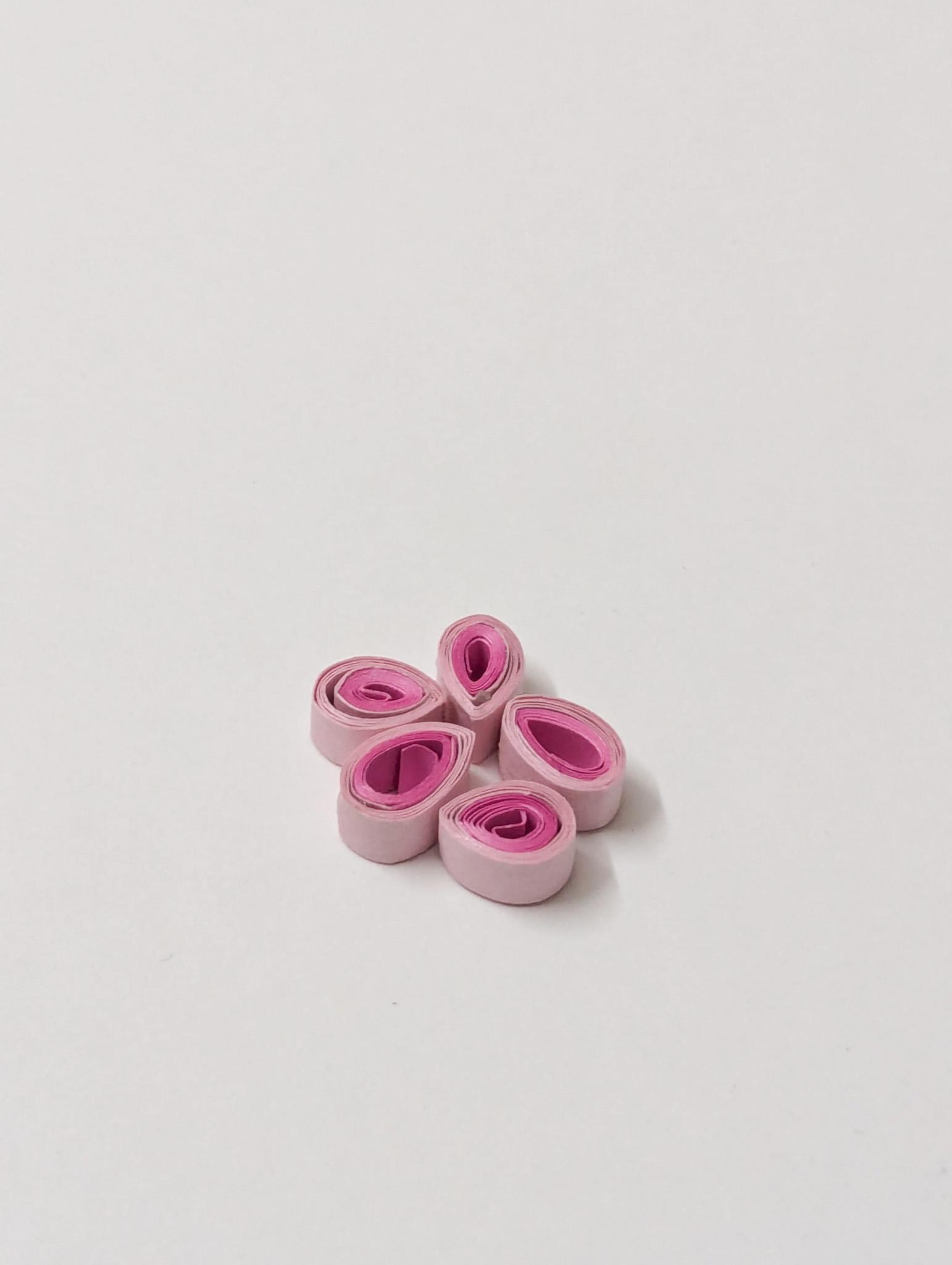
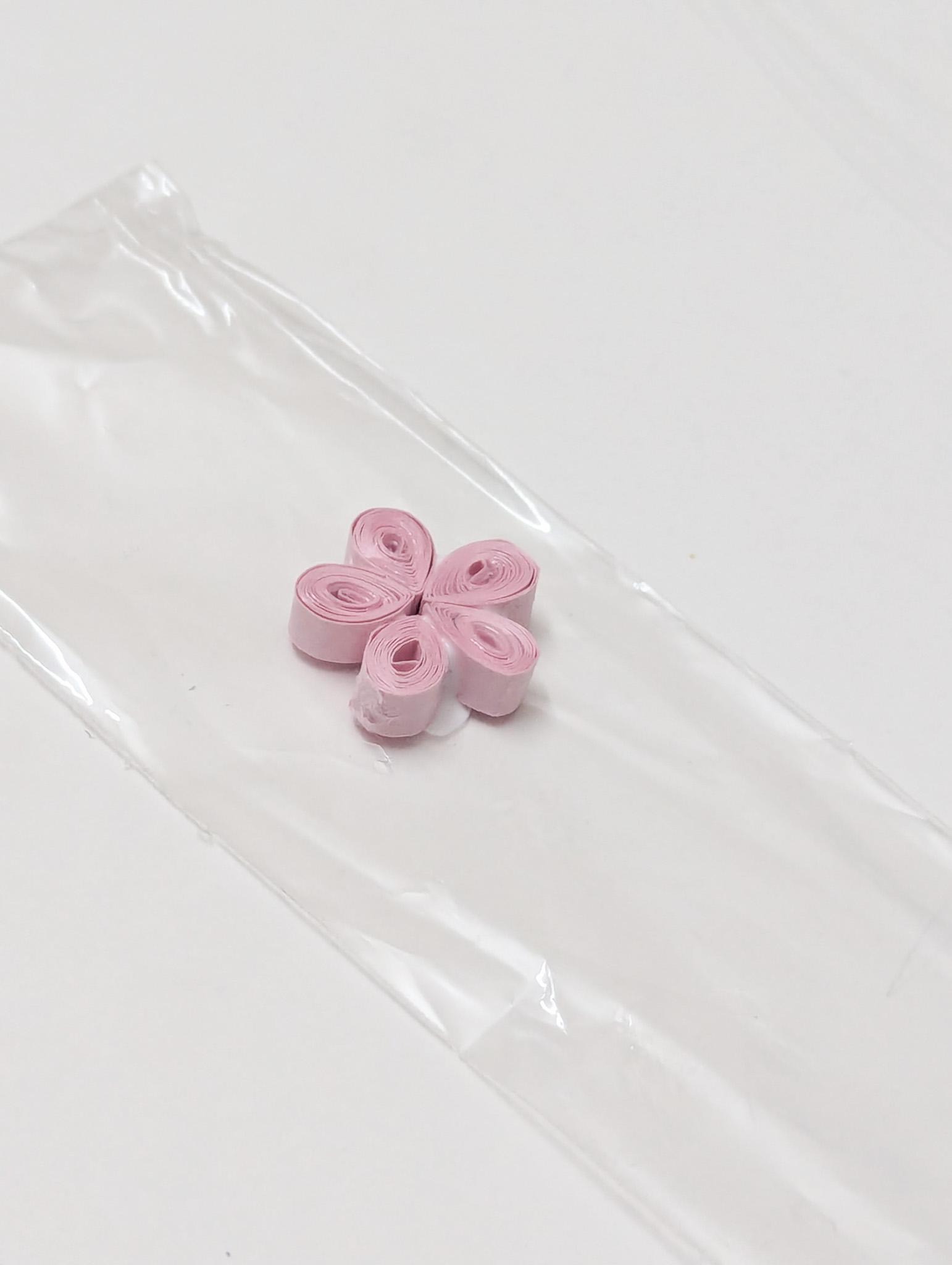
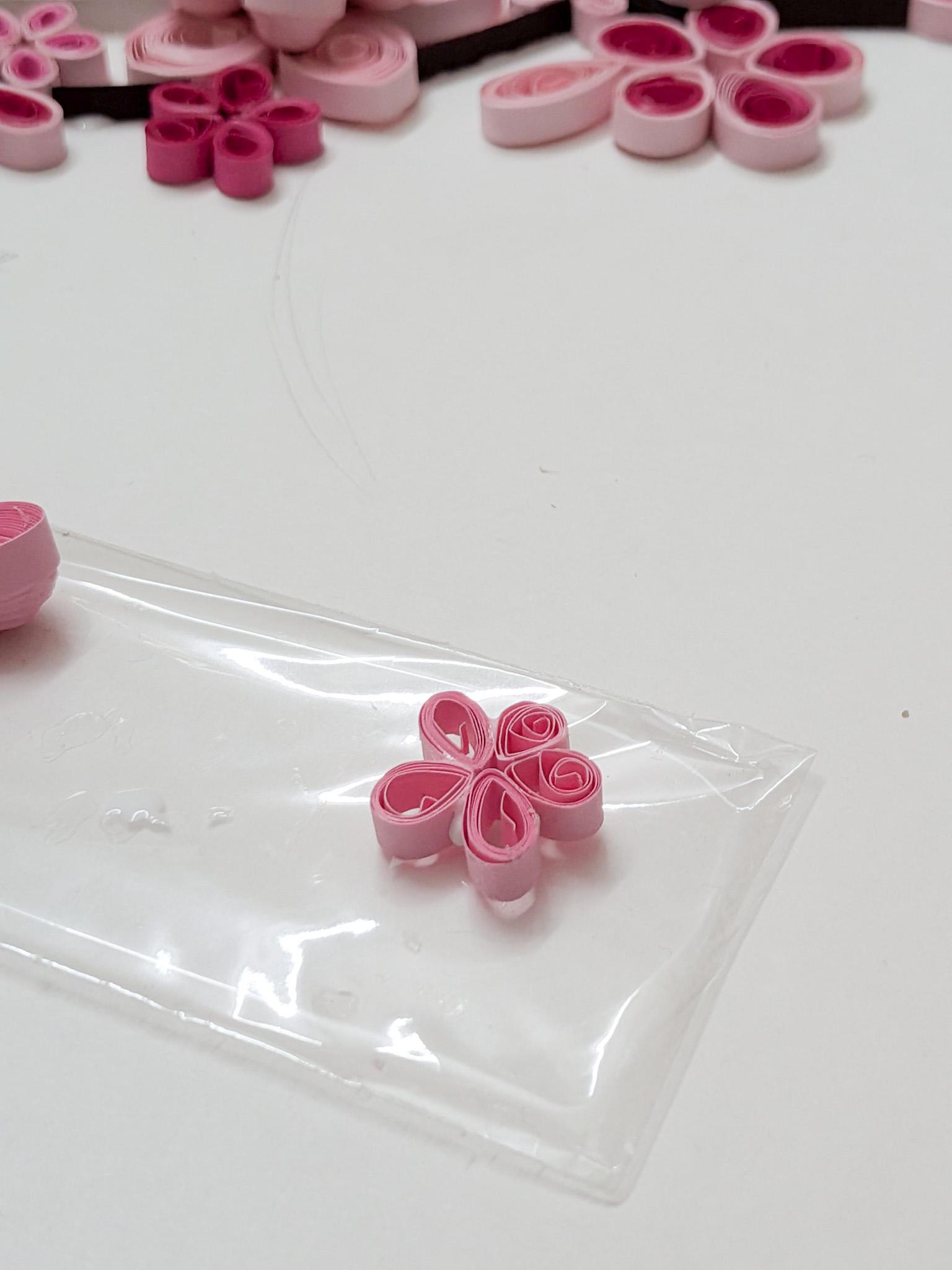
Small flowers are the core of this piece, adding texture to every corner from the branches to the landscape.
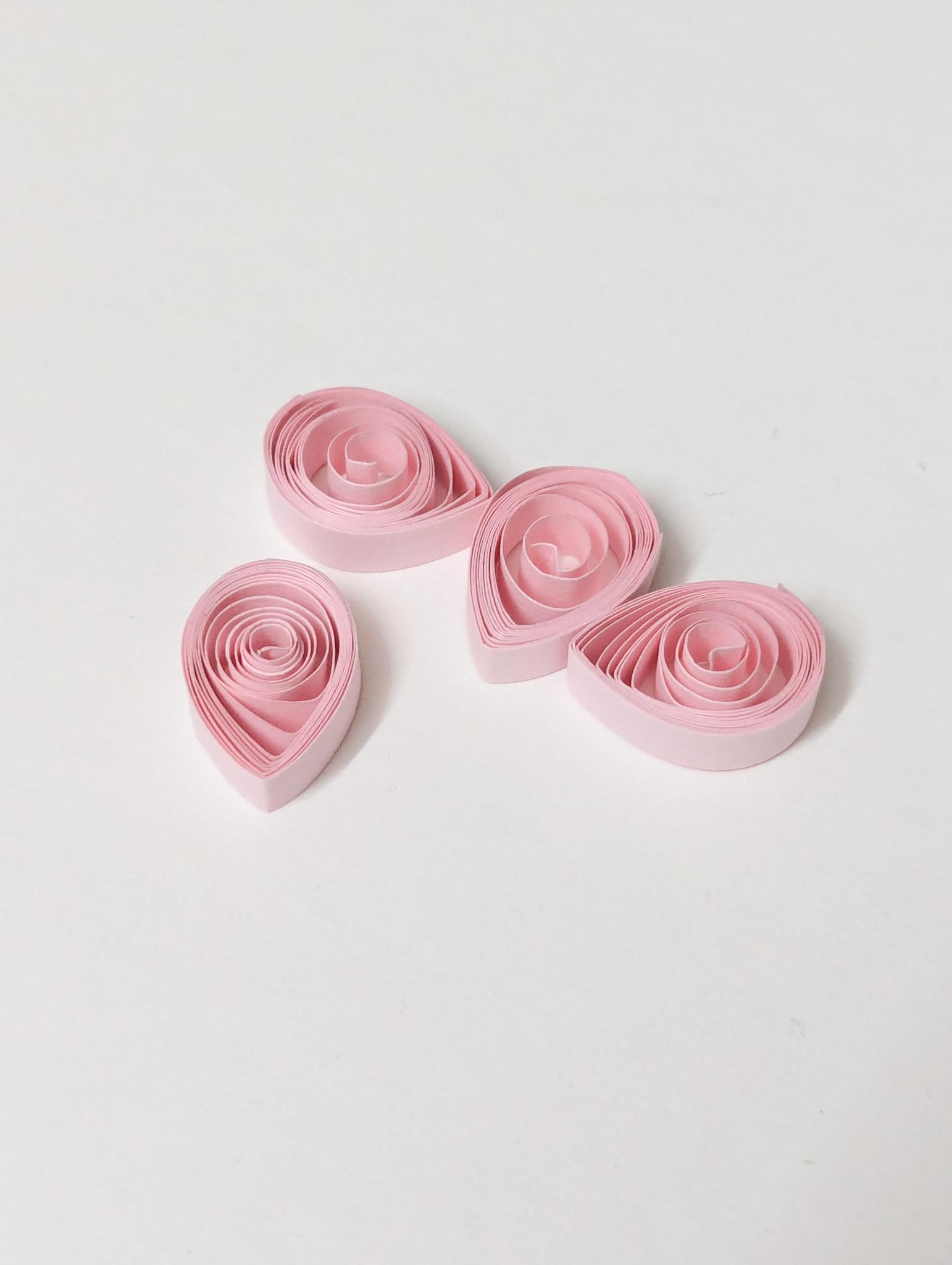
Technique: The Teardrop
- Roll: Use shorter cut strips for accents and full-length strips for focal blossoms. Roll the coil tightly for a dense look, or slightly loose for an airy feel.
- Secure: Apply a tiny amount of glue to the edge to prevent unraveling.
- Pinch: Carefully remove the coil from the tool. Pinch one end firmly between your fingers to transform the circle into a teardrop shape.
Tip: Create gradients by gluing multiple colored strips together before rolling. Darker colors at the center and lighter colors at the boundary usually work best.
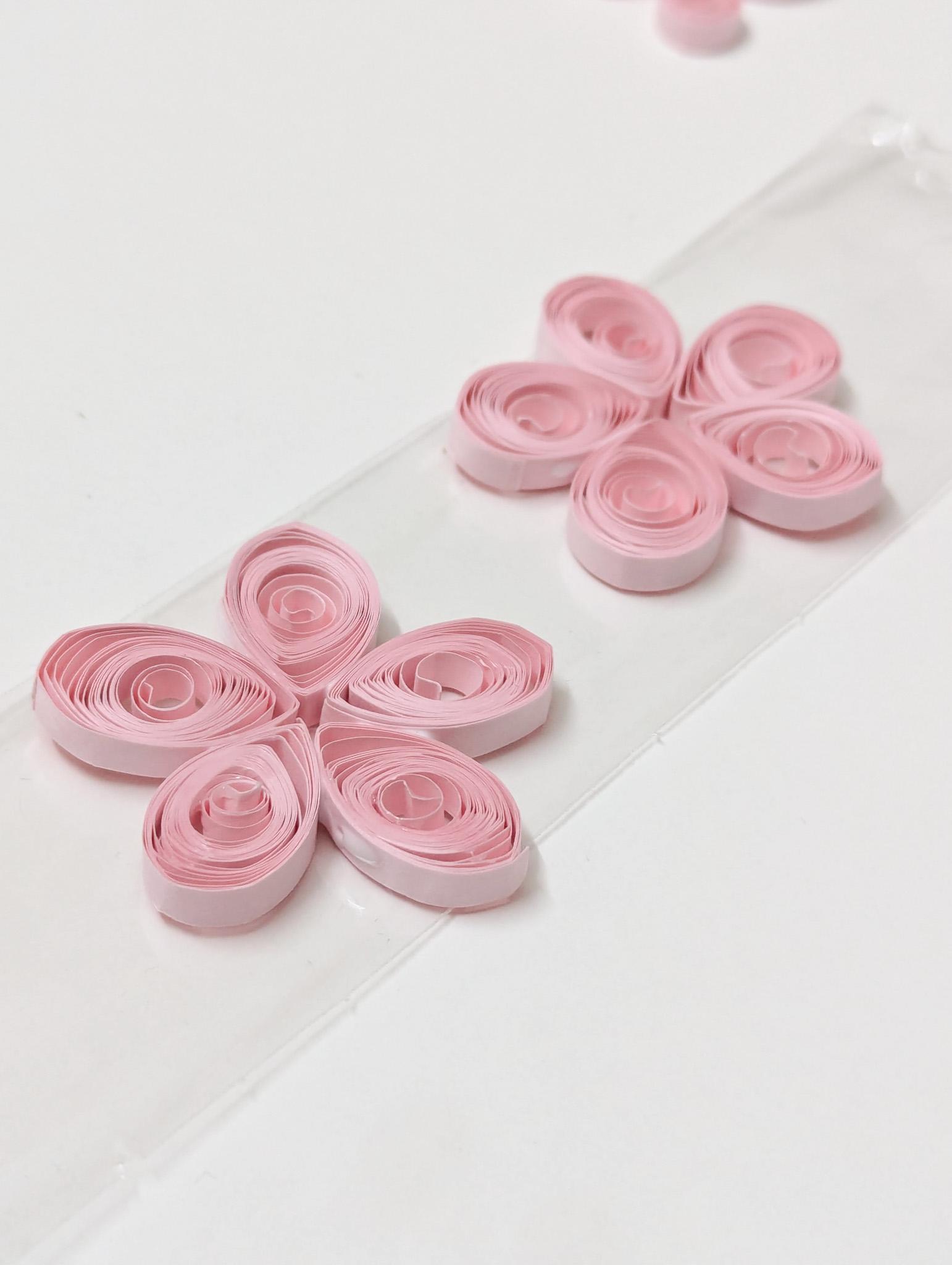
Assembling Large Single-Layered Flowers

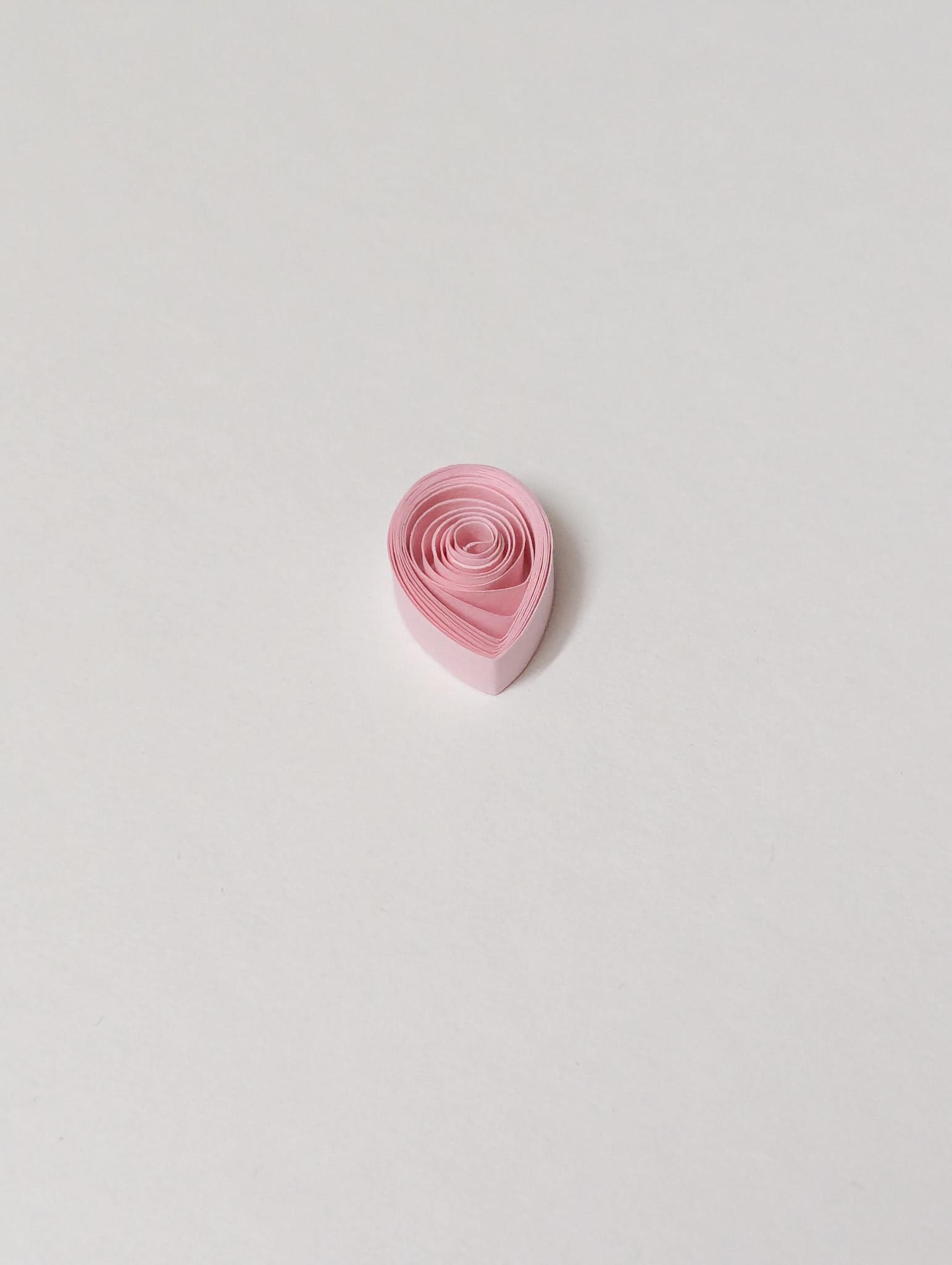

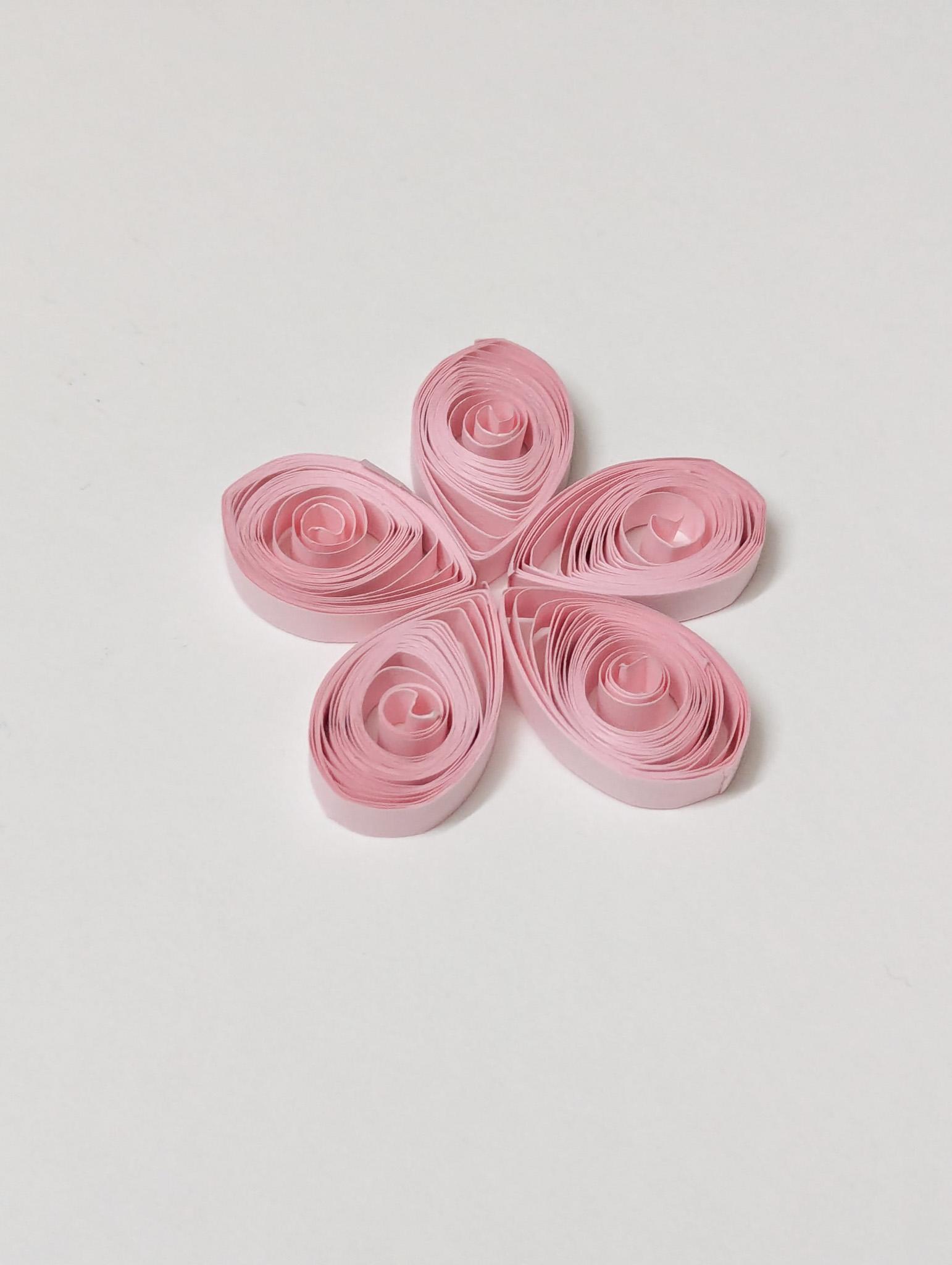
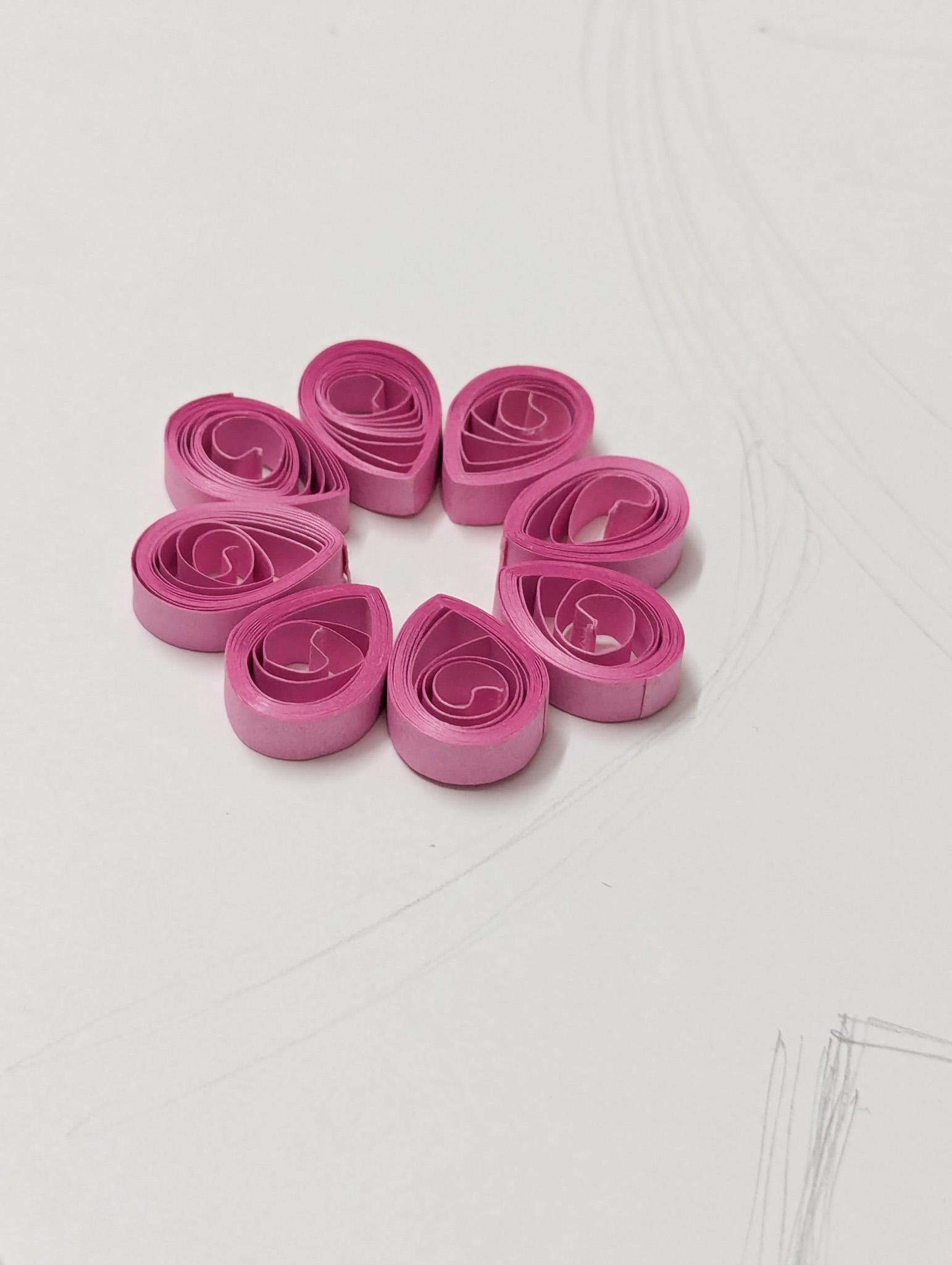
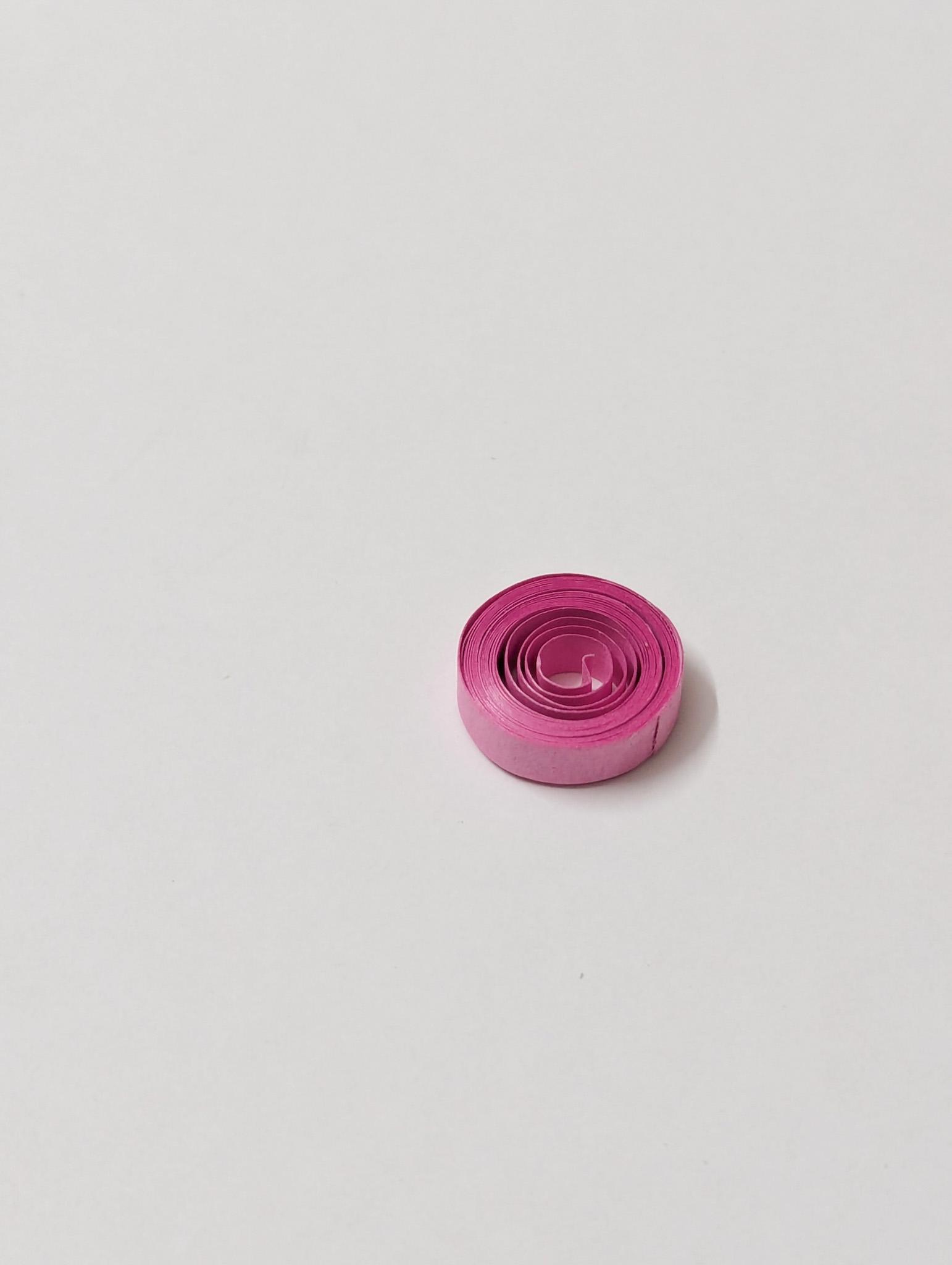

To create a balanced, organic wreath, you need variation in size.
1. The Size Boost - Unlike the small flowers, glue two strips together end-to-end before quilling. This ensures the resulting petals are significantly larger.
2. Organic Detailing - Once the petal is formed into a teardrop, use your precision tweezers to gently pull and adjust the internal spirals. This adds intricate, organic detailing inside the petal, making it look like a real cherry blossom.
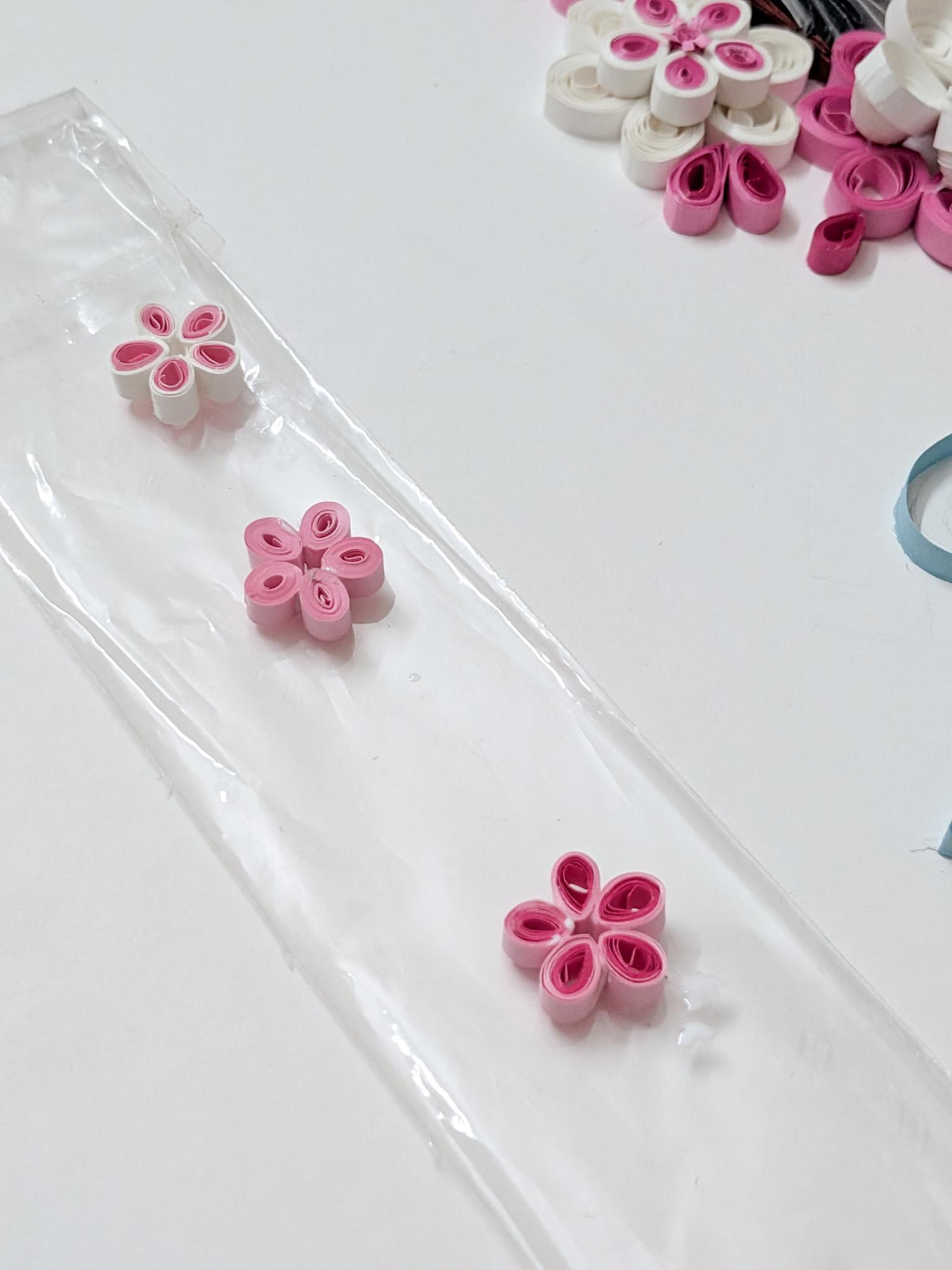
3. Variation Don't make them all identical. Create flowers with 5, 7, or 8 petals. Allow these to dry on a non-stick surface (like a plastic sheet - the plastic covers quilling strips arrive in usually work quite well for this).
Assembling Two-Layered Flowers

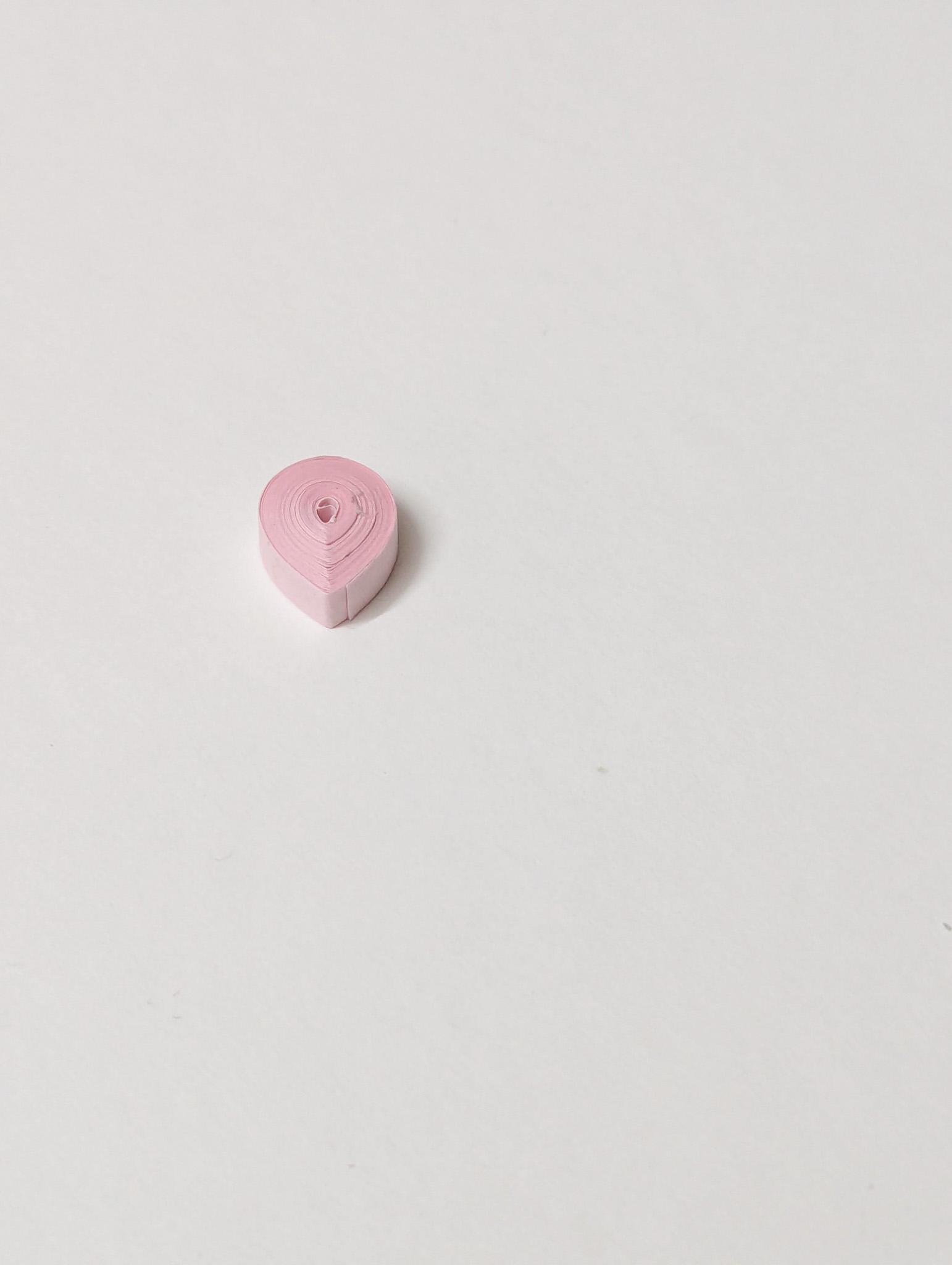
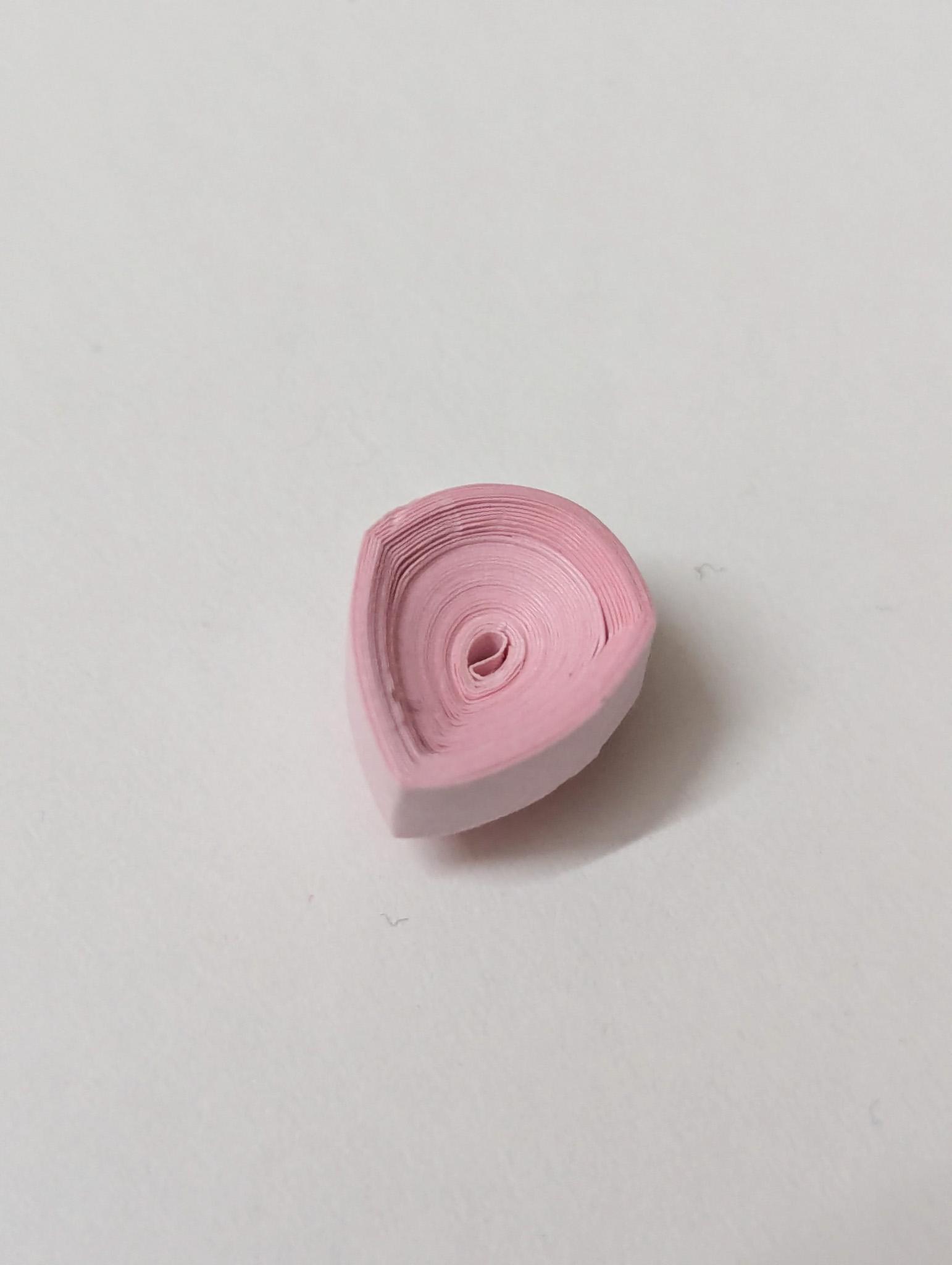
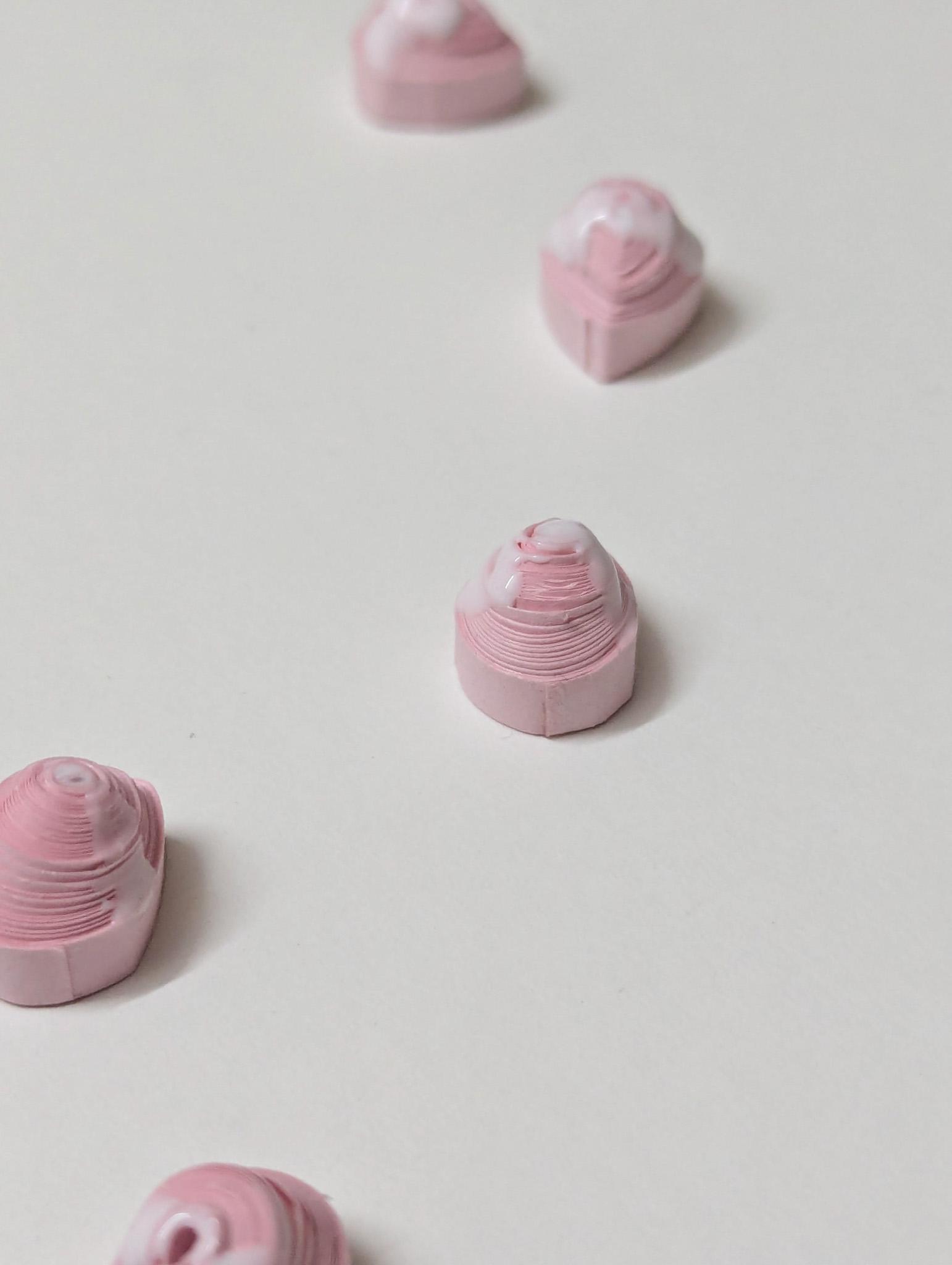
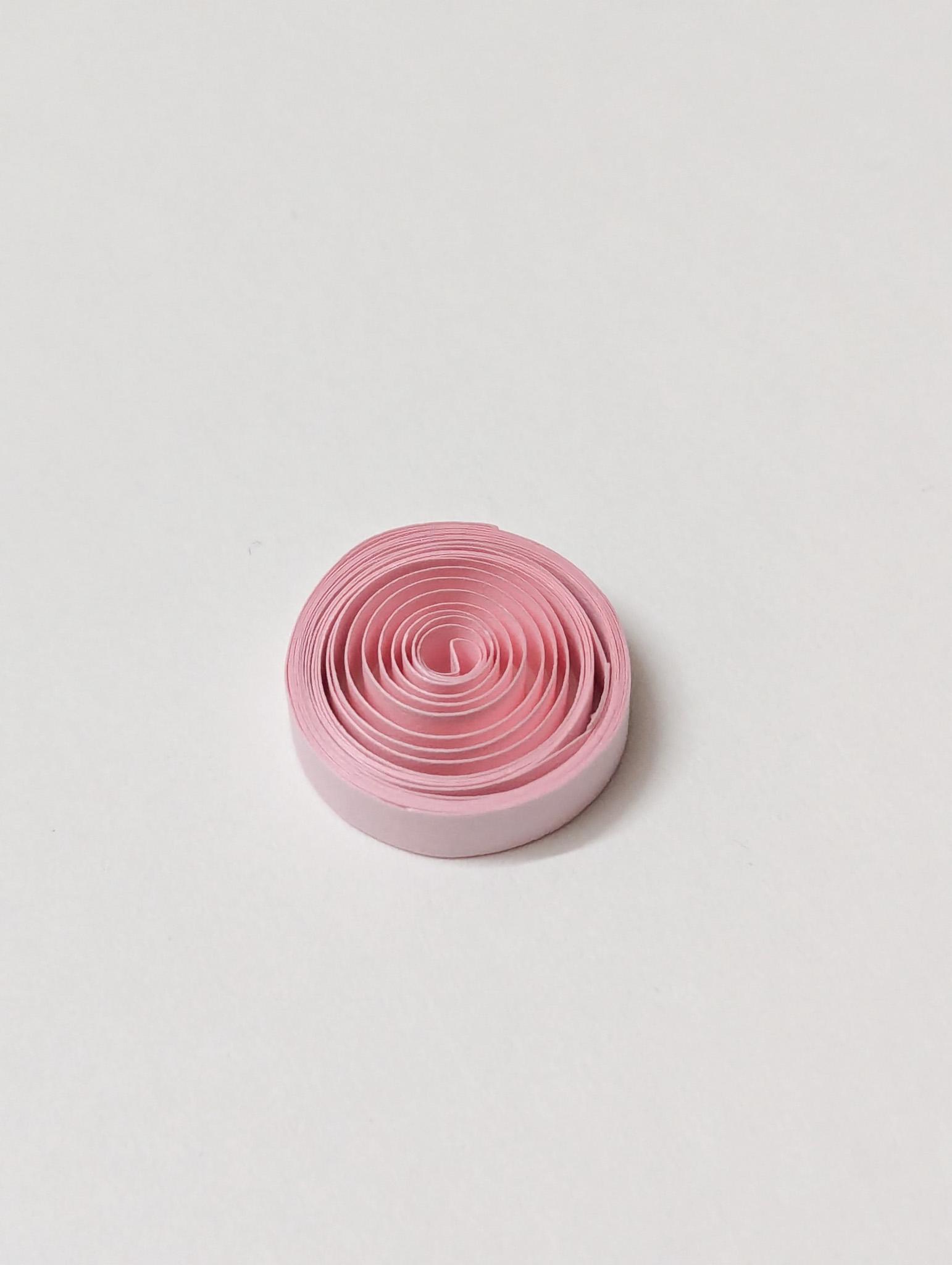

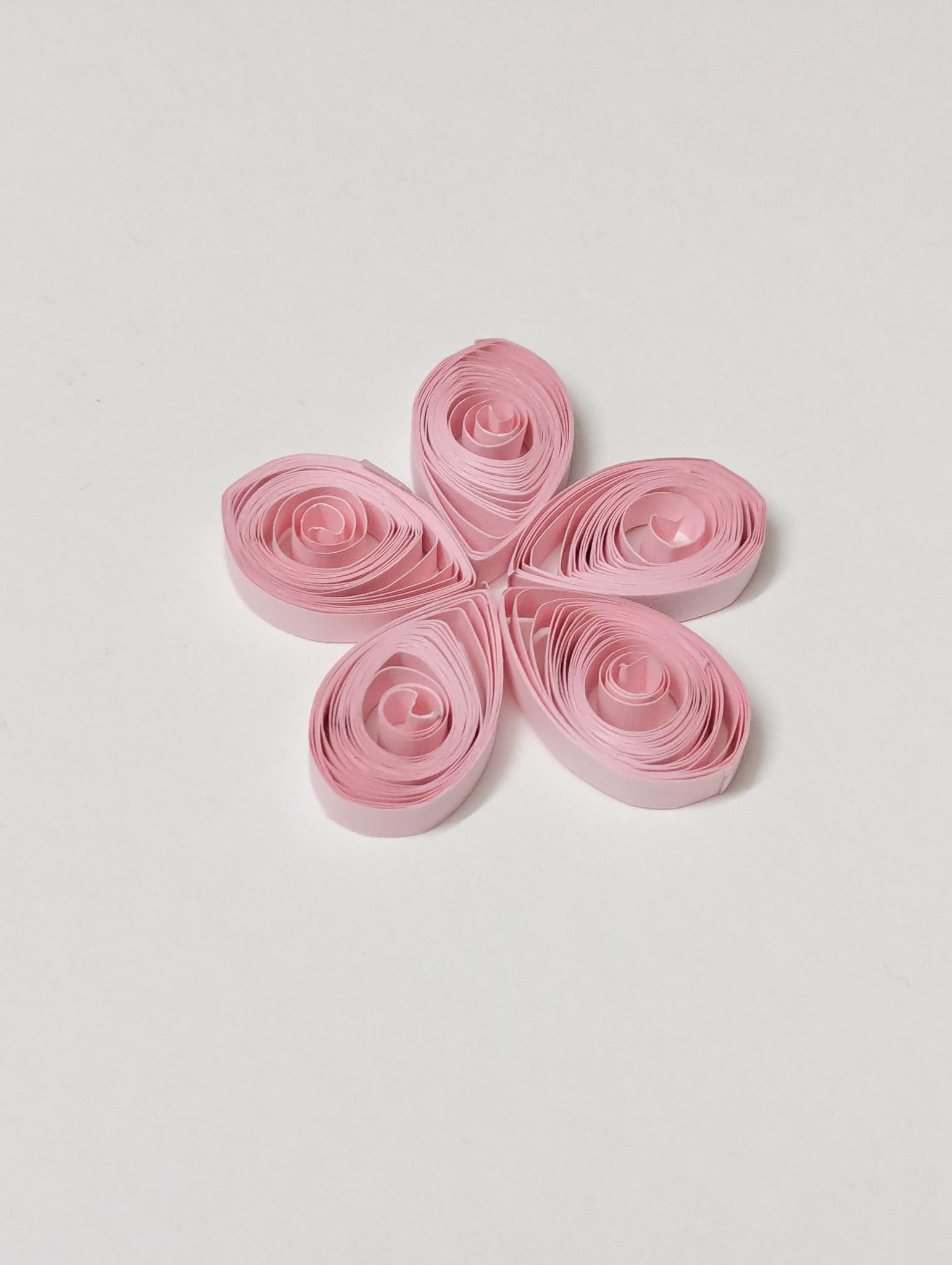
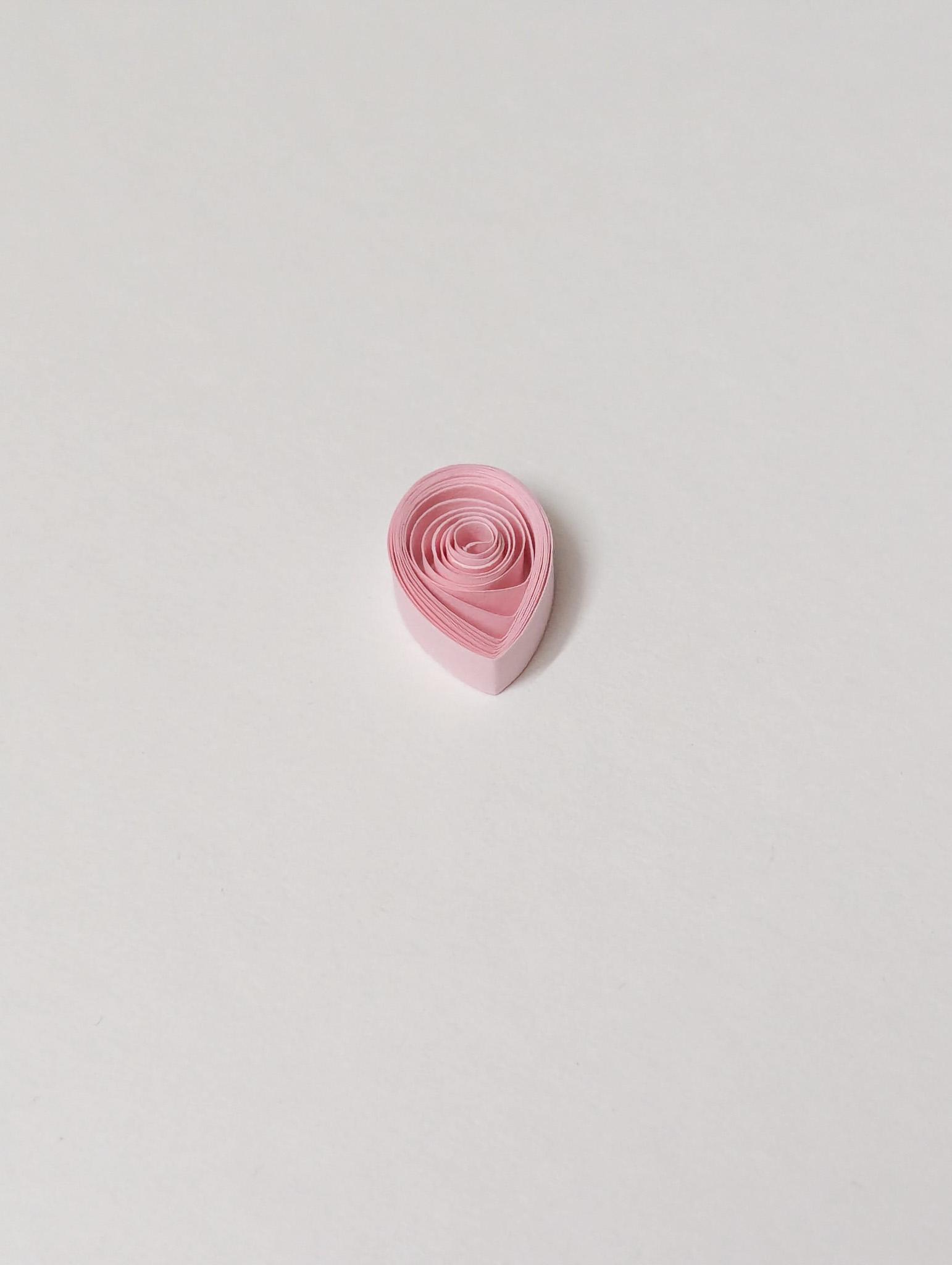
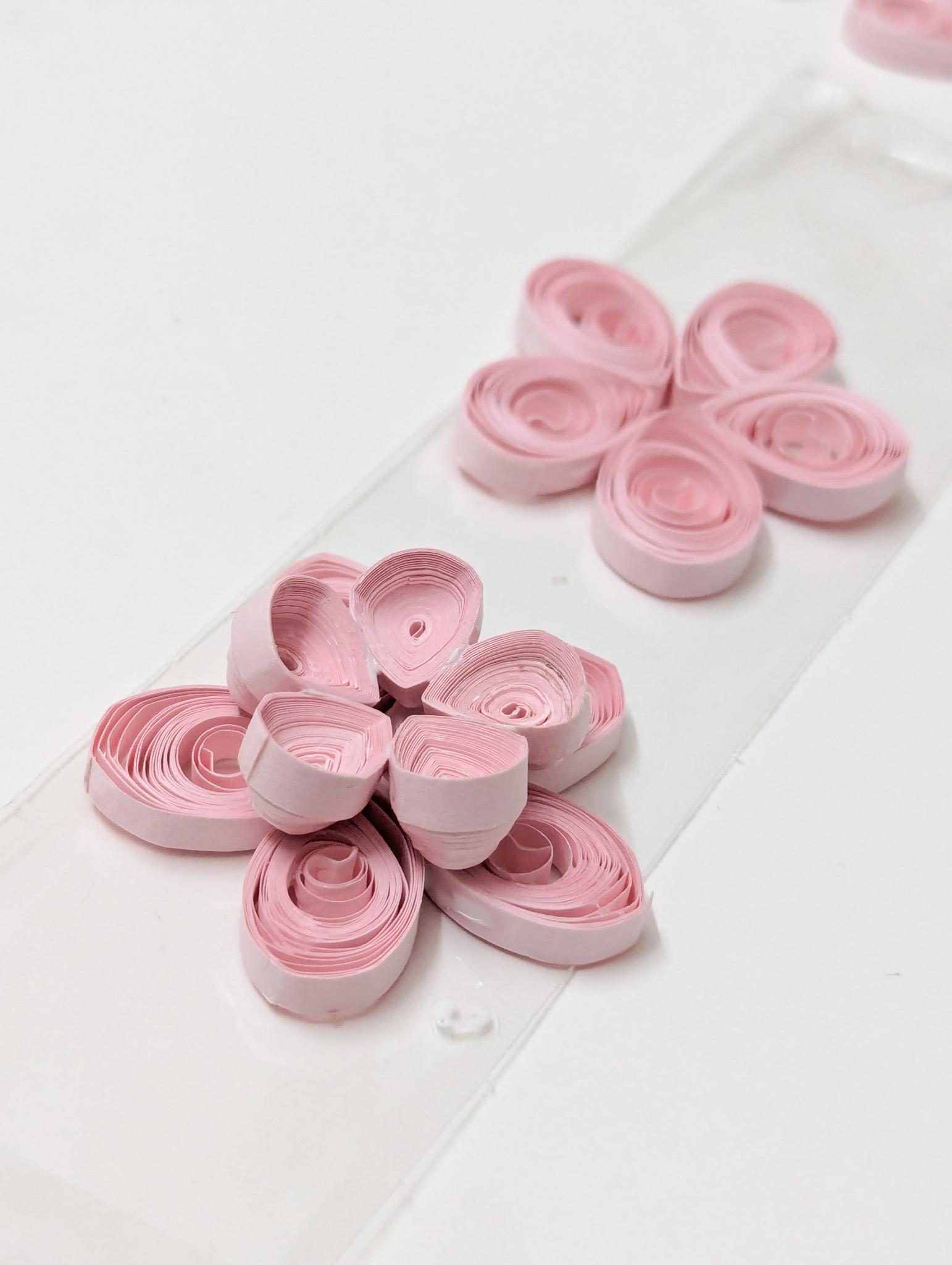
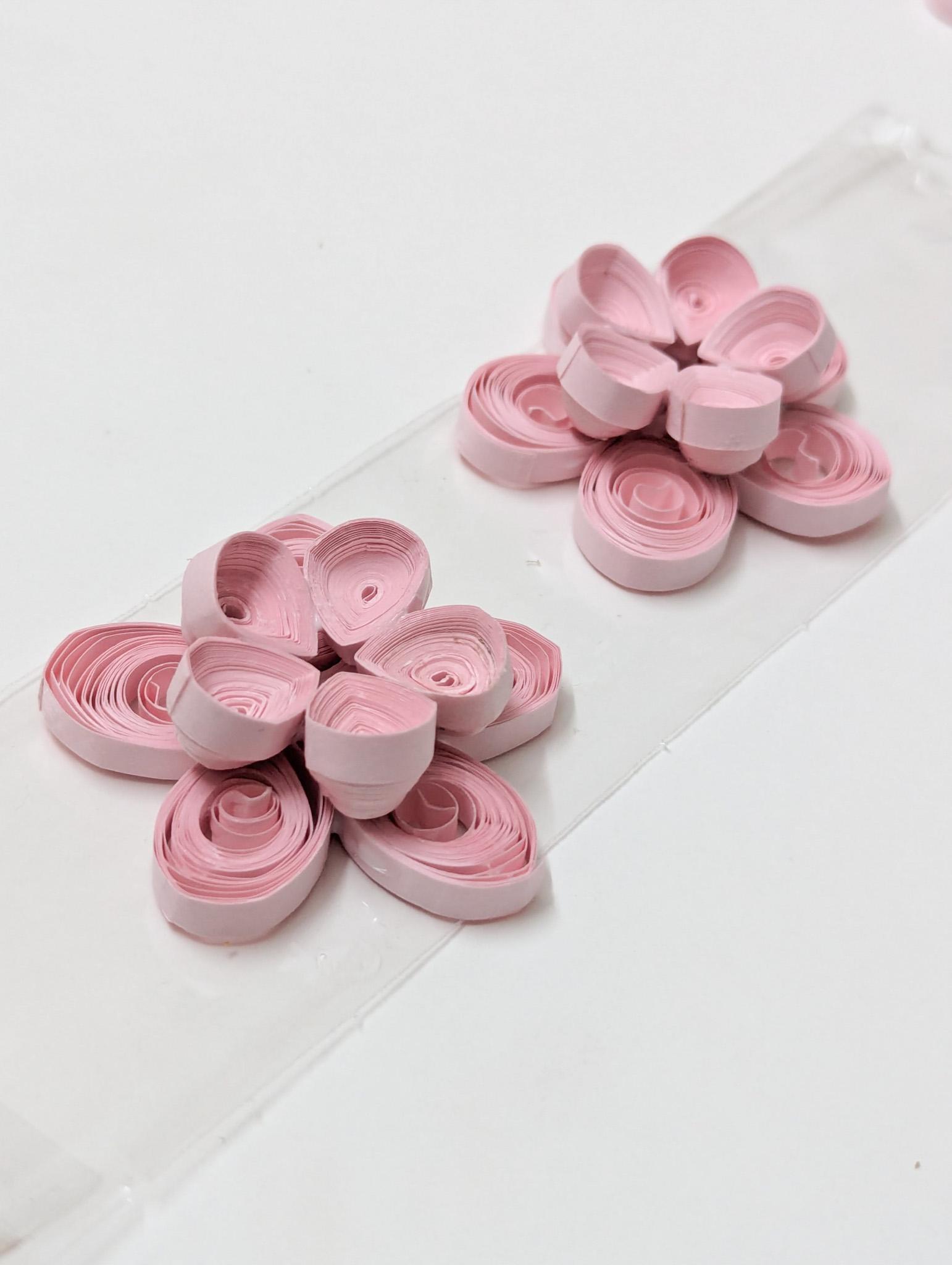
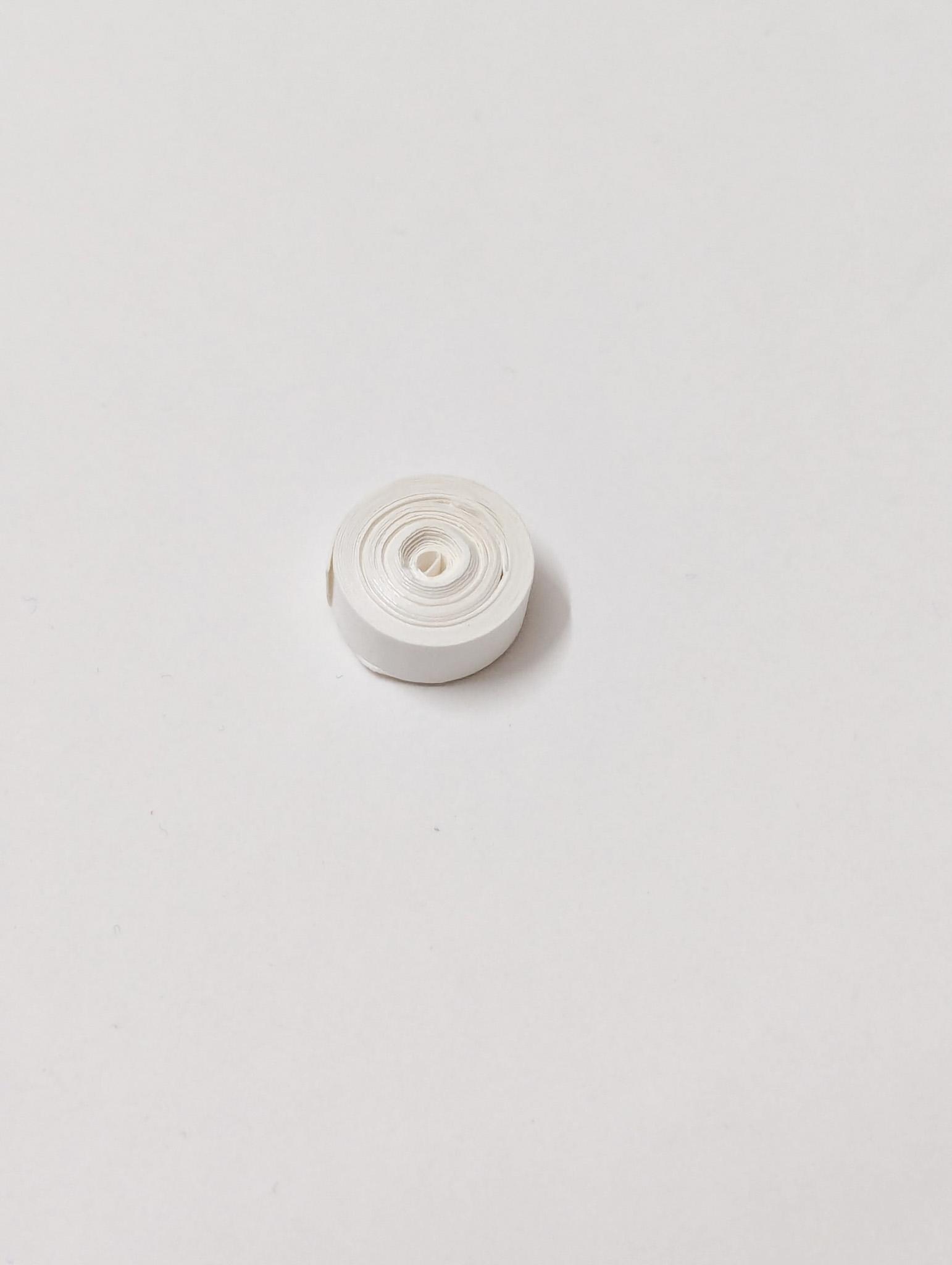

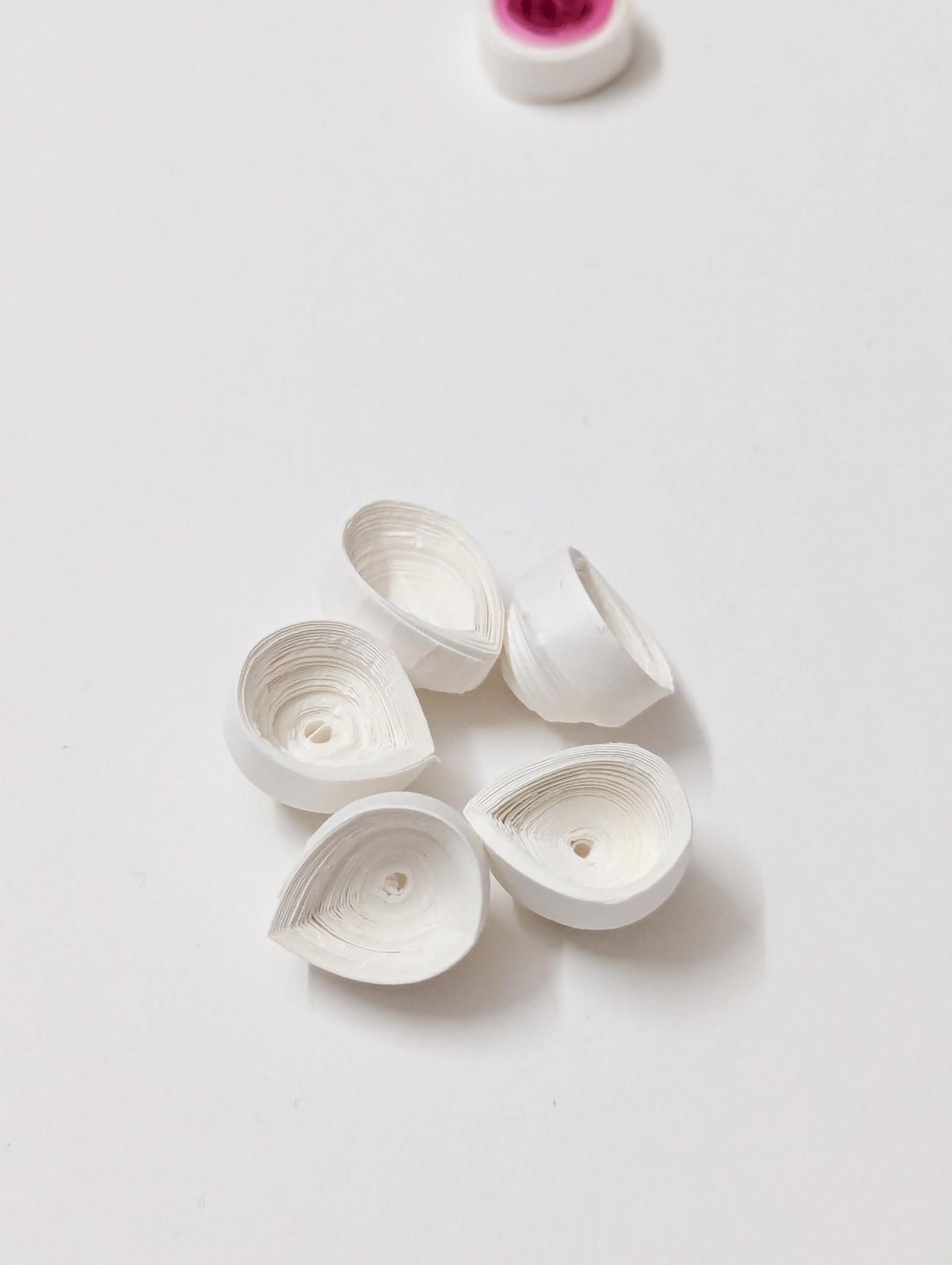

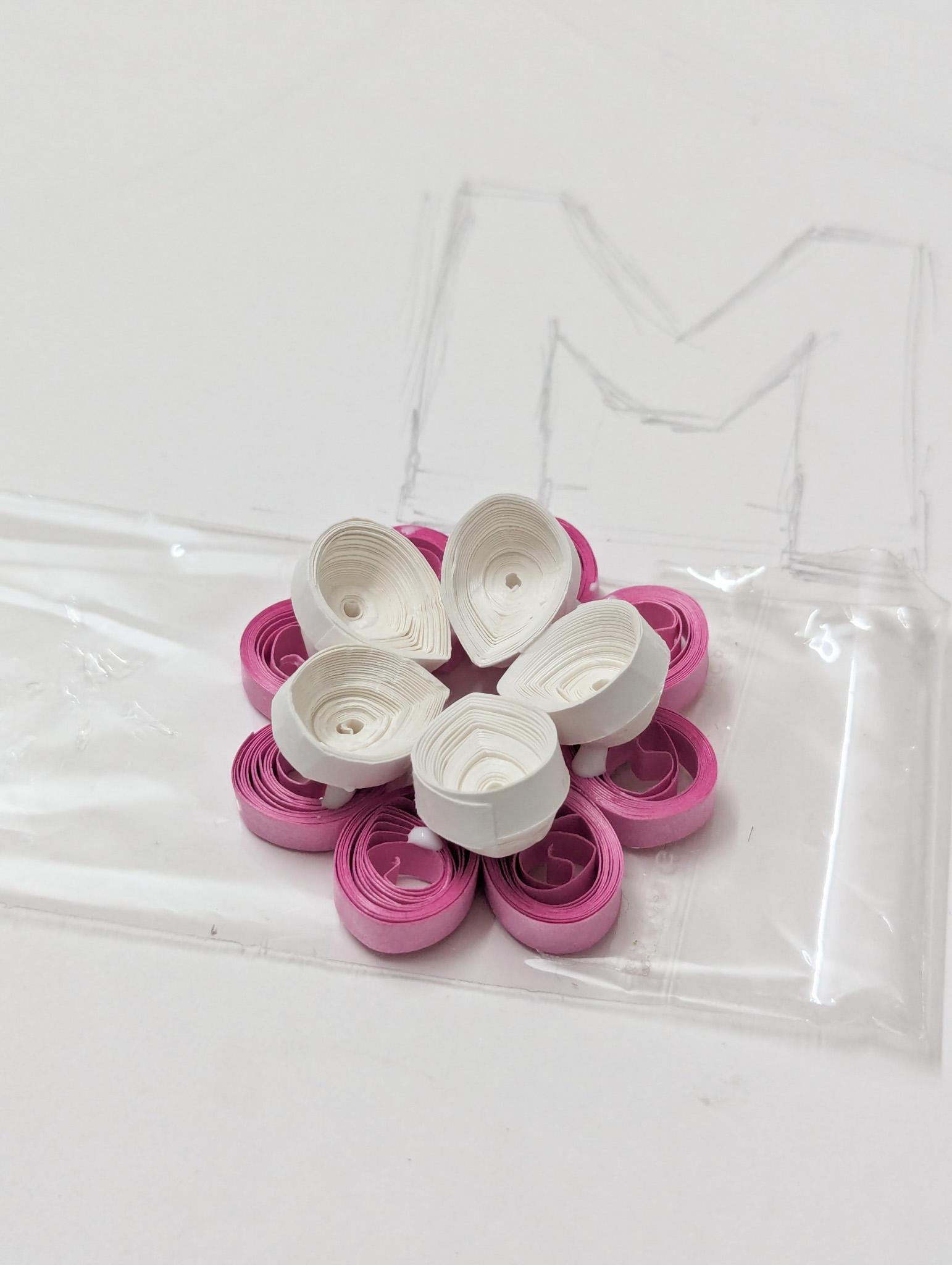
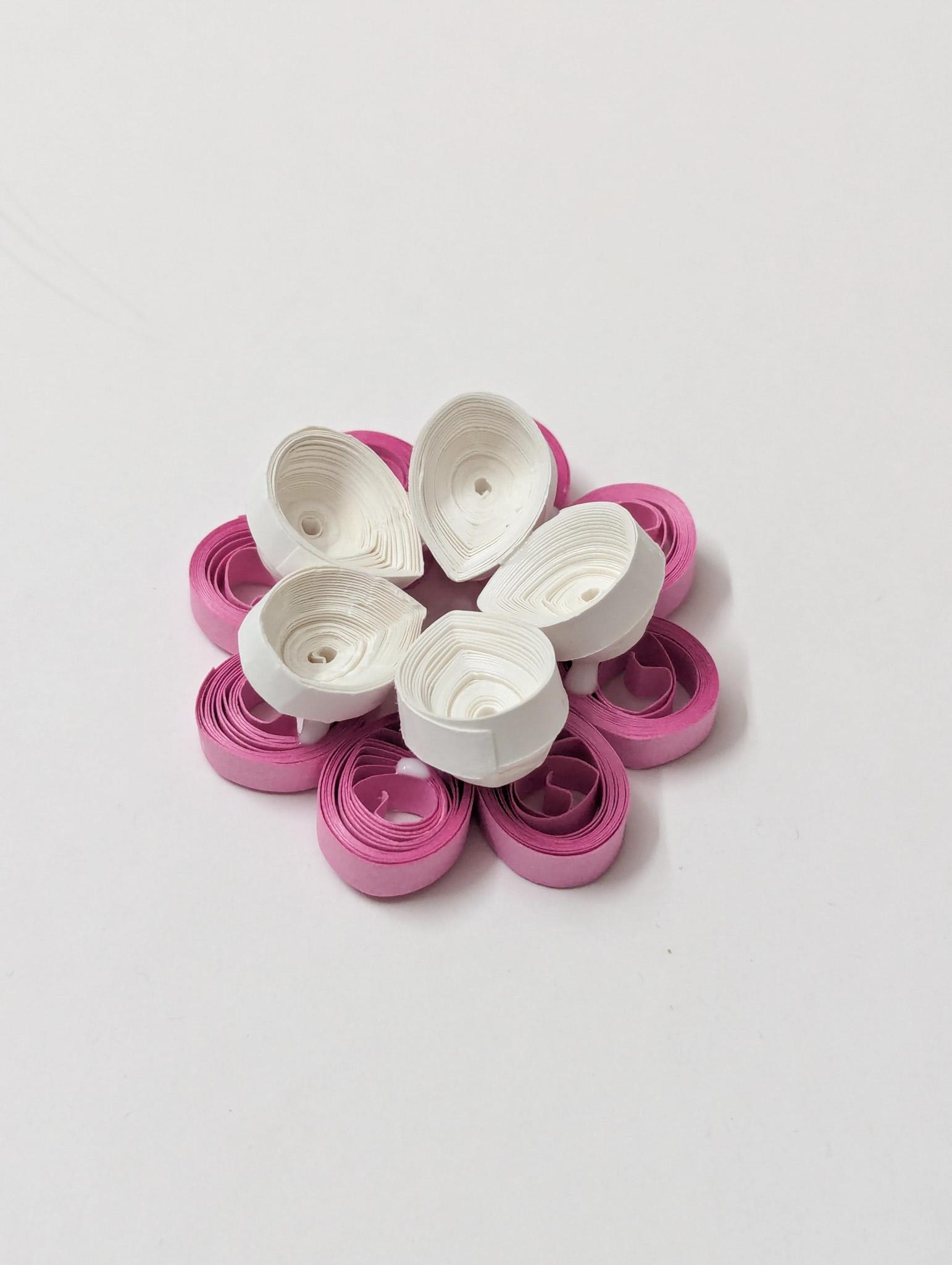


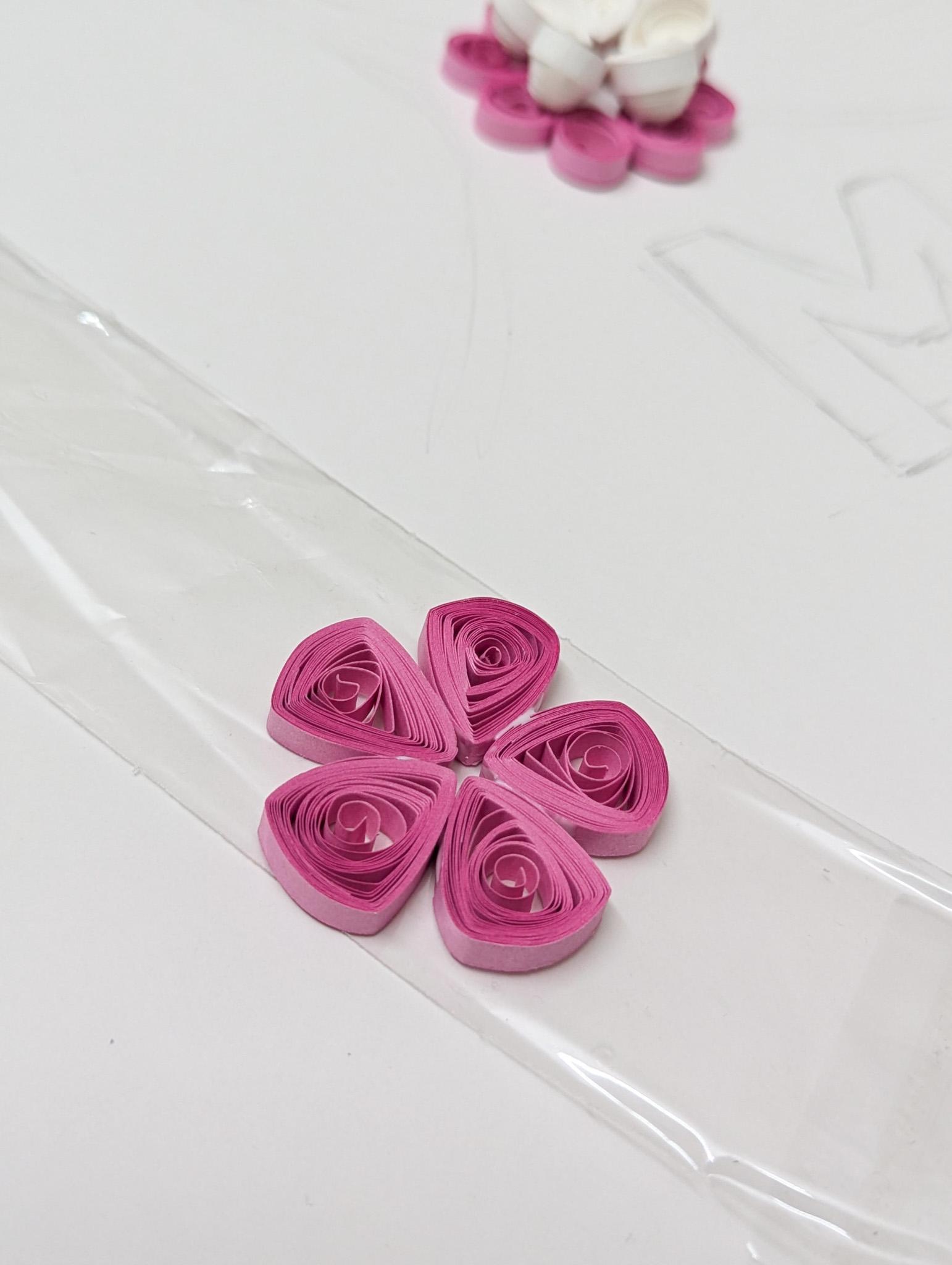
For maximum 3D impact, we will build a few raised, cup-like blossoms.
Layer 1: The Dome
- Form: create a tight teardrop petal using two glued strips.
- Shape: Use your finger to gently press the center of the coil inward. This expands the layers into a 3D, cup-like dome.
- Secure: Apply glue to the inside of the dome so it maintains its shape and doesn't collapse.
Layer 2: The Base
- Create a standard large flat flower (from the previous step) as the base.
- Glue the "Domed" layer on top of the "Base" layer.
Tip: Try using lighter colors for the domed top layer and darker colors for the base to create depth.
Making Small Accent Buds and Petals
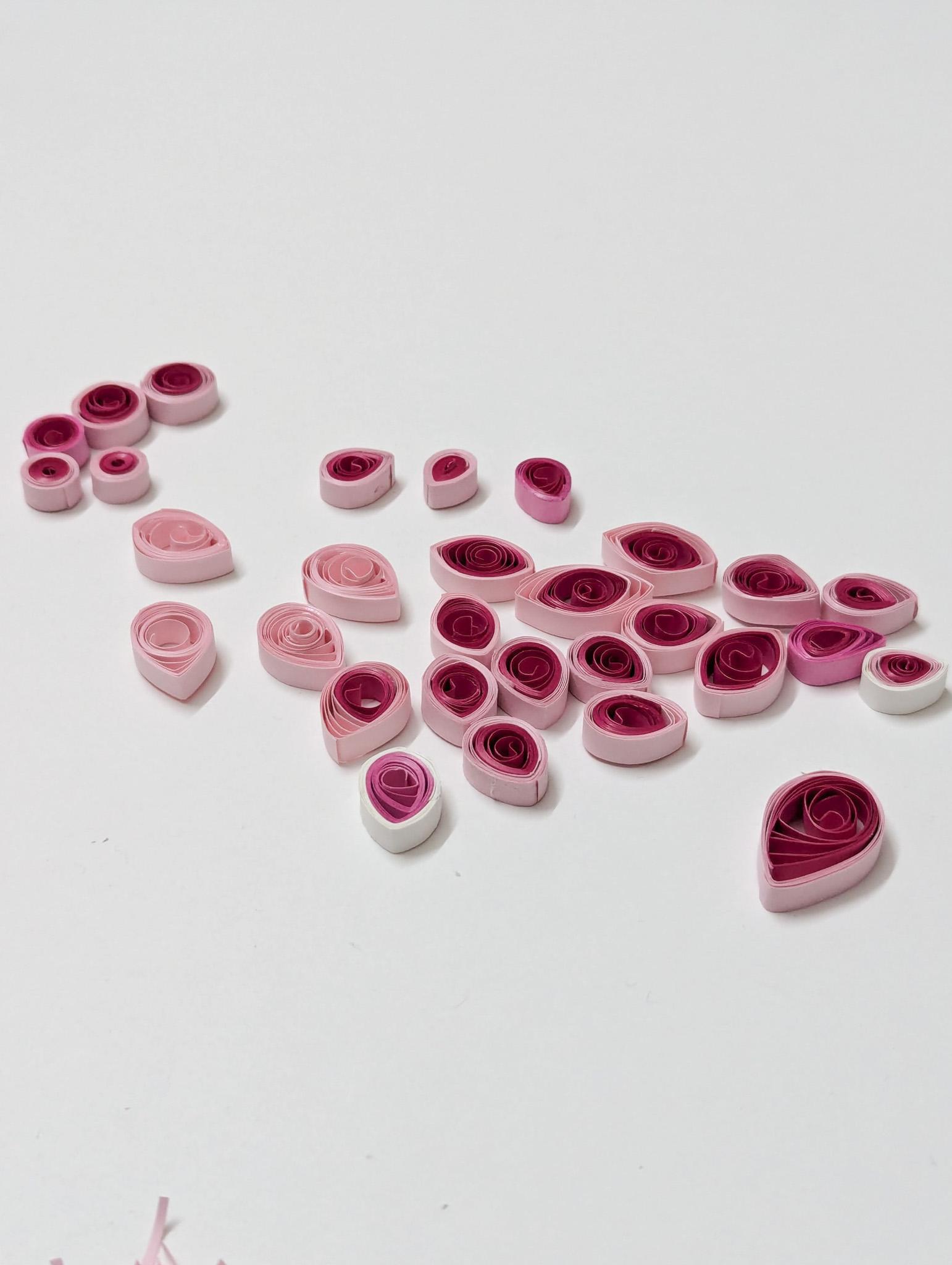

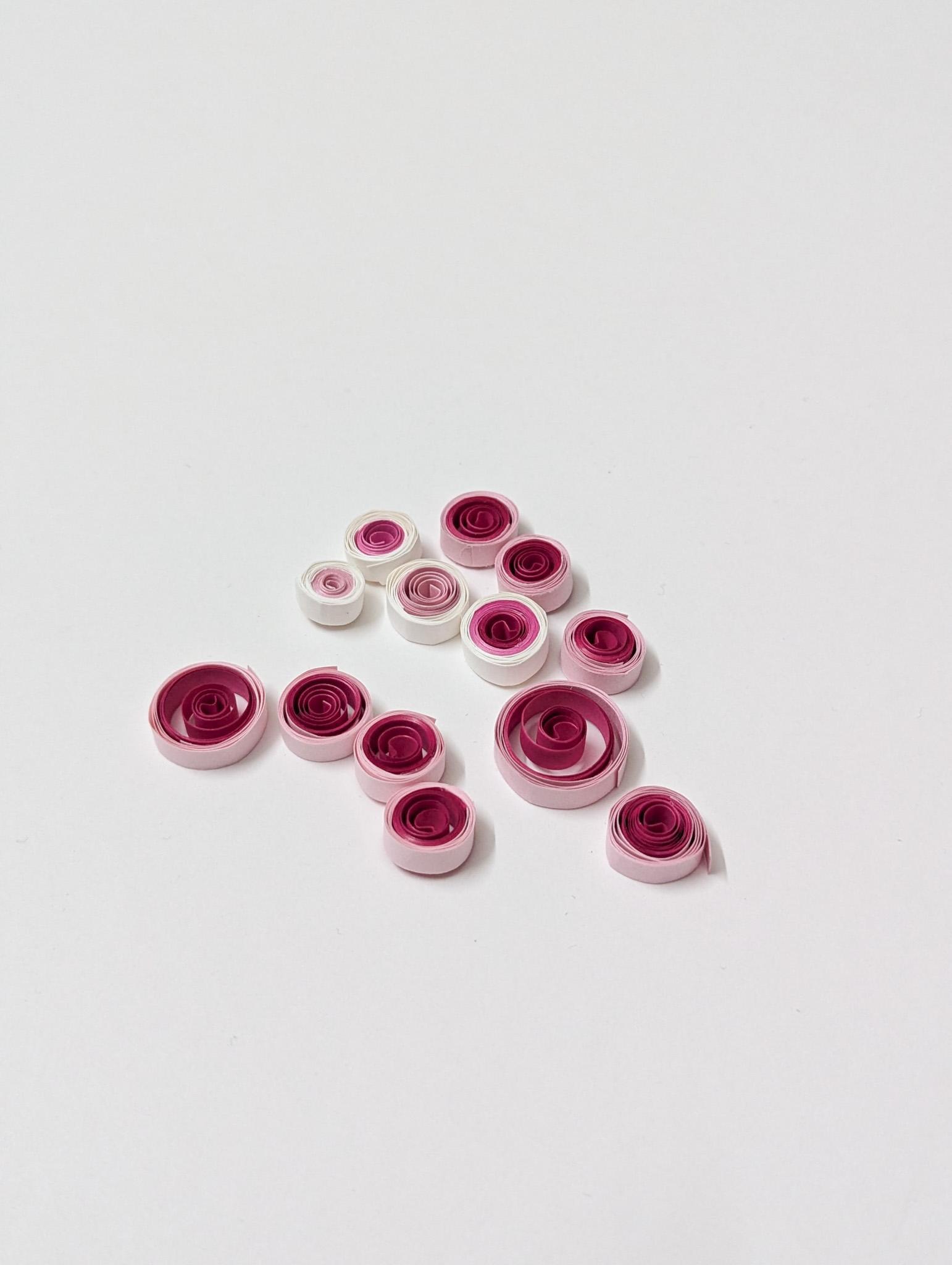
Details matter. This step adds the "fuzziness" of real flowers and the potential of unbloomed buds.
Accent Buds and Petals - Create simple individual petals or tiny, tight circular coils to represent unbloomed buds. Make 5-10 of each color to keep on hand; these are perfect for filling small gaps later.
Preparing Fringed Floral Centers
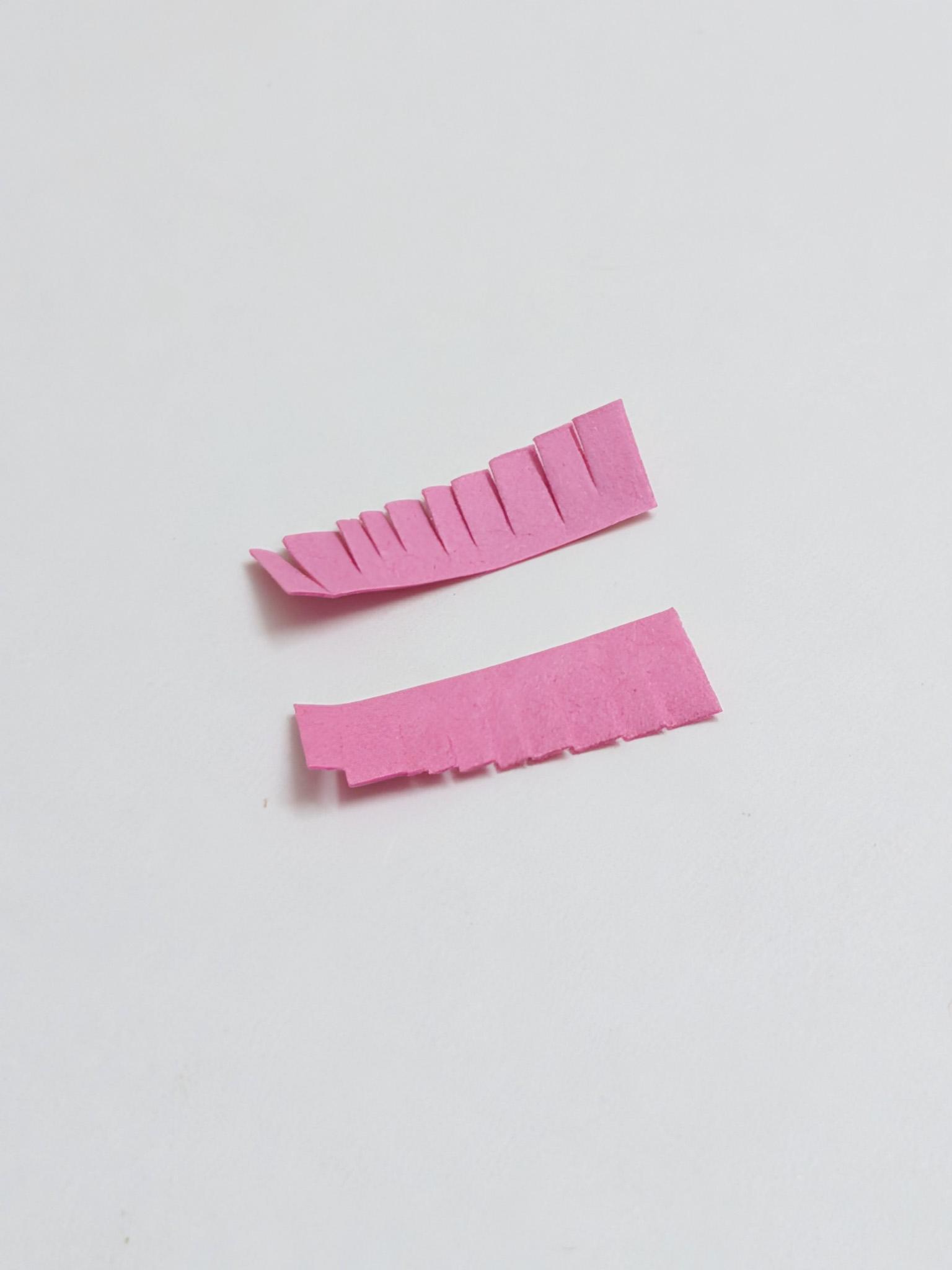
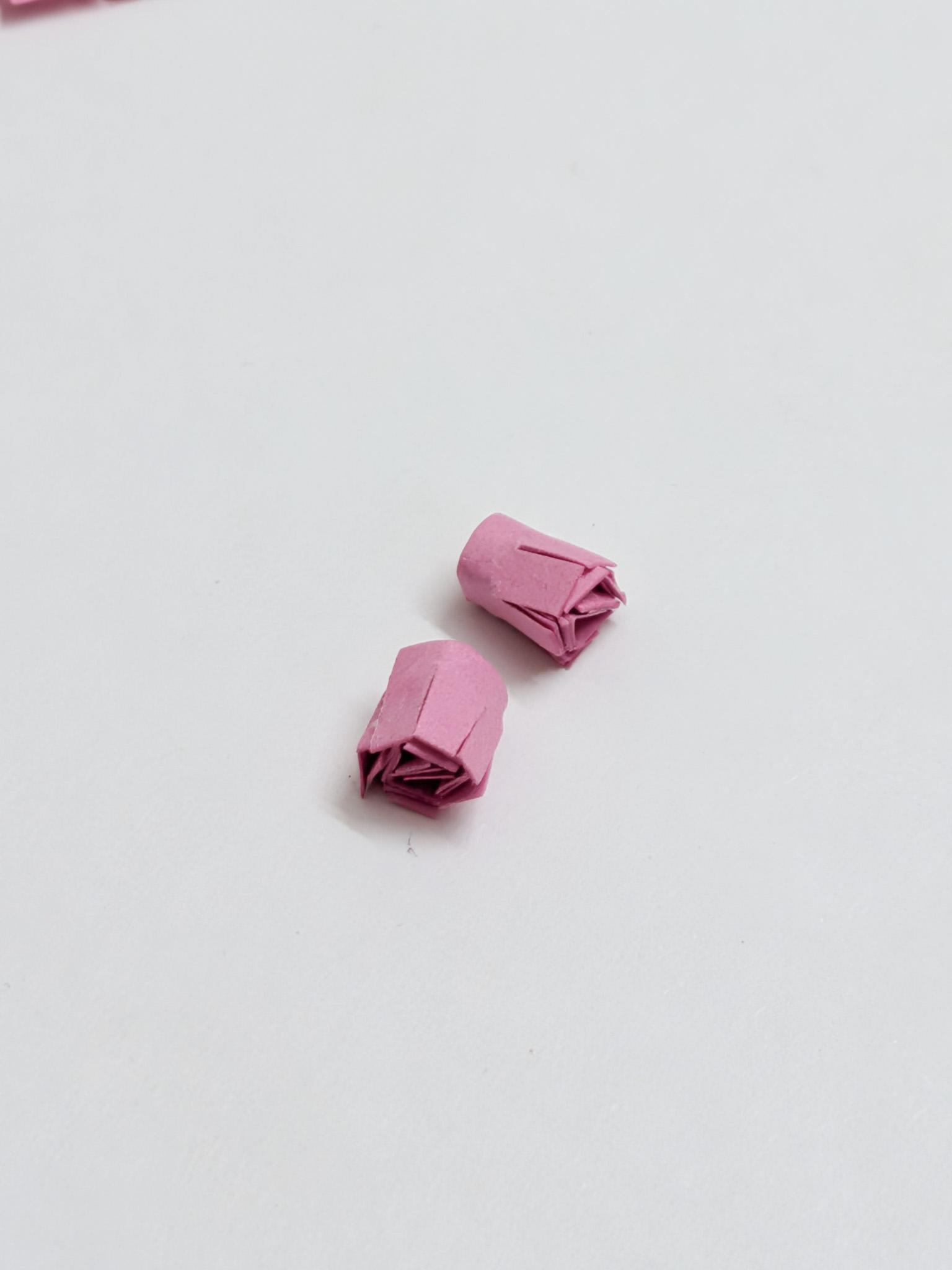

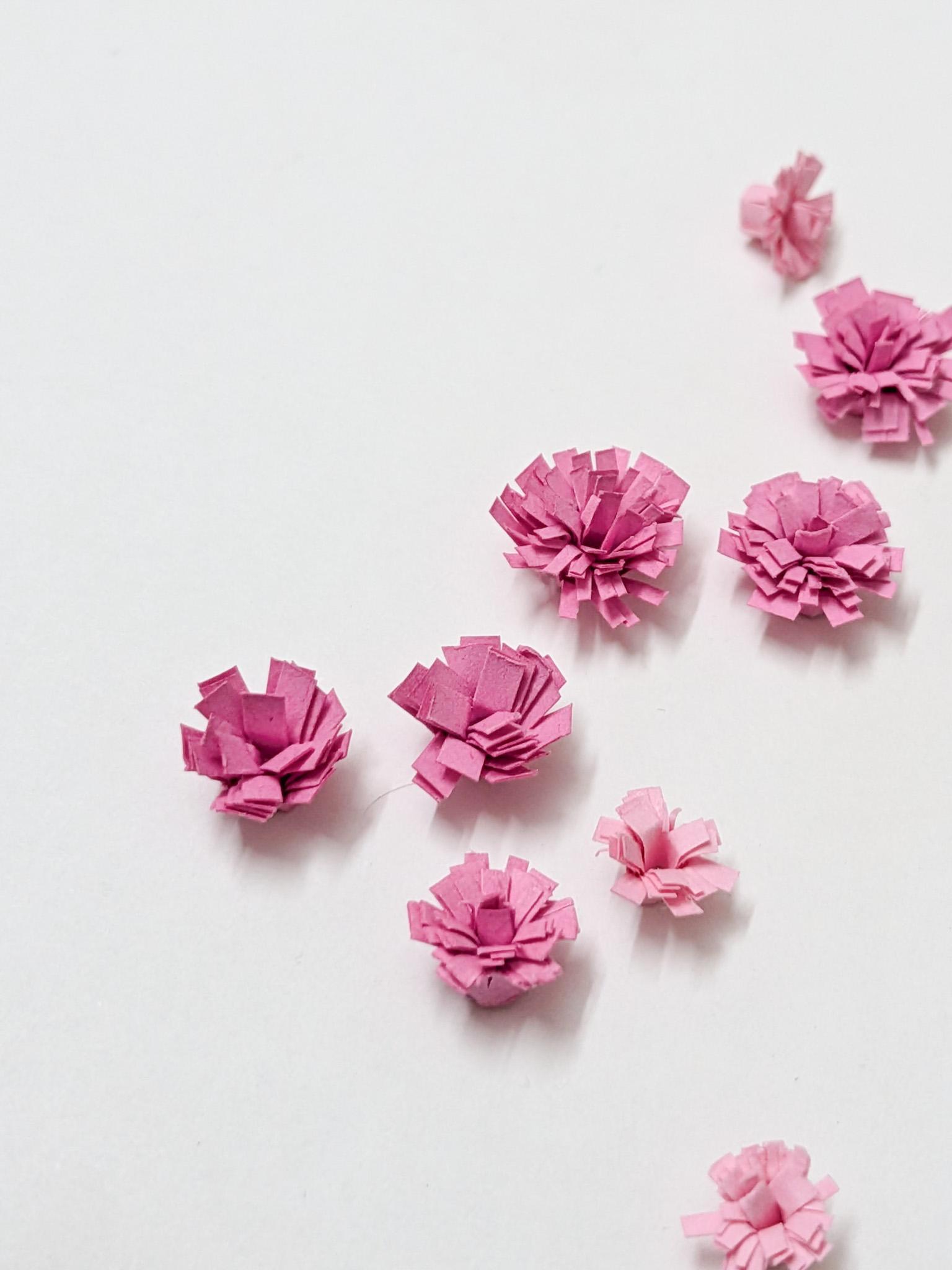
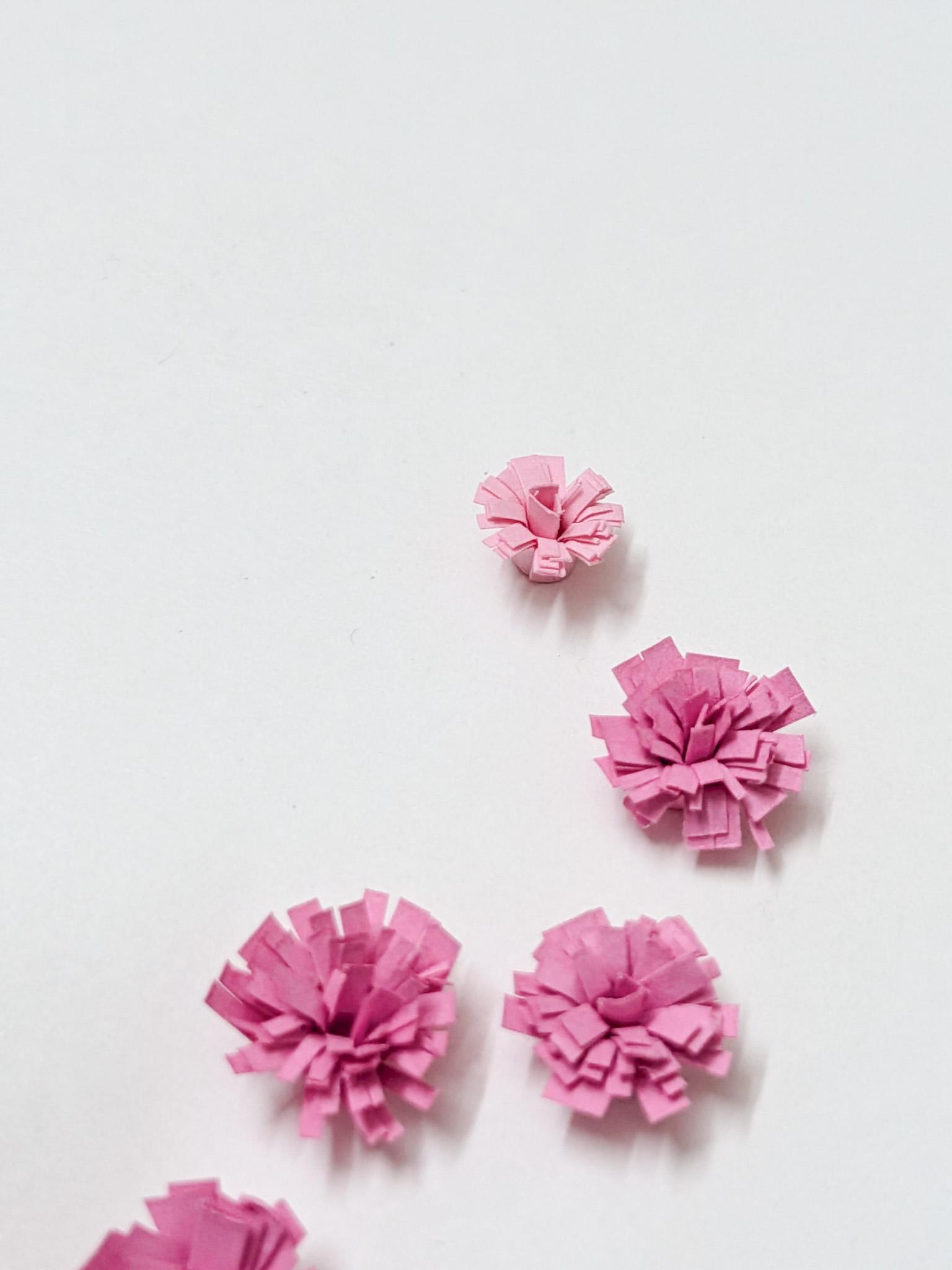
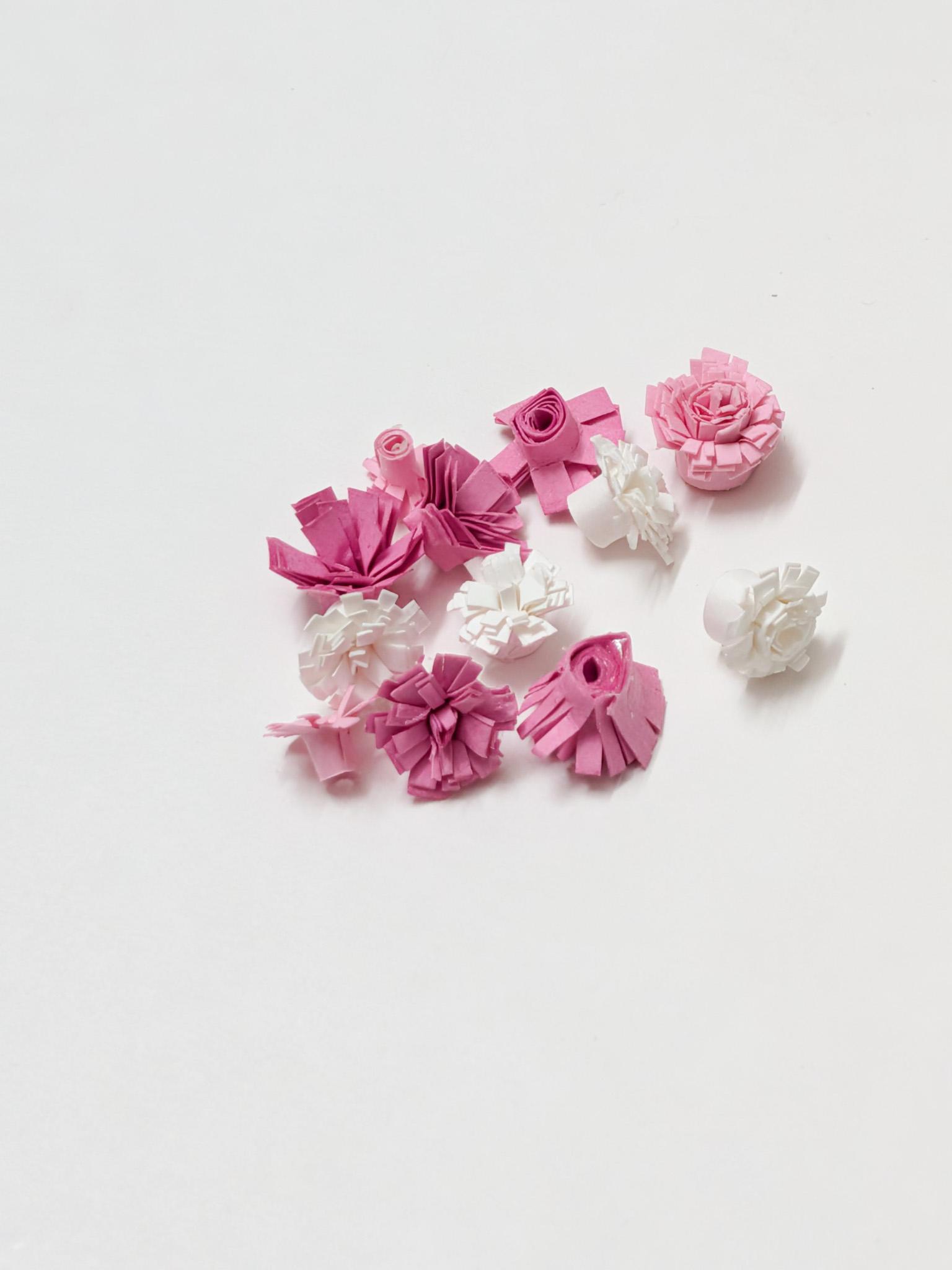
The flowers we've made until now have a small hole in the center. We fill those out with fringed centers.
The Fringed Centers
- Cut: Take a small pink or white strip and make tiny, vertical cuts along one edge (fringing). Be careful not to cut all the way through.
- Roll: Roll the fringed strip into a tight coil.
- Fluff: Use your thumb (or tweezers) to gently spread the "fringes" outward to create a fluffy, textured center. Glue these into the center of your flowers.
Placing the Focal Flowers
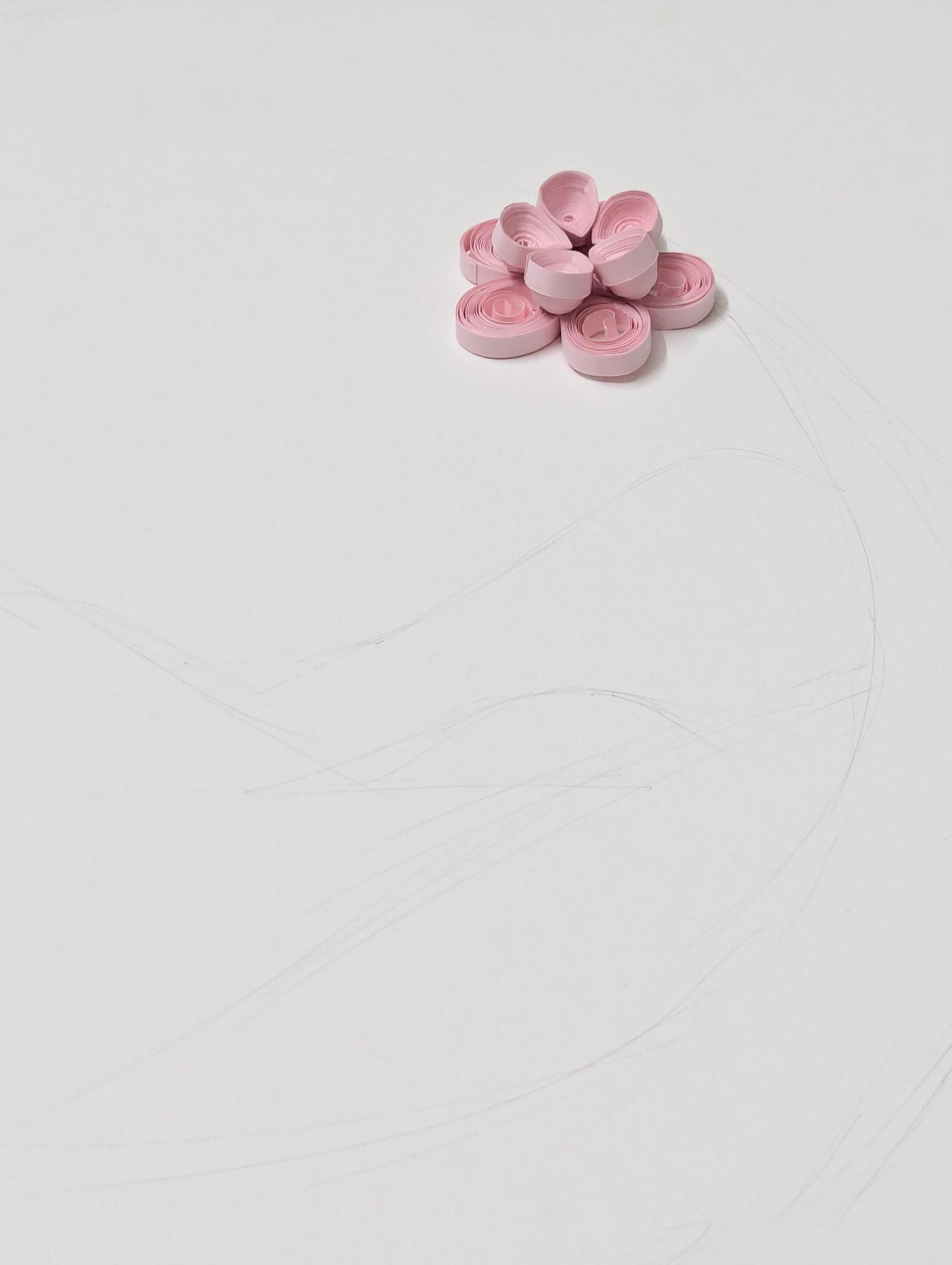
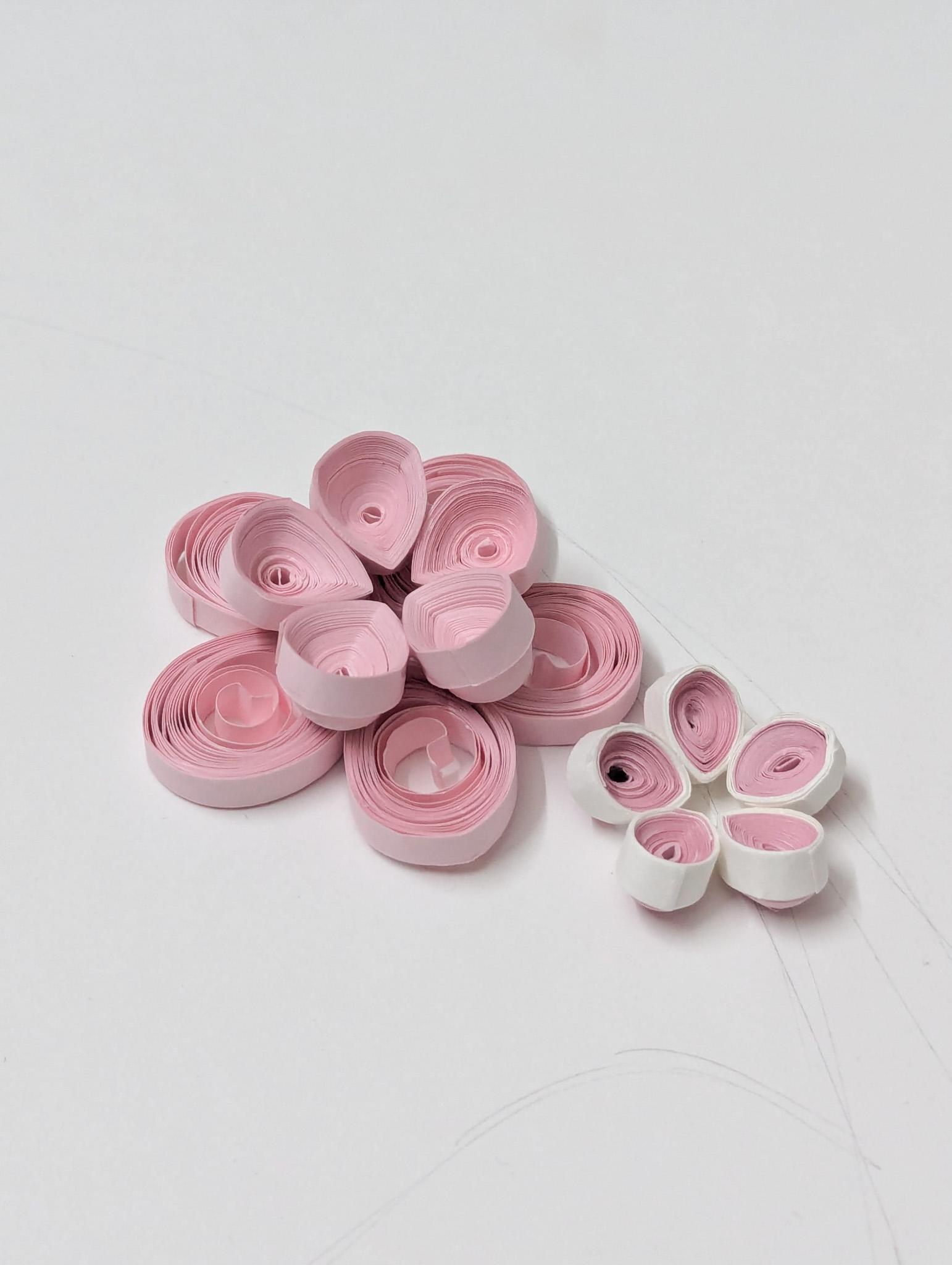

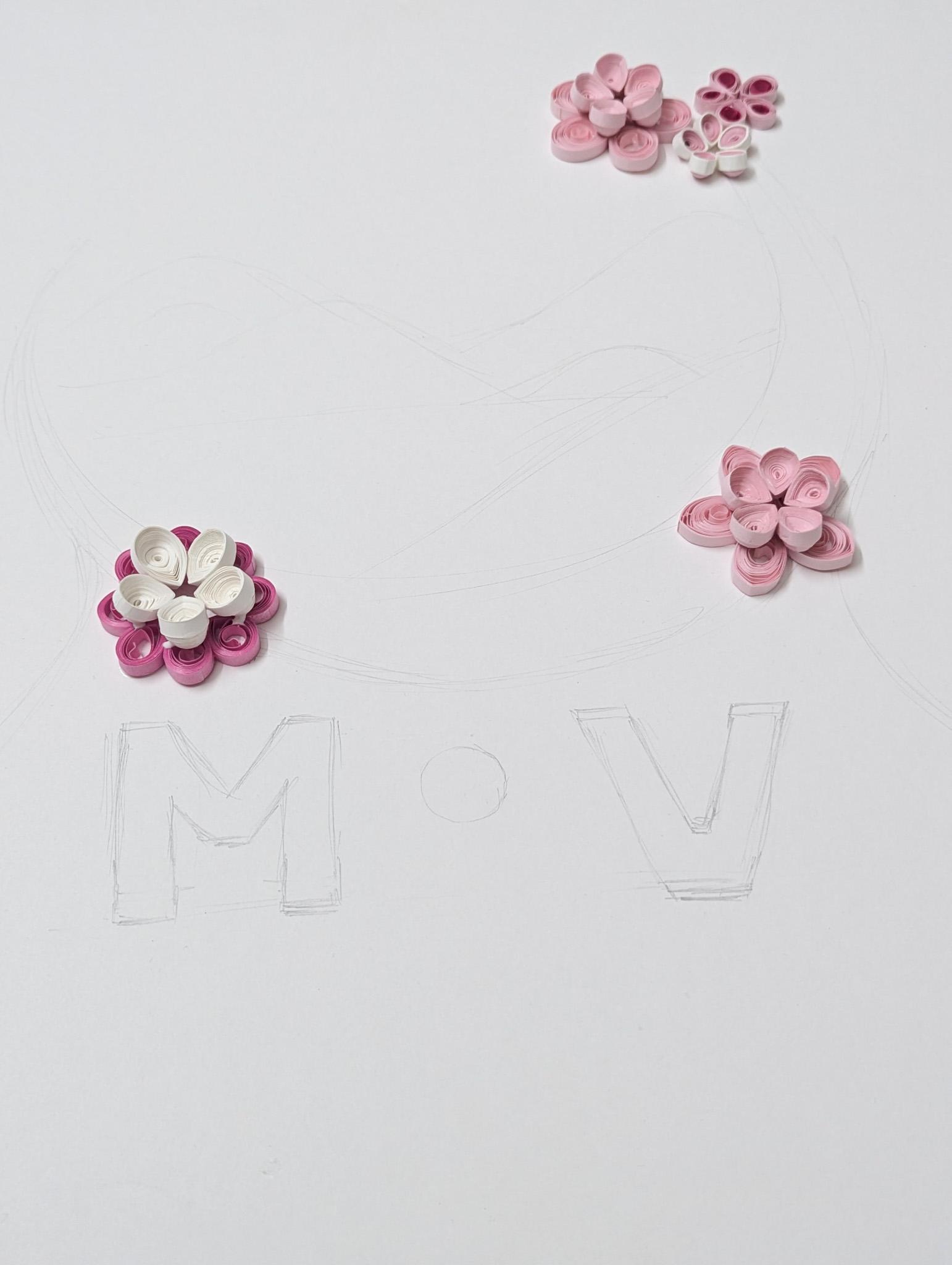
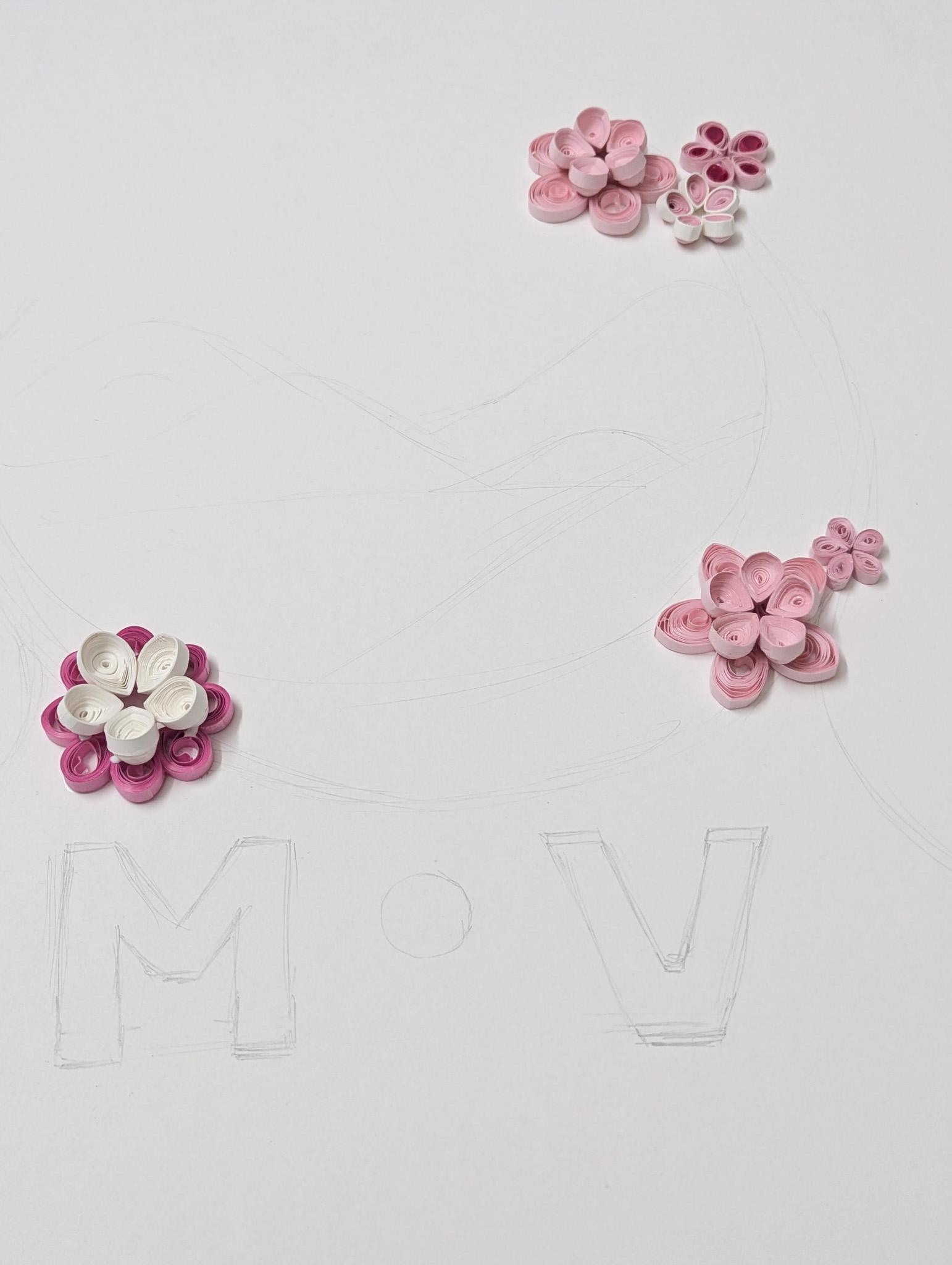
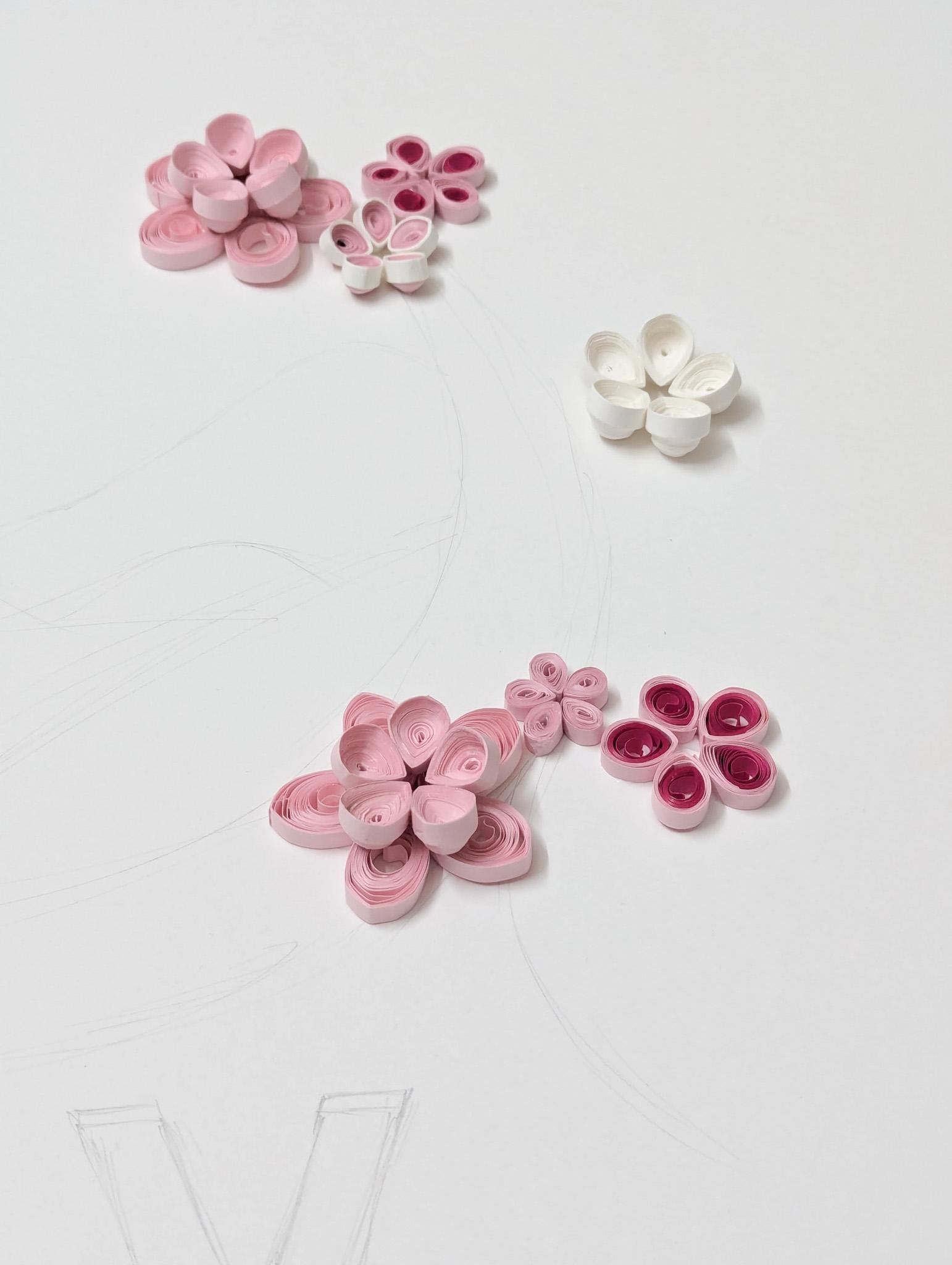

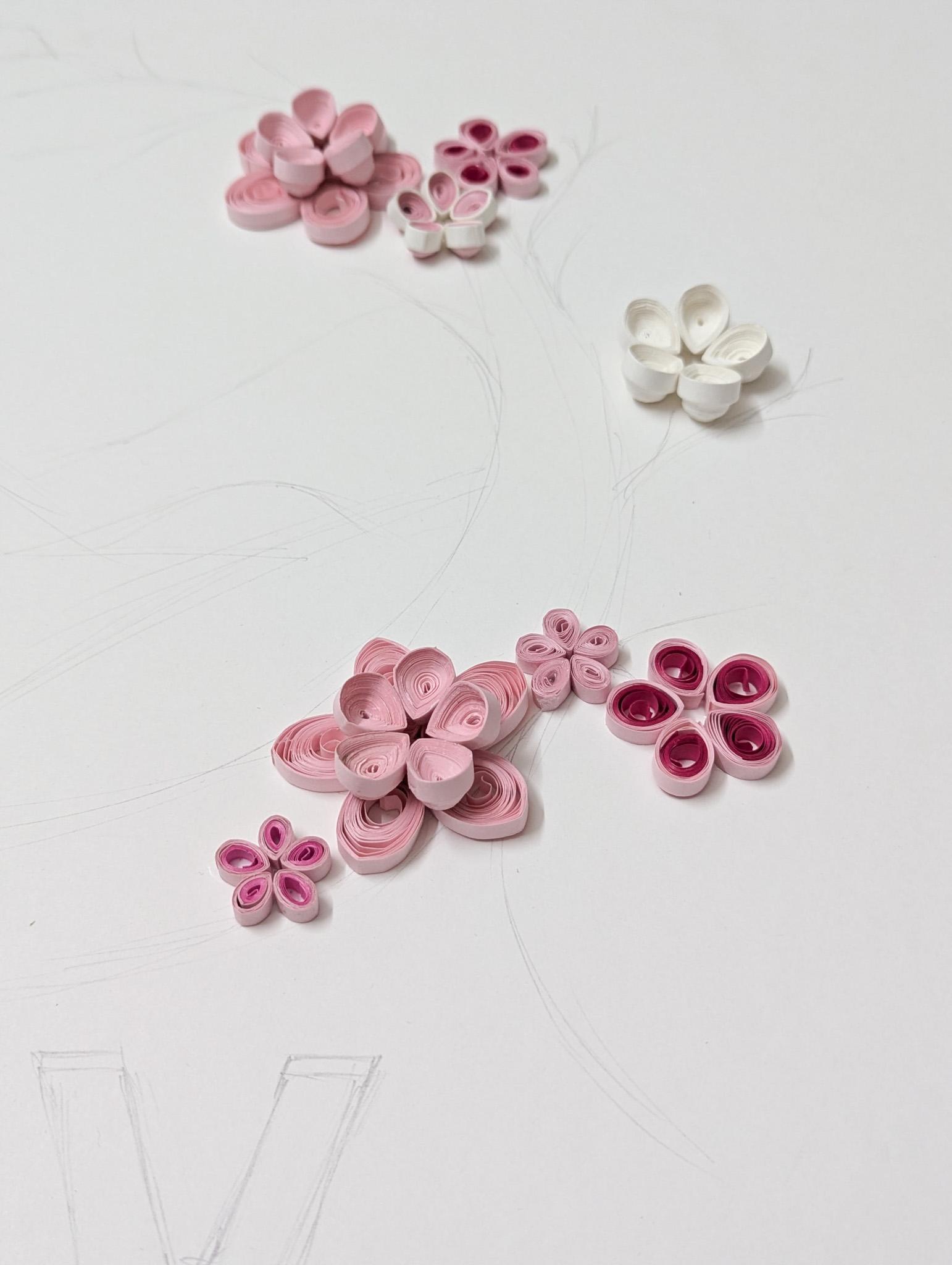
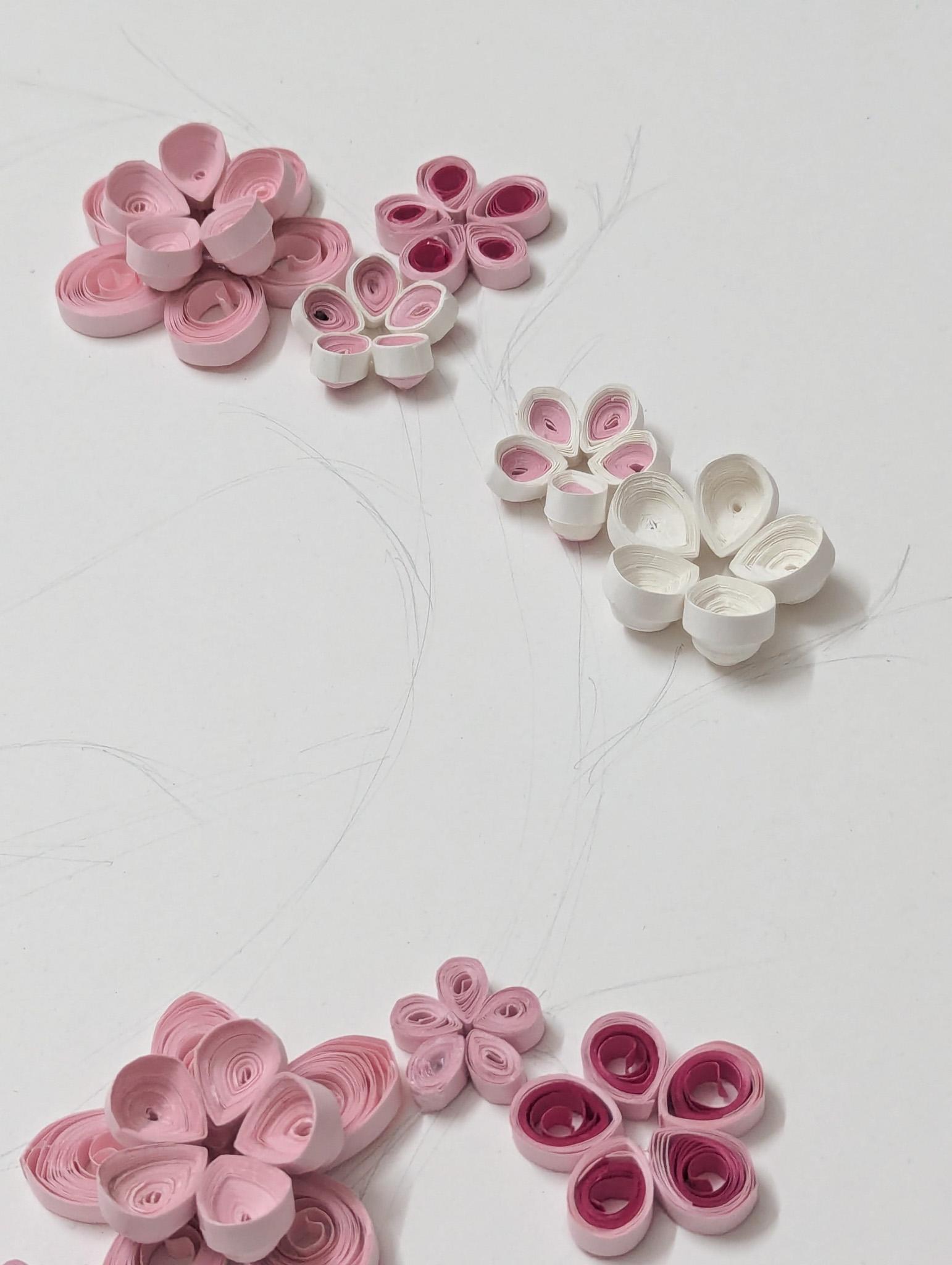

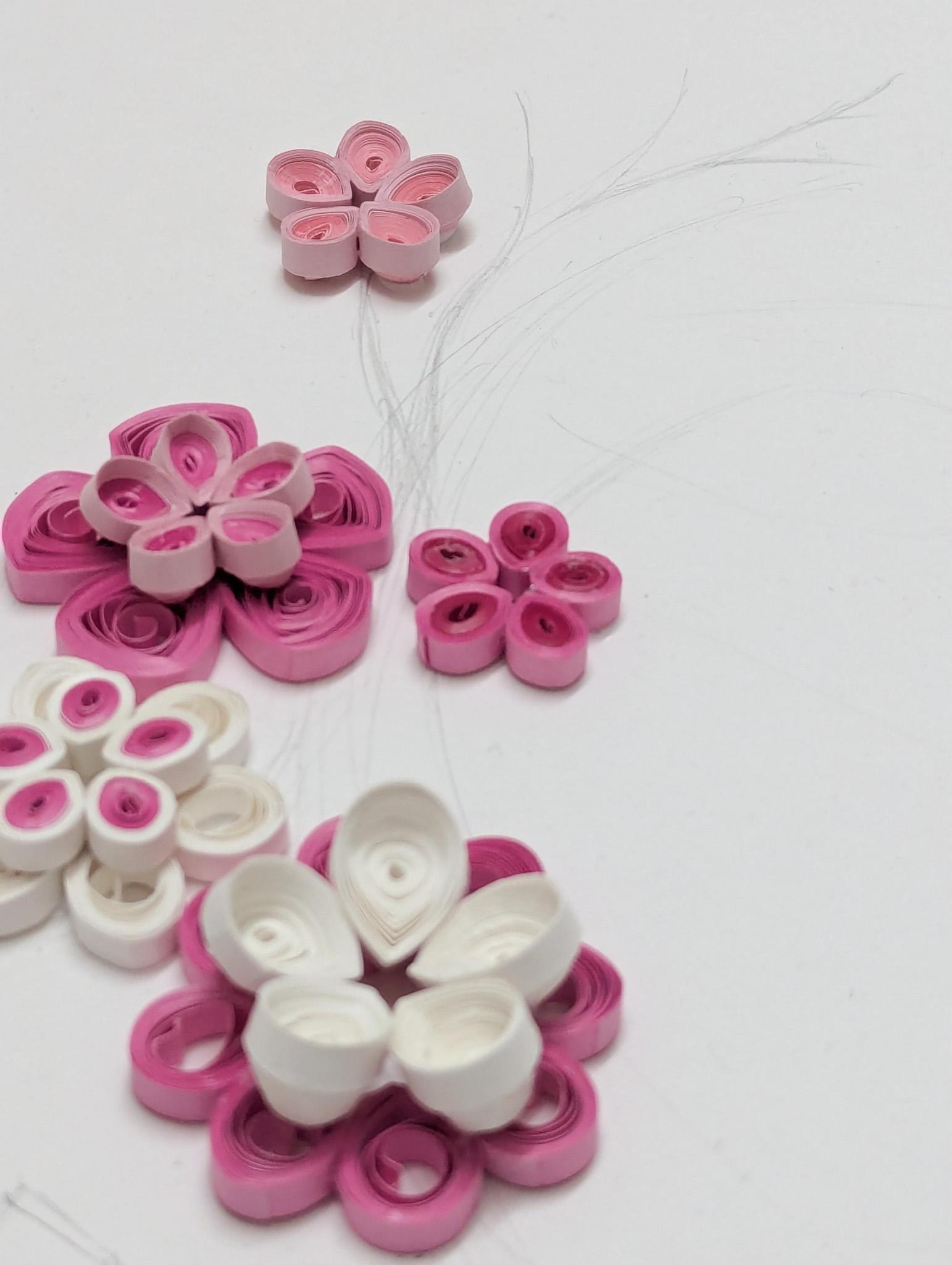
Now, the composition begins.
Strategic Anchoring - Following your Step 1 sketch, glue your largest flowers onto the cardboard first. These act as "anchors." If you start with small flowers, you'll run out of room for the showstoppers.
Intuitive Building - Once the anchors are down, start building around them. If you realize you need a specific color or size you haven't made yet—stop and make it! You don't need to match your reference exactly; trust your intuition
Building the Branch Framework
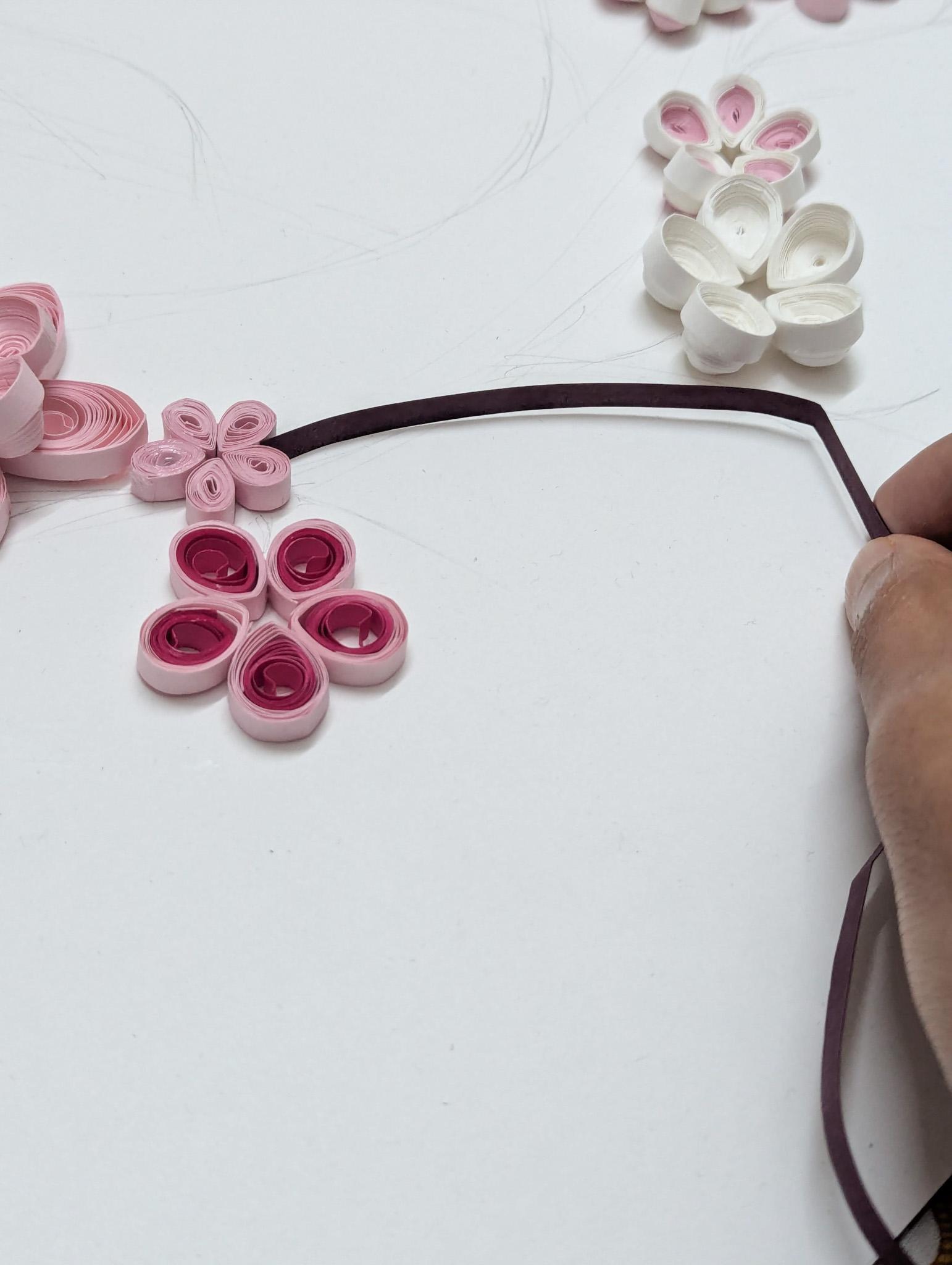

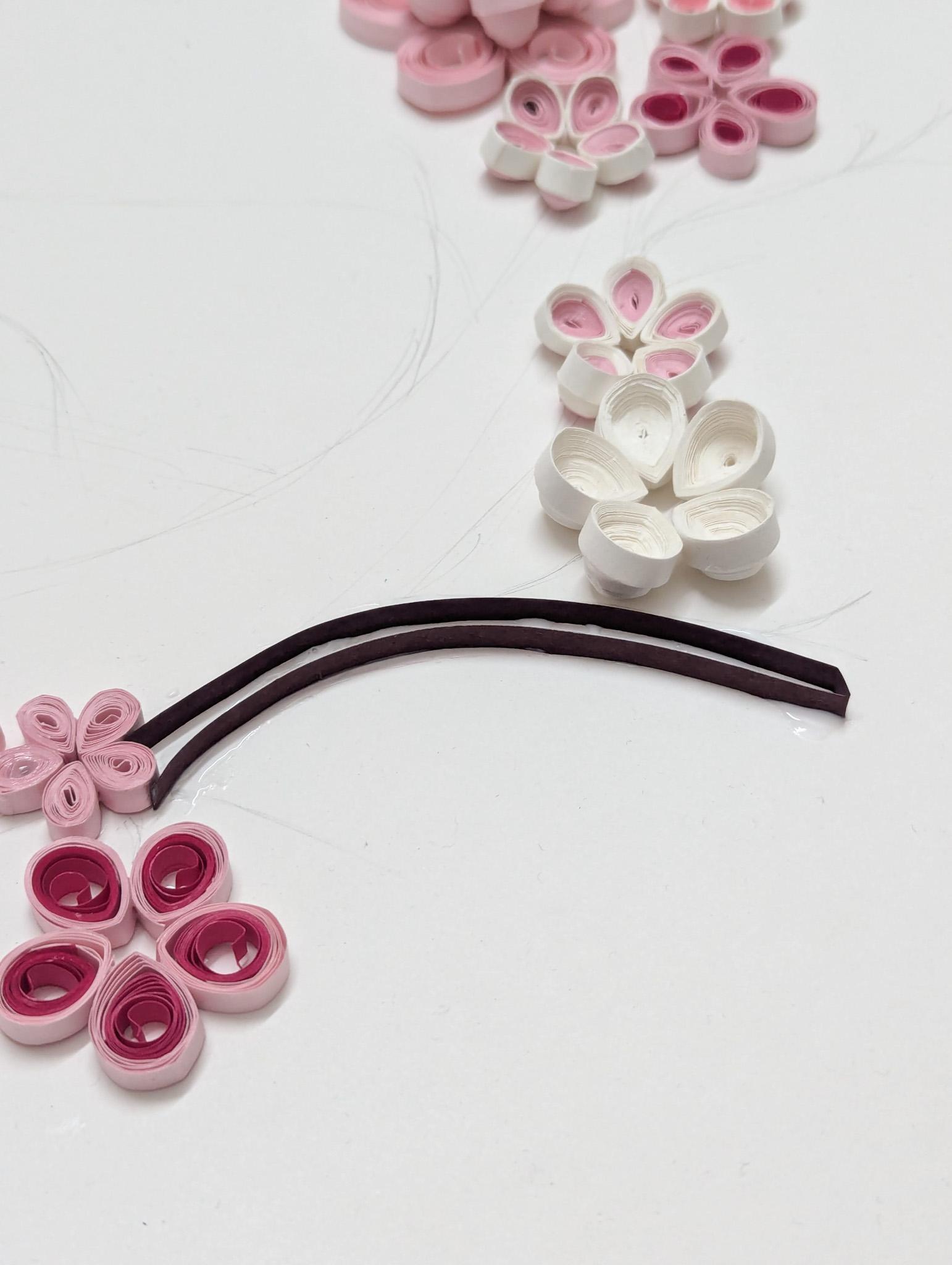
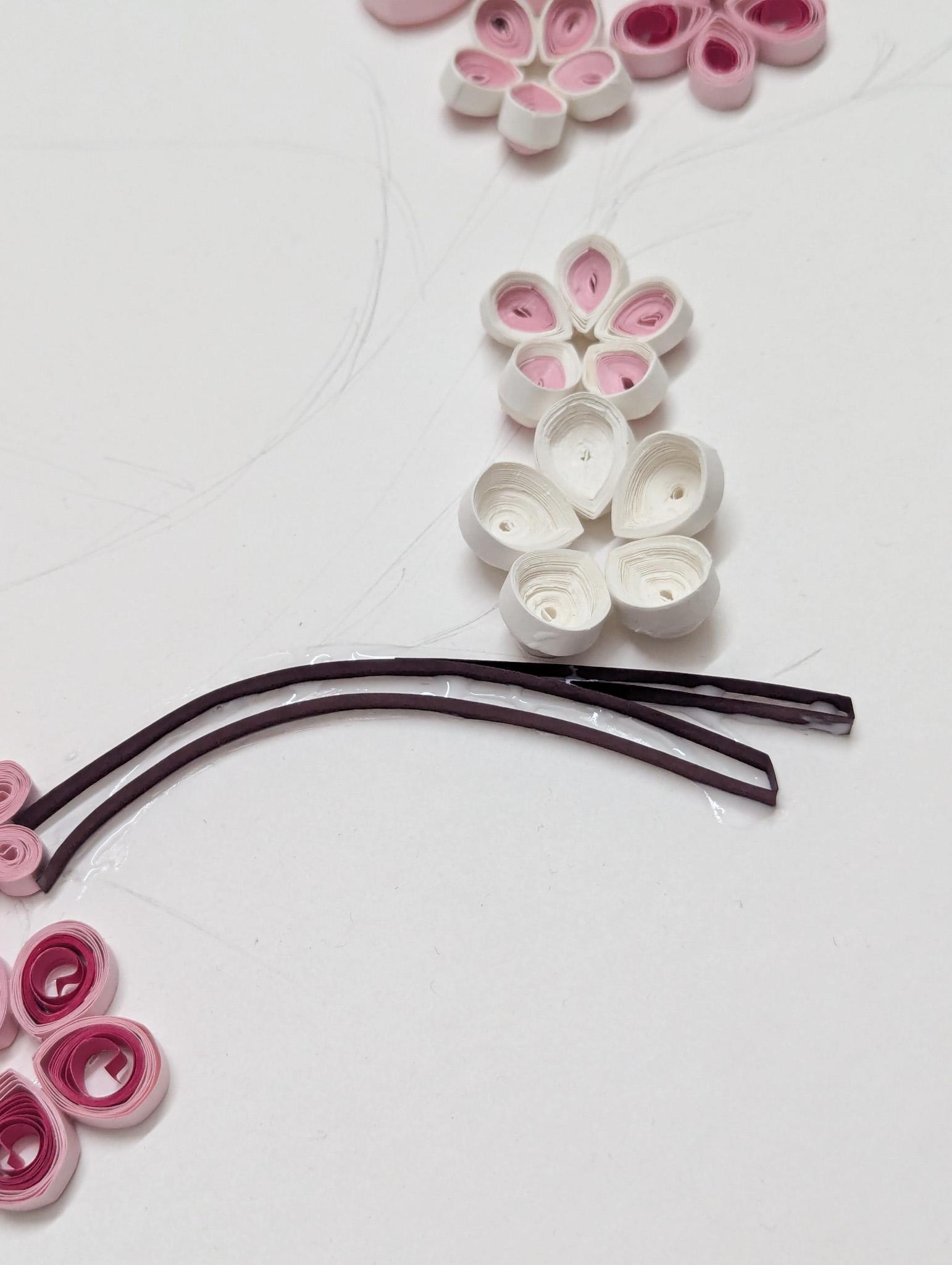
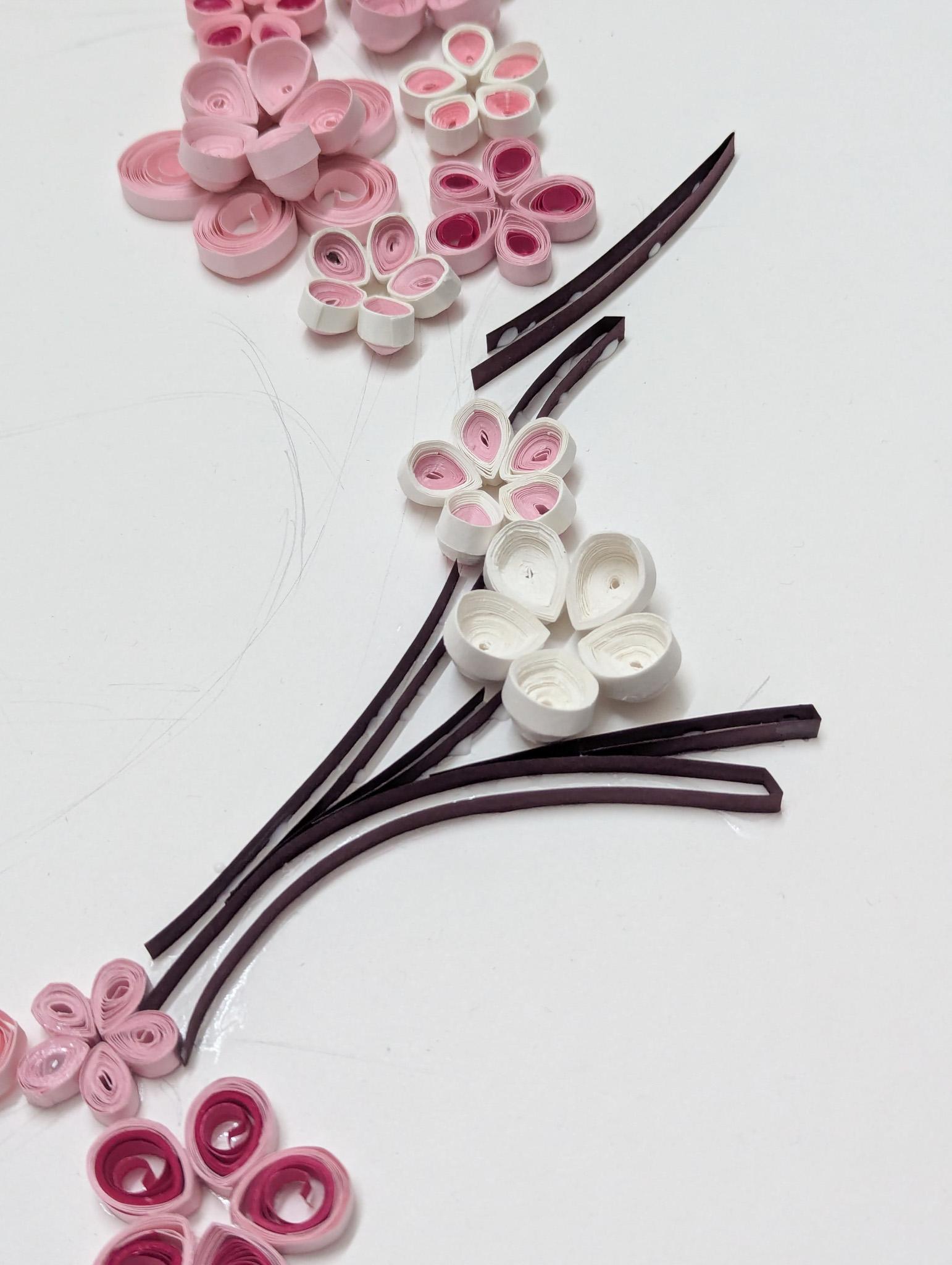
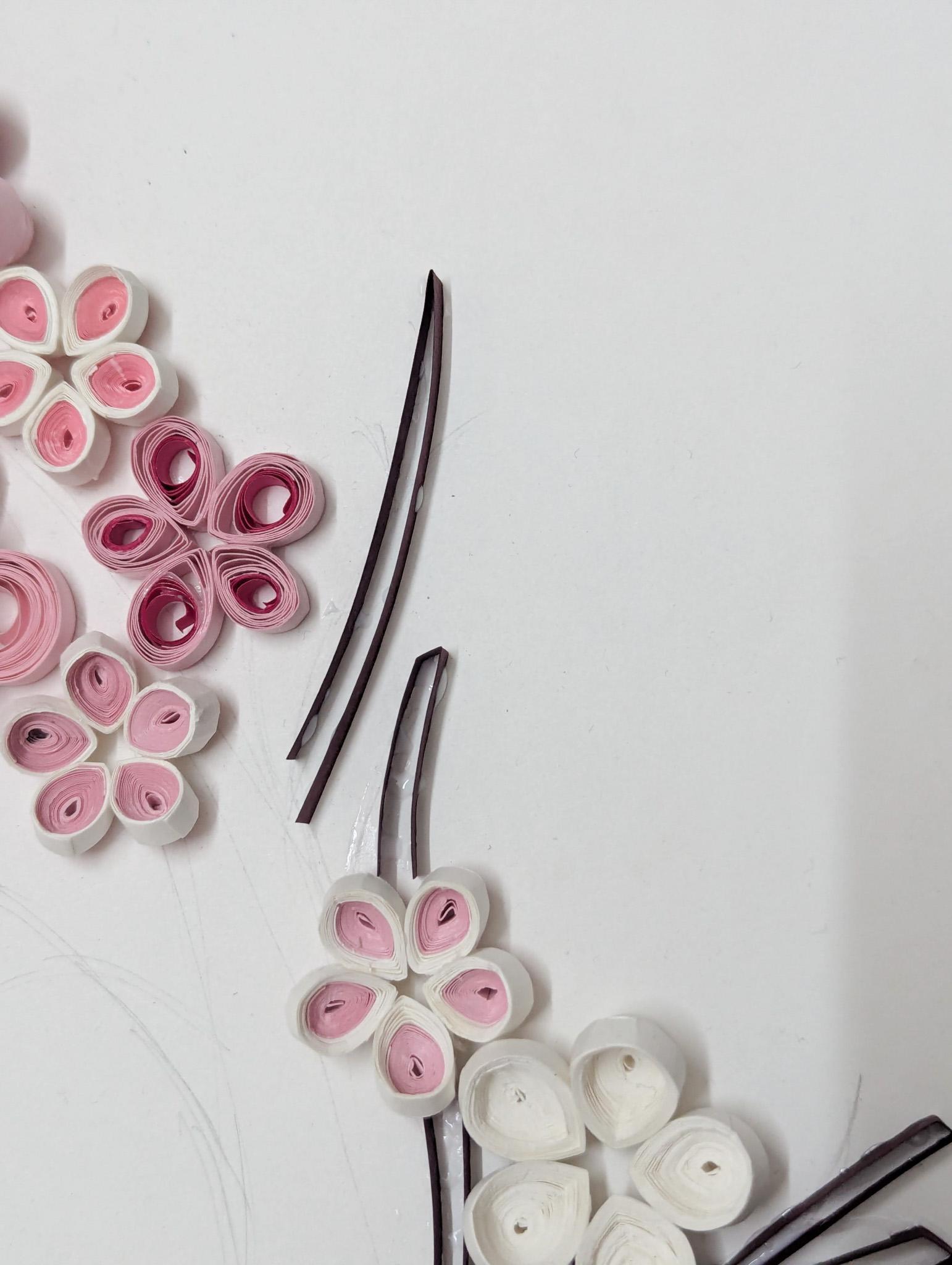
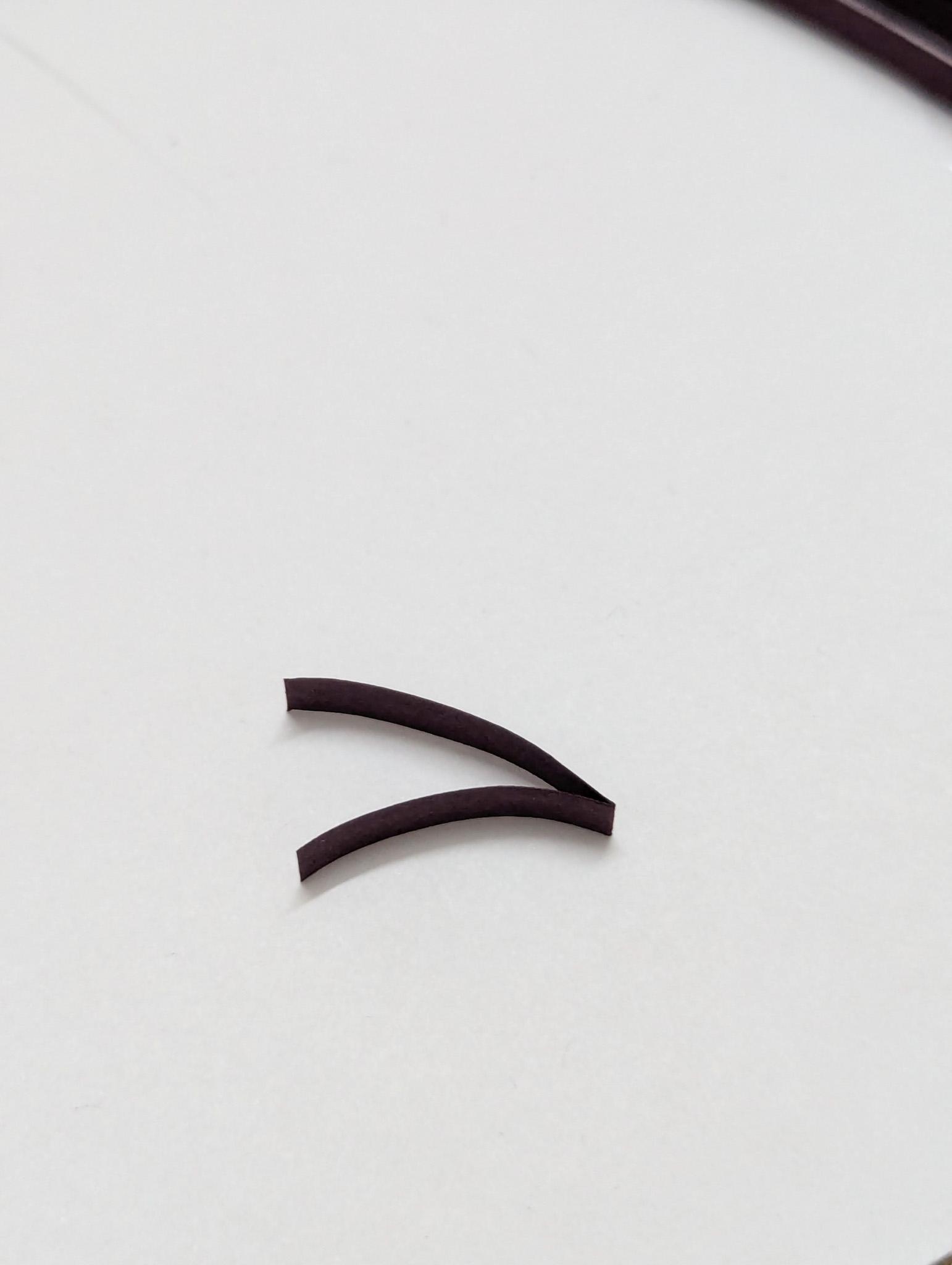
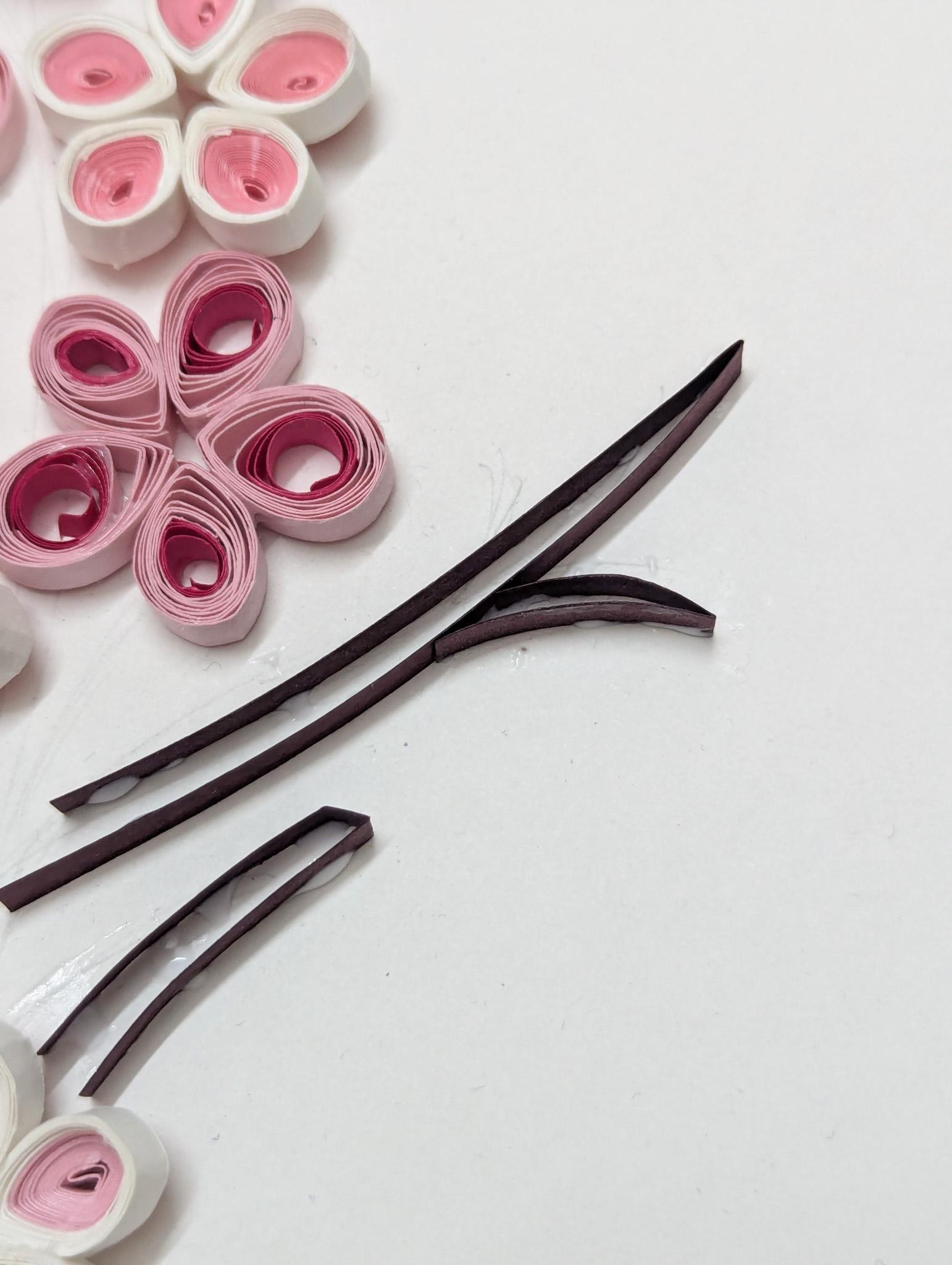


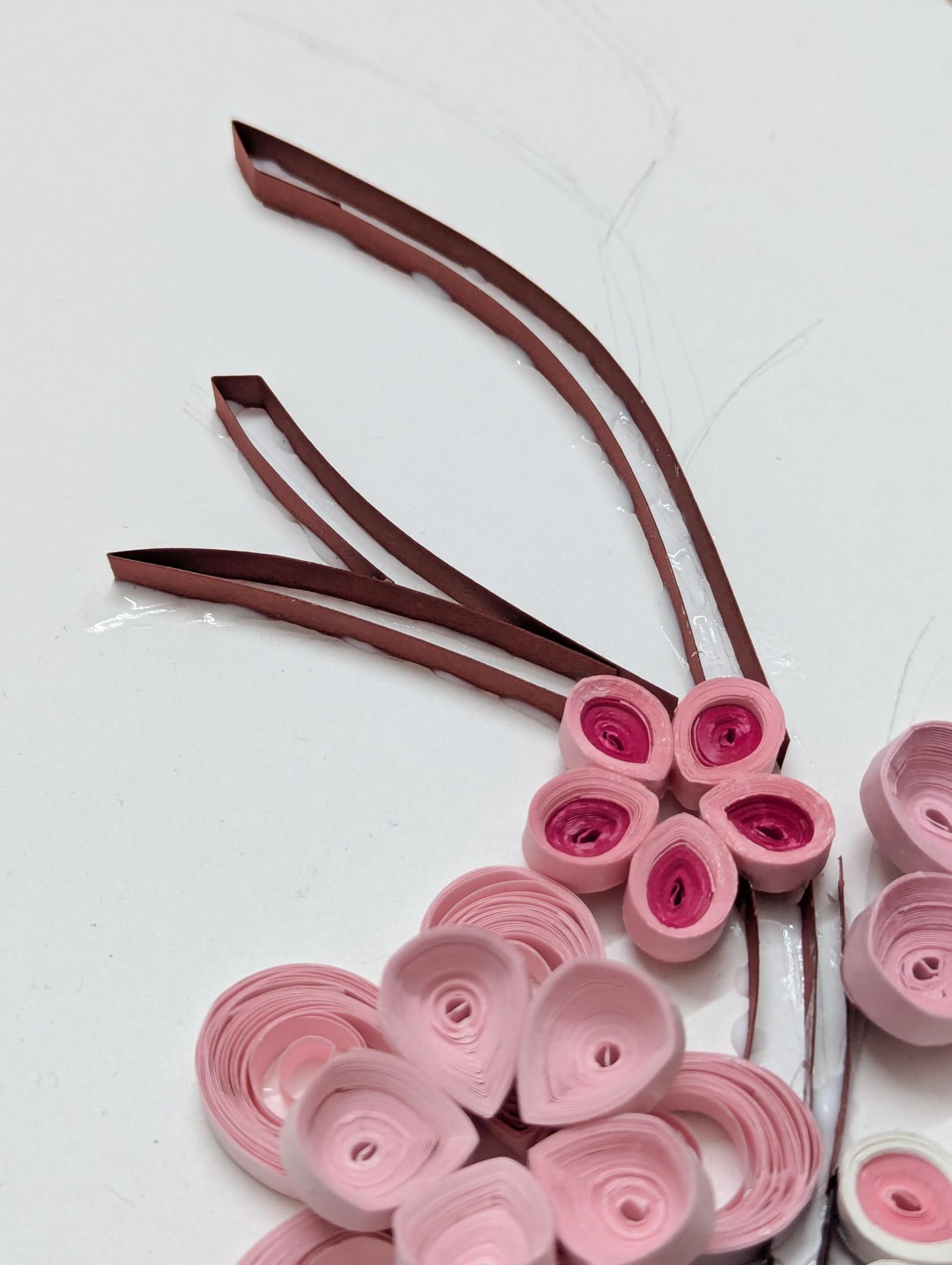
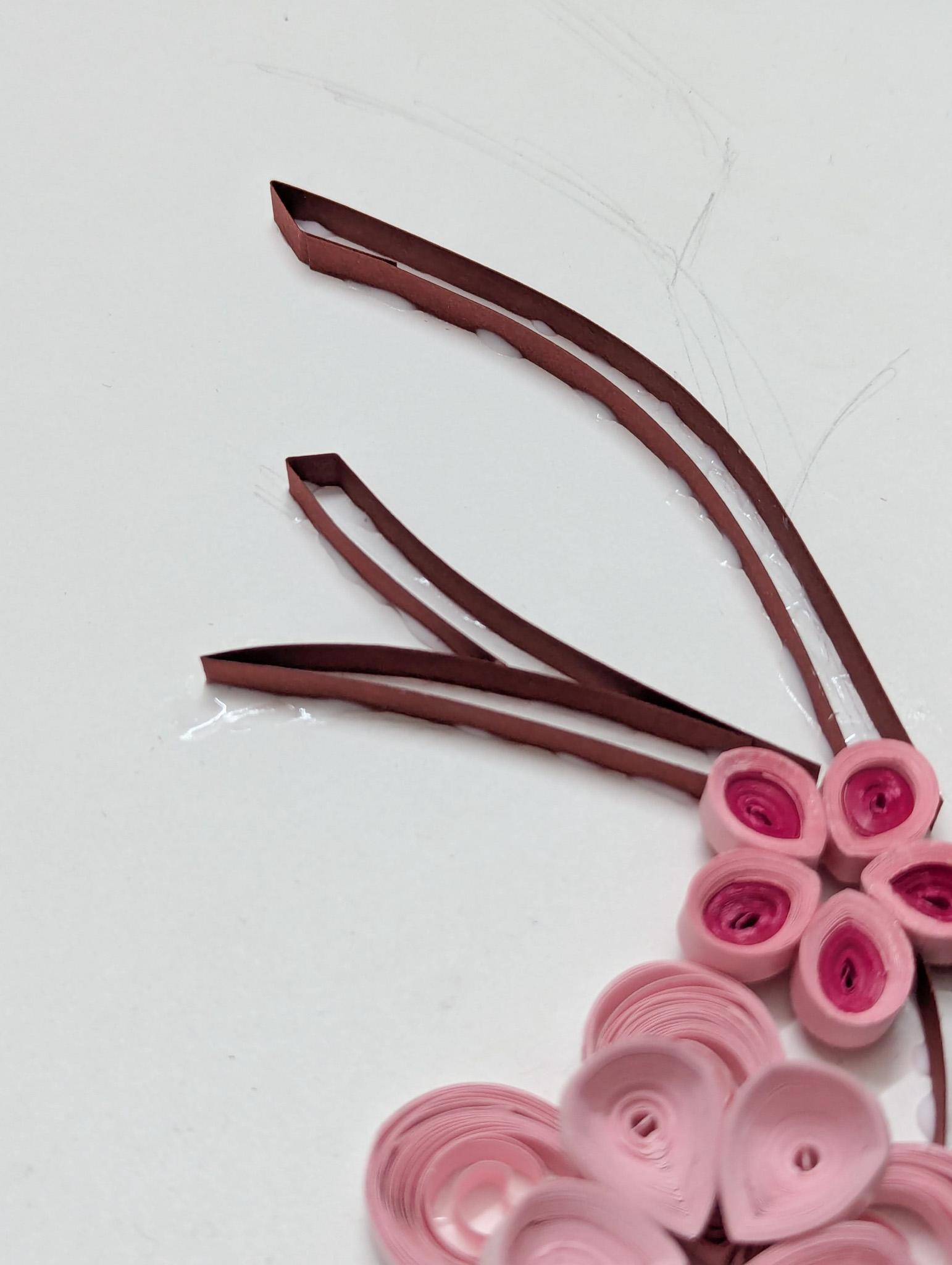


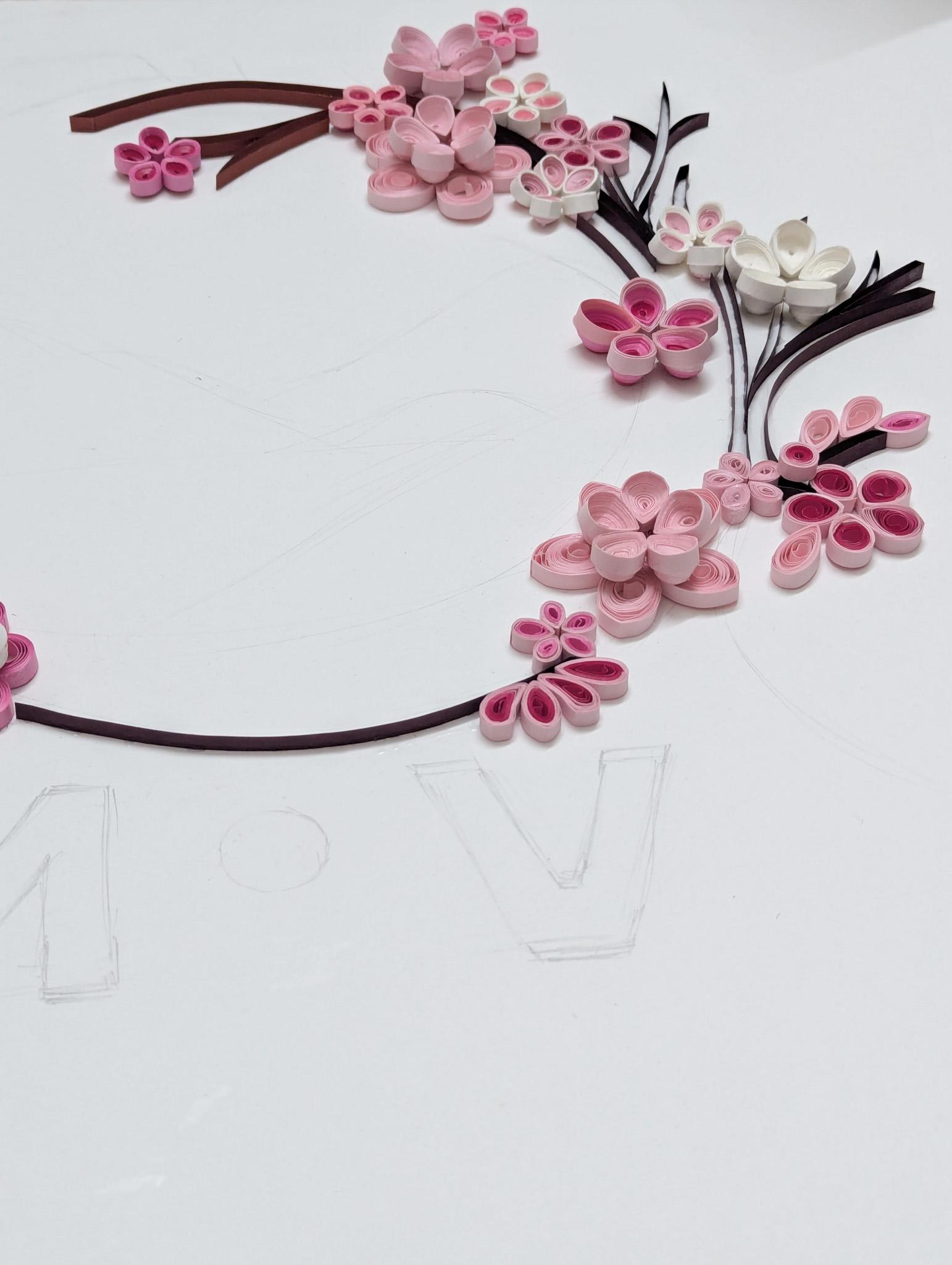
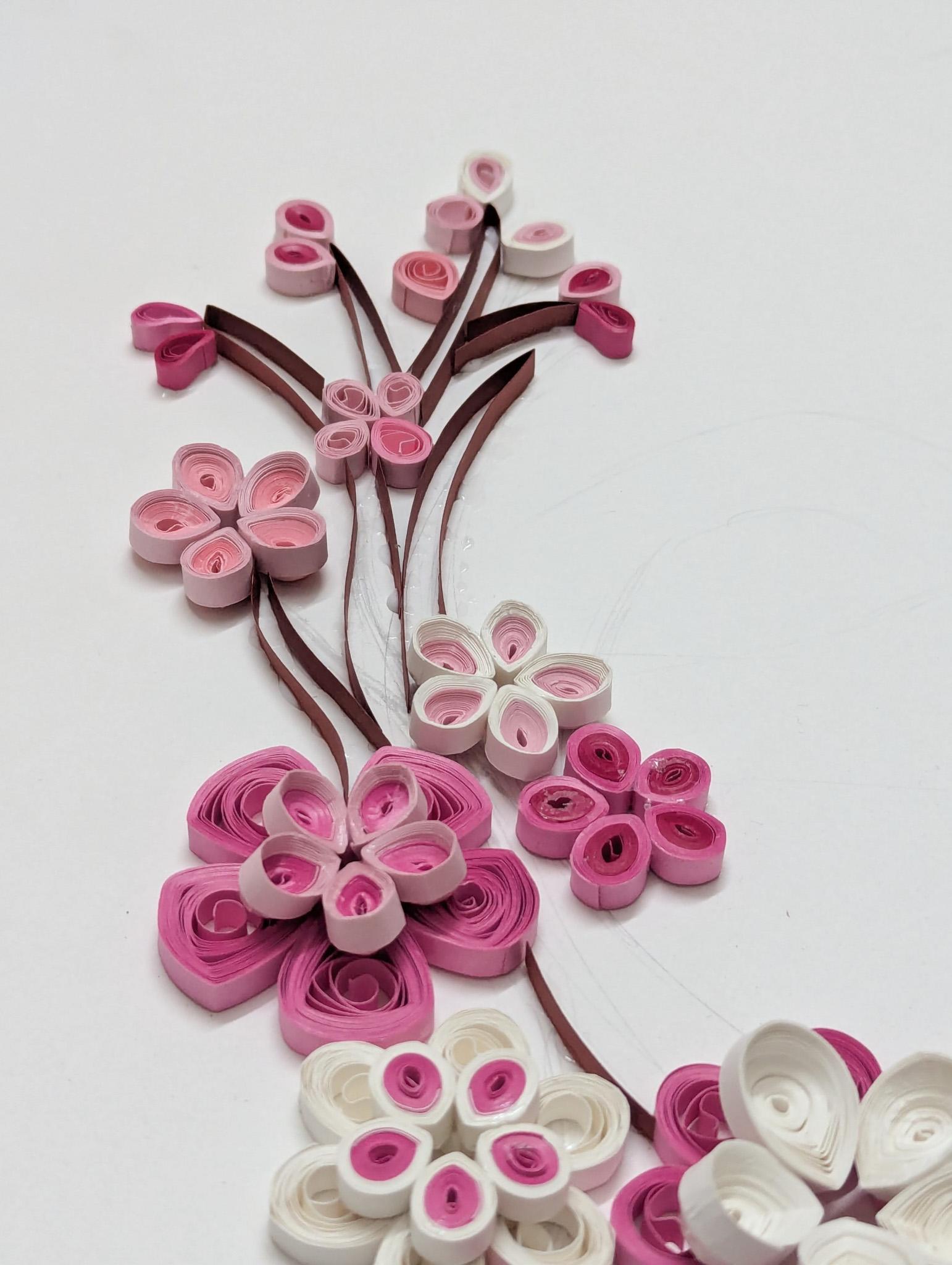
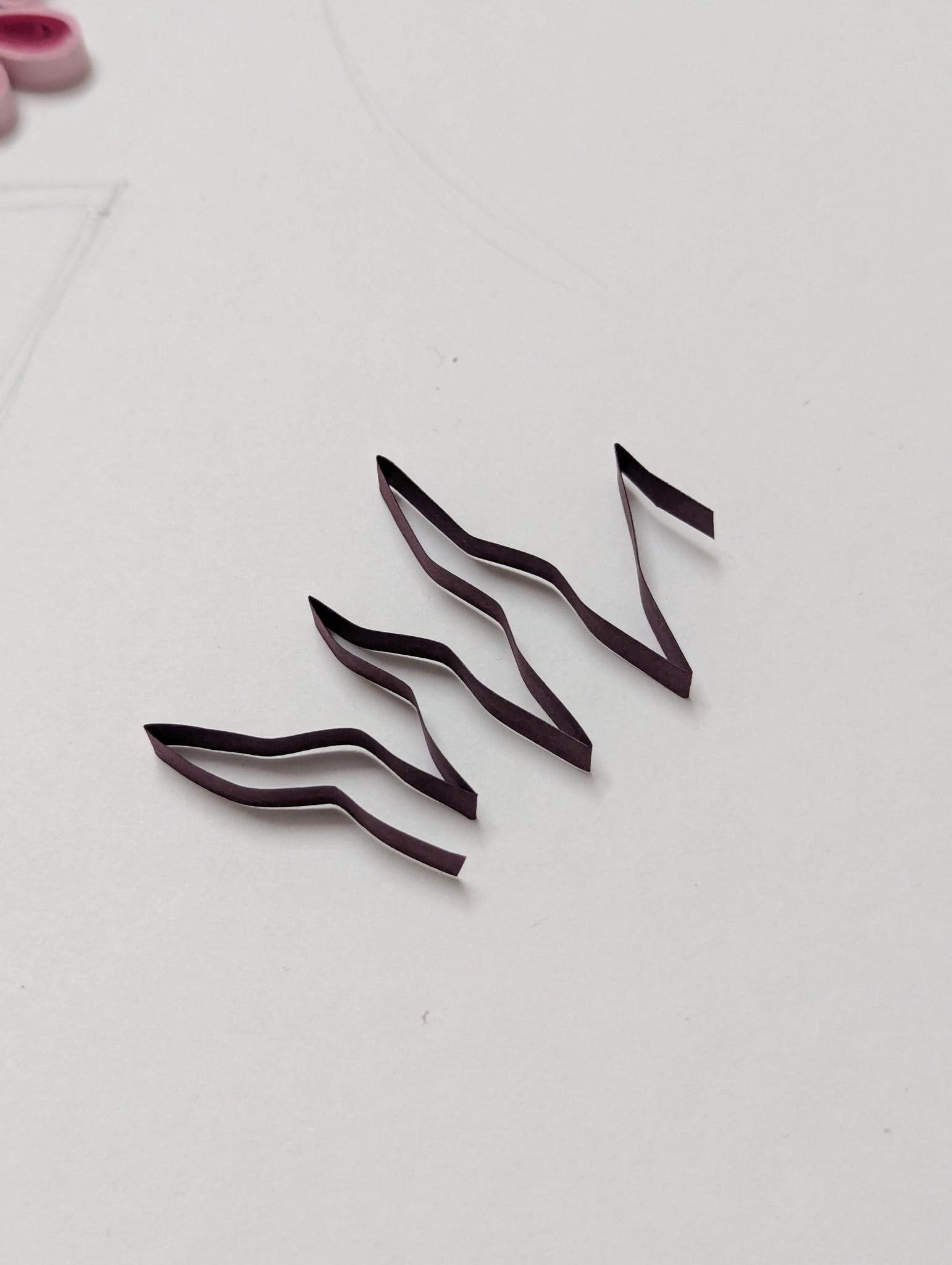

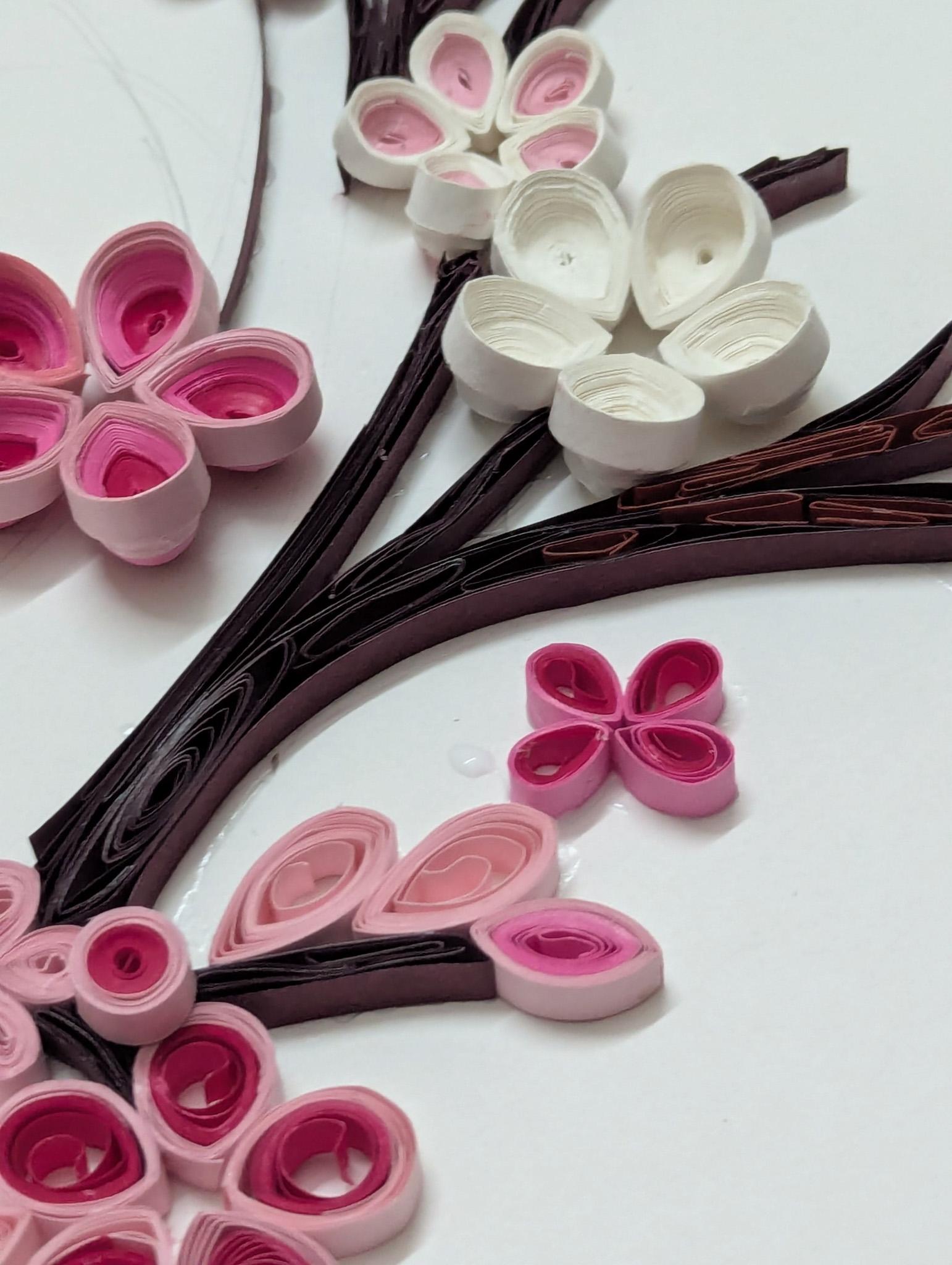
This step creates the "skeleton" that holds the flowers together.
On-Edge Technique - Using brown strips, glue them on-edge to form the branch outlines.
- Thick Branches: Use darker brown strips near the bottom right.
- Thin Branches: Use lighter brown strips toward the tips of the wreath.
The Fill - Once the outlines are dry, take strips and fold them in a random zig-zag manner. Fit these inside the branch outlines to create a wood-grain texture. weave the branches around the flowers you placed in the previous step.
Attaching the Accent Petals and Buds
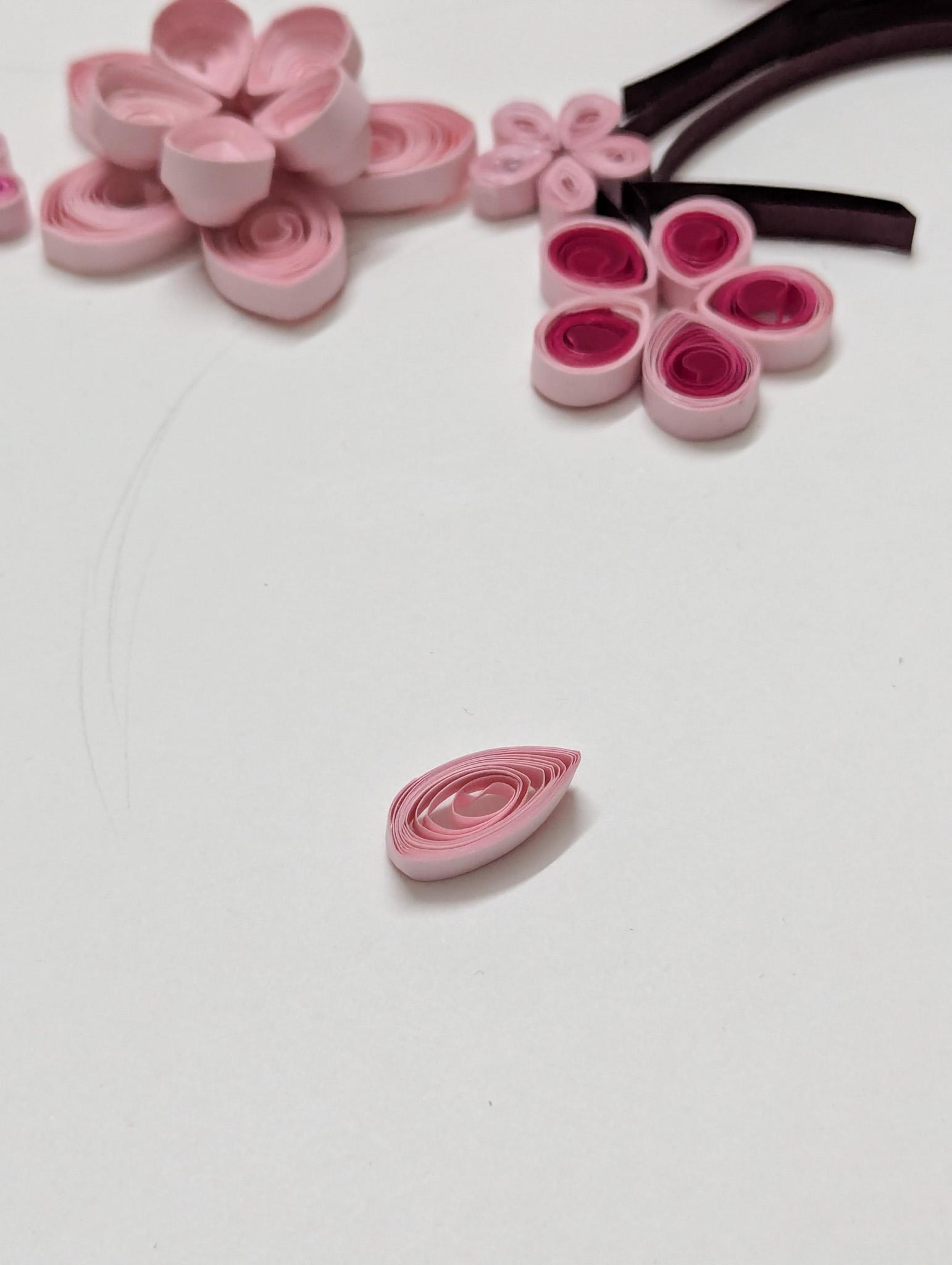
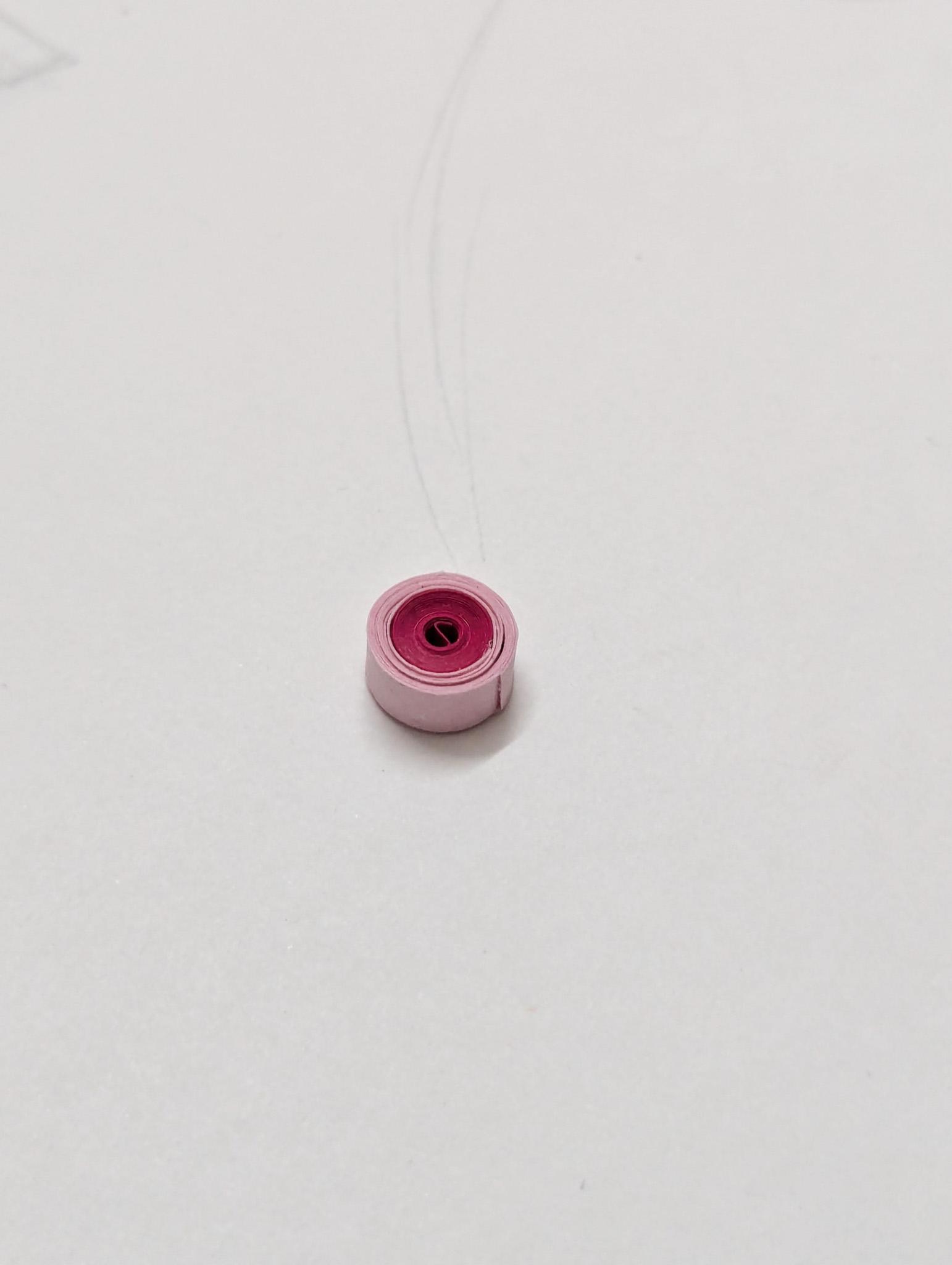
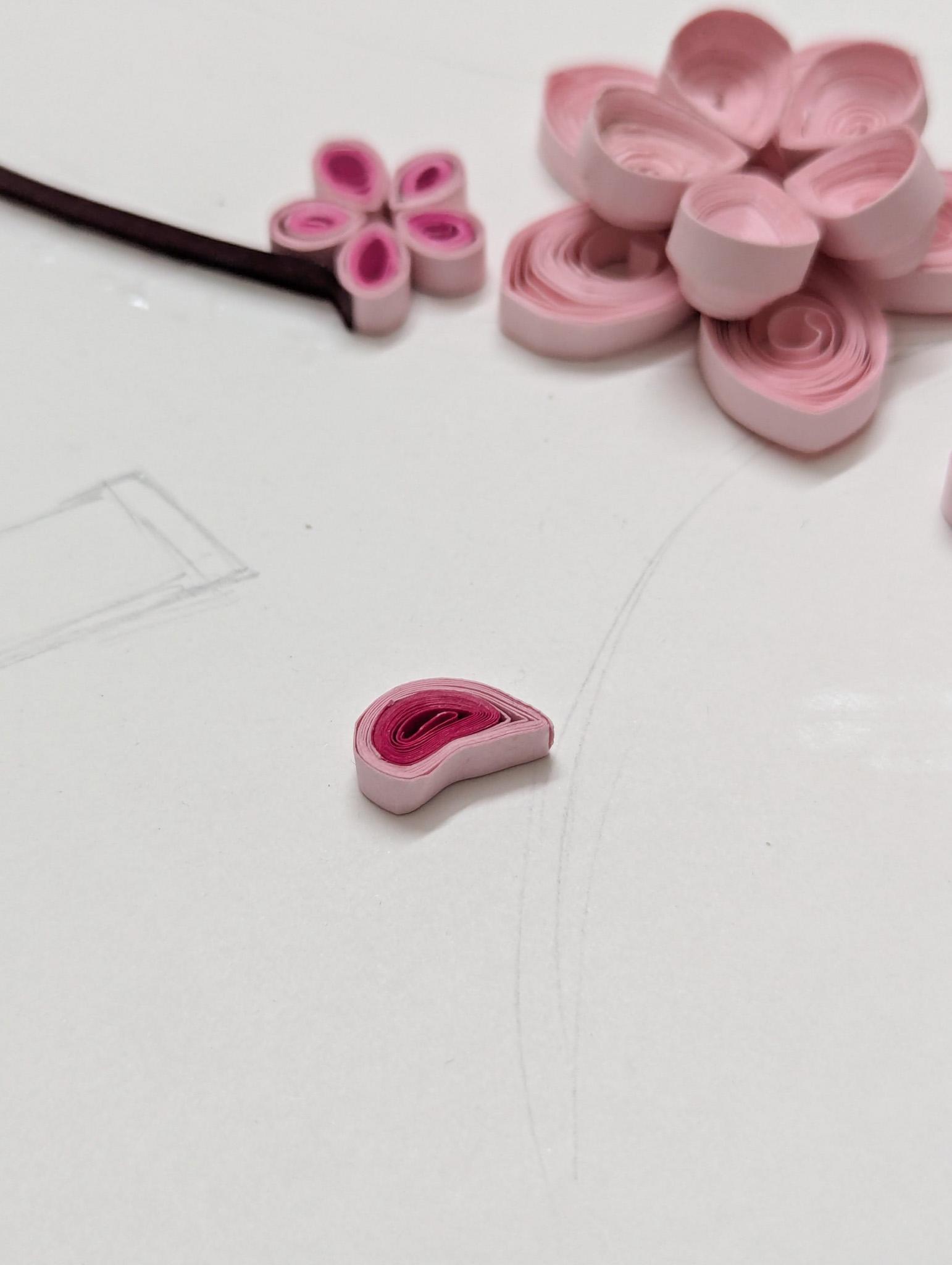

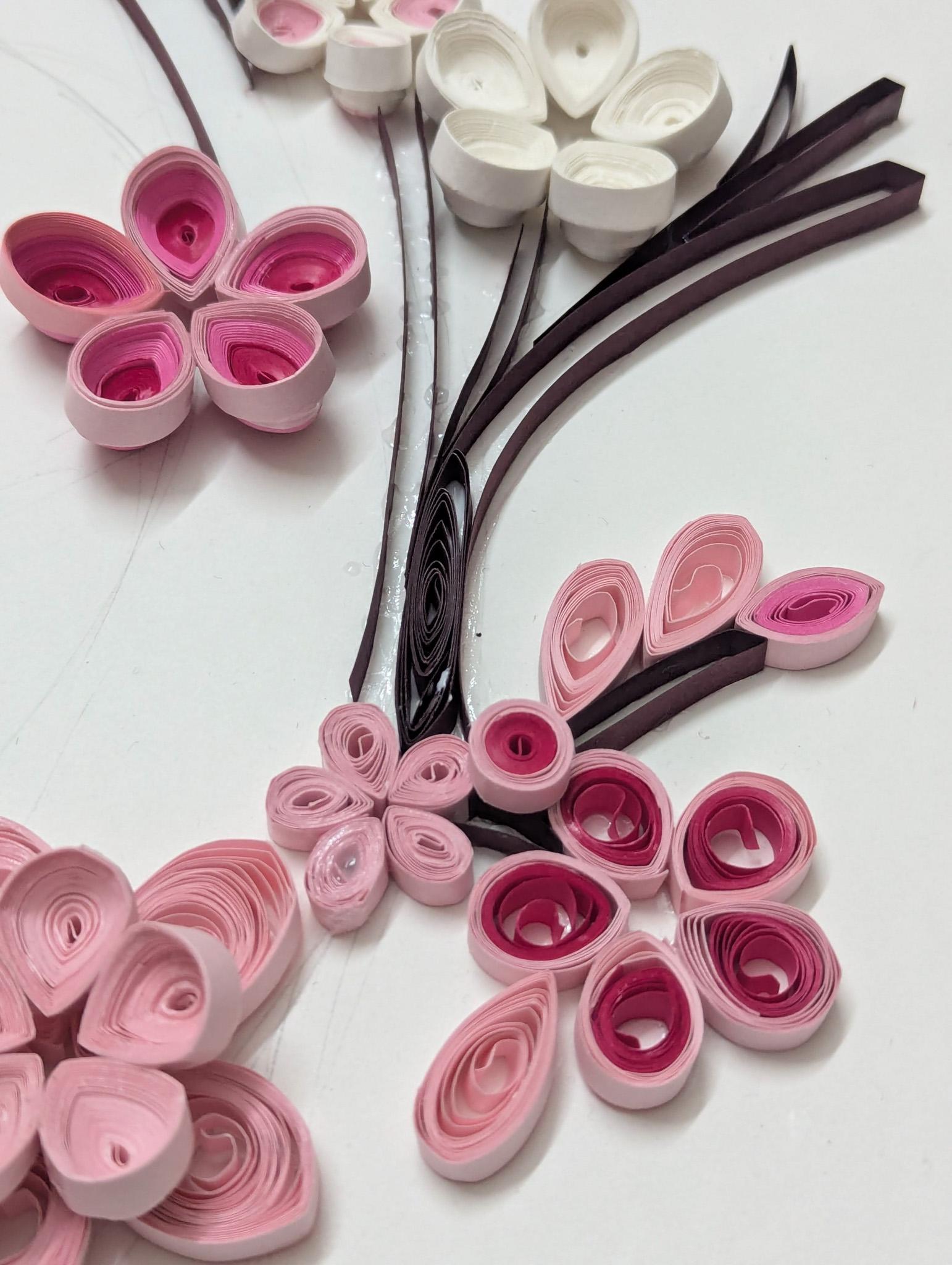

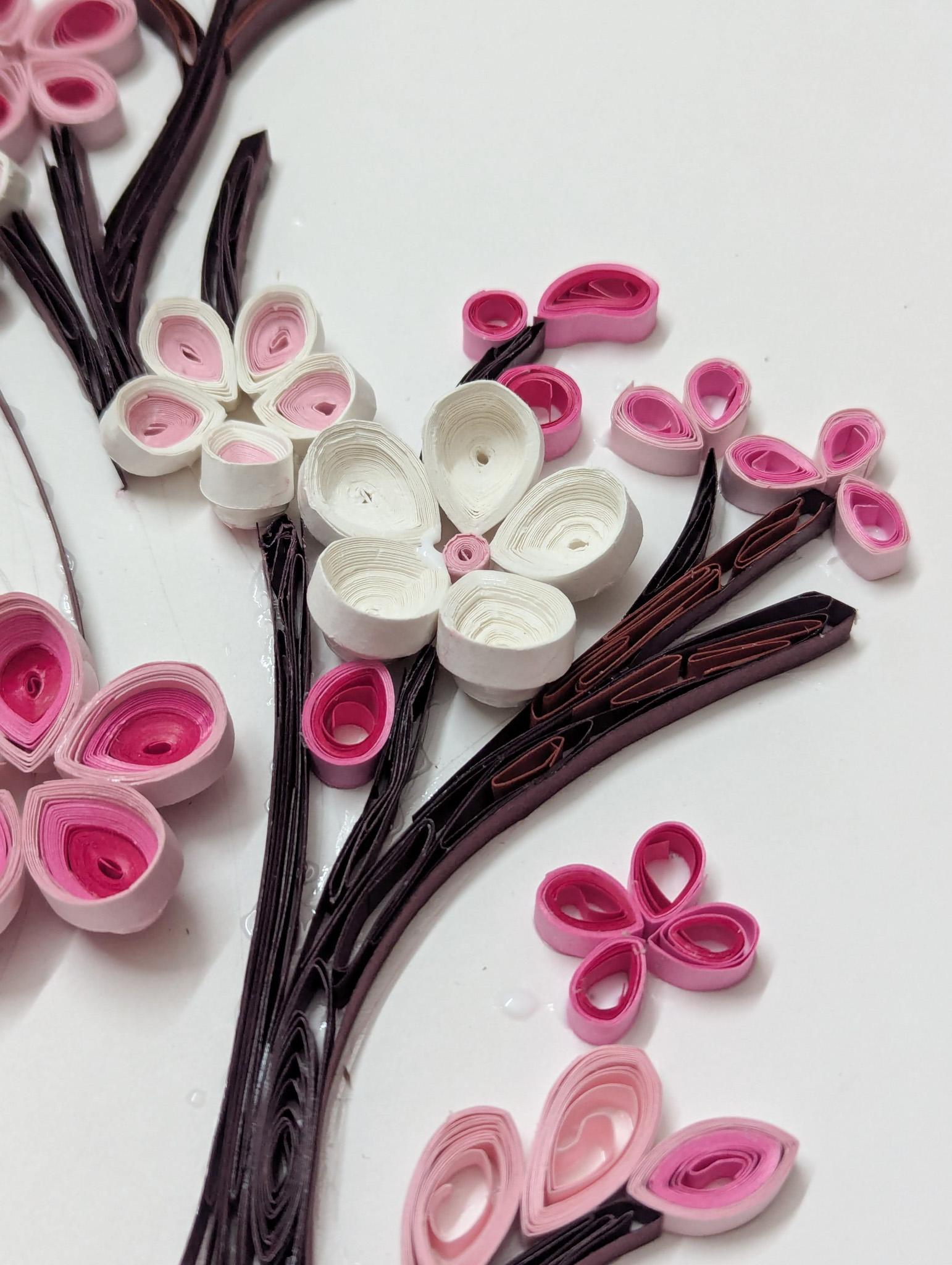
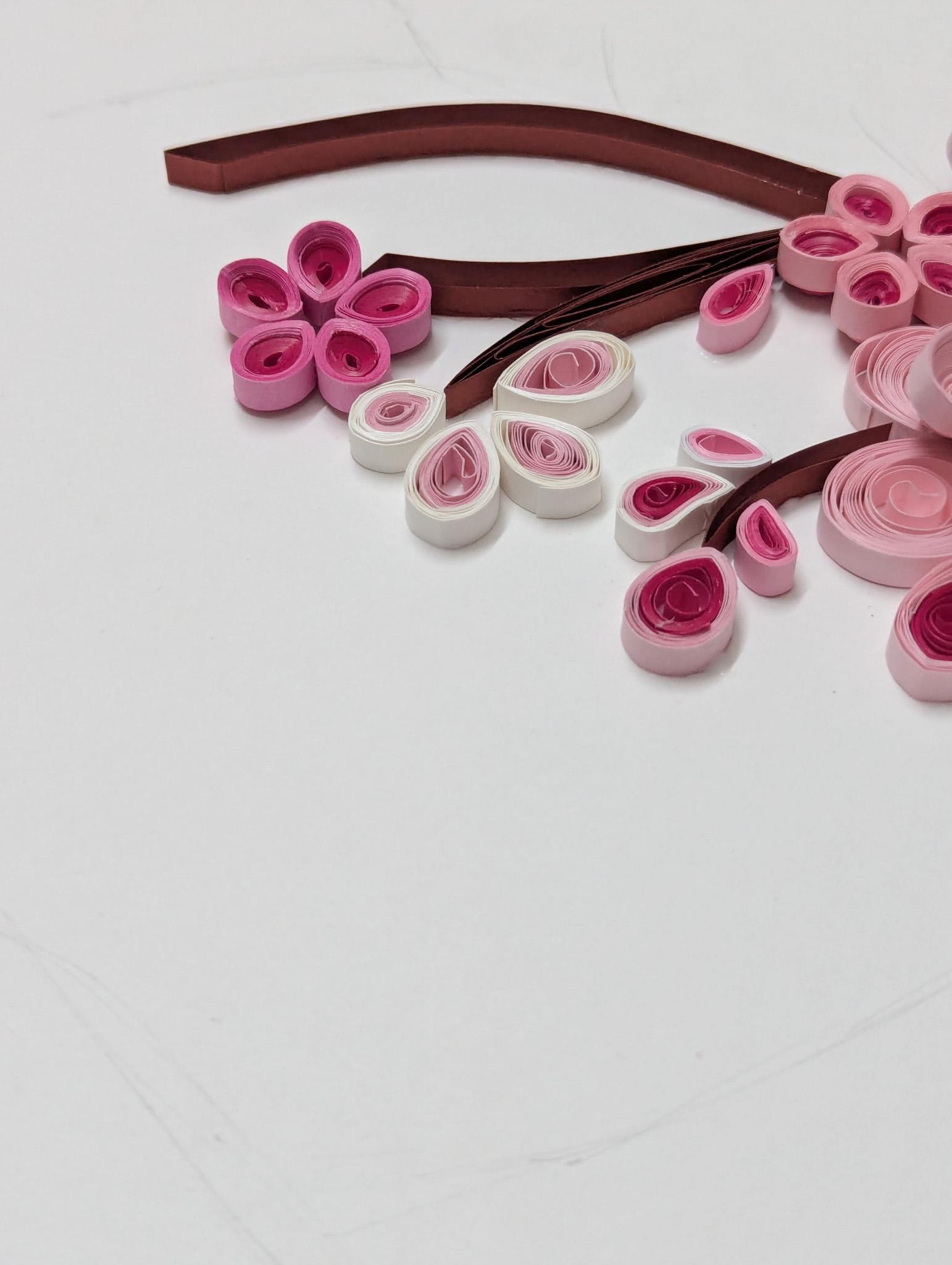
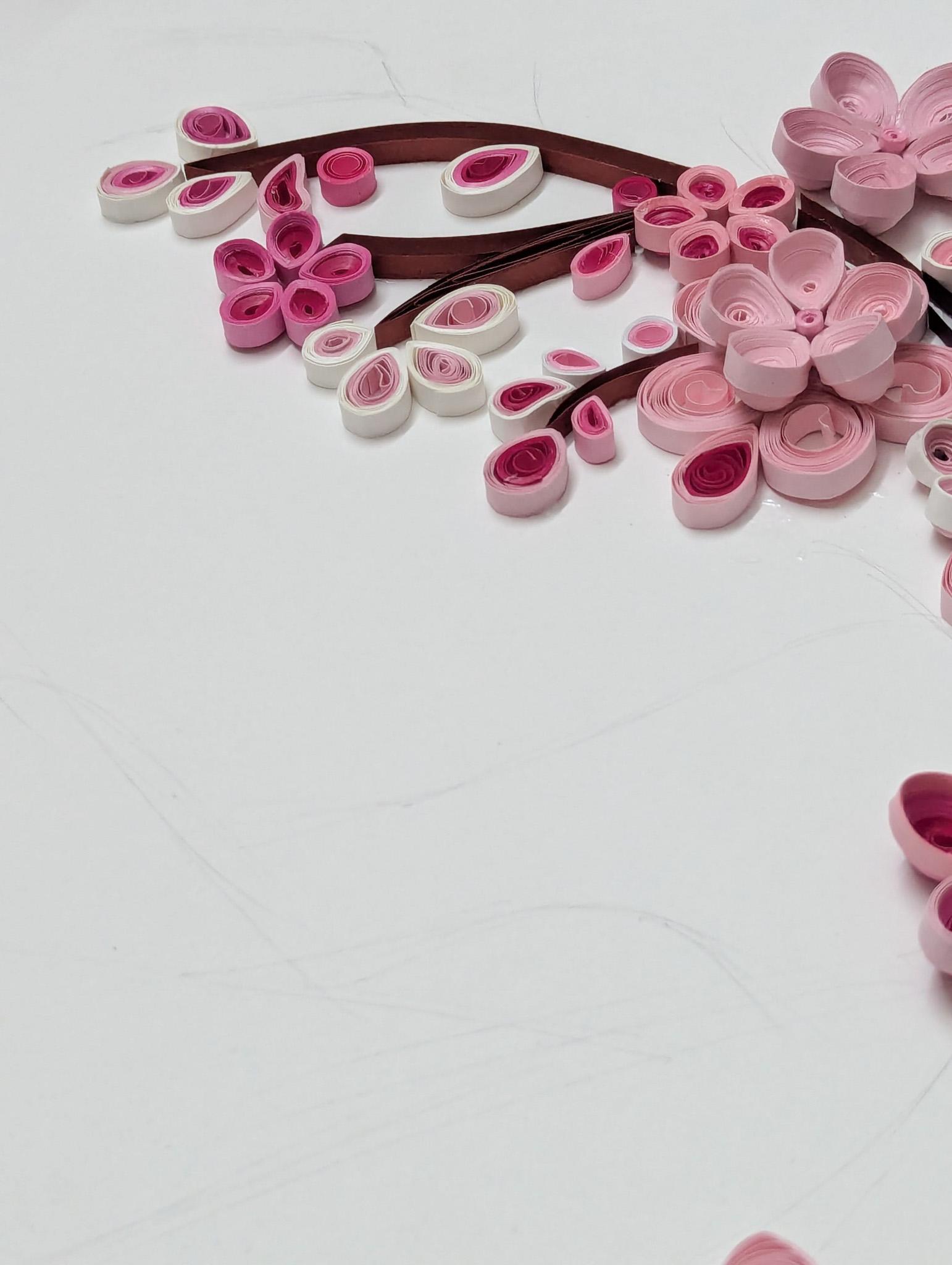

The Integration - Use the tiny white accent flowers and small buds created earlier and start gluing them around the existing structure of flowers and branches.
The Effect - These accents work great to add more density overall. They introduce a necessary diversity to the scene, ensuring the wreath mimics the organic complexity of the real world rather than looking like a rigid pattern.
Adding in the Snowy Mountains and Sand

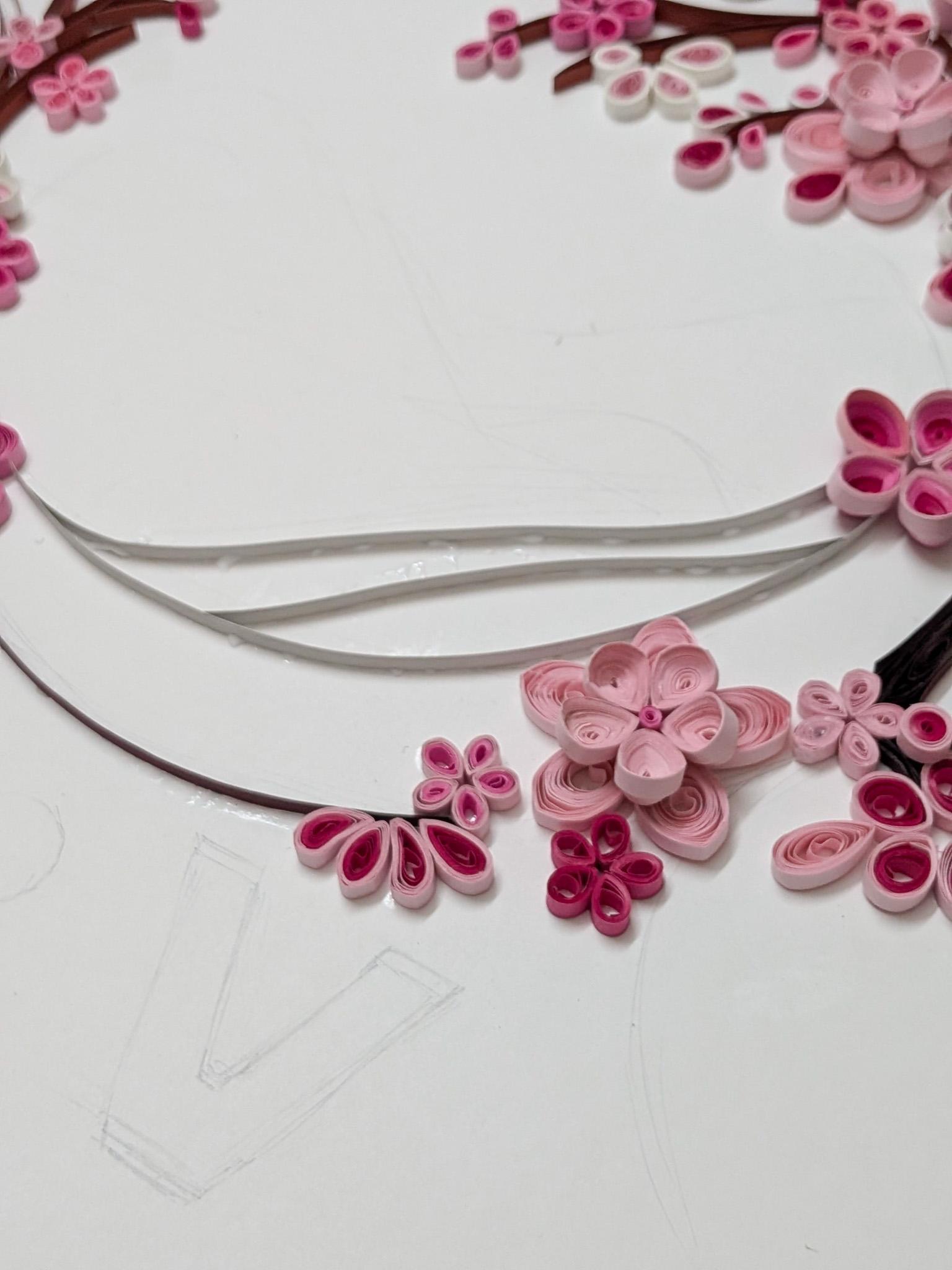


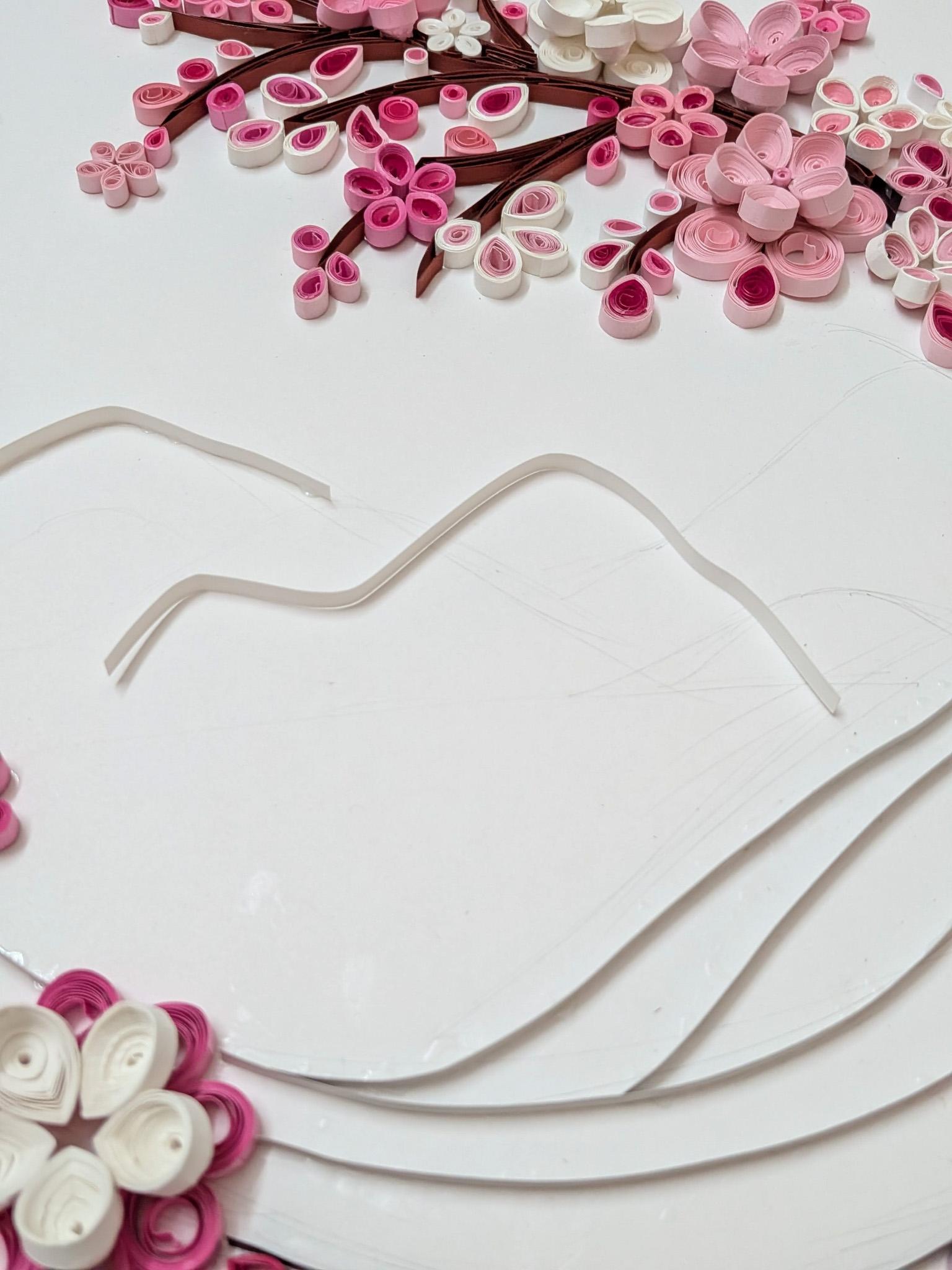
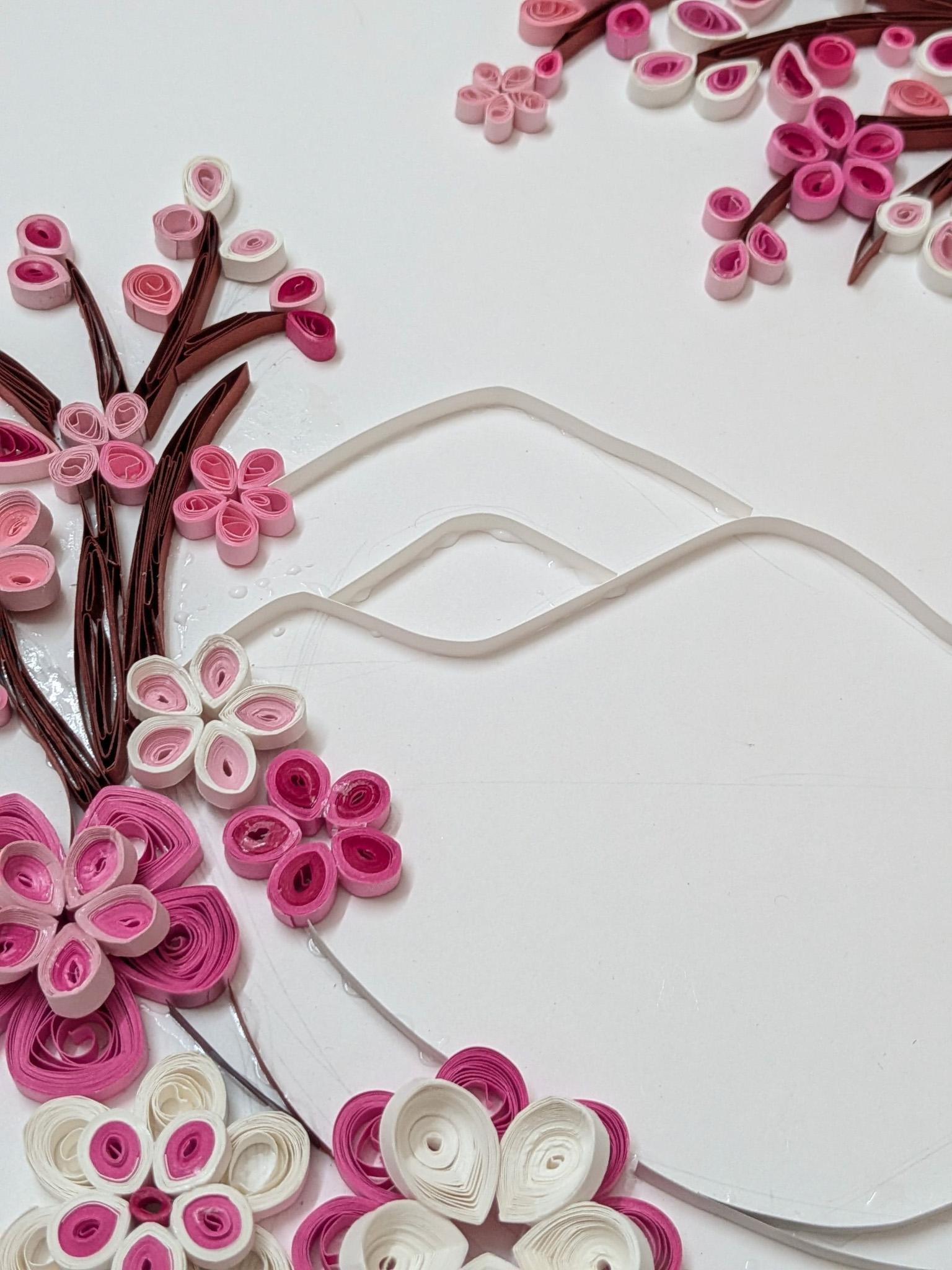
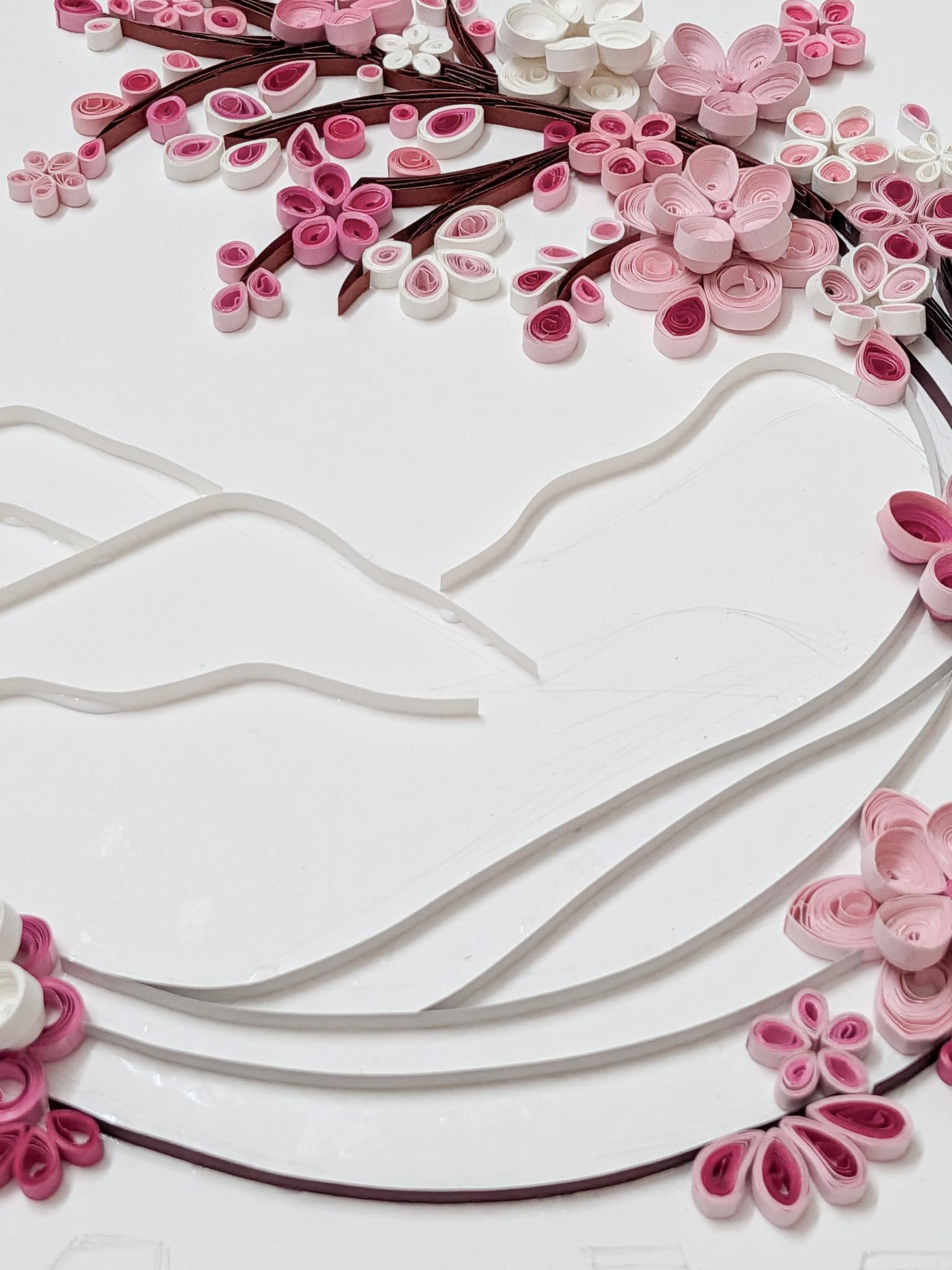
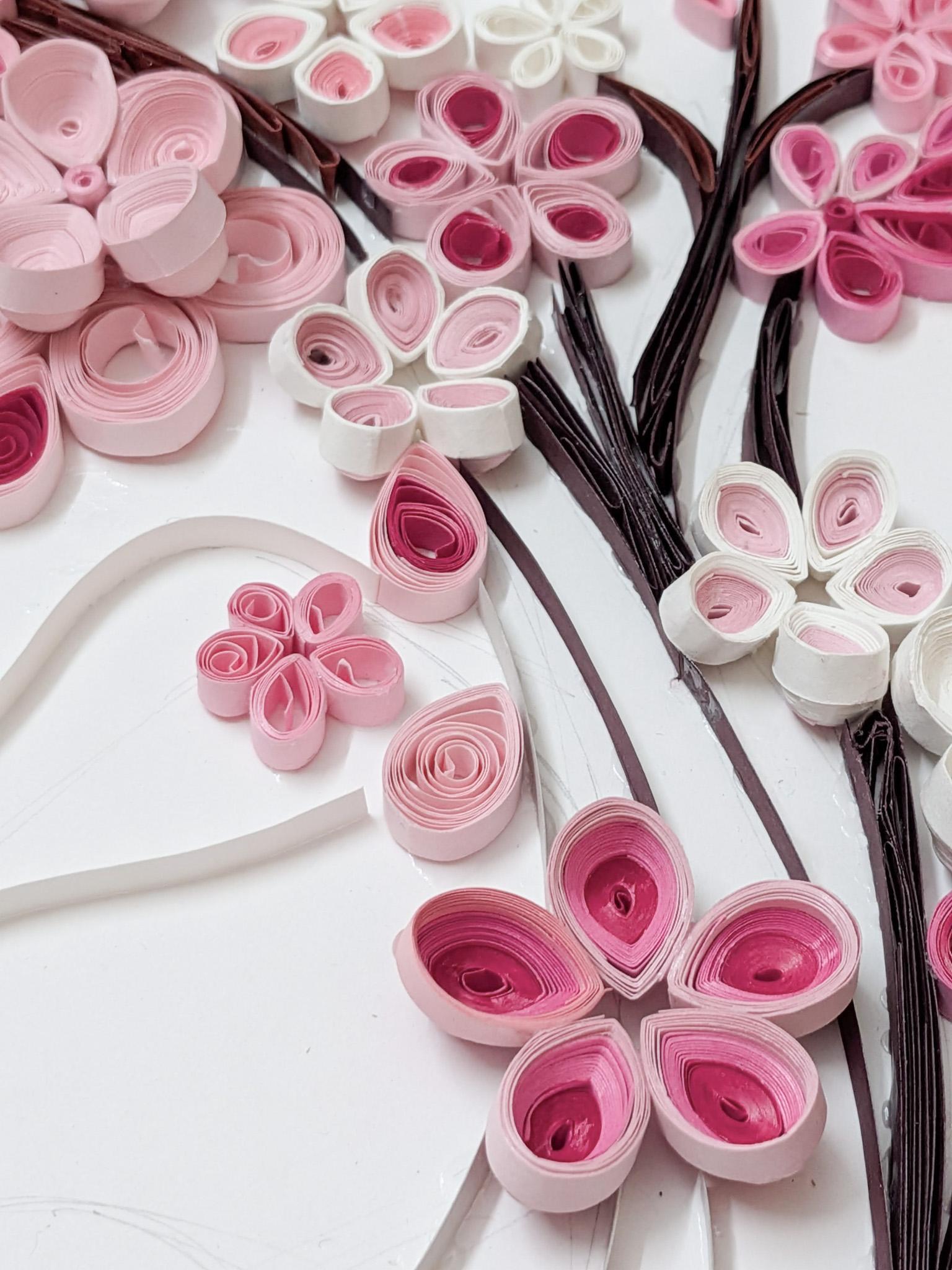
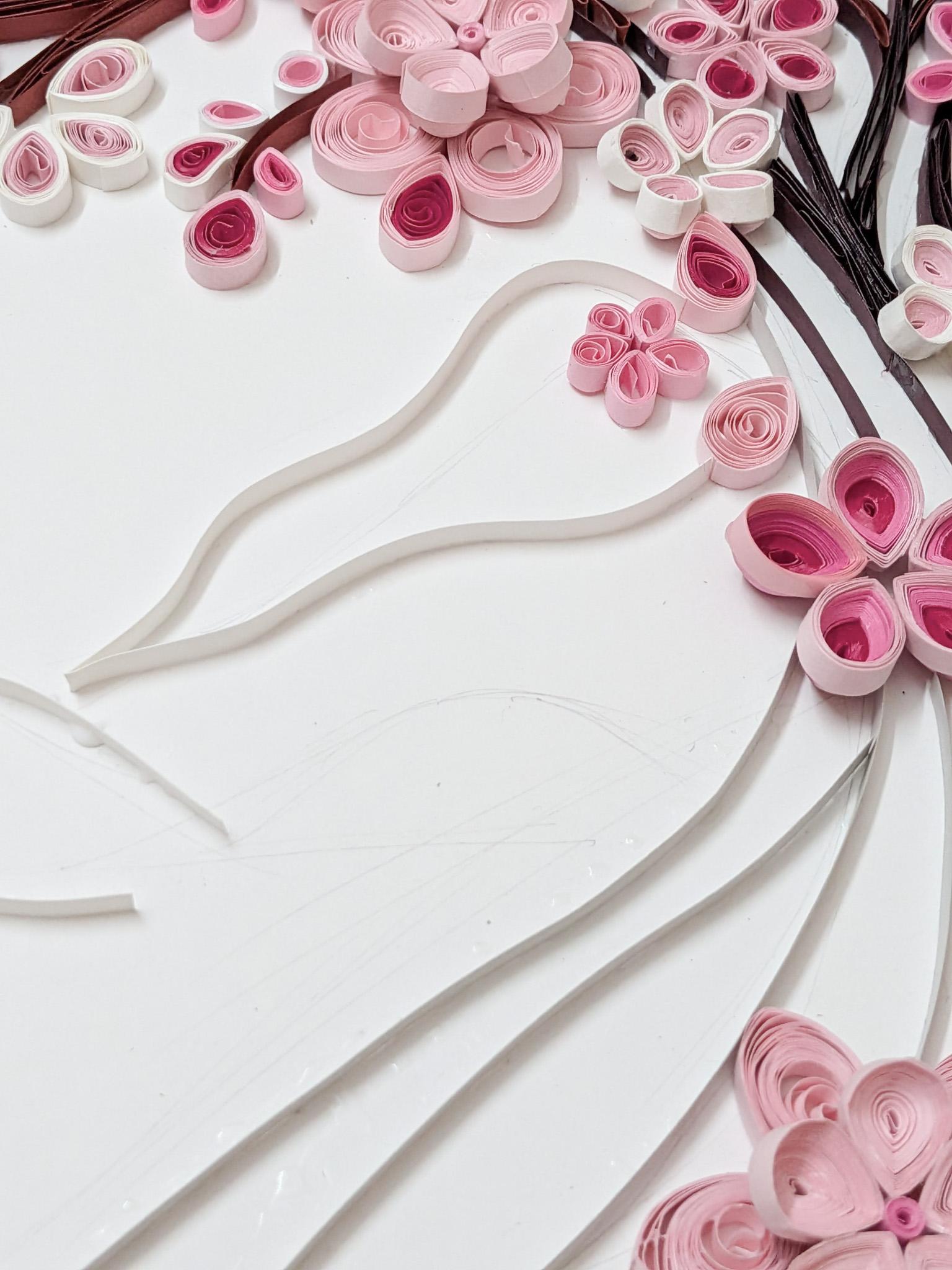
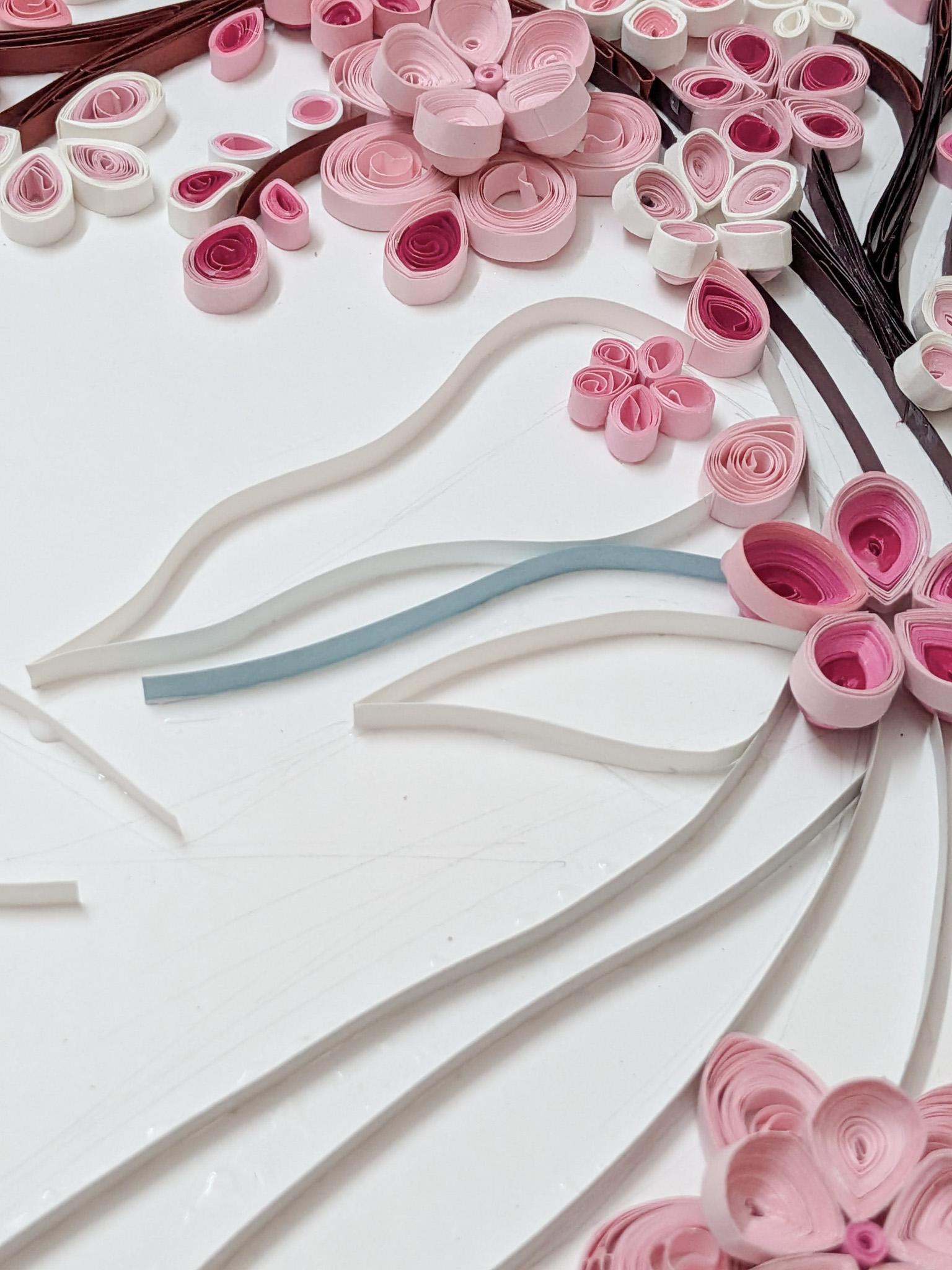


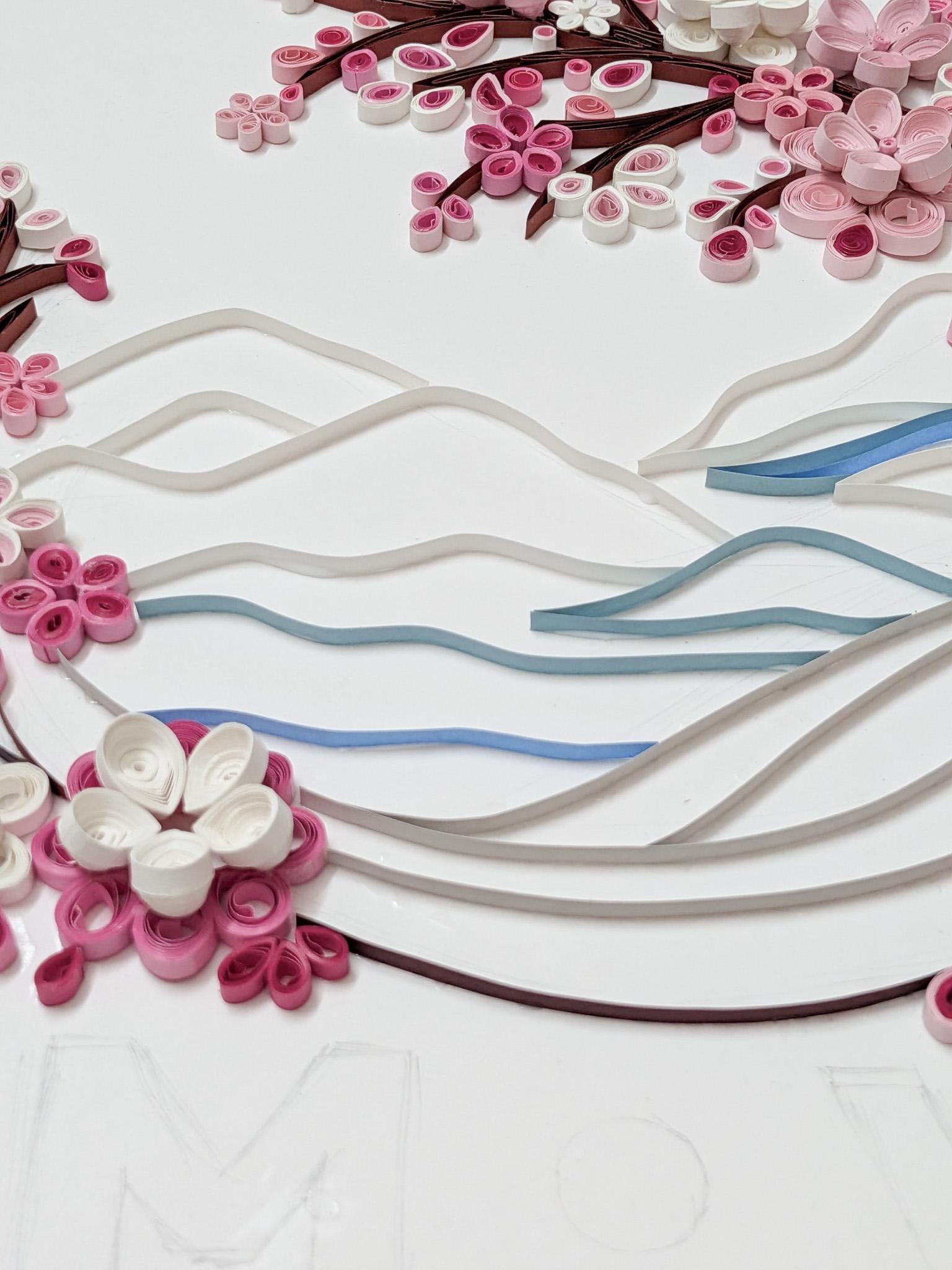
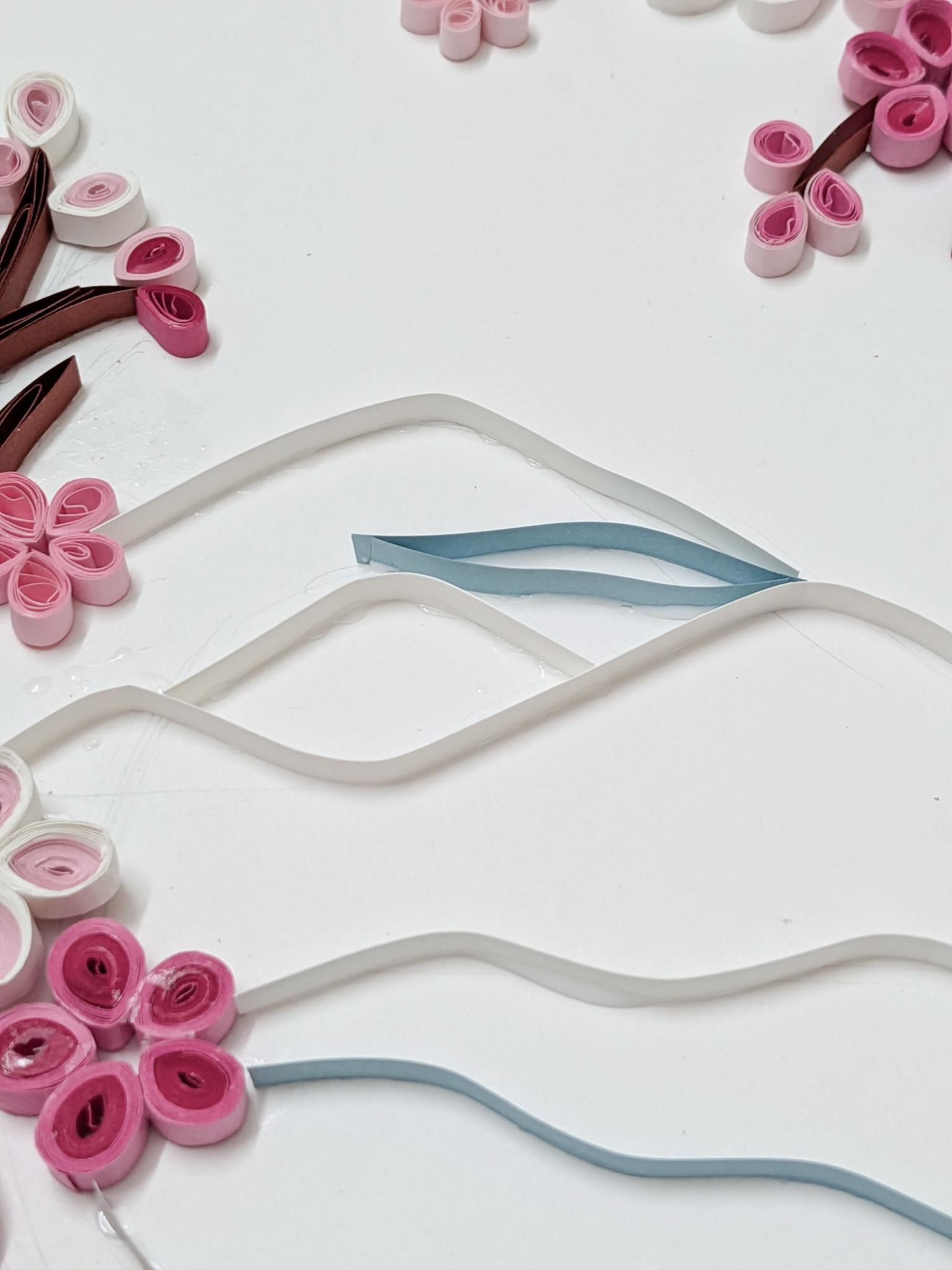
The Foundation - In the center of the wreath, begin by establishing the ground. Use shades of gray to glue in the outlines for the sand.
The Peaks - Take your white strips and glue them on-edge to follow the mountain peaks mapped out in your initial sketch. The sharp, vertical lines of the white paper will catch the light, perfectly mimicking the texture of snowy ridges on Mount Fuji.
The Depth - To prevent the mountains from looking too flat, add light blue strips in the middle. This slight variation of color creates "shadows," adding depth and intrigue to the peaks
Forming the Flowing Water
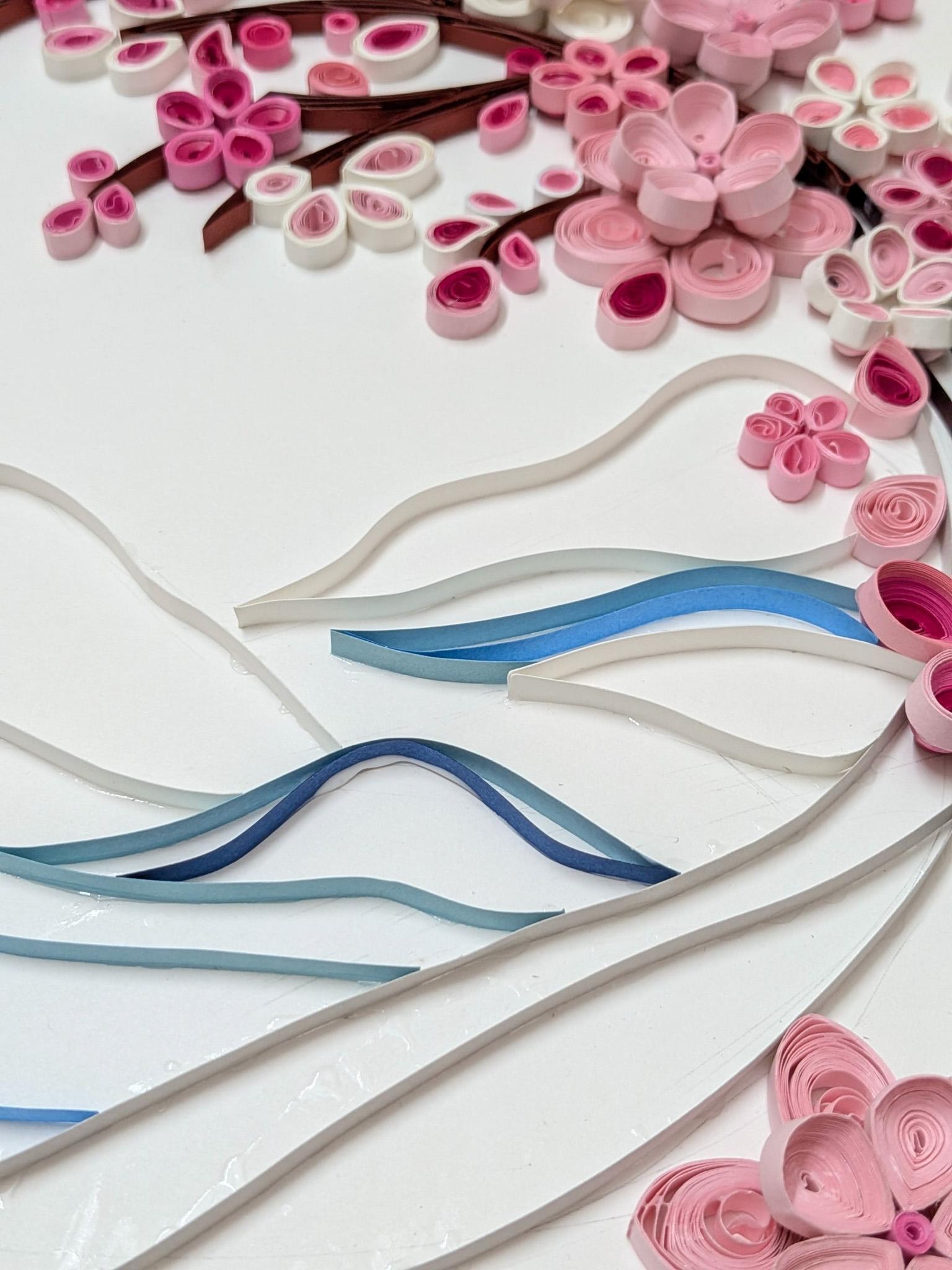
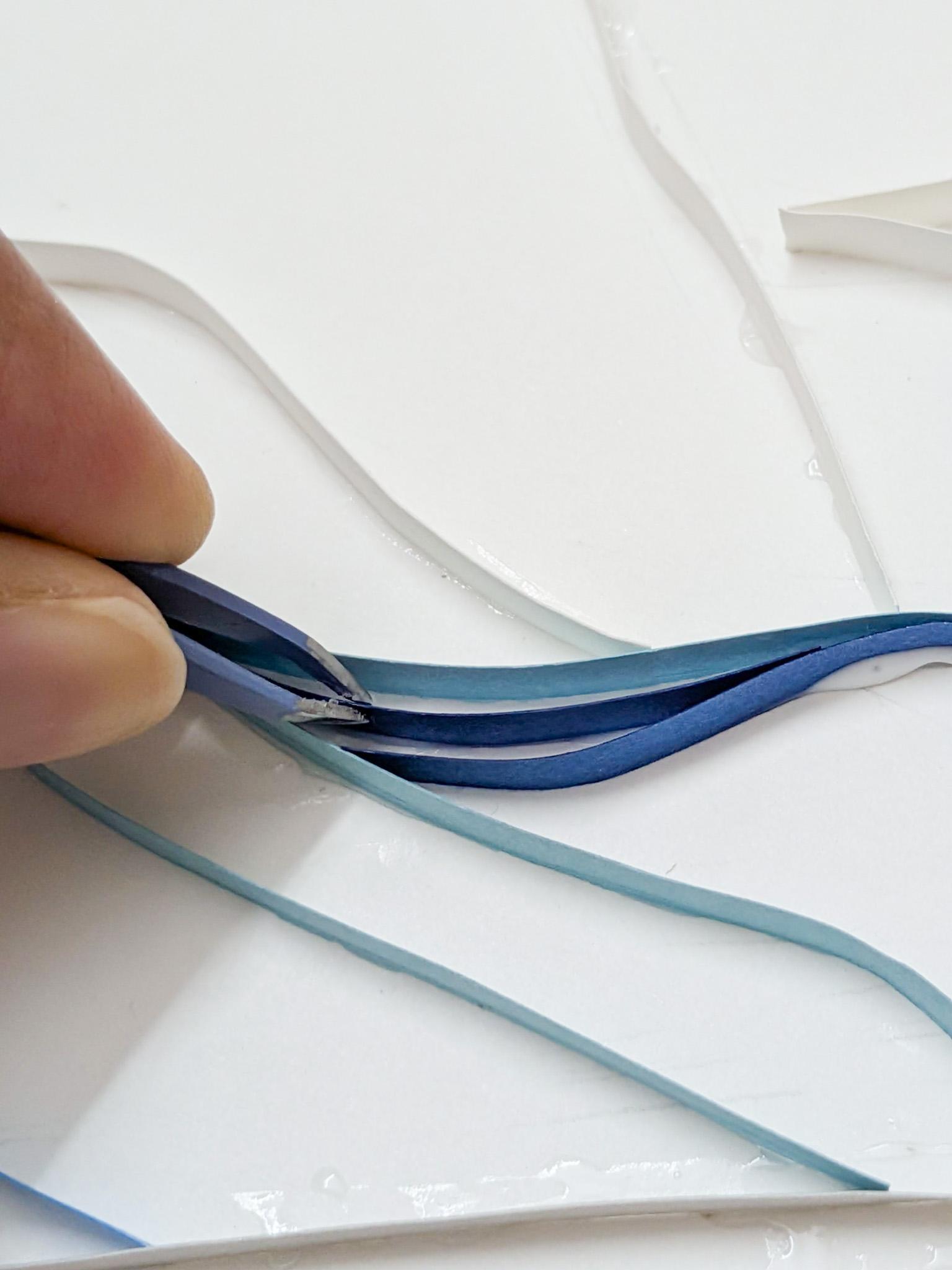
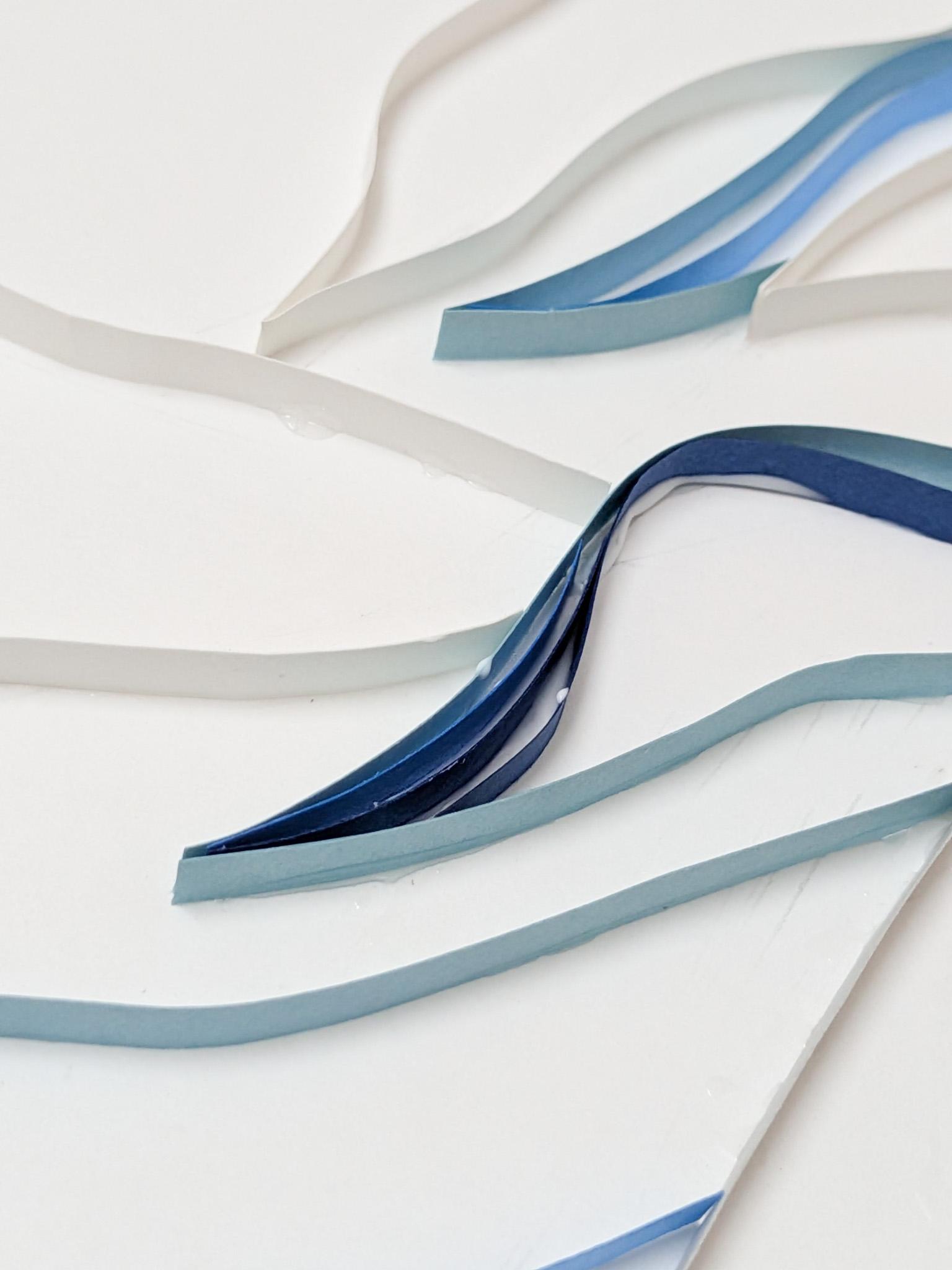
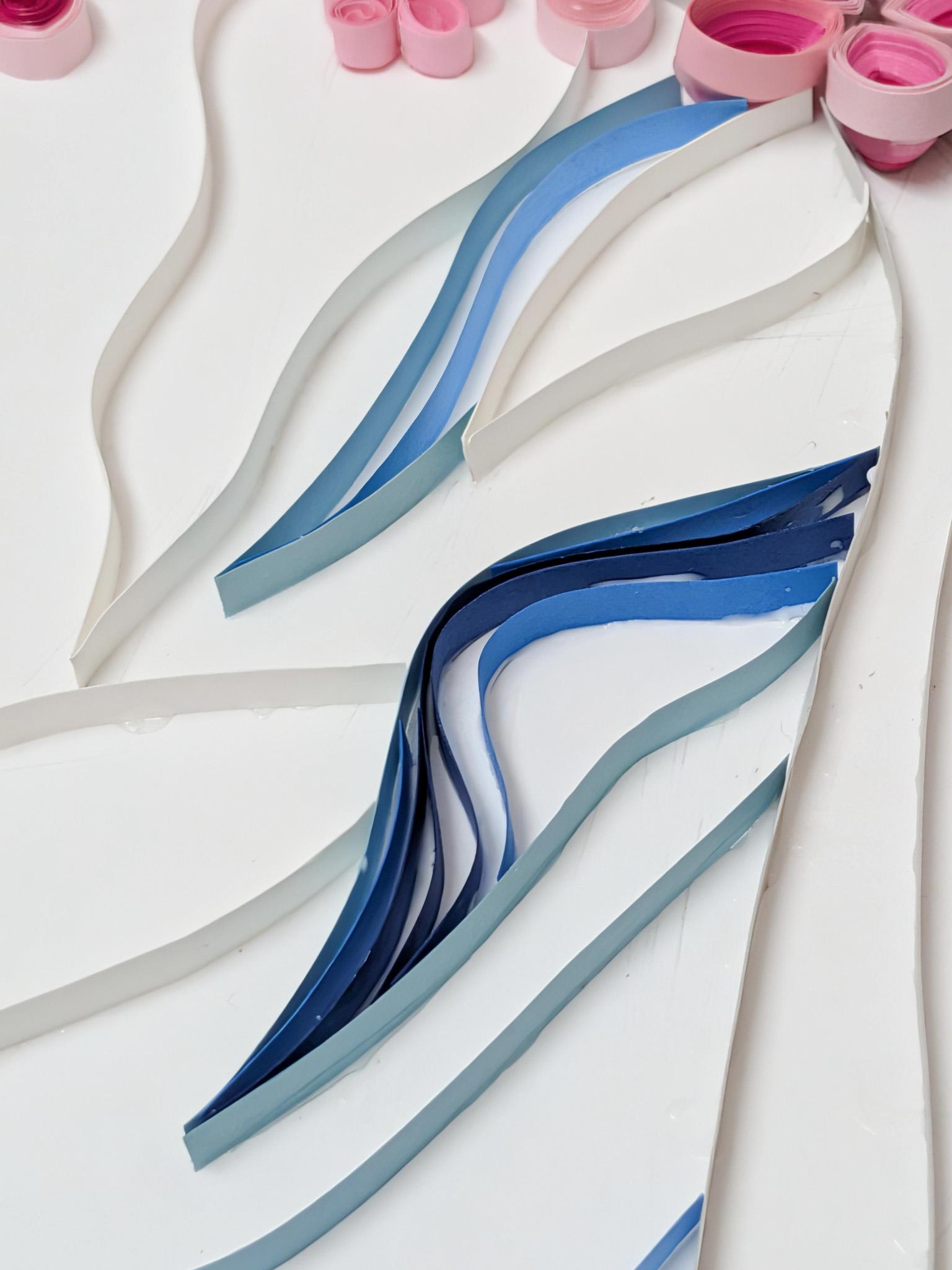
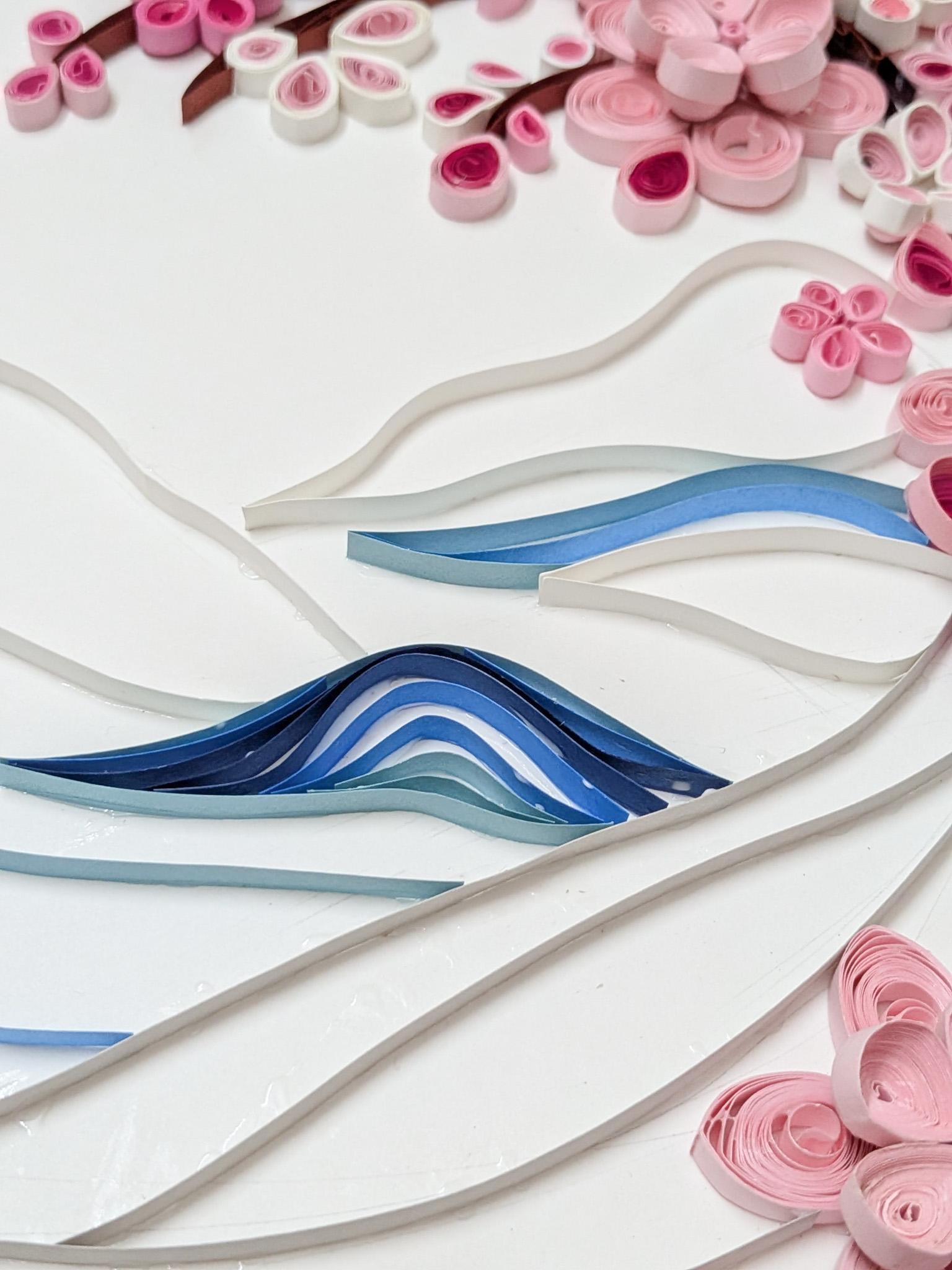
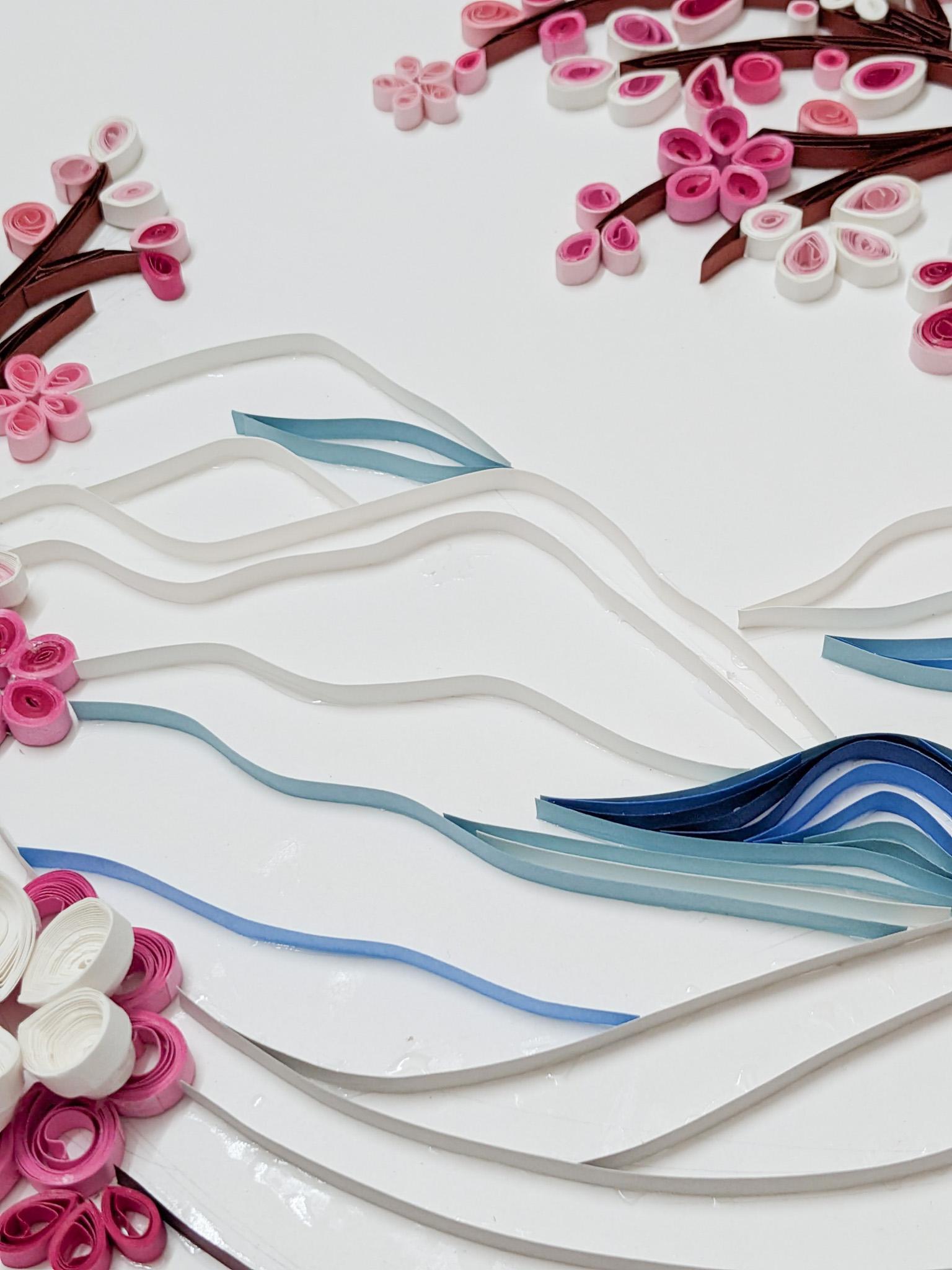

To bring life to the base of our landscape, we use horizontal layering to mimic the fluid, rhythmic motion of a river or sea.
The Flow -Directly beneath the mountains, use your blue strips to follow the wavy sketch lines. Layering different shades of blue in close proximity creates an immediate sense of depth and natural movement in the water.
The Gradient -Pay close attention to your color transitions; avoid abruptly switching from one shade to another. Aim for a gradual shift in tone—mimicking how real water changes hue depending on depth and light—to maintain a realistic and soothing viewpoint
Filling in the Mountains and Water


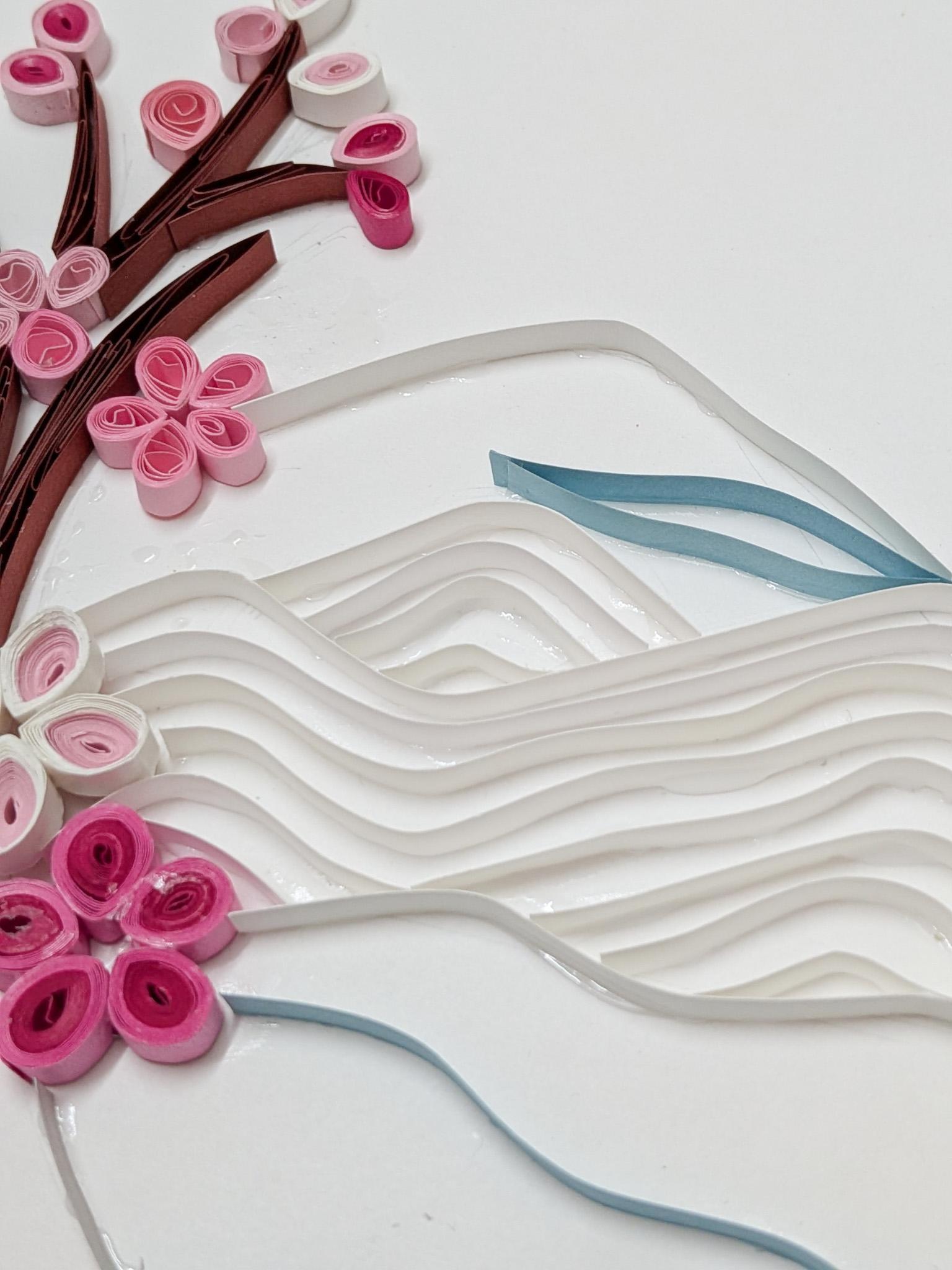

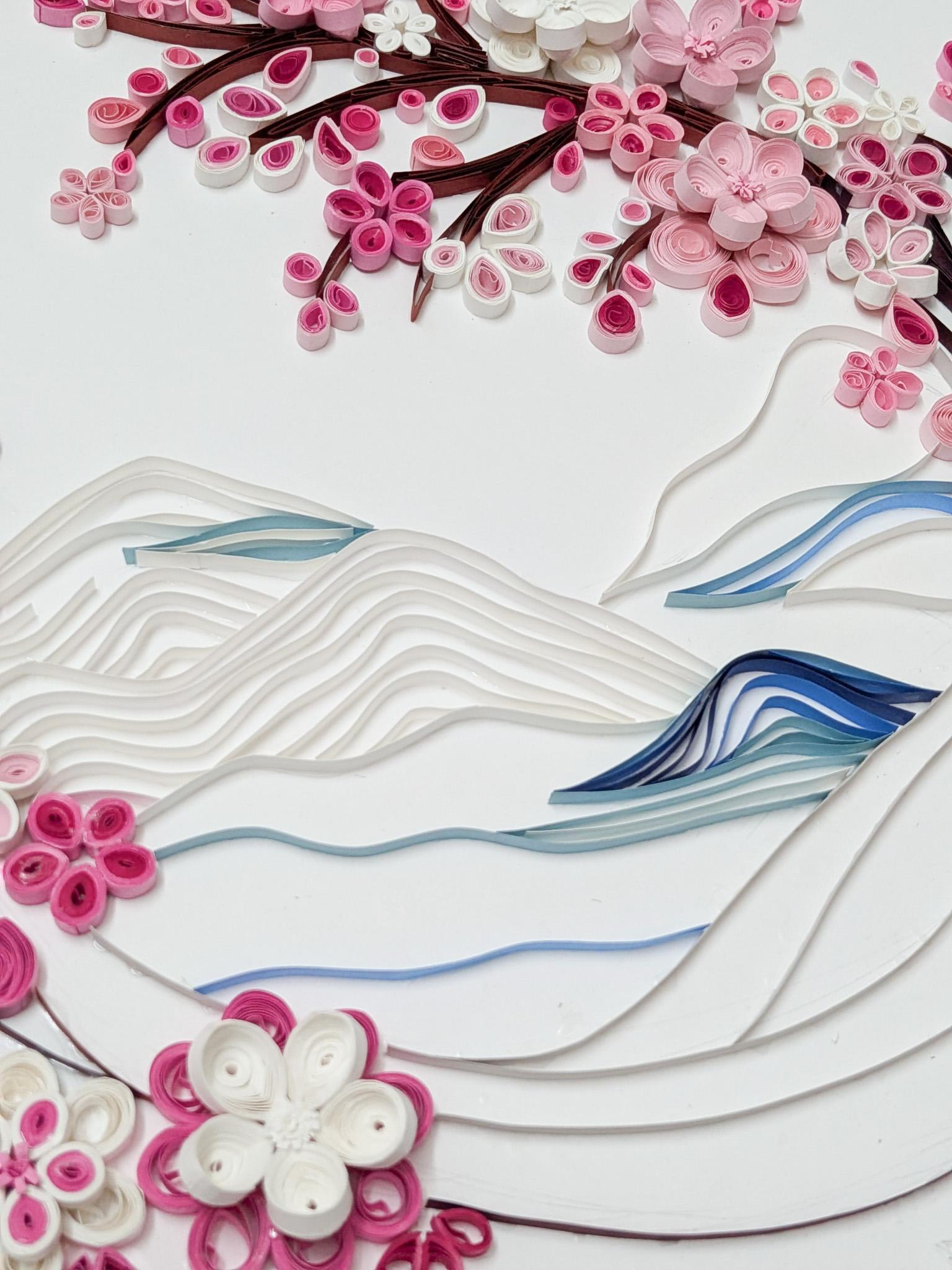
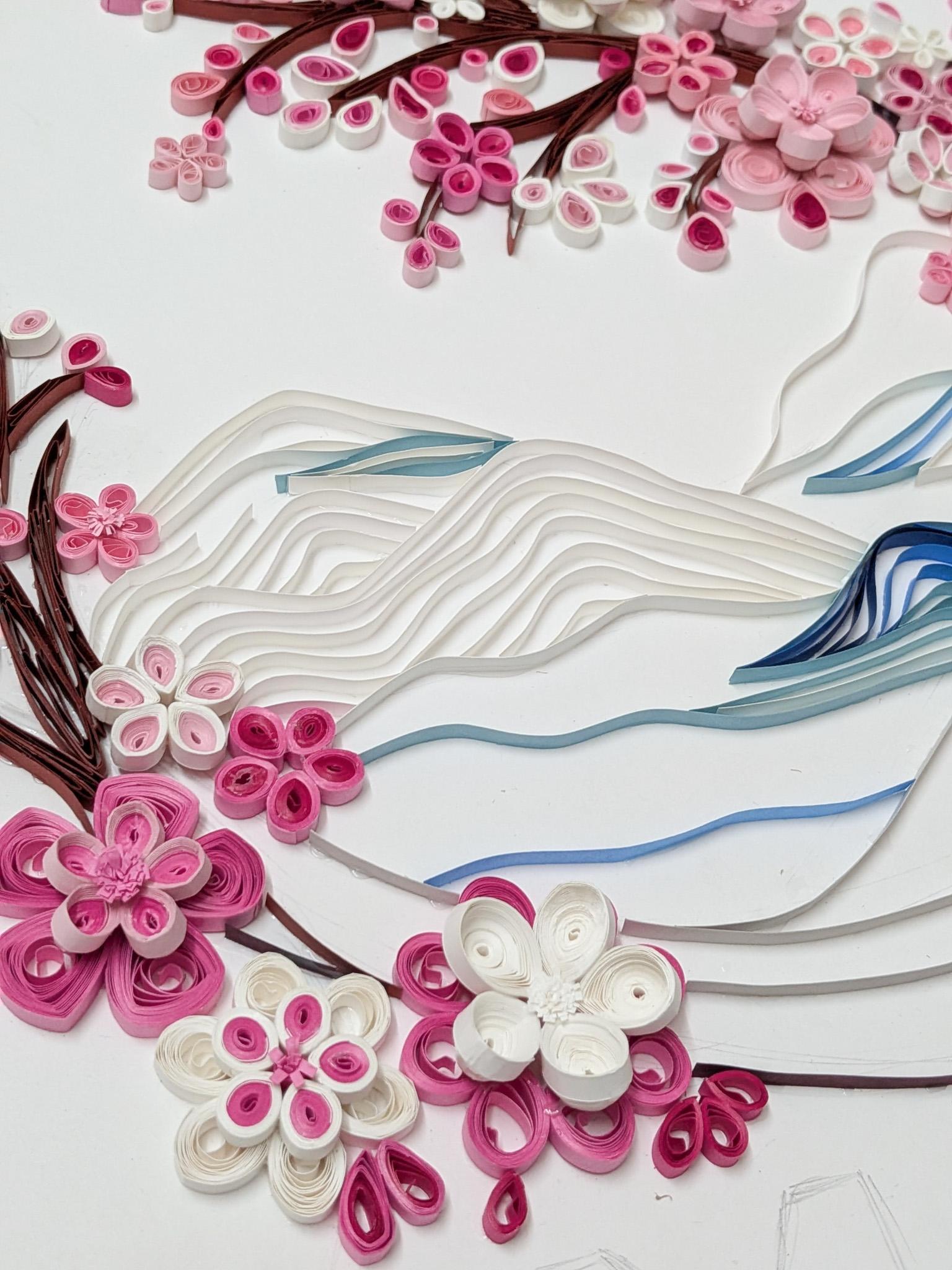
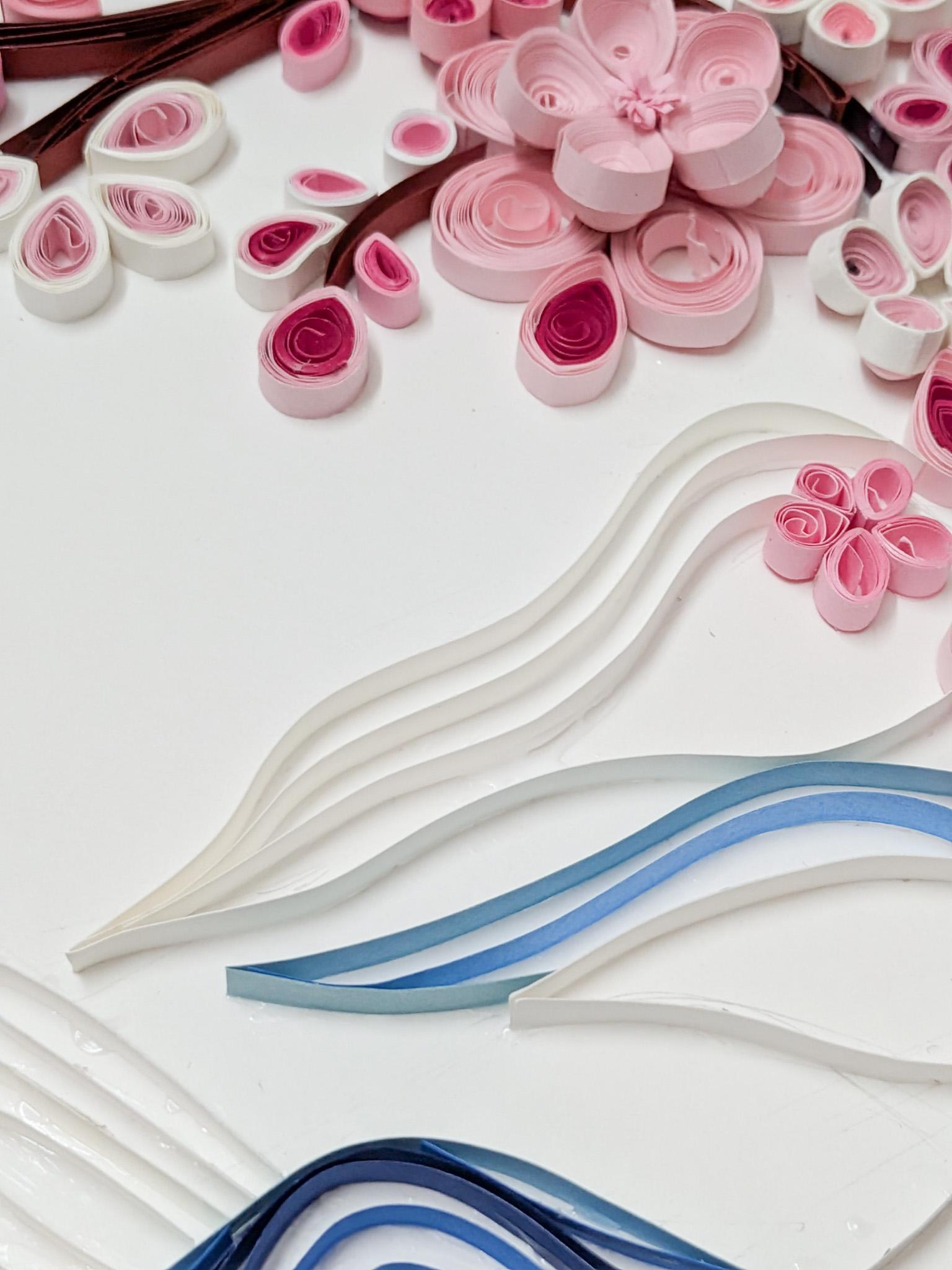
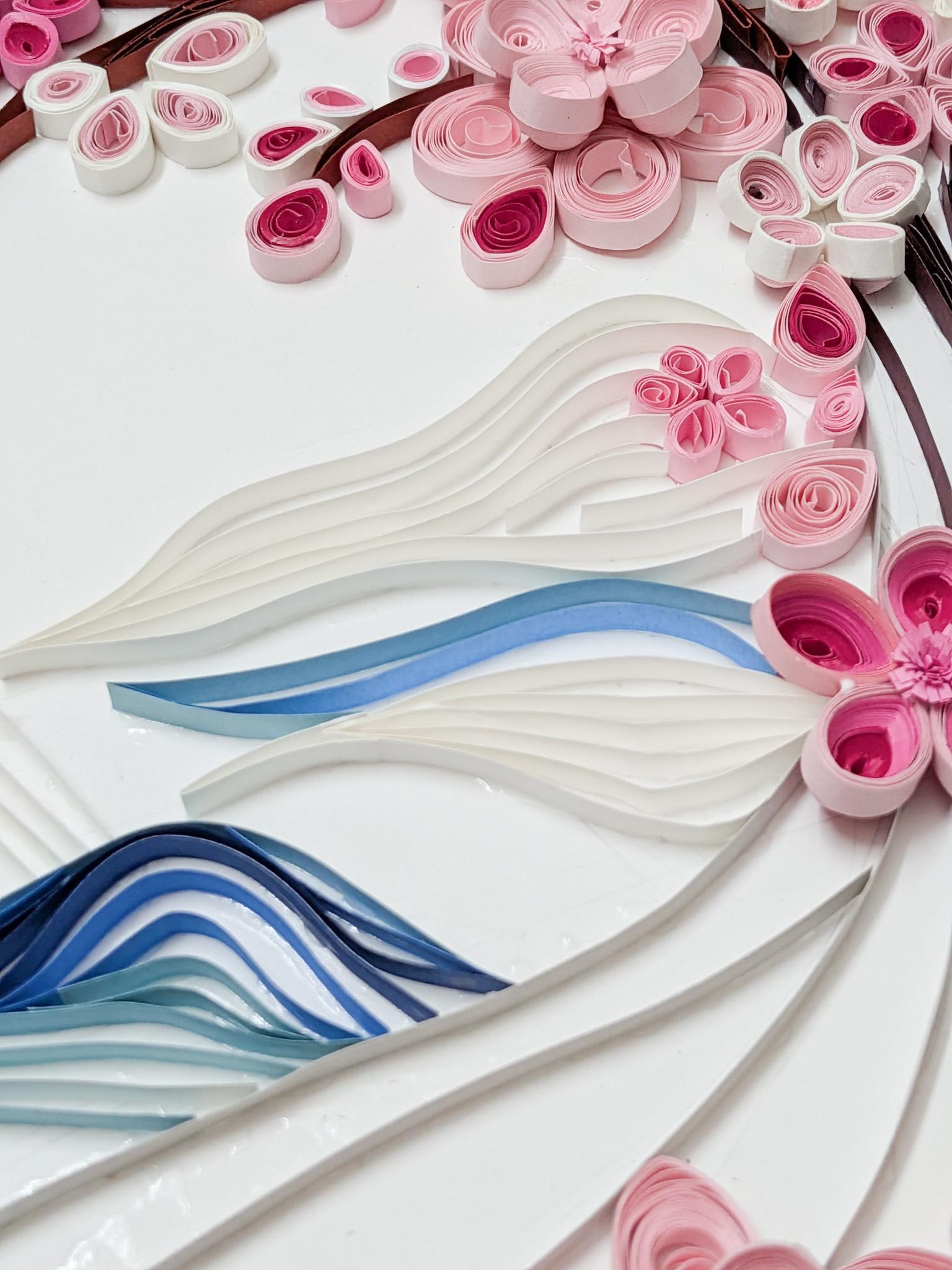
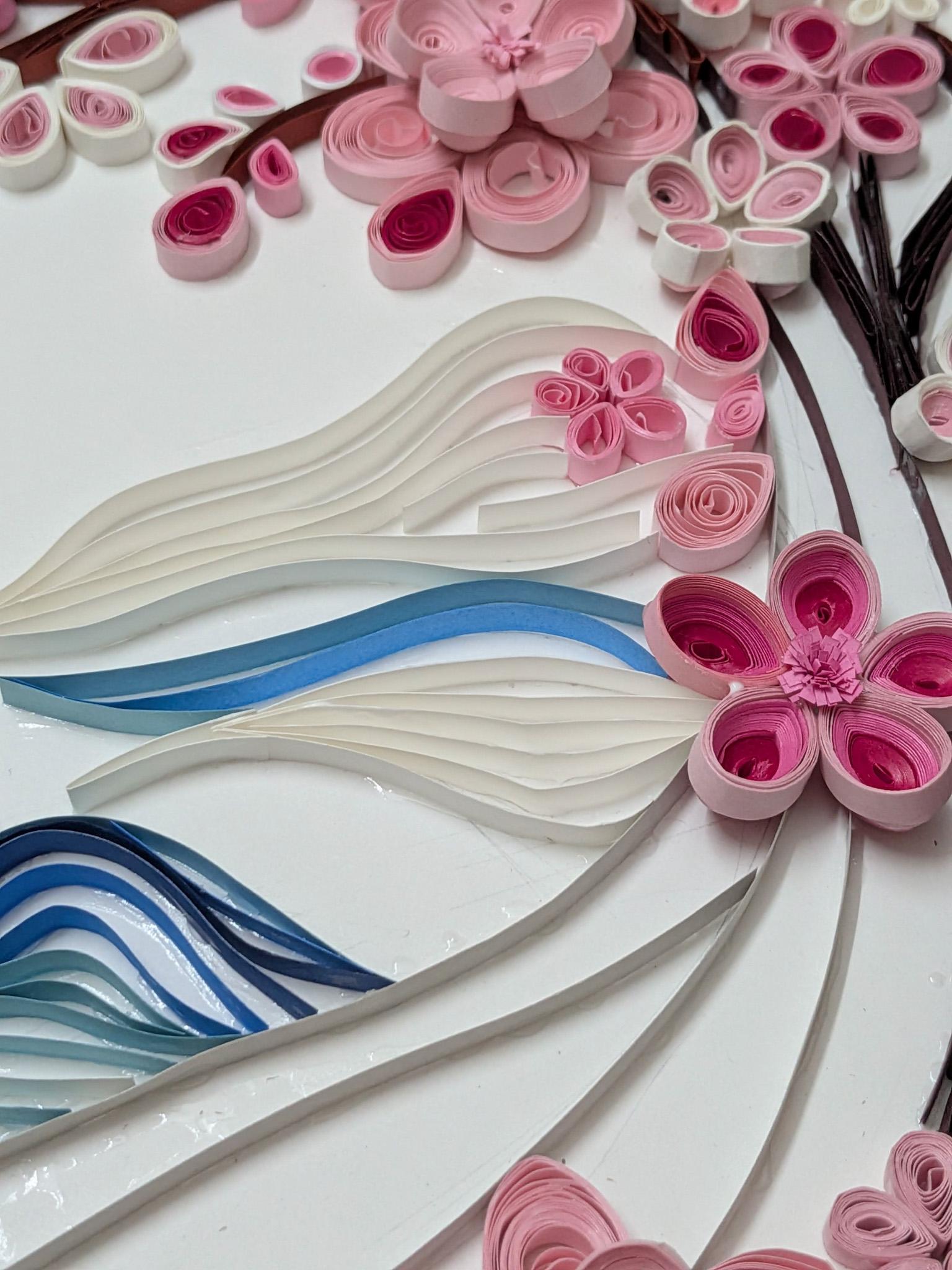

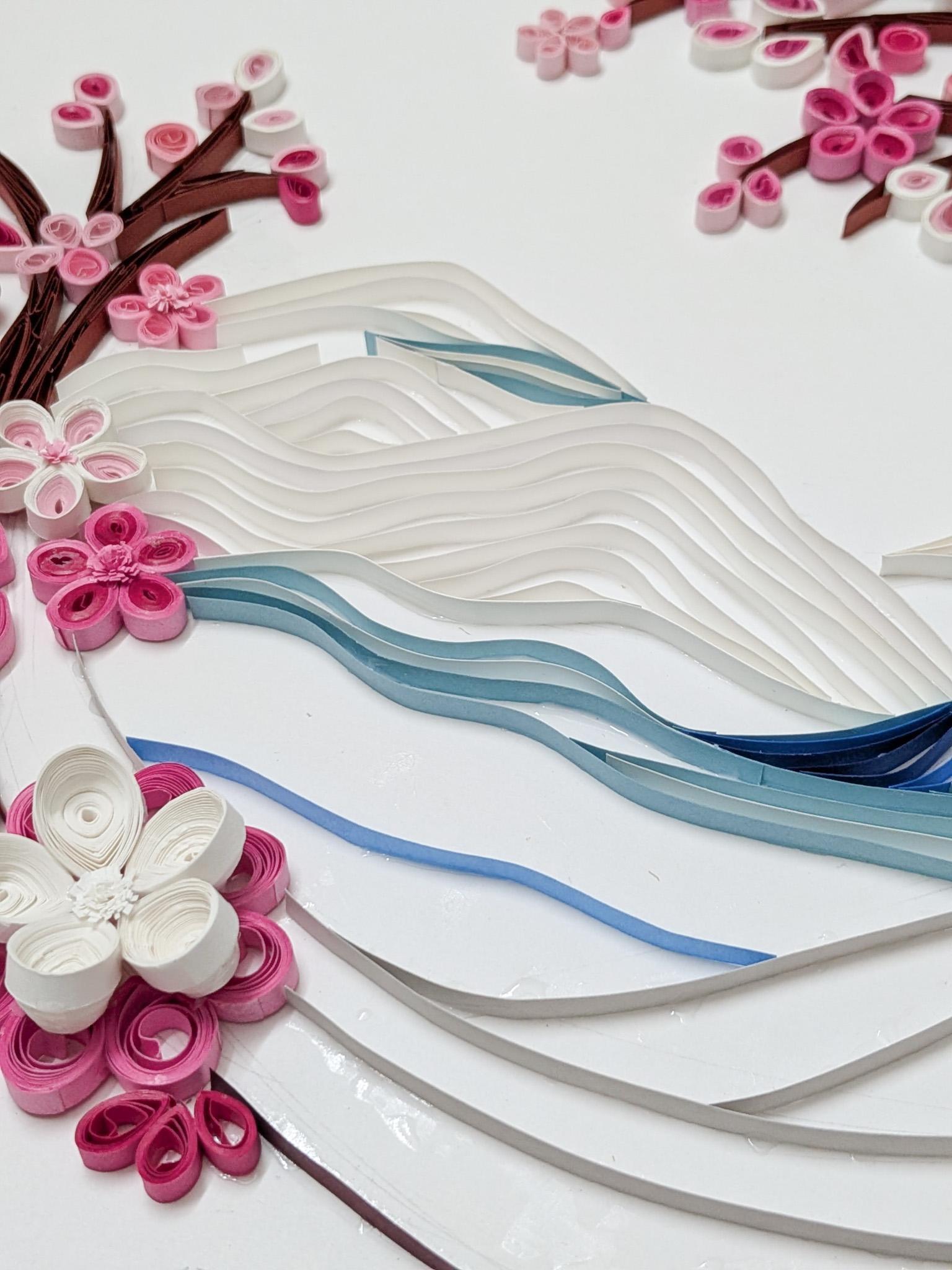
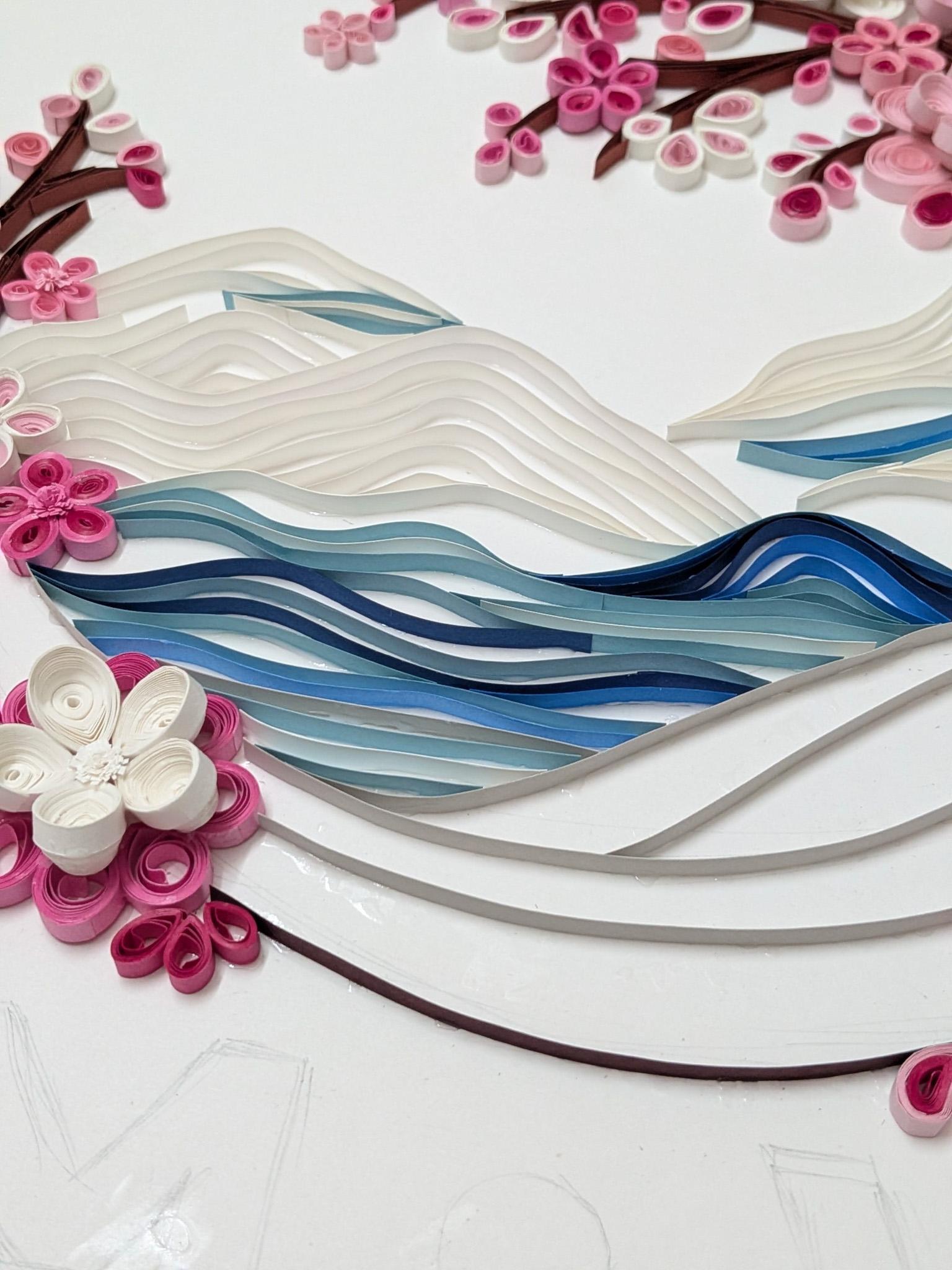
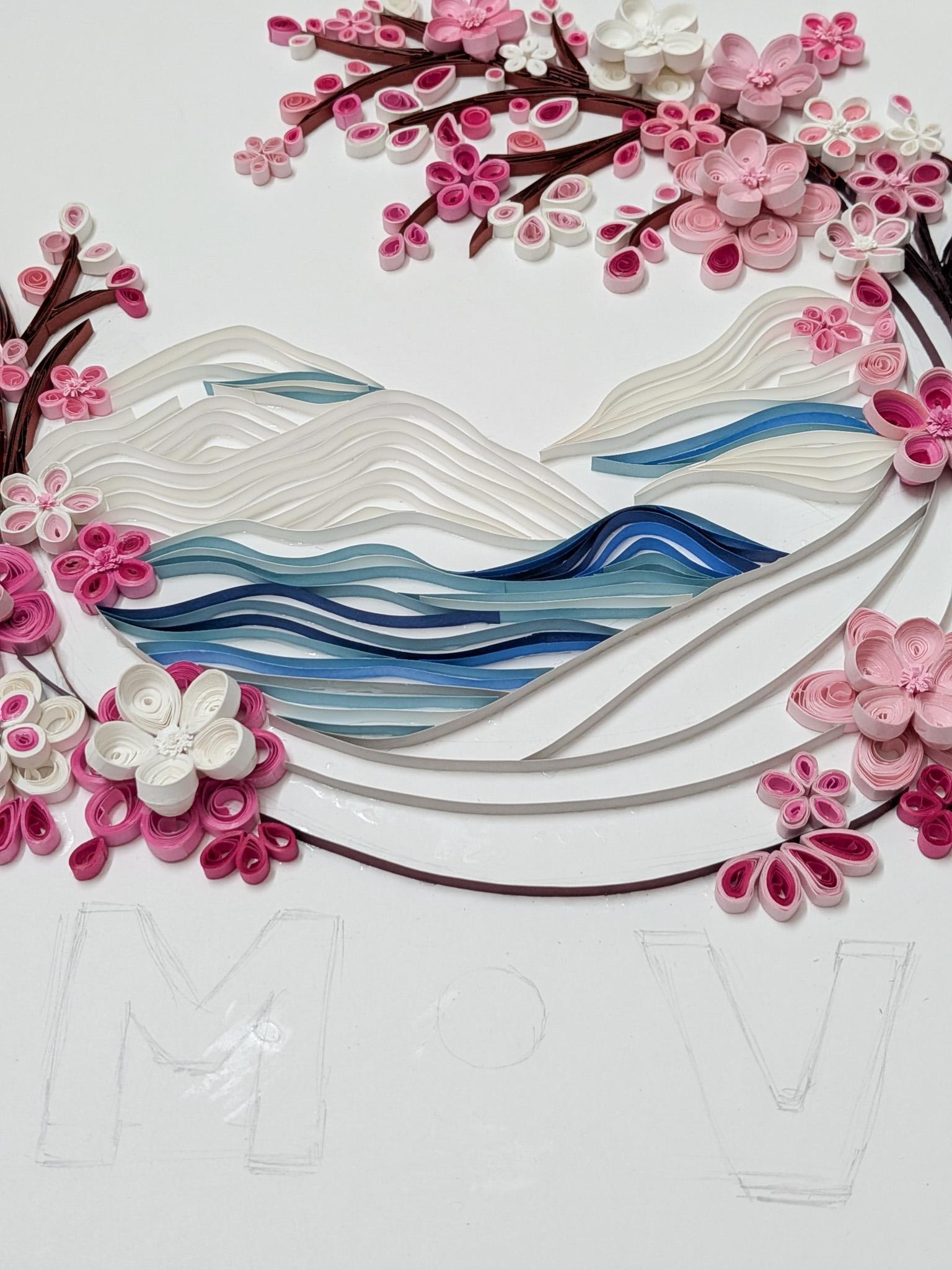
Once your outlines are anchored, we transition from structural work to "painting with paper," using tightly packed strips to create a sense of solid mass and fluid motion.
The Mountain Interior - Fill the peaks of Mount Fuji by placing white and light blue strips vertically within your outlines.
- The Technique: Instead of using coils, use straight or slightly curved strips glued on-edge.
- The Goal: This creates a "ribbed" texture that mimics the craggy, snow-covered slopes of a mountain, catching highlights and shadows differently as you move past the piece.
The Water Depth - Return to your blue strips to fill the gaps in your wavy water section.
- The Technique: Glue your strips in concentric, flowing lines that follow the initial "S" curves.
- The Goal: By packing the shades of blue tightly together, you eliminate the white space of the cardboard, making the water look deep, vibrant, and continuous.
Attaching Flower Centers
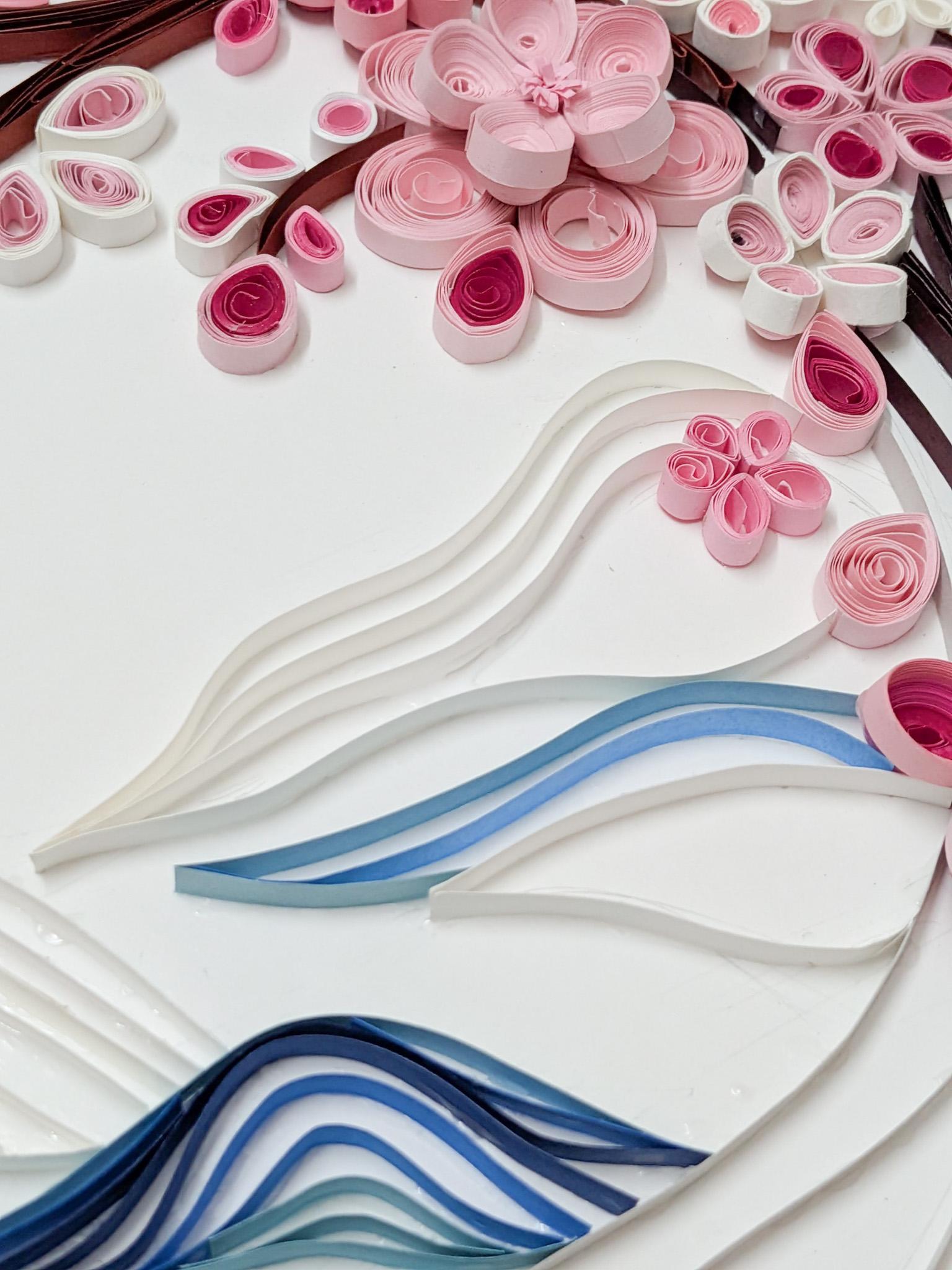
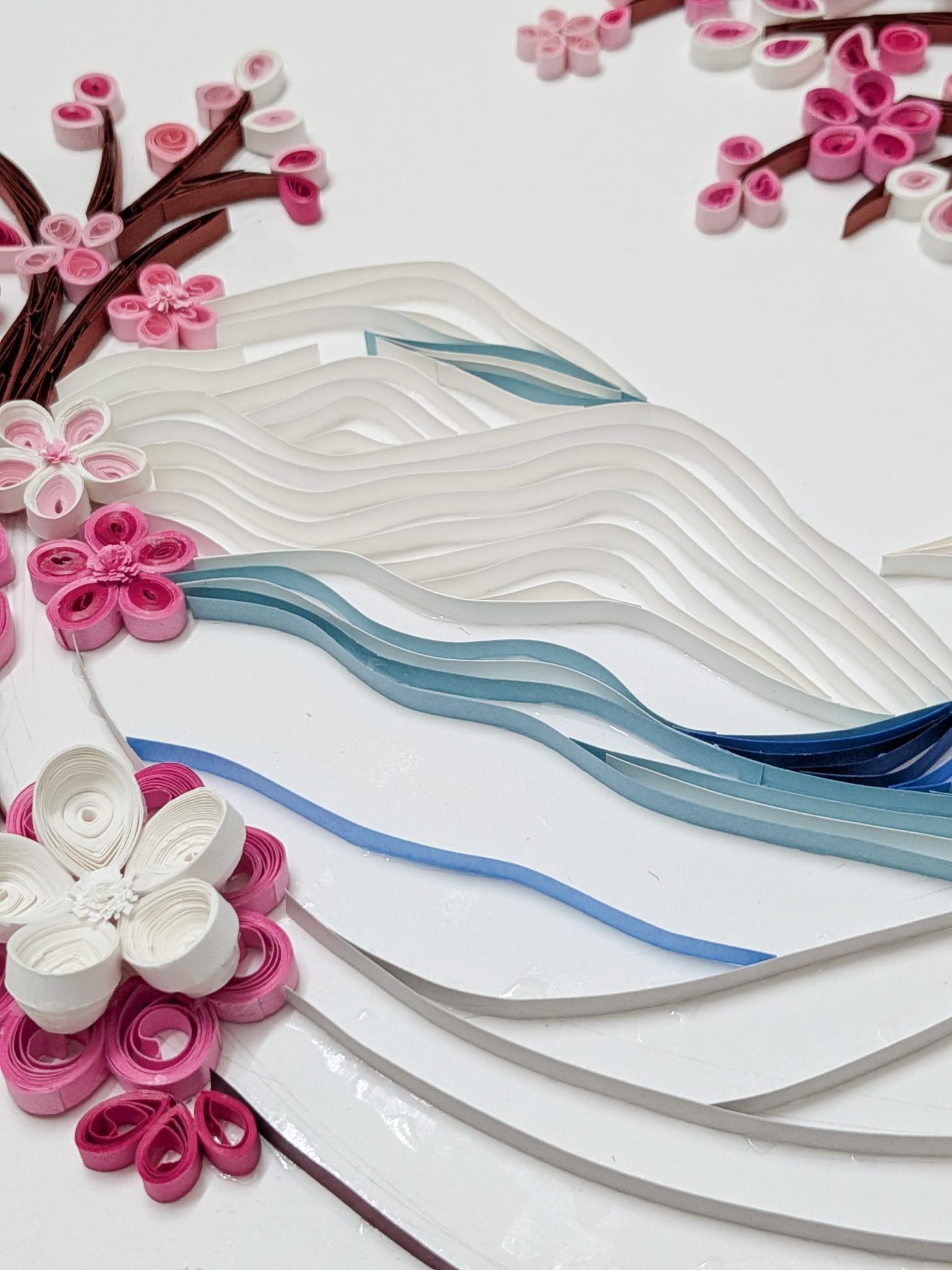
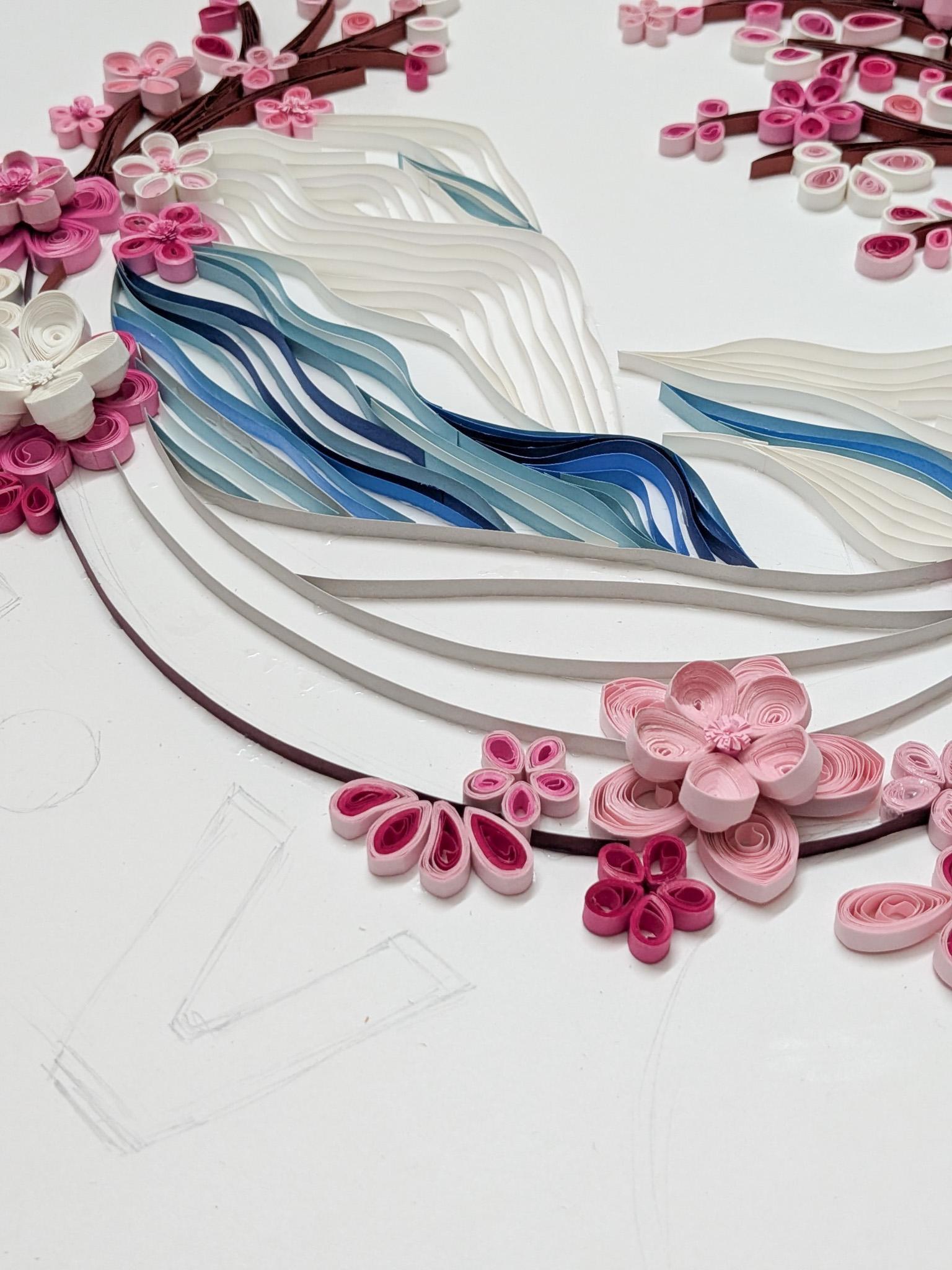

In our case, the idea for these fringed centers actually developed mid-project, so we ended up attaching them at this point.
- Placement: Take the small, fringed coils you made earlier (or whip up a few new ones!) and apply a tiny dot of glue to the back.
- The Fit: Gently press them into the heart of your existing blossoms.
Even though it was a "mid-build" realization for us, adding them now creates a wonderful layering effect. These centers provide a focal point for each flower, drawing the eye in and making the petals look even more delicate and lifelike.
Filling in Sand and Branches


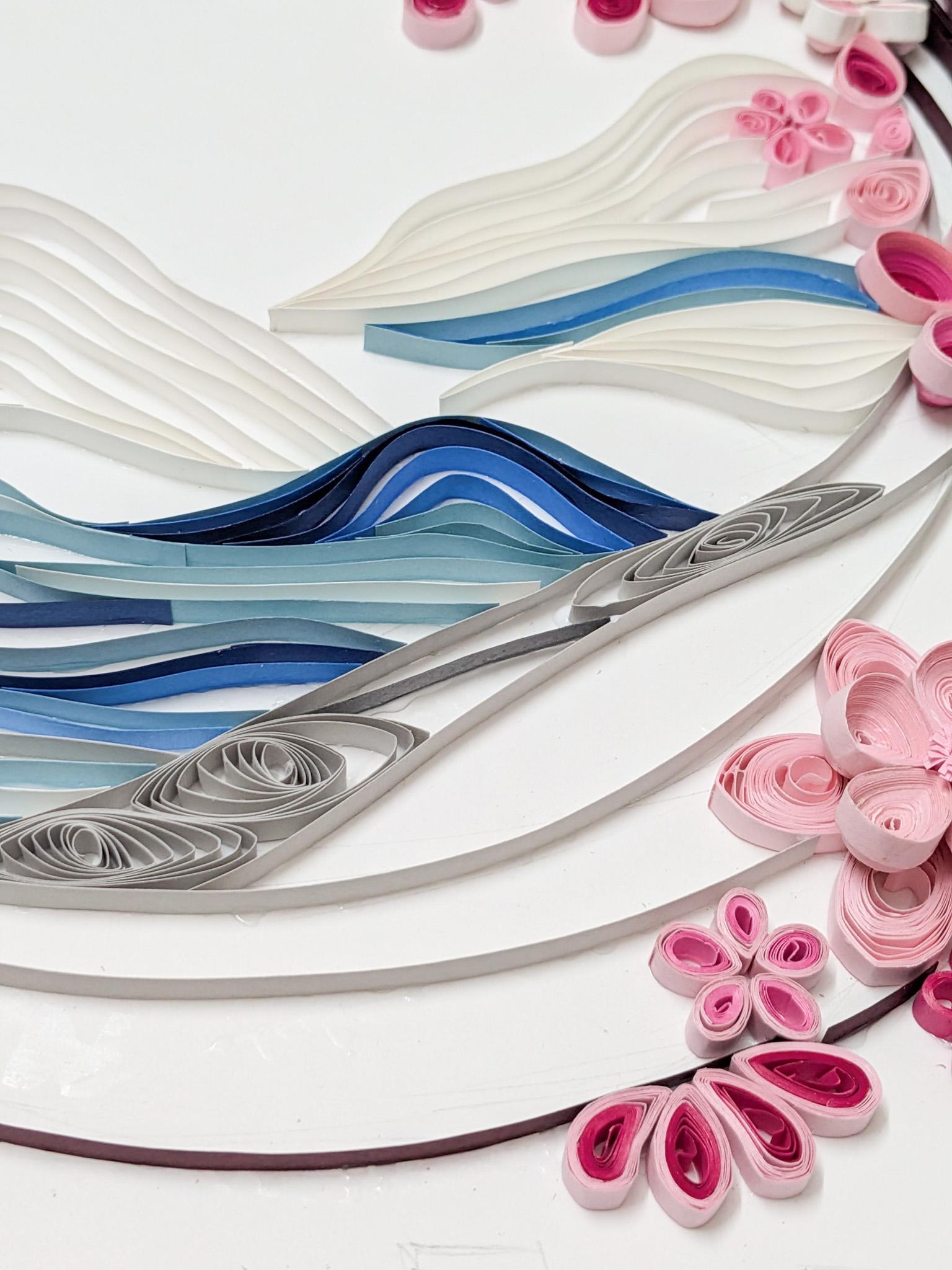


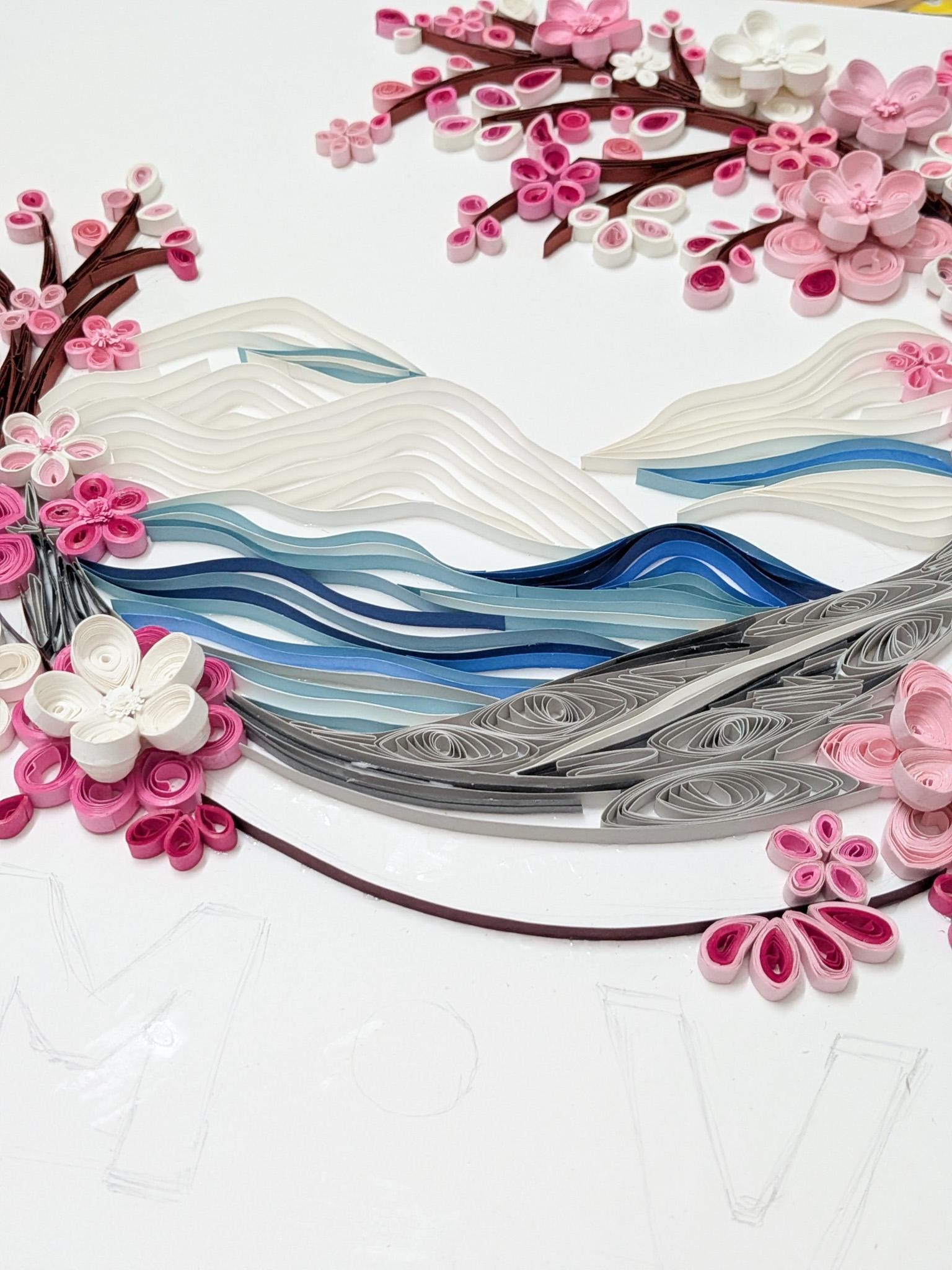

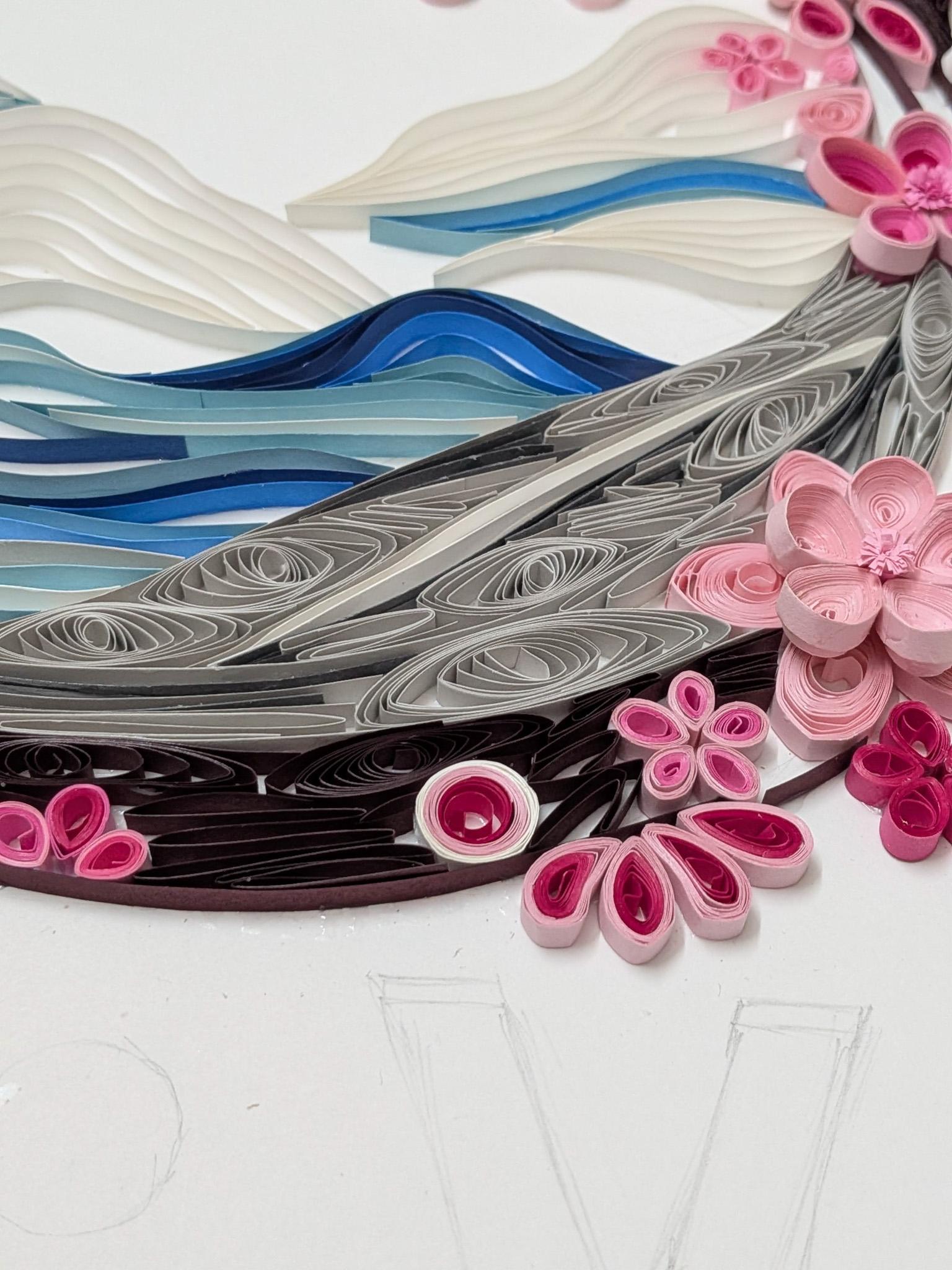
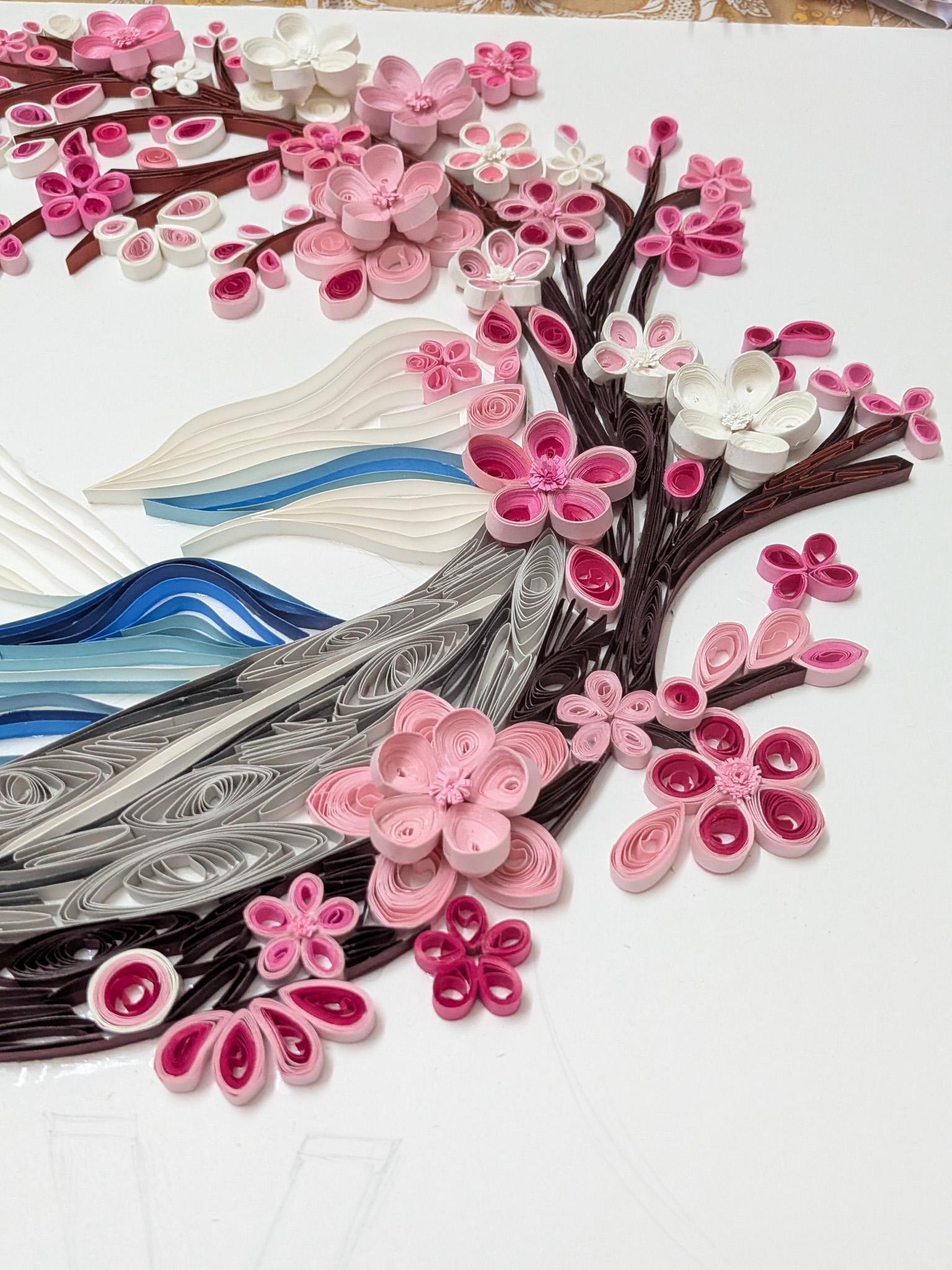
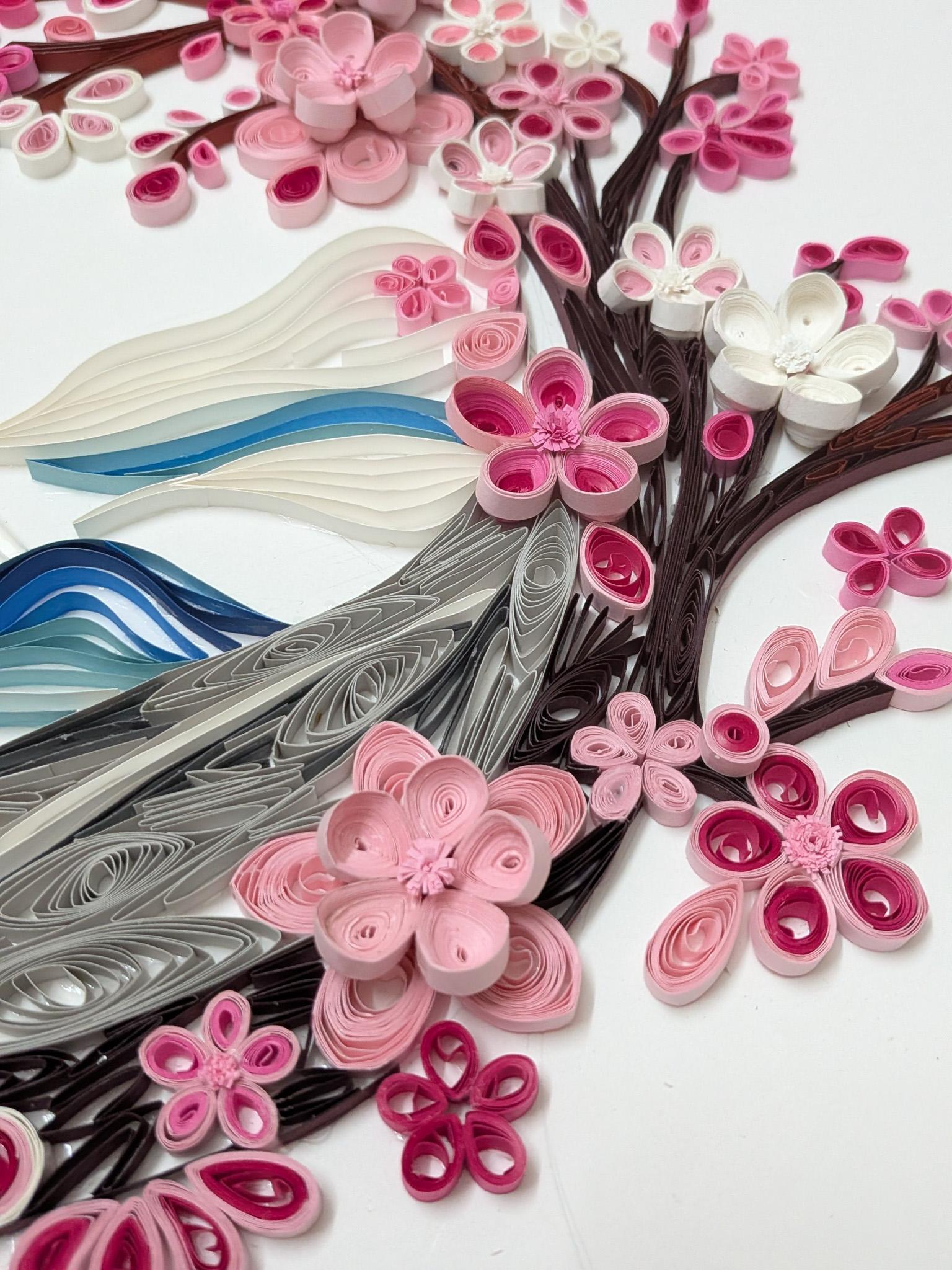
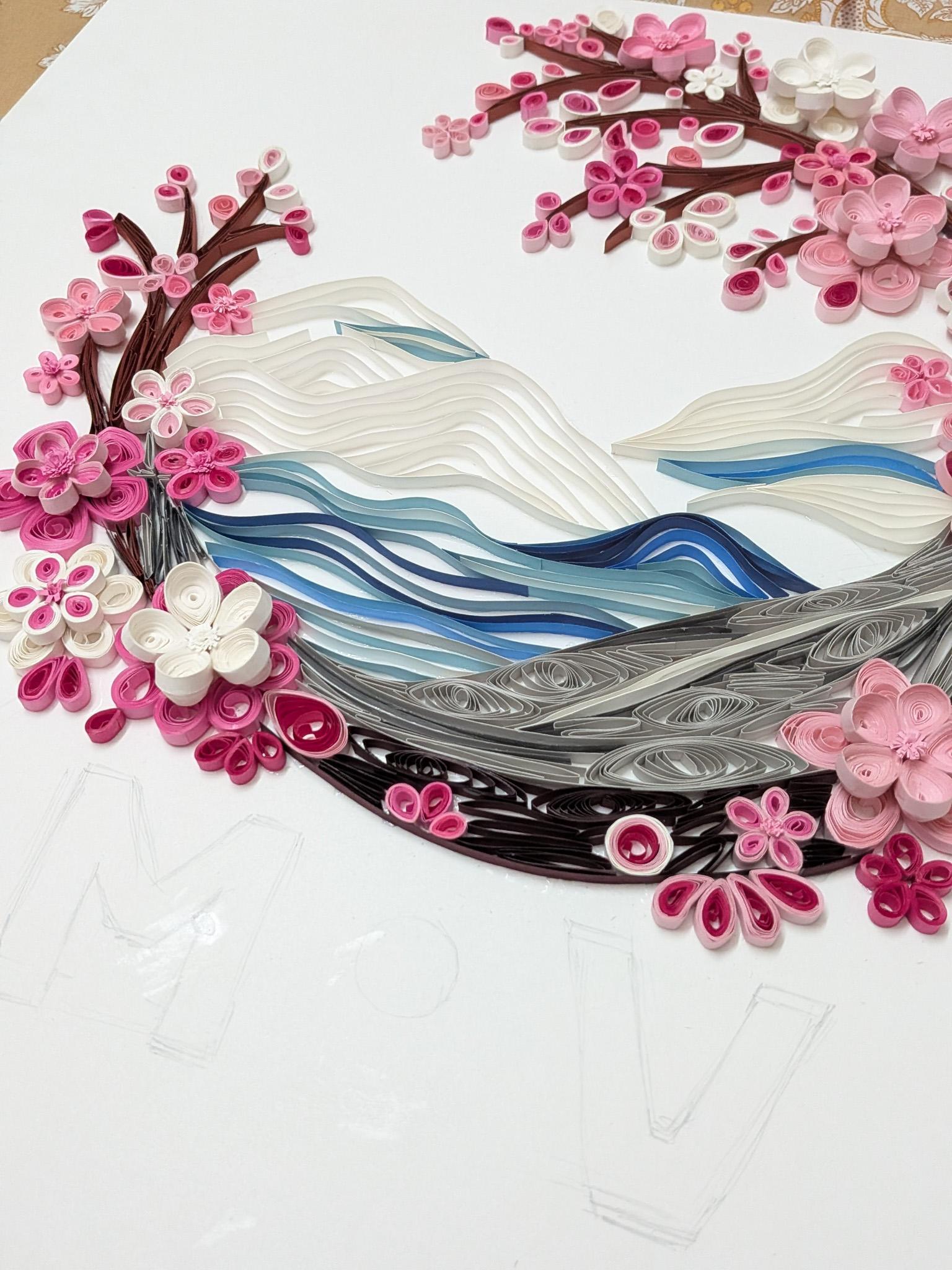
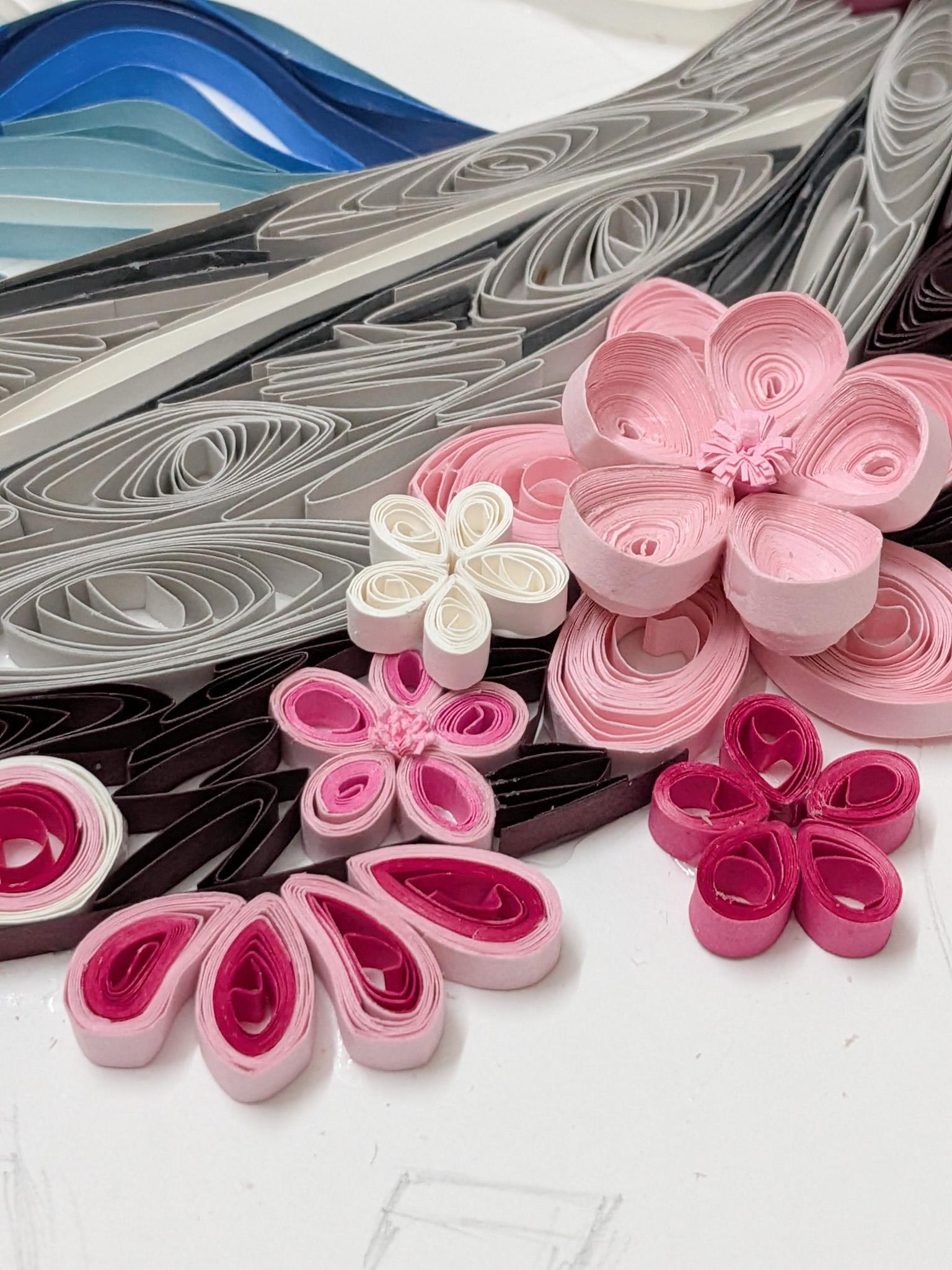
To bridge the gap between the fluid water and the rigid branches, we need a grounding element that provides a visual foundation and makes the landscape feel connected. Use grey or light brown strips. These neutral tones provide a sophisticated contrast to the vibrant blues of the water and the soft pinks of the blossoms, acting as the "earth" of your scene.
Creating Texture
- Forming the Scrolls: Instead of the long, sweeping lines used for the water, use shorter strips to create a variety of loose circular coils and "S-scrolls." * The Goal: These irregular sizes and shapes mimic the uneven, pebbled surface of a riverbank or sandy soil.
The Placement
- Cluster: Apply a thin bead of glue to the 5mm edge of these small coils and cluster them together tightly along the edges of your blue water lines.
- The Bridge: Use these textured grey elements to fill the gaps where the branches meet the water. This creates a logical transition in the composition.
By clustering these small, dense shapes together, you create a complex area of shadow and light. This adds a new layer of architectural depth to your home decor piece, making the transition from water to branches look intentional.
Adding a Few Flowers/petals/buds on Top of the Scenery
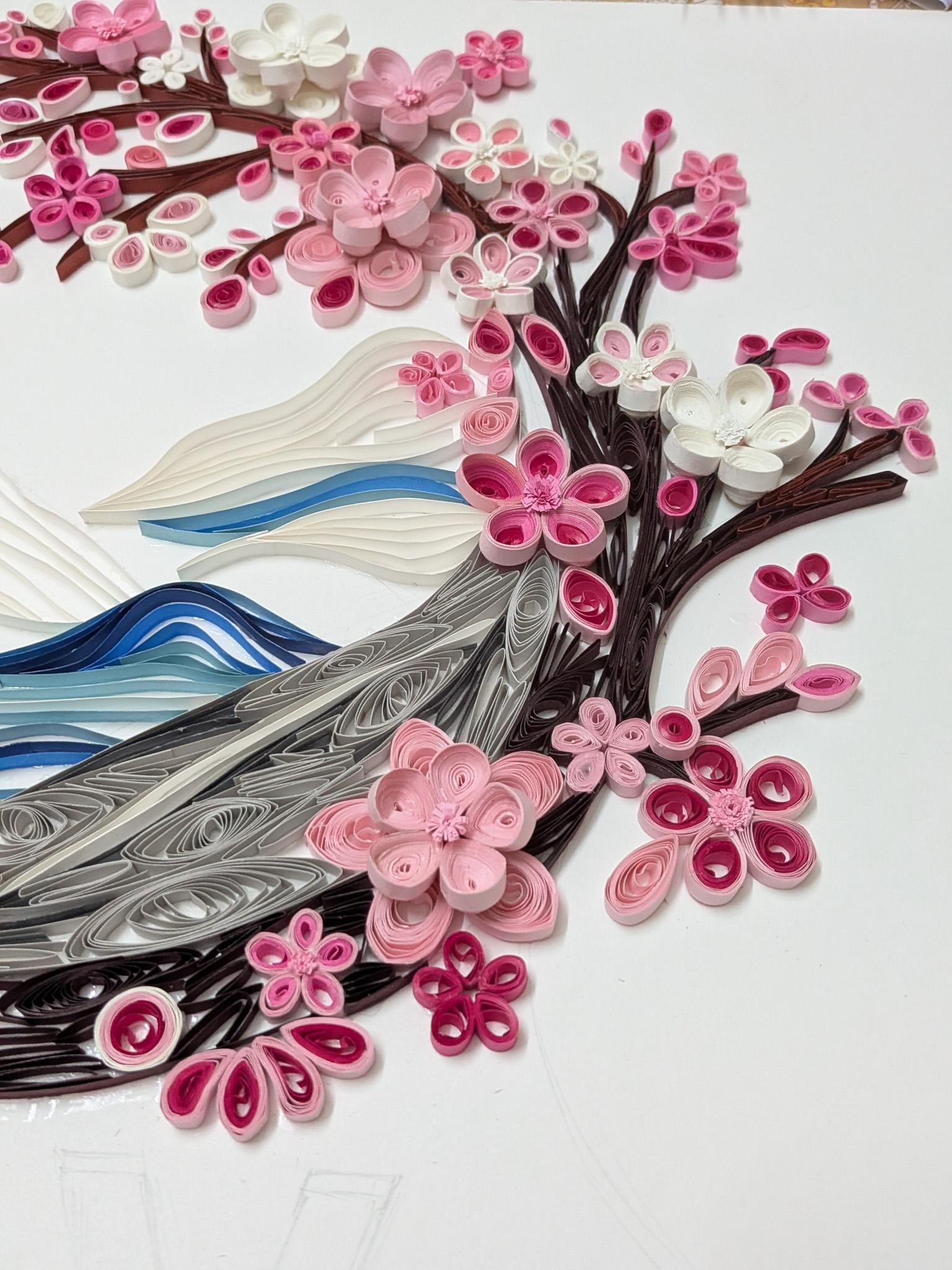

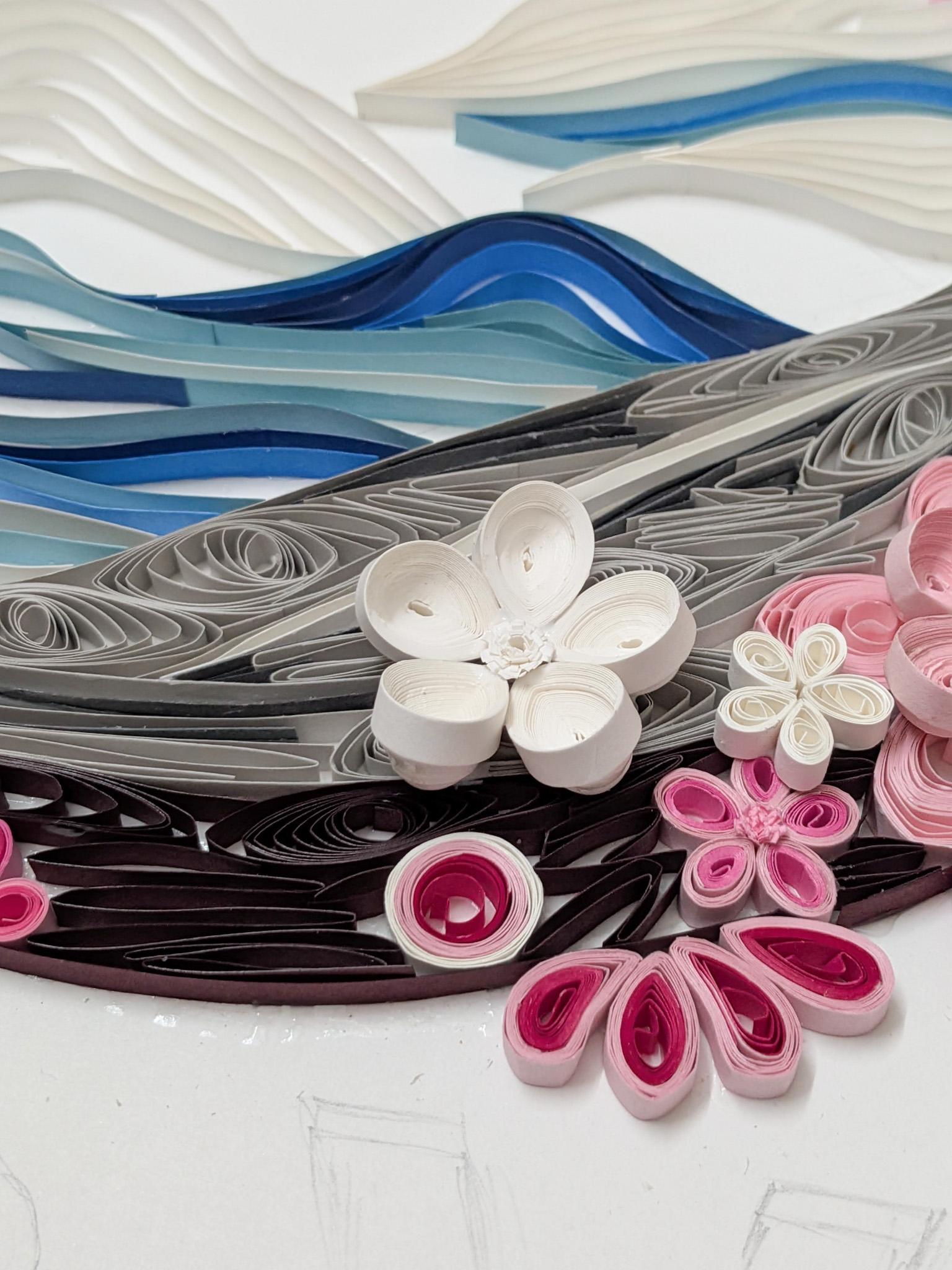

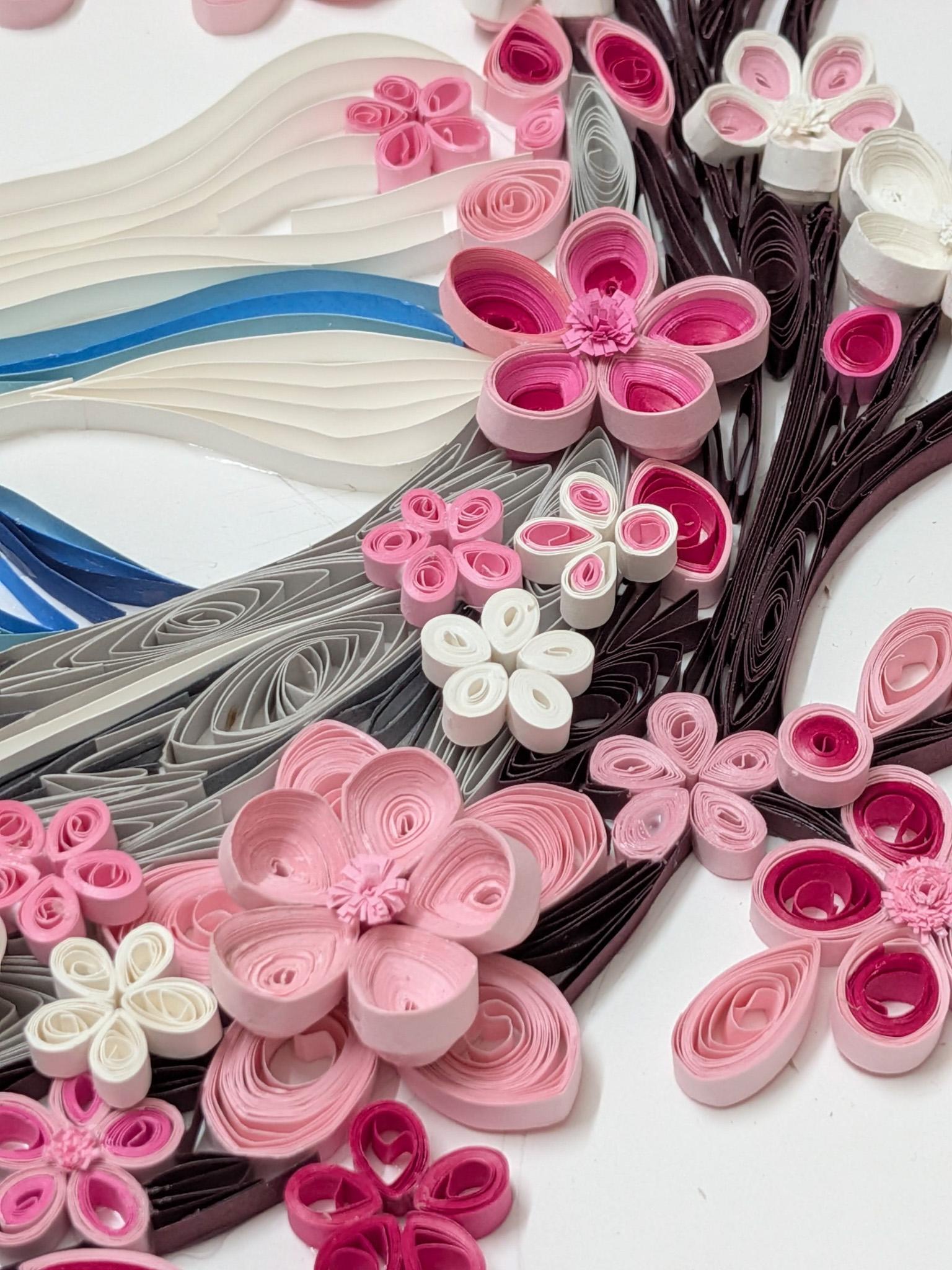
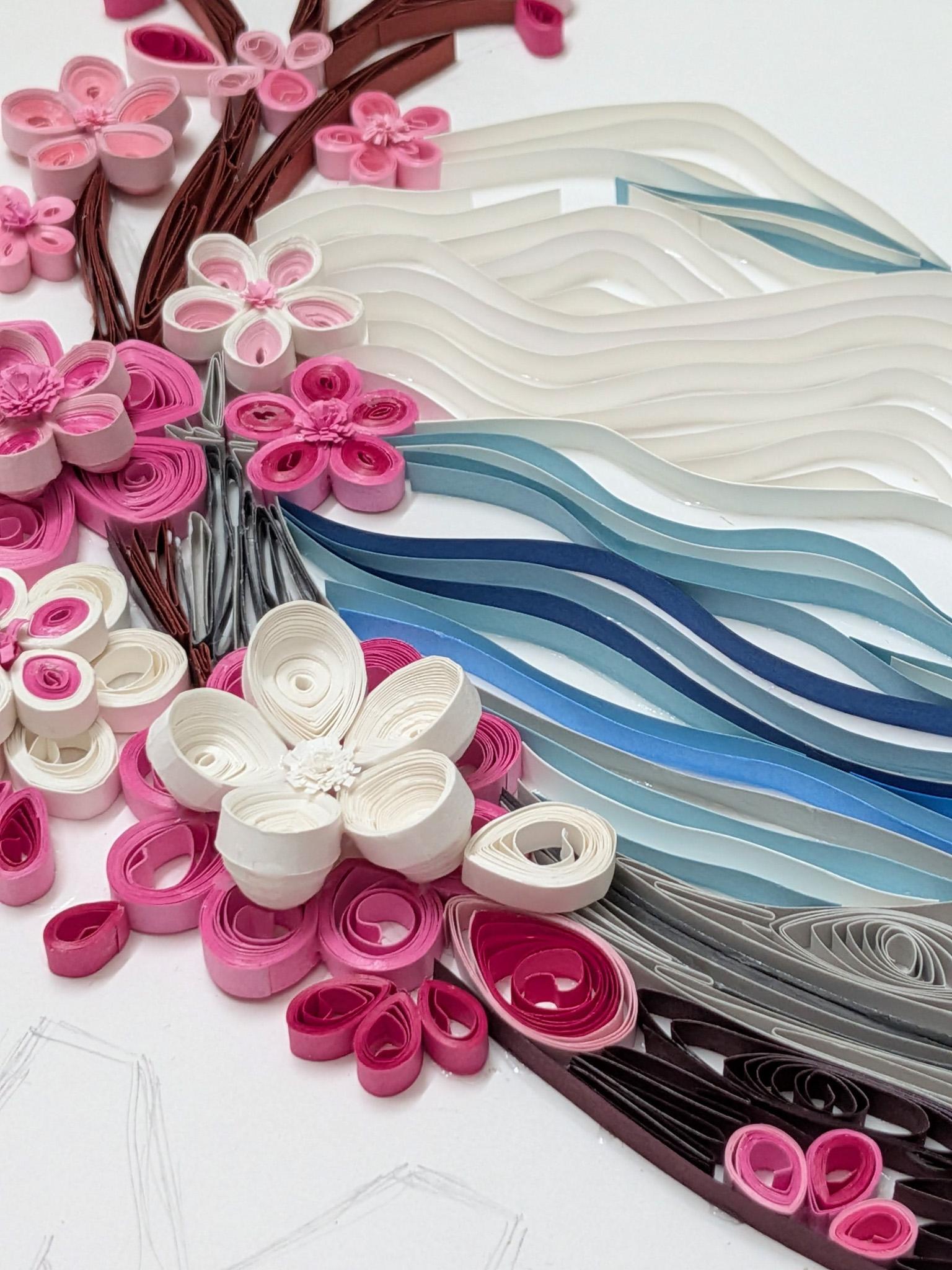

To truly push the 3D nature of this piece, we’ll move beyond the base cardboard and start "floating" elements on top of the work we’ve already done. Take a few more of your small flowers, individual petals, and buds and begin gluing them directly onto the existing strips of the sand and branches.
The Placement
- Layering: These pieces should sit on top of the established strips, essentially creating a "second story" for your scenery.
- Restraint: The key here is to avoid over-crowding. Do not add these densely across the entire piece; instead, choose specific "focus points" to play with the depth.
By placing these elements on a higher plane, you create a sense of foreground and background within the wreath itself. This makes the cherry blossoms look as though they are reaching out toward the viewer, adding a final, professional touch of dimension.
Typography - Initials Outline
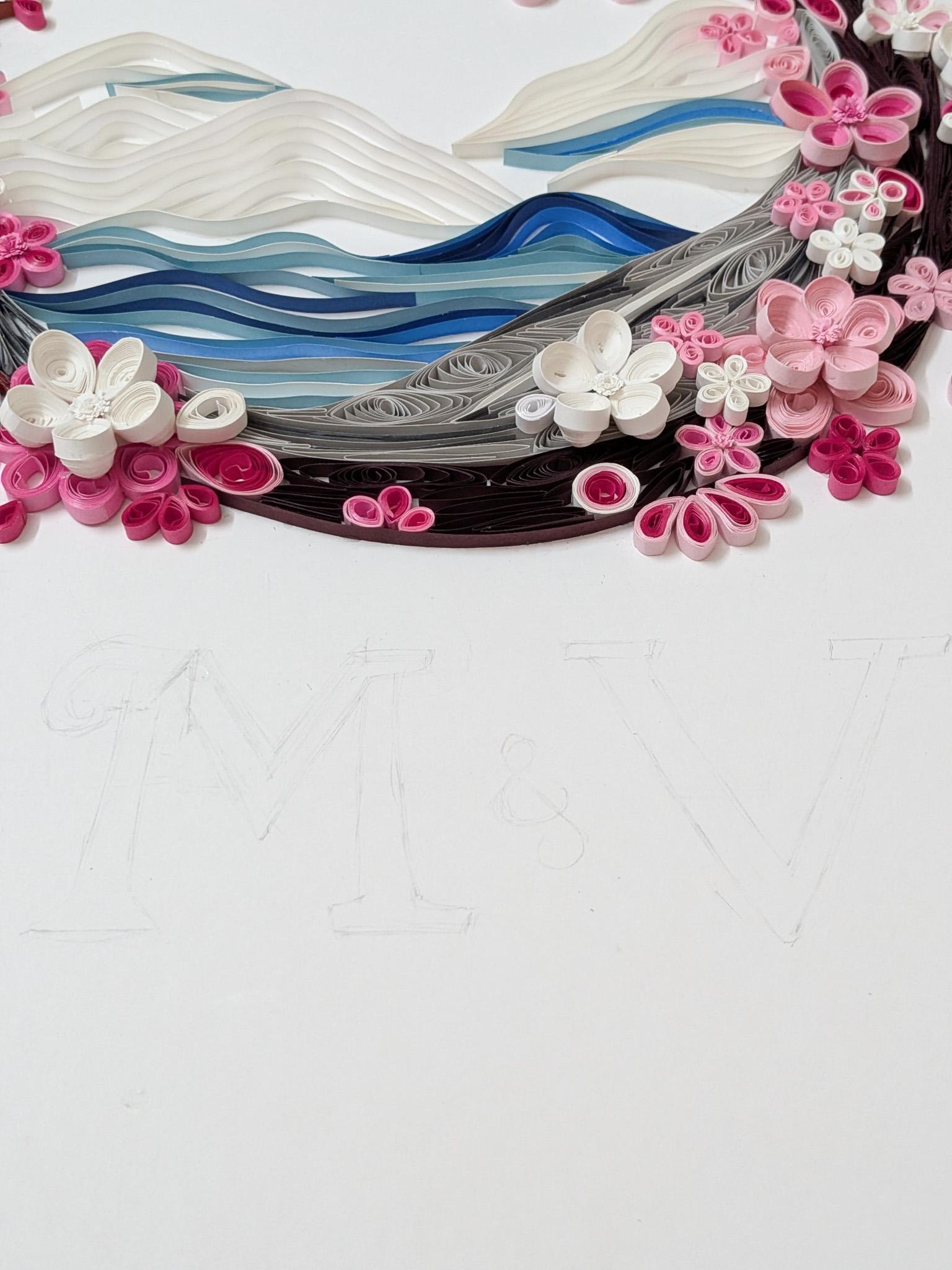


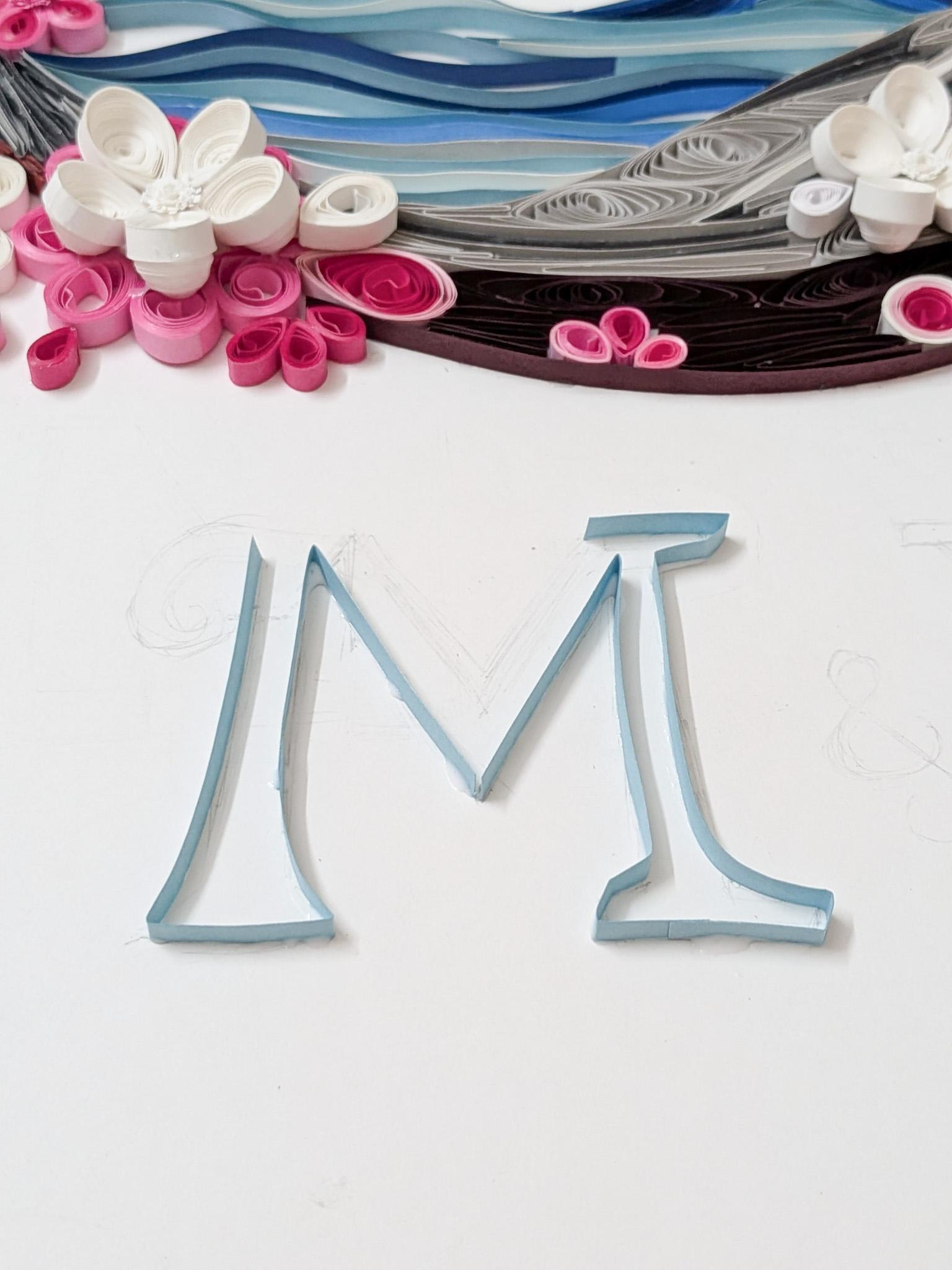
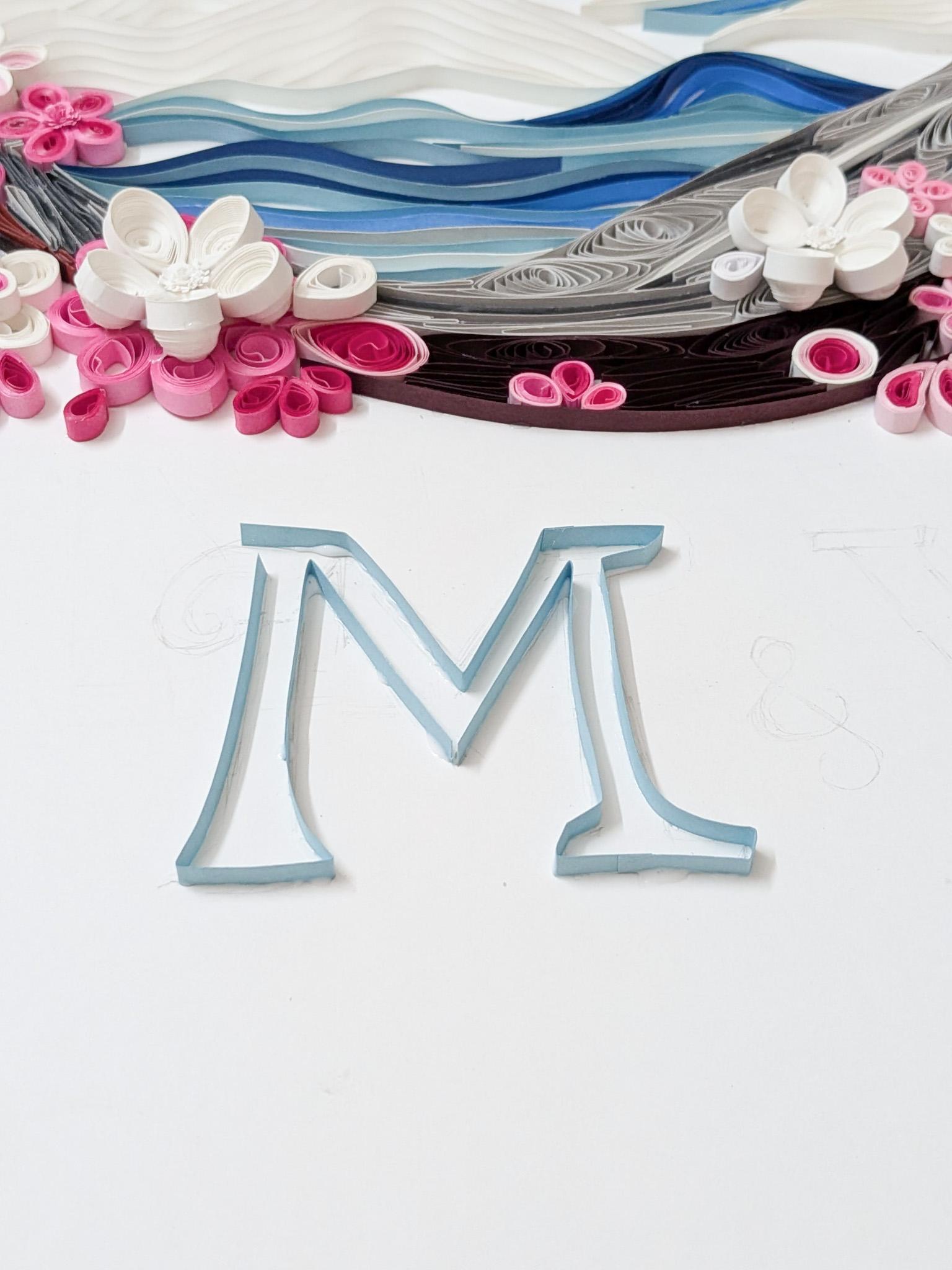
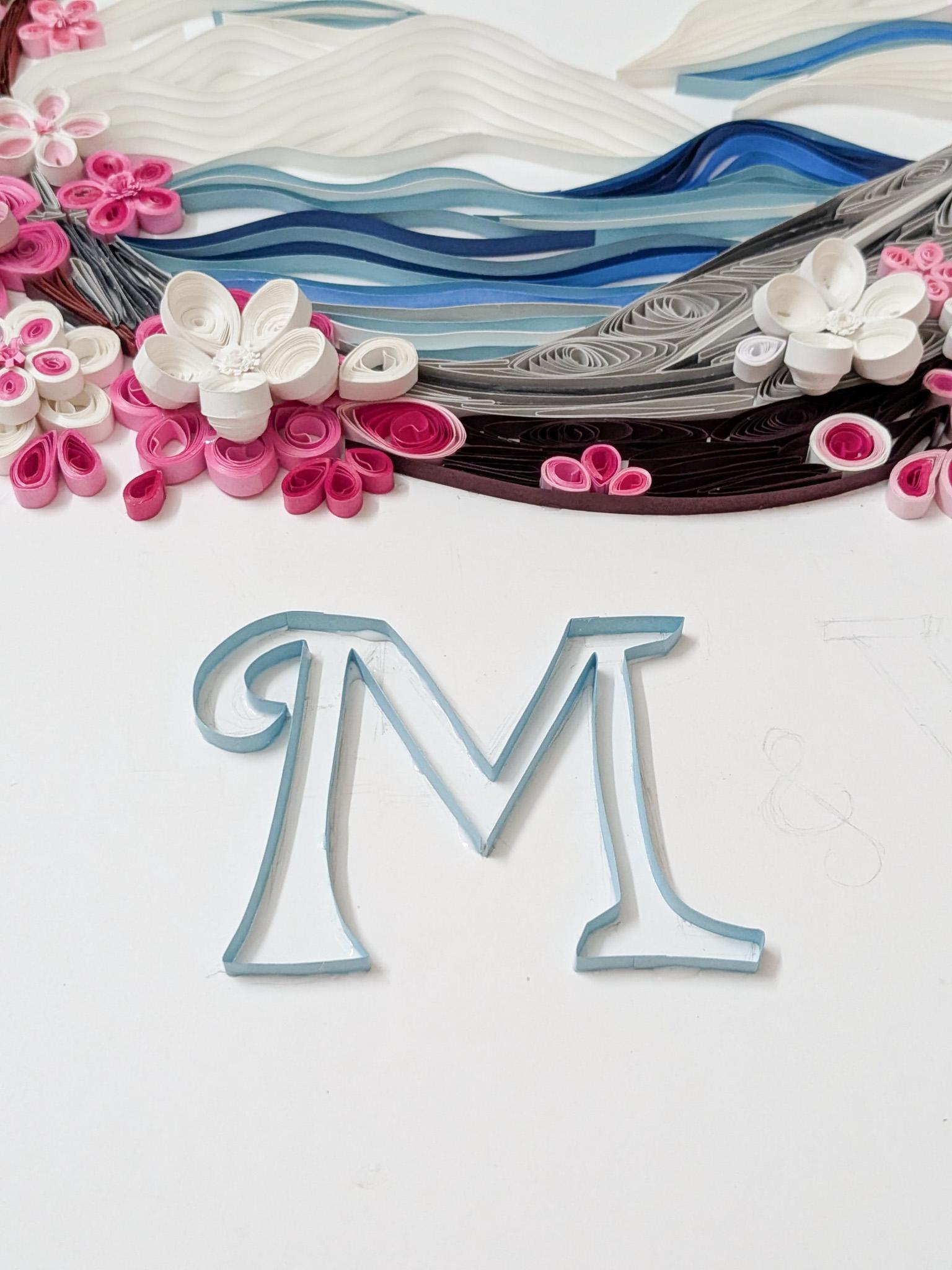
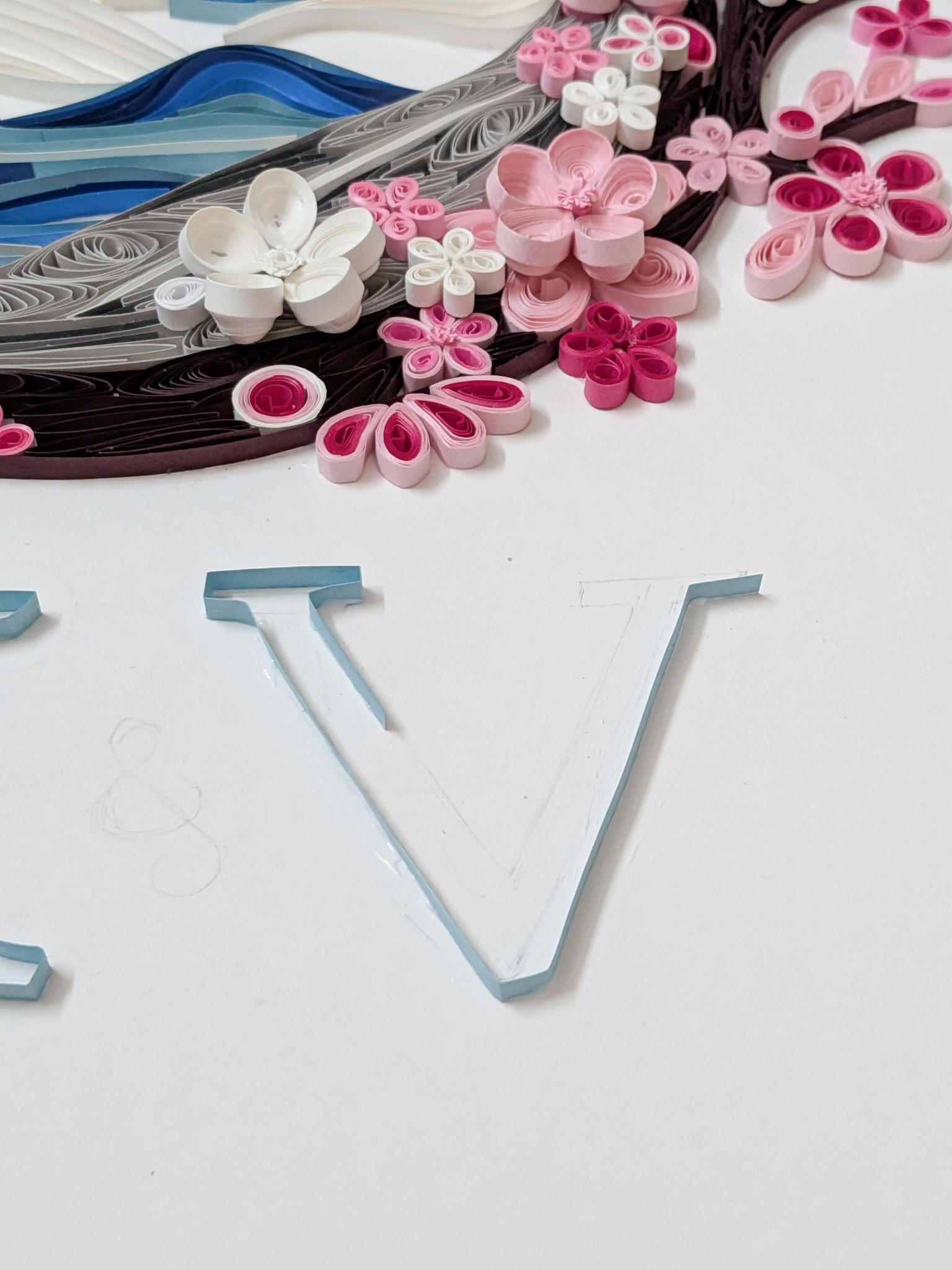
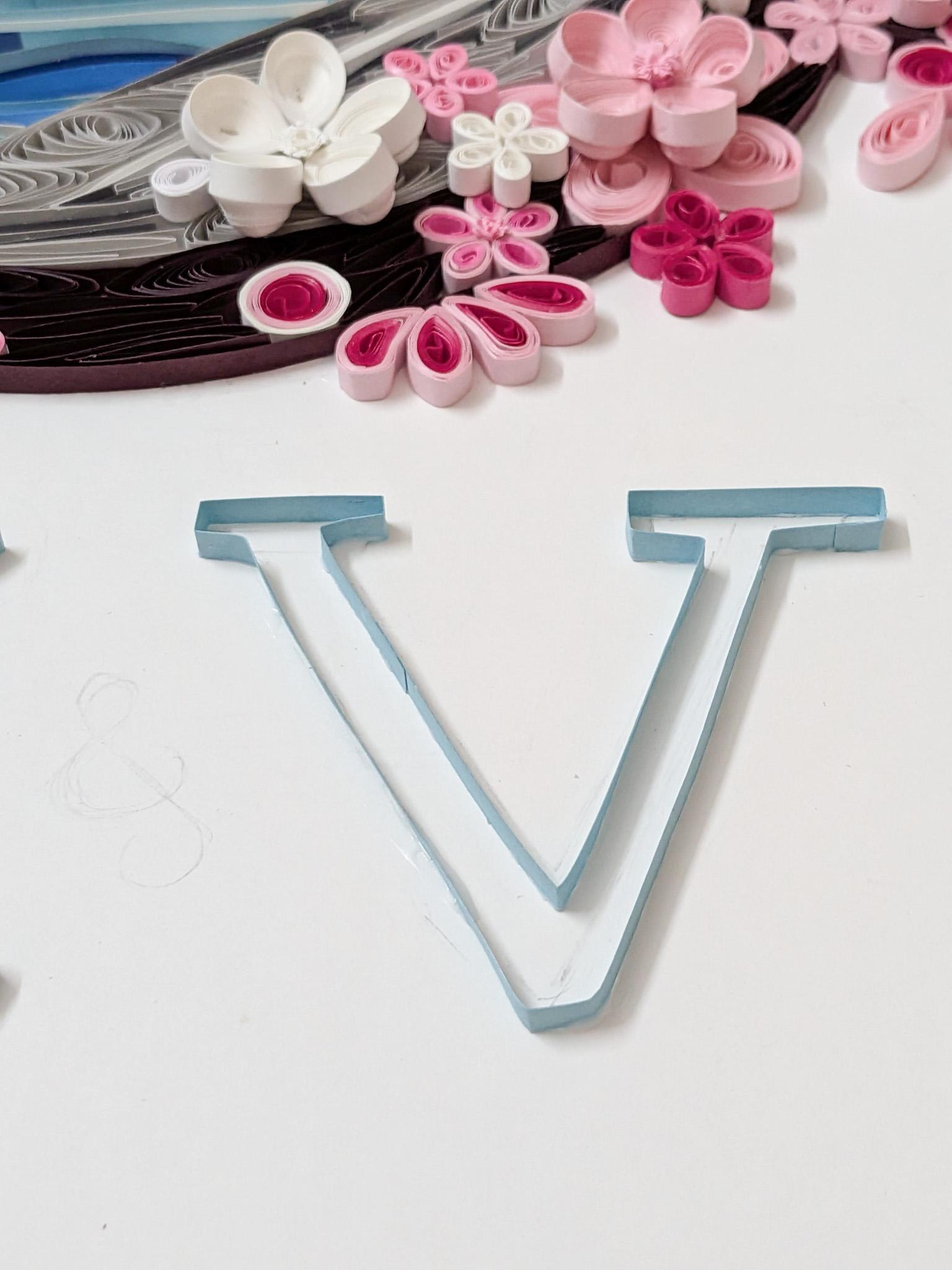
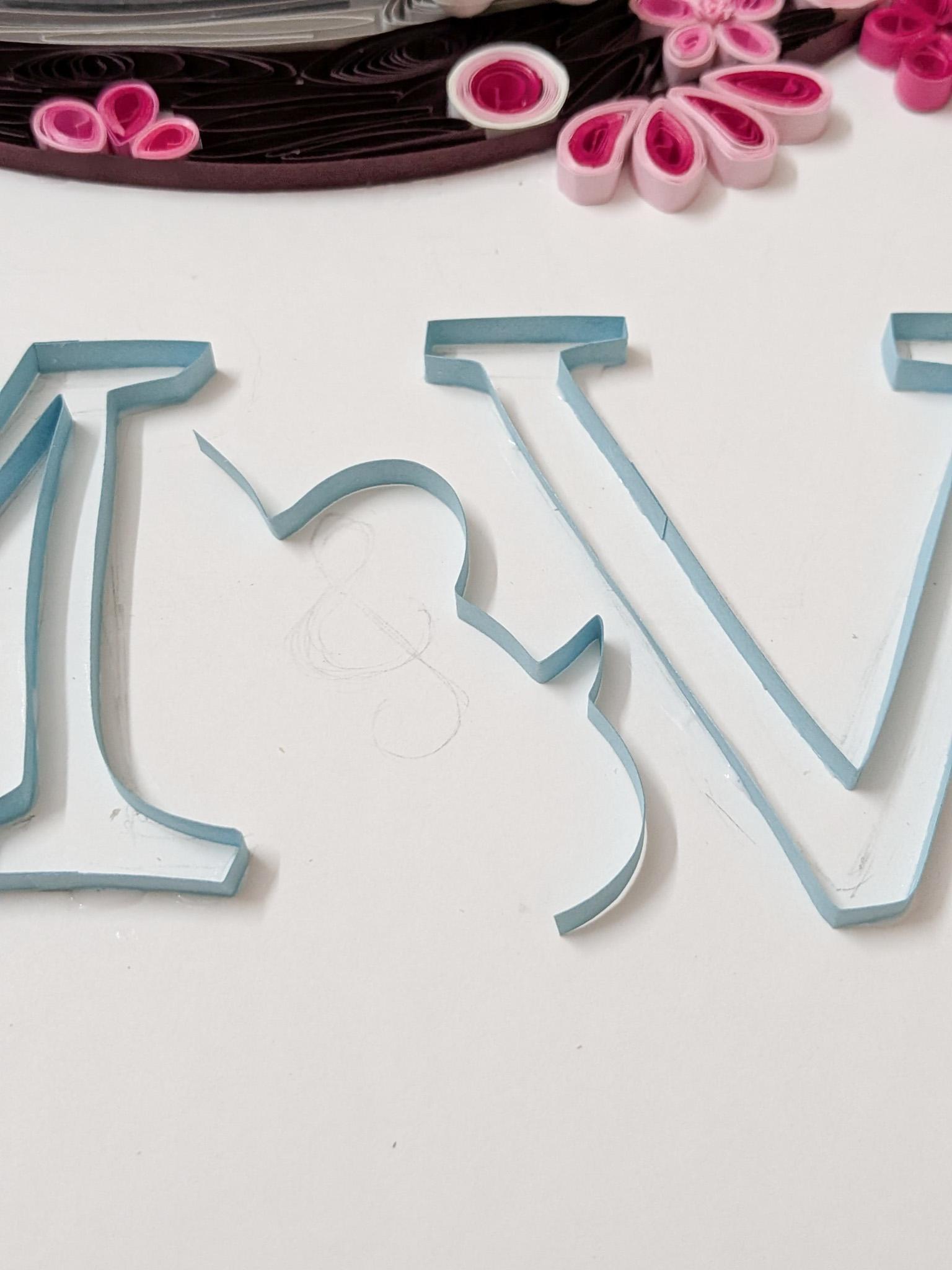
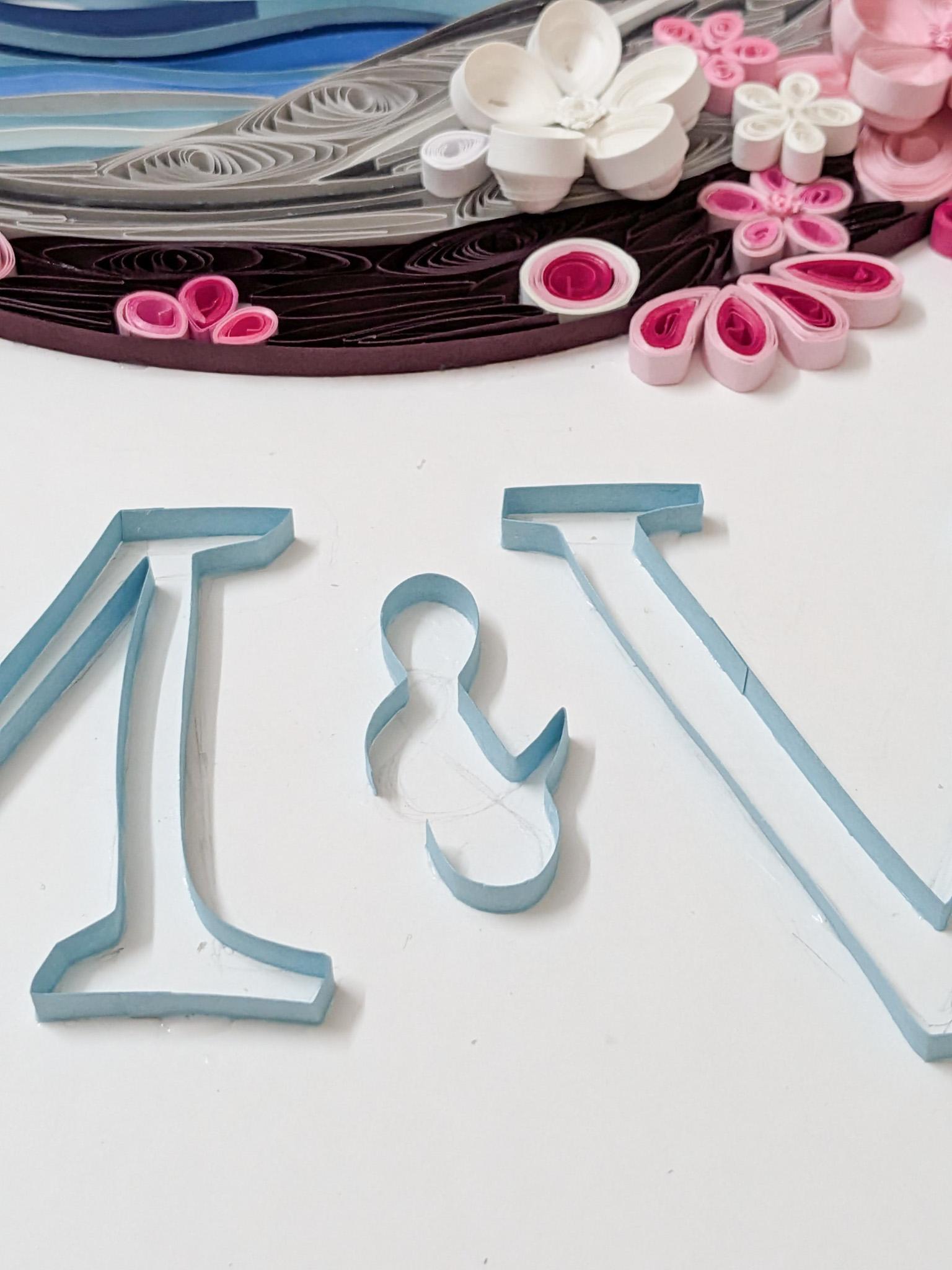


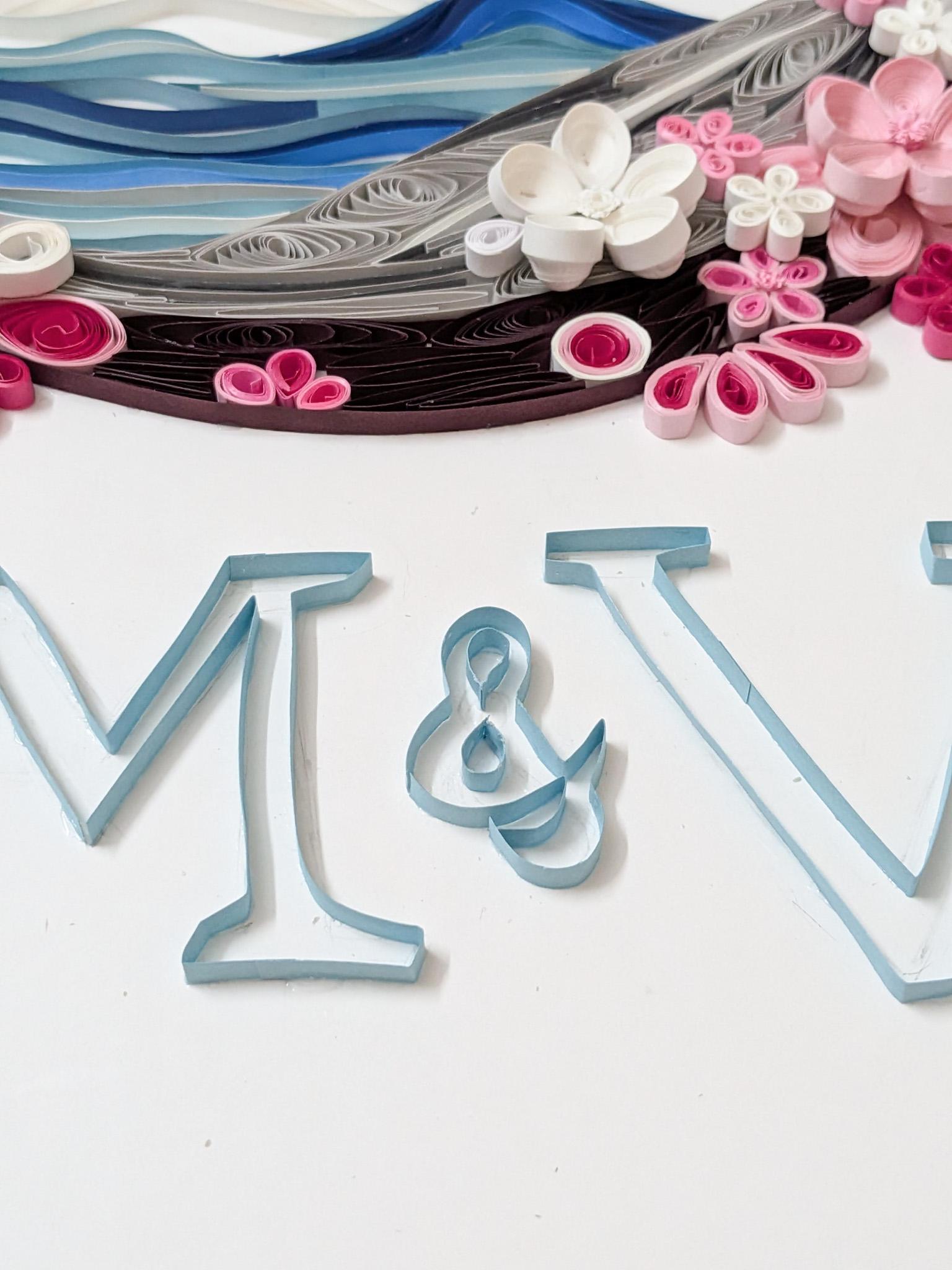
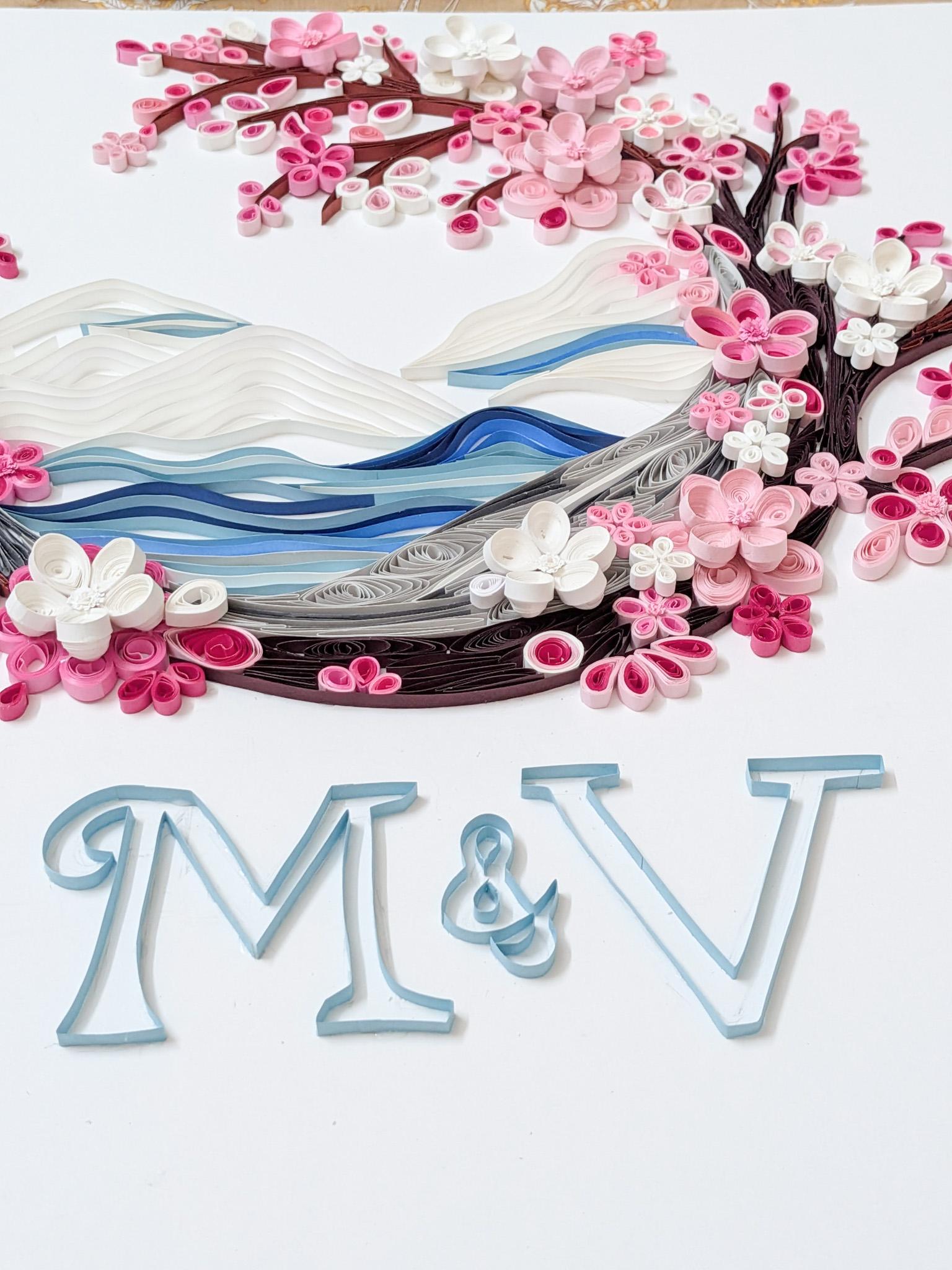
To make this piece truly your own, we add a personalized touch at the bottom of the composition - transforming simple paper strips into elegant, flowing initials.
The Layout Lightly sketch your initials (we used "M," "&," and "V") onto the cardboard, centered directly underneath the floral wreath. Take your time with the alignment; ensuring they aren't off-center is key to a balanced look.
The Outline
- Placement: Take quilling strips in your chosen accent color (we chose to use the same light blue of the water in the scene) and run the edge through a thin layer of glue. Carefully place them on-edge, following your pencil guides precisely.
- Precision: Use your fingers or precision tweezers to hold the curves in place for a few seconds. You need to wait just long enough for the adhesive to "grip" the cardboard before moving to the next section of the letter.
Note: This is arguably the most demanding step of the project. It requires a steady hand to ensure the strips outline the letters cleanly.
- Tip: Don’t rush! Even after the strip is on the board, you can use your tweezers to slightly maneuver it into the exact spot.
- Don't Sweat the Glue: You might see some slight glue residue during this adjustment process, but don't worry—high-quality PVA glue dries completely clear and will be invisible in the final piece.
Adding Flowers and Branches to the Initials
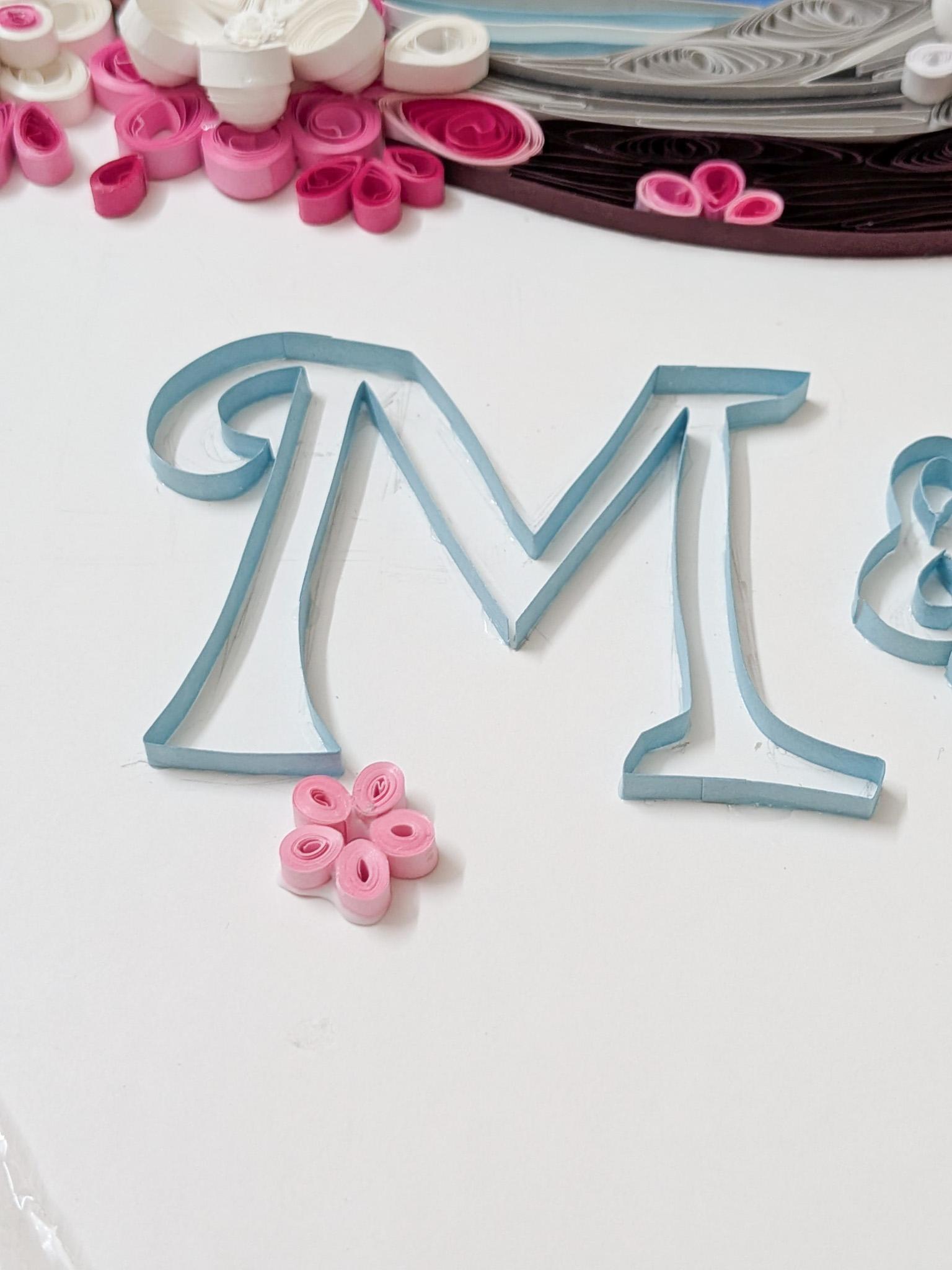
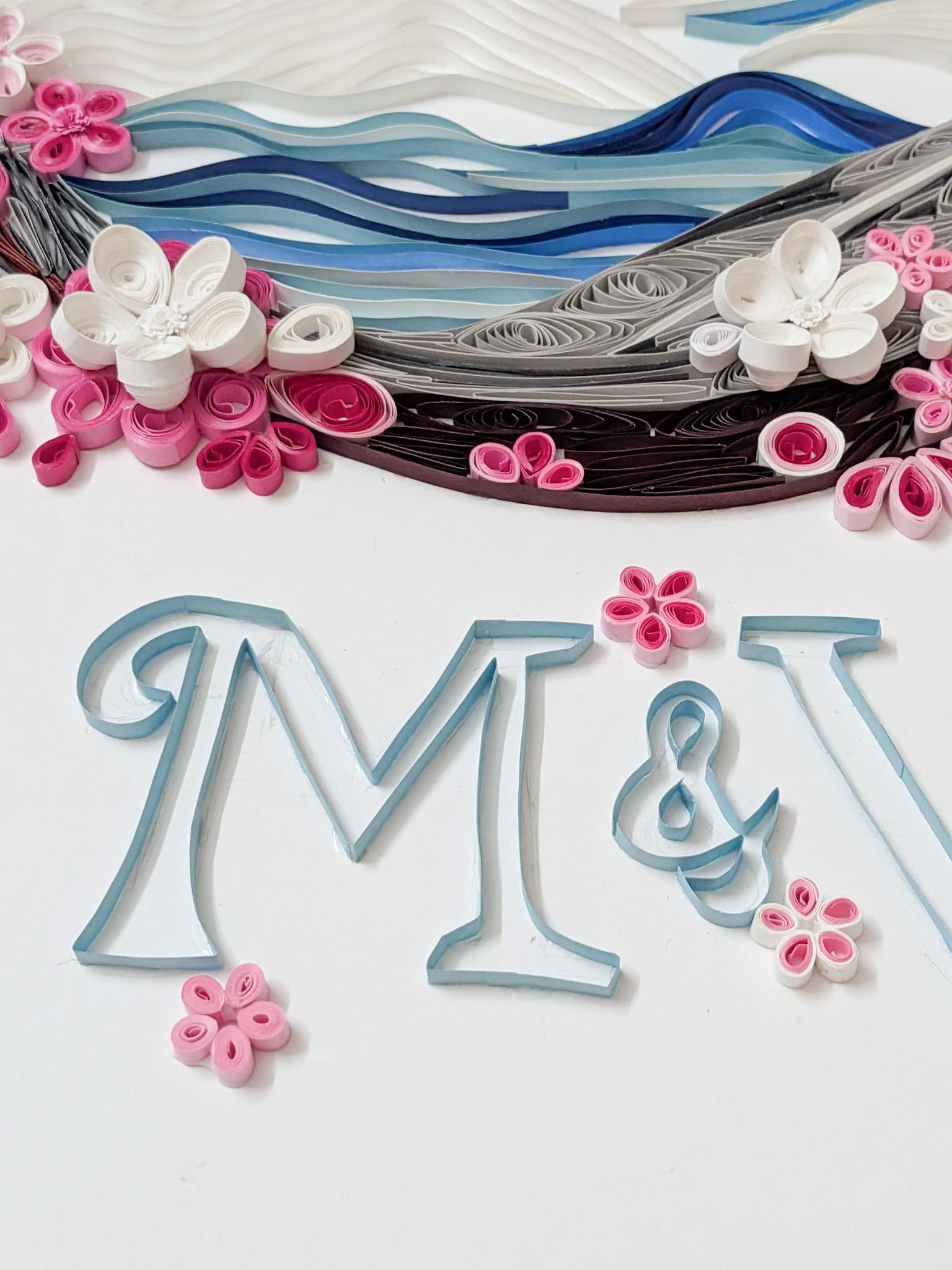
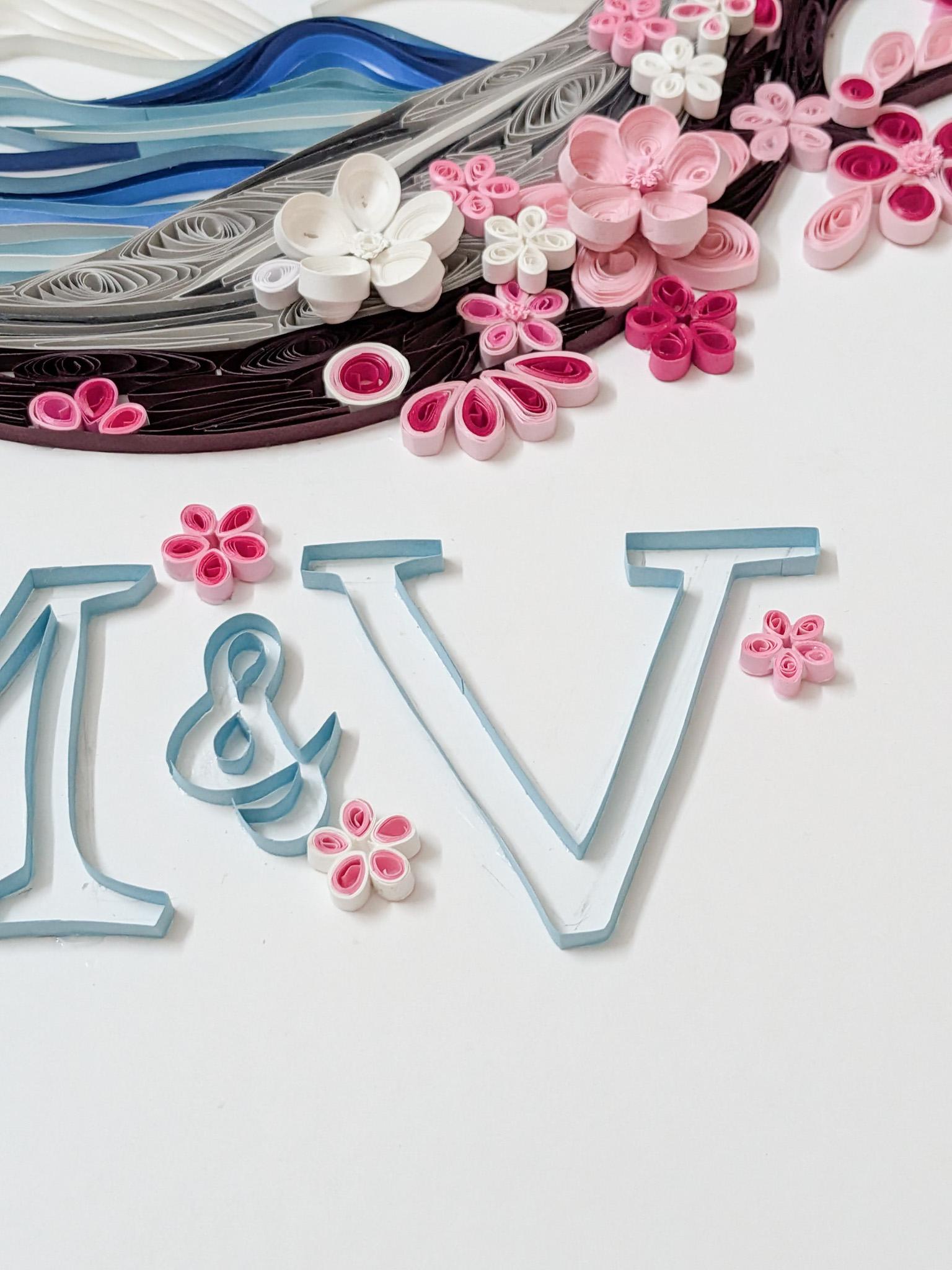
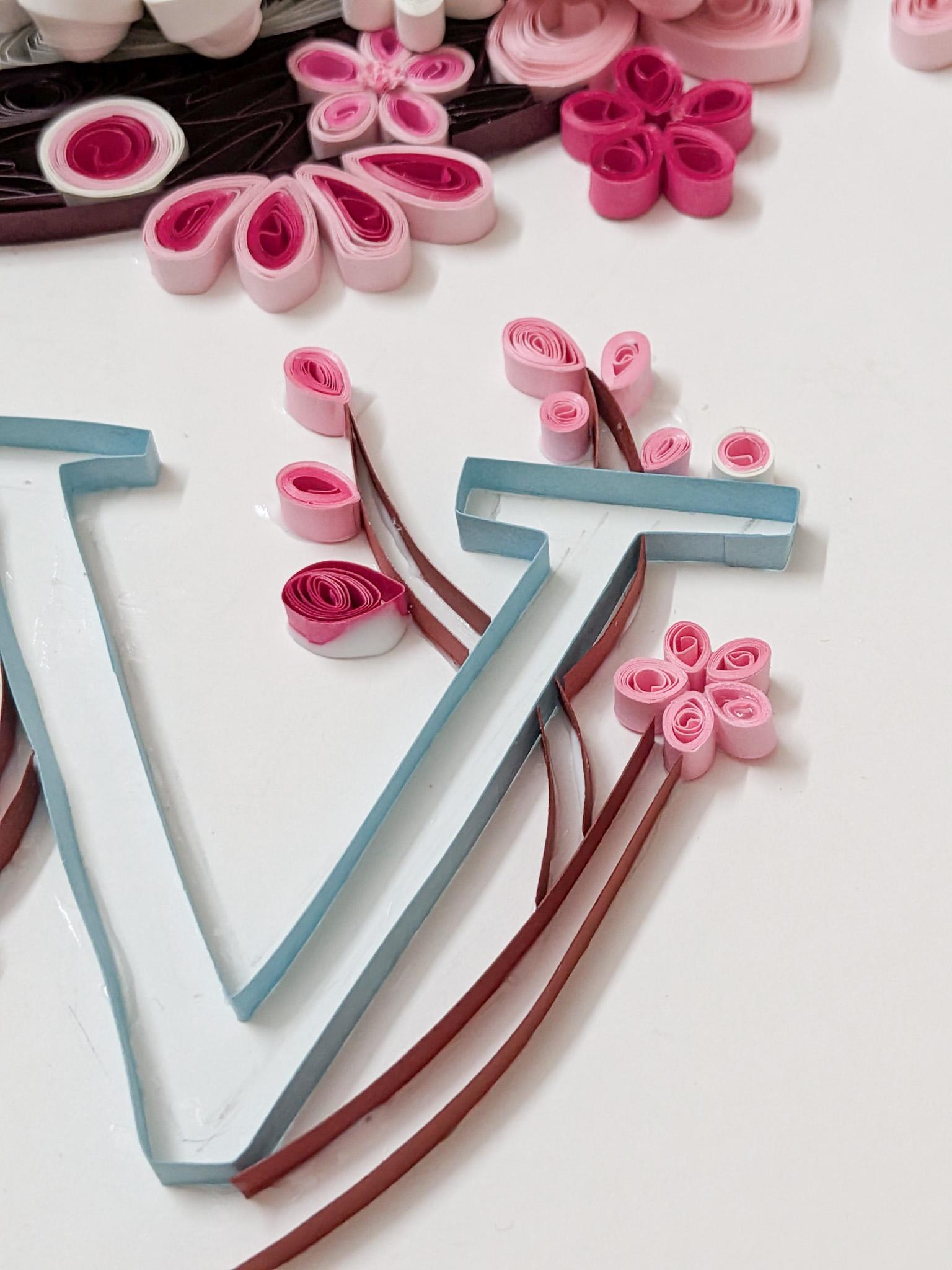


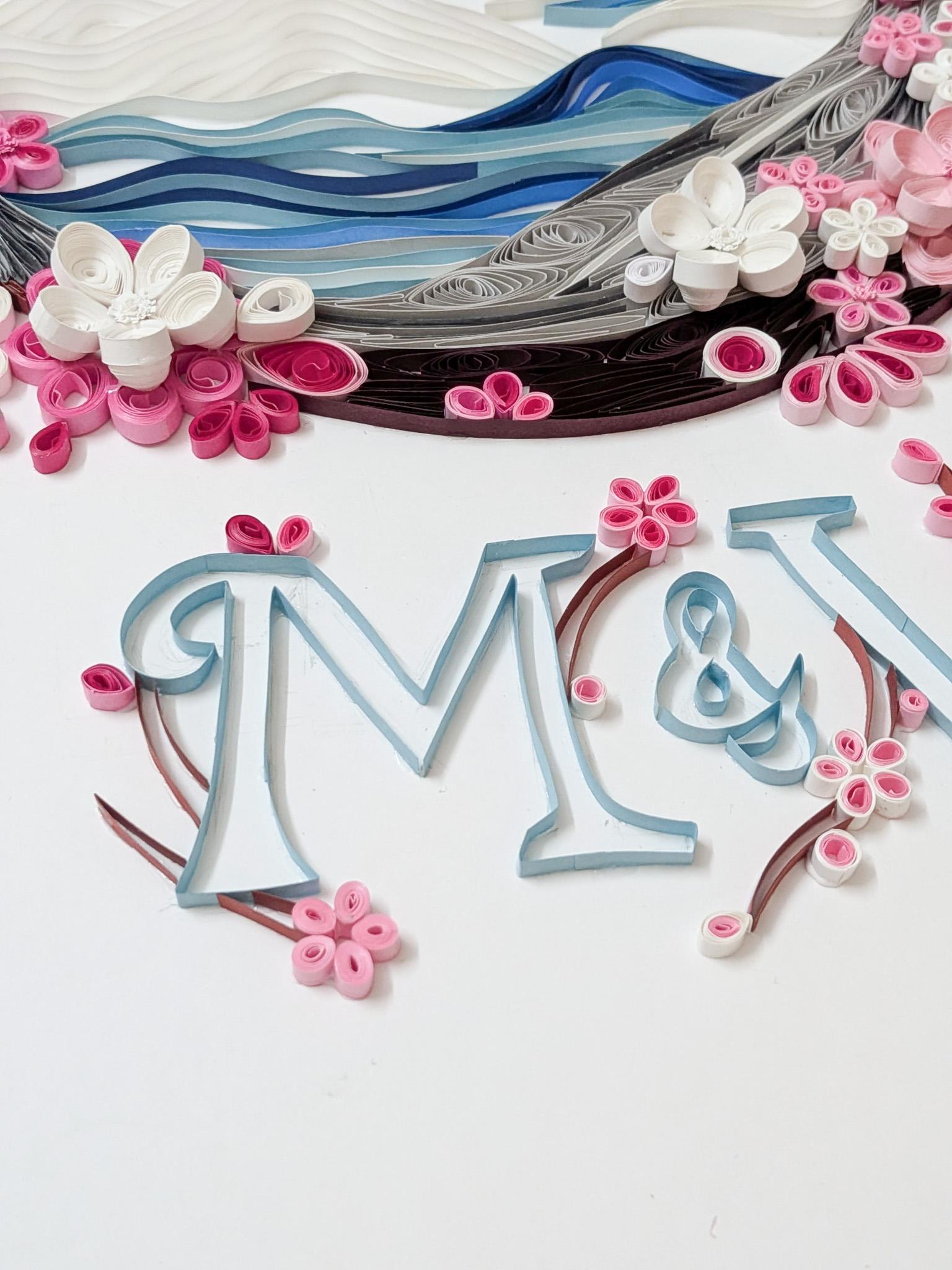
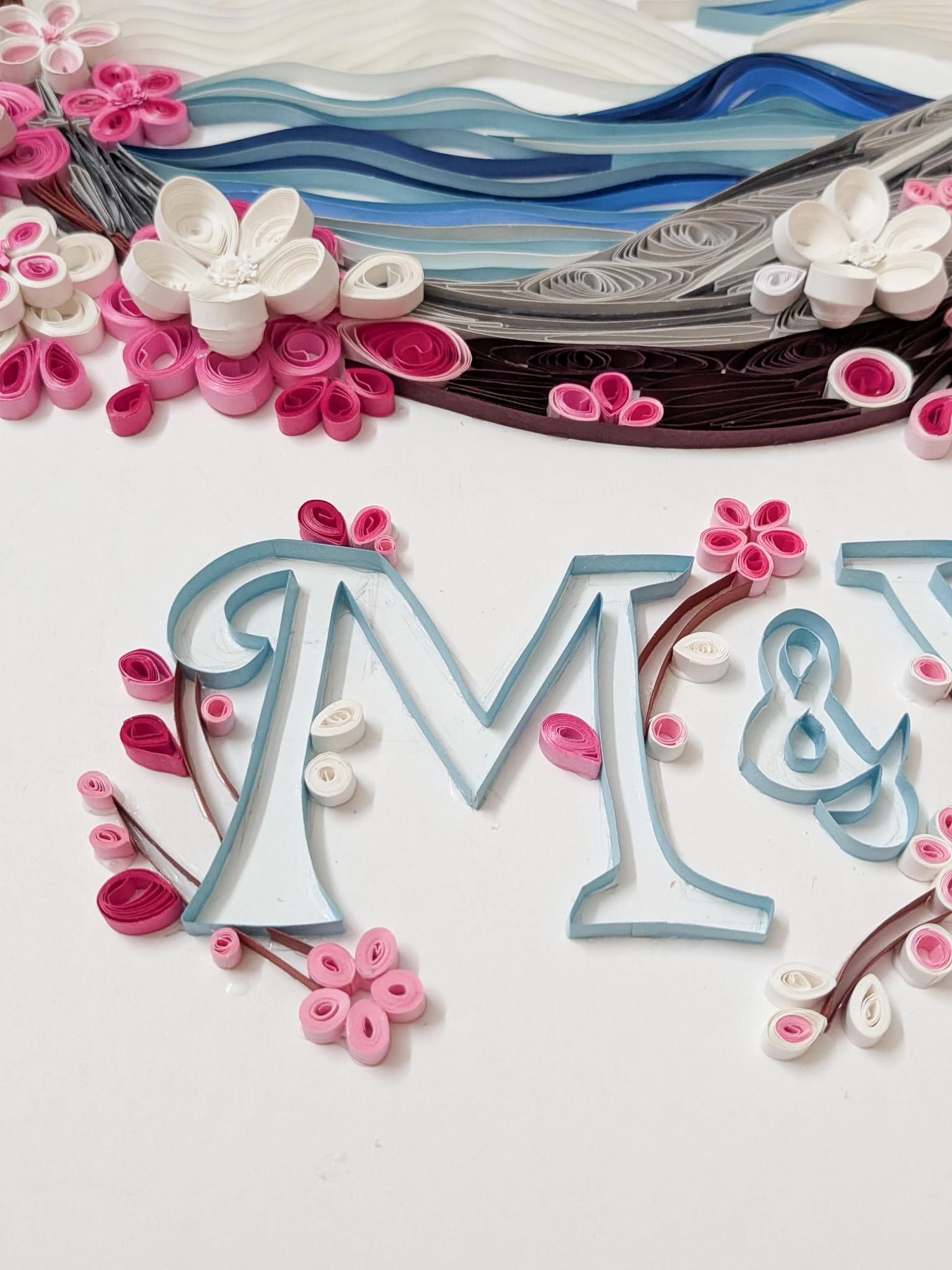
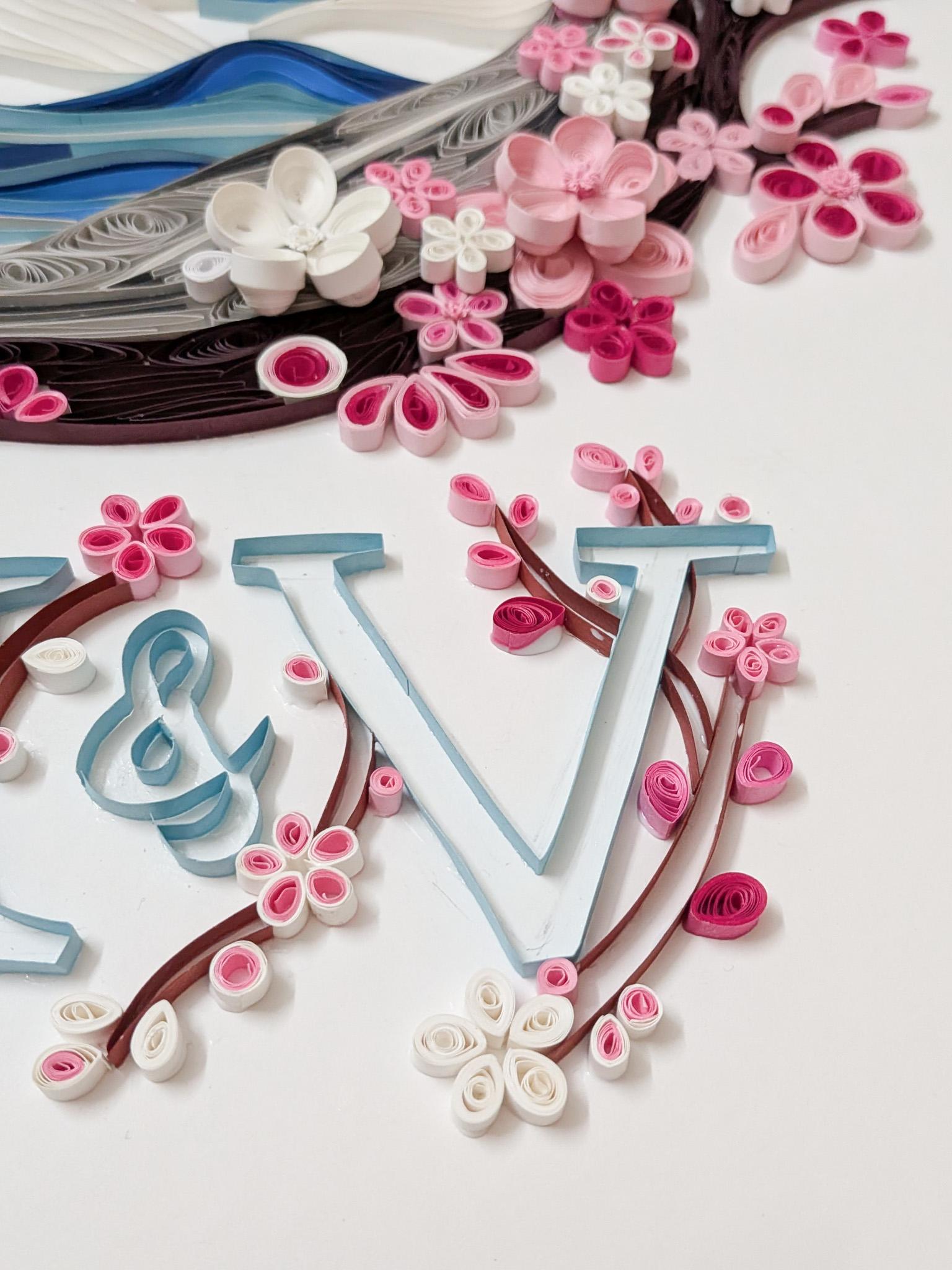

To prevent the typography from looking like an afterthought, we want to "grow" the scene into the letters. This step seamlessly blends your personalization with the botanical wreath above.
The Flora - Begin attaching the small flowers and buds you created earlier directly onto the typography.
- Placement: Focus on the intersections and corners of the letters (like the top of the "M" or the loops of the "&").
- Color Palette: Mix your pink and white blossoms to maintain the Sakura theme.
The Branches - Using your light brown strips, add thin, delicate branches that weave around and behind the initials. Glue these strips on-edge so they appear to be reaching out from the letters toward the main wreath.
By adding these natural elements, the initials no longer sit "on top" of the project; instead, they become a living part of the landscape, making the entire piece feel cohesive and intentionally designed.
Filling Initials With White Accents
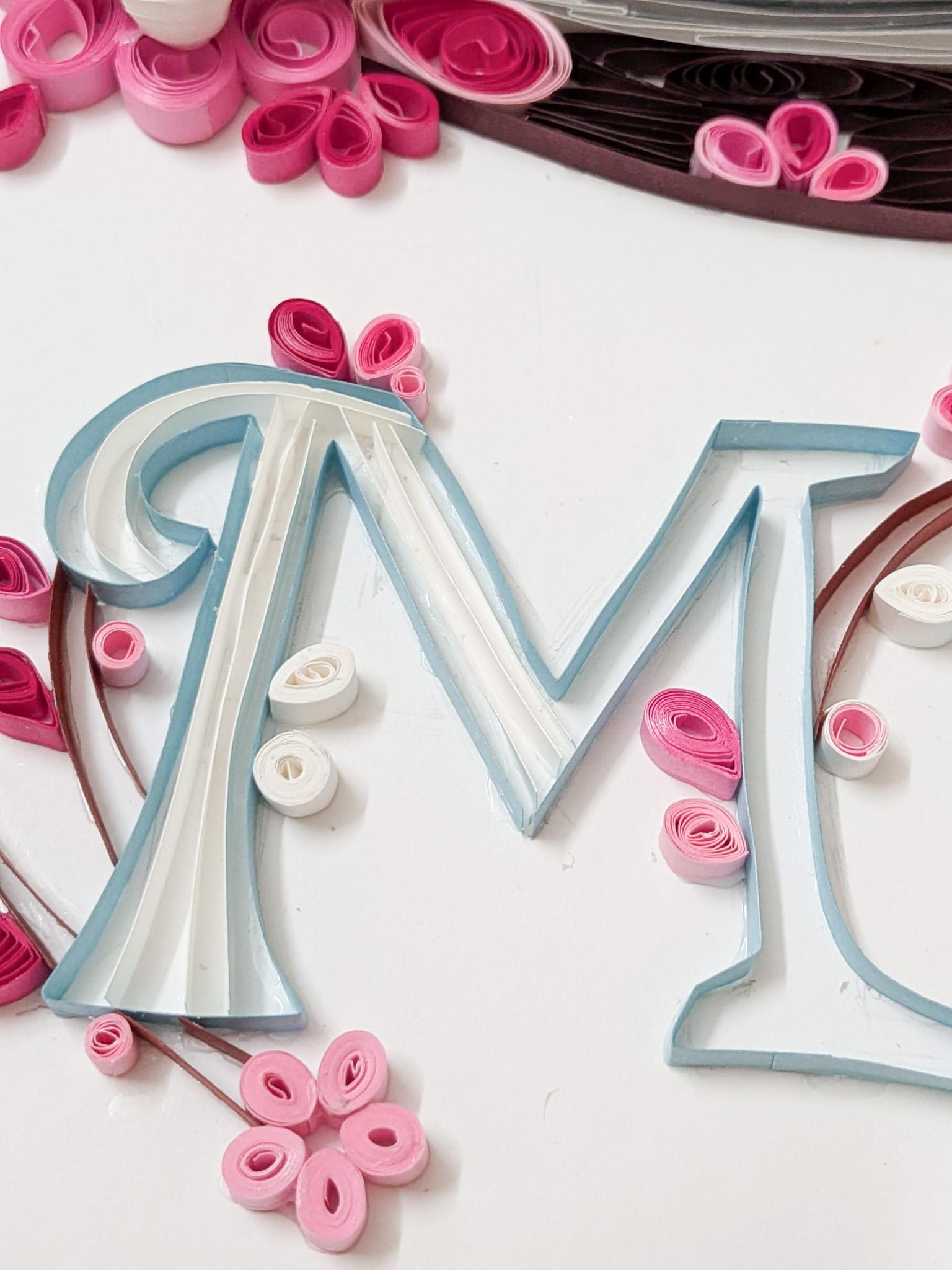

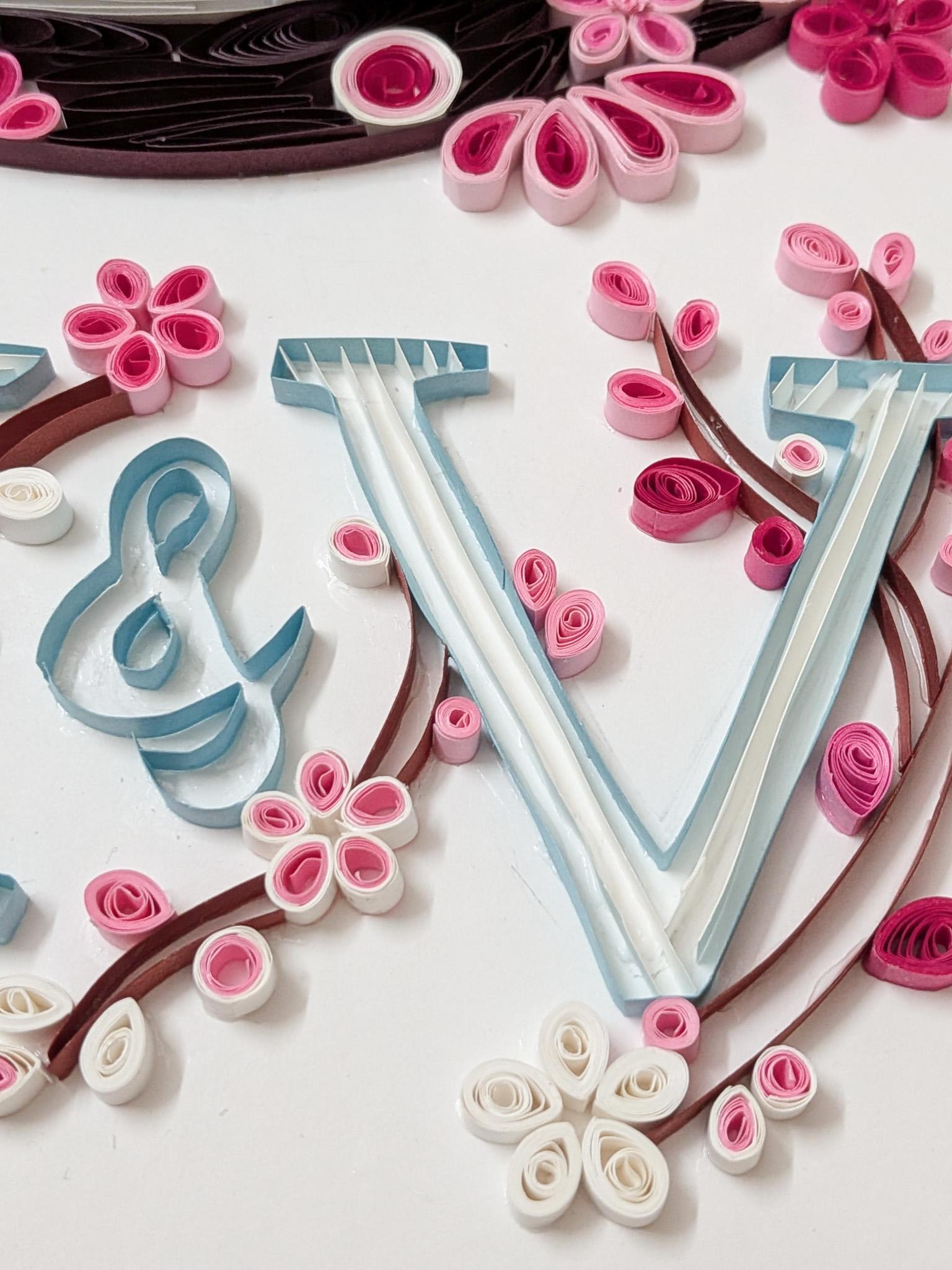
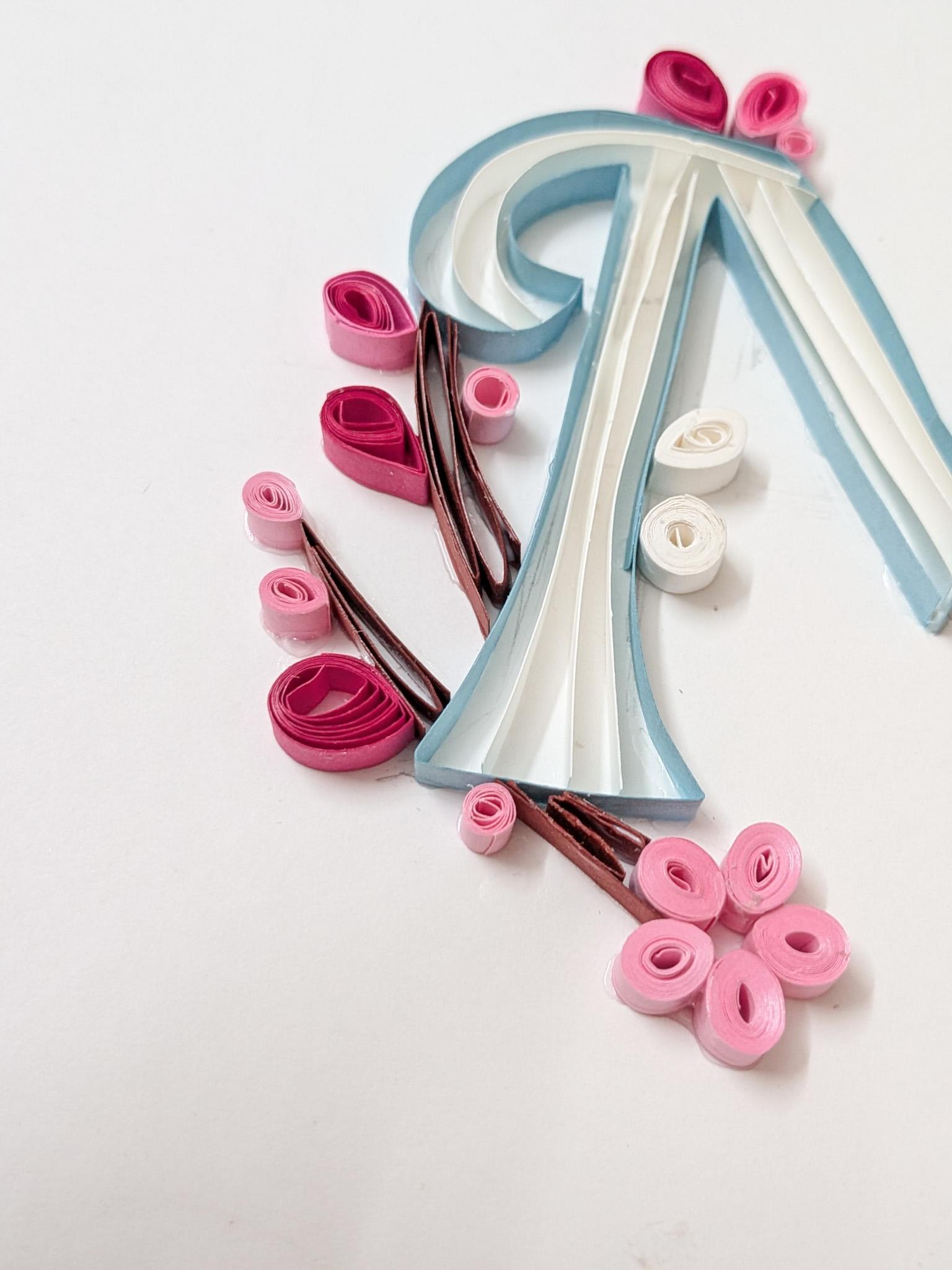
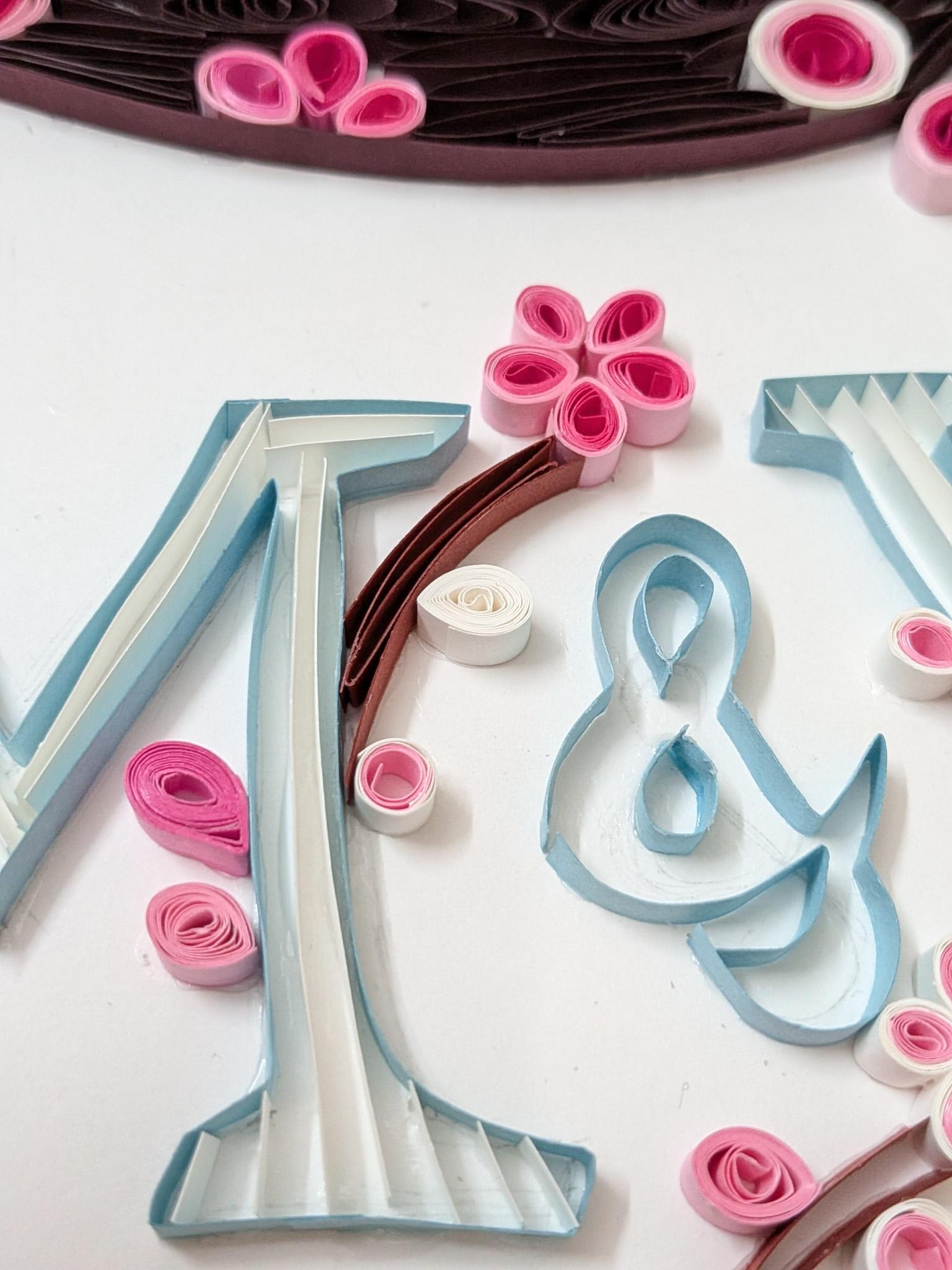
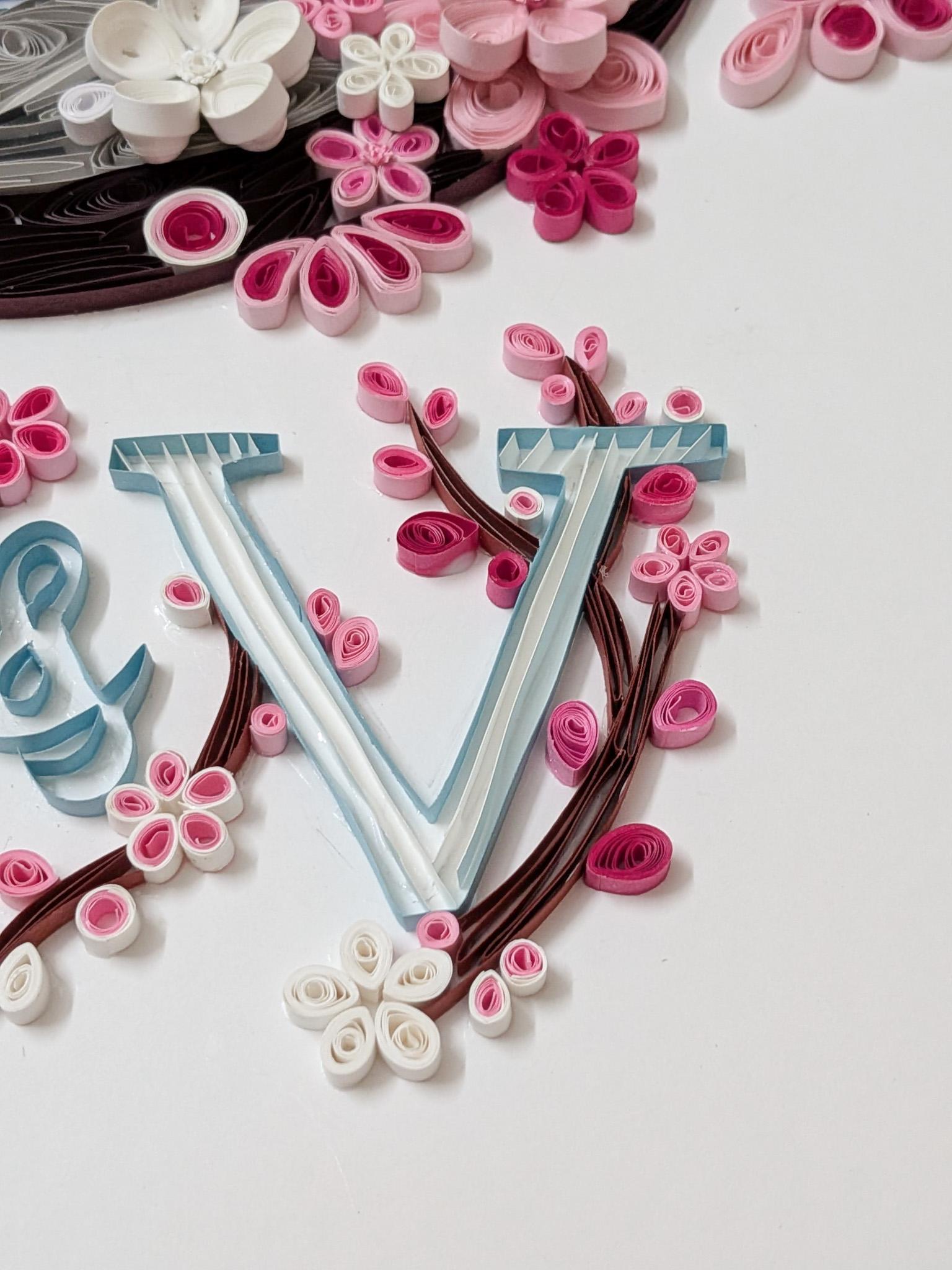
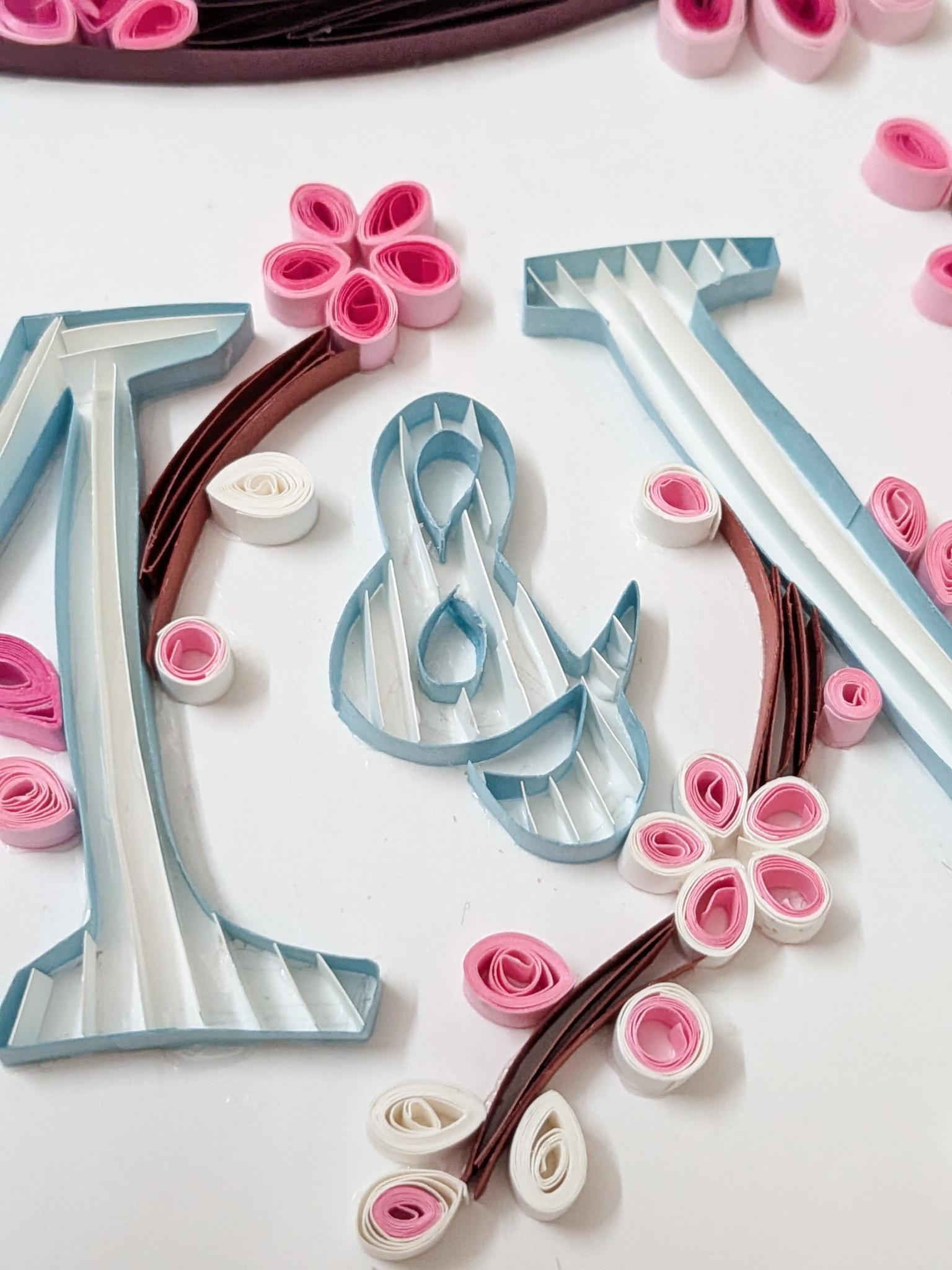
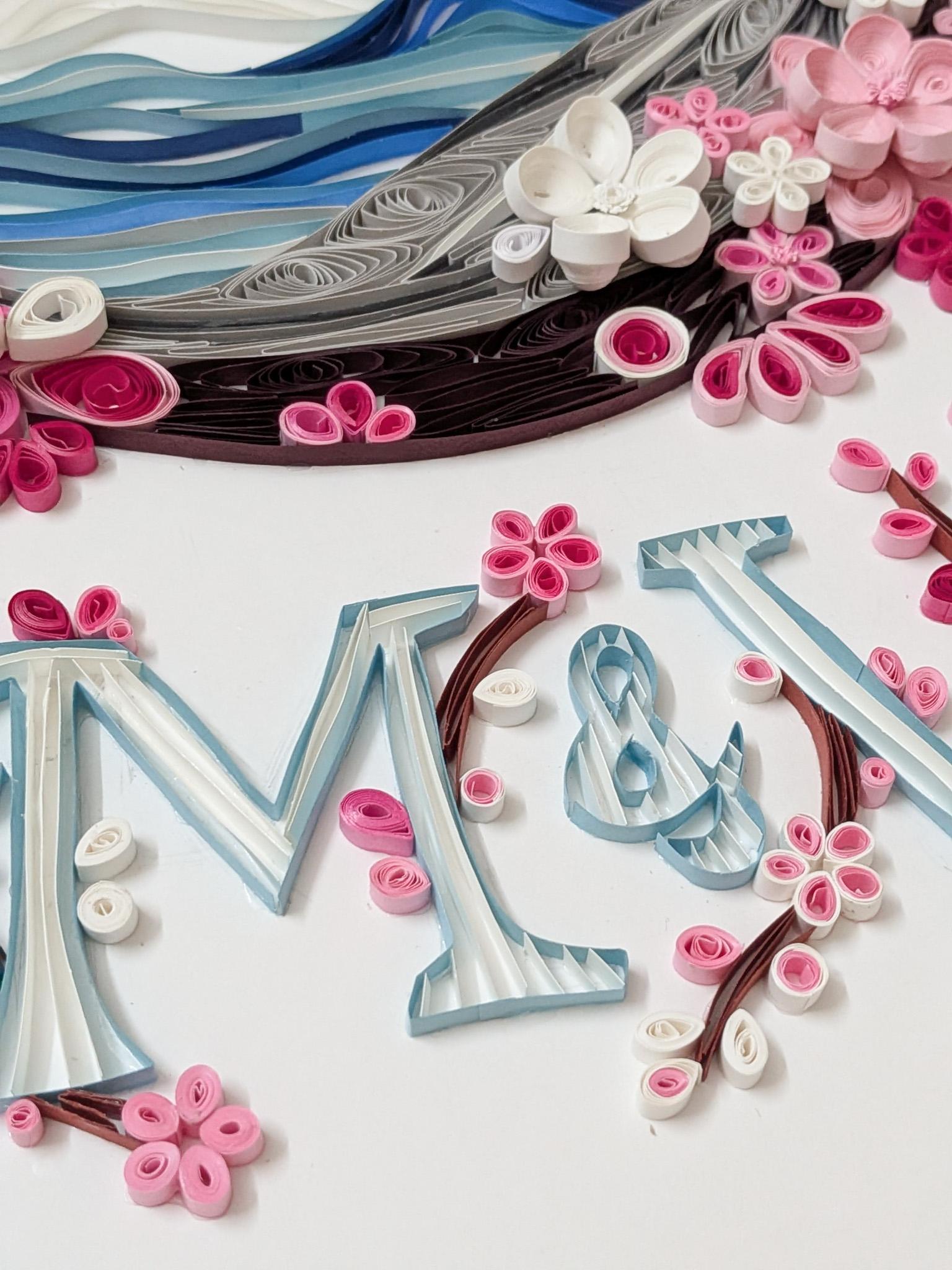
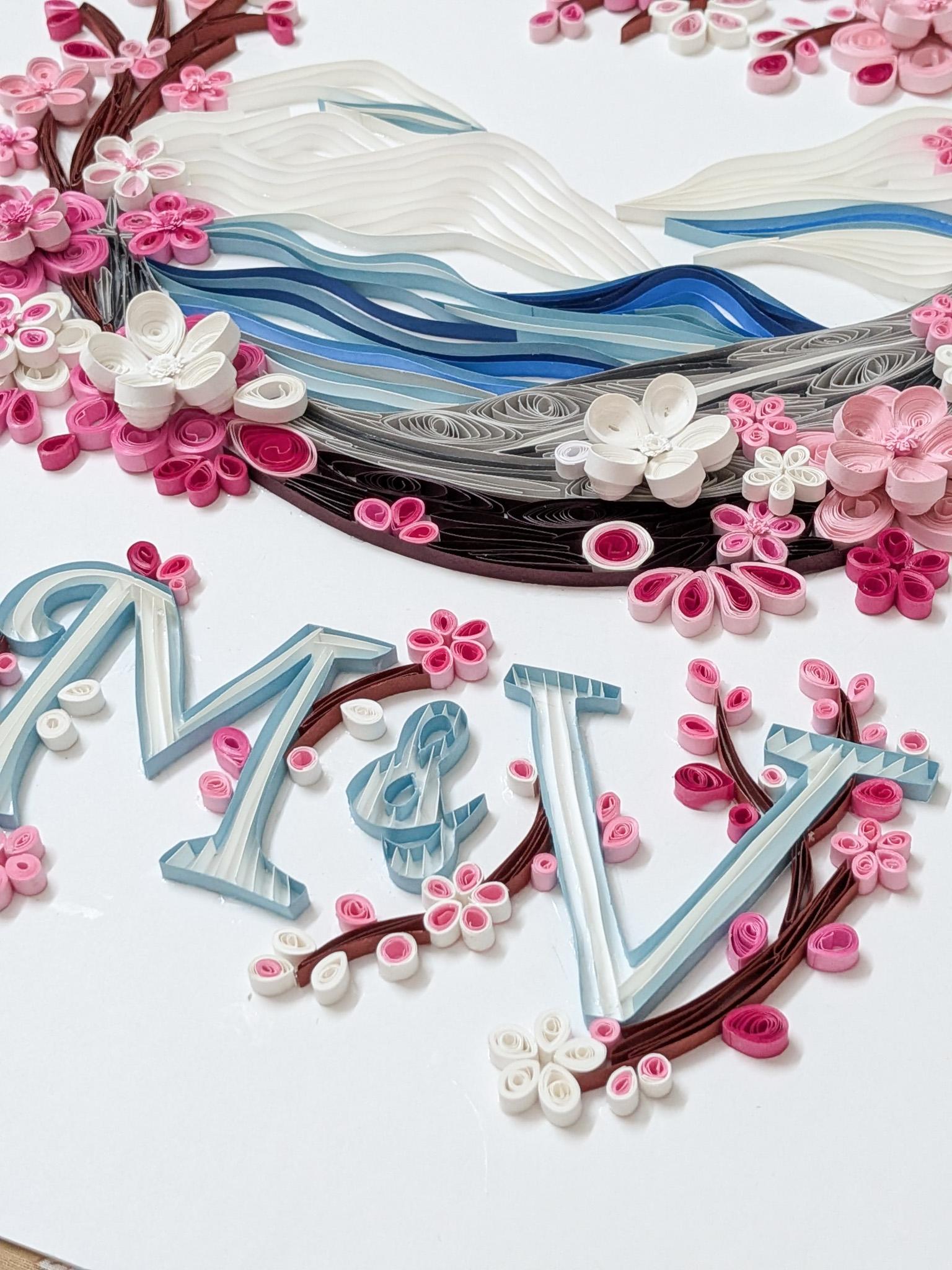

To give the typography a clean, finished look, we fill the "empty" space of the letters with contrasting white strips, creating a sleek, multi-layered effect that pops against the background. Take your white strips and measure them against the internal lengths of the "M" and "V." Run the edge of each white strip through a thin layer of glue, then carefully place them inside your existing colored outlines.
The Precision
- Trace the Walls: Ensure the white strips follow the exact curves and angles of the outer walls you previously built.
- Tuck and Fit: Use your precision tweezers to tuck the strips into narrow, tricky areas—especially the tight loops of the ampersand (&).
This "infilling" technique adds structural integrity to the letters and a high-contrast finish that makes the personalization readable from afar.
Finishing It Up and Framing
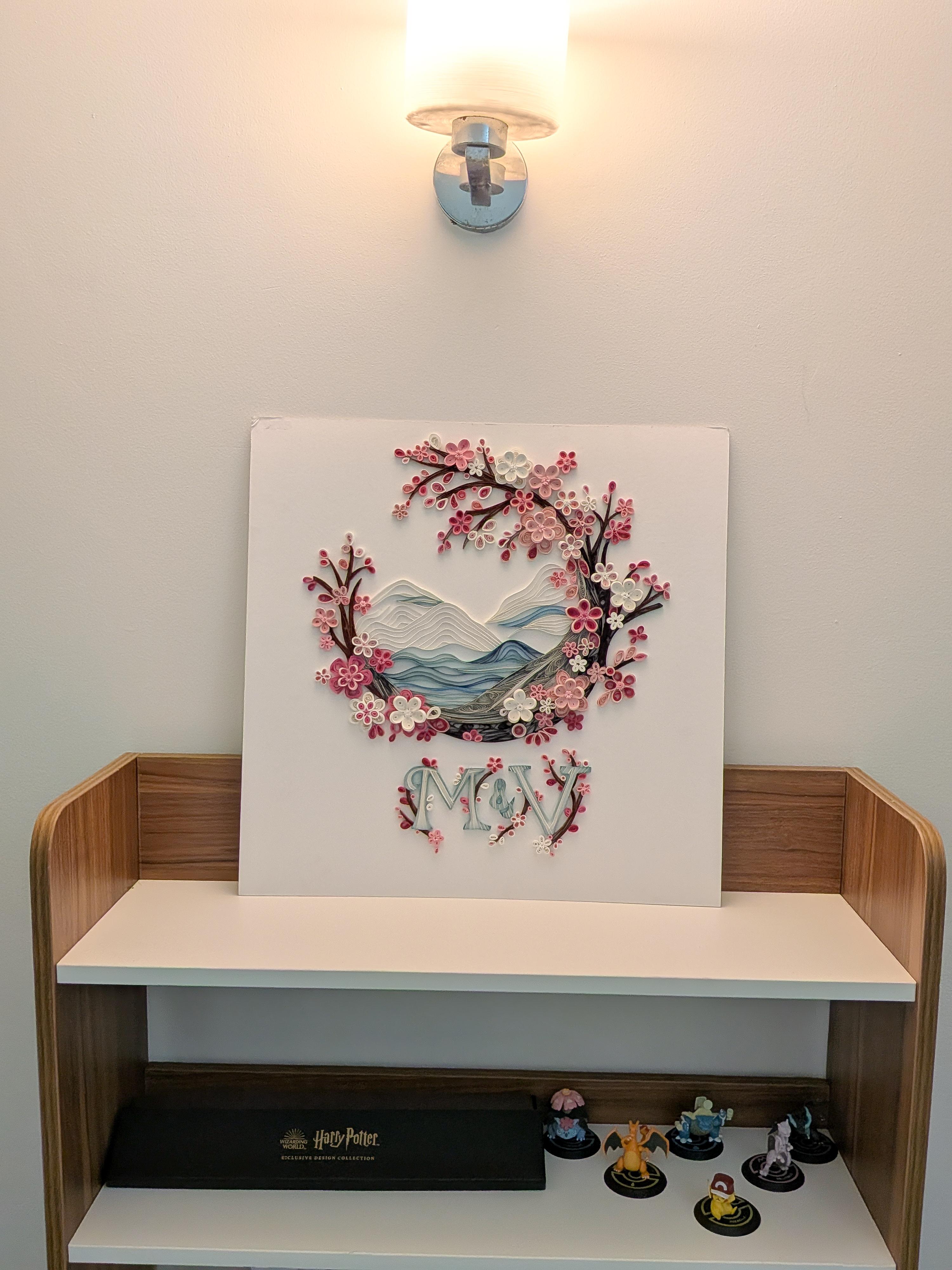


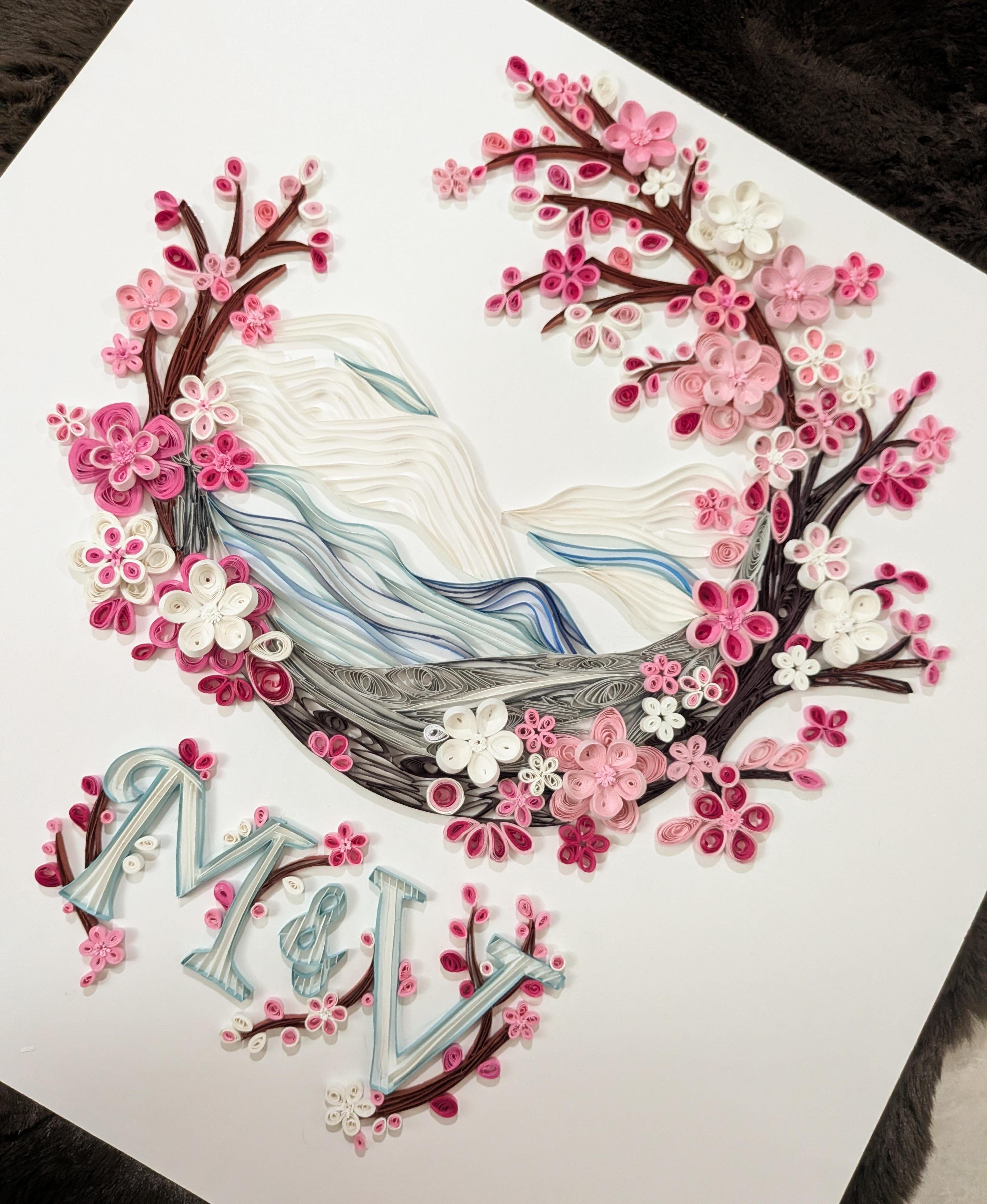
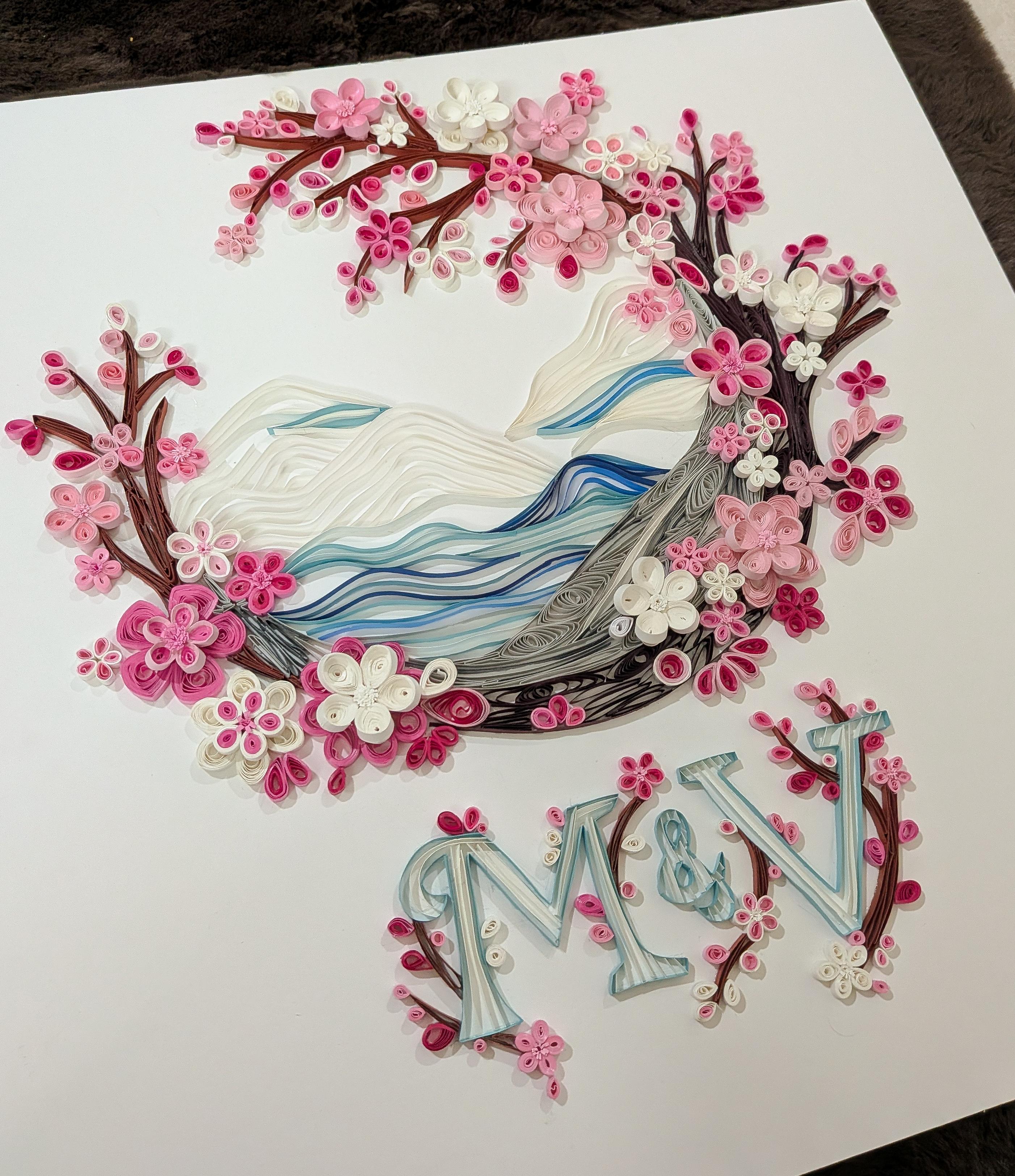

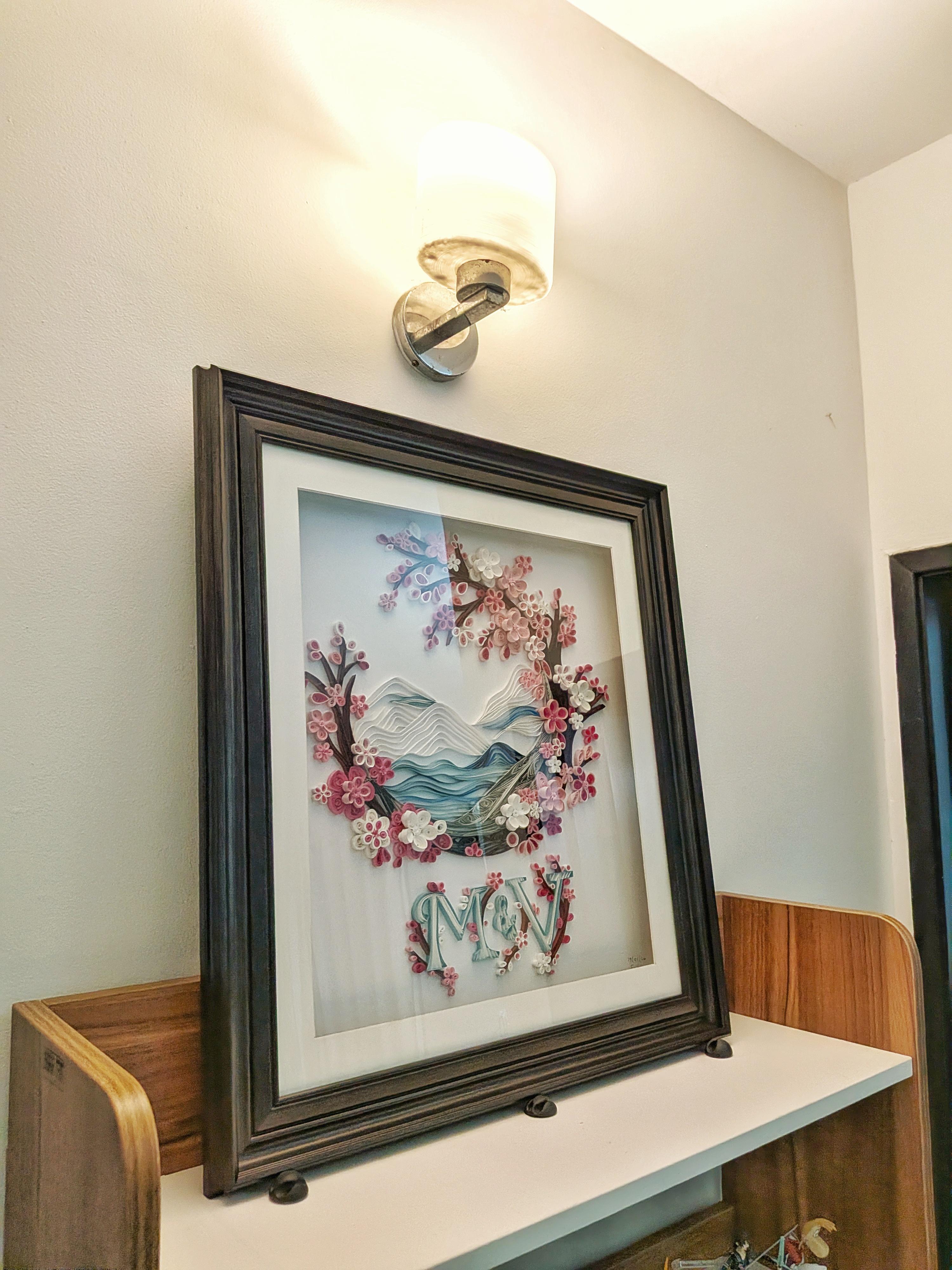
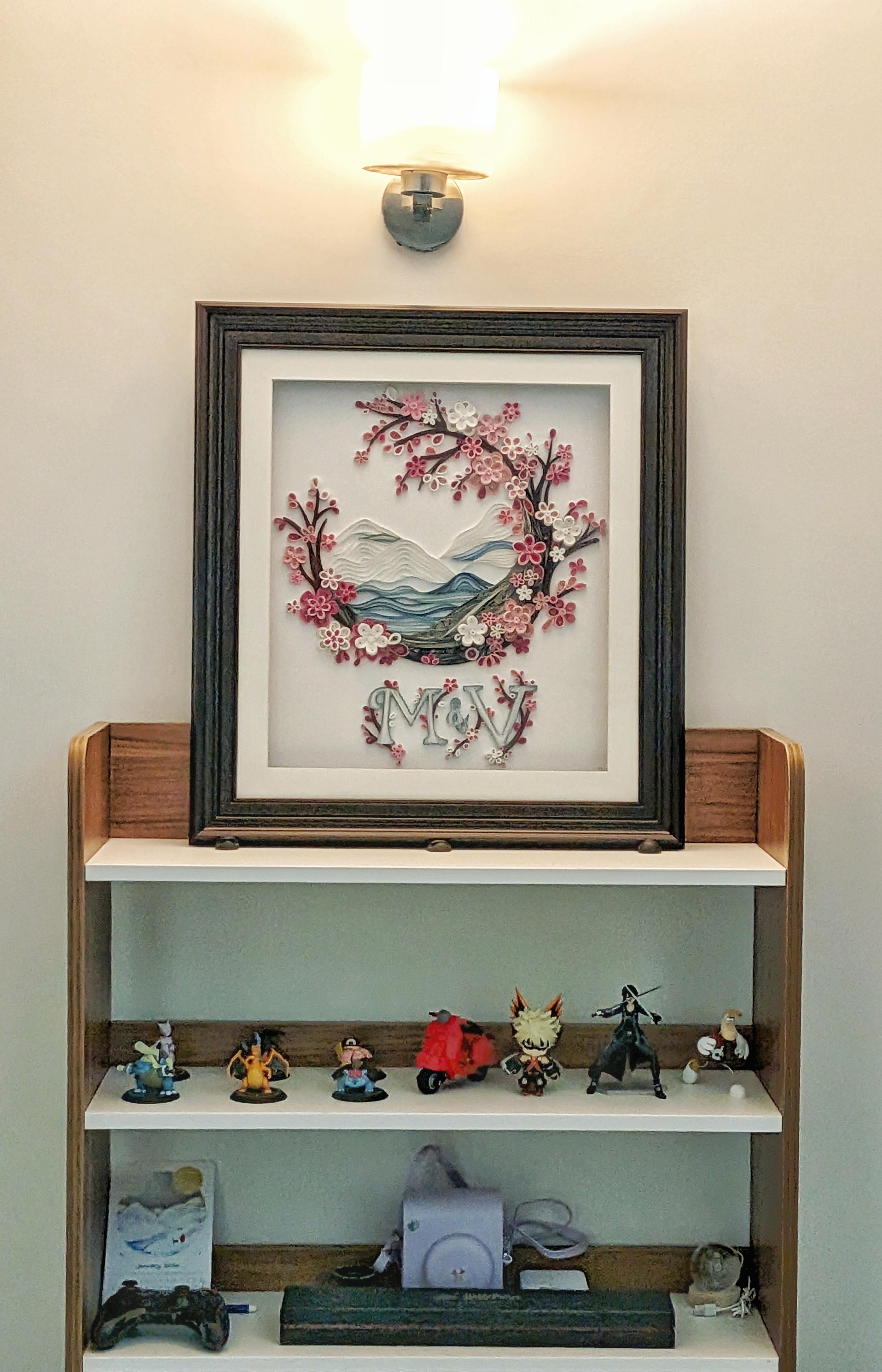
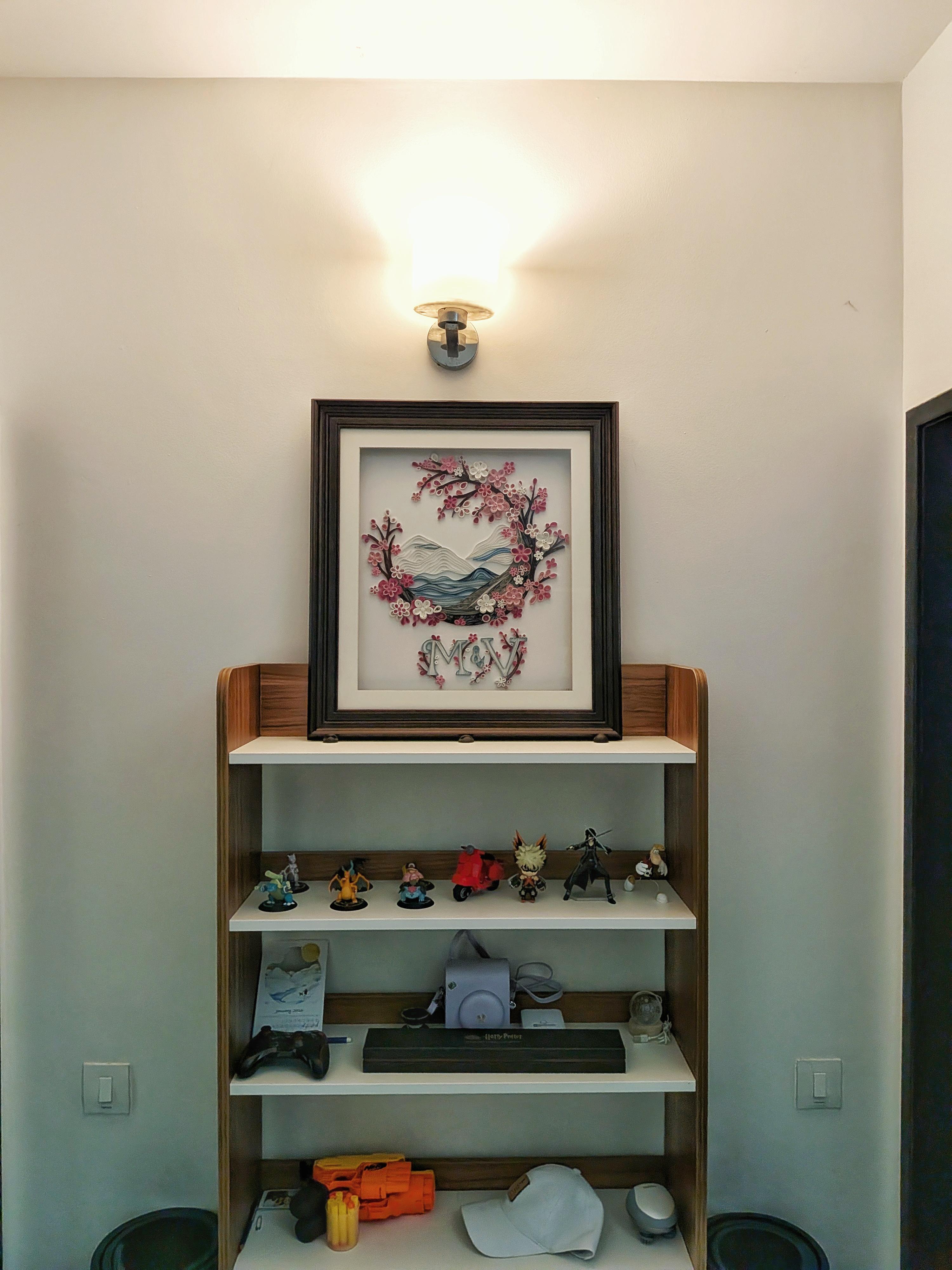
The final step is all about "cleaning the canvas" and giving your artwork the protection and presentation it deserves. This is where your hard work transforms from a craft project into a professional home decor piece. Once the glue is completely dry, take a soft eraser and very gently go over the board to remove any visible pencil guides from Step 1. Since the paper strips are 5mm tall, be careful not to snag the edges—work in small, light strokes.
The Finishing Touch
- Mounting: Place your masterpiece into a shadowbox frame. The depth of a shadowbox is essential to protect the 5mm paper edges from dust and damage.
- Display: Hang it up near the entrance of your home or in a well-lit hallway. These locations allow the natural light to hit the "snowy ridges" of your mountains and the "ripples" of your water throughout the day. Some off-white/golden light from a lamp creates a nice cozy glow too.
Celebrate Your Creation! You’ve done it! You’ve taken simple strips of paper and sculpted a complex, 3D landscape full of texture and personal meaning. Step back, take some photos of those intricate details, and enjoy the quiet bloom of your new Sakura-inspired decor.
Happy Quilling!