6-DOF Robotic Arm Designed in Fusion 360
by samarthkatageri2004 in Design > 3D Design
131 Views, 1 Favorites, 0 Comments
6-DOF Robotic Arm Designed in Fusion 360

This project shows the complete design of a 6-DOF robotic arm created in Fusion 360.
The arm is designed to be modular, easy to assemble, and suitable for 3D printing.
This design can be used for robotics learning, automation experiments, pick-and-place tasks,
and as a base for servo or motor-driven robotic arms.
The project includes detailed design views and export-ready files that can be customized
according to specific applications.
Supplies
• Autodesk Fusion 360 (Design & Assembly)
• Computer/Laptop capable of running CAD software
• 3D Printer for printing STL files
• PLA / PETG filament
Design Overview
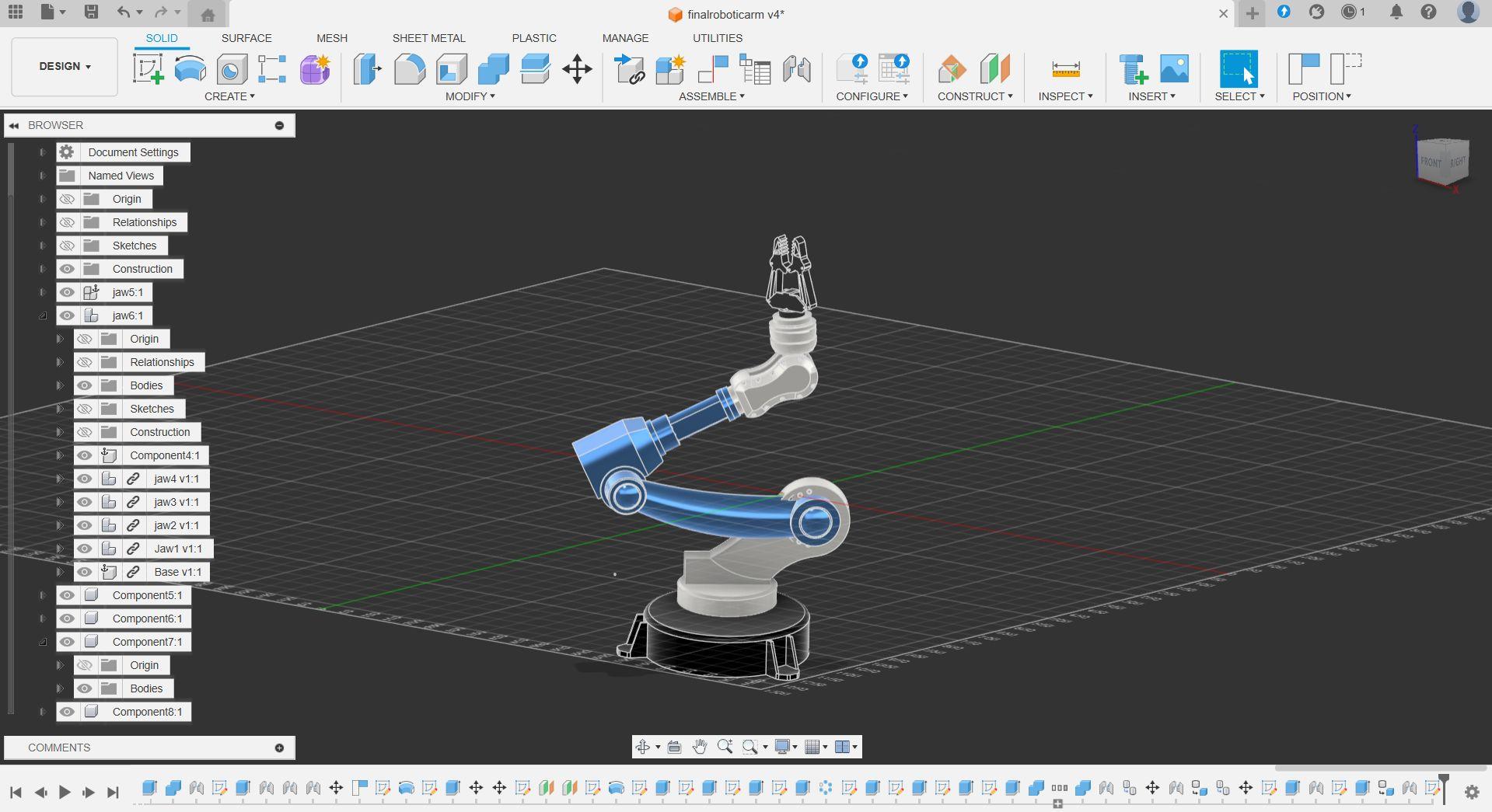
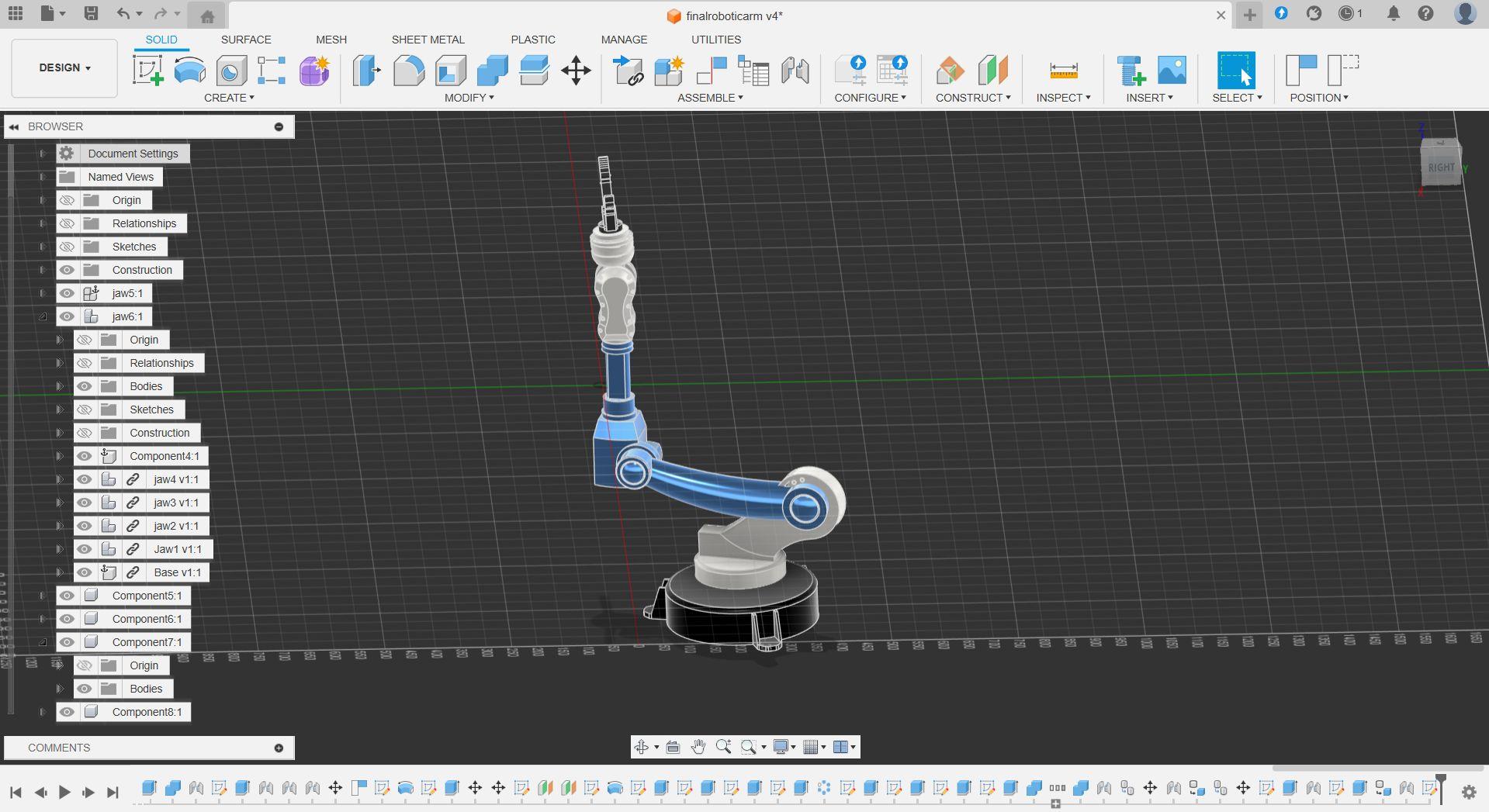
This project focuses on the complete CAD design of a 6-DOF robotic arm created in Fusion 360.
The robotic arm consists of a rotating base, multiple arm segments connected by revolute joints,
and a gripper end-effector. Each part is designed as a separate component to allow modularity,
easy assembly, and future upgrades.
The overall design goal was to create a compact, printable, and customizable robotic arm
suitable for robotics learning and automation projects.
Fusion 360 CAD Model
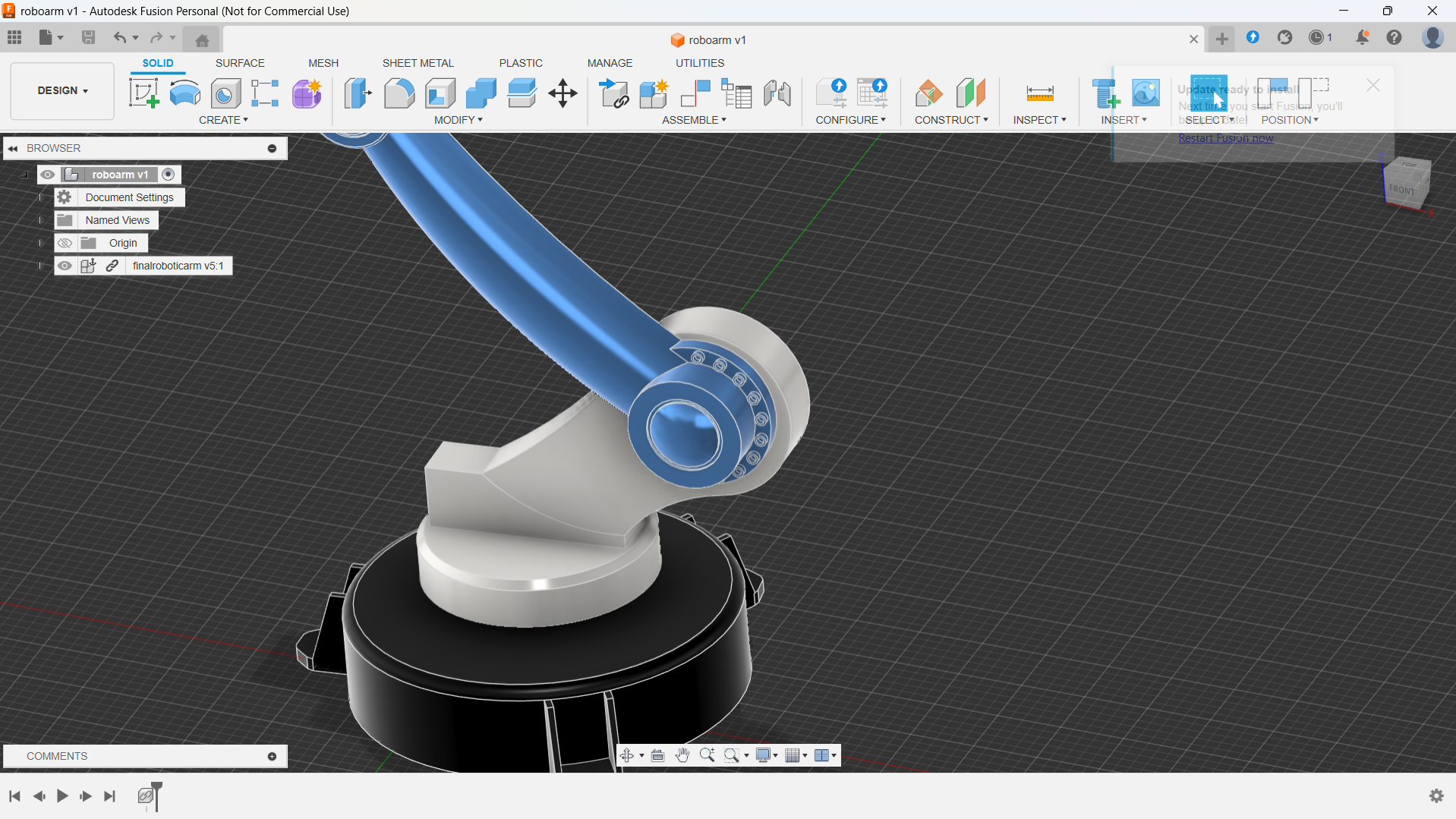
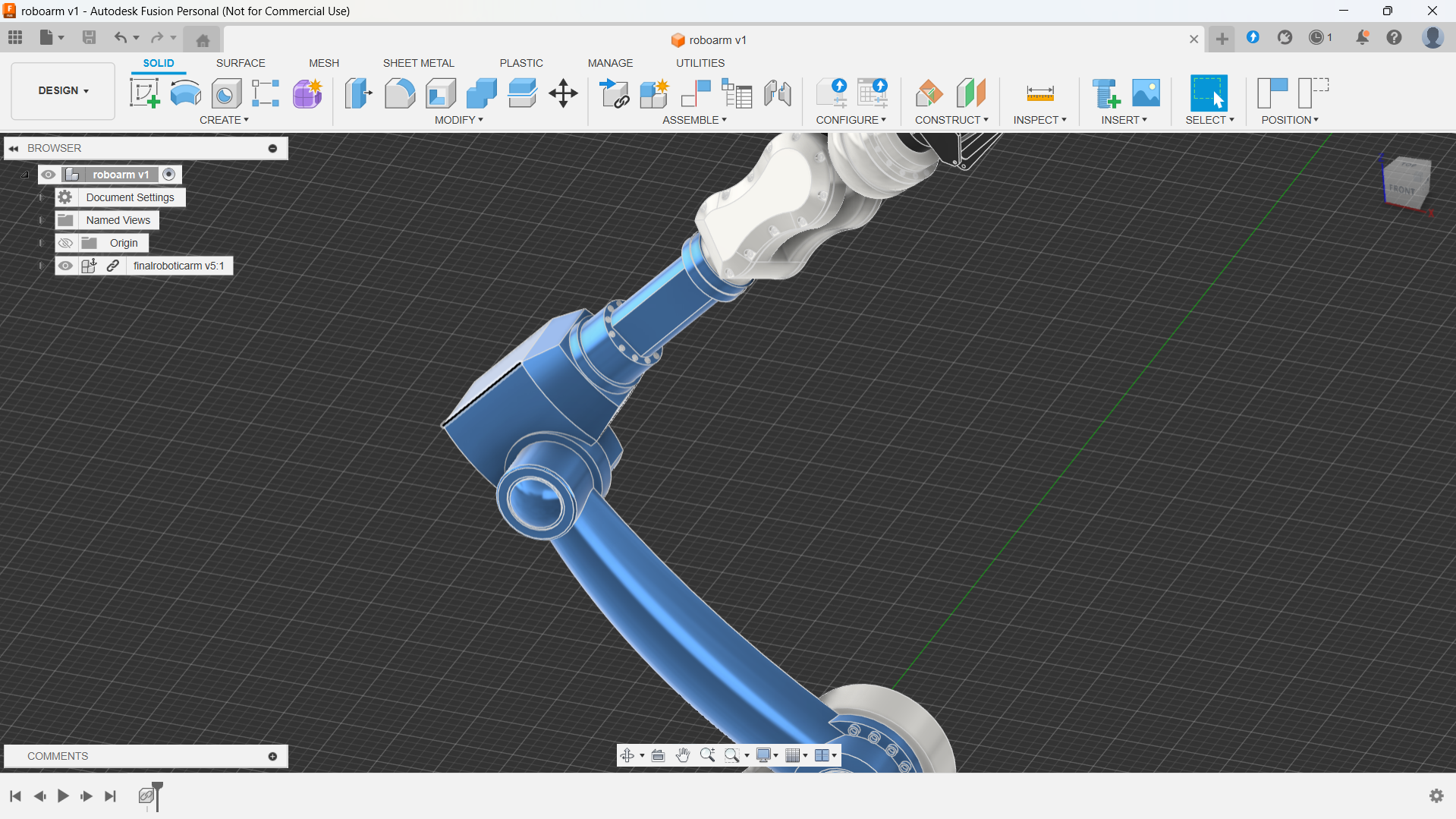

All components of the robotic arm were modeled individually in Fusion 360
and assembled using joints to simulate real-world movement.
This approach allows easy modification of individual parts without
affecting the entire assembly.
Degrees of Freedom & Joints
The robotic arm has 6 degrees of freedom including base rotation, shoulder,
elbow, wrist movements, and gripper actuation.
Each joint is designed to allow smooth rotational motion and can be adapted
for servo motors or other actuators.
STL Files and Export
The components of the robotic arm can be exported as STL files for 3D printing.
Each part is designed to be printed separately for easy assembly and replacement.
The design files can also be modified to suit different motors or applications.
Downloads
3D Printing Notes
Recommended 3D printing settings:
Material: PLA
Layer Height: 0.2 mm
Infill: 20%
Supports: Only required for gripper parts if needed